Friday, September 4, 2015

2004. Heat Index in Mahshar, Iran, at 165, Almost a World Record

By Jason Samenow, The Washington Post, July 30, 2015

Wherever you live or happen to travel to, never complain about the heat and humidity again.
In the city of Bandar Mahshahr (population of about 110,000 as of 2010), the air felt like a searing 165 degrees (74 Celsius) today factoring in the humidity.
Although there are no official records of heat indices, this is second highest level we have ever seen reported.
To achieve today’s astronomical heat index level of 165, Bandar Mahshahr’s actual air temperature registered 115 degrees (46 Celsius) with an astonishing dew point temperature of 90 (32 Celsius).

This 165 reading, recorded at 4:30 p.m. local time Friday, comes one day after the heat index soared to 159 degrees (70 Celsius) in the same location.
Bandar Mahshahr sits adjacent to the Persian Gulf in southwest Iran where water temperatures are in the 90s. Such high temperatures lead to some of the most oppressive humidity levels in the world when winds blow off the sweltry water.
In southeast Iran, also along the Persian Gulf, Jask, Iran observed a heat index of 156 degrees (69 Celsius) on Friday (air temperature 102.2 degrees with a dew point of 91.4 degrees).
Although there are no official records, 178 degrees (81 Celsius) is the highest known heat index ever attained. It was observed in Dhahran, Saudi Arabia on July 8, 2003. In his book Extreme Weather, weather historian Christopher Burt says Dhahran, also on the Persian Gulf, registered an air temperature of 108 degrees (42 Celsius) and a dew point of 95 (35 Celsius), which computes to such an extreme heat index level.
This week’s extreme heat index values have occurred as a punishing heat wave has engulfed the Middle East.
On Thursday, Baghdad soared to 122 degrees (50C) – though its dew point was a lowly 44 (7 Celsius) given its desert environs. That combination produced a heat index of 115 – the dry air taking a slight edge off the blistering temperatures.
A massive high pressure ridge or “heat dome” responsible for the excessive heat doesn’t look to budge for several days, at least.
The extreme heat over such a long duration is particularly taxing in this war-ravaged region, as Weather.com explains:

The government has urged residents to stay out of the sun and drink plenty of water, but for many of the more than 3 million Iraqis displaced by violent conflict, that poses a dilemma.
Chronic electricity and water cuts in Iraq and other conflict-ridden countries make heat waves like the present one even more unbearable – particularly for the more than 14 million people displaced by violence across the region. In the southern Iraqi city of Basrah earlier this month, protesters clashed with police as they demonstrated for better power services, leaving one person dead.
Unlike other countries in the region, Iraq lacks beaches and travel restrictions make it difficult for people to escape the sweltering heat, leaving many – even those fortunate enough to live in their homes – with limited options for cooling off. Some swim in rivers and irrigation canals, while others spend these days in air-conditioned shopping malls.

2003. Hotter Planet Fuels Drought, Scientists Find

By Justin Gillis, The New York Times, August 20, 2015


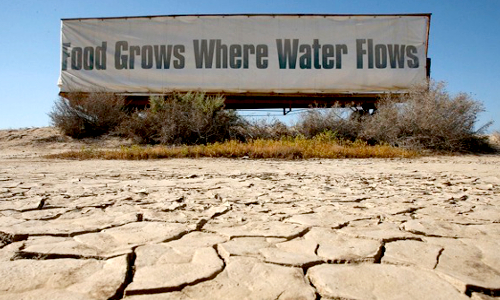
Global warming caused by human emissions has most likely intensified the drought in California by 15 to 20 percent, scientists said on Thursday, warning that future dry spells in the state are almost certain to be worse than this one as the world continues to heat up.

Even though the findings suggest that the drought is primarily a consequence of natural climate variability, the scientists added that the likelihood of any drought becoming acute is rising because of climate change. The odds of California suffering droughts at the far end of the scale, like the current one that began in 2012, have roughly doubled over the past century, they said.

“This would be a drought no matter what,” said A. Park Williams, a climate scientist at the Lamont-Doherty Earth Observatory of Columbia University and the lead author of a paper published by the journal Geophysical Research Letters. “It would be a fairly bad drought no matter what. But it’s definitely made worse by global warming.”

The National Oceanic and Atmospheric Administration also reported Thursday that global temperatures in July had been the hottest for any month since record-keeping began in 1880, and that the first seven months of 2015 had also been the hottest such period ever. Heat waves on several continents this summer have killed thousands of people.

The paper on the California drought echoes a growing body of research that has cited the effects of human emissions, but scientists not involved in the work described it as more thorough than any previous effort because it analyzed nearly every possible combination of data on temperature, rainfall, wind speed and other factors that could be influencing the severity of the drought. The research, said David B. Lobell, a Stanford University climate scientist, is “probably the best I’ve seen on this question.”

The paper provides new scientific support for political leaders, including President Obama and Gov. Jerry Brown of California, who have cited human emissions and the resulting global warming as a factor in the drought. As he races around his battered state, from massive forest fires to parched farms, Mr. Brown has been trying to cajole the Republican presidential candidates into explaining what they would do about climate change.

“To say you’re going to ignore that there’s a huge risk here, the way we’re filling the atmosphere with heat-trapping gases, is folly, ignorance and totally irresponsible,” Mr. Brown said Thursday in a telephone interview. “And virtually the entire Republican Party in Congress is saying exactly that. It’s inexplicable.”

Several Republican presidential candidates, including Senator Lindsey Graham of South Carolina and Gov. John R. Kasich of Ohio, do acknowledge that climate change poses risks, but they are skeptical of the way Mr. Obama has gone about trying to limit emissions, with a plan expected to force the shutdown of many coal-fired power plants.

Chris Schrimpf, a spokesman for Mr. Kasich, said Thursday that political leaders confronting questions about climate change “can’t stick their heads in the sand and pretend it isn’t happening. Instead we need to be about the business of taking action, but action that doesn’t throw the economy and jobs out the window at the same time.”

However, many of the leading Republican candidates are openly skeptical of climate science and play down the risks. In response to a letter from Mr. Brown asking about their plans, several of the candidates retorted last week that California should be building more dams to store water for future droughts. Senator Ted Cruz of Texas said that “alarmists” about global warming were trying to gain “more power over the economy and our lives.”

A report this week by researchers at the University of California, Davis, projected that the drought would cost the California economy some $2.7 billion this year. Much of that pain is being felt in the state’s huge farming industry, which has been forced to idle a half-million acres and has seen valuable crops like almond trees and grape vines die.
As climate scientists analyze the origins of the drought, they have been tackling two related questions: What caused the dearth of rain and snow that began in 2012? And, regardless of the cause, how have the effects been influenced by global warming?

The immediate reason for the drought is clear enough: For more than three years, a persistent ridge of high pressure in the western Pacific Ocean has blocked storms from reaching California in the winter, when the state typically gets most of its moisture. That pattern closely resembles past California droughts.

Some scientists have argued that the ocean and atmospheric factors that produced the ridge have become somewhat more likely because of global warming, but others have disputed that, and the matter remains unresolved.

On the question of the effects, scientists have been much clearer. Rising temperatures dry the soil faster and cause more rapid evaporation from streams and reservoirs, so they did not need any research to tell them that the drought was probably worse because of the warming trend over the past century. The challenge has been to quantify how much worse.

The group led by Dr. Williams concluded that human-caused climate change was responsible for between 8 and 27 percent of the deficit in soil moisture that California experienced from 2012 to 2014.

But, in an interview, Dr. Williams said the low number was derived from a method that did not take account of the way global warming had sped up since the 1970s. That led him and his colleagues to conclude that climate change was most likely responsible for about 15 to 20 percent of the moisture deficit.

Since 1895, California has warmed by a little more than 2 degrees Fahrenheit. That increase sounds small, but as an average over an entire state in all seasons, scientists say, it is a large number. The warmer air can hold more water vapor, and the result is that however much rain or snow falls in a given year, the atmosphere will draw it out of the soil more aggressively.

“It really is quite simple,” said Richard Seager, a senior climate scientist at Lamont and a co-author on the Williams paper. “When the atmosphere is as warm as it is, the air is capable of holding far more water. So more of the precipitation that falls on the ground is evaporated, and less is in the soil, and less gets into streams.”

Dr. Williams calculated that the air over California can absorb about 8.5 trillion more gallons of water in a typical year than would have been the case in the cooler atmosphere at the end of the 19th century. The air does not always manage to soak up that much, however, because evaporation slows as the soils dry out.

How much more California will warm depends on how high global emissions of greenhouse gases are allowed to go, but scientists say efforts to control the problem have been so ineffective that they cannot rule out another 5 or 6 degrees of warming over the state in this century, a level that could turn even modest rainfall deficits into record-shattering droughts.

For politicians like Mr. Obama and Mr. Brown, the emerging question is whether Americans will awaken to the risks and demand stronger action before emissions reach such catastrophic levels.

“I don’t think climate change is anywhere near the issue that it’s going to be, but the concern is rising in the public mind,” Mr. Brown said Thursday. “The facts can’t be concealed forever.”

2002. A Species of Sturgeon 70 millions Old Is inImmediate Danger of Going Extinct

By Chris Hunter, The New York Times, September 3, 2015
Pallid sturgeon
HELENA, Mont. — FROM an evolutionary perspective, the pallid sturgeon is a thing of beauty.

Its eyes are a bit beady, it’s true, but good vision is not a prerequisite for living on the bottom of the Missouri River. And its toothless mouth, with its protruding, whiskerlike barbels, is creepy. But these barbels are perfect for sensing food, which it sucks in like a vacuum cleaner.

No, these fish are not sleek and beautiful like trout. But this species of sturgeon, which can grow to a length of six feet and weigh as much as 80 pounds, has managed to survive since the time of the dinosaurs, with fossils dating back some 70 million years.
For all of the adaptations that have enabled this fish to have such a long run, however, the pallid sturgeon is in serious trouble. Twenty-five years ago, the federal government concluded the fish was in imminent danger of extinction and placed it on the endangered species list, where it remains today.

Despite government efforts to expand the population, only perhaps 200 or fewer wild-born pallid sturgeons are thought to inhabit one of its last strongholds — the Montana stretches of the Missouri and Yellowstone Rivers.

And now, paradoxically, a federal agency, the Army Corps of Engineers, is pursuing a project that threatens this population, perhaps the most genetically robust of the groups still surviving in the Missouri and Mississippi Rivers. These fish in the upper Missouri River basin can live upward of 50 years, but they are old and their chances of reproducing are diminishing.

Dams along the Missouri River have contributed to the sturgeon’s undoing, blocking spawning runs and altering hundreds of miles of river habitat in ways that have been harmful not only to the pallid sturgeon but also to other species, like the least tern and piping plover. Fifty-one of the river’s 67 native fish species are now rare, uncommon or decreasing, according to the government.

The mostly free-flowing Yellowstone River, which converges with the Missouri River near the border of Montana and North Dakota, offers the most cost-effective chance in the region for pallid sturgeon recovery. But the Intake Dam, an irrigation diversion impoundment on the Yellowstone, is a major obstacle for fish attempting to swim upstream to spawn.

The dam, in operation since the early 1900s, is a collection of boulders that straddle the river and cause it to rise so water can flow into an irrigation ditch that sustains tens of thousands of acres of sugar beets and other crops. On occasion, when the water is high enough, sturgeon have been able to make it around the dam by swimming up a naturally occurring side channel to reach the spawning habitat on the lower Yellowstone and tributaries like the Powder River. Last year, only five pallid sturgeon were known to have made it up the natural bypass. One of them, a tagged female, was later recaptured and it was determined that she had spawned.

Now the corps wants to spend some $60 million to build a concrete dam to upgrade the existing rock weir. The dam will block the river entirely, as well as the natural channel sturgeon have used in the past. In its place, the corps proposes to build a canal around the concrete dam as a bypass for the fish. Many biologists who have studied the pallid sturgeon believe these fish are unlikely to use this bypass. But the dam will, according to the corps, continue to provide water for irrigation.

The corps is seeking to move forward with construction. Two environmental groups, Defenders of Wildlife and the Natural Resources Defense Council, have asked a federal judge for an injunction blocking construction of this new dam.

The corps should return to the drawing board. Otherwise, this remnant wild population, whose ancestors were around when dinosaurs walked the landscape, is doomed.

Chris Hunter is the former chief of fisheries for the Montana Department of Fish, Wildlife and Parks.

2001. Mimicry As Self-Defense

By Carl Zimmer, The New York Times, August 20, 2015


The Canadian tiger swallowtail caterpillar is a plump green creature that spends all its time munching leaves. It ought to be an easy meal for a bird, yet many birds pass it by.
The caterpillar is protected by a remarkable defense, researchers have found: It tricks birds into thinking it’s a snake.

The caterpillar grows concentric yellow and black rings that look like a giant pair of eyes. When the caterpillar senses a bird nearby, it quickly inflates the front part of its body, making it resemble a snake’s head.

Astonishing as this deception may be, the tiger swallowtail is hardly unique. Many species have evolved ways to fool would-be predators. Some insects look like twigs, even mimicking the way that twigs sway in the breeze.

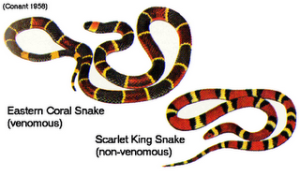
Harmless snakes scare off predators by mimicking the look of venomous ones. Some species of hoverflies have the yellow and black stripes of stinging wasps. They even pretend to sting their enemies despite having no stinger at all.

But mimicry has revealed a puzzle at its heart: Time and again, scientists find examples of overkill. Animals don’t seem to receive an extra benefit from making their disguises more elaborate.

The Canadian tiger swallowtail is an excellent example. Over the past few years, Thomas N. Sherratt, a behavioral ecologist at Carleton University in Ontario, and graduate student Thomas J. Hossie have studied the caterpillar’s strategy by creating “pastry caterpillars” of flour, water, shortening and green food coloring.
They are apparently tasty. When the scientists placed pastry caterpillars on tree branches, many of them quickly disappeared. “Birds are really motivated to eat them,” Dr. Sherratt said.

Dr. Hossie, who is now a postdoctoral researcher at Trent University in Ontario, created a batch of pastry caterpillars with eye spots and snakelike heads. A substantial number of these more elaborate models remained on the branches, presumably because they scared away many birds.

Surprisingly, though, pastry caterpillars don’t require a complicated disguise to deter birds. The scientists also created fake caterpillars with eyespots but no snakelike head. The birds avoided these simpler mimics about as often as they did the more elaborate ones.

If real caterpillars don’t gain extra protection from extra deception, the scientists wondered, then how could their disguise have evolved?

The researchers suspected that they had missed something in their experiments in the woods. For one thing, they had not actually watched birds as they ate or avoided the pastry caterpillars. They had simply counted up the pastries that remained on branches.
To take a closer look at the birds, the Canadian scientists teamed with John Skelhorn, who studies mimicry in his laboratory in Newcastle, England.

The scientists baked more batches of pastry caterpillars, but this time didn’t put them on tree branches. Instead, they presented the models to day-old chicks.

They picked such young animals to judge whether the birds are born with a fear of snakes and snakelike objects. “These chicks haven’t seen anything like a snake before,” Dr. Sherratt said.

When the chicks were presented with simple green cylinders, they happily pecked at them. But if the scientists added eyespots, the chicks became far more wary. Consistent with earlier research, the scientists found that adding a snakelike head didn’t make the chicks any more fearful.

But the experiment didn’t end there. Over the next two days, the scientists presented the chicks with pastry caterpillars five more times. By the end, the chicks had learned that cylinders with eye spots were in fact tasty snacks.

That was not the case when the chicks were presented with pastry caterpillars with both eye spots and snakelike heads. Even at the end of the study, the chicks were still fairly wary of the more realistic mimics.

The researchers published their results Aug. 14 in the journal Behavioral Ecology.
Dr. Skelhorn and his colleagues suspect that birds have evolved a healthy fear of snakes, present from the moment they hatch from their eggs. They don’t need to see a snake in full detail before deciding to flee. Just a few distinctive features — like snake eyes — may be enough. The caterpillars exploit that quick response to deter the birds.

But birds, like other animals, can learn to tell objects apart. This ability may have driven caterpillars to evolve more elaborate disguises, which are harder for birds to learn to distinguish from snakes.

“It takes more information for the birds to be convinced they’re not a snake,” Dr. Skelhorn said. The caterpillars “can fool predators for longer and survive.”

Olof Leimar, an evolutionary biologist at Stockholm University who was not involved in the study, said that it demonstrated how deceptive animals can exploit the wiring of their predators’ brains. “Without understanding the psychology, you can’t understand the phenomenon,” he said.

Dr. Sherratt hopes that their experiment will inspire other researchers to run similar studies on other mimics. He suspects that other “overevolved” deceivers may actually be exploiting how their enemies learn.

“Of course, you need to do it a few more times to see if it’s real,” he said.

2000. Summary and Index for the Last 99 Posts

By Kamran Nayeri, September 4, 2015
Assistant Editor Lulu

Of the last 99 post 26 have addressed climate change of which five focused on climate policy questions.  12 posts dealt with capitalism, imperialism and income inequality. Special attention was given to the crisis in Greece with four posts. The Anthropocene and planetary crisis had 10 posts.  Ecological issues were addressed in eight posts. Seven posts were given to aspects of the Cuban revolution.  Animals, animal welfare and animal rights had seven points. There were four film and book reviews.  Last but not least there were two posts refuting Steven Pinker’s claim that hunter-gatherers were more violent than modern day (capitalist) civilization. 

The reader may have noticed that Our Place in the World (OPITW) has just passed the 300,000 “visits” mark.  A “visit” is any click on any post during the past six years of OPITW existence. There has been 1999 posts during this period. Thus, on average a post has received about 150 visits.  In the age of “information explosion” and short attention spans many of these visits have been of very short duration (they were accidental).  Still, some of the more substantial and longer posts have been read by hundreds and sometimes thousands of visitors. Here is the geographical list of countries where most readers are located in descending order: United States, Russia, France, Germany, United Kingdom, Canada, Ukraine, India, Australia and China.  

I began OPITW in April 2009 for self-clarification by recording some of my own readings and reflections on ecological socialism.  Gradually it drew attention from people who I knew or came to contact with. Thus, I began a more or less regular weekly “notes” to them. These “friends” have become occasional contributors to OPITW either by sending me third party articles or their own writings for possible publication.  I have published a large majority of them unless I found the material not relevant to our concern or subpar.  As I stated before OPITW is not responsible for points of view expressed in what it publishes. In fact, there are times when bourgeois points of view are included because they bear on issues of interest to OPITW. I have also published writings by others who I seriously disagree with and at times written criticism of them. OPITW is not a tribune for propaganda. It is a means of education. My hope is to provide as much information as possible for the reader to make up her own mind or at least be in a better position to look for further information to do so. 

Finally, OPITW does not discount the “socialist” part of “ecological socialism.” I am deeply interested in the crisis of world capitalism. Yet I feel that other sources provide coverage for these issues and that few others throw light on the ecological part of “ecological socialism” that OPITW does.  If in the future there will be more collaborators we can expand OPITW to cover more social issues.

Meanwhile, thank you all who have given me a hand in making OPITW useful to an increasing number of readers.  Please tell your co-fighters, friends, co-workers, fellow students and others about OPITW.  Consider sending me more material for OPITW and any suggestion for its improvement.

Hyperlinks for the last 99 posts follow:


FAIR USE NOTICE

This web log (blog) contains copyrighted material the use of which has not always been specifically authorized by the copyright owner. We are making such material available in our efforts to advance understanding of political, social, economic, foreign policy, human rights, scientific, cultural, educational, health and legal issues. We believe this constitutes a 'fair use' of any such copyrighted material as provided for in section 107 of the US Copyright Law. In accordance with Title 17 U.S.C. Section 107, the material on this site is distributed without profit to those who have expressed a prior interest in receiving the included information for research and educational purposes. For more information go to: www.law.cornell.edu/uscode/17/107.shtml . All the materials contained in these pages are properly attributed. If you wish to use copyrighted material from this site for purposes of your own that go beyond 'fair use', you have to contact the copyright owner.