Showing posts with label Biology. Show all posts

Friday, November 6, 2020

3441. On Being an Octopus: Diving Deep in Search of the Human Mind

 By David Godfrey-Smith, Boston Review, June 3, 2013
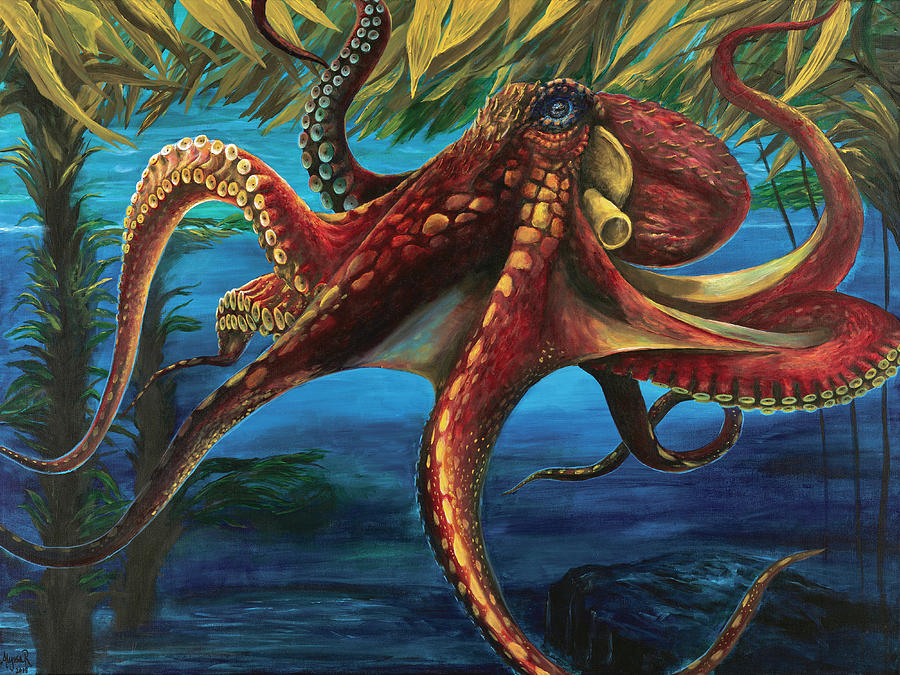


If octopuses did not exist, it would be necessary to invent them. I don’t know if we could manage this, so it’s as well that we don’t have to. As we explore the relations between mind, body, evolution, and experience, nothing stretches our thinking the way an octopus does.

In a famous 1974 paper, the philosopher Thomas Nagel asked: What is it like to be a bat? He asked this in part to challenge materialism, the view that everything that goes on in our universe comprises physical processes and nothing more. A materialist view of the mind, Nagel said, cannot even begin to give an explanation of the subjective side of our mental lives, an account of what it feels like to have thoughts and experiences. Nagel chose bats as his example because they are not so simple that we doubt they have experiences at all, but they are, he said, “a fundamentally alien form of life.”

Bats certainly live lives different from our own, but evolutionarily speaking they are our close cousins, fellow mammals with nervous systems built on a similar plan. If we want to think about something more truly alien, the octopus is ideal. Octopuses are distant from us in evolutionary terms, have a nervous system of very different design, and bodies with no bones and little fixed shape at all. What is it like to be an octopus? The question is intrinsically interesting and, beyond that, provides a good way to chip away at the problem Nagel raised for a materialist understanding of the mind.

*.    *.    *

How do we approach questions about “what it’s like” to be something or someone? One way of asking these questions makes them impossible to answer regardless of what minds might be made of. In this interpretation, to ask what it’s like to be a bat or an octopus is to ask for a description, given from a third-person point of view, that encapsulates the animal’s experience itself. But having an experience will always be different from having a description of it. This will be true if we are biochemical machines and true also if there is a soul-like extra ingredient in the world. A gap between a first-person and a third-person point of view arises either way.

Descriptions are not completely powerless, though, in helping us get a grip on what the experience of another might be like. What a description can do, often very effectively, is prompt memories and guide the imagination—it can elicit memories of experiences that one has actually had and guide the construction of variations on these memories. Whenever one person describes an important experience to another, we rely on this sort of use of memory and imagination. It is more difficult if someone or something cannot talk, cannot offer a usable description in their own words. Then if we want to get a sense of what their experience might feel like, we must draw on information about their other forms of behavior and about how their senses and nervous systems work. If what is going on in them can be mapped onto what is going on in us when we have an experience that we know firsthand, we can say something about what an experience is like for them. Doing this does rely on the assumption that there is a systematic relation between how things feel and what goes on in the nervous system—just as listening to what someone says requires the assumption that real experiences lies behind her words.

The biologist Richard Dawkins offered a reply to Nagel’s challenge about bats in his 1986 book The Blind Watchmaker. One of the main differences between bats and ourselves, emphasized by Nagel, is bats’ use of sonar, sound pulses, for navigation. Nagel said that this was unlike any sense that we possess, and we cannot reach bat experience by imagining ourselves to have a more elaborate form of hearing. Dawkins replied that the use of sound in both human hearing and bat sonar is an incidental matter. Instead, using sonar as a bat would feel similar to the way seeing feels for us. We should not imagine sonar as upgraded hearing, but as modified seeing.

Dawkins based this claim on what sonar does for a bat. An animal that uses sonar constructs an internal model of the location of objects in space on the basis of stimuli from its environment. The information made available by sonar is not exactly the same as that made available by vision, and the resulting internal models will certainly differ, but, Dawkins argues, the feel of vision results from the way it enables you to make your way through the world, and that gives us some indication of what it feels like to navigate with sonar. This argument does not require that the same parts of the brain be used for each sense. Strikingly though, a 2011 brain-imaging study by Lore Thaler and her colleagues found that blind humans with some natural ability to echolocate using mouth-clicks were using parts of their brains normally dedicated to vision to process the clicks.

To work out what it might feel like to be another animal, we have to find some way to justify mappings between what goes on inside that animal and experiences that we can, through memory and imagination, partly conjure in ourselves. We do the same thing with humans who have different capacities and backgrounds from our own. Nagel accepted this claim about the human case but added that the more biologically distant the subject whose experiences we are inquiring into, “the less success one can expect with this enterprise.” I agree that the more distant the subject, the more difficult the project becomes. But who’s to say that success must remain elusive? On to the octopus.

*.    *.   *

An octopus has neurons, more or less like those of other animals, and many of them are organized into a brain. This brain evolved on an evolutionary path far removed from our own. All animals have common ancestors if we go back far enough in time, and the pattern of relatedness between different animal species takes the rough form of a tree, the “tree of life.” Our common ancestor with octopuses lies back near the beginning of the evolution of complex animals, perhaps 600 million years ago. That ancestor was a small, simple, marine animal—probably a flattened worm. Its many descendants include, on one branch, humans and the other animals with backbones (dolphins, bats, birds), and on another branch, a huge range of invertebrate animals, including the octopus.

The octopus’s evolutionary path from the ancestral worm is unusual among the invertebrates because it led, as our path did, to a large nervous system. A common octopus has around 500 million neurons. That is many fewer than we have, but it is in the same range as a dog’s brain, which has 600 million or so. The octopus, along with some of its cephalopod cousins, is an independent experiment in the evolution of a large nervous system, the only such experiment outside the vertebrates.

The result is an animal that is curious and a problem-solver. Some octopuses carry pairs of coconut half-shells around to reconstruct as spherical shelters. Octopuses can recognize (and take a disliking to) individual human keepers in aquariums. They learn the layout of their environment and hunt on long loops that take them reliably back to a den. Octopuses have eyes built on a “camera” design like ours, with a lens focusing an image. They also have sensitive chemical sensors in their suckers—they taste the world as they touch it. When watching their eyes, it is natural to think that perhaps octopuses are a bit like us, just with more arms and no bones. Like other animals, they use their senses to track what is going on around them and to guide action. Would being an octopus be so different from being a bat, or any other animal with fine-tuned senses and a complex nervous system?

Underneath the skin, though, octopuses have an organization that takes them even further from us than they appear on the outside. Invertebrates generally have less centralized, more “distributed” nervous systems than vertebrates such as us. Octopuses are mollusks (like oysters and clams), and their nervous systems are organized in part into ganglia, little knots of nerve cells, with links between the knots. Most mollusks do not have much of a central brain. Starting out from a molluskan layout of this kind, evolution increased the size of the octopus nervous system enormously. The outcome of this process was uncovered in the mid-twentieth century, especially by John Z. Young and Martin Wells, working at the Naples Zoological Station in Italy. They found a number of surprises, some of which had consequences for all of biology. In 1936 Young described nerve cells in squid that are vastly larger than those of other animals, so big that electrodes could be inserted directly into them to measure their electrical activity. Work on those neurons became the basis for our understanding of how all nerve cells function.

Young, Wells, and their colleagues found that the octopus nervous system has three main parts. One is a central brain, which is a squashing-together of many expanded ganglia. There are also two optic lobes, large structures directly behind each eye. But most of the neurons—about two-thirds of them—are not in the head at all, but in the arms themselves. The connections between the central brain and this more peripheral nervous system also seemed to these researchers to be quite slim. An octopus’s arms are packed with sensors responding to touch and chemistry, and the arms have enormous flexibility, able to bend in any direction at any point. So there is a lot going on in the arms, but the connections between arms and brain are apparently restricted to a narrow channel. From these anatomical facts and some experiments on behavior, the early researchers inferred that the arms have a good degree of independence from the central brain. They do their own sensing and their own responding. As Roger Hanlon and John Messenger summarized it in their 1996 book Cephalopod Behavior, the arms seemed “curiously divorced” from the brain, at least with respect to the control of basic motions.

This disrupts a first round of guesses about what it might be like to be an octopus. Working from our understanding of their senses and the way they live their lives, it’s natural to first imagine that the experience of an octopus is visually rich (though apparently in black-and-white) and augmented with elaborate chemical sensing. Everything touched by the arms is tasted. We can imagine something about what it might be like to live in this bright and tasty world. But then we realize that this line of thought might be fundamentally mistaken, as it assumes that an octopus is the same kind of psychological unit that a person is. It assumes that the locus of octopus experience is a psychological self, though perhaps a simple one, where the senses converge to generate a feeling of how the world is. This picture might be wrong because an octopus is not organized as we are. Vision certainly feeds into the central brain, but each arm also contains shorter arcs between sensing and action.

This organization of the animal’s control systems is the most difficult barrier to working out what octopus experience might be like. The best work I know of that bears on these issues is coming out of Benny Hochner’s laboratory at Hebrew University in Jerusalem. In a 2011 study from Hochner’s lab, Tamar Gutnick and her colleagues published a paper that looked at whether an octopus could guide a single arm along a complex maze-like path to a specific location to get food. The task was set up in such a way that the octopus could not merely let the arm’s sensors follow a chemical gradient to the food, as the arm had to leave the water at one point to reach the target location. But the maze walls were transparent and the target location could be seen. To solve the problem the octopus had to guide its arm through the maze with vision. Although it took a while, all but one of the octopuses in the experiment learned to get an arm through to the food. The study also noted, though, that when octopuses are doing well with this task, the arm finding the food does what looks like its own local exploration at various stages, crawling and feeling around. There may be a mixture of two forms of control here: central control of the arm’s general path and fine-tuning of the search by the arm itself. Another possibility is that, by means of attention of some kind, the octopus is exerting control over all the details of movements that might usually be more autonomous.

Suppose that the “mixed-control” option, which Hochner tends to favor as an interpretation, is right. What would octopus experience be like? A range of partial analogies can be drawn with the human case. I visited Hochner’s lab with another philosopher, Laura Franklin-Hall, who wondered: Would an octopus experience its arms more as parts of its environment than as straightforward parts of itself? The arms would not be experienced entirely as environment, because they can be centrally controlled to some extent—they are less “divorced” from the brain than earlier researchers suspected. But once an arm has been sent in a certain direction, to some extent it is on its own. An analogy might be drawn with actions such as blinking or breathing. These are activities that normally happen involuntarily, but through attention you can assert control over them. The analogy is imperfect because although breathing is normally involuntary, when you do intervene to do it voluntarily, the control can be very fine-grained. In that case, attention is used to take over what is normally an automatic process. In the octopus, if the mixed-control interpretation is right, central guidance of the movements is never complete, and the peripheral system always has its say. Expressed too anthropomorphically, you would send an arm out deliberately and hope the local fine-tuning goes right.

Action by an octopus, then, would mix elements that are usually distinct in animals like us. When we act, the border between self and environment is usually fairly clear. When we move an arm, the arm can be controlled both in its general path and in the details. You can then watch your arm move, but what you are watching are the consequences of choices, or perhaps of habits that are the remnants of earlier choices. Various other things in the environment are not under your direct control at all, though they can be moved indirectly by manipulating them with your limbs. Uncontrolled movement by an object around you is usually a sign that it is not part of you at all (with partial exceptions for knee-jerk reflexes and the like). If you were an octopus, these distinctions would be blurred. Your arms would move in a way that is a mix of the centrally and peripherally controlled. To some extent you would guide them, and to some extent you would just watch them go.

One might wonder whether the guided action seen in the Gutnick experiment is a normal behavior for an octopus or instead something entirely artificial. When searching for food, an octopus often puts all its arms around or under a rock and seems to just let them roam. If the experimental behavior is unusual, that would not make the work uninteresting. The fact that the octopus can solve the problem—can pull itself together in this way—would still be significant. However, the behaviors in the experiment may not be that unnatural in any case. I once saw an octopus searching for food at a boulder underneath which a large shark was resting. The octopus held its body well back and stretched one arm under the boulder, very long and straight, and seemed to watch its path closely.

There is also a more directly skeptical response to these ideas about octopus experience and the self-environment relationship. I’ve assumed up to this point that it makes sense to think that an octopus could have a feeling of agency, a feeling that tracks the difference between what it is controlling and what is merely happening. But perhaps this is so sophisticated a form of experience that it is beyond any non-human animal? Although animals do act, perhaps they cannot feel that they are doing so; the contrast between actions and other events would not be apparent to them.

For at least some animals, this is probably not true: they may indeed have awareness of a distinction between events they cause and those they do not. This has been the topic of a number of interesting recent experiments. In these studies chimps or monkeys first learn to play simplified video games, moving virtual objects by using a joystick, trackball, or another controller, trying to get certain objects to meet or collide and, in some cases, trying to get other objects to avoid collision. They then perform tasks of these kinds while another “distracter” object moves on the screen in similar ways to the object they are controlling. The objects then freeze and the chimps’ second task—the one the experiment is set up to study—is to indicate which object was moving under their control.

In a 2011 study by Takaaki Kaneko and Masaki Tomonaga, chimps did well on a task of this kind. They guided an object toward a moving target and then picked it out from a distracter whose motions were those of an object that had been guided by a chimp on an earlier trial. It’s reasonable to wonder if chimps are a special case here, but Justin Couchman has done a related series of experiments on rhesus monkeys. Couchman’s experiment had the monkeys doing a harder task than the chimps were faced with, and one of his four monkeys clearly mastered it.

Every report of this kind I have read raises interesting further puzzles. Kaneko and Tomonaga ran an additional experiment in which the chimps were controlling neither icon as it moved. Instead they were watching a recording of an entire earlier trial. Moving the trackball had no effect on any object. As expected, the chimps did better at choosing the right object when they were actually controlling it. But surprisingly, they did not do too badly—performed better than chance—even when neither object was under their control. How is this possible? What does it even mean to get the “right” answer when neither object is being controlled? The “right” object was the one that had been controlled in the earlier trial when it was recorded. The object being controlled at that time will tend to follow the target more closely than the object that had been a distracter in that trial. This difference in apparent goal-directedness might lead the chimps to be more inclined to choose that object. Given this, it is important that the chimps made better choices when they had real control of one of the objects.

Nothing like these experiments has been tried in octopuses, as far as I know, and a chimp or a monkey is a very different animal from an octopus. But the experiments certainly tell against the idea that awareness of agency is beyond all non-human animals.

Some philosophers working within a broadly materialist framework are opposed to asking questions about “what it’s like” to have a particular kind of mind. They regard this way of setting up the issues as misguided. I think these questions are good ones, as long as they are asked in a way that does not doom them to unanswerability from the start. The divide between first-person and third-person points of view is real regardless of what minds are made of. Knowing how an animal’s body and brain are put together does not put you into a state that is similar to what is going on inside that animal, so in that sense no description can tell you “what it’s like to be” that animal. Getting a sense of what it feels like to be another animal—bat, octopus, or next-door neighbor—must involve the use of memory and imagination to produce what we think might be faint analogues of that other animal’s experiences. This project can be guided by knowledge of how the animal is put together and how it lives its life. When the animal is as different from us as an octopus, the task is certainly difficult, but it is one worth undertaking. Doing so is part of the attempt to strike a balance between treating our minds as too private and mysterious to make scientific sense of at all, and treating them as less private and mysterious than they really are.

Monday, September 24, 2018

3032. Terrestrial Primary Production: Fuel for Life

By Knowledge Project, The Nature Education, No Date

Terrestrial ecosystems rely almost exclusively on the sun's energy to support the growth and metabolism of their resident organisms. Plants are quite literally biomass factories powered by sunlight, supplying organisms higher up the food chain with energy and the structural building blocks of life. Land plants, or autotrophs, are terrestrial primary producers: organisms that manufacture, through photosynthesis, new organic molecules such as carbohydrates and lipids from raw inorganic materials (CO2, water, mineral nutrients). These newly minted organic compounds lock up the sun's energy in chemical bonds, providing an energy currency accessible to heterotrophs, organisms that consume rather than produce organic molecules. In this way, primary producers are an essential vehicle for energy transfer from the sun to consumers, securing energy that can be passed from one consumer to another. The energetic and carbon-rich products of primary production supply consumers, including humans, with fuel to drive their metabolism while providing essential carbon-containing compounds that form the bricks and mortar of living cells.
Ecosystem ecologists have long been interested in two related metrics of terrestrial primary production. Gross primary production (GPP) is the total amount of carbon dioxide "fixed" by land plants per unit time through the photosynthetic reduction of CO2 into organic compounds. A substantial fraction of GPP supports plant autotrophic respiration (Ra), with the remainder allocated to the net primary production (NPP) of plant structural biomass in stems, leaves, and fruit, labile carbohydrates such as sugars and starch, and, to a much lesser extent, volatile organic compounds used in plant defense and signaling. Terrestrial GPP, therefore, relates to NPP as follows:
NPP = GPP - Ra
Net primary production (NPP) and standing biomass allocation for a 90-year-old Michigan forest estimated from inventory-based methods in which biomass growth is quantified over time (Gough <i>et al.</i> 2008)
Figure 1: Net primary production (NPP) and standing biomass allocation for a 90-year-old Michigan forest estimated from inventory-based methods in which biomass growth is quantified over time (Gough et al.2008)
© 2011 Nature Education All rights reserved. View Terms of Use
Both GPP and NPP are expressed as rates, usually in terms of their carbon currency (e.g., g C m-2 hr-1, tonnes C ha-1 yr-1). Because volatile organic compounds represent only a small fraction of NPP, the rate of total plant growth (or yield) in a terrestrial ecosystem is virtually synonymous with NPP, since biomass production is already discounted for respiratory expenditures that support plant growth and maintenance. The ratio of NPP to GPP, or carbon use efficiency, is the fraction of carbon absorbed by an ecosystem that is allocated to plant biomass production. Interestingly, carbon use efficiency is often remarkably similar across ecosystems located in different biomes, suggesting that ecosystems organize in a way that maximizes carbon allocation to growth.
Where do plants invest organic compounds designated for net primary production? Consider, as an example, a mature forest. The stems, leaves, flowers, and fruit are all visible displays of aboveground NPP (i.e., growth) that accrued over time — but what about belowground (root) NPP? Most of the NPP readily observed aboveground is matched in magnitude belowground by the less visible, but equally important, production of roots. For example, root growth comprised almost half of total ecosystem NPP in a ninety-year-old Michigan forest, indicating that belowground investments in biomass by plants are substantial (Figure 1). The total standing biomass of an ecosystem is a function of cumulative NPP over time minus biomass losses from senescence (i.e., death). In the same forest, stems (including trunks and branches) are the largest fraction of standing biomass, but roots comprise a quarter of the total biomass present in the ecosystem.

Measuring Gross and Net Primary Production

Meteorological towers like this one located in a temperate forest are distributed across ecosystems in all continents except Antarctica, providing assessments of carbon uptake by forest, grassland, desert, and crop ecosystems.
Figure 2: Meteorological towers like this one located in a temperate forest are distributed across ecosystems in all continents except Antarctica, providing assessments of carbon uptake by forest, grassland, desert, and crop ecosystems.
© 2011 Nature Education All rights reserved. View Terms of Use
Scientists use several complementary tools for quantifying terrestrial gross and net primary production at ecosystem to global scales. On-the-ground inventory based methods are commonly used in cropland, grassland, and forested ecosystems to measure NPP. This approach requires estimates of biomass production through periodic measurements of root, stem, leaf, and fruit growth. The growth over time of all plant tissues within a terrestrial ecosystem is equal to NPP. In this approach, aboveground (ears, stalks, leaves) and belowground (roots) corn biomass yield over a single growing season is equal to annual NPP of this crop ecosystem.
Recent technological advances also allow for on-the-ground estimates of terrestrial primary production using meteorological towers that measure the uptake or emissions of CO2 by ecosystems (Figure 2). Meteorological towers measure net ecosystem COexchange (NEE), which is equal to GPP minus ecosystem respiration or the quantity of CO2 respired by both autotrophs (plants) and heterotrophs (primarily microbes). GPP and NPP are calculated indirectly by adding ecosystem and heterotrophic respiration, respectively, to NEE. Meteorological approaches are employed worldwide in forest, agricultural, grassland, and desert ecosystems to track terrestrial primary production. For example, the international research network FLUXNET (Baldocchi et al.2001) supports observations of terrestrial primary production on six of seven continents.
At the global scale, satellite data combined with mathematical modeling is essential to providing worldwide estimates of terrestrial primary production. Several approaches have been used, but most notable are products derived from NASA's Moderate-resolution Imaging Spectroradiometer (MODIS), a satellite-mounted instrument that collects surface spectral, or color, data useful for tracking changes in the productivity of terrestrial and marine ecosystems. An example MODIS product is a "greenness" index of the Earth's surface used to estimate terrestrial primary production. Surface greenness and other remotely sensed data collected from space provide coarser assessments of NPP and GPP than inventory and meteorological tower based methods but have the advantage of providing estimates of terrestrial primary production for large areas where ground-based methods are not feasible.

Terrestrial Primary Production Over Time and Across the Earth's Surface

Patterns of terrestrial NPP at different timescales in a temperate forest: Daily net primary production (NPP) changes during the growing season in response to climate variables including solar radiation and precipitation, while the duration of NPP during the growing season (i.e., spring green-up to autumn leaf fall) is largely a function of photoperiod. Annual NPP changes from one year to the next in response to longer-term trends in climate, including shifts in total solar radiation caused by differences in cloud cover from year to year. Decadal patterns of NPP track changes in ecological succession (Gough <i>et al.</i> 2007, 2008).
Figure 3: Patterns of terrestrial NPP at different timescales in a temperate forest: Daily net primary production (NPP) changes during the growing season in response to climate variables including solar radiation and precipitation, while the duration of NPP during the growing season (i.e., spring green-up to autumn leaf fall) is largely a function of photoperiod. Annual NPP changes from one year to the next in response to longer-term trends in climate, including shifts in total solar radiation caused by differences in cloud cover from year to year. Decadal patterns of NPP track changes in ecological succession (Gough et al. 2007, 2008).
© 2011 Nature Education All rights reserved. View Terms of Use
Terrestrial primary production fluctuates over time and is closely coupled with physical (i.e., abiotic) and ecological (i.e., biotic) changes that play out over different timescales. On scales of seconds to hours, primary production during the growing season responds to environmental drivers of photosynthesis, generally increasing with photosynthetic photon flux density (PPFD) or the spectrum of solar radiation available to power photosynthesis. At the seasonal scale, terrestrial primary production of boreal and temperate ecosystems is tied to changes in temperature and photoperiod, or day length, (Figure 3) while in tropical regions seasonal precipitation patterns often dictate cycles of high and low primary production. Year-to-year, or interannual, changes in terrestrial primary production are often related to long-term climate variation including prolonged drought and, in some cases, variation from one year to the next in average annual temperature and solar radiation.
Over decades, a period that is meaningful to ecological succession, terrestrial primary production changes in response to shifts in plant competition and disturbance. Consider an abandoned field that undergoes a successional reversion back to forest. Plant communities will assemble during early succession, with fast-growing plants emerging first and because of low initial plant density there will be little competition for resources. As a result, total plant growth in the ecosystem, or NPP, will proceed at an increasingly higher rate for several years. NPP generally levels off or declines once plants start crowding one another and begin competing more intensively for limiting light, nutrient, and water resources (Figure 3). Terrestrial primary production also may change over time in response to natural disturbances such as insect outbreaks, wind, fire, and pathogens that diminish photosynthesis by reducing leaf biomass and causing plant death. Long-term increases in atmospheric CO2 and nitrogen deposition associated primarily with fossil fuel burning generally increase plant growth over long periods of time.
Terrestrial primary production varies considerably across the surface of the Earth and among different ecosystem types. Terrestrial primary production, both NPP and GPP, vary from north to south (or latitudinally) due to gradients in plant community composition, growing season length, precipitation, temperature, and solar radiation. However, east to west (longitudinal) differences in terrestrial primary production also exist. These spatial differences are illustrated in a map of global NPP derived from NASA's MODIS satellite (Figure 4). For example, there is a precipitous decline in NPP from east to west in middle North America that is largely a function of declining precipitation. NPP generally declines from tropical regions to the poles because of temperature and light limitations. Tropical forests tend to be much more productive than other terrestrial ecosystems, with temperate forests, tropical savannah, croplands, and boreal forests all exhibiting middle levels of primary production (Table 1). Desert and Tundra Biomes, limited by precipitation and temperature respectively, contain the least productive ecosystems. In addition to climatic regulation of terrestrial primary production, disturbance, management, and land-use change (including urbanization) play critical roles in determining spatial differences in terrestrial primary production.
The global distribution of land and ocean net primary production (NPP) estimated from spectral data gathered by NASA's MODIS satellite
Figure 4: The global distribution of land and ocean net primary production (NPP) estimated from spectral data gathered by NASA's MODIS satellite
Public Domain NASA Earth Observatory.
Tropical ecosystems, because of their high productivity and extensive footprint on the Earth's surface, comprise nearly half of global NPP and GPP (Table 1). Temperate ecosystems and croplands are also a substantial fraction of global terrestrial primary production, accounting for roughly a quarter of global NPP and GPP. Global estimates of terrestrial NPP range from 48.0 to 69.0 Pg (= Petagrams or 1015 g) C yr-1, with global terrestrial GPP estimated at 121.7 Pg C yr-1 or approximately double global NPP on land.
Biome Global GPP1 
(Pg C yr
 -1)
Global NPP2 (PG C yr-1)Ecosystem NPP3 (g C ha-1 yr 
Tropical forest40.816.0–23.1871–1098
Temperate forest9.94.6–9.1465–741
Boreal forest 8.32.6–4.6173–238
Tropical savannah and grasslands 31.314.9–19.2343–393
Temperate grasslands and shrublands8.53.4–7.0129–342
Deserts6.40.5–3.528–151
Tundra1.60.5–1.080–130
Croplands14.84.1–8.0288–468
TOTAL121.748.0–69.0 2377–3561
Table 1: Global and ecosystem-scale estimates of mean terrestrial gross and net primary production for the Earth's major biomes from remotely sensed satellite data and modeling students. 1 Petagram (Pg) = 1015 grams (g).
1. Beer et al. 2000; 2. Melillo et al. 1993; Potter et al. 1993; Prince & Goward 1995; Field et al. 1998; Beer et al. 2010 3. Melillo et al. 1993; Potter et al. 1993; Prince & Goward 1995 
Haberl et al. (2007) estimated that nearly a quarter of global NPP is used by humans annually in the production of crops for food and fiber, timber for wood products and paper, and in support of livestock grazing. Humans exert an additional influence on global NPP through fires. Many ecologists are concerned that the rising global demand for biofuels, together with continued human population growth, will increase this already large human appropriation of global NPP to the detriment of ecological food webs and biodiversity.

Terrestrial Primary Production and Global Change

Considerable research in ecosystem ecology centers on understanding how climate change is affecting the primary production of terrestrial ecosystems and, conversely, how ecosystems may moderate changes in global climate by absorbing anthropogenic CO2emissions. Terrestrial primary production is an important ecosystem service, locking up carbon in biomass that might otherwise exist in the atmosphere as CO2, a potent greenhouse gas. Recent evidence suggests, however, that terrestrial NPP may be declining in response to global warming and accompanying drought, with Zhoa & Running (2010) estimating a 0.55 Pg, or about 1%, reduction in global terrestrial NPP from 2000 to 2009. Continued declines in global NPP would not only reduce carbon sequestration by terrestrial ecosystems but also compromise food security and disrupt the foundation of food webs.

Summary

Ecosystem ecologists have long been interested in quantifying and understanding what controls terrestrial primary production. While gross primary production (GPP) is the total influx of carbon into an ecosystem through the photosynthetic fixation of CO2, net primary production (NPP) is this gross carbon influx discounted for plant respiratory costs of growth and maintenance. Net primary production forms the base of ecological food chains and is heavily manipulated by humans in the production of food, fiber, wood, and increasingly biofuels. Climate, disturbance, and ecological succession exert influences on terrestrial NPP and GPP, suggesting that mounting anthropogenic influences on global climate and land-use will have substantial effects on the future primary production of terrestrial ecosystems.

References and Recommended Reading


Baldocchi, D. et al. FLUXNET: A new tool to study the temporal and spatial variability of ecosystem-scale carbon dioxide, water vapor, and energy flux densities. Bulletin of the American Meteorological Society 82, 2415–2434 (2001).
Beer, C. et al. Terrestrial gross carbon dioxide uptake: Global distribution and covariation with climate. Science 329, 834–838 (2010).
Field, C. B. et al. Primary production of the biosphere: Integrating terrestrial and oceanic components. Science 281, 237–240 (1998).
Gough, C. M. et al. The legacy of harvest and fire on ecosystem carbon storage in a north temperate forest. Global Change Biology 13, 1935–1949 (2007).
Gough, C. M. et al. Controls on annual forest carbon storage: Lessons from the past and predictions for the future. Bioscience 58, 609–622 (2008).
Haberl, H. et al. Quantifying and mapping the human appropriation of net primary production in earth's terrestrial ecosystems. Proceedings of the National Academy of Sciences USA 104, 12942–12945 (2007).
Melillo, J. M. et al. Global climate-change and terrestrial net primary production. Nature 363, 234–240 (1993).
Potter, C. S. et al. Terrestrial ecosystem production - a process model-based on global satellite and surface data. Global Biogeochemical Cycles 7, 811–841 (1993).
Prince, S. D. & Goward, S. N. Global primary production: A remote sensing approach. Journal of Biogeography 22, 815–835. 1995.
Roy, J. et al. Terrestrial Global Productivity. San Diego, CA: Academic Press (2001).
Zhao, M. S. & Running, S. W. Drought-induced reduction in global terrestrial net primary production from 2000 through 2009. Science329, 940–943 (2010).

Wednesday, July 18, 2018

2973. The "Sunk Cost Fallacy" Not Limited To People

By Erica Goode, The New York Times, July 12, 2018


Suppose that, seeking a fun evening out, you pay $175 for a ticket to a new Broadway musical. Seated in the balcony, you quickly realize that the acting is bad, the sets are ugly and no one, you suspect, will go home humming the melodies.

Do you head out the door at the intermission, or stick it out for the duration?

Studies of human decision-making suggest that most people will stay put, even though money spent in the past logically should have no bearing on the choice.

This “sunk cost fallacy,” as economists call it, is one of many ways that humans allow emotions to affect their choices, sometimes to their own detriment. But the tendency to factor past investments into decision-making is apparently not limited to Homo sapiens.

In a study published on Thursday in the journal Science, investigators at the University of Minnesota reported that mice and rats were just as likely as humans to be influenced by sunk costs.

The more time they invested in waiting for a reward — in the case of the rodents, flavored pellets; in the case of the humans, entertaining videos — the less likely they were to quit the pursuit before the delay ended.
“Whatever is going on in the humans is also going on in the nonhuman animals,” said A. David Redish, a professor of neuroscience at the University of Minnesota and an author of the study.

This cross-species consistency, he and others said, suggested that in some decision-making situations, taking account of how much has already been invested might pay off.

“Evolution by natural selection would not promote any behavior unless it had some — perhaps obscure — net overall benefit,” said Alex Kacelnik, a professor of behavioral ecology at Oxford, who praised the new study as “rigorous” in its methodology and “well designed.”

“If everybody does it, the reasoning goes, there must be a reason,” Dr. Kacelnik said.

Even more important than the similarity among species was the study’s finding that sunk cost effects appeared only after the subjects had decided to pursue a reward, Dr. Redish noted, not while they were still deliberating whether to do so.

In effect, the animals seemed to consider the deliberation time not to be part of their investment — an indication, Dr. Redish said, that different brain processes might be at work in different aspects of decision-making.

The idea runs counter to the notion that “time is time, and you’re wasting it either way,” he said.

Shelly Flagel, an associate professor of psychiatry at the University of Michigan who was not involved in the study, said the research had “far-reaching implications across fields including education, economics, psychology, neuroscience and psychiatry.”

For example, she said, persisting in a behavior even though it has adverse consequences is reminiscent of the conduct “exhibited by people with addictions.”

“Once they start searching for their next ‘fix,’ they will often go hours or days on the same quest, even if it means giving up food, relationships, their job,” Dr. Flagel said.
Learning more about the distinct processes that go awry in psychiatric disorders like addiction might yield new strategies for treatment, she added.

In the study, led by a doctoral student, Brian M. Sweis, three research laboratories at the University of Minnesota collaborated to conduct tests on mice, rats and humans. The rodents were trained to forage for the flavored pellets — banana, chocolate, grape or plain — in a square maze with a “restaurant” in each corner.

The humans were taught to “forage” on a computer for videos of kittens, a dance competition, landscapes or bicycle accidents. Both rodents and humans were given an overall time limit for the foraging tasks.

In the rodents’ version of the task, the animal first entered an “offer zone” outside a restaurant and heard a pitched tone that informed it how long the wait would be for the pellet reward — a delay that varied randomly from 1 to 30 seconds.

The animal could skip the offer, in which case it was withdrawn, or it could enter the “wait zone” of the restaurant, setting off a countdown signaled by a descending tone. At any time during the countdown, the rodent could choose to leave the restaurant, but once it left it could not return without going all the way around through the other restaurant offer zones.

In the human version of the experiment, subjects were offered a video and presented with buttons saying “stay” or “skip.” A download bar informed them how long they would have to wait to view the video. Clicking the “stay” button started a countdown, and the screen showed the progression of the download.

The study found that the more time the rodents spent in the “wait zone,” the more likely they were to stick out the delay to the end, even though the longer they waited, the more it cut into their overall time to seek food.

Similarly, the longer the human subjects spent waiting for a video to download, the more likely they were to stay the course until the download was finished.

Surprisingly, the amount of time that the subjects — rodent or human — spent deliberating whether to accept the “offer” of a reward did not affect whether they quit before receiving it or stayed through to the end.

“Obviously, the best thing is as quick as possible to get into the wait zone,” Dr. Redish said. “But nobody does that. Somehow, all three species know that if you get into the wait zone, you’re going to pay this sunk cost, and they actually spend extra time deliberating in the offer zone so that they don’t end up getting stuck.”

Dr. Flagel, of the University of Michigan, noted that as compelling as the new research was, it was not without limitations, including the fact that the tasks presented to humans and rodents, though similar in some ways, were still quite different.

“The challenge moving forward,” Dr. Flagel said, “is going to be to know that one is truly capturing the same phenomenon across species. Or perhaps more appropriately, what is the meaning of the differences that will be revealed between species?”