Showing posts with label The Anthropocene. Show all posts

Saturday, December 17, 2022

3613. The Anthropocene: For Planet Earth, This Is the Start of a New Age

By Raymond Zanog, The New York Times, December 17, 2022


The official timeline of Earth’s history — from the oldest rocks to the‌ dinosaurs to the rise of primates, from the Paleozoic to the Jurassic and all points before and since — could soon include the age of nuclear weapons, human-caused climate change and the proliferation of plastics, garbage and concrete across the planet.

In short, the present.

Ten thousand years after our species began forming primitive agrarian societies, a panel of scientists on Saturday took a big step toward declaring a new interval of geologic time: the Anthropocene, the age of humans.

Our current geologic epoch, the Holocene, began 11,700 years ago with the end of the last big ice age. The panel’s roughly three dozen scholars appear close to recommending that, actually, we have spent the past few decades in a brand-new time unit, one characterized by human-induced, planetary-scale changes that are unfinished but very much underway.

“If you were around in 1920, your attitude would have been, ‘Nature’s too big for humans to influence,’” said Colin N. Waters, a geologist and chair of the Anthropocene Working Group, the panel that has been deliberating on the issue since 2009. The past century has upended that thinking, Dr. Waters said. “It’s been a shock event, a bit like an asteroid hitting the planet." 


I teach the history of science — you know, Copernicus, Kepler, Galileo,” said Francine McCarthy, an earth scientist at Brock University in Canada and member of the working group. “We’re actually doing it,” she said. “We’re living the history of science." 


Still, the knives are out for the Anthropocene, even though, or maybe because, we all have such firsthand familiarity with it.


Stanley C. Finney, the secretary general of the International Union of Geological Sciences, fears the Anthropocene has become a way for geologists to make a “political statement.”


Within the vast expanse of geologic time, he notes, the Anthropocene would be a blip of a blip of a blip. Other geologic time units are useful because they orient scientists in stretches of deep time that left no written records and sparse scientific observations. The Anthropocene, by contrast, would be a time in Earth’s history that humans have already been documenting extensively.

“For the human transformation, we don’t need those terminologies — we have exact years,” said Dr. Finney, whose committee would be the last to vote on the working group’s proposal if it gets that far.

Martin J. Head, a working group member and earth scientist at Brock University, argues declining to recognize the Anthropocene would have political reverberations, too.

“People would say, ‘Well, does that then mean the geological community is denying that we have changed the planet drastically?’” he said. “We would have to justify our decision either way.”

Philip L. Gibbard, a geologist at the University of Cambridge, is secretary general of another of the committees that will vote on the working group’s proposal. He has serious concerns about how the proposal is shaping up, concerns he believes the wider geological community shares. Like the zoologists who regulate the names of animal species or the astronomers who decide what counts as a planet, geology’s timekeepers work conservatively, by design. They set classifications that will be reflected in academic studies, museums and textbooks for generations to come.


“Everybody picks on the Anthropocene Working Group because they’ve taken so long,” said Lucy E. Edwards, a retired scientist with the United States Geological Survey. “In geologic time, this isn’t long.”

The geologic time scale divides Earth’s 4.6 billion-year story into grandly named chapters. Like nesting dolls, the chapters contain sub-chapters, which themselves contain sub-sub-chapters. From largest to smallest, the chapters are called eons, eras, periods, epochs and ages.

Right now, according to the current timeline, we are in — deep breath — the Meghalayan Age of the Holocene Epoch of the Quaternary Period of the Cenozoic Era of the Phanerozoic Eon, and have been for 4,200 years.

Drawing lines in Earth time has never been easy. The rock record is full of gaps, “a jigsaw puzzle with many of the parts missing,” as Dr. Gibbard puts it. And most global-scale changes happen gradually, making it tricky to pinpoint when one chapter ended and the next one began. There haven’t been many moments when the entire planet changed at once.

“If a meteor hits the Yucatán Peninsula, that’s a pretty good marker,” Dr. Edwards said. “But other than that, there’s practically nothing out there in the geologic world that’s the best line." 


The early Cambrian Period, around 540 million years ago, saw Earth explode with an astonishing diversity of animal life, but its precise starting point has been contested for decades. A long controversy led to the redrawing of our current geologic period, the Quaternary, in 2009.


“It’s a messy and disputatious business,” said Jan A. Zalasiewicz, a geologist at the University of Leicester. “And of course, the Anthropocene brings a whole new range of dimensions to the messiness and disputatiousness.”


Humanity’s Fingerprint


It took a decade of debate — in emails, academic articles and meetings in London, Berlin, Oslo and beyond — for the Anthropocene Working Group to nail down a key aspect of its proposal.

In a 29-to-4 vote in 2019, the group agreed to recommend that the Anthropocene began in the mid-20th century. That’s when human populations, economic activity and greenhouse gas emissions began skyrocketing worldwide, leaving indelible traces: plutonium isotopes from nuclear explosions, nitrogen from fertilizers, ash from power plants.

The Anthropocene, like nearly all other geologic time intervals, needs to be defined by a specific physical site, known as a “golden spike,” where the rock record clearly sets it off from the interval before it.

After a yearslong hunt, the working group on Saturday finished voting on nine candidate sites for the Anthropocene. They represent the range of environments into which human effects are etched: a peat bog in Poland, the ice of the Antarctic Peninsula, a bay in Japan, a coral reef off the Louisiana coast.


One site — Crawford Lake in Ontario, Canada — is small enough to walk around in 10 minutes. But it is so deep that the bottom layer of water rarely mixes with the upper layers. Whatever sinks to the floor remains undisturbed, gradually accumulating into a tree-ring-like record of geochemical change.

The working group’s members also voted this month on what rank the Anthropocene should have in the timeline: an epoch, an age of the Holocene, or something else.

The group isn’t disclosing the results of these or the other votes to be held in the coming months until they are all complete and it has finalized its proposal for the next level of timekeepers to ponder. It is then that a far more contentious debate about the Anthropocene could begin.

Many scholars still aren’t sure the mid-20th century cutoff makes sense. It is awkwardly recent, especially for archaeologists and anthropologists who would have to start referring to World War II artifacts as “pre-Anthropocene.”


And using nuclear bombs to mark a geologic interval strikes some scientists as abhorrent, or at least beside the point. Radionuclides are a convenient global marker, but they say nothing about climate change or other human effects, said Erle C. Ellis, an ecologist at the University of Maryland, Baltimore County.

Using the Industrial Revolution might help. But that definition would still leave out millenniums of planet-warping changes from farming and deforestation.


Canonizing the Anthropocene is a call to attention, said Naomi Oreskes, a member of the working group. For geology, but also the wider world.

“I was raised in a generation where we were taught that geology ended when people showed up,” said Dr. Oreskes, a historian of science at Harvard. The Anthropocene announces that “actually, the human impact is part of geology as a science,” she said. It demands we recognize that our influence on the planet is more than surface level.

But Dr. Gibbard of Cambridge fears that, by trying to add the Anthropocene to the geologic time scale, the working group might actually be diminishing the concept’s significance. The timeline’s strict rules force the group to impose a single starting point on a sprawling story, one that has unspooled over different times in different places.

He and others argue the Anthropocene deserves a looser geologic label: an event. Events don’t appear on the timeline; no bureaucracy of scientists regulates them. But they have been transformative for the planet.


The filling of Earth’s skies with oxygen, roughly 2.1 to 2.4 billion years ago — geologists call that the Great Oxidation Event. Mass extinctions are events, as is the burst of diversity in marine life 460 to 485 million years ago.

The term Anthropocene is already in such wide use by researchers across scientific disciplines that geologists shouldn’t force it into too narrow a definition, said Emlyn Koster, a geologist and former director of the North Carolina Museum of Natural Sciences.

“I always saw it not as an internal geological undertaking,” he said of the Anthropocene panel’s work, “but rather one that could be greatly beneficial to the world at large.”


Human

population

2020

7.7 billion people

7

billion

6

How Humans Took Over the Planet

The exponential rise of the human population has transformed Earth. Dense forests became farmland, cities rose and sprawled, fossil fuels that formed over millions of years were burned in a few decades, rapidly heating the planet.

5

4

ANTHROPOCENE

Proposed beginning:

70 years ago

2.5 billion people

3

2

MEGHALAYAN AGE

4,200 years ago

27 million people

1

HOLOCENE

11,700 years ago

4 million people

11,000

10,000

9,000

8,000

7,000

6,000

5,000

4,000

3,000

2,000

1,000

0

Years before 2020

ANTHROPOCENE

HOLOCENE EPOCH 11,700 years ago

Homo sapiens evolve

300,000 years ago

HOLOCENE

QUATERNARY PERIOD 2.58 million years ago

Late Cenozoic

Ice Age begins

34 million years ago

Dinosaurs go extinct

65 million years ago

QUATERNARY

CENOZOIC ERA 66 million years ago

Dinosaurs appear

252 million years ago

First mammals appear

178 million years ago

CENOZOIC

PHANEROZOIC EON 541 million years ago

First life on Earth

form (microorganisms)

3.7 billion years ago

First fungi and

multicellular life

1.5-2 billion years ago

Earth forms

PHANEROZOIC

HADEAN EON

ARCHEAN EON

PROTEROZOIC EON

4.6 billion

4 bill

Sunday, January 31, 2021

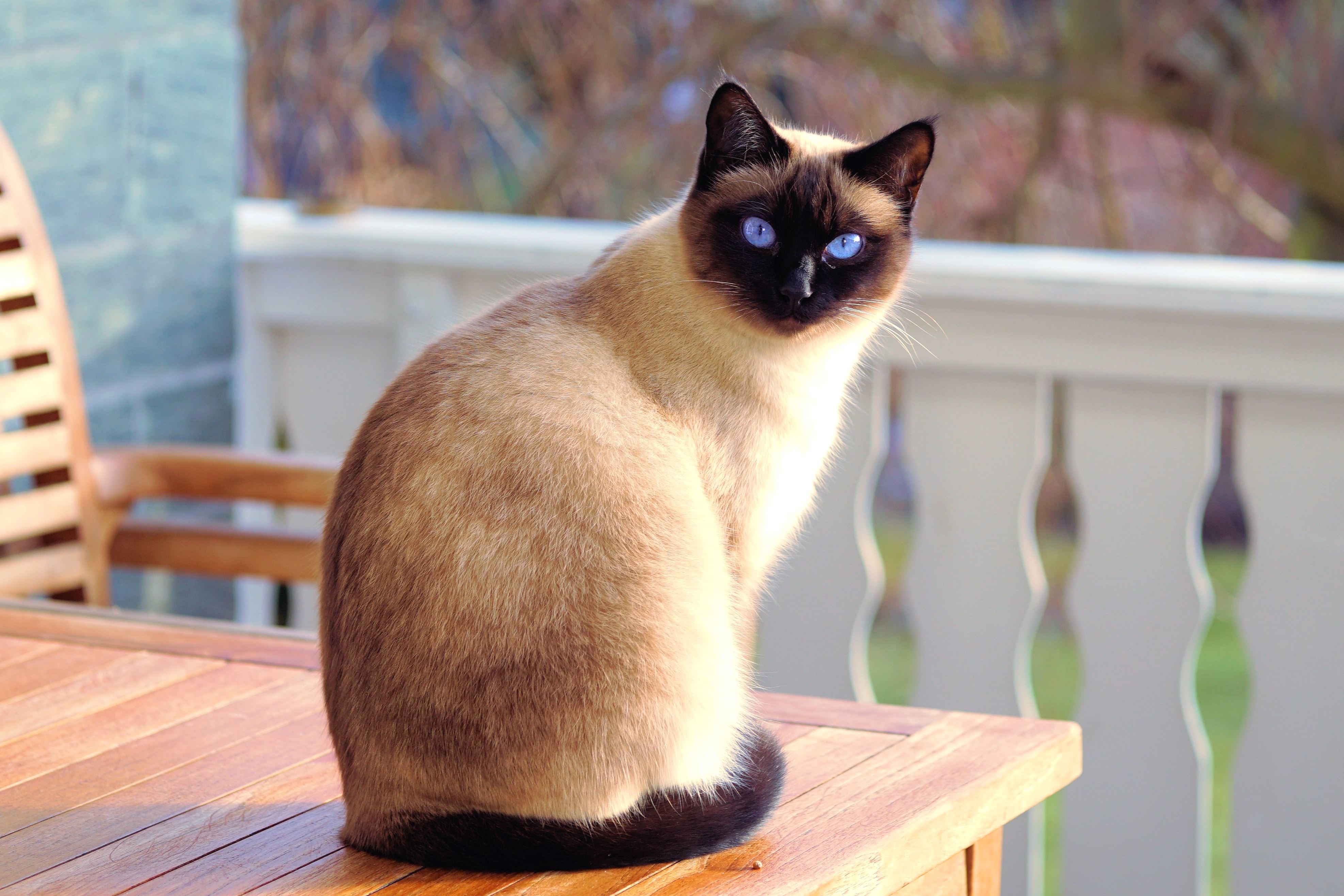
3473. Our Wild Companions: Domestic cats in the Anthropocene

 By Sarah L.CrowleyMartinaCecchetti, and Robbie A.McDonald, Science Direct, June 2020


Highlights

Cats are among the most popular companion species in the world, yet there is growing evidence of the environmental impacts wrought by their large populations.

The history of their domestication and association with human societies has been effectively traced with archaeological and genetic studies of contemporary and ancient DNA.

We assert that the growing conflict over cat management is underpinned by an adaptive push-and-pull between the wild and the domesticated traits of cats, aligning with their dual societal roles as companions and pest controllers.

Sustainable solutions require a novel ‘companion animal ecology’ and recognition that cats are not exclusively pets or pests, but are central to human societies, while having important, often adverse, environmental impacts.

Cats share a long history with humans but are remarkable among domesticated species in largely retaining behavioural and reproductive independence from people. In many societies, the cat maintains liminal status as both a domestic and a wild animal. An adaptive push-and-pull between wild and domestic traits corresponds with dual roles as companions and pest controllers, and with conflicted treatment in husbandry, management, law, and public discourse. To move forward, we must proceed by understanding that cats are not exclusively pets or pests, but both a central component of human societies and an important, often adverse, influence on ecosystems. Developing a collaborative ‘companion animal ecology’, in which human–animal domestic relations link to ecological processes, will enable sustainable management of this wild companionship.

Cats, Companionship, Conservation, and Conflict

The places and roles of domestic cats Felis catus in contemporary societies and ecosystems are contentious issues. A growing body of ecological research quantifying the scale and impact of cat predation of wildlife [1.2.3.] has led conservation advocates into clashes with cat enthusiasts, in controversies dramatically characterised as ‘Cat Wars’ [4]. Debates about cats have indeed become combative and polarised, especially in the USA [4], where cat and wildlife enthusiasts and their organisations level accusations at one another of making inflated or false claims about the ‘real’ impact of cats on wild animals [5]. However, to demarcate and reinforce a neat division between ‘cat people’ and ‘wildlife people’ is to oversimplify the issue, and combative narratives may serve only to alienate the people best placed to address the challenges identified, i.e., the cat owners. Many cat owners are concerned about wildlife conservation or the welfare of prey animals, and people who identify themselves as conservationists often keep cats as pets [6]. Furthermore, the roles of cats in both human societies and wider ecosystems are complex and not reducible to claims that cats are either an innocent blessing or an invasive scourge. Here, we argue that the fraught contemporary relationships between cats and human societies reflect a longstanding, important symbiosis that is both maintained and challenged by the resistance of the ‘domestic’ cat to complete domestication, and by the duality of its roles as autonomous predator and ostensibly dependent companion.

Cats and People: A Dynamic and Enduring Symbiosis

Modern domestic cats are descended from the Near Eastern wildcat Felis silvestris lybica [7]. It has been proposed that cats ‘self-domesticated’ through a fortuitous combination of ecological and sociocultural circumstance, whereby individual cats that tolerated humans were able to take advantage of the hunting and scavenging opportunities provided by early settlements [8]. A degree of variation among people in their acceptance of cat presence is likely in this ‘self-domestication’, especially in light of more commonplace antagonistic relations between humans and sympatric carnivores. Cats seen killing increasingly problematic rodents around food stores would have been appreciated as low-maintenance pest controllers [9] and may have conferred significant advantages upon the individual people expressing tolerant behaviour towards them. The value of domestic cats as predators-in-residence certainly played a significant part in their global spread, as they were employed for rodent control on trade ships and in the outbuildings of emerging civilisations [10]. The special and multiple roles of the cat in ancient Egypt are well known, with cats frequently depicted as commensals, pest controllers, religious icons, and sacrifices. It is also in Egypt that the role of the cat as a domestic companion emerged, with house cats clearly portrayed in artefacts from the Middle Kingdom [11]. Genetic lineages with Egyptian origins have recently been identified as having contributed significantly to the international domestic cat gene pool, indicating that Egyptian cats enjoyed considerable popularity, potentially linked to desirable characteristics, such as increased tameness and sociality [10].

While, in some regions, cats are still treated more as commensals than pets [12], companionship has become the cat’s primary role in many societies. As household pets, cats provide company, affection, and enjoyment for millions of people, and, in some cases, cat ownership may also confer health benefits (although evidence is mixed) [13]. The expansion of the pet-food industry and increased availability of cheap protein has enabled growing numbers of people to provide for the demanding diet of an obligate carnivore, and the mid-20th century invention of cat litter has allowed urban residents to keep pets largely or wholly indoors.

Nevertheless, today’s cats are unusual among domesticated species in that they (i) exhibit comparatively few morphological changes compared with their wild ancestors; and (ii), apparently unlike dogs [10], have not been purposively selected to fulfil particular roles in human societies. Excepting pedigree breeds, most of which have been developed within the last 150 years [14], most cats continue to self-select through unregulated breeding. They remain capable of sustaining themselves without human assistance, as demonstrated by the global success of feral cats, both living in colonies near reliable food sources and reverting to predatory, solitary lifestyles (Box 1). Yet, modern cats are also well adapted to living in close association with humans, and most rely on human provisioning or anthropogenic environments (Figure 1). They are predisposed to form attachments with people during early developmental stages, tolerate the presence of humans, other cats, and other domestic animals far better than wilder felids, and exhibit distinctive behavioural traits (including vocalisations and body language) that facilitate effective interspecies communication [15]. Contemporary societies, especially in Europe, are often broadly tolerant of roaming pet cats, and suggestions that cats should be kept indoors can be strongly resisted (although, again, cat husbandry practices are culturally variable [15,16]). The territoriality of cats, and their attachment to place over people, may be the distinguishing feature that makes this unusual arrangement possible; they are independent, yet relatively self-restricting in their roaming behaviour.

Box 1

Feral Cats

Cats exist on a spectrum of human responsibility and control over their movement, feeding and reproduction (see Figure 1 in the main text). Cats living independently of human provisioning and behavioural management are usually called ‘feral’ (although this can also refer to any unowned cat). In Australia, distinguishing between companion, stray, and feral cats has been important for designating feral cats as pests (in some jurisdictions) and implementing management accordingly [36]. Latest estimates suggest that Australia has a fluctuating feral cat population of 2.1–6.3 million [37]. There, the ecological impacts of cats on native fauna are becoming increasingly well understood [3,27]; Woinarski et al. [27] calculated that feral cats have been a major contributing factor in at least 27 extinctions of Australian mammals, reptiles, and birds.

There is a relatively high level of public support for active feral cat management, including lethal control [16,27,38] in Australia. However, in the USA, there is significant public controversy surrounding feral cat management [4], particularly in urban areas, where ‘community cats’ may be valued. Elsewhere (e.g., Europe, South America, and New Zealand) owned, stray, and feral cat populations are often fluid in their connections and, while sometimes differentiated for regulatory purposes, may not be considered distinct entities by lay publics [39].

Our discussion focusses on human–cat relationships, and some of our suggestions (e.g., effectively engaging cat owners) do not apply to feral populations. Nevertheless, feral cat research and management should still be included in a more holistic ‘companion animal ecology’. Conceptually, and often practically, it is difficult to fully disassociate feral populations from owned and semiowned cats; cats can shift between categories over the course of their lifetime, urban strays are a grey area, and all domestic cats can freely interbreed [40].

Those who value cats as individuals may be just as concerned for the lives and welfare of feral cats as for their own pets [41]. Even in Australia, survey evidence indicates some resistance to stringent management of owned cats (e.g., 24 h curfews) and ambiguity about lethal control; cat owners tended to be less supportive of both than nonowners [38]. The presence of free-ranging owned cats also limits options for managing feral cats, due to uncertainty of ownership status (e.g., in rural Europe) or the risk of introduced pathogens or toxic baits affecting owned cats (e.g., in Australia and New Zealand).

Figure 1Figure 1

Cats and humans have long benefitted from these close associations, although the dynamics of the relationship have varied over time. It is apparent that many people regard cats with a deep affinity, extending sometimes to reverence, a nebulous, but arguably key, feature of the human–cat relationship, maintained despite the diminishing role of cats as pest controllers. However, interactions between people and cats are not universally positive; a proportion of most human populations expresses an aversion to cats [15], and, without proper socialisation, cats do not bond effectively with people [17]. The relationship also carries risks for both species; living in close proximity to cats increases human chances of contracting zoonotic pathogens [18,19], while humans repeatedly demonstrate their capability to cause cats harm. Nevertheless, the cat–human relationship has endured, developed, and diversified over thousands of years and is best understood as a dynamic, mutualistic symbiosis, rather than an incidental or residual commensalism [20] (Figure 2).

Figure 2

Figure 2. The Many Lives of Domestic Cats in the Anthropocene.

(A) Most owned cats in postindustrial societies are primarily companion animals. (B) Some cats, particularly in rural areas, retain their traditional role as pest-controllers in residence. (C) In some regions, feral cats in natural areas are subject to control as invasive non-native species due to their negative impacts on native wildlife. (D) Globally, stray and semiowned cats live in and around human settlements, often forming urban colonies.

A Ubiquitous Species of Global Significance

Today, cats are almost invariably found wherever humans are (with some notable exceptions, such as oceanic islands from which they have been eradicated), often living at high densities. They are a prominent driver of the growth of global pet industries and have extensive symbolism and significance that transcends cultural and linguistic differences (as evidenced, for example, by their notorious internet celebrity). Their ubiquity and abundance mean that cats have global environmental significance. First, their requirement for meat creates demand for animal protein, the production, processing, and transportation of which have environmental impacts in terms of carbon emissions and land and water use (although pet food may derive from by-products of human foods) [21]. Second, cats can act as vectors and reservoirs of zoonotic infections [18], from rare but invariably fatal rabies to globally distributed Toxoplasma gondii [22]. Finally, although the population-level significance of domestic cat impacts on wildlife varies depending on context and scale, and even if a minority are prolific hunters, large numbers of free-ranging and feral cats will kill correspondingly large numbers of small birds, mammals, reptiles, amphibians, and insects [2,3,23]. Cats on oceanic islands, similar to other introduced predators, can have devastating effects on poorly adapted species, such as ground-nesting birds [24]. Domestic cats often live in much higher densities than other wild mesopredators [25]. Cats can also have indirect effects on the success of other species, including through hybridisation, transmission of infections, and behaviour change [26]. Therefore how, and to what extent, humans manage cats and their behaviour are important questions with implications for both species, and for ecosystems worldwide.

Semidomestication as a Source of Tension

Cats maintain a double identity as both wild (they are largely autonomous) and domestic (they have close associations with and dependencies on humans) animals. Recognising this duality is key to understanding the social tensions to which cats are central. Both forms of human–cat relationship (functional and familial) emerged relatively early during the association of F. s. lybica with humans [8,10], yet selection for the traits underpinning these roles means they continually pull against one another. To be effective pest controllers, cats require autonomy and hunting prowess, while to be favoured companions, humans prefer cats that express more sedentary behaviour and affectionate attachment. Thus, tensions between the cat as ‘wild hunter’ and as ‘domestic companion’ are readily identifiable in human behaviour and attitudes towards cats. Cat management is often regulated by both animal welfare and wildlife laws, with different legislative instruments applied depending on the location of the cat and its ownership status; in Australia’s Northern Territory, for example, unowned cats are subject to control as feral animals; pet cats are not, but must be microchipped and (in some council areas) registered [27]. There are also marked differences in husbandry practices for cats kept as utility animals (e.g., on farms), where they often live in outbuildings and are permitted to breed freely, and those bred, kept, and pampered as companions.

Roaming cats can be considered a nuisance due to their toileting, fighting, and hunting behaviours. In postindustrial societies where pet cats are becoming more popular in (sub)urban spaces, their hunting habits are increasingly perceived more as a nuisance than a service. Often, concerns about nuisance behaviour are expressed as desire that cats should be under tighter control, and that their actions are the responsibility of their owners. There is also continuing disagreement, among cat owners, about the welfare and safety implications of confining cats indoors versus allowing them to roam, a debate that pits the actual and perceived risks of wild independence (disease transmission, accidents, and loss) against those of domestic confinement (boredom, obesity, and stress) [28]. However, the most prominent contemporary controversy surrounds the impact of cats on wildlife, and is dominated by two vocal interest groups: cat advocates, on the one hand (particularly proponents of urban and other free-ranging cat ‘colonies’) and, on the other, wildlife conservation advocates (particularly those interested in birds and, in Australia, endemic mammals). Wildlife advocates link population declines with high numbers of free-ranging and feral cats and tend to recommend robust management solutions. Cat advocates conversely argue that domestic cats are scapegoats, taking the blame for environmental changes attributable to other anthropogenic factors.

The dual status of the species as both wild predator and domestic companion underpins much of this division among people. Cat advocates primarily recognise and value the ‘domestic’ side of cats. They believe that the longstanding relationship of cats with, and reliance upon, humans means that people should demonstrate compassion towards them, even when they are living beyond direct human control. Conversely, wildlife advocates primarily recognise the ‘wildness’ of cats; that, despite their domestication, the continuance of their lives beyond the backyard means they cannot be ignored as agents of ecological harms. There is truth in both analyses, because cats as a species, and indeed as individuals, are, in practice, simultaneously domestic and wild, companions and hunters, valuable and harmful. Their enduring symbiotic relationship with humans means that the domestic cat cannot readily be reclassified as a wild animal for the purposes of management. Simultaneously, however, the entwining of cat and human lives and histories means that cats are jointly implicated with humans in the major environmental disturbances of our time. What is needed to move this debate forward is greater recognition from each human ‘side’ that there is the other ‘side’ of cats to be taken into account, and a greater willingness to recognise and work within the messy, difficult, multispecies histories and legacies of human–cat relations [29].

Concluding Remarks

It is not only in public disputes about management that divisions persist. Scientific research on cats divides between veterinary and animal sciences that focus on largely clinical and behavioural aspects of health and welfare, and research in ecology and conservation biology that examines hunting behaviour and environmental impacts. There is, therefore, a need for these disparate strands of research to be drawn together through interdisciplinary collaboration and communication, particularly because there are areas of shared concern for those with both welfare and ecological interests (e.g., managing feral cat populations or zoonotic disease). There is also room for new research approaches (see Outstanding Questions) that recognise and account for the continuum between wild and domestic, along which cats unavoidably live. Given that the ecology of cats is understudied, certainly relative to their global abundance and impacts, there is opportunity for formulating an interdisciplinary ‘companion animal ecology’ where anthropogenic factors are acknowledged as integral to ecological processes, as in agricultural and urban ecologies. Research in this area might take novel approaches to investigating the interactions of roaming cats with wildlife, other domestic animals, and human inhabitants; their exceptional population ecology and use of natural and anthropogenic spaces; and their roles as reservoirs and carriers of disease. The same principles apply to research addressing cat impacts and their management. Given that cat populations and behaviour are influenced, directly and indirectly, by human behaviour, integrating cat owners as research participants will be vital to improving our understanding of human–cat–environment relations, and to the development and application of effective, sustainable solutions to the environmental challenges created by the global abundance of people and their cats. Recent research has provided important insights into drivers of cat owner behaviour [28,30.31.32.] and the effectiveness of different techniques for communication and behaviour change [33.34.35.]. However, beyond behaviour change initiatives, good-faith engagement between cat owners and advocates, wildlife conservationists, and scientists will be vital to understanding differing perspectives, concerns, and priorities, and to constructively deliberating on human responsibilities to and for domestic cats. Researchers, environmental advocates, cat owners, and policymakers must work collectively towards realistic, gradual changes to practices and cultures that will ensure the enduring relationship between people and cats becomes a sustainable one.

Outstanding Questions

Formulating a ‘companion animal ecology’

How do the domestic lives of companion animals interact with their wild lives and those of other animals?

How do owned and unowned companion animals use different types of landscape?

How do outdoor cats interact directly and indirectly with humans, wildlife, and other domestic animals, in a range of ecological and social contexts?

How might interventions in their domestic husbandry affect the environmental impacts of abundant companion animal populations?

Building collaboration between disciplines

How might multiple disciplines of veterinary, ecological, and social research be aligned around shared, or mutually compatible, concerns?

How does animal husbandry (e.g., nutrition, enrichment, or healthcare) affect cat ecology and behaviour? This encompasses (i) roaming and hunting behaviour; and (ii) the epidemiology of companion species in animal and zoonotic infections, with significant feedbacks for companion animal health and welfare.

How do environmental factors affect companion animal behaviour, health, and welfare?

Participatory research and deliberative decision-making

How might cat owners (and guardians of other companion animals) become research partners? Effective engagement of owners in developing, conducting, and communicating research could improve uptake of policy and practice recommendations.

What are owners’ priorities and concerns when managing and caring for companion animals? Understanding people’s decision-making and practices will be key to identifying workable strategies and interventions.

How can management best be negotiated between interest groups to achieve sustainable, mutually acceptable (or ideally beneficial) outcomes?

What is the role of policy and regulation in ensuring sustainable management of companion animals?

What constitutes (environmentally) responsible pet ownership, and how might societies determine their individual and collective responsibilities to other animals, both wild and domestic?

Author Contributions

S.L.C. and R.A.M. conceptualised and co-wrote the manuscript. M.C. provided critical review and revisions.

Acknowledgements

The ‘Cats, Cat Owners and Predation of Wildlife’ project is sponsored by SongBird Survival. We are grateful to members of the project advisory group for their helpful comments on an earlier draft of this paper.

References