Tuesday, June 28, 2016

2357. Oakland Votes to Block Large Shipments of Coal

By Thomas Fuller, The New York Times, June 28, 2016
A year-long effort that included community and labor groups as well as the climate justice groups proved susceesful.


SAN FRANCISCO — The city of Oakland, Calif., on Monday banned the transport and storage of large coal shipments, a blow to a developer’s plans to use a former Army base as an export terminal to ship coal to China and other overseas markets.

The terminal would have been the largest coal shipment facility on the West Coast, with a planned capacity to increase coal exports in the United States by 19 percent, according to the Sierra Club, the environmental group.

Weeks of feisty debate over the ban, which the Oakland City Council unanimously passed late Monday night and which will become law after a second reading next month, covered familiar ground: the trade-offs between jobs and environmental concerns.

But the debate also raised the larger and more unusual question of how much a city should weigh the global environmental impacts of the commodities that flow through its ports. A report prepared by the city argued for a coal ban partly because the coal, once it was burned overseas, would contribute to climate change and rising sea levels.

“Oakland cannot afford to ignore the scientific evidence that clearly show the harmful effects and risk associated with coal,” said Dan Kalb, a City Council member who proposed the ban along with the mayor, Libby Schaaf. “With this new law, we’re taking the steps needed to protect our community, our workers and our planet.”

The city’s report calculated that the millions of tons of coal exported annually through the port of Oakland would release significantly more greenhouse gases than produced each year by all five oil refineries in the San Francisco Bay Area. And the report noted that Oakland was especially vulnerable to rising sea levels.

The ban is the second blow for the coal industry on the West Coast in recent weeks. In May, the United States Army Corps of Engineers denied a permit for a coal terminal planned 90 miles north of Seattle on the grounds that it would endanger wildlife.

The report, which was prepared by Claudia Cappio, an assistant city administrator, warned of the risks of cancer, heart and lung ailments and childhood developmental problems resulting from exposure to what it called “fugitive dust emissions” — the airborne particles generated from handling, transporting and loading coal onto ships.
The coal would have been shipped from Utah and other western states to the Oakland Bulk and Oversized Terminal, which is on an abandoned Army base across the Bay from San Francisco.

The lead investor in the project, Phil Tagami, the chief executive and president of the California Capital and Investment Group, warned in an email of “legal consequences” from the decision.

“Exactly how much of the city’s limited resources and how many jobs for West Oaklanders are this Council willing to sacrifice on this crusade?” he asked.

Mr. Tagami is one of the most prominent developers in Oakland and is a friend and political supporter of California’s governor, Jerry Brown, a former mayor of the city.

A lawyer for Mr. Tagami, David Smith of the firm Stice & Block, wrote in a letter to the Council before the vote that a ban would be a “pronouncement to the world that Oakland is not a trustworthy or reliable place to invest or do business.”

Mr. Smith called the argument that the coal exported from Oakland increased the emissions of greenhouse gases “nonsensical and absurd” because power plants overseas would burn coal from somewhere else if they did not get coal from the Oakland port.
Mr. Smith also asked whether the concern over the global consequences of the coal would apply to other goods that move through the city and its ports. “Under this approach, the city would have to hold gas station owners responsible for greenhouse gas emissions from cars that refuel at their facility,” he said.

The vote comes at a time when Oakland is increasingly shifting toward technology jobs — and away from the city’s blue-collar heritage. Pandora, the streaming music service, is based in Oakland, and Uber is moving its headquarters there next year.

Thursday, June 23, 2016

2356. The World’s Disappearing Sand

By Vince Beiser, The New York Times, June 23, 2016

MOST Westerners facing criminal charges in Cambodia would be thanking their lucky stars at finding themselves safe in another country. But Alejandro Gonzalez-Davidson, who is half British and half Spanish, is pleading with the Phnom Penh government to allow him back to stand trial along with three Cambodian colleagues. They’ve been charged, essentially, with interfering with the harvesting of one of the 21st century’s most valuable resources: sand.

Believe it or not, we use more of this natural resource than any other except water and air. Sand is the thing modern cities are made of. Pretty much every apartment block, office tower and shopping mall from Beijing to Lagos, Nigeria, is made at least partly with concrete, which is basically just sand and gravel stuck together with cement. Every yard of asphalt road that connects all those buildings is also made with sand. So is every window in every one of those buildings.

Sand is the essential ingredient that makes modern life possible. And we are starting to run out.

That’s mainly because the number and size of cities is exploding, especially in the developing world. Every year there are more people on the planet, and every year more of them move to cities. Since 1950, the world’s urban population has ballooned to over 3.9 billion from 746 million.

According to the United Nations Environment Program, in 2012 alone the world used enough concrete to build a wall 89 feet high and 89 feet wide around the Equator. From 2011 to 2013, China used more cement than the United States used in the entire 20th century.

To build those cities, people are pulling untold amounts of sand out of the ground. Usable sand is a finite resource. Desert sand, shaped more by wind than by water, generally doesn’t work for construction. To get the sand we need, we are stripping riverbeds, floodplains and beaches.

Extracting the stuff is an estimated $70 billion industry. It runs the gamut from multinational companies’ deploying enormous dredges to villagers toting shovels and buckets. In places where onshore sources have been exhausted, sand miners are turning to the seas.

This often inflicts terrible costs on the environment. In India, river sand mining is disrupting ecosystems, killing countless fish and birds. In Indonesia, some two dozen small islands are believed to have disappeared since 2005 because of sand mining. In Vietnam, miners have torn up hundreds of acres of forest to get at the sandy soil underneath.

Sand miners have damaged coral reefs in Kenya and undermined bridges in Liberia and Nigeria. Environmentalists tie sand dredging in San Francisco Bay to the erosion of nearby beaches.

People are getting hurt, too. Sand mining has been blamed for accidental deaths in Saudi Arabia, South Africa and Gambia. In India and Indonesia, activists and government officials confronting black-market sand mining gangs have been killed.
Stronger regulations can prevent a lot of this damage, and do in most developed countries. But there’s a downside. Sand is tremendously heavy, which makes it expensive to transport. If you forbid sand mining in your backyard — as many American communities are trying to do — then it has to be trucked in from somewhere else. That drives up the price. Concrete is relatively cheap; if the cost of making a new building or road were to double, it could hit the economy hard.

Not to mention the extra truck traffic and pollution. California state officials estimated that if the average hauling distance for sand and gravel increased to 50 miles from 25 miles, trucks would burn through nearly 50 million more gallons of diesel fuel every year.

We can make more sand, but crushing rock or pulverizing concrete is costly, and the resulting sand is ill suited for many applications. We can use alternative substances for some purposes, but what other substance can we possibly find 40 billion tons of, every year?

The fishing villages in the mangrove-rich estuaries of Cambodia’s Koh Kong province might be the canaries in the global sand mine. For years, villagers have complained that rampant sand mining is wiping out the crabs and fish that provide their living. Locals told me on a recent visit that families have had to send members to work in Phnom Penh garment factories, or have simply moved away. The dredging also threatens endangered native dolphins, turtles and otters.

Last year, members of Mother Nature, an environmental group led by Mr. Gonzalez-Davidson and others, began a campaign to rein in the mining, organizing villagers to blockade and board the dredging ships. The government, which had expelled Mr. Gonzalez-Davidson a few months earlier for blocking road access to government officials trying to reach a hydropower dam in the province, arrested three of the activists, charging them with threatening to damage dredging boats, an offense that could mean two years in prison (Mr. Gonzalez-Davidson was charged in absentia as their accomplice a few months later).

Mr. Gonzalez-Davidson, who lives in Barcelona, is petitioning to be allowed back to attend his own trial. Meanwhile, the three jailed Cambodians have been denied bail for the past 10 months. Their trial has finally been scheduled for the end of June.
There’s an urgent question of justice for them. For the rest of us, there’s a profound lesson. Hardly anyone thinks about sand, where it comes from or what we do to get it. But a world of seven billion people, more and more of whom want apartments to live in and offices to work in and malls to shop in, can’t afford that luxury anymore.

It once seemed as if the planet had such boundless supplies of oil, water, trees and land that we didn’t need to worry about them. But of course, we’re learning the hard way that none of those things are infinite, and the price we’ve paid so far for using them is going up fast. We’re having to conserve, reuse, find alternatives for and generally get smarter about how we use those natural resources. That’s how we need to start thinking about sand.

Vince Beiser, a journalist, is working on a book about the global black market in sand.

Tuesday, June 21, 2016

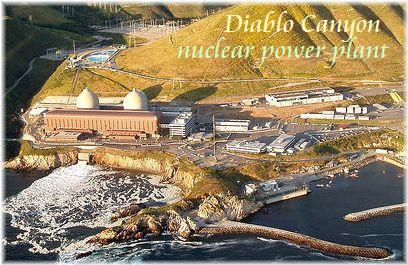
2355. Diablo Canyon Nuclear Plant to be Shut Down, Power Replaced by Renewables, Efficiency, Storage

By Friends of the Earth, June 21, 2016


BERKELEY, CALIF. - An historic agreement has been reached between Pacific Gas and Electric, Friends of the Earth, and other environmental and labor organizations to replace the Diablo Canyon nuclear reactors with greenhouse-gas-free renewable energy, efficiency and energy storage resources. Friends of the Earth says the agreement provides a clear blueprint for fighting climate change by replacing nuclear and fossil fuel energy with safe, clean, cost-competitive renewable energy. 

The agreement, announced today in California, says that PG&E will renounce plans to seek renewed operating licenses for Diablo Canyon’s two reactors -- the operating licenses for which expire in 2024 and 2025 respectively. In the intervening years, the parties will seek Public Utility Commission approval of the plan which will replace power from the plant with renewable energy, efficiency and energy storage resources. Base load power resources like Diablo Canyon are becoming increasingly burdensome as renewable energy resources ramp up. Flexible generation options and demand-response are the energy systems of the future.

By setting a certain end date for the reactors, the nuclear phase out plan provides for an orderly transition. In the agreement, PG&E commits to renewable energy providing 55 percent of its total retail power sales by 2031, voluntarily exceeding the California standard of 50 percent renewables by 2030.

"This is an historic agreement," said Erich Pica, president of Friends of the Earth. "It sets a date for the certain end of nuclear power in California and assures replacement with clean, safe, cost-competitive, renewable energy, energy efficiency and energy storage. It lays out an effective roadmap for a nuclear phase-out in the world's sixth largest economy, while assuring a green energy replacement plan to make California a global leader in fighting climate change.”

A robust technical and economic report commissioned by Friends of the Earth served as a critical underpinning for the negotiations. The report, known as “Plan B,” provided a detailed analysis of how power from the Diablo Canyon reactors could be replaced with renewable, efficiency and energy storage resources which would be both less expensive and greenhouse gas free. With the report in hand, Friends of the Earth’s Damon Moglen and Dave Freeman engaged in discussions with the utility about the phase-out plan for Diablo Canyon. NRDC was quickly invited to join. Subsequently, International Brotherhood of Electrical Workers Local 1245, Coalition of California Utility Employees, Environment California and Alliance for Nuclear Responsibility partnered in reaching the final agreement. The detailed phase out proposal will now go to the California Public Utility Commission for consideration. Friends of the Earth (and other NGO parties to the agreement) reserve the right to continue to monitor Diablo Canyon and, should there be safety concerns, challenge continued operation.

The agreement also contains provisions for the Diablo Canyon workforce and the community of San Luis Obispo. “We are pleased that the parties considered the impact of this agreement on the plant employees and the nearby community,” said Pica. “The agreement provides funding necessary to ease the transition to a clean energy economy.” 

Diablo Canyon is the nuclear plant that catalyzed the formation of Friends of the Earth in 1969. When David Brower founded Friends of the Earth the Diablo Canyon was the first issue on the organization’s agenda and Friends of the Earth has been fighting the plant ever since. This agreement is not only a milestone for renewable energy, but for Friends of the Earth as an organization.

Monday, June 20, 2016

2354. Green Party Moves Towards Declaring itself Eco-socialist

By Jonathan Nack, Indybay.org, June 15, 2016

Green Party 2012 convention

In a major development, the Green Party took a key step towards declaring itself Eco-socialist. The party’s National Committee voted Sunday night to approve a proposed amendment to the party’s platform entitled “Ecological Economics.” The proposed platform position declares that the Green Party is anti-capitalist and in favor of a decentralized vision socialism. 

The proposal to amend the 2016 platform will go to the Green Party National Convention for a final vote. The convention will be held in Houston, Texas, August 4-7, a week after the Democratic Party’s National Convention. Almost 78 percent of the National Committee voted in favor of sending the proposal to the convention (76 voted “yes,” 22 voted “no,” with 9 voting to “abstain,” on Proposal 835). 

The proposal would have the Greens go on the record, for the first time, that they want to go beyond reforms intended to make capitalism greener, in favor of a democratic and decentralized conception of green socialism. The proposal, “addresses the economic inequalities, social inequalities, and productivism of both capitalism and state socialism and emphasizes grassroots democracy in the workplace. This workplace grassroots democracy has been largely absent from the Green platform, and many believe it is the way forward for a truly ecological economy and a new system...The Green Party seeks to build an alternative economic system based on ecology and decentralization of power, an alternative that rejects both the capitalist system that maintains private ownership over almost all production as well as the state-socialist system that assumes control over industries without democratic, local decision making. We believe the old models of capitalism (private ownership of production) and state socialism (state ownership of production) are not ecologically sound, socially just, or democratic and that both contain built-in structures that advance injustices...Production is best for people and planet when democratically owned and operated by those who do the work and those most affected by production decisions.”  http://gp.org/cgi-bin/vote/propdetail?pid=835 

Andrea Mérida Cuéllar, the National Co-Chair of Green Party, told IndyBay, “The themes of the left that we saw develop in the early parts of the 20th century are timely again because of the economic, social and environmental upheaval wrought by late-stage capitalism. Even though these themes have been co-opted by the political center, it's clear that the working class in this country is ready for revolution. As the true left discusses reform vs. revolution, the Green Party is now uniquely positioned to finally be the electoral tactic of grassroots movements…we are now ready to finally become the party of the 99 percent and be worthy of the attention of an anti-oppressive and leftist worker cadre.”

2353. Giraffes Face 'Silent Extinction' Warns David Attenborough

By Zairah Khurshid, International Business Times, June 19, 2016


Only 90,000 giraffes still roam the African plains, far fewer than the endangered African elephant, according to Sir David Attenborough. Just 15 years ago there were believed to be about 150,000 giraffes in the wild. Since then, these numbers have fallen by 40%.

"These gentle giants have been overlooked," Sir David Attenborough says in Africa, the BBC documentary. "It's well known that African elephants are in trouble, and there are perhaps just over half a million left," said the wildlife expert. "But what no one realises is there are far fewer giraffes. They are killed for their meat, and their habitats are being destroyed. Time is running out." He followed a conservation team as they relocated 20 animals across the Nile in Uganda, to be safe from oil prospectors.

Despite the warning, the species official conservation status as judged by the International Union for Conservation of Nature is still "of least concern".
Dr Julian Fennessy, executive director of Giraffe Conservation Foundation, aims to mitigate threats to giraffes across Africa and raise funds for conservation projects.
"I am absolutely amazed that no one has a clue. This is a silent extinction. Some populations number less than 400," he said.

"That is more endangered than any gorilla or almost any large mammal in the world. Giraffes have gone extinct in seven countries in Africa. It's not going to happen again. There is no giraffe going to go extinct on my watch.”

Fennessy set up the Giraffe Conservation Foundation to move animals away from the drilling and worked with the Ugandan Wildlife Authority to move 20 of the Murchison Falls park giraffes. Experts believe growing human populations, fuel wood collections, hunting and drought have all contributed to the decline of giraffes.

One of the most endangered populations is a group of more than 1000 Rothschild's giraffes in Murchison Falls National Park, Uganda, beside the Nile. The land has at least 75% of Uganda's discovered oil, and drilling plans are under way.

Tom Okello, the park manager, said: "We keep some stock outside of the oil area so in the event that some impacts may come out of the oil, we have a separate population somewhere else.”

However, as the BBC documentary illustrates, giraffes cannot simply be tranquilised, as they might suffer fatal injuries as they fall. Once shot with a tranquiliser, they must be chased on foot and pulled to the ground using ropes. The teams have a 20-minute window to administer the antidote or the animal will die.

It is dangerous work, as the giraffes weigh more than a tonne and have a ferocious kick. They must be blindfolded and led into a trailer to be ferried over the river.

In the film, the animals are released, wearing specially designed satellite collars that fit around their ossicones - the hornlike structures on top of their heads. The collars are used to show the animals exploring their new home, some covering up to over 11,000km sq.

Sunday, June 19, 2016

2352. EPA Bans Fracking Wastewater from Sewage Treatment Plants

By Environment America, June 19, 2016
Swege treatment facility
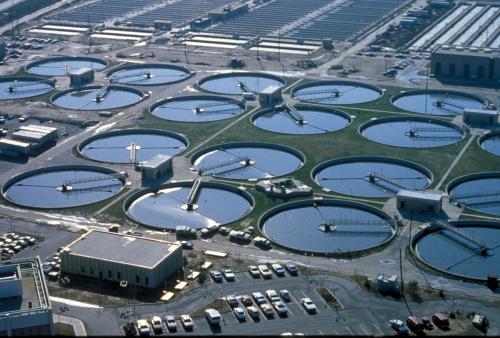
The U.S. Environmental Protection Agency (EPA) has banned fracking wastewater from public sewage plants, citing the inability of these plants to handle toxic and radioactive pollutants.
Clean water and public health advocates, along with more than 30,000 Americans, had submitted comments in favor of the EPA rule, finalized earlier this week.
“Allowing toxic, radioactive wastewater to be treated at the same place as dirty bathwater defies all logic,” Rachel Richardson, Stop Drilling Program director for Environment America, said. “This is a commonsense step to help protect our water and our health from the dangers of fracking.”
The final rule formalizes a practice in place since 2011, when fracking chemicals were detected in some Pennsylvania rivers and officials ordered 15 treatment plants to stop accepting and treating fracking waste.
Fracking or hydraulic fracturing, is the process by which large volumes of water along with sand and toxic chemicals are injected underground to extract shale gas. Much of this fracking fluid mixture returns to the surface as toxic wastewater, often with radioactive elements.
Municipal water treatment plants, which treat waste and then release it into drinking water supplies, aren’t suited to treat such hazards. The mixture of bromides in wastewater and the chlorine used at sewage treatments plants also can produce a toxin linked to bladder cancer, miscarriages and still-births.
Even under the rule issued this week, fracking wastewater disposal still presents a conundrum for public health and safety. Plants designed to treat fracking waste are far from foolproof, as Duke University researchers found in Pennsylvania. Waste often spills into rivers and streams during storage and shipment. And studies show injecting the waste deep underground is likely causing earthquakes.
While no known municipal treatment plants currently accept fracking waste, the option could have become more attractive to drillers as standards tightened on other waste disposal methods.
“Fracking wastewater is a big problem for which there is simply no adequate solution,” Richardson said. “We applaud EPA for taking this step to protect families on the frontlines of fracking. To fully protect our drinking water and the health of our families, we need to ban this practice altogether and transition to 100 percent clean energy.”

Saturday, June 18, 2016

2351. Cuba Reduces Use of Ozone Depleting Substances

By Orfillio Pleáez, Granma, June 17, 2016

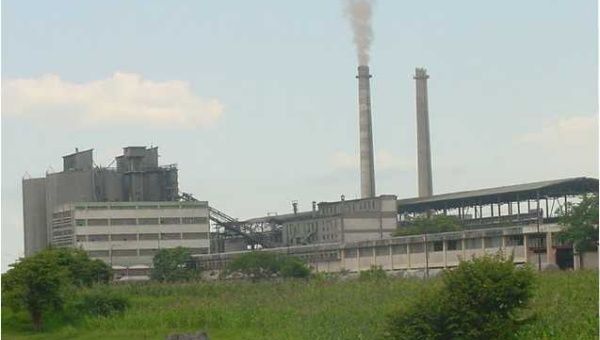
Siguaney cement factory in Sancti Spiritus, Cuba will be transformed into the region's first incineration plant for substances harmful to the ozone layer (Photo: Escambray) | Photo: Escambray
Fulfilling commitments made as a signatory of the Montreal Protocol on ozone depleting substances (ODS), Cuba has entirely eradicated chlorofluorocarbons (CFC) in commercial and domestic refrigeration, as well as those used in the manufacture of medical and industrial aerosols, according to Nelson Espinosa Pena PhD, director of the country's Ozone Technical Office (OTOZ), during the opening of the CONTAT 2016 workshop, taking place at the Cuban Meteorology Society's headquarters. The event is sponsored by the Meteorology Institute's Center for Research on Pollution and Atmospheric Chemistry.
He described the country's efforts to progressively reduce ODS, which include the complete elimination of methyl bromide in the fumigation of warehouses and in the cultivation of tobacco, coffee, ornamental plants, tomato, and other crops; the removal of carbon tetrachloride from laboratories; and the replacement of halon-based fire extinguishers, except on airplanes.
This significant effort, Dr. Espinosa reported, required the modernization of industrial plants with the introduction of new ODS-free technology; the fabrication of new products with more environmentally friendly characteristics; training in best practices for refrigeration mechanics and technicians; and the development of alternative biological pest control methods in agriculture.
He explained that currently being implemented is an accelerated timetable for the elimination of hydrochlorofluorocarbons (HCFC) by 2030, noting that a 10% reduction in their use had been achieved as of 2015.
Natacha Figueredo Valdés MSc, OTOZ expert, noted that, this past year, Cuba began the destruction of ODS at a modern facility equipped with Japanese technology, located within the Siguaney cement plant in the province of Sancti Spíritus.
These efforts have allowed Cuba to join a small group of nations in the region with the capacity to address the complicated issue of ozone depleting substances.