Tuesday, September 2, 2014

1534. Infrastructure Cracks as Los Angeles Defers Repairs

By Adam Nagourney, The New York Times, September 1, 2014
The site of a water main rupture last month in Echo Park, a Los Angeles neighborhood. Credit Monica Almeida/The New York Times
LOS ANGELES — The scene was apocalyptic: a torrent of water from a ruptured pipe valve bursting through Sunset Boulevard, hurling chunks of asphalt 40 feet into the air as it closed down the celebrated thoroughfare and inundated the campus of the University of California, Los Angeles. By the time emergency crews patched the pipe, 20 million gallons of water had cascaded across the college grounds.
The failure of this 90-year-old water main, which happened in July in the midst of a historic drought, no less, was hardly an isolated episode for Los Angeles. Instead, it was the latest sign of what officials here described as a continuing breakdown of the public works skeleton of the second-largest city in the nation: its roads, sidewalks and water system.
With each day, it seems, another accident illustrates the cost of deferred maintenance on public works, while offering a frustrating reminder to this cash-strained municipality of the daunting task it faces in dealing with the estimated $8.1 billion it would take to do the necessary repairs. The city’s total annual budget is about $26 billion.
Los Angeles’s problems reflect the challenges many American cities face after years of recession-era belt-tightening prompted them to delay basic maintenance. But the sheer size of Los Angeles, its reliance on the automobile and, perhaps most important, the stringent voter-imposed restrictions on the government’s ability to raise taxes have turned the region into a symbol of the nation’s infrastructure woes.
“It’s part of a pattern of failing to provide for the future,” said Donald Shoup, a professor of urban planning at U.C.L.A. “Our roads used to be better than the East Coast; now they are worse. I grew up here. Things are dramatically different now than they used to be.”
There are constant reminders of the day-to-day burdens that the dilapidating infrastructure poses here.
The city is battling a class-action lawsuit from advocates for disabled people because of broken sidewalks that are almost impossible to navigate in a wheelchair, and challenging for all pedestrians trying simply to make it home. The average car owner here spends $832 a year for repairs related to the bad roads, the highest in the nation, according to a study by TRIP, a nonprofit transportation research group based in Washington. Families here routinely spring for expensive strollers to handle treacherous sidewalks.
City officials estimate that it would cost at least $3.6 billion to fix the worst roads, $1.5 billion to repair the sidewalks and $3 billion to replace aging water pipes.
“From a ratepayer’s point of view, it can appear overwhelming,” said H. David Nahai, an environmental lawyer and the former head of the Los Angeles Department of Water and Power. “We need increases for the streets and the sidewalks. We need increases for the water structure. Pretty much right now we are in a time of transition. That can be frightening.”
The problem is exacerbated by cutbacks in federal spending on public works. “The sense is that more and more, we are going to be doing things alone,” said the mayor, Eric Garcetti.
Close to 40 percent of the region’s 6,500 miles of roads and highways are graded D or F, meaning they are in such bad shape that for now city officials are concentrating maintenance efforts on roads that are in better shape, and thus less costly to fix. More than 4,000 of the 10,750 miles of sidewalks are in severe disrepair, according to Los Angeles city officials.
More than 10 percent of the 7,200 miles of water pipes were built 90 years ago. The average age of a city pipe is 58, compared with an optimal life span of 100 years. While that may not sound so bad, at the current level of funding it would take the Department of Water and Power 315 years to replace them.
Marcie L. Edwards, the general manager of the department, said that the pipes were not in as dire shape as those in some other cities, and that the department had spent more on replacing pipes. Even with more money, she said, there are limits on how fast her department can move.
“Our system is by no means falling apart,” Ms. Edwards said. “We live in a very densely populated environment. These are big jobs that are incredibly impactful on neighborhoods and congested streets.”
Still, the water main break was unsettling because, unlike the war-zone-like patches of streets and sidewalks that have been cast asunder by tree roots in some neighborhoods here, this was a hidden problem until it was revealed in a geyser to motorists waiting at a traffic light. As such, it has become a symbol of the larger problem.
“People don’t think about the fact that there are pipes under the ground that are 100 years old until one blows,” said Mike Eveloff, a leader of Fix the City, a civic group pushing for repairs. “You don’t hear a politician say, ‘I’m going to make your pipes work.’ ”
And here, as in other cities, the demand for public works comes as the costs of municipal pension plans are shooting up — a confluence that has alarmed business leaders.
“Once those payments are made, there’s not much money left, if any, to invest in infrastructure,” said Gary L. Toebben, president of the Los Angeles Area Chamber of Commerce.
The challenge also coincides with a push by city leaders to move Los Angeles away from its historic reliance on cars, with heavy investment in its expanding mass-transit system and bicycle lanes. In an interview, Mayor Garcetti said that any public works campaign would have to factor in that change.
“We have to build a city that people can be happy to walk in and drive in, but we also have to account for the transit revolution that’s coming,” he said. “If we spend billions and billions on car-only infrastructure — ignoring pedestrian, bicycle and transit users — we may look back 10 years from now and say, ‘Whoops, maybe we should have tied all those things together.’ ”
California is also known for being averse to taxes. Earlier this year, city officials debated asking voters to approve a plan to add half a cent to the 9-cent city sales tax. That would raise enough for the $3.6 billion in road reconstruction but just $640 million of the $1.5 billion needed for sidewalk repairs.
City Council leaders and Mr. Garcetti decided against putting anything before voters, probably until November 2016, to give the city more time to come up with a plan that has a chance of winning.
“I think people quite frankly are paying enough taxes right now,” said Mitchell Englander, a Republican councilman and leader of the repair effort. “We’ve got to do things differently. They don’t trust politicians.”
Kevin James, a conservative talk-show host who ran for mayor last year and was appointed by Mr. Garcetti to lead the Board of Public Works, said a sales-tax increase was needed to deal with a serious threat to the city’s well-being.
“A lot of people are going to say they feel overtaxed,” Mr. James said. “I’m not saying we’re not. But it means going to the voters, as I am prepared to do on behalf of Mayor Garcetti, to make the economic argument that $26 a year, which is what you would spend on a half-cent sales tax increase, is a lot better than $830 a year to fix your car.”
Funds to replace water pipes would come, presumably, if the Department of Water and Power gained approval from the City Council to increase water rates. Because of the drought, the typical city resident’s monthly bill for water has risen to $60, from $34.85 in the fall of 2011, reflecting the higher cost the department had to pay to purchase water.

“The longer we wait, the more expensive it’s all going to be.” said Mr. Nahai, the former head of the Department of Water and Power.

Monday, September 1, 2014

1533. China Plans a Market for Carbon Permits

By Reuters, The New York Times, August 31, 2014

BEIJING — China plans to introduce its national market for carbon permit trading in 2016, a government official said on Sunday, adding that Beijing is close to completing rules for what will be the world’s biggest emissions trading program.
The nation accounts for nearly 30 percent of global greenhouse gas emissions, and it plans to use the carbon market to slow its rapid growth in climate-changing emissions.
China has pledged to reduce the amount of carbon it emits per unit of its gross domestic product to 40 to 45 percent below its 2005 levels by 2020.
It has already introduced seven regional pilot markets in a bid to gain experience ahead of a nationwide program.
“We will send over the national market regulations to the State Council for approval by the end of the year,” Sun Cuihua, a senior climate official with the National Development and Reform Commission, told a conference in Beijing on Sunday.
The national market will start in 2016, although some provinces would be allowed to start later if they lacked the technical infrastructure to participate from the outset, she said.
The Chinese market, when fully functional, would dwarf the European emissions trading system, which is now the world’s biggest.
It would be the main carbon trading hub in Asia and the Pacific, where Kazakhstan and New Zealand already operate similar markets. South Korea will start a national market on Jan. 1, 2015, while Indonesia, Thailand and Vietnam are drawing up plans for markets of their own.
The Chinese market will cap carbon dioxide emissions from sources like electricity generators and manufacturers. Those that emit above their cap must buy permits in the market.
Five pilot markets that opened in China last year saw a high degree of compliance by included emitters in their first year, although data secrecy and a tendency to hand out too many permits made them inefficient in cutting emissions.

The pilot programs are keen to attract professional trading companies to increase liquidity, and Shenzhen — the smallest of the pilot markets — recently allowed trades to be settled in foreign currencies in a bid to make trading easier for foreign traders.

1532. At Multiverse Impasse, a New Theory of Scale

By Natalie Wolchover, Quanta Magazine, August 18, 2014

Though galaxies look larger than atoms and elephants appear to outweigh ants, some physicists have begun to suspect that size differences are illusory. Perhaps the fundamental description of the universe does not include the concepts of “mass” and “length,” implying that at its core, nature lacks a sense of scale.
This little-explored idea, known as scale symmetry, constitutes a radical departure from long-standing assumptions about how elementary particles acquire their properties. But it has recently emerged as a common theme of numerous talks and papers by respected particle physicists. With their field stuck at a nasty impasse, the researchers have returned to the master equations that describe the known particles and their interactions, and are asking: What happens when you erase the terms in the equations having to do with mass and length?
Nature, at the deepest level, may not differentiate between scales. With scale symmetry, physicists start with a basic equation that sets forth a massless collection of particles, each a unique confluence of characteristics such as whether it is matter or antimatter and has positive or negative electric charge. As these particles attract and repel one another and the effects of their interactions cascade like dominoes through the calculations, scale symmetry “breaks,” and masses and lengths spontaneously arise.
Similar dynamical effects generate 99 percent of the mass in the visible universe. Protons and neutrons are amalgams — each one a trio of lightweight elementary particles called quarks. The energy used to hold these quarks together gives them a combined mass that is around 100 times more than the sum of the parts. “Most of the mass that we see is generated in this way, so we are interested in seeing if it’s possible to generate all mass in this way,” said Alberto Salvio, a particle physicist at the Autonomous University of Madrid and the co-author of a recent paper on a scale-symmetric theory of nature.
In the equations of the “Standard Model” of particle physics, only a particle discovered in 2012, called the Higgs boson, comes equipped with mass from the get-go. According to a theory developed 50 years ago by the British physicist Peter Higgs and associates, it doles out mass to other elementary particles through its interactions with them. Electrons, W and Z bosons, individual quarks and so on: All their masses are believed to derive from the Higgs boson — and, in a feedback effect, they simultaneously dial the Higgs mass up or down, too.
The new scale symmetry approach rewrites the beginning of that story.
“The idea is that maybe even the Higgs mass is not really there,” said Alessandro Strumia, a particle physicist at the University of Pisa in Italy. “It can be understood with some dynamics.”
The concept seems far-fetched, but it is garnering interest at a time of widespread soul-searching in the field. When the Large Hadron Collider at CERN Laboratory in Geneva closed down for upgrades in early 2013, its collisions had failed to yield any of dozens of particles that many theorists had included in their equations for more than 30 years. The grand flop suggests that researchers may have taken a wrong turn decades ago in their understanding of how to calculate the masses of particles.
“We’re not in a position where we can afford to be particularly arrogant about our understanding of what the laws of nature must look like,” said Michael Dine, a professor of physics at the University of California, Santa Cruz, who has been following the new work on scale symmetry. “Things that I might have been skeptical about before, I’m willing to entertain.”
The Giant Higgs Problem
The scale symmetry approach traces back to 1995, when William Bardeen, a theoretical physicist at Fermi National Accelerator Laboratory in Batavia, Ill., showed that the mass of the Higgs boson and the other Standard Model particles could be calculated as consequences of spontaneous scale-symmetry breaking. But at the time, Bardeen’s approach failed to catch on. The delicate balance of his calculations seemed easy to spoil when researchers attempted to incorporate new, undiscovered particles, like those that have been posited to explain the mysteries of dark matter and gravity.
Instead, researchers gravitated toward another approach called “supersymmetry” that naturally predicted dozens of new particles. One or more of these particles could account for dark matter. And supersymmetry also provided a straightforward solution to a bookkeeping problem that has bedeviled researchers since the early days of the Standard Model.
In the standard approach to doing calculations, the Higgs boson’s interactions with other particles tend to elevate its mass toward the highest scales present in the equations, dragging the other particle masses up with it. “Quantum mechanics tries to make everybody democratic,” explained theoretical physicist Joe Lykken, deputy director of Fermilab and a collaborator of Bardeen’s. “Particles will even each other out through quantum mechanical effects.”

This democratic tendency wouldn’t matter if the Standard Model particles were the end of the story. But physicists surmise that far beyond the Standard Model, at a scale about a billion billion times heavier known as the “Planck mass,” there exist unknown giants associated with gravity. These heavyweights would be expected to fatten up the Higgs boson — a process that would pull the mass of every other elementary particle up to the Planck scale. This hasn’t happened; instead, an unnatural hierarchy seems to separate the lightweight Standard Model particles and the Planck mass.

1531. Book Review: Marxism and Ecological Economics: Toward a Red and Green Political Economy

By Elmar Altaver, Monthly Review, January 2007 


Paul Burkett, Marxism and Ecological Economics: Toward a Red and Green Political Economy (Boston: Brill, 2006), 355 pages, hardcover, $89.00.


Paul Burkett’s new book, Marxism and Ecological Economics, offers in an outstanding manner evidence of the treasures in Marx’s “Critique of Political Economy” and of the riches of Marxist theory accumulated in more than a hundred years of theoretical reasoning. It is an attempt to bring Marx into the new economic subdiscipline of ecological economics (transforming the latter through the encounter), and at the same time to reexamine Marxist theory from the perspective of ecological economics. Many ecological economists have taken notice of Marxist debates, but in most cases in an abbreviated and biased way. The simplest understanding of Marx concludes that he was preaching the development of productive forces without taking their destructive potential into account. More sophisticated critiques of Marxist theoretical reasoning point to the failure of Marxists to recognize the supposed ecological rationality of unconstrained market mechanisms. Very often this argument is underlined by an allusion to the negative experiences of actually existing socialism and the ecological disasters that came to the surface after the fall of the Berlin Wall. Burkett’s book aims at correcting these widespread, if not altogether dominant interpretations, which are fundamentally flawed—in both their theoretical understandings of Marxism and their attempts to reduce its influence to certain failed historical experiments.
Nevertheless, it is doubtful whether the subtitle of the book, “Toward a Red and Green Political Economy,” is justified. Is there a rational need for this kind of color composition in political economy and ecological economics? Given the development of social democracy and green parties and movements, and recognizing that both their theoretical efforts and “progress” toward a red and green political economy are clearly disappointing, at least in Europe, what justification can we give for such a theoretical/political coalition? With a few exceptions green contributions to political economy are either nonexistent or based on liberal, neoliberal, or postmodern-libertarian approaches, and all too often enthusiastically adhere to the ideas of a “green capitalism”—which Burkett with good reason rejects. There is nothing remotely “red” any more in actually existing green political economy; no wonder that the greens in Germany, after the experience of the coalition with social democracy until 2005, are turning to the colors of the Jamaican flag: yellow, black, and green. They are gearing up for a political coalition with the (neo)liberals (yellow) and the conservatives (black).
Hence, it is unlikely that the green movement will embrace the “class perspective” that Paul Burkett very often mentions in his book as a norm of theoretical reasoning as well as left political practice. It is even more unlikely that the contemporary red and green movements will adopt the ideas of communism and solidarity. Therefore, one should read Burkett’s Marxism and Ecological Economics without any great illusions regarding the green parties and social democracy and their theoretical capacities. This qualification, however, does not make his book any less useful, since its real value lies in a serious and comprehensive discussion of the “societal relation of humanity to nature” (Gesellschaftliches Naturverhältnis) in Marx and in post-Marxian theoretical reasoning—that Burkett always presents in a fruitful and non-polemical comparison with different currents of ecological economics. The experiences of the last decades together with new, emerging needs and necessities call for the development of revitalized socialist utopian movements in the twenty-first century that will reach out and grasp theoretically comprehensive arguments such as those offered in Burkett’s work, thereby recognizing the crucial role of the natural environment in peoples’ lives and working conditions, and the imperative of creating a more sustainable world order. Burkett’s argument is thus of the utmost importance—theoretically as well as politically.
The message of Paul Burkett’s book is very clear and also convincing. Capitalism is experiencing two intertwined crises. The first type “involves crises of capital accumulation” (171); the second type is “the crisis in the quality of natural wealth as a condition of human development” (172). These two crises trigger two forms of struggles: first, “traditional” struggles “for higher wages, safer and less burdensome work procedures, reduced working time, and even for more co-operative and democratic forms of ownership and management” (139). Second, there are struggles for the goal of “general disalienation, not more tolerable forms of alienation” (140), aimed at the realization of “sustainable human development” (135). The latter struggles are seen as in accord with the “material-social requirements of a healthy co-evolution of humanity and nature” (131)—and not with the requirements of capitalist accumulation. Burkett invariably underlines the importance of class struggle for the realization of these requirements, which sharply distinguishes his analysis from the related goals advanced by the diverse world commissions around the United Nations Conference on Environment and Development and the stream of reports issued by the United Nations Development Program. Sustainable human development is a broadly shared objective of very different, even opposing, political forces. Perhaps Burkett might have usefully discussed the sustainability discourse of the United Nations Development Program and the secretary general of the UN in order to distinguish his approach from the “UN speech” so prevalent in NGO circles, but the reader will readily perceive the difference.
Burkett begins his argument with a short outline of three methodological requirements of any theoretical reasoning in ecological economics. First, ecological economics as a field is a multidisciplinary endeavor. Second, it must be committed to theoretical/methodological pluralism. And third, it must be historically “open in the sense of being receptive to new visions and possibilities in the realms of economic policy and institutional change” (2). These requirements were clearly not met by the orthodox interpretation of Marxism, especially in the Stalinist version. At the beginning of the 1960s, Herbert Marcuse had already written about the deficiencies of Soviet Marxism.
But modern and nonorthodox interpretations of Marxian theories (in plural, not in singular as Wolfgang Fritz Haug so convincingly argues) are capable of discovering in Marx’s theory sometimes surprising insights into the human-nature metabolism in processes of transforming matter and energy into desired use values. Already in his early writings of the 1840s Marx mentioned several times the “metabolic character” of natural transformations performed by human labor. The “active man” (and woman) inevitably uses nature as a resource (tap) on the one hand and a waste outlet (sink) on the other. But it is important to understand that this metabolism is central to the making of human history. Transformations of matter and energy simultaneously are transformations of society and of men and women themselves. The very existence of humankind depends on nature; moreover, it is part of it, physically as well as psychologically, aesthetically, etc. Even the “metabolic rift” between society and nature (Burkett refers here to John Bellamy Foster) is part of this history because it is a result of the social mechanisms of alienation of workers from the conditions of production (292). At one end of the rope is the alienation of workers, while at the other end are the external constraints exerted by the dynamics of capitalist accumulation on peoples. The human-nature relationship was the theme of the very influential book of Alfred Schmidt on the dialectics of nature (published in the early 1960s), which unfortunately is not mentioned by Burkett. (Although this is understandable because it does not belong to the body of “ecological economics” in a narrow sense, and because Burkett provides an extensive critique of Schmidt elsewhere—in a 1997 article in the journal Organization & Environment.)
The classical Marxian critique of political economy and the contributions authentically based on it (as opposed to the rigid official Marxism of the Stalin period) follow the methodological requirements stipulated by Burkett. But is it possible to say the same about ecological economics as presently constituted? Obviously not, as the evidence of Burkett’s book lucidly shows. However, it is necessary to go in detail into the categories, notions, and discourses of a wide range of approaches. This requirement of a materialist critique is fabulously met by Paul Burkett. His discussion of ecological economics always takes the authors into serious consideration, avoiding any inclination to superficial polemics—and this is the reason why it is difficult to negate his arguments.
In Marx’s “Critique of Political Economy” the category of the double character (use value/exchange value) of labor, production, and the commodity as a result of production is of utmost importance (Marx himself called it the “Springpunkt,” the core question), because it bridges the rift between society and nature, between the openness of social practice and hard natural laws. The use value produced by concrete labor in the production process is nothing else than the result of the transformation of matter and energy, i.e., of nature. It is an integral part of the human-nature “metabolism.” The exchange value produced in the valuation process by abstract labor however constitutes nothing else than an immaterial social relation in capitalism between the capitalist class and the working class.
Here the “class perspective” inevitably comes in and Burkett demonstrates its importance as a guideline for ecological economics. It is understandable that the “class perspective” is necessarily external in the approaches of authors who do not share the insight into the double character of production, labor, and value. They are inevitably victims of the fetishisms of the commodity and money as Marx analyzed in the first volume of Capital. However, it is just as necessarily internal to the logic of approaches that, following Marx, consider the double character and its implications. Therefore the “class perspective” follows from the internal logic of the Marxian critique of political economy and cannot simply be grafted on to any of the prevailing theoretical approaches in ecological economics.
This centrality of the double character of the commodity is quite clear in the case of money, in which the abstract social form predominates over the natural/material. Money can be represented by useless (in the sense of a material use value) pieces of paper or electronic bits and bytes. It performs the functions stemming from its social form perfectly, without being represented by the natural form of gold or other valuable materials. Because gold by its very nature is scarce, this hinders using it as the material form of money, since money under the regime of capital must serve as the universal equivalent for commodity values and hence requires a form that is limitless (disregarding the limits of nature). The misunderstanding of the double character, of the double sidedness of the natural and of the social forms, is responsible for the stupidity of pleas for a return to the old gold standard.
The question of money, perhaps, is one of the weaker points in the book. Burkett does not explicitly deal with the different forms and functions of money. He underlines the function of money as a measure of value, as a “leveler” and “a completely homogenous entity” (168); he also describes the tendencies of valuation and of monetization of nature. But he does not elaborate on money as a treasure or as a means of payment and as credit. This is quite often the case in ecological economics. Even in critical approaches, an analysis of money and credit very seldom goes beyond a critique of the monetization of nature (i.e., of the first function of money as a measure of value). But the working of international finance has a serious impact on nature. Perhaps this is a theme for another book.
The human-nature relationship is a centerpiece of the Marxian critique of political economy. It is also the object of ecological economics. The critique of political economy is a powerful theoretical endeavor because of its emphasis on praxis, especially the class struggle, which so often is singled out in Burkett’s book as the core of the problem. Marx’s entire class-based political-economic critique (which cannot be separated from his ecological views) thus becomes the necessary basis for the development of a truly radical ecological economics.
For this reason Burkett begins his book with a critique of the notion of the “value of nature” (referring simply to economic values and not to the issue of intrinsic value). This is a concept that, as he makes clear, can be traced back to the physiocrats. Marx’s critique of the physiocrats becomes the basis for the critique of other, more recent value-of-nature concepts. The physiocrats in their theoretical reasoning had an agrarian society in mind; this was their life experience. Their theory was outdated already by the end of the eighteenth century due to the emerging manufactures, the use of fossil fuels, and the increase of productivity for the production of relative surplus value. Adam Smith, who is not mentioned by Burkett, had already heavily criticized the physiocrats and mercantilists in his Wealth of Nations. The physiocrats contributed to economic theory not only with Quesnay’s famous circulation scheme, but also with their emphasis on natural riches as the fundamental basis of productive work.
Nevertheless, the physiocrats did not understand that in capitalism natural riches must be transformed into economic and monetary wealth. Again, the double character of the natural and of the social form is decisive. It is not by accident that physiocratic theories led to economic romanticism and even reactionary discourses. Silvio Gesell gave the journal he published at the beginning of the twentieth century the title “Der Physiokrat.” There he propagated his ideas of free land (access to land for everybody, “Freiland”) and free money (“Freigeld,” money with a zero or negative interest rate), plus the free market as the alternative to capitalism. This is a current that deserves theoretical as well as political criticism in a discussion of the relevance of physiocratic ideas today.
It is not entirely clear why in his discussion of Marxist approaches to the human-nature relationship or to a Marxist understanding of the environment, Burkett chooses to concentrate on the contributions of Michael Perelman, Richard England, and Thomas Weisskopf and not with comparable intensity on those of David Harvey, James O’Connor, Enrique Leff, and others. Arguably Harvey, O’Connor, and Leff have more to say on the crisis of the environment and the unleashed social conflicts and the class perspectives related to this than the authors on whom Burkett chooses to concentrate. (Of course, those familiar with Burkett’s work know that he has treated Harvey, O’Connor, and Leff in his earlier writings, such as Marx and Nature.) It is also regrettable that Paul Burkett does not take notice of authors who contribute to the debate outside of the English idiom (with the exception of Sergei Podolinsky). There is a broad and lively debate on Marxism and ecology in Latin America and in Europe. Not all contributions have been translated into English. Given the importance of diversity to evolution in nature, culture, and the scientific world the linguistic/cultural distinctions matter in a positive sense and therefore they must be taken into consideration.
In Justice, Nature and the Geography of Difference, David Harvey discusses many of the questions raised by Paul Burkett in his tenth chapter on the class and distributional bases of capitalist accumulation. It is true, as Burkett notes, that in many contributions to ecological economics the “social separation of the direct producers from necessary conditions of production” (309), i.e., the class perspective, is missing. Also frequently missing is any understanding of “Marx and Engels’ vision of communism which integrates a common-pool resource, co-evolution, and common-property dimensions of sustainable development” (331). For Burkett it is crucial to pay homage to “the classical Marxist vision of communism as disalienation of production in service of human development…” (332). Such a vision of sustainability in a society of associated producers contrasts sharply with the anti-ecological world of the present global economy, the features of which are summarized at the end of Burkett’s book in terms of accumulation, crisis, growth, and class hierarchy—which can only be surmounted by a full-scale ecological-social revolt.
Most of the environmental distribution conflicts that Burkett examines in his book are due to the acceleration and expansion of economic processes so that the environment, which is a finite entity, is overexploited on the side of the taps and overloaded on the side of the sinks. The environmental “Kuznets curve” (the mainstream environmental notion that as societies reach a certain stage of economic development they begin to devote increasing shares of their economic resources to protecting environmental amenities), which Paul Burkett criticizes, is only a naïve expression of the dominant functionalist view that the market will, when it becomes necessary, choose to create disincentives to pollution. Such a notion does not even take into account the obvious distinction between “dirty” and “clean” pollution. It is true that dirty pollution, e.g., smog and poisoned water, decreases with growing incomes. The rich don’t want the waste they produce in their own backyard. But due to the same process of the growth of wealth, “clean” pollution, which one cannot see or smell, increases, e.g., CO2 emissions due to a rising number of cars. This is the reason why the so-called ecological footprint is larger the richer people are. It is monetary wealth that allows access to natural resources (exhausting ecological taps) and high amounts of harmful emissions (overloading ecological sinks).
The notion of ecological footprint (which measures the global ecological input of any given entity, whether a particular individual, city, or nation state) has triggered a broad worldwide debate on ecological justice. The ecological footprint of many regions, particularly in the rich industrialized countries, is far too large for the world as a whole to sustain. Yet, since money is the key to access natural resources and sinks, those who have large amounts of money at their disposal have access to more resources and sinks than those who have little or no money—and money in a globalized economy is denominated by a few strong currencies.
Burkett explores at length the current question of energy and how energy is grasped in Marxist as well as in non-Marxist ecological economics—above all in approaches based on thermodynamic economics. He dedicates a large part of his book to the treatment of thermodynamic economics and the categories of entropy and irreversibility. Marxism and Ecological Economics thus presents as broadly as it deserves the seminal approach of Nicholas Georgescu-Roegen from the early 1970s on.
While supporting Georgescu-Roegen’s critique of the ecological irrationalities of the economic process, Burkett goes on to question Georgescu-Roegen’s attempt to reconcile the nonsense of the economic process, which inevitably produces an entropy increase, i.e., a deterioration of living conditions of human beings, by seeing this as having no more fundamental root than the mere pursuit of the “enjoyment of life.” This, as Burkett points out, is obviously a superficial and unsatisfactory explication of the reasons why humanity accepts the entropy increase. It is a good example of the failures resulting from the disdain of useful Marxist categories by even critical ecological economists. Entropy production in the economic process always makes sense so long as the other side of the double-sided production process, i.e., the valuation process, results in a surplus value and thus in profits and an acceptable profit rate for capital and capitalists. Consequently, Burkett stresses the relevance of the Marxian category of the double character of production, which allows him penetrate the economy-nature relation much more thoroughly than most of even the more critical approaches to ecological economics.
This is also amply demonstrated in the sixth chapter on the “Podolinsky myth,” where he criticizes attempts to base value theory not on labor but instead on energy. The critique of Podolinsky is completely justified and is elaborated on the basis of Friedrich Engels’s notes, which he submitted to Marx on the question.
Therefore, it is somewhat surprising that Burkett, after having discussed the importance of the categories of energy and entropy, does not pursue the next step of analyzing the capitalist energy system and its relevance for capitalist accumulation as well as for the alternative: sustainable human development. Capitalist industrialization and the production of relative surplus value would not have been possible without the transition from an energy system based on biotic energies, windmills, and water wheels to a fossil energy regime. The increase of the growth rate of GDP since the end of the eighteenth century—an indicator of the extreme acceleration of capitalist accumulation since then—would not have been possible without the use of fossil energy. The energy regime is important also because of the contemporary conflicts arising from the unequal distribution of fossil energy reserves and the uneven consumption of these resources. Money is of utmost importance, but it cannot open all the doors of access to resources, particularly to fossil fuels. Distributional conflicts on the environment are sharpened and reshaped into political and military conflicts. Today they are one of the most topical aspects of world development. Therefore it is necessary to incorporate within critical reasoning on ecological economics the question of ecological imperialism. The history of ecological imperialism has been recounted by Alfred Crosby in his book by the same name. But ecological imperialism is not merely past history but the history of the present, with regard to both taps and sinks.
The question of the energy regime is also of vital importance for the whole question of sustainable human development. Here Burkett remains rather abstract. Communism, in line with Marx, is for him “the individual’s right to a share in the total product for her private consumption” (322), access of all individuals to the “expanded social services—education, health care, utilities and old age pensions—that are financed by deductions from the total product…” (323), “individual’s right to progressively shorter working time” (324), and a cooperatively structured society regulated by a common plan (325). It is surprising that Paul Burkett does not take notice of the broad debate on renewable energies as the basis for any social, economic, and political alternative beyond the capitalist system, which is intimately bound to the exploitation of fossil fuel. Overcoming capitalism is only possible by concomitantly overcoming the fossil energy regime. Sustainability remains an abstract message, so long as the question “Which energy regime is sustainable?” is not answered. Perhaps Burkett understands the “de-entropification of human needs and human development” (329) as another expression (however abstract) of the transition from the fossil energy regime to an energy regime based on the use of renewables.
There is no book without some lacunae. This also holds true in this case. One question which still deserves more deliberation is how to regulate property in a communist, planned, cooperatively structured economy based on renewable and not fossil energy. What are the forms of reappropriation of the alienated and dispossessed spaces (and times) of peoples? The struggles for reappropriation are already going on today, everywhere. There is an urgent need for theoretical clarification. Paul Burkett’s Marxism and Ecological Economics is a great help, and it also shows that the “red-green” line of argument should be continued.

1530. Capital and Nature: An Interview with Paul Burkett

By João Aguiar, mrzin.com, April 24, 2007

1.  The year 2007 marks the 140th anniversary of the publication of the first volume of Marx's Capital.  In your perspective, what is the main contribution of that major work to the understanding of contemporary capitalism?
Marx's Capital establishes three essential contradictions of capitalism which grow in intensity as the system develops historically.  These contradictions should be seen as interconnected.  First, there is the contradiction between use value and exchange value.  This should not be treated as merely a formal, abstract contradiction as is sometimes done in modern theoretical interpretations of Marx's work.  Rather, it must be seen as the historical development of the tension between the requirements of money-making and monetary valuation on the one hand, and the needs of human beings, of sustainable human development, on the other.  In Marx's view, capitalism worsens this tension precisely insofar as it develops and socializes productive forces (labor and nature) in line with the requirements of competitive production for profit.
The second contradiction established by Marx is the essentially class-exploitative nature of capitalism, its reliance on the extraction of surplus labor time from the direct producers.  Marx shows how the wage-labor form both conceals and is shaped by the fact that workers perform surplus labor for the capitalist even insofar as they are paid the value of their labor power.  He also shows that this exploitation is based on capitalism's specific social separation of workers from access to and control over necessary conditions of production.  This separation is what forces workers to accept worktimes longer than those necessary to produce their own commodified means of subsistence, even though the extension of the length and intensity of worktime hinders their development as human beings.  More specifically -- and this aspect has not been adequately appreciated -- Marx shows how this forced surplus labor time involves capital's appropriation of the labor power (potential work) that is produced during workers' non-worktime, not only through rest and recuperation but also through the domestic reproductive labors of workers and other members of worker-households.
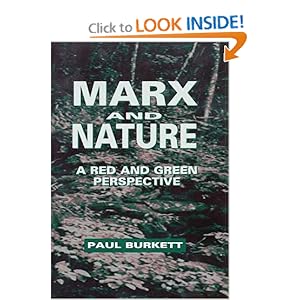
From these first two contradictions emerges the third main contradiction established by Capital: capitalism's tendency to generate crises of economic and social reproduction.  Marx outlined two basic kinds of capitalist crisis.  The first, more specific type, which has been the subject of much debate among Marxists, involves what might be termed narrowly economic crises of accumulation due to falling profitability, or an inability to reinvest profits in a way that yields more profit.  However, periodic accumulation crises should be seen as a specific outgrowth of the more general, secular, and ever worsening crisis of capitalism, namely, the inability of the system to create and maintain natural and social conditions required for the sustainable development of human beings.  Marx himself focused on this second form of crisis in his discussion of the general law of capitalist accumulation in Chapter 25 of Capital, Volume I, which showed capitalism's tendency to create a growing reserve army of unemployed and underemployed workers even apart from its periodic accumulation crises.  But he also dealt with the contradiction between capital accumulation and the natural conditions of human development, especially in his discussion of "Modern Industry and Agriculture" in Chapter 15 of the same volume.  In fact, Marx's analysis of the natural and social environmental crises generated by capitalism are the main focus of John Bellamy Foster's quite important work, Marx's Ecology (Monthly Review Press, 2000) and of my own book, Marx and Nature (St. Martin's Press, 1999).
It must be stressed that, for Marx, both of these two forms of crisis are inevitable historical outgrowths of the use value versus exchange value contradiction and of the class-exploitative nature of capitalism.
2.  Contrary to many interpretations, Marx studied and included an ecological analysis in Capital as you have shown in Marx and Nature.  How does Marx integrate ecological insights into the theoretical body of Capital?
Marx's Capital integrates ecological insights in two general ways.  First, Marx emphasizes the separation of workers from the land, from the earth, as the foundation of capitalism.  Like other necessary conditions of production which are appropriated by capital, the land (nature) appears to wage-laborers as an external condition of their existence, one which they can only gain access to by agreeing to sell their labor power to the capitalist.  This specifically capitalistic separation of the producers from reproductive access to the land is of course an ongoing historical process.  As David Harvey has recently emphasized in his work The New Imperialism (Oxford University Press, 2003), this kind of "accumulation by dispossession" has become one of the main sources of profit in capitalism's current, neoliberal phase.  Its ecological significance is just as obvious.  By first separating land and laborers and then combining them in production driven by competitive profit-making, capitalism develops their combined productive powers in ways that are more and more alienated from the requirements of ecological sustainability.  Unlike earlier modes of production such as feudalism, in which workers were socially tied to the land, capitalist production is not reliant on particular natural conditions and ecosystems, and can therefore afford to violate the conditions of ecological sustainability and "move on" (both spatially and functionally) to the exploitation of new use values producible by labor and nature.  Put differently, capitalism has an historically unprecedented ability to sustain itself through the production of ecologically unsustainable use values -- which is precisely why it has the potential to create ecological crises that are unprecedented in scope and depth, all the way up to the global, biospheric level.
Second, Marx incorporates ecological concerns through his analysis of capitalist market valuation.  Although this claim may seem paradoxical, the fact is that ecological criticisms of Marx's "labor theory of value" wrongly interpret this theory as a normative assertion that, compared to nature, labor is a more important or primary condition of production.  For Marx, however, production of use values always requires both nature and labor, and labor is itself a metabolic relationship between people (themselves natural, albeit socially developed, beings) and nature.  Marx did not himself reduce value to abstract, socially necessary labor time; rather his claim is that capitalism, based on its separation of laborers from necessary conditions of production, values commodities in this way.  Hence, the tension between labor values and the natural requirements of sustainable production should be seen as an immanent outgrowth of the more basic contradictions between use value and exchange value and between labor and capital.  Capital accumulation relies on both nature and labor as material vehicles for the production and realization of surplus value; yet, in the aggregate, it values commodities only in line with the abstract labor they contain.  Monetary rents are purely redistributive and suffer from their own ecological contradictions -- see below.  In any case, the norm under capitalism is the free appropriation and abuse of the use values latent in nature for purposes of competitive production for profit.
It must be emphasized that, for Marx, the production of values (in the sense of exchange values) itself requires that these values be objectified in saleable use values.  If a commodity (and the labor that produces it) does not serve a human need (however illusory, uncivilized, or ecologically damaging), then it will not count as value in the market.  This is precisely how the "social necessity" of value as socially necessary labor time is anarchically enforced through the market.  Hence capital accumulation, the production and reinvestment of surplus value, remains dependent upon use values produced by both labor and nature.  Capital accumulation requires not only exploitable labor power but also material, natural, conditions that enable labor power to be exploited and surplus labor to be objectified in vendible commodities.  This helps explain why capitalism has been so damaging to the environment throughout its history and why it is currently threatening the livability of our planet.  In short, far from being anti-ecological, Marx's critical analysis of capitalist valuation is essential to an adequate understanding of environmental crises both historical and contemporary.
3.  To confront our ecological problems adequately we need to understand the interrelation between society (a certain mode of production) and nature.  Can you explain to us how this metabolism works under capitalism?
As already noted, capitalism's specific forms of metabolism with nature are shaped by its radical separation of the direct producers from necessary conditions of production, starting with the land.
For example, it is only on the basis of the commodification of "free" labor power (workers separated from the land and other production conditions) that the commodity and money forms come to dominate society's economic reproduction and hence its metabolic interactions (exchanges of matter and energy) with nature.  Monetary valuation is of course a necessity under capitalism, due to the need for a general equivalent of value in the sense of abstract labor time.  The ecological contradictions of monetary valuation and market pricing of the environment -- which, it must be noted, apply fully to all kinds of rents, whether implemented privately or by governments -- are thus intrinsic to capitalism and therefore completely immune to all reforms that keep capitalist relations of wage-labor and market exchange intact.  And these contradictions are antagonistic indeed.  Money and monetary values are homogenous, divisible, mobile, reversible, and quantitatively unlimited, by contrast with the qualitative variety (and ongoing variegation), indivisibility, locational uniqueness, irreversibility, and quantitative limits to natural use values including ecological systems.  As I showed in my book Marx and Nature, the ecological contradictions of monetary valuation are all logically implied by Marx's value analysis, and in several cases were consciously highlighted by Marx.  While many contemporary non-Marxist ecological economists have also pointed out the shortcomings of market pricing, they have done so without rooting their analysis in the system's basic relations of production (see my book Marxism and Ecological Economics [Brill, 2006 for a sympathetic critique of ecological economics).
Of course, capitalism's concrete effects on its environment cannot be read off directly from the abstract ecological contradictions of money and monetary valuation.  Their analysis requires detailed study of the system's historical development as shaped by class and competitive struggles on both national and global levels.  Marx himself showed how capitalism's development of mechanized industrial productive forces -- the factory system -- generated unprecedented advances in labor productivity which translated directly into historically huge increases in the throughput of matter and energy drawn from and emitted into the natural environment.  This analysis can be located in terms of the two kinds of capitalist crisis mentioned earlier.  On one level, capitalism's growing appetite for raw materials (including ancillary materials used as energy sources) inevitably results in shortages of these materials due to the dependence of materials production on natural conditions which cannot be reproduced by capitalist enterprise itself.  The main example of such materials-supply problems treated by Marx was the 19th-century cotton crises that afflicted England and other early industrializing countries.  Marx's theoretical analysis of these crises was quite sophisticated, taking into account the interplay between value relations, technological and other physical production constraints, rents, and the role of the credit system and speculation in worsening materials shortages and price fluctuations.  His analysis can easily be extended and adapted to contemporary oil crises, for example.  (See Chapter 9 of my book Marx and Nature.)
On another level, Marxism provides insights into how capitalism's specific metabolism generates crises in the natural conditions of human development.  One insight involves what the leading ecological economist Herman Daly has termed the "breaking of the solar budget constraint" through the utilization of fossil fuels, especially starting with the industrial revolution.  The causes of this development are highly relevant to any serious discussion of today's global warming problem, not to speak of contemporary "oil shocks."  Here, ecological economists basically take the discovery of fossil fuels as a given "original sin" and blame it -- together with exogenous cultural factors such as the "ideology of growth" -- for the system's shift onto an ecologically unsustainable path.  (See especially the work of the late great Nicholas Georgescu-Roegen.)  Marx's analysis is quite different.  In Capital's chapter on "Machinery and Modern Industry," he shows that an essential precondition for greater use of fossil fuel-driven steam engines was the separation of workers from control over the tools used in production and the installation of these tools in machines which could then be powered not just by human and other animate energy but by inanimate "motive forces."  In other words, it was capitalism's specific production relations that generated the break with the solar budget constraint.  (See the article co-written by John Bellamy Foster and myself in the journal Theory and Society (February 2006).)
Finally, Marx showed that capitalism's spatial separation and industrial integration of manufacturing and agriculture resulted in a failure to recycle the nutrients extracted from the soil and the conversion of these nutrients into unhealthy pollutants, side-by-side with the vitiation of labor power by long and intensive worktimes and by enervating living conditions in urban areas.  Informed by his studies of Justus von Liebig and other scientists, Marx saw this development as a metabolic rift in the circulation of matter and energy required for the sustainable reproduction of human-natural systems.  Recent work by John Bellamy Foster, Brett Clark, Richard York, Rebecca Clausen, and Philip Mancus has reconstructed Marx's metabolic rift analysis and extended it to the contemporary problems of global warming, depletion and degradation of oceanic ecosystems by industrial fishing and aquaculture, and disruptions to the global nitrogen cycle brought on by overuse of inorganic fertilizers in industrial agriculture.  Foster, Clark, and Jason Moore have used the rift approach to show how "ecological imperialism" (the guano trade, sugar plantations, etc.) and resultant ecological crises have been central to capitalist development and underdevelopment on a global scale.  (See Chapter 9 of my book, Marxism and Ecological Economics.)
In sum, what Marxism provides that other theories can't is precisely a demonstration that capitalism does have its own specific metabolism with nature -- one shaped by its profoundly anti-ecological separation of workers from conditions of production and its corresponding forms of market exchange and monetary valuation.  From this perspective, any solution for contemporary ecological crises must be explicitly anti-capitalist, that is, based on the democratic socialization of nature and other conditions of production by workers and communities.
4.  Many commentators see the Kyoto Protocol as a way to solve the main environmental damages provoked by global warming.  What is your opinion about the Kyoto Protocol?  Is it a tool to overcome the degradation of the environment, or do we need further and deeper responses?  What larger steps are needed to solve today's ecological crisis?
The Kyoto Protocol is obviously insufficient even if it were to be successfully implemented.  Its goals for greenhouse gas emissions (GGE) would only slow down slightly, not reverse, the global warming trend.  And it is hard to view it as a success even on its own limited terms so long as the United States, the number one source of GGE, is not a participant.  In addition, the Protocol is contradictory in the sense that it recognizes the need for a global constraint on GGE, yet it endorses the use of market mechanisms -- competition and monetary pricing -- as a path toward living within this constraint.  This not only leaves intact the source of the problem, production driven by the unlimited goal of monetary capital accumulation, but also undercuts the cooperation needed to achieve any given goal of GGE reduction.  That the United States is not a part of the agreement is already a clear demonstration of this, as is the rapid acceleration of GGE in the two most populous economies in the world, China and India.  Any GGE reductions actually achieved in the developed countries (and the outlook is not good even for that) are likely to be more than offset by the growing automobilization and other fossil fuel consumption in China and India as these latter economies are increasingly shaped by the profit imperatives of transnational capital.
As environmental ethicist Michael Sandel and others have pointed out, devices such as markets in GGE credits and other "buy-outs" for GGE producers (individuals, corporations, and governments) undermine the cooperative values needed to deal with global warming and other environmental problems.  GGE and other ecological "externalities" become just a cost of doing business, another form of monetary expenditure substitutable with all other expenditures, which basically treats the earth and privately produced commodities as substitutes.  At the same time, GGE reduction becomes a luxury good most affordable to those who have the most money.  The ethic of shared responsibility so crucial to the preservation of global communal resources is lost.
To solve the global warming problem would require, at minimum, a clean break with the current fossil-fuel based regime of capital accumulation.  (It should be noted that another significant source of GGE is the production of meat as food, with accompanying growth of methane emissions from livestock.)  It remains an open question whether capitalism is capable of such a clean break.  As I said, the current outlook is not good.  In the United States, the leading GGE source, there has been no significant move toward de-automobilization, and residential solar power continues to be a "non-economic" alternative for most households, both of which verify the warped priorities of capital accumulation.  Fundamental improvements in this situation would require a degree of government planning, and of decentralized-democratic control over energy generation and use, as well as over research and innovation priorities, that the system has not shown an ability or willingness to accept.  More importantly, let us suppose that capitalism can somehow resolve or live with the global warming problem on its own terms.  After all, this system can in principle reproduce itself as long as it can find exploitable labor power and conditions enabling its exploitation.  Even in this case, capitalism's vitiation of the conditions of human development would continue in other forms.  Successful GGE reduction would, for example, do nothing to solve the more general build-up of toxins, inorganic nitrates, and other bio-nondegradables in the environment.  The corporate privatization of the environment, and even of the basic genetic building blocks of human life itself, would continue apace, as would the growing tendency for the human metabolism with nature to be mediated by an alienated soup of pharmaceuticals and unhealthy industrialized "food."  In short, it would be a mistake for socialists to focus exclusively on the global warming problem without addressing the more general and more fundamental anti-ecological character of capitalism and the corresponding need for a new system guided democratically by the requirements of sustainable human development.
5.  Al Gore, ex-Vice President of the United States and cooperator on American imperialist policy between 1993 and 2000, is now running all over the world promoting his film on global warming, An Inconvenient Truth.  How can you explain that some of the major agents on the capitalist political scene are now engaged in this kind of campaign?  Is it to erase their responsibilities or is it just a maneuver to coopt ecological struggles into the capitalist political-economic framework?
Before addressing this question one must first note the shocking extent to which corporate capital still does not take global warming seriously.  This unreal attitude is not limited to the oil and coal companies.  Forbes magazine, perhaps the leading journalistic mouthpiece of my country's capitalist class, openly derides global warming as a hoax while suggesting ways in which capitalists may profit from it by investing in nuclear power, for example (for a critical account see Rebecca Clausen, "Straight from the Billionaire's Mouth," MRZine, April 11, 2007).  Nothing shows the insanity of capitalist media discourse more than the ongoing "debate" over whether global warming is real on CNN and other television news networks.  The problem is more prominent as the butt of stupid jokes on late-night talk shows than as a subject of serious public discussion.
Naturally, some capitalist representatives are genuinely concerned about global warming.  This is not surprising given the overwhelming consensus among climatologists that the problem is real and that time is running short if humanity is to reverse it.  Moreover, the scientific evidence now strongly suggests that many recent climactic shocks such as Hurricane Katrina are an outgrowth of the global warming trend, that these shocks are already multiplying and worsening rapidly, and that their impacts are likely to be unevenly distributed -- with an inordinate share of the costs borne by working people and high-poverty areas especially in underdeveloped countries and regions.  Realizing this, some relatively "far-sighted" capitalists and capitalist functionaries are quite concerned (apart from any genuine humanitarian impulses they may have) about the political-economic instability likely to result from climate change in the absence of a pro-active elite-managed strategy consistent with the continued dominance of "private property" and market "freedoms" (i.e., the competitive production and realization of surplus value) over economic life.
This background helps explain the yawning gap between the grim diagnoses and the glib policy prescriptions that characterize Gore's "Inconvenient Truth" and other ruling-class reports on global warming.  They want to do something about the crisis but without addressing the fundamentally anti-ecological character of the system of capital accumulation that generated it.  They talk as if the GGE problem was simply a matter of faulty lifestyle choices made by people in general, or a generic cultural shortcoming of some sort.  Hence, the initiatives based on this elite approach make heavy use of market incentives that do not touch, and even reinforce, the exploitative and alienated class and competitive relations in and through which capitalism uses and abuses natural wealth.  As noted above, this approach is likely to fail even on its own limited terms.  And precisely because they are unwilling and/or unable to "name the system" and confront its historically specific power relationships, the elite discussions of GGE reduction treat global warming and other environmental crises as separate, discrete issues.  As a result, even if these GGE initiatives were to somehow "succeed" in allowing the capitalist economy to reproduce itself, the whole system of plunder and poisoning of nature -- and exploitation and impoverishment of the great majority of its human inhabitants -- would continue to operate.  Our job as socialists is to point out these contradictions and counter them with non-exploitative ecological values informed by our active engagement with anti-capitalist movements among workers and communities.
6.  About a year and a half ago you published an important article in Monthly Review on communism and sustainable development.  How is a classless society capable of developing a new mode of appropriation of nature and how could it build a non-polluting economy?
In my Monthly Review article I tried to shift the debate over the viability and attractiveness of Marx's vision of communism from its prior focus on the allocative efficiency of planning versus the market, and toward Marx's original emphasis on communism as a system of human development.  Marx saw communism as a logical outgrowth not only of the productive capabilities created under capitalism but also of worker-community struggles to transform capitalist productive forces into forms that are non-exploitative and non-alienated in terms of the metabolism of humanity with nature.  Marx did not view communism as simply a planned utilization of the productive techniques inherited from capitalism, but as a revolutionary transformation of production itself -- an epochal, long-term process of qualitative changes in technology and socio-economic relationships.  And he emphasized the centrality of struggles against all forms of privatization and profit-driven exploitation of nature ("the land") to this revolutionary process.  This was the qualitative, human-developmental context in which he demonstrated the necessity of planning and non-market allocation of human and natural resources, as well as the need and potential for reductions in worktime.  I would add that Michael Lebowitz has done a great service in helping to reconstruct this communism-as-human-development perspective not only theoretically but through his direct engagement with the revolutionary processes currently underway in Venezuela.  (See his books, Beyond Capital [Second Edition, St. Martin's Press, 2003] and Build It Now [Monthly Review Press, 2006].)
Generally speaking, in a communist society production is cooperatively and democratically controlled by the direct producers and communities, unmediated by capitalism's alienated forms of economic socialization, that is, without markets, money, and the state.  (Of course, during the revolutionary transition period to communism workers and communities will need to democratically reshape and utilize state institutions to disempower the capitalist class and as a weapon for the socialization of the conditions of production.  This is what Marx meant by the dictatorship of the proletariat, as Hal Draper shows in his monumental multi-volume study Karl Marx's Theory of Revolution (Monthly Review Press).)  In place of the competitive pursuit of private profit, communism makes use value, in the sense of human needs and capabilities, the main priority of production, distribution, and consumption.  This prioritization of use value over exchange value is what creates the potential for communism to reduce society's reliance on a growing productive, but ecologically damaging, throughput of matter and energy.  It enables, for example, less emphasis on mass production of differentiated material consumer goods and more emphasis on the intellectual development (theoretical and practical) of the producers and communities, especially given significant reductions in worktime.  The use of planning and democratic deliberation instead of the market is not the end or goal here, but rather the means for achieving sustainable human development.  The communal, or public, "good" can thereby be internalized into the whole system of economic calculation, labor, and production instead of being viewed as an "external" afterthought as it is under capitalism.
This vision does not provide a blueprint for a pro-ecological re-engineering of production.  Nor is it a certainty that a post-capitalist society of associated producers and communities will transform and undertake production in ecologically sustainable directions.  A communist restructuring of the productive metabolism is a necessary but not sufficient condition of ecologically sustainable human development.  It all depends on the explicit integration of ecological and other communal concerns into the anti-capitalist revolutionary process itself.  What we can say is that in order to be ecologically sustainable, an economy must: (1) acknowledge and internalize society's responsibility to sustainably manage our metabolism with nature, to protect the land as communal wealth for current and future generations; (2) diffuse scientific and technological knowledge among all producers and communities as required for this ecological responsibility to be fulfilled throughout the entire process of production and consumption; (3) recognize the uncertainty and incompleteness of our knowledge about ecological and biospheric systems and the corresponding need to follow the "precautionary principle" in all production decisions (no specific actions taken without a clear demonstration of the absence of significant ecological damages therefrom); (4) respect the need for diversity in human economic relations, due to the variegation of natural conditions and the need for diverse paths of human fulfillment through productive and reproductive activities.
It is hard to see how these four requirements can be fulfilled without a clear break from capitalism's monetary/profit calculus and anarchic competition, in favor of planning and cooperation in line with the imperatives of human development.  The development of people as material and social beings is both means and end here.  As Marx put it, "Freedom, in this sphere, can consist only in this, that socialized man, the associated producers, govern the human metabolism with nature in a rational way, bringing it under their collective control instead of being dominated by it as a blind power; accomplishing it with the least expenditure of energy and in conditions most worthy and appropriate for their human nature" (Capital, Volume III [Vintage, 1981], p. 959).
This vision of communism, as a system dedicated to sustainable human development growing out of anti-capitalist struggles, has a prominent place for the efforts of indigenous peoples around the world to resist transnational capital's "accumulation by dispossession" by revivifying their communal property systems and culturally-embedded techniques for sustainable use of water, soil, plant varieties, and other common resources.  Industrial workers and communities can learn much from these largely rural movements about the institutional and technological forms needed to develop autonomous, self-sufficient, diversified, and cooperative-democratic alternatives to capitalism's exploitative and ecologically disastrous production (see David Barkin's important work, Wealth, Poverty and Sustainable Development [Editorial Jus, 1998], available at econwpa.wustl.edu/eprints/dev/papers/0506/05060003.pdf).
João Aguiar is a sociology student at the Faculty of Humanities of Oporto University (FLUP) in Portugal.  The Portuguese version of this interview will appear in O Diário: odiario.info.