Showing posts with label Capitalist crisis. Show all posts

Monday, February 28, 2022

3568. Climate Change Is Harming the Planet Faster Than We Can Adapt, U.N. Warns

Brad Plumer and 


The climate crisis is one of the four existential threats to humanity. The nuclear holocaust is often
the neglected one. The crisis in Ukraine that is essentially U.S. and NATO standoff
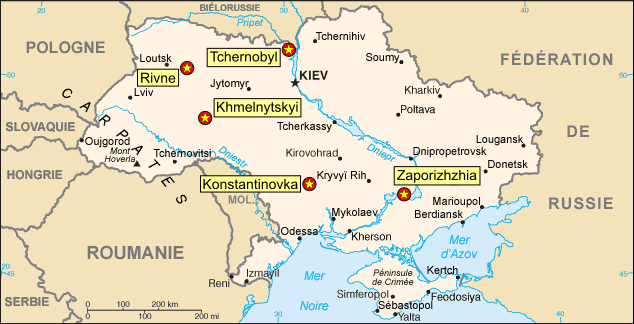
with Russia has brought that to the fore. The map shows nuclear reactors in
Ukraine which could be damaged in the war creating an immediate world crisis. 


The dangers of climate change are mounting so rapidly that they could soon overwhelm the ability of both nature and humanity to adapt unless greenhouse gas emissions are quickly reduced, according to a major new scientific report released on Monday.

The report by the Intergovernmental Panel on Climate Change, a body of experts convened by the United Nations, is the most detailed look yet at the threats posed by global warming. It concludes that nations aren’t doing nearly enough to protect cities, farms and coastlines from the hazards that climate change has unleashed so far, such as record droughts and rising seas, let alone from the even greater disasters in store as the planet continues to warm.

Written by 270 researchers from 67 countries, the report is “an atlas of human suffering and a damning indictment of failed climate leadership,” said António Guterres, the United Nations secretary general. “With fact upon fact, this report reveals how people and the planet are getting clobbered by climate change.”

The perils are already visible across the globe, the report said. In 2019, storms, floods and other extreme weather events displaced more than 13 million people across Asia and Africa. Rising heat and drought are killing crops and trees, putting millions worldwide at increased risk of hunger and malnutrition, while mosquitoes carrying diseases like malaria and dengue are spreading into new areas. Roughly half the world’s population currently faces severe water scarcity at least part of the year.


Few nations are escaping unscathed. Blistering heat waves made worse by global warming have killed hundreds of people in the United States and Canada, ferocious floods have devastated Germany and China, and wildfires have raged out of control in Australia and Siberia.

“One of the most striking conclusions in our report is that we’re seeing adverse impacts that are much more widespread and much more negative than expected,” said Camille Parmesan, an ecologist at the University of Texas, Austin, and one of the researchers who prepared the report.

To date, many nations have been able to partly limit the damage by spending billions of dollars each year on adaptation measures like flood barriers, air-conditioning or early-warning systems for tropical cyclones.

But those efforts are too often “incremental,” the report said. Preparing for future threats, like dwindling freshwater supplies or irreversible ecosystem damage, will require “transformational” changes that involve rethinking how people build homes, grow food, produce energy and protect nature.


The report also carries a stark warning: If temperatures keep rising, many parts of the world could soon face limits in how much they can adapt to a changing environment. If nations don’t act quickly to slash fossil fuel emissions and halt global warming, more and more people will suffer unavoidable loss or be forced to flee their homes, creating dislocation on a global scale.


“There has been the assumption that, ‘Well, if we cannot control climate change, we’ll just let it go and adapt to it,’” said Hans-Otto Pörtner, a marine biologist in Germany who helped coordinate the report. But given the expected risks as the planet keeps warming, he said, “this is certainly a very illusionary approach.”


Global temperatures have already increased by an average of 1.1 degrees Celsius, or 2 degrees Fahrenheit, since the 19th century, as humans have pumped heat-trapping gases into the atmosphere by burning coal, oil and gas for energy, and cutting down forests.

Many leaders, including President Biden, have vowed to limit total global warming to no more than 1.5 degrees Celsius compared with preindustrial levels. That’s the threshold beyond which scientists say the likelihood of catastrophic climate impacts increases significantly.


But achieving that goal would require nations to all but eliminate their fossil-fuel emissions by 2050, and most are far off-track. The world is currently on pace to warm somewhere between 2 degrees and 3 degrees Celsius this century, experts have estimated.

“Unchecked carbon pollution is forcing the world’s most vulnerable on a frog march to destruction — now,” Mr. Guterres said. “This abdication of leadership is criminal.”


If average warming passes 1.5 degrees Celsius, even humanity’s best efforts to adapt could falter, the report warns. The cost of defending coastal communities against rising seas could exceed what many nations can afford. In some regions, including parts of North America, livestock and outdoor workers could face rising levels of heat stress that make farming increasingly difficult, said Rachel Bezner Kerr, an agricultural expert at Cornell University who contributed to the report.

“Beyond 1.5, we’re not going to manage on a lot of fronts,” said Maarten van Aalst, the director of the Red Cross Red Crescent Climate Center and another author of the report. “If we don’t implement changes now in terms of how we deal with physical infrastructure, but also how we organize our societies, it’s going to be bad.”

Poor nations are far more exposed to climate risks than rich countries. Between 2010 and 2020, droughts, floods and storms killed 15 times as many people in highly vulnerable countries, including those in Africa and Asia, as in the wealthiest countries, the report said.

That disparity has fueled a contentious debate: what the industrialized nations most responsible for greenhouse gas emissions owe developing countries. Low-income nations want financial help, both to defend against future threats and to compensate for damages they can’t avoid. The issue will be a focus when governments meet for the next United Nations climate summit in Egypt in November.

“Climate change is the ultimate injustice,” said Ani Dasgupta, the president of the World Resources Institute, an environmental group. “People with the fewest resources, those least responsible for the climate crisis, bear the brunt of climate impacts.” He added, “If you don’t live in a hot spot, imagine instead a roof blown away, a village well overwhelmed by salt water, a failed crop, a job lost, a meal skipped — all at once, again and again.”

The report, which was approved by 195 governments, makes clear that risks to humans and nature accelerate with every additional fraction of a degree of warming.

At current levels of warming, for example, humanity’s ability to feed itself is already coming under strain. While the world is still producing more food each year, thanks to improvements in farming and crop technology, climate change has begun slowing the rate of growth, the report said, an ominous trend that puts future food supplies at risk as the world’s population soars past 8 billion people.


If global warming reaches 1.5 degrees Celsius — as is now likely within the next few decades — roughly 8 percent of the world’s farmland could become unsuitable for growing food, the authors wrote. Coral reefs, which buffer coastlines against storms and sustain fisheries for millions of people, will face more frequent bleaching from ocean heat waves and decline by 70 to 90 percent. The number of people around the world exposed to severe coastal flooding could increase by more than one-fifth without new protections.


At 2 degrees Celsius of warming, between 800 million and 3 billion people globally could face chronic water scarcity because of drought, including more than one-third of the population in southern Europe. Crop yields and fish harvests in many places could start declining. An additional 1.4 million children in Africa could face severe malnutrition, stunting their growth.


At 3 degrees of warming, the risk of extreme weather events could increase fivefold by century’s end. Flooding from sea-level rise and heavier rainstorms could cause four times as much economic damage worldwide as they do today. As many as 29 percent of known plant and animal species on land could face a high risk of extinction.

The report lays out strategies that nations can pursue to protect themselves, such as elevating homes above rising floodwaters or developing new crop varieties that can better tolerate heat and drought.

Humanity has already managed to reduce some of the harms from climate dangers. Over the past half-century, the number of deaths worldwide from storms, floods and other extreme weather events has fallen by more than half because of improved early warning systems and disaster management, the World Meteorological Organization has found. Investments in public health have meant fewer people are succumbing to diseases like cholera, even as rising temperatures and heavier rainfall have facilitated their spread.


But if global temperatures keep rising, adapting to climate change will become increasingly difficult, especially for poorer countries, the report said.


“If we are able to limit warming to 1.5 degrees, then the likelihood of large areas or specific islands becoming uninhabitable will be relatively low,” although they will remain vulnerable to storms and sea-level rise, said Adelle Thomas, an adaptation researcher at the University of the Bahamas and a report author. But higher levels of warming “could lead to those areas becoming uninhabitable,” she said.


A decade ago, wealthy nations pledged to deliver $100 billion per year to the developing world by 2020 to shift to cleaner sources of energy and adapt to climate change. But they have fallen short by tens of billions of dollars, with only a fraction of the funds spent on adaptation.


Meanwhile, many communities are acting in ways that increase their vulnerability, the report said. One reason flood risk is growing along the coasts, for instance, is that millions of people are moving to low-lying areas that are endangered by sea level rise. And some adaptation measures have unintended consequences. For instance, sea walls protect certain places but can also redirect flooding into populated areas elsewhere. Irrigation can help protect crops against drought but can also deplete groundwater resources“Despite the fact that we have been talking about climate change for a long period of time,” many regions are still developing in ways that make their people and ecosystems more exposed to the hazards, not less, said Ibidun O. Adelekan, a professor of geography at the University of Ibadan in Nigeria who worked on the reportInstead, the report recommends that leaders pursue more farsighted strategies. As oceans rise, coastal communities could relocate inland while additional development along vulnerable shorelines could be discouraged. Improvements in basic services like health, roads, electricity and water could help make poor and rural communities more resilient against climate shocks.


“The choice is not between if we transform or not anymore,” said Edward R. Carr, a professor of international development at Clark University and an author of the report. “The choice is, do we choose transformations we like? Or do we get transformed by the world in which we live because of what we’ve done to it?”


The report is part of the sixth major assessment of climate science from the Intergovernmental Panel on Climate Change, which was created in 1988. The first report in the series, released last August, examined the science behind how human activity is heating the planet. A separate report, expected this spring, will explore strategies to reduce greenhouse gas emissions and halt warming.

Saturday, March 28, 2020

3337. COVID-19 Puts Capitalism On A Ventilator

By Anthony A. Gabb, March 28, 2020

The aftershock of previous pandemics was catastrophic. The fourteenth century Black Plague and the 1918 Flu pandemics inflicted colossal hardships and caused many deaths. The Black Plague shook the foundations of feudal social relations. It killed 25 to 30 million people, resulting in peasant uprisings, shortages that caused wages to rise, and large parcels of land to go fallow. Scientists believe the 1918 Flu could have come to Spain from the United States and spread to other parts of the world killing 20 to 50 million people, more than the 17 million who died in WW1. Even though it was common knowledge that the flu was already in Philadelphia, the authorities went ahead anyway with a parade to raise funds for the war causing many unnecessary deaths---at the time the economics of the war took priority over stopping the spread of the flu. Similarly, today there are competing views about whether fixing the economy should take precedence over addressing the ravages of COVID-19. 
COVID-19 originated through natural processes. On 31 December 2019, Chinese authorities alerted the World Health Organization (WHO) of an outbreak. It has since become a pandemic. As it navigates its way across the planet, COVID-19 is expected to leave no less of a calamitous trail of suffering, death, and economic devastation. Globally, so far over 435,000 have been afflicted by the virus and over 19, 000 have died. The economic repercussions could result in “perhaps record dimensions”. The stock market has dropped over 30 percent, and whole industries such as airlines, tourism, and travel have been negatively impacted. 
Globally and in the United States COVID-19 spotlights capitalism’s dim response to cope with it. Many countries are using revolting health care systems. Not surprisingly, the U.S. healthcare system, which is inadequate under normal circumstances, is woefully insufficient and unpracticed. It is based on crisis management principles therefore it is devoid of advanced planning; this is evidenced by shortages of basic supplies like masks, testing kits, and ventilators. The delayed response, which is tantamount to a crime, is being coordinated by a President who is doltish, in denial, and who initially claimed the virus was a hoax and a Vice President who is an anti-science creationist. To be clear, the Democrats are equally responsible for this chaos.
Should the virus be contained within a reasonable short time, the economy will struggle with an easier recovery process. The longer it takes to suppress the virus, the effectiveness of the delayed response could be eclipsed by unnecessary misery, deaths and an existential economic meltdown. There are already calls once again for another bailout of corporate America and the banks. Again, it will fall on the backs of working people to save the system from itself.
Who we are, our individuality, is not separate from what and how we as a species produce things, as we interact with nature. COVID-19, like climate change, is a natural outgrowth of the profiteering activities of Anthropocentric Industrial Capitalism (AIC), which is an existential threat to humanity. If we continue to pillage the earth for profits, we will, in part, trespass deeper into the habitats of other species increasing the frequency of closer contact with them, creating the possibility for other novel coronaviruses. This should come as no surprise, since in the recent past the earth’s ecosystem has responded to abuse with AIDS, Avian flu, SARS, MERS, and Zika. It is time to start asking hard questions like: Is capitalism capable of addressing the problems it produces? How many times should a system that time and again fails to deliver be bailed out? And what’s the next coronavirus?    
In the absence of an advanced plan, the only response is containment, mitigation, and testing for the virus. To be clear, this is not a discussion about containment, mitigation, and testing per se which is a true and tested approach. Until a vaccine is found, there will be testing for the virus and those who have the virus will be targeted and contained. To mitigate the spread of the virus people are being told to stay at home, regularly wash their hands, stop shaking hands, and engage in “social-distancing”. Meanwhile, developing a vaccine could take another year. It is true that qualitative external shocks like COVID-19, tsunamis or wars can throw the economy out of kilter. But more importantly it is also true that crises are part of the internal logic of capitalism. Just before COVID-19 hit, as recent as December 2019, the economy was already showing signs of weakness. Its very existence depends on the generation of profits, while at the same time it produces misery, inequality, unemployment, inflation, alienation, stress, recessions, and systemic crises. A commodity like a health care service is virulent with these contradictions and tension. Many who work in the healthcare system are underinsured, or have no health care benefits. COVID-19 is the trigger that exposes systemic weaknesses and exacerbates this current crisis. 
Similar measures were taken in response to previous pandemics. Those who had the plague were contained and walled off from entering other villages. Alarmingly, almost seven centuries later, in the age of high-tech communications, the same tools are being used to match those who get the virus with a limited number of available hospital beds. While the authorities can quickly find trillions of dollars to bailout corporations and banks, you are told that a planned robust universal health care system that anticipates pandemics is too expensive. 
Then there is the containment and mitigation of the virus while allowing the economy to unravel, hopefully for a short period. The longer the unravelling the deeper will be the economic carnage and the  longer will be the recovery. If you and everyone else stop dining out, your neighborhood restaurant will have no customers and will go bankrupt. After which wholesalers that supply your local restaurants will follow. This will cause unemployment to rise. If the ripple effect mutates the whole economy could be put on a ventilator. Global debt is about $188T, of which corporate debt is about $16T. Because their reserve cash is generally enough to keep them afloat for 12 days, small businesses will be the first to go under--small businesses are the canary in the coal mine. As a first step to complement these efforts to fight this and future pandemics and to prepare to transition to a planned system, we must immediately nationalize healthcare and manufacturing and convert manufacturing to produce healthcare products and fully mobilize our powers. 
The modern-day Robber Barons of industry and Wall Street, along with the government are frantically designing a ventilator to distribute taxpayer’s money to all organs of the economy--domestic and foreign banks and corporations and consumers. The corporate media is firing on all cylinders hoping to convince you to support the efforts of the “job creators”. While the Congress is preparing a stream of trillion dollar bailout programs, last Friday the Federal Reserve Bank handed the banks a massive $1T handout at zero interest rate.
But the optics of bailing out only corporations and banks might raise eyebrows this time. As a result, they are also saying that working people must receive help. While this is true, the hidden motive is that they know that workers do not have any money to spend in order to reset the system. Over forty percent of the US population has less than $400 in savings. Seventy percent of every dollar spent in the US is spent by consumers. 
Any bailout in the form and magnitude of the 2008 crisis bailout handed to banks and Wall Street, could trigger widespread anger in this country. This justifiable anger could find a productive outlet in the form of an alternative transition plan with firm accountability conditions in the interest of the many hard-working wealth creators and the planet, rather than 2,000 multi-billionaires, Wall Street and corporations. With this is mind there should be no more bank and corporate bailouts. When workers are required to buy health insurance, corporations in the airlines, hospitality, or any other industry should be required to do the same before they make risky investment decisions. They should no longer expect working people to bail them out. This is socialism for the rich and capitalism for the rest of us.
Following nationalization of health and manufacturing, the main goal of an alternative transition plan is to nationalize and restructure other key industries such as education, food, housing, and transportation. The plan would be under the control of working people and a restructured government. In order for businesses to qualify for phase one of this plan, they must have a history of: being friendly to unions; paying a livable wage with full benefits packages including childcare; and complying with environmental requirements. In addition, businesses must agree to regular monitoring of how the loan money is being used; must not have previously received any bailout money; and must commit to a timeline to transition to worker control of these enterprises. These conditions would be subjected to periodic review by a worker’s committee. The plan would be funded by a rollback of the $1.5T recent tax cut to the rich and a special bailout progressive tax on billionaires. Businesses that are a part of other than key industries, would be encouraged to seek financial assistance through the banks.
During the second phase of the transition plan, a Department For Environmental Research and Climate Change will be established and funded by a retroactive tax on corporations who profited from the destruction of the environment; a worker’s political party will be established; there will be free access to healthcare, education, vacant land/property/housing including utilities, food, and public transportation; a progressive tax on all income and wealth over $1 million;  all student debt will be cancelled; religious establishments will be taxed; inheritance laws, unproductive industries like advertisement, and rent will be abolished; banking and media will be nationalized/centralized; political prisoners and those who have been criminalized because they are poor will be freed; the military, which includes the police and the judiciary will be downsized; and a jobs bill for all working age adults will be enacted. 
Time and again billionaires, bankers and corporate executives have received unconditional bailouts. While they will benefit, working people are always those who are asked to finance these bailouts. If you are unemployed or in an insecure job with little or no benefits, have unpayable student debt or cannot afford to pay for an education, trapped in unsustainable housing conditions, another unconditional balout will not improve your quality of life. The level of inequality in the US is at dizzying heights and getting worse. The richest three people in the US have more wealth than the bottom 50 percent. Without fundamental changes, more bailouts will be necessary because economic crises are intrinsic to capitalism. This crisis precipitated by COVID-19 represents a great opportunity for transforming a chaotic system that has proven it is unable to deliver. The transition plan outlined in this essay might be a good place to start that transformation.    

Monday, December 3, 2018

3107. Self-organized Yellow Vest Protest Movement Exposes Inequality and Hollowness of French Regime

By Richard Greeman, December 3, 2018


Ignored by Macron, distorted by the media, courted by the Right, snubbed by the Left, the self-organized mass movement known as the Yellow Vests is seriously challenging the political and economic order in France.

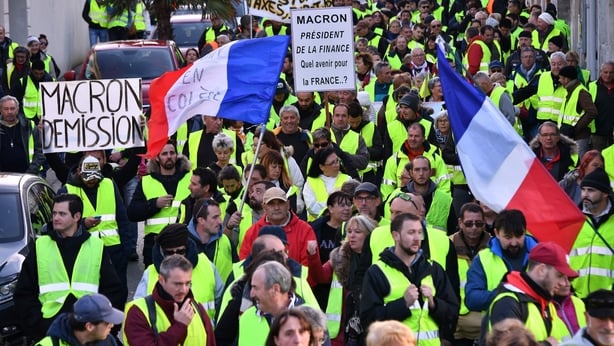
In Paris, on the morning of Saturday, Dec. 1, as thousands of self-organized Yellow Vest protestors attempted to gather to express their grievances on the Champs-Elysées at a planned, peaceful demonstration, French CRS riot police in Paris attacked them savagely with tear-gas, flash-bombs and water-canons. By the end of the day, cars were burning near the Arc of Triumph, and all of Paris was in chaos as groups of would-be peaceful marchers, joined by the usual casseurs (‘smashers’) spread throughout the capital, expressing their anger at the system and calling for the resignation of President Macron.

This militarized state over-reaction to a peaceful mass demonstration breaks with a long tradition of tolerance for muscled demonstrations by rowdy angry farmers and militant labor unions. A tolerance Macron, in speeches, has blamed for the failure of previous governments to pass needed pro-business counter-reforms. Predictably, Macron (who must have ordered Saturday morning’s unprovoked, violent attacks on unarmed demonstrators arriving early for the planned march) blamed the victims: ‘‘What happened today in Paris has nothing to do with the peaceful expression of legitimate anger,” he said on Saturday. “Nothing justifies attacking the security forces, vandalizing businesses, either private or public ones, or that passers-by or journalists are threatened, or the Arc de Triomphe defaced.”[1]

Meanwhile, throughout the French provinces, at least 75, 000 Yellow Vest protesters (police estimate) were blocking highway entrances, intersections, and shopping centers all day – all with minimal violence and apparent general approval (80% according to recent polls).

Why France’s ‘Silent Majority’ Is Mad as Hell

Like all the spontaneous mass uprisings that dot French history going back to Feudal times, the Yellow Vest revolt was initially provoked by taxes. In this case, the straw that broke the camel’s back was Macron’s decision to increase taxes gas and Diesel fuel, which affect ordinary working and lower-middle class French people dependent on their cars to earn a living. The rebels, donning the yellow breakdown-safety vests they are required to keep in their cars by the government, have been on the warpath for three weeks now. Spurning all political parties, the Yellow Vests got organized on social media and acted locally. The broadcast media, although highly critical, spread the news nationally, and the Yellow Vest movement spread across France, blocking intersections, filtering motorists, and gathering to demonstrate, more and more numerous and militant, on successive Saturdays.

Why Saturdays? “I can’t go on strike,” explains one woman.  “I’m raising three kids alone. My job, that’s all I have left. Coming on Saturdays is the only way for me to show my anger.”  Women – receptionists, hostesses, nurses-aids, teachers – are present in unusually large numbers in these crowds, and they are angry about a lot more than the tax on Diesel.

To begin with, inequality. Like Trump, Macron has showered corporations and millionaires with huge tax cuts, creating a hole in the budget which he has compensated by cuts in public services (hospitals, schools, transit, police) and by tax increases for ordinary people (up to 40% of their income), large numbers of whom are struggling hard to make ends meet and going into debt. “We’re hungry and we’re fed up,” said Jessica Monnier, 28, who works in a watch factory in the French Alps. She earns $1, 140 a month, and said: “Once I pay my bills, I don’t have enough to eat. We’re just hungry, that’s all.”[2]

This anger has been building since last Spring, the 50th anniversary of the 1968 worker-student uprising, but was frustrated when Macron won the stand-off with labor over his neo-liberal, pro-business counter-reforms. This labor defeat was facilitated by the leadership of the CGT and other unions, played the same negative role in the 1968 sell-out to de Gaulle. A half-century later the French union leaders, eager to keep their place at the political table (and on the government payroll), avoided a major confrontation, met with the government behind the scenes, and only went through the motions of carrying out strikes, spreading them over months and tiring out the workers. [Please see my “French Labor’s Historical Defeat”]

Macron is also hated for his truly monarchical arrogance, ruling alone like Louis XIV, imposing his will by decrees, ignoring his opponents and patronizing the common people in a pedantic style that humiliates and enrages them. By dismissing the Yellow Vests, haughtily refusing to address their issues, and then violently repressing them despite their popularity, Macron has revealed the vast gap between his authoritarian, neo-liberal regime and the mass of the French population. The French elected him in 2016, in the run-off following the first round collapse of the traditional parties of the Left and the Right. Macron was a stop-gap to prevent the election of Marine LePen of the extreme-right, openly racist National Front. He has no real mandate and no political party behind him, despite an unorganized parliamentary majority.
This Saturday, the demonstrators were heard booing the TV network people on Place de la Concorde, furious at being been presented as deliberate vandals, calling the press “Usurpers,” “We wanted to come and demonstrate calmly,” said one fifty-ish Yellow Vest interviewed by Médiapart. I came by train, I had my ID card in my pocket. They threw so much tear-gas at us that we ran like rabbits.” He then held out a rubber cartridge. “They even fired Flash-balls at us” he added as two nearby women nodded. “Who are the Vandals?”
Another would-be demonstrator, Franck, from nearby Seine-et-Marne, added: “We came to the Champs-Elysées this morning and when we tried to approach the entry-points, we were immediately inundated with tear-gas, 300 meters before the check-points.” Furious, he spits out “Macron gasses his own people like Bashar el-Assad!”

Marité, a retiree from the suburbs, kept repeating over and over: “I confess before the CGT that I voted for Macron, and beg your forgiveness.” She has worked for 42 years, her husband for 44; together their retirement comes to $3, 200 a month and their anger is deep. A woman named Morgane hisses through clenched teeth a phrase heard all over France since the beginning of the movement: “Marie-Antoinette was living high off the hog just before the Revolution also. And they cut off her head.”[3]

What was remarkable at this Saturday’s chaotic mass outbreak in the streets of Paris was the fortuitous convergence of the Yellow Vests with previously scheduled demonstrations organized by the CGT and other unions as well as the feminist MeToo movement, the LGBT movement. So happenstance created the first real dialogue between members of these disparate movements which took place under clouds of tear-gas as the various demonstrators, driven away from the Champs-Elysées area by the police, wandered through the half-empty streets.
A start. Angry French people waited all Spring for the promised “convergence” of the various unions of students and workers united against Macron’s reactionary anti-reforms which the leaders never organized, leaving the different groups of strikers isolated.
Popular Risings, Elite Contempt 
The French popular classes have long historical memories and seem unaffected by the postmodern scholarly denigration of the 1789 French Revolution and its successors as useless explosions of popular violence which inevitably led to bloody dictatorships. Morgane knows all she needs to know about the guillotine. According to Gérard Noiriel, author of a monumental history of France ‘from below,’ “The Yellow Vests who block highways and refuse to be co-opted by political parties have taken up, in confused form, the tradition of the Sans-culottes of 1792-93, the citizen-combatants of February 1848, the Communards of 1870-71 and the anarcho-syndicalists of the Banquet Years.”[4]

Indeed, these traditions go back much earlier, to the Feudal period, with its periodic uprisings of peasants burning landlord’s chateaux and urban rioters taking over towns. What changed in late 18th Century France was the development of roads and mail service, that enabled revolutionary Committees of Correspondence to coordinate and organize discontent on a national level. Today, Internet social networks and network news play the same role in real time.

Like today’s Yellow Vest rebellion, all these historical uprisings were initially about excessive unfair taxes, like the Tithe of 10% (imposed by the wealthy Catholic Church on the poor), the royal Gabelle tax on salt (necessary for life and preserving foodstuffs) and the Corvée (days of free labor owed to the noble landlord, the Church and the government.) Although violent, these spontaneous, self-organized risings eventually led to the democratic republic, the Rights of Man, free secular education, etc. (all under threat today)

The other common denominator between the Yellow Vests and historical popular movements is the near-universal contempt with which they were (are) treated by France’s elite classes: the royalty, the nobility, the upper clergy, official academic historians, and today the media and the leadership of the unions and Left parties, who have joined the establishment and are an integral part of what the French call the “political class.”

Not so much has changed since the Old Regime. Then, the nobles derisively referred to any peasant as “Jacques Bonhomme” (Goodfellow Jack), and to their violent uprisings as “Jacqueries.” Around 1360 the revered French chronicler Jean Froissart reported: “These evil folk assembled together without a leader and without arms were stealing and burning everything and killing without pity and without mercy, like rabid dogs. And they made a king among them who was the worst of the bad, and this king they called Jacques Bonhomme.” 

Class prejudice. In fact, says Noiriel, the archives show the peasants selected as their spokesman one Guillaume Carle, known to be “a good thinker and a good talker.”
Similarly, for three weeks the government, the media, and even the Left (parties and unions) have been attempting to present the Yellow Vests as red-necks and/or vandals, while reducing their generalized anger to the issue of gas taxes. On one TV broadcast, the reporter kept trying to get the Yellow Vest being interviewed to say she was rebelling against taxes, but the woman kept repeating over and over: “Fed up to the ass-hole,” “We’ve had it up to the ass,” “Everything.”[5]
The organized Left showed little sympathy for this, self-organized, autonomous (albeit amorphous) uprising of desperate and angry lower middle-class people who, out of long experience, reject domination by the union and party leaders. Plus, they live in places no one has heard of and sing the Marseillaise (originally a revolutionary song, but who remembers?) More, the color “Yellow” used to stand for “scab unions.” So the unions and Left parties, as usual, embroiled in infighting among each other, instead of supporting the Yellow Vests’ struggle against Macron and offering leadership by example, left the field open to the Right. LePen’s people (also embroiled in internal squabbles) attempted to manipulate the movement and made little headway, as did belatedly Melanchon.
France in Crisis?
Hegemonic Balance Sheet:
An autocratic President without a party or a mandate. Crowds calling for him to resign. A desperate lower class population angry over growing economic inequality in a rich country and government indifference to their plight. A class of organized civil servants and unionized workers still licking their wounds and paying their bills after failing to block the President’s counter-reforms last Spring.
Traditional parties — Left (Socialists, etc.) and Right (Gaullists etc.) — that have alternated in power since the end of WWII diminished and eclipsed. The parties of the far Left (Melanchon, various Trotskyists, etc.) and the far Right (the former National Front) are too preoccupied with internal fights to play any significant role..
Powerful, effective mass media dominated by the interests of big business but viewed with suspicion by more and more of the population.
A brand-new “leaderless” spontaneous mass movement connected by social media, “finding its way by walking,” more or less consciously embedded in a long history of rebellions and struggle, finding its natural leaders (“good thinkers, good talkers” like old Guillaume Carle), putting forth its own ideas for the reorganization of society.
Here are the two latest proposals coming from the Yellow Vests and borrowed from the history of the 18th Century French revolution. First, a call for a kind of democratic constituent assembly. Second, the creation of Cahiers de doléances(Grievance Notebooks) like the ones in 1788 listing all the people’s complaints and proposed remedies. Both great ideas. We can only hope that given the hollowness of the hegemony of the French political class, the convenience of social media for self-organization, and the desperate desire for dignity and participatory democracy incarnated in this latest historical uprising, something good may come of it.
Meanwhile, here are excerpts from the 2018 Yellow Vest Grievance list[6]:
No one left homeless.
§  End the austerity policy. Cancel the interest on the illegitimate debt. Don’t tax the poor to pay it back, find the 85 billion Euros of fiscal fraud uncollected.

§  Create a true integration policy, with the French language, history and civics courses for immigrants.

§  Minimum salary €1500 per month

§  Privilege city and village centers. Stop building huge shopping centers.

§  More progressive income tax rates.

§  Big companies like Mac Donald’s, Google, Amazon, and Carrefour should pay big taxes, and little artisans low taxes.
[6] https://aplutsoc.org/2018/12/01/la-methode-des-cahiers-de-doleances-par-robert-duguet/ great long list


Richard Greeman has been active since 1957 in civil rights, anti-war, anti-nuke, environmental and labor struggles in the U.S. (where he worked with Raya Dunayevskaya), France (where he was a member of Socialisme ou Barbarie) and Russia (where he helped found the Praxis Research and Education Center in 1997). Best known for his translations of Victor Serge, he is the author of the Modern Archimedes Hypothesis, combining the ‘lever’ of international solidarity, the ‘fulcrum’ of planetary consciousness and the ‘platform’ of the Internet to ‘lift the world’ out of capitalist barbarism : ‘Complexity theory, critical Marxism and Internet technology all suggest the revolutionary possibility of a vast planetary Emergence of global solidarity overcoming capitalism and establishing a harmonious, healthy ecosocialist world.’