Showing posts with label Soil science. Show all posts

Thursday, July 29, 2021

3536. A Soil-Science Revolution Upends Plans to Fight Climate Change

By Gabriel Popkin, Quanta Magazine, July 27, 2021
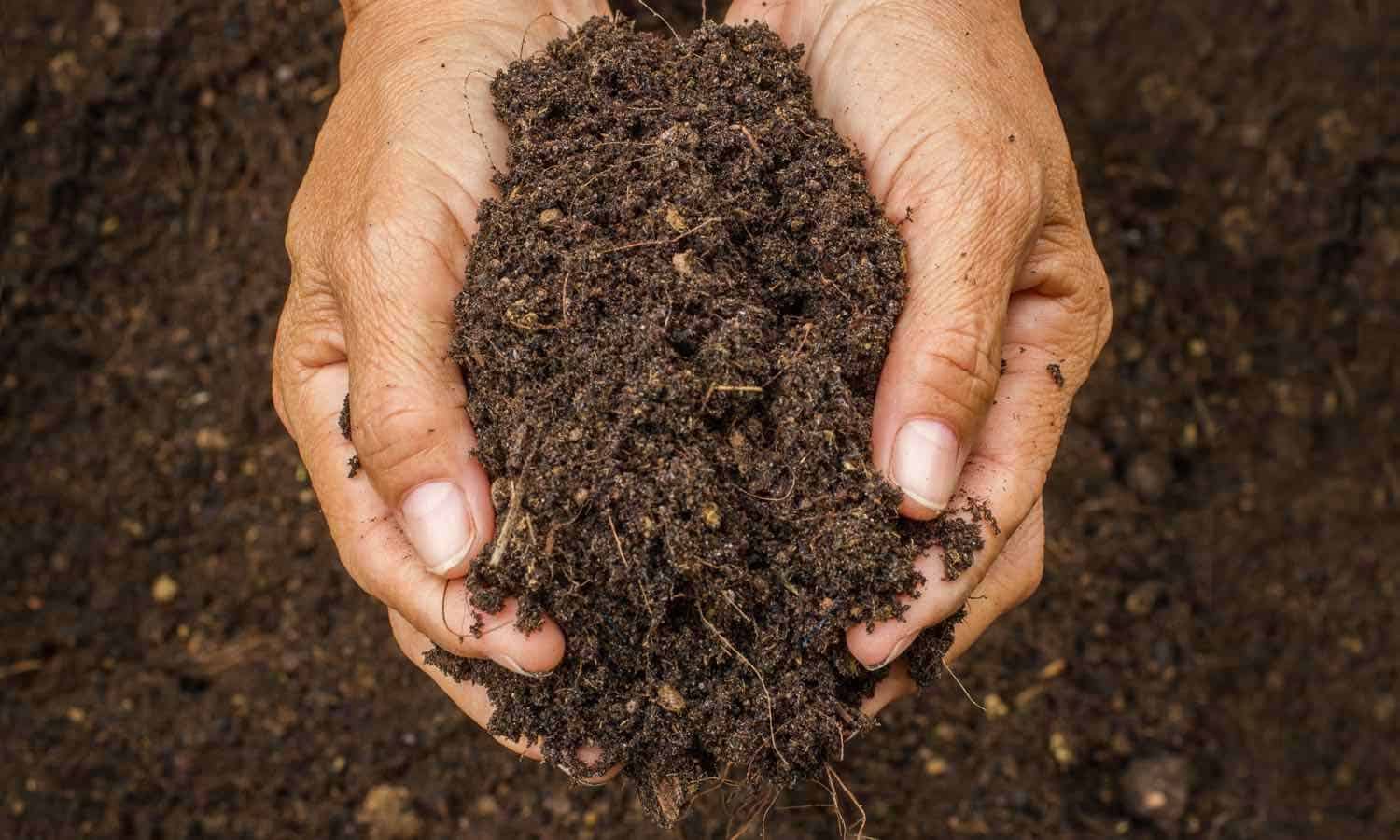

The hope was that the soil might save us. With civilization continuing to pump ever-increasing amounts of carbon dioxide into the atmosphere, perhaps plants — nature’s carbon scrubbers — might be able to package up some of that excess carbon and bury it underground for centuries or longer.

That hope has fueled increasingly ambitious climate change–mitigation plans. Researchers at the Salk Institute, for example, hope to bioengineer plants whose roots will churn out huge amounts of a carbon-rich, cork-like substance called suberin. Even after the plant dies, the thinking goes, the carbon in the suberin should stay buried for centuries. This Harnessing Plants Initiative is perhaps the brightest star in a crowded firmament of climate change solutions based on the brown stuff beneath our feet.

Such plans depend critically on the existence of large, stable, carbon-rich molecules that can last hundreds or thousands of years underground. Such molecules, collectively called humus, have long been a keystone of soil science; major agricultural practices and sophisticated climate models are built on them.

But over the past 10 years or so, soil science has undergone a quiet revolution, akin to what would happen if, in physics, relativity or quantum mechanics were overthrown. Except in this case, almost nobody has heard about it — including many who hope soils can rescue the climate. “There are a lot of people who are interested in sequestration who haven’t caught up yet,” said Margaret Torn, a soil scientist at Lawrence Berkeley National Laboratory.

A new generation of soil studies powered by modern microscopes and imaging technologies has revealed that whatever humus is, it is not the long-lasting substance scientists believed it to be. Soil researchers have concluded that even the largest, most complex molecules can be quickly devoured by soil’s abundant and voracious microbes. The magic molecule you can just stick in the soil and expect to stay there may not exist.

“I have The Nature and Properties of Soils in front of me — the standard textbook,” said Gregg Sanford, a soil researcher at the University of Wisconsin, Madison. “The theory of soil organic carbon accumulation that’s in that textbook has been proven mostly false … and we’re still teaching it.”

The consequences go far beyond carbon sequestration strategies. Major climate models such as those produced by the Intergovernmental Panel on Climate Change are based on this outdated understanding of soil. Several recent studies indicate that those models are underestimating the total amount of carbon that will be released from soil in a warming climate. In addition, computer models that predict the greenhouse gas impacts of farming practices — predictions that are being used in carbon markets — are probably overly optimistic about soil’s ability to trap and hold on to carbon.

It may still be possible to store carbon underground long term.  Indeed, radioactive dating measurements suggest that some amount of carbon can stay in the soil for centuries. But until soil scientists build a new paradigm to replace the old — a process now underway — no one will fully understand why. 

The Death of Humus

Soil doesn’t give up its secrets easily. Its constituents are tiny, varied and outrageously numerous. At a bare minimum, it consists of minerals, decaying organic matter, air, water, and enormously complex ecosystems of microorganisms. One teaspoon of healthy soil contains more bacteria, fungi and other microbes than there are humans on Earth.

The German biologist Franz Karl Achard was an early pioneer in making sense of the chaos. In a seminal 1786 study, he used alkalis to extract molecules made of long carbon chains from peat soils. Over the centuries, scientists came to believe that such long chains, collectively called humus, constituted a large pool of soil carbon that resists decomposition and pretty much just sits there. A smaller fraction consisting of shorter molecules was thought to feed microbes, which respired carbon dioxide to the atmosphere.

This view was occasionally challenged, but by the mid-20th century, the humus paradigm was “the only game in town,” said Johannes Lehmann, a soil scientist at Cornell University. Farmers were instructed to adopt practices that were supposed to build humus. Indeed, the existence of humus is probably one of the few soil science facts that many non-scientists could recite.

What helped break humus’s hold on soil science was physics. In the second half of the 20th century, powerful new microscopes and techniques such as nuclear magnetic resonance and X-ray spectroscopy allowed soil scientists for the first time to peer directly into soil and see what was there, rather than pull things out and then look at them.

What they found — or, more specifically, what they didn’t find — was shocking: there were few or no long “recalcitrant” carbon molecules — the kind that don’t break down. Almost everything seemed to be small and, in principle, digestible.

“We don’t see any molecules in soil that are so recalcitrant that they can’t be broken down,” said Jennifer Pett-Ridge, a soil scientist at Lawrence Livermore National Laboratory. “Microbes will learn to break anything down — even really nasty chemicals.”

Lehmann, whose studies using advanced microscopy and spectroscopy were among the first to reveal the absence of humus, has become the concept’s debunker-in-chief. A 2015 Nature paper he co-authored states that “the available evidence does not support the formation of large-molecular-size and persistent ‘humic substances’ in soils.” In 2019, he gave a talk with a slide containing a mock death announcement for “our friend, the concept of Humus.”

Over the past decade or so, most soil scientists have come to accept this view. Yes, soil is enormously varied. And it contains a lot of carbon. But there’s no carbon in soil that can’t, in principle, be broken down by microorganisms and released into the atmosphere. The latest edition of The Nature and Properties of Soils, published in 2016, cites Lehmann’s 2015 paper and acknowledges that “our understanding of the nature and genesis of soil humus has advanced greatly since the turn of the century, requiring that some long-accepted concepts be revised or abandoned.”

Old ideas, however, can be very recalcitrant. Few outside the field of soil science have heard of humus’s demise.

Buried Promises

At the same time that soil scientists were rediscovering what exactly soil is, climate researchers were revealing that increasing amounts of carbon dioxide in the atmosphere were rapidly warming the climate, with potentially catastrophic consequences.

Thoughts soon turned to using soil as a giant carbon sink. Soils contain enormous amounts of carbon — more carbon than in Earth’s atmosphere and all its vegetation combined. And while certain practices such as plowing can stir up that carbon — farming, over human history, has released an estimated 133 billion metric tons of carbon into the atmosphere — soils can also take up carbon, as plants die and their roots decompose.

Scientists began to suggest that we might be able to coax large volumes of atmospheric carbon back into the soil to dampen or even reverse the damage of climate change.

In practice, this has proved difficult. An early idea to increase carbon stores — planting crops without tilling the soil — has mostly fallen flat. When farmers skipped the tilling and instead drilled seeds into the ground, carbon stores grew in upper soil layers, but they disappeared from lower layers. Most experts now believe that the practice redistributes carbon within the soil rather than increases it, though it can improve other factors such as water quality and soil health.

Efforts like the Harnessing Plants Initiative represent something like soil carbon sequestration 2.0: a more direct intervention to essentially jam a bunch of carbon into the ground.

The initiative emerged when a team of scientists at the Salk Institute came up with an idea: Create plants whose roots produce an excess of carbon-rich molecules. By their calculations, if grown widely, such plants might sequester up to 20% of the excess carbon dioxide that humans add to the atmosphere every year.

The Salk scientists zeroed in on a complex, cork-like molecule called suberin, which is produced by many plant roots. Studies from the 1990s and 2000s had hinted that suberin and similar molecules could resist decomposition in soil.

With flashy marketing, the Harnessing Plants Initiative gained attention. An initial round of fundraising in 2019 brought in over $35 million. Last year, the multibillionaire Jeff Bezos contributed $30 million from his “Earth Fund.”

But as the project gained momentum, it attracted doubters. One group of researchers noted in 2016 that no one had actually observed the suberin decomposition process. When those authors did the relevant experiment, they found that much of the suberin decayed quickly.

In 2019, Joanne Chory, a plant geneticist and one of the Harnessing Plant Initiative’s project leaders, described the project at a TED conference. Asmeret Asefaw Berhe, a soil scientist at the University of California, Merced, who spoke at the same conference, pointed out to Chory that according to modern soil science, suberin, like any carbon-containing compound, should break down in soil. (Berhe, who has been nominated to lead the U.S. Department of Energy’s Office of Science, declined an interview request.)

Around the same time, Hanna Poffenbarger, a soil researcher at the University of Kentucky, made a similar comment after hearing Wolfgang Busch, the other project leader, speak at a workshop. “You should really get some soil scientists on board, because the assumption that we can breed for more recalcitrant roots — that may not be valid,” Poffenbarger recalls telling Busch.

Questions about the project surfaced publicly earlier this year, when Jonathan Sanderman, a soil scientist at the Woodwell Climate Research Center in Woods Hole, Massachusetts, tweeted, “I thought the soil biogeochem community had moved on from the idea that there is a magical recalcitrant plant compound. Am I missing some important new literature on suberin?” Another soil scientist responded, “Nope, the literature suggests that suberin will be broken down just like every other organic plant component. I’ve never understood why the @salkinstitute has based their Harnessing Plant Initiative on this premise.”

Busch, in an interview, acknowledged that “there is no unbreakable biomolecule.” But, citing published papers on suberin’s resistance to decomposition, he said, “We are still very optimistic when it comes to suberin.”

He also noted a second initiative Salk researchers are pursuing in parallel to enhancing suberin. They are trying to design plants with longer roots that could deposit carbon deeper in soil. Independent experts such as Sanderman agree that carbon tends to stick around longer in deeper soil layers, putting that solution on potentially firmer conceptual ground.

Chory and Busch have also launched collaborations with Berhe and Poffenbarger, respectively. Poffenbarger, for example, will analyze how soil samples containing suberin-rich plant roots change under different environmental conditions. But even those studies won’t answer questions about how long suberin sticks around, Poffenbarger said — important if the goal is to keep carbon out of the atmosphere long enough to make a dent in global warming.

Beyond the Salk project, momentum and money are flowing toward other climate projects that would rely on long-term carbon sequestration and storage in soils. In an April speech to Congress, for example, President Biden suggested paying farmers to plant cover crops, which are grown not for harvest but to nurture the soil in between plantings of cash crops. Evidence suggests that when cover crop roots break down, some of their carbon stays in the soil — although as with suberin, how long it lasts is an open question.

Not Enough Bugs in the Code

Recalcitrant carbon may also be warping climate prediction.

In the 1960s, scientists began writing large, complex computer programs to predict the global climate’s future. Because soil both takes up and releases carbon dioxide, climate models attempted to take into account soil’s interactions with the atmosphere. But the global climate is fantastically complex, and to enable the programs to run on the machines of the time, simplifications were necessary. For soil, scientists made a big one: They ignored microbes in the soil entirely. Instead, they basically divided soil carbon into short-term and long-term pools, in accordance with the humus paradigm.

More recent generations of models, including ones that the Intergovernmental Panel on Climate Change uses for its widely read reports, are essentially palimpsests built on earlier ones, said Torn. They still assume soil carbon exists in long-term and short-term pools. As a consequence, these models may be overestimating how much carbon will stick around in soils and underestimating how much carbon dioxide they will emit.

Last summer, a study published in Nature examined how much carbon dioxide was released when researchers artificially warmed the soil in a Panamanian rainforest to mimic the long-term effects of climate change. They found that the warmed soil released 55% more carbon than nearby unwarmed areas — a much larger release than predicted by most climate models. The researchers think that microbes in the soil grow more active at the warmer temperatures, leading to the increase.

The study was especially disheartening because most of the world’s soil carbon is in the tropics and the northern boreal zone. Despite this, leading soil models are calibrated to results of soil studies in temperate countries such as the U.S. and Europe, where most studies have historically been done. “We’re doing pretty bad in high latitudes and the tropics,” said Lehmann.

Even temperate climate models need improvement. Torn and colleagues reported earlier this year that, contrary to predictions, deep soil layers in a California forest released roughly a third of their carbon when warmed for five years.

Ultimately, Torn said, models need to represent soil as something closer to what it actually is: a complex, three-dimensional environment governed by a hyper-diverse community of carbon-gobbling bacteria, fungi and other microscopic beings. But even smaller steps would be welcome. Just adding microbes as a single class would be major progress for most models, she said.

Fertile Ground

If the humus paradigm is coming to an end, the question becomes: What will replace it?

One important and long-overlooked factor appears to be the three-dimensional structure of the soil environment. Scientists describe soil as a world unto itself, with the equivalent of continents, oceans and mountain ranges. This complex microgeography determines where microbes such as bacteria and fungi can go and where they can’t; what food they can gain access to and what is off limits.

A soil bacterium “may be only 10 microns away from a big chunk of organic matter that I’m sure they would love to degrade, but it’s on the other side of a cluster of minerals,” said Pett-Ridge. “It’s literally as if it’s on the other side of the planet.”

Another related, and poorly understood, ingredient in a new soil paradigm is the fate of carbon within the soil. Researchers now believe that almost all organic material that enters soil will get digested by microbes. “Now it’s really clear that soil organic matter is just this loose assemblage of plant matter in varying degrees of degradation,” said Sanderman. Some will then be respired into the atmosphere as carbon dioxide. What remains could be eaten by another microbe — and a third, and so on. Or it could bind to a bit of clay or get trapped inside a soil aggregate: a porous clump of particles that, from a microbe’s point of view, could be as large as a city and as impenetrable as a fortress. Studies of carbon isotopes have shown that a lot of carbon can stick around in soil for centuries or even longer. If humus isn’t doing the stabilizing, perhaps minerals and aggregates are.

Before soil science settles on a new theory, there will doubtless be more surprises. One may have been delivered recently by a group of researchers at Princeton University who constructed a simplified artificial soil using microfluidic devices — essentially, tiny plastic channels for moving around bits of fluid and cells. The researchers found that carbon they put inside an aggregate made of bits of clay was protected from bacteria. But when they added a digestive enzyme, the carbon was freed from the aggregate and quickly gobbled up. “To our surprise, no one had drawn this connection between enzymes, bacteria and trapped carbon,” said Howard Stone, an engineer who led the study.

Lehmann is pushing to replace the old dichotomy of stable and unstable carbon with a “soil continuum model” of carbon in progressive stages of decomposition. But this model and others like it are far from complete, and at this point, more conceptual than mathematically predictive.

Researchers agree that soil science is in the midst of a classic paradigm shift. What nobody knows is exactly where the field will land — what will be written in the next edition of the textbook. “We’re going through a conceptual revolution,” said Mark Bradford, a soil scientist at Yale University. “We haven’t really got a new cathedral yet. We have a whole bunch of churches that have popped up.”


Wednesday, May 18, 2016

2327. As Temperatures Rise, Soil Will Relinquish Less Carbon to the Atmosphere Than Currently Predicted

By Dan Krotz, Berkeley Lab, November 17, 2014

Here’s another reason to pay close attention to microbes: Current climate models probably overestimate the amount of carbon that will be released from soil into the atmosphere as global temperatures rise, according to research from the US Department of Energy’s Lawrence Berkeley National Laboratory (Berkeley Lab).
The findings are from a new computer model that explores the feedbacks between soil carbon and climate change. It’s the first such model to include several physiologically realistic representations of how soil microbes break down organic matter, a process that annually unleashes about ten times as much carbon into the atmosphere as fossil fuel emissions. In contrast, today’s models include a simplistic representation of microbial behavior.
The research is published Nov. 17 on the website of the journal Nature Climate Change.
Based on their results, the Berkeley Lab scientists recommend that future Earth system models include a more nuanced and dynamic depiction of how soil microbes go about the business of degrading organic matter and freeing up carbon.
This approach could help scientists more accurately predict what will happen to soil carbon as Earth’s climate changes. These predictions are especially important in vulnerable regions like the Arctic, which is expected to warm considerably this century, and which holds a vast amount of carbon in the tundra.
“We know that microbes are the agents of change when it comes to decomposing organic matter. But the question is: How important is it to explicitly quantify complex microbial interactions in climate models?” says Jinyun Tang, a scientist in Berkeley Lab’s Earth Sciences Division who conducted the research with fellow Berkeley Lab scientist William Riley.
“We found that it makes a big difference,” Tang says. ”We showed that warming temperatures would return less soil carbon to the atmosphere than current models predict.”
Current climate models probably overestimate the amount of carbon that will be released from soil into the atmosphere as global temperatures rise
The complex and dynamic livelihood of soil microbes is captured in this schematic. For the first time, these processes are represented in a computer model that predicts the fate of soil carbon as temperatures rise. (Credit: Berkeley Lab)
Terrestrial ecosystems, such as the Arctic tundra and Amazon rainforest, contain a huge amount of carbon in organic matter such as decaying plant material. Thanks to soil microbes that break down organic matter, these ecosystems also contribute a huge amount of carbon to the atmosphere.
Because soil is such a major player in the carbon cycle, even a small change in the amount of carbon it releases can have a big effect on atmospheric carbon concentrations. This dynamic implies that climate models should represent soil-carbon processes as accurately as possible.
But here’s the problem: Numerous empirical experiments have shown that the ways in which soil microbes decompose organic matter, and respond to changes in temperature, vary over time and from place to place. This variability is not captured in today’s ecosystem models, however. Microbes are depicted statically. They respond instantaneously when they’re perturbed, and then revert back as if nothing happened.
To better portray the variability of the microbial world, Tang and Riley developed a numerical model that quantifies the costs incurred by microbes to respire, grow, and consume energy. Their model accounts for internal physiology, such as the production of enzymes that help microbes break down organic matter. It includes external processes, such as the competition for these enzymes once they’re outside the microbe. Some enzymes adsorb onto mineral surfaces, which means they are not available to chew through organic matter. The model also includes competition between different microbial populations.
Together, these interactions—from enzymes to minerals to populations­—represent microbial networks as ever-changing systems, much like what’s observed in experiments.
The result? When the model was subjected to a 4 degrees Celsius change, it predicted more variable but weaker soil-carbon and climate feedbacks than current approaches.
“There’s less carbon flux to the atmosphere in response to warming,” says Riley. “Our representation is more complex, which has benefits in that it’s likely more accurate. But it also has costs, in that the parameters used in the model need to be further studied and quantified.”
Tang and Riley recommend more research be conducted on these microbial and mineral interactions. They also recommend that these features ultimately be included in next-generation Earth system models, such as the Department of Energy’s Accelerated Climate Modeling for Energy, or ACME.
The research was supported by the Department of Energy’s Office of Science.
###
Lawrence Berkeley National Laboratory addresses the world’s most urgent scientific challenges by advancing sustainable energy, protecting human health, creating new materials, and revealing the origin and fate of the universe. Founded in 1931, Berkeley Lab’s scientific expertise has been recognized with 13 Nobel prizes. The University of California manages Berkeley Lab for the U.S. Department of Energy’s Office of Science. For more, visit www.lbl.gov.
DOE’s Office of Science is the single largest supporter of basic research in the physical sciences in the United States, and is working to address some of the most pressing challenges of our time. For more information, please visit the Office of Science website at science.energy.gov/.
 Additional information:

2326. How Soil Microbes Fight Climate Change

By Esther Ngumbi, Scientific American, May 17, 2017


Around the globe, 2016 has been a dusty year. Just this month, massive dust storms enveloped Guazhou County in China, engulfing five-story buildings. Dust storms in Kuwait suspended oil exports, while another  storm engulfed the Texas Panhandle. In January, red clouds of dust swept across Free State, South Africa, while scientists warned that the erosion of nutrient-rich topsoil threatened food security.

But the loss of soil also presents a less obvious challenge: it robs us of a key ally in fighting climate change. That ally is soil microbes.

Global soils already hold three times as much carbon as exists in the atmosphere, and there’s room for much more. According to a recent study in Nature, enhanced carbon storage in the world’s farmland soils could reduce greenhouse gas concentrations by between 50 and 80 percent.

To realize this stunning potential, farmers would need to adopt certain game-changing farming practices that restore depleted soils, largely through spurring the activity of the soil microbiome, a web of microscopic life that includes fungi, nitrogen-fixing bacteria and trillions of other bacteria that promote plant growth. Like the microbes that live in and on our bodies, helping us with everything from nutrition to immune responses, soil microbes are allies. They can help us deal with many of the climate challenges facing agriculture.

Indeed, we are just beginning to understand how to harness the potential of soil microbes. Research has shown they can help restore degraded soils, including land in Mexico’s southern Sonoran desert. This capacity gives soil microbes the potential of revolutionize agriculture. Healthier soils produce higher crop yields, hold water more effectively, sequester more carbon and allow for increased agricultural productivity on existing land.

Secondly, soil microbes can help plants tolerate hot temperatures and drought brought about by climate change. Recent research has shown that soil microbes can help plants like wheat, rice , pepper and maize to withstand drought. Plants treated with soil microbes have a deeper root system and their shoots grow more quickly. Consequently, under drought stress, plants inoculated with microbes can more effectively take up water from drying soil and maintain near-normal shoot growth rates resulting in increased crop productivity.

Thirdly, soil microbes increase plant defenses against insect pests whose populations are expected to increase due to the changing climate. In India, researchers have shown that soil microbes applied directly to seeds helped plants combat the rice leaf-folder insect, an important rice pest in China, Japan, the Philippines and Vietnam. In another study, treatment of cotton plants with soil microbes helped them fight off beet armyworm, by killing its larvae.

What’s more, soil microbes can improve overall plant growth. This is especially important to the world’s 500 million smallholder farmer families, many of whom live in Africa and produce one-quarter of the average global yield of cereal crops . Increased productivity and income would power a virtuous cycle, enabling poor farmers to invest even more in the sustainability and productivity of their farms. The use of soil microbes to improve soil health and mitigate climate change would be invaluable in parts of the developing world hardest hit by drought and rising temperatures.

The challenge is to develop products that work for these smallholder farmers. To date, the handful of soil-microbial products that have reached the market are being manufactured by big companies like BASF, Syngenta and Monsanto. After spending millions of dollars to make these products, which were created for the world major cash crops such as soy and corn, they are unlikely to come at a cost that many small-scale farmers can afford.

Furthermore, to ensure that smallholder farmers benefit from new biological products, research is needed to map out the diversity of microbes in different crops and climates. Once identified, industry needs to develop cheaper methods to grow the microbes on a scale that would be available to millions of farmers.

We can’t expect private sector companies alone to undertake the research and product development needed to serve poor farmers across Africa and Asia. Rather, private companies, public research institutions, governments and other partners need to work together to deliver soil microbial products useful to small-scale farmers in developing countries.

We must continue to protect and restore our soils. We must also invest in understanding and harnessing the many benefits presented by the trillions of microbes that exist in healthy soils. As researchers continue to develop promising new biological products, there is the need to educate and guide farmers to better steward the populations that already exist in their soils. At a time when climate change is threatening our ability to sustainably grow food, protecting the soils that are home to our allies-soil microbes-is a game changer, providing novel solutions to address the challenges presented by climate change. 


Thursday, March 12, 2015

1763. No-Till Farming Is Spreading in the U.S.

By Erica Goode, The New York Times, March 9, 2015


FORT WORTH — Gabe Brown is in such demand as a speaker that for every invitation he accepts, he turns down 10 more. At conferences, like the one held here at a Best Western hotel recently, people line up to seek his advice.

“The greatest roadblock to solving a problem is the human mind,” he tells audiences.
Mr. Brown, a balding North Dakota farmer who favors baseball caps and red-striped polo shirts, is not talking about disruptive technology start-ups, political causes, or the latest self-help fad.

He is talking about farming, specifically soil-conservation farming, a movement that promotes leaving fields untilled, “green manures” and other soil-enhancing methods with an almost evangelistic fervor.

Such farming methods, which mimic the biology of virgin land, can revive degenerated earth, minimize erosion, encourage plant growth and increase farmers’ profits, their proponents say. And by using them, Mr. Brown told more than 250 farmers and ranchers who gathered at the hotel for the first Southern Soil Health Conference, he has produced crops that thrive on his 5,000-acre farm outside of Bismarck, N.D., even during droughts or flooding.

He no longer needs to use nitrogen fertilizer or fungicide, he said, and he produces yields that are above the county average with less labor and lower costs. “Nature can heal if we give her the chance,” Mr. Brown said.

Neatly tilled fields have long been a hallmark of American agriculture and its farmers, by and large traditionalists who often distrust practices that diverge from time-honored methods.

But soil-conservation farming is gaining converts as growers increasingly face extreme weather, high production costs, a shortage of labor and the threat of government regulation of agricultural pollution.

Farmers like Mr. Brown travel the country telling their stories, and organizations like No-Till on the Plains — a Kansas-based nonprofit devoted to educating growers about “agricultural production systems that model nature” — attract thousands.

“It’s a massive paradigm shift,” said Ray Archuleta, an agronomist at the Natural Resources Conservation Service, part of the federal Agriculture Department, which endorses the soil-conservation approach.

Government surveys suggest that the use of no-tillage farming has grown sharply over the last decade, accounting for about 35 percent of cropland in the United States.
For some crops, no-tillage acreage has nearly doubled in the last 15 years. For soybeans, for example, it rose to 30 million acres in 2012 from 16.5 million acres in 1996. The planting of cover crops — legumes and other species that are rotated with cash crops to blanket the soil year-round and act as green manure — has also risen in acreage about 30 percent a year, according to surveys, though the total remains small.

Farmers till the land to ready it for sowing and to churn weeds and crop residue back into the earth. Tilling also helps mix in fertilizers and manure and loosens the top layer of the soil.

But repeated plowing exacts a price. It degrades soil, killing off its biology, including beneficial fungi and earthworms, and leaving it, as Mr. Archuleta puts it, “naked, thirsty, hungry and running a fever.”

Degraded soil requires heavy applications of synthetic fertilizer to produce high yields. And because its structure has broken down, the soil washes away easily in heavy rain, taking nitrogen and other pollutants with it into rivers and streams.

Soil health proponents say that by leaving fields unplowed and using cover crops, which act as sinks for nitrogen and other nutrients, growers can increase the amount of organic matter in their soil, making it better able to absorb and retain water.

“Each 1 percent increase in soil organic matter helps soil hold 20,000 gallons more water per acre,” said Claire O’Connor, a staff lawyer and agriculture specialist at the Natural Resources Defense Council.

In turn, more absorbent soil is less vulnerable to runoff and more resistant to droughts and floods. Cover crops also help suppress weeds. Environmental groups like the Defense Council have long been fans of soil-conservation techniques because they help protect waterways and increase the ability of soil to store carbon dioxide, rather than releasing it into the air, where it contributes to climate change.

One recent study led by the Environmental Defense Fund suggested that the widespread use of cover crops and other soil-health practices could reduce nitrogen pollution in the Upper Mississippi and Ohio River basins by 30 percent, helping to shrink the giant “dead zone” of oxygen-depleted water in the Gulf of Mexico. The Defense Council, Ms. O’Connor said, has proposed that the government offer a “good driver” discount on federal crop insurance for growers who incorporate the practices.

But the movement also has critics, who argue that no-tillage and other methods are impractical and too expensive for many growers. A farmer who wants to shift to no-tillage, for example, must purchase new equipment, like a no-till seeder.

Tony J. Vyn, a professor of agronomy at Purdue, said the reasons growers cite for preferring to fully till their fields vary depending on geography, the types of crops they grow and the conditions of their soil. But they include the perception that weed control is harder using no-tillage; that the method, which reduces water evaporation, places limits on how early in the year crops can be planted; and that the residue left by no-tilling is too difficult to deal with, especially when corn is the primary cash crop.

Even farmers who enthusiastically adopt no-till and other soil-conservation methods rarely do so for environmental reasons; their motivation is more pragmatic.
“My goal is to improve my soil so I can grow a better crop so I can make more money,” said Terry McAlister, who farms 6,000 acres of drought-stricken cropland in North Texas. “If I can help the environment in the process, fine, but that’s not my goal.”

 MOAT Standard Analytics Code starts here MOAT Standard Analytics Code ends here
For years, Mr. McAlister plowed his fields, working with his father, who began farming outside the town of Electra in the 1950s. But he began having doubts about the effects of constant tilling on the soil.

“We were farming cotton like the West Texas guys were, just plow, plow, plow,” he said. “And if you got a rain, it just washed it and eroded it.

“It made me sick,” he said. “You’re asking yourself, ‘Is there not a better way?’ But at the time, we didn’t know.”
Mr. McAlister said that he switched to no-tillage in 2005, when an agricultural economist calculated that the method offered a $15-per-acre advantage over full tilling.

Now he is a convert. Standing in a field of winter wheat, he pointed proudly at the thick blanket of stubble sprinkled with decaying radishes and turnips.
“One of the toughest things about learning to do no-till is having to unlearn all the things that you thought were true,” he said.

Mr. McAlister grows cotton, wheat, hay, grain sorghum and some canola as cash crops, using a GPS-guided no-till seeder that drills through residue, allowing him to plant precisely and effectively.

He credits no-tillage for one of his biggest wheat crops, in 2012, when extreme drought left farmers throughout the region struggling to salvage any harvest. His healthier soil, he believes, made better use of the tiny amount of rain that fell than did the fully tilled fields of other farmers.

But few growers go as far as Mr. Brown in North Dakota, who produces grass-fed beef and has given up most agricultural chemicals. Mr. McAlister, for example, still uses nitrogen fertilizer. He plants seeds that are genetically modified for drought or herbicide resistance. And he depends on herbicides like Roundup to kill off his cover crops before sowing the crops he grows for cash.

The philanthropist Howard G. Buffett, a proponent of soil-conservation practices, said that the drought and flooding that have plagued much of the country in recent years have drawn more farmers to no-till.

“When you get into a drought, that gets everybody’s attention,” said Mr. Buffett, the middle son of Warren E. Buffett, the billionaire investor. “Farmers don’t really change their behavior until they see that they have to, which is pretty much human nature.”
The Environmental Protection Agency’s regulation of nutrient pollution in the Chesapeake Bay under the Clean Water Act in 2010, Mr. Buffett said, should also be “a wake-up call that the E.P.A. is coming soon” and if farmers do not address fertilizer runoff, the government will do it for them.

Still, he said, reaping the benefits of no-tillage farming demands patience, given that it may take several years for deadened soil to recover. Some farmers try no-tilling for one season and then get discouraged. And there is no one-size-fits-all solution: Farmers must adapt what they have learned to their own land and crops.
Mr. McAlister and other no-till farmers said that perhaps the biggest barrier to the spread of no-till is the mind-set that farmers must do things the same way as earlier generations did them.


“We have a saying in our area: ‘You can’t no-till because you haven’t buried your father yet,’” Mr. McAlister said.