Showing posts with label Industrial farming. Show all posts

Thursday, July 9, 2020

3394. How to Stop the Next Pandemic: U.N. Report Links Outbreaks to Climate Crisis & Industrial Farming

By Democracy Now!, July 9, 2020
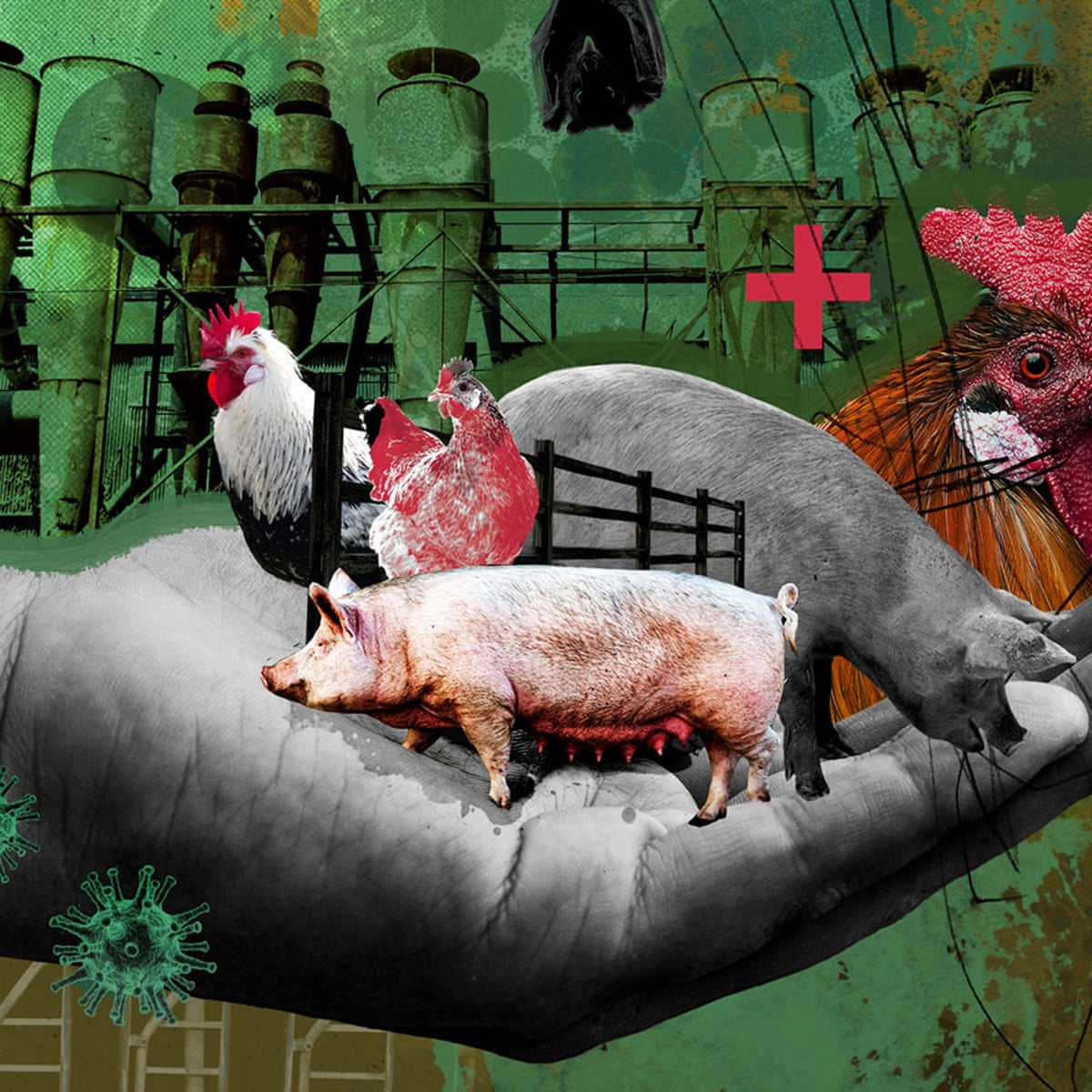

As the unprecedented global health emergency continues to unfold, a new United Nations report says humans must lower stress on the natural environment to prevent the next pandemic. COVID-19, the disease caused by the novel coronavirus, has a zoonotic origin, meaning it jumped from animals to humans, and the U.N. report finds that such diseases are spreading with greater frequency due to human activity, including industrial farming and the climate crisis. “Rather than focusing on the symptoms, we were looking at the causes,” says Delia Grace, lead author of the report, veterinary epidemiologist at the International Livestock Research Institute in Kenya and professor of food safety at the U.K. Natural Resources Institute.

Transcript
This is a rush transcript. Copy may not be in its final form.

AMY GOODMAN: This is Democracy Now!, democracynow.org, The Quarantine Report. I’m Amy Goodman, with Nermeen Shaikh. As the global health emergency caused by the coronavirus continues to unfold, we look now at a new United Nations report on how to prevent the next pandemic.

The COVID-19 virus has a zoonotic origin, meaning it jumped from animals to humans. It spilled over. Other zoonotic diseases include Ebola, MERS, HIV/AIDS and the West Nile virus. Researchers with the United Nations found zoonotic diseases are spreading with greater frequency because of stresses humans have placed on animal habitats, including industrial farming and the climate crisis.

Their new report outlines steps for how to break this chain of transmission. It was published Monday, which was World Zoonoses Day, commemorating the work of the French biologist Louis Pasteur. It was July 6, 1885, when Pasteur administered the first vaccine against rabies, a zoonotic disease.

For more, we’re going to Nairobi,, Kenya, where we’re joined by Delia Grace, lead author of this report by the United Nations Environment Programme and the International Livestock Research Institute. She’s also professor of food safety systems at the Natural Resources Institute.

We welcome you to Democracy Now!, Delia Grace. If you can start off by laying out what you have found?

DELIA GRACE: Thank you, and it’s a pleasure to be here and to share some of the findings from my report.

One of the novelties or the unique aspects of this report is that while there have been many attempts to understand the impacts of COVID-19 and how to manage it and how to deal with the economic and other social kind of aspects of it, there has been much less attention paid to the actual causes of COVID, why it came, and will something similar come again. And this is what our report focuses on. It’s not so much about how to deal with pandemics, but why they come in the first place and how we can prevent them or catch them early so they do less harm.

Our main findings, I think, were to focus firstly on the drivers of zoonoses, of emerging zoonoses. So, rather than focusing on the symptoms, we were looking at the causes. And then, our next major part of the report was looking at recommendations and what should be done. So, that’s just a quick overview. And maybe if you have some specific questions, I can go back to those in more detail.

NERMEEN SHAIKH: Well, Professor Delia Grace, before we get into more details from your report, I also want to say that it’s striking that already before the coronavirus, 2 million people every year died from zoonotic diseases. So, can you say a little about what those diseases are and why they’ve not been talked about? You also, in the report, anticipate further pandemics from these — potential pandemics from some of these diseases. Could you talk about what those are and what areas are most at risk?

DELIA GRACE: So, in epidemiology, which is the study of diseases, we often make a distinction between what we call endemic disease and epidemic disease. So, endemic diseases are those which are present more or less continuously in a population. And the epidemic diseases are ones which suddenly increase in their geographical spread or the number of people they affect.

So, most of the people dying of zoonoses are dying of the first type, the endemic diseases, the diseases which have been mainly controlled in rich countries, and so most of the sickness and death occurs in poor countries. And that’s why, I think, it has received less attention. If these diseases were equally prevalent or common in rich countries, they would get a lot more notice, a lot more news coverage, and maybe better control.

On the other hand, it’s the emerging diseases which are new and which can spread rapidly from country to country, like we’ve seen with COVID-19 and like we saw with West Nile virus and Riff Valley fever and avian influenza and swine flu. So, these are the diseases which typically kill far fewer people. I mean, COVID-19 has killed a lot of people, but some of the other diseases — mad cow disease, the SARS, sudden acute respiratory syndrome, which was a problem in the early 2000s — actually had less effect on human health but more effect on human economies, and that was because they got into rich countries.

So, yes. So, a lot of the problem of these zoonotic diseases is poverty and lack of development and people living in places where they’re in very close contact with animals, sometimes in the same house — chickens kept under the bed, because if they’re not under the bed, they’re going to be stolen — and also health services which are not very good. So, this combination of poverty, people highly dependent on animals, degraded environments and poor health services is a lethal cocktail for these zoonotic diseases, diseases which jump between people — animals and people, and the other way around, people and animals.

AMY GOODMAN: And can you talk about how the climate crisis plays into this, and this whole issue of it’s not animals encroaching on land where humans are, it’s humans increasingly encroaching — for example, the issue of deforestation forcing out animals from their natural habitat who would not want to be interacting with humans?

DELIA GRACE: Yes, it’s land fragmentation. It’s also extractive industries, especially in Africa, Southeast Asia. 

We’ve seen a big uptick in things like logging, mining. Many of these require roads to get in, to get the resources out. Many of these resources are not being — they’re being exported. They’re not being used by the local communities. But these roads also then offer a way to get the livestock or the wildlife out from their pristine, their previously kind safe, isolated areas into the emerging urban markets, where they’re often in demand by wealthy elites as exotic foods, which can — yeah, which provides income for very poor people. So, habitat fragmentation, land-use change has a big role in this.

In terms of climate change, it’s not so much that it drives the emergence of disease, that it helps disease jump from one animal to another or from animals to people, but rather that it changes the distribution of pathogens — that’s of the things which cause disease — and also what we call vectors, which are often insects or other animals that move pathogens around, such as mosquitoes or midges or flies. And many of these are dependent on climate factors, such as humidity, rainfall, growing season, air temperature. So, when you get climate change, you get vectors and disease-causing organisms moving, coming to new places. And what they encounter there is naive populations, people who have not been exposed to these. And that’s when you can get outbreaks of epidemics of disease. So climate change is less a direct driver and more a facilitator of these pandemics we are increasingly seeing.

NERMEEN SHAIKH: Professor Grace, many of the diseases, zoonotic diseases, have their origins now in the Global South. One thinks of Ebola, the West Nile virus and earlier coronaviruses. But you’ve pointed out that previously, ’til as recently as the year 2000 — so just 20 years ago — most new human diseases, zoonotic diseases, originated in the western seaboards of Europe and North America. So, what is it that changed?

DELIA GRACE: Yes. I think there’s — I mean, one complication is that it’s really only in the last century we’ve had good records of emerging diseases. And certainly we have better ability to detect the diseases in rich countries, whereas that is now changing. Some of the best diagnostic facilities are now in Southeast Asia and China and in other countries. So there is an element of our ability to detect diseases has increased.

But there also, we believe — and, you know, we have published on this — it also appears to be driven by the switch in low- and middle-income countries to highly intensive industrial agriculture, which was not a phenomenon even a hundred years ago, and also the increasingly rapid degradation of natural resources, driven by population growth but also people’s increasing demand for animal protein. And our study we did in the last decade suggested that emerging diseases were now shifting increasingly. They were, A, getting more common and, B, increasingly coming from the Global South.

AMY GOODMAN: Can you talk about Uganda, mentioned in the report as a leading example of how to manage zoonotic diseases?

DELIA GRACE: We actually see several — you know, one of the most encouraging and saddening issues with these emerging diseases is that they are actually not terribly difficult to control, if you only invest in them in the right places and at the right time.

So, we gave an example in Uganda, where basically it was community-level workers. So it’s basically training communities to — and working with them and learning from them, because they are the people who often have the greatest knowledge of the diseases they face, but they don’t have the ability always to report them or to manage them. So it’s basically working with communities in order to manage diseases at a local level before they become a problem. And this was an example of training environmental officers who could work with the communities, in the communities, at relatively low cost, and was able to demonstrate good benefits on reduction of disease control.

In Kenya, too, where I work, we have what’s called the Zoonotic Disease Unit, which brings together the government, different ministries with the government, from health, from environment, from veterinary, as well as researchers like myself. And again, this unit has been extremely successful in dealing with these zoonotic diseases, because zoonoses occur, as we say, at the intersection. They occur at the intersection of humans, wildlife, livestock and the environment. And things which happen at the intersection can best be managed at the intersection. And that’s how bringing together these groups has been very successful in Africa, I would say more successful than in Europe or in America.

AMY GOODMAN: Delia Grace, we want to thank you very much for being with us. A quick question: Another, what people don’t usually think of as a zoonotic disease, I would guess, is Lyme disease in the United States, this chronic condition — right? — where ticks are transferring the virus into humans.

DELIA GRACE: Yes, I mean, and that is a classic disease, again, which has environmental and wildlife elements and land-use change. We identified land-use change as a key driver. So, we’ve seen a complete ecological transformation, especially in parts of Europe and northern America. And this has allowed diseases to behave in ways, partly because the predators were removed from the system, so therefore you got far more deer, and then you get far more ticks. And then also you get people wanting to interact with the environment. And then you get outbreaks of zoonotic diseases.

And that can be managed best — one of the other key premises for this one health approach is that rather than treating the sick human, waiting 'til the human get sick and then trying to treat them, we treat the environment. We try to get a healthy environment so that people don't get sick in the first place.

AMY GOODMAN: Delia Grace, we want to thank you so much for being with us. Of course, we have to comment that this week in the United States, the worst surge for coronavirus during the pandemic is the time that the president of the United States is pulling the United States out of the World Health Organization. Delia Grace, lead author of a new report by the United Nations Environment Programme and the International Livestock Research Institute titled “Preventing the next pandemic–Zoonotic diseases and how to break the chain of transmission.” We’ll link to that at democracynow.org. She’s also professor of food safety systems at the Natural Resources Institute, speaking to us from Nairobi, Kenya.
This is Democracy Now! When we come back, we will talk about the Democratic Republic of Congo and Belgium’s legacy there. We will speak with the great-grandniece of King Leopold II, who considered the Congo his own personal fiefdom. Stay with us.

Friday, June 12, 2020

3379. America's Agriculture is 48 Times More Toxic Than 25 YearsAgo Due to Neonics Use

By Kendra Klein and Anna Lappé, The Guardian, August 7, 2019

More than 50 years ago, Rachel Carson warned of a “silent spring”, the songs of robins and wood thrush silenced by toxic pesticides such as DDT. Today, there is a new pesticide specter: a class of insecticides called neonicotinoids. For years, scientists have been raising the alarm about these bug killers, but a new study reveals a more complete picture of the threat they pose to insect life.
First commercialized in the 1990s, neonicotinoids, or neonics for short, are now the most widely used insecticides in the world. They’re used on over 140 crops, from apples and almonds to spinach and rice. Chemically similar to nicotine, they kill insects by attacking their nerve cells.
Neonics were pitched as an answer to pests’ increasing resistance to the reigning insecticides. But in an effort to more effectively kill pests, we created an explosion in the toxicity of agriculture not just for unwanted bugs but for the honeybees, ladybugs, beetles and the vast abundance of other insects that sustain life on Earth.
What we now know is that neonics are not only considerably more toxic to insects than other insecticides, they are far more persistent in the environment. While others break down within hours or days, neonics can remain in soils, plants and waterways for months to years, killing insects long after they’re applied and creating a compounding toxic burden.
The new study, published in the science journal PLOS ONE and co-authored by one of us, designed a way to quantify this persistence and combine it with data on the toxicity and total pounds used of neonics and other insecticides. For the first time, we have a time-lapse of impact: we can compare year-to-year changes in the toxicity of US agriculture for insects. The results? Since neonics were first introduced 25 years ago, US agriculture has become 48 times more toxic to insect life, and neonics are responsible for 92% of that surge in toxicity.
Looking at this toxic time-lapse, another interesting detail emerges: there’s a dramatic increase in the toxic burden of US agriculture for insects starting in the mid-2000s. That’s when beekeepers began reporting significant losses of their hives. It’s also when the pesticide companies that manufacture neonics, Bayer and Syngenta, found a lucrative new use for these chemicals: coating the seeds of crops like corn and soy that are grown on millions of acres across the country. These seed coatings now account for the vast majority of neonic use in the US.
Neonics are “systemic”, meaning they are water soluble and therefore taken up by the plant itself, making its nectar, pollen, and fruit – all of it – toxic. Only about 5% of a seed coating is absorbed by the plant, the remainder stays in the soil and can end up in rivers, lakes and drinking water with its runoff causing harm to wildlife and, as emerging evidence shows, to people.
This study comes on the heels of the first analysis of global insect populations, which found 40% of species face extinction, with near total insect loss possible by century’s end, driven in part by pesticides, with neonics a particular concern.
For all of this harm, farmers get few, if any, benefits from neonic seed coatings. According to the US Environmental Protection Agency, they provide “little or no overall benefits to soybean production”, though nearly half of soybean seeds in the US are treated. Similar analyses have found the same for corn, yet up to 100% of US corn seeds are treated.
All this risk without reward has led some regulators to take action. The European Union voted to ban the worst neonics in 2018. But the US government has so far failed to act. Chemical company lobbying can explain much of this inaction. Bayer, maker of the most widely used neonics, spent an estimated $4.3m lobbying in the US on behalf of its agricultural division in 2017.
Not only has the EPA stalled scientific review of neonics, last year, the Fish and Wildlife Service reversed an Obama-era ban on use of these dangerous insecticides in wildlife refuges. Congress could change this. Democratic representative Earl Blumenauer’s Saving America’s Pollinators Act would ban neonicotinoids and other systemic, pollinator-toxic insecticides. The bill has 56 co-sponsors, but faces a major hurdle clearing the House agriculture committee given that the chairman representative, Collin Peterson, a Democrat from Minnesota, counts Bayer and the pesticide industry’s trade association, Croplife America, among his top contributors.
Beyond a ban, we need a concerted effort to transition US agriculture away from dependence on pesticides and toward ecological methods of pest control. We already know how to do this. Research shows that organic farms support up to 50% more pollinating species and help other beneficial insects flourish. And by eliminating neonics and some 900 other active pesticide ingredients, they protect human health, too.
More than five decades ago, Rachel Carson warned that the war we are waging against nature with toxic pesticides is inevitably a war against ourselves. That is as true today as it was then. For the sake of the birds and bees – and all of us – this war must end.
  • Kendra Klein, PhD, is senior staff scientist at Friends of the Earth US
  • Anna LappĂ© is the co-founder of two national food and sustainability organizations and is working on a book on pesticides and our food

Wednesday, May 27, 2015

1859. Bird Flu Kills Millions of Chickens and Turkeys in the United States

By Donald G. McNeil Jr., The New York Times, May 5, 2015

Mass grave of chickens and turkeys killed by bird flu

Although much of the country has barely noticed, avian influenza — a version of the virus that generated “Killer Bird Flu!” headlines a decade ago — is now sweeping the Midwest.

More than 20 million turkeys and chickens have died or been culled; Iowa, Minnesota and Wisconsin have declared states of emergency; and teams of experts are trying to figure out how the new virus is spreading.

No humans have caught this flu, but health officials fear they might. They are requiring that cullers and barn-cleaners wear the kind of protective gear that Ebola workers do. Officials have also advised that everyone who was recently in contact with affected poultry operations — workers, truckers, veterinarians and so on — take Tamiflu, a flu preventive.

This is not the Asian H5N1 flu virus, which has killed 440 of the 826 people known to have gotten it since 2003. But the three avian flus found in this country since December are related to it — each produced, scientists believe, when the Asian H5N1, an efficient killer of birds and people, mixed with less dangerous avian strains.

No one knows how lethal any of the new viruses might be to humans. But because the virus spreading in the Midwest can wipe out most of a flock in two days, all are assumed to be dangerous.

The authorities are preparing for the panic that may ensue if someone catches one of these viruses and dies. Still, officials, say, most Americans are in little danger. The overall risks pale compared with those posed by well-known mortal threats that elicit no panic: car crashes, bee stings, bathroom falls and so on.

“We deem this a low human health risk — low, but not zero,” said Dr. Anne Schuchat, the director of the National Center for Immunization and Respiratory Diseases at the Centers for Disease Control and Prevention. “So far, we don’t have worrisome signs. But we don’t want to be overly reassuring, because with influenza, we always take events quite seriously.”

The three flu viruses found recently in American birds are an H5N8, an H5N2 and a new H5N1.

The new H5N1 virus has been found only in three wild birds in Washington State. The H5N8 virus, moving south from Canada in December, infected a few poultry farms in California and Idaho but has not been reported recently.

The H5N2 virus, however, is spreading rapidly in Midwest poultry operations and is the largest such outbreak in North American history.

The lethal ancestor of all three viruses, the Asian H5N1, was first identified in 1997 when it killed six people in Hong Kong. To stop it, every chicken in the territory was slaughtered, and poultry imports from China were banned.

The virus disappeared, although experts assume it circulated in China without being reported. It re-emerged in Hong Kong in 2003 and has spread to Asia, Europe and Africa.

It has killed people in Indonesia, Egypt, Vietnam, Cambodia, China and elsewhere — most of whom had contact with live poultry, often in backyard flocks. A few infections appear to have been transmitted within families after one member nursed another.

That Asian virus has never been found in the Western Hemisphere. But the flu viruses spreading here now contain some of its genes, including those for the H — for hemagglutinin — “spike” it uses to attach to cells.

The H5N8 virus is thought to have emerged before 2014, when Asian H5N1 mixed with a milder duck flu in China with a different “N” gene. (“N” stands for neuraminidase, the protein “helicopter blade” that chops away receptors on a cell’s surface so virus particles can escape. There are 18 H shapes and 11 N shapes, and each virus has six other genes that also determine its lethality.)
That H5N8 spread to Japan, Russia and Europe before turning up in Canada.

The H5N2 and the new H5N1 have some North American genes and so clearly emerged on this continent more recently — presumably when the H5N8 virus finally arrived and crossed with North American strains.

That may have happened last summer. Migratory ducks, geese and swans from around the world share ponds in the Arctic in summer. New flu gene mixes emerge and move south along the various migratory paths taken by the birds.

Whatever the mix of genes, dose size is also important in determining spread of the virus, said Dr. Peter Palese, a flu expert at the Mount Sinai School of Medicine.

Human flus can infect people who inhale only one to 10 virus particles, he said, but it takes 100,000 to 1 million particles of an H5 bird flu to infect a human.

“That’s why people who sleep under their chickens in markets in Asia get it, and we don’t get it on Fifth Avenue,” Dr. Palese said.
In birds, flu is primarily an intestinal disease rather than a respiratory one, so cullers and cleaners are told to wear coveralls, face masks and goggles to prevent any barn dust — much of which is powdered feces — from entering their noses, mouths or eyes.

Dr. Palese says he believes they should wear the full hoods with battery-powered air filters used in biosafety Level 3 laboratories.
Officials, he said, should also consider giving them the vaccines developed years ago against H5N1. Although it would not be a perfect match, it might provide some protection.

Several million doses of an experimental vaccine are in the National Strategic Stockpile, said Dr. Anthony S. Fauci, the director of the National Institute for Allergy and Infectious Diseases.

It was created in the early days of panic over the Asian H5N1.
Blood samples from people who received the experimental vaccine years ago are now being tested to see if they contain antibodies that help protect against the new flus, a C.D.C. official said.

The agency has also begun work on a vaccine against the new H5N8 virus, Dr. Schuchat said, and can make one against H5N2 virus, as well. But producing it in large quantities can take months or even a year.

To cull birds, farm operators normally cover them with a suffocating carbon dioxide foam. As they decompose, said Henry L. Niman, a biochemist in Pittsburgh who tracks genetic changes in flus, the heat generated kills the virus and the carcasses can be used as compost.

But that stops poultry production in the barn for weeks.
Other methods include incineration in portable kilns, and burial, though each have drawbacks. With burial, rotting birds could end up in the water table; with incineration, infectious feathers or other particles could blow up the stack and into the wind.

Because the virus lives in dried feces and feathers that could blow off trucks, the risks to humans could increase drastically, Dr. Niman warned, if dead birds are removed from the barns prematurely.

“I’m worried that this is getting so big that they may cut corners,” he said.

State health officials in the 16 affected states are monitoring all exposed people for 10 days, said Lenee Blanton, a C.D.C. epidemiologist.

Those with diabetes, compromised immune systems or any other conditions that would make flu complications more serious should be prescribed antiviral medicines like Tamiflu or Relenza even if they have no symptoms.

In Asia, Dr. Niman said, even dogs that ate carcasses of culled birds caught the H5N1 flu.

“It’s like Ebola — it’s only going to take one person who dies, and they aren’t going to believe the C.D.C. saying ‘low risk, no risk.’” he said. ”People will panic.”

Monday, March 30, 2015

1790. Book Review: The Ecological Hoofprint: The Global Burden of Industrial Livestock

By Jonathan Rutherford, March 30, 2015

Tony Weis’ new book, the Ecological Hoofprint is an outstanding work of activist scholarship. Even though, at a personal level, I was already aware of some of the problems associated with the industrial livestock industry, the book helped to both deepen my understanding and increase my moral and intellectual concern about the issues involved. I found Weis’ central contention – that ‘the deindustrialsation of livestock and the demeatificaiton diets are central to the hope of a more sustainable, just, and humane world,’ (p.12) – to be overwhelmingly persuasive.

The central aim of the Ecological Hoofprint is to challenge and expose the many unrecognized costs and problems associated with what Weis calls the growing ‘meatification’ of diets. The title is, of course, an allusion to the now well-known ecological footprint, which has successfully raised awareness about the unsustainable nature of high consumption lifestyles more generally. In the same vein, the Ecological Hoofprint seeks to draw ‘attention to the resource budgets and pollution costs that are embedded and under-accounted for in production and consumption’ of livestock (p. 129).

A related aim is to challenge the way in which dominant development narratives uncritically take for granted high-meat consumption. The livestock industry has used a range of strategies – most noticeably the (misleading) claim that meat is an indispensible source of quality protein – to reinforce the association between high meat consumption and successful societal development. Weis shows how this has influenced future development goals, such as the widely promoted imperative to ‘double food production’ by 2050. Such projections come with embedded assumptions about the continual ‘meatification’ of diets. As Weis points out ‘the scale of chronic hunger (nearly one billion) and malnourishment today, and expected population growth (more than two billion) still does not come close to adding up to a doubling scenario, which also must be understood to contain an uncritical expectation that meat consumption will continue to rise rapidly’ (p.3). 

The context for the book is the explosive, albeit geographically uneven, rise in meat consumption across the world, in the second half of the 20th century. In 1961 just over three billion people ate an average of 23 kg of meat and 5 kg of eggs a year, but by 2011, 7 billion ate an average of 43 kg of meat and 10kg of eggs a year – in other words, there has been a quadrupling of meat consumption, and an even greater rise in egg consumption, in a mere half-century (p.1). At the same time, Weis shows that the meatifcation of diets is very unevenly spread across the globe. The global-regional inequalities are massive: average meat consumption in the U.S, for example, was 121 kg in 2010, compared to 7kg in South Asia. This picture, however, needs to be tempered by the fact that meat-consumption is growing most rapidly in some of the so-called ‘emerging economies’ – China, for example, saw per capita meat consumption grow from 4kg to 61 kg between 1961 and 2010.

The great value of the book is that it situates the growth of the industrial livestock industry within the context of critical political economy – that is, Weis seeks to show how the competitive pressure acting on producers in a capitalist market economy has shaped each stage in the growth of the industry. For example, in the early 20th century economic competition had compelled U.S grain farmers to make a series of productivity enhancing technological innovations designed to simultaneously maximize agricultural yields while reducing labor costs. This, however, soon led to a food ‘glut’, as more food was being produced than could be sold, which threatened to undermine prices and agricultural incomes. Weis is quick to point out that this ‘glut’ did not mean that everyone in the U.S was being adequately fed: rather there was an imbalance between supply and effective demand – the latter referring to both the desire and ability to purchase a commodity. In a market economy, Weis reminds us, ‘the hungry people who can’t pay don’t register’ (p.72). Still, from a commercial perspective the glut was a major problem and while government purchasing of grain surpluses or third world food aid (designed to establish long term markets) could alleviate the problem for a while, a longer-term solution was needed. This was found, Weis shows, in the funneling of grain surpluses into livestock – animals which were increasingly separated from traditional farms, and systematically reared for food in specialized factory farms, warehouses and feedlots – in order to produce meat, eggs and dairy. Although the funneling of grains through livestock involves a net nutritional loss, still, the resulting meat could be sold at higher prices, enabling a new source of income and future growth for the sector. In this way, the growth of what Weis calls the industrial grain-oilseed complex, was increasingly tied to the industrial livestock complex: the growth of each reinforcing the other, to the point where, today, nearly 1/3 of all world arable land is used to grow grains for animal feed (p.148). 

Once established, capitalist growth imperatives have, of course, compelled the livestock industry to systematically increase and speed up the production of meat. This has particularly favored poultry production, with chickens especially well suited to the ‘technological innovations’ of industrialized livestock production. Poultry are also the most ‘efficient’ at turning feed into meat in the quickest time possible – their short lives lasting only a matter of months – even if the process inevitably involves, in the words of Bob Torres, neglecting ‘their interests to not suffer, their desires to be free and to live as beings in the world,’ and instead, subjugating them to the ‘productive ends of capital’ (quoted in Weis, p.142). 

In a powerful chapter, Weis shows the contradictory nature of this process. In a variety of ways the attempt to speed-up and intensify meat-egg-milk output, undermines basic biophysical processors. These then have to be ‘over-ridden’ by additional application of resources – most noticeably fossil fuel energy – which in turn generate mounting pollution and/or other problems. To give just one example, the sheer volume of often-contaminated biowaste generated at large (labor saving) factory farms, cannot easily be recycled back into the soil as was the case with traditional farms. Instead a variety of energy and water intensive processors are needed in order to remove the waste from factories and either transport off-site or funnel it into massive, often leaching, neighboring ‘lagoons’. 

The final chapter is an appropriately devastating summary of the true ‘hoofprint’ generated by the grain-oilseed-livestock industrial complex. At its heart, this is a challenge to the narrow conception of capitalist ‘efficiency’, which has shaped the development of the industry. In the search for profit, the industry has very ‘efficiently’ sort to increase meat-egg-dairy output while minimizing costs, especially labor costs. However, looked at through the lens of ecological and social impacts, the industry has been appallingly inefficient, generating multiple and mounting problems. These include, but are not limited to: 
  • Magnified GHG emissions (livestock production is involved in nearly 1/5 of all anthropocentric GHG emissions);
  • Increased land devoted to monocultural feed crops, which in several ways accelerates the decline and fragmentation of eco-systems;
  • Increased water use, as well as pollution of waterways from fertilizer and pesticide runoff and leaching bio waste;
  • Increased chronic diseases associated directly with high meat diets, and indirectly from the disease risks associated with livestock factory farms;
  • The domination, abuse and violence inflicted on livestock animals; 
  • The mundane, degrading and psychological unhealthy conditions experienced by animal industry workers. 
Weis concludes the book by discussing alternatives and strategies for change. On the supply side he argues for a gradual dismantling of the industrialized grain-livestock complex, to be replaced with bio-intensive organic farming. Bio-intensive farming, he argues, is capable of producing more ‘total nutrition per land area than monocultures owing to their capacity to grow a bigger range and overall number of plants, even if individual plants are lower yielding’ (p.148). The more direct use of agricultural land for (mostly plant based) food could open up space ‘for the renaturalization of forests, native grasslands, wetlands, riparian zones, streams and rivers’ (p.149). On the demand side, Weis encourages individuals to adopt more plant-based diet and discusses the debates that rage between meat minimizers, vegetarians and vegans. Still, he cautions against exaggerating the ‘impact of individual consumer choices’ worrying that ‘this could lead to self-gratification when what is needed is far more critical reflection and political engagement’ (p.154).

I felt this section could have done with further elaboration and discussion of the hugely difficult socio-political issues involved. Weis does not go into detail on some of the inevitable trade-offs that would come with such a societal shift. For example, while a transition to labor intensive bio-intensive farming may well have the advantage of increasing employment and defusing the ecological hoofprint, the costs would involve not just reduced meat availability, but also a less lucrative agricultural sector generally, as reduced labor productivity would eat into both profits and per capita incomes. Furthermore, a labor-intensive agricultural sector could undermine many sources of modern economic growth. Personally, I think these are costs worth making but the point is, when viewed in these terms, the immensity of the political challenge becomes clear. Which capitalist society today – all of which consider economic growth to be a fundamental societal goal, and most of whom are fully integrated into today’s neoliberal global economy dominated by huge Trans-National Corporations – are going to consider making the radical shifts Weis wants? 

Ultimately, Weis’ systemic analysis points towards the need for a new anti-systemic movement. This is especially clear when the hoofprint is understood as just one more set of problems that global-consumer-capitalist society is generating, and particularly when viewed in light of the emerging (savage) limits to growth. The book, in short, provides further ammunition for those who see a need for a reconceived ‘eco-socialism’, which, for this reviewer, might look something like Ted Trainer’s inspiring, albeit challenging, vision of a ‘Simpler Way

Weis’ book stands as a fine achievement and a must read for anyone working for transition to a democratic, sustainable and peaceful world order. 

Thursday, March 12, 2015

1763. No-Till Farming Is Spreading in the U.S.

By Erica Goode, The New York Times, March 9, 2015


FORT WORTH — Gabe Brown is in such demand as a speaker that for every invitation he accepts, he turns down 10 more. At conferences, like the one held here at a Best Western hotel recently, people line up to seek his advice.

“The greatest roadblock to solving a problem is the human mind,” he tells audiences.
Mr. Brown, a balding North Dakota farmer who favors baseball caps and red-striped polo shirts, is not talking about disruptive technology start-ups, political causes, or the latest self-help fad.

He is talking about farming, specifically soil-conservation farming, a movement that promotes leaving fields untilled, “green manures” and other soil-enhancing methods with an almost evangelistic fervor.

Such farming methods, which mimic the biology of virgin land, can revive degenerated earth, minimize erosion, encourage plant growth and increase farmers’ profits, their proponents say. And by using them, Mr. Brown told more than 250 farmers and ranchers who gathered at the hotel for the first Southern Soil Health Conference, he has produced crops that thrive on his 5,000-acre farm outside of Bismarck, N.D., even during droughts or flooding.

He no longer needs to use nitrogen fertilizer or fungicide, he said, and he produces yields that are above the county average with less labor and lower costs. “Nature can heal if we give her the chance,” Mr. Brown said.

Neatly tilled fields have long been a hallmark of American agriculture and its farmers, by and large traditionalists who often distrust practices that diverge from time-honored methods.

But soil-conservation farming is gaining converts as growers increasingly face extreme weather, high production costs, a shortage of labor and the threat of government regulation of agricultural pollution.

Farmers like Mr. Brown travel the country telling their stories, and organizations like No-Till on the Plains — a Kansas-based nonprofit devoted to educating growers about “agricultural production systems that model nature” — attract thousands.

“It’s a massive paradigm shift,” said Ray Archuleta, an agronomist at the Natural Resources Conservation Service, part of the federal Agriculture Department, which endorses the soil-conservation approach.

Government surveys suggest that the use of no-tillage farming has grown sharply over the last decade, accounting for about 35 percent of cropland in the United States.
For some crops, no-tillage acreage has nearly doubled in the last 15 years. For soybeans, for example, it rose to 30 million acres in 2012 from 16.5 million acres in 1996. The planting of cover crops — legumes and other species that are rotated with cash crops to blanket the soil year-round and act as green manure — has also risen in acreage about 30 percent a year, according to surveys, though the total remains small.

Farmers till the land to ready it for sowing and to churn weeds and crop residue back into the earth. Tilling also helps mix in fertilizers and manure and loosens the top layer of the soil.

But repeated plowing exacts a price. It degrades soil, killing off its biology, including beneficial fungi and earthworms, and leaving it, as Mr. Archuleta puts it, “naked, thirsty, hungry and running a fever.”

Degraded soil requires heavy applications of synthetic fertilizer to produce high yields. And because its structure has broken down, the soil washes away easily in heavy rain, taking nitrogen and other pollutants with it into rivers and streams.

Soil health proponents say that by leaving fields unplowed and using cover crops, which act as sinks for nitrogen and other nutrients, growers can increase the amount of organic matter in their soil, making it better able to absorb and retain water.

“Each 1 percent increase in soil organic matter helps soil hold 20,000 gallons more water per acre,” said Claire O’Connor, a staff lawyer and agriculture specialist at the Natural Resources Defense Council.

In turn, more absorbent soil is less vulnerable to runoff and more resistant to droughts and floods. Cover crops also help suppress weeds. Environmental groups like the Defense Council have long been fans of soil-conservation techniques because they help protect waterways and increase the ability of soil to store carbon dioxide, rather than releasing it into the air, where it contributes to climate change.

One recent study led by the Environmental Defense Fund suggested that the widespread use of cover crops and other soil-health practices could reduce nitrogen pollution in the Upper Mississippi and Ohio River basins by 30 percent, helping to shrink the giant “dead zone” of oxygen-depleted water in the Gulf of Mexico. The Defense Council, Ms. O’Connor said, has proposed that the government offer a “good driver” discount on federal crop insurance for growers who incorporate the practices.

But the movement also has critics, who argue that no-tillage and other methods are impractical and too expensive for many growers. A farmer who wants to shift to no-tillage, for example, must purchase new equipment, like a no-till seeder.

Tony J. Vyn, a professor of agronomy at Purdue, said the reasons growers cite for preferring to fully till their fields vary depending on geography, the types of crops they grow and the conditions of their soil. But they include the perception that weed control is harder using no-tillage; that the method, which reduces water evaporation, places limits on how early in the year crops can be planted; and that the residue left by no-tilling is too difficult to deal with, especially when corn is the primary cash crop.

Even farmers who enthusiastically adopt no-till and other soil-conservation methods rarely do so for environmental reasons; their motivation is more pragmatic.
“My goal is to improve my soil so I can grow a better crop so I can make more money,” said Terry McAlister, who farms 6,000 acres of drought-stricken cropland in North Texas. “If I can help the environment in the process, fine, but that’s not my goal.”

 MOAT Standard Analytics Code starts here MOAT Standard Analytics Code ends here
For years, Mr. McAlister plowed his fields, working with his father, who began farming outside the town of Electra in the 1950s. But he began having doubts about the effects of constant tilling on the soil.

“We were farming cotton like the West Texas guys were, just plow, plow, plow,” he said. “And if you got a rain, it just washed it and eroded it.

“It made me sick,” he said. “You’re asking yourself, ‘Is there not a better way?’ But at the time, we didn’t know.”
Mr. McAlister said that he switched to no-tillage in 2005, when an agricultural economist calculated that the method offered a $15-per-acre advantage over full tilling.

Now he is a convert. Standing in a field of winter wheat, he pointed proudly at the thick blanket of stubble sprinkled with decaying radishes and turnips.
“One of the toughest things about learning to do no-till is having to unlearn all the things that you thought were true,” he said.

Mr. McAlister grows cotton, wheat, hay, grain sorghum and some canola as cash crops, using a GPS-guided no-till seeder that drills through residue, allowing him to plant precisely and effectively.

He credits no-tillage for one of his biggest wheat crops, in 2012, when extreme drought left farmers throughout the region struggling to salvage any harvest. His healthier soil, he believes, made better use of the tiny amount of rain that fell than did the fully tilled fields of other farmers.

But few growers go as far as Mr. Brown in North Dakota, who produces grass-fed beef and has given up most agricultural chemicals. Mr. McAlister, for example, still uses nitrogen fertilizer. He plants seeds that are genetically modified for drought or herbicide resistance. And he depends on herbicides like Roundup to kill off his cover crops before sowing the crops he grows for cash.

The philanthropist Howard G. Buffett, a proponent of soil-conservation practices, said that the drought and flooding that have plagued much of the country in recent years have drawn more farmers to no-till.

“When you get into a drought, that gets everybody’s attention,” said Mr. Buffett, the middle son of Warren E. Buffett, the billionaire investor. “Farmers don’t really change their behavior until they see that they have to, which is pretty much human nature.”
The Environmental Protection Agency’s regulation of nutrient pollution in the Chesapeake Bay under the Clean Water Act in 2010, Mr. Buffett said, should also be “a wake-up call that the E.P.A. is coming soon” and if farmers do not address fertilizer runoff, the government will do it for them.

Still, he said, reaping the benefits of no-tillage farming demands patience, given that it may take several years for deadened soil to recover. Some farmers try no-tilling for one season and then get discouraged. And there is no one-size-fits-all solution: Farmers must adapt what they have learned to their own land and crops.
Mr. McAlister and other no-till farmers said that perhaps the biggest barrier to the spread of no-till is the mind-set that farmers must do things the same way as earlier generations did them.


“We have a saying in our area: ‘You can’t no-till because you haven’t buried your father yet,’” Mr. McAlister said.