Showing posts with label Race. Show all posts

Friday, March 30, 2018

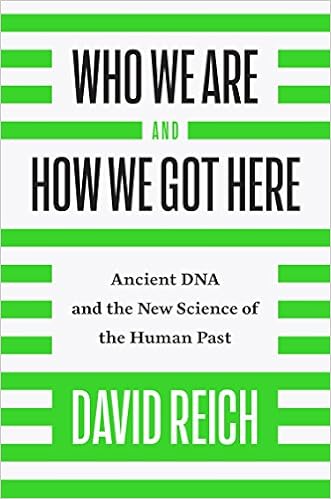
2864. How Not To Talk About Race and Genetics: A Response to David Reich's "Who We Are, and How We Got Here"

Buzzfeed, March 30, 2018

Editor's note:  David Reich's essay in The New York Times was republished here as "How Genetics Is Changing Our Understanding of 'Race'." Below is an open letter signed by 68 scientists and researchers who take issue with Reich's view more fully explained in his book "Who We Are and How We Got Here."  The full list of signers appear below.  March 30, 2018. KN. 


*    *    *


In his newly published book Who We Are and How We Got Here, geneticist David Reich engages with the complex and often fraught intersections of genetics with our understandings of human differences — most prominently, race.
He admirably challenges misrepresentations about race and genetics made by the likes of former New York Times science writer Nicholas Wade and Nobel Laureate James Watson. As an eminent scientist, Reich clearly has experience with the genetics side of this relationship. But his skillfulness with ancient and contemporary DNA should not be confused with a mastery of the cultural, political, and biological meanings of human groups.
As a group of 68 scholars from disciplines ranging across the natural sciences, medical and population health sciences, social sciences, law, and humanities, we would like to make it clear that Reich’s understanding of "race" — most recently in a Times column warning that “it is simply no longer possible to ignore average genetic differences among ‘races’” — is seriously flawed.
For centuries, race has been used as potent category to determine how differences between human beings should and should not matter. But science and the categories it constructs do not operate in a political vacuum. Population groupings become meaningful to scientists in large part because of their social and political salience — including, importantly, their power to produce and enforce hierarchies of race, sex, and class.
Reich frames his argument by positing a straw man in the form of a purported orthodoxy that claims that “the average genetic differences among people grouped according to today's racial terms are so trivial when it comes to any meaningful biological traits that those differences can be ignored.” That orthodoxy, he says, “denies the possibility of substantial biological differences among human populations” and is “anxious about any research into genetic differences among populations.”
This misrepresents the many scientists and scholars who have demonstrated the scientific flaws of considering “race” a biological category. Their robust body of scholarship recognizes the existence of geographically based genetic variation in our species, but shows that such variation is not consistent with biological definitions of race. Nor does that variation map precisely onto ever changing socially defined racial groups.
Reich critically misunderstands and misrepresents concerns that are central to recent critiques of how biomedical researchers — including Reich — use categories of “race” and “population.”
For example, sickle cell anemia is a meaningful biological trait. In the US it is commonly (and mistakenly) identified as a “black” disease. In fact, while it does have a high prevalence in populations of people with West and Central African ancestry, it also has a high prevalence in populations from much of the Arabian Peninsula, and parts of the Mediterranean and India. This is because the genetic variant that causes sickle cell is more prevalent in people descended from parts of the world with a high incidence of malaria. “Race” has nothing to do with it. Thus, it is simply wrong to say that the higher prevalence of sickle cell trait in West African populations means that the racial category “black” is somehow genetic.
The same thing goes for the people descended from West African populations whom Reich examined in his work on prostate cancer. These people may have a higher frequency of a version of a particular gene that is linked to a higher risk of prostate cancer. But lots of people not from West Africa also have this same gene. We don’t call these other people a “race” or say their “race” is relevant to their condition. Finding a high prevalence of a particular genetic variant in a group does not make that group a “race.”
Human beings are 99.5% genetically identical. Of course, because the human genome has 3 billion base pairs, that means any given individual may differ from another at 15 million loci (.5% of 3 billion). Given random variation, you could genotype all Red Sox fans and all Yankees fans and find that one group has a statistically significant higher frequency of a number of particular genetic variants than the other group — perhaps even the same sort of variation that Reich found for the prostate cancer–related genes he studied. This does not mean that Red Sox fans and Yankees fans are genetically distinct races (though many might try to tell you they are).
In short, there is a difference between finding genetic differences between individuals and constructing genetic differences across groups by making conscious choices about which types of group matter for your purposes. These sorts of groups do not exist “in nature.” They are made by human choice. This is not to say that such groups have no biological attributes in common. Rather, it is to say that the meaning and significance of the groups is produced through social interventions.
In support of his argument for the biological relevance of race, Reich also writes about genetic differences between Northern and Southern Europeans. Again, this should not be an argument for the biological reality of race. Of course, we could go back to the early 20th century when many believed that the “industrious” Northern Teutons were a race distinct from the “slothful” Southern Europeans. Such thinking informed the creation of racially restrictive immigration laws in 1924, but we think even Reich would not consider this sort of thinking useful today.
Instead, we need to recognize that meaningful patterns of genetic and biological variation exist in our species that are not racial.
Reich’s claim that we need to prepare for genetic evidence of racial differences in behavior or health ignores the trajectory of modern genetics. For several decades billions of dollars have been spent trying to find such differences. The result has been a preponderance of negative findings despite intrepid efforts to collect DNA data on millions of individuals in the hope of finding even the tiniest signals of difference.
To challenge Reich’s claims is not, as he would have it, to stick our heads in the sand. It is to develop a more sophisticated approach to the problem of human group categorization in the biomedical sciences.
Precisely because the problems of race are complex, scientists need to engage these issues with greater care and sophistication. Geneticists should work in collaboration with their social science and humanities colleagues to make certain that their biomedical discoveries make a positive difference in health care, including the care of those studied.
This is not to say that geneticists such as Reich should never use categories in their research; indeed, their work would be largely impossible without them. However, they must be careful to understand the social and historical legacies that shape the formation of these categories, and constrain their utility.
Even "male" and "female," which Reich invokes as obviously biologically meaningful, has important limitations. While these categories help us to know and care for many human beings, they hinder our capacity to know and care for the millions of human beings born into this world not clearly "sexed.’ Further, overemphasizing the importance of the X and Y chromosomes in determining sex prevent us from seeing the other parts of the genome involved in sex.
While focusing on groups with a high incidence of a particular condition may help researchers identify genetic variants that might correlate to the condition, it must also be understood that all genetic contributions to physical traits, including disease, are always influenced by environmental factors.
For example, an ancestral gene may not have ever contributed to disease risk in its former environment, but now does when individuals carrying it are differentially exposed to harmful environments. This raises the question of whether it is more efficacious to remove the environmental insult or alter the individual’s physiology by medical intervention (or both).
Making claims about the existence of biological races won’t help answer questions about health, like how the health of racialized groups is harmed by racial discrimination — how it increases the risk of disease, the risk of exposure to environmental toxins, or the risk of inadequate and inappropriate health care.
This doesn’t mean that genetic variation is unimportant; it is, but it does not follow racial lines. History has taught us the many ways that studies of human genetic variation can be misunderstood and misinterpreted: if sampling practices and historical contexts are not considered; if little attention is given to how genes, environments, and social conditions interact; and if we ignore the ways that sociocultural categories and practices shape the genetic patterns themselves.
As scholars who engage with social and scientific research, we urge scientists to speak out when science is used inappropriately to make claims about human differences. The public should not cede the power to define race to scientists who themselves are not trained to understand the social contexts that shape the formation of this fraught category. Instead, we encourage geneticists to collaborate with their colleagues in the social sciences, humanities, and public health to consider more carefully how best to use racial categories in scientific research. Together, we can conduct research that will influence human lives positively.

Jonathan Kahn, James E. Kelley Professor of Law, Mitchell Hamline School of Law
Alondra Nelson, Professor of Sociology and Gender Studies, Columbia University; President, Social Science Research Council
Joseph L. Graves Jr., Associate Dean for Research & Professor of Biological Sciences, Fellow of the American Association for the Advancement of Science, Section G: Biological Sciences, Joint School of Nanoscience & Nanoengineering, North Carolina A&T State University, UNC Greensboro
Sarah Abel, Postdoc, Department of Anthropology, University of Iceland
Ruha Benjamin, Associate Professor, Department of African American Studies, Princeton University
Sarah Blacker, Postdoctoral Research Fellow, Max Planck Institute for the History of Science, Berlin
Catherine Bliss, Associate Professor, Social and Behavioral Sciences, UC San Francisco
Lundy Braun, Professor of Medical Science and Africana Studies, Brown University
Khiara M. Bridges, Professor of Law, Professor of Anthropology, Boston University
Craig Calhoun, President of Berggruen Institute Centennial Professor, London School of Economics.
Claudia Chaufan, Associate Professor, York University Toronto
Nathaniel Comfort, Professor, Institute of the History of Medicine, The Johns Hopkins University
Richard Cone, Professor of Biophysics, Johns Hopkins University
Richard Cooper, Department of Public Health Sciences, Loyola University Medical School
Marcy Darnovsky, Executive Director, Center for Genetics and Society
Robert Desalle, Curator, Institute for Genomics, American Museum of Natural History
Troy Duster, Chancellor’s Professor Emeritus, University of California, Berkeley
Anne Fausto-Sterling, Professor of Biology Emerita, Brown University, Fellow of the American Association for the Advancement of Science
Agustin Fuentes, The Edmund P. Joyce C.S.C. Professor of Anthropology, University of Notre Dame
Joan H. Fujimura, Professor, Department of Sociology and Holtz Center for Research on Science, Technology, Medicine, and the Environment, University of Wisconsin-Madison
Stephanie Malia Fullerton, Associate Professor, Department of Bioethics & Humanities, University of Washington
Duana Fullwiley, Associate Professor of Medical Anthropology, Stanford University.
Omer Gokcumen, Assistant Professor, University at Buffalo
Alan Goodman, Professor of Biological Anthropology. Hampshire College
Monica H. Green, Professor of History, School of Historical, Philosophical, and Religious Studies, Arizona State University
Erika Hagelberg, Professor, Department of Biosciences, University of Oslo
Evelynn Hammonds, Barbara Gutmann Rosenkrantz Professor of the History of Science, Harvard University
Helena Hansen, Assistant Professor of Anthropology and Psychiatry, New York University
John Hartigan Jr., Professor of Anthropology, University of Texas, Austin.
Anthony Hatch, Associate Professor, Science in Society Program, Sociology, and African American Studies, Wesleyan University
Torsten Heinemann, Professor of Sociology and Chair of Technology and Diversity, RWTH Aachen University, Germany
Jay Kaufman, Canada Research Chair in Health Disparities and Professor of Epidemiology, McGill University.
Trica Keaton, Associate Professor, African and African American Studies, Dartmouth College
Terence Keel, Associate Professor, Department of Black Studies and Department of History, University of California, Santa Barbara
Nancy Krieger, Professor of Social Epidemiology, American Cancer Society Clinical Research Professor, Harvard T.H. Chan School of Public Health
Sheldon Krimsky, Lenore Stern Professor of Humanities and Social Sciences, Tufts University
Jon Røyne Kyllingstad, Associate Professor of History, University of Oslo
Catherine Lee, Associate Professor of Sociology, Rutgers University
Ageliki Lefkaditou, Postdoctoral Researcher, Institute of Health and Society, University of Oslo
Sandra Soo-Jin Lee, Senior Research Scholar, Center for Biomedical Ethics, Stanford University
Jonathan Marks, Professor of Anthropology, UNC-Charlotte
Amade M’charek, Professor of the Anthropology of Science, University of Amsterdam, Netherlands
Michael Montoya, Associate Professor of Anthropology Emeritus, University of California, Irvine
Ann Morning, Associate Professor of Sociology, New York University
Osagie K. Obasogie, Haas Distinguished Chair and Professor of Bioethics, Joint Medical Program and School of Public Health, University of California, Berkeley
Pilar N. Ossorio, Ph.D., JD, Professor of Law and Bioethics, University of Wisconsin-Madison
Tony Platt, Distinguished Affiliated Scholar, Center for the Study of Law & Society, UC Berkeley;
Robert Pollack, professor of Biological Sciences, Columbia University
Aaron Panofsky, Associate Professor, Institute for Society and Genetics, Public Policy, and Sociology, University of California, Los Angeles
Kimani Paul-Emile, Associate Professor, Fordham University School of Law
Ramya M. Rajagopalan, Research Scientist, Institute for Practical Ethics, University of California, San Diego
Rayna Rapp, Professor of Anthropology, New York University
Jenny Reardon, Department of Sociology and Director, Science and Justice Research Center, University of California, Santa Cruz
Amos Morris-Reich, Professor of History, University of Haifa
Susan M. Reverby, McLean Professor Emerita in the History of Ideas and Professor Emerita of Women’s and Gender Studies, Wellesley College
Sarah Richardson, Professor of the History of Science and of Studies of Women, Gender and Sexuality, Harvard University
Jennifer A. Richeson, Philip R. Allen Professor of Psychology, Yale University
Sarah S. Richardson, Professor of the History of Science and of Studies of Women, Gender, and Sexuality Director of Graduate Studies, WGS, Harvard University
Dorothy Roberts, George A. Weiss University Professor of Law, Sociology, and Africana Studies and Director, Penn Program on Race, Science, and Society, University of Pennsylvania
Wendy D. Roth, Associate Professor of Sociology, University of British Columbia
Charmaine DM Royal, Associate Professor, African & African American Studies, Biology, and Community & Family Medicine, Duke University
Danilyn Rutherford, President of the Wenner-Gren Foundation for Anthropological Research
Janet K. Shim, Professor of Sociology, University of California, San Francisco
Karen-Sue Taussig, Chair and Associate Professor of Anthropology, University of Minnesota
Charis Thompson, Chancellor’s Professor, UC Berkeley, and RQIF Professor, London School of Economics
France Winddance Twine, Professor of Sociology, University of California at Santa Barbara
Keith Wailoo, Henry Putnam University Professor of History and Public Affairs, Princeton University
Patricia J. Williams, James L. Dohr Professor of Law, Columbia University
Michael Yudell, Chair & Associate Professor, Dornsife School of Public Health, Drexel University

Monday, March 26, 2018

2856. How Genetics Is Changing Our Understanding of ‘Race’


By David Reich, The New York Times, March 23, 2018


In 1942, the anthropologist Ashley Montagu published “Man’s Most Dangerous Myth: The Fallacy of Race,” an influential book that argued that race is a social concept with no genetic basis. A classic example often cited is the inconsistent definition of “black.” In the United States, historically, a person is “black” if he has any sub-Saharan African ancestry; in Brazil, a person is not “black” if he is known to have any European ancestry. If “black” refers to different people in different contexts, how can there be any genetic basis to it?

Beginning in 1972, genetic findings began to be incorporated into this argument. That year, the geneticist Richard Lewontin published an important study of variation in protein types in blood. He grouped the human populations he analyzed into seven “races” — West Eurasians, Africans, East Asians, South Asians, Native Americans, Oceanians and Australians — and found that around 85 percent of variation in the protein types could be accounted for by variation within populations and “races,” and only 15 percent by variation across them. To the extent that there was variation among humans, he concluded, most of it was because of “differences between individuals.”

In this way, a consensus was established that among human populations there are no differences large enough to support the concept of “biological race.” Instead, it was argued, race is a “social construct,” a way of categorizing people that changes over time and across countries.

It is true that race is a social construct. It is also true, as Dr. Lewontin wrote, that human populations “are remarkably similar to each other” from a genetic point of view.

But over the years this consensus has morphed, seemingly without questioning, into an orthodoxy. The orthodoxy maintains that the average genetic differences among people grouped according to today’s racial terms are so trivial when it comes to any meaningful biological traits that those differences can be ignored.

The orthodoxy goes further, holding that we should be anxious about any research into genetic differences among populations. The concern is that such research, no matter how well-intentioned, is located on a slippery slope that leads to the kinds of pseudoscientific arguments about biological difference that were used in the past to try to justify the slave trade, the eugenics movement and the Nazis’ murder of six million Jews.

I have deep sympathy for the concern that genetic discoveries could be misused to justify racism. But as a geneticist I also know that it is simply no longer possible to ignore average genetic differences among “races.”

Groundbreaking advances in DNA sequencing technology have been made over the last two decades. These advances enable us to measure with exquisite accuracy what fraction of an individual’s genetic ancestry traces back to, say, West Africa 500 years ago — before the mixing in the Americas of the West African and European gene pools that were almost completely isolated for the last 70,000 years. With the help of these tools, we are learning that while race may be a social construct, differences in genetic ancestry that happen to correlate to many of today’s racial constructs are real.

Recent genetic studies have demonstrated differences across populations not just in the genetic determinants of simple traits such as skin color, but also in more complex traits like bodily dimensions and susceptibility to diseases. For example, we now know that genetic factors help explain why northern Europeans are taller on average than southern Europeans, why multiple sclerosis is more common in European-Americans than in African-Americans, and why the reverse is true for end-stage kidney disease.

I am worried that well-meaning people who deny the possibility of substantial biological differences among human populations are digging themselves into an indefensible position, one that will not survive the onslaught of science. I am also worried that whatever discoveries are made — and we truly have no idea yet what they will be — will be cited as “scientific proof” that racist prejudices and agendas have been correct all along, and that those well-meaning people will not understand the science well enough to push back against these claims.

This is why it is important, even urgent, that we develop a candid and scientifically up-to-date way of discussing any such differences, instead of sticking our heads in the sand and being caught unprepared when they are found.

To get a sense of what modern genetic research into average biological differences across populations looks like, consider an example from my own work. Beginning around 2003, I began exploring whether the population mixture that has occurred in the last few hundred years in the Americas could be leveraged to find risk factors for prostate cancer, a disease that occurs 1.7 times more often in self-identified African-Americans than in self-identified European-Americans. This disparity had not been possible to explain based on dietary and environmental differences, suggesting that genetic factors might play a role.

Self-identified African-Americans turn out to derive, on average, about 80 percent of their genetic ancestry from enslaved Africans brought to America between the 16th and 19th centuries. My colleagues and I searched, in 1,597 African-American men with prostate cancer, for locations in the genome where the fraction of genes contributed by West African ancestors was larger than it was elsewhere in the genome. In 2006, we found exactly what we were looking for: a location in the genome with about 2.8 percent more African ancestry than the average.

When we looked in more detail, we found that this region contained at least seven independent risk factors for prostate cancer, all more common in West Africans. Our findings could fully account for the higher rate of prostate cancer in African-Americans than in European-Americans. We could conclude this because African-Americans who happen to have entirely European ancestry in this small section of their genomes had about the same risk for prostate cancer as random Europeans.

Did this research rely on terms like “African-American” and “European-American” that are socially constructed, and did it label segments of the genome as being probably “West African” or “European” in origin? Yes. Did this research identify real risk factors for disease that differ in frequency across those populations, leading to discoveries with the potential to improve health and save lives? Yes.

While most people will agree that finding a genetic explanation for an elevated rate of disease is important, they often draw the line there. Finding genetic influences on a propensity for disease is one thing, they argue, but looking for such influences on behavior and cognition is another.

But whether we like it or not, that line has already been crossed. A recent study led by the economist Daniel Benjamin compiled information on the number of years of education from more than 400,000 people, almost all of whom were of European ancestry. After controlling for differences in socioeconomic background, he and his colleagues identified 74 genetic variations that are over-represented in genes known to be important in neurological development, each of which is incontrovertibly more common in Europeans with more years of education than in Europeans with fewer years of education.

It is not yet clear how these genetic variations operate. A follow-up study of Icelanders led by the geneticist Augustine Kong showed that these genetic variations also nudge people who carry them to delay having children. So these variations may be explaining longer times at school by affecting a behavior that has nothing to do with intelligence.
This study has been joined by others finding genetic predictors of behavior. One of these, led by the geneticist Danielle Posthuma, studied more than 70,000 people and found genetic variations in more than 20 genes that were predictive of performance on intelligence tests.

Is performance on an intelligence test or the number of years of school a person attends shaped by the way a person is brought up? Of course. But does it measure something having to do with some aspect of behavior or cognition? Almost certainly. And since all traits influenced by genetics are expected to differ across populations (because the frequencies of genetic variations are rarely exactly the same across populations), the genetic influences on behavior and cognition will differ across populations, too.

You will sometimes hear that any biological differences among populations are likely to be small, because humans have diverged too recently from common ancestors for substantial differences to have arisen under the pressure of natural selection. This is not true. The ancestors of East Asians, Europeans, West Africans and Australians were, until recently, almost completely isolated from one another for 40,000 years or longer, which is more than sufficient time for the forces of evolution to work. Indeed, the study led by Dr. Kong showed that in Iceland, there has been measurable genetic selection against the genetic variations that predict more years of education in that population just within the last century.

To understand why it is so dangerous for geneticists and anthropologists to simply repeat the old consensus about human population differences, consider what kinds of voices are filling the void that our silence is creating. Nicholas Wade, a longtime science journalist for The New York Times, rightly notes in his 2014 book, “A Troublesome Inheritance: Genes, Race and Human History,” that modern research is challenging our thinking about the nature of human population differences. But he goes on to make the unfounded and irresponsible claim that this research is suggesting that genetic factors explain traditional stereotypes.

One of Mr. Wade’s key sources, for example, is the anthropologist Henry Harpending, who has asserted that people of sub-Saharan African ancestry have no propensity to work when they don’t have to because, he claims, they did not go through the type of natural selection for hard work in the last thousands of years that some Eurasians did. There is simply no scientific evidence to support this statement. Indeed, as 139 geneticists (including myself) pointed out in a letter to The New York Times about Mr. Wade’s book, there is no genetic evidence to back up any of the racist stereotypes he promotes.

Another high-profile example is James Watson, the scientist who in 1953 co-discovered the structure of DNA, and who was forced to retire as head of the Cold Spring Harbor Laboratories in 2007 after he stated in an interview — without any scientific evidence — that research has suggested that genetic factors contribute to lower intelligence in Africans than in Europeans.

At a meeting a few years later, Dr. Watson said to me and my fellow geneticist Beth Shapiro something to the effect of “When are you guys going to figure out why it is that you Jews are so much smarter than everyone else?” He asserted that Jews were high achievers because of genetic advantages conferred by thousands of years of natural selection to be scholars, and that East Asian students tended to be conformist because of selection for conformity in ancient Chinese society. (Contacted recently, Dr. Watson denied having made these statements, maintaining that they do not represent his views; Dr. Shapiro said that her recollection matched mine.)

What makes Dr. Watson’s and Mr. Wade’s statements so insidious is that they start with the accurate observation that many academics are implausibly denying the possibility of average genetic differences among human populations, and then end with a claim — backed by no evidence — that they know what those differences are and that they correspond to racist stereotypes. They use the reluctance of the academic community to openly discuss these fraught issues to provide rhetorical cover for hateful ideas and old racist canards.

This is why knowledgeable scientists must speak out. If we abstain from laying out a rational framework for discussing differences among populations, we risk losing the trust of the public and we actively contribute to the distrust of expertise that is now so prevalent. We leave a vacuum that gets filled by pseudoscience, an outcome that is far worse than anything we could achieve by talking openly.

If scientists can be confident of anything, it is that whatever we currently believe about the genetic nature of differences among populations is most likely wrong. For example, my laboratory discovered in 2016, based on our sequencing of ancient human genomes, that “whites” are not derived from a population that existed from time immemorial, as some people believe. Instead, “whites” represent a mixture of four ancient populations that lived 10,000 years ago and were each as different from one another as Europeans and East Asians are today.

So how should we prepare for the likelihood that in the coming years, genetic studies will show that many traits are influenced by genetic variations, and that these traits will differ on average across human populations? It will be impossible — indeed, anti-scientific, foolish and absurd — to deny those differences.

For me, a natural response to the challenge is to learn from the example of the biological differences that exist between males and females. The differences between the sexes are far more profound than those that exist among human populations, reflecting more than 100 million years of evolution and adaptation. Males and females differ by huge tracts of genetic material — a Y chromosome that males have and that females don’t, and a second X chromosome that females have and males don’t.

Most everyone accepts that the biological differences between males and females are profound. In addition to anatomical differences, men and women exhibit average differences in size and physical strength. (There are also average differences in temperament and behavior, though there are important unresolved questions about the extent to which these differences are influenced by social expectations and upbringing.)
How do we accommodate the biological differences between men and women? I think the answer is obvious: We should both recognize that genetic differences between males and females exist and we should accord each sex the same freedoms and opportunities regardless of those differences.

It is clear from the inequities that persist between women and men in our society that fulfilling these aspirations in practice is a challenge. Yet conceptually it is straightforward. And if this is the case with men and women, then it is surely the case with whatever differences we may find among human populations, the great majority of which will be far less profound.

An abiding challenge for our civilization is to treat each human being as an individual and to empower all people, regardless of what hand they are dealt from the deck of life. Compared with the enormous differences that exist among individuals, differences among populations are on average many times smaller, so it should be only a modest challenge to accommodate a reality in which the average genetic contributions to human traits differ.

It is important to face whatever science will reveal without prejudging the outcome and with the confidence that we can be mature enough to handle any findings. Arguing that no substantial differences among human populations are possible will only invite the racist misuse of genetics that we wish to avoid.

David Reich is a professor of genetics at Harvard and the author of the forthcoming book “Who We Are and How We Got Here: Ancient DNA and the New Science of the Human Past,” from which this article is adapted.

Friday, May 19, 2017

2614. There's No Such Thing as a 'Pure' European—or Anyone Else

By Ann Gibbons, Science, May 15, 2017

When the first busloads of migrants from Syria and Iraq rolled into Germany 2 years ago, some small towns were overwhelmed. The village of Sumte, population 102, had to take in 750 asylum seekers. Most villagers swung into action, in keeping with Germany’s strong Willkommenskultur, or “welcome culture.” But one self-described neo-Nazi on the district council told The New York Times that by allowing the influx, the German people faced “the destruction of our genetic heritage” and risked becoming “a gray mishmash.”

In fact, the German people have no unique genetic heritage to protect. They—and all other Europeans—are already a mishmash, the children of repeated ancient migrations, according to scientists who study ancient human origins. New studies show that almost all indigenous Europeans descend from at least three major migrations in the past 15,000 years, including two from the Middle East. Those migrants swept across Europe, mingled with previous immigrants, and then remixed to create the peoples of today.

Using revolutionary new methods to analyze DNA and the isotopes found in bones and teeth, scientists are exposing the tangled roots of peoples around the world, as varied as Germans, ancient Philistines, and Kashmiris. Few of us are actually the direct descendants of the ancient skeletons found in our backyards or historic homelands. Only a handful of groups today, such as Australian Aborigines, have deep bloodlines untainted by mixing with immigrants. 

“We can falsify this notion that anyone is pure,” says population geneticist Lynn Jorde of the University of Utah in Salt Lake City. Instead, almost all modern humans “have this incredibly complex history of mixing and mating and migration.”

Wind back the clock more than a thousand years—a trivial slice of time compared with the 200,000 years or so since our species emerged—and stories of exclusive heritage or territory crumble. “Basically, everybody’s myth is wrong, even the indigenous groups’,” says population geneticist David Reich of Harvard University.

Tacitus, the Roman historian, reports that in 9 C.E. a member of the Germanic Cherusci tribe called Arminius led a rebellion against the Romans near the village of Kalkriese in northern Germany. Against all odds, the tribes slaughtered three Roman legions in what became known as the Battle of the Teutoburg Forest.

After Tacitus’s account resurfaced in the 15th century, German nationalists resurrected the myth of Arminius, who is often depicted as a blond, muscular young chieftain and known as Hermann. Hailed as the first “German” hero, he was said to have united the Germanic tribes and driven the Romans from their territory. That was considered the start of a period when fearsome Germanic tribes such as the Vandals swept around Europe, wresting territory from Romans and others.

In the 20th century, the Nazis added their own dark spin to that origin story, citing Arminius as part of an ancient pedigree of a “master race” from Germany and northern Europe that they called Aryans. They used their view of prehistory and archaeology to justify claims to the tribes’ ancient homelands in Poland and Austria.

Scholars agree that there was indeed a real battle that sent shock waves through the Roman Empire, which then stretched from the island of Britain to Egypt. But much of the rest of Arminius’s story is myth: The Romans persisted deep in Germania until at least the third century C.E., as shown by the recent discovery of a third-century Roman battlefield in Harzhorn, Germany. And Arminius by no means united the more than 50 Germanic tribes of the time. He persuaded five tribes to join him in battle, but members of his own tribe soon killed him.

Moreover, Arminius and his kin were not pure “Aryan,” if that term means a person whose ancestors lived solely in what is now Germany or Scandinavia. The Cherusci tribe, like all Europeans of their day and later, were themselves composites, built from serial migrations into the heart of Europe and then repeatedly remixed. “The whole concept of an ethnic German … it’s ludicrous when you look at the longue durée [long time] scale,” says archaeologist Aren Maeir of Bar-Ilan University in Ramat Gan, Israel. 

After World War II, many scholars recoiled from studying migrations, in reaction to the Nazi misuse of history and archaeology. The Nazis had invoked migrations of “foreign” groups to German territory to justify genocide. “The whole field of migration studies was ideologically tainted,” says archaeologist Kristian Kristiansen of the University of Gothenburg in Sweden. Some researchers also resisted the idea that migration helped spread key innovations such as farming, partly because that might imply that certain groups were superior.

Nor did researchers have a reliable method to trace prehistoric migrations. “Most of the archaeological evidence for movement is based on artifacts, but artifacts can be stolen or copied, so they are not a real good proxy for actual human movement,” says archaeologist Doug Price of the University of Wisconsin in Madison, who tracks ancient migration by analyzing isotopes. “When I started doing this in 1990, I thought people were very sedentary and didn’t move around much.”

Today, however, new methods yield more definitive evidence of migration, sparking an explosion of studies. The isotopes Price and others study are specific to local water and food and thus can reveal where people grew up and whether they later migrated. DNA from ancient skeletons and living people offers the “gold standard” in proving who was related to whom.

The new data confirm that humans have always had wanderlust, plus a yen to mix with all manner of strangers. After the first Homo sapiens arose in Africa, several bands walked out of the continent about 60,000 years ago and into the arms of Neandertals and other archaic humans. Today, almost all humans outside Africa carry traces of archaic DNA. 

That was just one of many episodes of migration and mixing. The first Europeans came from Africa via the Middle East and settled there about 43,000 years ago. But some of those pioneers, such as a 40,000-year-old individual from Romania, have little connection to today’s Europeans, Reich says. 

His team studied DNA from 51 Europeans and Asians who lived 7000 to 45,000 years ago. They found that most of the DNA in living Europeans originated in three major migrations, starting with hunter-gatherers who came from the Middle East as the glaciers retreated 19,000 to 14,000 years ago. In a second migration about 9000 years ago, farmers from northwestern Anatolia, in what is now Greece and Turkey, moved in.

That massive wave of farmers washed across the continent. Ancient DNA records their arrival in Germany, where they are linked with the Linear Pottery culture, 6900 to 7500 years ago. A 7000-year-old woman from Stuttgart, Germany, for example, has the farmers’ genetic signatures, setting her apart from eight hunter-gatherers who lived just 1000 years earlier in Luxembourg and Sweden. Among people living today, Sardinians retain the most DNA from those early farmers, whose genes suggest that they had brown eyes and dark hair.
The farmers moved in family groups and stuck to themselves awhile before mixing with local hunter-gatherers, according to a study in 2015 that used ancient DNA to calculate the ratio of men to women in the farming groups. That’s a stark contrast to the third major migration, which began about 5000 years ago when herders swept in from the steppe north of the Black Sea in what is now Russia. Those Yamnaya pastoralists herded cattle and sheep, and some rode newly domesticated horses, says archaeologist David Anthony of Hartwick College in Oneonta, New York.

In the journal Antiquity last month, Kristiansen and paleogeneticist Eske Willerslev at the University of Copenhagen reported that the sex ratios of the earliest Yamnaya burials in central Europe suggest that the new arrivals were mostly men. Arriving with few women, those tall strangers were apparently eager to woo or abduct the local farmers’ daughters. Not long after the Yamnaya invasion, their skeletons were buried with those of women who had lived on farms as children, according to the strontium and nitrogen isotopes in their bones, says Price, who analyzed them.

The unions between the Yamnaya and the descendants of Anatolian farmers catalyzed the creation of the famous Corded Ware culture, known for its distinctive pottery impressed with cordlike patterns, Kristiansen says. According to DNA analysis, those people may have inherited Yamnaya genes that made them taller; they may also have had a then-rare mutation that enabled them to digest lactose in milk, which quickly spread.

It was a winning combination. The Corded Ware people had many offspring who spread rapidly across Europe. They were among the ancestors of the Bell Beaker culture of central Europe, known by the vessels they used to drink wine, according to a study by Kristiansen and Reich published this month. “This big wave of Yamnaya migration washed all the way to the shores of Ireland,” says population geneticist Dan Bradley of Trinity College in Dublin. Bell Beaker pots and DNA appeared about 4000 years ago in burials on Rathlin Island, off the coast of Northern Ireland, his group reported this year.

This new picture means that the Hermann of lore was himself a composite of post–ice age hunter-gatherers, Anatolian farmers, and Yamnaya herders. So are most other Europeans—including the ancient Romans whose empire Arminius fought.

The three-part European mixture varies across the continent, with different ratios of each migration and trace amounts of other lineages. But those quirks rarely match the tales people tell about their ancestry. For example, the Basques of northern Spain, who have a distinct language, have long thought themselves a people apart. But last year, population geneticist Mattias Jakobsson of Uppsala University in Sweden reported that the DNA of modern Basques is most like that of the ancient farmers who populated northern Spain before the Yamnaya migration. In other words, Basques are part of the usual European mix, although they carry less Yamnaya DNA than other Europeans.

Farther north, the Irish Book of Invasions, written by an anonymous author in the 11th century, recounts that the “Sons of Míl Espáine … after many wanderings in Scythia and Egypt” eventually reached Spain and Ireland, creating a modern Irish people distinct from the British—and linked to the Spanish. That telling resonates with a later yarn about ships from the Spanish Armada, wrecked on the shores of Ireland and the Scottish Orkney Islands in 1588, Bradley says: “Good-looking, dark-haired Spaniards washed ashore” and had children with Gaelic and Orkney Islands women, creating a strain of Black Irish with dark hair, eyes, and skin.

Although it’s a great story, Bradley says, it “just didn’t happen.” In two studies, researchers have found only “a very small ancient Spanish contribution” to British and Irish DNA, says human geneticist Walter Bodmer of the University of Oxford in the United Kingdom, co-leader of a landmark 2015 study of British genetics.

The Irish also cherish another origin story, of the Celtic roots they are said to share with the Scots and Welsh. In the Celtic Revival of the 19th and 20th centuries, writers such as William Butler Yeats drew from stories in the Book of Invasions and medieval texts. Those writings described a migration of Gaels, or groups of Celts from the mainland who clung to their identity in the face of later waves of Roman, Germanic, and Nordic peoples.
But try as they might, researchers so far haven’t found anyone, living or dead, with a distinct Celtic genome. The ancient Celts got their name from Greeks who used “Celt” as a label for barbarian outsiders—the diverse Celtic-speaking tribes who, starting in the late Bronze Age, occupied territory from Portugal to Turkey. “It’s a hard question who the Celts are,” says population geneticist Stephan Schiffels of the Max Planck Institute for the Science of Human History in Jena, Germany.

Bodmer’s team traced the ancestry of 2039 people whose families have lived in the same parts of Scotland, Northern Ireland, and Wales since the 19th century. These people form at least nine genetic and geographic clusters, showing that after their ancestors arrived in those regions, they put down roots and married their neighbors. But the clusters themselves are of diverse origin, with close ties to people now in Germany, Belgium, and France. “‘Celtic’ is a cultural definition,” Bodmer says. “It has nothing to do with hordes of people coming from somewhere else and replacing people.”

English myths fare no better. The Anglo-Saxon Chronicle recounts that in 449 C.E., two Germanic tribespeople, Hengist and Horsa, sailed from what is now the Netherlands to southeast England, starting a fierce conflict. As more Angles, Saxons, and Jutes arrived, violence broke out with the local Britons and ended in “rivers of blood,” according to accounts by medieval monks. Scholars have debated just how bloody that invasion was, and whether it was a mass migration or a small delegation of elite kings and their warriors.
An answer came in 2016 from a study of the ancient DNA of Anglo-Saxons and indigenous Britons, who were buried side by side in the fifth and sixth centuries in a cemetery near Cambridge, U.K. They lived and died together and even interbred, as shown by one person who had a mix of DNA from both Britons and Anglo-Saxons, and a genetic Briton who was buried with a large cruciform Anglo-Saxon brooch. Although the stories stress violence, the groups “were mixing very quickly,” says Duncan Sayer, an archaeologist at the University of Central Lancashire in Preston, U.K., who co-wrote the study.

The team went on to show that 25% to 40% of the ancestry of modern Britons is Anglo-Saxon. Even people in Wales and Scotland—thought to be Celtic strongholds—get about 30% of their DNA from Anglo-Saxons, says co-author Chris Tyler-Smith of the Wellcome Trust’s Sanger Institute in Hinxton, U.K.

The boom in studies of migration is centered on Europe, where access to ancient remains is relatively easy and cold climates can help preserve DNA. But geneticists are beginning to probe the makeup of ancient people elsewhere. For example, findings from recent excavations in Israel are close to solving a long-standing mystery from the Bible: the identity of the ancient Philistines.

In biblical texts, those “uncircumcised” people are known as the bitter enemies of the Israelites; the name “Philistine” is still a slur in English. They’re said to have lived in Canaan, between present-day Tel Aviv and Gaza in Israel. They ate pork, battled Samson’s armies, and stole the Ark of the Covenant. Goliath, whom David slew with a sling, was a Philistine. But after Old Testament times, the group disappears from both scripture and historical accounts.

To find the Philistines’ origins, researchers have studied artifacts and remains from ancient Philistine cities in Israel. The evidence, including isotopic analysis, shows that the Philistines were a motley crew of immigrants, possibly pirates, who hailed from many ports, bringing pigs from Europe and donkeys in caravans from Egypt. “The Philistines are an entangled culture from western Anatolia, Cyprus, Greece, the Balkans, you name it,” says Maeir, who has directed excavations at the Philistine city of Gath for 2 decades.

Maeir says he thinks that the Philistines soon intermarried with people already living in Canaan instead of going extinct. If so, the loathsome Philistines are part of the ancestral stock for both Palestinian Muslims and Israeli Jews. Those groups, so full of enmity today, are genetically closely related, according to a study in 2000 of the paternally inherited Y chromosomes of 119 Ashkenazi and Sephardic Jews and 143 Israeli and Palestinian Arabs. Seventy percent of the Jewish men and half of the Arab men inherited their Y chromosomes from the same set of paternal ancestors who lived in the Middle East within the last few thousand years.

As techniques for probing ethnic origins spread, nearly every week brings a new paper testing and often falsifying lore about one ancient culture or another. The Kashmiri of northern India do not seem to be related to Alexander the Great or the lost tribes of Israel. Parsis in Iran and India are not solely of ancient Iranian heritage, having mixed with local Indian women, although Parsi priests do descend chiefly from just two men. 
“Ethnic groups in the past and present create an ‘imagined past’ of the longtime and ‘pure’ origins of their group,” Maeir says. But that created past often has “little true relation to the historical processes” that actually created the group, he says. 

So far, the origin stories that appear to hew most closely to reality belong to indigenous peoples around the world. For example, the Tlingit and Tsimshian tribes of British Columbia in Canada and Alaska claim to have lived along the west coast of North America from “time immemorial.” Living tribespeople do descend in part from three ancient Native Americans who lived in the region 2500 to 6000 years ago, according to DNA analyses published last month. Even so, most modern Native Americans are not directly related to the ancient people who lived in the same areas because their offspring moved, were displaced, or went extinct over the millennia, Reich says.

In Australia, aboriginal stories recall even longer connections to their lands, even seeming to refer to times when sea levels rose and fell more than 15,000 years ago. Those claims are among the few that genome studies support. DNA evidence puts aboriginal ancestors on the continent 40,000 to 60,000 years ago. Once the first Australians arrived, they settled in three regions and remained in those discrete homelands for tens of thousands of years, a DNA study published in March suggests. 

But the Aborigines are rare among the peoples of Earth, where migrations have been the norm. Almost always, Reich says, “the idea that the ancestors of any one population have lived in the same place for tens of thousands of years with no substantial immigration is wrong.” 

Back in Sumte in the fall of 2015, the 750 refugees from Syria arrived on schedule. The adults mostly kept to themselves, learning German and taking occasional construction jobs. But their children sang “O Tannenbaum” in a local church at Christmas and their teens ventured out often, seeking cellphone signals in the quiet town.

In the following months, almost all the refugees dispersed to larger towns throughout Germany. In time, some of the young immigrants will contribute their DNA to the next generation of Germans, re-enacting on a small scale the process of migration and assimilation that once played out repeatedly on this same land—and far beyond.