Showing posts with label Medical internationalism. Show all posts

Sunday, December 20, 2015

2129. U.S. Program to Encourage Cuban Doctors to Defect Complicates Normalization of Relations with Cuba

By Victoria Burnett and Francis Robles, The New York Times, December 19, 2015
Cuban doctors and other medical personal in Nepal after the devastating earthquake on April 25.
As he came of age in Cuba, José Angel Sánchez enrolled in medical school for the usual reasons: to help the sick and to make a better living than most in his destitute eastern town. But he had another motive, too.
“It was also a way out of Cuba,” said Dr. Sánchez, 29, who moved to the United States in September, four years after he graduated as a general practitioner.

Dr. Sánchez’s escape route was set up by the United States government, under a 2006 program that offers American residency to Cuban medical workers posted overseas. It is a door through which thousands of Cuban health workers have emigrated — and one that President Raúl Castro is determined to close.

One year after Cuba and the United States announced their thaw, policies like this, which hail from a more hostile era, show that diplomacy after five decades of tensions will not be as easy as the raising of embassy flags. The number of Cuban medical professionals who defected for residency in the United States reached a record this year, putting a crimp in the newly restored relations between the two countries and forcing Cuba to scramble to stop the exodus.

The Department of Homeland Security fast-tracks residency for Cuban medical professionals who defect, but it has been slowed by the swell of applications, accusations of fraud and delays that left hundreds of people like Dr. Sánchez stranded in Colombia for months this year.

In April, 18 months into his two-year medical posting in Venezuela, Dr. Sánchez traveled to Bogotá, Colombia. There, he applied for the Cuban Medical Professional Parole Program at the United States Embassy. But the process, which normally takes four to six weeks, stretched to five months. “I always planned to leave — somehow,” said Dr. Sánchez, now a medical assistant in Paterson, N.J.

Cuba denounced the program in recent weeks as the two nations met to discuss American immigration rules that give Cubans special opportunities to enter the United States and become residents.

With so many Cubans worried that the coveted status will melt away now that diplomatic relations have been established with Havana, there has been a wave of people from all professions leaving the island over the past year.

That has created a migration crisis, the Castro government contends, stranding thousands of Cuban migrants in Central America as they try to make their way over land to the United States.

The issue is a potent reminder, analysts say, of the stubborn differences that continue to divide the two governments despite the thaw. Robert Muse, a Washington-based lawyer who specializes in United States-Cuban law, called the medical workers program an “exploding cigar left over by the Bush administration” that President Obama should eliminate.  

“No country is going to welcome engineered defections of its nationals,” Mr. Muse said. The United States, he said, was “not acting in the spirit of normalized relations.”
Cuba’s health system is a source of great international prestige for the government, which provides free training to thousands of Cubans and poor foreign students. The state offers universal, if far from perfect, medical care to its citizens and has won praise — even from the Obama administration — for sending medical brigades to help overseas.

Medical diplomacy is also an indispensable source of income: Cuba rents out the services of tens of thousands of doctors, nurses and dentists to other developing countries in exchange for billions of dollars’ worth of oil and cash.

Such rewards, though, are won on the backs of medical professionals who work for little money in tough conditions, doctors say.

Dr. Lino Alberto Neira, an orthopedic surgeon who practiced in Cuba for 23 years before he left for Miami in 2013, said that his monthly salary of $25 back home barely lasted four days. He got by with tips from patients who worked in tourism, he said.

“Someone who cleans floors in a hotel is supporting you,” said Dr. Neira, speaking from Miami. “That’s very humiliating.”

Cuba more than doubled some doctors’ salaries last year, to about $70 a month. But faced with such small salaries at home, many doctors accept a posting overseas to make extra money.

Still, they earn only a fraction of what the host country pays Cuba for their work.
Dr. Mara Martínez, a dentist who is Dr. Sánchez’s fiancée, said she was a staunch supporter of the Cuban revolution but became disillusioned when she arrived in Venezuela to find that she had to work six days a week and sleep three to a room for a salary of $210 a month. Venezuela, she was told by her supervisors, was paying $7,000 per month for her services.

“It’s modern-day slavery,” said Dr. Martínez, 25, who left Venezuela with Dr. Sánchez.
Many of the doctors in Venezuela are stationed in cramped quarters without air conditioning, overwhelmed by the country’s soaring inflation and deteriorating economy. “It was worse than Cuba,” said Dr. Dailanis Barbara Martínez Peralta, a general practitioner who after leaving Venezuela waited seven months in Colombia to come to the United States.

More than 7,000 Cubans have been approved for residency since the program began almost a decade ago, according to United States Citizenship and Immigration Services.
According to Homeland Security statistics, 1,663 Cuban medical professionals posted overseas were accepted to enter the United States in the 2015 fiscal year, a 32 percent increase from the year before. The number of doctors admitted to the program has more than tripled since 2011, when 386 people were approved.

Cuban officials have repeatedly assailed the medical parole program as a “reprehensible practice” aimed at “stealing” Cuban talent. A State Department official, who spoke on the condition of anonymity, said the United States “does not recruit Cuban medical professionals,” but simply gives them a voluntary route to residency.

In the spring, American approvals of doctors seeking asylum through Colombia slowed considerably, in what analysts took to be a gesture of good will as the United States prepared to open an embassy in Havana. The State Department denied any connection between the delays and warming relations, and said there were no “immediate plans” to scrap the parole program.

The Department of Homeland Security suggested that the delays were the result of the increased number of applicants. Dr. Martínez said that out of a group of 250 or so medical workers who were stranded, along with her and Dr. Sánchez, all but a dozen were eventually given residency.

An American official who was not authorized to discuss the issue publicly said that the program had been held up because some applicants had presented fraudulent credentials, which caused the government to rigorously review documents.

The Cuban government said it raised the issue of the program during migration talks with American officials late last month, but Cuban officials did not respond to emails or calls requesting further comment.

The day after the talks, Cuba announced that starting Dec. 7, specialist doctors would have to get permission to travel abroad, reverting to a restriction lifted two years ago and deeply angering many medical professionals on the island. The move came just three months after the Cuban government issued a call for doctors who had defected to come home, promising them the opportunity to attend conferences and resume their careers.

Jorge Duany, director of the Cuban Research Institute at Florida International University, said the decision to restrict travel was “part of the chess game,” intended to put pressure on the United States to end the program and revise other regulations that offer residency to almost any Cuban who makes it to a United States border. One surgeon in Havana who asked that his name not be used said that the Cuban government’s restrictions had not surprised him because “so many doctors are leaving.”

“It’s been a long time since you can live off a doctor’s salary,” he said, adding, “Those who aren’t leaving — it’s because they can’t get the money together for a plane ticket.”

According to the United Nations, Cuba has one of the world’s highest rates of physicians per capita. But with so many deployed overseas, medical workers are fewer and less experienced than before the large overseas deployments began in the early 2000s, health workers and ordinary Cubans complain.

Medical professionals from any country who migrate to the United States often find that their credentials are inadequate and that the jobs that are available pay poorly.
In Miami, Dr. Neira is caring for an older Cuban man and studying to be a nurse because his Cuban qualifications are not recognized. In Paterson, Dr. Sánchez, who works on a ragged downtown strip in a job that pays $15 an hour, said he planned to do the same. First, though, Dr. Martínez, his fiancée, will try to get her dentistry license.

There are days, said Dr. Sánchez, especially weekends, when Paterson gets him down. “You start to think about family,” he said. “About your neighborhood. About what everyone would be doing on a Sunday. About the baseball game.”

Still, he enjoys his freedom and appreciates how Americans mind their own business. He would like to move to Miami, where there is year-round sunshine and a big Cuban population. “We depend on our own efforts, on getting our careers off the ground,” he said. “We’re going to make it.”

Monday, November 17, 2014

1643. Cuba's Health Diplomacy in the Age of Ebola

By Eduardo J. Gomez, BBC, November 13, 2014
Medical school graduates in Havana, Cuba

Amid the worst Ebola outbreak of our time, it has been the small island nation of Cuba that has provided arguably the most impressive policy response.

Instead of offering financial assistance to those West African nations most in need, the Cuban government has focused on providing skilled healthcare workers passionate about helping Ebola victims.

The Cuban response is based on a combination of pre-existing government commitments to the provision of universal healthcare, the establishment of a medical education system emphasizing service to others, and Cuba's efforts to bolster its international reputation.

Health diplomacy
Cuba's government has a long history of providing universal healthcare as a human right, a belief that was enshrined in the 1976 constitution.

Cuban doctors were dispatched to Haiti following the 2010 quake and helped fight the cholera outbreak there

Consequently, it has always been committed to helping other nations in need, extending the government's policy beliefs beyond its borders.

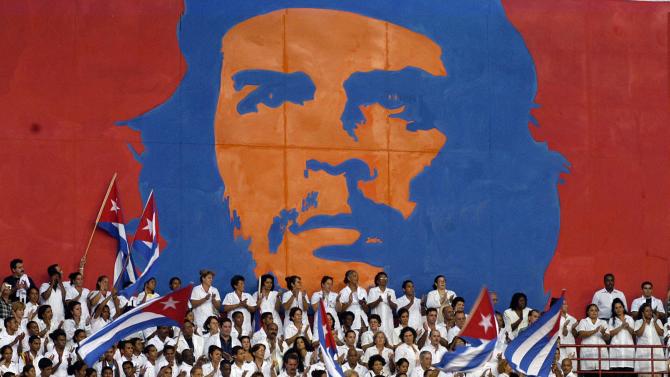
These efforts were partly inspired by Ernesto Che Guevara, the Argentine-born doctor who fought alongside Fidel Castro during the Cuban revolution.
Che Guevara repeatedly encouraged doctors to use their medical skills in the service of others.

These beliefs were first put into practice during the 1960s, beginning with the provision of medical aid to Chile in response to its May 1960 earthquake.

In the 1970s and 80s, Cuba offered medical assistance to warn-torn South Africa, Algeria, Zaire, Congo, and Ghana.

More recently, Cuban doctors travelled to Sri Lanka following the 2004 tsunami.

They also treated victims of the 2005 earthquake in Pakistan and the 2010 quake which devastated much of Haiti.

Last year, Cuba sent 4,000 doctors to Brazil alone in order to help provide healthcare in remote rural areas.

At present, more than 50,000 Cuban medical personnel are working in over 66 countries.

'To serve'
Cuba's medical students have always been taught that it is their duty to serve others.

An inscription by Fidel Castro emblazoned on a wall of Cuba's most prestigious medical school, the Escuela Latinoamericana de Medicina, sums up this ethos,

"This will be a battle of solidarity against selfishness," it reads.
Thus even prior to their arrival in West Africa, Cuba's healthcare workers believed that it was their duty to sacrifice themselves in the service of others, viewing themselves as true public servants, gladly volunteering and risking their lives to fight a virus that they had no experience of working with.

"We know that we are fighting against something that we don't totally understand … But it is our duty. That's how we've been educated," Leonardo Fernandez, a 63-year-old doctor told Reuters news agency before departing Cuba for Liberia.

Cuba's geopolitical strategy
Cuba has also viewed its involvement in West Africa as an opportunity to bolster its international reputation as a nation capable and committed to helping others.

And the government's strategy appears to have paid off.
World Health Organisation (WHO) Director-General Margaret Chen recently applauded Cuba's efforts, stating that she was "extremely grateful for the generosity of the Cuban government and these health professionals for doing their part to help us contain the worst Ebola outbreak ever known".

WHO's Director of Epidemiology Sylvia Brian and the United Nation's Ebola chief, David Nabarro, also praised Cuba's quick response.

Various international humanitarian organisations have also expressed their thanks and support, in turn strengthening Cuba's international reputation.
Cuba also sees the Ebola outbreak as an opportunity to establish a stronger partnership with the United States.

Writing in Cuba's state newspaper Granma, Fidel Castro recently stated that he would be glad to work with the US in containing the epidemic, setting aside the two countries' political differences in order to help Ebola-affected countries.

While the US has not formally agreed to work with Cuba, US Secretary of State John Kerry praised Havana for its efforts in West Africa.
The US Ambassador to the UN, Samantha Power, echoed his sentiments, saying that she was "very grateful" to Cuba for its response.

Big lessons
Cuba's international reputation has in large part stemmed from its efforts to provide much needed human resources in response to Ebola.

The island nation has so far provided the largest number of healthcare workers in the fight against Ebola: a total of 256, including doctors, nurses, surgeons and paediatricians, with another 200 expected to arrive shortly.
While the US has provided 3,000 military troops, none of them provide medical assistance, instead mainly focussing on constructing Ebola Treatment Units.

Apart from providing treatment, Cuba's medical workers also help to locate Ebola victims and guide them towards clinics.

By providing constant reassurance of good treatment and care, Cuba's volunteers play a key part in helping Ebola victims overcome their fears of seeking medical treatment.

This passion for locating, encouraging, and treating patients reflects Cuban health workers' unwavering belief in behaving in a selfless manner, treating patients with warmth, dignity, and respect.

In this respect, little Cuba provides big lessons for other nations.

While providing financial support is important, providing quality healthcare workers with a passion for helping others is equally - if not more - important for helping West Africa eradicate Ebola.

Governments that have been ideologically committed to working closely with patients and ensuring universal access treatment in the past should strive to mimic Cuba's efforts, in turn establishing their reputation as caring, peaceful partners in the global fight against disease.

Eduardo J Gomez is a senior lecturer in international development and emerging economies in the newly formed King's International Development Institute, King's College London.

1642. A Cuban Brain Drain, Courtesy of the U.S.

By The Editorial Board, The New York Times, November 16, 2014
Cuban healthcare workers in Sierra Leone in October.
Photo: Florian Plaucheur/Agence France-Presse — Getty Images.

Secretary of State John Kerry and the American ambassador to the United Nations, Samantha Power, have praised the work of Cuban doctors dispatched to treat Ebola patients in West Africa. The Centers for Disease Control and Prevention recently sent an official to a regional meeting the Cuban government convened in Havana to coordinate efforts to fight the disease. In Africa, Cuban doctors are working in American-built facilities. The epidemic has had the unexpected effect of injecting common sense into an unnecessarily poisonous relationship.

And yet, Cuban doctors serving in West Africa today could easily abandon their posts, take a taxi to the nearest American Embassy and apply for a little-known immigration program that has allowed thousands of them to defect. Those who are accepted can be on American soil within weeks, on track to becoming United States citizens.

There is much to criticize about Washington’s failed policies toward Cuba and the embargo it has imposed on the island for decades. But the Cuban Medical Professional Parole Program, which in the last fiscal year enabled 1,278 Cubans to defect while on overseas assignments, a record number, is particularly hard to justify.

It is incongruous for the United States to value the contributions of Cuban doctors who are sent by their government to assist in international crises like the 2010 Haiti earthquake while working to subvert that government by making defection so easy.

American immigration policy should give priority to the world’s neediest refugees and persecuted people. It should not be used to exacerbate the brain drain of an adversarial nation at a time when improved relations between the two countries are a worthwhile, realistic goal.

The program was introduced through executive authority in August 2006, when Emilio González, a hard-line Cuban exile, was at the helm of the United States Citizenship and Immigration Services. Mr. González described the labor of Cuban doctors abroad as “state-sponsored human trafficking.” At the time, the Bush administration was trying to cripple the Cuban government. Easily enabling medical personnel posted abroad to defect represented an opportunity to strike at the core of the island’s primary diplomatic tool, while embarrassing the Castro regime.

Cuba has been using its medical corps as the nation’s main source of revenue and soft power for many years. The country has one of the highest numbers of doctors per capita in the world and offers medical scholarships to hundreds of disadvantaged international students each year, and some have been from the United States. According to Cuban government figures, more than 440,000 of the island’s 11 million citizens are employed in the health sector.

Havana gets subsidized oil from Venezuela and money from several other countries in exchange for medical services. This year, according to the state-run newspaper Granma, the government expects to make $8.2 billion from its medical workers overseas. The vast majority, just under 46,000, are posted in Latin America and the Caribbean. A few thousand are in 32 African countries.

Medical professionals, like most Cubans, earn meager wages. Earlier this year, the government raised the salaries of medical workers. Doctors now earn about $60 per month, while nurses make nearly $40. Overseas postings allow these health care workers to earn significantly more. Doctors in Brazil, for example, are making about $1,200 per month.

The 256 Cuban medical professionals treating Ebola patients in West Africa are getting daily stipends of roughly $240 from the World Health Organization. José Luis Di Fabio, the head of the W.H.O. in Havana, said he was confident the doctors and nurses dispatched to Africa have gone on their own volition. “It was voluntary,” Mr. Di Fabio, an Uruguayan whose organization has overseen their deployment, said in an interview. “Some backtracked at the last minute and there was no problem.”

Some doctors who have defected say they felt the overseas tours had an implicit element of coercion and have complained that the government pockets the bulk of the money it gets for their services. But the State Department says in its latest report on human trafficking that reported coercion of Cuban medical personnel does “not appear to reflect a uniform government policy.” Even so, the Cuban government would be wise to compensate medical personnel more generously if their work overseas is to remain the island’s economic bedrock.

Last year, the Cuban government liberalized its travel policies, allowing most citizens, including dissidents, to leave the country freely. Doctors, who in the past faced stricter travel restrictions than ordinary Cubans, no longer do. Some 20,000 Cubans are allowed to immigrate to the United States yearly. In addition, those who manage to arrive here in rafts or through border crossing points are automatically authorized to stay.

The Cuban government has long regarded the medical defection program as a symbol of American duplicity. It undermines Cuba’s ability to respond to humanitarian crises and does nothing to make the government in Havana more open or democratic. As long as this incoherent policy is in place, establishing a healthier relationship between the two nations will be harder.

Many medical professionals, like a growing number of Cubans, will continue to want to move to the United States in search of new opportunities, and they have every right to do so. But inviting them to defect while on overseas tours is going too far.

Monday, October 27, 2014

1612. Cuba Calling: What This Small Island Can Teach the World About Disease Control

By Conner Gorry, The Guardian, October 23, 2014
Moral medicine, the Cuban way

Guatemala, Pakistan, Indonesia, Haiti. Four different nations that share a common experience: in the past decade, they were all struck by natural disasters which overwhelmed their under-staffed and under-funded public health systems. Into the rubble, flooding, and chaos of these distinct cultures and contexts, Cuba dispatched a specialised disaster and epidemic control team to support local health providers. It was a story of unprecedented medical solidarity by a developing country which few media outlets picked up – until now.

The Henry Reeve Brigade, as it’s known, was established in 2005 by more than 1,500 Cuban health professionals trained in disaster medicine and infectious disease containment; built on 40 years of medical aid experience, the volunteer team was outfitted with essential medicines and equipment and prepared to deploy to US regions ravaged by Hurricane Katrina (the offer was rejected by the Bush administration). Today, Cuba’s Henry Reeve Brigade is the largest medical team on the ground in west Africa battling Ebola.

The small island nation has pledged 461 doctors and nurses to provide care in Sierra Leone, Guinea and Liberia, the largest single-country offer of healthcare workers to date. While United Nations Secretary-General Ban Ki-moon decried the pallid aid commitment from around the globe calling for a 20-fold resource mobilisation and at least a 20-fold surge in assistance Cuba already had 165 of these specially-trained healthcare workers on the ground in Sierra Leone. Each of these volunteers, chosen from a pool of 15,000 candidates who stepped forward to serve in west Africa, has extensive disaster response experience.

Nevertheless, preparation for this mission required additional, rigorous training at Havana’s Pedro Kourí Institute of Tropical Medicine with biosecurity experts from the United States and the Pan American Health Organisation. This rapid mobilisation of sorely-needed health professionals begs the question: how can a poor developing country spare qualified, experienced doctors and nurses?

By pursuing a robust medical education strategy, coupled with a preventive, community-based approach, Cuba, a country of just 11.2 million inhabitants, has achieved a health picture on par with the world’s most developed nations. This didn’t happen overnight. Rather, Cuba’s admirable health report card results from decades of honing a strategy designed specifically for a resource-scarce setting.

By locating primary care doctors in neighbourhoods and emphasising disease prevention, the health system – which is universal and free at the primary, secondary and tertiary levels – makes care accessible and keeps people as healthy as possible, as long as possible, saving resources for more expensive treatments and interventions in the process.

But prevention and health promotion by community-based healthcare workers are only part of the story. Cuba’s policies and practices, both at home and abroad (currently more than 50,000 Cuban health professionals are serving in 66 countries) are built on several principles proven effective in resource-scarce settings.

First, coordinating health policies at the local, regional, and national levels is essential; this is particularly important where infectious diseases are concerned since uniform protocols are integral to containment. 

Next, health initiatives must be cross-sectoral and based on integrated messages and actions. A fragmented, uncoordinated response by and among different agencies can prove dangerous and even deadly. This was tragically illustrated by the death of Thomas Eric Duncan in Dallas and the US Centers for Disease Control allowing a nurse who has Ebola to travel on a commercial flight

Finally, infectious disease outbreaks must be addressed quickly – easier said than done in poor settings, where public health systems are already strained or collapsing already.
The Ebola outbreak snaps the need for Cuba’s approach into sharp relief: only a coordinated response, provided by well-trained and - equipped primary healthcare professionals will contain this – and future – epidemics. Indeed, policymakers such as World Health Organisation’s Margaret Chan and US secretary of state John Kerry have lauded the Cuban response, underscoring the importance of collaboration as the only solution to this global health crisis. 

Forging this solution, however, requires harnessing the political will across borders and agencies to marshal resources and know-how. Havana took up the challenge by hosting a special Summit on Ebola with its regional partners and global health authorities on 20 October. Noticeably absent were US health representatives; if we’re to construct a comprehensive, integrated, and effective global response, all resources and experiences must be coordinated and brought to bear, regardless of political differences. Anything less and Ebola wins.


Conner Gorry is senior editor of Medicc Review. Follow @ConnerGo on Twitter. 

Thursday, October 23, 2014

1601. The New York Times Editorial Board: Cuba’s Impressive Role on Ebola

By the Editorial Board, The New York Times, October 19, 2014

Cuban medical volunteers arrive in Sierra Leone
Cuba is an impoverished island that remains largely cut off from the world and lies about 4,500 miles from the West African nations where Ebola is spreading at an alarming rate. Yet, having pledged to deploy hundreds of medical professionals to the front lines of the pandemic, Cuba stands to play the most robust role among the nations seeking to contain the virus.

Cuba’s contribution is doubtlessly meant at least in part to bolster its beleaguered international standing. Nonetheless, it should be lauded and emulated.
The global panic over Ebola has not brought forth an adequate response from the nations with the most to offer. While the United States and several other wealthy countries have been happy to pledge funds, only Cuba and a few nongovernmental organizations are offering what is most needed: medical professionals in the field.

Doctors in West Africa desperately need support to establish isolation facilities and mechanisms to detect cases early. More than 400 medical personnel have been infected and about 4,500 patients have died. The virus has shown up in the United States and Europe, raising fears that the epidemic could soon become a global menace.

It is a shame that Washington, the chief donor in the fight against Ebola, is diplomatically estranged from Havana, the boldest contributor. In this case the schism has life-or-death consequences, because American and Cuban officials are not equipped to coordinate global efforts at a high level. This should serve as an urgent reminder to the Obama administration that the benefits of moving swiftly to restore diplomatic relations with Cuba far outweigh the drawbacks.

The Cuban health care workers will be among the most exposed foreigners, and some could very well contract the virus. The World Health Organization is directing the team of Cuban doctors, but it remains unclear how it would treat and evacuate Cubans who become sick. Transporting quarantined patients requires sophisticated teams and specially configured aircraft. Most insurance companies that provide medical evacuation services have said they will not be flying Ebola patients.

Secretary of State John Kerry on Friday praised “the courage of any health care worker who is undertaking this challenge,” and made a brief acknowledgment of Cuba’s response. As a matter of good sense and compassion, the American military, which now has about 550 troops in West Africa, should commit to giving any sick Cuban access to the treatment center the Pentagon built in Monrovia and to assisting with evacuation.
The work of these Cuban medics benefits the entire global effort and should be recognized for that. But Obama administration officials have callously declined to say what, if any, support they would give them.

Cuba has a long tradition of dispatching doctors and nurses to disaster areas abroad. In the aftermath of Hurricane Katrina in 2005, the Cuban government created a quick-reaction medical corps and offered to send doctors to New Orleans. The United States, unsurprisingly, didn’t take Havana up on that offer. Yet officials in Washington seemed thrilled to learn in recent weeks that Cuba had activated the medical teams for missions in Sierra Leone, Liberia and Guinea.

With technical support from the World Health Organization, the Cuban government trained 460 doctors and nurses on the stringent precautions that must be taken to treat people with the highly contagious virus. The first group of 165 professionals arrived in Sierra Leone in recent days. José Luis Di Fabio, the World Health Organization’s representative in Havana, said Cuban medics were uniquely suited for the mission because many had already worked in Africa. “Cuba has very competent medical professionals,” said Mr. Di Fabio, who is Uruguayan. Mr. Di Fabio said Cuba’s efforts to aid in health emergencies abroad are stymied by the embargo the United States imposes on the island, which struggles to acquire modern equipment and keep medical shelves adequately stocked.


In a column published over the weekend in Cuba’s state-run newspaper, Granma, Fidel Castro argued that the United States and Cuba must put aside their differences, if only temporarily, to combat a deadly scourge. He’s absolutely right.

Thursday, October 16, 2014

1595. Cuba to the Rescue: Ebola-Stricken Countries Welcome Cuban Doctors

By Whitney Eulich, Christian Science Monitor, October 15, 2014
Cuban medical volunteers arrive in Sierra Leone

Cuba has a long history of exporting doctors and nurses, ever since its 1959 revolution led by communist leader Fidel Castro. So when Ebola struck in West Africa, Cuba was quick to step up to the plate. In recent weeks, it has dispatched 165 health workers to Sierra Leone, making it the largest nation-provider of medial professionals working to help contain the epidemic. And it's preparing to send another nearly 300 workers to Liberia and Guinea in the coming weeks. 

More than 4,000 people have died from Ebola and nearly 9,000 have contracted the disease, according to the World Health Organization (WHO). Those numbers are predicted to grow at a rapid pace if Ebola is not contained: WHO has forecast that West Africa could see 10,000 new cases a week by December.

While financial aid and other support like food and security have trickled into the region as the world wakes up to the threat posed by Ebola, human resources are in highest demand. “Money and materials are important, but those two things alone cannot stop Ebola virus transmission,” Margaret Chan, director-general at the WHO said late last month.

The US is the biggest financial donor to the fight against Ebola, pledging $400 million in aid and sending some 4,000 troops to the region. But in terms of trained healthcare workers, its contribution has been 65 uniformed officers from the Public Health Service Commissioned Corps, reports The Wall Street Journal

Cuba is "punching above its weight," when it comes to the fight against Ebola, reports The Washington Post. The island nation of 11 million isn't wealthy; its GDP per capita is less than one-sixth that of Britain's. 

"The little we have, we share. Our principle resource is human capital,” Dr. Jorge Perez Avila, the director of the Pedro Kouri Institute for Tropical Medicine in Havana, told CNN.

Deploying doctors 
This is the first time Cuban doctors have mobilized to fight Ebola, and Cuban state media reports that some 15,000 health professionals have expressed an interest in traveling to West African nations to help.

Under Castro, Cuba nationalized its healthcare system and inserted a constitutional guarantee of free healthcare for all. As a result, health indicators on the island have greatly improved, reports The Washington Post.

Havana regularly sends medical aid and teams of healthcare workers to nations suffering natural disasters. The Post writes that health workers are “up there with rum and cigars in terms of Cuban exports.”

Soon after its revolution, Cuba sent doctors to Chile to help the nation recover from a deadly 1960 earthquake.
Cuba sent 2,500 health workers to Pakistan after an earthquake in 2005.
1,500 Cuban health professionals traveled to Haiti after its 2010 earthquake.
Some 30,000 Cubans currently work in Venezuela’s health system; Cuba is partially paid in oil for its contribution. 
An estimated 4,500 Cuban doctors are currently supplementing Brazil’s public health system in rural parts of the country or undesirable city neighborhoods.

“We work on malaria, cholera, dengue, a disaster situation, floods in Venezuela, floods in Guatemala, floods in Belize,” Jorge Delgado Bustillo, head of the Cuban Medical Brigade to Sierra Leone, told The Wall Street Journal.

Mixed response to Cuban doctors
Although Cuban doctors are known around the world for their service, their reception abroad is not always warm.

According to The Christian Science Monitor, when Brazil announced its Mais Medicos program, which brings thousands of foreign doctors – including many Cuban – to work in areas lacking medical personnel, there was resistance from Brazilian health professionals.

When the program was announced, the Brazilian Medical Association argued that the country didn't need more doctors and unsuccessfully sued to stop the program, which it called "electioneering." And some warned that the foreign doctors – particularly the thousands arriving from Cuba – were unqualified and coming to take Brazilian jobs….
Criticism is harshest around the arrival of Cuban doctors. Though Cuba has a record of exporting top-notch medical care to places like Venezuela, Honduras, and Haiti, some say the quality doesn't live up to its reputation. They are also seen as victims of the program: "slave laborers" in thrall to the Cuban government.

The program pays foreign governments 10,000 reais (about $4,500) per month per doctor. In most cases that money is then transferred directly to the professionals. However, Cuban doctors working in Brazil have reportedly received a small fraction of this salary, and ended up living on an income below minimum wage. Some Cuban doctors in Brazil have even defected from the program and sought asylum.

In Venezuela, criticism of Cuban care often falls along class lines, with wealthier citizens sharing tales of botched procedures or faulty diagnoses. However, Cuban doctors and nurse mostly practice in slums where the poorest live. In 2005, a reporter for the Monitor saw “first-hand why the Cuban doctors working in Venezuela [were] so effective at creating goodwill between the two countries.”

"I was very impressed by the Cuban doctors and gym teachers and what they are doing for the poor neighborhoods," says Danna [Harman].

Critics charge that the doctors are not really doctors but only medics or nurses, she says. "That may be true, but they are right there in the neighborhoods, they know the community, and they are paying attention to people's problems, which is enough, in many cases, for people to feel better," she says.

For example, Danna was feeling ill and went to a private hospital in Caracas this week. "I waited for almost two hours and was confronted by a rude receptionist and an unfriendly doctor, who told me I needed to go see a specialist - and then charged me a lot of money.

"I wished I'd just gone back to the barrio and checked in with the Cuban medic I'd interviewed for today's story. At least she would have made me feel better psychologically, even if she didn't actually solve the problem.

To be sure, fighting Ebola will take more than a friendly doctor. Doctors were trained by WHO-standards in Cuba before arriving in Sierra Leone. But there were still some cultural issues that needed to be checked upon arrival. 

“They’re a very cuddly people,” Katrina Roper, a technical officer with the UN told The Wall Street Journal. The Cuban professionals were shaking each other's hands and hugging at their welcome ceremony. Ebola is transferred through bodily fluids, including sweat; public health campaigns in West Africa have tried to discourage hugging and embracing. “Tomorrow will be me explaining why they have to stop shaking hands and sharing things,” Ms. Roper said.