Showing posts with label Cuban health care system. Show all posts

Saturday, August 15, 2020

3408. Book Review: Cuban Health Care; The Ongoing Revolution

By Ted Trainer, August 15, 2020
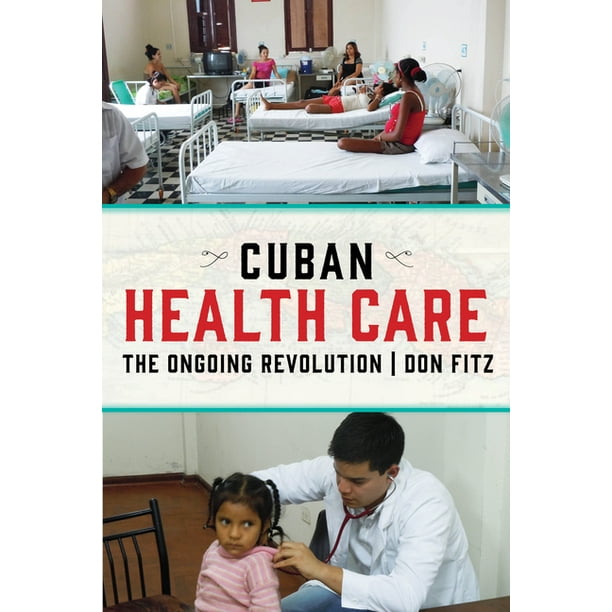

This book gives an excellent account of the nature, history and achievements of the Cuban health system. It is fairly lengthy, quite detailed, heavily documented, and easy to read. It has implications and lessons that go well beyond the health of people, to the nature of healthy social systems, dramatically evident in the comparison the book gives between Cuba and the USA. (This outline/review draws heavily on quotes from the book.)

Immediately after the 1959 revolution almost half of the doctors in Cuba left for the US.  This had good and bad effects, firstly in plunging the health system into great difficulties, but also in jolting those remaining into recognizing the need for radical reconstruction of the system …  and getting rid of those doctors most likely to obstruct change. The previous system had been largely made up of entrepreneurial doctors within an uncoordinated system, mainly serving richer regions and clients, and leaving rural areas with almost no medical services at all.

The core element in the system the book details us the basic health care unit made up of small teams of doctors, nurses, social workers, dentists and others who serve and live within small localized areas.  These teams are focused on community and prevention of illness. They take responsibility for the health of people in their area, knocking on doors to deliver integrated care, with much emphasis on preventative measures and education.  They visit schools, factories and neighbourhoods, carrying out campaigns such as vaccinations, occupational health and food safety, encouraging exercise, improving diet, and reducing smoking, alcohol intake, and obesity. 
“The most revolutionary aspect of Cuban medicine is that family doctors are responsible for everyone in a defined geographical area.” This  ”… would include 120 to 150 families, or 600 to 800 individuals, within two to three square blocks in most cities and towns.” ”The teams … see every patient at least twice a year.” 

A dengue fever campaign is illustrative. It found that open water tanks were a major source of mosquito vectors, so routine medical visits to neighbourhoods were able to observe and advise on remedial steps. “We are going door-to-door looking for symptoms of dengue fever and checking for standing water.”

The health effects have been remarkable. “They incorporated millions of Cubans into the health system who had never even seen a doctor before…” Rates of illness were dramatically reduced”  “The country eliminated polio in 1962, malaria in 1967, neonatal tetanus in 1972, diphtheria in 1979, congenital rubella syndrome in 1989, post-mumps meningitis in 1989, measles in 1993, rubella in 1995, and tuberculosis meningitis in 1997.” “Infant mortality began its consistent long-term decrease … In 2000 it was 6.3 per 100,000 live births when the U.S. rate was 7.1 …by 2017, Cuba’s infant mortality was 4.1 compared to the United States’ rate of 5.7. … By 1983, after a decade of community medicine, Cuban life expectancy had increased to 73.8 years from the pre-revolutionary figure of 58.8 years.”  In 2016 Cuban life expectancy was a little higher than that of the US. The WHO’s Millennium Development goals included lowering the 1990 under-five mortality rate by two-thirds by 2015. Cuba reached that goal by 2000. Later responding to the Aids crisis Cuba “…implemented a program … that was better than most countries’, and, in particular, superior to U.S. efforts. An article in The Lancet said that Cuba had “the most successful national AIDS programme in the world.”
The community focus is also central in Cuba’s capacity to respond well to emergencies. It can evacuate entire cities during hurricanes, largely because medical staff know everyone in the neighborhood and know who to call for help getting disabled residents out of harm’s way. 
The training of health workers
Radical changes were also made in the training of health workers. As well as increasing the numbers, previously “… it was almost impossible for black people to enter medical school. By the time the family doctor system had taken root, black communities were receiving the same medical services, and Cuba was training black doctors at a rate proportional to the island’s black population. After the 1959 revolution women poured into medical
school and by 1970 comprised the majority of medical students.

Overseas assistance

Perhaps even more impressive than these internal achievements have been the efforts to provide medical assistance to other countries.  Between 1975 and 1991 medical teams made up many of the over 70,000 aid workers who went overseas. Over the years, 6,000 Cuban medical staff have treated over three million Haitians. When Cuban health professionals intervened in Gambia, malaria decreased from 600,000 cases in 2002 to 200,000 two years later … Cuban/Venezuelan collaboration resulted in 1.5 million vision corrections by 2009. … Almost 2 million people throughout the world . . . owe their very lives to the availability of Cuban medical services. By 2008, in addition to 11 million people in their own country, Cuban doctors were providing medical care for over 70 million people.
When Ebola struck Sierra Leone Cuba was the first nation to respond with what was most needed: it sent 103 nurses and 62 doctors as volunteers.  Volunteers from other nations were trained at Havana’s Pedro Kourí Institute of Tropical Medicine. Cuba taught 13,000 Africans and 66,000 Latin Americans, how to treat Ebola without themselves becoming infected.
Chapter 3 details the sending of doctors to Angola to support the anti-imperialist struggle. At that time the entire country had only 14 doctors. Possibly in excess of 800 Cuban doctors were there at their peak involvement. By 1990 similar aid had been extended to more than a dozen African countries. More than two thousand Cubans lost their lives in the Angolan war.

“Assistance was also given civilian projects in Europe for instance such as for the Chernobyl disaster in the Ukraine. “In March 1990, the first group of roughly 25,000 patients arrived … mostly children …The program employed four hundred Cubans, including as many as fifty doctors and eighty nurses, and persisted through the worst crisis years (1993–94), with Cuba covering the costs of medical care, meals, lodging, and activities. Whereas most countries assisting the Ukraine focused on slowing the spread of nuclear contamination, Cuba worked to provide treatment.”
Cuba has sent over 124,000 health care professionals to provide care in 154 countries. At the end of the twentieth century one in three Cuban physicians were working overseas.
Cuba has been training Haitian doctors since the doors of ELAM (see below) first opened in 1999. The only requirement is that, when they graduate, Haitians agree to return home to take the place of Cuban doctors (rather than defecting to plush jobs in the United States or Europe.)
By 2010 Cuba has trained 550 Haitian doctors, and 567 Haitian students were enrolled in ELAM. As a result of Cuban efforts, Haiti saw a greater than 50 percent decrease in infant mortality, maternal mortality, and child mortality, and between 1999 and 2007 an increase in life expectancy from fifty-four to sixty-one years of age.
In response to the 1998 Caribbean hurriçane Mitch Cuba sent thousands of medical personnel. Of Cuba’s 21,000 medical students, 14,800 volunteered to help. Cuban teams remained in Central America for years, unlike those from other countries, which tended to remain only a few weeks. 
“The enormity of the hurricanes led Fidel to offer a thousand medical school scholarships to students from countries most damaged by Mitch. This led to the formation of the Latin American School of Medicine (now known as ELAM.) When it began in 1999 there were 1,929 students from 18 countries, most from low-income families. Cuba covered the cost of their tuition, textbooks, lodging, and meals. Students were expected to return to their countries and help the underserved.”
“The education offered at ELAM, geared to promoting medical care for all, contrasted sharply with the global trend toward privatizing medical care, which compels service providers to respond to market forces and neglect rural areas. … A requirement at ELAM is that medical students return to serve impoverished communities in their homelands. Thus Cuba is doing more than any other country in the world to reverse medical “brain drain.” A physician who leaves Sierra Leone for South Africa can earn twenty times as much money.”
Conditions at the school are frugal. “Running water is available only at certain hours, and toilets have to be flushed with a bucket. This reflects Cuba’s readiness Cuba to sacrifice superficialities in order to ensure that everyone has necessities.”
Don says the first requirement for acceptance is being able to document a history of commitment to social justice. “All the ELAM students I spoke with shared a desire to provide medical care to people who otherwise might not receive it. There was no discussion about becoming wealthy, which is a highly unlikely outcome for an ELAM graduate.”
“According to ELAM’s website, there are 52,000 Cuban medical workers offering their services in ninety-two countries. This means that Cuba has more doctors working overseas than either the World Health Organization or the combined efforts of the G-8 nations. Thus, “by 2008, Cuban medical staff were caring for over 70 million people in the world.”
The rejection of medical aid offers, and expulsion of personnel

The US and its compliant regimes have often refused or got rid of Cuban health teams working with poor people or assisting with disaster relief.  The US has been “…  eager to eliminate Cuban health brigades whenever possible.’’ For example in Grenada in 1982 a medical team of 20 Cubans was functioning, when the country had hardly any doctors. 

“The United States invaded Grenada in 1983, and the Cuban aid workers were expelled.Several countries with ruling classes aligned with the US … complied with expectations and expelled the medical teams. When Rafael Correa was president of Ecuador, over 1,000 Cuban doctors formed the backbone of its health care system. Lenin Moreno was elected in 2017 and Cuban doctors were soon expelled, leaving public medicine in chaos.  At the same time that Venezuela and Cuba had 27 COVID-19 deaths, Ecuador’s largest city, Guayaquil, had an estimated death toll of 7,600.”

“During hurricane Katrina the governor of Louisiana put out a call for help. Fidel Castro assembled 1,586 medical volunteers with tons of medical supplies ready and waiting to make the relatively short trip from Havana to New Orleans. Nevertheless, George W. Bush turned a deaf ear to the repeated offers from Cuba, even as the death count mounted to 1,800. Undoubtedly, Bush’s silence reflected the attitudes of many wealthy Americans who would prefer to see their poor countrymen suffer and die rather than admit that Cuba had a disaster response capability superior to that of the United States.”
Laboratories, research and drug development
The list of drugs developed in Cuban laboratories is impressive. “The patents for these and the vast number of other medical innovations are held by the Cuban government. There is no impetus to increase profits by charging outrageously high prices for new drugs, so these medications become available to Cubans at much lower cost than they would in a market-based health care system.”
There is also transfer of new technology to poor countries, so that they can produce drugs themselves. Collaboration with Brazil has resulted in meningitis vaccines at a cost of 95¢ rather than $15 to $20 per dose. (Contrast this with Rodelis Corporation which obtained the rights to Cycloserine, one of the few antibiotics available to combat drug resistant tuberculosis, and raised its price by 2,000 percent, so that a full treatment now costs $500,000.)
The comparison with the US health system
Chapter 12 details the staggering differences in cost and performance of the two systems. The US has the most costly system in the world, despite very poor outcome measures. 
 “Cuba, which despite being a poor country has indices of life expectancy and infant mortality similar to those of the United States. An Associated Press report found that, at the same time that the daily cost for inpatient hospital stays in the United States was $1,944, it was $5.49 in Cuba. The cost of hernia surgery in Cuba was $14.59 compared to the U.S. figure of $12,489; hip-fracture repair costs in Cuba were $72.15 compared to the U.S. figure of $14,263; and kidney transplant costs in Cuba were $4,902 compared to the U.S. figure of $48,758.
The United States is spending almost 20 times more per capita on health care than Cuba does. In 2018, Cuba was spending $431 and the United States $8,362 per person annually on medical care.
Don deals with some of the main causes behind the bloated US figures, the overtreatment, defining trivial conditions as illnesses, the power of doctors to charge what they can get away with, the similar power of the pharmaceutical industry, the outrageous incomes of health industry executives, and especially the insurance industry (which accounts for one third of health costs yet leaves millions uninsured.) The health sector provides a glaring illustration of what happens when you let profit and the market provide an essential service. (And Don refers to a large study involving 38 million patients which found that private for-profit ownership of hospitals is associated with a higher risk of death for patients.   P. 248,)
Thanks to Che
Don points out the role Che Guevara played in the development of the Cuban health system. As a young doctor he travelled through several Latin American countries and was struck by the lack of satisfactory health care for the poor.
“He envisioned a new medicine with doctors who would serve the greatest number of people with preventive care and public awareness of hygiene. A few years later, Che joined Fidel Castro’s July 26th Movement as a doctor and was among the eighty-one men aboard the Granma as it landed in Cuba on December 2, 1956.”
“The new Cuban Constitution included Che’s dream of free medical-care-for-all as a human right. An understanding of the failings of disconnected social systems led the revolutionary government to build hospitals and clinics in under-served parts of the island at the same time it began addressing crises of literacy, racism, poverty, and housing.”
Implications for justice and sustainability.
The significance of the system goes well beyond health and medicine.  Firstly it constitutes an overwhelming case that vital services must be under social control and not determined by corporations and entrepreneurs out to maximize their profits. The US system provides a glaring illustration of how the latter approach leads to snouts-in-the-trough inflation of costs, astronomical incomes and profits, Rolls-Royce provision for the rich few and appalling neglect for the rest.
Even more important are the implications for sustainability. The Cuban system demonstrates the importance and possibility of service provision involving very low use of the planet’s scarce and dwindling resources. Don has written previously on the need for large scale reduction in the rich world’s unsustainable resource-intensive ways, and makes the point again at the end of this book. Unfortunately most green thinking sees this only in terms of attempting to reduce personal consumption, or hoping for technical advances that will enable continued affluence and growth. Too few realise that we are so far beyond sustainable limits to growth that there have to be radical changes in systems as well as in lifestyles. For instance global agribusiness supply systems must be replaced by localized systems, transport systems must be replaced by highly self-sufficient local economies which do not involve much more than bicycle transport, growth economies must be replacd by stable economies, and (therefore) financial systems must be replaced by systems which do not charge interest. The Cuban health system provides a most impressive example of how vital services can be provided by systems that dramatically cut typical rich world resource use.  The key to this is in focusing the system on community need and on prevention. Rich world health systems provide first class and expensive (i.e., profitable) ambulance services at the bottom of the cliff, when the sensible option is to install cheap guard rails at the top. 
There is increasing recognition that demand-side solutions must centre on small-scale, highly self-governing, collective settlements in control of their own economies, interested in non-material sources of life satisfaction… with no economic growth at all and with no important decisions determined by profit or market forces. Only communities of this kind can get the per capita resource use rates right down to sustainable levels while providing a high quality of life.
---------
Don has given us a thorough account of the very impressive Cuban health system, and of the generous humanitarian motivation behind it. It would be difficult to find a comparable example, in a world where ”aid” is so often intended to benefit the giver. It is most annoying that US-led determination to denigrate and eliminate anything Cuban has ensured that there is so little understanding or appreciation of this health system or its implications.

Monday, March 23, 2020

3332. Cuba’s Contribution to Combatting COVID-19

By Helen Yaffe, Counterpunch, March 27, 2020
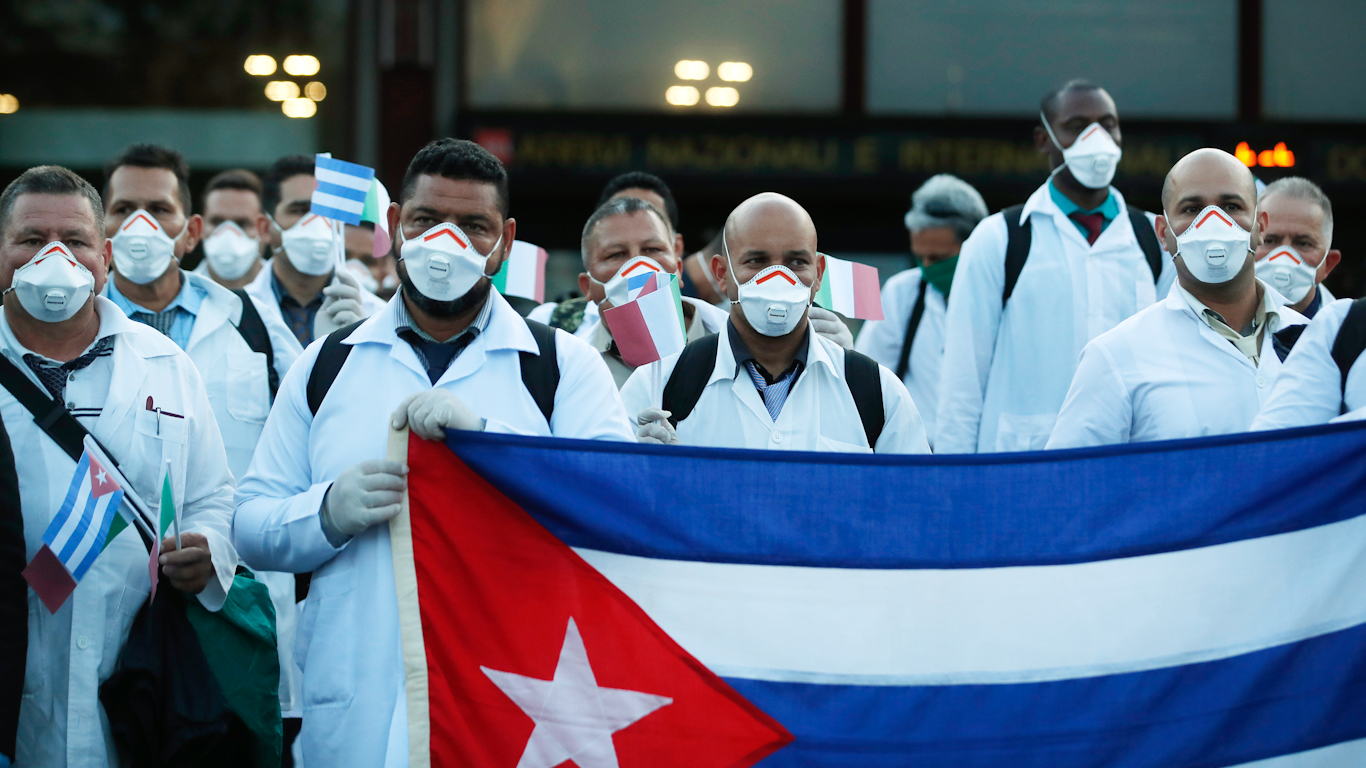
Cuban medicas arrive in Italy to help fighting the Coronavirus pandemic
COVID-19 surged in the Chinese city of Wuhan in late December 2019 and by January 2020 it had hit Hubei province like a tidal wave, swirling over China and rippling out overseas. The Chinese state rolled into action to combat the spread and care for those infected. Among the 30 medicines the Chinese National Health Commission selected to fight the virus was a Cuban anti-viral drug Interferon Alpha 2b. This drug has been produced in China since 2003, by the enterprise ChangHeber, a Cuban-Chinese joint venture.
Cuban Interferon Alpha 2b has proven effective for viruses with characteristics similar to those of COVID-19. Cuban biotech specialist, Dr Luis Herrera Martinez explained that ‘its use prevents aggravation and complications in patients, reaching that stage that ultimately can result in death.’ Cuba first developed and used interferons to arrest a deadly outbreak of the dengue virus in 1981, and the experience catalysed the development of the island’s now world-leading biotech industry.
The world’s first biotechnology enterprise, Genetech, was founded in San Francisco in 1976, followed by AMGen in Los Angeles in 1980. One year later, the Biological Front, a professional interdisciplinary forum, was set up to develop the industry in Cuba. While most developing countries had little access to the new technologies (recombinant DNA, human gene therapy, biosafety), Cuban biotechnology expanded and took on an increasingly strategic role in both the public health sector and the national economic development plan. It did so despite the US blockade obstructing access to technologies, equipment, materials, finance and even knowledge exchange. Driven by public health demand, it has been characterised by the fast track from research and innovation to trials and application, as the story of Cuban interferon shows.
Interferons are ‘signalling’ proteins produced and released by cells in response to infections which alert nearby cells to heighten their anti-viral defences. They were first identified in 1957 by Jean Lindenmann and Aleck Isaacs in London. In the 1960s Ion Gresser, a US-researcher in Paris, showed that interferons stimulate lymphocytes that attack tumours in mice. In 1970s, US oncologist Randolph Clark Lee, took up this research.
Catching the tail end of US President Carter’s improved relations with Cuba, Dr Clark Lee visited Cuba, met with Fidel Castro and convinced him that interferon was the wonder drug. Shortly afterwards, a Cuban doctor and a haematologist spent time in Dr Clark Lee’s laboratory, returning with the latest research about interferon and more contacts. In March 1981, six Cubans spent 12 days in Finland with the Finnish doctor Kari Cantell, who in the 1970s had isolated interferon from human cells, and had shared the breakthrough by declining to patent the procedure. The Cubans learned to produce large quantities of interferon.
Within 45 days of returning to the island, they had produced their first Cuban batch of interferon, the quality of which was confirmed by Cantell’s laboratory in Finland. Just in time, it turned out. Weeks later Cuba was struck by an epidemic of dengue, a disease transmitted by mosquitos. It was the first time this particularly virulent strand, which can trigger life-threatening dengue haemorrhagic fever, had appeared in the Americas. The epidemic affected 340,000 Cubans with 11,000 new cases diagnosed every day at its peak. 180 people died, including 101 children. The Cubans suspected the CIA of releasing the virus. The US State Department denied it, although a recent Cuban investigation claims to provide evidence that the epidemic was introduced from the US.
Cuba’s Ministry of Public Health authorised the use of Cuban interferon to halt the dengue outbreak. It was done at great speed. Mortality declined. In their historical account, Cuban medical scientists Caballero Torres and Lopez Matilla wrote: ‘It was the most extensive prevention and therapy event with interferon carried out in the world. Cuba began to hold regular symposia, which quickly drew international attention’. The first international event in 1983 was prestigious; Cantell gave the keynote speech and Clark attended with Albert Bruce Sabin, the Polish American scientist who developed the oral polio vaccine.
Convinced about the contribution and strategic importance of innovative medical science, the Cuban government set up the Biological Front in 1981 to develop the sector. Cuban scientists went abroad to study, many in western countries. Their research took on more innovative paths, as they experimented with cloning interferon. By the time Cantell returned to Cuba in 1986, the Cubans had developed the recombinant human Interferon Alfa 2b which has benefited thousands of Cubans since then. With significant state investment, Cuba’s showpiece Centre for Genetic Engineering and Biotechnology (CIGB) was opened in 1986. By then Cuba was submerged in another health crisis, a serious outbreak of Meningitis B, which further spurred Cuba’s biotechnology sector.
Cuba’s Meningitis Miracle
In 1976, Cuba was struck by meningitis B and C outbreaks. Since 1916 only a few isolated cases had been seen on the island. Internationally, vaccines existed for Meningitis A and C, but not for B. Cuban health authorities secured a vaccine from a French pharmaceutical company to immunise the population against type C Meningitis. However, in the following years, cases of type B Meningitis began to rise. A team of specialists from different medical science centres was established, led by a woman biochemist, Concepción Campa, to work intensively on finding a vaccine.
By 1984 Meningitis B had become the main health problem in Cuba. After six years of intense work, Campa’s team produced the world’s first successful Meningitis B vaccine in 1988. A member of Campa’s team, Dr Gustavo Sierra recalled their joy: ‘this was the moment when we could say it works, and it works in the worst conditions, under pressure of an epidemic and among people of the most vulnerable age.’ During 1989 and 1990, three million Cubans, those most at risk, were vaccinated. Subsequently, 250,000 young people were vaccinated with the VA-MENGOC-BC vaccine, a combined Meningitis B and C vaccination. It recorded 95% efficacy overall, with 97% in the high-risk three months to six years age group. Cuba’s Meningitis B vaccine was awarded a UN Gold Medal for global innovation. This was Cuba’s meningitis miracle.
‘I tell colleagues that one can work 30 years, 14 hours a day just to enjoy that graph for 10 minutes,’ Agustin Lage, Director of the Centro for Molecular Immunology (CIM) told me, referring to an illustration of the rise and sudden fall of Meningitis B cases in Cuba. ‘Biotechnology started for this. But then the possibilities of developing an export industry opened up, and today, Cuban biotechnology exports to 50 countries.’
Since its first application to combat dengue fever, Cuba’s interferon has shown its efficacy and safety in the therapy of viral diseases including Hepatitis B and C, shingles, HIV-AIDS and dengue. Because it interferes with viral multiplication within cells, it has also been used in the treatment of different types of carcinomas. Time will tell if Interferon Alfa 2b proves to be the wonder drug as far as COVID-19 goes.

Friday, May 26, 2017

2616. Cuba Calls for Universal Health Coverage at WHO World Assembly

By  


“Cuba supports the strengthening of systems geared toward achieving universal health coverage, recognizing that health is a fundamental human right and at the center of public policies for sustainable development,” stated Dr. Roberto Morales Ojeda, Cuban Minister of Public Health, during the World Health Organization’s 70th World Assembly plenary session, taking place at the body’s headquarters in Geneva through May 31. 

Morales Ojeda reported that by the end of 2016, life expectancy at birth in Cuba was 78.45 years, while the country also has an immunization program which protects against 13 diseases, and is comprised of 11 vaccines; eight of which are produced on the island, providing for over 98% coverage. 


He also noted that Cuba continues to maintain key indicators which, in 2015, saw the island become the first country in the world to officially eliminate mother-to-child transmission of HIV and syphilis. 


“The foundations for the National Health System in Cuba were drawn up in 1959, the driving force behind which was the historic leader of the Cuban Revolution, Fidel Castro Ruz,” he stated. 


The Cuban official also commented on the damage caused by the U.S. blockade to Cuba’s healthcare services, which in 2016 amounted to more than $87 million dollars. 


Morales Ojeda once again condemned policies such as the “brain drain” which encourage Cuban professionals, above all those linked to the healthcare sector, to emigrate. Human capital is our most valuable resource. We have 493,000 healthcare sector workers and over 50,000 collaborators offering services in 63 countries, he added. 


Among the challenges currently facing Cuba he noted the country’s rapidly ageing population, non-communicable chronic diseases, low birth rates, and the negative effects of climate change. 


The UN 2030 Sustainable Development agenda provides the opportunity to develop better health systems and improve the population’s wellbeing in an unequal world, stated Dr. Roberto Morales Ojeda, noting that political will and collaboration are vital to such efforts. 

Monday, January 16, 2017

2543. 2016 Advances in Cuban Medicine

By , Granma, January 14, 2017 
Patient receiving a Hepatitis B vaccination Photo: Ismael Francisco
Cuban science, an indisputable product of the Revolution and Fidel’s visionary thinking, today faces the challenge of more swiftly linking to the production of goods and services, based on obtaining high-tech and innovative results and always closing the research-manufacturing-marketing cycle.

This makes this sector, alongside innovation, an essential part of the project of the prosperous and sustainable socialist society that we hope to build. As Dr. Agustín Lage Dávila pointed out in an article published in Granma last October, the recovery of scientific activity and investment in such a vital sector, inevitably damaged by the Special Period and the blockade, is not a luxury, but a necessity. Development is impossible without inserting science in every sector of the economy, the director of the Center of Molecular Immunology emphasized.

Despite a difficult year due to limited resources and other problems that affected research activities and the permanence of specialists in certain scientific branches, the country closed 2016 with notable contributions and statistical indicators. Granma offers readers a preliminary and partial summary of these achievements. •

 SCIENTIFIC EVENTS OF 2016
 ► The registration in Cuba of Heberferón, a combination of interferon-alpha 2b and recombinant interferon-gamma, to treat non-melanoma skin cancer.
► The patent granted by the European Union to the new generation of the drug Heberprot-P, presented in nanocapsules, whose antimicrobial action makes the treatment of advanced diabetic foot ulcers more effective, avoiding amputations.
► The continuation of clinical trials of the CIGB 500 molecule, a novel drug under development demonstrating a significant cardioprotective effect, with promising possibilities for the treatment of acute myocardial infarction.
► The approval in the United States of clinical trials of the Cuban lung cancer vaccine CIMAvax-EGF, produced at the Center of Molecular Immunology.
► The discovery of new pharmacological evidence of the neuroprotective effects of a molecule called JM-20, which offers hopes for the treatment of cerebral ischemia, a serious global health problem.
► The extension to the 15 provinces of the island and the special municipality of the Isle of Youth of regenerative medicine and stem cell therapy, mainly in the specialties of orthopedics, traumatology and angiology.
► The development of new human vaccines, including obtaining a candidate heptavalent pneumococcal conjugate vaccine, and another for cholera.
► The announcement that as a result of the application of the Cuban vaccine for chronic hepatitis B, the country has not reported cases of the disease in children under five years of age since 1999, an indicator that since 2006 has also extended to children under 15 years old.
► The ratification through the most recent assessments that the Cuban climate will be warmer, drier and more extreme by the end of the 21st century, with an average temperature increase of up to four degrees Celsius and a decrease in rainfall in the order of 15 - 50%.
► The widespread planting of the cucumber variety INIVIT P-2007, with high potential yields and greater tolerance to the main diseases that damage this crop in Cuba. Nominated for the 2016 National Award for Technological Innovation.
► The new Virginia San Luis 23 tobacco variety, disease resistant and with high productive potential.
► The production of polyfloral honey wine (mead) on an industrial scale, helping to diversify the uses of Cuban honey.
► Algorithms for the real-time analysis of the National Electric System (SEN) with penetration of renewable energy sources; extremely useful work to improve the management of the National Electrical Union’s Energy Distribution Office and to avoid total and partial collapse of SEN operations. Nominated for the 2016 National Prize for Technological Innovation.
► Protection of Cuba’s dams in the face of climate change, nominated for the 2016 National Prize for Technological Innovation.
► The inauguration of an exhibition on Cuban biodiversity at the American Museum of Natural History in New York.
► The incorporation of technology in Basic Productive Organizations of Cuban Distributed Generation, a result that contributes to the improvement of the operation and exploitation of the National Electric System. Nominated for the 2016 National Innovation Prize.
► Current Cuban pedagogy, which synthesizes and renews the theme of scientific management in the education sector.
► The creation and validation of a new anthropometric indicator termed fetal weight increase, which allows for the longitudinal evaluation of intrauterine growth by estimated fetal weight from the beginning of the second trimester of pregnancy, systematizing its prenatal evolution in primary health care.
► The determination of the volume of polluting gases released into the atmosphere by Cuba's state mobile sources in the 2007-2012 period.

 SCIENTIFIC AND TECHNOLOGICAL POTENTIAL
 934 Doctors of Science per 1 million inhabitants.
400 specialist researchers per 1 million inhabitants.
1,165,002 university graduates (according to the 2012 Census).
129 research centers.
18 scientific-technological services centers.
53 development and innovation units.

HUMAN RESOURCES IN THE SCIENCE, TECHNOLOGY AND INNOVATION SYSTEM
82,764 manual workers in the CTI system
56% are women
53% have higher education qualifications
4,355 are specialized researchers
48.2% are women
A total of 86 of the Economic and Social Policy Guidelines of the Party and Revolution were related to science, technology and innovation, 15 directly and 71 indirectly. The measures to be implemented and developed cover 33 guidelines with implications for comprehensive policies and 53 guidelines for sectoral policies.

THEMATIC AREAS DEFINED AS NATIONAL PRIORITIES FOR SCIENCE, TECHNOLOGY AND INNOVATION ACTIVITIES
  • Production of animal and human food.
  • Sustainable energy development, enhancing efficiency, savings and renewable sources.
  • Adaptation to climate change.
  • Automation and computerization of society.
  • Sustainable use of natural resources, with emphasis on water.
  • Cuban society, economy and international relations.
  • Territorial and urban planning.
  • Biotechnology, medical-pharmaceutical production and vaccines.
  • Research in natural and exact sciences.
  • Research in Nanotechnologies. 

2542. Progress in Renovation of Health Care Facilities in Cuba

By Nuria Barbosa León, Granma, January 4, 2017

The repair and remodeling project will continue into 2017 at hospitals, community clinics, pharmacies, and teaching institutions throughout Cuba's public health system. Photo: Yaimí Ravel


The investment project underway in Havana to improve physical conditions and equipment at health care facilities, as well as medical research and teaching centers, made significant progress in 2016, contributing to broader efforts to raise the quality of public health services in the country

The investment project underway in Havana to improve physical conditions and equipment at health care facilities, as well as medical research and teaching centers, made significant progress in 2016, contributing to broader efforts to raise the quality of public health services in the country.
Concluded in the Cuban capital, last year, were more than 2,000 projects to provide patients and workers more comfort; to consolidate the population's satisfaction with services offered; make the public health system more efficient and sustainable; and maintain the statistical indicators achieved in this arena.

A visit to several recently remodeled institutions by Granma International confirmed the progress made to date, in a project that has included building repairs, new furniture and medical equipment, as well as the addition of new areas, such as a ward with observation cameras at Calixto García University Hospital.

Dr. Carlos Alberto Martínez Blanco, surgeon and director of this prestigious hospital, explained that the first stage of repairs began in 2011, with work completed on the emergency area, which has seen the number of patients it serves double in 2016, while the number of unscheduled surgeries dealing with difficult emergency situations has increased.

Surgical theaters at Calixto García University Hospital. Photo: Yaimí Ravelo
The 120-year-old hospital has become a national reference for the management of medical emergencies, serious burns, and multi-trauma, Dr. Martínez reported, showing us the updated hospital rooms, intensive care unit, and surgical theaters.

"Our hospital performs more than 20,000 surgeries a year. Likewise improved were nephrology and hemodialysis services with the installation of 20 beds. We also reopened the neurosurgery pavilion, which was closed for ten years, and can now admit 40 patients. Installed there was a modern surgical unit to treat cranial pathologies," the director noted.

Repairs at the hospital included work on engineering systems related to air conditioning, water supply, steam boilers for the kitchen, laundry, and sterilization area. The grounds were also improved with the reconstruction of sidewalks, roads, and walkways, along with the creation of outdoor rest areas for staff, patients, and companions.

Opened was a new ward to serve geriatric patents, who may arrive to the emergency area with a variety of ailments, including strokes and multiple illnesses, reported Dr. Mercedes Ramos Quiroga.
She added that also admitted are patients who require surgery, and suffer chronic non-infectious diseases, to stabilize their vital signs before the operation. She showed us the ward, specially adapted to serve older adults' needs, with higher toilets, handrails and supports in bathtubs and showers, and the elimination of architectural obstacles that could cause falls.

Dr. Ramos noted the lights and fans above every bed in the ward, and furniture suited to the limited mobility of older patients.

Medical care in Cuba, offered free of charge to all, will benefit from investments underway at facilities across the country. Photo: Yaimí Ravelo
She expressed her satisfaction with the Cuban government and the Ministry of Public Health's efforts to provide financing to address the buildings' physical deterioration, to renew the old, and make such facilities available to the population free of charge.

A similar opinion was offered by patient Dayli Betancourt Acosta, from the province of Matanzas, and her spouse Ruber Leyva Reyes, who had traveled to the Rheumatology Center located in the Diez de Octobre Clinical Surgical University Hospital, known to Havana residents as La Dependiente.

In this facility, director Dr. Yunior Luis Pulido Prieto reported that remodeling had been completed in areas devoted to imaging and sterilization, to the kitchen-dining room, the laundry area, the main surgical theater, and the Zorrilla Pavilion where the infectious disease department is located, while efforts are still underway at the Antonio Pérez-Pérez Pavillion, which will provide geriatric attention across three hospitalization wards. To be located in this building's basement are a warehouse, a neurophysiology lab, and pharmacy.

The doctor emphasized the quality of work completed by cooperatives, which have been recognized by the hospital's personnel given the magnificent job done.

Rheumatology Center specialist Dr. Carlos Carrillo Reyes added that this unit's emergency staff receives patients from around the country, who arrive experiencing severe joint pain.

"Our center," he said, "trains human resources nationally in this specialty and for other interested nations, and is conducting clinical trials based on monoclonal antibodies to investigate auto-immune diseases such as rheumatoid arthritis, lupus, bone pathologies and others." 

HEALTH & SCIENCE GO HAND IN HAND

These results are among the best competing for the National Health Prize. As 2016 ended, 115 works had been evaluated by academic juries, 72 for the traditional prize, 21 PhD theses, plus 23 for Masters degrees or specializations.

The Scientific Merit Lifelong Career Prize was awarded this year to doctors Israel Forrajero Martínez, Orlando Vals Pérez and Alfredo Ceballos Mesa, in recognition of their exceptional contributions to the development of Cuban medicine.

The three have received the Carlos J. Finlay and Frank País Orders, for their outstanding, arduous work in the treatment of patients, research, and teaching. The first two have likewise been decorated as Heroes of Labor of the Republic of Cuba.

In an interview with Granma International, Dr. Israel Forrajero Martínez recalled his efforts developing 100 anatomical pathology departments around the country, training 400 pathologists, 900 technicians, evaluating more than 50 doctors and 60 expert specialists in this field. His resume includes membership to several international professional associations, 50 publications in scientific journals, and two books.

Dr. Forrajero is a full professor with merit at the Havana and Santo Domingo Universities of Medical Sciences, as well as a consultant, investigator, and titled academic in the Cuban Academy of Sciences. He heads the Cuban Society of Anatomical Pathology.

Dr. Orlando Vals Pérez, another prizewinner, is an expert specialist in medical imaging, a titled professor and researcher at the University of Havana School of Medical Sciences, and a member of professional radiology societies internationally.

Dr. Vals considers his fundamental contribution over the past 60 years to be the two books he has written, in which he shares his knowledge and experience in the field, though he adds, "I'm still writing."

Likewise, Dr. Alfredo Ceballos Mesa, an expert specialist in Orthopedics and Trauma, is also a full professor of merit at the University of Havana School of Medical Sciences, as well as a consultant and titled academic within the Cuban Academy of Sciences.

In his remarks, he commented on his career in orthopedics and participation in many research projects linked to the external setting of broken bones, and electrical stimulation to promote healing of fractures, as well as hip and knee replacement.

During the award ceremony, Alfredo González, deputy minister of Public Health, made special mention of accomplishments in the provinces of La Habana, Pinar del Río, Villa Clara and Holguín, while highlighting results achieved at the Hereditary Ataxias Research and Rehabilitation Center located in Holguín; and at Havana's University of Medical Sciences, Pedro Kouri Institute of Tropical Medicine, and Hermanos Ameijeiras Hospital. 

The deputy minister dedicated the 2016 prizes for outstanding scientific work to Comandante en Jefe Fidel Castro Ruz, a lifelong promoter of Cuba's healthcare system, and called on all to continue his legacy over the coming years.

Sunday, November 20, 2016

2495. Cuba Has Trained for Free 80,000 Need-Based Physicians from Around the World

By TeleSur, November 19, 2016
Medical students from regions around the world that need doctors study in Cuba for free. 
Cuba has trained more than 80,000 doctors from Latin America, the Caribbean, Africa, the United States, Pakistan and China in the last 50 years for free, according to a consultant of the Latin American School of Medicine, ELAM, in Havana.

Luis Estruch, a consultant and professor at ELAM, emphasized how impressive it was that a small Caribbean nation with few economic resources has been able to transform its limited potential into enormous human capital.

"That is the fundamental contribution of Cuba, forming youth through the idea of the community doctor, with their eyes toward the poor, toward preventive medicine," said Estruch.

"For that reason we have to feel proud of everything that the Bolivarian Revolution and the Cuban Medical Mission does," he added.

Cuba began awarding free scholarships to students from across the Global South in the 1960s, many of whom had been affected by conflict and war. Following the 1959 revolution, around 20,000 were granted free education in the country, many of them in the field of healthcare.

The Latin American School of Medicine, or ELAM, was created by leader of the Cuban Revolution Fidel Castro in 1999. When ELAM was officially inaugurated in November of that year, 1,527 students from 18 different countries were enrolled for free, according to Estruch.

Today, close to 10,000 students from 122 countries are currently enrolled in the school, all of them studying under free scholarships.

According to Estruch, Cuba has trained around 21,000 Venezuelan doctors alone while Cuban medical practitioners and professors currently teach and even run many prominent medical facilities throughout the world. 

In a similar fashion, according to figures from 2014, since 1969 a total of 325,710 health workers from Cuba had participated in missions in 158 countries. In Africa alone, 76,744 had offered their services in 39 countries.

Among the most important tasks taken up by these doctors was the humanitarian help given to Haiti following the devastating 2010 earthquake and subsequent cholera outbreak. Thousands of Cuban and island-trained doctors also helped out in Haiti in October after Hurricane Matthew devastated the nation, even though parts of Cuba were heavily affected as well.

Wednesday, November 16, 2016

2490. Americans Go to Cuba for Lung Cancer Treatment

By Sally H. Jacobs, The New York Times, November 14, 2016
Zuby Malik, in a family-supplied photograph, in front of La Pradera hospital in Havana. Ms. Malik, 78, has lung cancer.
Zuby Malik is an unlikely candidate to violate international law. A 78-year-old mother of four with a crown of silver hair, she is a retired obstetrician-gynecologist with a penchant for order.

But Ms. Malik is fighting for her life. After receiving a Stage 4 non-small-cell lung cancer diagnosis a year ago, she exhausted many of the treatments available to her and grappled with torturous side effects that left her itching and gasping for breath. During the summer, she decided to go to Cuba and bring back a cancer vaccine that is not approved in the United States. That she comes from a family steeped in medical training made the decision all the more difficult.

“At first, I was a little nervous,” said Ms. Malik, sitting in her Northern California living room flanked by an oxygen tank and a table of medicines. “But American treatments were not helping me, and I decided I should go to Cuba. What other choice did I have?”

Soon after she began the medication, she said, her breathing became easier and her energy returned. In her refrigerator was a box of blue- and orange-capped vials of the vaccine.

Other cancer patients are following the same unlikely trail. Since beginning to normalize relations with the United States in 2014, Cuba has become a hot tourist draw with its unspoiled beaches and vibrant night life. But the country also has a robust biotechnology industry that has generated an innovative vaccine called Cimavax. It is part of a new chapter of cancer treatment known as immunotherapy, which prompts the body’s immune system to attack the disease.

Cimavax is a therapeutic vaccine developed not to prevent cancer, but to halt its growth and keep it from recurring in patients with non-small-cell lung cancer. Developed in Cuba and available to patients there since 2011, it works by targeting a protein called epidermal growth factor, or E.G.F., that enables lung cancer cells to grow. The vaccine stimulates the body’s immune system to make antibodies that bind to E.G.F., preventing it from fueling the cancer’s growth. It is also available in Peru, Paraguay, Colombia and Bosnia and Herzegovina.

Last month, Gov. Andrew M. Cuomo of New York announced that the Roswell Park Cancer Institute, a nonprofit cancer center designated by the National Cancer Institute in Buffalo, had received authorization from the Food and Drug Administration to conduct a clinical trial of Cimavax. It marks the first time since the Cuban revolution that Cuban and American institutions have been permitted to engage in such a joint venture, said Roswell Park’s chief executive, Candace S. Johnson.

The trial could take years, but American cancer patients are not waiting. Over the past couple of years, dozens have slipped into Havana and smuggled vials of the vaccine in refrigerated lunchboxes back to the United States, sometimes not even telling their doctors. Talk about Cimavax on cancer patient networks online has been escalating steadily as relations between the two countries have warmed and more patients are making preparations to go.

“There’s no doubt that without this medicine, I would be dead,” said Mick Phillips, 69, of Appleton, Wis., who first went to Cuba in 2012 and has been returning annually ever since. “When we were children, we were taught that Cubans didn’t know what they were doing. Turns out they do.”

Despite experiences like Mr. Phillips’s, trials in Cuba have shown only a modest benefit over all. In the most recent trial, patients receiving the vaccine after chemotherapy lived about three to five months longer than patients who did not receive it. The study, published earlier this year in the peer-reviewed journal Clinical Cancer Research, also found that vaccinated patients with high concentrations of E.G.F. in their blood lived even longer.

The United States’ embargo against Cuba prohibits the importation of most goods from Cuba, including medication, without a license. American citizens are now permitted to travel to Cuba if their purpose falls into one of a dozen categories approved by the Treasury Department, but seeking medical care is not one of them.

Most patients going to Cuba fly through a third country such as Canada or travel under a general education category called “people to people.” None have declared with customs officials the dozens of vials of Cimavax they bring back tucked in their backpacks or suitcases. Stephen Sapp, a public affairs officer for United States Customs and Border Protection, says there is no record of Cimavax being intercepted at the United States’ border. If it were, it is unclear what might happen.

Under the F.D.A.’s “personal importation policy, some unapproved medications may be brought into the country if there is not an adequate alternative available in the United States, or if treatment began in a foreign country and the amount is limited to a three-month supply. In addition, the Treasury Department recently established a new general license enabling American citizens to import Cuban pharmaceuticals under certain circumstances. But in the case of Cimavax, the regulation has apparently never been put to the test.

Ms. Malik’s son, Nauman, carried 80 vials of the vaccine and a set of syringes in his backpack when he and his mother flew into Los Angeles from Cuba in June. Patients generally receive an initial round of four injections at La Pradera, an international health center that caters mostly to foreign medical tourists in Havana — two to the arms and two to the buttocks — and then continue to give themselves periodic injections at home for up to several months. At the airport, Mr. Malik wrote on his declaration form that he was carrying medication, but he said that authorities did not ask what it was.
“I was ready for the discussion, but it just never happened,” he said.

Cuban researchers began working on Cimavax in the 1990s, prompted in part by the high rate of lung cancer in the country. A noncontrolled study in 1995 produced the earliest published evidence of the feasibility of inducing an immune response against epidermal growth factor in patients with advanced tumors, according to a 2010 article published in Medicc Review, an international journal of Cuban medicine.

Dr. Kelvin Lee, the chairman of immunology at Roswell Park, has been collaborating with scientists at Cuba’s Center of Molecular Immunology since 2011. He said he hoped the vaccine could be used on other head and neck cancers and ultimately “to prevent cancer.”

Patients in Cuba began receiving the vaccine free in 2011, and it has been administered to more than 4,000 patients worldwide, according to Roswell Park. Lung cancer and immunotherapy researchers are intrigued by Roswell Park’s proposed trial, which would combine the vaccine with a form of immunotherapy called a checkpoint inhibitor that keeps the cancer from turning off a patient’s immune system. The Roswell trial intends to use the drug Opdivo, one of four checkpoint inhibitors approved by the F.D.A.

But the scientists are also reserved in their appraisal of Cimavax, in part because the Cuban trials were done on a relatively small number of patients. There is concern that the vaccine has received disproportionate attention in the flush of warming relations between the two countries.

“The data is intriguing, but we need to do more definitive studies to evaluate the benefits,” said Justin F. Gainor, a thoracic oncologist at Massachusetts General Hospital who works on the design of clinical trials for novel therapeutics. “Right now, the body of evidence does not support using it outside the clinical trial process.”

The Cuban health care system has long been recognized for providing high-quality health care. A 2015 report on the Cuban health system by the World Health Organization noted, “In Cuba, products were developed to solve pressing health problems, unlike in other countries, where commercial interests prevailed.”

With Cimavax migrating into the United States, those commercial interests are already coming into play. In Cuba, a four-shot dose of Cimavax costs up to $100 to manufacture, Dr. Lee said. Mr. Phillips, of Appleton, Wis., estimates that he pays about $9,000 for his annual supply of Cimavax, or about $1,500 a dose, which a visiting nurse administers every two months. Although some patients say the price recently dropped to about $850 a dose, the total cost of the trip can easily run more than $15,000, including airfare, lodging at La Pradera for several nights, and several months worth of the vaccine.
Mr. Phillips, a lifelong smoker who was given a lung cancer diagnosis in 2009, said it was worth every penny. After chemotherapy and radiation, his cancer returned in 2010.
“Since I have been taking Cimavax, it hasn’t come back,” said Mr. Phillips, who travels to Cuba via Toronto.

How other patients are doing on Cimavax is difficult to gauge. Ms. Malik’s oncologist declined to be interviewed, saying he did not know enough about the medication. Several patients said they had not told their doctors for fear that they would refuse to treat them further.

“I’m afraid he won’t treat me if I am being treated by a Cuban doctor,” said a 57-year-old woman named Lily who started Cimavax in Cuba in June and asked not to be identified because she is afraid of consequences for not declaring it. “I think he’ll be afraid of liability or malpractice issues if he treated me while I was taking something that’s not F.D,A.-approved.”

In the five months since Ms. Malik began taking Cimavax, her experience has been mixed. Initially, the fluid in her lungs diminished significantly, giving her renewed energy and allowing her to get around without her walker. But recently, fluid has begun to build up in her right lung, and she has grown weak and short of breath. Her son says she is likely to switch to a new medication soon and stop taking Cimavax. a
“It’s not panning out as we’d hoped,” he said. “It’s really like the Wild West trying to know what is best to do.”

Stories of patients returning from Cuba are met with keen interest on the online health care social network Inspire, which supports a lung cancer group of about 53,000 members. They share information about how to travel under the radar and which size of refrigerated lunchbox is best.

“We got a lot of inquiries,” said Judy Gallant, an owner of P&G Travel, which has offices in Ontario and Havana, and is planning trips to Cuba for half a dozen American patients. “We make it clear we are not medical people. We just help them connect with people who are.”

Some American patients have a new worry: that when Donald J. Trump, the president-elect, takes office, he might crack down on Cuba and make it more difficult for patients to travel there. But Mick Phillips does not seem worried.

“I think we’re going to be O.K.,” he said. “Trump may do a lot of things, but I don’t think he’s into preventing people from being able to live.”