Thursday, June 16, 2016

2350. Australian Rodent Is First Mammal Made Extinct by Human-Driven Climate Change, Scientists Say

By Michelle Innis, The New York Times, June 14, 2016
Bramble Cay melomys, or mosaic-tailed rat. IMAGE CREDIT: Dept EHP, Queensland
SYDNEY, Australia — Australian researchers say rising sea levels have wiped out a rodent that lived on a tiny outcrop in the Great Barrier Reef, in what they say is the first documented extinction of a mammal species due to human-caused climate change.

The rodent was known to have lived only on Bramble Cay, a minuscule atoll in the northeast Torres Strait, between the Cape York Peninsula in the Australian state of Queensland and the southern shores of Papua New Guinea. The long-tailed, whiskered creature, called the Bramble Cay melomys, was considered the only mammal endemic to the Great Barrier Reef.

“The key factor responsible for the death of the Bramble Cay melomys is almost certainly high tides and surging seawater, which has traveled inland across the island,” Luke Leung, a scientist from the University of Queensland who was an author of a report on the species’ apparent disappearance, said by telephone. “The seawater has destroyed the animal’s habitat and food source.”

“This is the first documented extinction of a mammal because of climate change,” he said.

Anthony D. Barnosky, a professor at the University of California, Berkeley, who is a leading expert on climate change’s effects on the natural world, called the disappearance of the melomys “a cogent example of how climate change provides the coup de grĂ¢ce to already critically endangered species.”

“I think this is significant because it illustrates how the human-caused extinction process works in real time,” Dr. Barnosky added, noting that storm surges and rising seas had wiped out a species that had no route of escape. “On land, we’re seeing the same thing, except rather than water barriers, the barriers are the 51 percent of the Earth’s land surface that has been taken over by people.”

Warming seawater temperatures have caused significant coral bleaching along the northern sections of the Great Barrier Reef of Australia this year. Scientists have reported that bleaching has led to the death of some corals, and that climate change is the main long-term threat to the health of the reef.

Dr. Leung and Natalie Waller, another University of Queensland scientist, along with Ian Gynther of the Queensland government’s threatened species unit, conducted surveys of Bramble Cay, which Dr. Leung described as “not much bigger than an average football field,” in 2014. They found no evidence of the melomys, which had been listed as endangered.

The scientists recommended that Queensland declare the species extinct. “The assertion that Australia has lost another mammal species can be made with considerable confidence,” they wrote in the report to the state’s government, which released it last week. The study’s findings were previously reported by The Guardian.

Accounts of the melomys’s presence on Bramble Cay date to 1845, when European sailors encountered what they described as large rats (and tried to kill them with bows and arrows). Researchers found hundreds of the creatures on the island during the 1970s.

But within a few decades, their numbers had fallen drastically, with just 10 melomys captured during a 2002 survey and 12 in 2004. None at all were caught during a 2011 survey, but that expedition was cut short for fear of damaging green-turtle nests.
The melomys had to compete for food with nesting seabirds and turtles on a shrinking island, according to the new report. By March 2014, the island’s livable habitat — that is, the area above the high-tide mark — was the smallest ever recorded, and refuge sites for the melomys in rock caves, crevices and overhangs had begun to disappear, the report said.

In August and September 2014, the scientists used traps and cameras to try to determine how many melomys were left, and they found none. No tracks were seen, and no scat was discovered.

Tuesday, June 14, 2016

2349. Union Members Are More Likely Than the General Population to Support Environmental Measures

By Jeremy Brecher and Todd Vachon, In These Times, May 23, 2016
Thousands of unionists took part in the Sept. 21, 2014 march to sound the alarm on climate change. Photo courtesy of AFSCME District Council 37

Union workers attacking environmentalists—it has become a trope of our time. But what do union members actually think about the environment?

In a study soon to be published in Labor Studies Journal, we report our findings on workers attitudes and behaviors regarding a variety of environmental issues. In particular, we examine the attitudes and behaviors of unionized workers to see how they may differ from the non-union respondents. The results might surprise those whose images of worker attitudes come only from the mainstream media.

Looking at data from national surveys, we find that union members are on average more likely than the general population to display pro-environmental attitudes and behaviors.
For example, in the General Social Survey (GSS), people were asked to agree or disagree with the statement “We worry too much about the future of the environment and not enough about prices and jobs today.” Forty-three percent of nonunion respondents disagreed—but 48 percent of the unionized respondents disagreed.

People were asked if they had signed a petition about an environmental issue in the past five years. Twenty-five percent of the general population said yes—but 32 percent of union members said yes.

Eight percent of the population belonged to a group whose main aim is “to preserve or protect the environment.” But 12 percent of union members belonged to an environmental organization.

Overall, we analyzed 19 survey items pertaining to the environment. On 13 of them, union members expressed more pro-environment sentiments than non-union members at a statistically significant level. On the remaining six items, there were no statistically significant differences between union members and the rest of the population.

This finding runs against the mainstream media mantra of “jobs versus the environment,” a frame which portrays unionized workers as self-interested and materialistic, putting their own personal gains above all else, including the environment. A more informed historical analysis would reveal a long record of environmental concern among unionized workers and their organizations that overlaps and intermingles with the sporadic “news event” conflicts that occasionally flare up between workers and environmentalists.

The United Steelworkers, for example, supported the very first Federal Clean Air Act; unions and environmentalists joined together in many states to win the right to know about toxic substances used in industry; the AFL-CIO helped establish the National Wilderness Preservation System; the United Auto Workers was the leading funder of the first Earth Day and more recently supported raising emissions standards for autos. Such pro-environmental policies reflect a little-recognized desire and even activism for environmental protection among union members.  

That isn’t to deny that unions face an inescapable tension. On the one hand, they are principally organized to protect the work-related interests of their members. On the other hand, they have a responsibility to represent the broad class and social interests their members share with other workers, citizens, and human beings and to protect the future of the labor movement. From time to time, these interests come into conflict—particularly within unions whose members work in extractive industries like oil drilling or fracking. When a particular group of workers find their very livelihoods threatened by environmental protection or other socially necessary policies, their unions have a responsibility to ensure that the burden of change is not unjustly put on them.

Faced with such a situation, unions can simply fight against socially desirable policies that may harm some of their members. But unions have the opportunity to pursue another course: not trying to preserve environmentally destructive jobs, but fighting for economic security and/or new jobs with equal or better wages and benefits. This has come to be known as providing a “just transition.” Fighting for such a transition can be a crucial point of convergence between environmental and labor advocates.

What is actually more remarkable than the fact that some unions sometimes oppose specific environmental policies that may harm their members is the fact that particular unions and organized labor as a whole have so often served as advocates for environmental protection. Far from pursuing interests of members that contradict broader social interests, unions in such cases advocate for the interests their members share with others. As Olga Madar, the first head of the UAW Conservation and Resource Development Department put it around the time the UAW was helping initiate the first Earth Day, union members were “first and foremost American citizens and consumers” who “breathe the same air and drink and bathe in the same water” as their neighbors in other occupations.

Our study shows that the remarkable tendency of unions to support environmental policies and even to take the lead in environmental efforts is not an aberration, but rather is often a reflection of the concerns and convictions of their rank-and-file members. Union members, far from being only concerned with their immediate self-interest at the expense of a broader common interest in environmental protection, are often more concerned about the environment and more willing to act on that concern than either the public at large or non-union workers.

That fact should encourage environmental advocates to strengthen their outreach to workers and their unions. And it should encourage union activists and leaders who are themselves concerned about protecting the environment to go forth boldly, knowing that there are deep reserves of support for environmental protection among trade union members.  

Jeremy Brecher is the author of more than a dozen books on labor and social movements, including Strike! and Global Village or Global Pillage and the winner of five regional Emmy awards for his documentary movie work. He currently works with the Labor Network for Sustainability. Todd Vachon is a Ph.D. candidate in sociology at the University of Connecticut and the president of UAW Local 6950, UConn's graduate employee union.

2348. Trophy Hunting Fees Do Little to Help Threatened Species, Report Says

By Jada F. Smith, The New York Times, June 13, 2016
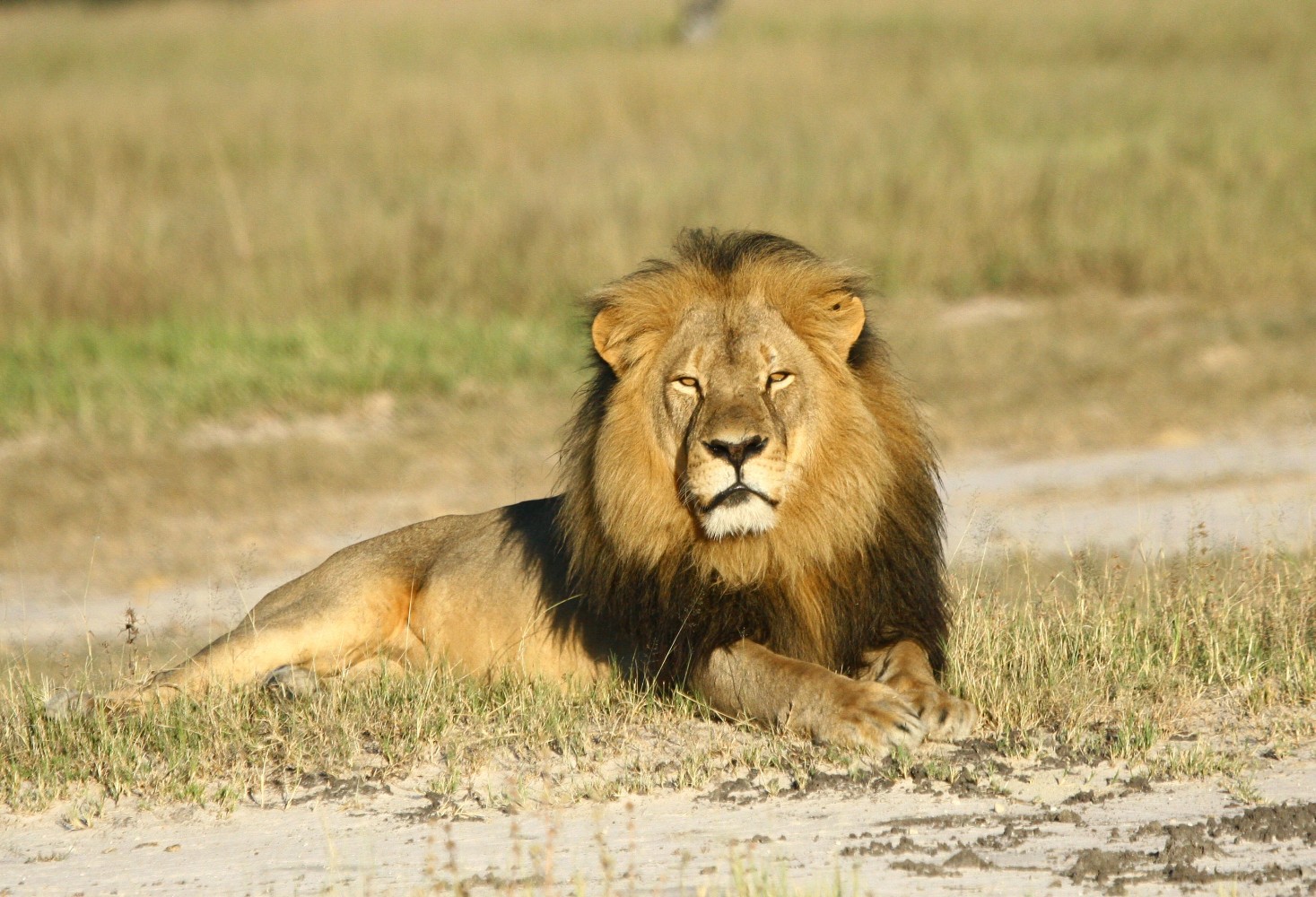
Cecil, the lion, was killed by Minnesota dentist and trophy hunter Walter Palmer last year. 
WASHINGTON — Advocates of trophy hunting, and even the United States government, have long justified the killing of protected wildlife in Africa by saying that taxes and fees from the hunts help pay for larger conservation efforts.

But a new report by the Democratic staff of the House Natural Resources Committee challenges those claims, finding little evidence that the money is being used to help threatened species, mostly because of rampant corruption in some countries and poorly managed wildlife programs. It concludes that trophy hunting may be contributing to the extinction of certain animals.

It has been almost a year since an American hunter killed a beloved lion named Cecil in Zimbabwe, setting off an international debate over sport hunting and widespread anger on the internet. Since then, the Obama administration has placed lions in Africa under the protection of the Endangered Species Act, France has banned the import of lion trophies, and more than 40 airlines have said they will no longer transport hunting trophies.

The 25-page House report, called “Missing the Mark,” says that while poaching remains the gravest threat to animals like lions, rhinoceroses and leopards, “trophy hunting also removes a significant number of animals from these rapidly declining populations.”
“As the tragic death of Cecil the lion showed us,” the report says, “trophy hunters do not always play by the rules, and the trophy hunting industry needs to be regulated and held accountable for there to be any hope of a consistent conservation benefit.”

In theory, elaborate big-game hunts — which can cost tens of thousands of dollars, including trophy fees, professional guide payments, transportation and lodging — could help poor countries maintain robust conservation programs and give aid to residents. In the past, the money has been used to repair degraded environments, and the revenue from trophy hunting has been seen as deterring local residents from killing animals because they consider them a nuisance or a danger.

However, the report says, “In assessing the flow of trophy hunting revenue to conservation efforts, we found many troubling examples of funds’ either being diverted from their purpose or not being dedicated to conservation in the first place.”

The Endangered Species Act says hunted trophies can be brought to the United States only if they do not contribute to the extinction of a species. That standard is not always met, the report says, and it recommends that the Fish and Wildlife Service improve its permitting process so that only trophies that actually enhance the survival of species are allowed into the country.

The service has the authority to require an import permit for any species listed as threatened or endangered. In 2014, the agency suspended imports of elephant trophies from Tanzania and Zimbabwe because of “catastrophic population declines.” But, according to the study, it has been reluctant to use its authority to restrict other trophy imports that do not meet the standards on protecting species.

The agency has also used special rules to exempt from permitting requirements many imports of animals listed under the Endangered Species Act, the report says. For the species covered in the House report, the Fish and Wildlife Service required only one import permit from 2010 to 2014, though more than 2,700 trophies eligible for permitting were imported during that time. For the 1,469 leopard trophies that could have required an import permit, the agency required none.

Because Americans bring home more trophies of protected species than hunters from any other country, some conservationists believe that the United States government has the responsibility and the leverage to force a change. The urgency for such change, however, can be largely credited to Cecil the lion.

“Before Cecil, there was a certain complacency surrounding what to do about the lion, almost an indifference,” said Craig Packer, a lion expert who ran the Serengeti Lion Project in Tanzania for 35 years and has been critical of hunting practices in that country.

“After Cecil, it became clear that the public was much more skeptical of sport hunting,” he said. “It shows the power of public opinion.”

2347. Weasels Are Built for the Hunt

By Natalie Angier, The New York Times, June 13, 2016


At birth, the least weasel is as small and light as a paper clip, and the tiny ribs that press visibly against its silvery pink skin give it a segmented look, like that of an insect. A newborn kit is exceptionally underdeveloped, with sealed eyes and ears that won’t open for five or six weeks, an age when puppies and kittens are ready to be weaned.

A mother weasel, it seems, has no choice but to deliver her young half-baked. As a member of the mustelid clan — a noble but often misunderstood family of carnivorous mammals that includes ferrets, badgers, minks and wolverines — she holds to a slender, elongated body plan, the better to pursue prey through tight spaces that most carnivores can’t penetrate. Bulging baby bumps would jeopardize that sylphish hunting physique.
The solution? Give birth to the equivalent of fetuses and then finish gestating them externally on mother’s milk.

“If you want access to small environments, you can’t have a big belly,” said William J. Zielinski, a mustelid researcher with the United States Forest Service in Arcata, Calif. “You don’t see fat weasels.”

For Dr. Zielinski and other mustelid-minded scientists, weasels exemplify evolutionary genius and compromise in equal measure, the piecing together of exaggerated and often contradictory traits to yield a lineage of fierce, fleet, quick-witted carnivores that can compete for food against larger celebrity predators like the big cats, wolves and bears.

Researchers admit that wild mustelids can be maddening to study. Most species are secretive loners, shrug off standard radio collars with ease, and run close to the ground “like small bolts of brown lightning,” as one team noted. Now you see them, no, you didn’t.

Nevertheless, through a mix of dogged field and laboratory studies, scientists have lately made progress in delineating the weasel playbook, and it’s a page turner, or a page burner.
Researchers have been astonished to discover that the average mustelid is like a fur-covered furnace, its metabolic rate exceeding not only that of other carnivorous mammals but also that of its twitchy, ever-gnawing rodent prey.

“If you compare a least weasel to a meadow mouse, they’re the same weight, but the weasel has the higher metabolic rate,” said Roger Powell, an emeritus professor at North Carolina State University and doyen of weasel studies.

“The weasel heart beats at up to 400 pulses per minute,” said Mark Linnell, a faculty research assistant who studies mustelids at Oregon State University. “They’re geared to run at full speed, and they’re always high-strung.”

That keyed-up metabolism is another example of a grand mustelidian compromise. “If you have a high metabolic rate, you can be more active and search farther for food in more places and in more diverse ways,” Dr. Powell said. “But you have to catch more food in order to do that.”

Big cats must eat the equivalent of roughly a third of their weight each week; weasels must eat a third or more of their weight each day. “They’re living life on the edge,” Dr. Powell said.

Weasels also have big brains relative to body mass, and they apply their neuronal bounty to continuously fine-tune their movements during a hunt, a strategy that allows them to attack prey up to 10 times their size.

The fisher, a particularly fearless weasel in the marten branch, may be the only North American carnivore to have mastered the art of dining on adult porcupine — a large rodent that, in addition to being protected by a formidable quill sheath, weighs a good 12 pounds more than the eight-pound fisher.

“It’s got to be one of the great predator-prey matchups in history,” said Roland Kays, a biologist at the North Carolina Museum of Natural Sciences and North Carolina State. The fisher must encounter the porcupine on open ground, at which point it can start running circles around its quarry. The fisher tries to dart in and bite the porcupine’s vulnerable face; the porcupine pivots to turn its shielded back toward its attacker. Dart and spin, dart and bite.

After several deep wounds to its face, the porcupine grows weak, loses its footing and — match over. The fisher will then flip the punctured, pincushioned animal onto its back and carefully tear into a quill-free patch of belly, gaining access to desirable organs like the small intestine, which is not only rich in protein and lipids, but also contains the partially digested plant matter that even carnivores need.

Dr. Kays and a former student, Scott LaPoint, have found that fishers are far more behaviorally flexible than biologists had thought possible, at least in the Northeast. Hunted and trapped to near extinction until the 1930s, fishers — a misleading name derived from Dutch colonists’ word for polecat, a European weasel — began recovering in their traditional setting of deep forests, where they could easily avoid humans.

In the last few years, though, the weasels have apparently shaken off their reserve and begun showing up in suburban and urban areas — a shopping mall in Schenectady, N.Y., a parking lot in downtown Albany. Two years ago, a sizable male fisher made its way to the Bronx, startling anybody who saw it slinking along the sidewalk and raising hope that a solution to the city’s rat problem might have finally arrived.

The fisher, alas, soon disappeared. “I don’t know how that one ended up in the Bronx in the first place,” Dr. Powell said, “but it’s no place for a fisher, and I’m sure he wished he’d turned left when he turned right.”

For their part, researchers wish they could overturn the public’s generally poor opinion of weaseldom. To call someone a weasel means the person is shifty, untrustworthy. Weasel words are those squishy, defensive qualifiers beloved by, well, journalists.
In a recent “Brewster Rockit: Space Guy” comic strip, a “closet of nightmares” is opened to reveal, “AAHHH!!! Weasel-juggling clowns!”

Researchers speculate that the negative image may result partly from the mustelid’s serpentine silhouette: In some parts of Central America, weasels are called “furry snakes.” Or maybe it’s the distinctive mustelid musk. Most weasel species communicate with one another over large home ranges through frequent daubs of a pungent fluid excreted by their anal glands.

Shihab Shamma, who uses ferrets to study the mammalian auditory system at the University of Maryland and Descartes University in Paris, said of the ferrets at his Paris lab, “We give them the names of smelly French cheeses.”

But mustelid enthusiasts emphasize the family’s beauty and diversity: some 60 living species across all continents except Antarctica and Australia, ranging in size from the least weasel, the world’s smallest carnivore (weighing less than half a stick of butter as an adult), to the mighty wolverine, which can weigh up to 70 pounds.

Many weasels spend time in water, and one species, the sea otter, is a marine mammal that rarely comes on land. Sea otters are also among the only nonprimate mammals to use tools, cracking open a recalcitrant mollusk shell by banging it with a stone. Most of the time, though, the sea otter’s teeth do the job.

“Their teeth are amazing, like no other living carnivore,” said Adam Hartstone-Rose, who studies mammalian bite forces at the University of South Carolina. “They’re big and rounded and with no pointy cusps that might break off. They look like pillows or gum drops.” But the teeth, with their thick coat of enamel, can easily crush open a crab, clam or snail.

Most weasels have dentition more typical of carnivores, with a few sharp, slicing teeth and fewer, smaller molars, which other animals use to grind plants. As a result of their compact dental layout, many weasels have foreshortened snouts that make them look young and cute. They can also act young: Weasels are among the few animals that play as adults.

If they’re well fed, Dr. Powell said, “they’ll bounce and ricochet around, pounce, stalk, wiggle and change shape and just about turn themselves inside out. They put kittens to shame.”

Many weasels live in cold places, and because their long, thin shape has a high surface area relative to volume, they lose heat easily. To tackle the cold without relying on fat as an insulator, many weasels grow luxurious fur coats, some of the densest in nature.
A good head of human hair has about 350 hairs per square inch. On a mink, the fiber count per square inch is 44,000. Small wonder that people have historically coveted weasel pelts — mink, sable and ermine, the fur of pomp and royalty taken from the animals in winter, when their coats turn white.

Weasels also appreciate the value of co-opted fur. In winter, voles and mice build little dome-shaped nests under the snow. When a weasel finds one of these nests, it’s a genuine jackpot: lunch and lodging combined. Better still with a few tweaks: After eating the residents, the weasel lines its new dwelling in rodent fur to improve insulation.
“If you pop open one of these nests in springtime, you discover a macabre scene,” Dr. Zielinski said. “What was once occupied by a vole is now covered with vole-hair wallpaper.”

A rodent’s closet of nightmares: no clowns, no juggling, just one cold and hungry weasel, knocking at the door.

Wednesday, June 8, 2016

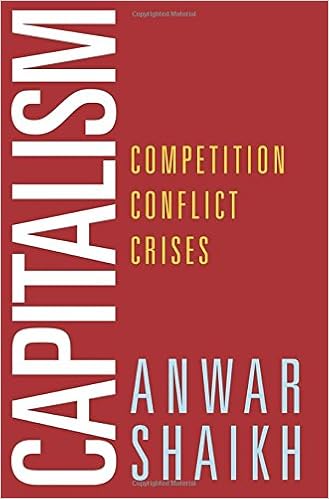
2346. An Interview with Anwar Shaikh About "Capitalism: Competition, Conflict, Crisis"

By Ebba Boye, Public Seminar, May 16, 2016
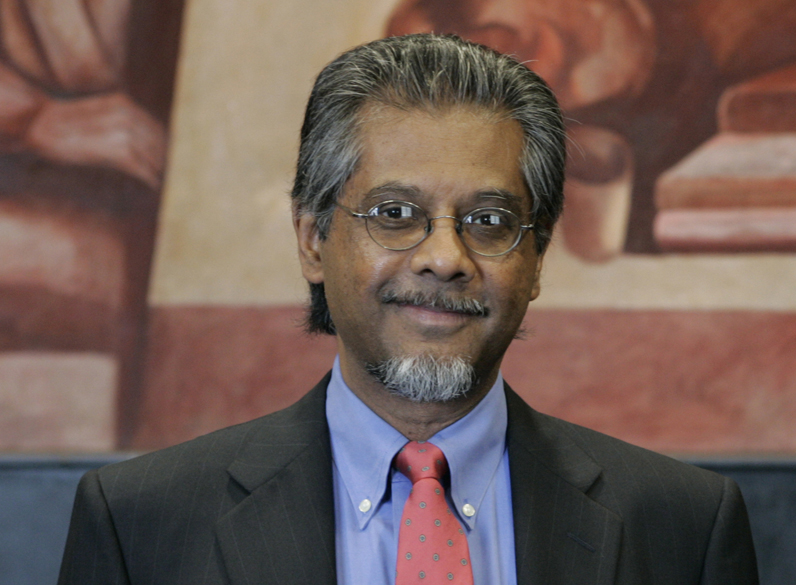
Anwar Shaikh

Anwar Shaikh has been teaching economics at The New School for 42 years. One of the world’s leading heterodox economists, he argues that the neoclassical models taught at most universities are bad tools for analyzing capitalism. He hopes that his recent book, Capitalism: Competition, Conflict and Crisis, can be the foundation for an alternative economic theory and pedagogy. He recently sat down with New School student Ebba Boye to talk about this work.

Why did you write this book?
When I first entered economics it was with a wish to understand how the world works. I am from Pakistan, I grew up in a part of the world where disparity in wealth was enormous and growth was slow. My father was a diplomat who was posted in many countries so growing up I observed a diversity of peoples, cultures and economies. In Kuwait I observed how they had more money than they could count, and still many were poor and working under very difficult conditions. So I thought that economics would help me explain this. But when I got to economics I realized that the orthodoxy was not dealing with the world that I was interested in, it was dealing with a world of fantasy.

So you had to build up your own economic theory?
Neoclassical economics [the dominant approach in the field today] deals with a world of perfection and rationality. The neoclassical tradition will start with some highly idealized assumptions, and then use these assumptions as building blocks for their theory. A lot of the economic research focuses on changing particular assumptions to make the model more applicable to the reality. But is this not to start [at] the complete wrong end?

I wanted to go back to my original question, how does the capitalism work? But instead of starting with some idealized world, I started with actual observations, and tried to derive a coherent model. But it has taken time; I have been working [on] this for 35 years and spent 15 years writing this book.


Did you have to start from scratch?
No, I did not. There was a lot to build on from the classical economists Adam Smith David Ricardo, and Karl Marx. I have also continued some of the work of John Maynard Keynes, Joan Robinson, Luigi Pasinetti, Piero Sraffa and Geoffrey Harcourt. The classical tradition began by observing actual patterns and outcomes. The idea is to start from the bottom up, from the actual world that we observe around us, and then build abstractions from there.

In your book you show how it is unnecessary, and also wrong, to construct economic models on the basis of “perfect competition.” Why do you think that so many of the neoclassical models have this as central assumption?
That is a quite interesting thing. The classical political economists like Smith, Ricardo and Marx all describe, with a lot of detail, what I call “real competition.” Relations between capital and labor, between big and small capital, and between nations, were all conflictual within the classical framework.

The neoclassical economists wanted to show that the system was harmonious, and beneficial for all. So they constructed a framework where these conflicts were all abolished. They presented capitalism as an ideal, harmonious system. Which it is not, of course. But it provides a powerful ideological foundation, or justification, of capitalism.

What are some of the policy implications of the theories presented in your book?
Let me start at the micro level. Competition works. It disciplines individual firms, industries and nations. But it also produces outcomes that are not desirable, especially for those who lose. The first lesson in the book is that we have to understand what these outcomes are, that they represent the natural consequences of capitalist mechanisms. And then if we don’t like these outcomes, the policy question is how do we deal with them?

Free trade in orthodox theory supposedly makes everybody better off, both individuals and nations. Because of the assumption of full employment, if a company or industry is outsourced, workers don’t suffer any disadvantage, because they just move to another job. Of course in practice orthodox economists will admit that there are some discrepancies to this theory, but basically they believe that everyone will end up happier.
On the other hand, in the classical tradition free trade is a war, because competition is a war. And in every war there are winners and losers, and the losers can be permanently damaged.

My point is to show that both sides of this story, the advantages and the costs, are natural consequences because they are intrinsic [to] competition.

At the macro level we need to look at the recurring patterns in capitalism, and understand the booms and busts. The strong mechanisms of profit-seeking behavior [both] drive the economy forward, and also throw it into deep crisis.

You were one of the heterodox economists who predicted the economic crisis. What was it about your method that made you see what was coming, while the neoclassicals did not?
First of all, I wasn’t that precise. In my lectures I argued that the crisis would hit around 2008-2009, but as we know it crashed already in 2007-2008.

The problem for the neoclassicals was that they had already concluded that there are no such things as cycles. The market was already perfect. Crises and business cycles happen because of random shocks, not from something intrinsic in the model. Many heterodox economists on the other hand will have models where crises are a natural, and recurrent part of our current economic system.

What does your micro model look like?
By using stochastic models you can accommodate multiple human behaviors, you don’t need to stick to one. And if we aggregate these behaviors at a sufficient level we end up getting remarkably stable patterns, even though the observation of individuals shows us that people have very different paths. People, being people, can choose to override habitual patterns. For example workers behave differently if they are organized as opposed to when they are competing against each other. That is also part of the social story. And economics should be able to include that from the start. That’s why I say that we have to start with looking at what anthropology tells us, and build our model from there. This might sound complicated, but it´s not. All we are doing is allowing for the complexity of human behavior.

My argument is that it is possible to make abstract models that can be used to analyze the economy, using a framework that will fit much closer to the knowledge we have of how people actually behave. There is no need for the assumptions made by neoclassical economists.

What are you hoping to achieve by writing this book?
I wish to create a foundation for an alternate curriculum. I hope that other people with the same motivation, facing the same obvious contradiction between the orthodox economics foundation and the world they see, will not have to go through the whole process that I did.

What are your perceptions on how heterodox economic theories are received by the orthodox economic community?
I think mainstream economists since at least the 1980s have closed out all other points of view, by claiming that all other views can be derived [from] within their framework. All they need to do is add a sufficient number of imperfections. This started with Paul Samuelson and the attempt to incorporate Keynesian economics into the orthodoxy by saying that Keynesian outcomes were due to wage rigidities. Then came price rigidities, then interest rate rigidities.

I have always opposed the idea that real outcomes can be understood [as] imperfections. It seems to me that then you are trapped within the space of perfection, and you always end up going back to it for your reference. I wanted to construct a system that did not depend in any way on any of the standard tropes — no maximizing, no utility as the main motivator of consumer behavior, no price-taking as the definition of competition, no idea that only small firms are competitive. Because [these are] not necessary to make arguments about how the economy works.

Micro is very important. But we don’t need this fictional micro. We need real microeconomics.

Many who criticize the economics field focus on the use of abstract models, and their limitations for understanding the actual world. How do you use models and abstractions in your book?
Abstraction is necessary in any analysis. The issue is how the abstraction is derived. If abstraction is idealization, which I argue is the fundamental root of orthodox theory, that is very different from abstraction as typification.

Galileo [made] an abstraction about the movement of the planets. That abstraction [was] derived from observations. The Western Church had another abstraction. It was not derived from observation, but from an ideological need. And the church tried to close out other views.

I know that you mostly want to talk about the theories in your book. But I really want to hear a bit more about how it is to be in a heterodox economic environment, and how you are met by the neoclassicals.
Of course. Well, when I was in graduate school there was more communication between different viewpoints. People like Paul Samuelson, and many of the other big figures of the time, would all have read the original Keynes and Marx. At Cambridge you could talk to Maurice Dobb on one hand, and then Piero Sraffa and Nicholas Kaldor on the other. They all were educated in the European sense, they had this broad education, and a broad theoretical spectrum.

That spectrum narrowed. The Chicago School and MIT started taking over the profession. This happened especially with the advent of the theory of rational expectations. Suddenly everything that was legitimate had to be cast in their terms, otherwise it was not economics… If you did not build your theories on the same fundamentals as the neoclassical economists, you were simply not counted as a real economist.

And the only way the spectrum for heterodox economists ever grew was when capitalism, unimpressed by economic theory, would exert itself like an earthquake. Then these spaces would open up for a while. Maybe we have such a possibility right now?

Do you have any advice for young economists entering into the heterodox field?
Don’t spend your time complaining about neoclassical economics. That’s a trap. Pretty much everything has been [said]. It’s not enough to be in opposition. I think attention to method is important, but you really have to have vision, a plan. Suppose you were flown in from Mars and you have to analyze capitalism. How would you approach how the system works? You would read what others say, but may also need to start building your theory from a different foundation.