Showing posts with label Neoclassical Economics. Show all posts

Wednesday, June 8, 2016

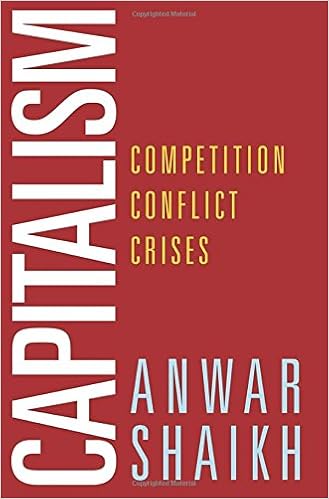
2346. An Interview with Anwar Shaikh About "Capitalism: Competition, Conflict, Crisis"

By Ebba Boye, Public Seminar, May 16, 2016
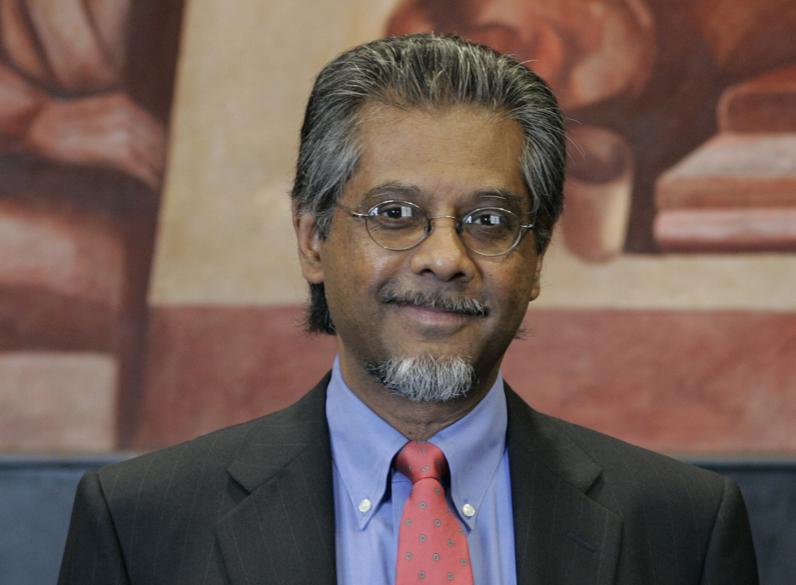
Anwar Shaikh

Anwar Shaikh has been teaching economics at The New School for 42 years. One of the world’s leading heterodox economists, he argues that the neoclassical models taught at most universities are bad tools for analyzing capitalism. He hopes that his recent book, Capitalism: Competition, Conflict and Crisis, can be the foundation for an alternative economic theory and pedagogy. He recently sat down with New School student Ebba Boye to talk about this work.

Why did you write this book?
When I first entered economics it was with a wish to understand how the world works. I am from Pakistan, I grew up in a part of the world where disparity in wealth was enormous and growth was slow. My father was a diplomat who was posted in many countries so growing up I observed a diversity of peoples, cultures and economies. In Kuwait I observed how they had more money than they could count, and still many were poor and working under very difficult conditions. So I thought that economics would help me explain this. But when I got to economics I realized that the orthodoxy was not dealing with the world that I was interested in, it was dealing with a world of fantasy.

So you had to build up your own economic theory?
Neoclassical economics [the dominant approach in the field today] deals with a world of perfection and rationality. The neoclassical tradition will start with some highly idealized assumptions, and then use these assumptions as building blocks for their theory. A lot of the economic research focuses on changing particular assumptions to make the model more applicable to the reality. But is this not to start [at] the complete wrong end?

I wanted to go back to my original question, how does the capitalism work? But instead of starting with some idealized world, I started with actual observations, and tried to derive a coherent model. But it has taken time; I have been working [on] this for 35 years and spent 15 years writing this book.


Did you have to start from scratch?
No, I did not. There was a lot to build on from the classical economists Adam Smith David Ricardo, and Karl Marx. I have also continued some of the work of John Maynard Keynes, Joan Robinson, Luigi Pasinetti, Piero Sraffa and Geoffrey Harcourt. The classical tradition began by observing actual patterns and outcomes. The idea is to start from the bottom up, from the actual world that we observe around us, and then build abstractions from there.

In your book you show how it is unnecessary, and also wrong, to construct economic models on the basis of “perfect competition.” Why do you think that so many of the neoclassical models have this as central assumption?
That is a quite interesting thing. The classical political economists like Smith, Ricardo and Marx all describe, with a lot of detail, what I call “real competition.” Relations between capital and labor, between big and small capital, and between nations, were all conflictual within the classical framework.

The neoclassical economists wanted to show that the system was harmonious, and beneficial for all. So they constructed a framework where these conflicts were all abolished. They presented capitalism as an ideal, harmonious system. Which it is not, of course. But it provides a powerful ideological foundation, or justification, of capitalism.

What are some of the policy implications of the theories presented in your book?
Let me start at the micro level. Competition works. It disciplines individual firms, industries and nations. But it also produces outcomes that are not desirable, especially for those who lose. The first lesson in the book is that we have to understand what these outcomes are, that they represent the natural consequences of capitalist mechanisms. And then if we don’t like these outcomes, the policy question is how do we deal with them?

Free trade in orthodox theory supposedly makes everybody better off, both individuals and nations. Because of the assumption of full employment, if a company or industry is outsourced, workers don’t suffer any disadvantage, because they just move to another job. Of course in practice orthodox economists will admit that there are some discrepancies to this theory, but basically they believe that everyone will end up happier.
On the other hand, in the classical tradition free trade is a war, because competition is a war. And in every war there are winners and losers, and the losers can be permanently damaged.

My point is to show that both sides of this story, the advantages and the costs, are natural consequences because they are intrinsic [to] competition.

At the macro level we need to look at the recurring patterns in capitalism, and understand the booms and busts. The strong mechanisms of profit-seeking behavior [both] drive the economy forward, and also throw it into deep crisis.

You were one of the heterodox economists who predicted the economic crisis. What was it about your method that made you see what was coming, while the neoclassicals did not?
First of all, I wasn’t that precise. In my lectures I argued that the crisis would hit around 2008-2009, but as we know it crashed already in 2007-2008.

The problem for the neoclassicals was that they had already concluded that there are no such things as cycles. The market was already perfect. Crises and business cycles happen because of random shocks, not from something intrinsic in the model. Many heterodox economists on the other hand will have models where crises are a natural, and recurrent part of our current economic system.

What does your micro model look like?
By using stochastic models you can accommodate multiple human behaviors, you don’t need to stick to one. And if we aggregate these behaviors at a sufficient level we end up getting remarkably stable patterns, even though the observation of individuals shows us that people have very different paths. People, being people, can choose to override habitual patterns. For example workers behave differently if they are organized as opposed to when they are competing against each other. That is also part of the social story. And economics should be able to include that from the start. That’s why I say that we have to start with looking at what anthropology tells us, and build our model from there. This might sound complicated, but it´s not. All we are doing is allowing for the complexity of human behavior.

My argument is that it is possible to make abstract models that can be used to analyze the economy, using a framework that will fit much closer to the knowledge we have of how people actually behave. There is no need for the assumptions made by neoclassical economists.

What are you hoping to achieve by writing this book?
I wish to create a foundation for an alternate curriculum. I hope that other people with the same motivation, facing the same obvious contradiction between the orthodox economics foundation and the world they see, will not have to go through the whole process that I did.

What are your perceptions on how heterodox economic theories are received by the orthodox economic community?
I think mainstream economists since at least the 1980s have closed out all other points of view, by claiming that all other views can be derived [from] within their framework. All they need to do is add a sufficient number of imperfections. This started with Paul Samuelson and the attempt to incorporate Keynesian economics into the orthodoxy by saying that Keynesian outcomes were due to wage rigidities. Then came price rigidities, then interest rate rigidities.

I have always opposed the idea that real outcomes can be understood [as] imperfections. It seems to me that then you are trapped within the space of perfection, and you always end up going back to it for your reference. I wanted to construct a system that did not depend in any way on any of the standard tropes — no maximizing, no utility as the main motivator of consumer behavior, no price-taking as the definition of competition, no idea that only small firms are competitive. Because [these are] not necessary to make arguments about how the economy works.

Micro is very important. But we don’t need this fictional micro. We need real microeconomics.

Many who criticize the economics field focus on the use of abstract models, and their limitations for understanding the actual world. How do you use models and abstractions in your book?
Abstraction is necessary in any analysis. The issue is how the abstraction is derived. If abstraction is idealization, which I argue is the fundamental root of orthodox theory, that is very different from abstraction as typification.

Galileo [made] an abstraction about the movement of the planets. That abstraction [was] derived from observations. The Western Church had another abstraction. It was not derived from observation, but from an ideological need. And the church tried to close out other views.

I know that you mostly want to talk about the theories in your book. But I really want to hear a bit more about how it is to be in a heterodox economic environment, and how you are met by the neoclassicals.
Of course. Well, when I was in graduate school there was more communication between different viewpoints. People like Paul Samuelson, and many of the other big figures of the time, would all have read the original Keynes and Marx. At Cambridge you could talk to Maurice Dobb on one hand, and then Piero Sraffa and Nicholas Kaldor on the other. They all were educated in the European sense, they had this broad education, and a broad theoretical spectrum.

That spectrum narrowed. The Chicago School and MIT started taking over the profession. This happened especially with the advent of the theory of rational expectations. Suddenly everything that was legitimate had to be cast in their terms, otherwise it was not economics… If you did not build your theories on the same fundamentals as the neoclassical economists, you were simply not counted as a real economist.

And the only way the spectrum for heterodox economists ever grew was when capitalism, unimpressed by economic theory, would exert itself like an earthquake. Then these spaces would open up for a while. Maybe we have such a possibility right now?

Do you have any advice for young economists entering into the heterodox field?
Don’t spend your time complaining about neoclassical economics. That’s a trap. Pretty much everything has been [said]. It’s not enough to be in opposition. I think attention to method is important, but you really have to have vision, a plan. Suppose you were flown in from Mars and you have to analyze capitalism. How would you approach how the system works? You would read what others say, but may also need to start building your theory from a different foundation.

Sunday, May 22, 2016

2328. Biology and Homo Economicus

By David Sloan Wilson, New Scientist, March 21, 2012


One of the most influential articles published in the field of economics is Milton Friedman’s (1953) “The Methodology of Positive Economics”, in which he argues that people behave as if the assumptions of neoclassical economic theory are correct, even when they are not. One of the most influential articles in the field of evolution is Stephen Jay Gould and Richard Lewontin’s (1979) “The Spandrels of San Marcos and the Panglossian Paradigm”, which argues against excessive reliance on the concept of adaptation.

Different disciplines, different decades. No wonder these two classic articles have not been related to each other. Yet, there is much to be gained by doing so, for one reveals weaknesses in the other that are highly relevant to current economic and evolutionary thought.

The reason they can be related to each other is because Friedman relied upon an evolutionary argument for his “as if” justification of neoclassical economics. I cannot improve upon his own framing of the problem:

The abstract methodological issues we have been discussing have a direct bearing on the perennial criticism of “orthodox” economic theory as “unrealistic” as well as on the attempts that have been made to reformulate theory to meet this charge. Economics is a “dismal” science because it assumes man to be selfish and money-grubbing, “a lightning calculator of pleasures and pains, who oscillates like a homogeneous globule of desire of happiness under the impulse of stimuli that shift him about the area, but leave him intact”; it rests on outmoded psychology and must be reconstructed in line with each new development in psychology; it assumes men, or at least businessmen, to be “in a continuous state of ‘alert,’ ready to change prices and/or pricing rules whenever their sensitive intuitions … detect a change in demand and supply conditions;” it assumes markets to be perfect, competition to be pure, and commodities, labor, and capital to be homogeneous.

Friedman admits that the orthodox theory’s assumptions about human preferences and abilities, which are often labeled Homo economicus as if they are a description of a biological species, are manifestly unrealistic. Yet, he claims that they are still predictive of human economic behavior by way of three analogies. First, trees distribute their leaves as if they are maximizing their exposure to sunlight, yet no one pretends that they are performing optimization equations. Likewise, an expert pool player acts as if he is performing complex calculations when making his shots, when in fact his behavior has been molded by countless hours of play. Finally, a firm acts as if it is maximizing its profits, when in fact its continuing survival is the result of a selection process in which the non-optimizing firms were eliminated.

The first is an example of genetic evolution, the second is an example of individual learning, and the third is an example of cultural evolution. In all cases, a process of selection results in entities that behave adaptively, as if they are solving complex optimization equations, when mechanistically they are doing nothing of the sort.
Evolutionary biologists will recognize Friedman’s point as a distinction between ultimate and proximate causation. Ultimate causation explains why a trait exists, compared to many other traits that could exist, based on the outcome of a selection process. Proximate causation explains how the trait exists in a physical sense. Sunflowers turn towards the sun because selection has favored phototropism (the ultimate explanation); but within each individual sunflower is a physiological mechanism that causes the plant to do so. The proximate explanation need bear no resemblance to the ultimate explanation, other than to reliably cause the adaptive behavior to come into existence.

So far, Friedman is standing on firm evolutionary ground with his “as if” argument. Evolutionists frequently reason about the properties of species “as if” they are maximizing their fitness, without worrying about the proximate mechanisms. As a simple example, we can confidently predict that many desert animals are sandy colored to avoid detection by their predators and prey. The prediction holds true for different kinds of desert animals, such as insects, snails, reptiles, birds, and mammals, even though different proximate mechanisms in these animals cause the sandy coloration to develop. The ability to predict the properties of organisms in functional terms, without reference to proximate causation, is one of the most powerful features of evolutionary theory.

But reasoning on the basis of adaptation delivers the correct answer only if the trait in question is a product of selection and if we have correctly identified the relevant selection pressures. If the trait isn’t adaptive in any sense, we’ll be wrong. If we assume that the trait is a solution to one adaptive problem (such as the need for a foraging animal to maximize energy intake per unit time), when it is a solution to another adaptive problem (such as the need for a foraging animal to manage a trade-off between energy gain and predation risk), we’ll also be wrong.

That’s where Gould and Lewontin’s “Spandrels” paper comes in. They chastised some of their evolutionist colleagues for assuming that every trait must have an adaptive explanation and for accepting adaptive “just-so” stories without adequate proof. They outlined a more comprehensive approach that requires strong evidence for any given adaptationist explanation and reflects the many ways that nonadaptive traits can persist in a population. The compleat evolutionist might begin with an adaptationist hypothesis to explain a given trait, but then tests the hypothesis and modifies it as warranted, keeping both other adaptation and non-adaptation hypotheses in mind as live options. Compleat evolutionists also study proximate mechanisms, development, and phylogeny in conjunction with their focus on natural selection.

Some evolutionists complain that Gould and Lewontin created a straw man with their critique, but their portrait of “naïve adaptationism” accurately describes Friedman’s defense of neoclassical economics. He assumed that one or more selection processes (genetic, learning, or cultural) resulted in people who resemble Homo economicus as far as ultimate causation is concerned. He did not consider other adaptationist or nonadaptationist hypotheses. He did not indicate that proximate mechanisms, development, and phylogeny need to be considered along with ultimate causation. The only evidence that he provided to support his hypothesis was to claim that economic policy based on the orthodox theory was successful. His “as if” argument was evolutionary, but not evolutionary enough.

The weakness of Friedman’s article, when related to Gould and Lewontin’s article, reveals a widespread problem in the basic and applied human social sciences. All accounts of human social behavior that are not creationist strive for consilience—consistency with other branches of knowledge. An economic or social policy that ignores the way we are as a species and the way that cooperation evolves in all species is no more likely to succeed than an architectural plan that ignores the laws of physics. Yet, for complex reasons, evolutionary theory has been avoided as an explanatory framework for most branches of the social sciences since before most of the current experts were born. When theories and policies derived from the social sciences are related to modern evolutionary science, they often fail the consilience test as miserably as Friedman did in 1953.

Social scientists and policymakers need to become compleat evolutionists, no less than biologists. The bad news is that a lot of work needs to be done for our current theories and policies to pass the consilience test. The good news is that when we start to earn passing grades, our economic and social policies will start working better than they do now.

Wednesday, October 14, 2015

2047. About the Noble Prize in Economics "Sciences"

By Lars Syll, Real-World Economics Blog, October 12, 2015
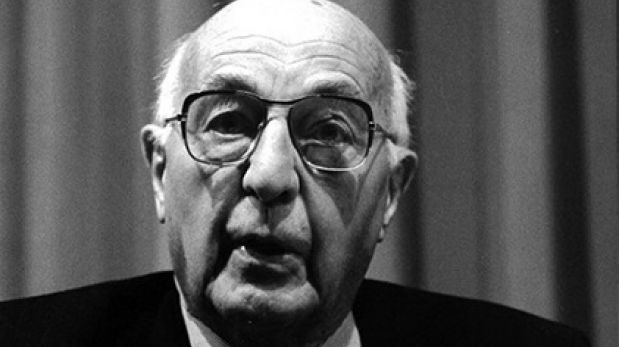
Nicholas Georgescu-Roegen (1906-1994) 
The Sveriges Riksbank Prize in Economic Sciences in Memory of Alfred Nobel, usually — incorrectly — referred to as the Nobel Prize in Economics, is an award for outstanding contributions to the field of economics. The Prize in Economics was established and endowed by Sweden’s central bank Sveriges Riksbank in 1968 on the occasion of the bank’s 300th anniversary.The first award was given in 1969. The award this year is presented in Stockholm at a ceremony tomorrow.

Out of the 75 laureates that have been awarded “The Sveriges Riksbank Prize in Economic Sciences in Memory of Alfred Nobel,” 28 have been affiliated to The University of Chicago — that is 37 %. Of all laureates, 80% have been from the US (by birth or by naturalisation). Only 7% of the laureates have come from outside North America or Western Europe. Only 1 woman has got the prize. The world is really a small place when it comes to economics …Looking at whom the prize is given to, says quite a lot about what kind of prize this is. But looking at whom the prize is not given to, says perhaps even more.

The great Romanian-American mathematical statistician and economist Nicholas Georgescu-Roegen (1906-1994) argued in his epochal The Entropy Law and the Economic Process (1971) that the economy was actually a giant thermodynamic system in which entropy increases inexorably and our material basis disappears. If we choose to continue to produce with the techniques we have developed, then our society and earth will disappear faster than if we introduce small-scale production, resource-saving technologies and limited consumption.

Following Georgescu-Roegen, ecological economists have argued that industrial society inevitably leads to increased environmental pollution, energy crisis and an unsustainable growth.

Georgescu-Roegen and ecological economics have turned against the neoclassical theory’s obsession with purely monetary factors. The monetary reductionism easily makes you ignore other factors having a bearing on human interaction with the environment.

I wonder if this isn’t the crux of the matter. To assert such a thing really is to swear in the neoclassical establishment church and nullifies any chances of getting the prestigious prize.

Twenty years ago, after a radio debate with one of the members of the prize committee, I asked why Georgescu-Roegen hadn’t got the prize. The answer was – mirabile dictu – that he “never founded a school.” I was surprised, to say the least, and wondered if he possibly had heard of the environmental movement. Well, he had — but it was “the wrong kind of school”! Can it be stated much clearer than this what it’s all about? If you haven’t worked within the mainstream neoclassical paradigm — then you are more or less excluded a priori from being eligible for the The Sveriges Riksbank Prize in Economic Sciences in Memory of Alfred Nobel!

Two years ago — making an extraordinarily successful forecast — I told Swedish media the prize committee would show how in tune with the times it was and award the prize to Eugene Fama. Why? Well — I argued — he’s a Chicago economist and a champion of rational expectations and efficient markets. And nowadays freshwater economists seem to be the next to the only ones eligible for the prize. And, of course, an economist who has described the notion that finance theory was at fault as “a fantasy” and argued that “financial markets and financial institutions were casualties rather than causes of the recession” had to appeal to a prize committee with a history of awarding theories and economists totally lacking any real world relevance.

Well, my forecast turned out to be right — the Swedish Academy of Sciences awarded The Sveriges Riksbank Prize in Economic Sciences in Memory of Alfred Nobel for 2013 to Eugene Fame. The prize committee really did show how in tune with the times it was …
I love to be right of course, but otherwise this is only saddening and shows what a joke this prize is, when someone like Fama can get it. Maybe I’m not showing proper “respect” for Fama’s “important steps forward”, but, really, how could one after reading the following interview with Nobel laureate Fama?
Q. Many people would argue that, in this case, the inefficiency was primarily in the credit markets, not the stock market—that there was a credit bubble that inflated and ultimately burst.
Eugene Fama: I don’t even know what that means. People who get credit have to get it from somewhere. Does a credit bubble mean that people save too much during that period? I don’t know what a credit bubble means. I don’t even know what a bubble means. These words have become popular. I don’t think they have any meaning.
Q. I guess most people would define a bubble as an extended period during which asset prices depart quite significantly from economic fundamentals.
Eugene Fama: That’s what I would think it is, but that means that somebody must have made a lot of money betting on that, if you could identify it. It’s easy to say prices went down, it must have been a bubble, after the fact. I think most bubbles are twenty-twenty hindsight. Now after the fact you always find people who said before the fact that prices are too high. People are always saying that prices are too high. When they turn out to be right, we anoint them. When they turn out to be wrong, we ignore them. They are typically right and wrong about half the time.
Q. Are you saying that bubbles can’t exist?
Eugene Fama: They have to be predictable phenomena. I don’t think any of this was particularly predictable.

Tuesday, October 13, 2015

2046. The Noble Prize and Economics "Sciences"

By Joris Luyendijik, The Guardian, October 11, 2015

Business as usual. That will be the implicit message when the Sveriges Riksbank announces this year’s winner of the “Prize in Economic Sciences in Memory of Alfred Nobel”, to give it its full title. Seven years ago this autumn, practically the entire mainstream economics profession was caught off guard by the global financial crash and the “worst panic since the 1930s” that followed. And yet on Monday the glorification of economics as a scientific field on a par with physics, chemistry and medicine will continue.

The problem is not so much that there is a Nobel prize in economics, but that there are no equivalent prizes in psychology, sociology, anthropology. Economics, this seems to say, is not a social science but an exact one, like physics or chemistry – a distinction that not only encourages hubris among economists but also changes the way we think about the economy.

A Nobel prize in economics implies that the human world operates much like the physical world: that it can be described and understood in neutral terms, and that it lends itself to modelling, like chemical reactions or the movement of the stars. It creates the impression that economists are not in the business of constructing inherently imperfect theories, but of discovering timeless truths.

To illustrate just how dangerous that kind of belief can be, one only need to consider the fate of Long-Term Capital Management, a hedge fund set up by, among others, the economists Myron Scholes and Robert Merton in 1994. With their work on derivatives, Scholes and Merton seemed to have hit on a formula that yielded a safe but lucrative trading strategy. In 1997 they were awarded the Nobel prize. A year later, Long-Term Capital Management lost $4.6bn (£3bn)in less than four months; a bailout was required to avert the threat to the global financial system. Markets, it seemed, didn’t always behave like scientific models.

In the decade that followed, the same over-confidence in the power and wisdom of financial models bred a disastrous culture of complacency, ending in the 2008 crash. Why should bankers ask themselves if a lucrative new complex financial product is safe when the models tell them it is? Why give regulators real power when models can do their work for them?

Many economists seem to have come to think of their field in scientific terms: a body of incrementally growing objective knowledge. Over the past decades mainstream economics in universities has become increasingly mathematical, focusing on complex statistical analyses and modelling to the detriment of the observation of reality.

Consider this throwaway line from the former top regulator and London School of Economics director Howard Davies in his 2010 book The Financial Crisis: Who Is to Blame?: “There is a lack of real-life research on trading floors themselves.” To which one might say: well, yes, so how about doing something about that? After all, Davies was at the time heading what is probably the most prestigious institution for economics research in Europe, located a stone’s throw away from the banks that blew up.

Howard Davies, pictured in 2006. Photograph: Eamonn McCabe for the Guardian
All those banks have “structured products approval committees”, where a team of banking staff sits down to decide whether their bank should adopt a particular new complex financial product. If economics were a social science like sociology or anthropology, practitioners would set about interviewing those committee members, scrutinising the meetings’ minutes and trying to observe as many meetings as possible. That is how the kind of fieldwork-based, “qualitative” social sciences, which economists like to discard as “soft” and unscientific, operate. It is true that this approach, too, comes with serious methodological caveats, such as verifiability, selection bias or observer bias. The difference is that other social sciences are open about these limitations, arguing that, while human knowledge about humans is fundamentally different from human knowledge about the natural world, those imperfect observations are extremely important to make.

Compare that humility to that of former central banker Alan Greenspan, one of the architects of the deregulation of finance, and a great believer in models. After the crash hit, Greenspan appeared before a congressional committee in the US to explain himself. “I made a mistake in presuming that the self-interests of organisations, specifically banks and others, were such that they were best capable of protecting their own shareholders and their equity in the firms,” said the man whom fellow economists used to celebrate as “the maestro”.

In other words, Greenspan had been unable to imagine that bankers would run their own bank into the ground. Had the maestro read the tiny pile of books by financial anthropologists he may have found it easier to imagine such behaviour. Then he would have known that over past decades banks had adopted a “zero job security” hire-and-fire culture, breeding a “zero-loyalty” mentality that can be summarised as: “If you can be out of the door in five minutes, your horizon becomes five minutes.”

While this was apparently new to Greenspan it was not to anthropologist Karen Ho, who did years of fieldwork at a Wall Street bank. Her book Liquidated emphasises the pivotal role of zero job security at Wall Street (the same system governs the City of London). The financial sociologist Vincent Lépinay’s Codes of Finance, a book about the division in a French bank for complex financial products, describes in convincing detail how institutional memory suffers when people switch jobs frequently and at short notice.

Perhaps the most pernicious effect of the status of economics in public life has been the hegemony of technocratic thinking. Political questions about how to run society have come to be framed as technical issues, fatally diminishing politics as the arena where society debates means and ends. Take a crucial concept such as gross domestic product. As Ha-Joon Chang makes clear in 23 Things They Don’t Tell You About Capitalism, the choices about what not to include in GDP (household work, to name one) are highly ideological. The same applies to inflation, since there is nothing neutral about the decision not to give greater weight to the explosion in housing and stock market prices when calculating inflation.

GDP, inflation and even growth figures are not objective temperature measurements of the economy, no matter how many economists, commentators and politicians like to pretend they are. Much of economics is politics disguised as technocracy – acknowledging this might help open up the space for political debate and change that has been so lacking in the past seven years.

Would it not be extremely useful to take economics down one peg by overhauling the prize to include all social sciences? The Nobel prize for economics is not even a “real” Nobel prize anyway, having only been set up by the Swedish central bank in 1969. In recent years, it may have been awarded to more non-conventional practitioners such as the psychologist Daniel Kahneman. However, Kahneman was still rewarded for his contribution to the science of economics, still putting that field centre stage.

Think of how frequently the Nobel prize for literature elevates little-known writers or poets to the global stage, or how the peace prize stirs up a vital global conversation: Naguib Mahfouz’s Nobel introduced Arab literature to a mass audience, while last year’s prize for Kailash Satyarthi and Malala Yousafzai put the right of all children to an education on the agenda. Nobel prizes in economics, meanwhile, go to “contributions to methods of analysing economic time series with time-varying volatility” (2003) or the “analysis of trade patterns and location of economic activity” (2008).

A revamped social science Nobel prize could play a similar role, feeding the global conversation with new discoveries and insights from across the social sciences, while always emphasising the need for humility in treating knowledge by humans about humans. One good candidate would be the sociologist Zygmunt Bauman, whose writing on the “liquid modernity” of post-utopian capitalism deserves the largest audience possible. Richard Sennett and his work on the “corrosion of character” among workers in today’s economies would be another. Will economists volunteer to share their prestigious prize out of their own acccord? Their own mainstream economic assumptions about human selfishness suggest they will not.

Tuesday, September 15, 2015

2019. Economics as Ideology: How Economists Forecast Economic Growth

By Josh Barro, The New York Times, September 14, 2015 


Josh Barro in today's New York Time Upshot column aims to discred the Republican Presidential hopeful Jeb Bush's promise of doubling Gross Domestic Product by arguing that such forecasts are largely a guessing game and economists pick forecasts favorable to their candidates.  However, critics of economic theory have long argued that the mainstream economic theory is ideological because it is build to justify and support a particular socioeconomic system, capitalism.   In Economics, Socialism, and Ecology: A Critical Outline, Part 1, I offer a brief survey of how this is the case and point to further readings.  KN
*     *     *


Jeb Bush says he wants to make the American economy grow at 4 percent a year, or nearly 2 percentage points faster than the Congressional Budget Office expects in the long run. The goal has been greeted with skepticism, but last week, four prominent conservative economists predicted his tax-cut plan would get him a good portion of the way there.

They say it would add half a percentage point to G.D.P. growth every year for a decade, eventually adding 5 percent to the size of the economy.

For decades, faster economic growth has been a key justification offered by Republican candidates promoting tax plans that include large tax cuts for the highest earners and owners of capital. These sorts of tax cuts, their economic advisers say, will produce more jobs, higher wages and better standards of living.

The problem is, nobody really knows how tax cuts actually affect jobs and growth — not even economists.

The economists making the prediction — John Cogan, Martin Feldstein, Glenn Hubbard and Kevin Warsh — did not run Mr. Bush’s tax plan through an economic model before arriving at their 5 percent estimate. Rather, Mr. Hubbard, the dean of Columbia’s business school and a former top economic adviser to George W. Bush and Mitt Romney, said they looked at previous studies in which economists evaluated other tax proposals, and placed Jeb Bush’s tax plan among them in what they thought was approximately the right place.

A model built by Alan Auerbach and Laurence Kotlikoff found that abolishing income taxes in favor of a consumption tax would add 9 percent to G.D.P. in the long run. Another model by John Diamond and George Zodrow found that a more modest tax overhaul considered by House Republicans last year, focused on cutting rates and eliminating deductions, would lift G.D.P. by 3 percent. Other proposals fell somewhere in the middle, and so, the Hubbard group thought, would Mr. Bush’s.

“This is four smart people who made an educated guess based on looking at other models,” said Joel Slemrod, a public finance economist at the University of Michigan. “If I had to pick a number, I would have picked a lower number.”

And that’s the thing: While most economists agree that tax policy can have significant effects on economic growth, they have a remarkable ability to look at the same body of evidence and disagree wildly on the size of the effects. Asking a handful of economists about how your tax plan will affect the economy is better than throwing darts at a dartboard, but it’s not necessarily that much better.

Mr. Auerbach and Mr. Kotlikoff have collaborated since the 1980s on influential models of how taxes affect the economy. Yet they disagree on how to evaluate Mr. Bush’s tax plan. Mr. Auerbach said he read the Hubbard group letter and immediately thought the growth estimates were too high, while Mr. Kotlikoff thought they were too low.

“0.5 percent a year definitely stuck out when I read it,” said Mr. Auerbach, a professor at the University of California at Berkeley. “I don’t really think it’s reasonable.” He notes the Bush plan retains significant taxes on investment income, while his model found the largest growth effects from abolishing such taxes. He also thought it would take much longer than 10 years for the positive economic effects of a major tax overhaul to be fully felt.

Mr. Kotlikoff, a professor at Boston University, said nearly the opposite: He thought the Bush plan, especially its provision allowing companies to fully and immediately deduct capital expenses from their taxes, would have large and swift economic effects. He said he thought the plan would grow the economy by more than 5 percent, and he thought most of those effects would be felt within the first decade, pointing to Ireland as an example of a country that experienced rapid economic growth after cutting corporate income taxes.

The diversity of views in the economics profession makes it easy to pick and justify the forecasts you like. With last year’s Republican House tax plan, there is that outside analysis Mr. Hubbard noted, finding it would expand the economy by 3.1 percent in the long run (though only by 2.2 percent after a decade). But the congressional Joint Committee on Taxation ran not one but eight models on that plan, finding it would increase the economy by 0.1 percent to 1.6 percent over a decade.

This is how the Joint Committee on Taxation and the Congressional Budget Office deal with the economics profession’s uncertainty about how taxes affect the economy: They provide a range of estimates, often such a broad range that it feels as if the report isn’t telling you anything at all.

Douglas Elmendorf, who until recently served as the director of the Congressional Budget Office, told me the main usefulness of these reports is the estimates they rule out: By saying a tax plan might cause a boost to G.D.P. from 0.1 to 1.6 percent, they are saying to ignore an outside report promising it will cause a rise of 4 percent. (Mr. Elmendorf joined several other economists in saying he thought the prediction of 5 percent in the Hubbard group letter was overly rosy.)

Mr. Slemrod also urged economists to talk in terms of ranges rather than point estimates when discussing how taxes affect the economy, to reflect the fact that these figures are simply educated guesses. But he understands why they don’t. “Washington wants a number,” he said. “Washington doesn’t like confidence intervals.”

In the case of Mr. Bush’s tax plan, using a point estimate is politically desirable because it builds in the economic feedback effects as a key justification for the policy. If the tax cuts really did cause the economy to grow by 5 percent, they would generate a lot of revenue to offset the cost of cutting taxes, and would do a lot to improve living standards even for people who do not benefit much directly from the tax cut.

If you instead consider a range of possible economic effects that includes very small ones, you have to be prepared for the possibility that the tax cuts won’t provide those benefits. That means the government will have to borrow much more money and cut more spending than anticipated. Or raise other taxes.
COMMENTS
Voters should remember that we have been burned before by economists’ guesses on taxes, including guesses by the very economists who wrote the letter backing Mr. Bush’s plan. For example, in August 2001, Mr. Hubbard, who was then serving as the chairman of the Council of Economic Advisers, wrote for The Wall Street Journal about the first round of George W. Bush tax cuts under the headline “Tax Cuts Won’t Hurt the Surplus.” He said:

The recently enacted tax cut fits naturally into a growth-oriented agenda. Lower taxes reduce fiscal drag on the economy in the short term. Lower marginal tax rates provide longer-term incentives for work, savings, risk-taking and innovation. In this way, the current fiscal policy helps to provide for the future of Social Security.

That guess turned out to be both wrong and expensive.

Monday, May 26, 2014

1427. Capitalist Economics and the Economics of Capital

By John Weeks, Philosophers for Change, May 27, 2014

All social sciences carry a heavy burden of ideology, but none heavier or more explicit than what currently passes for mainstream economics. Critics often complain that economists arrogantly pretend to understand far more than they actually do. As I explain in my new book, Economics of the 1%, this criticism is too weak. The mainstream of the economics profession, “neoclassical economics”, claims profound knowledge, yet provides understanding of almost nothing and obscures almost everything by peddling ideology in the guise of analysis. The profession practices and promotes pseudo-science.
Imagine if you can that astrologers seized the observatories, alchemists occupy the chemistry laboratories and creationists dominate the study of genetics. This has occurred in economics, burdening the professional with a dead weight of absurd inconsistencies presented as theory. There is no policy or economic outcome so reactionary or outrageously anti-social that some mainstream economist will not defend it, many will give their tacit support, and very few will denounce it as the ideology it is. Among these reactionary absurdities we find the conclusions that income discrimination by gender and race is an illusion, unemployment is voluntary, and sweatshops are good. I designate this reactionary mainstream to consist of econfakers, practicing a pseudo-scientific fakeconomics, just as astrologers practice astrology and alchemists alchemy.
If after appropriating the profession, the neoclassical school had driven it into disrepute, which would happen if the creationists took over the field of genetics, astrologers astronomy and alchemists chemistry, their offense would rank as a minor intellectual crime. Fakeconomics would wither under ridicule. But to the contrary, the econfakers have successfully sold their nonsense as an unchallengeable wisdom to guide governments. It is not wisdom. On the contrary, it is nonsense, a virus of the intellect.
It is obvious that the nonsense posing as economics gained its ideological hegemony because it faithfully serves the interest of the most reactionary elements of capital. Harder to explain is why so many people in so many countries of the world revere economists as gurus. In great part the undeserved credibility of economists results from the systematic fostering of ignorance. Understanding society’s economy is not simple, but no more difficult than understanding the political system sufficiently to vote. People regularly go into voting booths and choose among candidates or reject them all. Most of the same people would profess an economics that leaves them unable to evaluate competing claims about the state of the economy.
An astoundingly high proportion of the adult population regards the economy and economics as something understood only by experts. It is quite extraordinary that when asked, for example, whether fiscal policy should be more expansionary, people frequently begin statements with, “since I am not an economist…”, or “not being an economist…” If asked whether a national health system should be private or public, the same people would not say, “I am not a doctor, so I can’t comment”. Yet, the health system is at least as technically complex as economics.
Somehow the mainstream economics profession has been successful in convincing people, regardless of level of education or political orientation, that economics is a subject so complex and esoteric that the non-expert is excluded from understanding it. If people do venture opinions on economic issues, it is frequently on the basis of breath-taking banalities and clichés inculcated by the econfakers themselves. Common ones are the vacuous, “well, that’s the result of supply and demand working”; the old cliché, “too much money chasing too few goods” causes inflation; or, the meaningless, “governments should not live beyond their means”.
These are the clichés of the ignorant, repeated shamelessly by the media. Even worse, they are repeated by the “experts” the media bring forth to foster our, and their, continued ignorance. Consider, for example, a typical justification of reducing the government budget deficit by cutting social services when unemployment is high: “the government has to consider the reaction of financial markets”. The insight in that banality is equivalent to seeing the terrible photographs of people leaping to their deaths from the World Trade Center Tower on 11 September 2001, and commenting, “Well, that’s the law of gravity for you”.
The Idolatry of Individualism
From tiny acorns great oaks grow. In a case of nonsense imitating nature, from low and banal theory capitalist economics ascends to great ideological heights. With superficial and simplistic propositions the economics mainstream constructs a great and complex ideological edifice from which it issues oracle-like judgments over the affairs of humankind. The reactionary policy parables of the mainstream derive from a short-list of putatively incontestable propositions.
Desires and preferences are unique to each person.
On the basis of these desires and preferences people enter into exchanges of their free will, seeking to satisfy themselves through market exchanges with other people.
These market activities, including the exchange of a person’s capacity to work, are to obtain the income to buy the goods and services dictated by the person’s desires and preferences.
Many people seeking simultaneously to buy and sell is competition; and this competition ensures that people buy and sell, including their abilities to work, at prices that are socially beneficial.
Action by any collective or individual authority, private or public, that restricts the potential for people to buy and sell reduces the social benefits generated by markets.
In the private sector monopolies (sellers) and monopsonies (buyers) reduce welfare. Much more pernicious are the welfare reducing actions of governments, which proclaim good intentions while restricting freedom. These restrictions include all forms of taxation, which reduce people’s incomes, alter market prices of goods and services, and lower the incentive to work below its “natural” level (that is, its market level). Many government expenditures have the same effect, such as unemployment compensation reducing the incentive to work, and subsidies to public schools that distort individual choice among potential providers.

This short list of literally anti-social generalities can be summarised briefly: people have a desire for goods and services beyond their current earning capacity, requiring them to make choices, to allocate their incomes among their wants in the manner that will best fulfil those wants. For all people added together, wants are unlimited and the resources to satisfy them are finite. Economics is the study of the allocation of scarce resources among unlimited wants to maximize individual welfare. Government actions restrict, limit and distort the ability of people to make their choices. Its role should be strictly limited to minimize those restrictions, limits and distortions.
This is the central narrative of mainstream economists, that markets are efficient organizers of economic life. Its origins in eighteenth century individualism could not be more obvious, for it is the doctrine of the Hobbesian “state of nature” ideologically spun as the language of liberty. Winston Churchill famously defended political democracy by arguing that “democracy is the worst form of government except all those other forms that have been tried” (UK House of Commons November 11, 1947). The mainstream economics profession accepts no such ironic minimalism in its defense of markets.
In the ideological myopia of big money and its economic priests, markets are not only more efficient than alternative methods of allocation and distribution, they are the only efficient method. Even more, markets are efficient if and only if they are not regulated in any manner, when they are allowed to operate freely of intervention by non-market forces (i.e., governments). “Controlled” economies (socialist and communist) are by far the worst and regulated markets in capitalist countries almost as bad.
Economic life organized through free markets is not merely the Best, it is the only Good thing. Irrefutable evidence for this assertion is demonstrated in the fact that markets cannot be eliminated even in the most draconian communist state, they can only be “suppressed”. As a result, attempts at regulation of markets, even more the banning of them, does no more than drive them underground (“black markets”), distorting the natural tendency of people to “truck, barter and exchange” (Adam Smith). Human activity is market driven: There Is No Alternative, the TINA principle so commonly found in the public pronouncements of mainstream economists.
The Fundamental Divide
It is rare in the social sciences — perhaps even in the physical sciences — for different analytical frameworks to be totally different. We usually encounter some common ground even in the face of the most basic disagreements. Closely related to common analytical ground is agreement on the empirical tests which would verify or at least grant greater credibility to one framework over another.
In the economics field the fundamental difference between the neoclassicals, on the one hand, and the entirety of the heterodoxy, on the other, can be stated in one sentence. The entire theoretical edifice of neoclassical economics rests on the assumption of full employment of labor. The neoclassical theory of value (prices), keystone in any economic framework, collapses in the absence of full employment. In the neoclassical analysis the value of any commodity or production input reflects its monetary return in the most profitable alternative use to which it could be assigned (the principle of “opportunity cost”). If an economic system has involuntarily idle workers, the opportunity cost of labor is zero.
At issue is nothing less than the definition of economics itself. Let me demonstrate the split by two quotations from the 1930s, the first by Robbins and the second by Keynes where he reveals the epiphany that forced his break with the mainstream:
Economics is the science that studies human behavior as a relationship between ends and scarce means which have alternative uses. — Lionel Robbins, Nature and Significance of Economic Science, 1932.
…[M]y lack of emancipation from preconceived ideas showed itself in…the outstanding fault of that work [Treatise on Money], that I failed to deal thoroughly with the effects of changes in the level of output. – J. M. Keynes, The General Theory of Employment, Interest and Money, 1936.
The Robbins definition, that students find in textbooks to this day, even putatively progressive ones, requires full employment. If workers are unemployed and factories idle, “means” are not scarce. The theoretical necessity for full employment explains why the neoclassicals must purge any hint of Keynes from the profession. Even to entertain the possibility of involuntary unemployment threatens to destroy the entire neoclassical paradigm. No neoclassical conclusion is safe without the full employment assumption, yet it is in continuous conflict with reality.
The greatest economist of the nineteenth century, Karl Marx, was a less-than-full-employment theorist. He shared with Keynes the analytical insight that in a capitalist economy aggregate demand determines aggregate output. Marx pursued the implications of less-than-full-employment more profoundly that Keynes, stressing the driving role of capital, rather than Keynes’ underconsumption approach. But we should not deny the importance of Keynes in attempting to affect the economics equivalent of a Copernican Revolution. In the case of economics, the Ptolemaic disciplines expelled the Copernicans.
The Copernican Revolution in astronomy and the Keynesian Revolution in economics, one victorious, the other defeated by counter-revolution.
What appears as an intellectual division is the ideological manifestation of the fundamental political struggle in almost all advanced capitalist societies, between the tiny minority that controls production and finance, and the vast majority that work for the minority. The full employment framework is non-credible to the point of absurdity and beyond. In no other intellectual discipline would such a chaotic collection of logical inconsistencies and arbitrary assumptions be taken seriously. The full employment paradigm is based on an unambiguously false premise: that the normal condition of capitalist economies is full employment. Yet, this framework dominates mainstream economics, the media and political debate. The less-than-full employment or demand-constrained framework, as obviously sensible as its opposite is absurd, has been relegated to the margins of the discipline.
This inversion, in which the absurd is embraced as science and science is dismissed as absurd, reflects the great victory of the minority over the majority during the final decades of the twentieth century after a brief interruption during the 1950s and 1960s. For almost sixty years, 1870-1930, a relatively primitive form of the full employment framework dominated the emerging economics profession. During the early stages of development of this framework, the undisguised purpose of leading economists was to refute Karl Marx and justify capitalism.
Two great human disasters prompted a rebellion against the free market doctrine, the Great Depression and the Second World War. It was obvious to all that the first resulted from the excesses of a capitalism unconstrained by public regulation. The second was the consequence of the first. Denying this chain of causality requires considerable intellectual invention. By the end of the war a broad consensus emerged in Europe and North America that the excesses of capitalism demanded strict regulation of markets, and especially of the financial sector. This consensus could be found in the most prestigious journal of the profession, the Economic Journal, where K. W. Rothschild asserted that fascism was the fruit of unregulated markets
…[W]hen we enter the field of rivalry between [corporate] giants, the traditional separation of the political from the economic can no longer be maintained. Once we have recognised that the desire for a strong position ranks equally with the desire for immediate maximum profits we must follow this new dual approach to its logical end. Fascism…has been largely brought into power by this very struggle in an attempt of the most powerful oligopolists to strengthen, through political action, their position in the labour market and vis-à-vis their smaller competitors, and finally to strike out in order to change the world market situation in their favour. (Rothschild 1946: 317)
The minority that controlled production and finance considered this consensus a temporary arrangement to be destroyed as soon as possible, because its main economic consequence was to limit the freedom of capital. Those who judged the post-war regulated capitalism as a new norm would be quickly proved wrong. The system of international regulation of exchange rates ended in 1970, deregulation of the financial sector in the United States and parts of Europe began in the 1980s, and the decline of the political base for a managed capitalism, the trade unions, fell into secular decline in most advanced countries. The collapse of the Soviet Union complemented these trends, eliminating the global rival to unmanaged capitalism.
The purpose of destroying the post-war regulatory consensus was to liberate capital from civilizing constraints. The macroeconomics of Keynes and those he influenced provided both the theoretical explanation for why these constraints were needed and the practical policy tools to manage an economy within those constraints. The “Keynesian revolution” briefly institutionalized the singularly sensible principle that governments have policy tools that they can use to pursue the welfare of the populations they were elected to serve. The most important of the tools are fiscal policy, monetary policy and management of the exchange rate. The active use of all these tools was implied by another sensible proposition, the Tinbergen Rule, which states that achieving several policy goals requires an equal number of policy instruments. For example, a government seeking internal and external stability would use fiscal policy to reach a desired unemployment rate, monetary policy to make that unemployment rate consistent with a target inflation rate, and adjust the exchange rate to maintain a sustainable balance of payments.
The obviously sensible proposition that governments should use the tools available to them to pursue the public welfare, while enforcing constraints on the excesses of capitalism, would be discredited by repeated ideological attacks beginning in the 1970s. The constraints would be dismantled and tools de-commissioned by increasingly reactionary governments. Against weak internal opposition the economics profession would provide the ideology for the de-commissioning of the policy tools to support those constraints.
De-commissioning Democracy
The ideology of full employment economics has a clear purpose, to remove economic policy from democratic control. Until the Great Depression of the 1930s, macroeconomic policy in the advanced countries meant monetary policy; exchange rates were tied to an international gold mechanism and fiscal policy constrained by the goal to balance public budgets. Fiscal policy was used by a few governments during the depression, notably in the United States, but in an ad hoc manner. Perhaps the first clear legal commitment to an active fiscal policy was the US Full Employment Act of 1946, the preamble of which states, “The [US] Congress hereby declares that it is the continuing policy and responsibility of the Federal Government to use all practicable means…with the assistance and cooperation of industry, agriculture, labor, and State and local governments…to promote maximum employment, production, and purchasing power”.
In the early 1970s, right wing elements in the economics profession would initiate an assault on this legal commitment, with an analytical de-commissioning of fiscal policy. The right wing of the profession argued, with the logical consistency that frequently accompanies madness, that since the economy was continuously at full employment public policy interventions were unnecessary.
Before Keynes economists argued that the unemployment one observes is voluntary, the result of minimum wages and trade union pressure in labor negotiations. However, the membership and economic strength of trade unions declined after 1970 in advanced countries and problems of enforcement and erosion through inflation made minimum wages a weak reed for a general theory of voluntary unemployment. Unemployment compensation itself, a major reform arising from the Great Depression, offered an alternative explanation. Unemployment persists because payments to the unemployed reduce the incentive to seek work, an argument that would garner a Nobel Prize in Economics in 2010. The argument carries great political power, because it converts involuntary misery into willing avoidance of work, and cautions that well-meaning reforms make matters worse.
The combination of the full employment assumption and benefit-induced unemployment are necessary elements to de-commission fiscal policy. The sufficient argument is that active fiscal measures, even if they were to temporarily reduce unemployment, are intrinsically undesirable. An active fiscal policy is rendered undesirable through three complementary and equally fallacious arguments, all focusing on public sector deficits: direct crowding out of private expenditure, inflationary impact and reduction of private confidence.
First, a fiscal expansion would directly reduce private expenditure (crowding out) and would be realized through a rise in interest rates. Second, the argument that fiscal expansion and fiscal deficits cause inflation is in part designed to rescue the crowding out argument. If all else fails to convince, the agents of capital play their trump card — fiscal deficits reduce private sector confidence. The great strength lies in its vagueness that makes it almost impossible to refute.
One of the few progressive aspects of US economic policy institutions is the legislatively mandated political oversight of the central bank, the Federal Reserve System (FRS). This oversight is through required reports to Congress, which typically involves testimony by the FRS chairman. In addition there is a requirement that the board of governors of the Federal Reserve System has “fair representation of the financial, agricultural, industrial, and commercial interests and geographical divisions of the country”. Perhaps more important, the Federal Reserve System has a mandate that requires it to consider employment as well as inflation — “to promote effectively the goals of maximum employment, stable prices, and moderate long-term interest rates”. In practice the effectiveness of the political oversight has waxed and waned, depending on the chairman and the politics of the time.
In Britain until the Labour Government of 1997 the Bank of England, and therefore monetary policy, was under the direct control of the elected government of the day. Gordon Brown changed this relationship fundamentally, assigning major issues to an unelected “Monetary Policy Committee”. He and others, especially in the City, lauded this change as extracting monetary policy from the whims of politics and placing it into the hands of “experts”.
The so-called independence of central banks, a dogma zealously pursued by the International Monetary Fund, is profoundly anti-democratic. The essence of the argument is that monetary policy is a technical matter, and any degree of democratic oversight results in reckless and irresponsible policies. As for fiscal policy, monetary decisions are not a matter for public involvement. They should be under the dictatorship of a technical elite.
Who Decides Policy?
The reactionary program is especially pernicious because it need not be defended on its intrinsic merits. Its ultimate justification is the infamous TINA principle: there is no alternative. The theoretical conclusion that flexible exchange rates stabilize economies may prove wrong, but would be of no practical consequence because there is no alternative. A balanced public budget may have a pro-cyclical effect on the economy, deepening recessions and exaggerating booms, but deficits would produce worse outcomes. Using monetary policy in the single-minded pursuit of lower inflation may result in persistent unemployment and slow growth, but failing to do so courts disaster. Balanced budgets, low inflation and flexible exchange rates are all necessary to prevent adverse reaction in “financial markets”, discussed in the next section.
The power of these arguments comes from their repetition and the money behind them, not from their theoretical or empirical validity. They are based on a theory that is internally contradictory and ideologically driven. The fundamental issue in a democratic society is not whether inflation, deficits or unemployment are too high or too low. The fundamental issue is — who decides? The general rule in democratic societies is that experts advise and democratically elected representatives decide. Mainstream economics provides the ideological foundation for canceling that rule: elected representatives should enact laws that make the advice of neoclassical experts legally binding. Then, the danger that the many will pressure for policy that limits the privileges of the few is minimized.
There is an alternative to the Hobbesian neoclassical world in which the capitalist minority defines and limits social and economic policy. As happened in the 1930s in the United States, the crisis of the 2000s demonstrated that a range of government actions could be effective to rescue national economies from collapse. The experience of the United States and Western Europe after the Second World War, during the so-called golden age of capitalism, suggests what the component parts of the alternative must be. The reconstruction of a capitalism controlled for the common good will require the reassertion of the strength of trade unions in advanced countries.
Controlling capitalism would require four fundamental reforms, whose purpose would be to severely restrict the economic and political power of capital. First, because capitalist economies do not automatically adjust to full employment, governments must institutionalize an active countercyclical macroeconomic program. The active element in the countercyclical program would be fiscal policy, supported by an accommodating monetary policy, and, if necessary, with exchange rate management and capital controls to stabilize the balance of payments.
Countercyclical policies, and many other sensible and humane economic measures, are dismissed as impractical because of the alleged affect they might have on “financial markets”. This personification of markets, universal in the media and appallingly common in the economics profession, is an essential part of the justification of a capitalist economy free from the constraints of democratic oversight. This personification is applied across all types of markets, as if the market itself were an independent actor in society. In the twenty-first century it became integral to the justification of a socially dysfunctional financial system, national and global.
This personification, an ideological abstraction from the real world of speculators and financial fraud, is an essential part of the mystification of financial behavior. It facilitates the mythology that the dysfunctional financial system is not the work of men and women (mostly the former) within institutions that have socially irrational rules and norms. It promotes the disempowering argument that financial dysfunction is a manifestation of the inexorable operation of the laws of nature that no government can change. It seeks to hide that specific financial speculators wish to coerce governments to take actions in their narrow economic interests.
While it is in the interests of capital to exaggerate the power of finance, the dire warnings about the behavior of financial markets carry some truth. The solution to this threat to humane macroeconomic policies is to tame those markets, not to yield to them. The manner to tame them is public control of the financial sector. In part this could be through direct nationalization, and in part by conversion of financial activities into non-profit or limited profit associations such as mutual societies and savings and loan institutions (building societies). Even in the United States, the heartland of minimalist public regulation, non-profit and limited profit financial institutions have been common in the past.
Third, government regulation of internal markets would be based on the principle of the International Labor Organization that “labor is not a commodity”. The purpose would be to eliminate unemployment as a mechanism of labor discipline. The most effective method to achieve this would be a universal basic income program. A properly designed universal income program would facilitate labor mobility, by reducing the extent to which people were tied to their specific employer. Also, by reducing the volatility of household income, it would provide an automatic stabilizer at the base of the economy, the labor market. It would be similar to the automatic stabilizing effect of unemployment compensation, and more effective.
Fourth, and the basis for all others would be the protection of workers’ right to organize. The program of fundamental reform of capitalism would be based on the political power of the working class, in alliance with elements of the middle classes. This is the political alliance that brought about major reforms throughout Europe after the Second World War. An effective reform of capitalism that eliminates its economic and social outrages requires a democracy of labor and its allies in which the political power of capital is marginalized.
For 250 years a struggle has waxed and waned to restrict, control or eliminate the ills generated by capitalist accumulation: exploitation of labor, class and ethnic repression, international armed conflict, and despoiling of the environment. When a progressive majority has allied, this struggle would have brought great strides. When capitalists, the tiny minority, have been successful in creating their own anti-reform and counter-revolutionary majority much is lost. The last thirty years of the twentieth century and into the twenty-first was such an anti-reform period during which capital achieved a degree of liberation it had not enjoyed for 100 years. With the rise of capital many of the more absurd elements of neoclassical economics, such as the alleged stabilizing effect of financial speculation, manifested themselves in reality, as nature imitated bad art.
The sufferings caused by the Great Depression of the 1930s, quickly followed by the horrors of the Second World War, generated a broad consensus in the developed countries. This consensus agreed on the need for public intervention to protect people against the instability and criminality that results from the accumulation of economic and political power by great corporations. Franklin D. Roosevelt, four times elected president of the United States, had this dangerous power in mind when he addressed the US Congress in 1938:
Unhappy events abroad have retaught us two simple truths about the liberty of a democratic people. The first truth is that the liberty of a democracy is not safe if the people tolerate the growth of private power to a point where it becomes stronger than their democratic State itself. That, in its essence, is fascism — ownership of government by an individual, by a group or by any other controlling private power. The second truth is that the liberty of a democracy is not safe if its business system does not provide employment and produce and distributes goods in such a way as to sustain an acceptable standard of living. Both lessons hit home. Among us today a concentration of private power without equal in history is growing.
The advanced industrial countries, especially the United States and the United Kingdom, reached the point early in the twenty-first century in which private power was stronger than “their democratic state”. This private power manifested itself in unconstrained corporate control that over-rides democratic decisions, justified by an ideology of self-adjusting markets. Rejection of that ideology and fundamental reform of those markets is required to prevent unconstrained corporate power from a latter-day realization of the fascism Roosevelt warned against.

The writer is Professor Emeritus, SOAS, University of London, and author of a new book that in non-technical language explains the fallacies of mainstream economics, Economics of the 1%: How mainstream economics serves the rich, obscures reality and distorts policy, Anthem Press. His website is http://jweeks.org