Sunday, January 31, 2021

3473. Our Wild Companions: Domestic cats in the Anthropocene

 By Sarah L.CrowleyMartinaCecchetti, and Robbie A.McDonald, Science Direct, June 2020


Highlights

Cats are among the most popular companion species in the world, yet there is growing evidence of the environmental impacts wrought by their large populations.

The history of their domestication and association with human societies has been effectively traced with archaeological and genetic studies of contemporary and ancient DNA.

We assert that the growing conflict over cat management is underpinned by an adaptive push-and-pull between the wild and the domesticated traits of cats, aligning with their dual societal roles as companions and pest controllers.

Sustainable solutions require a novel ‘companion animal ecology’ and recognition that cats are not exclusively pets or pests, but are central to human societies, while having important, often adverse, environmental impacts.

Cats share a long history with humans but are remarkable among domesticated species in largely retaining behavioural and reproductive independence from people. In many societies, the cat maintains liminal status as both a domestic and a wild animal. An adaptive push-and-pull between wild and domestic traits corresponds with dual roles as companions and pest controllers, and with conflicted treatment in husbandry, management, law, and public discourse. To move forward, we must proceed by understanding that cats are not exclusively pets or pests, but both a central component of human societies and an important, often adverse, influence on ecosystems. Developing a collaborative ‘companion animal ecology’, in which human–animal domestic relations link to ecological processes, will enable sustainable management of this wild companionship.

Cats, Companionship, Conservation, and Conflict

The places and roles of domestic cats Felis catus in contemporary societies and ecosystems are contentious issues. A growing body of ecological research quantifying the scale and impact of cat predation of wildlife [1.2.3.] has led conservation advocates into clashes with cat enthusiasts, in controversies dramatically characterised as ‘Cat Wars’ [4]. Debates about cats have indeed become combative and polarised, especially in the USA [4], where cat and wildlife enthusiasts and their organisations level accusations at one another of making inflated or false claims about the ‘real’ impact of cats on wild animals [5]. However, to demarcate and reinforce a neat division between ‘cat people’ and ‘wildlife people’ is to oversimplify the issue, and combative narratives may serve only to alienate the people best placed to address the challenges identified, i.e., the cat owners. Many cat owners are concerned about wildlife conservation or the welfare of prey animals, and people who identify themselves as conservationists often keep cats as pets [6]. Furthermore, the roles of cats in both human societies and wider ecosystems are complex and not reducible to claims that cats are either an innocent blessing or an invasive scourge. Here, we argue that the fraught contemporary relationships between cats and human societies reflect a longstanding, important symbiosis that is both maintained and challenged by the resistance of the ‘domestic’ cat to complete domestication, and by the duality of its roles as autonomous predator and ostensibly dependent companion.

Cats and People: A Dynamic and Enduring Symbiosis

Modern domestic cats are descended from the Near Eastern wildcat Felis silvestris lybica [7]. It has been proposed that cats ‘self-domesticated’ through a fortuitous combination of ecological and sociocultural circumstance, whereby individual cats that tolerated humans were able to take advantage of the hunting and scavenging opportunities provided by early settlements [8]. A degree of variation among people in their acceptance of cat presence is likely in this ‘self-domestication’, especially in light of more commonplace antagonistic relations between humans and sympatric carnivores. Cats seen killing increasingly problematic rodents around food stores would have been appreciated as low-maintenance pest controllers [9] and may have conferred significant advantages upon the individual people expressing tolerant behaviour towards them. The value of domestic cats as predators-in-residence certainly played a significant part in their global spread, as they were employed for rodent control on trade ships and in the outbuildings of emerging civilisations [10]. The special and multiple roles of the cat in ancient Egypt are well known, with cats frequently depicted as commensals, pest controllers, religious icons, and sacrifices. It is also in Egypt that the role of the cat as a domestic companion emerged, with house cats clearly portrayed in artefacts from the Middle Kingdom [11]. Genetic lineages with Egyptian origins have recently been identified as having contributed significantly to the international domestic cat gene pool, indicating that Egyptian cats enjoyed considerable popularity, potentially linked to desirable characteristics, such as increased tameness and sociality [10].

While, in some regions, cats are still treated more as commensals than pets [12], companionship has become the cat’s primary role in many societies. As household pets, cats provide company, affection, and enjoyment for millions of people, and, in some cases, cat ownership may also confer health benefits (although evidence is mixed) [13]. The expansion of the pet-food industry and increased availability of cheap protein has enabled growing numbers of people to provide for the demanding diet of an obligate carnivore, and the mid-20th century invention of cat litter has allowed urban residents to keep pets largely or wholly indoors.

Nevertheless, today’s cats are unusual among domesticated species in that they (i) exhibit comparatively few morphological changes compared with their wild ancestors; and (ii), apparently unlike dogs [10], have not been purposively selected to fulfil particular roles in human societies. Excepting pedigree breeds, most of which have been developed within the last 150 years [14], most cats continue to self-select through unregulated breeding. They remain capable of sustaining themselves without human assistance, as demonstrated by the global success of feral cats, both living in colonies near reliable food sources and reverting to predatory, solitary lifestyles (Box 1). Yet, modern cats are also well adapted to living in close association with humans, and most rely on human provisioning or anthropogenic environments (Figure 1). They are predisposed to form attachments with people during early developmental stages, tolerate the presence of humans, other cats, and other domestic animals far better than wilder felids, and exhibit distinctive behavioural traits (including vocalisations and body language) that facilitate effective interspecies communication [15]. Contemporary societies, especially in Europe, are often broadly tolerant of roaming pet cats, and suggestions that cats should be kept indoors can be strongly resisted (although, again, cat husbandry practices are culturally variable [15,16]). The territoriality of cats, and their attachment to place over people, may be the distinguishing feature that makes this unusual arrangement possible; they are independent, yet relatively self-restricting in their roaming behaviour.

Box 1

Feral Cats

Cats exist on a spectrum of human responsibility and control over their movement, feeding and reproduction (see Figure 1 in the main text). Cats living independently of human provisioning and behavioural management are usually called ‘feral’ (although this can also refer to any unowned cat). In Australia, distinguishing between companion, stray, and feral cats has been important for designating feral cats as pests (in some jurisdictions) and implementing management accordingly [36]. Latest estimates suggest that Australia has a fluctuating feral cat population of 2.1–6.3 million [37]. There, the ecological impacts of cats on native fauna are becoming increasingly well understood [3,27]; Woinarski et al. [27] calculated that feral cats have been a major contributing factor in at least 27 extinctions of Australian mammals, reptiles, and birds.

There is a relatively high level of public support for active feral cat management, including lethal control [16,27,38] in Australia. However, in the USA, there is significant public controversy surrounding feral cat management [4], particularly in urban areas, where ‘community cats’ may be valued. Elsewhere (e.g., Europe, South America, and New Zealand) owned, stray, and feral cat populations are often fluid in their connections and, while sometimes differentiated for regulatory purposes, may not be considered distinct entities by lay publics [39].

Our discussion focusses on human–cat relationships, and some of our suggestions (e.g., effectively engaging cat owners) do not apply to feral populations. Nevertheless, feral cat research and management should still be included in a more holistic ‘companion animal ecology’. Conceptually, and often practically, it is difficult to fully disassociate feral populations from owned and semiowned cats; cats can shift between categories over the course of their lifetime, urban strays are a grey area, and all domestic cats can freely interbreed [40].

Those who value cats as individuals may be just as concerned for the lives and welfare of feral cats as for their own pets [41]. Even in Australia, survey evidence indicates some resistance to stringent management of owned cats (e.g., 24 h curfews) and ambiguity about lethal control; cat owners tended to be less supportive of both than nonowners [38]. The presence of free-ranging owned cats also limits options for managing feral cats, due to uncertainty of ownership status (e.g., in rural Europe) or the risk of introduced pathogens or toxic baits affecting owned cats (e.g., in Australia and New Zealand).

Figure 1Figure 1

Cats and humans have long benefitted from these close associations, although the dynamics of the relationship have varied over time. It is apparent that many people regard cats with a deep affinity, extending sometimes to reverence, a nebulous, but arguably key, feature of the human–cat relationship, maintained despite the diminishing role of cats as pest controllers. However, interactions between people and cats are not universally positive; a proportion of most human populations expresses an aversion to cats [15], and, without proper socialisation, cats do not bond effectively with people [17]. The relationship also carries risks for both species; living in close proximity to cats increases human chances of contracting zoonotic pathogens [18,19], while humans repeatedly demonstrate their capability to cause cats harm. Nevertheless, the cat–human relationship has endured, developed, and diversified over thousands of years and is best understood as a dynamic, mutualistic symbiosis, rather than an incidental or residual commensalism [20] (Figure 2).

Figure 2

Figure 2. The Many Lives of Domestic Cats in the Anthropocene.

(A) Most owned cats in postindustrial societies are primarily companion animals. (B) Some cats, particularly in rural areas, retain their traditional role as pest-controllers in residence. (C) In some regions, feral cats in natural areas are subject to control as invasive non-native species due to their negative impacts on native wildlife. (D) Globally, stray and semiowned cats live in and around human settlements, often forming urban colonies.

A Ubiquitous Species of Global Significance

Today, cats are almost invariably found wherever humans are (with some notable exceptions, such as oceanic islands from which they have been eradicated), often living at high densities. They are a prominent driver of the growth of global pet industries and have extensive symbolism and significance that transcends cultural and linguistic differences (as evidenced, for example, by their notorious internet celebrity). Their ubiquity and abundance mean that cats have global environmental significance. First, their requirement for meat creates demand for animal protein, the production, processing, and transportation of which have environmental impacts in terms of carbon emissions and land and water use (although pet food may derive from by-products of human foods) [21]. Second, cats can act as vectors and reservoirs of zoonotic infections [18], from rare but invariably fatal rabies to globally distributed Toxoplasma gondii [22]. Finally, although the population-level significance of domestic cat impacts on wildlife varies depending on context and scale, and even if a minority are prolific hunters, large numbers of free-ranging and feral cats will kill correspondingly large numbers of small birds, mammals, reptiles, amphibians, and insects [2,3,23]. Cats on oceanic islands, similar to other introduced predators, can have devastating effects on poorly adapted species, such as ground-nesting birds [24]. Domestic cats often live in much higher densities than other wild mesopredators [25]. Cats can also have indirect effects on the success of other species, including through hybridisation, transmission of infections, and behaviour change [26]. Therefore how, and to what extent, humans manage cats and their behaviour are important questions with implications for both species, and for ecosystems worldwide.

Semidomestication as a Source of Tension

Cats maintain a double identity as both wild (they are largely autonomous) and domestic (they have close associations with and dependencies on humans) animals. Recognising this duality is key to understanding the social tensions to which cats are central. Both forms of human–cat relationship (functional and familial) emerged relatively early during the association of F. s. lybica with humans [8,10], yet selection for the traits underpinning these roles means they continually pull against one another. To be effective pest controllers, cats require autonomy and hunting prowess, while to be favoured companions, humans prefer cats that express more sedentary behaviour and affectionate attachment. Thus, tensions between the cat as ‘wild hunter’ and as ‘domestic companion’ are readily identifiable in human behaviour and attitudes towards cats. Cat management is often regulated by both animal welfare and wildlife laws, with different legislative instruments applied depending on the location of the cat and its ownership status; in Australia’s Northern Territory, for example, unowned cats are subject to control as feral animals; pet cats are not, but must be microchipped and (in some council areas) registered [27]. There are also marked differences in husbandry practices for cats kept as utility animals (e.g., on farms), where they often live in outbuildings and are permitted to breed freely, and those bred, kept, and pampered as companions.

Roaming cats can be considered a nuisance due to their toileting, fighting, and hunting behaviours. In postindustrial societies where pet cats are becoming more popular in (sub)urban spaces, their hunting habits are increasingly perceived more as a nuisance than a service. Often, concerns about nuisance behaviour are expressed as desire that cats should be under tighter control, and that their actions are the responsibility of their owners. There is also continuing disagreement, among cat owners, about the welfare and safety implications of confining cats indoors versus allowing them to roam, a debate that pits the actual and perceived risks of wild independence (disease transmission, accidents, and loss) against those of domestic confinement (boredom, obesity, and stress) [28]. However, the most prominent contemporary controversy surrounds the impact of cats on wildlife, and is dominated by two vocal interest groups: cat advocates, on the one hand (particularly proponents of urban and other free-ranging cat ‘colonies’) and, on the other, wildlife conservation advocates (particularly those interested in birds and, in Australia, endemic mammals). Wildlife advocates link population declines with high numbers of free-ranging and feral cats and tend to recommend robust management solutions. Cat advocates conversely argue that domestic cats are scapegoats, taking the blame for environmental changes attributable to other anthropogenic factors.

The dual status of the species as both wild predator and domestic companion underpins much of this division among people. Cat advocates primarily recognise and value the ‘domestic’ side of cats. They believe that the longstanding relationship of cats with, and reliance upon, humans means that people should demonstrate compassion towards them, even when they are living beyond direct human control. Conversely, wildlife advocates primarily recognise the ‘wildness’ of cats; that, despite their domestication, the continuance of their lives beyond the backyard means they cannot be ignored as agents of ecological harms. There is truth in both analyses, because cats as a species, and indeed as individuals, are, in practice, simultaneously domestic and wild, companions and hunters, valuable and harmful. Their enduring symbiotic relationship with humans means that the domestic cat cannot readily be reclassified as a wild animal for the purposes of management. Simultaneously, however, the entwining of cat and human lives and histories means that cats are jointly implicated with humans in the major environmental disturbances of our time. What is needed to move this debate forward is greater recognition from each human ‘side’ that there is the other ‘side’ of cats to be taken into account, and a greater willingness to recognise and work within the messy, difficult, multispecies histories and legacies of human–cat relations [29].

Concluding Remarks

It is not only in public disputes about management that divisions persist. Scientific research on cats divides between veterinary and animal sciences that focus on largely clinical and behavioural aspects of health and welfare, and research in ecology and conservation biology that examines hunting behaviour and environmental impacts. There is, therefore, a need for these disparate strands of research to be drawn together through interdisciplinary collaboration and communication, particularly because there are areas of shared concern for those with both welfare and ecological interests (e.g., managing feral cat populations or zoonotic disease). There is also room for new research approaches (see Outstanding Questions) that recognise and account for the continuum between wild and domestic, along which cats unavoidably live. Given that the ecology of cats is understudied, certainly relative to their global abundance and impacts, there is opportunity for formulating an interdisciplinary ‘companion animal ecology’ where anthropogenic factors are acknowledged as integral to ecological processes, as in agricultural and urban ecologies. Research in this area might take novel approaches to investigating the interactions of roaming cats with wildlife, other domestic animals, and human inhabitants; their exceptional population ecology and use of natural and anthropogenic spaces; and their roles as reservoirs and carriers of disease. The same principles apply to research addressing cat impacts and their management. Given that cat populations and behaviour are influenced, directly and indirectly, by human behaviour, integrating cat owners as research participants will be vital to improving our understanding of human–cat–environment relations, and to the development and application of effective, sustainable solutions to the environmental challenges created by the global abundance of people and their cats. Recent research has provided important insights into drivers of cat owner behaviour [28,30.31.32.] and the effectiveness of different techniques for communication and behaviour change [33.34.35.]. However, beyond behaviour change initiatives, good-faith engagement between cat owners and advocates, wildlife conservationists, and scientists will be vital to understanding differing perspectives, concerns, and priorities, and to constructively deliberating on human responsibilities to and for domestic cats. Researchers, environmental advocates, cat owners, and policymakers must work collectively towards realistic, gradual changes to practices and cultures that will ensure the enduring relationship between people and cats becomes a sustainable one.

Outstanding Questions

Formulating a ‘companion animal ecology’

How do the domestic lives of companion animals interact with their wild lives and those of other animals?

How do owned and unowned companion animals use different types of landscape?

How do outdoor cats interact directly and indirectly with humans, wildlife, and other domestic animals, in a range of ecological and social contexts?

How might interventions in their domestic husbandry affect the environmental impacts of abundant companion animal populations?

Building collaboration between disciplines

How might multiple disciplines of veterinary, ecological, and social research be aligned around shared, or mutually compatible, concerns?

How does animal husbandry (e.g., nutrition, enrichment, or healthcare) affect cat ecology and behaviour? This encompasses (i) roaming and hunting behaviour; and (ii) the epidemiology of companion species in animal and zoonotic infections, with significant feedbacks for companion animal health and welfare.

How do environmental factors affect companion animal behaviour, health, and welfare?

Participatory research and deliberative decision-making

How might cat owners (and guardians of other companion animals) become research partners? Effective engagement of owners in developing, conducting, and communicating research could improve uptake of policy and practice recommendations.

What are owners’ priorities and concerns when managing and caring for companion animals? Understanding people’s decision-making and practices will be key to identifying workable strategies and interventions.

How can management best be negotiated between interest groups to achieve sustainable, mutually acceptable (or ideally beneficial) outcomes?

What is the role of policy and regulation in ensuring sustainable management of companion animals?

What constitutes (environmentally) responsible pet ownership, and how might societies determine their individual and collective responsibilities to other animals, both wild and domestic?

Author Contributions

S.L.C. and R.A.M. conceptualised and co-wrote the manuscript. M.C. provided critical review and revisions.

Acknowledgements

The ‘Cats, Cat Owners and Predation of Wildlife’ project is sponsored by SongBird Survival. We are grateful to members of the project advisory group for their helpful comments on an earlier draft of this paper.

References

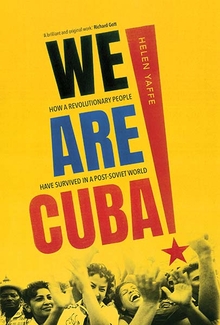
    3472. Book Review: We Are Cuba! How a Revolutionary People Have Survived in a Post-Soviet World

    By Sara Kozameh, Jacobin, January 30, 2021


    The fall of the Soviet Union in 1991 and the consequent demise of its multilateral economic assistance programs shook what had been the socialist world. By the time the USSR voted to formally dissolve, the Council for Mutual Economic Assistance (COMECON) — the economic trading bloc that provided crucial economic assistance and preferential trade agreements to smaller Communist states — had already been dismantled.

    This threw Cuba, COMECON’s only member in the Western hemisphere, into economic turmoil. Nearly overnight, the island nation found itself cut off from its primary trading partner. It lost more than four-fifths of both its import and export markets, which had supplied it with energy, food, and machinery, helping sustain the Cuban economy for over three decades, ever since the start of the US embargo in 1961.

    GDP plunged by 35 percent over the space of three years. Cuban agricultural output fell by 47 percent, construction by 74 percent, and manufacturing capacity by a staggering 90 percent. The lack of fuel imports from abroad paralyzed Cuba’s industries. Lengthy blackouts and food queues became a feature of daily life.

    With no gasoline to power their cars or buses, Cubans had to walk or cycle to their destinations. Lack of electricity meant there were no fans to stave off the sweltering tropical heat — and no way to power refrigerators, either. People’s intake of calories fell by about one-third, as hunger and malnutrition rose to levels not seen since before the 1959 Revolution.

    After the Fall

    Few in the Western world expected Cuba’s political and economic system to survive. History, we were told, had ended; capitalism reigned, while the socialist world was crumbling. It was only a matter of time before the Cuban exception ceased to be exceptional. Yet in Cuba, “history” has continued to plod on.

    Thirty years after the fall of the USSR, the government that emerged from the Cuban Revolution still holds power. It has now existed in the post-Soviet world for longer than it spent under the wing of the Soviets. The distinctive Cuban model has endured, and its leaders still seek to balance the pressures of functioning amidst an overwhelmingly capitalist global system with the objective of advancing a non-capitalist economy that doesn’t follow the same logic.

    In her book We Are Cuba: How A Revolutionary People Have Survived in a Post-Soviet World, Helen Yaffe sets out to explain how Cuba’s model of socialism has held out against such odds. The answer, Yaffe argues, can only be found by taking the Cuban Revolution on its own terms, instead of allowing the residual insularity of US Cold War battles to condition the debate.

    Those who perceive the Cuban system exclusively as a repressive dictatorship are unable to come to terms with the real society that exists — and by some measures, even thrives — beneath the obfuscating layers of political rhetoric. Yaffe aims to provide an economic and policy-based analysis of Cuba’s last thirty years, evaluating the island’s progress and setbacks on the basis of its own objectives.

    The Special Period

    Yaffe’s book identifies several reasons for the persistence of the Cuban model. A willingness to adjust the parameters of centralized government control is one of them. Cubans remember the 1980s as a time of relative abundance and stability. Soviet goods filled store shelves, and workers who met or exceeded production quotas frequently received beach vacations — even international travel.

    From 1981 to 1984, Cuba’s annual average growth was 7.3 percent — starkly at odds with the downwards trajectory in the rest of Latin America. The region as a whole experienced a 10 percent drop in GDP during those years. However, there were a number of challenges associated with managing economic productivity — the growth of excessive bureaucracy, and a focus on providing material incentives for workers that bloated the budget — which eventually led to stagnation.

    In 1986, Fidel Castro opted not to follow in the liberalizing strides of Mikhail Gorbachev’s perestroika and glasnost program in the USSR. Instead, he sought to reform Cuba’s central planning system by recentralizing control over the economy. His government also launched several new platforms for citizen participation and opened the island up to tourism.

    Yaffe argues that this renewed emphasis on state intervention against what the government saw as the inadequacies of the market put Cuba in a better position to withstand the Soviet collapse a few years later. Since the state had recentralized agricultural production, for example, it was able to get food to those who needed it most during the worst years of the crisis — roughly 1991 to 1995 — which became known as the “Special Period” (shorthand for what Castro called the “Special Period in Time of Peace”).

    In explaining how Cuba made it through this crisis, Yaffe also stresses the importance of a “humanistic austerity” as the state’s budget dried up in the early 1990s. Cuban leaders made drastic cuts: state spending on defense, for example, fell by 86 percent, and the government eliminated fifteen ministries altogether. However, it maintained and even increased expenditure on health, welfare, and social services. Subsidies helped ensure that basic goods reached people and protected jobs.

    Broken infrastructure or equipment might have gone unrepaired, but every school and hospital stayed open. The share of GDP accounted for by spending on welfare and health rose by 29 percent and 13 percent, respectively, from 1990 to 1994. The mid-1990s saw the graduation of 15,000 new medical professionals, bringing the doctor-to-patient ratio to one doctor for every 202 inhabitants.Despite the economic collapse, Cuba’s child mortality rates actually dropped, and life expectancy inched up from 75 years in 1990 to 75.6 in 1999. Although an increase of six months may appear trivial, it would have been reasonable to expect a drop under the circumstances — something that did occur in ex-Communist European states like Russia, where life expectancy fell by 6 years between 1991 and 1994.

    Cuba’s fiscal deficit soared as a result of this approach, but it averted the threat of famine. To make up for the lack of imports, Yaffe reports, local food production expanded, ushering in the organic urban farming systems for which Cuba is now widely known. After eight years of state control over agriculture — an attempt to curb price gouging in food supplies — the state allowed private farmers’ markets to reopen.

    By choosing fiscal stimulus over austerity, Cuban economists helped shield the population from some of the most devastating effects of economic collapse. In 1995, economic growth resumed. Although it took ten years to get GDP back to pre-crisis levels, incremental improvements made it easier for people get by. By comparison, recovery from the 2008–9 crash in the US also took nearly a decade, while the recovery period for most ex-Soviet countries was even longer — about fifteen years.

    Innovations

    After making it out of this trough, the Cuban government launched a number of initiatives that were meant to stabilize the economy. The island’s lack of access to fossil-fuel energy had proved catastrophic in the 1990s; in the 2000s, it still experienced constant blackouts. In 2006, the government began pursuing alternative development strategies and making large-scale investments in renewable energy.

    In a series of chapters, Yaffe describes the development of job training programs that turned unemployed young Cubans into social workers, an “Energy Revolution” that reduced wasteful practices and expanded the use of renewables, and ensured the country’s successful entrance into the biotechnology industry. Yaffe argues that such programs allowed Cuba to get back onto a path of economic growth, which in turn enabled it to improve the standard of living.

    Cuba’s commitment to international solidarity has also paid off. Cuban medical internationalism is now the island’s principal export, bringing in $6.4 billion in 2018. This practice goes back a long way, well before it was a source of national income. In 1960, Cuba dispatched a disaster response brigade to Chile following a devastating earthquake. It then sent doctors to Algeria during that country’s independence struggle, and later to North Vietnam and central Africa. By the end of the 1960s, Cuban medics were working in twelve different countries.

    Over the decades that followed, Cuba expanded its programs for overseas medical assistance, training tens of thousands of foreign students to become doctors at no charge. In many countries, Cuban doctors helped eliminate diseases like polio, malaria, and dengue, saving thousands of lives.

    This has become a key plank of Cuban foreign policy, directly challenging established notions of the medical profession and the function of development aid in the leading capitalist states. While Cuba does now receive payment for its medical assistance, its commitment to providing free healthcare abroad still endures: nearly half of the sixty-two countries that housed Cuban medical brigades in 2017 paid nothing for their services.

    Many Cubans remember the early 1990s not only as a time of long queues and unfilled stomachs, but also as one that produced new ideas and activities. As the old saying goes, necessity is the mother of invention. But Yaffe argues that a commitment to socialist principles has also fostered such innovation, favoring models for sustainable development that prioritize human wellbeing.

    Cuba’s state-led, centrally planned approach to medicine, for example, contrasts with the growth of profit-making healthcare services in the wealthiest capitalist countries — even those that had previously established public systems of provision. The small island’s current efforts to develop and complete clinical trials for a COVID-19 vaccine rival those of its vast northern neighbor.

    Politics in Cuba

    The portrait of Cuban society presented in We Are Cuba will be unfamiliar to readers who rely on the mainstream press in the US. Yaffe believes that Cuba’s variety of socialism has survived in part because the island has a dynamic citizenry, many of whom are committed to socialist ideals and willing to participate in efforts to advance them.

    There is, of course, a long-running and bitter debate about the nature of Cuba’s one-party state, and whether its existence means that the Cuban people have no say over their own lives. The author challenges those who consider the Cuban political system to be a priori illegitimate and undemocratic, insisting that its electoral process is in fact characterized by “grassroots representation and participation in decision-making.” According to Yaffe, public engagement in local administration through a number of state-led organizations strengthened bonds among Cuba’s citizens and renewed a sense of community that was critical to its post-Soviet survival.

    After Fidel Castro stepped down in 2006, his brother Raúl took over as head of government and introduced structural reforms that were designed to address problems like dependence on food imports, low wages, and poor productivity. Instead of pushing through these measures in a unilateral manner, Yaffe argues, the government launched a series of forums and debates that sought to engage all sections of Cuban society, aiming to get a sense of what reforms were considered necessary or desirable, and what kind of changes would be broadly acceptable.

    Yaffe describes a similar process that took place in 2011 when the Cuban Communist Party held its Sixth Congress. Several million Cubans took part in consultations that drew up a set of guidelines for updating the national economy, considering proposals to eliminate the ration book, reform pricing, and improve the quality of services like health, education, and transport.

    The lengthy process of consultation and debate included 163,000 meetings held locally by residential, political, and workplace groups. It registered over three million opinions and organized them into 780,000 distinct recommendations. Before the Congress took place, 68 percent of the guidelines had been revised, while 45 proposals were rejected.

    A national debate to write a new constitution began in 2013. Proposals for the constitution included reforms in the areas of private business and property ownership, age limits and term limits for government positions, and decentralization of administrative and political structures. In July 2018, the National Assembly of People’s Power released a draft of the constitution for two months of debate.

    Yaffe describes Cuban citizens attending assemblies with annotated copies of the draft, demonstrating their level of engagement. A month in, three print editions had been sold out, with requests for additional copies arriving from the most remote mountainous regions. Social media became a space for critical views; some of the strongest criticism came from evangelical groups that opposed recognition of same-sex marriage.

    In 2019, after substantial revisions to the draft, 87 percent of voters — 6.8 million people — voted to ratify the new constitution. While the final draft retained Cuba’s commitment against capitalism and the one-party state, it introduced reforms to the way it functions, such as presidential term limits and the right to legal representation upon arrest.

    Meanwhile, the lack of independent trade unions and constraints on civil liberties are at least two areas of democratic deficiency identified by Cuba’s critics. The yardstick that Yaffe uses purposely leaves those types of critiques out of her assessment. And to be fair, there are many other elements of capitalist democracy that Cuba doesn’t have: hedge funds, corporate control over the economy, and endemic homelessness, for example.

    If the Cuban system has endured, Yaffe shows, it is because enough people on the island have continued to engage and identify with it. And whether or not people agree with Yaffe’s largely positive evaluation of that system, it’s vital to acknowledge the context that has shaped it.

    Since 1959, there have been credible threats of invasion from the US at several points, along with other forms of violence orchestrated by Washington and a debilitating economic blockade that has been in place for more than half a century. During the same time period, left-wing governments elsewhere in Latin America have repeatedly been ousted by force, from Chile in 1973 to Bolivia in 2019. If the US ceased to apply such overweening pressure and recognized the right of a vastly weaker nation to follow its own course, it would change the political calculus in Cuba.

    A State-Centered View

    While Yaffe’s book seeks to correct some important misconceptions about Cuba, it also raises a series of questions. How, for example, can we explain the large numbers of young Cubans who want to emigrate? It’s true that the US economic blockade is a major cause of Cuba’s deprivations (and as Yaffe points out, rates of defection among Cubans who work and travel abroad — doctors and sports players, for example — are actually quite low).

    Yet if Cuban socialism has survived by combining innovative policies with popular participation and support, as the author suggests, then what accounts for the seeming abandonment of the revolutionary project by many young people — the very people who came of age during the period upon which the book focuses?

    We Are Cuba tackles a wide range of subjects, but in many ways, it is a portrait of post-Soviet Cuba as seen from the vantage point of the Cuban state. Many of the sources and voices cited by Yaffe are Cuban diplomats, professionals, and government officials. The book offers less insight into how Cubans have experienced the last three decades of crisis, recovery, and reform on an everyday basis, or into the question of whether and to what extent their relations with the state have become more strained. It does, however, contain some important perspectives on Cuba’s trajectory from those who support the system.

    Yaffe could have strengthened the message of her book by interrogating some of the categories it deploys. There are multiple references in the text to a rather amorphous group called “the revolutionary people of Cuba,” a label that comes across as passive and formulaic when the author clearly does not mean it to be either. Cuban society is not static or unchanging; like that of any other country, it is dynamic and complex. Its government has critics and supporters alike, and not all Cubans are “revolutionary.”

    Treating everyone on the island as if they belonged to a single revolutionary monolith flattens out the real stories of hardship and endurance over the past thirty years. The Cuban government is now trying to figure out how to respond to the new demands of a vibrant civil society, whose members are not necessarily less committed or less socialist in their outlook.

    Towards the end of 2020, for example, there were protests against the detention of the rapper Denis Solís by several hundred artists and intellectuals: some oppose the Cuban system outright, while others want that system to be reformed, retaining a commitment to socialism while ending what they view as arbitrary detention and censorship.

    The Road Ahead

    We Are Cuba fills an important gap for readers outside the country who mostly lack basic information about how its leaders have navigated a unique set of challenges since 1991, showing how government policies have developed over time in impressive detail. Yet many more challenges lay ahead.

    The reinsertion of Cuba’s economy into the global capitalist market and subsequent liberalizing reforms have led to the return of the US dollar and with it, growing inequality. Yaffe describes the Cuban government as being concerned to balance a commitment to equity and social justice with the introduction of new market mechanisms, while not succumbing to capitalism altogether — no easy task when US sanctions, embargoes and political threats still keep the island very much under siege.

    Cuba also has to deal with the COVID-19 crisis, the tightening in recent years of US sanctions that were already harsh, and the potential economic fallout from plans to unify the double currency, which may result in devaluation of the peso. Its government also plans to finally eliminate the ration book, which has guaranteed basic food supplies to all Cubans, regardless of income, since 1963.

    Despite the limitations that have been imposed upon it from abroad, Cuba has still managed to forge its own path in a post-Soviet world to a greater extent than most people would have thought possible in the early 1990s. Yaffe’s book should prompt readers to wonder what it might achieve without the burden of US intransigence — if the island finally had the opportunity to prosper rather than simply survive.

    Wednesday, January 27, 2021

    3471. House Cat Origin Traced to Middle Eastern Wildcat Ancestor

    By Brian Handwerk, National Geographic, June 18, 20007

    Cat fanciers have long known that their feline friends have wild origins.

    Now scientists have identified the house cat's maternal ancestors and traced them back to the Fertile Crescent.

    The Near Eastern wildcat still roams the deserts of Israel, Saudi Arabia, and other Middle Eastern countries. Between 70,000 and 100,000 years ago the animal gave rise to the genetic lineage that eventually produced all domesticated cats.

    "It's plausible that the ancient [domestic cat] lineages were present in the wildcat populations back as far as 70,000 or 100,000 years ago," said study co-author Stephen O'Brien of the National Cancer Institute in Frederick, Maryland.

    The wildcats may have been captured around 10,000 or 12,000 years ago when humans were settling down to farming, he added.

    "One of nearly 40 wild cat species existing at that time, the little wildcat that lived in the Middle East had a genetic variance that allowed it to sort of try an experiment—let's walk in and see if we can get along with those people," O'Brien said.

    One Hell of an Experiment

    A research team led by geneticist Carlos Driscoll of the National Cancer Institute and scientists at the University of Oxford in England found five matriarchal lineages to which modern domestic cats belong.

    "This tells us that domestic cats were sort of widely recruited, probably over time and space," Driscoll said.

    But people probably weren't going out and catching—or herding—cats.

    "The cats just sort of domesticated themselves. People today know that you can't keep a cat inside [without barriers], and 10,000 years ago in the Fertile Crescent you couldn't just shut the window."

    Farmers were likely the first to domesticate wildcats. The animals may have been helpful in hunting mice and other pests that plagued farm fields in the early human settlements, which had just sprang from the first agricultural development.

    Agriculture led to cities and towns, as well as a new ecological environment that cats were able to exploit.

    There are some 600 million house cats around the world, study co-author O'Brien added.

    "Domestication was one hell of a successful natural experiment."

    Cats on the Move

    Once the formerly wild felines became household companions, the same cats appear to have accompanied human tribes as they gradually migrated and spread throughout the ancient world. (Related: Check out our ancestors' journey.)

    "It's sort of analogous to the 'out of Africa' theory that people talk about for humans," Driscoll said. "In the same way, domestic cats from Europe are really the same as domestic cats from Israel or China or wherever."

    The earliest archaeological evidence for domestic cats has been found in Cyprus and dates back approximately 9,500 years.

    Cat studies of all types are hindered by the many physical and behavioral similarities between domestic cats and their wild relatives. In fact, it is often difficult or impossible for even the trained eye to tell them apart, and interbreeding has created many hybrids of the two.

    Genetic Clues

    Driscoll's study began because genetics may be one of the only ways to determine which cats are truly wild. His group managed to successfully herd about a thousand wild and domestic cats and sample their DNA to produce the genetic study, which will appear in tomorrow's issue of the journal Science.

    In search of cats' wild ancestor, the team studied modern wildcat subspecies including the Near Eastern wildcat, the European wildcat, the Central Asian wildcat, the southern African wildcat, and the Chinese desert cat.

    The sampling of feline genes revealed that the Near Eastern wildcat and domestic cats fell into the same genetic clade, a group of species with the same ancestor. This meant the ancient ancestors of the wildcats were likely the first cats to be domesticated.

    The genetic diversity of living cats revealed that they must have existed for some 70,000 to 100,000 years to produce that degree of diversity.

    Thursday, January 21, 2021

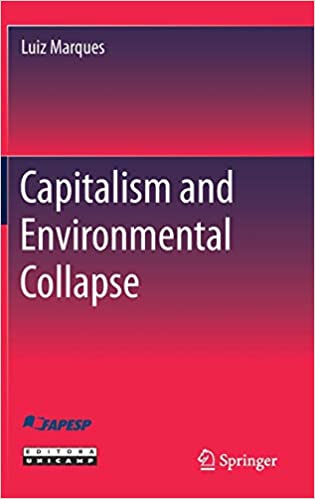
    3470. Book Review: Capitalism and Environmental Collapse

    By Frank Kaminski, Mud City Press, January 19, 2021


    Capitalism and Environmental Collapse is an exhaustive summary of today’s plethora of existential ecological threats, followed by an equally comprehensive discussion of what author Luiz Marques deems to be the core fallacies at their root. Part one meticulously surveys the states of the world’s forests, water, soil, and biodiversity; the extent of human-made waste, industrial intoxication, and fossil fuel exploitation; and the increasingly clear signs of severe, abrupt climate change. Part two makes a detailed case for adopting “a new social contract founded on a natural contract,” one aimed at conferring substantive rights to the nonhuman world. Marques shows through innumerable concrete examples that the time for considering such a proposal is long overdue. Still, even the most belated journey is best undertaken with the aid of an assiduously researched and cogent reference such as Marques supplies here.

    As its title suggests, the book argues, in part, that capitalism is inherently incapable of attaining sustainability. The basic tenets of this indictment are hardly new, acknowledges Marques. Numerous others have pointed out that, because the survival of capitalistic economies requires ceaseless expansion, the term “sustainable capitalism” is an oxymoron. Additionally, plenty have argued that the blame for our planet’s ever-accelerating progression toward biological impoverishment can be wholly laid at the proverbial feet of capitalism. And it’s well understood at this point that, quite apart from any attempts at reform on the part of human societies, the rules of the capitalist game are inexorably changing due to the increasingly heavy economic burden of its deleterious externalities. What Marques succeeds in doing is adding further ammunition to these and other well-founded charges against capitalism.

    Part one abounds with examples of the runaway nature of our predicament. Not many years ago, recounts Marques, experts believed that events such as a global warming of 2°C above pre-industrial levels or beyond, the vanishing of several tropical forests and the Arctic Ocean’s first iceless September were likely to occur by the end of this century. By 2018 (the year in which this book’s previous, Portuguese edition was released), the middle of the century had come to seem more probable. Now the timeline has been compressed to the second quarter of this century—in other words, as soon as a few years from now. Thus, the author seems justified in stating that “[a]cceleration is maybe the most defining feature of our time.”

    It’s difficult to pick a most disturbing case among the countless horrors of modern-day capitalism encapsulated by Marques. Still, some top contenders would have to be the water scarcity affecting two-thirds of humanity, the orders-of-magnitude increase in plastic pollution projected to occur by 2025, the more than 44% jump in new cancer cases seen worldwide between 2012 and 2018, the collapse in both terrestrial and aquatic biodiversity and the Amazon’s ongoing transformation from rainforest to open grassland. Consider also the facts that air pollution in many cities has grown severe enough that breathing is as harmful as smoking, that complete male infertility across the developed world could occur within the next half century due to industrial fertilizer and pesticide exposure, and that neurodevelopmental disabilities could become so much the norm that humans might lack the intelligence to undo the chemical pollution responsible for stunting their brains.

    These and many other dire modern-day realities provide compelling support to one of the author’s chief arguments, which is that the age-old, seemingly commonsense equation “more surplus = more security” no longer holds true. It did for millennia, which is why it became so ingrained in our collective mindset. In the present era, however, the equation has been inverted, so that now more surplus equals less security, whether in the form of a disrupted climate system, a ravaged biosphere or a human race poisoning itself out of existence. The greater the surpluses, the greater the accompanying impacts on the planetary life support system. Marques deems the inability of most people to grasp this new equation to be “the main cognitive obstacle to widespread awareness of the environmental deadlock that threatens us.”

    Marques explains how our society’s continued belief in the old equation leads to the writing off of grim ecological wake-up calls as mere collateral effects of an ultimately beneficent industrial system. Even those who appear to take such threats seriously tend to relegate them to the status of “problems” to be solved through ever-greater applications of the very surpluses that caused them, courtesy of technological innovation, efficiency gains and other improvements that have traditionally accompanied continuous growth economics. It’s common to imagine that various yet-to-be-invented geoengineering “solutions” hold the key to ensuring humanity’s future security. But Marques, ever the exemplar of precautionary thinking, counters this tenuous faith with the unassailable observation that “the only geoengineering that is known, effective, and safe is to try to drastically reduce anthropic interference on ecosystems.”

    With respect to the future availability of petroleum—the main fuel that has enabled the industrial era’s surpluses—Marques assumes an agnostic position. “To my knowledge,” he writes, “it is not possible to foresee the future of oil supply.” Marques goes on to weigh two potential scenarios: one in which oil grows scarce within the foreseeable future, and another in which it remains abundant for perhaps another 50 years. He rightly concludes that the second scenario would be far more damaging than the first, as it would cause a collapse of the global environment rather than merely that of the global economy. While his argument is well-reasoned overall, it doesn’t seem to take into account one factor that would tend to favor a near future of energy scarcity: the extreme financial woes that U.S. tight oil producers have incurred as a result of bringing online this staggeringly costly, hitherto unconventional source of oil.

    The author allows that a sustained decrease in fossil fuel burning—whether by choice or from scarcity—could, in theory, permit us to avert an upheaval of the Earth’s climate. He points to a study suggesting that if CO2 emissions were to drop below current levels by 2030 and then continue decreasing, we could potentially limit the rise in global temperatures to less than 2° C, a target widely seen as necessary to avoid the worst impacts of climate change. However, he sensibly rules out a voluntary ratcheting down of fossil fuel consumption, given our society’s weak political resistance to corporations vested in fossil fuel production, as well as the growing power and influence exerted by these same corporations. Thus, he informs us that, barring an imminent decline in the geological availability of fossil fuels, numerous projections have us breaching the 2° C threshold as soon as 2035 to 2045.

    He reports that if the current rate of increase in atmospheric CO2 concentrations is maintained, we’re headed for a global average temperature rise of 3° C to 4° C by the mid-2060s, an increase thought to be incompatible with civilization as we know it. In laying out the possible consequences of hitting such an alarming milestone, Marques presents a number of worst-case scenarios that the Intergovernmental Panel on Climate Change (IPCC) doesn’t consider in its analyses. The IPCC’s blind spot, according to Marques, is that it doesn’t think in terms of systems. It fails to take full account of positive climate feedbacks and tipping points, since these are difficult to capture in models. These worst-case scenarios include, among other things, an exponential sea level rise and the possibility of a runaway greenhouse effect that would cause Earth to revert to a “hothouse” state last seen millions of years ago.

    This review has so far covered two of the three “concentric illusions” that Marques sees as driving us toward socio-environmental collapse: the belief that capitalism can be sustainable and the assumption that more surplus equates to more security. The third concentric illusion noted by Marques is the anthropocentric delusion that “the biosphere is a means to an end and that the right to reduce it to an energy apparatus for human benefit is rooted in the singularity of our species or in a radical discontinuity between us and the web of life.” In his takedown of this idea, Marques cites a wealth of pointed examples showing how badly it has backfired on us as a result of our being an inextricable part of the natural world we’ve been so heedlessly subjugating.

    Marques maintains that the only way for human societies to avoid socio-environmental collapse is for them to free themselves of their current rule by corporate interests. In order to do this, he argues, they must adopt radical new forms of democratic government and allow public policy and practice to be guided by scientific consensus. Addressing humanity’s ecological crisis is outside the capacity of the entity that currently governs human affairs—a merging of the national state and the corporation that Marques refers to as the “state-corporation”—since to this entity, all considerations other than maximizing profit are secondary.

    Though a detailed policy proposal is beyond the scope of Marques’ book, the final chapter manages to cover a great deal of fruitful ground in its 15 pages, from the need to decentralize economic activity and strengthen shared global governance, to the failings of nationalism and absolute national sovereignty, to the notion of a natural contract. And there’s certainly no arguing with his parting observation that while a wholesale abandonment of global capitalism and an acceptance of ecological limits might seem like fantasy, human societies have no alternative if they are to survive beyond the next few decades.