By Jeremy Lent, Resilience, May 9, 2019
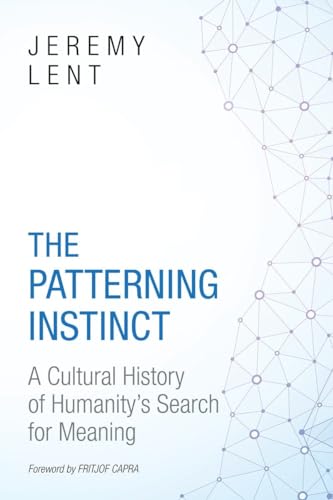 Resilience editor's note: Excerpted from the final two chapters of Jeremy Lent’s award-winning book, The Patterning Instinct: A Cultural History of Humanity’s Search for Meaning,
(Prometheus, 2017) which explores the different ways cultures have
patterned meaning into the cosmos, and reveals how various worldviews
arose and shaped the course of history. The book uncovers the hidden
foundations of our modern unsustainable worldview, and offers a potential vision for a more harmonious future. Jeremy is founder of the nonprofit Liology Institute, dedicated to fostering an integrated worldview that could enable humanity to flourish sustainably on the earth. More info: jeremylent.com.
The easily identifiable forces propelling humanity on its current course are the special interests that gain financially and politically – at least, in the short-term – from continued economic growth and use of fossil fuels. Hundreds of millions of dollars are spent annually in political lobbying and funding for those who deny the threat of anthropogenic climate change. They currently exert enough power over the U.S. legislative process to thwart meaningful legislation at the national level.
However, even without these special interests, some structural characteristics of our global system make it very difficult to change direction. One of these is known as technological lock-in: the fact that, once a technology is widely adopted, an infrastructure is built up around it, making change prohibitively expensive. A frequently cited example is the QWERTY keyboard, which was originally designed for its inefficiency, in an attempt to slow down the rate of typing and therefore prevent early typewriter keys from hitting each other. More efficiently laid out keyboards can double typing speeds, and yet it has been impossible for them to make inroads because everyone is used to the older, inefficient design. In the case of fossil fuels, an obvious example of technological lock-in is the network of gas stations for vehicles with conventional engines. Any new electric car technology has an uphill battle to create a competing network, even if its vehicles offered equivalent performance.
These technological challenges can be overcome with enough investment. A far greater obstacle to meaningful change is financial lock-in: the financial infrastructure underlying the fossil fuel-based economy. Fossil fuel corporations are valued primarily on the basis of their proven coal, oil and gas reserves. However, for the world to keep global warming to 2 degrees, the oil companies could only use about one fifth of their reserves. These corporations would experience drastic declines in market value if the world were to make a serious commitment to rein in global warming. Given the overriding corporate objective of maximizing financial returns, their executives have a powerful incentive to steer the public debate away from this issue.
Beyond the narrow interests of the fossil fuel industry, the entire capitalist economy is founded on perpetual growth. In aggregate, world stock markets are valued on the same growth assumptions that predict a quadrupling of the global economy by mid-century. Business leaders fret that if a concerted attempt were made to reduce this growth trajectory, it might lead to a spiraling decline in valuations, possibly even to the collapse of the capitalist system. Additionally, in the arena of geopolitical rivalry, the power of a nation relative to others is substantially based on economic strength. Leaders fear that if their nation unilaterally chose to reduce its own growth to a more sustainable level, this would reduce its ability to protect its national interests.
This self-defeating collective dynamic, known in economics as the “tragedy of the commons,” highlights a crucial flaw in capitalist ideology: the notion that it is inevitably beneficial for society when each person seeks to maximize his own gain. Underlying this notion is an even more fundamental defect of classical economic theory: the assumption that nature is inexhaustible. When the framework of modern economics was developed in the 18th century, it seemed reasonable to view natural resources as unlimited because, for all intents and purposes, they were. Economists therefore treated minerals, trees, and water as commodities to be sold at a price that was simply the cost of extracting and marketing them. As we’ve seen, the experience of the past fifty years has proven that assumption to be wrong. In the words of systems theorist Kenneth Boulding: “Anyone who believes exponential growth can go on forever in a finite world is either a madman or an economist.”
In spite of this obvious and fundamental flaw, classical economic theory continues to be used around the world as the driving force for decisions made by corporations, policy makers and governments. How can that be? Environmental historian J. R. McNeill offers an explanation: “When an idea becomes successful, it easily becomes even more successful: it gets entrenched in social and political systems, which assists in its further spread. It then prevails even beyond the times and places where it is advantageous to its followers.” This is another form of lock-in: ideological. “Big ideas,” McNeil observes, “all became orthodoxies, enmeshed in social and political systems, and difficult to dislodge even if they became costly.”
This pattern has become so embedded into the global construction of meaning that most people accept it without question. Those fortunate enough to possess more money than others gain more in the short-term on the treadmill of temporary satisfaction. However, the ultimate beneficiaries are not human at all, but rather the conceptual creations called corporations, which exist collectively to transform the human experience and the natural world into the monetized economy, regardless of the ultimate effect on humanity as a whole.
How did this cognitive pattern achieve such success? We’ve seen that, beginning with the “mind-cure” movement of the late nineteenth century, a consumption-based ideology served to redress a lack of meaning in people’s lives, replacing an inner void resulting from the uniquely Western mode of dualistic cognition with the consumerist frenzy of capitalism.
In more integrative patterns of cognition, such as traditional Chinese thought or indigenous cultures, a person’s relationship to their community and the natural world satisfied the drive of their patterning instinct to find meaning in life. In the prescientific Christian era, as in Islamic civilization, the belief in a transcendent God infused meaning into people’s lives, even though it led to the bifurcated experience that continues to cause so much suffering. However, in our mainstream modern value system, the separation from the desacralized natural world – created by the Greeks, systematized by Christianity and endorsed by science – is complete.
Where does this leave us? Is there a way our civilization can somehow be steered to achieve a sustainable path for humanity’s future – a path where progress might mean something other than re-engineering humanity and consuming the earth?
A Great Transformation would need to be founded on a worldview that could enable humanity to thrive sustainably on the earth into the future. In place of root metaphors such as nature as a machine and conquering nature, the new worldview would be based on the emerging systems view of life, recognizing the intrinsic interconnectedness between all forms of life on earth, and seeing humanity as embedded integrally within the natural world.
Three core values emerge from this worldview. The first is an emphasis on quality of life rather than material possessions. In place of the global obsession with defining progress in terms of economic output and material wealth, we would begin to prioritize progress in the quality of our lives, both individually and in society at large. Secondly, we would base political, social and economic choices on a sense of our shared humanity, emphasizing fairness and dignity for all rather than maximizing for ourselves and our parochially defined social group. Finally, we would build our civilization’s future on the basis of environmental sustainability, where the flourishing of the natural world is a foundational principle for humanity’s major decisions.
What’s more, the values of the Great Transformation are already held by large segments of the world’s population. Environmental activist Paul Hawken has estimated that there are more than a million organizations worldwide, both large and small, engaged in humanitarian causes. This dispersed and unstructured grouping of concerned citizens constitutes, in his mind, “the largest social movement in all of human history.”
The potential impact of this social movement is increased by the power of the internet to amplify each individual group’s effectiveness through its networked connectivity. Hawken points to Metcalfe’s Law, which states that the usefulness of a network grows exponentially when its connections grow arithmetically. In this way, the collective action of small groups of individuals can potentially become a global force to countervail the massive corporate networks that currently dominate global civilization. The global culture emerging from the internet offers humanity a view of itself as an interconnected whole, inviting people to see themselves as part of a web of life encompassing the entire world.
The ease with which the internet transmits ideas across the world means that, when the time comes, the transformation of global consciousness could occur at a speed which might surprise everyone. It is part of our evolved human nature to stick together with our group’s attitudes or opinions, even when a changing situation leaves those attitudes out of date, which can frequently cause social rigidity and political inertia. When thought leaders emerge offering new ways of thinking, they gradually attract increasing numbers of people until a tipping point is reached, when the “stickiness” that kept people attached to their old pattern of thinking is superseded by the pull of the new ideas. All of a sudden, the gradual shift in ideas becomes an avalanche when those who are most comfortable sticking together find themselves in a rush to join in the new way of thinking. In the age of the internet, this tipping point can conceivably be reached much more rapidly than in the past.
It’s a relay race against time in which every one of us is part of the team. What is ultimately required is a shift towards a new way of finding meaning from our existence. Many visionaries and deep thinkers today recognize the need for a new global consciousness, based on an underlying and all-infusing sense of connectedness. The meaning we derive must arise from our connectedness if we are to succeed in sustaining our civilization into the distant future: connectedness within ourselves, to other humans, and to the entire natural world.
Resilience editor's note: Excerpted from the final two chapters of Jeremy Lent’s award-winning book, The Patterning Instinct: A Cultural History of Humanity’s Search for Meaning,
(Prometheus, 2017) which explores the different ways cultures have
patterned meaning into the cosmos, and reveals how various worldviews
arose and shaped the course of history. The book uncovers the hidden
foundations of our modern unsustainable worldview, and offers a potential vision for a more harmonious future. Jeremy is founder of the nonprofit Liology Institute, dedicated to fostering an integrated worldview that could enable humanity to flourish sustainably on the earth. More info: jeremylent.com.Ideological lock-in
The reasons our civilization continues hurtling towards a precipice are multi-layered. There are some readily identifiable factors; underpinning these are certain structural characteristics of our global system that lock in our current momentum; and underlying these are cognitive frames – mostly concealed – that form the basis for our collective behavior. Each of these layers must be addressed to make a meaningful course correction.The easily identifiable forces propelling humanity on its current course are the special interests that gain financially and politically – at least, in the short-term – from continued economic growth and use of fossil fuels. Hundreds of millions of dollars are spent annually in political lobbying and funding for those who deny the threat of anthropogenic climate change. They currently exert enough power over the U.S. legislative process to thwart meaningful legislation at the national level.
However, even without these special interests, some structural characteristics of our global system make it very difficult to change direction. One of these is known as technological lock-in: the fact that, once a technology is widely adopted, an infrastructure is built up around it, making change prohibitively expensive. A frequently cited example is the QWERTY keyboard, which was originally designed for its inefficiency, in an attempt to slow down the rate of typing and therefore prevent early typewriter keys from hitting each other. More efficiently laid out keyboards can double typing speeds, and yet it has been impossible for them to make inroads because everyone is used to the older, inefficient design. In the case of fossil fuels, an obvious example of technological lock-in is the network of gas stations for vehicles with conventional engines. Any new electric car technology has an uphill battle to create a competing network, even if its vehicles offered equivalent performance.
These technological challenges can be overcome with enough investment. A far greater obstacle to meaningful change is financial lock-in: the financial infrastructure underlying the fossil fuel-based economy. Fossil fuel corporations are valued primarily on the basis of their proven coal, oil and gas reserves. However, for the world to keep global warming to 2 degrees, the oil companies could only use about one fifth of their reserves. These corporations would experience drastic declines in market value if the world were to make a serious commitment to rein in global warming. Given the overriding corporate objective of maximizing financial returns, their executives have a powerful incentive to steer the public debate away from this issue.
Beyond the narrow interests of the fossil fuel industry, the entire capitalist economy is founded on perpetual growth. In aggregate, world stock markets are valued on the same growth assumptions that predict a quadrupling of the global economy by mid-century. Business leaders fret that if a concerted attempt were made to reduce this growth trajectory, it might lead to a spiraling decline in valuations, possibly even to the collapse of the capitalist system. Additionally, in the arena of geopolitical rivalry, the power of a nation relative to others is substantially based on economic strength. Leaders fear that if their nation unilaterally chose to reduce its own growth to a more sustainable level, this would reduce its ability to protect its national interests.
This self-defeating collective dynamic, known in economics as the “tragedy of the commons,” highlights a crucial flaw in capitalist ideology: the notion that it is inevitably beneficial for society when each person seeks to maximize his own gain. Underlying this notion is an even more fundamental defect of classical economic theory: the assumption that nature is inexhaustible. When the framework of modern economics was developed in the 18th century, it seemed reasonable to view natural resources as unlimited because, for all intents and purposes, they were. Economists therefore treated minerals, trees, and water as commodities to be sold at a price that was simply the cost of extracting and marketing them. As we’ve seen, the experience of the past fifty years has proven that assumption to be wrong. In the words of systems theorist Kenneth Boulding: “Anyone who believes exponential growth can go on forever in a finite world is either a madman or an economist.”
In spite of this obvious and fundamental flaw, classical economic theory continues to be used around the world as the driving force for decisions made by corporations, policy makers and governments. How can that be? Environmental historian J. R. McNeill offers an explanation: “When an idea becomes successful, it easily becomes even more successful: it gets entrenched in social and political systems, which assists in its further spread. It then prevails even beyond the times and places where it is advantageous to its followers.” This is another form of lock-in: ideological. “Big ideas,” McNeil observes, “all became orthodoxies, enmeshed in social and political systems, and difficult to dislodge even if they became costly.”
Humanity’s search for meaning
Our modern world is the result of the runaway success of one of the most powerful cognitive patterns in history. Capitalism triumphed over competing ideologies with its seductive precept that by selfishly pursuing their own financial gain, each person was contributing to the greater benefit of society. With the advent of consumerism, capitalism instilled an intoxicating new purpose into people’s lives, promising them that their feelings of emptiness, meaninglessness or alienation could be cured through the possession and conspicuous use of manufactured goods. No matter that the “cure” was only temporary: through hard work and dedication, one could earn more money to purchase even more goods, thus stepping on to the hedonic treadmill.This pattern has become so embedded into the global construction of meaning that most people accept it without question. Those fortunate enough to possess more money than others gain more in the short-term on the treadmill of temporary satisfaction. However, the ultimate beneficiaries are not human at all, but rather the conceptual creations called corporations, which exist collectively to transform the human experience and the natural world into the monetized economy, regardless of the ultimate effect on humanity as a whole.
How did this cognitive pattern achieve such success? We’ve seen that, beginning with the “mind-cure” movement of the late nineteenth century, a consumption-based ideology served to redress a lack of meaning in people’s lives, replacing an inner void resulting from the uniquely Western mode of dualistic cognition with the consumerist frenzy of capitalism.
In more integrative patterns of cognition, such as traditional Chinese thought or indigenous cultures, a person’s relationship to their community and the natural world satisfied the drive of their patterning instinct to find meaning in life. In the prescientific Christian era, as in Islamic civilization, the belief in a transcendent God infused meaning into people’s lives, even though it led to the bifurcated experience that continues to cause so much suffering. However, in our mainstream modern value system, the separation from the desacralized natural world – created by the Greeks, systematized by Christianity and endorsed by science – is complete.
Where does this leave us? Is there a way our civilization can somehow be steered to achieve a sustainable path for humanity’s future – a path where progress might mean something other than re-engineering humanity and consuming the earth?
The Great Transformation
In order to navigate toward a future of sustainable flourishing, the economic system driving our current trajectory would need to be transformed, along with its underlying values: the pursuit of never-ending material growth and the glorification of humanity’s conquest of nature. Could such a drastic transformation of our global system really take place in the foreseeable future?A Great Transformation would need to be founded on a worldview that could enable humanity to thrive sustainably on the earth into the future. In place of root metaphors such as nature as a machine and conquering nature, the new worldview would be based on the emerging systems view of life, recognizing the intrinsic interconnectedness between all forms of life on earth, and seeing humanity as embedded integrally within the natural world.
Three core values emerge from this worldview. The first is an emphasis on quality of life rather than material possessions. In place of the global obsession with defining progress in terms of economic output and material wealth, we would begin to prioritize progress in the quality of our lives, both individually and in society at large. Secondly, we would base political, social and economic choices on a sense of our shared humanity, emphasizing fairness and dignity for all rather than maximizing for ourselves and our parochially defined social group. Finally, we would build our civilization’s future on the basis of environmental sustainability, where the flourishing of the natural world is a foundational principle for humanity’s major decisions.
The movement for a shared humanity
It may sound impossibly idealistic that the view of humanity as a sharing community could form the basis for a worldwide shift in ideology, but many historical examples show how powerful this vision can be. The abolitionist movement of the 19th century succeeded in putting an end to slavery, which had previously been seen as integral to the global economy. In more recent decades, movements have fought for the preservation of the natural world. When Rachel Carson published her exposé of the indiscriminate use of pesticides in 1962, her solitary stand was denounced as hysterical and unscientific. Only eight years later, at the first Earth Day in 1970, twenty million Americans marched to protect the environment, and by 1990 two hundred million people in 141 countries across the world were demonstrating for the earth.What’s more, the values of the Great Transformation are already held by large segments of the world’s population. Environmental activist Paul Hawken has estimated that there are more than a million organizations worldwide, both large and small, engaged in humanitarian causes. This dispersed and unstructured grouping of concerned citizens constitutes, in his mind, “the largest social movement in all of human history.”
The potential impact of this social movement is increased by the power of the internet to amplify each individual group’s effectiveness through its networked connectivity. Hawken points to Metcalfe’s Law, which states that the usefulness of a network grows exponentially when its connections grow arithmetically. In this way, the collective action of small groups of individuals can potentially become a global force to countervail the massive corporate networks that currently dominate global civilization. The global culture emerging from the internet offers humanity a view of itself as an interconnected whole, inviting people to see themselves as part of a web of life encompassing the entire world.
The ease with which the internet transmits ideas across the world means that, when the time comes, the transformation of global consciousness could occur at a speed which might surprise everyone. It is part of our evolved human nature to stick together with our group’s attitudes or opinions, even when a changing situation leaves those attitudes out of date, which can frequently cause social rigidity and political inertia. When thought leaders emerge offering new ways of thinking, they gradually attract increasing numbers of people until a tipping point is reached, when the “stickiness” that kept people attached to their old pattern of thinking is superseded by the pull of the new ideas. All of a sudden, the gradual shift in ideas becomes an avalanche when those who are most comfortable sticking together find themselves in a rush to join in the new way of thinking. In the age of the internet, this tipping point can conceivably be reached much more rapidly than in the past.
Choosing our future
What would the latter part of this century look like if our global civilization took the path of a Great Transformation? It’s likely we’d see a reorganized United Nations, with powers to enforce a more responsible approach to our global commons, such as the oceans, the atmosphere and the environment. When corporations and governments make investment decisions, they’d explicitly factor the externalities of the natural world into their cost/benefit analyses. While there would still be massive income inequality between rich and poor nations, that gap would be decreasing as a result of economic structures based on fairness rather than untrammeled exploitation. And the flourishing of the natural world would be given a high priority in global decision making. There might even be an enforceable UN Declaration of the Rights of Nature, putting the natural world on the same legal standing as humanity.It’s a relay race against time in which every one of us is part of the team. What is ultimately required is a shift towards a new way of finding meaning from our existence. Many visionaries and deep thinkers today recognize the need for a new global consciousness, based on an underlying and all-infusing sense of connectedness. The meaning we derive must arise from our connectedness if we are to succeed in sustaining our civilization into the distant future: connectedness within ourselves, to other humans, and to the entire natural world.