Showing posts with label Green Capitalism. Show all posts

Wednesday, September 11, 2019

3280. The Limits of Clean Energy

By Jason Hickel, Foreign Policy, September 6, 2019
Strong winds blow sand at a wind farm in the Coachella Valley on May 6, 2019 in Palm Springs, California. MARIO TAMA/GETTY IMAGES


The conversation about climate change has been blazing ahead in recent months. Propelled by the school climate strikes and social movements like Extinction Rebellion, a number of governments have declared a climate emergency, and progressive political parties are making plans—at last—for a rapid transition to clean energy under the banner of the Green New Deal.

This is a welcome shift, and we need more of it. But a new problem is beginning to emerge that warrants our attention. Some proponents of the Green New Deal seem to believe that it will pave the way to a utopia of “green growth.” Once we trade dirty fossil fuels for clean energy, there’s no reason we can’t keep expanding the economy forever.

This narrative may seem reasonable enough at first glance, but there are good reasons to think twice about it. One of them has to do with clean energy itself.
The phrase “clean energy” normally conjures up happy, innocent images of warm sunshine and fresh wind. But while sunshine and wind is obviously clean, the infrastructure we need to capture it is not. Far from it. The transition to renewables is going to require a dramatic increase in the extraction of metals and rare-earth minerals, with real ecological and social costs.

We need a rapid transition to renewables, yes—but scientists warn that we can’t keep growing energy use at existing rates. No energy is innocent. The only truly clean energy is less energy.

In 2017, the World Bank released a little-noticed report that offered the first comprehensive look at this question. It models the increase in material extraction that would be required to build enough solar and wind utilities to produce an annual output of about 7 terawatts of electricity by 2050. That’s enough to power roughly half of the global economy. By doubling the World Bank figures, we can estimate what it will take to get all the way to zero emissions—and the results are staggering: 34 million metric tons of copper, 40 million tons of lead, 50 million tons of zinc, 162 million tons of aluminum, and no less than 4.8 billion tons of iron.

In some cases, the transition to renewables will require a massive increase over existing levels of extraction. For neodymium—an essential element in wind turbines—extraction will need to rise by nearly 35 percent over current levels. Higher-end estimates reported by the World Bank suggest it could double.

The same is true of silver, which is critical to solar panels. Silver extraction will go up 38 percent and perhaps as much as 105 percent. Demand for indium, also essential to solar technology, will more than triple and could end up skyrocketing by 920 percent.
And then there are all the batteries we’re going to need for power storage. To keep energy flowing when the sun isn’t shining and the wind isn’t blowing will require enormous batteries at the grid level. This means 40 million tons of lithium—an eye-watering 2,700 percent increase over current levels of extraction.

That’s just for electricity. We also need to think about vehicles. This year, a group of leading British scientists submitted a letter to the U.K. Committee on Climate Change outlining their concerns about the ecological impact of electric cars. They agree, of course, that we need to end the sale and use of combustion engines. But they pointed out that unless consumption habits change, replacing the world’s projected fleet of 2 billion vehicles is going to require an explosive increase in mining: Global annual extraction of neodymium and dysprosium will go up by another 70 percent, annual extraction of copper will need to more than double, and cobalt will need to increase by a factor of almost four—all for the entire period from now to 2050.

The problem here is not that we’re going to run out of key minerals—although that may indeed become a concern. The real issue is that this will exacerbate an already existing crisis of over-extraction. Mining has become one of the biggest single drivers of deforestation, ecosystem collapse, and biodiversity loss around the world. Ecologists estimate that even at present rates of global material use, we are overshooting sustainable levels by 82 percent.

Take silver, for instance. Mexico is home to the Peñasquito mine, one of the biggest silver mines in the world. Covering nearly 40 square miles, the operation is staggering in its scale: a sprawling open-pit complex ripped into the mountains, flanked by two waste dumps each a mile long, and a tailings dam full of toxic sludge held back by a wall that’s 7 miles around and as high as a 50-story skyscraper. This mine will produce 11,000 tons of silver in 10 years before its reserves, the biggest in the world, are gone.

To transition the global economy to renewables, we need to commission up to 130 more mines on the scale of Peñasquito. Just for silver.

Lithium is another ecological disaster. It takes 500,000 gallons of water to produce a single ton of lithium. Even at present levels of extraction this is causing problems. In the Andes, where most of the world’s lithium is located, mining companies are burning through the water tables and leaving farmers with nothing to irrigate their crops. Many have had no choice but to abandon their land altogether. Meanwhile, chemical leaks from lithium mines have poisoned rivers from Chile to Argentina, Nevada to Tibet, killing off whole freshwater ecosystems. The lithium boom has barely even started, and it’s already a crisis.

And all of this is just to power the existing global economy. Things become even more extreme when we start accounting for growth. As energy demand continues to rise, material extraction for renewables will become all the more aggressive—and the higher the growth rate, the worse it will get.

It’s important to keep in mind that most of the key materials for the energy transition are located in the global south. Parts of Latin America, Africa, and Asia will likely become the target of a new scramble for resources, and some countries may become victims of new forms of colonization. It happened in the 17th and 18th centuries with the hunt for gold and silver from South America. In the 19th century, it was land for cotton and sugar plantations in the Caribbean. In the 20th century, it was diamonds from South Africa, cobalt from Congo, and oil from the Middle East. It’s not difficult to imagine that the scramble for renewables might become similarly violent.

If we don’t take precautions, clean energy firms could become as destructive as fossil fuel companies—buying off politicians, trashing ecosystems, lobbying against environmental regulations, even assassinating community leaders who stand in their way.

Some hope that nuclear power will help us get around these problems—and surely it needs to be part of the mix. But nuclear comes with its own constraints. For one, it takes so long to get new power plants up and running that they can play only a small role in getting us to zero emissions by midcentury. And even in the longer term, nuclear can’t be scaled beyond about 1 terawatt. Absent a miraculous technological breakthrough, the vast majority of our energy will have to come from solar and wind.

None of this is to say that we shouldn’t pursue a rapid transition to renewable energy. We absolutely must and urgently. But if we’re after a greener, more sustainable economy, we need to disabuse ourselves of the fantasy that we can carry on growing energy demand at existing rates.

Of course, we know that poorer countries still need to increase their energy use in order to meet basic needs. But richer countries, fortunately, do not. In high-income nations, the transition to green energy needs to be accompanied by a planned reduction of aggregate energy use.

How might this be accomplished? Given that the majority of our energy is used to power the extraction and production of material goods, the Intergovernmental Panel on Climate Change suggests that high-income nations reduce their material throughput—legislating longer product life spans and rights to repair, banning planned obsolescence and throwaway fashion, shifting from private cars to public transportation, while scaling down socially unnecessary industries and wasteful luxury consumption like the arms trade, SUVs, and McMansions.

Reducing energy demand not only enables a faster transition to renewables, but also ensures that the transition doesn’t trigger new waves of destruction. Any Green New Deal that hopes to be socially just and ecologically coherent needs to have these principles at its heart.


Wednesday, May 8, 2019

3239. A Green New Deal Beyond Growth

By Ricardo Mastini, Degrowth, May 7, 2019
Art by Mike Chaput for Degrowth journal

Since 2018, a coalition of grassroots environmental groups and progressive politicians in the United States have brought into the public debate the idea of a Green New Deal. The plan is inspired not only by Roosevelt’s New Deal, but also by the subsequent wartime mobilization in response to a large-scale threat. The difference is that this time around the threat is not represented by the Axis powers, but rather by runaway climate change.

The Green New Deal moves beyond the market-based instruments that have so far dominated climate policy-making. It envisions massive public investment to overhaul energy and transport infrastructure, extensive state support for green industries, and large-scale efforts to help workers through a federal job guarantee.

The Green New Deal narrative put forward by Ocasio-Cortez considers the climate crisis a result of unbridled capitalism. And, as The Economist points out, it combines environmental and social programs to simultaneously tackle the twin problems of inequality and climate change. 

New skin for an old deal
The main issue with the current Green New Deal narrative is that it banks on the feasibility of decoupling economic growth from carbon emissions and material throughput. However, absolute decoupling is an illusion. In fact, economic growth and environmental impacts have been tightly coupled to date, with at best some relative decoupling, notably for carbon emissions, which have grown more slowly than GDP. This has been observed in a few advanced economies, but the role played by the outsourcing of emissions through international trade is likely considerableEven under the best-case scenario, absolute decoupling of GDP growth from resource use and pollution is not possible on a global scale.

Furthermore, abundant and cheap energy has been historically a major driver of economic growth. Consequently, to sustain long-term economic growth it is necessary to increase the energy supply. However, the ‘energy return on energy investment’ (EROI) for renewables is low. Hence, an energy system entirely powered by renewables is unlikely to be compatible with a global economy at its current size—and much less with a global economy growing 2 or 3% per year.

Lastly, we should not be concerned only about climate change, as the scale of the ongoing ecological breakdown is much wider and it includes biodiversity loss, pollution, and unsustainable levels of material extraction. For instance, a scaling challenge for solar and wind comes from the need for raw materials, including rare earth minerals for electromagnets in wind turbines and lithium for batteries, that are limited in supply. In turn, this leads to other issues, such as environmental conflicts arising from struggles for the control of resources and local pollution where the mines are located.

Something new under the sun

It therefore seems clear that a socio-ecological transformation capable of moving us beyond a growth-based economy would require an even more ambitious political vision. Massive investments in green infrastructure would have to be the first step in a bolder programme, gradually leading to a just and sustainable social system which is not predicated on infinite economic growth. Is there any aspect of the Green New Deal discourse that raises such hope? Maybe.

In the text of the Green New Deal Resolution presented in the United States House of Representatives there is a mention of the need for “providing all people of the United States with high-quality health care; affordable, safe, and adequate housing; economic security; and access to clean water, clean air, healthy and affordable food, and nature.” This amounts to a considerable expansion of the welfare state. As explained by Ian Gough in his book Heat, Greed and Human Need, the welfare state transfers the allocation of some goods and services from the market to political determination, often in the form of ‘social rights of citizenship’. The welfare state ensures the provisioning of decommodified services by the government for all households, e.g. education, housing, and healthcare.

Hence, if the provision of basic services is decommodified, then the rationale for pursuing growth on behalf of working people loses its validity. This may represent a breach in the political consensus around the need of pursuing economic growth at all costs. It will also make all the difference in our struggle to ensure a dignified life for all citizens while steering away from ‘hothouse Earth.’

But how do we get there? Roosevelt’s New Deal would not have happened without massive pressure from social movements. Thus, the mass mobilization led by Extinction Rebellion and the youth climate strikes is essential to pressure politicians into declaring a climate emergency (as it has already happened in the UK) and rolling out a Green New Deal. But it’s equally essential that we dethrone GDP growth as the utmost political priority and start building a post-growth alternative for human prosperity and ecological sustainability.

Saturday, February 2, 2019

3176. Do Red and Green Mix?

By Herman Daly, Great Transition Initiative, December 2018
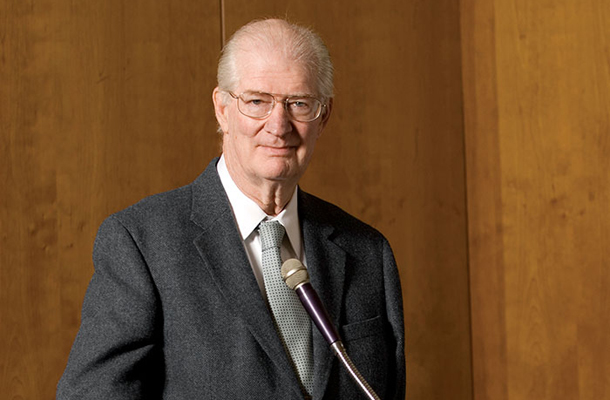
Herman Daly
Those of us old enough to remember the Cold War know that it was basically a contest between Socialism and Capitalism to see who could grow faster, and thereby accumulate more wealth and military power. The audience was the uncommitted countries of the world who would supposedly adopt the economic system of the winner of the growth race. What happened? Basically, Socialism collapsed, and Capitalism won by default. The losers (Russia, China, Eastern Europe) got back in the growth race by adopting State Capitalism, and China has become the growth champion. The present system of world growthism, in the broadly capitalist mode, is triumphant. But growthism itself has turned out to be a false god because growth in our finite and entropic world now increases ecological and social costs faster than production benefits, making us poorer, not richer (except for the top few percent). Recognition of this reversal is obscured by the fact that our national accounts (GDP) do not subtract the costs of growth, but effectively add them by counting the expenditures incurred to defend ourselves from the unsubtracted costs of growth. Even more egregiously, GDP counts the consumption of natural capital as income. Growthism is consuming the life support capacity of the ecosystem for the benefit of a small minority of the present generation, while shifting the real but uncounted costs on to the poor, future generations, and other species.1
Ecosocialists, ably represented by the distinguished scholar Michael Löwy, seem to recognize this disaster, so environmentalists and ecological economists are inclined to be glad of their help in opposing rampant growthist capitalism. We certainly need help. But how much help in developing a workable green economy are red ecosocialists likely to be? Maybe not much, for reasons suggested below.
Marx himself was overwhelmingly a perceptive critic of capitalism, and hardly at all an architect of socialism, which remained for him a vague prophetic vision. Marxist socialist states have an impressive historical record of economic failure, political oppression, and abuse of human rights and religious freedom. The net flow of refugees was decidedly away from, not toward, socialist countries. How does Löwy deal with this well-documented and very negative historical experience? First by frankly recognizing it, and then by asking us to simply ignore the “actually existing socialisms of the twentieth century” and focus on Marxist theory instead. This reminds me of the growth economists who ask us to focus on the elegance of neoclassical optimization theory and downplay the massive external costs and monopoly concentration of wealth and power of actual corporate capitalism. Theory is always neater than reality—for both capitalism and socialism. While Scandinavian socialism is an example from which we can benefit, Marxist socialist economies no longer exist (except for North Korea). Our given starting point for reform is rampant growthist capitalism. If socialism had won the disastrous growth race, then we would be starting our reforms from socialist initial conditions, and Marxist theory would have been more relevant. But that did not happen, however much Marxists may regret the fact.
If one believes that Marxist theory is nevertheless true, then it would be worth starting over on that basis. But it contains basic errors that would likely lead to a repeated failure. Marxists have been very slow to recognize the reality of limits to growth, in spite of Marx's now oft-quoted prescient paragraph about “metabolic rift”—a paragraph certainly worth building on. Furthermore, there are some basic reasons for Marxists' unwillingness to identify growth as the core problem. Marx dismissed any appeal to morality or sharing as “utopian socialism.” The "new socialist man" would emerge from his bourgeois greed only on the basis of overwhelming material abundance, emerging under historically determined scientific socialism, “guided” by the dictatorship of the proletariat. Overwhelming abundance requires growth to the point that scarcity is objectively overcome, and therefore the moral demands for sharing scarce goods, emphasized by the “utopian” socialists, become unnecessary in “scientific” socialism.
Löwy has a section on growth, in which he opines that “[t]he issue is not excessive consumption in the abstract, but the prevalent type of consumption” dominated by fashion and advertising. I agree with his criticism of advertising, but the basic problem is the actual, not abstract, level of per capita resource consumption, mainly of the wealthy, not just the frivolous things they consume. And of course the number of consumers. There is no discussion of limiting resource consumption, much less limiting population growth—the latter a topic which Marxists, as well as the capitalist cheap-labor lobby, go far out of their way to avoid. With the exception of post-Maoist China, Marxist regimes have generally thought that more people are better than fewer, a view that environmentalists would actually agree with, as long as the people are not all alive at the same time! Marx’s hatred for Malthus and his dismissal of overpopulation are well known, and continue to mute Marxist attention to limits to growth.
Löwy, and Marxists in general, take a very dim view of markets and a very rosy view of central planning. There is plenty of need for both markets and planning, depending on the type of good in question. Goods are either physically rival or non-rival, and either legally excludable or non-excludable. My shirt is a rival good—if I am wearing it, you can’t wear it at the same time. It is also excludable because I have the right to keep you from wearing it, or to allow you to. Goods that are both rival and excludable are market goods that can be, and usually are, allocated by markets. Goods that are non-rival and non-excludable are pure public goods, like a just legal and ethical code or the Pythagorean Theorem, for which there can be no market. Goods that are rival but non-excludable, like fish caught on the high seas or water pumped from an aquifer, are subject to the tragedy of the open-access commons and require collective action to avoid overexploitation. Goods that are non-rival but excludable, like patented knowledge or information, are inefficiently allocated, and the revenue from their artificial price is unjustly distributed by markets. For the last three categories, markets work poorly or not at all, and consequently, collective planning is necessary. That should provide plenty of opportunity for ecosocialists’ contributions! For market goods, a large category including the basics of food, clothing, and shelter, market allocation usually works better than planning, if governments can limit or regulate monopoly. Since three of the four categories require government planning, it is doubly important to avoid overloading government capacity for needed collective planning by unnecessarily imposing it on the large first category as well.
However, Löwy, and Marxists generally, have an ideological antipathy to markets—to supply and demand, and prices, and especially to profit. They prefer central planning, or as Löwy calls it robust “democratic ecological planning.” If Löwy means economic planning in the light of ecological limits, then we would need much more discussion of limits. The historical failure of War Communism with its direct physical requisitioning of goods was corrected by Lenin's New Economic Policy, which reinstated considerable reliance on markets. That socialist lesson seems to be ignored. Likewise ignored are the theoretical criticisms of even socialist economists, such as those of Oskar Lange, who in his On the Economic Theory of Socialism demonstrates how markets can efficiently serve socialism as well as capitalism. Löwy dismisses criticism of central planning as “conservative fearmongering.” Instead, he tells us that “the core of ecosocialism is the concept of democratic ecological planning, wherein the population itself, not ‘the market’ or a Politburo, make the main decisions about the economy.”
Imagine the consequences of market goods (food, clothing, and shelter, plus a whole lot more) being “freely distributed, according to the will of the citizens.” The democratic will of the citizens is to be expressed by voting. How much steel shall we produce? Citizens vote. How much of that steel will go to the production of, say, wood screws, for example? The citizens vote again. Of the wood screws how many will be round head, how many flat head countersunk, slot head, or Phillips head? How many cadmium-plated; how many chrome-plated? And some screws are made of brass or aluminum, not steel. And how many of each length and diameter, etc.? And who shall receive how many of each type? The citizens robustly and democratically vote again and again as conditions change, although most have no idea of the myriad special uses of different types of screw, and may not even know which end of a screwdriver to hold.
Meanwhile those people who actually use screws and know their uses are not able to “vote” with their money in markets and thereby convey reliable information to producers about what mix of the nearly infinitely many types of screw is most needed, and would be most profitable to produce. Instead we have all citizens spending absurd amounts of their time “democratically” voting, mostly about things they don’t understand, while those with the most information about actual use-values of screws are “disenfranchised” by the absence of markets. Yet Löwy claims that in a planned ecosocialist economy, “use-value would be the only criteria for the production of goods and services.” Use-value as judged mostly by non-users—what could possibly go wrong?
With so much effort wasted on attempting to plan the allocation of market goods, there will be little capacity left to plan the use of true public goods, to avoid the tragedy of the commons and the larcenous market enclosure of non-rival goods. Of course, the humble wood screw is only one of millions of market goods that would be grossly misallocated by “democratic ecological planning.” If one thinks my example of the wood screw is too trivial, then ask the same questions about a more complex commodity of your choice. Löwy expects that “as the ecosocialist transition moves forward, more products and services critical for meeting fundamental human needs would be freely distributed, according to the will of the citizens.” Overwhelming material abundance and the “new socialist man” will apparently have arrived, along with the abolition of scarcity. But with little discussion of growth or its costs.
Without markets (supply and demand, prices, and yes, profit), there could be no self-employment. Everyone would be a salaried employee of the state, giving the state monopsony power in the labor market. No one could identify a needed good or service and make a living by providing it. Happily, Löwy at least would allow small shops and artisan enterprises to escape the planner.
Ecosocialism aspires to be egalitarian and ecologically sustainable. But nothing is said in this essay about proper limits to the range of inequality in the distribution of income and wealth. Should the richest citizen be four times as wealthy as the poorest, as Plato thought? Ten times? A thousand times? And what do ecosocialists think about macro limits to growth of resource throughput? Many of the ecosocialists’ objections to market allocation would disappear if the underlying degree of inequality of wealth and income distribution were more formally and tightly limited, and if the aggregate scale of throughput of energy and materials were restricted to some level of ecological sustainability. Instead of correcting excessive throughput scale, and excessive distributional inequality, which of course are reflected in market prices and allocation, ecosocialists just attack market allocation itself, as if underlying scale and distribution problems could be solved by breaking the mirror that reflects them. What are ecosocialists’ policies for directly limiting throughput scale and distributional inequality? Voting is indeed required at this point, but there must be some policy to vote on. And in the three categories where planning has long been recognized as necessary, what policies are recommended for providing and financing public goods, for avoiding overexploitation of the commons, and for protecting non-rival goods from illicit privatization?

Friday, November 18, 2016

2493. U.S. Companies to Trump: Don’t Abandon Global Climate Deal

By Hirako Tabuchi, The New York Times, November 16, 2016


Hundreds of American companies, including Mars, Nike, Levi Strauss and Starbucks, have urged President-elect Donald J. Trump not to abandon the Paris climate deal, saying a failure by the United States to build a clean economy endangers American prosperity.

In a plea addressed to Mr. Trump — as well as President Obama and members of Congress — 365 companies and major investors emphasized their “deep commitment to addressing climate change,” and demanded that he leave in place low-emissions policies in the United States.

“Failure to build a low-carbon economy puts American prosperity at risk,” the companies said in a joint letter announced on Wednesday in Marrakesh, Morocco, where global leaders are determining the next steps for the Paris deal. “But the right action now will create jobs and boost U.S. competitiveness.”

The companies also said that they would push ahead with their own targets to reduce their carbon footprints regardless of steps taken by Mr. Trump once he is in office. During his campaign, Mr. Trump, who has called climate change a hoax, pledged to leave the Paris accord, dismantle the Environmental Protection Agency and undo Mr. Obama’s climate change policies.

“This doesn’t change our commitments,” said Kevin Rabinovitch, global sustainability director at Mars, which has pledged to eliminate 100 percent of its greenhouse gas emissions from its factories and offices by 2040. “We’re doing this because we see a real business risk. We see a real business problem.”

Businesses large and small have scrambled in the days since Mr. Trump’s victory to chart their next moves in an uncertain regulatory situation. Mr. Trump’s campaign pledges and musings have been driven by the belief that the economy will grow faster if businesses are freed from cumbersome federal regulations, especially those that limit carbon emissions.

The president-elect has heightened environmentalists’ fears that his administration will take on an anti-climate, anti-environment bent by appointing the climate contrarian Myron Ebell to lead the E.P.A. transition. Climate change activists have denounced Mr. Ebell, whose Competitive Enterprise Institute has received funding from oil and gas interest groups.

Some corporations, like the country’s largest automakers, have already seized on a potential upside to the president-elect’s leanings, urging a rethinking of stringent federal auto emissions standards. An easing of federal standards for passenger cars, which together with the rest of the transportation sector emit more carbon dioxide than any other part of the American economy, could have immense implications for overall emissions.

Others, like solar and wind power companies, have raced to find common ground with Mr. Trump, pressing for reassurances that his administration will not slash investment in renewable energy or alter federal tax credits on renewable energy projects.
“Mr. Trump talks about infrastructure, he talks about jobs,” said Michael Skelly, founder and president of Clean Line Energy Partners, a company based in Houston that builds transmission lines for renewable energy.

“What we’re creating are welding jobs, steel manufacturing jobs, in Kansas, Oklahoma, Iowa,” he said. “These are projects that create income for landowners, create jobs in the middle of the country.”

The stakes are high. Damage from climate change — especially from extreme weather events like hurricanes, flooding and drought — could shave as much as 5 percent off annual global gross domestic product by 2100, according to a study commissioned by the British government that is considered one of the most comprehensive.

Environmental groups have been left with the daunting prospect that, with a climate skeptic in the White House, they will need to look directly to corporations to assume the mantle of leading the country’s response to climate change. But without strict regulatory standards or oversight, companies will be left freer to pick and choose which climate-friendly policies to pursue, and which they will choose to ignore or abandon.

Still, some American corporations have already made significant efforts to reduce their environmental footprints. So reversing them now would be disruptive not just for the environment, but for their bottom line. And even with a move away from climate-friendly policies back home, American corporations face tightening regulations overseas.

“Now more than ever, Levi Strauss believes it is important to reaffirm our commitment to address climate change by supporting the Paris Climate Agreement,” said Michael Kobori, the company’s vice president for sustainability.

“Building an energy-efficient economy in the U.S. will ensure our nation’s competitiveness,” he said, “and position U.S. companies as leaders in the global market — all while doing the right thing for our planet.

Sunday, September 25, 2016

2451. Green Capitalism: How to Raise Trillions for Green Investments

By Henry M. Paulson Jr., The New York Times, September 20, 2016
Art by Mikel Jaso, The New York Times
SAVING our planet from the worst effects of climate change won’t be cheap. A new report from the United Nations says that the world will need to mobilize $90 trillion in public and private capital over the next 15 years.

As a point of comparison, global gross domestic product in 2015 was $73 trillion. But there is no question that the world needs to ramp up its transition to a low-carbon, environmentally sustainable and resilient economy, and to do so rapidly. The question is, how do we pay for it, given the limited availability of government funding, particularly in developing countries?

The answer: private financing. The good news is that there is a global abundance of private capital. To unlock these riches, governments must create conditions that encourage private investment in clean technologies and sustainable development. With smart, well-designed and coordinated policies, financing models and instruments like bonds and incentive programs, countries have the potential to solve some of the planet’s most pressing environmental challenges while still maintaining economic growth.

That is why it is essential for world leaders meeting in New York this week for Climate Week to stay focused on building an international consensus around “green finance.”

Understanding how government can spur this type of investment was a focus of the recent G20 summit meeting in Hangzhou, China. For the first time, these countries reached an agreement on a set of principles to govern green finance and recognized its potential for stimulating economic growth. This is an essential first step in creating an international financial system to support green projects and for providing guidelines for countries on policies to encourage their banking systems to make green investments.

There have been successful experiments in green finance. The global green bond market is growing rapidly — to $41.8 billion in 2015 from $11 billion in 2013. Moreover, innovative financing solutions are being used around the world — private firms in Mexico and India are financing private wind parks; multinational trust funds are supporting solar plants in India, South Africa and Morocco. A new universe of financial instruments and policies are lowering the cost of capital for green growth.

The challenge now is to build on these successes and ensure that green finance mechanisms are widely adopted so that capital markets can allocate financing to low-carbon sectors of the economy that have the potential to generate growth and jobs.

For this to happen, countries will need to adopt policies that reduce the price of low-carbon investments to make them more attractive for private investors. These policies include environmental regulations to stimulate clean, sustainable development; incentives and subsidies for clean energy investments; and the pricing of carbon emissions, which can be done in a variety of ways, including emissions trading and taxes. We also need to eliminate subsidies that encourage the use and extraction of carbon-based energy like coal and oil. Such policies will take strong political will, especially as economic growth is slowing.

China has taken important steps in this direction and has declared green finance a “strategic imperative.” The country faces a significant challenge. It needs $1 trillion over the next five years to make investments in efficient buildings, low-carbon transportation and clean energy in its cities. But the government can afford to finance only 15 percent of that, according to a recent report by my organization, the Paulson Institute, along with Bloomberg Philanthropies and the Green Finance Committee of China Society for Banking and Finance.

Accordingly, China recently began an initiative to raise private capital through the sale of green bonds. After just six months, these bonds now account for 40 percent of the global market. Recent guidelines issued by the government outline an ambitious road map for creating green lending, environmental stress tests, benchmarks to ensure credibility of green investments, disclosure requirements and innovative public private partnerships. For instance, the Building Efficiency and Green Development Fund will provide financing to use new technologies from American companies in China to make building more energy-efficient. (The nonprofit Paulson Institute, which seeks to strengthen relations between the United States and China on economic and environmental issues, is an adviser to this fund.)

China also has announced plans to create a nationwide carbon market in 2017 that is on track to become the largest in the world. Pilot exchanges already allow Chinese pollution emitters in several cities to trade carbon credits, earned by reducing emissions, to other companies that have been less successful in reducing their carbon discharges. In this way, China is trying to turn an environmental liability into an economic asset. If these exchanges work, they will be powerful examples for the rest of the developing world.
Financing the world’s transition to a low-carbon economy will be costly, but we can’t afford not to do it and, it is important to note, it is feasible. We have the ideas, the models and the capital to make it happen. What’s needed now is leadership from global policy makers to prioritize the development of a global green finance system.

Henry M. Paulson Jr., the chairman of the Paulson Institute, a former Treasury secretary and chief executive of Goldman Sachs, is the author of “Dealing With China: An Insider Unmasks the New Economic Superpower.”

Sunday, March 1, 2015

1754. Natural Protected Areas Get 8 Billion Visits Per Year

By Chris Mooney, The Washington Post, February 24, 2015
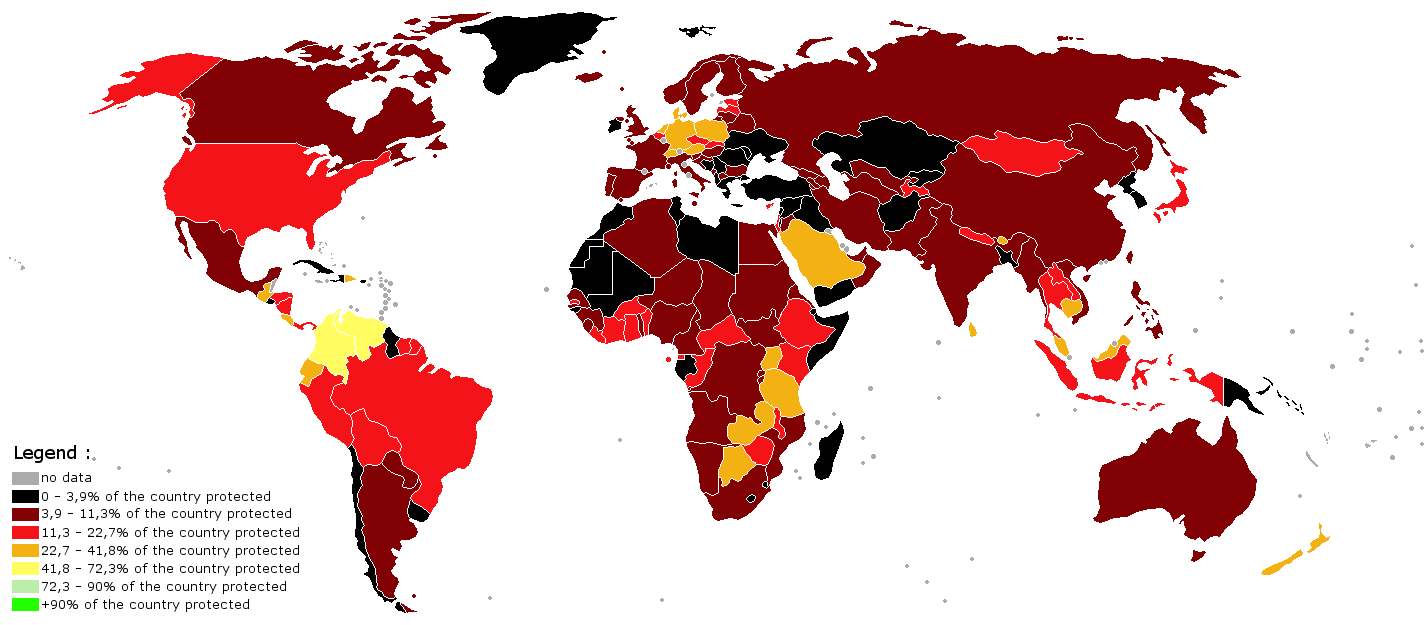
Lighter areas have more protected areas

We haven’t paved the planet — yet.

From the Grand Canyon to Grand Teton, the world is full of so-called “protected areas”: National parks, lands, wildlife preserves, and other wild places that people can visit and enjoy, but that are managed so that they remain untrammeled and intact. They comprise, overall, 12.7 percent of the Earth’s land surface.

We all know these places exist, and we sometimes visit them. But according to a new paper in PLOS Biology, “sometimes” might not really be the right word. If the study — by University of Cambridge biologist Andrew Balmford and a group of colleagues from academia and conservation organizations — is correct, then humans across planet Earth literally throng to these places.

The paper finds that people are paying global protected areas an estimated 8 billion visits a year, a “strikingly large” number (in the study’s words) that exceeds the total global population.

Some of the biggest draws, according to the researchers, include South Korea’s Seoraksan National Park (more than three million visits a year), the UK’s Lake District (over 10 million) and the Golden Gate National Recreation Area (over 13 million annually).

Even so, the new study finds, not everybody visits these places — it tends to be relatively wealthy North Americans and Europeans who do so. These continents account for four fifths of protected area visits — an estimated 3.8 billion occurring in Europe, and 3.3 billion in North America.

Moreover, our spending to preserve these wild and pristine places doesn’t remotely rival their value, in light of the 8 billion figure above. The study estimates that the 8 billion visits are worth $ 600 billion dollars in direct tourist expenditures, and an additional $ 250 billion in “consumer surplus” (money that people would be willing to spend if they had to on these visits).

“These figures dwarf current, typically inadequate spending on conserving [protected areas],” note the authors, who say that the world currently spends less than $ 10 billion in keeping protected areas…protected.

The study only examined visits to terrestrial protected areas — vast swaths of the ocean and of Antarctica are also protected, if far more rarely visited. The 8 billion estimate comes from analyzing attendance at 556 protected areas in 51 countries, and then using models to extrapolate those numbers to a much larger group of 94,238 sites on Earth that count as protected areas (still excluding Antarctica, the oceans, and some very small sites or sites that don’t welcome tourists).

The authors acknowledge that there is much uncertainty in the figure, but add that “we consider it implausible that there are fewer than 5 billion [protected area] visits worldwide each year.”

The upshot? Spend more on nature, and you can expect to get a great payback. “Substantially increased investments in protected area maintenance and expansion would yield substantial return,” the study concludes.

Tuesday, December 2, 2014

1667. Book Review: This Changes Everything: Capitalism vs. the Climate

By Ron Nixon, The New York Times, November 6, 2014


“Every inhabitant of this planet must contemplate the day when this planet may no longer be habitable.” Thus spoke President Kennedy in a 1961 address to the United Nations. The threat he warned of was not climate chaos — barely a blip on anybody’s radar at the time — but the hydrogen bomb. The nuclear threat had a volatile urgency and visual clarity that the sprawling, hydra-headed menace of today’s climate calamity cannot match. How can we rouse citizens and governments to act for concerted change? Will it take, as Naomi Klein insists, nothing less than a Marshall Plan for Earth?

“This Changes Everything: Capitalism vs. the Climate” is a book of such ambition and consequence that it is almost unreviewable. Klein’s fans will recognize her method from her prior books, “No Logo: Taking Aim at the Brand Bullies” (1999) and “The Shock Doctrine: The Rise of Disaster Capitalism” (2007), which, with her latest, form an antiglobalization trilogy. Her strategy is to take a scourge — brand-­driven hyperconsumption, corporate exploitation of disaster-struck communities, or “the fiction of perpetual growth on a finite planet” — trace its origins, then chart a course of liberation. In each book she arrives at some semihopeful place, where activists are reaffirming embattled civic values.

To call “This Changes Everything” environmental is to limit Klein’s considerable agenda. “There is still time to avoid catastrophic warming,” she contends, “but not within the rules of capitalism as they are currently constructed. Which is surely the best argument there has ever been for changing those rules.” On the green left, many share Klein’s sentiments. George Monbiot, a columnist for The Guardian, recently lamented that even though “the claims of market fundamentalism have been disproven as dramatically as those of state communism, somehow this zombie ideology staggers on.” Klein, Monbiot and Bill McKibben all insist that we cannot avert the ecological disaster that confronts us without loosening the grip of that superannuated zombie ideology.

That philosophy — ­neoliberalism — promotes a high-consumption, ­carbon-hungry system. Neoliberalism has encouraged mega-mergers, trade agreements hostile to environmental and labor regulations, and global hypermobility, enabling a corporation like Exxon to make, as McKibben has noted, “more money last year than any company in the history of money.” Their outsize power mangles the democratic process. Yet the carbon giants continue to reap $600 billion in annual subsidies from public coffers, not to speak of a greater subsidy: the right, in Klein’s words, to treat the atmosphere as a “waste dump.”

So much for the invisible hand. As the science fiction writer Kim Stanley Robinson observed, when it comes to the environment, the invisible hand never picks up the check.

Klein diagnoses impressively what hasn’t worked. No more claptrap about fracked gas as a bridge to renewables. Enough already of the international summit meetings that produce sirocco-quality hot air, and nonbinding agreements that bind us all to more emissions. Klein dismantles the boondoggle that is cap and trade. She skewers grandiose command-and-control schemes to re-engineer the planet’s climate. No point, when a hubristic mind-set has gotten us into this mess, to pile on further hubris. She reserves a special scorn for the partnerships between Big Green organizations and Immense Carbon, peddled as win-win for everyone, but which haven’t slowed emissions. Such partnerships remind us that when the lamb and the lion lie down together, only one of them gets eaten.

In democracies driven by lobbyists, donors and plutocrats, the giant polluters are going to win while the rest of us, in various degrees of passivity and complicity, will watch the planet die. “Any attempt to rise to the climate challenge will be fruitless unless it is understood as part of a much broader battle of worldviews,” Klein writes. “Our economic system and our planetary system are now at war.”

Klein reminds us that neoliberalism was once an upstart counterrevolution. Through an epic case of bad timing, the Reagan-Thatcher revolution, the rise of the anti-regulatory World Trade Organization, and the cult of privatizing and globalizing everything coincided with the rising public authority of climate science. In 1988, James Hansen, director of NASA’s Goddard Institute, delivered historic testimony at Congressional hearings, declaring that the science was 99 percent unequivocal: The world was warming and we needed to act collectively to reduce emissions. Just one year earlier, Margaret Thatcher famously declared: “There is no such thing as society. There are individual men and women and there are families.” In the battle since, between a collective strategy for forging an inhabitable long-term future and the antisocial, hyper-­corporatized, hyper-carbonized pursuit of short-term growth at any cost, well, there has been only one clear winner.

But counterrevolutions are reversible. Klein devotes much of her book to propitious signs that this can happen — indeed is happening. The global climate justice movement is spreading. Since the mid-1990s, environmental protests have been growing in China at 29 percent per year. Where national leaders have faltered, local governments are forging ahead. Hundreds of German cities and towns have voted to buy back their energy grids from corporations. About two-thirds of Britons favor renationalizing energy and rail.

The divestment movement against Big Carbon is gathering force. While it will never bankrupt the mega-corporations, it can reveal unethical practices while triggering a debate about values that recognizes that such practices are nested in economic systems that encourage, inhibit or even prohibit them.

The voices Klein gathers from across the world achieve a choral force. We hear a Montana goat rancher describe how an improbable alliance against Big Coal between local Native American tribes and settler descendants awakened in the latter a different worldview of time and change and possibility. We hear participants in Idle No More, the First Nations movement that has swept across Canada and beyond, contrast the “extractivist mind-set” with systems “designed to promote more life.”

One quibble: What’s with the subtitle? “Capitalism vs. the Climate” sounds like a P.R. person’s idea of a marquee cage fight, but it belies the sophistication and hopefulness of Klein’s argument. As is sometimes said, it is easier to imagine the end of the world than to imagine the end of capitalism. Klein’s adversary is neoliberalism — the extreme capitalism that has birthed our era of extreme extraction. Klein is smart and pragmatic enough to shun the never-never land of capitalism’s global overthrow. What she does, brilliantly, is provide a historically refined exposé of “capitalism’s drift toward monopoly,” of “corporate interests intent on capturing and radically shrinking the public sphere,” and of “the disaster capitalists who use crises to end-run around democracy.”

To change economic norms and ethical perceptions in tandem is even more formidable than the technological battle to adapt to the heavy weather coming down the tubes. Yet “This Changes Everything” is, improbably, Klein’s most optimistic book. She braids together the science, psychology, geopolitics, economics, ethics and activism that shape the climate question. The result is the most momentous and contentious environmental book since “Silent Spring.”