Wednesday, June 14, 2017

2630. Are We in the Midst of the Sixth Extinction?

By Peter Brannen, The Atlantic, June 13, 2017


At the annual meeting of the Geological Society of America, Smithsonian paleontologist Doug Erwin took the podium to address a ballroom full of geologists on the dynamics of mass extinctions and power grid failures—which, he claimed, unfold in the same way.

“These are images from the NOAA website of the US blackout in 2003,” he said, pulling up a nighttime satellite picture of the glowing northeastern megalopolis, megawatts afire under the cold dark of space. “This is 20 hours before the blackout. You can see Long Island and New York City.”

“And this is seven hours into the blackout,” he said, pulling up a new map, cloaked in darkness. “New York City is almost dark. The blackout extended all the way up into Toronto, all the way out to Michigan and Ohio. It covered a huge section of both Canada and the United States. And it was largely due to a software bug in a control room in Ohio.”

Erwin is one of the world’s experts on the End-Permian mass extinction, an unthinkable volcanic nightmare that nearly ended life on earth 252 million years ago. He proposed that earth’s great mass extinctions might unfold like these power grid failures: most of the losses may come, not from the initial shock—software glitches in the case of power grid failures, and asteroids and volcanoes in the case of ancient mass extinctions—but from the secondary cascade of failures that follow. These are devastating chain reactions that no one understands. Erwin thinks that most mass extinctions in earth’s history—global die-offs that killed the majority of animal life on earth—ultimately resulted, not from external shocks, but from the internal dynamics of food webs that faltered and failed catastrophically in unexpected ways, just as the darkening eastern seaboard did in 2003.

“Because it was not clear how to manage that collapse—although after the fact it was clear that it should have been easily contained—it cascaded into the failure of grids across the northeastern United States ...  I mention this because it turns out that, from a mathematical point of view, the problem of understanding these food webs is exactly the [same] problem as understanding the nature of the power grid. There’s a very rapid collapse of the ecosystem during these mass extinctions,” he said.

I had written to Erwin to get his take on the contemporary idea that there is currently a sixth mass extinction underway on our planet on par with the so-called Big Five mass extinctions in the history of animal life. Many popular science articles take this as a given, and indeed, there’s something emotionally satisfying about the idea that humans’ hubris and shortsightedness are so profound that we’re bringing down the whole planet with us.
Given how severely humans have damaged the natural world over the millennia, it was an idea I found attractive, and it’s one even shared by many geologists and paleontologists. Our destruction is so familiar—so synonymous with civilization—in fact, that we tend to overlook how strange the world that we’ve made has become. For instance, it stands to reason that, until very recently, all vertebrate life on the planet was wildlife. But astoundingly, today wildlife accounts for only 3 percent of earth’s land animals; human beings, our livestock, and our pets take up the remaining 97 percent of the biomass. This Frankenstein biosphere is due both to the explosion of industrial agriculture and to a hollowing out of wildlife itself, which has decreased in abundance by as much as 50 percent since 1970. This cull is from both direct hunting and global-scale habitat destruction: almost half of the earth’s land has been converted to farmland.

The oceans have endured a similar transformation in only the past few decades as the industrial might developed during World War II has been trained on the seas. Each year fishing trawlers plow an area of seafloor twice the size of the continental United States, obliterating the benthos. Gardens of corals and sponges hosting colorful sea life are reduced to furrowed, lifeless plains. What these trawlers have to show for all this destruction is the removal of up to 90 percent of all large ocean predators since 1950, including familiar staples of the dinner plate like cod, halibut, grouper, tuna, swordfish, marlin, and sharks. As just one slice of that devastation, 270,000 sharks are killed every single day, mostly for their tasteless fins, which end up as status symbol garnishes in the bowls of Chinese corporate power lunches. And today, even as fishing pressure is escalating, even as the number of fishing boats increases, even as industrial trawlers abandon their exhausted traditional fishing grounds to chase down ever more remote fish stocks with ever more sophisticated fish-finding technology, the global fish catch is flatlining.

Closer to shore, coral reefs, the wellspring of the ocean’s biodiversity, have declined in extent by as much as a third since only the 1980s. These paradises are plagued by overfishing, pollution, and invaders, but 500 million people, many of them poor and living in the developing world, rely on them for food, storm protection, and jobs. As in the handful of reef collapses of the geological past, modern reefs are expected to collapse from warming and ocean acidification by the end of the century, and possibly much sooner. During record-breaking temperatures in 1997–1998, 15 percent of the world’s reefs died. In the past few months a similar wave of death struck the Great Barrier Reef. It won’t be the last.

So things don’t look so good, no matter where we look. Yes, the victims in the animal world include scary apex predators that pose obvious threats to humans, like lions, whose numbers have dropped from 1 million at the time of Jesus to 450,000 in the 1940s to 20,000 today—a decline of 98 percent. But also included have been unexpected victims, like butterflies and moths, which have declined in abundance by 35 percent since the 1970s.

Like all extinction events, so far this one has been phased and complex, spanning tens of thousands of years and starting when our kind left Africa. Other mass extinctions buried deep in earth’s history have similarly played out over tens of thousands, even hundreds of thousands of years. To future geologists, then, the huge wave of extinctions a few thousand years ago as First Peoples spread out into new continents and remote archipelagoes will be all but indistinguishable from the current wave of destruction loosed by modernity and its growing appetites. Surely we’ve earned our place in the pantheon next to the greatest ecological catastrophes of all time: the so-called Big Five mass extinctions of earth history. Surely our Anthropocene extinction can confidently take its place next to the juggernauts of deep time—the Ordovician, Devonian, Permian, Triassic and Cretaceous extinctions.
Erwin says no. He thinks it’s junk science.

“Many of those making facile comparisons between the current situation and past mass extinctions don’t have a clue about the difference in the nature of the data, much less how truly awful the mass extinctions recorded in the marine fossil record actually were,” he wrote me in an email. “It is absolutely critical to recognize that I am NOT claiming that humans haven’t done great damage to marine and terrestrial [ecosystems], nor that many extinctions have not occurred and more will certainly occur in the near future. But I do think that as scientists we have a responsibility to be accurate about such comparisons.”

I had a chance to sit down with Erwin after his talk at the annual geology conference. My first question—about a rumor I had heard from one of his colleagues that Erwin had served as a sort of mass extinction consultant to Cormac McCarthy while the notoriously secretive author was constructing the post-apocalyptic world of The Road—Erwin coyly evaded. But on the speculative sixth mass extinction, he was more forthcoming.

“If we’re really in a mass extinction—if we’re in the [End- Permian mass extinction 252 million years ago]—go get a case of scotch,” he said.

If his power-grid analogy is correct, then trying to stop a mass extinction after it’s started would be a little like calling for a building’s preservation while it’s imploding.

“People who claim we’re in the sixth mass extinction don’t understand enough about mass extinctions to understand the logical flaw in their argument,” he said. “To a certain extent they’re claiming it as a way of frightening people into action, when in fact, if it’s actually true we’re in a sixth mass extinction, then there’s no point in conservation biology.”

This is because by the time a mass extinction starts, the world would already be over.
“So if we really are in the middle of a mass extinction,” I started, “it wouldn’t be a matter of saving tigers and elephants—”

“Right, you probably have to worry about saving coyotes and rats.

“It’s a network collapse problem,” he said. “Just like power grids. Network dynamics research has been getting a ton of money from DARPA [Defense Advanced Research Projects Agency]. They’re all physicists studying it, who don’t care about power grids or ecosystems, they care about math. So the secret about power grids is that nobody actually knows how they work. And it’s exactly the same problem you have in ecosystems.
“I think that if we keep things up long enough, we’ll get to a mass extinction, but we’re not in a mass extinction yet, and I think that’s an optimistic discovery because that means we actually have time to avoid Armageddon,” he said.

Erwin’s other point, that the magnitude of the Big Five mass extinctions in earth’s past dwarfs humanity’s destruction thus far, is a subtle one. He’s not trying to downplay the tremendous destruction wrought by humans, but reminding us that claims about mass extinctions are inevitably claims about paleontology and the fossil record.

“So there are estimates of what the standing crop of passenger pigeons was in the 19th century,” said Erwin. “It’s like 5 billion. They would black out the sky.”

Passenger pigeons all but serve as the mascot of the “sixth mass extinction,” their extirpation an ecological tragedy on a massive scale, and proof that humans are a geologically destructive force to be reckoned with.

“So then you ask: in a non-archaeological context, how many fossil passenger pigeons are there? How many records are there of fossil passenger pigeons?”
“Not many?” I offered.

 “Two,” he said.


“So here’s an incredibly abundant bird that we wiped out. But if you look in the fossil record, you wouldn’t even know that they were there.”


Erwin likes to recall a talk he once went to by an ecologist who had documented the troubling losses he had seen over his career in high-altitude rainforests.

“He was using this as an example of the destruction of plants in these cloud forests in Venezuela, all of which could be completely true,” Erwin said. “The problem is, the probability of finding one of those cloud forests in the fossil record is zero.”

The fossil record is incredibly incomplete. One rough estimate holds that we’ve only ever found a tantalizing 0.01 percent of all the species that have ever existed. Most of the animals in the fossil record are marine invertebrates, like brachiopods and bivalves, of the sort that are both geologically widespread and durably skeletonized. In fact, though this book (for narrative purposes) has mostly focused on the charismatic animals taken out by mass extinctions, the only reason we know about mass extinctions in the first place is from the record of this incredibly abundant, durable, and diverse world of marine invertebrates, not the big, charismatic, and rare stuff like dinosaurs.

“So you can ask, ‘Okay, well, how many geographically widespread, abundant, durably skeletonized marine taxa have gone extinct thus far?’ And the answer is, pretty close to zero,” Erwin pointed out. In fact, of the best-assessed groups of modern animals—like stony corals, amphibians, birds and mammals—somewhere between 0 and 1 percent of species have gone extinct in recent human history. By comparison, the hellscape of End-Permian mass extinction claimed upwards of 90 percent of all species on earth.

When mass extinctions hit, they don’t just take out big charismatic megafauna, like elephants, or niche ecosystems, like cloud forests. They take out hardy and ubiquitous organisms as well—things like clams and plants and insects. This is incredibly hard to do. But once you go over the edge and flip into mass extinction mode, nothing is safe. Mass extinctions kill almost everything on the planet.

While Erwin’s argument that a mass extinction is not yet under way might seem to get humanity off the hook—an invitation to plunder the earth further, since it can seemingly take the beating (the planet has certainly seen worse)—it’s actually a subtler and possibly far scarier argument.

This is where the ecosystem’s nonlinear responses, or tipping points, come in. Inching up to mass extinction might be a little like inching up to the event horizon of a black hole—once you go over a certain line, a line that perhaps doesn’t even appear all that remarkable, all is lost.

“So,” I said, “it might be that we sort of bump along where everything seems okay and then . . .”

“Yeah, everything’s fine until it’s not,” said Erwin. “And then everything goes to hell.”

Or put another way, mass extinctions may unfold the same way that a dissolute character in Hemingway’s The Sun Also Rises explains that bankruptcies do: “Two ways. Gradually and then suddenly.”

“The only hope we have in the future,” Erwin said, “is if we’re not in a mass extinction event.”

Monday, June 12, 2017

2629. More Than 10 Percent of World’s Population Is Obese, Study Finds

By Matt Richtel, The New York Times, June 12, 2017

More than 10 percent of the world’s population is now obese, a marked rise over the last 30 years that is leading to widespread health problems and millions of premature deaths, according to a new study, the most comprehensive research done on the subject.

Published Monday in The New England Journal of Medicine, the study showed that the problem had swept the globe, including regions that have historically had food shortages, like Africa.

The study, compiled by the Institute for Health Metrics and Evaluation at the University of Washington and funded by the Gates Foundation, looked at 195 countries, essentially the world’s population, finding that rates of obesity at least doubled in 73 countries — including Turkey, Venezuela, and Bhutan — from 1980 to 2015, and “continuously increased in most other countries.”

Analyzing some 1,800 data sets from around the world, researchers found that excess weight played a role in four million deaths in 2015, from heart disease, diabetes, kidney disease and other factors. The per capita death rate was up 28 percent since 1990 and, notably, 40 percent of the deaths were among people who were overweight but not heavy enough to be classified as obese.

The study defined obese as a body mass index of 30 or higher and overweight as a B.M.I. from 25 to 29.

By those measures, nearly 604 million adults worldwide are obese and 108 million children, the authors reported. Obesity rates among children are rising faster in many countries than among adults.

In the United States, 12.5 percent of children were obese, up from 5 percent in 1980. Combining children and adults, the United States had the dubious distinction of having the largest increase in percentile points of any country, a jump of 16 percentage points to 26.5 percent of the overall population.

A range of nutrition scientists, including ones who differ significantly on some issues in the field, uniformly praised the breadth, depth and quality of the study, and the significance of its message.

“Its global implications are huge,” said Barry Popkin, a professor of nutrition at the University of North Carolina. He echoed others in saying the findings tend to also affirm smaller, more regional studies.

“This study shows what we know: No country in the globe has reduced overweight or obesity levels. This is astounding given the huge health and economic costs linked with overweight and obesity.”

The study largely did not go deeply into the causes of obesity, but the authors said the growing accessibility of inexpensive, nutrient-poor packaged foods was probably a major factor and the general slowdown in physical activity was probably not.

“The change in physical activity preceded the global increase in obesity,” said Dr. Ashkan Afshin, assistant professor at the Institute for Health Metrics and Evaluation and lead author of the study.

“We have more processed food, more energy-dense food, more intense marketing of food products, and these products are more available and more accessible,” he added. “The food environment seems to be the main driver of obesity.”

Others agreed on the availability of poor diet, noting that such food can often be the most accessible and affordable.

“What people eat is the key factor in whether they become obese or not,” said Adam Drewnowsk, director of the Center for Public Health Nutrition at the University of Washington, who was not affiliated with the study, which he deemed “brilliant work by the best people in the business.”

He said getting people healthy food was easier said than done.

“It is all very nice to talk about the need to eat less unhealthy foods and more healthy foods,” he said. But “unhealthy foods cost less; healthier foods often cost more. People eat what they can afford.”

The research characterized the growth of obesity in two ways, one that looked at countries that had the biggest leap in percentage points. After the United States, other countries with particularly significant jumps in percent of the population who are obese included Saudi Arabia, Algeria, and Egypt.

But other countries had rates that rose much faster, even though they remained lower as an overall percent of the population. Broadly, the fastest rises were found in Latin America, Africa, and China.

In China, for example, less than 1 percent of the population was obese in 1980, but now more than 5 percent is, a fivefold increase. The rise in childhood obesity in China roughly paralleled that overall change.

Three countries in Africa — Burkina Faso, Mali, and Guinea-Bissau — had the fastest growth. Burkina Faso, the country with the fastest growth in the world in obesity, began in 1980 with around one-third of a percent of its population as obese. Its rate rose to nearly 7 percent of the population.

“The future health and economic burden facing all these countries is immense,” Dr. Popkin said.

Regarding the overall health implications of the study, one point made by the researchers is that there is a good news/bad news pattern emerging. The good news is that the disease burden caused by obesity is actually falling in some of the wealthiest nations. In the United States, the death rates associated with obesity fell from 63 per 100,000 in 1990 (the baseline year for this measure) to 61 per 100,000 people, reflecting medications that deal with the effects of obesity, like hypertension.

The bad news is those remedies are not available in developing countries or are available only to the wealthiest people, leading to growing rates of associated deaths and without a clear solution.

“Most of the obese people are dying because of cardiovascular disease and diabetes,” said Dr. Afshin, lead author of the study. That has been somewhat mitigated in the United States “and other developed nations” with the use of drugs.

“But we cannot have all people on drugs,” he said. “Ideally, we want to go to the root causes and address the problem of overeatin.

To date, he said, no country “has been able to control the food environment, which seems to be the main driver of obesity.”

2628. Cuban Agriculture Moves Toward Ecological Practices

By Yasel Martínez García, Granma.cu, June 7, 2017
Dr. Roberto Caballero Grande, Coordinator of the Cuban Association of Agricultural and Forestry Technicians' agro-ecology program. Photo: Yisel Martínez García
Cuba is intent upon developing sustainable agriculture based on ecological practices. Learning to integrate the agricultural environment with all that surrounds it, and designing technology, processes, and a focus which allow for the development of improved practices are some the ideas being pursued in the country.
Agroecology is a science nurtured by popular knowledge, traditions, and local agricultural culture, based on meticulous, systematic study of each context, with the most modern scientific discoveries from around the world incorporated. This field brings together all this knowledge, to generate a highly contextualized, site-specific approach.
According to Dr. Roberto Caballero Grande, Coordinator of the Cuban Association of Agricultural and Forestry Technicians (ACTAF) agroecology program, developing the broad use of this science in any country requires the joint work of universities and research centers, and an effort to collect relevant international knowledge, which can be combined with that of farmers here.
To accomplish this, he states, a systematic focus is needed, one in which all factors are interconnected and the production process is given the highest priority. Dr. Caballero advocates the coordinated use material, natural, and human resources, to consistently allow for optimal yields, offering nutritious, safe products of good quality and appearance.
The expert likewise emphasizes the importance of reducing dependence on other countries, minimizing imports of food, supplies, and equipment.
Work is being done to ensure that plans and technology are as environmentally-friendly as possible and that compensatory actions are taken when needed, including the recovery of degraded agro-ecosystems. Thus, food is produced based on a commitment to the safe delivery of amounts required, of adequate quality, made available to the entire population, the specialist explains.
"All of this together is what we have been doing. The best evidence of its feasibility, and the appropriateness of this focus, we have today in our system of urban and suburban agriculture, and the Campesino to Campesino Agroecological Movement, promoted by the National Association of Small Farmers (ANAP), with results that are positive, and completely sustainable.
"There is currently more variety in crops being cultivated, and this has influenced the eating habits of the population. People are consuming more greens. The organic garden stands have increased sales of vegetables, and Cuba's natural resources and workforce are being better utilized," Dr. Caballero states.
CITY EXPERIENCES
The Primero de Julio farm is located off of Havana's Boyeros Avenue. Pedro Piñones Valdés has been working here for eight years and reports that more than 15 crops are grown at the site.


Antonio Maceo Cooperative in Bejucal is active in the Association of Small Farmers' fruit growers movement. Photo: José Miguel Correa

"Our production comes to around 100,000 pounds of vegetables. These are products we sell to the population at our own garden stand. We also allocate a portion of social consumption: hospitals, rest homes, schools, and childcare centers," Piñones states.
The ACTAF offers training, and Piñones notes that the experience has been very useful, explaining that workers like himself receive advice, attend courses, and utilize instructional pamphlets that allow them to put their learning into practice and be more effective at the farm.
"Promoting these organic gardens within the city contributes to the better use of the soil, and is also an effective way to allow the population to consume a greater amount of fresh produce," he said when asked about the program's benefits.

SEEDS & GREENHOUSES
On these 28 hectares there are mango and tamarind trees, maracuyá, broccoli, tomatoes, and cucumbers - a great variety of quality fruits and vegetables. Years ago, this was a small plot where traditional methods were used by a family to grow food for their own consumption, but the family grew, along with their desire to farm.
Alexander Alfonso Silva now directs the Piedras farm in Guanabacoa, a project begun by his parents and uncle. Today he is one of the area's most outstanding urban farmers. He provides produce to social institutions, as well as hotels and several stands serving the population.
Given the farm's success, they have now joined the PAAS project, a joint effort to support sustainable agriculture in Cuba sponsored by ACTAF, the Swiss International Cooperation Agency (COSUDE), and the Dutch non-governmental organization Hivos. The idea is to try out different varieties of seeds and determine their adaptability, with a view toward improving the quality of produce.
This is but one of the projects in which ACTAF is involved to support the development of sustainable agriculture. The organization works with international partners and manages funds, explains Yaneisi Grana Rivero, collaboration secretary in Havana.
"Among the projects are those related to animal production, and the networks of services meant to increase the level of production on urban farms," she said.
"Today, this farm is an example of the work being done in the country's capital with organic produce. It is the first experience, extended over several municipalities on the island, impacting several value chains, as is the case of fruits and vegetables," Grana reported.
Alexander Silva works in six greenhouses testing new tomato and cucumber varieties, which are very resistant to seasonal weather, he explains.
The goal is to certify the seeds and determine if they are in fact appropriate to meet the demand for these products during the hot summer months. During this experiment, he has also investigated the seedlings' response to organic fertilizers used, as well as adjusting irrigation according to the weather.
"We are going to work efficiently to achieve stable availability of produce over the summer. Thus far, the results have been satisfactory. This is a very good technique that allows for production the entire year," Silva said.
" Work is also now being done on the issue of training. Actions directed toward obtaining the production of organic vegetables and advancing the search for sustainable agriculture in the country," Grana added.
PRIORITIZING FRUIT
Fruit orchards in Cuba had practically disappeared. Today the variety of fruits available has increased thanks to the movement of fruit farmers, promoted by the urban agriculture program. La Ignacita farm, in the Havana municipality of San Miguel del Padrón, is an example. More than 10 kinds of fruit are grown here, although as much as 40% of the annual harvest went to waste in the past
A solution to this problem has been found and today workers at the farm are enthusiastic about a mini-processing plant being erected here.
The project, also conceived by PAAS, is intended to take maximum advantage of the farm's crops, and increase the production of food for local and national consumption, according to engineer Pedro Gavilanes Díaz, the organization's management specialist.
"The proximity of the mini-plant to the place where the fruit is grown, and even to other municipalities and farms near the cooperative, will allow all the surplus, which is at times lost, to be used productively.
"We want to sell a greater amount of fresh fruit, but what is not sold this way can be taken advantage of by processing it. The goal is to add value to the products, and that these are of good quality, hygienic, and safe for consumption," the engineer Gavilanes adds.
Already underway is the process of erecting the mini-plant, which is to include a pitting machine, a pulp remover, a cooking cauldron, as well as canning and labeling equipment. The start-up is projected to take place in time for the coming mango harvest, with a daily processing capacity of close to one ton.
The project, along with local support and working with the Ministry of Agriculture, will purchase supplies through the state logistics enterprise group (GELMA) for the plant, which is looking to process vegetables as well, in the future.
"Producer will increase their income, reduce losses, and more food for the population will be obtained," the PAAS expert Gavilanes emphasized with satisfaction.
CHALLENGES FOR AGRO-ECOLOGY
According to the ACTAF coordinator, the greatest challenge is finding technological solutions for large agricultural poles.
Dr. Caballero asserts that what is most lacking is the effective transmission of information generated in research centers to farmers. He, therefore, insists that structures must be created at the local level, to ensure that this knowledge is available in every municipality to support agriculture in the area.
"We are an under-developed country, but we have much human talent, with many institutions and systems in place. If we establish a focus and coordination among local actors, what we aspire to is easy to achieve, as long as we have the participation and support of research centers, universities, associations, the ACTAF, ANAP, and everyone working toward this end," Dr. Caballero states.
Municipal food self-sufficiency programs are today part of national policy, and expanding the use of agroecological practices contribute to such efforts. They likewise contribute to making more sustainable the country's large productive poles where large areas of land are cultivated to produce rice, beans, fruit, tobacco, and other crops.
"We believe that in the long run, it will also contribute to dignifying the work of campesinos, as well as that of technicians. In sustainable agriculture based on agro-ecological practices, they are much more important, because they must be capable of generating local knowledge, in accordance with the characteristics of their land.
"It is very important to clarify that we are not talking about generalizing something someone said, but rather reconstructing know-how in each location," Dr. Caballero insists.

Agricultural development is today gaining ground and experience, as well as joining forces with technology - indicative of the interest that exists in the country to obtain concrete results. Challenges lead to better solutions, and farming families are everyday more satisfied with their work, in a developing effort to make Cuba a more productive country.

Friday, June 9, 2017

2626. Asia’s Illegal Wildlife Trade Makes Tigers a Farm-to-Table Meal

By Rachel Nuwer, The New York Times, June 5, 2017
Caged tigers in a zoo in Kings Romans casino complex in Laos. Photo: Adam Dean for The New York Times. 
BOKEO PROVINCE, Laos — The tiger paced back and forth in its cage, groaning mournfully. A second big cat slept soundly in the corner, while a third stared blankly at the bars.

Next to this cage was another containing three more tigers, and after that three more cages: a line of small pens, each holding at least one cat. Most likely, none had long to live.

The tigers were property of the Kings Romans Group, which operates a casino here, along with hotels, a shooting range, a cockfighting and bullfighting ring, a Chinatown-themed shopping center, and this shabby zoo.

Ten years ago, the Hong Kong-based company signed a lease with the Laotian government to develop this 12-square-mile plot in northwestern Bokeo Province, just across the Mekong River from Thailand. It’s called the Golden Triangle Special Economic Zone.

Most businesses in the duty-free complex are owned and staffed by Chinese citizens and patronized by a predominantly Chinese clientele. Many are drawn here by the promise of vices not as easily found back home, including products made from exotic animals like tigers.

Conservationists maintain that this zoo is actually a farm raising animals for slaughter, and that it plays a significant role in perpetuating the illegal wildlife trade, swapping tigers with similar operations in Thailand and illegally butchering animals for their bones, meat and parts.

Tigers, bears, snakes and countless other species, many endangered, are held on farms throughout Southeast Asia. Operators illegally capture animals in the wild and then pass them off as captive-bred, or breed the animals on site and illegally sell them into the trade.

These facilities are part of a contraband industry whose profitability by some estimates is surpassed only by the global trade in drugs and arms, and by human trafficking.

Few tourists were present at Kings Romans during a recent visit. The ghost-town feel was reinforced by boarded-up shops, half-finished construction sites and posters advertising events that had long since come and gone.

But restaurants at Kings Romans still offered expensive plates of bear paw, pangolin (an endangered scaly mammal) and sautéed tiger meat, which can be paired with tiger wine, a grain-based concoction in which the cats’ penises, bones or entire skeletons are soaked for months.

When a group of foreigners showed up at the God of Wealth, Kings Romans’ fanciest restaurant, the suspicious proprietor told their translator, “You can eat here, but do not ask for the special jungle menu” — the menu offering wildlife options.

Nevertheless, the staff offered tiger wine for $20 a shot glass, and served a bear’s paw to patrons at a nearby table. In May, a photographer for The New York Times who visited the restaurant was offered plates of tiger meat for $45.

Nearby, half a dozen jewelry and pharmaceutical shops displayed exorbitantly priced tiger teeth and claws, as well as rhino-horn carvings and shavings, elephant skin and ivory.

“The place is just a mess,” said Debbie Banks, of the nonprofit Environmental Investigation Agency in London. “Pretty much anything goes.”

In 2015, Ms. Banks and her colleagues, along with the nonprofit group Education for Nature-Vietnam, reported that meals, medicine and jewelry made from numerous protected species — including tigers, leopards, rhinoceroses, bears and elephants — were openly sold in the special economic zone.

Their documentation spurred the Laotian government to raid some businesses here and to burn a few tiger skins on television. But Ms. Banks said little had changed since that “cosmetic effort.”
Like the rest of the complex, the Kings Romans zoo was largely deserted save for animals kept in cages. A woman and her young daughter wandered in to look at the bears. Many showed signs of captivity-induced stress, including uncontrolled headbanging. Staff members were nowhere to be found.

Approximately 700 tigers live on farms in Laos. Thousands more are believed to be kept throughout Southeast Asia, and an additional 5,000 to 6,000 are housed in over 200 breeding centers in China. Fewer than 4,000 of the big cats remain in the wild; farmed tigers now far outnumber total wild populations.

At an international conference on the endangered species trade last fall, Laotian government officials acknowledged a growing problem with wildlife farms and committed themselves to closing down the country’s tiger farms. So far, little has changed.

One source who works closely with the government, who asked not to be named for fear of reprisals, said that some Laotian politicians remained deeply involved in the farms and that the country’s forestry department lacked the authority to shut them down.

Representative Ed Royce, Republican of California and chairman of the House Foreign Affairs Committee, has singled out Laos as an international hub for illegal wildlife trafficking, saying in 2015 it was “quite clear officials are profiting.” Laotian government officials did not respond to repeated requests for comment.

Treaty Limits Breeding
According to the Convention on the International Trade in Endangered Species, or Cites, a treaty to which China and all Southeast Asian nations are signers, tigers are to be bred only for conservation — not for their parts, and not on a commercial scale that does not benefit wild tigers.
“Farming tigers for trade confuses consumers and stimulates demand,” said Grace Ge Gabriel, Asia regional director of the International Fund for Animal Welfare. “The increased market demand for tiger parts also fuels poaching of tigers in the wild, because wildlife consumers prefer animals caught in the wild.”

In Laos and several other Asian countries, conservationists have compiled ample evidence that many zoos and farms serve as fronts for commercial breeding.

In 2016, Tiger Temple in Thailand made headlines when monks there were accused of abusing tigers and selling them into the illegal wildlife trade. Eventually, 40 dead cubs were discovered in a freezer, along with pelts and other wildlife products. Temple representatives said that the bodies and parts did not prove wrongdoing.

Thailand has some 1,450 tigers in captivity, the majority of which are kept at popular attractions like Tiger Temple, where tourists pay to take photographs and play with cubs and young adults.

When the tigers reach sexual maturity and can no longer be handled safely, they often disappear, sold on the black market for up to $50,000, according to Karl Ammann, a Kenya-based investigative filmmaker who is making a documentary about the tiger farming industry.

Conservationists also have accused tiger farms in China — two of which are supported by government investment — of illegal activity.

Chinese law permits some tiger skins to be traded legally, although tiger bone has been banned since 1993. But in 2013 Ms. Banks of the Environmental Investigation Agency and her colleagues found that farms were stockpiling tiger bones to make wine and that skins from wild tigers were sold as being from captive-bred tigers.

After inquiries from The Times, Meng Xianlin, executive director-general of the Chinese Cites management authority, declined to be interviewed. Several other Chinese officials did not respond to repeated interview requests.

Past violators often re-enter the wildlife farming business. Construction has already begun on a zoo next door to Tiger Temple. Officials in Vietnam recently granted permission for the wife of Pham Van Tuan, a twice-convicted tiger trafficker, to import 24 tigers from the Czech Republic “for conservation purposes.”

Vuong Tien Manh, deputy director of Vietnam’s Cites management authority, said in an email that Vietnam had seized a number of frozen tigers and tiger bones over the past five years, most of which were suspected to have originated from Laos.

He added that Vietnam’s policies did not permit commercial breeding of tigers, but the country has some 130 tigers in captivity. All tiger farms are strictly monitored, Mr. Manh said, no matter who the owners are.

Bear Bile Collected
Though tigers are the most contentious of Asia’s farmed wildlife, they are by no means the only species caught up in the industry.

An estimated 10,000 bears are legally kept on Chinese farms for their bile, an ingredient in traditional medicine that is collected through a tube permanently implanted in the animals’ gall bladders, or through a hole in their abdomens.

Countless other species — crocodiles, porcupines, pythons, deer and more — are also farmed throughout China and Southeast Asia.

Some proponents, including government officials, believe that such facilities should be legal and encouraged, arguing that they relieve pressure to hunt wild animals by satiating demand with captive-bred animals.

Others say there is no evidence to back this assertion. “I can’t think of any species in Southeast Asia that benefits from commercial captive breeding,” said Chris Shepherd, the Southeast Asia regional director for Traffic, a nonprofit wildlife trade-monitoring group.

Scott Roberton, the director of counter-wildlife trafficking at the Wildlife Conservation Society’s Asia program, added that the risks associated with legalizing trade in farmed tigers and other endangered species are the same as those associated for decades with the ivory trade.

“Legal trade stimulates demand, confuses law enforcement efforts, and opens a huge opportunity for laundering illegal products, which is why ivory markets are now being closed globally,” he said.
“There just isn’t the capacity within these countries to manage a legal trade in a watertight way,” Dr. Roberton said.

“Laundering” of animals as farmed that were actually caught in the wild is a frequent practice. In Chengdu, China, one-third of 285 bears rescued from bile farms and now living at a rehabilitation center run by Animals Asia, a nonprofit group, are missing limbs, a sign that they were caught in the wild by snares.

In 2002, Vietnam faced a similar dilemma when it made bear farming and bile sales illegal. Fifteen years later, around 1,200 bears still live with their original owners.

Many are kept in horrific conditions — in cages scarcely larger than their bodies, suffering from rampant disease and lacking adequate food and water — and their bile continues to be collected illegally.

Animals Asia runs a rehabilitation center near Hanoi that houses 160 bears rescued from the trade, but the center has permission to keep only 200 animals. Even if that cap were eliminated, however, the group lacks the funds and space to care for all of Vietnam’s remaining captive bears.
“Obviously, we can’t do this all ourselves,” said Tuan Bendixsen, Animals Asia’s Vietnam director. “The government must take responsibility for their wildlife.”

As Laos ponders how to responsibly close its tiger farms, China is moving in the opposite direction. Since 1992, it has been petitioning Cites to permit trade in farmed tiger products.

When Chinese representatives lobbied for this change once again at the most recent Cites meeting, the proposal was turned down.

Conservationists believe that international pressure may be crucial to persuading Asian governments to close tiger, bear and other wildlife farms, but that strategy’s effectiveness is compromised by an awkward fact: An estimated 5,000 tigers are held in backyards, petting zoos and even truck stops across the United States.

While those animals are predominantly kept as pets, they compromise negotiations with other countries on this issue, said Leigh Henry, a senior policy adviser at the World Wildlife Fund.
“When fingers are pointed at China about their tiger farms, they tend to point the finger back at the U.S. and say, ‘They have as many tigers as we have, why are you not criticizing them?’” she said.

“The priority is closing the tiger farms in Asia,” Ms. Henry said, “but the U.S. needs to set a strong standard, and that starts with cleaning up the situation in our own backyard.”

Thursday, June 8, 2017

2625. Passive Revolution: The Transnational Capitalist Class Unravels Latin America's Pink Tide

By William I. Robinson, Truthout, June 6, 2017
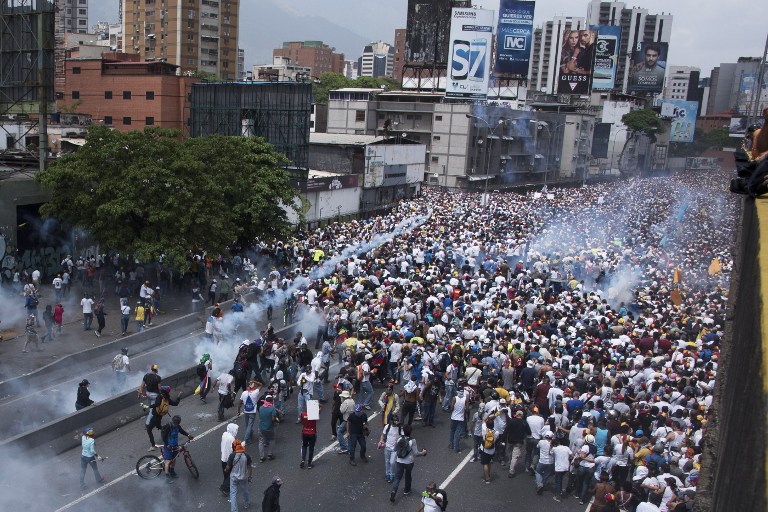
Demonstrators clashed with the riot police during a march against President Nicolas Maduro in Caracas in April.  Photo: Carlos Bacerra/AFP. 

The day after the Organization of American States (OAS) met in Washington, DC, on May 31 at the behest of the US and right-wing Latin American governments to debate the crisis in Venezuela, judge Nelson Moncada was gunned down at an opposition protest in Caracas, in a crime that some claimed was an act of revenge for his involvement in the sentencing of a prominent opposition politician. The OAS, however, remained silent on the crime, as well as on the deepening crisis and escalating state repression against mass protests sweeping Brazil and Colombia. Bolivian President Evo Morales accused the OAS of seeking to "politically eliminate the anti-imperialist presidents and governments" in Latin America in line with the historic pattern of US intervention in the region to prop up right-wing dictatorships and crush revolutionary and progressive movements.

The leftist governments in Latin America that swept to power in the early 21st century, known collectively as the Pink Tide, transformed the political landscape in the Americas and inspired popular and revolutionary struggles around the world. The Pink Tide governments came to power on the heels of mass popular resistance to the late 20th century juggernaut of neoliberalism and capitalist globalization in the region. Yet nearly two decades after the turn to the left, the right has resumed power with a vengeance in Brazil, Argentina, Paraguay and Honduras, while the Venezuelan revolution is in deep crisis and the leftist projects in Bolivia, Ecuador, Uruguay, Nicaragua and El Salvador have been emptied of much of their socialist pretensions. If this ebbing of the Pink Tide demonstrates the limits of parliamentary changes in the era of global capitalism, it also points to the renewed hegemony of the transnational capitalist class over the region.

The social model pursued by the Pink Tide governments involved the capture and redistribution of surpluses generated by the export of raw materials to global markets. Notwithstanding the leftist rhetoric, these governments oversaw a massive expansion of raw material production in partnership with foreign and local contingents of the transnational capitalist class, that is, the transnationally integrated ruling capitalist groups that emerged in countries around the world through globalization and that exercise collective control over the new globalized system of production and finance. As a result, the Pink Tide countries became ever more integrated into emergent transnational circuits of global capitalism and dependent on global commodity and capital markets.

There was no attempt to break with this extractivist model, even in the more radical experiments in Venezuela, Bolivia and Ecuador, where energy and other natural resources were nationalized. All three countries deepened their dependence on the export of hydrocarbons and industrial and precious minerals. Venezuela is even more dependent on oil exports in 2017 than it was at the turn of the century. Soy production in Argentina, Brazil, Paraguay, Uruguay and Bolivia experienced an explosive expansion as transnational corporate agribusiness displaced millions of smallholders and converted the countryside into a vast sea of industrial-scale soy plantations.

With the exception of Venezuela during the height of the Bolivarian revolution, what stood out were the absence of any shift in basic property and class relations despite changes in political blocs, a discourse in favor of the popular classes, and an expansion of social welfare programs. In effect, these governments carried out what Italian Marxist theorist and politician Antonio Gramsci referred to as passive revolution, whereby dominant groups undertake reform from above that defuses mobilization from below for more far-reaching transformation. The Pink Tide governments were "progressive" insofar as they introduced limited redistribution and restored a role for the state, less in regulating accumulation than in administering its expansion in more inclusionary ways. When we cut through the rhetoric, many of the Pink Tide states were able to push forward a new wave of capitalist globalization with greater credibility than their orthodox and politically bankrupt neoliberal predecessors.

The commodities boom financed the expansion of social programs that reduced poverty and raised the standard of living of the working and popular classes. Yet because there were no more substantial structural transformations that could address the root causes of poverty and inequality, these social programs were subject to the vagaries of global markets over which the Pink Tide states exercised no control. Once the 2008 world financial crisis hit, they came up against the limits of redistributive reform within the logic of global capitalism. The extreme dependence on raw materials exports threw these countries into economic turmoil when global commodities markets collapsed, undermining governments' abilities to sustain social programs and generating political tensions that helped fuel popular protest and open up space for a right-wing resurgence.

Brazil was most indicative of the mild reformist thrust of many Pink Tide governments, and the most tragic for the popular classes. President Luiz Inácio Lula da Silva won the 2002 election only after his wing of the Workers' Party moved sharply toward the political center and promised not to default on the country's foreign debt. In Brazil, as elsewhere, the Pink Tide state remained a part of the larger institutional networks of the global financial system and beholden to transnational finance capital. The Workers' Party government demobilized the mass social movements that brought it to power and then imposed austerity after the collapse. Only in this light can we understand the brazen return of the far right.

US intervention, of course, is a critical part of the story of the unraveling of the Pink Tide. As in other historical moments of counterrevolution, such as in Chile under Salvador Allende in the early 1970s and Nicaragua in the 1980s, US strategists have been deft at exploiting mistakes and limitations of the Pink Tide governments and manipulating legitimate grievances among the popular sectors in these countries for the purposes of destabilization. This is especially the case with the Bolivarian project in Venezuela -- by far the most radical and socialist-oriented experiment among the Pink Tide -- that has faced an all-out strategy of US counter-revolution since its inception.

There are other factors to consider as well, such as the particular dynamics of class and social struggles in each country that shaped the trajectory of Pink Tide experiences and the attempts at building an alternative regional economic bloc around the Bolivarian Alliance for the Peoples of Our America (ALBA).

Yet these dimensions played out to the drumbeat of the expansion of capitalist globalization in the region followed by crisis. The transnational capitalist class used its structural power in the global political economy to defuse the Pink Tide challenge to its rule. In this way the transnational capitalist class demonstrated its capacity to subordinate leftist projects at the national and regional levels to its logic of global accumulation. The lesson seems to be that a viable project from below requires a more significant rupture with that logic than the Pink Tide was able or willing to undertake.

William I. Robinson is professor of sociology, global studies and Latin American studies at the University of California at Santa Barbara. His most recent book is Global Capitalism and the Crisis of Humanity.

2624. The New Findings Push Back Origins of Homo Sapiens to at Least 300,00 Years Ago

By Carl Zimmer, The New York Times, June 6, 2017
Some of the stone tools found at Jebel Irhoud site .  Photo: Mohammed Kamal/Maz Planck Institute for Evolutionary Anthropology
Fossils discovered in Morocco are the oldest known remains of Homo sapiens, scientists reported on Wednesday, a finding that rewrites the story of mankind’s origins and suggests that our species evolved in multiple locations across the African continent.

“We did not evolve from a single ‘cradle of mankind’ somewhere in East Africa,” said Philipp Gunz, a paleoanthropologist at the Max Planck Institute for Evolutionary Anthropology in Leipzig, Germany, and a co-author of two new studies on the fossils, published in the journal Nature. “We evolved on the African continent.”

Until now, the oldest known fossils of our species dated back just 195,000 years. The Moroccan fossils, by contrast, are roughly 300,000 years old. Remarkably, they indicate that early Homo sapiens had faces much like our own, although their brains differed in fundamental ways.

Today, the closest living relatives to Homo sapiens are chimpanzees and bonobos, with whom we share a common ancestor that lived over six million years ago. After the split from this ancestor, our ancient forebears evolved into many different species, known as hominins.

For millions of years, hominins remained very apelike. They were short, had small brains and could fashion only crude stone tools.Until now, the oldest fossils that clearly belonged to Homo sapiens were discovered in Ethiopia. In 2003, researchers working at a site called Herto discovered a skull estimated to be between 160,000 and 154,000 years old.

A pair of partial skulls from another site, Omo-Kibish, dated to around 195,000 years of age, at the time making these the oldest fossils of our species.

Findings such as these suggested that our species evolved in a small region — perhaps in Ethiopia, or nearby in East Africa. After Homo sapiens arose, researchers believed, the species spread out across the continent.

Only much later — roughly 70,000 years ago — did a small group of Africans make their way to other continents.

Yet paleoanthropologists were aware of mysterious hominin fossils discovered in other parts of Africa that did not seem to fit the narrative.

In 1961, miners in Morocco dug up a few pieces of a skull at a site called Jebel Irhoud. Later digs revealed a few more bones, along with flint blades.Using crude techniques, researchers estimated the remains to be 40,000 years old. In the 1980s, however, a paleoanthropologist named Jean-Jacques Hublin took a closer look at one jawbone.

The teeth bore some resemblance to those of living humans, but the shape seemed strangely primitive. “It did not make sense,” Dr. Hublin, now at the Max Planck Institute, recalled in an interview.

Since 2004, Dr. Hublin and his colleagues have been working through layers of rocks on a desert hillside at Jebel Irhoud. They have found a wealth of fossils, including skull bones from five individuals who all died around the same time.

Just as important, the scientists discovered flint blades in the same sedimentary layer as the skulls. The people of Jebel Irhoud most likely made them for many purposes, putting some on wooden handles to fashion spears.

Many of the flint blades showed signs of having been burned. The people at Jebel Irhoud probably lit fires to cook food, heating discarded blades buried in the ground below. This accident of history made it possible to use the flints as historical clocks.

Dr. Hublin and his colleagues used a method called thermoluminescence to calculate how much time had passed since the blades were burned. They estimated that the blades were roughly 300,000 years old. The skulls, discovered in the same rock layer, must have been the same age.

Despite the age of the teeth and jaws, anatomical details showed they nevertheless belonged to Homo sapiens, not to another hominin group, such as the Neanderthals.

Resetting the clock on mankind’s debut would be achievement enough. But the new research is also notable for the discovery of several early humans rather than just one, as so often happens, said Marta Mirazon Lahr, a paleoanthropologist at the University of Cambridge who was not involved in the new study.

“We have no other place like it, so it’s a fabulous finding,” she said.

The people at Jebel Irhoud shared a general resemblance to one another — and to living humans. Their brows were heavy, their chins small, their faces flat and wide. But all in all, they were not so different from people today.

“The face is that of somebody you could come across in the Metro,” Dr. Hublin said.
The flattened faces of early Homo sapiens may have something to do with the advent of speech, speculated Christopher Stringer, a paleoanthropologist at the Natural History Museum in London.

“We really are at very early stages of trying to explain these things,” Dr. Stringer said.
The brains of the inhabitants of Jebel Irhoud, on the other hand, were less like our own.
Although they were as big as modern human brains, they did not yet have its distinctively round shape. They were long and low, like those of earlier hominins.

Dr. Gunz, of the Max Planck Institute, said that the human brain may have become rounder at a later phase of evolution. Two regions in the back of the brain appear to have become enlarged over thousands of years.

“I think what we see reflect adaptive changes in the way the brain functions,” he said. Still, he added, no one knows how a rounder brain changed how we think.
The people of Jebel Irhoud were certainly sophisticated. They could make fires and craft complex weapons, such as wooden handled spears, needed to kill gazelles and other animals that grazed the savanna that covered the Sahara 300,000 years ago.

The flint is interesting for another reason: Researchers traced its origin to another site about 20 miles south of Jebel Irhoud. Early Homo sapiens, then, knew how to search out and to use resources spread over long distances.

Similar flint blades of about the same age have been found at other sites across Africa, and scientists have long wondered who made them. The fossils at Jebel Irhoud raise the possibility that they were made by early Homo sapiens.

And if that is true, Dr. Gunz and his colleagues argue, then our species may have been evolving as a network of groups spread across the continent.

John Hawks, a paleoanthropologist at the University of Wisconsin who was not involved in the new study, said that it was a plausible idea, but that recent discoveries of fossils from the same era raise the possibility that they were used by other hominins.