Showing posts with label Animal abuse. Show all posts

Friday, June 9, 2017

2626. Asia’s Illegal Wildlife Trade Makes Tigers a Farm-to-Table Meal

By Rachel Nuwer, The New York Times, June 5, 2017
Caged tigers in a zoo in Kings Romans casino complex in Laos. Photo: Adam Dean for The New York Times. 
BOKEO PROVINCE, Laos — The tiger paced back and forth in its cage, groaning mournfully. A second big cat slept soundly in the corner, while a third stared blankly at the bars.

Next to this cage was another containing three more tigers, and after that three more cages: a line of small pens, each holding at least one cat. Most likely, none had long to live.

The tigers were property of the Kings Romans Group, which operates a casino here, along with hotels, a shooting range, a cockfighting and bullfighting ring, a Chinatown-themed shopping center, and this shabby zoo.

Ten years ago, the Hong Kong-based company signed a lease with the Laotian government to develop this 12-square-mile plot in northwestern Bokeo Province, just across the Mekong River from Thailand. It’s called the Golden Triangle Special Economic Zone.

Most businesses in the duty-free complex are owned and staffed by Chinese citizens and patronized by a predominantly Chinese clientele. Many are drawn here by the promise of vices not as easily found back home, including products made from exotic animals like tigers.

Conservationists maintain that this zoo is actually a farm raising animals for slaughter, and that it plays a significant role in perpetuating the illegal wildlife trade, swapping tigers with similar operations in Thailand and illegally butchering animals for their bones, meat and parts.

Tigers, bears, snakes and countless other species, many endangered, are held on farms throughout Southeast Asia. Operators illegally capture animals in the wild and then pass them off as captive-bred, or breed the animals on site and illegally sell them into the trade.

These facilities are part of a contraband industry whose profitability by some estimates is surpassed only by the global trade in drugs and arms, and by human trafficking.

Few tourists were present at Kings Romans during a recent visit. The ghost-town feel was reinforced by boarded-up shops, half-finished construction sites and posters advertising events that had long since come and gone.

But restaurants at Kings Romans still offered expensive plates of bear paw, pangolin (an endangered scaly mammal) and sautéed tiger meat, which can be paired with tiger wine, a grain-based concoction in which the cats’ penises, bones or entire skeletons are soaked for months.

When a group of foreigners showed up at the God of Wealth, Kings Romans’ fanciest restaurant, the suspicious proprietor told their translator, “You can eat here, but do not ask for the special jungle menu” — the menu offering wildlife options.

Nevertheless, the staff offered tiger wine for $20 a shot glass, and served a bear’s paw to patrons at a nearby table. In May, a photographer for The New York Times who visited the restaurant was offered plates of tiger meat for $45.

Nearby, half a dozen jewelry and pharmaceutical shops displayed exorbitantly priced tiger teeth and claws, as well as rhino-horn carvings and shavings, elephant skin and ivory.

“The place is just a mess,” said Debbie Banks, of the nonprofit Environmental Investigation Agency in London. “Pretty much anything goes.”

In 2015, Ms. Banks and her colleagues, along with the nonprofit group Education for Nature-Vietnam, reported that meals, medicine and jewelry made from numerous protected species — including tigers, leopards, rhinoceroses, bears and elephants — were openly sold in the special economic zone.

Their documentation spurred the Laotian government to raid some businesses here and to burn a few tiger skins on television. But Ms. Banks said little had changed since that “cosmetic effort.”
Like the rest of the complex, the Kings Romans zoo was largely deserted save for animals kept in cages. A woman and her young daughter wandered in to look at the bears. Many showed signs of captivity-induced stress, including uncontrolled headbanging. Staff members were nowhere to be found.

Approximately 700 tigers live on farms in Laos. Thousands more are believed to be kept throughout Southeast Asia, and an additional 5,000 to 6,000 are housed in over 200 breeding centers in China. Fewer than 4,000 of the big cats remain in the wild; farmed tigers now far outnumber total wild populations.

At an international conference on the endangered species trade last fall, Laotian government officials acknowledged a growing problem with wildlife farms and committed themselves to closing down the country’s tiger farms. So far, little has changed.

One source who works closely with the government, who asked not to be named for fear of reprisals, said that some Laotian politicians remained deeply involved in the farms and that the country’s forestry department lacked the authority to shut them down.

Representative Ed Royce, Republican of California and chairman of the House Foreign Affairs Committee, has singled out Laos as an international hub for illegal wildlife trafficking, saying in 2015 it was “quite clear officials are profiting.” Laotian government officials did not respond to repeated requests for comment.

Treaty Limits Breeding
According to the Convention on the International Trade in Endangered Species, or Cites, a treaty to which China and all Southeast Asian nations are signers, tigers are to be bred only for conservation — not for their parts, and not on a commercial scale that does not benefit wild tigers.
“Farming tigers for trade confuses consumers and stimulates demand,” said Grace Ge Gabriel, Asia regional director of the International Fund for Animal Welfare. “The increased market demand for tiger parts also fuels poaching of tigers in the wild, because wildlife consumers prefer animals caught in the wild.”

In Laos and several other Asian countries, conservationists have compiled ample evidence that many zoos and farms serve as fronts for commercial breeding.

In 2016, Tiger Temple in Thailand made headlines when monks there were accused of abusing tigers and selling them into the illegal wildlife trade. Eventually, 40 dead cubs were discovered in a freezer, along with pelts and other wildlife products. Temple representatives said that the bodies and parts did not prove wrongdoing.

Thailand has some 1,450 tigers in captivity, the majority of which are kept at popular attractions like Tiger Temple, where tourists pay to take photographs and play with cubs and young adults.

When the tigers reach sexual maturity and can no longer be handled safely, they often disappear, sold on the black market for up to $50,000, according to Karl Ammann, a Kenya-based investigative filmmaker who is making a documentary about the tiger farming industry.

Conservationists also have accused tiger farms in China — two of which are supported by government investment — of illegal activity.

Chinese law permits some tiger skins to be traded legally, although tiger bone has been banned since 1993. But in 2013 Ms. Banks of the Environmental Investigation Agency and her colleagues found that farms were stockpiling tiger bones to make wine and that skins from wild tigers were sold as being from captive-bred tigers.

After inquiries from The Times, Meng Xianlin, executive director-general of the Chinese Cites management authority, declined to be interviewed. Several other Chinese officials did not respond to repeated interview requests.

Past violators often re-enter the wildlife farming business. Construction has already begun on a zoo next door to Tiger Temple. Officials in Vietnam recently granted permission for the wife of Pham Van Tuan, a twice-convicted tiger trafficker, to import 24 tigers from the Czech Republic “for conservation purposes.”

Vuong Tien Manh, deputy director of Vietnam’s Cites management authority, said in an email that Vietnam had seized a number of frozen tigers and tiger bones over the past five years, most of which were suspected to have originated from Laos.

He added that Vietnam’s policies did not permit commercial breeding of tigers, but the country has some 130 tigers in captivity. All tiger farms are strictly monitored, Mr. Manh said, no matter who the owners are.

Bear Bile Collected
Though tigers are the most contentious of Asia’s farmed wildlife, they are by no means the only species caught up in the industry.

An estimated 10,000 bears are legally kept on Chinese farms for their bile, an ingredient in traditional medicine that is collected through a tube permanently implanted in the animals’ gall bladders, or through a hole in their abdomens.

Countless other species — crocodiles, porcupines, pythons, deer and more — are also farmed throughout China and Southeast Asia.

Some proponents, including government officials, believe that such facilities should be legal and encouraged, arguing that they relieve pressure to hunt wild animals by satiating demand with captive-bred animals.

Others say there is no evidence to back this assertion. “I can’t think of any species in Southeast Asia that benefits from commercial captive breeding,” said Chris Shepherd, the Southeast Asia regional director for Traffic, a nonprofit wildlife trade-monitoring group.

Scott Roberton, the director of counter-wildlife trafficking at the Wildlife Conservation Society’s Asia program, added that the risks associated with legalizing trade in farmed tigers and other endangered species are the same as those associated for decades with the ivory trade.

“Legal trade stimulates demand, confuses law enforcement efforts, and opens a huge opportunity for laundering illegal products, which is why ivory markets are now being closed globally,” he said.
“There just isn’t the capacity within these countries to manage a legal trade in a watertight way,” Dr. Roberton said.

“Laundering” of animals as farmed that were actually caught in the wild is a frequent practice. In Chengdu, China, one-third of 285 bears rescued from bile farms and now living at a rehabilitation center run by Animals Asia, a nonprofit group, are missing limbs, a sign that they were caught in the wild by snares.

In 2002, Vietnam faced a similar dilemma when it made bear farming and bile sales illegal. Fifteen years later, around 1,200 bears still live with their original owners.

Many are kept in horrific conditions — in cages scarcely larger than their bodies, suffering from rampant disease and lacking adequate food and water — and their bile continues to be collected illegally.

Animals Asia runs a rehabilitation center near Hanoi that houses 160 bears rescued from the trade, but the center has permission to keep only 200 animals. Even if that cap were eliminated, however, the group lacks the funds and space to care for all of Vietnam’s remaining captive bears.
“Obviously, we can’t do this all ourselves,” said Tuan Bendixsen, Animals Asia’s Vietnam director. “The government must take responsibility for their wildlife.”

As Laos ponders how to responsibly close its tiger farms, China is moving in the opposite direction. Since 1992, it has been petitioning Cites to permit trade in farmed tiger products.

When Chinese representatives lobbied for this change once again at the most recent Cites meeting, the proposal was turned down.

Conservationists believe that international pressure may be crucial to persuading Asian governments to close tiger, bear and other wildlife farms, but that strategy’s effectiveness is compromised by an awkward fact: An estimated 5,000 tigers are held in backyards, petting zoos and even truck stops across the United States.

While those animals are predominantly kept as pets, they compromise negotiations with other countries on this issue, said Leigh Henry, a senior policy adviser at the World Wildlife Fund.
“When fingers are pointed at China about their tiger farms, they tend to point the finger back at the U.S. and say, ‘They have as many tigers as we have, why are you not criticizing them?’” she said.

“The priority is closing the tiger farms in Asia,” Ms. Henry said, “but the U.S. needs to set a strong standard, and that starts with cleaning up the situation in our own backyard.”

Tuesday, May 9, 2017

2610. A Dog Is Set on Fire in Manzanillo, Cuba

By Irina Echarry, Havana Times, May 9, 2017

One of the protagonists of the crime.
For a few days now, there’s been a video that’s being going viral on social media: young people in Manzanillo burned a dog alive, in the middle of the street. Because of the precarious situation, we have with the Internet, I haven’t been able to see it, but the truth is, I really don’t want to.

The first thing I felt when I found out about was horror, imagining the howling of that poor little dog trying to escape the flames. I asked myself how anybody could come up with such a cruel act.

Then I found out that no one who watched the scene did anything to stop it, and I was overtaken by a deep sadness. Sadness because a society where people claim they have the right to kill however and whenever they want, is a sick society. Today, it was a defenseless pup, tomorrow it could be any one of us.

Heretics were tortured and killed back in the times of the Spanish Inquisition; it was mistaken, cruel, terrible, but they still had a purpose. What provoked these young Cubans to do such a thing? What were they thinking when they closed up a dog in a box and set it on fire? What drove them to show their faces while they committed such an act of vandalism? Were they even aware of what they were doing?

Unfortunately, we don’t have an animal protection law here in the country (and it will most likely take years to be introduced). There are some organizations doing everything they can to do this, collecting signatures from people who have some sympathy towards the subject. From my point of view, it’s of the utmost importance that Aniplant, CEDA, PAC and anyone who does anything independently for animal rights come together for this noble cause. Scattered, we won’t be able to do anything while these kinds of atrocities take place.

As a result, today it’s hard to legally take people who commit these injustices to trial. However, there are other laws, guidelines or regulations that exist in Cuba which could be used to make these murderers pay in some way for what they did.  A lot of the time, they are used wrongly by the government, for their own convenience, in order to take “dissidents” to trial, why can’t they now be used for a just cause?

These young Cubans need to be taken to court; they’ve shown their faces so they can be identified. Their punishment would allow them to reflect upon what they did, have an influence on the community that didn’t get upset when they were faced with such an attack, and would give a lesson to all of the Cuban society.

We need to demand justice, we need to wake up from this lethargic spell between what we confuse as “normal” with evil, playing with cruelty, and we need to give real value to those we share this planet with us.

Monday, December 26, 2016

2519. Where’s the Love for Donkeys?

By James Gorman, The New York Times, October 31, 2016

About 5,000 years ago, 10 donkeys were laid to rest in painstakingly constructed brick grave chambers at a site connected with one of the earliest Egyptian kings.

They were buried in a place of importance, “where the highest lords would be,” said Fiona Marshall, an archaeologist at Washington University in St. Louis who studies the domestication of donkeys. Because of their importance in trade across the Sahara, she said, donkeys had “superhigh status.”

Unfortunately, even the most passionate defenders of donkeys recognize that the animal they love gets little respect in the wider world today.

Veterinarians, donkey rescuers and donkey defenders gathered recently for the fourth annual Donkey Welfare Symposium at the Cornell University veterinary school in Ithaca, N.Y., to talk about the problems faced by an animal often at the bottom of the ladder of human regard.

“Donkeys are the least of the least,” said Eric Davis, the veterinarian from the University of California, Davis, who started the symposium. He travels with other vets to provide free care to donkeys in many places where none is available. Donkeys are sometimes abused and, in the worst cases, slaughtered for gelatin and for meat.

Fortunately, as the symposium made clear, the animals are not friendless. Their benefactors may not be large in number (conference attendance was 77), but they are as fierce in their loyalty as donkeys are in defense of their territories (more about donkey fierceness later). They are also devoted to debunking donkey myths.

You may have heard, for instance, that donkeys are stubborn. But Ben Hart, a trainer who works for the Donkey Sanctuary in Britain, put it this way: “Anybody who says a donkey is stubborn has been outsmarted by a donkey.”

They are cautious, he said, not contrary. They like to think before they act. The reason may be that their ancestor, the African wild ass, is not a herd animal. Wild asses have individual territories, and each must decide where to go and when to eat, run or fight. Donkeys have retained some of that thoughtful intelligence, said Dr. Marshall, who was not at the symposium. They like to decide for themselves.

So if you try to lead a donkey over a shadow on the ground that looks a bit like the edge of a cliff, the donkey may balk.

That’s what Balaam’s donkey did in the Bible. It refused three times to go forward even though its master had insisted. He beat it for its apparent balkiness, and the donkey, the only animal in the Bible other than the serpent to speak, said, “What have I done unto thee, that thou hast smitten me these three times?”

The donkey was quite sensibly avoiding a very threatening angel with a sword, who explained to Balaam after the fact that if it had not been for the animal’s sagacity, Balaam himself would have died by the angel’s sword.

Although donkeys may avoid armed angels and can run when threatened, that isn’t their usual reaction to predators. That’s when they become fierce. “A donkey will stand and fight,” said Mark Meyers, who runs Peaceful Valley Donkey Rescue in Miles, Tex., and had brought donkeys to the symposium for adoption. He and others at the meeting said donkeys would attack dogs, coyotes or foxes. There has been at least one report of a donkey attacking a mountain lion.

That is why donkeys are kept to protect sheep, goats and other animals. That’s right. Guard donkeys. Google them.

Their history with humans, of course, is as the ultimate beasts of burden. And among the earliest. The donkey, not the camel, opened up the Sahara, Dr. Marshall said, enabling trade between Egypt and Mesopotamia. That is why those 10 were buried with a king. Camel caravans did not appear until about 3,000 years ago. The first donkeys were probably domesticated about 6,000 years ago, and their importance was evident in those 5,000-year-old burials.

Since then, donkeys have carried building stones, food, trade goods, ammunition and people, including Jesus when he rode into Jerusalem on the day Christians celebrate as Palm Sunday. And yet museums are full of celebrations of horses, not donkeys.

“It’s so galling, when you become an eccentric donkey person,” Dr. Marshall said.
True, they are not the most exciting animals. Unlike their equine cousins, “donkeys have two speeds: slow and slower,” the saying goes. But the gap in prestige between the elegant horse and the dumpy donkey is of human doing.

African wild asses — of which there are perhaps 600 left in nature — are “magnificent wild animals,” Dr. Marshall said, “really elegant and fast and feisty as anything.” And they are the animals from which the first donkeys were bred.

The first horses, she said, “were short, stubby little things, sort of like a barrel on legs.” People bred them to be long-legged racers and great jumpers, just as the lithe wild ass was bred to become a stubby little donkey.

One nonscientific claim about donkeys is that they are lovable, and they are. I stood in a corral with Ben Hart while he spent half his time scratching the ears of one donkey that chased away 10 or so others who wanted to get in on the petting.

Kimberly Brockett, who keeps mammoth donkeys at Tripledale Farm in Guilford, Conn., said, “It’s a dog you can ride.”

In the United States and Britain, a number of organizations work to rescue donkeys that are poorly cared for or abused. Groups like the Donkey Sanctuary in England and Brooke: Action for Working Horses and Donkeys support education and veterinary care.
But many donkeys are not kept as pets or working animals, but slaughtered for their meat or hides. Philip Mshelia, a veterinarian from Nigeria, spoke at the symposium about the suffering of donkeys in Africa. They have been slaughtered without regulation in several countries for food and for shipment to China, where a gelatinlike substance, or ejiao, from their hides is used in medicines. Because tens of thousands of donkeys have been killed, Burkina Faso and Niger banned the export of donkeys this year.

Dr. Davis warned those at the conference that the future may hold more such horrors. Even though the number of donkeys is increasing, he said, global economic development might well mean that tractors, cars and trucks will become available to the poor who now depend on donkeys. What happens to donkeys then may be what happened to horses in developed countries as cars and trucks replaced them — widespread slaughter. If that happens, he added, donkey lovers might have to work to make their inevitable deaths as humane as possible.

Dr. Davis spoke by telephone at 7 a.m. one recent morning, fresh from feeding the five donkeys that he and his wife keep. Asked why people who do not have or know donkeys should care about them, he said, “Much of human civilization was created because there were donkeys to move pastoralists and traders around the world.”

“I think that we as a species owe something to donkeys.”

Tuesday, August 11, 2015

1976. A Bat Tortured at Havana’s Revolution Square

By Isbel Diaz Torres, Havana Times, August 10, 2015

Some days ago, I wrote about how transgenic corn was being promoted at a fair held in celebration of the Young Communist League’s anniversary and that, next to primary school students, those doing this took up a large part of Havana’s Revolution Square.
That, however, was not the only thing that caught my attention. I was also shocked at how profoundly anti-ecological nearly everything there was.
Desiccated animals on display, trained dog shows, blaring music that was almost ambient noise (one of Havana’s chief pollutants) and, worst of all, the torture of bats.
Yes. I am not exaggerating.
A group of students from the Faculty of Biology of the University of Havana, in the noble effort of exposing children to Cuban fauna, brought a poor, live bat to no display. It may have been an Artibeus jamaicensi, Molossus molossus or Tadarida brasiliensis, any of the three fairly common species one finds in Havana’s neighborhood of Vedado.
The students would hold the animal by the ends of its front extremities and extend these completely, so as to spread the wings of this flying mammal. They would repeat this over and over, even when the spectators didn’t move close to see.
After they finished explaining how the wings worked, they didn’t let the animal go, no. They continued to hold the animal tightly, a fist wrapped around it, and, while gesticulating rather violently, going on to explain how the sonar system of Chiroptera worked.
The stress of having been hunted down and placed in captivity was apparently not enough. They were now throwing its circadian process off balance, particularly in terms of the sleep-waking cycles (everyone knows these are nocturnal animals who sleep in dark places during the day).
As though that weren’t enough, the animal had to endure an endless “rollercoaster” of sudden ups, downs, twists and stops in the hand of the person offering the explanation, who forget (how ironic for a future biologist) that what he held in his hand was a living being.
I of course intervened and reproached one of the young men, who replied with a rather defiant question: “What do you think is more important, keeping the animal from suffering one day, or these children from learning to appreciate and protect it?”
I thought about it for a second and replied that I wanted both: that children to learn to value it and for it not to be tortured. Perhaps he didn’t notice that, if you send out a message with contradictory contents, these cancel each other out and the message never gets there.
Later, I thought that, after that demonstration, the restless children wouldn’t just stop to look at a bat but also (as they saw in front of them with their own eyes) try to catch it and play with it.
None of the bat species mentioned above is endemic or threatened. In fact, Cuba is privileged in this sense, for it harbors 26 bat species (including 6 or 7 endemic ones), the largest number in the Antilles.
In addition to the lack of bioethics shown, the demonstration set a rather bad precedent, particularly in connection with human health, as bats can carry rabies (which doesn’t mean all bats have it).
A bat needn’t bite a person to infect it with the virus. One need only have a tiny skin lesion that comes into contact with the bat’s saliva for one to be at risk. Recall that they, as mammals, lick their own fur clean.
In addition, bat populations are quickly dwindling around the world: 77 species are considered threatened, 99 vulnerable and 53 are in danger of becoming extinct (25 are in critical danger and 5 are already considered extinct).
Most bat species live in small communities and this makes them more vulnerable.
Elsewhere, I wrote that the Faculty of Biology of the University of Havana, where I studied for five years and obtained my biology degree, is not precisely the best place in terms of raising environmental awareness.
That said, seeing these young people who are part of a group called Planta (“Plant”) made me think they are at least trying to reach people with environmental issues and to stop looking at ecosystems merely as “natural resources.”
It’s a shame they were used to fill up a spot at a fair that also encouraged interest in fire arms, military uniforms, transgenic crops, oil, technologies used to monitor citizens and anything they could find to celebrate the anniversary of an organization that, to add insult to injury, is only nominally communist.

Friday, May 29, 2015

1864. On Animal Rights in Cuba

By Yenisel Rodríguez Pérez, Havana Times, May 28, 2015


HAVANA TIMES – I recall how, back in primary school, we used to shower white herons with rocks while heading back home from school. Poor things, they’ve never been anything but “worthless” to common people in Cuba.

I also remember the death-squads made up of little boys and girls from my block. They took the whole thing very seriously.

They took to the street with a mental inventory of potential victims: reptiles, insects, mammals, plants and even someone’s younger brother. A child guerrilla at war with nature. What were the adults doing in the meantime?

Well, they were preparing snacks and telling the kids to do their homework, indifferent to the “bio-technology lab” the little ones had set up in front of their homes.
Then, there’s the question as to the media, schools, NGOs and other social institutions that deal with the issue. Very little of what these institutions do actually reach primary schoolers.

Speeches alone do not change people’s behavior. Rather, they tend to define positions and give what people have already defined in their imaginaries a name or a path to follow. Sensitivity towards animal life usually exists prior to receiving an educational message about this, and such empathy towards animals is painfully missing in Cuba.
The point of departure must be the individual’s life-world. Society must take part in this, but it must do so from the daily life of people, from the notions these people have of their surroundings.

Much is said about progress made by First World countries in the area of animal protection, but it all basically boils down to obeying the law.

The point is that fulfilling the law does not necessarily entail any sense of the dignity of animals, a central tenet of ecological thinking. It rather works as a preventive measure or expresses the fear of being punished by the authorities.

This isn’t to say that an animal protection law wouldn’t help make the situation of animal rights on the island less precarious, but it wouldn’t be a solution to the problem, particularly when we bear in mind that any implementation of such norms would leave a lot to be desired in terms of the efficiency of control mechanisms.

Something needs to be set in motion in our country; we must start somewhere – by supporting the work that animal protection organizations (such as ANIPLANT) have been doing for quite some time, for instance.

We shouldn’t continue to accept violence against animals by people of any age.
We must put an end to those terrible scenes of extreme violence, and we must also eliminate this other form of concealed violence, such as those armies of children who attack pigeons at parks and squares with the consent of adults.

If these are the boys and girls who represent the world’s hope, then we can only hope for a future world that is profoundly cruel towards animal life. Let us then pray for the white herons.

Tuesday, November 18, 2014

1647. Non-Human Animal Abuse in Cuba: A Roundtable Discussion

By Irina Echarry, Havana Times, November 18, 2014 
A hawk in a backyard cage in Vedado, Havana

Every so often, Cuba’s Mesa Redonda (“Round Table”) program tries to address a social issue in a segment entitled Sobre la Mesa (“On the Table”). It invites experts on the subject and, telling people they can be panelists as a kind of hook, encourages viewers to share their opinions on the subject over the phone or through emails.

Though the superficiality with which issues are tackled is always rather vexing, the segment is a barometer which tells us how the government conceives a specific topic.
Recently, the issue of animal abuse was addressed on Sobre la Mesa.

The guests were Maria Gloria Vidal Ribalta, chair of the National Animal Wellbeing Commission, Ciro Bianchi, a journalist, and Ana Maria Dominguez, another journalist who has addressed the issue several times in Cuba’s Juventud Rebelde newspaper.

With such guests, it was to be expected that they would place only some cards on the table, and that others which require a more in-depth analysis, would have been kept up their sleeves.

Not one veterinarian, of the kind that works day in and day out in Cuba’s impoverished State clinics, or those that participate in official or unofficial programs concerned with the health of pets, was invited to join the panel. It would have been a good opportunity to explain to the public why services and medications at veterinary clinics have gone up in price.

No charitable person who, despite economic difficulties and the high price of food, takes up or cares for stray animals, were invited to the program either. Their testimony would have been key to demonstrating that animals can be helped and that seeing them react to this help is a thoroughly rewarding experience.

Independent, non-State organizations, such as Aniplant, which devotes great efforts to rid animals of parasites, sterilize them, rescue them from the streets or report on mistreatment (among other things), were also absent. Ciro Bianchi did mention the organization and thanked them for its work, but it would have been interesting to have one of its members on the panel to speak of their experiences, ideas and the limitations of their project. Aniplant has been collecting signatures for years and has presented animal protection bills for approval, but has received no answer.

The mistreatment of the more popular pets and domesticated animals (dogs, cats and horses), and other acts of cruelty that are less visible but fairly common (such as children dissecting live lizards or hunting bats and forcing them to smoke) were put on the table. The last practice was addressed from the point of view of the human health risks it entails.

The panelists also spoke of the practice, now very much in vogue, of capturing birds and placing them in cages in order to sell them, or for the simple pleasure of keeping these (many a time without providing them with the food or water they need). They also referred to how birds are handled incorrectly when they are transported from one place to another. Pigeons, for instance, are wrapped in newspaper, unable to move. Other birds are placed inside empty plastic soft-drink bottles with holes poked into them, cylindrical containers in which the animal has no space to stretch out its legs.

An interesting detail was the complete debunking of the popular myth about Zoonosis, Havana’s “dog pound.” According to Vidal, the myth is already evident in the popular name itself, as the institution is actually called the National Observation Center, and it is the place where stray animals were taken to and subjected to clinical observation for 10 days.

According to the expert, this is no longer the case today. It is the place where dogs are taken as part of the city’s canine health program. The animals are kept there for 72 hours, in which time they can either be claimed or adopted. Vidal acknowledged that the way the dogs are captured is rather brutal, but chalked this up to poor handling practices by catchers and the lack of modern equipment. She and the Juventud Rebelde journalist refuted the rumor that these animals are used to feed zoo animals, pointing out that they are usually sick and cannot be fed to any animal.

For the panelists, the future promises to be marvelous. Once awareness about animal treatment begins to be raised at home, within the family, and the press joins in the effort, the population will become more sensitive to these issues – which is why they will continue to hold workshops and debates and to educate people in responsible practices, as, if individuals became responsible animal owners, there would be no stray animals, and so on and so forth.

Well hidden beneath the table were other issues.

One of these are cock fights, legitimized as part of our “cultural” traditions. For these fights, cocks are trained to become aggressive and, many a time, the fight continues until one of the two animals is dead. The practice was merely mentioned, but no one questioned its legality.

A large part of the segment, however, was devoted to dog fights: we heard the opinions of each of the panelists, people called in with their views, emails were read and scenes from the Cuban film Conducta were shown.

But, is there any difference between these two types of fights? The two are equally violent, reinforce male chauvinist values and encourage bets (which are illegal). Could it be that dog fights are organized by the riff-raff and that cock fights are watched by high-ranking government officials? I can think of no other difference that would justify being concerned over dogs and not cocks.

Rodeos, so vigorously promoted by the Ministry of Agriculture during its farm and livestock fairs, where steers are mistreated and bulls humiliated, were passed over in silence.

There was no talk of the awful conditions animals endure at the zoo. In addition to being undernourished, most of the animals live in a confined space where free movement is a luxury.

There was absolutely no mention of lab animals.

No animal sacrifice was discussed. Animal production for the food industry went unaddressed. No one cared to recall the generalized mistreatment of pigs, both by small farmers and the State industry. Not long ago, two Mesa Redonda programs focused on the porcine industry. It sounded as though they were talking about shoes, not living beings. There was no mention of the sale of tortoise or crocodile meat, which goes on despite the fact these are legally protected species. Chickens and the constant stress they are subjected to in confined spaces did not have a voice in the panel.

It is understandable the panel also did not grant the floor to those who mistreat animals, consciously and not. Who would they have chosen? A common citizen or a State institution?

According to Vidal, the commission she presides is working on the third draft Animal Wellbeing Bill. Underscoring the difference between protection and wellbeing, she argued that the former is the “mitigation of damages that undermine the quality of life of animals”, while the latter “ensures a perfect state of physical and mental health, in harmony with the environment.”

I am not an expert and think that it doesn’t matter what word we use. What didn’t seem logical to me is that the panelists and viewers who participated in different ways made so much emphasis on the regulatory law against animal abuse and, when Vidal announced that they would soon be submitting the third draft bill to the Ministry of Agriculture – so that they could enforce it under the law – she did not stop to mention why the previous two bills were rejected and what we can expect this time around.

At any rate, after seeing this Mesa Rendoda program, it is safe to assume these regulations will stay out of thorny issues. They will try and restrict the indiscriminate hunting of birds, the fishing of endangered species and dog fights. They may make it obligatory for people to register their pets somewhere, in order to ensure their needs are met and prevent animals from being exposed to dangers and other threats. This is all very important, but it fails to address other pressing issues.

To conclude, is it conceivable that, during a program about animal abuse, panelists should recommend the screening of Namibia, and not in order to condemn the practices it documents? The film documents the transportation of animals donated by the African country to a Cuban zoo, animals who lived in the wild and were captured, torn from their habitats, in order to be kept in captivity for life? Is this hypocrisy, or am I just imagining things?

Tuesday, May 20, 2014

1420. The Failing Animal Research Paradigm for Human Disease

By John J. Pippin M.D., F.A.C.C., Independent Science News, May 20, 2014
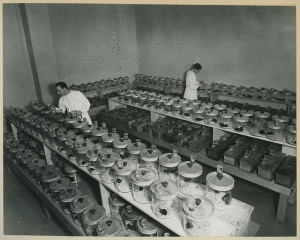
Army Medical School Mouse Research
“The history of cancer research has been a history of curing cancer in the mouse. We have cured mice of cancer for decades—and it simply didn’t work in humans.” This statement was made by Richard Klausner, M.D., former director of the National Cancer Institute, to the Los Angeles Times (Cimons 1998). It is a statement that applies equally to many other common diseases. A decade ago, researchers reported on the existence of 195 published methods that prevented or delayed the development of type 2 diabetes in mice (Roep et al 2004). Yet none of these “breakthroughs” ever translated to human medicine.
What prevents successes in mice from becoming human cures and treatments? The reason is largely a simple one, as we showed when we recently analyzed the reputed contributions of mouse experiments to human type 2 diabetes research (Chandrasekera and Pippin 2013).
Type 2 diabetes (diabetes mellitus) is the fastest-growing disease in the United States, currently affecting approximately 26 million Americans, and estimated to quadruple in prevalence to affect one-third of Americans by 2050 (CDC 2011a). Type 2 diabetes is the seventh leading cause of death in the United States (CDC 2011b). It is a complex and multifactorial disease, characterized by many years (often decades) of sequential disruptions in glucose homeostasis. The pre-diabetes stage includes impairment of fasting glucose and glucose tolerance, often evolving into a specific metabolic syndrome that includes abdominal obesity, dyslipidemia, hypertension, and elevated fasting blood glucose. The eventual development of full-blown type 2 diabetes is signaled by overt hyperglycemia resulting from a combination of insulin resistance and dysfunction of insulin-producing pancreatic ß-cells. In other words, type 2 diabetes is a systemic disease occurring at several sites in the body.
In contrast to this complexity, mouse models of human diabetes are biologically simpler. Disease occurs rapidly, and typically manifests only one or a few of the factors and symptoms associated with human diabetes. For example, one category of mouse model impedes or eliminates the production of insulin by the pancreas. This is achieved either by partial or complete surgical removal of the pancreas (Islam 2009), or by chemical destruction of pancreatic ß-cell function with cytotoxic drugs such as streptozotocin or alloxan (Lenzen 1979).
But these models do not replicate human type 2 diabetes, in part because they do not account for the risk factors, long latency, related pathologies, co-morbidities, symptoms, and genetic influences (Dupuis and colleagues 2010; DIAGRAM Consortium 2014) of diabetes as found in humans. The same criticism can be made of other mouse models that employ nutritional interventions, spontaneous genetic mutations, and transgenic manipulations. None replicates the complex human disease either biologically or phenotypically (Chandrasekera and Pippin 2013).
Compounding the problem of replicating human type 2 diabetes in mice without knowing its fundamental causes is the difficulty that mice differ in many respects from humans, including in functions related to glucose metabolism. In our paper, we describe in detail decades of type 2 diabetes research primarily using mice, and the many discrepancies compared to human-based research findings (Chandrasekera and Pippin 2013). For example, Vassilopoulos and colleagues 2009 reported that mice do not possess the protein that in humans mediates transport of circulating glucose into cells by means of membrane-bound vesicles. And Cabrera and colleagues 2006 described prominent pancreatic islet anatomic and architectural differences between humans and mice. These differences not only have “functional implications for islet cell function,” but also potentially invalidate decades of mouse experiments to investigate human diabetes.
The importance of interspecies differences in studying human type 2 diabetes in mice is exemplified by examining the rate-limiting step in human glucose metabolism, which is insulin-dependent glucose uptake into skeletal muscle. In humans, this step is facilitated by glucose transporter 4 (GLUT 4) protein and requires the action of the CHC22 protein. The CHC22 protein is highly expressed in human skeletal muscle, but the encoding gene exists only as a nonfunctioning pseudogene in mice (Wakeham 2005; Vassilopoulos 2009). Thus, attempts to apply mouse glucose transport studies to humans are impeded due to species differences in the GLUT 4 trafficking pathway.
Similar immutable barriers to the use of mice to study human type 2 diabetes exist at every level from gene structure and gene regulation to disease manifestations and phenotypes. This explains why neither any single mouse model, nor any combination of mouse models, can replicate human type 2 diabetes or reliably inform its prevention or cure. Thus species-specific differences and contradictory findings have been identified for every biological level of investigation—nucleic acid, protein, glucose pathway, cellular, tissue, organ, organism, and population levels.
All this is detailed in our recent review paper (Chandrasekera and Pippin 2013), in which we also note the paucity of effective human treatments and the absence of cures. We conclude that the strikingly consistent failure to translate mouse research to human type 2 diabetes prevention and treatment cannot be remedied; but can best be addressed by “humanizing” type 2 diabetes research—that is, studying the disease using a combination of human cell cultures and tissues, in vitro and stem cell methods, laboratory and clinical population studies, and other approaches directly relevant for diabetes patients.
Mouse research into other diseases is equally unsuccessful
In a head-turning article last year, researchers from more than a dozen medical institutions investigated the accuracy of mouse experiments to replicate the changes that occur in three severe inflammatory human disorders: trauma, sepsis, and burns (Seok and colleagues 2013).
They found that patterns of gene expression in humans and mice experiencing these disorders did not correlate. The authors, referred to the murine responses as “close to random in matching their human counterparts.” In some instances the genetic responses were opposite for humans and mice, implying that treatments that benefit mice could harm humans. In interpreting their results, the authors noted that about 150 treatments for these inflammatory disorders had been tested in humans after succeeding in mouse experiments. Every one of those treatments has failed. Their research offered a simple but fundamental explanation for those failures, localizing to differential gene expression in mice and humans.
Seok and colleagues wrote that “our study supports higher priority for translational medical research to focus on the more complex human conditions rather than relying on mouse models to study human inflammatory diseases.” But they also concluded that the complete genetic dissociation in their study impugns the appropriateness of studying mice in other areas of medical research and for drug development. And in fact, mice have been discredited in the eyes of many for the study of numerous other human diseases.
For example, applying treatments that were successful in mice, all of ten randomized prospective clinical trials involving more than 2,700 patients, testing spinal cord injury treatments, have failed, as have many other spinal cord injury clinical trials (Tator 2006). In 2012, Tator updated his review and again reported that “no agents that produce major benefit have been proven to date.” (Tator 2012). A detailed review of animal models for spinal cord injury (Akhtar and colleagues 2008) describes their shortcomings as models and the absence of translation to human spinal cord injury.
Other researchers have acknowledged the failure of mouse research for traumatic brain injury to translate into human benefits. This failure is highlighted in the report by Maas and colleagues 2010 of 22 phase III clinical trials and six unpublished trials that all failed to benefit traumatic brain injury patients, despite positive results in animal studies.
The standard superoxide dismutase 1 (SOD1) mouse models for the study of amyotrophic lateral sclerosis (ALS or Lou Gehrig’s disease) employ transgenic mice with mutations in the gene coding for SOD1, a protein that destroys superoxide radicals in humans. Mutated SOD1 is strongly associated with ALS, but these mouse mutants have been an abject failure, in that no phase III human trial in four decades has shown convincing benefit for patients (Rothstein 2004; Traynor 2006; Benatar 2007). Nor have mouse studies contributed to any useful treatments for related motor neuron diseases, prompting the National Institute of Neurological Disorders and Stroke to acknowledge: “There is no cure or standard therapy for MNDs [motor neuron diseases].” (NINDS 2014)
Mice are also the standard models for Alzheimer disease, in particular transgenic mouse models designed to express mutated proteins associated with brain pathologies in Alzheimer disease. In a new review, Cavanaugh and colleagues 2014 reported in detail the failure of two dozen transgenic mouse and rat models and more than three dozen drugs when tested in Alzheimer disease clinical trials. Cavanaugh also proposed improving the reliability and applicability of Alzheimer’s disease research by emphasizing the causative role of lifestyle factors and the potential for humanizing research.
For decades, human xenograft mouse models have formed the foundation of basic science research into human cancers. Yet the translational success rate for this research is lower than for any other area of animal research into human diseases (Kola 2004; Roberts 2004; Hutchinson 2011). Only a small percentage of mouse research into human cancers is even reproducible (Prinz 2011; Begley 2012), and both the U.S. National Cancer Institute (Shoemaker 2006; NCI 2014) and the National Cancer Institute of Canada (Voskoglou-Nomikos 2003) have demonstrated the superiority of human cancer cell lines compared to mouse models for the development of beneficial treatments.
The failing research paradigm
More than forty years after the launch of the War on Cancer by President Richard Nixon, that war is still being lost in laboratories pursuing mouse experiments. Choose almost any area of medical research using mice, and you will see a failed paradigm often spanning several decades. The reasons why such discredited research continues are complex and often unrelated to scientific merit, but medical researchers would be wise to remember that the first thing to do when you’re in a deep hole is to stop digging.
[Dr. Pippin is a cardiologist, former animal researcher, and director of academic affairs for the nonprofit Physicians Committee for Responsible Medicine]

References
Akhtar AZ, et al. (2008). Animal models in spinal cord injury: a review. Rev Neurosci 19:47-60.
Begley CG, Ellis LM (2012). Raise standards for preclinical cancer research. Nature 483:531-533.
Benatar M (2007). Lost in translation: treatment trials in the SOD1 mouse and in human ALS. Neurobiol Dis 26:1-13.
Cabrera O, et al. (2006). The unique cytoarchitecture of human pancreatic islets has implications for islet cell function. Proc Natl Acad Sci 103:2334-2339.
Cavanaugh SE, et al. (2014). Animal models of Alzheimer disease: historical pitfalls and a path forward. ALTEX online first (April 10, 2014).
CDC (2011a). National diabetes fact sheet. Accessed May 12, 2014 at http://www.cdc.gov/DIABETES/pubs/factsheet11.htm.
CDC (2011b). Leading causes of death. Accessed May 12, 2014 at http://www.cdc.gov/nchs/data/nvsr/nvsr61/nvsr61_06.pdf.
Chandrasekera PC, Pippin JJ (2013). Of rodents and men: species-specific glucose regulation and type 2 diabetes research. ALTEX 31:157-176.
Cimons M, et al. (1998) “Cancer drugs face long road from mice to men.” Los Angeles Times, May 6, 1998, page A1.
DIAGRAM Consortium, et al. Genome-wide trans-ancestry meta-analysis provides insight into the genetic architecture of type 2 diabetes susceptibility. Nature Genetics 46:234-244.
Dupuis J, et al. (2010). New genetic loci implicated in fasting glucose homeostasis and their impact on type 2 diabetes risk. Nature Genetics 42:105–116.
Hutchinson L, Kirk R (2011). High drug attrition rates – where are we going wrong? Nat Rev Clin Oncol 8:189-190.
Islam MS, Loots DT (2009) Experimental rodent models of type 2 diabetes: a review. Methods Find Exp Clin Pharmacol 31:249-61.
Kola I, Landis J (2004). Can the pharmaceutical industry reduce attrition rates? Nat Rev Drug Discov 3:711-715.
Lenzen S (1979). Insulin secretion by isolated rat and mouse pancreas. Am J Physiol 236:E391-E400.
Maas AIR, et al. (2010). Clinical trials in traumatic brain injury: past experience and current developments. Neurotherapeutics 7:115-126.
NCI-60 DTP Human Tumor Cell Line Screen (2014).
NINDS website (2014). Motor neuron diseases fact sheet.
Prinz F, et al. (2011). Believe it or not: how much can we rely on published data on potential drug targets? Nat Rev Drug Discov 10, doi:10.1038/nrd3439-c1
Roberts TG, et al. (2004). Trends in the risks and benefits to patients with cancer participating in phase 1 clinical trials. JAMA 292:2130-2140.
Roep BO, et al. (2004). Satisfaction (not) guaranteed: re-evaluating the use of animal models of type 1 diabetes. Nat Rev Immunol 4:989-997.
Rothstein JD (2004).Preclinical studies: how much can we rely on? Amyotroph Lateral Scler 5 (suppl 1): 22-25.
Seok J, et al. (2013). Genomic responses in mouse models poorly mimic human inflammatory diseases. Proc Natl Acad Sci 110:3507-3512.
Shoemaker RH (2006). The NCI60 human tumour cell line anticancer drug screen. Nat Rev Cancer 6:813-823.
Tator CH (2006). Review of treatment trials in human spinal cord injury: issues, difficulties, and recommendations. Neurosurgery 59:957-987.
Tator CH, et al. (2012). Translational potential of preclinical trials of neuroprotection through pharmacotherapy for spinal cord injury. J Neurosurg: Spine (suppl) 17:157-229.
Traynor BJ, et al. (2006). Neuroprotective agents for clinical trials in ALS: a systematic assessment. Neurology 67:20-27.
Vassilopoulos S, et al. (2009). A role for the CHC22 clathrin heavy-chain isoform in human glucose metabolism. Science 324;1192-1196.
Voskoglou-Nomikos T, et al. (2003). Clinical predictive value of the in vitro cell line, human xenograft, and mouse allograft preclinical cancer models. Clin Cancer Res 9:4227-4239.
Wakeham DE, et al. (2005). Clathrin heavy and light chain isoforms originated by independent mechanisms of gene duplication during chordate evolution. Proc Natl Acad Sci 102:7209-7214.