Saturday, April 9, 2016

2263. Three Millennia of Climatic, Ecological, and Cultural Change on Easter Island: An Integrative Overview

Valentí Rull, Núria Cañellas-Boltà, Olga Margalef, Sergi Pla-Rabes, Alberto Sáez and Santiago Giralt, Frontiers in Ecology and Evolution, March 29, 2016

Eastern Island (Rapa Nui) is famous for the legacy of an extinct civilization symbolized by the megalithic statues called moai. Several enigmas regarding the colonization of the island its deforestation and a presumed cultural collapse of the ancient civilization still remain elusive. According to the prevailing view, the first settlers arrived between AD 800 and AD 1200 from east Polynesia and overexploited the island's natural resources causing an ecological catastrophe leading to a cultural collapse (Flenley and Bahn, 2003). The main evidence for this theory was the abrupt replacement of palm pollen by grass pollen in the sediments of the island's lakes and mires (Raraku, Kao, and Aroi), which was interpreted in terms of a thorough deforestation between approximately AD 1200 and AD 1400/1600 (Flenley and King, 1984; Flenley et al., 1991; Mann et al., 2008). This ecocidal view is widely accepted not only by the scientific community but also by society, thanks to its popularization by the mass media. Under this perspective, Easter Island has been considered a microcosmic model showing how human selfishness can eventually cause our own destruction (Diamond, 2005). Another view is that Polynesian colonizers arrived slightly later, between AD 1200 and AD 1300 (Wilmshurst et al., 2011), and the deforestation—which was not completed until AD 1650—was the result of massive palm fruit consumption by rats carried to the island by the first settlers (Hunt, 2006, 2007). According to this view, the cultural collapse did not occur until the European arrival (AD 1722) and was a genocide caused by the introduction of previously unknown illnesses and slave trading (Lipo et al., 2016).
During the last decade, the study of Easter Island has benefited by the proliferation of lake and peat coring and the introduction of new analytical methods. Former paleoecological analyses were based on sediments that contained frequent age inversions and extensive sedimentary gaps hiding the paleoecological trends of a significant part of the last millennia (Rull et al., 2010, 2013). A recent improvement has been the finding of new paleoecological sequences with continuous sedimentation during the last 3000 years, which has provided new insights on paleoecological trends with potential climatic and cultural implications (e.g., Cañellas-Boltà et al., 2013; Rull et al., 2015). Other progress has included the development of multiproxy studies including independent evidence for either ecological or climatic changes. Former paleoecological studies were based mostly on pollen analysis alone and attempted to derive climate changes from biological evidence, which is inadequate to evaluate the ecological responses to climatic changes. Recent studies include detailed lithostratigraphic, sedimentological, geochemical, and biological proxies, which allow separation of ontogenetic factors from external environmental drivers of ecological change, notably climatic changes and human activities (Sáez et al., 2009; Cañellas-Boltà et al., 2012, 2016; Margalef et al., 2013, 2014). The introduction of new analytical techniques to identify remains of cultigens, as for example phytoliths and starch, has been useful to locate human fingerprints in sedimentary sequences (Horrocks et al., 2012a,b, 2013, 2015; Bowdery, 2014). New developments based on DNA analysis of modern humans and food remains from ancient skeletons have shed new light on the origin of settlers (Thorsby, 2012; Thromp and Dudgeon, 2015). In addition, some new analyses and meta-analyses on radiocarbon dates associated with archeological remains have provided relevant information on human activities, land use and demography (Mulrooney, 2013; Stevenson et al., 2015). We believe that the incorporation of these new findings into a coherent history needs the development of a novel synthesis of the historical and recent evidence into a holistic framework, where the different interpretations are viewed as complementary, rather than incompatible, contributions. This paper is a first proposal for such an integrated approach.
Concerning human settlement, archeological and anthropological evidence is consistent with the Polynesian origin of the ancient civilization represented by the moai (Flenley and Bahn, 2003). Using this evidence, the former hypothesis of Heyerdahl (1968)that Amerindian settlers would have arrived several centuries before the Polynesian colonizers was dismissed. However, new findings have revitalized Heyerdahl's proposal (albeit not his cultural interpretation). Indeed, recent palynological analyses revealed that the first deforestation event recorded so far occurred at 450 BC and was associated with the initiation of fires and the first appearance of Verbena litoralis, a human-dispersed weed of American origin (Cañellas-Boltà et al., 2013; Figure 1). In addition, Thromp and Dudgeon (2015) found starch remains of Ipomoea batatas (sweet potato), also of American origin, in the dental calculus of human skeletons as old as AD 1330 and concluded that this plant was important in the diet of the ancient islanders four centuries before the European contact. Thorsby (2012) analyzed the gene pool of modern Polynesian descendants and found evidence of Amerindian contact before, at least, two centuries prior to the European arrival (Figure 1). Therefore, the presence of Amerindian settlers before and/or during the development of the ancient moai culture is strongly supported from varied and independent sources of evidence.
FIGURE 1
www.frontiersin.org
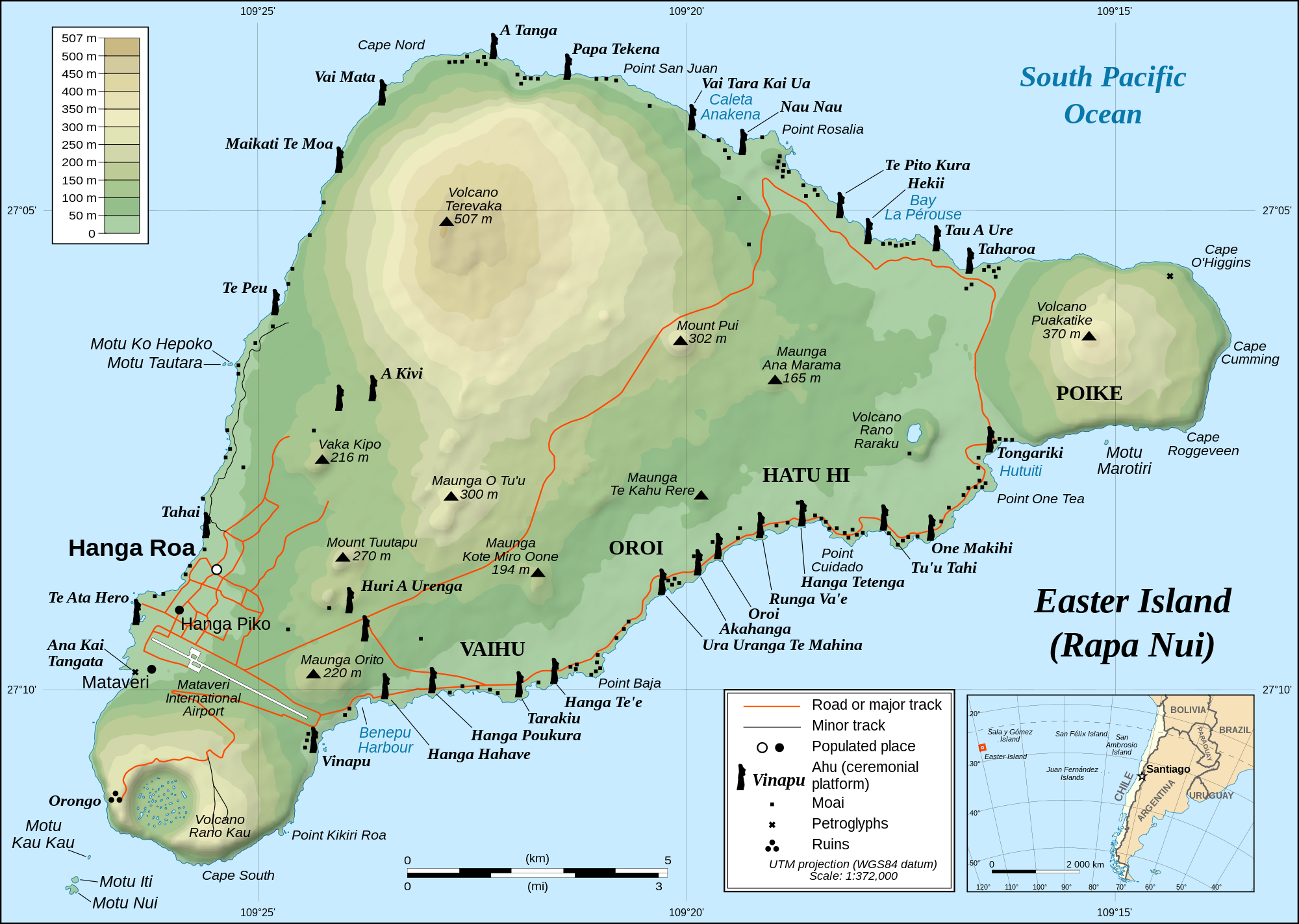
Figure 1. (A) Sketch map of Easter Island indicating the localities mentioned in the text. (B) Summary of the climatic, ecological, and cultural trends of Easter Island over the last three millennia. The uppermost climatic phases summarize the current northern hemisphere and Pacific climatic phases according to Nunn (2007). Drought phases recorded at Raraku are shaded and deforestation pulses are highlighted by dotted lines. RWP, Roman Warm Period; DACP, Dark Ages Cold Period; MCA, Medieval Climate Anomaly; 1300, “1300 event;” LIA, Little Ice Age; Am, Americans; cu, first evidence of local cultivation; dgt, drought; pd, partial deforestation; td, total deforestation; wtr, wetter. References: 


Recent palynological results on peat and lake cores with nearly continuous sedimentation during the last three millennia suggest that forest clearing did not occur at the same time over the whole island and proceeded at different rates according to the site analyzed. For example, in Lake Raraku, situated in the coastal lowlands, the deforestation was a long and gradual process that took place in three pulses at 450 BC, AD 1200 and AD 1500 (Cañellas-Boltà et al., 2013; Figure 1). The first signs of cultivation in this catchment were recorded slightly before AD 1400 (Horrocks et al., 2012a). Contrastingly, in the Aroi mire, located inland at higher elevations, a densification of the former open palm forests occurred at AD 1250 and the resulting dense forests were removed abruptly, between AD 1520 and AD 1620, using fire (Rull et al., 2015). Cultivation inside the Aroi catchment did not start until AD 1640 (Horrocks et al., 2015). These results are compatible with a heterogeneous pattern of land use and occupation prior to the European contact (Stevenson et al., 2015), with a conspicuous pattern of coastal abandonment toward inland/upland settlements, which was characteristic of many eastern Pacific archipelagos during the same times (Nunn, 2003, 2007).
Recent multiproxy surveys have suggested a relationship between climate variability and landscape shifts, some of them of potential cultural significance. Mann et al. (2008) favored the occurrence of Late Holocene droughts and Sáez et al. (2009)suggested their potential role in deforestation. This view was not shared by Junk and Claussen (2011) who believe that, during the last millennium, climate changes alone might have been too small to explain strong vegetation changes that have occurred on the island. Further analyses on nearly continuous cores from Lake Raraku and Aroi mire have provided additional insights. In Raraku, the first deforestation event (450 BC) took place under climates drier than at present, when the present lake did not exist and the basin was occupied by a marsh (Cañellas-Boltà et al., 2013). Arid conditions intensified between AD 500 and AD 1200, leading to a drought phase coeval with the Classic Maya Collapse of Central America (~AD 900), attributed to the increased frequency of prolonged droughts (Haug et al., 2003). In the Pacific islands, this time interval was characterized by climatic stability, sea levels higher than today and increasing food production thanks to the development of irrigation practices and terracing. These conditions favored long-distance navigation and new settlements, especially in eastern Polynesia (Nunn, 2007). According to the prevailing theory, the Polynesian colonization of Easter Island occurred during this phase (Figure 1). However, Goodwin et al. (2014) suggested that, during the Medieval Climate Anomaly (MCA), navigation to and from Easter Island was possible in both eastward and westward directions.
A significant shift to wetter climates and higher lake levels occurred at AD 1200 (Figure 1), roughly coinciding with the onset of a regional Pacific phase called the “1300 event,” which represented the transition between the MCA and the Little Ice Age (LIA). The 1300 event was characterized by cool and wet climates, increased storminess due to ENSO intensification and a sea level drop below its present position (Nunn, 2007). During this wet period, which, at Easter Island, lasted until AD 1570, the Aroi and Raraku catchments exhibited disparate landscape trends. In Aroi, open palm forests underwent a densification that transformed them into relatively dense palm forests likely as a consequence of increased moisture availability (Rull et al., 2015). In Raraku, on the contrary, the second fire-driven, likely anthropogenic, deforestation pulse occurred and the reverse shift, from dense forest to open forest, took place (Cañellas-Boltà et al., 2013). Under the ecocidal view, this second pulse coincided with the beginning of the total deforestation of the island, whereas for the defenders of the rats as deforestation agents, the clearing began some 50 years later (Figure 1). This wetter phase coincided also with the phase known as ahu moai (roughly AD 1200–1500), during which these megalithic statues were built and venerated, which was also the time of maximum prosperity and expansion of the ancient Polynesian culture on the island (Nunn, 2007). A direct cause-effect relationship between climate and cultural traits cannot be established with the available evidence; however, it could be argued that increased water availability would have favored cultural flourishment.
Palm forests were almost totally removed from Raraku and Aroi in AD 1570 and AD 1620, respectively, before the end of the wet phase (Figure 1). Again, the sharp increase in charcoal, at both sites, strongly suggests anthropogenic burning. This was the “coup de grace” of the deforestation of these basins and, likely, of the whole island (Rull et al., 2015). A second drought between AD 1570 and AD 1720 occurred when the island was mostly (according to the rat theory) or totally (according to the ecocidal theory) deforested and grass meadows dominated the landscape. The population collapse of the ecocidal theory—which is attributed by its defenders to resource exhaustion and internal wars—occurred during this drought, which suggests that this cultural demise would have not been fully ecocidal but the result of a synergistic effect of climate severity and anthropogenic landscape degradation. Some authors (e.g., Nunn, 2007) consider that the phase of huri moai—characterized by the abandonment of the moai cult and the toppling of these statues, and the initiation of the birdman cult (Figure 1)—began at AD 1500, in which case this cultural shift would have paralleled the demographic collapse. Others believe that the huri moai phase started at AD 1680 (e.g., McLaughlin, 2007), in which case, there is no indication of climatic forcing in the paleoecological body of evidence available so far. Wetter climates returned by AD 1720, close to the European arrival, which marked the onset of a genocidal cultural collapse that has been well documented historically (Hunt and Lipo, 2011). The landscape did not experience any significant changes and grasslands dominated the scene.
This preliminary synthesis needs further refinement and could be considered a first approach to a synthetic framework toward a holistic Easter Island history combining climatic, ecological and cultural evidence. An important message is that environmental and human drivers of change can either have separate effects, or can act synergistically, coupled in positive feedbacks (Vegas-Vilarrúbia et al., 2011; Zahid et al., 2015). Under a synthetic framework, it is hoped that hypotheses that are usually presented as incompatible—e.g., environmental vs. cultural determinism, ecocide vs. genocide, or human vs. rat deforestation, among others—may be analyzed under a more complementary perspective. For example, Brandt and Merico (2015) developed a demographic model in which elements of both ecocidal and genocidal hypotheses concur to produce a long and slow population decline between ca. AD 1300 and 1800. The desired synthesis should also benefit from the incorporation of new analytical techniques available in paleoecology, as for example DNA and fecal lipid analysis of sediments, to enhance the possibilities of detection of human fingerprint (Rull et al., 2013). Also, new coring campaigns are necessary to deal with problematic sites, mainly in terms of dating, as for example Rano Kao.
References
Bowdery, D. (2014). An enigma revisited: identification of palm phytoliths extracted from the 1983 Rapa Nui, Rano Kao2 core. Veg. Hist. Palaeobot. 24, 455–466. doi: 10.1007/s00334-014-0503-x
Brandt, G., and Merico, A. (2015). The slow demise of Easter Island: insights from a modelong investigation. Front. Ecol. Evol. 3:13. doi: 10.3389/fevo.2015.00013
Cañellas-Boltà, N., Rull, V., Sáez, A., Margalef, O., Bao, R., Pla-Rabes, S., et al. (2013). Vegetation changes and human settlement of Easter Island during the last millennia: a multiproxy study of the Lake Raraku sediments. Quat. Sci. Rev. 72, 36–48. doi: 10.1016/j.quascirev.2013.04.004
Cañellas-Boltà, N., Rull, V., Sáez, A., Margalef, O., Giralt, S., Pueyo, J. J., et al. (2012). Macrofossils in Raraku Lake (Easter Island) integrated with sedimentary and geochemical records: towards a paleoecological synthesis. Quat. Sci. Rev. 34, 113–126. doi: 10.1016/j.quascirev.2011.12.013
Cañellas-Boltà, N., Rull, V., Sáez, A., Margalef, O., Pla-Rabes, S., Valero-Garcés, B., et al. (2016). Vegetation dynamics at Raraku Lake catchment (Easter Island) during the past 34,0000 years. Palaeogeogr. Palaeoclimatol. Palaeoecol. 446, 55–69. doi: 10.1016/j.palaeo.2016.01.019
Diamond, J. (2005). Collapse: How Societies Choose to Fail or Succeed. New York, NY: Viking.
Flenley, J. R., and Bahn, P. (2003). The Enigmas of Easter Island. Island on the Edge. New York, NY: Oxford University Press.
Flenley, J. R., King, A. S. M., Jackson, J., and Chew, C. (1991). The late quaternary vegetational and climatic history of Easter Island. J. Quat. Sci. 6, 85–115. doi: 10.1002/jqs.3390060202
Flenley, J. R., and King, S. M. (1984). Late Quaternary pollen records from Easter Island. Nature 307, 47–50. doi: 10.1038/307047a0
Goodwin, I. D., Browning, S. A., and Anderson, A. J. (2014). Climate windows for Polinesian voyaging to New Zealand and Easter Island. Proc. Natl. Acad. Sci. U.S.A.111, 14716–14721. doi: 10.1073/pnas.1408918111
Haug, G. H., Günter, D., Peterson, L. C., Sigman, D. M., Hughen, K. A., and Aeschlimann, B. (2003). Climate and the collapse of Maya civilization. Science 299, 1731–1735. doi: 10.1126/science.1080444
Heyerdahl, T. (1968). Easter Island. The Mystery Solved. New York, NY: Random House.
Horrocks, M., Baisden, W. T., Flenley, J., Feek, D., González Nualart, L., Haoa-Cardinali, S., et al. (2012a). Fossil plant remains at Rano Raraku, Easter Island's statue quarry: evidence for past elevated lake level and ancient Polynesian agriculture. J. Paleolimnol. 48, 767–783. doi: 10.1007/s10933-012-9643-0
Horrocks, M., Baisden, W. T., Harper, M. A., Marra, M., Flenley, J., Feek, D., et al. (2015). A plant microfossil record of Late Quaternary environments and human activity from Rano Aroi and surroundings, Easter Island. J. Paleolimnol. 54, 279–303. doi: 10.1007/s10933-015-9852-4
Horrocks, M., Baisden, W. T., Nieuwoudt, W. T., Flenley, J., Feek, D., González Nualart, L., et al. (2012b). Microfossils of Polynesian cultigens in lake sediment cores from Rano Kau, Easter Island. J. Paleolimnol. 47, 185–204. doi: 10.1007/s10933-011-9570-5
Horrocks, M., Marra, M., Baisden, W. T., Flenley, J., Feek, D., González Nualart, L., et al. (2013). Pollen, phytoliths, arthropods and high-resolution 14C sampling from Rano Kau, Easter Island: evidence for late quaternary environments, ant (formicidae) distributions and human activity. J. Paleolimnol. 50, 417–432. doi: 10.1007/s10933-013-9735-5
Hunt, T. L. (2006). Rethinking the fall of Easter Island: new evidence points to an alternative explanation for a civilization's collapse. Am. Sci. 94, 412–419. doi: 10.1511/2006.61.1002
Hunt, T. L. (2007). Rethinking Easter Island's ecological catastrophe. J. Archaeol. Sci. 34, 485–502. doi: 10.1016/j.jas.2006.10.003
Hunt, T. L., and Lipo, C. (2011). The Statues That Walked. New York, NY: Free Press.
Junk, C., and Claussen, M. (2011). Simulated climate variability in the region of Rapa Nui during the last millennium. Clim. Past 7, 579–586. doi: 10.5194/cp-7-579-2011
Lipo, C. P., Hunt, T. L., Horneman, R., and Bonhomme, V. (2016). Weapons of war? Rapa Nui mata'a morphometric analyses. Antiquity 90, 172–187. doi: 10.15184/aqy.2015.189
Mann, D., Edwards, J., Chase, J., Beck, W., Reanier, R., Mass, M., et al. (2008). Drought, vegetation change, and human history on Rapa Nui (Isla de Pascua, Easter Island). Quat. Res. 69, 16–28. doi: 10.1016/j.yqres.2007.10.009
Margalef, O., Cañellas-Boltà, N., Pla-Rabes, S., Giralt, S., Pueyo, J. J., Joosten, H., et al. (2013). A 70,000 year multiproxy record of climatic and environmental change from Rano Aroi peatland (Easter Island). Glob. Planet. Change 108, 72–84. doi: 10.1016/j.gloplacha.2013.05.016
Margalef, O., Martínez Cortizas, A., Kylander, M., Pla-Rabes, S., Cañellas-Boltà, N., Pueyo, J. J., et al. (2014). Environmental processes in Rano Aroi (Easter Island) peat geochemistry forced by climate variability during the last 70 kyr. Palaeogeogr. Palaeoclimatol. Palaeoecol. 414, 438–450. doi: 10.1016/j.palaeo.2014.09.025
McLaughlin, S. (2007). The Complete Guide to Easter Island. Los Osos: Easter Island Foundation.
Mulrooney, M. (2013). An island-wide assessment of the chronology of settlement and land use on Rapa Nui (Easter Island) based on radiaocarbon data. J. Archaeol. Sci. 40, 4377–4399. doi: 10.1016/j.jas.2013.06.020
Nunn, P. D. (2003). Nature-society interactions in the Pacific Islands. Geogr. Ann. 85, 219–229. doi: 10.1111/j.0435-3684.2003.00144.x
Nunn, P. D. (2007). Climate, Environment and Society in the Pacific During the Last Millennium. Amsterdam: Elsevier.
Rull, V., Cañellas-Boltà, N., Margalef, O., Sáez, A., Pla-Rabes, S., and Giralt, S. (2015). Late Holocene vegetation dynamics and deforestation in Rano Aroi: implications for Easter Island's ecological and cultural history. Quat. Sci. Rev. 126, 219–226. doi: 10.1016/j.quascirev.2015.09.008
Rull, V., Cañellas-Boltà, N., Sáez, A., Giralt, S., Pla, S., and Margalef, O. (2010). Paleoecology of Easter Island: evidence and uncertainties. Earth Sci. Rev. 99, 50–60. doi: 10.1016/j.earscirev.2010.02.003
Rull, V., Cañellas-Boltà, N., Sáez, A., Margalef, O., Bao, R., Pla-Rabés, S., et al. (2013). Challenging Easter Island's collapse: the need for interdisciplinary synergies. Front. Ecol. Evol. 2:56. doi: 10.3389/fevo.2014.00056
Sáez, A., Valero-Garcés, B., Giralt, S., Moreno, A., Bao, R., Pueyo, J. J., et al. (2009). Glacial to Holocene climate changes in the SE Pacific. The Raraku Lake sedimentary record (Easter Island, 27°S). Quat. Sci. Rev. 28, 2743–2759. doi: 10.1016/j.quascirev.2009.06.018
Stevenson, C. M., Puleston, C. O., Vitousek, P. M., Chadwick, O. A., Haoa Cardinali, S., and Ladefoged, T. N. (2015). Variation in Rapa Nui (Easter Island) land use indicates production and population peaks prior to European contact. Proc. Natl. Acad. Sci. U.S.A. 112, 1025–1030. doi: 10.1073/pnas.1420712112
Thorsby, E. (2012). The Polynesian genepool: an early contribution by Amerdians to Easter Island. Phil. Trans. R. Soc. B 367, 812–819. doi: 10.1098/rstb.2011.0319
Thromp, M., and Dudgeon, J. V. (2015). Differentiating dietary and non-dietary microfossils extracted from human dental calculus: the importance of sweet potato to ancient diet on Rapa Nui. J. Archaeol. Sci. 54, 54–63. doi: 10.1016/j.jas.2014.11.024
Vegas-Vilarrúbia, T., Rull, V., Montoya, E., and Safont, E. (2011). Quaternary palaeocology and nature conservation: a general review and some examples from the Neotropics. Quat. Sci. Rev. 30, 3420–3444. doi: 10.1016/j.quascirev.2011.05.006
Wilmshurst, J. M., Hunt, T. L., Lipo, C. P., and Anderson, A. J. (2011). High-precision radiocarbon dating shows recent and rapid initial human colonization of East Polynesia. Proc. Natl. Acad. Sci. U.S.A. 108, 1815–1820. doi: 10.1073/pnas.1015876108
Zahid, H. J., Robinson, E., and Kelly, R. L. (2015). Agriculture, population growth, and statistical analysis of the radiocarbon record. Proc. Natl. Acad. Sci. U.S.A. 113, 931–935. doi: 10.1073/pnas.1517650112
*Correspondence: Valentí Rull, vrull@ictja.csic.es

Wednesday, April 6, 2016

2262. Can Cuba Supply America’s Growing Appetite for Organic Food?

By Lorraine Chow, EcoWatch, April 5, 2016

American organic food producers and advocates, including the CEO of the Organic Trade Association and executives from Honest Tea, Stonyfield Farm and Global Organics, will be traveling to Cuba in May to take a closer look at the country’s unique, pesticide-free agricultural system and developing Cuba’s organic industry for export, POLITICO reported.
The trip will be organized by Rep. Chellie Pingree (D) of Maine. Star chef Tom Colicchio, Pingree’s friend and outspoken proponent of sustainable agriculture, will also attend.
The five-day trip is sponsored by the Center for Democracy in the Americas, which promotes a U.S. policy toward Cuba based on engagement and recognition of Cuba’s sovereignty.
“We’re interested in getting a foot in the door,” Pingree, who is also an organic farmer, told the Portland Press Herald. “And making sure that they know there are opportunities there.” Pingree also noted that Cuba has successfully produced essentially organic food for the last 25 years.
Following the collapse of the Soviet Union, Cuba lost their main supplier of fuel, fertilizers and pesticides and was forced into its Peak Oil crisis. The country basically had to learn how to grow their own food out of necessity. In 1993, the Cuban government eliminated the majority of state-owned farms and turned them over to the workers instead. According to the United Nations Environment Programme:
“While ensuring national food security under a trade embargo, Cuba’s transition to organic agriculture has also had a positive impact on people’s livelihoods by guaranteeing a steady income for a significant proportion of the population. Moreover, the lack of pesticides for agricultural production is likely to have a positive long-term impact on Cubans’ wellbeing since such chemicals are often associated with various negative health implications such as certain forms of cancer.”
The story was captured in the 2006 film, The Power of Community, and the movement is largely viewed as a shining example of sustainable farming.
Agriculture Secretary Tom Vilsack is a proponent of Cuban exports to the U.S. if or when the trade embargo ends.
“I think they have an incredible opportunity in the future to be a major supplier of value-added organic products, simply because they have not utilized modern agricultural processes, have not used chemicals and pesticides and so forth that have been used in other parts of the world, including the U.S.,” Vilsack told Modern Farmer after his November visit to the island nation.
POLITICO reported that the move could be a win-win for both countries:
“U.S. food producers are already relying on imports from South America, Europe and Asia to keep up with Americans’ demand for organic produce, dairy, meat and packaged foods. Meanwhile, Cuban farmers have had to work their land without chemical fertilizers and pesticides since the early 1990s when the Soviet Union collapsed. If Congress lifted the Cuban embargo, they would have easy access to a market willing to pay top prices for their goods.”

Tuesday, April 5, 2016

2261. Book Review: Extinction: A Radical History

By Matthew Schneider-Mayerson, Los Angeles Review of Books, March 28, 2016

UNLESS YOU’VE DELIBERATELY ignored the accelerating drumbeat of headlines, reports, and nonfiction books that have appeared over the past decade, you’re at least vaguely aware that we are in the midst of the sixth mass extinction in the history of the planet, in which 25 to 40 percent of all species are expected to disappear by 2050. 

Because extinction is generally a silent, invisible process, we are rarely forced to confront its inherent tragedy and the potentially vast ecological ripples of even a single species’ eradication. When we do, we wonder how we can possibly intervene, individually or collectively. While conservation efforts have widespread support and can boast a few modest (and temporary) victories, they have been overwhelmed by the ongoing wave of anthropogenic annihilation.

Which leads to the question that Ashley Dawson’s slim and forceful book, Extinction: A Radical History, aims to answer: how can we stem the tide? By identifying capitalism as the primary culprit, and placing the current mass extinction in the context of ongoing struggles for social and environmental justice, Dawson points the way toward appropriate forms of conservation for an era of devastating loss.

Why has half the planet’s wildlife disappeared over the last 40 years? Why are we losing approximately 100 species every day? The answer, Dawson argues, lies not in the proximate drivers of extinction (deforestation, habitat fragmentation, poaching, overfishing, and climate change) but in the nature of capitalism itself. Whereas recent popular works on extinction (such as Elizabeth Kolbert’s The Sixth Extinction: An Unnatural History) and climate change (such as Naomi Klein’s This Changes Everything: Capitalism vs. The Climate) have shied away from calling for an explicitly anticapitalist environmental politics, Extinction makes a compelling case for its urgent necessity. It does so through an “etiology of the present catastrophe” that combines deft historical synthesis with a careful attention to economic and racial inequality and the legacies of imperialism. Because of its demand for ceaseless expansion and its emphasis on anthropocentric utility as the sole criterion of value, capitalism tends to degrade the conditions of its own material reproduction. In this light, the exploitative features of modern capitalism become “particularly starkly evident when seen through the lens of extinction.”

This argument is far from new, but it is buttressed by a valuable — if somewhat compressed and sweeping — historical perspective. Dawson’s training in postcolonial literature makes him keenly aware of the importance of cultural narratives, and he begins with one of the oldest surviving human stories, The Epic of Gilgamesh, which he reads as a legitimizing myth of the deforestation practiced by the ancient Sumerian city-state of Uruk. Population pressures and unsustainable agricultural practices had disastrous consequences for Uruk and the region: the surrounding forest and its creatures, which the god Humbaba had protected, were transformed into desert remarkably quickly. Dawson follows this narrative up to the present day, describing the shifting cultural norms regarding animals and nature from ancient Rome through European colonization.

Colonialism had dramatic environmental consequences that scholars have only recently appreciated: colonists transported countless invasive species, forced indigenous peoples into integration in destructive market economies (such as the fur trade), and decimated native cultures that were efficient environmental managers. In addition, Europeans carried with them and attempted to impose cultural beliefs that inspired and permitted their conquest. The ideology of dominating and mastering a passive (feminine) nature was “intended to justify European expropriation of indigenous people and their land” but also “established an exploitative attitude toward flora and fauna” that continues to the present day.

Echoing many scholars in the environmental humanities, Dawson argues that much of the proliferating discourse on the Anthropocene (the current era in which humans act as a geologic force) falsely portrays a monolithic “humanity” as a natural architect of mass extinction. It thereby elides the culpability of modern forms of capital accumulation, which were constructed by and primarily benefited wealthy white Northerners. Dawson rightly refuses to see a propensity for environmental degradation as a core element of human nature (if such a thing can be said to exist), noting that cultures and practices of relative sustainability were developed and maintained by indigenous peoples and inhabitants of the global South for millennia. Since our diagnosis of the causes of the contemporary mass extinction necessarily frames our response to it, the question of whether contemporary rapacity equals that of prehistoric homo sapiens sapiens is critical. Dawson points out that this equivalence is not only “historically inaccurate” but “politically disempowering.”

What, then, is to be done? Existing and emerging responses to species extinction, Dawson argues, are not only insufficient but might actually exacerbate the problem. Traditional conservation practices — often focused on “saving” charismatic megafauna such as elephants, polar bears, and whales — may be noble endeavors, but they constitute a “paltry bandage over a gaping wound,” a claim that even their fiercest defenders would have to concede. Two novel strategies have attracted a great deal of attention, support, and funding: “rewilding,” which reintroduces key species into large tracts of new wilderness, and “de-extinction,” which proposes to resuscitatate vanished species through genetic engineering. While Dawson finds the former practice relatively harmless, he offers a scathing attack on the latter. De-extinction is potentially disastrous ecologically, he claims, because resuscitated wooly mammoths and passenger pigeons would not only hasten the demise of other species but could themselves suffer and disappear a second time. More broadly, such a Jurassic Park approach constitutes a form of “neoliberal disaster biocapitalism,” in which mass extinction becomes an opportunity for new forms of property, accumulation, and control. (As McKenzie Funk showed in his book Windfall: The Booming Business of Global Warming, climate change presents similar opportunities for eco-profiteering.) Not only are traditional conservation practices, along with rewilding and de-extinction, destined to fail, they offer the false hope that there there are solutions short of fundamental geopolitical transformation.

What must be constructed instead, Dawson forcefully argues, is a form of “radical conservation.” This would require recognizing that “the extinction crisis is at once an environmental issue and a social justice issue, one that is linked to long histories of capitalist domination over specific people, animals, and plants.” Dawson’s prescriptions build on initiatives from the global climate justice movement, including the adoption of “degrowth” (minimizing economic growth and consumption), the seizing of assets of major fossil-fuel corporations, and a “Robin Hood” tax on financial transactions, which would fund renewable energy generation, technology transfer to vulnerable nations, and compensation for eco-victims. It is here that Extinction disappoints in its brevity: a fuller explanation of these measures would have offered a useful contribution to the emerging literature on environmental politics in the Anthropocene. Moreover, Dawson is surprisingly nonspecific about the fate of threatened species beyond an abiding faith in the wisdom of the “people of the global South” that might not ultimately be rewarded. Of course, one might also argue that the radical measures Dawson advocates are currently political nonstarters; however, as he notes, “we cannot let the present state of affairs determine our horizon of hope and sense of possibility.”

Indeed, the goal of Extinction is to expand our horizons of possibility. Dawson’s raw and sometimes polemical language reflects an emotionally honest response to the incredible violence of species extinction and climate change, as well as a desire to inspire appropriate collective action. While its candor may remind readers of recent eco-apocalyptic meditations (such as Roy Scranton’s Learning to Die in the Anthropocene), Extinction provides an implicit rebuke to their contention that “we’re fucked” and can only accommodate ourselves — philosophically, culturally, psychologically — to a now-inevitable collapse. Though undeniably cathartic, such potentially self-fulfilling claims hide more than they reveal. In particular, they obfuscate historical and present responsibilities for contemporary environmental crises, the buffer provided by wealth, power, and privilege (for nations and individuals), and our ability to mitigate and adapt to whatever changes lie in store.

Extinction — and the environmental justice movement that inspires it — seeks to shift our perspective from the beneficiaries of “civilization” to the human and nonhuman victims of its exploitation and ecological destruction. For the millions of species that face extinction, and the billions of comparatively innocent poor and/or indigenous people that suffer from the destabilization and decline of life-supporting ecosystems, radical sociopolitical movements have the potential to slow the dual crises of mass extinction and global climate change. From such a perspective, the question of whether the emergence of an effective anticapitalist environmental politics is “realistic” or “practical” is irrelevant. It is essential. Though thinkers such as Christian Parenti have questioned the value of calling for an unlikely revolution given the “compressed timeframe” of climate change, such demands — and the movements they inspire — can also succeed by advancing alternative perspectives, highlighting neglected issues, and exerting political pressure that can influence public policy and the direction (and speed) of technological development.

Extinction is intended as a primer, and it builds on and points readers toward more detailed and nuanced treatments. On the affective dimensions of extinction, readers might consult Thomas van Dooren’s elegant Flight Ways: Life and Loss at the Edge of Extinction, which demonstrates the entanglement and mutual constitution of humans and nonhumans through six heartbreaking stories of avian extinction. On the historical and current relationship between capitalism and that thing we call “the environment,” Jason W. Moore’s Capitalism in the Web of Life: Ecology and the Accumulation of Capital seems poised to become a foundational text, synthesizing environmentalist and Marxist perspectives to argue that capitalism has always been a fundamentally ecological project. Sadly, these and many other innovative and important works in the environmental humanities are aimed primarily at academic readers. Extinction: A Radical History makes a case for being the most accessible and politically engaged examination of the current mass extinction, and is therefore a welcome contribution to the growing literature on this slow-motion calamity.

2260. Cancer: Not Just Bad Luck

By Peter Saunders, Institute of Science in Society, March 2, 2016
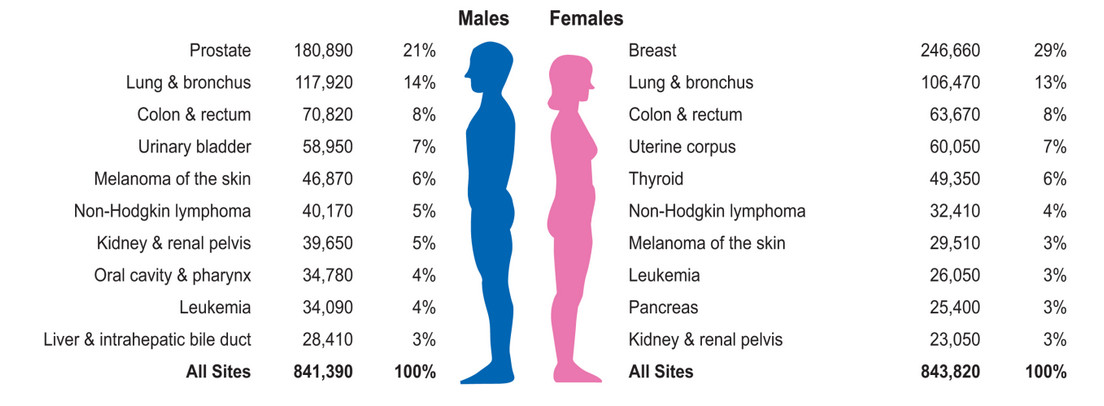
Estimated death from cancer by site in men and women in the United States, 2016 (American Cancer Society)

Abstract: While copying errors during stem cell division are a significant cause of cancer, they are not as important as mutations caused by factors such as radiation and chemical carcinogens; being careful about the environment and our lifestyle are effective ways of reducing our chances of developing cancer 

Cancer is a disease, or a group of diseases, in which cells in the body grow and multiply uncontrollably; they can invade and destroy the surrounding healthy tissue and they can spread to other parts of the body. Cells become malignant, i.e. cancerous, through mutations that occur either as damage caused by radiation or by various (mostly chemical) carcinogens, or else through copying errors when the cells are dividing and the DNA is being replicated [1] (but see [2] Cancer an Epigenetic Disease, SiS 54). It is now widely believed that the mutations that matter are in the stem cells, undifferentiated cells that can either differentiate into the specialised cells that make up a tissue or divide to produce more stem cells [1].

Cancer is far more common in some tissues than in others. In the UK, one in eight women will be diagnosed with breast cancer at some time in their lives, one in 18 with lung cancer and one in 214 with liver cancer [3]. The incidence of cancer also varies from country to country: for women the age standardised rate per 100 000 is 325 in France, 318 in the US, 273 in the UK and 217 in Japan. The rates for men are generally higher [4]. (Because older people are more likely to develop cancer, for international comparisons the rates have to be ‘age adjusted’ to what they would be if all countries had the same age distribution.)
These variations give us clues about the causes of cancer and how to prevent it. The best known example is the discovery that lung cancer is far more common among smokers than among non-smokers. This implied that discouraging smoking would be an effective and inexpensive way of reducing the number of cases of lung cancer. Experience has shown this to be correct, despite determined opposition from the tobacco industry and dragging of feet by governments.

Just plain bad luck

Why are the rates so different for different tissues? Let’s concentrate on copying errors for a moment. The chance that an error will occur in any division is about the same for all cells but the number of stem cell divisions over a lifetime varies considerably from tissue to tissue.  So if copying errors in stem cells were the only causes of cancer, the lifetime risk of cancer in any tissue would be proportional to the total number of stem cell divisions. If we plotted the lifetime risk of cancer in different tissues against the number of cell divisions, the points would all lie on a straight line.

Of course copying errors on division are not the only causes of cancer and the points do not all lie on a straight line. But in a recent study, Cristian Tomasetti and Bert Vogelstein [5] at Johns Hopkins University in Baltimore found that they lie reasonably close to a straight line (the solid black line in Figure 1). The correlation coefficient is 0.81, which is generally accepted to indicate a strong linear correlation.

Copying errors are not, however, the only cause of cancer. We know that radiation and a large number of carcinogens are also implicated. What we need to know is how significant the other causes are. There may not be very much we can do about stem cell divisions and copying errors, and if that’s how most harmful mutations occur, getting cancer is largely a matter of bad luck. Avoiding carcinogens may improve our chances a bit, but not by much. The more important carcinogens are as a cause, however, the more important it is to do all we can to avoid them, both as individuals (e.g. by not smoking) and as a society (e.g. by banning the use of known carcinogens).

A standard statistical method for dealing with this sort of question (but see below) is to suppose that the variation in the incidence of cancer is the sum of two causes: intrinsic (e.g. stem cell divisions) and extrinsic (e.g. radiation and carcinogens). The proportion that is due to stem cell divisions can be shown to be equal to the square of the correlation coefficient, which for the data in Fig 1 is about 0.81. This suggests that 65 % of cancer is just bad luck and at most 35 % is due to things we can do something about. 

Tomasetti and Vogelstein argue on the basis of their results that for a majority of cancers (lung cancer in smokers and colorectal cancers are among the exceptions) primary prevention such as changes in our lifestyles or in the environment is unlikely to make a major impact. We should be concentrating instead on early detection and treatment. 
If this were true, it would be good news for the manufacturers of chemicals known to be carcinogens and governments reluctant to spend money to cut down on pollution. 

Not entirely

In a recent paper, however, Song Wu and colleagues at Stony Brook University in New York State refute this argument [6]. They deal with Tomasetti and Vogelstein’s analysis but also draw on a number of different kinds of evidence. They point out that there is a great deal of variation among countries in the rates of many cancers, including breast cancer (almost 5 times as high in Europe as in Eastern Asia), and prostate cancer (almost 25 times higher in Australia and New Zealand than in South-Central Asia). What is more, when immigrants move from a country with a lower rate to one with a higher rate, they soon acquire the higher risk of their new country. This points very strongly to environmental factors; the genetic makeup of migrants cannot change in a couple of generations.

For many cancers, the environmental risk factors are known to be large. The best known is of course lung cancer; about 85 % of cases are due to long term exposure to tobacco smoke [7]. An estimated 75 % of the risk of colorectal cancer is attributable to diet, and for melanoma the risk ascribed to sun exposure is around 75 % [6].

There have also been studies of what are called mutational signatures in cancers, traces in the genome of cancer cells left by different mutagenic processes. There are about 30 distinct signatures, and only two are strongly correlated with the age of the patient. That suggests that these two are acquired at a more or less constant rate over the patient’s lifetime, and are probably the results of intrinsic processes. The others seem to be acquired at different rates in life and are probably caused by extrinsic factors; indeed several have been linked to factors such as ultra-violet radiation and smoking. Wu and colleagues point out that only a few cancers have large proportions of intrinsic mutations; most have large proportions of extrinsic mutations: almost 100% for myeloma, lung and thyroid cancers and 80-90% for bladder, colorectal and uterine cancers.

What about the correlation that Tomasetti and Vogelstein found? Even if their analysis is correct, the most it can tell us is that the number of stem cell divisions accounts for 65 % of the variation in cancer rates among tissues. That’s not the same as saying that it is 65 % of the cause of cancer. 

To see the distinction, imagine a large class of Asian students. All of them were born with black hair, but some have hair of a different colour because they have dyed it. The variability in hair colour is entirely due to the environment and not at all due to heredity. But we would be quite wrong to infer from this that heredity is not the reason almost all Asians have black hair. In the same way, Tomasetti and Vogelstein cannot infer from their analysis that errors in stem cell divisions are 65 % of the cause of cancer.

Wu and colleagues adopt a different approach. They argue that we would expect all tissues with the same number of cell divisions to have the same intrinsic risk of cancer. We do not know what that is, but it cannot be less than the smallest lifetime risk in any tissue with that number of divisions. We can therefore take this smallest risk as an estimate of the intrinsic risk, with the higher risks observed in other tissues reflecting factors that are additional and almost certainly extrinsic.

Wu and colleagues therefore drew the regression line (the dashed red line labelled ‘“intrinsic” risk line’ in Fig. 1) that best fits not all the data but only the points corresponding to these minimal risk tissues. This, they argue, gives a good estimate of the intrinsic risk for a tissue with a given number of stem cell divisions. It follows that variations from the line give good estimates of the extrinsic risks.
Figure 1   Estimate of intrinsic and extrinsic risks (see text for details)
Most cancer risks lie well above the “intrinsic” regression line, and Wu and colleagues estimate that the proportion of risk that is not accounted for by intrinsic factors is typically larger than 90 %. 

Of course even the values on the intrinsic risk line may also include extrinsic factors. If that is the case, however, it means that Wu and colleagues have overestimated the intrinsic risk. As their claim is that the intrinsic risk is much smaller than that claimed by Tomasetti and Vogelstein, this strengthens rather than weakens their argument.

Like Tomasetti and Vogelstein, Wu and colleagues assume that it is errors in stem cell divisions that largely account for the intrinsic risk. To check that their analysis does not depend crucially on this assumption, they carry out a similar calculation using total tissue cell divisions, i.e. assuming that every dividing cell has the potential to initiate cancer. They find much the same result: the proportion of the risk that cannot be attributed to intrinsic factors is still mostly greater than 90 %.

Finally, Wu and colleagues modelled the potential lifetime cancer risk due to intrinsic stem cell mutation, varying the number of driver gene mutations needed for cancer to develop. They found that if one or two mutations were enough, the lifetime risk for most cancers would be much higher than is actually observed. If three or more are required, the intrinsic risks are even less than those predicted from their analysis of Tomasetti and Vogelstein’s data, and of course much less than the 65 % claimed by the authors themselves. This is further support for the conclusion that the contribution of extrinsic factors to the lifetime risk of cancer is greater than 70-90 % for most common cancers.

To conclude

The chief causes of cancer are almost certainly extrinsic: radiation, chemical carcinogens, etc. This is a very important finding, because if Tomasetti and Vogelstein were right and most cancers were due to copying errors, and bearing in mind that whatever we do we cannot avoid all extrinsic causes, then it might seem that the scope for preventing cancer by reducing our exposure to all but the most obvious carcinogens would be comparatively small.

That would of course suit the manufacturers of known carcinogens. It would also suit governments, who find it very difficult to regulate or ban harmful products in the face of determined and well-funded obstruction from industry. Remember how long it took to get action on asbestos and tobacco. And the tobacco industry is still fighting hard against measures to discourage smoking.

There were an estimated 14.1 million cases of cancer in the world in 2012 [8]. Even if extrinsic factors played only a minor role in most of these, we would still want to do all we can to reduce their effect.  A small fraction of 14.1 million is still a lot of human beings. When, however, we realise that they are far and away the most important contributors to cancer, it becomes a matter of urgency.

A current case in point is glyphosate, the world’s most widely and pervasively used herbicide, recently classified by the World Health Organization expert panel as ‘probable human carcinogen’ [9] (Glyphosate ‘Probably Carcinogenic to Humans’ Latest WHO Assessment, SiS 65) which already justifies a worldwide ban. Actually, the range of available evidence is sufficient to classify it definitely carcinogenic (see [10] Glyphosate is Carcinogenic, Banishing Glyphosate). It would be reprehensible and irresponsible for regulatory agencies to succumb to pressure from industry to keep glyphosate in use, and worse, to increase its allowable limit in food, feed, and drinking water [11] ("Serious Deficiencies" in EFSA Glyphosate Re-assessment Signals EU Re-approval, SiS 69).

References

  1. Reya T, Morrison SJ, Clarke MF and Weissman IL. Stem cells, cancer and cancer stem cells. Nature 2001, 414, 105-111.
  2. Ho MW. Cancer an epigenetic disease.  Science in Society 54,  8-11, 2012.
  3. Lifetime risk of cancer. Cancer Research UK, accessed 21 January 2016, http://www.cancerresearchuk.org/content/lifetime-risk-of-cancer#undefined.
  4. Data for cancer frequency by country. World Cancer Research Fund International, accessed 21 January 2016,  http://www.wcrf.org/int/cancer-facts-figures/data-cancer-frequency-country.
  5. Tomasetti C and Vogelstein B. Variation in cancer risk among tissues can be explained by the number of stem cell divisions. Science2015, 347, 78-80.
  6. Wu S, Powers S, Zhu W and Hannun YA. Substantial contribution of extrinsic risk factors to cancer development. Nature 2016, 529, 43-47. doi: 10.1038/nature16166. Epub 2015 Dec 16.
  7. Lung Cancer. Wikipedia, 24 January 2016,  https://en.wikipedia.org/wiki/Lung_cancer
  8. Worldwide Data. World Cancer Research Fund international, accessed 21 January 2016,   http://www.wcrf.org/int/cancer-facts-figures/worldwide-data
  9. Ho MW and Swanson N. Glyphosate ‘probably carcinogenic to humans’ latest WHO assessment. Science in Society 65, 16-17+23, 2015.
  10. Ho MW and Saunders PT. Glyphosate is carcinogenic. In Sirinathsinghji E and Ho MW.  Banishing Glyphosate, ISIS special report, London, 2015, http://www.i-sis.org.uk/Banishing_Glyphosate.php
  11. Sirinathsinghji E. “Serious deficiencies” in EFSA glyphosate re-assessment signals EU re-approval. Science in Society 69 (to appear) 2016.

Monday, April 4, 2016

2259. Haaratz Commentary: Israel Is Reborn Into a Monster - and No One Is Going Stop It

By Gideon Levy, Haaratz, April 5, 2016
The body of the wounded Palestinian executed by an Israeli soldier lies in the foreground

Israel is forming a new national identity. The old one was problematic too, but the new one is incorrigible. It’s not a passing fancy, it’s the zeitgeist and the ortgeist, the spirit of the place, and it is patently irreversible. Some of the cultural decline is in a failure to recognize the gravity of the situation, even by those who don’t approve of a soldier executing a helpless Palestinian. Some of the blindness lies in the paralysis that gripped those who did not scream outside the Castina military court.

The new situation, of which the soldier in Hebron is just one symptom, is irreversible, because there’s no one to change it. One might think it could be fixed in the future, that the mood will change when the government does. But the situation is irreparable because there’s no one to repair it, not now or in the foreseeable future. Any attempt to write an alternative, hopeful, scenario, which gives some hope, is nipped in the bud. Try it and see. There is no such script, and one cannot even be imagined.

Who will stop the decline taking place before our unsurprised eyes? With horrific speed, it is changing the ortgeist and with it, the nation and its values. These changes will be nearly impossible to reverse. See who protested in Beit Shemesh, who the thugs were in Ma’aleh Adumim, Ramle and Castina and who wrote on Facebook that killing Arabs reflects values. This is the next generation of Israelis, the face of its future. It’s doubtful that a nation so corrupt can be brought back to the straight and narrow. A people that has lost its moral compass, even its shame, will never find them again. How would it, and why? No one even seems to be trying.

It’s not that all Israelis have become monsters. The worst of them, those who see the executioner soldier, as a national hero are not yet a majority. Those who think “death to Arabs,” who are convinced that non-Jews shouldn’t be allowed to live here; those who know they are the Chosen People and those who are sure that sovereignty is guaranteed by divine promise; those who think the Palestinians have no rights and those who are sure the Israel Defense Forces is the most moral army in the world — are growing stronger and more numerous at a frightening rate. And no one stands up to them.

After the orgy of 1967 came the turning point of Operation Protective Edge: In the summer of 2014, tolerance died, replaced by violence. The Zionist-religious demon genie escaped, and there’s no one to recapture it. All the social agents meant to protect society weakened or collapsed, nothing remained.The center-left politicians are paralyzed with fear at the pouncing tiger, while those on the right ride its back and kow-tow to reap momentary gains. It will throw them off too, in the end.

The media have all but relinquished their genuine purpose. Israel doesn’t need a Ministry of Propaganda: The media perform that function, and civil society is being dragged down by the government, with the help of the media. The justice system is right on their tail. B’Tselem? Traitors. Lehava and La Familia? They’re principled. Need we say more?

Who will stop this? Isaac Herzog? Yair Lapid? Gabi Ashkenazi? Gideon Sa’ar? Don’t make me laugh. The Supreme Court? The IDF chief of staff? The military justice system? The conference against the international boycott, divestment and sanctions movement that was sponsored by the Yedioth Ahronoth newspaper? The Channel 2 television news and “Fact,” after they return from carrying out investigations commissioned by Ad Kan? Who exactly will stop it?

There are toxic seeds which, once planted, cannot be stopped from sprouting. There are plagues that cannot be stopped from spreading. We are there. When the execution of a wounded Palestinian becomes a value, all other values and hopes disappear. A new people has been created, between the ultranationalist and religious right on one side and the apathetic majority on the other. The People of Israel lives, and will continue to do so, its country is strong and steadfast and it will apparently survive forever. But this place will become impossible and intolerable for anyone who thinks differently. No one will stop this on their behalf.

2258. A "Nuclear Autumn" to Mitigate Climate Change?

By Kamran Nayeri, April 4, 2016


In "Strategy and Tactics for the Climate Justice Movement: A Critique of 350.org 'Break Free from Fossil Fuels' Campaign" published here on March 31, I wrote discussing what is involved in transition to a post-carbon:


"The answer depends on how causes of the climate change are understood. Proponents of capitalism offer a narrow view of climate change, a singular event that can be addressed by technological fixes and/or through market reform facilitated perhaps by regulations." 


I cited writings by Paul Krugman and Thomas Friedman, both Op-Ed columnists at the New York Times, who combine a mix of renewable energy with market reforms and modest regulation as example of those who hold a narrow mostly technical view of causes of climate change.   A class of capitalist "solutions" to climate change are technofixes that do not even poist a transition to a post-carbon economy.  For them the problem is purely techological--caused by technology and solved by technology.  Today's New York Times includes an article outlining some of these views.  It is reporduced in full below.  In my view,the mere fact that geoengineering "solutions" are even contemplated underscores why the climate justice movement must educated itself and the public that climate crisis is part of the planetary crisis caused by 250 years of anthropocentric industrial capitalist civilization. That is it is truly a creature of ecosocial capitalist relations of production. The bizzar geoengineering proposals below shows the kind of danger hidden in a narrow view of the climate crisis. 


*     *     * 

By Clyde Haberman, The New York Times, April 3, 2016


With global temperatures rising inexorably, some scientists and national security theorists have pondered cooling things down by tinkering mechanically with the planet’s climate.
The goal of this geoengineering would be to create an effect not unlike when clouds suddenly block the sun and chill a warm afternoon. Average surface temperatures might be held down by a few degrees worldwide, these experts suggest — enough, they theorize (maybe with fingers crossed), to stave off environmental cataclysm.
How to do this? With smoke and mirrors. For real.
One idea is to launch giant mirrors into space, where they would bounce back some of the sun’s energy. Another suggestion involves spraying ocean water into the air to whiten clouds and thereby increase their capacity to deflect sunlight. Then there is a widely discussed plan to pump sulfate aerosols into the stratosphere. Those particles, too, would reflect the sun’s radiation back toward space, comparable to the effects of natural phenomena like volcanic eruptions. The haze created by the eruption of Mount Pinatubo in the Philippines in 1991 spread so widely that average global temperatures dropped by nearly one degree for more than a year.
Let’s set aside these proposals for a moment to first note that the aerosols plan faintly echoes a terrifying scenario that informs the latest offering from Retro Report, a series of video documentaries that study the continuing impact of major news stories of the past.
In the 1980s, fears took hold that a war-prone world lived in the shadow of catastrophic global cooling, a potential disaster called nuclear winter. Perhaps no one was more effective in warning of the peril than the astronomer and science communicator Carl Sagan, who died in 1996. In 1983, Dr. Sagan and four other scientists published their conclusion that an all-out nuclear war, presumably between the United States and the Soviet Union, could doom humankind. The horror would go well beyond the immediate devastation of cities and mass deaths in the hundreds of millions. What would follow would be a winter so severe that the living might well envy the dead.
With forests and scores of cities set ablaze, enough dust and smoke would be hurled into the upper atmosphere to blot out the sun. The darkening would last for many months, most oppressively in the Northern Hemisphere, though the Southern Hemisphere would hardly be immune. Beneath the sun-blocking canopy, surface temperatures would plummet, conceivably by as much as 60 degrees Fahrenheit. Plant and animal life would die. Famine would spread across the globe.
Climatic change could become climactic change. In the ominous concluding words of a paper published in the journal Science in December 1983, “the possibility of the extinction of Homo sapiens cannot be excluded.”
Continue reading the main story
But soon enough, scientist skeptics weighed in. The temperature drop would not be as precipitous as Dr. Sagan and Company had forecast, they said. Nor would the quantities of combustible material — plastics, wood, petroleum, vegetation — be as vast as first thought. For some scientists, “nuclear winter” was a good deal less probable than a milder “nuclear autumn.” The end was not nigh. By 1990, even those who had issued the earlier doomsday warnings took a step back.
One of them was Richard P. Turco, a physicist who had coined the phrase “nuclear winter.” Not that menace no longer loomed, he asserted. “Essentially, what we say is that the basic physics we proposed turned out to be correct, although the magnitude of the effects has been moderated somewhat,” Dr. Turco said in 1990.
Actually, he said, he never believed humankind was likely to be wiped out. “That was a speculation of others, including Carl Sagan,” he said. “My personal opinion is that the human race wouldn’t become extinct, but civilization as we know it certainly would.”
Some might see an element of the surreal in a debate about whether the long-range effects of a full-scale nuclear war would be (a) indescribably horrible or (b) cosmically ruinous. That said, the specter of nuclear winter helped spur major reductions in the superpowers’ nuclear arsenals, by making the utter folly of nuclear warfare plainer than ever. Any country that dared to launch an attack would inevitably wind up under the same toxic gauze as everyone else, and thus commit national suicide.
The worldwide inventory of nuclear weapons is now believed to be about one-fourth what it was in the early 1980s. Last year, the total stood at an estimated 15,850, with more than 90 percent of them in the hands of the United States and Russia, according to the Stockholm International Peace Research Institute, which tracks the armaments.
But there are also now more nuclear-armed countries than in the 1980s — nine of them, by the institute’s count: the United States, Russia, Britain, France, China, India, Pakistan, Israel and North Korea. Not all are paragons of rational behavior. And not every scientist is convinced that the world is out of danger.
It would not take an American-Russian conflagration to inflict enormous environmental damage, said Alan Robock, a climatologist at Rutgers University.
“A ‘small’ nuclear war between India and Pakistan, with each using 50 Hiroshima-size bombs (far less than 1 percent of the current arsenal), if dropped on megacity targets in each country would produce climate change unprecedented in recorded human history,” Dr. Robock wrote in 2011 in the journal Nature. Temperatures, he continued, “would be lower than during the ‘Little Ice Age’ (1400-1850), during which famine killed millions.”
Back to geoengineering. Pumping chemicals into the upper atmosphere would amount to a mild — one can only hope extremely mild — version of a nuclear winter effect. Ideas along this line have been around for a while, but putting them into practice has proved elusive. For starters, who gets to choose what method, if any, should be employed? Do all countries have a say? How much would the project cost?
And how does anyone keep the immutable rule known as the Law of Unintended Consequences from kicking in? “Anything built by humans and operated by humans can fail,” Dr. Robock told Retro Report. “So would you trust our only planet to this?”
A concern often expressed about geoengineering is that it might undermine efforts to achieve the fundamental goal of keeping greenhouse gases out of the atmosphere. Would people change their carbon-spewing ways if they believed some quick fix existed?
Similarly, in the hypothesizing over the extent of climate change in the aftermath of a nuclear war, might not a more useful focus be how to keep the bombs from falling in the first place? Thoughts turn to “War Games,” a 1983 film in which a supercomputer, thinking that it is merely caught up in an exercise, nearly touches off global nuclear warfare.

"A strange game," the computer finally concludes, to everone's relief. "The only winning move is not to play."