Showing posts with label Deforestation. Show all posts

Monday, August 26, 2019

3273. In the Burning Brazilian Amazon, All Our Futures Are Being Consumed

By Elaine Brum, The Guardian, August 23, 2019
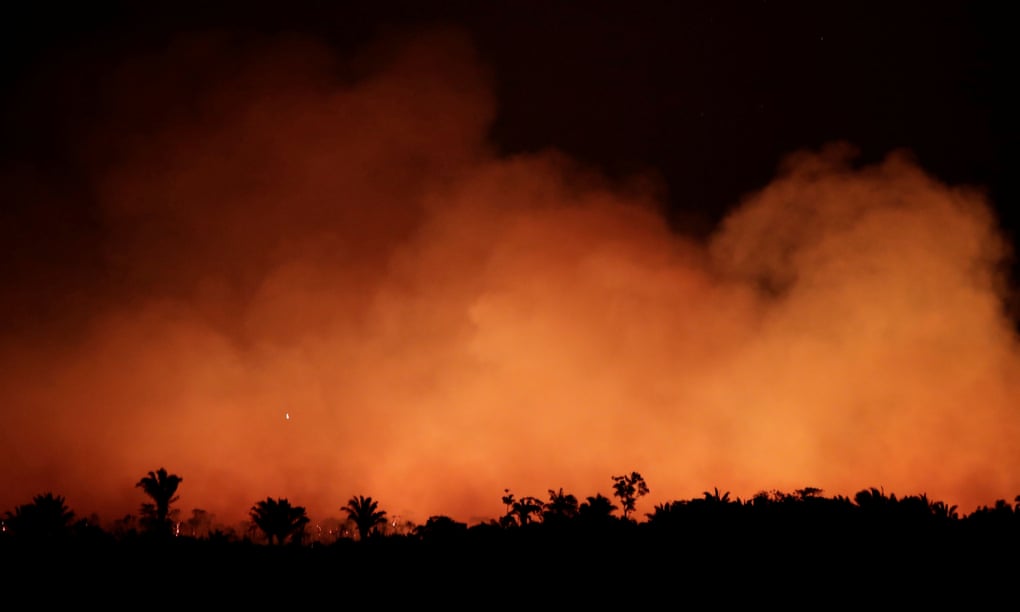
The Amazon is the centre of the world. Right now, as our planet experiences climate collapse, there is nowhere more important. If we don’t grasp this, there is no way to meet that challenge.

For 500 years, this has been a place of ruins. First with the European invasion, which brought a particularly destructive form of civilisation, the death of hundreds of thousands of indigenous men and women and the extinction of dozens of peoples. More recently, with the clearance of vast swaths of the forest and all life within it. Right now, in 2019, we are witnessing the beginning of a new, disastrous chapter. The area of trees being cleared has surged this year. In July, the deforestation rate was an area the size of Manhattan every day, a Greater London every three weeks. This month, fires are incinerating the Amazon at a record rate, almost certainly part of a scorched-earth strategy to clear territory. Why is this happening now? Because of a change in power.

A predatory form of politics called Bolsonarism has assumed nearly total, and totalitarian, power in Brazil. President Jair Bolsonaro’s chief project is to create more ruins in the Amazon forest, methodically and swiftly. This is why, for the first time since Brazil became a democracy again, it effectively has a minister against the environment.

For more than 30 years no environment minister has enjoyed the same autonomy as Ricardo Salles. He is a gofer for agribusiness, which is responsible for the majority of the deaths in the fields and forests, and Brazil’s greatest destructive force. The landowners lobby has always been part of Brazil’s government, formally or not. But today, this has reached a new level. They are not just in the government, they are the government.

Bolsonarism’s number one power project is to turn public lands that serve everyone – because they guarantee the preservation of natural biomes, the life of native peoples and regulate the climate – into private lands that profit a few. These lands, most of which lie in the Amazon forest, include the public lands to which indigenous peoples have the constitutional right to use, the public lands settled by ribeirinhos (people who have for over a century made their living by fishing, tapping rubber, and sustainably gathering Brazil nuts and other forest products), and the collective-use lands of quilombolas (descendants of rebel slaves who won their right to territories occupied by their ancestors).

Infighting is constant in the government, in part because the Bolsonaro administration employs the strategy of simulating its own opposition so it can occupy every possible space. Yet there is a consensus about opening up indigenous peoples’ protected lands and conservation areas. When it comes to transforming the planet’s largest tropical forest into a place for raising cattle, growing soybeans, and mining ore, there is no fighting at all. A few somewhat dissonant voices have already been deleted from the government.

Bolsonarism goes well beyond the man after whom it is named. At some point, it might even do without Bolsonaro. Deeply entwined with our global democracy crisis, Bolsonarism has been influencing the entire Amazon region, drawing out figures who have been hiding in sewers for years, sometimes decades, in other Latin American countries, where the fate of the world’s largest tropical forest is also being decided. And Bolsonarism, it bears repeating, is not a threat just to Brazil but to our planet, because it destroys the forest that is strategically vital to controlling global heating.
How do we resist this tremendous destructive force, this skilled destructive force?
For us to be capable of resisting, we must become the forest – and resist like the forest, the forest that knows it carries ruins within itself, that carries within itself both what it is and what it no longer is. We must lend shape to this political, affective feeling in order to lend meaning to our actions. This means shifting a few tectonic plates in our own thinking. We have to decolonise ourselves.

The fact that the Amazon is still regarded as something far away, on the periphery of our vision, shows just how stupid white western culture is. It is a stupidity that moulds and shapes the political and economic elites of the world, and likewise of Brazil. Believing the Amazon is far away and on the periphery, when the only chance of controlling global heating is to keep the forest alive, reflects ignorance of continental proportions. The forest is at the very core of all we have. This is the real home of humanity. The fact that many of us feel far away from it only shows how much our eyes have been contaminated, formatted and distorted. Colonised.

In the big cities of Brazil and the rest of the world, we are distanced from the deaths in which our small daily acts are accomplices. We have the privilege of not being forced to question the origin of the clothes we wear or the food we eat. But in the Amazon, if you eat beef, you know for sure it is beef from deforestation. If you buy wood, you know there is (almost) no truly legal lumber in Brazil. If you purchase a table or a wardrobe, you look at the furniture and think about how it was most likely made with wood torn off indigenous land or from an extractive reserve. In the Amazon, in the centre of the world, our relationship with the death of the forest and forest peoples, as well as with the death of family farmers, is direct. It is inescapable.

We need to humbly ask if the forest peoples accept us alongside them in the fight. They are the ones who know how to live despite the ruins. They are the ones who have experience resisting the great forces of destruction. If we are to have any chance of producing a resistance movement, we must understand that in this fight, we are not the protagonists.

We are the ones whoneed to let ourselves be occupied and allow our bodies to be affected by other experiences of being on this planet. But not as a form of violence, like the colonisation of the Amazon and its peoples; the colonisation still under way today, and going on at an ever faster pace. Rather, this time, as a form of exchange, a blending, a relationship of love.

Bolsonaro is not just a threat to the Amazon. He is a threat to the planet, precisely because he is a threat to the Amazon. Confronted with Bolsonarism’s accelerated forces of destruction, all of us, of all nationalities, must emulate the enslaved Africans who rebelled against their oppressors. We must forge communities like those established by Brazil’s escaped slaves. And since we don’t know how to do this, we will have to be humble enough to learn with those who do.

What is best, and most powerful, about today’s Brazil and the Amazon, in all its regions, are the peripheries that demand to be the centre. Our best chance lies in joining forces with the real centre of the world where the battle for the future is being waged.

As the crisis escalates…

… in our natural world, we refuse to turn away from the climate catastrophe and species extinction. For The Guardian, reporting on the environment is a priority. We give reporting on climate, nature and pollution the prominence it deserves, stories which often go unreported by others in the media. At this pivotal time for our species and our planet, we are determined to inform readers about threats, consequences and solutions based on scientific facts, not political prejudice or business interests.

More people are reading and supporting The Guardian’s independent, investigative journalism than ever before. And unlike many news organisations, we have chosen an approach that allows us to keep our journalism accessible to all, regardless of where they live or what they can afford. But we need your ongoing support to keep working as we do.

The Guardian will engage with the most critical issues of our time – from the escalating climate catastrophe to widespread inequality to the influence of big tech on our lives. At a time when factual information is a necessity, we believe that each of us, around the world, deserves access to accurate reporting with integrity at its heart.

Our editorial independence means we set our own agenda and voice our own opinions. Guardian journalism is free from commercial and political bias and not influenced by billionaire owners or shareholders. This means we can give a voice to those less heard, explore where others turn away, and rigorously challenge those in power.

Thursday, June 28, 2018

2953. 2017 Was the Second Worst Year on Record for Tropical Forests

By Eliza Barcley, Vox, June 28, 2018
The principal driver of deforestation in tropical countries like Ecuador, pictured here, is agriculture. Photo: Ministry of Agriculture.


The current rate that we’re clearing the Amazon and other tropical forests in Southeast Asia and Central and West Africa
is putting us on a course for rapid, irreversible, and catastrophic climate change, with an intensifying cycle of extreme droughts, more heat, and more forest fires. All told, deforestation accounts for an estimated 15 percent of total greenhouse gas emissions.OSLO, Norway — Tropical forests are essential for keeping carbon in the ground and maintaining the climate. When Amazonian forests are converted into savannah, there’s less rainfall and more drought.


Given forests’ importance, new data from the University of Maryland released on Global Forest Watch, a forest monitoring site, is alarming: 2017 was the second-worst year on record for tropical forest loss. Some 39 million acres of trees, an area the size of Bangladesh, were destroyed. That’s about 40 football fields of trees lost every single minute.

2017 turned out to be only slightly better than 2016, which was the worst deforestation year to date due mainly to an El Niño-related drought and the major spike in fires it caused in Brazil.
“This is a crisis of existential proportions,” Ola Elvestuen, Norway’s minister of climate and environment, said Wednesday at the Oslo Tropical Forest Forum where the data was released. “We either deal with it or we leave future generations in ecological collapse.

What caused deforestation in 2017?
As the chart shows, deforestation in the tropics has been accelerating. Which means we are not keeping up with — much less reversing — the growing pressures on forests from people clearing and burning them for agriculture, livestock, and timber.

Governments, corporations, and local communities are taking the issue more seriously. But many factors contributed to the extraordinary destruction of forests last year.

Deforestation increased significantly in a few countries in 2017, most notably Colombia and the Democratic Republic of Congo. In Colombia, the peace process and the demobilization of the Revolutionary Armed Forces of Colombia (FARC) left a power vacuum in vast, remote forest regions. With the rebel group no longer controlling the forest areas (and the lack of any other government entity to regulate them), opportunists moved in to log and clear land to plant coca and other crops.

Overall in 2017, Colombia lost 1 million acres — 46 percent more than the previous year. In the DRC, some 3.4 million acres of forest were lost to agriculture, artisanal logging, and charcoal production.

Brazil had success slowing deforestation between 2004 and 2012 through better monitoring and crackdowns on illegal activity, incentives for farmers to not clear forests, and programs to cut off illegal soy and cattle producers from markets.

But in a dramatic turnaround, tree cover loss doubled there from 2015 to 2017. As the World Resource Institute’s Frances Seymour writes, this is “in part due to unprecedented forest fires in the Amazon ... [and] to a relaxation of law enforcement efforts in the midst of the country’s ongoing political turmoil and fiscal crisis.”

According to Carlos Nobre, a Brazilian scientist and expert on climate change, we’ve already deforested about 18 percent of the Amazon. Reaching 20 to 25 percent deforestation would cause the “system to flip to non-forest ecosystems in eastern, southern and central Amazonia,” he wrote with Thomas Lovejoy in a recent paper in Science Advances.
“We are very close to 20 percent,” he said Wednesday at the Oslo Tropical Forest Forum. “We need to stop completely Amazonian deforestation. We do not want the Amazon to become a global cattle ranch.”

In most tropical regions, demand for soy, beef, palm oil, and other commodities — as well as fires — is driving the bulk of deforestation. In Brazil, which lost 11 million acres of forest cover in 2017, the main use for cleared land is cattle pasture.

In the Caribbean, the total forest lost during the 2017 Atlantic hurricane season was small compared to Brazil and DRC. But the Category 4 hurricanes that pummeled the region still did a number on forests there. The island of Dominica lost 32 percent of its tree cover in 2017, while Puerto Rico lost 10 percent.

Why stopping deforestation is so difficult
So what to do about it?

In the past 10 years, we’ve seen more and more ambitious international commitments on forests and climate change, including the Paris climate agreement, REDD+, and the Sustainable Development Goals. Better satellite images, remote sensing, and other technologies are helping law enforcement respond to illegal deforestation far quicker. More and more companies are committing to only buying from producers who can certify they are improving the environment.

“It comes down to regulation, enforcement, and incentives,” said Norway Environment Minister Elvestuen.

Some countries actually saw a drop in tree cover loss in 2017. Indonesia achieved a decrease because of a moratorium on converting peatland, better education of farmers, and enforcement around burning forests, according to the new report.

But it’s not enough. According to Seymour, who spoke Wednesday in Oslo, “We know what it takes. And we’re not doing enough of it, and we don’t have enough help to do it.”
The list of things we need to do is very long and very challenging, especially given the growing appetite for meat and other commodities like palm oil, timber, and cocoa. We need to shift global diets and lower meat consumption. We need to persuade farmers not to burn forests.

In the case of Brazil, cattle pasture is the main use of cleared land. And farmers “have grown weary of being vilified as criminals, of unmet promises of positive incentives for shifting to sustainable production systems...” write Daniel Nepstad and João Shimada of the Earth Innovation Institute for Mongabay. “To gain the support of conservation-minded, responsible farmers for the deforestation agenda, a new narrative and set of actions is needed that recognizes, applauds and rewards them for their efforts as it effectively includes them in dialogues.”

Increasingly, forest advocates are talking about connecting people who live in or near remaining tropical forests with opportunities to restore them. The Nature Conservancy, for instance, has been heavily involved in a new initiative with 7 other institutions called Nature4Climate, that will try to engage farmers and others around reforestation and conservation agriculture.

“We can’t have self-righteous NGOs just telling people ‘you can’t cut down your forests,’ anymore,” Justin Adams, TNC’s managing director of global lands, told Vox. “We want to help countries manage land and trade carbon as an asset. There has to be an economic opportunity for tropical forest countries in restoring ecosystems.”

On the bright side, there seems to be more dialogue across the board, around the world, than ever.

Sunday, February 26, 2017

2571. Amazon Deforestation Accerates

By Hiroko Tabuchi and Claire Rigby and Jeremy White, The New York Times, February 24, 2017
Amazon deforestation
COLONIA BERLIN, Bolivia — A few months ago, a representative from Cargill traveled to this remote colony in Bolivia’s eastern lowlands in the southernmost reaches of the vast Amazon River basin with an enticing offer.

The American agricultural giant wanted to buy soybeans from the Mennonite residents, descendants of European peasants who had been carving settlements out of the thick forest for more than 40 years. The company would finance a local warehouse and weighing station so farmers could sell their produce directly to Cargill on-site, the man said, according to local residents.

One of those farmers, Heinrich Janzen, was clearing woodland from a 37-acre plot he bought late last year, hustling to get soy in the ground in time for a May harvest. “Cargill wants to buy from us,” said Mr. Janzen, 38, as bluish smoke drifted from heaps of smoldering vegetation.

His soy is in demand. Cargill is one of several agricultural traders vying to buy from soy farmers in the region, he said.

Cargill confirmed the accounts of colony residents, and said the company was still assessing whether it would source from the community. That decision would depend on a study of the area’s productivity and land titles, said Hugo Krajnc, Cargill’s corporate affairs leader for the Southern Cone, based in Argentina. “But if a farmer has burned down its forest we’ll not source from that grower,” he said.

A decade after the “Save the Rainforest” movement forced changes that dramatically slowed deforestation across the Amazon basin, activity is roaring back in some of the biggest expanses of forests in the world. That resurgence, driven by the world’s growing appetite for soy and other agricultural crops, is raising the specter of a backward slide in efforts to preserve biodiversity and fight climate change.

In the Brazilian Amazon, the world’s largest rain forest, deforestation rose in 2015 for the first time in nearly a decade, to nearly two million acres from August 2015 to July 2016. That is a jump from about 1.5 million acres a year earlier and just over 1.2 million acres the year before that, according to estimates by Brazil’s National Institute for Space Research.

Here across the border in Bolivia, where there are fewer restrictions on land clearance, deforestation appears to be accelerating as well.

About 865,000 acres of land have been deforested, on average, annually for agriculture since 2011, according to estimates from the nongovernmental Bolivia Documentation and Information Center, an area nearly the equivalent of Rhode Island in size. That figure has risen from about 366,000 acres a year, on average, in the 1990s and 667,000 acres a year in the 2000s.

Now, a new study by an environmental advocacy group points to fresh indications of large-scale forest-clearing by Bolivian and Brazilian farmers who trade soybeans with Cargill.

That organization, Washington-based Mighty Earth, used satellite imaging and supply-chain mapping information from the Stockholm Environment Institute, an environmental think tank, to identify deforestation in Brazil where two American-based food giants, Cargill and Bunge, are the only known agricultural traders. The supply-chain mapping by the environmental institute uses customs, shipment and storage data, as well as production data from Brazilian municipalities to trace agricultural exports back to producers.

According to Mighty Earth’s analysis, the Brazilian savanna areas in which Cargill operates, a region called the Cerrado, saw more than 321,000 acres of deforestation between 2011 and 2015. Mighty Earth also linked Bunge, the other agricultural giant, to more than 1.4 million acres from 2011 to 2015.

In Bolivia, where supply-chain mapping is not available, Mighty Earth sent employees to areas where Cargill operates. The organization used drones to record the clearing of forests and savannas in areas where Cargill operates silos.

The study was funded by the Norwegian Agency for Development Cooperation and a nongovernmental organization, Rainforest Foundation Norway.

A reporter for The New York Times independently traveled to remote areas of Bolivia described in the environmentalists’ report and interviewed farmers engaged in deforestation who said they sold soy to Cargill. The farmers described what they called Cargill’s push to increase its purchases of locally produced soy and its attempts to enhance bonds with local producers.

The reports of fresh deforestation come despite a landmark deal signed three years ago by Cargill and other companies that included a target of “eliminating deforestation from the production of agricultural commodities like palm oil, soy and beef products by 2020.” Experts at the time said the deadline, laid out in the New York Declaration of Forests, would require companies to start straightaway to make their sourcing more sustainable.

Both Cargill and Bunge said the report seemed to inflate its role in the region’s deforestation. Cargill’s share of soy in the Bolivia municipalities in which it operates came to about 8 percent, Cargill said. Meanwhile, in Brazil’s Matopiba region, Bunge’s share was about 20 percent, the company said.

And soy is just one crop behind deforestation, said Stewart Lindsay, Bunge’s vice president for global corporate affairs.

“One company alone cannot solve this issue,” Mr. Lindsay said. “A positive step would be for more companies to adopt zero deforestation commitments, apply controls to block crops grown in illegally cleared areas from entering their supply chains, report publicly on progress and invest millions of dollars to support sustainable land use planning efforts, all of which Bunge has done.” (Bunge, however, is not a signatory to the New York Declaration of Forests.)

In an interview, Cargill chief executive David MacLennan said the company was studying the allegations of deforestation in Bolivia and Brazil linked to the company. “If there’s something there, if it’s substantiated, we’ll do something about it,” Mr. MacLennan said. “If that’s accurate, it’s not acceptable.

“We’re going to honor our obligations and our commitments,” he continued. “We’ve committed to ending deforestation and to do our part in ending deforestation. Our word is our bond.”

National Priorities
Forest loss is detrimental to the earth’s climate. The clearing of woodlands and the fires that accompany it generate one-tenth of all global warming emissions, according to the Union of Concerned Scientists, making the loss of forests one of the biggest single contributors to climate change.

Only about 15 percent of the world’s forest cover remains intact, according to the World Resources Institute. The rest has been cleared, degraded or is in fragments, wiping out ecosystems and displacing indigenous communities, scientists say.

Behind the rise in deforestation is a strategy by multinational food companies to source their agricultural commodities from ever more remote areas around the world. These areas tend to be where legal protections of forests are weakest.

The Brazilian Amazon, a poster child for the global forest-conservation movement, has enjoyed increasing protections, like a moratorium announced in 2006 on forest clearing for soy production. Between that time and 2015, Brazil reduced Amazon deforestation by almost two-thirds, according to estimates by Mongabay, the environmental news site, based on data from the Brazilian National Institute of Space Research and the United Nations Food and Agriculture Organization.

The uptick in forest loss since then, however, has raised concerns that the progress is far from secure.

Brazil was aware of the challenge of keeping deforestation at bay, Everton Lucero, the secretary of climate change and forests of Brazil’s Ministry of the Environment, said in an interview.

“We are very uncomfortable with the bad news that we had a rise in deforestation, and we are taking every possible measure to reverse it next year,” Mr. Lucero said. Budget shortfalls amid Brazil’s recent economic and political turmoil, he said, had wreaked havoc with its policing of its rain forests.

When traveling to remote regions, “Sometimes our command and control units were without fuel for helicopters,” he said. “Hopefully we are on a recovery path.”

Bolivia, on the other hand, presents a different situation. President Evo Morales, a socialist, has made securing “food sovereignty” a major part of his agenda, driving Bolivia’s agricultural expansion. There are relatively few forest protections, and the government’s Forestry and Land Authority is tasked with the potentially conflicting roles of regulating land use, forestry and agriculture, and issuing concessions for logging and farming. The landlocked country has declared that it expects to clear almost 14 million more acres of forest by 2025, to convert into farmland.

Bolivia’s greenhouse gas emissions levels per capita exceed that of many European countries, despite having a far lower per capita income. Deforestation is responsible for more than 80 percent of Bolivia’s total carbon dioxide emissions, according to a recent study by researchers at Insead, a graduate school based in Fontainebleau, France.

A major culprit is the cultivation of soy, which has jumped more than 500 percent in Bolivia since 1991, to 3.8 million hectares in 2013, according to the most recent agricultural censuses. Little of that soy is consumed domestically. The vast majority is processed and exported as animal feed in a commodities trade that serves a global appetite for hamburgers, chicken and pork.

“The forest is seen as useless land that needs to be made useful,” said Nataly Ascarrunz, executive director of the Bolivian Institute of Forestry Investigation, a joint monitoring effort started by the Bolivian government and the United States Agency for International Development.

“There’s a lot of pressure for economic development,” Ms. Ascarrunz said. “When resources are flowing, production is happening and people have work. It’s very hard to argue with that.”

Looking Toward 2030
Victor Yucra, the director general of Bolivia’s forest and land management at the Forestry and Land Authority, stressed the need for the Bolivian government to balance the protection of its forests with the needs of its agricultural sector.

“Our concern is in ensuring that intensive agricultural production takes place within a framework that also provides for sustainable forestry and protection for standing forests,” Mr. Yucra said.

Mr. MacLennan, the chief executive of Cargill, described a business trip to Brazil last year, during which he saw the Amazon from a plane window. “You look down and you see this beautiful forest,” he said. “Kilometers and kilometers of forest. But you also see these big chunks of dirt.

“The brown really contrasts with the green,” he continued, comparing the forest and deforested areas. “When you see it, it’s like, ‘Holy cow. That’s what’s happened.’ It just hit me when I saw it in broad daylight — the impact the deforestation has.”

Mr. MacLennan initially garnered praise among environmentalists for pledging to extend the no-deforestation pledge it had made regarding palm oil to cover every commodity the company handles. Cargill’s commitment was called one of the most sweeping environmental pledges ever made by a large agricultural company. It earned Mr. MacLennan a photo opportunity with Ban Ki-moon, the United Nations secretary general at the time.

Even before the New York Declaration, Cargill had made significant efforts to buy palm oil sourced only from land not linked to fresh deforestation, according to a supply-chain expert with extensive experience working on Cargill’s global sustainability efforts. The expert spoke on the condition of anonymity, saying that to do so openly would jeopardize professional relations with the company.

Cargill continued to invest millions of dollars adding extra staff members and hiring third-party auditors to verify that the palm oil was coming from established fields, not farmland freshly carved from the forest, he said. But Cargill has been less aggressive with other commodities, he said.

Part of the issue was Cargill’s decentralized setup, the expert said. Another problem was the resistance from commodities traders, whose incentive is to seek supplies from as many sources as possible in order to drive down costs. Buying only sustainably grown commodities would mean a more limited supply.

Now, environmental groups accuse Cargill of backtracking on its 2020 deadline. In recent statements, Cargill has adopted a 2030 deadline for elimination of deforestation from its supply chain — a separate deadline, mentioned elsewhere in the New York Declaration, that was meant to apply to ending all forms of deforestation, not just those related to agricultural commodities.

“They’re willfully misinterpreting the Declaration,” said Glenn Hurowitz, chief executive of Mighty Earth. “They’re breaking their own pledge.”

Cargill is committed, Mr. MacLennan said, to eliminating by 2020 deforestation from its production of palm oil, a commodity widely used in food, detergents and cosmetics. But, he said, Cargill had always understood the declaration to give all signatories until 2030 to tackle deforestation.

“I don’t think I or others appreciated the vast complexity of the task,” Mr. MacLennan said. “Let’s say that we are trading or buying and selling soybean meal. Where did the soybeans come from? And did they come from deforested land? Maybe we weren’t buying the soybeans directly. I don’t know.”

Holly Gibbs, an expert in tropical deforestation and agriculture at the University of Wisconsin-Madison, called the 2030 deadline interpretation devastating. “If we were to wait until 2030,” Ms. Gibbs said, “there would be no forest left.”

In Mr. Janzen’s newly cleared field, a long strip of land flanked by vivid vegetation, blue-white smoke drifted from a smoldering landscape.

The German-speaking Mennonites, who live amid horse-drawn buggies and farmhouses that wouldn’t look out of place in rural Ohio or Pennsylvania, trace their origins to 16th-century Protestant reformists who migrated to Russia, the United States, Canada, Belize and Mexico in search of farming opportunities and religious freedom. Some moved to Bolivia in the last century, and about 57,000 Mennonites now live in 55 secluded settlements here, eschewing some aspects of 21st century technology, like modern cars, but enthusiastically embracing others, such as tractors and genetically modified seeds.

Their trade with companies like Cargill has transformed their communities into a bloc of relatively prosperous landowners. But in recent years, they have also been targeted by land reforms enacted by Mr. Morales, who has pledged to reverse the centuries of subjugation of Bolivia’s indigenous majority.

The farmer, Mr. Janzen, with the help of two laborers, spent the day digging roots from the earth, between smoking woodpiles. There was a brown jumble of slender trees, saplings, shrubs, bushes, vines and roots. Occasional larger trees showed gashes where the bulldozer first made contact, pushing them to the ground.

Farther downfield lay more long, neat cordons of debris, waiting to be burned. “If the rain holds off, I’ll burn the rest tomorrow,” he said.

Tuesday, April 26, 2016

2293. What's Driving Deforestation?

By Union of Concerned Scientists, April 25, 216
Deforestation to feed beef cattle on pasture
What if you found out that just four commodities—commodities so pervasive in modern life that we encounter them daily—are responsible for more than half of the world’s tropical deforestation? What if you learned that many of the other commonly cited causes of deforestation, such as cocoa, sugar, and coffee, are now only marginal parts of the global problem?

Surprisingly, all of this is true. Just four commodities—beef, soy, palm oil, and wood products—drive the majority of tropical deforestation. 

Why does deforestation matter? Forests—especially tropical forests—store enormous amounts of carbon. When forests are destroyed, that carbon is released to the atmosphere, accelerating global warming. Deforestation accounts for around 10% of total heat-trapping emissions—roughly the same as the yearly emissions from 600 million cars.

In addition to storing carbon, forests provide important habitat for a long list of endangered species—and they offer many other benefits, such as clean water, forest products, and livelihoods for indigenous communities.

With large areas of cheap land, relatively low labor costs, and a year-round growing season, the tropics have become a favored location for large-scale industrial commodity production. Eliminating emissions from commodity-driven tropical deforestation can play a huge role in reducing climate change—and we can do it in the near future.

The four major drivers (and some minor ones)
The following four commodities are the largest drivers of deforestation. Together, they have an outsized impact on the health of our world’s forests and climate, annually contributing 3.83 million hectares of deforestation, an area about the size of Switzerland.


Beef cattle
Of the four major deforestation drivers, beef has by far the largest impact. Converting forest to pasture for beef cattle, largely in Latin America, is responsible for destroying 2.71 million hectares of tropical forest each year—an area about the size of the state of Massachusetts—in just four countries. This is more than half of tropical deforestation in South America, and more than five times as much as any other commodity in the region. 

Soybeans
Growing global demand for meat and dairy products has contributed to the doubling of soybean production in the last 20 years. Soy is primarily used to feed pork, poultry, and dairy cows, though significant amounts are also used to produce vegetable oil and biodiesel. Large soybean fields in the tropics, particularly in Latin America, are often planted on newly deforested land—or they may expand onto former pastureland, pushing cattle to the forest frontier. Every year around 480,000 hectares is deforested for soy in major soy-producing tropical countries.

Palm oil
Palm oil is used in countless processed foods and personal care products, as well as biofuels and vegetable oil. Produced largely in Southeast Asia, palm oil packs a powerful climate punch, not only because of the amount of land deforested annually (270,000 hectares in three leading countries), but also because much of this area includes the carbon-rich soils known as peatlands. Peatlands contain up to 28 times as much carbon as the forests above them—carbon that's released to the atmosphere when peatlands are drained for oil palm plantations. As a result, palm oil contributes the most global warming emissions of any commodity besides beef. 

Wood products
Perhaps the most iconic symbol of forest destruction, wood production has been shown to cause around 380,000 hectares of deforestation annually in key countries, though the actual number is likely higher. Wood products can be divided into two categories. Pulp is made from tree fibers and used to produce paper and related products. It drives deforestation primarily in Indonesia, where forests are cut down for plantations of fast-growing tree species. Timber, used for construction or high-end products like furniture, is most clearly linked to forest degradation, in which valuable tree species are harvested and the rest remain. Degraded forests are more likely to be targeted for conversion to other land uses. 

Other drivers
Besides the four mentioned above, many other commodities contribute on a smaller scale to tropical deforestation, including coffee, rubber, cocoa, and sugar. While these commodities may have caused significant deforestation in the past (and might again in the future), none of them currently has an impact approaching that of the four major drivers.

Solutions
Because these commodities are in so many widely used consumer products, changing the way they are produced could have huge benefits for the climate, forests, and people around the world. And this change is possible—there are strategies to produce beef, soy, palm oil, and wood products in ways that allow the world’s forests to thrive. 

Already innovative governments and companies have begun taking real steps toward protecting forests from destruction. Deforestation in the Brazilian Amazon fell by 70% from 2005 to 2014, largely thanks to temporary agreements by processors and exporters to stop buying cattle or soy linked to deforestation in the region. Some companies have made commitments to ensure that future sourcing of their commodities (most often palm oil) will be free from deforestation.


Yet these temporary and partial measures are not enough. As deforestation in the Brazilian Amazon has decreased, we must stem the tide of deforestation in other ecosystems and other countries. Major companies that operate in forested regions, or source products from them, must commit to ending deforestation for all their operations. When companies make these commitments—and follow through on them—they finally begin to show that destroying forests, reducing habitat, and contributing to global warming can no longer be business as usual. 

Saturday, April 9, 2016

2263. Three Millennia of Climatic, Ecological, and Cultural Change on Easter Island: An Integrative Overview

Valentí Rull, Núria Cañellas-Boltà, Olga Margalef, Sergi Pla-Rabes, Alberto Sáez and Santiago Giralt, Frontiers in Ecology and Evolution, March 29, 2016


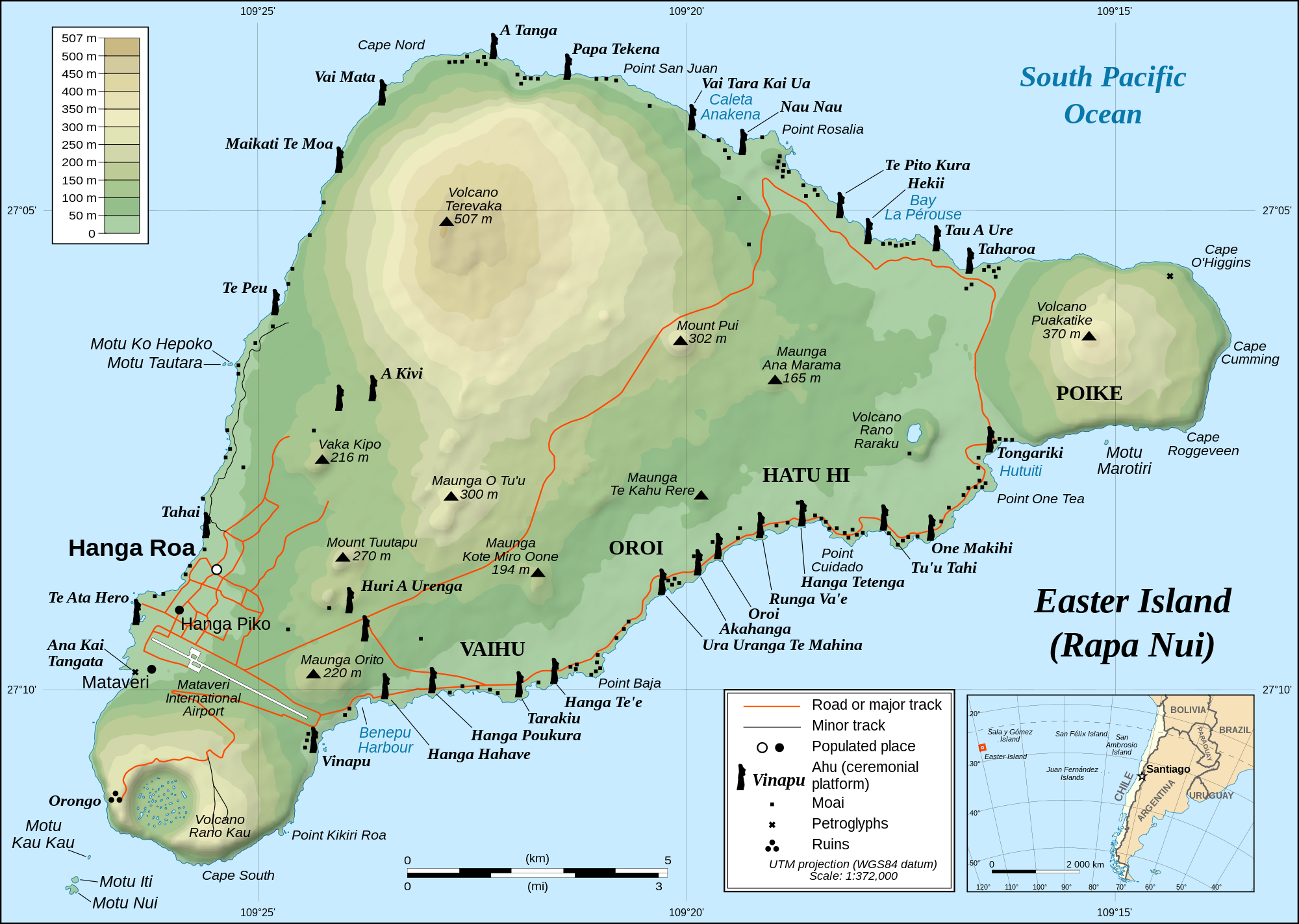
Eastern Island (Rapa Nui) is famous for the legacy of an extinct civilization symbolized by the megalithic statues called moai. Several enigmas regarding the colonization of the island its deforestation and a presumed cultural collapse of the ancient civilization still remain elusive. According to the prevailing view, the first settlers arrived between AD 800 and AD 1200 from east Polynesia and overexploited the island's natural resources causing an ecological catastrophe leading to a cultural collapse (Flenley and Bahn, 2003). The main evidence for this theory was the abrupt replacement of palm pollen by grass pollen in the sediments of the island's lakes and mires (Raraku, Kao, and Aroi), which was interpreted in terms of a thorough deforestation between approximately AD 1200 and AD 1400/1600 (Flenley and King, 1984Flenley et al., 1991Mann et al., 2008). This ecocidal view is widely accepted not only by the scientific community but also by society, thanks to its popularization by the mass media. Under this perspective, Easter Island has been considered a microcosmic model showing how human selfishness can eventually cause our own destruction (Diamond, 2005). Another view is that Polynesian colonizers arrived slightly later, between AD 1200 and AD 1300 (Wilmshurst et al., 2011), and the deforestation—which was not completed until AD 1650—was the result of massive palm fruit consumption by rats carried to the island by the first settlers (Hunt, 20062007). According to this view, the cultural collapse did not occur until the European arrival (AD 1722) and was a genocide caused by the introduction of previously unknown illnesses and slave trading (Lipo et al., 2016).
During the last decade, the study of Easter Island has benefited by the proliferation of lake and peat coring and the introduction of new analytical methods. Former paleoecological analyses were based on sediments that contained frequent age inversions and extensive sedimentary gaps hiding the paleoecological trends of a significant part of the last millennia (Rull et al., 20102013). A recent improvement has been the finding of new paleoecological sequences with continuous sedimentation during the last 3000 years, which has provided new insights on paleoecological trends with potential climatic and cultural implications (e.g., Cañellas-Boltà et al., 2013Rull et al., 2015). Other progress has included the development of multiproxy studies including independent evidence for either ecological or climatic changes. Former paleoecological studies were based mostly on pollen analysis alone and attempted to derive climate changes from biological evidence, which is inadequate to evaluate the ecological responses to climatic changes. Recent studies include detailed lithostratigraphic, sedimentological, geochemical, and biological proxies, which allow separation of ontogenetic factors from external environmental drivers of ecological change, notably climatic changes and human activities (Sáez et al., 2009Cañellas-Boltà et al., 20122016Margalef et al., 20132014). The introduction of new analytical techniques to identify remains of cultigens, as for example phytoliths and starch, has been useful to locate human fingerprints in sedimentary sequences (Horrocks et al., 2012a,b20132015Bowdery, 2014). New developments based on DNA analysis of modern humans and food remains from ancient skeletons have shed new light on the origin of settlers (Thorsby, 2012Thromp and Dudgeon, 2015). In addition, some new analyses and meta-analyses on radiocarbon dates associated with archeological remains have provided relevant information on human activities, land use and demography (Mulrooney, 2013Stevenson et al., 2015). We believe that the incorporation of these new findings into a coherent history needs the development of a novel synthesis of the historical and recent evidence into a holistic framework, where the different interpretations are viewed as complementary, rather than incompatible, contributions. This paper is a first proposal for such an integrated approach.
Concerning human settlement, archeological and anthropological evidence is consistent with the Polynesian origin of the ancient civilization represented by the moai (Flenley and Bahn, 2003). Using this evidence, the former hypothesis of Heyerdahl (1968)that Amerindian settlers would have arrived several centuries before the Polynesian colonizers was dismissed. However, new findings have revitalized Heyerdahl's proposal (albeit not his cultural interpretation). Indeed, recent palynological analyses revealed that the first deforestation event recorded so far occurred at 450 BC and was associated with the initiation of fires and the first appearance of Verbena litoralis, a human-dispersed weed of American origin (Cañellas-Boltà et al., 2013; Figure 1). In addition, Thromp and Dudgeon (2015) found starch remains of Ipomoea batatas (sweet potato), also of American origin, in the dental calculus of human skeletons as old as AD 1330 and concluded that this plant was important in the diet of the ancient islanders four centuries before the European contact. Thorsby (2012) analyzed the gene pool of modern Polynesian descendants and found evidence of Amerindian contact before, at least, two centuries prior to the European arrival (Figure 1). Therefore, the presence of Amerindian settlers before and/or during the development of the ancient moai culture is strongly supported from varied and independent sources of evidence.
FIGURE 1
www.frontiersin.org
Figure 1. (A) Sketch map of Easter Island indicating the localities mentioned in the text. (B) Summary of the climatic, ecological, and cultural trends of Easter Island over the last three millennia. The uppermost climatic phases summarize the current northern hemisphere and Pacific climatic phases according to Nunn (2007). Drought phases recorded at Raraku are shaded and deforestation pulses are highlighted by dotted lines. RWP, Roman Warm Period; DACP, Dark Ages Cold Period; MCA, Medieval Climate Anomaly; 1300, “1300 event;” LIA, Little Ice Age; Am, Americans; cu, first evidence of local cultivation; dgt, drought; pd, partial deforestation; td, total deforestation; wtr, wetter. References: 


Recent palynological results on peat and lake cores with nearly continuous sedimentation during the last three millennia suggest that forest clearing did not occur at the same time over the whole island and proceeded at different rates according to the site analyzed. For example, in Lake Raraku, situated in the coastal lowlands, the deforestation was a long and gradual process that took place in three pulses at 450 BC, AD 1200 and AD 1500 (Cañellas-Boltà et al., 2013; Figure 1). The first signs of cultivation in this catchment were recorded slightly before AD 1400 (Horrocks et al., 2012a). Contrastingly, in the Aroi mire, located inland at higher elevations, a densification of the former open palm forests occurred at AD 1250 and the resulting dense forests were removed abruptly, between AD 1520 and AD 1620, using fire (Rull et al., 2015). Cultivation inside the Aroi catchment did not start until AD 1640 (Horrocks et al., 2015). These results are compatible with a heterogeneous pattern of land use and occupation prior to the European contact (Stevenson et al., 2015), with a conspicuous pattern of coastal abandonment toward inland/upland settlements, which was characteristic of many eastern Pacific archipelagos during the same times (Nunn, 2003, 2007).
Recent multiproxy surveys have suggested a relationship between climate variability and landscape shifts, some of them of potential cultural significance. Mann et al. (2008) favored the occurrence of Late Holocene droughts and Sáez et al. (2009)suggested their potential role in deforestation. This view was not shared by Junk and Claussen (2011) who believe that, during the last millennium, climate changes alone might have been too small to explain strong vegetation changes that have occurred on the island. Further analyses on nearly continuous cores from Lake Raraku and Aroi mire have provided additional insights. In Raraku, the first deforestation event (450 BC) took place under climates drier than at present, when the present lake did not exist and the basin was occupied by a marsh (Cañellas-Boltà et al., 2013). Arid conditions intensified between AD 500 and AD 1200, leading to a drought phase coeval with the Classic Maya Collapse of Central America (~AD 900), attributed to the increased frequency of prolonged droughts (Haug et al., 2003). In the Pacific islands, this time interval was characterized by climatic stability, sea levels higher than today and increasing food production thanks to the development of irrigation practices and terracing. These conditions favored long-distance navigation and new settlements, especially in eastern Polynesia (Nunn, 2007). According to the prevailing theory, the Polynesian colonization of Easter Island occurred during this phase (Figure 1). However, Goodwin et al. (2014) suggested that, during the Medieval Climate Anomaly (MCA), navigation to and from Easter Island was possible in both eastward and westward directions.
A significant shift to wetter climates and higher lake levels occurred at AD 1200 (Figure 1), roughly coinciding with the onset of a regional Pacific phase called the “1300 event,” which represented the transition between the MCA and the Little Ice Age (LIA). The 1300 event was characterized by cool and wet climates, increased storminess due to ENSO intensification and a sea level drop below its present position (Nunn, 2007). During this wet period, which, at Easter Island, lasted until AD 1570, the Aroi and Raraku catchments exhibited disparate landscape trends. In Aroi, open palm forests underwent a densification that transformed them into relatively dense palm forests likely as a consequence of increased moisture availability (Rull et al., 2015). In Raraku, on the contrary, the second fire-driven, likely anthropogenic, deforestation pulse occurred and the reverse shift, from dense forest to open forest, took place (Cañellas-Boltà et al., 2013). Under the ecocidal view, this second pulse coincided with the beginning of the total deforestation of the island, whereas for the defenders of the rats as deforestation agents, the clearing began some 50 years later (Figure 1). This wetter phase coincided also with the phase known as ahu moai (roughly AD 1200–1500), during which these megalithic statues were built and venerated, which was also the time of maximum prosperity and expansion of the ancient Polynesian culture on the island (Nunn, 2007). A direct cause-effect relationship between climate and cultural traits cannot be established with the available evidence; however, it could be argued that increased water availability would have favored cultural flourishment.
Palm forests were almost totally removed from Raraku and Aroi in AD 1570 and AD 1620, respectively, before the end of the wet phase (Figure 1). Again, the sharp increase in charcoal, at both sites, strongly suggests anthropogenic burning. This was the “coup de grace” of the deforestation of these basins and, likely, of the whole island (Rull et al., 2015). A second drought between AD 1570 and AD 1720 occurred when the island was mostly (according to the rat theory) or totally (according to the ecocidal theory) deforested and grass meadows dominated the landscape. The population collapse of the ecocidal theory—which is attributed by its defenders to resource exhaustion and internal wars—occurred during this drought, which suggests that this cultural demise would have not been fully ecocidal but the result of a synergistic effect of climate severity and anthropogenic landscape degradation. Some authors (e.g., Nunn, 2007) consider that the phase of huri moai—characterized by the abandonment of the moai cult and the toppling of these statues, and the initiation of the birdman cult (Figure 1)—began at AD 1500, in which case this cultural shift would have paralleled the demographic collapse. Others believe that the huri moai phase started at AD 1680 (e.g., McLaughlin, 2007), in which case, there is no indication of climatic forcing in the paleoecological body of evidence available so far. Wetter climates returned by AD 1720, close to the European arrival, which marked the onset of a genocidal cultural collapse that has been well documented historically (Hunt and Lipo, 2011). The landscape did not experience any significant changes and grasslands dominated the scene.
This preliminary synthesis needs further refinement and could be considered a first approach to a synthetic framework toward a holistic Easter Island history combining climatic, ecological and cultural evidence. An important message is that environmental and human drivers of change can either have separate effects, or can act synergistically, coupled in positive feedbacks (Vegas-Vilarrúbia et al., 2011Zahid et al., 2015). Under a synthetic framework, it is hoped that hypotheses that are usually presented as incompatible—e.g., environmental vs. cultural determinism, ecocide vs. genocide, or human vs. rat deforestation, among others—may be analyzed under a more complementary perspective. For example, Brandt and Merico (2015) developed a demographic model in which elements of both ecocidal and genocidal hypotheses concur to produce a long and slow population decline between ca. AD 1300 and 1800. The desired synthesis should also benefit from the incorporation of new analytical techniques available in paleoecology, as for example DNA and fecal lipid analysis of sediments, to enhance the possibilities of detection of human fingerprint (Rull et al., 2013). Also, new coring campaigns are necessary to deal with problematic sites, mainly in terms of dating, as for example Rano Kao.
References
Bowdery, D. (2014). An enigma revisited: identification of palm phytoliths extracted from the 1983 Rapa Nui, Rano Kao2 core. Veg. Hist. Palaeobot. 24, 455–466. doi: 10.1007/s00334-014-0503-x
Brandt, G., and Merico, A. (2015). The slow demise of Easter Island: insights from a modelong investigation. Front. Ecol. Evol. 3:13. doi: 10.3389/fevo.2015.00013
Cañellas-Boltà, N., Rull, V., Sáez, A., Margalef, O., Bao, R., Pla-Rabes, S., et al. (2013). Vegetation changes and human settlement of Easter Island during the last millennia: a multiproxy study of the Lake Raraku sediments. Quat. Sci. Rev. 72, 36–48. doi: 10.1016/j.quascirev.2013.04.004
Cañellas-Boltà, N., Rull, V., Sáez, A., Margalef, O., Giralt, S., Pueyo, J. J., et al. (2012). Macrofossils in Raraku Lake (Easter Island) integrated with sedimentary and geochemical records: towards a paleoecological synthesis. Quat. Sci. Rev. 34, 113–126. doi: 10.1016/j.quascirev.2011.12.013
Cañellas-Boltà, N., Rull, V., Sáez, A., Margalef, O., Pla-Rabes, S., Valero-Garcés, B., et al. (2016). Vegetation dynamics at Raraku Lake catchment (Easter Island) during the past 34,0000 years. Palaeogeogr. Palaeoclimatol. Palaeoecol. 446, 55–69. doi: 10.1016/j.palaeo.2016.01.019
Diamond, J. (2005). Collapse: How Societies Choose to Fail or Succeed. New York, NY: Viking.
Flenley, J. R., and Bahn, P. (2003). The Enigmas of Easter Island. Island on the Edge. New York, NY: Oxford University Press.
Flenley, J. R., King, A. S. M., Jackson, J., and Chew, C. (1991). The late quaternary vegetational and climatic history of Easter Island. J. Quat. Sci. 6, 85–115. doi: 10.1002/jqs.3390060202
Flenley, J. R., and King, S. M. (1984). Late Quaternary pollen records from Easter Island. Nature 307, 47–50. doi: 10.1038/307047a0
Goodwin, I. D., Browning, S. A., and Anderson, A. J. (2014). Climate windows for Polinesian voyaging to New Zealand and Easter Island. Proc. Natl. Acad. Sci. U.S.A.111, 14716–14721. doi: 10.1073/pnas.1408918111
Haug, G. H., Günter, D., Peterson, L. C., Sigman, D. M., Hughen, K. A., and Aeschlimann, B. (2003). Climate and the collapse of Maya civilization. Science 299, 1731–1735. doi: 10.1126/science.1080444
Heyerdahl, T. (1968). Easter Island. The Mystery Solved. New York, NY: Random House.
Horrocks, M., Baisden, W. T., Flenley, J., Feek, D., González Nualart, L., Haoa-Cardinali, S., et al. (2012a). Fossil plant remains at Rano Raraku, Easter Island's statue quarry: evidence for past elevated lake level and ancient Polynesian agriculture. J. Paleolimnol. 48, 767–783. doi: 10.1007/s10933-012-9643-0
Horrocks, M., Baisden, W. T., Harper, M. A., Marra, M., Flenley, J., Feek, D., et al. (2015). A plant microfossil record of Late Quaternary environments and human activity from Rano Aroi and surroundings, Easter Island. J. Paleolimnol. 54, 279–303. doi: 10.1007/s10933-015-9852-4
Horrocks, M., Baisden, W. T., Nieuwoudt, W. T., Flenley, J., Feek, D., González Nualart, L., et al. (2012b). Microfossils of Polynesian cultigens in lake sediment cores from Rano Kau, Easter Island. J. Paleolimnol. 47, 185–204. doi: 10.1007/s10933-011-9570-5
Horrocks, M., Marra, M., Baisden, W. T., Flenley, J., Feek, D., González Nualart, L., et al. (2013). Pollen, phytoliths, arthropods and high-resolution 14C sampling from Rano Kau, Easter Island: evidence for late quaternary environments, ant (formicidae) distributions and human activity. J. Paleolimnol. 50, 417–432. doi: 10.1007/s10933-013-9735-5
Hunt, T. L. (2006). Rethinking the fall of Easter Island: new evidence points to an alternative explanation for a civilization's collapse. Am. Sci. 94, 412–419. doi: 10.1511/2006.61.1002
Hunt, T. L. (2007). Rethinking Easter Island's ecological catastrophe. J. Archaeol. Sci. 34, 485–502. doi: 10.1016/j.jas.2006.10.003
Hunt, T. L., and Lipo, C. (2011). The Statues That Walked. New York, NY: Free Press.
Junk, C., and Claussen, M. (2011). Simulated climate variability in the region of Rapa Nui during the last millennium. Clim. Past 7, 579–586. doi: 10.5194/cp-7-579-2011
Lipo, C. P., Hunt, T. L., Horneman, R., and Bonhomme, V. (2016). Weapons of war? Rapa Nui mata'a morphometric analyses. Antiquity 90, 172–187. doi: 10.15184/aqy.2015.189
Mann, D., Edwards, J., Chase, J., Beck, W., Reanier, R., Mass, M., et al. (2008). Drought, vegetation change, and human history on Rapa Nui (Isla de Pascua, Easter Island). Quat. Res. 69, 16–28. doi: 10.1016/j.yqres.2007.10.009
Margalef, O., Cañellas-Boltà, N., Pla-Rabes, S., Giralt, S., Pueyo, J. J., Joosten, H., et al. (2013). A 70,000 year multiproxy record of climatic and environmental change from Rano Aroi peatland (Easter Island). Glob. Planet. Change 108, 72–84. doi: 10.1016/j.gloplacha.2013.05.016
Margalef, O., Martínez Cortizas, A., Kylander, M., Pla-Rabes, S., Cañellas-Boltà, N., Pueyo, J. J., et al. (2014). Environmental processes in Rano Aroi (Easter Island) peat geochemistry forced by climate variability during the last 70 kyr. Palaeogeogr. Palaeoclimatol. Palaeoecol. 414, 438–450. doi: 10.1016/j.palaeo.2014.09.025
McLaughlin, S. (2007). The Complete Guide to Easter Island. Los Osos: Easter Island Foundation.
Mulrooney, M. (2013). An island-wide assessment of the chronology of settlement and land use on Rapa Nui (Easter Island) based on radiaocarbon data. J. Archaeol. Sci. 40, 4377–4399. doi: 10.1016/j.jas.2013.06.020
Nunn, P. D. (2003). Nature-society interactions in the Pacific Islands. Geogr. Ann. 85, 219–229. doi: 10.1111/j.0435-3684.2003.00144.x
Nunn, P. D. (2007). Climate, Environment and Society in the Pacific During the Last Millennium. Amsterdam: Elsevier.
Rull, V., Cañellas-Boltà, N., Margalef, O., Sáez, A., Pla-Rabes, S., and Giralt, S. (2015). Late Holocene vegetation dynamics and deforestation in Rano Aroi: implications for Easter Island's ecological and cultural history. Quat. Sci. Rev. 126, 219–226. doi: 10.1016/j.quascirev.2015.09.008
Rull, V., Cañellas-Boltà, N., Sáez, A., Giralt, S., Pla, S., and Margalef, O. (2010). Paleoecology of Easter Island: evidence and uncertainties. Earth Sci. Rev. 99, 50–60. doi: 10.1016/j.earscirev.2010.02.003
Rull, V., Cañellas-Boltà, N., Sáez, A., Margalef, O., Bao, R., Pla-Rabés, S., et al. (2013). Challenging Easter Island's collapse: the need for interdisciplinary synergies. Front. Ecol. Evol. 2:56. doi: 10.3389/fevo.2014.00056
Sáez, A., Valero-Garcés, B., Giralt, S., Moreno, A., Bao, R., Pueyo, J. J., et al. (2009). Glacial to Holocene climate changes in the SE Pacific. The Raraku Lake sedimentary record (Easter Island, 27°S). Quat. Sci. Rev. 28, 2743–2759. doi: 10.1016/j.quascirev.2009.06.018
Stevenson, C. M., Puleston, C. O., Vitousek, P. M., Chadwick, O. A., Haoa Cardinali, S., and Ladefoged, T. N. (2015). Variation in Rapa Nui (Easter Island) land use indicates production and population peaks prior to European contact. Proc. Natl. Acad. Sci. U.S.A. 112, 1025–1030. doi: 10.1073/pnas.1420712112
Thorsby, E. (2012). The Polynesian genepool: an early contribution by Amerdians to Easter Island. Phil. Trans. R. Soc. B 367, 812–819. doi: 10.1098/rstb.2011.0319
Thromp, M., and Dudgeon, J. V. (2015). Differentiating dietary and non-dietary microfossils extracted from human dental calculus: the importance of sweet potato to ancient diet on Rapa Nui. J. Archaeol. Sci. 54, 54–63. doi: 10.1016/j.jas.2014.11.024
Vegas-Vilarrúbia, T., Rull, V., Montoya, E., and Safont, E. (2011). Quaternary palaeocology and nature conservation: a general review and some examples from the Neotropics. Quat. Sci. Rev. 30, 3420–3444. doi: 10.1016/j.quascirev.2011.05.006
Wilmshurst, J. M., Hunt, T. L., Lipo, C. P., and Anderson, A. J. (2011). High-precision radiocarbon dating shows recent and rapid initial human colonization of East Polynesia. Proc. Natl. Acad. Sci. U.S.A. 108, 1815–1820. doi: 10.1073/pnas.1015876108
Zahid, H. J., Robinson, E., and Kelly, R. L. (2015). Agriculture, population growth, and statistical analysis of the radiocarbon record. Proc. Natl. Acad. Sci. U.S.A. 113, 931–935. doi: 10.1073/pnas.1517650112
*Correspondence: Valentí Rull, vrull@ictja.csic.es