Wednesday, October 14, 2015

2047. About the Noble Prize in Economics "Sciences"

By Lars Syll, Real-World Economics Blog, October 12, 2015
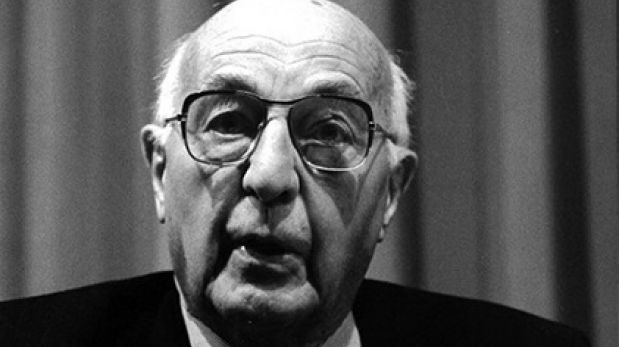
Nicholas Georgescu-Roegen (1906-1994) 
The Sveriges Riksbank Prize in Economic Sciences in Memory of Alfred Nobel, usually — incorrectly — referred to as the Nobel Prize in Economics, is an award for outstanding contributions to the field of economics. The Prize in Economics was established and endowed by Sweden’s central bank Sveriges Riksbank in 1968 on the occasion of the bank’s 300th anniversary.The first award was given in 1969. The award this year is presented in Stockholm at a ceremony tomorrow.

Out of the 75 laureates that have been awarded “The Sveriges Riksbank Prize in Economic Sciences in Memory of Alfred Nobel,” 28 have been affiliated to The University of Chicago — that is 37 %. Of all laureates, 80% have been from the US (by birth or by naturalisation). Only 7% of the laureates have come from outside North America or Western Europe. Only 1 woman has got the prize. The world is really a small place when it comes to economics …Looking at whom the prize is given to, says quite a lot about what kind of prize this is. But looking at whom the prize is not given to, says perhaps even more.

The great Romanian-American mathematical statistician and economist Nicholas Georgescu-Roegen (1906-1994) argued in his epochal The Entropy Law and the Economic Process (1971) that the economy was actually a giant thermodynamic system in which entropy increases inexorably and our material basis disappears. If we choose to continue to produce with the techniques we have developed, then our society and earth will disappear faster than if we introduce small-scale production, resource-saving technologies and limited consumption.

Following Georgescu-Roegen, ecological economists have argued that industrial society inevitably leads to increased environmental pollution, energy crisis and an unsustainable growth.

Georgescu-Roegen and ecological economics have turned against the neoclassical theory’s obsession with purely monetary factors. The monetary reductionism easily makes you ignore other factors having a bearing on human interaction with the environment.

I wonder if this isn’t the crux of the matter. To assert such a thing really is to swear in the neoclassical establishment church and nullifies any chances of getting the prestigious prize.

Twenty years ago, after a radio debate with one of the members of the prize committee, I asked why Georgescu-Roegen hadn’t got the prize. The answer was – mirabile dictu – that he “never founded a school.” I was surprised, to say the least, and wondered if he possibly had heard of the environmental movement. Well, he had — but it was “the wrong kind of school”! Can it be stated much clearer than this what it’s all about? If you haven’t worked within the mainstream neoclassical paradigm — then you are more or less excluded a priori from being eligible for the The Sveriges Riksbank Prize in Economic Sciences in Memory of Alfred Nobel!

Two years ago — making an extraordinarily successful forecast — I told Swedish media the prize committee would show how in tune with the times it was and award the prize to Eugene Fama. Why? Well — I argued — he’s a Chicago economist and a champion of rational expectations and efficient markets. And nowadays freshwater economists seem to be the next to the only ones eligible for the prize. And, of course, an economist who has described the notion that finance theory was at fault as “a fantasy” and argued that “financial markets and financial institutions were casualties rather than causes of the recession” had to appeal to a prize committee with a history of awarding theories and economists totally lacking any real world relevance.

Well, my forecast turned out to be right — the Swedish Academy of Sciences awarded The Sveriges Riksbank Prize in Economic Sciences in Memory of Alfred Nobel for 2013 to Eugene Fame. The prize committee really did show how in tune with the times it was …
I love to be right of course, but otherwise this is only saddening and shows what a joke this prize is, when someone like Fama can get it. Maybe I’m not showing proper “respect” for Fama’s “important steps forward”, but, really, how could one after reading the following interview with Nobel laureate Fama?
Q. Many people would argue that, in this case, the inefficiency was primarily in the credit markets, not the stock market—that there was a credit bubble that inflated and ultimately burst.
Eugene Fama: I don’t even know what that means. People who get credit have to get it from somewhere. Does a credit bubble mean that people save too much during that period? I don’t know what a credit bubble means. I don’t even know what a bubble means. These words have become popular. I don’t think they have any meaning.
Q. I guess most people would define a bubble as an extended period during which asset prices depart quite significantly from economic fundamentals.
Eugene Fama: That’s what I would think it is, but that means that somebody must have made a lot of money betting on that, if you could identify it. It’s easy to say prices went down, it must have been a bubble, after the fact. I think most bubbles are twenty-twenty hindsight. Now after the fact you always find people who said before the fact that prices are too high. People are always saying that prices are too high. When they turn out to be right, we anoint them. When they turn out to be wrong, we ignore them. They are typically right and wrong about half the time.
Q. Are you saying that bubbles can’t exist?
Eugene Fama: They have to be predictable phenomena. I don’t think any of this was particularly predictable.

Tuesday, October 13, 2015

2046. The Noble Prize and Economics "Sciences"

By Joris Luyendijik, The Guardian, October 11, 2015

Business as usual. That will be the implicit message when the Sveriges Riksbank announces this year’s winner of the “Prize in Economic Sciences in Memory of Alfred Nobel”, to give it its full title. Seven years ago this autumn, practically the entire mainstream economics profession was caught off guard by the global financial crash and the “worst panic since the 1930s” that followed. And yet on Monday the glorification of economics as a scientific field on a par with physics, chemistry and medicine will continue.

The problem is not so much that there is a Nobel prize in economics, but that there are no equivalent prizes in psychology, sociology, anthropology. Economics, this seems to say, is not a social science but an exact one, like physics or chemistry – a distinction that not only encourages hubris among economists but also changes the way we think about the economy.

A Nobel prize in economics implies that the human world operates much like the physical world: that it can be described and understood in neutral terms, and that it lends itself to modelling, like chemical reactions or the movement of the stars. It creates the impression that economists are not in the business of constructing inherently imperfect theories, but of discovering timeless truths.

To illustrate just how dangerous that kind of belief can be, one only need to consider the fate of Long-Term Capital Management, a hedge fund set up by, among others, the economists Myron Scholes and Robert Merton in 1994. With their work on derivatives, Scholes and Merton seemed to have hit on a formula that yielded a safe but lucrative trading strategy. In 1997 they were awarded the Nobel prize. A year later, Long-Term Capital Management lost $4.6bn (£3bn)in less than four months; a bailout was required to avert the threat to the global financial system. Markets, it seemed, didn’t always behave like scientific models.

In the decade that followed, the same over-confidence in the power and wisdom of financial models bred a disastrous culture of complacency, ending in the 2008 crash. Why should bankers ask themselves if a lucrative new complex financial product is safe when the models tell them it is? Why give regulators real power when models can do their work for them?

Many economists seem to have come to think of their field in scientific terms: a body of incrementally growing objective knowledge. Over the past decades mainstream economics in universities has become increasingly mathematical, focusing on complex statistical analyses and modelling to the detriment of the observation of reality.

Consider this throwaway line from the former top regulator and London School of Economics director Howard Davies in his 2010 book The Financial Crisis: Who Is to Blame?: “There is a lack of real-life research on trading floors themselves.” To which one might say: well, yes, so how about doing something about that? After all, Davies was at the time heading what is probably the most prestigious institution for economics research in Europe, located a stone’s throw away from the banks that blew up.

Howard Davies, pictured in 2006. Photograph: Eamonn McCabe for the Guardian
All those banks have “structured products approval committees”, where a team of banking staff sits down to decide whether their bank should adopt a particular new complex financial product. If economics were a social science like sociology or anthropology, practitioners would set about interviewing those committee members, scrutinising the meetings’ minutes and trying to observe as many meetings as possible. That is how the kind of fieldwork-based, “qualitative” social sciences, which economists like to discard as “soft” and unscientific, operate. It is true that this approach, too, comes with serious methodological caveats, such as verifiability, selection bias or observer bias. The difference is that other social sciences are open about these limitations, arguing that, while human knowledge about humans is fundamentally different from human knowledge about the natural world, those imperfect observations are extremely important to make.

Compare that humility to that of former central banker Alan Greenspan, one of the architects of the deregulation of finance, and a great believer in models. After the crash hit, Greenspan appeared before a congressional committee in the US to explain himself. “I made a mistake in presuming that the self-interests of organisations, specifically banks and others, were such that they were best capable of protecting their own shareholders and their equity in the firms,” said the man whom fellow economists used to celebrate as “the maestro”.

In other words, Greenspan had been unable to imagine that bankers would run their own bank into the ground. Had the maestro read the tiny pile of books by financial anthropologists he may have found it easier to imagine such behaviour. Then he would have known that over past decades banks had adopted a “zero job security” hire-and-fire culture, breeding a “zero-loyalty” mentality that can be summarised as: “If you can be out of the door in five minutes, your horizon becomes five minutes.”

While this was apparently new to Greenspan it was not to anthropologist Karen Ho, who did years of fieldwork at a Wall Street bank. Her book Liquidated emphasises the pivotal role of zero job security at Wall Street (the same system governs the City of London). The financial sociologist Vincent Lépinay’s Codes of Finance, a book about the division in a French bank for complex financial products, describes in convincing detail how institutional memory suffers when people switch jobs frequently and at short notice.

Perhaps the most pernicious effect of the status of economics in public life has been the hegemony of technocratic thinking. Political questions about how to run society have come to be framed as technical issues, fatally diminishing politics as the arena where society debates means and ends. Take a crucial concept such as gross domestic product. As Ha-Joon Chang makes clear in 23 Things They Don’t Tell You About Capitalism, the choices about what not to include in GDP (household work, to name one) are highly ideological. The same applies to inflation, since there is nothing neutral about the decision not to give greater weight to the explosion in housing and stock market prices when calculating inflation.

GDP, inflation and even growth figures are not objective temperature measurements of the economy, no matter how many economists, commentators and politicians like to pretend they are. Much of economics is politics disguised as technocracy – acknowledging this might help open up the space for political debate and change that has been so lacking in the past seven years.

Would it not be extremely useful to take economics down one peg by overhauling the prize to include all social sciences? The Nobel prize for economics is not even a “real” Nobel prize anyway, having only been set up by the Swedish central bank in 1969. In recent years, it may have been awarded to more non-conventional practitioners such as the psychologist Daniel Kahneman. However, Kahneman was still rewarded for his contribution to the science of economics, still putting that field centre stage.

Think of how frequently the Nobel prize for literature elevates little-known writers or poets to the global stage, or how the peace prize stirs up a vital global conversation: Naguib Mahfouz’s Nobel introduced Arab literature to a mass audience, while last year’s prize for Kailash Satyarthi and Malala Yousafzai put the right of all children to an education on the agenda. Nobel prizes in economics, meanwhile, go to “contributions to methods of analysing economic time series with time-varying volatility” (2003) or the “analysis of trade patterns and location of economic activity” (2008).

A revamped social science Nobel prize could play a similar role, feeding the global conversation with new discoveries and insights from across the social sciences, while always emphasising the need for humility in treating knowledge by humans about humans. One good candidate would be the sociologist Zygmunt Bauman, whose writing on the “liquid modernity” of post-utopian capitalism deserves the largest audience possible. Richard Sennett and his work on the “corrosion of character” among workers in today’s economies would be another. Will economists volunteer to share their prestigious prize out of their own acccord? Their own mainstream economic assumptions about human selfishness suggest they will not.

Saturday, October 10, 2015

2045. Exxon's Climate Concealment

By Naomi Oreskes, The New York Times, October 9, 2015


CAMBRIDGE, MASS. — Millions of Americans once wanted to smoke. Then they came to understand how deadly tobacco products were. Tragically, that understanding was long delayed because the tobacco industry worked for decades to hide the truth, promoting a message of scientific uncertainty instead.

The same thing has happened with climate change, as Inside Climate News, a nonprofit news organization, has been reporting in a series of articles based on internal documents from Exxon Mobil dating from the 1970s and interviews with former company scientists and employees.

Had Exxon been upfront at the time about the dangers of the greenhouse gases we were spewing into the atmosphere, we might have begun decades ago to develop a less carbon-intensive energy path to avert the worst impacts of a changing climate. Amazingly, politicians are still debating the reality of this threat, thanks in no small part to industry disinformation.

Government and academic scientists alerted policy makers to the potential threat of human-driven climate change in the 1960s and ’70s, but at that time climate change was still a prediction. By the late 1980s it had become an observed fact.

But Exxon was sending a different message, even though its own evidence contradicted its public claim that the science was highly uncertain and no one really knew whether the climate was changing or, if it was changing, what was causing it.

Exxon (which became Exxon Mobil in 1999) was a leader in these campaigns of confusion. In 1989, the company helped to create the Global Climate Coalition to question the scientific basis for concern about climate change and prevent the United States from signing on to the international Kyoto Protocol to control greenhouse gas emissions. The coalition disbanded in 2002, but the disinformation continued. 

Journalists and scientists have identified more than 30 different organizations funded by the company that have worked to undermine the scientific message and prevent policy action to control greenhouse gas emissions.

These efforts turned the problem from a matter of fact into a matter of opinion. When the Exxon chief executive, Lee Raymond, insisted in the late 1990s that the science was still uncertain, the media covered it, business leaders accepted it and the American people were confused.

For people close to the issue, it was never credible that Exxon — a company that employs thousands of scientists and engineers and whose core business depends on their expertise — could be that confused about the science. We now know that they not only understood the science, but contributed to it.

As early as 1977, one of Exxon’s senior scientists warned a gathering of oilmen of a “general scientific agreement” that the burning of fossil fuels was influencing the climate. A year later, he had updated his assessment, warning that “present thinking holds that man has a time window of five to 10 years before the need for hard decisions regarding changes in energy strategies might become critical.”

In the 1980s, Exxon scientists collaborated with academic and government researchers to build climate models and understand their implications. When one researcher expressed the opinion that the impacts would be “well short of catastrophic,” the director of the Theoretical and Mathematical Sciences Laboratory at Exxon Research responded in a memo, “I think that this statement may be too reassuring.” He said it was “distinctly possible” that the projected warming trend after 2030 “will indeed be catastrophic (at least for a substantial fraction of the earth’s population),” a conclusion that most climate scientists now hold, assuming we continue business as usual.

What did Exxon executives do with this information? Until 1989, they circulated reports summarizing it inside the company. They allowed their scientists to attend academic meetings, to participate in panels, and to publish their findings in peer-reviewed journals — in short, to behave as scientists. And they did acknowledge the “potentially catastrophic events that must be considered.”

Then corporate executives turned about face. As the scientific community began to speak out more strongly, first about the risks of unmitigated climate change and then about the fact that it was underway, Exxon executives and organizations funded by them embarked on a campaign designed to prevent governments from taking meaningful action. These activities continue today.

Exxon (whose spokesman has disputed the Inside Climate News reporting) had a choice. As one of the most profitable companies in the world, Exxon could have acted as a corporate leader, helping to explain to political leaders, to shareholders and institutional investors, and to the public what it knew about climate change. It could have begun to shift its business model, investing in renewables and biofuels or introducing a major research and development initiative in carbon capture. It could have endorsed sensible policies to foster a profitable transition to a 21st-century energy economy.

Instead — like the tobacco industry — Exxon chose the path of disinformation, denial and delay. More damagingly, the company set a model for the rest of the industry. More than 30 years ago, Exxon scientists acknowledged in internal company memos that climate change could be catastrophic. Today, scientists who say the exact same thing are ridiculed in the business community and on the editorial page of The Wall Street Journal.

We have lost precious time as a result: decades during which we could have built a smart electricity grid, fostered efficiency and renewables and generated thousands of jobs in a cleaner, greener economy. There is still time to prevent the worst disruptions of human-driven climate change, but the challenge is now much greater than it needed to be, in no small part because of the choices that Exxon Mobil made.

Naomi Oreskes is a professor of the history of science at Harvard and the author, with Erik M. Conway, of “The Collapse of Western Civilization: A View From the Future.”

Saturday, October 3, 2015

2044. Save the Parasites, Seriously

By The Atlantic, September 29, 2015


In the 1980s, conservationists ushered the planet's 22 last remaining Californian condors into captivity. They saved the birds, cared for them, fed them, and bred them. They also de-loused them and, in doing so, they killed off the last remaining condor louse—a harmless parasite that lived only on Californian condors. The condor population rose to over 400. The condor-louse population fell to zero. “It's a great example of a species that was knowingly, willingly, and thoughtlessly driven extinct by veterinarians,” says Kevin Lafferty, a parasitologist from the University of California, Santa Barbara. “I would hope we would act differently now.”

Lafferty is one of several scientists calling for conservationists to pay more attention to saving parasites. We view these organisms—these blood-suckers, free-riders, nutrient-drainers, and mind-controllers—with disgust and antipathy, and we're more likely to aggressively exterminate them than compassionately preserve them. But, in many cases, this kind of “taxonomic chauvinism” is a mistake.

Parasites play a critical role in ecological systems. They are abundant: In 2008, Lafferty traipsed through three Californian estuaries and found that the local trematodes—microscopic flatworms that specialize in castrating snails—outweighed all the resident fish and birds. They direct the flow of energy: A Japanese team found that trout get 60 percent of their diet from suicidal insects, driven to drown themselves in streams by mind-controlling worms inside their bodies. They keep populations of pests under control: All sap-sucking insects are targeted by some manner of parasitic wasp or fly that lays eggs inside their bodies. When we lose parasites, we lose ecological lynchpins rather than inconsequential oddballs.

We might also endanger other organisms that we're trying to save. In many cases, parasites are not threats to health, but co-evolved partners that help to calibrate the immune systems of their hosts. When wolves were denuded of mites and reintroduced to Yellowstone National Park, they became more susceptible to viruses. When humans are deprived of our resident microbes, we seem to run greater risks of allergies and asthma. “We maintain this diversity of parasites and organisms that we’ve evolved with, which fight off organisms that we didn’t evolve with or are exploiting us,” says Eric Dougherty from the University of California, Berkeley.

“The idea of parasite conservation is a litmus test for conservation,” says Lafferty. “There are many views for why we conserve species. Some feel it is their moral obligation to prevent extinctions caused by humans. Others argue for the intrinsic value of biodiversity, and many market biodiversity conservation based on its utility value for humans. Each of these perspectives results in a different list of what should be saved. But all of those lists so far lack parasites.”

Of course: not all parasites. Many of them cause untold human suffering, including Plasmodium, which causes malaria, and the flatworms that cause schistosomiasis. “It’s hard to argue that we should be conserving pathogens that threaten human health,” says Dougherty. Lafferty agrees. “I believe in preserving all aspects of biodiversity, but I wholly support Jimmy Carter’s wish to see the extinction of guinea worm before he dies. I’m sure some people will argue on moral grounds, but I’ve yet to see someone volunteer to act as a host for the last remaining pair of guinea worms.”

Other cases are less clear cut. Take the hydatid worm, a tapeworm with catholic taste in hosts. It's often removed from wolves that are reintroduced into national parks, but it also helps the wolves by infecting and incapacitating their prey, including moose and other ungulates. Complicating matters further, the worm sometimes infects humans, causing over a thousand deaths a year in the tropics. “Can we ever really weigh the relative value of these things? No probably not,” says Colin Carlson from the University of California, Berkeley. “But if we think about all of the risks, we should keep the opportunities to conserve them on the table.”

Consider the black-footed ferret, a sinuous, masked animal that was declared extinct in 1979, before a group of survivors was found and saved. In the process, conservationists found two species of protozoan parasites called Eimeria. In a staggering burst of foresight, they decided to save these too, so the captive ferrets would develop appropriate immune responses to similar parasites when they were eventually released. Other researchers advocate the deliberate introduction of parasites to captive animals—lousing the Iberian lynx rather than delousing it.

Ignorance, more so than public perception, remains the biggest challenge to parasite conservation. The International Union for Conservation of Nature's Red List tracks the status of threatened species, but is heavily biased towards vertebrates and plants. “No one has taken the time to work out what fraction of parasites are threatened by global change,” says Carlson.

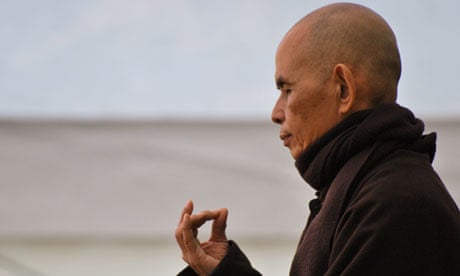
2043. Thich Nhat Hanh: Falling in Love With the Earth

By Thich Nhat, UN Climate Change Newsroom, July 14, 2014 
Tich Nhat Hanh
This beautiful, bounteous, life-giving planet we call Earth has given birth to each one of us, and each one of us carries the Earth within every cell of our body.

The Earth is our mother, nourishing and protecting us in every moment–giving us air to breathe, fresh water to drink, food to eat and healing herbs to cure us when we are sick. Every breath we inhale contains our planet's nitrogen, oxygen, water vapor and trace elements. When we breathe with mindfulness, we can experience our interbeing with the Earth's delicate atmosphere, with all the plants, and even with the sun, whose light makes possible the miracle of photosynthesis. With every breath we can experience communion. With every breath we can savor the wonders of life.

We need to change our way of thinking and seHanhHeing things. We need to realise that the Earth is not just our environment. The Earth is not something outside of us. Breathing with mindfulness and contemplating your body, you realise that you are the Earth. You realise that your consciousness is also the consciousness of the Earth. Look around you–what you see is not your environment, it is you.

Great Mother Earth
Whatever nationality or culture we belong to, whatever religion we follow, whether we're Buddhists, Christians, Muslims, Jews, or atheists, we can all see that the Earth is not inert matter. She is a great being, who has herself given birth to many other great beings–including buddhas and bodhisattvas, prophets and saints, sons and daughters of God and humankind. The Earth is a loving mother, nurturing and protecting all peoples and all species without discrimination.

When you realize the Earth is so much more than simply your environment, you'll be moved to protect her in the same way as you would yourself. This is the kind of awareness, the kind of awakening that we need, and the future of the planet depends on whether we're able to cultivate this insight or not. The Earth and all species on Earth are in real danger. Yet if we can develop a deep relationship with the Earth, we'll have enough love, strength and awakening in order to change our way of life.

Falling in love
We can all experience a feeling of deep admiration and love when we see the great harmony, elegance and beauty of the Earth. A simple branch of cherry blossom, the shell of a snail or the wing of a bat – all bear witness to the Earth's masterful creativity. Every advance in our scientific understanding deepens our admiration and love for this wondrous planet. When we can truly see and understand the Earth, love is born in our hearts. We feel connected. That is the meaning of love: to be at one.

Only when we've truly fallen back in love with the Earth will our actions spring from reverence and the insight of our interconnectedness. Yet many of us have become alienated from the Earth. We are lost, isolated and lonely. We work too hard, our lives are too busy, and we are restless and distracted, losing ourselves in consumption. But the Earth is always there for us, offering us everything we need for our nourishment and healing: the miraculous grain of corn, the refreshing stream, the fragrant forest, the majestic snow-capped mountain peak, and the joyful birdsong at dawn.

True Happiness is made of love
Many of us think we need more money, more power or more status before we can be happy. We're so busy spending our lives chasing after money, power and status that we ignore all the conditions for happiness already available. At the same time, we lose ourselves in buying and consuming things we don’t need, putting a heavy strain on both our bodies and the planet. Yet much of what we drink, eat, watch, read or listen to, is toxic, polluting our bodies and minds with violence, anger, fear and despair.

As well as the carbon dioxide pollution of our physical environment, we can speak of the spiritual pollution of our human environment: the toxic and destructive atmosphere we're creating with our way of consuming. We need to consume in such a way that truly sustains our peace and happiness. Only when we're sustainable as humans will our civilization become sustainable. It is possible to be happy in the here and the now.

We don't need to consume a lot to be happy; in fact we can live very simply. With mindfulness, any moment can become a happy moment. Savoring one simple breath, taking a moment to stop and contemplate the bright blue sky, or to fully enjoy the presence of a loved one, can be more than enough to make us happy. Each one of us needs to come back to reconnect with ourselves, with our loved ones and with the Earth. It's not money, power or consuming that can make us happy, but having love and understanding in our heart.

The bread in your hand is the body of the cosmos
We need to consume in such a way that keeps our compassion alive. And yet many of us consume in a way that is very violent. Forests are cut down to raise cattle for beef, or to grow grain for liquor, while millions in the world are dying of starvation. Reducing the amount of meat we eat and alcohol we consume by 50% is a true act of love for ourselves, for the Earth and for one another. Eating with compassion can already help transform the situation our planet is facing, and restore balance to ourselves and the Earth.

Nothing is more important than brotherhood and sisterhood
There's a revolution that needs to happen and it starts from inside each one of us. We need to wake up and fall in love with Earth. We've been homo sapiens for a long time. Now it's time to become homo conscius. Our love and admiration for the Earth has the power to unite us and remove all boundaries, separation and discrimination. Centuries of individualism and competition have brought about tremendous destruction and alienation. We need to re-establish true communication–true communion–with ourselves, with the Earth, and with one another as children of the same mother. We need more than new technology to protect the planet. We need real community and co-operation.

All civilisations are impermanent and must come to an end one day. But if we continue on our current course, there's no doubt that our civilisation will be destroyed sooner than we think. The Earth may need millions of years to heal, to retrieve her balance and restore her beauty. She will be able to recover, but we humans and many other species will disappear, until the Earth can generate conditions to bring us forth again in new forms. Once we can accept the impermanence of our civilization with peace, we will be liberated from our fear. Only then will we have the strength, awakening and love we need to bring us together. Cherishing our precious Earth–falling in love with the Earth–is not an obligation. It is a matter of personal and collective happiness and survival.

Thursday, October 1, 2015

2042. Capitalism and Climate: Head of Bank of England Worries About Climate Change

By Neil Irwin, The New York Times, September 30, 2015

A new speech about climate change is fascinating both for what it says and who said it.
Mark Carney, the governor of the Bank of England, declared that the warming climate presented major risks for the global economy and global financial stability, and that businesses and regulators needed to move more quickly to try to contain the potential economic damage even though it may seem uncertain and far off.

His warning, delivered in a 4,400-word speech with ample footnotes on Tuesday, is the latest example of how climate change has moved beyond theoretical scientific debates to the start of practical planning for safeguarding the economy and business.

“We don’t need an army of actuaries to tell us that the catastrophic impacts of climate change will be felt beyond the traditional horizons of most actors — imposing a cost on future generations that the current generation has no direct incentive to fix,” he said. “In other words, once climate change becomes a defining issue for financial stability, it may already be too late.”

Mr. Carney calls the economic challenges around climate the “tragedy of the horizon,” in contrast to the long-noted economic phenomenon of the “tragedy of the commons.” 

That is, the costs of a warming climate come on a time scale and with an uncertainty that go beyond the usual multiyear business cycle, beyond political cycles of presidential and parliamentary elections, or as he puts it, beyond “the horizon of technocratic authorities, like central banks, who are bound by their mandates.”

It might seem odd for a central banker to be talking about a long-term problem of global climate, all the more so when the global economy is looking rather shaky. After all, the job is typically to worry about price inflation and the banking system.

But if you back up and define a central banker’s job a little more broadly — to worrying about the economy and the stability of the financial system writ large — it quickly becomes clear why climate matters.

Consider that a housing bubble largely concentrated in a handful of Sun Belt American states, Spain and Ireland set in motion events that eight years ago caused a financial crisis from which the world economy has still not fully healed. It’s easy to imagine how the effects of a shifting climate could similarly ripple through both the financial system and the real economy in ways that are impossible to predict with any precision today.

Global insurers are already facing a higher frequency of large, expensive disasters from extreme weather, and in the future could face untold liabilities as the losers from a warming planet try to extract compensation from the (insured) companies that profited from fossil fuel production. It was no coincidence that Mr. Carney delivered his speech at the three-century-old insurer Lloyd’s of London.

Those energy extraction industries, which include many of the planet’s biggest companies, could one day face existential risk. If global governments get more aggressive about restricting carbon emissions, it could mean that billions of investment in oil and gas extraction will be rendered useless and undermine both some of the most widely held investments and the government finances of oil-producing regions.

More subtly, expensive efforts at remediation — spending to try to contain the damage of climate change — could crowd out other forms of investment. Think of it this way: Sorry, we can’t afford to repair this bridge in Kentucky because interest rates are too high because Florida is borrowing so much money to try to keep Miami inhabitable.

There is no certainty that any of these threats will materialize on a large enough scale to carry meaningful economic or financial risk. But any of them, or others that are harder to imagine, could well do so.

A British official like Mr. Carney has particular incentive to worry about these matters: London is a key center for managers of global financial risk, with its insurers and other financial services. And he notes that 19 percent of the British stock market value is in energy extraction.

But while each country might have its own mix of economic and financial risks from climate, this new speech from the Bank of England is a signal that others entrusted with managing economic risk might want these risks on their radar, even if the tools to combat them today are limited.

Mr. Carney isn’t the first financial policy maker to discuss climate risks; the former American Treasury secretaries Bob Rubin and Hank Paulson have been vocal, for example. But it is fascinating to have a current policy maker, who has plenty of nearer-term problems on his plate, deliver a sweeping speech on something that at first glance might seem outside his remit.

There’s little doubt that other large and powerful institutions, whether banks, insurers, industrial giants or regulatory agencies, will have to deal with these issues. Think of Mr. Carney’s speech as a call to begin that work sooner, rather than later.

2041. Insect Diversity Decreases in Gardens With Non-Native Plants

By Science Daily, September 28, 2015
A California garden with native plants
Not only do native plants do a better job of hosting and supporting local insect communities than their non-native counterparts, but a University of Delaware study shows that non-native plants are compounding the problem of declining species diversity by supporting fewer herbivores across landscapes.

The research was conducted by UD alumna Karin Burghardt and Doug Tallamy, professor of entomology in the University's College of Agriculture and Natural Resources, and published in a recent issue of Ecology Letters.

To conduct the study, the researchers planted imitation yards with different common gardens of both native and non-native tree species and collected data over a three-year period, measuring the herbivore communities and species found on those plants.
They compared native trees to non-native trees that had no close native relative and to non-natives that are closely related to the native community.

Within the distantly related group, they found that herbivores were less diverse when they looked at individual non-native tree species, and as they moved from one non-native tree species to another, they found similar species of herbivores using those trees.

"You get this compounding effect where you have a lower diversity of herbivores per tree but then you also are getting more similar species as you move between trees species and among sites, so you end up with even less diverse communities than you would expect," said Burghardt.

They found this to be especially true of non-native plants that had no close native relative.

"There is this group of species of non-natives that do not have any close native relatives at all. These non-natives support more generalized and redundant herbivore communities than the native plants that they're potentially replacing on landscapes," said Burghardt, who added that this is especially true for young herbivores that use the plants for food.

Tallamy said that finding young herbivores on a plant is a good indication of how that plant is supporting the local ecosystem, as opposed to finding adults, which could be on a plant for a number of reasons, such as resting or looking for a mate.

"The relationship between the adult and food is far weaker than the relationship between immatures and food, so when you find adults on the non-natives, it doesn't mean that much. When you find immatures, that's what you should be measuring," Tallamy said. "Those are the plants that are creating those immatures and so we do get significant differences between the immatures that are using native plants versus the immatures using non-natives.”

When it comes to non-native plants that are congeners -- non-native plants with a close native relative, such as Norway maple and red maple -- the researchers found that those seem to support herbivore populations across sites more similar to those on natives than the non-native plants that have no native relatives at all.

Tallamy said that few unique species were found on these non-native congeners, as most species found were also living on their native relative.

He also stressed that that native plants always do the best job per tree of supporting herbivore communities when compared to their non-native counterparts. This study expands the understanding of that fact by looking at whether that lower per tree diversity is magnified further by non-natives hosting more similar communities across trees species and locations.

Burghardt said the goal of the research was to understand how the composition of the plants that homeowners plant in their yards affects herbivore communities.

"If you think about it, you're driving around the suburban environment, and every time a new development goes in, you have a lot of decision making happening as to what plant species are going to be planted around those properties," Burghardt said. "If we do all that landscaping with non-native plants, are we limiting the wildlife and conservation support system that could be available within that given plot of land? What the gardens we constructed for the study are trying to replicate are landscaping decisions that people might make if they wanted to support native insect communities that in turn support much of the diversity around us.”

Journal Reference:
1 Karin T. Burghardt, Douglas W. Tallamy. Not all non-natives are equally unequal: reductions in herbivore β-diversity depend on phylogenetic similarity to native plant community. Ecology Letters, 2015; 18 (10): 1087 DOI: 10.1111/ele.12492