Friday, May 1, 2015

1833. On the Roots of American Racism: An Interview with Noam Chomsky

By George Yancy, The Hampton Institute, April 22, 2015

George Yancy: When I think about the title of your book "On Western Terrorism," I'm reminded of the fact that many black people in the United States have had a long history of being terrorized by white racism, from random beatings to the lynching of more than 3,000 black people (including women) between 1882 and 1968. This is why in 2003, when I read about the dehumanizing acts committed at Abu Ghraib prison, I wasn't surprised. I recall that after the photos appeared President George W. Bush said that "This is not the America I know." But isn't this the America black people have always known?

Noam Chomsky: The America that "black people have always known" is not an attractive one. The first black slaves were brought to the colonies 400 years ago. We cannot allow ourselves to forget that during this long period there have been only a few decades when African-Americans, apart from a few, had some limited possibilities for entering the mainstream of American society.

We also cannot allow ourselves to forget that the hideous slave labor camps of the new "empire of liberty" were a primary source for the wealth and privilege of American society, as well as England and the continent. The industrial revolution was based on cotton, produced primarily in the slave labor camps of the United States.

Thomas Jefferson feared the liberation of slaves, who had "ten thousand recollections" of the crimes to which they were subjected.

As is now known, they were highly efficient. Productivity increased even faster than in industry, thanks to the technology of the bullwhip and pistol, and the efficient practice of brutal torture, as Edward E. Baptist demonstrates in his recent study, " The Half Has Never Been Told." The achievement includes not only the great wealth of the planter aristocracy but also American and British manufacturing, commerce and the financial institutions of modern state capitalism.

It is, or should be, well-known that the United States developed by flatly rejecting the principles of "sound economics" preached to it by the leading economists of the day, and familiar in today's sober instructions to latecomers in development. Instead, the newly liberated colonies followed the model of England with radical state intervention in the economy, including high tariffs to protect infant industry, first textiles, later steel and others.

There was also another "virtual tariff." In 1807, President Jefferson signed a bill banning the importation of slaves from abroad. His state of Virginia was the richest and most powerful of the states, and had exhausted its need for slaves. Rather, it was beginning to produce this valuable commodity for the expanding slave territories of the South. Banning import of these cotton-picking machines was thus a considerable boost to the Virginia economy. That was understood. Speaking for the slave importers, Charles Pinckney charged that "Virginia will gain by stopping the importations. Her slaves will rise in value, and she has more than she wants." And Virginia indeed became a major exporter of slaves to the expanding slave society.

Some of the slave-owners, like Jefferson, appreciated the moral turpitude on which the economy relied. But he feared the liberation of slaves, who have "ten thousand recollections" of the crimes to which they were subjected. Fears that the victims might rise up and take revenge are deeply rooted in American culture, with reverberations to the present.

The Thirteenth Amendment formally ended slavery, but a decade later "slavery by another name" (also the title of an important study by Douglas A. Blackmon) was introduced. Black life was criminalized by overly harsh codes that targeted black people. Soon an even more valuable form of slavery was available for agribusiness, mining, steel - more valuable because the state, not the capitalist, was responsible for sustaining the enslaved labor force, meaning that blacks were arrested without real cause and prisoners were put to work for these business interests. The system provided a major contribution to the rapid industrial development from the late 19 th century.

That system remained pretty much in place until World War II led to a need for free labor for the war industry. Then followed a few decades of rapid and relatively egalitarian growth, with the state playing an even more critical role in economic development than before. A black man might get a decent job in a unionized factory, buy a house, send his children to college, along with other opportunities. The civil rights movement opened other doors, though in limited ways. One illustration was the fate of Martin Luther King's efforts to confront northern racism and develop a movement of the poor, which was effectively blocked.

The neoliberal reaction that set in from the late '70s, escalating under Reagan and his successors, hit the poorest and most oppressed sectors of society even more than the large majority, who have suffered relative stagnation or decline while wealth accumulates in very few hands. Reagan's drug war, deeply racist in conception and execution, initiated a new Jim Crow, Michelle Alexander's apt term for the revived criminalization of black life, evident in the shocking incarceration rates and the devastating impact on black society.

Reality is of course more complex than any simple recapitulation, but this is, unfortunately, a reasonably accurate first approximation to one of the two founding crimes of American society, alongside of the expulsion or extermination of the indigenous nations and destruction of their complex and rich civilizations.

'Intentional ignorance' regarding inconvenient truths about the suffering of African- Americans can also be used to frame the genocide of Native Americans.

G.Y. : While Jefferson may have understood the moral turpitude upon which slavery was based, in his "Notes on the State of Virginia," he says that black people are dull in imagination, inferior in reasoning to whites, and that the male orangutans even prefer black women over their own . These myths, along with the black codes following the civil war, functioned to continue to oppress and police black people. What would you say are the contemporary myths and codes that are enacted to continue to oppress and police black people today?

N.C.: Unfortunately, Jefferson was far from alone. No need to review the shocking racism in otherwise enlightened circles until all too recently. On "contemporary myths and codes," I would rather defer to the many eloquent voices of those who observe and often experience these bitter residues of a disgraceful past.

Perhaps the most appalling contemporary myth is that none of this happened. The title of Baptist's book is all too apt, and the aftermath is much too little known and understood.

There is also a common variant of what has sometimes been called "intentional ignorance" of what it is inconvenient to know: "Yes, bad things happened in the past, but let us put all of that behind us and march on to a glorious future, all sharing equally in the rights and opportunities of citizenry." The appalling statistics of today's circumstances of African-American life can be confronted by other bitter residues of a shameful past, laments about black cultural inferiority, or worse, forgetting how our wealth and privilege was created in no small part by the centuries of torture and degradation of which we are the beneficiaries and they remain the victims. As for the very partial and hopelessly inadequate compensation that decency would require - that lies somewhere between the memory hole and anathema.

Jefferson, to his credit, at least recognized that the slavery in which he participated was "the most unremitting despotism on the one part, and degrading submissions on the other." And the Jefferson Memorial in Washington displays his words that "Indeed I tremble for my country when I reflect that God is just: that his justice cannot sleep forever." Words that should stand in our consciousness alongside of John Quincy Adams's reflections on the parallel founding crime over centuries, the fate of "that hapless race of native Americans, which we are exterminating with such merciless and perfidious cruelty…among the heinous sins of this nation, for which I believe God will one day bring [it] to judgment."
What matters is our judgment, too long and too deeply suppressed, and the just reaction to it that is as yet barely contemplated.

G.Y.: This "intentional ignorance" regarding inconvenient truths about the suffering of African- Americans can also be used to frame the genocide of Native Americans. It was 18th century Swedish taxonomist Carolus Linnaeus who argued that Native Americans were governed by traits such as being "prone to anger," a convenient myth for justifying the need for Native Americans to be "civilized" by whites. So, there are myths here as well. How does North America's "amnesia" contribute to forms of racism directed uniquely toward Native Americans in our present moment and to their continual genocide?

N.C. : The useful myths began early on, and continue to the present. One of the first myths was formally established right after the King of England granted a Charter to the Massachusetts Bay Colony in 1629, declaring that conversion of the Indians to Christianity is "the principal end of this plantation." The colonists at once created the Great Seal of the Colony, which depicts an Indian holding a spear pointing downward in a sign of peace, with a scroll coming from his mouth pleading with the colonists to "Come over and help us." This may have been the first case of "humanitarian intervention" - and, curiously, it turned out like so many others.

Years later Supreme Court Justice Joseph Story mused about "the wisdom of Providence" that caused the natives to disappear like "the withered leaves of autumn" even though the colonists had "constantly respected" them. Needless to say, the colonists who did not choose "intentional ignorance" knew much better, and the most knowledgeable, like Gen. Henry Knox, the first secretary of war of the United States, described "the utter extirpation of all the Indians in most populous parts of the Union [by means] more destructive to the Indian natives than the conduct of the conquerors of Mexico and Peru."

Knox went on to warn that "a future historian may mark the causes of this destruction of the human race in sable colors." There were a few - very few - who did so, like the heroic Helen Jackson, who in 1880 provided a detailed account of that "sad revelation of broken faith, of violated treaties, and of inhuman acts of violence [that] will bring a flush of shame to the cheeks of those who love their country." Jackson's important book barely sold. She was neglected and dismissed in favor of the version presented by Theodore Roosevelt, who explained that "The expansion of the peoples of white, or European, blood during the past four centuries…has been fraught with lasting benefit to most of the peoples already dwelling in the lands over which the expansion took place," notably those who had been "extirpated" or expelled to destitution and misery.

The national poet, Walt Whitman, captured the general understanding when he wrote that "The nigger, like the Injun, will be eliminated; it is the law of the races, history… A superior grade of rats come and then all the minor rats are cleared out." It wasn't until the 1960s that the scale of the atrocities and their character began to enter even scholarship, and to some extent popular consciousness, though there is a long way to go.

That's only a bare beginning of the shocking record of the Anglosphere and its settler-colonial version of imperialism, a form of imperialism that leads quite naturally to the "utter extirpation" of the indigenous population - and to "intentional ignorance" on the part of beneficiaries of the crimes.

G.Y.: Your response raises the issue of colonization as a form of occupation. James Baldwin, in his 1966 essay, "A Report from Occupied Territory," wrote, "Harlem is policed like occupied territory." This quote made me think of Ferguson, Mo. Some of the protesters in Ferguson even compared what they were seeing to the Gaza Strip. Can you speak to this comparative discourse of occupation?

N.C. : All kinds of comparisons are possible. When I went to the Gaza Strip a few years ago, what came to mind very quickly was the experience of being in jail (for civil disobedience, many times): the feeling, very strange to people who have had privileged lives, that you are totally under the control of some external authority, arbitrary and if it so chooses, cruel. But the differences between the two cases are, of course, vast.

More generally, I'm somewhat skeptical about the value of comparisons of the kind mentioned. There will of course be features common to the many diverse kinds of illegitimate authority, repression and violence. Sometimes they can be illuminating; for example, Michelle Alexander's analogy of a new Jim Crow, mentioned earlier. Often they may efface crucial distinctions. I don't frankly see anything general to say of much value. Each comparison has to be evaluated on its own.

G.Y.: These differences are vast and I certainly don't want to conflate them. Post-911 seems to have ushered in an important space for making some comparisons. Some seem to think that Muslims of Arab descent have replaced African-Americans as the pariah in the United States. What are your views on this?

N.C.: Anti-Arab/Muslim racism has a long history, and there's been a fair amount of literature about it. Jack Shaheen's studies of stereotyping in visual media, for example. And there's no doubt that it's increased in recent years. To give just one vivid current example, audiences flocked in record-breaking numbers to a film, described in The New York Times Arts section as "a patriotic, pro-family picture," about a sniper who claims to hold the championship in killing Iraqis during the United States invasion, and proudly describes his targets as "savage, despicable, evil … really no other way to describe what we encountered there." This was referring specifically to his first kill, a woman holding a grenade when under attack by United States forces.

What's important is not just the mentality of the sniper, but the reaction to such exploits at home when we invade and destroy a foreign country, hardly distinguishing one "raghead" from another. These attitudes go back to the "merciless Indian savages" of the Declaration of Independence and the savagery and fiendishness of others who have been in the way ever since, particularly when some "racial" element can be invoked - as when Lyndon Johnson lamented that if we let down our guard, we'll be at the mercy of "every yellow dwarf with a pocket knife." But within the United States, though there have been deplorable incidents, anti-Arab/Muslim racism among the public has been fairly restrained, I think.

G.Y.: Lastly, the reality of racism (whether it's anti-black, anti-Arab, anti-Jewish, etc.) is toxic. While there is no single solution to racism, especially in terms of its various manifestations, what do you see as some of the necessary requirements for ending racist hatred?

N.C.: It's easy to rattle off the usual answers: education, exploring and addressing the sources of the malady, joining together in common enterprises - labor struggles have been an important case - and so on. The answers are right, and have achieved a lot. Racism is far from eradicated, but it is not what it was not very long ago, thanks to such efforts. It's a long, hard road. No magic wand, as far as I know.

This interview was conducted by email and edited. Previous interviews in this series (with Linda Martin Alcoff, Judith Butler, Joy James, Charles Mills, Falguni A. Sheth, Shannon Sullivan and Naomi Zack) can be found here .

George Yancy is a professor of philosophy at Duquesne University. He has written, edited and co-edited numerous books, including "Black Bodies, White Gazes," "Look, a White!" and "Pursuing Trayvon Martin," co-edited with Janine Jones.

1832. The United States Reengages Cuba: The Habit of Power


Expectations soared on December 17: "Sweeping changes," exulted the New York Times, "ushering in a transformational era." "A truly historic moment," pronounced the Huffington Post. Archbishop Thomas G. Wenski of Miami rejoiced over the "game changer" announcements, and the Brookings Institution predicted "seismic change" in the offing. A "bold new policy," proclaimed the Chicago Tribune.

Maybe . . . .

That the announcements of December 17 in Washington and Havana portended change could hardly be gainsaid, of course. Some things did indeed change. Cubans and Americans at the highest levels of government were speaking to each other—instead of at each other. That's something. To reopen embassies in Havana and Washington: that's something, too. All to the good, of course. Assistant Secretary of State Roberta Jacobson was most assuredly correct to note that "diplomatic relations and having embassies is incredibly important in a relationship like this where you have so much to overcome and where you have differences."
But it is also true that some things have not changed, and therein lurks the specter of a past foretold, for much of what has not changed is precisely what has been at the source of the estrangement of the past 55 years.

The need for a change of policy was as self-evident as it was self-explanatory. A policy from another historical epoch, fashioned by policymakers three generations ago, bereft of plausible purpose, had assumed a life of its own as something of a policy legacy, as if a "trust", passed on from one presidential administration to another: eleven presidential administrations, to be precise. The United States, President Obama affirmed correctly, cannot "keep doing the same thing for over five decades and expect a different result," hence, the President added, it was time to "end an outdated approach" and "to try something different." The old policy, the President affirmed "hasn't worked." Senator Patrick Leahy agreed, and applauded the end of "53 years of a policy that has not worked." A view shared, too, by Senator Jeff Flake: "It's time to try something new."

But troubling ambiguities lurk in the phrasing of celebratory narratives of the "bold new policy." To change a "policy that has not worked" for 55 years in order to "try something new", speaks to an eminently rational logic, of course. But it is also true that power tends to assemble logic in accordance with its needs. In fact, the connotations of the phrasing are neither explicit nor explained: "has not worked" at . . . . what?

But we do know what "has not worked": what "has not worked," of course, is regime change, which was the overriding purpose to which 55 years of U.S. policy was given. The government long vilified in the United States continues to govern Cuba, and continues to be vilified.

The "bold new policy" appears to suggest less a change of ends than one of means, from a punitive policy devised to impoverish the Cuban people into rebellion to a benign policy designed to empower the Cuban people as agents of change. And indeed the operative phrase of the new policy is precisely "to empower the Cuban people." Not a changed relationship with the government of Cuba, but a changed relationship with the people of Cuba—what Chief of the U.S. Interests Section in Havana Jeffrey DeLaurentis explained to the Harvard Crimson, "to extend a hand to the Cuban people." A portentous distinction, to be sure, one that implies more than a semantic detail, and indeed invites the conclusion that "to try something new" implies a new way to try regime change.

The purport of policy was made explicit in the very first sentence of President Obama's December 17 announcement: "Today the United States is changing its relationship with the people of Cuba." The President expressed his conviction that "through a policy of engagement we can more effectively stand up for our values and help the Cuban people help themselves as they move into the twenty-first century." And at another point: "I believe we can do more to support the Cuban people and promote our values through engagement. After all, these 50 years have shown that isolation has not worked. It's time for a new approach." Engagement with the Cuban people, the President indicated at his year-end press conference, "offers the best prospect then of leading to greater freedom, greater self-determination on the part of the Cuban people . . . . Through engagement, we have a better chance of bringing about change than we would have otherwise . . . . And the more the Cuban people see what's possible, the more interested they are going to be in change." The President reiterated the larger purpose of policy to Reuters, indicating that "we need to try something new that encourages and ultimately forces the Cuban government to engage in a modern economy."

The "bold new policy" contemplates normal diplomatic relations with the Cuban government as a means to obtain wider access to the Cuban people, to enable the United States to "empower" the Cuban people as agents of change. "We strongly believe," Assistant Secretary of State Roberta Jacobson explained to the House Foreign Affairs Committee, "that having an embassy in Havana will enable us to do more things that help us more effectively empower the Cuban people." And Secretary Jacobson at another point in her testimony: "We want to try and go directly to the Cuban people . . . . I believe that we also will get some things that matter in opening our embassy and hopefully the ability to travel throughout the country and see more people, and support more people." The United States, Secretary Jacobson emphasized, was "committed to the reestablishment of diplomatic relations, which will allow us to more effectively represent U.S. interests and increase engagement with the Cuban people." The U.S. purpose was summarized by Assistant Secretary of State for Democracy Tomasz Malinowski: "The empowerment of the Cuban people must be the bedrock of our new policy towards Cuba, and it will be."

Habits of power are not readily relinquished. U.S. relations with Cuba have been conditioned by nearly 200 years of history in which the warrant of entitlement has insinuated itself into the very premise of the policy rationale vis-a-vis Cuba. It presumes U.S. "authority", to manage Cuban internal affairs, to seek to shape outcomes and to influence the course of events. The practice has historical antecedents in the nineteenth century, and in the course of time has developed into something of a default stance from which the United States has engaged Cuba, to this day. "If we engage," President Obama explained to CNN's Candy Crowley, "we have the opportunity to influence the course of events at a time when there's going to be some generational change in that country. And I think we should seize it and I intend to do so."

The interventionist disposition obtains moral validation in the guise of righteous motive and noble purpose, the exercise of power represented as the performance of beneficent intent, always in the best interest of the Cuban people and for their own good: deeds of disinterested concern for the wellbeing of the Cuban people. These are the sentiments that today inform the "bold new policy."

PLUS ÇA CHANGE, PLUS C'EST LA MEME . . . .
The salient facets of U.S. policy initiatives stand in sharp relief as a matter of historical continuity. The policy appears to commit the United States to engage the Cuban people, to provide moral support and material assistance as a means to propel Cubans to act in behalf of change as a matter, presumptively, of their best interest. The "bold new policy" seeks to achieve from within what could not be accomplished from without—the interior meaning of "trying something new." If not change of regime, exactly, in the short run, then change in the regime, in the long run. "We would hope to bring about change in the regime," Secretary Jacobson acknowledged. "And simultaneously, we would hope to empower the Cuban people to be able to make that change." Hints of destabilization abound. Secretary Malinowski was lucid: "Authoritarian regimes don't just give up their power voluntarily. But change comes by empowering people to demand change. It comes by making the Cuban people less dependent on the Cuban state for their livelihood, for their survival. It comes through information coming from the outside, and less control by the Cuban state. And it comes from international pressure, and we will be able to generate more international pressure on the Cuban government as a result of this policy."

The policy is designed to drive a wedge between the Cuban people and the Cuban government, to wean the Cuban people off their "dependence" on the State as a means to promote the development of civil society and market economy, whereupon the Cuban people thus "empowered" would be motivated to act in behalf of their own economic interests as agents of political change. "Our hope is," Assistant Secretary Jacobson suggested, "that we can empower the small entrepreneurs . . . with the emerging entrepreneurial class separating from the state . . . . The more people who are not reliant on the state for their economic future, [to] make their own economic decisions . . . the more it empowers people." The United States, Secretary Malinowski indicated, favored those policies in which "the Cuban people will be less dependent on their government and will have more power to shape their future. That is what we hope will happen." One of the virtues of the black market in Cuba, Malinowski suggested, was that people "in addition to enriching themselves, become more independent, and less dependent on the state." Secretary Jacobson reiterated this point to NPR: "The most important thing that we can do now is focus on empowering the Cuban people, to make sure that they have the wherewithal to decide their own future."
The revision of regulatory policies was designed principally to increase financial support for the emerging private sector. U.S. trade regulations, explained Matthew Borman, Deputy Assistant Secretary of Commerce for Export Administration, have been revised "to empower the nascent Cuban private sector by supporting private economic activity," as well as "improve [Cubans'] living standards and gain greater economic independence from the state." Indeed, by authorizing American companies to engage in telecommunications sales, Secretary Jacobson suggested, "and acting to get information into Cuba, to work with entrepreneurs . . . we can begin to increase the pace at which people separate themselves from the state."

All in all, of course, policies the Americans deem to be in the best interest of the Cubans. The United States, Jacobson explained to Congress, wished to help the Cuban people "to be able to do what they wish. To be able to make their own decisions." Simply put, Jacobson indicated, to enable "the Cuban people to freely determine their own future," to "empower the Cuban people" and enable them "to take their lives into their own hands."

Habits of power persist. At some point in the nineteenth century, Americans arrived at the conviction that Cuba's destiny was the possession of the United States. "We are guardians, self-appointed, to the Cuban people," the New York Times pronounced in 1899. The sentiment informs the logic of the new policy. Resumption of normal diplomatic relations suggests the U.S. intent to establish an "activist" embassy, with an ambassador and/or embassy assigned to "empower the Cuban people." They would follow the footsteps of past U.S. ambassadors to Cuba who inserted themselves deeply in Cuban internal affairs, including Enoch Crowder, Sumner Welles, Spruille Braden, and Earl E. T. Smith, among others, all of whom assumed something of a proconsular bearing in Havana. "We have always to consider," exhorted Enoch Crowder in 1922, "the eternal vigil that must be exercised by America's representative in Cuba." The practice defined the role of the U.S. embassy in Havana. "The United States," former ambassador Earl E. T. Smith acknowledged in 1960, "until the advent of Castro, was so overwhelmingly influential in Cuba that . . . the American Ambassador was the second most important man in Cuba; sometimes even more important than the President."

The specter of a new American embassy as site of opposition to the present Cuban government looms large. There is precedent for this, too: in 1933, when Ambassador Sumner Welles arrived to Havana in the name of U.S. "interest in the welfare of the Cuban people"—per his instructions—and thereupon proceeded to remove the government of Gerardo Machado and remained to conspire against the government of RamĂłn Grau San MartĂ­n.

The "bold new policy" toward Cuba emerges out of a tradition—indeed, a legacy—of entitlement, out a history in which the propriety of American power assumed the appearance of the natural order of things: all in all, culturally-determined and historically-conditioned practices from which the prerogative of power was normalized. The degree to which men and women charged with policy make decisions on the basis of historical self-understanding, often unwittingly, can be best understood through an understanding of the past by which they themselves were formed.

Louis A. Pèrez Jr. is the J. Carlyle Sitterson Professor of History and Directory of the Institute for Study of the Americas at the University of North Carolina at Chapel Hill. 

1831. Organic Farming Can Reverse the Agriculture Ecosystem from a Carbon Source to a Carbon Sink

By Science China Press, April 29, 2030


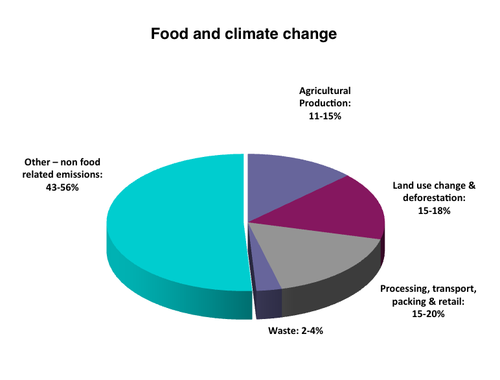
Approximately 35% of global greenhouse gases (GHGs) come from agriculture. Some argues that human can reverse global worming by sequestering several hundred billion tons of excess CO2 through regenerative, organic farming, ranching and land use. Increasing the soil's organic content will not only fix carbon and reduce emissions, it will also improve the soil's ability to retain water and nutrients and resist pests and droughts.

To mitigate GHG emissions and retain soil fertility, organic agriculture might be a wise choice for decreasing the intensive use of synthetic fertilizers, protecting environments, and further improving crop yields. Recent research showed that replacing chemical fertilizer with organic manure significantly decreased the emission of GHGs. Organic farming can reverse the agriculture ecosystem from a carbon source to a carbon sink.

To explore the potential of farmlands acting as a carbon sink without yield losses, Jiang Gaoming, a professor at the Chinese Academy of Sciences' Institute of Botany, conducted an experiment on a temperate eco-farm in eastern rural China. Crop residues were applied to cattle feed and the composted cattle manure was returned to cropland with a winter wheat and maize rotation. Crop yield and greenhouse gas (GHG) emissions were carefully calculated according to the Intergovernmental Panel on Climate Change (IPCC) Guidelines for National Greenhouse Gas Inventories 2006.

This study showed that replacing chemical fertilizer with organic manure significantly decreased the emission of GHGs. Yields of wheat and corn also increased as the soil fertility was improved by the application of cattle manure. Totally replacing chemical fertilizer with organic manure decreased GHG emissions, which reversed the agriculture ecosystem from a carbon source (+ 2.7 t CO2-eq. hm-2 yr-1) to a carbon sink (- 8.8 t CO2-eq. hm-2 yr-1).

Making full use of crop residues as forage for cattle, collecting and composting cattle manure, and replacing part of the chemical fertilizer input with organic manure have been successfully shown to be ideal choices to reduce energy waste and cut GHG emissions without crop yield losses. A combination of organic manure and chemical fertilizer demonstrated the best result in improving soil quality and crop yields, while decreasing GHG emissions. Solely utilizing chemical fertilizer on the farmland not only led to increased GHG emissions, but also deteriorated the quality of the soil.

=================
This research was jointly funded by the Key Strategic Project of the Chinese Academy of Sciences (KSZD-EW-Z-012-2) and the National Science and Technology Support Program, China (No.2012BAD14B00).

See the article:
Haitao Liu, J.L., Xiao Li, Yanhai Zheng, Sufei Feng, Gaoming Jiang. 2015. Mitigating greenhouse gas emissions through replacement of chemical fertilizer with organic manure in a temperate farmland. Science Bulletin, 60(6), 598-606.

Science China Press  http://www.scichina.com/

1830. Interview With Venezuela's Minister of Eco-Socialism and Water Guillermo Barreto

By Ciudad CCS, venezuelanalysis.com, April 29, 2015 


In this interview with Caracas based newspaper Ciudad CCS, Venezuela’s new Minister of Eco-Socialism, Guillermo Barreto, gives readers an insight into the government’s vision for its environment policy. 

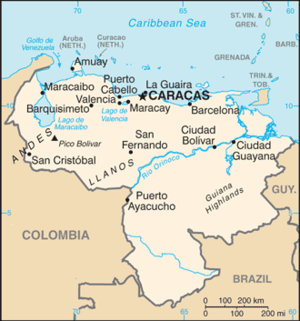
The construction of three new household waste management plants in the Metropolitan District of Caracas and the creation of an institution to work alongside state oil company PDVSA and orientate its projects in the Orinoco Belt, are just some of the announcements that the new Minister of Eco-Socialism and Water made in this interview with Ciudad CCS.

The biologist, Guillermo Barreto - named minister by President Nicolas Maduro following the splitting of the Environment Ministry and the Ministry for Habitat and Housing - stated that the only way of sustaining socialism is by converting the environment into one of its focal points.

***

[These ministries had been joined recently...] Is their separation a step backwards?

The idea of amalgamating the two ministries is interesting and it has several origins. On the one hand, it was necessary to shakeup the political management of the environment. The other origin comes from the idea that we are moving towards a different or eco-socialist society in which there is a more harmonic relationship with nature and in which human settlements become yet another ecosystem. However, given the fact that the government’s Housing Mission is the most important mission that we are carrying out at this moment, we had to give (housing) Minister Molina the space to meet our goals, which are extremely ambitious. 

What is the result of the institutional shake-up?

An internal restructure, a redefinition of the proposals concerning where we need to take our management of the environment. 

And where to we need to take it? 

Towards the construction of a new society in which the environment is a central component and where it is is understood as the only way of sustaining socialism. This means solidarity between human beings, and not just between us right now, but also amongst our children, grandchildren and great grand children. If we guarantee access to water to the entire population, then we are socialists, but if we can’t guarantee it for future generations, well, then we are not so socialist…

What are the results in terms of our administrative capacity? 

The result is that it has initiated a restructure process that was in progress. Now we are going to build a different ministry. 

Why an eco-socialism ministry and not an environment ministry?

Because the hegemonic discourse has resulted in the labelling of the “environment” as something romantic and hippy, isolating the concept from social and economic systems. This concept places those who defend the environment in one trench against those who defend development. There is no possible dialogue and everyone ends up losing. When we talk about eco-socialism, we are referring to the organic public governance which is going to build a new society in which the environment must play an integral part. 

Today we have a Ministry of Eco-socialism, but we have to get to the point where all of our public governance is eco-socialist, regardless of whether we are talking about extracting oil or the construction of bridges and homes. 

Does this imply a compromise between development and the need to protect the environment in the long run? 

Of course, but paradoxically we have to deepen our political management of the environment. We cannot isolate ourselves from nature. We have to understand that protected areas are necessary, but that also includes people. When we don’t take people into account it leads to conflict and then in the end we don’t reach our objectives. 

This discourse around harmonising development whilst protecting the environment, doesn’t that imply a compromise with the logic of capitalism?

No. We have to go about changing from an extraction-based, basically capitalist model, to a model in which the extraction of resources is not orientated towards capitalist accumulation, but rather towards satisfying the needs of the people. This means that you eat what you have to eat and you use what you have to use, but no more than that. This change is gradual, we can’t do it overnight, but what is important is to maintain a vision of the future, that new society in which we cannot repeat the patterns of capitalism. 

That was the error of socialism in the 20th century, which tried to meet a its social obligations but maintained an extraction based-model which produced huge environmental damage and that translated to a society which was not sustainable. They changed the owners of production, but the logic remained the same. 

Why a Ministry of Water?

President Maduro is extremely invested in ensuring access to water for the entire population. Many goals have been reached throughout these 15 years of the Bolivarian Government, but we still have constraints that we must keep overcoming. That’s the reason for the use of the term; the importance that we are giving to it and the organic vision that we have of the issue. 

Will it continue to be a Ministry that authorises permits?

Permits are an important part of government. The problem of permits in general is not the permit itself, but the fact that the process of granting the permit ends up being extremely bureaucratic and it loses its point, which is to protect nature and reduce negative impact on the environment. It’s important to restructure in order to correct this. The permit shouldn’t be an obstacle to production, unless that production is an attack on the environment. This is why we must take the bureaucracy out of authorising permits, and make the process more efficient. 

Three waste management plants in Caracas 

What is the current situation in the management of household waste?

We are in a process of substituting garbage dumps for landfill sites. This is something which has been started and which we are going to keep pursuing.

How is this being managed in Caracas?

We are working flat-out on developing three more transfer areas in Caracas. This is the intermediary point between garbage collection and the final disposal site. This would allow us to gradually eliminate the transfer site in Las Mayas. By incorporating these new areas we will be making collection more efficient, since the collection runs would be shorter and we could increase their frequency. 

Where would these transfer sites be in Caracas?

We are working on several options for the projects. One of them is a transfer plant in the East of the city to free up the areas of Baruta, El Hatillo, Chacao and Sucre. And we would have one in Libertador, towards the west. 

Will we continue to use landfill technology or are we moving towards a different model?

We have to move towards a different model. For now, we will maintain landfill technology because we still don’t have the conditions to change it radically. We can’t close ourselves off to re-using and recycling, but they aren’t the answer. The solution must come from further back and it’s about trying to change consumer habits. 

Will the production of non-reusable bottles be penalised or punished?

This is something that we have to study. We are talking about decisions which can have an economic impact, but we bear the responsibility of studying how to generate less waste and promote a responsible use of things amongst the population; how things are consumed and how they are later disposed of. 

Will we continue to assume that the responsibility for rubbish is the consumer and not the producer?

No, no, on the contrary. We have to see who is producing rubbish, how it is produced, how the consumption of unnecessary items is publicised and how we deal with that. It’s a very complex issue. The internal changes to the ministry aren’t about changing the desks or the names of those in charge, but rather about changing the vision of those in charge. We have to resolve the problem urgently, but also from a structural perspective. 

Water and the communal state

Will we still proceed with the national water plan?  

The president has spoken about both the temporary situation and the structural situation. We have to respond to what is most urgent - for instance, if a pipeline ends up broken and a community is left without water. However, at the same time, we have to address how we resolve that in the long term. In the last few weeks the president has approved an extraordinary amount of funds for two particular cases, which are the states of Falcon and Vargas. 

What are the public works for Falcon? 

Firstly, there is a diversion that is being constructed between three dams in the northern part of the state towards Paraguana. There is the renovation of water collection at the Maticora reservoir, the biggest in the state, that had sedimentation problems due to the drought that we experienced. This is in order to create a system that allows us to collect water more efficiently from the reservoir. 

Are there small works being carried out on local systems? 

Yes we are working to recover deep local wells and common water supply lines. In the case of Falcon, we are talking about an investment of more than 1 billion 500 million Bolivars in the first stage. In the case of Vargas, the first stage equates to more than 1 billion 300 million Bolivars. 

What is the extensive public work begin carried out in Vargas?

The Puerto Maya reservoir…

Is this project included within the aforementioned approved government funds?

Yes, the first stage is included in those resources, the beginning. This work won’t be ready for this year, but it will be what offers a more secure water supply to this region. 

Is this project aiming to repair the waterline between Puerto Maya and Picure, which is often out of action?  

This is part of what we are doing, substituting obsolete parts in the pipelines. 
And in the rest of the country?

There is a plan to carry out public works in all states in the country which is being worked on by both local government and hydrological companies. We are trying to find resources to finish several projects and begin others. 

Are you going to maintain state water councils?

That is something we have to study…

And the participation of the Technical Water Councils?

Those will always be maintained because our objective is to create the Communal State. 

Coal in Zulia and Gold in the South 

What is going to be done with the coal in Zulia? Chavez said that that it should be left under the ground, given that its extraction would damage the environment…

We have to begin a series of work tables alongside the communities and Zulia’s local government. This is on our agenda, we must begin to discuss and debate it seriously and responsibly. 

What does a responsible discussion translate to? 

It means analysing the need for this, the possible alternatives, the final objective, which is achieving the preservation of the ecosystem and above all, the wellbeing of the surrounding communities which live there. 

It’s necessary to look for an alternative way of governing in that region (Zulia) and that’s why we have to sit down with all actors and evaluate all the variables, and not just be led by the economic element. We must take into account the social sphere; there are indigenous communities that live there and they have a traditional way of relating to nature which we have to respect. 

What is being done in relation to the illegal extraction of gold in the south of the country? 
We have had meetings with the Ministers of Mining, Communes and Indigenous Peoples, aimed at trying to put gold mining in order. There is a section of this mining which is illegal and which produces terrible social and environmental damage. It is a very delicate issue which we must manage with caution. 

Eco-socialism in the (Orinoco) Oil Belt 

What is being done with respect to the impact that activities in the Orinoco Oil Belt can cause? 

In the new structure of the ministry we have created an institution specifically for this issue. Not just from the point of view of granting authorisation, because we don’t just want to limit ourselves to approving or rejecting permits; rather we have to be a part of what is being done in that area. We have to work with PDVSA to make sure that development in the belt is the most harmonious that it can be with nature. We are an oil producing country, and we need those resources, but we need to do it in a better way and that’s where the Ministry, as a decision-making body, comes into play in terms of what is done in the zone. 

You wouldn’t play the role of judge and jury, rather you would be orientating and re-orientating projects? 

Exactly, orientating so that they are done in such a way as to preserve the territory, and when we talk about territory, we are referring to both nature and the people. 

La Tortuga Island and Tourism

On the Island of La Tortuga there is a project to build a hotel complex with around 2000 rooms. What is the status of that?

We have got our eye on that to work in conjunction with Mintur (Ministry of Tourism) in such a way as that touristic development, which we consider to be really important for the nation, is done as harmoniously as possible. In fact, something that took place over the last few months was the installation of the High Institute of Parks, which is a level of political management for protected areas. This includes, amongst others, the Ministry of Tourism, and is aimed at creating better government ability in these areas, and especially in our national parks. 

This has allowed us to integrate the efforts of the diverse bodies that were often working separately. The national park is an important area of public use, in fact 80% of Venezuelan tourists spend their holidays in national parks. Furthermore, in these areas there is a population which usually lives inside or in the surrounding area, which is why maintaining these areas requires the organisation of the people. 

This has allowed us to channel the efforts of everybody and ensure that the Ministry, in the remit of the environment, doesn’t appear to be something which impedes the action of others. We have to work together in this so that everything comes out for the best. 
In this model, channeling efforts and responsibilities, what is the role of environmental organizations? 

It’s about trying to establish joint responsibility in governance. If this is going to be a Ministry of Popular Power, it has to work with people’s power. Not us saying what they should do and them acting like we are the enemy. It’s about them adopting, on the one hand, a role in the social auditing process, and on the other, integrating into [the ministry’s] projects. 

How is the issue of wildlife trafficking being managed?

This is being managed with the National Bolivarian Guard, which is responsible for protecting the environment, and of course, with the Public Prosecutor’s Office. We are detecting the areas where there is a higher level of trafficking. 

What species are being fundamentally affected?

In Venezuela the trafficking of birds is very significant. Above all of parrots and macaws, destined for North America and Europe. It’s a a very cruel business and the people must know it. Whomever buys a parrot is probably buying a chick that was kidnapped from its nest, and its mother almost certainly killed to capture it. They are confining an animal in solitude when it is a social animal which usually lives in partnership. The way in which they are transported causes the death of at least half of them, but that doesn’t matter to the trafficker because they sell the ones that manage to stay alive at such a high price that they get back much more than what they invested.