Showing posts with label Agriculture. Show all posts

Monday, April 5, 2021

3494. Big Meat and Dairy Companies Have Spent Millions Lobbying Against Climate Action, a New Study Finds

By Georgina Gustin, Inside Climate News, April 2, 2021


Top U.S. meat and dairy companies, along with livestock and agricultural lobbying groups, have spent millions campaigning against climate action and sowing doubt about the links between animal agriculture and climate change, according to new research from New York University.

The study, published this week in the journal Climatic Change, also said the world’s biggest meat and dairy companies aren’t doing enough to curb their greenhouse gas emissions, with only a handful making pledges to reach net-zero emissions by 2050.

“These companies are some of the world’s biggest contributors to climate change,” said Oliver Lazarus, one of the study’s three authors, now a doctoral student at Harvard University. “They’ve spent a considerable amount of time and money downplaying the link between animal agriculture and climate change.”

The research, which builds on data first published in 2017 and 2018 by the advocacy group GRAIN and the Institute for Agriculture and Trade Policy (IATP), is the first peer-reviewed study to document the individual carbon footprints of meat and dairy companies.

The authors found that, as of last summer, only four of the 35 companies—Dairy Farmers of America, Nestlé, Danish Crown and Danone—had pledged to reach net-zero emissions by 2050.

JBS, Cargill, Hormel, Fonterra and Smithfield had not. China-based Smithfield has since pledged to be carbon-negative by 2030 and Brazil-based JBS, the world’s largest meat processor, announced last week that it would reach net-zero by 2040. A spokeswoman for Hormel said the company was “on a path to zero” and plans to set a target for greenhouse gas reductions by 2023.

These commitments, the authors say, are short on specifics or focus on carbon dioxide reductions, while the bulk of emissions from animal agriculture comes from methane, an especially potent greenhouse gas. In some cases, the companies’ commitments don’t address emissions from their whole supply chain.

JBS, for example, has said in public statements that it does not assess land-use change—a major source of agricultural greenhouse gases—from third-party suppliers. These are emissions, the company said in 2019, “over which the Company has no responsibility or indirect responsibility.”

Overall, animal agriculture is responsible for more than 14 percent of global greenhouse gas emissions. According to calculations by GRAIN and IATP, the five largest livestock-based producers—JBS, Tyson, Cargill, Dairy Farmers of America (DFA) and Fonterra—emitted more greenhouse gases than ExxonMobil. The NYU researchers said they’re not aware of more recent and accessible company-level data, although a 2020 report from IATP found that emissions from individual dairy companies climbed in the years since the GRAIN assessment.

Recent reports, including from the Intergovernmental Panel on Climate Change, have found that cutting emissions from agriculture is critical for controlling runaway climate change. But the new research found that only seven of the 16 countries where the largest livestock producers are based mention animal agriculture in their plans to meet the targets of the Paris climate agreement.

While the Paris agreement focuses on individual country’s emissions—and their potential to reduce them—the authors of the new report looked at how these companies’ future emissions compared to the emissions reductions pledges of their home countries. They determined that emissions produced by Switzerland-based Nestlé, the world’s largest food company, and New Zealand-based dairy giant, Fonterra, were so high that they would eclipse their respective home country’s emissions pledges, in effect consuming the entirety of those countries’ emissions budgets. Denmark-based Arla, the largest producer of dairy products in Scandinavia, will account for 60 percent of Denmark’s total emissions.

“Those meat and dairy emissions would actually completely wipe out the emissions (those countries) say they’re going to be emitting according to their Paris agreement pledges,”  said Jennifer Jacquet, an associate professor in NYU’s Department of Environmental Studies and one of the authors. 

In taking this approach, the authors say, they’re assigning responsibility for greenhouse gas emissions to countries on a corporate basis.

“The Paris agreement suggests that Brazil is responsible for what happens in Brazil. What we said was: What if Brazil was responsible for JBS or China for Smithfield?” Jacquet said.

The authors said they were following the pattern of seminal studies on the fossil fuel industry, which calculated historic emissions from individual companies and then assigned responsibility to those companies. 

“Essentially what we’re trying to do is build out the climate responsibility of meat and dairy producers,” Jacquet said.

A spokeswoman for Fonterra said its carbon footprint was “46% lower than other major milk producers” and that the company was “actively working on tools and technologies to reduce emissions and help New Zealand reach its climate change commitments.”

Filling a Research Gap

The next goal of the study, Jacquet said, was to examine how these companies and their lobbying groups have fought climate regulation in Congress and before the Environmental Protection Agency, and to analyze how they’ve shaped a narrative around animal agriculture’s role in climate change.

The authors calculated that U.S. agribusiness, which includes meat and dairy companies and also other agricultural companies, spent $750 million on national political candidates from 2000 to 2020. The U.S. energy sector, by comparison, spent $1 billion. 

The same agribusinesses spent $2.5 billion on lobbying from 2000 and 2019, compared to $6.2 billion by energy and natural resource companies. 

The authors said these companies also spent their lobbying money on issues beyond climate change, including the Farm Bill and farm subsidies. But, they wrote, “it is often difficult to disentangle the two as policy decisions on crop incentives, land-use, and animal production methods have large implications for the extent and intensity of the animal agriculture sector’s emissions.”

The report also looked at the contributions of individual companies. Exxon spent roughly $17 million on political campaigns and more than $240 million on lobbying during the 20 years studied. In the same time frame, Tyson gave $3.2 million to political campaigns. But relative to each company’s revenue, Tyson spent double what Exxon spent on political campaigns and 33 percent more on lobbying. 


Industry lobby groups—the National Cattlemen’s Beef Association, the National Pork Producers Council, the North American Meat Institute, the National Chicken Council, the International Dairy Foods Association and the American Farm Bureau Federation, along with its state members—spent nearly $200 million, much of it lobbying against climate and environmental regulations, from 2000 to 2019, the authors found.

A spokesperson for the National Pork Producers Council said the organization voted against a cap-and-trade bill specifically because it “would have converted massive amounts of cropland to forest” at a time when pork producers were already struggling to gain access to feed.

The National Cattlemen’s Beef Association and the North American Meat Institute (NAMI), the new study said, published or funded research downplaying the emissions from livestock production, often pointing to the low percentage relative to overall U.S. emissions.  

Sarah Little, a spokeswoman for NAMI, said the report referenced outdated documents. “NAMI members are at the forefront of research and innovation to strengthen meat’s contributions and ambitious commitments to healthy diets and protecting our environment. The U.S. meat sector has dramatically reduced its impact on the environment in recent decades, including by reducing greenhouse gas (GHG) emissions…. This study was already outdated the day it was researched.”

The nine U.S.-based companies covered in the report emitted 6 percent of overall U.S. emissions, the study found, but emitted about 350 million metric tons of carbon dioxide. That’s on the same scale as Brazil, which has the highest carbon footprint from animal agriculture and where the top four livestock companies emitted about 380 million metric tons of the greenhouse gas annually. But that amounts to about 28 percent of that country’s emissions.

“The US industry really leans on Brazil’s terrible carbon footprint to compare to its own,” Jacquet said, but domestic agriculture is “high in terms of absolute emissions.”

The report also notes that the U.S. companies’ emissions totals presented in the study don’t include those connected to production outside of the U.S. 

The authors pointed out in an interview that there’s been ample academic research into the fossil fuel industry’s attempts to influence public discourse, but that a similar body of research into the agriculture industry’s efforts has not yet emerged. That could largely be attributed, they said, to the fact that very little agricultural research is done outside of industry-influenced universities or by independent researchers.

“It’s not surprising that they’re this active in shaping climate discourse,” Lazarus said, referring to the livestock companies. “What we’re trying to do is show the extent to which that has largely been ignored.”


Monday, September 21, 2020

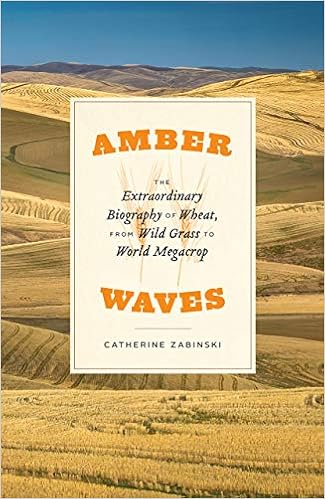
3428. Book Review: Amber Waves: The Extraordinary Biography of Wheat

By Bee Wilson, London Review of Books, September 24, 2020


Not many people have heard of Norman Borlaug, but his invention – the high-yield, short-straw wheat that fuelled the Green Revolution – is consumed every day by the majority of humans on the planet. Without Borlaug’s wheat, there would be no modern food as we know it. Everything from sandwiches to pizza to soy sauce to animal feed is manufactured from wheats adapted from Borlaug’s. ‘Wheat is in everything!’ a friend of mine exclaimed with fury after being diagnosed with coeliac disease. To those of us who live far from the land, wheat seems a changeless and universal part of the countryside, the stuff of harvest festivals and corn dollies. We don’t imagine it was or could be any different. All we ask is that it should be there to feed us. 


After lockdown started, neighbours on my street in Cambridge formed a WhatsApp group. It soon became apparent that one of the group’s main functions would be to pool information about flour. Participants shared sightings of plain white flour in local shops or online suppliers with the secretive thrill of foragers who’ve just discovered a patch of wild garlic or chanterelles. When one neighbour managed to get hold of some, it would be portioned up and distributed or bartered for other rare treasures – yeast or a jar of sourdough starter. There was excitement when someone discovered an online source that promised to deliver bags of organic plain flour in only two working days. But sometimes, as with foraging tips, you would find the source stripped by the time you got there; other people in other streets were flour-fixated too. 


The pandemic flour shortages – which weren’t unique to Britain – were driven not just by regular consumers stocking up but by peoplewho never normally buy flour. In April, a representative for British and Irish millers said that even with millers working ‘round the clock’ there was only enough capacity for 15 per cent of UK households to buy a bag of flour a week. Plain flour has never in recent decades been something for which demand exceeds supply, not least because our shops are full of items ready-made from industrial wheat, from croissants to muffins, bagels to noodles. One of the curious things about the pandemic flour shortages is that items made from wheat were never in short supply. Even at the height of panic buying there were plenty of flour-based products in British shops, but somehow none of them stopped people wanting to buy flour itself. 
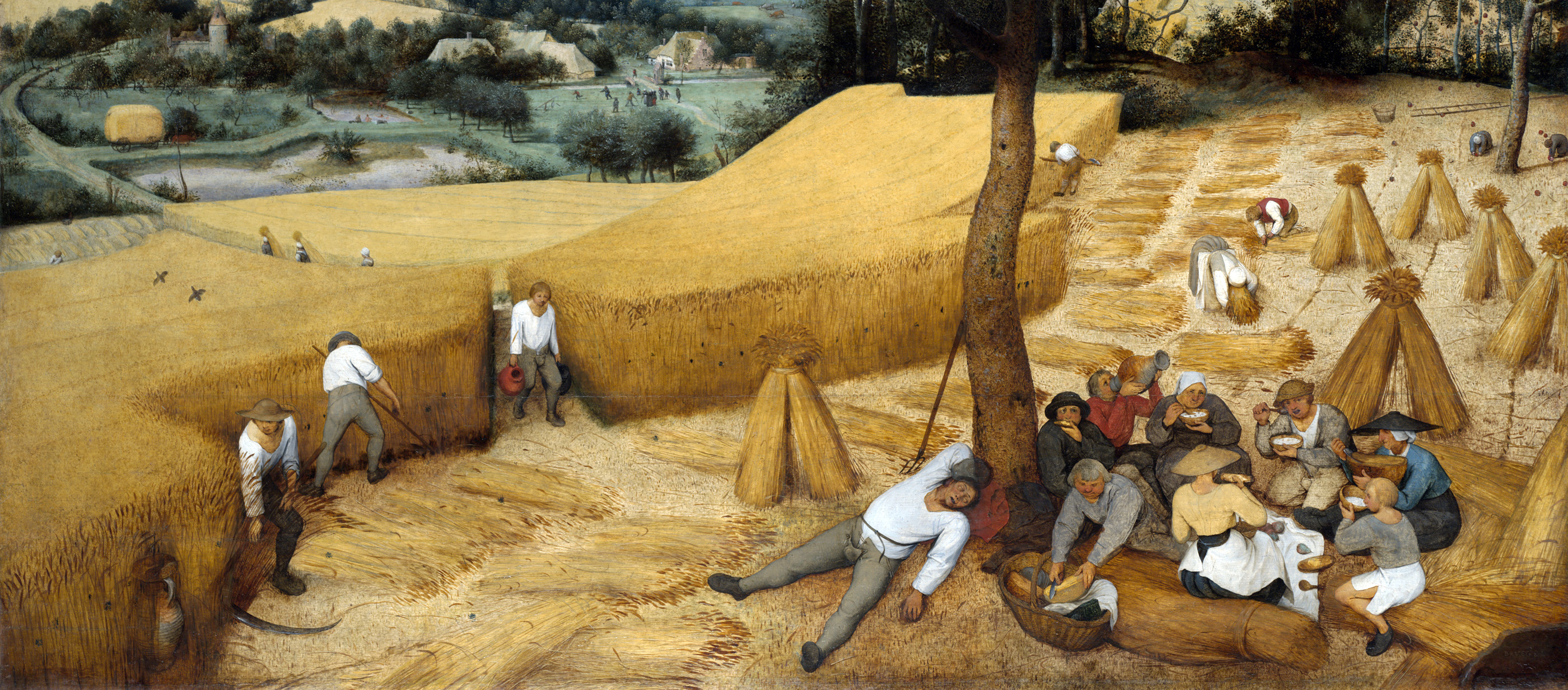

The Harvesters (detail), by Pieter Bruegel the Elder, 1565. The Metropolitan Museum of Art, Rogers Fund, 1919


If you want to kill an hour or so making a loaf of banana bread – or a few days making sourdough – you need to start with a bag of flour. Plenty of other forms of time-consuming cookery could have been used to pass the hours and days of the pandemic. We could have chosen to pickle vegetables or to roll tiny meatballs by hand or to spend hours skimming and clarifying consommé. But few other forms of cookery have anything like the mass appeal of wheat-based baking (unless it’s wheat-based boiling in the form of pasta). 


Plain white flour has many drawbacks as a food, one of which is lack of flavour. Most mass-produced raw white flour tastes of almost nothing, although if you try very hard, you may notice a faint aroma of wallpaper paste. It’s also lacking in nutrients, even if, unlike coeliacs, you are able to tolerate gluten. As the journalist Wendell Steavenson writes, white flour is ‘a pure starch so nutritionally void’ that by law vitamins must be added back into it. White flour must be fortified with calcium, iron, thiamin and niacin to make up for the fact that the nutritious part of the wheat has been taken away during the milling process. And yet what wheat flour lacks in flavour and nutrients, it makes up for in the gratification it gives in the mouth and the stomach after you combine it with other ingredients and apply heat. Flour can be engineered into a series of deeply likeable textures, from the softness of sponge cake to the crispness of a cracker to the custardy satisfaction of a Yorkshire pudding. Perhaps the fear and uncertainty of the current situation made people want to get back to our staple food in its purest and most basic form. But plain flour is neither pure nor basic: it is the endpoint of a series of technological processes and inputs, incorporating plant breeding and chemical fertilisers as well as advances in milling and globalised distribution networks. In 2019, wheat was grown on more land than any other food crop: 538 million acres across the globe. On average, it contributes the largest amount of calories to the human diet of any foodstuff, according to data from the CIAT (the International Centre for Tropical Agriculture), a research group for the Food and Agriculture Association. 


In 2009, the average human had access to 498 calories a day from wheat compared with 349 calories from oils, 333 calories from rice and 281 calories from sugar and other sweeteners. In some countries, such as Turkey and France, per capita wheat consumption is a great deal higher and in others, such as Cameroon (where maize is the staple food) or the Philippines (rice), much lower. But it’s striking that wheat consumption has been increasing fast since the 1960s, even in traditional rice economies such as China and Japan. The supply of wheat in China rose from fewer than 200 calories per person a day in 1961 to nearly 600 in 2009. Across Asia, the gradual substitution of wheat for rice has been a near universal marker of economic development. 


The human relationship with wheat is the subject of Catherine Zabinski’s short book Amber Waves, which presents itself as a ‘biography’ of the grain, although she reminds us on page three that ‘wheat isn’t a person’ in case we were liable to be confused. Zabinski, a plant and soil ecologist at Montana State University, seeks to tell ‘a story of a group of grasses whose existence became complicated by its convergence with our own species and our never-ending need for more food’. The vast consumption of wheat today is linked to the fact that it is the main ingredient in so many convenience foods. If you want to satisfy hunger quickly and cheaply, the odds are that you will turn to a wheat-based food (unless you opt for potatoes, in the form of crisps or chips). You might buy a healthy wrap or an unhealthy burger or a pie or a sandwich or a slice of pizza or a tub of instant ramen or a samosa or a slice of toast or a bowl of bran flakes. Whichever choice you make, you will end up eating the same industrial wheat. No other grain comes in such a vast range of ready-to-eat foods. Yet it must have taken great perseverance and ingenuity for our Neolithic ancestors to add wheat to their diets. The calories it contains are remarkably difficult to access compared with other items in the hunter-gatherer diet such as wild fruits and nuts and honey and meat. Wheat was originally a wild grass, as Zabinski explains, and ‘grass seeds are small and hard and impenetrable’. 


In evolutionary terms, wild wheat seeds do not want to be eaten, because as soon as they are broken open, they cease to be a seed. In this, grains differ from wild fruits, which positively invite animals to eat them. Fruit is luscious and sweet in order to appeal to creatures that will eat the flesh and excrete the seeds, thus dispersing them. Wild wheat seeds, by contrast, have extremely hard hulls to deter predators. Every seed, as Thor Hanson put it in The Triumph of Seeds (2015), consists of three elements: a baby, lunch and a box. The ‘baby’ is the embryo of the new plant. The ‘lunch’ is the nutritive tissue that provides energy reserves until the seed can start to absorb nutrients from the soil. In the case of wheat seeds, this is a combination of protein and carbohydrate, while in oil seeds such as sunflower seeds the lunch is mostly fat. Finally, every seed is contained in a ‘box’: a defence mechanism to protect the germ from hungry animals. In theory, a chilli seed stops anyone from eating it by burning them. An almond kernel defends itself by being bitter, and having a slightly poisonous taste (which backfired when humans acquired a love of that curious marzipan flavour). A wheat seed protects itself with a series of viciously hard layers: first a hull, and then a layer of bran, made up of a fruit coat and a seed coat fused together. Only when both of these layers have been penetrated do you reach the wheat germ (the baby embryo) and the wheat starch (the lunch). These defences might have been enough to put off most herbivores, but humans – omnivores in possession of tools – were not so easily deterred. 


Stone, fire and water were the three methods used to get inside a wheat seed. When they proved too hard to crack, hunter-gatherers would burn or soak them to soften the hull. Some early wheat eaters settled in the Fertile Crescent of the Levant, in Abu Hureyra, a site in modern-day Syria first excavated in 1971. These people – who were not farmers – lived in small circular huts with hearths for cooking outside. Archaeologists have found evidence, from around 13,000 bc, that they hunted a range of animals for food, including gazelles, asses, boars, hares, foxes and birds of various kinds. They also left traces of more than 120 plant foods including ‘wild grapes, figs, pears, hackberries, mahaleb cherries, sour wild plums, yellow hawthorn, wild capers, juniper berries’. Near the hearths, archaeologists also found traces of charred wheat seeds. 


When you pick a blackberry, you can enjoy it just as someone in Abu Hureyra did a wild plum or cherry 15,000 years ago. But with wheat, multiple problems need to be solved before it can be eaten. Zabinski invites us to imagine being a hungry forager faced with a patch of wild wheat. At least these grass seeds don’t try to escape, unlike a gazelle or a wild bird. They can be stored for many months, unlike a plum or a pear which needs to be eaten quickly, unless you can find a way to preserve it. The challenge with a wheat seed is how to get at the goodness inside it. Grinding technologies were needed. In Abu Hureyra, the grindstone used was the saddle quern, which Zabinski describes as a ‘two-part grinding tool’, though in truth it consisted of three parts: two stones and one woman. The first part was the lower stone on which the grain was placed: a flat saddle-shaped piece of rock. The second, much smaller piece was the rubbing stone – like the pestle in a pestle and mortar. The final and most important part was the woman, who kneeled behind the quern and used her weight to crush the seeds with the rubbing stone. Eventually they broke down into flour. Over time, the woman’s body began to wear down too. Female bones at Abu Hureyra show strain to the toes, hips, knees and shoulders from hours spent at the grindstone. 


What did the ancients do with their hard-won flour? Unlike a haunch of meat, a handful of flour can’t easily be cooked in the fire. People seem to have sometimes eaten roasted or raw whole grains, but these were tough on the digestion and the teeth. The possibilities of wheat cookery expanded hugely with the invention of pottery, in which soft porridge-type dishes could be cooked. In Abu Hureyra, pottery arrived around 8000 years ago. The new porridgey diet meant that more people survived into adulthood and those who survived had better teeth, as Zabinski notes. Pottery was one of the vital conditions for the human dependence on grain. 


Some say that humans domesticated wheat; others that wheat domesticated humans. In Sapiens, Yuval Noah Harari argued that this wild grass succeeded in completely changing the human way of life, in ways that weren’t always beneficial for humans. With the adoption of wheat, the communal living and varied diet of hunter-gatherer societies was exchanged for the back-breaking labour and relatively monotonous food produced by farming. What wheat offered in return, Harari wrote, was population growth: ‘the ability to keep more people alive’. If wheat shortages have often been the precursor of revolution, surpluses are a prerequisite of political power and security. 


Whether wheat was the cause or the effect of farming, it’s certainly true that the human relationship with wheat – as well as with other grains like rice, millet, barley, rye and oats – changed dramatically with the beginnings of agriculture. Many of the earliest cities and civilisations were founded on wheat farming. Mesopotamia, Egypt, Greece and Rome were all wheat cultures. The state’s security depended in part on its control of the granaries. Those civilisations, such as ancient Greece, whose soil wasn’t suited to wheat needed to make sure they could import it from elsewhere, trading it for wine and oil. In hunter-gatherer societies, food production is shared across the community and food is valued for its own sake. In farming societies, by contrast, some work the land while others pursue different occupations. The people who actually ploughed the fields and planted the seeds no longer held high status because the food they produced was taken for granted. The adoption of wheat farming was the first stage in a long process of human disconnection from responsibility for food production. 


The very earliest types of wheat were two wild varieties: einkorn and emmer. These have now reappeared in health food shops, where they are sold as ‘ancient grains’. Einkorn and emmer are much higher in protein than modern wheat: modern bread flour is 12-14 per cent protein and modern cake flour is only 7-11 per cent protein, but einkorn and emmer have a protein concentration between 16 and 28 per cent (an egg is 13 per cent protein by mass). Einkorn, which is native to the Levant, was slightly easier to grow in cooler climates and on less fertile soils but could only be ground very coarsely and yields just one grain of wheat per flower (hence ‘einkorn’, or ‘onegrain’). In the hot climate of Egypt, emmer was preferred. It is genetically similar to the durum wheat used today to make pasta and couscous (and which makes up 5-8 per cent of modern wheat production) although it has harder hulls. The Egyptians took emmer flour, mixed it with salt and water and cooked the mixture on hot stone slabs. Bread! 


At some point, in a field of emmer in the Levant, a new kind of wheat started to grow: the ancestor of modern bread wheat. Given its subsequent history, the most surprising thing about bread wheat is that the original hybrid wasn’t engineered by humans but arose spontaneously. An emmer plant in the wild crossed itself with a goatgrass to produce wheat a bit like modern-day spelt. ‘Fourteen chromosomes from goatgrass plus 28 chromosomes from emmer equals a new hybrid with 42 chromosomes,’ Zabinski writes. These seeds were quickly adopted by early farmers. Apart from the fact that it tasted good, this grain had the huge advantage of having softer hulls than emmer, although bread wheat was still a demanding crop. A series of clay tablets survives from Mesopotamia, describing – in cuneiform – the elaborate and meticulous stages of wheat farming: the oxen which trampled the soil after the spring flooding; the workers who broke up the clumps of soil; the farmers who planted the seeds in rows at the right depth and at exactly the right spacing; the careful use of floodwater for irrigation. 


Many aspects of pre-industrial wheat technology have left traces in our language. We may still speak of having our ‘nose to the grindstone’ or of ‘ploughing our own furrow’. Few of us would know chaff if we saw it, but the sheer labour that once went into wheat harvesting and threshing has left traces in our collective memory. When Spaniards colonised Peru they brought with them not just wheat, rye, barley and oats but hoes, spades, sickles, mills, carts and ards – large hooks attached to a wooden beam to which animals were yoked to plough the fields. As wheat travelled the world, the seeds needed to be adapted to many different soils and climates. When wheat arrived in North America with the Puritans in the 17th century, it didn’t seem suited to the cold winters. Over time, the colonists developed different seeds for different parts of the vast continent. ‘There was spring wheat and winter wheat, red wheat and white wheat, hard wheat and soft wheat.’ Soft wheat is easier to grind and makes light cakes and pastries but hard wheat – higher in a sticky protein called gluten – is easier to make bread out of, particularly if you want it to rise (gluten traps air bubbles during the fermentation process). 


Experiments in wheat breeding only started in earnest in the mid 19th century. Before then, all wheats were landraces: highly localised variants adapted to particular terrains and environments. One of the key features of an 18th-century field of landrace wheat was its diversity. A single field would have contained many different varieties of seed. What landraces sometimes lacked in yield they made up for in resilience. ‘Landraces,’ Zabinski explains, ‘are valuable because ... the smaller, scraggly, less productive individuals may also hold the genes for greater tolerance to abnormal rainfall or late frost or fungal pathogens.’ For the past 170 or so years, however, mainstream wheat breeding has aimed at getting rid of this biodiversity by selecting seed that has certain consistent traits, such as yield or disease resistance. ‘Much of the effort behind breeding wheat varieties in the late 19th and early 20th centuries was aimed at finding varieties that could thrive in the diverse climates of North America, and varieties that were resistant to the rusts, smuts and insects that fed on wheat.’ 


With modern plant breeding came the idea that wheat could become one single ideal substance rather than a series of interrelated and localised species. Much of the focus of early grain breeding was on keeping a constant supply of hardy wheat even in years of prolonged frost or drought. As Mark Carleton, the top ‘cerealist’ in the US in the late 1800s, remarked: ‘It isn’t what a wheat yields in the best years – it’s how it stands the worst ones.’ The first hugely successful wheat breeder of the 20th century was the Canadian Charles Saunders, who is mentioned nowhere in Zabinski’s book, although she does mention his greatest invention, Marquis wheat, launched in 1904. Saunders designed Marquis wheat to be high yielding, robust, early maturing and very high in gluten. There were many failed attempts before he hit on the perfect formula, which resulted from crossing Red Fife wheat (already popular in North America) with Hard Red Calcutta from northern India. This new wheat ripened earlier than Red Fife but was similarly good for baking. Marquis, Noel Kingsbury writes in Hybrid: The History and Science of Plant Breeding (2009), ‘set the standard for bread wheat quality globally’. In 1920, it accounted for 90 per cent of all wheat grown in Canada. 


Saunders’s achievements were eclipsed by those of Norman Borlaug, who was hired after the Second World War by the Rockefeller Foundation to lead a programme designed to increase wheat production in Mexico. He pursued this task with meticulous and single-minded devotion. The first thing he had to do was to make the wheat more resistant to rust, a fungal disease. For three years straight, the Mexican wheat harvest had been reduced by half as a result of rust. Borlaug experimented with more than two hundred crosses before, in 1948, he was satisfied that he had found four early-maturing varieties that could withstand rust attacks. Zabinski describes the delicate work involved in cross-pollinating wheat:  


If you want to cross two plants, you must prevent self-fertilisation by opening the tiny scales of the floret, and with a pair of fine tweezers plucking the three anthers without losing any of the pollen in the process. Then in a day or two, when the stigma is mature (it will resemble a plume), you add pollen to the plant by carefully shaking the anthers from the plant you want to be the other parent over the recipient plant’s stigma, bagging the flowering head to prevent any other pollen from entering, and hoping that the cross worked. 


Then Borlaug applied himself to his real interest, which was finding a wheat capable of feeding the world. It has often been said that a billion lives were saved (or made possible) by Borlaug’s work, for which he won a Nobel Prize in 1970. He wanted to find a wheat that Mexican farmers could grow intensively using nitrogen fertilisers and irrigation. The problem with most wheat varieties, he believed, was that they wasted too much energy in growing tall. He heard about some semi-dwarf varieties of wheat that had been brought from Japan to the US: mutants with much shorter straw than normal wheats. 


Borlaug transformed a tall and long-maturing crop into one that was short, stubby, highly productive and quick maturing (but very hungry for water and fertiliser). To get a sense of how radically wheat fields changed because of him, Kingsbury suggests looking at Brueghel’s The Harvesters. This scene is completely unlike a modern wheatfield. In Brueghel’s painting, the wheat is as tall as a child: a maze of yellow you could lose yourself in. The grasses reach almost to the top of a man’s head as he trudges past carrying an earthenware jug. In the distance, women can be glimpsed walking through a corridor of wheat that reaches up to their shoulders. The wheatfields in East Anglia I sometimes walk through with my dog are puny by comparison. By 1962, Borlaug had developed two new semi-dwarf wheats: Penjamo 620 and Pitic 62. In combination with industrial farming techniques, they were so successful that Mexico was able to become a net exporter of wheat. It was in India and Pakistan, however, that his dwarf wheat had the biggest impact, as part of the Green Revolution, in which grain yields saw unprecedented increases. Wheat production in Pakistan rose by 60 per cent between 1967 and 1969, and by 1974 India was self-sufficient in cereals. Wheat harvests increased so rapidly in India in 1968 that schools had to be closed to free up extra space for warehousing the grain. Brueghel’s ‘The Harvesters’ (1565) 


Some say that Borlaug’s dwarf wheats were the greatest invention in human history – how many others can claim that their work saved a billion lives? – and yet his work is implicated in many of the problems with the global food supply, from its tendency to perpetuate social inequalities to its lack of biodiversity. Borlaug’s short-straw wheats, and the variants that came afterwards, can only achieve their high yields in conjunction with industrial pesticides, fertilisers and irrigation. Some studies have suggested that the Green Revolution widened the gap between rich and poor farmers in countries such as India because not every farmer could afford the necessary inputs – such as the cost of irrigation and machinery – needed to grow Borlaug’s wheat. Modern wheat farming is also damaging to the soil. In part, as Zabinski explains, this is because it is an annual crop which completes its entire lifecycle in a single year, taking nutrients from the soil while giving very little back. Traditional wheat farmers used crop rotation to address this problem, alternating a year of wheat with a year of peas or beans to fix nitrogen in the soil. High-yield wheat, by contrast, can lead to soil exhaustion. 


In economic terms, everything is a trade-off. But even on its own terms – as a cure for human hunger – Borlaug’s wheat has not succeeded. We can’t blame him for the fact that there are still nearly 800 million acutely malnourished people in the world. A more pertinent question is why so many people alive today have access to more than enough calories from wheat and yet are still malnourished, lacking in basic micronutrients such as iron and B vitamins. Borlaug’s wheat was designed to produce the maximum amount of energy per field and he focused on this to the exclusion of other questions such as whether it would deliver the nutrients humans need. He did not foresee a future – one his wheat helped bring about – in which millions of poorer consumers worldwide would be obese and yet also suffering from ‘hidden hunger’ because their diets are low in protein and essential micronutrients. 


Industrial wheat is a very efficient system if you ignore the consequences, the baker Andrew Whitley argued in Cereal, an excellent six-part audio series about wheat, broadcast last year through the Farmerama podcast. He covered many questions more or less ignored by Zabinski’s book, such as the taste of wheat and how it is milled. The theme of the programme – which featured interviews with bakers, millers, farmers and food activists – was that a sequence of logical and reasonable-seeming steps has resulted in a dysfunctional food system. The puffy sliced bread sold in every supermarket seems cheap only when you ignore the external costs, which include not just the ecological problems associated with intensive farming but the fact that many eaters can’t digest bread made by the ‘Chorleywood process’ (which uses large quantities of yeast and additives to replace the slow fermentation of traditional bread). Whitley calls sliced white bread ‘Peter Pan bread’ because it doesn’t age in the usual way. Both modern bread and modern flour are designed to be ‘shelf-stable’, something modern milling techniques have made possible. 


Other than Borlaug’s experiments in plant breeding, the key development in modern wheat was the invention of roller milling in the late 19th century, which isn’t mentioned by Zabinski. As the chef Dan Barber explains in The Third Plate (2014), it was roller milling which made possible the emergence of white flour as a flavourless commodity that could be stored for long periods of time and transported long distances. As hunter-gatherers discovered, three parts of wheat are edible: the husky bran on the outside, the germ and the endosperm. When grain was stone milled, all three parts were ground together and their oils and nutrients intermingled. White flour was originally made by taking wholemeal flour and sieving out the bran, but it retained some of the goodness of the wholegrain. Because of the oil, the flour could go rancid quickly and needed to be consumed while it was fresh. Steel roller milling – pioneered in the 1860s – was a completely different process. Instead of grinding all three layers of wheat together, the outer layers are gradually stripped off, leaving only the white endosperm behind. Roller milling gave bakers a much finer flour to work with, ideal for making featherlight pastry and soft white bread, but far less nutritious – and less flavourful – than the flours of the 18th century. 


I wrote to Premier Foods, which owns McDougalls, the UK leader in retail flour, to ask what varieties of wheat go into its plain flour, where it is grown and what criteria are used for selecting the wheat. Someone promised to get back to me, but after three weeks and three reminders, they still hadn’t answered my questions. Finally, someone wrote to say that ‘the wheat used in our McDougalls plain flour is UK grown, variety will depend on what the farmer feels he can grow to meet our specification requirements.’ They didn’t say what those specification requirements are. British flour tends to be low in gluten, so much of the flour used in our baked goods is imported, mostly from Canada, Denmark, Germany, Latvia and the US. The leading miller in the UK, Whitworths, has urged farmers to grow more high-protein bread wheats to cushion the blow of Brexit, but most of the wheat grown in the UK is low-quality grain exported for animal feed. In 2018, according to Cereal, 6.5 million tonnes of British wheat was used to feed livestock. The harder high-gluten wheats that are considered the best for bread don’t grow particularly well in the wet British climate. It is possible to make good bread with the softer varieties of wheat that grow well here, but you have to adjust your expectations of what good bread actually is. 


Can the current wheat system be reformed to make it better at delivering bread that is both nutritious and good to eat? At the moment, every link in the chain is premised on cheapness and uniformity. Changing one link would mean changing everything. Someone who experimented with creating a whole new chain was Martin Wolfe, a plant pathologist who died last year. At his farm near Fressingfield in Suffolk, Wolfe developed cereal populations based on the principle of diversity rather than uniformity. He became convinced that the solution to disease resistance in cereals was not using increasing amounts of pesticides but growing diverse fields of grain. Wolfe’s most celebrated experiment with wheat was called the YQ (Yield Quality) project. The idea was to try to preserve the high yield of Borlaug’s short-straw wheat but to cross it with varieties that had better eating and baking qualities. Wolfe took twenty wheats and crossed them. Half were chosen for yield, the other half for quality. The resulting YQ wheat had the diversity and resilience of the old landraces but a much higher yield per acre and a rich nutty taste. 


The first baker to use it to make a commercial loaf of bread was Kimberley Bell, who makes and sells a variety of YQ loaves at the Small Food Bakery in Nottingham. I met Bell at a conference in Barcelona last year and was struck to hear her describe the sheer variety of flavours she can detect in different wheats: malty or nutty and even tasting uncannily like meat. I wished I could go out and buy some of the wheats she described, but this isn’t easy to do. This summer, after lockdown ended, I finally made it to the Small Food Bakery, where I bought several loaves of YQ bread as well as one baked from a Nordic landrace variety called Øland. Bell also bakes vast freeform loaves which she then cuts into smaller pieces and sells by weight. This makes for an extra-damp crumb so you can taste the cereal even more clearly, distinct from the caramel flavours of the crust. When I got home, I cut off a fat slice and inhaled, trying to work out what the bread reminded me of. It smelled rich and heady, like a piece of wildflower honeycomb. It was delicious. But, as Cereal makes clear, this bread cannot easily be delivered by our existing food economy because it is the end product of a completely different series of operations, from farm to mill to oven. And so we are left with our dusty bags of nondescript white powder.

Wednesday, July 4, 2018

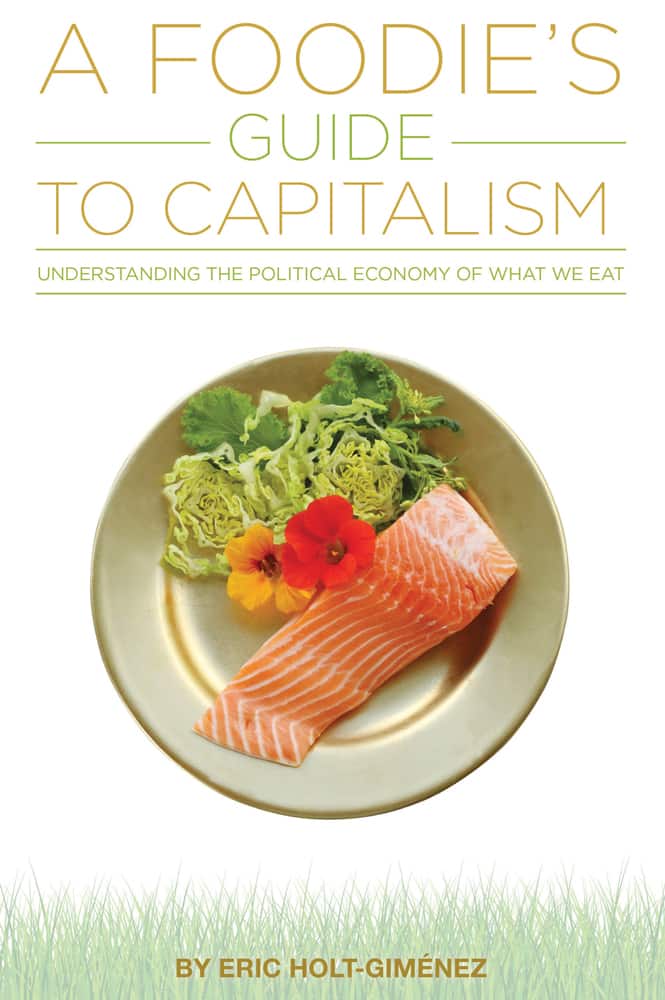
2959. Book Review: A Foodie's Guide to Capitalism


What role does love play in challenging the devastating impacts of capitalism on our food system? What role does hope play? For Holt-Giménez, the author of A Foodie’s Guide to Capitalism, both love and hope are essential in building a more just and sustainable world, and his newest book is inspired by his long career of allying with those “for whom giving up was not an option” (p. 240). Concluding a treatise on understanding the inner workings and history of capitalism with a call for love and hope might seem trite at first glance. And yet, this is perhaps the best indication of the narrowness and cynicism that often dominate the thinking of those of us who consider ourselves food activists. Another world is indeed possible, and Holt-Giménez gives us the tools we need to better understand the ways that capitalism—and racism—and sexism—and classism—stand in the way of that world. This is the kind of intersectional analysis that we need in the face of climate change, the plundering and privatization of our natural resources, and the ongoing attacks on democracy and progressive politics. A Foodie’s Guide to Capitalism allows the reader to understand how these kinds of wicked problems are interrelated with the ways that food is grown, distributed, consumed, and wasted. 

Holt-Giménez takes us from his the first chapter, “How Our Capitalist Food System Came to Be,” and guides us through subsequent chapters focusing on the commodification of food, the birth of the private-property system amidst the growth of agriculture, power and privilege in the food system, and finally, the crises and solutions in our food system. The conclusion, entitled “Changing Everything: Food, Capitalism, and the Challenges of our Time,” reminds us that it is not only the food system that needs change but indeed, it is everything.

Holt-Giménez writes primarily for a U.S.-based audience, stating that this book “applies a food-systems framework to explain some of the basic workings of capitalism, and uses a basic understanding of capitalism to understand why the food system works as it does” (p. 14). This systems framework allows the author to take a holistic approach that acknowledges the interconnections between the food system and capitalism that food movement activists often overlook as they take on the immediate problems that confront them. As the author notes, this is understandable given the enormity of the problems, but it also “eclipses work to build longer-term political movements that could address the root causes of these problems” (p. 14). Combined with the fact that the political-economic structures of capitalism are often taken for granted as immutable, Holt-Giménez endeavors to denaturalize capitalism by outlining the ways that it has been deliberately built by those who stand to benefit from it.

One major strength of this book is its accessibility and readability, a testament to Holt-Giménez’s clear and coherent writing and narrative tone. I could equally imagine suggesting that my mother read this book in her pursuits to better understand the power of Monsanto and Cargill or assigning it to graduate students in our Ph.D. program in Food Systems who are grappling with social theory. Often overlooked in the back matter, the glossary offers a useful shortcut to the key concepts, institutions, and historical moments that are detailed in the book. The essays written by food activists like Rosalinda Guillen and George Naylor also lend a polyvocality that nicely complements Holt-Giménez’s own analysis. Moreover, the side-bars that zero in on topics such as “Food Waste at a Glance,” “The Pedagogy of the Oppressed,” and “Women Farmworkers” outline areas that the reader can explore further with the aid of the author’s helpful references. 

As an anthropologist, I particularly appreciated the author’s historically rooted analysis of the co-evolution (or co-devolution) of private property, the commodification of food, and the changing nature of human social structure over time. This is precisely the take on history that I attempt to teach in my classes on food and culture, and I know that my students would find this concise yet detailed analysis exceedingly useful. Knowing this history is key to understanding our contemporary food system and how it shapes and is shaped by our cultural values and priorities. At its core, A Foodie’s Guide to Capitalism is an expertly written guidebook on how we might revalue food and those who bring it to our table as we work toward a more just and sustainable world. 

Thursday, June 7, 2018

2935. Organic Insect Deterrent for Agriculture

By Science Daily, June 6, 2018
A team from the Technical University of Munich (TUM) has developed a biodegradable agent that keeps pests at bay without poisoning them: like mosquito repellent used by bathers in the summer, biotechnologically produced cembratrienol deters voracious insects. If aphids have the choice between wheat seedlings with (right) and without CBT-ol treatment (left), they avoid the treated seedlings. Photo: Wolfgang Mischko/TUM

"It's not just about the bees, it's about the survival of humanity," says Professor Thomas Brück, who heads the Werner Siemens Chair of Synthetic Biotechnology at TU Munich. "Without the bees that pollinate a wide variety of plants, not only would our supermarket shelves be quite bare, but within a short time, it would no longer be possible to supply the world's population with food."Traditional insecticides are killers: they not only kill pests, they also endanger bees and other beneficial insects, as well as affecting biodiversity in soils, lakes, rivers and seas. A team from the Technical University of Munich (TUM) has now developed an alternative: A biodegradable agent that keeps pests at bay without poisoning them.
Synthetically produced insecticides endanger not only bees but also beetles, butterflies and grasshoppers. They affect biodiversity in soils, lakes, rivers and seas. Their use has consequently been highly controversial for many years.
Repelling instead of poisoning
Brück and his team have now found an alternative: The insect repellent they have developed is biodegradable and ecologically harmless. Sprayed on plants, it works much like mosquito repellent used by bathers in the summer, spreading a smell that keeps away unwanted insects.
"With our approach, we are opening the door to a fundamental change in crop protection," says Brück. "Instead of spraying poison, which inevitably also endangers useful species, we deliberately merely aggravate the pests."
Bacteria as chemical factories
The Munich researchers were inspired by the tobacco plant, which produces cembratrienol in its leaves, CBTol for short. The plant uses this molecule to protect itself from pests.
Using synthetic biotechnology tools, Professor Brück's team isolated the sections of the tobacco plant genome responsible for the formation of the CBTol molecules. They then built these into the genome of coli bacteria. Fed with wheat bran, a by-product from grain mills, the genetically modified bacteria now produce the desired active agent.
Efficiency in small and large scales
"The key challenge during production was to separate the active ingredients from the nutrient solution at the end of the process," explains Mirjana Minceva, Professor of Biothermodynamics at the TUM Weihenstephan Campus.
The solution was centrifugal separation chromatography: a highly efficient process that works equally well on an industrial scale, but hitherto had never been used to separate products from fermentation processes.
Equally effective against bacteria
Initial investigations indicate that the CBTol spray is non-toxic to insects, yet still protects against aphids. Since it is biodegradable, it does not accumulate.
In addition, the bioactivity tests showed that cembratrienol has an antibacterial effect on gram-positive bacteria. It can thus be used as a disinfectant spray that acts specifically against pathogens such as Staphylococcus aureus (MRSA pathogen), Streptococcus pneumoniae (pneumonia pathogen) or Listeria monocytogenes (listeriosis pathogen).
Journal Reference:
  1. Wolfgang Mischko, Max Hirte, Simon Roehrer, Hannes Engelhardt, Norbert Mehlmer, Mirjana Minceva, Thomas Brück. Modular biomanufacturing for a sustainable production of terpenoid-based insect deterrentsGreen Chemistry, 2018; 20 (11): 2637 DOI: 10.1039/C8GC00434J

Monday, March 26, 2018

2855. GMOs: Capitalism’s Distortion of Biological Processes

By Michael Friedman, Monthly Review, March 1, 2015

Last summer, astrophysicist Neil DeGrasse Tyson was asked to comment on the furor surrounding genetically modified organisms (GMOs).1 He responded with the assertion that humans have been genetically modifying organisms for millennia, giving us food crops such as seedless watermelons or corn. This process, he stated, is little different from genetic engineering. His statements generated furious debate between pro- and anti-GMO advocates on Salon, as well as the popular “I F*** Love Science” website.2
Tyson’s first mistake lies in his equation of artificial selection and genetic modification, reflecting common misunderstandings of both the sources of genetic variation and the distinction between the latter and mechanisms of evolutionary change. Tyson’s second mistake is his failure to see the bigger picture. The dynamic of capital accumulation is fundamentally at odds with ecosystem dynamics. And technology, in our society, is the handmaiden of capital accumulation. This article will elaborate on these distinctions and discuss some of the basic biological processes underlying GMOs and their potential risks, especially risks of dispersal. It will then examine how capitalism molds the technology and accentuates the risks.

Biology of Transgenes

Current genetic modification (creating transgenic organisms) is on a biological continuum with genetic processes underlying selective breeding. However, the two activities are not identical. The latter, involving sexual reproduction, simply entails selectively combining the genetic complement in parental gametes in offspring in new ways, and then subjecting resulting traits to artificial selection. Techniques grew more sophisticated when scientists began to find ways to induce mutations or manipulate chromosomes, but the outcome was still based on existing genomes and selection. Genetic modification of organisms involves creating entirely new combinations of genes in an organism, and doing so both rapidly and on a massive scale. Given the complexities and uncertainties of genomic processes and genotypic-phenotypic interactions, transgenics show greater risks of “unintended genetic effects” than other, traditional, forms of plant breeding, according to the National Research Council.3
Let us begin with Horizontal Gene Transfer (HGT), a process whose potentialities and limitations are often misunderstood. HGT is the movement of DNA sequences from one organism to another, and their direct integration in a recipient organism’s genome. This is contrary to sexual reproduction, which can be referred to as vertical gene transfer. HGT can be mediated by viruses, bacteria, and intracellular parasites, or even through uptake of environmental DNA sequences. In genetic engineering, engineered transgenes are cloned and moved into host organisms through vectors such as bacteria and viruses, or directly introduced into host organisms. Thus, genetic modification of organisms is most analogous to processes of HGT, and not selective breeding.
HGT is widespread in the natural world. There is considerable evidence of its occurrence among and between all of the kingdoms of life.4 The strangest GMOs that biotechnologists have concocted are trivial compared to the transfers nature has cooked up over hundreds of millions of years. For example, the evolution of terrestrial plants is thought to be due in good measure to the horizontal transfer of bacterial or fungal genes to the distant ancestors of plants, hundreds of millions of years ago.5 In fact, HGT is thought to be a major driver of evolution. Some critics of GMOs elicit fears of rampant HGT between plants, bacteria, and animals, including humans. What is the reality?
Evidence of HGT among bacteria is quite common. A considerable portion of the genomes of most living bacteria may have been acquired through HGT.6 In fact, bacterial genomes are apparently quite plastic. They readily gain genes, and equally readily lose genes. It is, in fact, this plasticity that allows bacteria to adapt to new environments and play critical roles in processes like biogeochemical cycling.7
Bacterial HGT is accomplished through three major mechanisms. The first of these is conjugation, in which bacteria can transmit independent, circular segments of DNA called plasmids through specialized tubes to one another. However, not all bacteria have this capability, and, in general, only close relatives are compatible and conjugate.
The second process is called transduction, in which DNA is transferred between bacteria by viruses. Again, viruses tend to be host specific. Viruses are efficient at replicating and packaging their own genetic material while in their host, but will sometimes accidentally incorporate host genes.
The third is transformation, in which bacteria can take up environmental DNA. Transformation involves short segments of DNA, gene fragments, or at most a few genes. In order for transformation to take place, bacteria must be in a “competent” state, which usually occurs at a specific stage in bacterial growth and requires specific genes and environmental conditions.8Some types of bacteria can only take up DNA from their own species, while others are less picky. Notably, the chance of transgenes from GMOs entering the environment or being transferred between bacteria is no greater than for any other gene.
Next, bacteria must be able to incorporate the DNA stably into their genomes, whether as independent plasmids or through recombination between similar transferred and host genomic DNA sequences. There are often various sites within chromosomes that are more prone to recombination than others, called “recombination hotspots,” and there are various specific DNA sequence patterns that are broadly similar across groups, and so more likely to recombine than others.9 In general, the more closely related the organisms, the greater the chance of successful integration of foreign DNA sequences.10 Furthermore, the fewer the interactions a HT gene has with genes already present, the more likely it is to successfully integrate in a new host, meaning that most HT genes integrate as add-ons to existing metabolic networks.11
The next condition for successful HGT is expression of the transferred genes, that is, their translation into proteins and their functional integration into metabolic pathways. For that to happen, the inserted gene must contain special regulatory sequences, or it must be positioned near such sequences in the host chromosome. In bacteria, functionally related genes are located close together, along with regulatory sequences, in suites called operons. In eukaryotes, with our numerous and complex chromosomes shielded inside nuclear membranes and spatially separated from the ribosomes, sites of protein production, gene expression is even more complex. Our regulatory mechanisms are more varied, hierarchical, and intricate. The final expression of horizontally transferred genes depends on their insertion location and interactions with other genes, including regulatory genes, neighbors, and genes coding for other components of their metabolic pathways. Building on this complexity, genes rarely produce only one phenotypic effect, and a given phenotype is usually the product of interactions between many genes, and these and the environment.
The complexities of gene transfer, recombination, and expression partly explain why successful HGT events are rare, even in bacteria. But they also partly explain why transgenes, in general, have a greater chance of producing those “unintended effects” than selective breeding, and why some transgenic methods have a greater possibility of producing such effects than others.
Estimates of overall prevalence of HGT vary greatly among bacterial taxa. This is not surprising, given huge variations in HGT capabilities, genome sizes, generation times, population densities, and HGT mechanisms. Among bacteria, up to 96 percent of lineages (taxa descended from a common ancestor) may have experienced at least one horizontal transfer, and some may have acquired 81 percent of their genes through HGT.12 Those proportions, however, are the net result of genes gained and lost over hundreds of millions of years of evolution. The contemporaneous HGT rate in bacteria is thought to be low, at approximately the average mutation rate (as a rough approximation, 1 out of every 10,000 genes per genome per bacterial generation may be expected to have a single base substitution).13
Although the likelihood of an HGT event is considered low, there are specific environmental sites called “HGT hotspots,” which are thought to provide conditions that favor HGT among organisms—and not only between bacteria. These hotspots include microenvironments around roots, in detritus, on leaves, and in the digestive systems of animals.14 Thus, while the rate of plasmid transfer was estimated at 10-5 (1 out of 100,000 receive plasmids) in bulk water or soil, it may reach up to 10-1 in root or leaf hotspots.15
One area in which HGT of transgenes between bacteria and/or between plants and bacteria is of concern is the use of antibiotic resistance genes as markers as part of a routine procedure for cloning bacteria containing transgenes. Such markers are attached to transgenes in order to easily identify colonies that successfully incorporated the modified genes, and the entire construct can then be incorporated in plants. Guy Van den Eede and colleagues stated, “From the perspective of food safety a possible selective advantage through antibiotic resistance conferred by HGT of antibiotic resistance genes used as markers in plants to the bacterial population is a critical factor.”16
HGT between eukaryotes and prokaryotes, or among eukaryotes, is less understood than among bacteria, largely due to the greater complexity of eukaryotic genomes and the lag in eukaryotic genome research. In fact, transfers between prokaryotes and eukaryotes were long thought to be impossible due to the very different chromosome and nuclear structures in the respective domains. Nevertheless, research is currently turning up abundant examples of past eukaryotic or trans-domain HGT.
A number of studies have demonstrated HGT between bacteria and plants.17 However, HGT of transgenes from GMO plants to bacteria has been observed only under enhanced laboratory conditions.18 One estimate based on such studies places the probability of a gene transfer from transgenic plants to bacteria at 2 x 10-11 to 1.3 x 10⁻²¹ per bacterium.19 Known cases include transfer of tomato genes to bacteria on leaves, and uptake in soil of free plant DNA by soil bacteria and bacterial transformation on GM tobacco leaves, at very low rates (one out of every billion cells).20 There have been very few studies, and none conclusive, of HGT from GM plants to bacteria under field conditions.21 A number of authors have pointed out that low sample size, short time frames, and other methodological issues hinder the few studies of HGT between bacteria and transgenic plants.22
Research has also turned up significant phylogenetic evidence of genes acquired from bacteria by various groups in the animal kingdom.23 However, relatively few instances involving HGT from animals to bacteria are known.24 Contrary to some reports, neither gut bacteria nor host cells—whether in humans, other mammals, or bees—have been shown to incorporate dietary DNA, transgenic or not, in their genomes.25 Finally, due to their intimate (and often parasitic or symbiotic) association with plants and bacteria, as well as other organisms in soil and water, it is not surprising that fungi have been involved in HGT events with these groups.26
The term “hybrid” will be used here in the sense of (a) a cross between members of two different breeds, races, subspecies, or populations within a species (intraspecific hybridization), or (b) a cross between members of different species or higher taxonomic groupings (interspecific, intergeneric, etc.). In all of these cases, the term is used for sexually reproducing organisms. Intraspecific hybridization occurs in nature as a result of movement by organisms or gametes between separate populations (gene flow). The degree of intraspecific hybridization depends on gene flow, which, in turn, depends on distance, geographic barriers, and the mobility of the organism or its gametes. Species of plants with windblown pollen or seeds can have high rates of hybridization between distant populations. In fact, wind-blown pollen is considered the major vector for hybridization in plants.
Interspecific and higher order hybridization is much rarer than intraspecific hybridization because the formation of separate species involves increasing anatomical, genetic, and behavioral divergence, usually resulting in increasing reproductive incompatibility. Nevertheless, there are numerous examples of viable interspecific and even intergeneric hybrids among eukaryotes. Plants are known to hybridize and produce fertile offspring much more readily than animals. Interspecific hybridization has given rise to many new plant species. Plant breeders and agriculturalists have taken advantage of plants’ propensity to hybridize to produce many crops, such as wheat or grapefruits. The grain Triticale is an intergeneric hybrid between wheat and rye.
In the past, researchers have documented numerous instances of hybridization between crop plants and non-cultivated relatives.27 In recent years, they have also substantiated various cases of hybridization and transfer of modified genes between GM crops and wild relatives.28As wider groups of organisms become subject to genetic modification, the potential for hybridization and transfer of modified genes to other groups also expands, as hybridization between GM fast-growing Coho salmon and wild brown trout demonstrates.29 What is more, since hybridization can occur through dispersal of gametes as pollen or sperm, as well as seeds or adult organisms, it is difficult to prevent.
Selection, natural or artificial, is where the genetic rubber meets the road, and so the outcome and consequences of any transferal of transgenes—whether through hybridization or HGT, or, indeed, the original insertion of the transgene—depend to a great extent on interactions between the gene (through phenotype) and environment. Gene variants (alleles), whatever their origin and mode of transfer, may meet one of several general fates:
  • If an allele in a population is “neutral” (has no effect on the organism’s survival and reproduction), it may persist. Or it may disappear or go to fixation through random fluctuation, provided the population is very small (genetic drift).
  • If it is harmful to its bearer(s), it will eventually disappear from the population.
  • And if it provides a selective advantage for its bearers (it increases their evolutionary fitness, or ability to produce viable offspring in a given environment), it can sweep through the population and eventually go to fixation, depending on countervailing selective forces. The speed depends largely on the strength of environmental selection favoring the trait.
The proliferation of antibiotic resistance in bacteria represents the classic instance of strong selection on horizontally transferred genes. In this case, the agricultural and pharmaceutical industries have inundated the environment with a strong selective agent, which has facilitated the spread via HGT of naturally occurring mutations.30 But, the effect of strong selection on vertically transferred traits in eukaryotes has been observed for many years in the arms race between increasing agricultural pesticide use and increasingly resistant strains of pests. And now, biotechnology has enhanced this pattern by gifting weeds with transgenic herbicide-resistance genes through hybridization with GM crops.
For a number of years now, agricultural experts have reported the appearance and spread of weeds resistant to Monsanto’s herbicide Roundup as a result of hybridization and natural selection. Monsanto proposes to respond with yet another round of genetic engineering and deployment of deadlier herbicides, such as 2, 4-D, a major ingredient in Agent Orange.31
The enormous diversity of living things on our planet co-evolved, and exists within a network of biotic and abiotic relationships, constituting communities and ecosystems. The processes that govern ecological communities occur at various scales, and are dynamic, interactive, synergistic, and complex.32 Over the past two decades a broad consensus of ecologists has determined that biodiversity (generally identified as taxonomic diversity) and its complex interactions are crucial for key ecosystem functions.33 Reduction of biodiversity has been associated with increased vulnerability to invasive species and pathogens, increased instability in the face of environmental change and decreased productivity.34 The principal factors in decline of taxonomic diversity are habitat degradation and loss, over-exploitation, pollution, and extensive monocrop agriculture.
Biodiversity also includes genetic diversity. Population genetic diversity is also essential for ecosystem function. For example, it helps plant populations resist invasive species and pathogens, and recover from climate extremes.35 What is more, genetic variation is a prerequisite for adaptive selection to occur. Without genetic variation, populations cannot adapt in the face of environmental change. Its loss becomes a threat to ecosystems and organisms, including the crops we depend on, especially in an epoch of global climate change. Many of the same factors leading to loss of species also reduce genetic diversity. Yet another factor, hybridization of GMOs with related wild varieties or species, acting through evolutionary mechanisms, might well accelerate the loss. It may occur through demographic swamping or genetic assimilation, where a massive influx of genes from a large population (as in extensively cultivated crops) can eliminate genetic variation in small populations.36 Or it may occur through a “selective sweep” by which highly selected genes (such as pesticide-resistant genes in places where pesticides are routinely used) may sweep to fixation, taking with them closely linked genes on the same chromosome.
Recent studies have shown transgenic pest-resistant hybrid plants to have increased fitness in homogeneous fields. Yet, in mixed fields, hybrids did not demonstrate higher fitness than non-transgenic plants, a necessary condition for a selective sweep to occur.37 Nevertheless, these studies were all short-term. In most cases, fitness differences would be expected to take many generations to express themselves. The case of transgenic Coho salmon with growth accelerator genes may, however, be indicative. A recent study found that transgenic salmon were able to hybridize with brown trout, producing viable offspring that outgrew, out-competed, and suppressed the growth of both transgenic and wild-type salmon.38
Rachel Carson’s book Silent Spring provides eloquent testimony to the destructive impact of biotechnology at the intersection of capitalist production and ecosystem function. Her book’s title testifies to the decimation wrought by DDT on biodiversity. But, throughout Silent Spring, Carson draws attention to the further pernicious ecological effects of this pesticide. She was particularly concerned about the phenomenon known as biomagnification, through which toxins can move up through the food web and become lethally concentrated at higher trophic levels. In fact, pesticides and other toxins can reverberate up and down the food chain, altering or destroying communities. This has immediate relevance in the case of GMOs, which may have even more far-reaching impacts than anthropogenic toxins introduced into the environment. Pesticides meant to accompany GMOs transfer through the food web, but so can transgenic toxins and other transgene products.39 And transfer of transgenes to other organisms could further extend the impact of these products through food webs.
Researchers have reported the persistence of transgenic toxins in soil, such as those produced by Monsanto’s BT crops.40 They have been found to harm harmless or beneficial organisms, such as lacewings, ladybug larvae, and monarch butterfly larvae, with potential cascade effects up and down the food chains of which they are a part.41 In some studies, these toxins have been found to alter the soil microbiota, which is critically important for biogeochemical cycling and plant growth.42

Capitalism, Biotechnology, and Environment

A capitalist economy is based on the production of commodities: articles produced for sale by their owners on a market in order to realize a profit. This implies that the particular function of a commodity is of secondary importance to its owner. Of paramount importance is its capitalization, its realization in a sum of money. And not just a sum of money, but a sum greater than what the capitalist invested in labor, tools, raw materials, etc. This lies at the root of the contradictions between capitalist production and ecological processes, because it means that natural inputs in commodity production, such as crops, minerals, fish, trees, and livestock, must be disarticulated from their ecological connections and rearticulated in a production process governed by intertwined criteria of marketability and profitability.
Capitalist growth entails constantly searching for ways to convert ever-increasing elements of the natural world into commodities. Today, genomes are privately owned and patented. Rebecca Clausen and Stefano B. Longo refer to Time’s selection of fast-growth, genetically engineered salmon as “best invention of the year.” “How,” they ask, “can a fish be considered an invention”? “The accolade of best invention is due to the fact that this salmon is a product of human engineering. AquAdvantage Salmon is a proprietary fish created and owned by a leading aquaculture technology corporation.”43
Capitalism represents the generalization and continuous expansion of commodity production and the market. Producers are driven by competition to expand their market shares and scale of production. For them, realizing profits is a matter of economic life and death. In order to produce a profitable mass of commodities, they seek to reduce their costs of production. This has led to the generalization of cheap, mass-produced, and uniform consumer goods. Agricultural and food production are not exceptions, as exemplified in factory rearing of livestock and the vast expansion of nutritionally empty fast foods. As commodity production grew and globalized, homogeneous products swamped local, regional, and global markets, replacing diversity with uniformity. Monocrop cultivation on massive factory farms, characterized by cost-reducing economies of scale, expanded globally to control the world market.44
Capitalists must also produce items that appeal to consumers and can make it to the market with their appeal intact. Thus, corporations often create desires or manipulate innate needs to produce goods that hold some superficial attraction for consumers. The prevalence of sweet or salty or fatty or colorful or aesthetically and homogeneously “perfect” foods and agricultural goods inundating the market are examples. The criterion of marketability underlies the development of “Green Revolution” rock-hard tomatoes bred to withstand the rigors of mechanized harvesting on factory farms, described by former Texas Agriculture Commissioner Jim Hightower.45 And now we can purchase genetically engineered bright purple tomatoes (the result of transgenes for synthesis of the nutrient anthocyanin) as well.46
As the scale of production increases, so too does the rate of production. Capitalists aim to shorten the time between investment and realization of profit, and rush products to market ahead of their competitors. In agriculture, breeders not only aim for bigger livestock at the same cost, but try to speed up their growth through hormones, antibiotics, and now genetic modification. One other consequence of the rush to market has been the pressure to speed up and cut corners on research and development. One may suggest that this lies at the heart of the scarcity of long-term studies of GMO dispersal and impact.
Environmental sociologist John Bellamy Foster refers to capitalism’s inherent drive to accumulate capital as a “treadmill of production” in which, “investors and managers are driven by the need to accumulate wealth and to expand the scale of their operations in order to prosper within a globally competitive milieu.”47 The treadmill necessarily entails ever-greater amounts of waste and abuse of natural resources.48 In fact, wastes derived from the production process and natural resources that are not part of it do not even merit mention on corporate balance sheets, unless forced by public outrage and social movements. The owners consider these to be “external costs,” to be borne by society or nature.49 Foster explains:
Capitalism’s tendency to displace environmental problems (the fact that it uses the whole biosphere as a giant trash can and at the same time is able to run to some extent from one ecosystem to another) suggests that the earth remains in large part a “free gift to capital.” Nor is there any prospect that this will change fundamentally, since capitalism is in many ways a system of unpaid costs.50
The development and deployment of GMOs is a response to production challenges facing capitalists. They are meant to address problems of unit cost, marketability, and production cycle velocity by engineering transgenic organisms that have rapid growth rates, physical attractiveness, novel nutrient combinations, and are pest or herbicide or drought or cold resistant. But, echoing our earlier allusion to the unintended consequences of genetic modification, ecologist David Ervin and colleagues caution us with regard to GM plants that:
The analogy of a plant as a production machine that can be ‘brute-force’ reengineered for more efficiency is suspect. Unanticipated and unintended results—both positive and negative—can emerge from such engineering because the plants are complex systems embedded in poorly understood, complex, and interacting ecosystems.51
Biodiversity runs counter to the very nature of homogenized capitalist production. The dynamics of complex ecosystems are anathema for capitalist producers, who seek absolute control over the production process with the aim of eliminating complicating variables that increase costs of production and decrease marketability. For producers, GMOs would appear to introduce a new and much greater degree of control over such variables as pests or climatic variation, particularly given a static and deterministic view of nature. Yet, as we have seen, they entail a far greater degree of uncertainty in terms of consequences. Of course, the costs of those consequences can then be externalized.
Science itself, as a social activity, is shaped by the dominant institutions, social relations, and worldview of our society.52 Elite economic and political interests have long set research priorities. However, in recent decades, as neoliberal economics permeated our larger society, science has come under increasingly direct influence by private capital.53
David Ervin and colleagues noted that “the primary motivation of agricultural biotechnology company scientists understandably has been to develop technologies that increase profits for their firms.”54 But, what Sheldon Krimsky, calls the “funding effect,” goes beyond corporate laboratories:
Academic science, however, became intensely commercialized during the last quarter of the twentieth century, a result of complex events including new laws, court decisions, executive orders, and growing incentives among research universities for partnering with the private sector. During this time, American science policy was developed to establish closer linkages between academic science/medicine and for-profit companies.55
The privatization of science has been accompanied by reports of widespread conflict of interest, outright manipulation of research results, pressure campaigns against journals that publish critical pieces, and censorship by corporate and governmental employers of critical voices and research results.56 Krimsky writes:
A series of studies published in the past fifteen years provides support for the hypothesis that privately-funded studies of commercial products tend to yield results weighted in favor of the sponsor’s interests compared to similar studies of those products by non-profit institutions.57
One egregious form of conflict of interest is the well-known “revolving door” for management between major corporations and the government agencies charged with funding research and overseeing testing and safety of their products.58
Many—supporters, as well as critics—acknowledge the deficiencies in risk assessment and research programs concerned with GMOs, their health effects, ecological interactions, and transferal of transgenes between organisms.59 For example, Ervin and his colleagues highlighted “the need for increased public research funding on the environmental effects of transgenic crops, and for research of a different character.”60 They recommended that, “key characteristics of ecological systems, often neglected in reductionist approaches, should inform the research agenda in each of the following areas: pesticide resistance, gene flow, impacts on non-target organisms, risk assessment methodologies and protocols, and technology development.”61

Outcomes

Through selective breeding in agriculture and animal husbandry, human beings became a dominant, often overwhelming, force of selection. However, for much of human history, selective breeding was largely consistent with local environments, complementing other natural selective agents, such as local pests and symbionts, soil conditions, and climate.62Agriculturalists wanted crops that thrived in their valley or region and provided a stable source of food and raw materials. They wanted livestock that could thrive on available local resources, and under local conditions, while producing milk, meat, or fiber. Miguel Altieri and Clara Nicholls observe:
The species and genetic diversity of indigenous farming systems is not the result of a random adaptive process. Traditional agroecosystems are the result of a complex co-evolutionary process between natural and social systems, which resulted in ingenious strategies of ecosystem appropriation. In most cases the indigenous knowledge behind the agricultural modification of the physical environment is very detailed.63
That all changed with the triumph of generalized commodity production and markets. The goal was no longer sustainable production, or even feeding one’s village, but production of goods for sale in order to make money. Even before GMOs, for-profit selective breeding brought us a long series of aberrations from a biological and ecological point of view: everything from those rock-hard “green revolution” tomatoes to high fructose, nutritionally empty sweet corn, to one-size fits all “high-yield” varieties of various crops unable to survive local pests or frosts or drought, to depletion of genetic variation so necessary for adaptation.64
Genetic modification as a technology fits the mold of other biotechnologies deployed under the firm guiding hand of the capitalist market. In the two decades of growing worldwide GMO production, we have begun to see a body of evidence that GMOs fit the classical pattern: genetic modification has led to undesired and potentially disruptive consequences for biological and ecological processes.
The worldwide area dedicated to transgenic crops expanded from about 11,583 square miles in 1996 to about 579,153 square miles (an area larger than the entire eastern United States plus California, combined) by 2010.65 The massive scale and tempo of transgenic modification under conditions of capitalist production, including monoculture and ecosystem disarticulation, multiplies the infrequent transfers of genes through HGT and hybridization, and overwhelms the lengthy working out of evolutionary processes. In aggregate, it increases both the possibility of transfers and of unforeseen and potentially pernicious consequences. And although continuous with older forms of genetic modification, such as selective breeding, there are additional risks to insertion of genes in hosts without regard to ecological and evolutionary interaction.
On the other side of the balance sheet, biotechnology has generated a few beneficial GMOs that are free of ill effects. Most current diabetics would not have access to insulin if someone had not inserted a human insulin gene into E. coli.66 But, this raises one last issue: diabetes has a complex etiology, just as most diseases do. The veritable epidemic of diabetes has at least as much—or more—to do with our market-driven food supply and consumption patterns, than it does with “genetic propensities” or evolutionary “adaptations” for consumption of sweets and fats, or individual lifestyles.
In a similar vein, some GM advocates have promoted biotechnological remedies for nutritional deficiencies, including transgenic rice containing beta-carotene. Yet, such deficiencies are also complex and multi-causal. They occur in the context of widespread nutritional and public health deficits and environmental insults produced by the market economy. Beta-carotene may not lead to adequate vitamin A synthesis in the absence of other needed nutrients or in the presence of other stressors.67
Even if shown to be beneficial and risk-free, GMOs must not be employed as magic bullet solutions for broader health or agricultural problems, because each magic bullet engenders new problems. It is often the case that potentially benevolent and “not-for-profit” uses of biotechnology are simply used as marketing tools for more lucrative and less healthful products.68 While palliatives for health issues may be necessary, they must occur in the context of broader changes in the provision of food, water, housing, health care, and environmental sustainability. In the same vein, agriculture is not in need of palliatives, but rather of wholesale transformation as a human activity conducted with conscious integration with its ecological context.

Notes

  1. Lindsey Abrams, “Neil deGrasse Tyson Goes to Town on GMO Critics,” Salon, July 31, 2014, http://salon.com.
  2. Lisa Winter, “Neil deGrasse Tyson Annihilates Anti-GMO Argument,” IFLScience!, August 1, 2014, http://iflscience.com.
  3. National Research Council, Safety of Genetically Engineered Foods: Approaches to Assessing Unintended Health Effects (Washington, DC: National Academy Press, 2004).
  4. David P. Mindell, “The Tree of Life: Metaphor, Model, and Heuristic Device,” Systematic Biology 62, no. 3 (January 23, 2013): 479–89.
  5. Jipei Yue, et al., “Widespread Impact of Horizontal Gene Transfer on Plant Colonization of Land,” Nature Communications, no. 3 (October 23, 2012): 1152.
  6. Alessandra Pontiroli, et al., “Fate of Transgenic Plant DNA in the Environment,” Environmental Biosafety Research 6, no.1–2 (January 2007): 15–35, http://journals.cambridge.org; Michael Syvanen, “Evolutionary Implications of Horizontal Gene Transfer,” Annual Review of Genetics 46 (December 2012): 341–58; Luis Boto, “Horizontal Gene Transfer in Evolution: Facts and Challenges,” Proceedings of the Royal Society B: Biological Sciences 277, no. 1683 (March 22, 2010): 819–27.
  7. Reuben W. Nowell, et al., “The Extent of Genome Flux and Its Role in the Differentiation of Bacterial Lineages,” Genome Biology and Evolution 6, no. 6 (June 12, 2014): 1514–29, http://gbe.oxfordjournals.org.
  8. Pontiroli, et al., “Fate of Transgenic Plant DNA in the Environment.”
  9. Paul Keese, “Risks From GMOs Due to Horizontal Gene Transfer,” Environmental Biosafety Research 7, no. 3 (July 2008): 123–49; Francesco Cellini, et al., “Unintended Effects and Their Detection in Genetically Modified Crops,” Food and Chemical Toxicology 42 (July 2004): 1089–125.
  10. Guy van den Eede, et al., “The Relevance of Gene Transfer to the Safety of Food and Feed Derived from Genetically Modified (GM) Plants,” Food and Chemical Toxicology 42, no. 7 (July 2004): 1127–56; Pontiroli, et al., “Fate of Transgenic Plant DNA in the Environment.”
  11. Iñaki Comas and Fernando González-Candelas, “The Evolution of Horizontally Transferred Genes: A Model for Prokaryotes,” in M. Pilar Francino, ed., Horizontal Gene Transfer in Microorganisms (Norfolk: Horizon Scientific Press, 2012), 75–91.
  12. Boto, “Horizontal Gene Transfer in Evolution: Facts and Challenges,” Maximo Bruto, et al., “Horizontal Acquisition of Prokaryotic Genes for Eukaryote Functioning and Niche Adaptation,” in Pierre Pontarotti, ed., Evolutionary Biology: Exobiology and Evolutionary Mechanisms (Berlin: Springer, 2013), 165–79.
  13. Pradeep Reddy Marri, Weilong Hao, and G. Brian Golding, “The Role of Laterally Transferred Genes in Adaptive Evolution,” BMC Evolutionary Biology 7, Suppl. 1 (February 8, 2007): S8, http://biomedcentral.com; Frederick M. Cohan and Michael S. Roberts, “Recombination and Migration Rates in Natural Populations of Bacillus subtilis and Bacillus mojavensis,” Evolution 49, no. 6 (December 1995): 1081–94.
  14. van den Eede, et al., “The Relevance of Gene Transfer to the Safety of Food and Feed Derived from Genetically Modified (GM) Plants.”
  15. Søren J. Sørensen, et al. “Studying Plasmid Horizontal Transfer in situ: A Critical Review,” Nature Reviews Microbiology 3, no. 9 (September 2005): 700–710.
  16. van den Eede, et al., “The Relevance of Gene Transfer to the Safety of Food and Feed Derived from Genetically Modified (GM) Plants.”
  17. Maximo Bruto, et al., “Horizontal Acquisition of Prokaryotic Genes for Eukaryote Functioning and Niche Adaptation”; Nikolas Nikolaidis, Nicole Doran, and Daniel J. Cosgrove, “Plant Expansins in Bacteria and Fungi: Evolution by Horizontal Gene Transfer and Independent Domain Fusion,” Molecular Biology and Evolution, 31, no. 2 (2014): 376–86.
  18. Kaare M. Nielsen, et al., “Horizontal Gene Transfer from Transgenic Plants to Terrestrial Bacteria–A Rare Event?,” FEMS Microbiology Reviews 22, no. 2 (June 1998): 79–103, http://onlinelibrary.wiley.com.
  19. van den Eede, et al., “The Relevance of Gene Transfer to the Safety of Food and Feed Derived from Genetically Modified (GM) Plants.”
  20. Ibid; Alessandra Pontiroli, et al., “Visual Evidence of Horizontal Gene Transfer between Plants and Bacteria in the Phytosphere of Transplastomic Tobacco,” Applied and Environmental Microbiology 75, no. 10 (May 2009): 3314–22, http://aem.asm.org.
  21. Pontiroli, et al., “Visual Evidence of Horizontal Gene Transfer between Plants and Bacteria in the Phytosphere of Transplastomic Tobacco.”
  22. Ibid.
  23. Julie C. Dunning Hotopp, “Horizontal Gene Transfer between Bacteria and Animals,” Trends in Genetics 27, no. 4 (April 2011): 157–63, and “Lateral Gene Transfer in Multicellular Organisms,” in Lateral Gene Transfer in Evolution (New York: Springer, 2013), 161–79; Luis Boto, “Horizontal Gene Transfer in the Acquisition of Novel Traits by Metazoans,” Proceedings of the Royal Society B 281, no. 1777 (February 2014): 20132450.
  24. Maximo Bruto, et al., “Horizontal Acquisition of Prokaryotic Genes for Eukaryote Functioning and Niche Adaptation.”
  25. Ranjana Sharma, et al., “Detection of Transgenic and Endogenous Plant DNA in Digesta and Tissues of Sheep and Pigs Fed Roundup Ready Canola Meal,” Journal of Agricultural and Food Chemistry 54, no. 5 (February 10, 2006): 1699–709; Aurora Rizzi, et al., “The Stability and Degradation of Dietary DNA in the Gastrointestinal Tract of Mammals: Implications for Horizontal Gene Transfer and the Biosafety of GMOs,” Critical Reviews in Food Science and Nutrition 52, no. 2 (November 7, 2011): 142–61; Trudy Netherwood, et al., “Assessing the Survival of Transgenic Plant DNA in the Human Gastrointestinal Tract,” Nature Biotechnology 22, no. 2 (January 18, 2004): 204–9; Kathrin I. Mohr and Christoph C. Tebbe, “Field Study Results on the Probability and Risk of a Horizontal Gene Transfer from Transgenic Herbicide-Resistant Oilseed Rape Pollen to Gut Bacteria of Bees,” Applied Microbiology and Biotechnology75, no. 3 (February 2, 2007): 573–82.
  26. Marina Marcet-Houben and Toni Gabaldón, “Acquisition of Prokaryotic Genes by Fungal Genomes,” Trends in Genetics 26, no.1 (January 2010): 5–8; Thomas A. Richards, et al., “Phylogenomic Analysis Demonstrates a Pattern of Rare and Ancient Horizontal Gene Transfer between Plants and Fungi,” The Plant Cell 21, no. 7 (July 2009): 1897–911.
  27. Charles Kwit, et al., “Transgene Introgression in Crop Relatives: Molecular Evidence and Mitigation Strategies,” Trends in Biotechnology 29, no. 6 (June 2011): 284–93.
  28. Matthew D. Halfhill, et al., “Hybridization and Backcrossing between Transgenic Oilseed Rape and Two Related Weed Species Under FieldConditions,” Environmental Biosafety Research 3, no. 2 (April 2004): 73–81, http://ebr-journal.org; C. Neal Stewart, Jr., Matthew D. Halfhill, and Suzanne I. Warwick, “Genetic Modification: Transgene Introgression from Genetically Modified Crops to their Wild Relatives,” Nature Reviews Genetics 4 (October 2003): 806–17, http://nature.com; David Quist and Ignacio H. Chapela, “Transgenic DNA Introgressed into Traditional Maize Landraces in Oaxaca, Mexico,” Nature 414 (November 29, 2001): 541–43, http://nature.com.
  29. Krista B. Oke, et al., “Hybridization between Genetically Modified Atlantic Salmon and Wild Brown Trout Reveals Novel Ecological Interactions,” Proceedings of the Royal Society B: Biological Sciences 280, no. 1763 (July 22, 2013): 20131047, http://rspb.royalsocietypublishing.org.
  30. Dan Ferber, Triple-Threat Microbe Gained Powers From Another Bug,” Science 302, no. 5650 (November 28, 2003): 1488.
  31. Melody M. Bomgardner, “War On Weeds,” Chemical and Engineering News 90, no. 21 (May 21, 2012): 20–22, http://cen.acs.org; Nichelle Harriott, “Next Up: 2,4-D,” Pesticides and You: A Quarterly Publication of Beyond Pesticides 34, no. 1 (Spring 2014): 13–18 http://beyondpesticides.org.
  32. John J. Stachowicz, John F. Bruno, and J. Emmett Duffy, “Understanding the Effects of Marine Biodiversity on Communities and Ecosystems,” Annual Review of Ecology, Evolution and Systematics 38 (August 20, 2007): 739–66, http://jstor.org; Robert E. Ricklefs, “Disintegration of the Ecological Community,” American Naturalist 172, no. 6 (December 2008): 741–50; Andrew Gonzalez, Bronwyn Rayfield, and Zoë Lindo, “The Disentangled Bank: How Loss of Habitat Fragments and Disassembles Ecological Networks,” American Journal of Botany 98, no. 3 (March 2011): 503–16, http://amjbot.org.
  33. Shahid Naeem, et al., “Biodiversity and Ecosystem Functioning: Maintaining Natural Life Support Processes,” Issues in Ecology 4 (Fall 1999): 14, http://esa.org; Bradley J. Cardinale, et al., “Biodiversity Loss and its Impact on Humanity,” Nature 486 (June 6, 2012): 59-67, http://nature.com.
  34. Richard S. Ostfeld and Felicia Keesing, “Effects of Host Diversity on Infectious Disease,” Annual Review of Ecology, Evolution and Systematics 43 (August 28, 2012): 157–82, http://annualreviews.org; Marc W. Cadotte, Russell Dinnage, and David Tilman, “Phylogenetic Diversity Promotes Ecosystem Stability,” Ecology 3, no. 8 (August 2012): Supplement S223–S233, http://esajournals.org; Gonzalez, Rayfield, and Lindo, “The Disentangled Bank.”
  35. Gregory M. Crutsinger, Lara Souza, and Nathan J. Sanders, “Intraspecific Diversity and Dominant Genotypes Resist Plant Invasions,” Ecology Letters 11 (October 30, 2007): 16–23; Youyong Zhu, et al., “Genetic Diversity and Disease Control in Rice,” Letters to Nature 406 (August 17, 2000): 718–22, http://nature.com; Thorsten B. H. Reusch, et al., “Ecosystem Recovery After Climatic Extremes Enhanced by Genotypic Diversity,” Proceedings of the National Academy of Sciences 102, no. 8 (January 6, 2005): 2826–31, http://pnas.org.
  36. Miguel A. Altieri, “The Environmental Risks of Transgenic Crops: An Agroecological Assessment,” BIODYNAMICS 18, no. 1 (Spring and Summer 1998): 20–25, http://beyondpesticides.org; Bao-Rong Lu, “Introgression of Transgenic Crop Alleles: Its Evolutionary Impacts on Conserving Genetic Diversity of Crop Wild Relatives,” Journal of Systematics and Evolution 51, no. 3 (April 8, 2013): 245–62, http://onlinelibrary.wiley.com.
  37. Lu, “Introgression of Transgenic Crop Alleles.”
  38. Oke, et al., “Hybridization between Genetically Modified Atlantic Salmon and Wild Brown Trout Reveals Novel Ecological Interactions.”
  39. van den Eede, et al., “The Relevance of Gene Transfer to the Safety of Food and Feed Derived from Genetically Modified (GM) Plants”; Pontiroli, et al., “Fate of Transgenic Plant DNA in the Environment.”
  40. Olivier Sanvido, et al., “Ecological Impacts of Genetically Modified Crops,” ART-Schriftenreihe 1 (October 2006): 1–84, http://cof.orst.edu.
  41. Miguel A. Altieri, “The Ecological Impacts of Agricultural Biotechnology,” February 2001, http://actionbioscience.org; David E. Ervin, et al., “Towards an Ecological Systems Approach in Public Research for Environmental Regulation of Transgenic Crops,” Agriculture, Ecosystems and Environment 99, no. 1–3 (October 2003): 1–14.
  42. K. Audiseshamma, et al., “Influence of Transgenic Bt Crop Root Exudates on Rhizospheric Soil Microflora,” International Journal of Current Microbiology and Applied Science 3, no.5 (May 2014): 289–94, http://ijcmas.com; Sanvido, et al., “Ecological Impacts of Genetically Modified Crops.”
  43. Rebecca Clausen and Stefano B. Longo, “The Tragedy of the Commodity and the Farce of AquAdvantage Salmon,” Development and Change 43, no. 1 (February 2012): 229–51, http://onlinelibrary.wiley.com.
  44. Richard Tucker, “Environmentally Damaging Consumption: The Impact of American Markets on Tropical Ecosystems in the Twentieth Century,” in Confronting Consumption (Cambridge: MIT Press, 2002), 177-195; Miguel A. Altieri and Clara Ines Nicholls, “Ecological Impacts of Modern Agriculture in the United States and Latin America,” in Globalization and the Rural Environment (Cambridge: David Rockefeller Center for Latin American Studies, 2001), 121–35; Miguel A. Altieri and Clara Ines Nicholls, Agroecology and the Search for a Truly Sustainable Agriculture (Mexico City: United Nations Environment Programme, 2005).
  45. James Hightower, Hard Tomatoes, Hard Times: A Report of the Agribusiness Accountability Project on the Failure of America’s Land Grant College Complex (Cambridge: Schenkman Publishing Company, 1973).
  46. Silvia Gonzali, Andrea Mazzucato, and Pierdomenico Perata, “Purple as a Tomato: Towards High Anthocyanin Tomatoes,” Trends in Plant Science 14, no. 5 (May 2009): 237–41.
  47. John Bellamy Foster, “Global Ecology and the Common Good,” Monthly Review 46, no. 9 (February 1995): 1–10.
  48. John Bellamy Foster, Ecology Against Capitalism (New York: Monthly Review Press, 2000).
  49. John Bellamy Foster, “II. Capitalism and Ecology: The Nature of the Contradiction,” Monthly Review 54, no. 4 (September 2002): 6–16.
  50. Ibid.
  51. David E. Ervin, et al., “Towards an Ecological Systems Approach in Public Research for Environmental Regulation of Transgenic Crops,” Agriculture, Ecosystems and Environment 99, no. 1–3 (October 2003): 1–14.
  52. Richard C. Lewontin and Richard Levins, “The Commoditization of Science,” in The Dialectical Biologist(Cambridge: Harvard University Press, 1987), 197-208.
  53. Phillip Mirowski, Science-Mart: Privatizing American Science (Cambridge: Harvard University Press, 2011).
  54. David E. Ervin, et al., “Towards an Ecological Systems Approach in Public Research for Environmental Regulation of Transgenic Crops,” Agriculture, Ecosystems and Environment 99, no. 1–3 (October 2003): 1–14.
  55. Sheldon Krimsky, “Science On Trial: Conflicts of Interest Jeopardize Scientific Integrity and Public Health,” Genewatch: A Bulletin of the Committee for Responsible Genetics 16, no. 5 (September–October 2003): 3–6, http://tufts.edu.
  56. Joe Stephens, “Where Profits and Lives Hang in Balance,” Washington Post, September 17, 2000, http://washingtonpost.com; Krimsky, “Science on Trial”; Agence France Press, “BP Trying to Silence Science on Oil Spill?,” Discovery News, February 11, 2013, http://news.discovery.com.
  57. Sheldon Krimsky, “Do Financial Conflicts of Interest Bias Research? An Inquiry into the ‘Funding Effect’ Hypothesis,” Science, Technology & Human Values 38, no.4 (September 20, 2012): 566–87; http://sth.sagepub.com.
  58. Dustin Mulvaney and Anna Zivian, “Sowing Seeds of Hope in California’s Fields of Resistance to Pharm Rice and Frankenfish,” Journal of Political Ecology 20 (2013): 159–79; Elizabeth Flock, “Monsanto Petition Tells Obama: ‘Cease FDA ties to Monsanto,’” Washington Post, January 30, 2012, http://washingtonpost.com.
  59. Roger P. Wrubel, Sheldon Krimsky, and Richard E. Wetzler, “Field Testing Transgenic Plants,” BioScience 42, no.4 (October 1995): 280–89, http://tufts.edu; Jennifer Clapp, “Illegal GMO Releases and Corporate Responsibility: Questioning the Effectiveness of Voluntary Measures,” Ecological Economics 66, no.2 (June 2008): 348–58; Hugh Lacey, “Assessing the Value of Transgenic Crops, Science and Engineering Ethics 8, no.4 (December 1, 2002): 497–511.
  60. David E. Ervin, et al., “Towards an Ecological Systems Approach in Public Research for Environmental Regulation of Transgenic Crops,” Agriculture, Ecosystems and Environment 99, no. 1–3 (October 2003): 1–14.
  61. Ibid.
  62. Altieri and Nicholls, Agroecology and the Search for a Truly Sustainable Agriculture.
  63. Ibid.
  64. Hightower, Hard Tomatoes, Hard Times; Jo Robinson, “Breeding the Nutrition Out of Our Food,” New York Times, May 25, 2013, http://nytimes.com; Hope J. Shand, “Biological Meltdown: The Loss of Agricultural Biodiversity,” Race, Poverty and the Environment 19, no.4 (Winter 2000): 10–12, http://reimaginerpe.org; Charles Siebert, “Food Ark,” National Geographic 220, no.1 (July 2011): 108–31, http://ngm.nationalgeographic.com; Kilusang Magbubukid ng Pilipinas, The Great Rice Robbery: A Handbook on the Impact of IRRI in Asia (Penang, Malaysia: Pesticide Action Network Asia and the Pacific, 2007), http://panap.net.
  65. FAO, World Food and Agriculture, FAO Statistical Yearbook (Rome: Food and Agricultural Organization of the United Nations, 2012), 312–14, http://fao.org.
  66. Suzanne White Junod, “Celebrating a Milestone: FDA’s Approval of First Genetically-Engineered Product,” Update (September-October 2007): 43–44, http://fda.gov.
  67. Lacey, “Assessing the Value of Transgenic Crops.”
  68. Ibid.