Sunday, December 7, 2014

1675. Energy Firms Buy Off Attorney Generals to Fight Off Climate Change Regulations

By Eric Lipton, The New York Times, December 6, 2014
SCOTT PRUITT The Oklahoma attorney general, second from right, in Dallas in July, and his Republican counterparts have formed alliances to oppose federal regulations. Credit: Dylan Hollingsworth for the New York Times. 

The letter to the Environmental Protection Agency from Attorney General Scott Pruitt of Oklahoma carried a blunt accusation: Federal regulators were grossly overestimating the amount of air pollution caused by energy companies drilling new natural gas wells in his state.

But Mr. Pruitt left out one critical point. The three-page letter was written by lawyers for Devon Energy, one of Oklahoma’s biggest oil and gas companies, and was delivered to him by Devon’s chief of lobbying.

“Outstanding!” William F. Whitsitt, who at the time directed government relations at the company, said in a note to Mr. Pruitt’s office. The attorney general’s staff had taken Devon’s draft, copied it onto state government stationery with only a few word changes, and sent it to Washington with the attorney general’s signature. “The timing of the letter is great, given our meeting this Friday with both E.P.A. and the White House.”

Mr. Whitsitt then added, “Please pass along Devon’s thanks to Attorney General Pruitt.”
Continue reading the main story

Courting Favor
The email exchange from October 2011, obtained through an open-records request, offers a hint of the unprecedented, secretive alliance that Mr. Pruitt and other Republican attorneys general have formed with some of the nation’s top energy producers to push back against the Obama regulatory agenda, an investigation by The New York Times has found.

Attorneys general in at least a dozen states are working with energy companies and other corporate interests, which in turn are providing them with record amounts of money for their political campaigns, including at least $16 million this year.
They share a common philosophy about the reach of the federal government, but the companies also have billions of dollars at stake. And the collaboration is likely to grow: For the first time in modern American history, Republicans in January will control a majority — 27 — of attorneys general’s offices.

The Times reported previously how individual attorneys general have shut down investigations, changed policies or agreed to more corporate-friendly settlement terms after intervention by lobbyists and lawyers, many of whom are also campaign benefactors.

But the attorneys general are also working collectively. Democrats for more than a decade have teamed up with environmental groups such as the Sierra Club to use the court system to impose stricter regulation. But never before have attorneys general joined on this scale with corporate interests to challenge Washington and file lawsuits in federal court.

Out of public view, corporate representatives and attorneys general are coordinating legal strategy and other efforts to fight federal regulations, according to a review of thousands of emails and court documents and dozens of interviews.

“When you use a public office, pretty shamelessly, to vouch for a private party with substantial financial interest without the disclosure of the true authorship, that is a dangerous practice,” said David B. Frohnmayer, a Republican who served a decade as attorney general in Oregon. “The puppeteer behind the stage is pulling strings, and you can’t see. I don’t like that. And when it is exposed, it makes you feel used.”

For Mr. Pruitt, the benefits have been clear. Lobbyists and company officials have been notably solicitous, helping him raise his profile as president for two years of the Republican Attorneys General Association, a post he used to help start what he and allies called the Rule of Law campaign, which was intended to push back against Washington.

That campaign, in which attorneys general band together to operate like a large national law firm, has been used to back lawsuits and other challenges against the Obama administration on environmental issues, the Affordable Care Act and securities regulation. The most recent target is the president’s executive action on immigration.

“We are living in the midst of a constitutional crisis,” Mr. Pruitt told energy industry lobbyists and conservative state legislators at a conference in Dallas in July, after being welcomed with a standing ovation. “The trajectory of our nation is at risk and at stake as we respond to what is going on.”

Mr. Pruitt has responded aggressively, and with a lot of helping hands. Energy industry lobbyists drafted letters for him to send to the E.P.A., the Interior Department, the Office of Management and Budget and even President Obama, The Times found.
Industries that he regulates have also joined him as plaintiffs in court challenges, a departure from the usual role of the state attorney general, who traditionally sues companies to force compliance with state law.

Energy industry lobbyists have also distributed draft legislation to attorneys general and asked them to help push it through state legislatures to give the attorneys general clearer authority to challenge the Obama regulatory agenda, the documents show.
“It is quite new,” said Paul Nolette, a political-science professor at Marquette University and the author of the forthcoming book “Federalism on Trial: State Attorneys General and National Policy Making in Contemporary America.” “The scope, size and tenor of these collaborations is, without question, unprecedented.”

And it is an emerging practice that several former attorneys general say threatens the integrity of the office.

“It is a magnificent and noble institution, the office of attorney general, as it is truly the lawyer for the people,” said Terry Goddard, a Democrat who served two terms as Arizona’s attorney general and who, like Mr. Frohnmayer, reviewed copies of the documents collected by The Times. “That independence is clearly at risk here. What is happening diminishes the reputation of individual attorneys general and the community as a group.”

Mr. Pruitt, who has emerged as a hero to conservative activists, dismissed this criticism as misinformed.

“Those kinds of questions arise from the environment we are in — a very dysfunctional, distrustful political environment,” Mr. Pruitt said in an interview. “I can say to you that is not who we are or have ever been, and despite those criticisms we sit around and make decisions about what is right, and what represents adherence to the rule of law, and we seek to advance that and try to do the best we can to educate people about our viewpoint.”

In a state dominated by the energy industry, Mr. Pruitt’s stands have been widely popular. “Attorney General Pruitt has been a champion for our state,” said State Senator Mike Schulz, a Republican who is the majority floor leader. “The State of Oklahoma is in a better position than the E.P.A. to regulate drilling.”

But Mr. Pruitt’s ties with industry are clear. One of his closest partners has been Harold G. Hamm, the billionaire chief executive of Continental Resources, which is among the biggest oil and gas drilling companies in both Oklahoma and North Dakota.

This year, Mr. Pruitt joined with a group aligned with Mr. Hamm to sue the Interior Department over its plan to consider adding animals such as the lesser prairie chicken to the endangered species list, a move that Mr. Hamm has said could knock out “some of the most promising land for oil and gas leases in the country.” The suit was filed after Mr. Hamm announced that he would serve as the chairman of Mr. Pruitt’s re-election campaign.

“Time and time again, General Pruitt has stood up and bravely fought for the rights of Oklahomans in those instances when the federal government has overextended its hand,” Mr. Hamm said as his role in Mr. Pruitt’s re-election effort was announced.

A Potent Ally
Energy industry executives and lobbyists from across the United States saw great potential in Mr. Pruitt, a gifted politician who had been a state legislator and a minor-league baseball team co-owner and executive before running for attorney general.

Among them was Andrew P. Miller, a patrician 81-year-old former Virginia attorney general. Mr. Miller is a regular at gatherings of state attorneys general at resort destinations, and his client list includes TransCanada, the backer of the Keystone XL pipeline; the Southern Company, the Georgia-based electric utility, which has a large number of coal-burning power plants; and the investor group behind the proposed Pebble Mine in Alaska.

For the energy industry, Mr. Pruitt was an easy choice.

“There’s a mentality emanating from Washington today that says, ‘We know best,’ ” Mr. Pruitt said during his 2010 campaign. “It’s a one-size-fits-all strategy, a command-and-control kind of approach, and we’ve got to make sure we know how to respond to that.”
Among Mr. Pruitt’s first acts was to create a “federalism office,” which challenged the Obama administration’s plan to reduce haze in southwestern Oklahoma by requiring coal-burning electricity plants in the state to install new pollution control equipment.
His interaction with the industry, Mr. Pruitt said during an interview at his Oklahoma City office, has been motivated by a desire to gather information from experts, while defending his state’s longstanding tradition of self-determination.

That ethos, he said, is depicted in a large oil painting in his office that shows local authorities with rifles at the ready confronting outsiders during the land rush era. “The founders recognized that power concentrated in a few is a bad thing,” Mr. Pruitt said.

Mr. Miller made it his job to promote Mr. Pruitt nationally, both as a spokesman for the Rule of Law campaign and as the president of the Republican Attorneys General Association.

“I regard the general as the A.G. best suited to take this lead on this question of federalism,” Mr. Miller wrote to Mr. Pruitt’s chief of staff in April 2012. “The touchstone of this initiative would be to organize the states to resist federal ‘overreach’ whenever it occurs.”

To Mr. Miller, having Mr. Pruitt as an advocate fit a broader strategy. He wanted state attorneys general to band together the way they did when they challenged the health care law in 2010. In that effort, they hired a major national corporate law firm, Baker Hostetler, to argue the case, with much of the bill being paid through donations from executives at corporations that oppose the law.

In his initial appeal to Mr. Pruitt, Mr. Miller insisted that his approach was not “client driven.” But he soon began to name individual clients — TransCanada and Pebble Mine in Alaska — that he wanted to include in the effort. The E.P.A. has held up the Pebble Mine project, which could potentially yield 80 billion pounds of copper, after concluding it would “threaten one of the world’s most productive salmon fisheries.”

“This strike force ought to take the form of a national state litigation team to challenge the E.P.A.’s overreach,” Mr. Miller said in an email to Mr. Pruitt’s office. “Like the Dalmatian at the proverbial firehouse, it could move out smartly when the alarm sounded.”

A Call to Arms
Mr. Miller’s pitch to Mr. Pruitt became a reality early last year at the historic Skirvin Hilton Hotel in Oklahoma City, where he brought together an extraordinary assembly of energy industry power brokers and attorneys general from nine states for what he called the Summit on Federalism and the Future of Fossil Fuels.

The meeting took place in the shadow of office towers that dominate Oklahoma City’s skyline and are home to Continental Resources, a leader in the nation’s fastest-growing oil field, the Bakken formation of North Dakota, as well as Devon Energy, which drilled 1,275 new wells last year.

More liberal attorneys general, such as Douglas F. Gansler, Democrat of Maryland, did not participate.

“Indeed, General Gansler would in all likelihood try to hijack your summit,” Mr. Miller wrote to Mr. Pruitt in an email. “At best you would be left to preside over a debate, rather than a call to arms.”

Oklahoma energy companies were there, according to an agenda, joined by executives from Peabody Energy of Missouri, the world’s largest private-sector coal producer, as well as the Southern Company, which has aggressively challenged federal air pollution mandates.

The nation’s top corporate energy regulatory lawyers were there, too, including F. William Brownell, a senior partner at the law firm Hunton & Williams, which has spent more than 25 years fighting the enforcement of the Clean Air Act.

The event was organized by an energy-industry-funded law and economics center at George Mason University of Virginia. The center is part of the brain trust of conservative, pro-industry groups that have worked from the sidelines to help Mr. Pruitt and other attorneys general.

And there was nothing ambiguous about the agenda.

“Suggested Responses to Assaults on Federalism” was the topic of one breakfast meeting, moderated by Attorney General Wayne K. Stenehjem of North Dakota, that showcased Mr. Brownell and three other top corporate regulatory lawyers. Mr. Hamm was the featured dinner speaker.

“We need to ensure the robust role of the states,” said Paul M. Seby, another coal industry lawyer who attended. “And as the chief law enforcement officers, it is not surprising this is becoming a cornerstone of attorney generals’ attention.”

Attorneys general said they had no choice but to team up with corporate America. “When the federal government oversteps its legal authority and takes actions that hurt our businesses and residents, it’s entirely appropriate for us to partner with the adversely affected private entities in fighting back,” said Attorney General Pam Bondi of Florida, whose top deputy attended the meeting.

A ‘Strike Force’
The impact of the gathering was immediate. A week later, a new Federalism in Environmental Policy task force was established by lawyers in the offices of 19 state attorneys general, according to email records obtained from the office of Attorney General Timothy C. Fox of Montana, who had participated in the Oklahoma meeting.

“This message is in follow-up to the excellent environmental conference put on last week by George Mason University and hosted by the Oklahoma attorney general’s office,” said one email sent by Katie Spohn, the deputy attorney general in Nebraska. “In order to continue our coordination of efforts regarding Federalism in Environmental Policy, I am seeking input from each state who participated in the conference.”

Mr. Miller was pleased. “Just the kind of strike force I was talking about,” he said in an interview.

And the input poured forth. The states worked to detail major federal environmental action, like efforts to curb fish kills, reduce ozone pollution, slow climate change and tighten regulation of coal ash. Then they identified which attorney general’s office was best positioned to try to monitor it and, if necessary, attempt to block it.

Follow-up by Mr. Pruitt’s federalism office often came after coordination with industry representatives, especially from Devon Energy. The company, one of the most important financial supporters for the Republican Attorneys General Association, is guarded about its public profile. But it readily turned to Mr. Pruitt and his staff for help, setting up meetings for the attorney general with its chief executive, its chief lobbyist and other important players.

“We have a clear obligation to our shareholders and others to be involved in these discussions,” John Porretto, a Devon spokesman, said in a statement.

While some of the exchanges were general in character, others were quite explicit, especially the communication about the E.P.A.’s methane regulations that had prompted Mr. Whitsitt, the Devon official, to propose that Mr. Pruitt send a letter to the agency.

“Just a note to pass along the electronic version of the draft letter to Lisa Jackson at E.P.A.,” said one September 2011 letter to Mr. Pruitt’s chief of staff from Mr. Whitsitt. “We have no pride of authorship, so whatever you do on this is fine.”
Mr. Pruitt took the letter and, after changing just 37 words in the 1,016-word draft, copied it onto his state government letterhead and sent it to Ms. Jackson, the E.P.A. administrator.

That was just one of his challenges to Washington. Devon officials also turned to Mr. Pruitt to enlist other Republican attorneys general and Republican governors to oppose a rule proposed by the Bureau of Land Management that would regulate hydraulic fracturing, or fracking, on federal land.

“As promised, we are sending you the attached draft of the R.G.A./RAGA follow-up letter to President Obama opposing B.L.M.’s proposed rule,” Brent Rockwood, Devon’s director of government affairs, wrote to Mr. Pruitt’s staff in late 2012, in an email marked “confidential.”

Weeks later, that letter was sent to Mr. Obama without only a few word changes, signed by Mr. Pruitt and Gov. Bobby Jindal of Louisiana, who was the head of the Republican Governors Association at the time.

Company officials again expressed their pleasure to Mr. Pruitt.
“I’ve learned that we’re having an effect — and may be able to have more, perhaps even to having the rule withdrawn or shifted to almost a reporting-only one,” Mr. Whitsitt wrote, in another email marked “confidential.”

The rule — which the industry claims would cost $346 million a year to comply with — has still not been issued.

Coordination between the corporations and teams of attorneys general involved in the Rule of Law effort also involves actual litigation to try to clear roadblocks to energy projects, documents show.

Energy producers, for instance, wanted to sue the Interior Department as it considered adding animals such as the sage grouse — which nests near sites of oil and gas drilling — to a list of endangered species, a move that could put tens of thousands of acres off limits to new drilling.

The energy companies could have sued on their own, but their executives believed that the case would be more potent by bringing in Mr. Pruitt and the weight of the State of Oklahoma.

“We just came to the conclusion he would be the best person to be the lead attorney on this,” said Mike McDonald, an owner of Triad Energy, a small oil and gas exploration company, and the president of a group that calls itself the Domestic Energy Producers Alliance. “He has exceeded our expectations.”

For the industry, the state is an extremely valued partner because states are granted “special solicitude” from the federal courts, a critical advantage to private companies that helps confer legal standing and means that a matter is less likely to be dismissed.

Mr. Pruitt’s office, in a statement to The Times, rejected any suggestion that the attorney general has been wrong to send to Washington comment letters written by industry lobbyists, or to take up their side in litigation.

“The A.G.’s office seeks input from the energy industry to determine real-life harm stemming from proposed federal regulations or actions,” the statement said. “It is the content of the request not the source of the request that is relevant.”

Persuading lawmakers to offer legislation has been another effective lobbying tool. In West Virginia, Mr. Miller handed Attorney General Patrick Morrisey a draft of legislation that he argued would put West Virginia in a better position to sue the Obama administration over proposed regulations to tighten pollution controls on power plants, emails show.

“I trust you will find the legislation acceptable in its present form,” Mr. Miller wrote to Mr. Morrisey in February, referring to a private meeting the two had had in the law library of Mr. Morrisey’s office in Charleston. “If so, I would appreciate your having it introduced by your friends in both the Senate and the House.”

A version of the bill was introduced and passed by the West Virginia Legislature in March. Delegate Rupert Phillips Jr., the chief sponsor of a second bill that also contained language identical to what Mr. Miller had requested, said in an interview that he had acted with Mr. Morrisey’s support, an account supported by William B. Raney, the president of the West Virginia Coal Association.

“It is nice to have everybody singing from the same sheet of music,” Mr. Raney said.

A spokesman for Mr. Morrisey disputed this account, saying that while he supported the effort to challenge the rule, he did not play a role in promoting the legislation.

Blurred Lines
The work in Mr. Pruitt’s office has sometimes seemed to blur the distinction between his official duties and the advancement of his political career.

Mr. Pruitt’s chief of staff, Crystal Drwenski, served as gatekeeper to his office, arranging meetings and helping companies get Mr. Pruitt and his staff to intervene with the federal authorities. But Ms. Drwenski also played an important supplemental role for the attorney general: fund-raising aide.

“A.G. Pruitt is working with the Republican Attorneys General Association on their national meeting in Washington,” Ms. Drwenski wrote to Mr. Whitsitt. “The benefit of membership and participation is having 25 Republican A.G.s in a room to discuss policy issues.”

Ms. Drwenski wanted Devon Energy’s help in enlisting the American Petroleum Institute, and Mr. Whitsitt agreed.

“I’ve put in a plug to A.P.I.,” Mr. Whitsitt wrote back to Ms. Drwenski, a few hours after her request, having reached out to the organization’s senior lobbyist, Marty Durbin. “He is expecting a call.”

In addition to the American Petroleum Institute, major energy companies — ConocoPhillips, the oil and gas company; Alpha Natural Resources, a coal mining giant; and American Electric Power, the nation’s biggest coal consumer — have recently joined the Republican Attorneys General Association, bringing in hundreds of thousands of additional dollars to the group, internal documents show.

By last year, the association was starting to pull in so much money under Mr. Pruitt’s leadership that it decided to break free from its partnership with the Republican State Leadership Committee, a group that represents state elected officials. Within months, the association also set up the Rule of Law Defense Fund, yet another legal entity that allows companies benefiting from the actions of Mr. Pruitt and other Republican attorneys general to make anonymous donations, in unlimited amounts. Fund-raising skyrocketed.

The $16 million that the association has collected this year is nearly four times the amount it collected in 2010, money it used mostly to buy millions of dollars’ worth of television advertisements in states like Arizona, Arkansas, Colorado and Nevada, all places where Republican candidates for attorney general won election.

The fund-raising has taken place on the state level as well. Oklahoma Gas & Electric — a for-profit utility that Mr. Pruitt joined with in federal court to fight the E.P.A. — invited its employees to the Petroleum Club in downtown Oklahoma City late last year for a fund-raising event for Mr. Pruitt, drawing donations from about 45 company employees, including the chief executive. Four days later, Mr. Pruitt filed a new appeal in the case — timing that the utility said was a coincidence.

While Mr. Pruitt’s efforts to raise money for the Republican Attorneys General Association have been an unqualified success, the lawsuits and regulatory appeals he has filed have yielded mixed results.

In May, the Supreme Court declined to take up the appeal on the Oklahoma Gas & Electric matter, meaning the company is now moving ahead on retrofitting its coal-burning plants. But other lawsuits are pending, including Mr. Pruitt’s challenge of the Dodd-Frank law, which rewrote the nation’s financial regulations, and, perhaps most important, his challenge of the tax subsidies that are a critical part of the Obama administration’s health care law.

Mr. Pruitt’s staff has juggled various duties — helping major corporations push their challenges against Washington, and then turning to these same executives, at times, to ask them for financial support.

For example, Ms. Drwenski, who is no longer Mr. Pruitt’s chief of staff, asked Devon Energy in 2012, on a workday afternoon, for help in signing up the American Petroleum Institute as a member of the Republican Attorneys General Association.

She used her personal email account to send out the initial request. But the subsequent exchange took place on her work email account, even though Oklahoma state law prohibits state officials from using state property or time to solicit political contributions. A spokesman for Mr. Pruitt said, “It is entirely possible she could have been taking a late lunch.”

Mr. Pruitt, who ran unopposed to win a second term, has not needed much of the money himself, but his fund-raising efforts have greatly benefited other Republicans running for the job.

That explains the partylike atmosphere late last month in South Florida, where members of the Republican Attorneys General Association held their fall meeting at the chic Fontainebleau Miami Beach, along with hundreds of lobbyists, lawyers and corporate executives, whose companies had paid as much as $125,000 for the privilege to celebrate with them.

During the opening reception, on a giant terrace overlooking the Atlantic Ocean, with red, white and blue lights beaming onto the walls and rock music blasting, the Republican attorneys general strode to the stage to trumpet their new majority in the states.

Mr. Pruitt was there for the weekend’s festivities, an event at which Devon Energy served as a corporate host, with banners hung in the hotel hallways featuring the corporate logo.

The Oklahoma attorney general’s stay was brief. The Rule of Law campaign had a new and urgent target.

“Our president sees himself as above the law,” Mr. Pruitt said from Oklahoma City as he announced several days later yet another front in the campaign, a lawsuit he planned to file to challenge the Obama administration’s new immigration policies. “We will take action to hold him accountable.

1674. Posthumanism, Transhumanism, Antihumanism, Metahumanism, and New Materialisms: Differences and Relations

By Francesca Ferrando, Existenz, Fall 2013

Introduction
In contemporary academic debate, "posthuman" has become a key term to cope with an urgency for the integral redefinition of the notion of the human, following the onto-epistemological as well as scientific and bio-technological developments of the twentieth and twenty-first centuries. The philosophical landscape, which has since developed, includes several movements and schools of thought. The label "posthuman" is often evoked in a generic and all-inclusive way, to indicate any of these different perspectives, creating methodological and theoretical confusion between experts and non- experts alike. "Posthuman" has become an umbrella term to include (philosophical, cultural, and critical) posthumanism, transhumanism (in its variants as extropianism, liberal and democratic transhumanism, among other currents), new materialisms (a specific feminist development within the posthumanist frame), and the heterogeneous landscapes of antihumanism, posthumanities, and metahumanities. The most confused areas of signification are the ones shared by posthumanism and transhumanism. There are different reasons for such confusion. Both movements arose more specifically in the late Eighties and early Nineties,1 with interests around similar topics. They share a common perception of the human as a non-fixed and mutable condition, but they generally do not share the same roots and perspectives. Moreover, within the transhumanist debate, the concept of posthumanism itself is interpreted in a specific transhumanist way, which causes further confusion in the general understanding of the posthuman: for some transhumanists, human beings may eventually transform themselves so radically as to become posthuman, a condition expected to follow the current transhuman era. Such a take on the posthuman should not be confused with the post-anthropocentric and post-dualistic approach of (philosophical, cultural, and critical) posthumanism. This essay clarifies some of the differences between these two independent, yet related movements, and suggests that posthumanism, in its radical onto-existential re-signification of the notion of the human, may offer a more comprehensive approach.

Transhumanism
The movement of transhumanism problematizes the current understanding of the human not necessarily through its past and present legacies, but through the possibilities inscribed within its possible biological and technological evolutions. Human enhancement is a crucial notion to the transhumanist reflection; the main keys to access such a goal are identified in science and technology,2 in all of their variables, as existing, emerging and speculative frames—from regenerative medicine to nanotechnology, radical life extension, mind uploading and cryonics, among other fields. Distinctive currents coexist in transhumanism, such as: libertarian transhumanism, democratic transhumanism, and extropianism. Science and technology are the main assets of interest for each of these positions, but with different emphases. Libertarian transhumanism advocates free market as the best guarantor of the right to human enhancement.3 Democratic transhumanism calls for an equal access to technological enhancements, which could otherwise be limited to certain socio-political classes and related to economic power, consequently encoding racial and sexual politics.4 The principles of extropianism have been delineated by its founder Max More as: perpetual progress, self-transformation, practical optimism, intelligent technology, open society (information and democracy), self-direction, and rational thinking.5 The emphasis on notions such as rationality, progress and optimism is in line with the fact that, philosophically, transhumanism roots itself in the Enlightenment,6 and so it does not expropriate rational humanism. By taking humanism further, transhumanism can be defined as "ultra-humanism."7 This theoretical location weakens the transhumanist reflection, as argued anon. In the West, the human has been historically posed in a hierarchical scale to the non-human realm. Such a symbolic structure, based on a human exceptionalism well depicted in the Great Chain of Being,8 has not only sustained the primacy of humans over non- human animals, but it has also (in)formed the human realm itself, with sexist, racist, classist, homophobic, and ethnocentric presumptions. In other words, not every human being has been considered as such: women, African-American descendents, gays and lesbians, differently-abled people, among others, have represented the margins to what would be considered human. For instance, in the case of chattel slavery, slaves were treated as personal property of an owner, to be bought and sold. And still, transhumanist reflections, in their "ultra-humanistic" endeavors, do not fully engage with a critical and historical account of the human, which is often presented in a generic and "fit-for-all" way.9

Furthermore, the transhumanist perseverance in recognizing science and technology as the main assets of reformulation of the human runs the risk of techno- reductionism: technology becomes a hierarchical project, based on rational thought, driven towards progression. Considering that a large number of the world's population is still occupied with mere survival, if the reflection on desirable futures was reduced to an overestimation of the technological kinship of the human revisited in its specific technical outcomes, such a preference would confine it to a classist and techno-centric movement.10 For these reasons, although offering inspiring views on the ongoing interaction between the biological and the technological realm, transhumanism is rooted within traditions of thought which pose unredeemable restrictions to its perspectives. Its reliance on technology and science should be investigated from a broader angle; a less centralized and more integrated approach would deeply enrich the debate. In this sense, posthumanism may offer a more suitable point of departure.

Posthumanist Technologies
If posthumanism and transhumanism share a common interest in technology, the ways in which they reflect upon this notion is structurally different. The historical and ontological dimension of technology is a crucial issue, when it comes to a proper understanding of the posthuman agenda; yet, posthumanism does not turn technology into its main focus, which would reduce its own theoretical attempt to a form of essentialism and techno-reductionism. Technology is neither the "other" to be feared and to rebel against (in a sort of neo- luddite attitude), nor does it sustain the almost divine characteristics which some transhumanists attribute to it (for instance, by addressing technology as an external source which might guarantee humanity a place in post-biological futures). What transhumanism and posthumanism share is the notion of technogenesis.11 Technology is a trait of the human outfit. More than a functional tool for obtaining (energy; more sophisticated technology; or even immortality), technology arrives at the posthumanist debate through the mediation of feminism, in particular, through Donna Haraway's cyborg and her dismantling of strict dualisms and boundaries,12 such as the one between human and non-human animals, biological organisms and machines, the physical and the nonphysical realm; and ultimately, the boundary between technology and the self.

The non-separateness between the human and the techno realm shall be investigated not only as an anthropological13 and paleontological issue,14 but also as an ontological one. Technology, within a posthumanist frame, can be gleaned through the work of Martin Heidegger, specifically in his essay "The Question Concerning Technology," where he stated: "Technology is therefore no mere means. Technology is a way of revealing."15 

Posthumanism investigates technology precisely as a mode of revealing, thus re- accessing its ontological significance in a contemporary setting where technology has been mostly reduced to its technical endeavors. Additional relevant aspects to be mentioned in relation to posthumanism, are the technologies of the self, as defined by Michel Foucault.16 The technologies of the self dismantle the separation self/others through a relational ontology,17 playing a substantial role in the process of existential revealing, and opening the debate to posthuman ethics and applied philosophy. Posthumanism is a praxis. The ways the futures are being conceived and imagined are not disconnected from their actual enactments: in the posthuman post-dualistic approach, the "what" is the "how." For instance, posthumanism takes into account space migration but, in its post-modern and post-colonial roots, cannot support space colonization, a concept which is often found in transhumanist literature. This is a good example how transhumanism and posthumanism may approach the same subject from different standpoints and theoretical legacies.

Posthumanism
Although the roots of posthumanism can be already traced in the first wave of postmodernism, the posthuman turn was fully enacted by feminist theorists in the Nineties, within the field of literary criticism— what will later be defined as critical posthumanism. Simultaneously, cultural studies also embraced it, producing a specific take which has been referred to as cultural posthumanism.18 By the end of the 1990s (critical and cultural) posthumanism developed into a more philosophically focused inquiry (now referred to as philosophical posthumanism), in a comprehensive attempt to re-access each field of philosophical investigation through a newly gained awareness of the limits of previous anthropocentric and humanistic assumptions. Posthumanism is often defined as a post- humanism and a post-anthropocentrism:19 it is "post" to the concept of the human and to the historical occurrence of humanism, both based, as we have previously seen, on hierarchical social constructs and human- centric assumptions. Speciesism has turned into an integral aspect of the posthuman critical approach. The posthuman overcoming of human primacy, though, is not to be replaced with other types of primacies (such as the one of the machines). Posthumanism can be seen as a post-exclusivism: an empirical philosophy of mediation which offers a reconciliation of existence in its broadest significations. Posthumanism does not employ any frontal dualism or antithesis, demystifying any ontological polarization through the postmodern practice of deconstruction.

Not obsessed with proving the originality of its own proposal, posthumanism can also be seen as a post-exceptionalism. It implies an assimilation of the "dissolution of the new," which Gianni Vattimo identified as a specific trait of the postmodern.20 In order to postulate the "new," the centre of the discourse has to be located, so that the question "New to what?" shall be answered. But the novelty of human thought is relative and situated: what is considered new in one society might be common knowledge in another.21 Moreover, hegemonic perspectives do not explicitly acknowledge all the resistant standpoints which coexist within each specific cultural-historical paradigm, thus failing to recognize the discontinuities embedded in any discursive formation. What Posthumanism puts at stake is not only the identity of the traditional centre of Western discourse—which has already been radically deconstructed by its own peripheries (feminist, critical race, queer, and postcolonial theorists, to name a few). Posthumanism is a post-centralizing, in the sense that it recognizes not one but many specific centers of interest; it dismisses the centrality of the centre in its singular form, both in its hegemonic as in its resistant modes.22 Posthumanism might recognize centers of interests; its centers, though, are mutable, nomadic, ephemeral. Its perspectives have to be pluralistic, multilayered, and as comprehensive and inclusive as possible.

As posthumanism attracts more attention and becomes mainstream, new challenges arise. For example, some thinkers are currently looking to embrace the "exotic" difference, such as the robot, the biotechnological chimeras, the alien, without having to deal with the differences embedded within the human realm, thus avoiding the studies developed from the human "margins," such as feminism or critical race studies.23 But posthumanism does not stand on a hierarchical system: there are no higher and lower degrees of alterity, when formulating a posthuman standpoint, so that the non-human differences are as compelling as the human ones. Posthumanism is a philosophy which provides a suitable way of departure to think in relational and multi-layered ways, expanding the focus to the non-human realm in post- dualistic, post-hierarchical modes, thus allowing one to envision post-human futures which will radically stretch the boundaries of human imagination.

New Materialisms
New materialisms is another specific movement within the posthumanist theoretical scenario.24 Diana Coole and Samantha Frost point out: "the renewed critical materialisms are not synonymous with a revival of Marxism,"25 but, more literary, they re-inscribe matter as a process of materialization, in the feminist critical debate. Already traceable in the mid to late Nineties in the emphasis given to the body by corporeal feminism,26 such a rediscovered feminist interest became more extensively matter-oriented by the first decade of the twenty-first century. New materialisms philosophically arose as a reaction to the representationalist and constructivist radicalizations of late postmodernity, which somehow lost track of the material realm. Such a loss postulated an inner dualism between what was perceived as manipulated by the act of observing and describing, as pursued by the observers, and an external reality, that would thus become unapproachable.27 Even though the roots of new materialisms can be traced in postmodernism, new materialisms point out that the postmodern rejection of the dualism nature/ culture resulted in a clear preference for its nurtural aspects. Such a preference produced a multiplication of genealogical accounts investigating the constructivist implications of any natural presumptions,28 in what can be seen as a wave of radical constructivist feminist literature related to the major influence of Judith Butler's groundbreaking works.29 This literature exhibited an unbalanced result: if culture did not need to be bracketed, most certainly nature did. In an ironic tone, Karen Barad, one of the main theorists of new materialisms, implicitly referring to Butler's book Bodies that Matter,30 has stated: "Language matters. Discourse matters. Culture matters. There is an important sense in which the only thing that does not seem to matter anymore is matter."31 New materialisms pose no division between language and matter: biology is culturally mediated as much as culture is materialistically constructed. New materialisms perceive matter as an ongoing process of materialization, elegantly reconciling science and critical theories: quantum physics with a post- structuralist and postmodern sensitivity. Matter is not viewed in any way as something static, fixed, or passive, waiting to be molded by some external force; rather, it is emphasized as "a process of materialization" (BM 9). Such a process, which is dynamic, shifting, inherently entangled, diffractional, and performative, does not hold any primacy over the materialization, nor can the materialization be reduced to its processual terms.

Antihumanism, Metahumanism, Metahumanities, and Posthumanities
There are significant differences within the posthuman scenario, each leading to a specialized forum of discourse. If modern rationality, progress and free will are at the core of the transhumanist debate, a radical critique of these same presuppositions is the kernel of antihumanism,32 a philosophical position which shares with posthumanism its roots in postmodernity, but differs in other aspects.33 The deconstruction of the notion of the human is central to antihumanism: this is one of its main points in common with posthumanism. However, a major distinction between the two movements is already embedded in their morphologies, specifically in their denotation of "post-" and "anti-." Antihumanism fully acknowledges the consequences of the "death of Man," as already asserted by some post-structuralist theorists, in particular by Michel Foucault.34 In contrast, posthumanism does not rely on any symbolic death: such an assumption would be based on the dualism dead/ alive, while any strict form of dualism has been already challenged by posthumanism, in its post-dualistic process-ontological perspective. Posthumanism, after all, is aware of the fact that hierarchical humanistic presumptions cannot be easily dismissed or erased. In this respect, it is more in tune with Derrida's deconstructive approach rather than with Foucault's death of Man.35 To complete a presentation of the posthuman scenario, metahumanism is a recent approach closely related to a Deleuzian legacy;36 it emphasizes the body as a locus for amorphic re-significations, extended in kinetic relations as a body-network. It should not be confused with metahumanity, a term which appeared in the 1980s within comics narratives and role-playing games,37 referring to superheros and mutants, and it has since been employed specifically in the context of cultural studies. Lastly, the notion of posthumanities has been welcomed in academia to emphasize an internal shift (from the humanities to the posthumanities), extending the study of the human condition to the posthuman; furthermore, it may also refer to future generations of beings evolutionarily related to the human species.

Conclusion
The posthuman discourse is an ongoing process of different standpoints and movements, which has flourished as a result of the contemporary attempt to redefine the human condition. Posthumanism, transhumanism, new materialisms, antihumanism, metahumanism, metahumanity and posthumanities offer significant ways to rethink possible existential outcomes. This essay clarifies some of the differences between these movements, and emphasizes the similarities and discrepancies between transhumanism and posthumanism, two areas of reflection that are often confused with each other. Transhumanism offers a very rich debate on the impact of technological and scientific developments in the evolution of the human species; and still, it holds a humanistic and human- centric perspective which weakens its standpoint: it is a "Humanity Plus" movement, whose aim is to “elevate the human condition."38 On the contrary, speciesism has become an integral part of the posthumanist approach, formulated on a post-anthropocentric and post-humanistic episteme based on decentralized and non-hierarchical modes. Although posthumanism investigates the realms of science and technology, it does not recognize them as its main axes of reflection, nor does it limit itself to their technical endeavors, but it expands its reflection to the technologies of existence.

Posthumanism (here understood as critical, cultural, and philosophical posthumanism, as well as new materialisms) seems appropriate to investigate the geological time of the anthropocene. As the anthropocene marks the extent of the impact of human activities on a planetary level, the posthuman focuses on de-centering the human from the primary focus of the discourse. In tune with antihumanism, posthumanism stresses the urgency for humans to become aware of pertaining to an ecosystem which, when damaged, negatively affects the human condition as well. In such a framework, the human is not approached as an autonomous agent, but is located within an extensive system of relations. Humans are perceived as material nodes of becoming; such becomings operate as technologies of existence. The way humans inhabit this planet, what they eat, how they behave, what relations they entertain, creates the network of who and what they are: it is not a disembodied network, but (also) a material one, whose agency exceeds the political, social, and biological human realms, as new materialist thinkers sharply point out. In this expanded horizon, it becomes clear that any types of essentialism, reductionism, or intrinsic biases are limiting factors in approaching such multidimensional networks. Posthumanism keeps a critical and deconstructive standpoint informed by the acknowledgement of the past, while setting a comprehensive and generative perspective to sustain and nurture alternatives for the present and for the futures. Within the current philosophical environment, posthumanism offers a unique balance between agency, memory, and imagination, aiming to achieve harmonic legacies in the evolving ecology of interconnected existence.39

Notes:
1 I should clarify that both movements can be traced earlier than that. The closest reference to transhumanism as the current philosophical attitude can be found in Julian Huxley, "Transhumanism," in Julian Huxley, New Bottles for New Wine: Essays, London: Chatto & Windus 1957, pp. 13-7. In postmodern literature, the terms "posthuman" and "posthumanism" first appeared in Ihab Habib Hassan, "Prometheus as Performer: Toward a Posthumanist Culture?," The Georgia Review 31/4 (Winter 1977), pp. 830-50; and Ihab Habib Hassan, The Postmodern Turn: Essays in Postmodern Theory and Culture, Columbus, OH: Ohio State University Press, 1987.
2 An international group of authors crafted the Transhumanist Declaration in 1998 which is now posted at http://humanityplus.org/philosophy/ transhumanist-declaration/. The first two of the eight preambles state: "(1) Humanity stands to be profoundly affected by science and technology in the future. We envision the possibility of broadening human potential by overcoming aging, cognitive shortcomings, involuntary suffering, and our confinement to planet Earth. (2) We believe that humanity's potential is still mostly unrealized. There are possible scenarios that lead to wonderful and exceedingly worthwhile enhanced human conditions." Last accessed November 14, 2013
3 See Ronald Bailey, Liberation Biology: The Scientific and Moral Case for the Biotech Revolution, Amherst, NY: Prometheus, 2005.
4 See James Hughes, Citizen Cyborg: Why Democratic Societies Must Respond to the Redesigned Human of the Future, Cambridge, MA: Westview Press, 2004. [Henceforth cited as CC]
5 Max More, Principles of Extropy, Version 3:11, 2003, http://www.extropy.org/principles.htm. Last accessed November 14, 2013. [Henceforth cited as PE]
6 James Hughes sees in the Transhumanist Declaration the moment when the legacy with the Enlightenment was explicitly affirmed: "With the Declaration transhumanists were embracing their continuity with the Enlightenment, with democracy and humanism" (CC 178). Similarly, Max More explains, "Like humanists, transhumanists favor reason, progress, and values centered on our well being rather than on an external religious authority. Transhumanists take humanism further by challenging human limits by means of science and technology combined with critical and creative thinking" (PE n.p.). [A considerable amount of transhumanist literature is published online, and so, like in this case, the specific page number of the references cannot be listed.]
7 Bradley B. Onishi, "Information, Bodies, and Heidegger: Tracing Visions of the Posthuman," Sophia 50/1 (2011), pp. 101-12.
8 Rooted in Plato, Aristotle, and the Old Testament, the Great Chain of Being depicted a hierarchical structure of all matter and life (even in its hypothetical forms, such as angels and demons), starting from God. This model, with contextual differences and specificities continued in its Christian interpretation through the Middle Ages, the Renaissance, until the eighteenth century. One classic study on this subject is by Arthur O. Lovejoy, The Great Chain of Being: A Study of the History of an Idea, Cambridge, MA: Harvard University Press, 1936.
9 Francesca Ferrando, "The Body," in Post- and Transhumanism: An Introduction, eds. Robert Ranisch and Stefan L. Sorgner, Vol. 1 of Beyond Humanism: Trans- and Posthumanism, Frankfurt am Main: Peter Lang Publisher, forthcoming.
10 See N. Katherine Hayles, How We Became Posthuman: Virtual Bodies in Cybernetics, Literature, and Informatics, Chicago, IL: University of Chicago Press 1999, p. 20: "The thirty million Americans who are plugged into the Internet increasingly engage in virtual experiences enacting a division between the material body that exits on one side of the screen and the computer simulacra that seem to create a space inside the screen. Yet for millions more, virtuality is not even a cloud on the horizon of their everyday worlds. Within a global context, the experience of virtuality becomes more exotic by several orders of magnitude. It is a useful corrective to remember that 70 percent of the world's population has never made a telephone call."
11 See N. Katherine Hayles, "Wrestling with Transhumanism," in H+: Transhumanism and its Critics, eds. Gregory R. Hansell, William Grassie, et al., Philadelphia, PA: Metanexus Institute 2011, pp. 215-26.
12 Donna Haraway, "A Manifesto for Cyborgs: Science, Technology, and Socialist-Feminism in the 1980s," in The Gendered Cyborg: A Reader, eds. Gill Kirkup, Linda Janes, Kath Woodward, and Fiona Hovenden, New York, London: Routledge 2000, pp. 50-7.
13 See Arnold Gehlen, Man in the Age of Technology, trans. Patricia Lipscomb, New York: Columbia University Press, [1957] 1980.
14 See André Leroi-Gourhan, L'Homme et la Matière, Paris: Albin Michel, 1943; also André Leroi-Gourhan, Gesture and Speech, trans. Anna Bostock Berger, Cambridge, MA: MIT Press, 1993.
15 Martin Heidegger, The Question Concerning Technology and Other Essays, trans. William Lovitt, New York: Harper Torchbooks [1953] 1977, p. 12.
16 Michel Foucault introduced this notion in his later work. Shortly before his passing in 1984, he mentioned the idea of working on a book on the technologies of the self. In 1988, his essay "Technologies of the Self," was published post-mortem based on his seminar at the University of Vermont in 1982: Technologies of the Self: A Seminar with Michel Foucault, eds. Luther H. Martin, Huck Gutman, and Patrick H. Hutton, Amherst, MA: University of Massachusetts Press, 1988, pp. 16-49.
17 See Karen Michelle Barad, Meeting the Universe Halfway: Quantum Physics and the Entanglement of Matter and Meaning, Durham: Duke University Press, 2007.
18 For a historical and theoretical account on cultural posthumanism see Judith Halberstam and Ira Livingston, eds., Posthuman Bodies, Bloomington: Indiana University Press 1995; Neil Badmington, ed., Posthumanism, New York: Palgrave 2000; Andy Miah, "Posthumanism in Cultural Theory," in Medical Enhancement and Posthumanity, eds. Bert Gordijn and Ruth Chadwick, Berlin: Springer 2008, pp. 71-94.
19 See Rosi Braidotti, The Posthuman, Cambridge, UK: Polity Press, 2013.
20 Gianni Vattimo, The End of Modernity: Nihilism and Hermeneutics in Postmodern Culture, trans. Jon R. Snyder, Baltimore: The John Hopkins University Press, 1988.
21 In every civilization, while new information is achieved, other information is lost, so that the lost information, once retrieved, becomes new again. Psychoanalyst Immanuel Velikovsky actually defined the human species as that species which constantly loses memory of its own origins. See his Mankind in Amnesia, New York: Doubleday, 1982. Furthermore, consider the parallels between Western scientific discoveries and traditional Eastern spiritual knowledge drawn, for instance, by physicist Fritjof Capra in his influential work The Tao of Physics: An Exploration of the Parallels between Modern Physics and Eastern Mysticism, Boston, MA: Shambhala, 1975.
22Francesca Ferrando, "Towards a Posthumanist Methodology: A Statement," Frame. Journal For Literary Studies, 25/1 (2012), Utrecht University, pp. 9-18.
23 See Bell Hooks, Feminist Theory: From Margin to Center, Boston, MA: South End Press, 1984.
24 The term was coined independently by Rosi Braidotti and Manuel De Landa in the mid-Nineties. See Rick Dolphijn and Iris van der Tuin, New Materialism: Interviews & Cartographies, Ann Arbor, MI: Open Humanities Press, 2012. For the problematization related to the use of the adjective "new" in this context, see Nina Lykke, "New Materialisms and their Discontents," paper presented at Entanglements of New Materialism, Third New Materialism Conference, Linköping University, May 25-26, 2012. University of Michigan.
25 Diana H. Coole and Samantha Frost, "Introducing the New Materialisms," in New Materialisms: Ontology, Agency, and Politics, eds. Diana H. Coole and Samantha Frost, Durham, NC: Duke University Press 2010, pp. 1-45, here p. 30.
26 See Elizabeth A. Grosz, Volatile Bodies: Toward a Corporeal Feminism, Bloomington, IN: Indiana University Press, 1994. Furthermore, Vicky Kirby, Telling Flesh: The Substance of the Corporeal, New York: Routledge, 1997.
27 One of the proponents of this type of radical constructivism was philosopher Ernst Von Glasersfeld, who elaborated on his theory of knowing, among other texts, in Radical Constructivism: A way of Knowing and Learning, New York: Routledge Falmer, 1995.
28 For a critique of constructivism and representationalism from a posthumanist perspective, see John A. Smith & Chris Jenks, Qualitative Complexity: Ecology, Cognitive Processes and the Re-Emergence of Structures in Post- Humanist Social Theory, Oxon: Routledge 2006, pp. 47-60.
29 See Veronica Vasterling, "Butler's Sophisticated Constructivism: A Critical Assessment," Hypatia 14/3 (August 1999), pp. 17-38, here p. 17: "During the last decade, a new paradigm has emerged in feminist theory: radical constructivism. Judith Butler's work is most closely linked to the new paradigm. On the basis of a creative appropriation of poststructuralist and psychoanalytical theory, Butler elaborates a new perspective on sex, gender and sexuality. A well-known expression of this new perspective is Butler's thesis, in Bodies that Matter (1993) that not only gender but also the materiality of the (sexed) body is discursively constructed."
30 Judith Butler, Bodies that Matter: On the Discursive Limits of Sex, New York: Routlegde, 1993. [Henceforth cited as BM]
31 Karen Barad, "Posthumanist Performativity: Toward an Understanding of How Matter Comes to Matter," Signs: Journal of Women in Culture and Society, 28/3 (2003), pp. 801-31, here p. 801.
32 It is important to note that Antihumanism is not a homogeneous movement. On this aspect. see Béatrice Han- Pile, "The 'Death of Man': Foucault and Anti-Humanism," in Foucault and Philosophy, eds. Timothy O'Leary and Christopher Falzon, Malden, MA: Wiley-Blackwell, 2010.
33 Here, I will mostly focus on the philosophical current developed out of the Nietzschean-Foucauldian legacies. For an account on the antihumanist perspective rooted in Marxism and developed by philosophers such as Louis Althusser and György Lukács see Tony Davies, Humanism, New York, NY: Routledge 1997, pp. 57-69.
34 Michel Foucault, The Order of Things: An Archaeology of the Human Sciences, trans. Alan Sheridan, New York: Pantheon Books, 1971.
35 See Jacques Derrida, Of Grammatology, trans. Gayatri Chakravorty Spivak, Baltimore: Johns Hopkins University Press 1976.
36 Jaime del Val and Stefan Lorenz Sorgner, "A Metahumanist Manifesto," The Agonist: A Nietzsche Circle Journal, IV/II (Fall 2011), http://www.nietzschecircle.com/agonist/2011_08/ metahuman_manifesto.html, last accessed November 16, 2013.
37 The term "metahuman" was specifically utilized in the comics series released by publisher DC Comics (New York).
38 The Humanity+ website (http://humanityplus.org), which is currently the transhumanist main online platform states: "Humanity+ is dedicated to elevating the human condition. We aim to deeply influence a new generation of thinkers who dare to envision humanity's next steps."
39 Special thanks to Helmut Wautischer and Ellen Delahunty Roby for comments on earlier drafts of this essay.

1673. Cuban Doctor Back Home after Beating Ebola

By Havana Times, December 6, 2014

Dr. Felix Baez arriving in Cuba. Photo: Ismael Francisco/cubadebate.cu

The Cuban doctor who recovered from Ebola after contracting it in Sierra Leone returned to the island on Saturday, reported dpa news.

Felix Baez, the first known Latin American to have been infected with Ebola, was discharged early today in Geneva, where he was taken for treatment after his infection was confirmed in Africa in mid-November.

Baez told the press at Havana airport that he is “very pleased” to be home in his country and “very grateful to all those who were concerned for me from the beginning.”
The doctor, one of 165 Cubans fighting against Ebola in Sierra Leone, also said he wants to return to Africa to continue the task.

“I would like to confirm once again my commitment to my colleagues who are there in Sierra Leone, with the Revolution and the Communist Party of Cuba. I want to return to Sierra Leone and finish what I started,” he told Prensa Latina. Baez was received at the airport by Cuban Health Minister Roberto Morales.

The Geneva University Hospital had said Friday that Baez had overcome Ebola and would be released soon. The “testing has confirmed the disappearance of the virus in his body fluids,” the Ministry of Public Health in Havana said in a statement.

The doctor contracted the disease in mid-November and days later was transferred to Switzerland under an agreement between Cuba and the World Health Organization (WHO) to treat Cuban health personnel who could become sick with Ebola in West Africa.

Cuba has been at the forefront of the international fight against Ebola by sending a total of 256 doctors and other health workers to the three countries most affected by the epidemic, which has killed at least 6,187 people, according to the latest figures from the WHO.

Saturday, December 6, 2014

1672. Higher Incidence and Mortality of Rich Diseases in Poor Countries

By Sabrina Tavernise, The New York Times, December 4, 2014


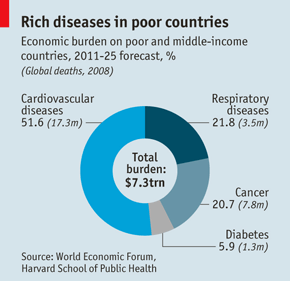
Chronic diseases like cancer and heart disease are rising fast in low- and middle-income countries, striking far younger populations than in rich countries and causing much worse outcomes, according to a new report.

Deaths from chronic diseases have risen by more than 50 percent in low- and middle-income countries over the past two decades, according to the report, by the Council on Foreign Relations. The increase is part of a shift in global mortality patterns in which infectious diseases, such as malaria and tuberculosis, have declined substantially and are no longer the leading cause of death in the developing world.

The shift in poorer countries is being driven by urbanization and other major changes that have led to improvements in aspects of public health, such as hand washing, sanitation and vaccines. That has led to sharp declines in infant mortality, and in turn, to increases in life spans. The average life expectancy in Africa, for example, has increased by about eight years since 2000, according to the World Health Organization.

Chronic diseases claim the vast majority of lives in rich countries like the United States, and some experts have said that the rise of such diseases in poorer countries is actually a sign of success, as it is evidence that people in those places are now living long enough to die of diseases that typically hit in old age.

But the report — which uses yet-to-be-published 2013 data from the Institute for Health Metrics and Evaluation, a health research organization — finds that chronic diseases are disproportionately striking younger populations in developing countries.

Working-age people in poorer countries have little access to preventive care and more exposure to health risks, such as air pollution, poor nutrition and lax antismoking laws, than their counterparts in rich countries, and are more likely to develop a chronic disease. And with limited resources to pay for treatment, those with chronic diseases are much more likely to become disabled and die as a result.

In all, about 80 percent of the deaths and disabilities from chronic diseases in Africa and South Asia involved people under the age of 60, more than double the share in many rich countries, said Thomas J. Bollyky, a fellow at the council and one of the report’s authors. In lower-income countries in particular, about 40 percent of the deaths from chronic diseases occur in people younger than 60, compared with 13 percent in rich countries.
If the trend continues unabated, it could have far-reaching consequences, the report stated, including catastrophic health expenditures and impoverishment among low-income populations. At the national level, it would further strain already overburdened health systems and could lead to lower economic productivity.

In rich countries, mortality patterns changed slowly, over generations, giving health systems time to adapt. But in poorer countries, the changes are often happening too fast for threadbare health care systems that are still geared toward treating infectious diseases to cope. The report notes that spending on health care in middle- and low-income countries has tripled over the past 20 years but that it is still small: All the governments in sub-Saharan Africa together spend about as much on health care a year as Poland — about $30 billion.

Chronic diseases are finding a foothold among much poorer people, who are less able to afford the medicines and treatment that might mitigate their illnesses. In rural Ghana, for example, minimum-wage earners with diabetes spend 60 percent of their incomes on insulin, the report noted.

Chronic diseases that are treatable in developed countries are often death sentences in developing countries, the report notes. For example, 90 percent of children with leukemia in high-income countries can be cured, but 90 percent of those with that disease in the world’s 25 poorest countries die from it.

The report, whose contributors include Thomas E. Donilon, a former national security adviser in the Obama administration, and Mitch Daniels, a former governor of Indiana and director of the Office of Management and Budget under President George W. Bush, called on the United States to make chronic disease a priority in global health funding. The United States spent more than $8 billion on global health aid in 2013, but just $10 million went to fight noncommunicable diseases.