Showing posts with label Cuban health care internationalism. Show all posts

Tuesday, June 2, 2020

3374. FAIR: US Campaign Against Cuba’s Medical Brigades Targets Healthcare, Not ‘Forced Labor’

By Joe Emersberger, FAIR, May 31, 2020
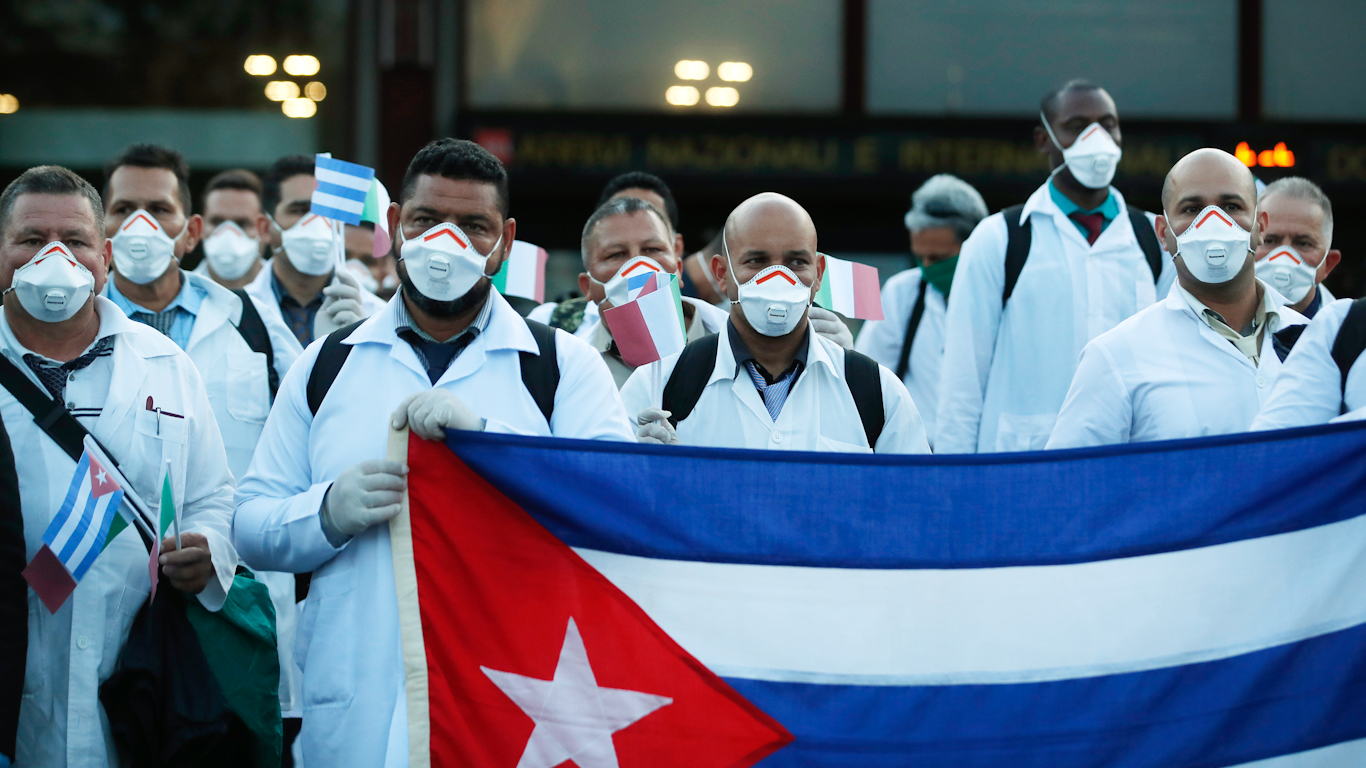
Cuban medical team arrives in Rome to join the fight against COVID-19 in that country. 


For decades, Cuba has sent tens of thousands of its medical professionals abroad to work in countries where natural disasters or poverty have left people without healthcare.  In the midst of the Covid-19 pandemic, and the catastrophic US response to it, the absurdity of a propaganda war against Cuban medical missions has become more obvious than ever. But you can’t rely on corporate media to explain why.


On May 7, 2019, US Sen. Marco Rubio wrote a letter that urged Secretary of State Mike Pompeo to increase pressure on governments benefiting from what he alleged was the “forced labor” of Cuban doctors. Rubio’s letter even claimed that the practice constitutes “human trafficking” by Cuba. Two months later, Pompeo took to Twitter announcing new sanctions on Cuban officials involved with its medical missions.
One piece of supposed evidence Rubio presented in the letter was a New York Times article (3/17/19) from last year by Nicholas Casey, which was completely dismantled by Lucas Koerner and Ricardo Vaz on FAIR.org (3/26/19). Casey’s article bizarrely depicted Cuban doctors in Venezuela as agents of the Cuban government who coerce voters and even perpetrate electoral fraud.
Last month, Michael Kozak, assistant US secretary of State for the Western Hemisphere, reiterated Rubio’s attack lines on the Cuban missions. He scolded governments who accept Cuba’s medical help by saying, “Crises don’t justify trafficking medical professionals, who need protection now more than ever.”
Spreading allegations that don’t stand up to minimal scrutiny is the opposite of caring about the working conditions of the doctors. But the sources US journalists usually rely on—the right-wing media in Venezuela, for example—have been doing that for many years.

From inciting violence to demanding liberation

Twitter: Nelson Bocaranda
Twitter (4/15/13)
In 2013, as 18 medical centers in Venezuela were set ablaze by supporters of the US-backed opposition, one prominent opposition journalist, Nelson Bocaranda, spread an allegation  to about a million Twitter followers (4/15/13) that Cuban doctors were hiding away voting materials inside medical centers.
Journalist Eirik Vold moved to Venezuela in 2002, and initially lived in a wealthy part of Caracas, where everyone seemed to consume vehemently anti-government private media. He wrote in his book Hugo Chavez: The Bolivarian Revolution Up Close (p. 148; see also Venezuelanalysis4/7/17):
The first time I heard about the Cuban doctors, for example, was in an El Universal article that described the scandal of a child who died from alleged malpractice at the hands of a Cuban doctor.
But in the US, as the Covid-19 pandemic resulted in increased demand for Cuban doctors around the world, the emphasis appears to have shifted from vilifying them to casting them as victims of exploitation.
BelĂ©n Fernandez has already addressed for FAIR (4/14/20) some of the wilder claims about Cuba’s medical brigades that have appeared in the US media. Examples include the frenzied output of the Wall Street Journal’s Mary Anastasia O’Grady (3/22/20), and her editors who denounced Cuba’s supposed “slave trade in doctors”; and the Panam Post (3/30/20), which claimed Cuba has a “shortage of hospital staff” because of its medical brigades. As Fernandez noted, the latter claim was so outlandish that even Reuters (3/22/20) debunked it, noting that even subtracting doctors serving abroad, Cuba still has “one of the highest” number of doctors per capita in the world.  “It’s hard to avoid them” in Cuba, wrote British journalist Ed Augustin (Nation5/22/20), who has been based in Havana for the past seven years.

How does Cuba pay for it?

In fact, according to the UNICEF figures, Cuba has since 2000 consistently maintained a lower child mortality rate than the US. Since 2009, it has also maintained a lower infant mortality rate than Canada. That’s an astounding achievement for a country under a ruthless US embargo for 60 years.
Belly of the Beast: Cuba's Door to Door Doctors
Belly of the Beast‘s “Cuba’s Door-to-Door Doctors” (4/17/20)
Independent US-based journalist Reed Lindsay and his team at Belly of the Beast have begun to produce documentary videos on Cuba. One short video succinctly captures Cuba’s proactive approach to healthcare that, combined with an ample supply of doctors, helps explain Cuba’s success.
Sometimes US corporate media produce articles that subject the claims made about Cuba’s medical brigades to some scrutiny, albeit very inadequately. One example is a Washington Post article (4/10/20) by Anthony Faiola and Kimberley Brown, which quoted Jose Miguel Vivanco of Human Rights Watch (HRW):
What these doctors are doing is heroic. But how the Cuban [government] treats them is disgraceful, taking credit for their good deeds while pocketing most of their earnings, denying them basic freedoms of speech and movement, and keeping them and their families back in Cuba in a situation of perpetual duress.
Vivanco’s (and HRW’s) pro-imperial bias is something I’ve written about before for FAIR ( 8/31/18). In a recent Spanish-language interview (BrujulaDigital5/15/20) Vivanco referred to the US-backed dictatorship in Bolivia, installed in a military coup incited by a dishonest OAS electoral audit (FAIR.org3/5/20), as a “democracy.”
So it’s very unsurprising that Vivanco would accuse Cuba, a state the US treats as an enemy, of simply “pocketing” the hard currency it receives for sending doctors abroad, rather than investing, as it must, in the system that trains its medical professionals. Nobody made this obvious point in the Post article by Faiola and Brown. The article describes the medical brigades as “a major source of income,” but neither the reporters nor anyone they quoted noted that hard currency is required to sustain them—and Cuba’s healthcare system in general. Getting hard currency is especially important for Cuba, because US sanctions greatly increase the costs of importing medicines, medical supplies and technology.
That’s quite an omission, when you consider how reflexively the question “how are you going to pay for it?” is thrown at US politicians like Bernie Sanders who advocate Medicare for All (FAIR.org2/29/20) and free college (both of which Cuba has). If that’s considered a crucial question in the most powerful country in the world, why not in Cuba, a small island subjected to a brutal US embargo? (By the way, that embargo has been overwhelmingly denounced by the UN General Assembly in 28 consecutive resolutions.)

Could socialism be a motivating factor?

John Kirk
John Kirk (cc photo: Karla Renic)
I contacted John Kirk of Dalhousie University in Nova Scotia, who has researched Cuba’s foreign policy and its medical brigades for many years. He provided a credible analysis of why so many Cuban doctors choose to serve abroad.
Kirk lived with Cuban medical professionals as they worked in El Salvador and Guatemala. Over a 12-year period, he interviewed 270 Cuban doctors, nurses and technicians who had spent at least two years working abroad. One of Kirk’s books about Cuba is Healthcare Without Borders: Understanding Cuban Medical Internationalism (published by University Press of Florida).
Speaking by telephone, Kirk provided some figures for Cubans who had worked in Brazil:
They went because they earned $1,000 per month, as opposed to $70 back in Havana. Yes, the Cuban government took 75 percent, $3,000 on top of the $1,000 that they earned. “How do you feel about that?” I asked [the doctors]. The general response was, “It would be nice to earn more money, but bear in mind that our regular salary, insignificant though it may be, is still being paid to our families back home. So what we are earning here is on top of the regular salaries. The money that goes into the Cuban government’s pot subsidizes the healthcare system for the entire population.”
In fact, even the one Cuban doctor the Washington Post (4/10/20) quoted (a defector, of course) said he volunteered to go on missions to make much more money than he could in Cuba.
Kirk said that nobody he interviewed claimed they were pressured to serve abroad; the monetary incentives alone make that very easy to believe. He added that many, for personal reasons, had turned down opportunities to go on second or third missions without repercussions.
Professional development is another incentive that Kirk mentioned—the opportunity to gain experience treating patients with conditions they would seldom (if ever) see in Cuba. He told me that when Ebola struck West Africa, the Cuban government had thousands more volunteers willing to go than it accepted.
Kirk described other incentives as well:
Another reason they went is because it is the kind of thing that everybody is doing—a kind of rite of passage. It’s like backpacking in Europe in the 1960s for North Americans: Everyone was doing it. At one point, 25 percent of Cuba’s doctors were working abroad. Everybody knew somebody who was abroad, or was about to go abroad. It’s also important to bear in mind the social ethos, if you like, the ethic of Cuban society. Kids from preschool are conditioned, socialized, whatever word you want to use, to think of themselves as part of a collective.
Another way to put it is that a socialist ideology can motivate people to help others. In Western media, socialist ideology is generally invoked only if it can be linked to repression or inefficiency, not a healthcare system in the Global South that in various ways outperforms those of many rich countries.

But Cuba is a dictatorship!

If anyone dares to point to any of Cuba’s achievements, the objection is inevitably raised that Cuba is a dictatorship. Cuba has indeed resorted to one-party rule to prevent itself from being destroyed by the US—which, by the way, has killed tens of thousands of Venezuelans through economic sanctions since 2017, imposed in an effort to oust Venezuela’s democratically elected government.
In defiance of US threats, Iranian tankers began to arrive in Venezuela on May 23, bringing desperately needed gasoline. Iran has formally complained to the UN about US threats against the tankers.
Democracy does not protect a foreign government from US military or economic attack—mainly because US’s own democracy is severely stunted by its corporate media. They constrain every public debate, including those about Cuba’s medical brigades or anything related to Cuba.

Sunday, May 24, 2020

3373. Cuba Has Sent 2,000 Doctors and Nurses Overseas to Fight Covid-19

Ed Augustin, The Nation, May 22, 2020
Cuba has sent more than 2,000 doctors and nurses to 23 countries since the crisis broke.
As the novel coronavirus encircled the globe, tearing through health care systems, heavily affected countries sent out pleas for doctors. One small, downtrodden island answered the call.
Cuba has sent more than 2,000 doctors and nurses to 23 countries since the crisis broke.
Emergency medical response teams from the island have touched down in Latin America, Africa, the Middle East, and—for the first time—Europe. In March, the first batch of 51 Cuban doctors and nurses arrived in Lombardy, Italy, at the time the epicenter of the pandemic, to cheering crowds.
They join the 28,000 Cuban health professionals who were working in 59 countries prior to Covid-19.
No other country has sent large numbers of doctors abroad during the pandemic. The radical intellectual Noam Chomsky last month described the island as the only country to have shown “genuine internationalism” during the crisis, and the women-led anti-war organization Code Pink is now leading calls for the island’s emergency medical response teams to be awarded the Nobel Peace Prize. But these medical brigades have received little media attention in the United States. When they are commented on at all, coverage is usually negative.
In fact, for the last three years, the Trump administration has described doctors participating in these missions as “slaves” and has accused the Cuban government of “human trafficking.” At the same time, Trump officials have suggested that tens of thousands of those “on mission” are not doctors at all but regime henchmen deployed to “sow political discord” and spread the virus of communism. Cast in this light, Cuban doctors are at once victims and oppressors.
Stories in major media outlets paint a similar picture. Cuba’s medical collaboration is portrayed as Machiavellian, reduced to a PR ruse to deflect attention from Cuba’s internal human rights violations, a means of projecting soft power, or a way of meddling in other countries’ affairs.
And while it is sometimes granted that the medics themselves improve health outcomes in poor countries, the Cuban government is alleged to exploit these doctors by “pocketing” most of their earnings.
Such depictions never include the voice of the Cuban doctors who work in these missions. Over the last couple of months, I’ve spoken to dozens of doctors before their departure. Their words cut sharply against this picture.
“How can I be a slave if I receive a free education from my country?” asked Dr. Leonardo Fernández, who has served in Nicaragua, Pakistan, East Timor, Liberia, and Mozambique. “How can I be a slave when my family receives my full salary while I’m abroad? How can I be a slave when I have constitutional rights?”
Dr. Gracilliano DĂ­az, a veteran of the campaign against Ebola in Sierra Leone in 2014, dismissed with Caribbean cool the idea that he is a victim of trafficking. “We do this voluntarily,” he said with a lilt. “It doesn’t matter to us that other countries brand us as slaves. What matters to us is that we contribute to the world.”

Monday, March 23, 2020

3332. Cuba’s Contribution to Combatting COVID-19

By Helen Yaffe, Counterpunch, March 27, 2020
Cuban medicas arrive in Italy to help fighting the Coronavirus pandemic
COVID-19 surged in the Chinese city of Wuhan in late December 2019 and by January 2020 it had hit Hubei province like a tidal wave, swirling over China and rippling out overseas. The Chinese state rolled into action to combat the spread and care for those infected. Among the 30 medicines the Chinese National Health Commission selected to fight the virus was a Cuban anti-viral drug Interferon Alpha 2b. This drug has been produced in China since 2003, by the enterprise ChangHeber, a Cuban-Chinese joint venture.
Cuban Interferon Alpha 2b has proven effective for viruses with characteristics similar to those of COVID-19. Cuban biotech specialist, Dr Luis Herrera Martinez explained that ‘its use prevents aggravation and complications in patients, reaching that stage that ultimately can result in death.’ Cuba first developed and used interferons to arrest a deadly outbreak of the dengue virus in 1981, and the experience catalysed the development of the island’s now world-leading biotech industry.
The world’s first biotechnology enterprise, Genetech, was founded in San Francisco in 1976, followed by AMGen in Los Angeles in 1980. One year later, the Biological Front, a professional interdisciplinary forum, was set up to develop the industry in Cuba. While most developing countries had little access to the new technologies (recombinant DNA, human gene therapy, biosafety), Cuban biotechnology expanded and took on an increasingly strategic role in both the public health sector and the national economic development plan. It did so despite the US blockade obstructing access to technologies, equipment, materials, finance and even knowledge exchange. Driven by public health demand, it has been characterised by the fast track from research and innovation to trials and application, as the story of Cuban interferon shows.
Interferons are ‘signalling’ proteins produced and released by cells in response to infections which alert nearby cells to heighten their anti-viral defences. They were first identified in 1957 by Jean Lindenmann and Aleck Isaacs in London. In the 1960s Ion Gresser, a US-researcher in Paris, showed that interferons stimulate lymphocytes that attack tumours in mice. In 1970s, US oncologist Randolph Clark Lee, took up this research.
Catching the tail end of US President Carter’s improved relations with Cuba, Dr Clark Lee visited Cuba, met with Fidel Castro and convinced him that interferon was the wonder drug. Shortly afterwards, a Cuban doctor and a haematologist spent time in Dr Clark Lee’s laboratory, returning with the latest research about interferon and more contacts. In March 1981, six Cubans spent 12 days in Finland with the Finnish doctor Kari Cantell, who in the 1970s had isolated interferon from human cells, and had shared the breakthrough by declining to patent the procedure. The Cubans learned to produce large quantities of interferon.
Within 45 days of returning to the island, they had produced their first Cuban batch of interferon, the quality of which was confirmed by Cantell’s laboratory in Finland. Just in time, it turned out. Weeks later Cuba was struck by an epidemic of dengue, a disease transmitted by mosquitos. It was the first time this particularly virulent strand, which can trigger life-threatening dengue haemorrhagic fever, had appeared in the Americas. The epidemic affected 340,000 Cubans with 11,000 new cases diagnosed every day at its peak. 180 people died, including 101 children. The Cubans suspected the CIA of releasing the virus. The US State Department denied it, although a recent Cuban investigation claims to provide evidence that the epidemic was introduced from the US.
Cuba’s Ministry of Public Health authorised the use of Cuban interferon to halt the dengue outbreak. It was done at great speed. Mortality declined. In their historical account, Cuban medical scientists Caballero Torres and Lopez Matilla wrote: ‘It was the most extensive prevention and therapy event with interferon carried out in the world. Cuba began to hold regular symposia, which quickly drew international attention’. The first international event in 1983 was prestigious; Cantell gave the keynote speech and Clark attended with Albert Bruce Sabin, the Polish American scientist who developed the oral polio vaccine.
Convinced about the contribution and strategic importance of innovative medical science, the Cuban government set up the Biological Front in 1981 to develop the sector. Cuban scientists went abroad to study, many in western countries. Their research took on more innovative paths, as they experimented with cloning interferon. By the time Cantell returned to Cuba in 1986, the Cubans had developed the recombinant human Interferon Alfa 2b which has benefited thousands of Cubans since then. With significant state investment, Cuba’s showpiece Centre for Genetic Engineering and Biotechnology (CIGB) was opened in 1986. By then Cuba was submerged in another health crisis, a serious outbreak of Meningitis B, which further spurred Cuba’s biotechnology sector.
Cuba’s Meningitis Miracle
In 1976, Cuba was struck by meningitis B and C outbreaks. Since 1916 only a few isolated cases had been seen on the island. Internationally, vaccines existed for Meningitis A and C, but not for B. Cuban health authorities secured a vaccine from a French pharmaceutical company to immunise the population against type C Meningitis. However, in the following years, cases of type B Meningitis began to rise. A team of specialists from different medical science centres was established, led by a woman biochemist, ConcepciĂłn Campa, to work intensively on finding a vaccine.
By 1984 Meningitis B had become the main health problem in Cuba. After six years of intense work, Campa’s team produced the world’s first successful Meningitis B vaccine in 1988. A member of Campa’s team, Dr Gustavo Sierra recalled their joy: ‘this was the moment when we could say it works, and it works in the worst conditions, under pressure of an epidemic and among people of the most vulnerable age.’ During 1989 and 1990, three million Cubans, those most at risk, were vaccinated. Subsequently, 250,000 young people were vaccinated with the VA-MENGOC-BC vaccine, a combined Meningitis B and C vaccination. It recorded 95% efficacy overall, with 97% in the high-risk three months to six years age group. Cuba’s Meningitis B vaccine was awarded a UN Gold Medal for global innovation. This was Cuba’s meningitis miracle.
‘I tell colleagues that one can work 30 years, 14 hours a day just to enjoy that graph for 10 minutes,’ Agustin Lage, Director of the Centro for Molecular Immunology (CIM) told me, referring to an illustration of the rise and sudden fall of Meningitis B cases in Cuba. ‘Biotechnology started for this. But then the possibilities of developing an export industry opened up, and today, Cuban biotechnology exports to 50 countries.’
Since its first application to combat dengue fever, Cuba’s interferon has shown its efficacy and safety in the therapy of viral diseases including Hepatitis B and C, shingles, HIV-AIDS and dengue. Because it interferes with viral multiplication within cells, it has also been used in the treatment of different types of carcinomas. Time will tell if Interferon Alfa 2b proves to be the wonder drug as far as COVID-19 goes.

Tuesday, October 11, 2016

2469. Cuba Leads International Disaster Relief in Haiti

By Nina Lakhani, Independent, October 9, 2016
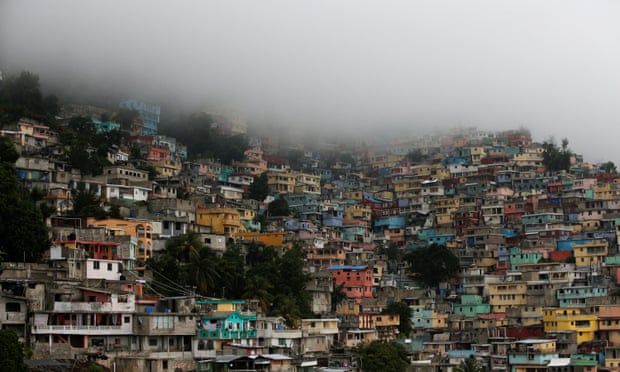
Port-a-Prince, Haiti, was hit by hurricane Matthew and hundreds were killed.

They are the real heroes of the Haitian earthquake disaster, the human catastrophe on America's doorstep which Barack Obama pledged a monumental US humanitarian mission to alleviate. Except these heroes are from America's arch-enemy Cuba, whose doctors and nurses have put US efforts to shame.

A medical brigade of 1,200 Cubans is operating all over earthquake-torn and cholera-infected Haiti, as part of Fidel Castro's international medical mission which has won the socialist state many friends, but little international recognition.

Observers of the Haiti earthquake could be forgiven for thinking international aid agencies were alone in tackling the devastation that killed 250,000 people and left nearly 1.5 million homeless. In fact, Cuban healthcare workers have been in Haiti since 1998, so when the earthquake struck the 350-strong team jumped into action. And amid the fanfare and publicity surrounding the arrival of help from the US and the UK, hundreds more Cuban doctors, nurses and therapists arrived with barely a mention. Most countries were gone within two months, again leaving the Cubans and Médecins Sans Frontières as the principal healthcare providers for the impoverished Caribbean island.

Figures released last week show that Cuban medical personnel, working in 40 centres across Haiti, have treated more than 30,000 cholera patients since October. They are the largest foreign contingent, treating around 40 per cent of all cholera patients. Another batch of medics from the Cuban Henry Reeve Brigade, a disaster and emergency specialist team, arrived recently as it became clear that Haiti was struggling to cope with the epidemic that has already killed hundreds.

Since 1998, Cuba has trained 550 Haitian doctors for free at the Escuela Latinoamericana de Medicina en Cuba (Elam), one of the country's most radical medical ventures. Another 400 are currently being trained at the school, which offers free education – including free books and a little spending money – to anyone sufficiently qualified who cannot afford to study medicine in their own country.

John Kirk is a professor of Latin American studies at Dalhousie University in Canada who researches Cuba's international medical teams. He said: "Cuba's contribution in Haiti is like the world's greatest secret. They are barely mentioned, even though they are doing much of the heavy lifting.”

This tradition can be traced back to 1960, when Cuba sent a handful of doctors to Chile, hit by a powerful earthquake, followed by a team of 50 to Algeria in 1963. This was four years after the revolution, which saw nearly half the country's 7,000 doctors voting with their feet and leaving for the US.

The travelling doctors have served as an extremely useful arm of the government's foreign and economic policy, winning them friends and favours across the globe. The best-known programme is Operation Miracle, which began with ophthalmologists treating cataract sufferers in impoverished Venezuelan villages in exchange for oil. This initiative has restored the eyesight of 1.8 million people in 35 countries, including that of Mario Teran, the Bolivian sergeant who killed Che Guevara in 1967.

The Henry Reeve Brigade, rebuffed by the Americans after Hurricane Katrina, was the first team to arrive in Pakistan after the 2005 earthquake, and the last to leave six months later.

Cuba's constitution lays out an obligation to help the worst-off countries when possible, but international solidarity isn't the only reason, according to Professor Kirk. "It allows Cuban doctors, who are frightfully underpaid, to earn extra money abroad and learn about diseases and conditions they have only read about. It is also an obsession of Fidel's and it wins him votes in the UN.”

A third of Cuba's 75,000 doctors, along with 10,000 other health workers, are currently working in 77 poor countries, including El Salvador, Mali and East Timor. This still leaves one doctor for every 220 people at home, one of the highest ratios in the world, compared with one for every 370 in England.

Wherever they are invited, Cubans implement their prevention-focused holistic model, visiting families at home, proactively monitoring maternal and child health. This has produced "stunning results" in parts of El Salvador, Honduras and Guatemala, lowering infant and maternal mortality rates, reducing infectious diseases and leaving behind better trained local health workers, according to Professor Kirk's research.

Medical training in Cuba lasts six years – a year longer than in the UK – after which every graduate works as a family doctor for three years minimum. Working alongside a nurse, the family doctor looks after 150 to 200 families in the community in which they live.

This model has helped Cuba to achieve some of the world's most enviable health improvements, despite spending only $400 (£260) per person last year compared with $3,000 (£1,950) in the UK and $7,500 (£4,900) in the US, according to Organisation for Economic Co-operation and Development figures.

Infant mortality rates, one of the most reliable measures of a nation's healthcare, are 4.8 per 1,000 live births – comparable with Britain and lower than the US. Only 5 per cent of babies are born with a low birth weight, a crucial factor in long-term health, and maternal mortality is the lowest in Latin America, World Health Organisation figures show. Cuba's polyclinics, open 24 hours a day for emergencies and specialist care, are a step up from the family doctors. Each provides for 15,000 to 35,000 patients via a group of full-time consultants as well as visiting doctors, ensuring that most medical care is provided in the community.

Imti Choonara, a paediatrician from Derby, leads a delegation of international health professionals at annual workshops in Cuba's third city, Camaguey. "Healthcare in Cuba is phenomenal, and the key is the family doctor, who is much more proactive, and whose focus is on prevention ... The irony is that Cubans came to the UK after the revolution to see how the NHS worked. They took back what they saw, refined it and developed it further; meanwhile we are moving towards the US model," Professor Choonara said.

Politics, inevitably, penetrates many aspects of Cuban healthcare. Every year hospitals produce a list of drugs and equipment they have been unable to access because of the American embargo which prevents many US companies from trading with Cuba, and persuades other countries to follow suit. The 2009/10 report includes drugs for childhood cancers, HIV and arthritis, some anaesthetics, as well as chemicals needed to diagnose infections and store organs. Pharmacies in Cuba are characterised by long queues and sparsely stacked shelves, though in part this is because they stock only generic brands.

Antonio Fernandez, from the Ministry of Public Health, said: "We make 80 per cent of the drugs we use. The rest we import from China, former Soviet countries, Europe – anyone who will sell to us – but this makes it very expensive because of the distances."
On the whole, Cubans are immensely proud and supportive of their contribution in Haiti and other poor countries, delighted to be punching above their weight on the international scene. However, some people complain of longer waits to see their doctor because so many are working abroad. And, like all commodities in Cuba, medicines are available on the black market for those willing to risk large fines if caught buying or selling.

International travel is beyond the reach of most Cubans, but qualified nurses and doctors are among those forbidden from leaving the country for five years after graduation, unless as part of an official medical team.

Like everyone else, health professionals earn paltry salaries of around $20 (£13) a month. So, contrary to official accounts, bribery exists in the hospital system, which means some doctors, and even hospitals, are off-limits unless patients can offer a little something, maybe lunch or a few pesos, for preferential treatment.

Cuba's international ventures in healthcare are becoming increasingly strategic. Last month, officials held talks with Brazil about developing Haiti's public health system, which Brazil and Venezuela have both agreed to help finance.

Medical training is another example. There are currently 8,281 students from more than 30 countries enrolled at Elam, which last month celebrated its 11th anniversary. The government hopes to inculcate a sense of social responsibly into the students in the hope that they will work within their own poor communities for at least five years.

Damien Joel Suarez, 27, a second year from New Jersey, is one of 171 American students; 47 have already graduated. He dismisses allegations that Elam is part of the Cuban propaganda machine. "Of course, Che is a hero here but he isn't forced down your neck.”

Another 49,000 students are enrolled in the El Nuevo Programa de Formacion de Medicos Latinoamericanos, the brainchild of Fidel Castro and Hugo Chavez, who pledged in 2005 to train 100,000 doctors for the continent. The course is much more hands-on, and critics question the quality of the training.

Professor Kirk disagrees: "The hi-tech approach to health needed in London and Toronto is irrelevant for millions of people in the Third World who are living in poverty. It is easy to stand on the sidelines and criticise the quality, but if you were living somewhere with no doctors, then you'd be happy to get anyone.”

There are nine million Haitians who would probably agree.

Sunday, December 7, 2014

1673. Cuban Doctor Back Home after Beating Ebola

By Havana Times, December 6, 2014

Dr. Felix Baez arriving in Cuba. Photo: Ismael Francisco/cubadebate.cu

The Cuban doctor who recovered from Ebola after contracting it in Sierra Leone returned to the island on Saturday, reported dpa news.

Felix Baez, the first known Latin American to have been infected with Ebola, was discharged early today in Geneva, where he was taken for treatment after his infection was confirmed in Africa in mid-November.

Baez told the press at Havana airport that he is “very pleased” to be home in his country and “very grateful to all those who were concerned for me from the beginning.”
The doctor, one of 165 Cubans fighting against Ebola in Sierra Leone, also said he wants to return to Africa to continue the task.

“I would like to confirm once again my commitment to my colleagues who are there in Sierra Leone, with the Revolution and the Communist Party of Cuba. I want to return to Sierra Leone and finish what I started,” he told Prensa Latina. Baez was received at the airport by Cuban Health Minister Roberto Morales.

The Geneva University Hospital had said Friday that Baez had overcome Ebola and would be released soon. The “testing has confirmed the disappearance of the virus in his body fluids,” the Ministry of Public Health in Havana said in a statement.

The doctor contracted the disease in mid-November and days later was transferred to Switzerland under an agreement between Cuba and the World Health Organization (WHO) to treat Cuban health personnel who could become sick with Ebola in West Africa.

Cuba has been at the forefront of the international fight against Ebola by sending a total of 256 doctors and other health workers to the three countries most affected by the epidemic, which has killed at least 6,187 people, according to the latest figures from the WHO.

Friday, September 12, 2014

1548. Cuba to Commit Large Health Corps to Ebola Fight

By Kai Kupferschmidt, Science Insider, September 12, 2014
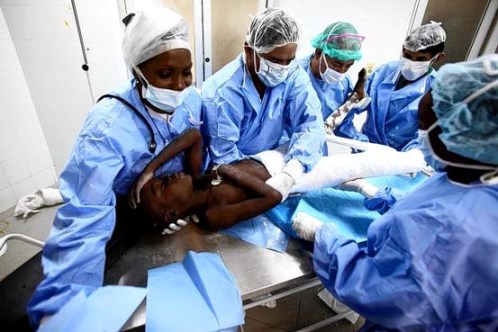
Cuban medical workers treating a cholera patient in Haiti
The Cuban government is sending 165 doctors and nurses to battle the Ebola outbreak in West Africa, the World Health Organization (WHO) announced this morning in Geneva, Switzerland, at a joint press conference with Cuba’s minister of public health, Roberto Morales Ojeda. The health care workers, 103 nurses and 62 doctors, are going to be deployed to Sierra Leone in the first week of October.
It is the biggest contribution of health care staff by any single country so far to help control the epidemic, noted WHO Director-General Margaret Chan. “This will make a significant difference in Sierra Leone,” Chan said.
To put the numbers in perspective: WHO has deployed about 500 foreign medical experts to the region. Because they rotate, at any one time about 170 of them are in the affected countries, Chan said.
Ebola has already sickened at least 4784 people and killed 2400 in the biggest outbreak on record, and its spread is still accelerating. Several governments have pledged support. For instance, the British government and the Wellcome Trust medical charity have announced they will spend £6.5 million to speed up research on Ebola vaccine candidates. Germany’s Ministry for Economic Cooperation and Development has announced it is increasing its contribution to WHO to fight Ebola from €1 million to €10 million. And the Bill & Melinda Gates Foundation has pledged $50 million to fight Ebola. But that does not address the main problem, experts say. “Money, materials are important, but those alone cannot stop Ebola transmission,” Chan said at the press conference. “The thing we need most of all is people.”
According to WHO, more than 200 health care workers are needed to run an isolation ward with 70 beds. While it is still unclear how many Ebola patients there are altogether, WHO estimates several hundred extra beds are needed in Liberia alone. At the moment there is not a single bed available in the whole country to treat Ebola patients, Chan said.
Several people on the ground in Liberia have confirmed that Ebola patients are being turned away at the treatment center in Monrovia to avoid staff being overwhelmed. “We need more actions. We need to surge at least two to four times in order to catch up with the outbreaks in these three countries,” Chan said. “I hope the announcement today will stimulate more countries to surge their support.”

*The Ebola Files: Given the current Ebola outbreak, unprecedented in terms of number of people killed and rapid geographic spread, Science and Science Translational Medicine have made a collection of research and news articles on the viral disease freely available to researchers and the general public.