Showing posts with label Greenhouse gases emissions. Show all posts

Tuesday, October 31, 2017

2737. Record Surge in Atmospheric CO2 Seen in 2016

By Matt McGrath, BBC, October 30, 2017
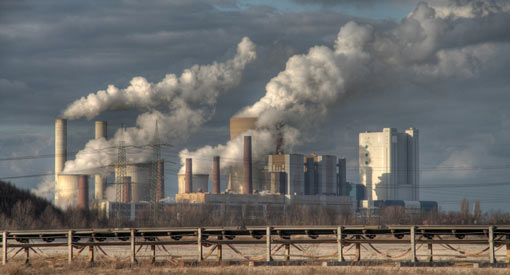
Greenhouse gasses pollution in Ontario, Canada.  

Concentrations of CO2 in the Earth's atmosphere surged to a record high in 2016, according to the World Meteorological Organization (WMO).
Last year's increase was 50% higher than the average of the past 10 years.
Researchers say a combination of human activities and the El Niño weather phenomenon drove CO2 to a level not seen in 800,000 years.
Scientists say this risks making global temperature targets largely unattainable.
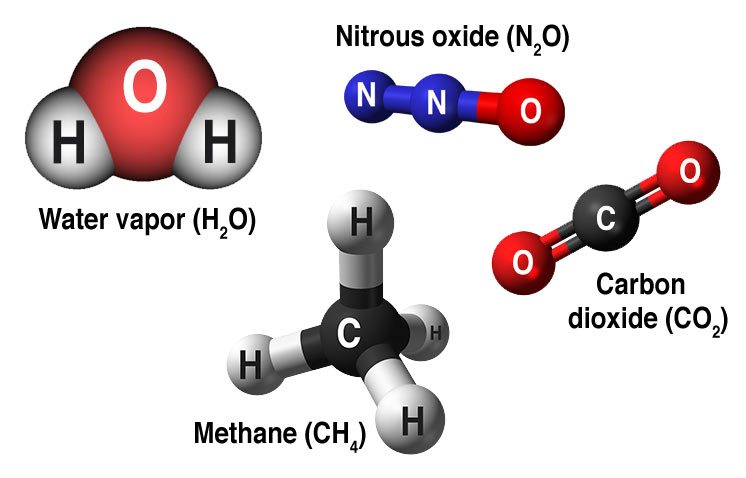
This year's greenhouse gas bulletin produced by the WMO is based on measurements taken in 51 countries. Research stations dotted around the globe measure concentrations of warming gases including carbon dioxide, methane and nitrous oxide.
The figures published by the WMO are what's left in the atmosphere after significant amounts are absorbed by the Earth's "sinks", which include the oceans and the biosphere.
2016 saw average concentrations of CO2 hit 403.3 parts per million, up from 400ppm in 2015.
"It is the largest increase we have ever seen in the 30 years we have had this network," Dr Oksana Tarasova, chief of WMO's global atmosphere watch programme, told BBC News.
"The largest increase was in the previous El Niño, in 1997-1998, and it was 2.7ppm; and now it is 3.3ppm. It is also 50% higher than the average of the last 10 years."


Chart showing carbon dioxide concentrations have reached record levels

El Niño impacts the amount of carbon in the atmosphere by causing droughts that limit the uptake of CO2 by plants and trees.
Emissions from human sources have slowed down in the last couple of yearsaccording to research, but according to Dr Tarasova, it is the cumulative total in the atmosphere that really matters as CO2 stays aloft and active for centuries.
Over the past 70 years, says the report, the increase in CO2 in the atmosphere is nearly 100 times larger than it was at the end of the last ice age.
Rapidly increasing atmospheric levels of CO2 and other gases have the potential, according to the study, to "initiate unpredictable changes in the climate system... leading to severe ecological and economic disruptions".
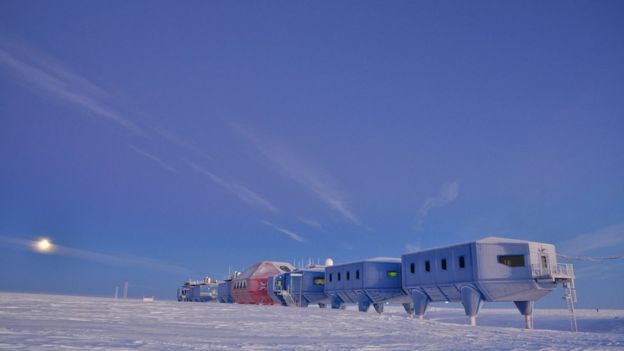

AirImage copyrightANTHONY DUBBER
Image captionThe British Antarctic Survey Halley base was one of the stations where atmospheric measurements were made

The study notes that since 1990 there has been a 40% increase in total radiative forcing. That's the warming effect on our climate of all greenhouse gases.
"Geological-wise, it is like an injection of a huge amount of heat," said Dr Tarasova.
"The changes will not take 10,000 years, like they used to take before; they will happen fast. We don't have the knowledge of the system in this state; that is a bit worrisome!"
According to experts, the last time the Earth experienced a comparable concentration of CO2 was three to five million years ago, in the mid-Pliocene Epoch. The climate then was 2-3C warmer, and sea levels were 10-20m higher due to the melting of Greenland and the West Antarctic ice sheets.
Other experts in the field of atmospheric research agreed that the WMO findings were a cause for concern.
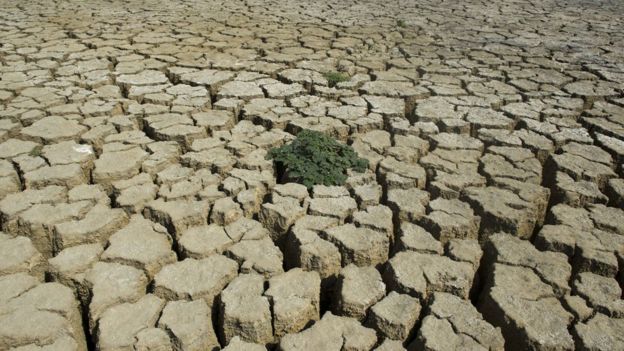

droughtImage copyrightGETTY IMAGES
Image captionDroughts related to El Niño, such as this one in Colombia, limited the ability of plants and trees to soak up carbon

"The 3ppm CO2 growth rate in 2015 and 2016 is extreme - double the growth rate in the 1990-2000 decade," Prof Euan Nisbet from Royal Holloway University of London, UK, told BBC News.
"It is urgent that we follow the Paris agreement and switch rapidly away from fossil fuels. There are signs this is beginning to happen, but so far the air is not yet recording the change."
Another concern in the report is the continuing, mysterious rise of methane levels in the atmosphere, which were also larger than the average over the past 10 years. Prof Nisbet says there is a fear of a vicious cycle, where methane drives up temperatures which in turn releases more methane from natural sources.
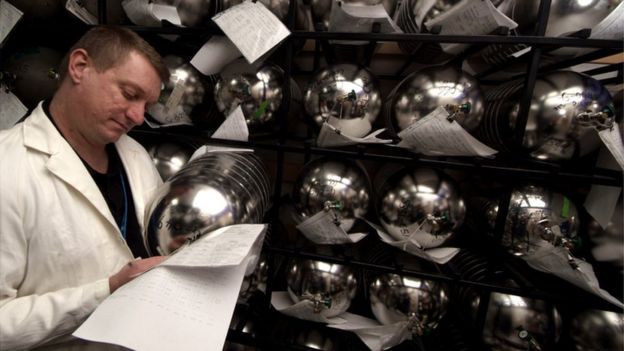

air samplesImage copyrightWMO
Image captionScientists handling air samples at the Cape Grim monitoring station in Australia

"The rapid increase in methane since 2007, especially in 2014, 2015, and 2016, is different. This was not expected in the Paris agreement. Methane growth is strongest in the tropics and sub-tropics. The carbon isotopes in the methane show that growth is not being driven by fossil fuels. We do not understand why methane is rising. It may be a climate change feedback. It is very worrying."
The implications of these new atmospheric measurements for the targets agreed under the Paris climate pact are quite negative, say observers.
"The numbers don't lie. We are still emitting far too much and this needs to be reversed," said Erik Solheim, head of UN Environment.
"We have many of the solutions already to address this challenge. What we need now is global political will and a new sense of urgency."
The report has been issued just a week ahead of the next instalment of UN climate talks, in Bonn. Despite the declaration by President Trump that he intends to take the US out of the deal, negotiators meeting in Germany will be aiming to advance and clarify the rulebook of the Paris agreement.

Tuesday, May 9, 2017

2609. Why Greenhouse Gas Emissions Did Not Really Stabilize In The Past Few Years

By Roger Boyd, Humanity's Test, April 24, 2017 

Carbon dioxide is not the only greenhouse gas; the most important others are methane (CH4) and nitrous oxide (N2O). Methane has about 84 times the climate warming effect that CO2 does in the first twenty years (after 20 years the majority is converted to CO2)[i], a major issue as the climate moves toward possible positive-feedback tipping points. Over a hundred year period CH4 has a warming impact 34 times that of CO2[ii]. Nitrous Oxide has about 300 times the warming impact of CO2and has an atmospheric lifespan of over 100 years[iii] [iv].
The biggest drivers of anthropogenic methane are agriculture (especially cattle and water-logged fields of rice) and leaks from natural gas (which is mostly methane) production and distribution. After leveling off at the start of the first decade of the twenty-first century, atmospheric methane levels started to climb again in 2007[v]. A lot of evidence points to a significant part of the increase as coming from the massive growth in shale gas wells in the United States[vi]. The 30% increase in U.S. methane emissions may well offset its’ celebrated reduction in CO2 emissions in recent years. Australia may have also been significantly underreporting the methane emissions from its rapidly growing coal seam gas operations[vii].
The extensive use of nitrogen fertilizers in agriculture has the side effect of directly releasing N2O. Another source is decomposing animal manure[viii]. Other sources are fossil fuel extraction and some industrial processes. Concentrations of atmospheric N2O have increased at a constant rate, accelerating somewhat at the end of the last century, mainly reflecting the growth in industrialized agriculture and meat consumption.
The level of CFC gases in the atmosphere stabilized, and then started on a downward trend after the 1987 Montreal Accord took affect to protect the ozone layer. In contrast, HFC’s and HCFC’s (ironically replacements for CFC’s), the most common of which has a warming potential 1,430 times greater than CO2[ix], have greatly increased since the mid-1990’s as the use of air conditioning spread rapidly. These will be limited by an international agreement reached in 2016[x]
Trends in Major Greenhouse Gases
Combining all the greenhouse gases together on a CO2 equivalent basis, the U.S. National Oceanic and Atmospheric Administration (NOAA), produces an Annual Greenhouse Gas Index (AGGI)[xi]. The AGGI is higher than the CO2 only measure, given the impact of the other gases, standing at a level of 485 ppm COequivalent in 2015. It is also increasing faster than the level of COonly, at a rate of 3-4ppm per year since 2010 (compared to a rate of just over 2ppm for CO2). At the current rate of increase the CO2e will hit 500 ppm before 2020 – a level that will overshoot the 2 degree centigrade U.N. warming limit. With atmospheric levels of COrecently jumping at a rate of 3ppm per year, CO2e levels could soon be increasing at 4-5ppm per year. A level of 550 ppm CO2e, consistent with a 3 degree centigrade rise in temperatures, would then be reached in the early 2030’s.
The only way to radically reduce anthropogenic emissions of methane and nitrous oxide would be to fundamentally change industrial agriculture practices, reduce meat consumption, and significantly reduce emissions from natural gas usage. None of these seem to be probable in the near future, with the U.S. government recently moving to remove regulations on shale gas methane emissions, natural gas usage increasing rapidly as a “climate friendly” alternative to coal, and worldwide meat consumption rapidly increasing.
NOAA Annual Greenhouse Gas Index (AGGI)
Source: NOAA at https://www.esrl.noaa.gov/gmd/aggi/aggi.fig5_med.png 
China’s Iffy Coal Statistics 
In late 2015, China announced that it had previously underestimated its usage of coal by 17%[xii]. The increase in the country’s stated greenhouse gas emissions was equal to the emissions of the whole of Germany! So the recent celebration of the global stabilization of anthropogenic carbon emissions, mainly due to reductions in China’s coal usage, may be proven to be premature. It may be best to wait a few years for any possible future data revisions by China. 
Schemes to purchase fraudulent carbon credits
Countries are allowed to buy carbon credits from other countries to offset their own emissions, through Emission Trading Schemes. New Zealand bought a huge amount of credits from the Ukraine and Russia that may be completely fraudulent – representing no real emission reductions in those countries at all[xiii]. The New Zealand government plans to use these credits to meet the country’s emission reduction commitments through 2020 and beyond. All of those extra credits also crashed the price of credits to effectively zero in New Zealand, producing incentives to actually increase emissions in the large agricultural sector (and blocking the possibility of increased forestry to capture carbon). In effect, New Zealand will not be reducing emissions at all through 2020 and instead will count fraudulent credits to say that it has met its targets.
New Zealand is the worst per capita ETS cheat, but many other countries got into the game as well. Many of those countries have decided to relinquish any excess credits though, meaning that those credits will not be used to offset future emissions[xiv]. With the great difficulty of validating that carbon credits reflect actual reductions in emissions that would not have happened otherwise, the possibility of widespread fraud will always be a reality. The purchase of emissions credits between countries should simply be abolished, forcing countries to do the hard work of actually reducing their own emissions.
Overestimating historical emissions to up the baseline for emissions cuts
It seems that Australia has been dramatically overstating its carbon emissions since 2000, meaning that it can meet its emission targets with little real action being required[xv]. Given the over-estimates the country may very well overshoot its 2020 commitment (5% reduction in emissions vs. 2000) and be able to carry this overshoot forward to future years. Australia also has a bunch of fake carbon credits from Russia and the Ukraine as well, so it may be “business as usual” in that country for many years to come. Then of course, there is all that methane from the rapidly growing unconventional gas industry…
Counting All Biofuels as Carbon Neutral or Low Carbon
Countries such as Germany and the United Kingdom have greatly increased their use of biofuels to generate electricity. In the case of Germany, which uses more local waste products for its biofuel, it may in fact be relatively close to carbon neutral. In the case of the large scale burning of wood pellets from North America by the UK (it is now the world’s largest importer of wood pellets), the practice is definitely not carbon neutral. Where whole trees are turned into pellets, the practice may be worse than burning coal[xvi]. Whatever biomass is used, there is also the issue that the carbon is emitted up front with the balancing carbon uptake possibly taking many decades. These immediate emissions could help drive atmospheric GHG levels beyond possible tipping points in the short term[xvii].
There is also the use of palm oil to produce biodiesel, which has resulted in widespread deforestation and peatland destruction in Indonesia and Malaysia while being counted as a low carbon fuel. The use of palm oil for biodiesel by the European Union countries showed a five-fold increase between 2010 and 2014. A recent report estimated that emissions from biodiesel are three times that of conventional dieselwhen indirect effects are considered[xviii]. The EU does seem to have woken up to this problem, and is now looking to limit the use of biodiesel, especially from palm oil.
Excluding Shipping. Aviation, and Overseas Military Operations
The targets set at the Paris Climate Talks, and the statistics on carbon emissions, exclude shipping and aviation. Shipping produces about 3% of global emissions[xix], and aviation about 2% of emissions. The warming effects of aviation emissions, which are vented at altitude, are between 2-4 times that of surface emissions[xx]. So shipping plus aviation is probably equal to about 9% of anthropogenic carbon dioxide emission impacts, and both are growing rapidly.
Overseas military operations are also not included; a huge issue for the United States that has an extensive worldwide network of bases and is involved in a number of foreign military operations. Only some of the resulting emissions will be captured in another country’s statistics. Military spending is continuing to expand, with little accurate accounting for the fossil fuel usage and climate change impact[xxi]. Given the huge scale of military operations across the globe, and their massive dependence upon intense fossil fuel usage, they must account for at least a few percent of global emissions.
A Much Simpler Way: A Carbon Price Dependent Upon The Increase In Atmospheric GHG Levels
A much simpler solution would be to measure the actual levels of greenhouse gases in the atmosphere, as we do today, and set a global carbon tax based on their levels of increase/decrease – on a CO2equivalent basis. No chance of cheating, or bureaucratic obfuscation and error. Given that COequivalent levels of GHG’s are increasing at an alarming rate of 3-4ppm per year, a very high carbon tax would be required. Human society would have to deal with the incredibly tough decisions required to reduce atmospheric GHG emissions to levels consistent with the Earth’ ability to continue to support our complex civilizations. Not something that those in power seem to want to deal with.
References
[i] U.S. Environmental Protection Agency (2017), Understanding Global Warming Potentials, U.S. E.P.A. Accessible at https://www.epa.gov/ghgemissions/understanding-global-warming-potentials
[ii] Joe Romm (2013), More Bad News For Fracking: IPCC Warns Methane Traps Much More Heat Than We Thought, Think Progress. Accessible at https://thinkprogress.org/more-bad-news-for-fracking-ipcc-warns-methane-traps-much-more-heat-than-we-thought-9c2badf392df
[iii] U.S. Environmental Protection Agency (2017), Understanding Global Warming Potentials, U.S. E.P.A. Accessible at https://www.epa.gov/ghgemissions/understanding-global-warming-potentials
[iv] The Conversation (2014), Meet N2O, the greenhouse gas 300 times worse than CO2, The Conversation. Accessible at https://theconversation.com/meet-n2o-the-greenhouse-gas-300-times-worse-than-co2-35204
[v] M. Saunois et. al. (2016), The growing role of methane in anthropogenic climate change, Environmental Research Letters https://doi.org/10.1088/1748-9326/11/12/120207. Accessible at http://iopscience.iop.org/article/10.1088/1748-9326/11/12/120207
[vi] A. J. Turner et. al. (2016), A large increase in U.S. methane emissions over the past decade inferred from satellite data and surface observations, Geophysical Research Letters doi:10.1002/2016GL067987. Accessible at http://acmg.seas.harvard.edu/publications/2016/Turner_GRL_2016_Methane.pdf
[vii] Dimitri Lafleur (2016), A review of current and future methane emissions from Australian unconventional oil and gas production,Melbourne Energy Institute. Accessible at http://www.tai.org.au/sites/defualt/files/MEI%20Review%20of%20Methane%20Emissions%20-%2026%20October%202016.pdf
[viii] Robert Sanders (2012), Fertilizer use responsible for increase in nitrous oxide in atmosphere, Berkeley News. Accessible at http://news.berkeley.edu/2012/04/02/fertilizer-use-responsible-for-increase-in-nitrous-oxide-in-atmosphere/
[ix] Robynne Boyd (2016), World leaders discuss ban of climate-busting refrigerants, Nature / Scientific American. Accessible at http://www.nature.com/news/world-leaders-discuss-ban-of-climate-busting-refrigerants-1.20768
[x] Chris Johnston et. al. (2016), Climate change: global deal reached to limit use of hydrofluorocarbons, The Guardian. Accessible at https://www.theguardian.com/environment/2016/oct/15/climate-change-environmentalists-hail-deal-to-limit-use-of-hydrofluorocarbons
[xi] NOAA (2017), THE NOAA ANNUAL GREENHOUSE GAS INDEX (AGGI),NOAA. Accessible at https://www.esrl.noaa.gov/gmd/aggi/aggi.html
[xii] Chris Buckley (2015), China Burns Much More Coal Than Reported, Complicating Climate Talks, The New York Times. Accessible at https://www.nytimes.com/2015/11/04/world/asia/china-burns-much-more-coal-than-reported-complicating-climate-talks.html
[xiii] Isaac Davidson (2016), New Zealand’s carbon credits scheme a farce, says Morgan Foundation report, New Zealand Herald. Available at http://www.nzherald.co.nz/nz/news/article.cfm?c_id=1&objectid=11624441
[xiv] Morgan Foundation (2016), Climate Cheats, Morgan Foundation. Accessible at http://morganfoundation.org.nz/wp-content/uploads/2016/04/ClimateCheat_Report9.pdf
[xv] Lenore Taylor (2015), Australia overstating greenhouse gas forecasts, making climate targets easier, The Guardian. Accessible at https://www.theguardian.com/environment/2015/jun/10/australia-overstating-greenhouse-gas-forecasts-making-climate-targets-easier
[xvi] Duncan Brack (2017), Wood Is Not a Carbon-Neutral Energy Source,Chatham House. Accessible at https://www.chathamhouse.org/expert/comment/wood-not-carbon-neutral-energy-source
[xvii] Jocelyn Timperly (2017), Biomass subsidies not fit for the purpose,Carbon Brief. Accessible at https://www.carbonbrief.org/biomass-subsidies-not-fit-for-purpose-chatham-house
[xviii] Arthur Neslen (2016), Leaked figures show spike in palm oil use for biodiesel in Europe, The Guardian. Accessible at https://www.theguardian.com/environment/2016/jun/01/leaked-figures-show-spike-in-palm-oil-use-for-biodiesel-in-europe
[xix] Shane MacLachlan (2016), Carbon emissions all at sea: why was shipping left out of the Paris Climate Agreement?, OECD Insights. Accessible at http://oecdinsights.org/2016/05/04/carbon-emissions-all-at-sea-why-was-shipping-left-out-of-the-paris-climate-agreement/
[xx] David Suzuki Foundation (2017), Air Travel & Climate Change, David Suzuki Foundation. Accessible at http://www.davidsuzuki.org/issues/climate-change/science/climate-change-basics/air-travel-and-climate-change/
[xxi] James Wilt (2017), Canada Still Doesn’t Know How Much Pollution Its Military Emits, VICE. Accessible at https://www.vice.com/en_ca/article/canada-still-doesnt-know-how-much-pollution-its-military-emits

Wednesday, February 10, 2016

2192. Supreme Court Deals Blow to Obama’s Efforts to Regulate Coal Emissions

By Adam Liptak and Coral Davenport, The New York Times, February 9, 2016


WASHINGTON — In a major setback for President Obama’s climate change agenda, the Supreme Court on Tuesday temporarily blocked the administration’s effort to combat global warming by regulating emissions from coal-fired power plants.

The brief order was not the last word on the case, which is most likely to return to the Supreme Court after an appeals court considers an expedited challenge from 29 states and dozens of corporations and industry groups.

But the Supreme Court’s willingness to issue a stay while the case proceeds was an early hint that the program could face a skeptical reception from the justices.

The 5-to-4 vote, with the court’s four liberal members dissenting, was unprecedented — the Supreme Court had never before granted a request to halt a regulation before review by a federal appeals court.

“It’s a stunning development,” Jody Freeman, a Harvard law professor and former environmental legal counsel to the Obama administration, said in an email. She added that “the order certainly indicates a high degree of initial judicial skepticism from five justices on the court,” and that the ruling would raise serious questions from nations that signed on to the landmark Paris climate change pact in December.

In negotiating that deal, which requires every country to enact policies to lower emissions, Mr. Obama pointed to the power plant rule as evidence that the United States would take ambitious action, and that other countries should follow.

The White House said in a statement that it disagreed with the court’s decision and remained confident that it would ultimately prevail. “The administration will continue to take aggressive steps to make forward progress to reduce carbon emissions,” it said.

Opponents of Mr. Obama’s climate policy called the court’s action historic.

“We are thrilled that the Supreme Court realized the rule’s immediate impact and froze its implementation, protecting workers and saving countless dollars as our fight against its legality continues,” said Patrick Morrisey, the attorney general of West Virginia, which has led the 29-state legal challenge.

“There’s a lot of people who are celebrating,” said Jeff Holmstead, a lawyer with Bracewell & Giuliani, a firm representing energy companies, which are party to the lawsuit. “It sends a pretty strong signal that ultimately it’s pretty likely to be invalidated.”

The challenged regulation, which was issued last summer by the Environmental Protection Agency, requires states to make major cuts to greenhouse gas pollution created by electric power plants, the nation’s largest source of such emissions. The plan could transform the nation’s electricity system, cutting emissions from existing power plants by a third by 2030, from a 2005 baseline, by closing hundreds of heavily polluting coal-fired plants and increasing production of wind and solar power.

“Climate change is the most significant environmental challenge of our day, and it is already affecting national public health, welfare and the environment,” Solicitor General Donald B. Verrilli Jr. wrote in a brief urging the Supreme Court to reject a request for a stay while the case moves forward.

The regulation calls for states to submit compliance plans by September, though they may seek a two-year extension. The first deadline for power plants to reduce their emissions is in 2022, with full compliance not required until 2030.

The states challenging the regulation, led mostly by Republicans and many with economies that rely on coal mining or coal-fired power, sued to stop what they called “the most far-reaching and burdensome rule the E.P.A. has ever forced onto the states.”

A three-judge panel of the United States Court of Appeals for the District of Columbia Circuit in January unanimously refused to grant a stay.

The court did expedite the case and will hear arguments on June 2, which is fast by the standards of complex litigation.

The states urged the Supreme Court to take immediate action to block what they called a “power grab” under which “the federal environmental regulator seeks to reorganize the energy grids in nearly every state in the nation.” Though the first emission reduction obligations do not take effect until 2022, the states said they had already started to spend money and shift resources.

Eighteen states, mostly led by Democrats, opposed the request for a stay, saying they were “continuing to experience climate-change harms firsthand — including increased flooding, more severe storms, wildfires and droughts.” Those harms are “lasting and irreversible,” they said, and “any stay that results in further delay in emissions reductions would compound the harms.”

In a second filing seeking a stay, coal companies and trade associations represented by Laurence H. Tribe, a law professor at Harvard, said the court should act to stop a “targeted attack on the coal industry” that will “artificially eliminate buyers of coal, forcing the coal industry to curtail production, idle operations, lay off workers and close mines.”

The E.P.A., represented by Mr. Verrilli, called the requests for a stay “extraordinary and unprecedented.” The states challenging the administration’s plan, he said, could point to no case in which the Supreme Court had “granted a stay of a generally applicable regulation pending initial judicial review in the court of appeals.” In a later brief, the states conceded that point.

Mr. Verrilli said judicial review of the plan, including by the Supreme Court, will be complete before the first deadline for emissions reductions in 2022.

“There is no reason to suppose that states’ duties under the rule will be especially onerous,” Mr. Verrilli wrote. “A state can elect not to prepare a plan at all, but instead may allow E.P.A. to develop and implement a federal plan for sources in that state.”

The two sides differed about whether current declines in coal mining and coal-fired power generation are attributable to the administration’s plan. “Some of the nation’s largest coal companies have declared bankruptcy, due in no small part to the rule,” a group of utilities told the justices.

A coalition of environmental groups and companies that produce and rely on wind and solar power said other factors were to blame for coal’s decline.

“These changes include the abundant supply of relatively inexpensive natural gas, the increasing cost-competitiveness of electricity from renewable generation sources such as solar and wind power, the deployment of low-cost energy efficiency and other demand-side measures, and increasing consumer demand for advanced energy,” they wrote.