When the dark clouds lay thick before you and the wind has lifted your hair and taken it someplace wild, do nothing. Be no one known. What has happened is moving on to new horizons. What remains are the desires withstood and all the unfinishedness that will see you through to the next day.
In Malaysia, the campaign against imported waste has been led by Yeo Bee Yin, the environment minister, center.CreditMohd Rasfan/Agence France-Presse — Getty Images
TELOK GONG, Malaysia — Black sedans with government plates raced through a town near Malaysia’s main seaport, flashing blue sirens as they approached rogue trash dumps.
The raid, in the town of Telok Gong this week, was among the latest efforts by officials to shut down unlicensed dumps holding plastic scrap imported from the United States and other rich countries.
“Everybody knows those dumps are illegal,” said Modh Faiz Tamsir, a butcher hawking fly-covered beef in a parking lot on Telok Gong’s main drag. “We don’t like them.”
After China, once the world’s primary dumping ground, abruptly imposed restrictions on “foreign garbage” in late 2017, countries across Southeast Asia began taking in the West’s plastic waste.
Within months, Malaysia, which has a sizable ethnic Chinese population, had replaced China as the world’s largest importer of plastic scrap. But this country, and others across the region, soon saw the waste as an environmental nightmare, and a heavy backlash has begun. With public support, some advocacy groups have urged officials to permanently ban the import of plastic waste.
But at a time when the world is awash in such plastic, some experts worry that this backlash could block the flow of raw material to Southeast Asia’s aboveboard recyclers and manufacturers — and raise the chances that plastic scrap will end up in rivers, oceans, dumps and illegal burn sites.
By imposing blanket bans on imported waste, “you’re potentially risking damaging the good recyclers’ business,” said Kakuko Nagatani-Yoshida, the United Nations Environment Program’s coordinator on chemicals and waste in the Asia-Pacific region.
China’s abrupt waste restrictions of 2017 were a response to years of pollution there by low-end recycling. They caused anxiety across a vast supply chain that includes waste companies and municipal recyclers in the United States and other developed economies.
“The exporter countries’ pants were on fire,” said Yuyun Ismawati, a co-founder of the Indonesian environmental group BaliFokus. “They realized they had underestimated China’s seriousness.”
Around the same time, unlicensed trash dumps, many of them owned by mainland Chinese investors, began appearing in the back alleys of Telok Gong and other towns near Southeast Asian ports.
“They just popped out of nowhere two years ago,” said Soh Ah Boon, the Malaysian owner of a junkyard about 15 miles by car from Telok Gong that collects material from local sources.
By March 2018, the peak of the surge, Malaysia was importing about 139,000 tons of plastic waste per month, up from about 22,000 tons per month a year earlier, according to official trade data analyzed by Khor Yu Leng, an economist in Singapore who studies Southeast Asian commodities. The United States was the largest source, followed by Japan, Britain and Germany, she said.
As plastic imports rose across Southeast Asia, pollution became more noticeable — typically in the form of trash-clogged rivers or smoke from ragtag incineration sites, according to environmental groups.
Local opposition grew, too.
“Who would like it when someone comes to your neighborhood and tears the place up?” Mr. Soh said at his junkyard between drags of a cigarette.
In response, Southeast Asian governments issued waste-import restrictions of various shapes, sizes and durations. Thailand imposed an indefinite ban on electronic waste last summer, for example, while Vietnam stopped issuing waste-import licenses and vowed to stop importing scrap plastic by 2025.
In the Philippines last week, officials returned a shipment of waste that had been mistakenly sent there from Canada several years ago, and vowed to send another back to Hong Kong.
“Load that up on a ship and I will advise Canada that your garbage is on the way,” President Rodrigo Duterte of the Philippines said of the Canadian shipment in early May. “Prepare a grand reception. Eat it if you want to.”
In Malaysia, the campaign against imported waste has been led by Yeo Bee Yin, the 36-year-old environment minister. On a trip last week to Port Klang, down the road from Telok Gong, she said the government would soon return 10 of about 60 containers with waste from the United States and elsewhere that had been smuggled into illegal processing facilities.
Ms. Yeo’s campaign may be a way to score public relations points against countries, including the United States, that have criticized Malaysia for its high rates of deforestation and other severe environmental problems, said Helena Varkkey, an expert on pollution in Southeast Asia at the University of Malaya in Kuala Lumpur. “This is a ‘Here’s a taste of your own medicine,’” she said. Ms. Yeo’s office could not be reached for comment.t
But whatever the motivation, one danger may be that legal recyclers across Southeast Asia will now miss a chance to both scale up their business and help mitigate environmental problems, including the scourge of plastics in the oceans.
Some plastic waste, if properly sorted and classified, is already being used in the region as a raw material for high-end manufacturing and as a replacement for fossil fuels in cement kilns, among other uses. And because municipal waste sorting here is virtually nonexistent, importing plastic scrap is often the only way for recycling companies to achieve economies of scale.
But the current waste crackdowns have not clearly distinguished between truly hazardous garbage and other types of plastic that can be safely recycled again and again, said Douglas Woodring, the founder of the Ocean Recovery Alliance, a nonprofit based in California and Hong Kong that works on plastic pollution.
“You’re categorizing these as a dangerous substance, which they are not if you process them the right way,” he said. “They’re just like any other commodity — like copper, steel, metal, wood and paper.”
Some recyclers are already feeling the effects. Officials in the Philippines, for example, declined to issue import permits last month for a shipment of plastic-waste-based fuel that is produced in Australia and used in the production of cement, customs paperwork shows.
In a report explaining the decision, a Philippine customs official noted that the import request had been rejected partly because of “past and present controversies on the importation of waste.” He also said the shipment had emitted a “pungent smell inherent to municipal waste” upon inspection at a Philippine port.
Pavel Cech, the Malaysian-based managing director of ResourceCo Asia, the Southeast Asian branch of an Australian company that produces the fuel, said that between 100 and 150 shipping containers of it would not reach cement kilns in Malaysia and the Philippines this month because of customs disputes. He said the cement companies that use the fuel in their kilns would now burn coal instead.
Mr. Cech said he was pleading his case to officials but did not expect the region’s governments to clarify their plastic scrap policies anytime soon.
“Throughout Southeast Asia,” he said, “politics and populism prevails over a technocratic approach.”
To
extract DNA, the researchers must penetrate a croc’s leathery hide
using a needle attached to a 12-foot long aluminum rod, which is known
as a biopsy pole. Photo: Matthew Abbott for The New York Times.
LOSPALOS, East Timor — The two scientists, crammed in the back of a sweltering car, had come a long way hoping to encounter what most people try to avoid: man-eating crocodiles.
Yusuke Fukuda and Sam Banks, biologists from Australia, traveled in March to East Timor, one of the world’s least developed countries, to investigate what has become a deadly national mystery: Why are so many Timorese being killed by crocodiles?
Crocodile attacks here have increased 20-fold in the past decade, numbering at least one death a month in a country of 1.2 million people.
“We became concerned after many people were taken by crocodiles in East Timor,” said Mr. Fukuda, a Ph.D. candidate at Australian National University in Darwin, adding that it had taken years of bureaucratic wrangling between the researchers and the governments in both Australia and East Timor to be permitted to conduct research.
The people of East Timor, also know as Timor-Leste, have for centuries revered and even worshiped crocodiles. The country’s origin myth is about the crocodile Lafaek Diak, who out of friendship for a human boy sacrificed itself to become the child’s home — the island of Timor, with each scaly bump on its back turning into a mountain. Timorese call crocodiles “abo,” the Tetum-language word for grandparent, and killing them is culturally taboo as well as illegal.
The animals are so admired here that victims of attacks are often too ashamed to report them, which is why many believe the actual number of attacks is higher than the official statistics suggests.
The Timorese most at risk from crocodiles are those living on the banks of the countless riverways of this island, or along its coast. Using the rivers — whether to collect water, fish for food, bathe or do laundry — is a part of their daily life.
Researchers have found that nearly 83 percent of those attacked in East Timor in the past 11 years were subsistence fishing, using small canoes or wading in the water.
Many locals do not believe that native crocodiles are behind the increase in attacks; they blame migrants, or murderous “troublemakers,” who they say play by a different set of rules than the local “grandfathers.” Demetrio Carvalho, East Timor’s secretary of state, summed up the theory. “The people believe that these crocs are our ancestors, and ancestors don’t go attacking people,” he said. “Our grandparents don’t kill us.”
Enter the Australian researchers. After a bumpy eight-hour journey along the roads of East Timor’s northern coast, the men arrived in the isolated town of Lospalos, home to some of the biggest and most dangerous crocodiles in the country.
Their goal was to test the locals’ theory by trying to determine whether the killer crocs were saltwater crocodiles from Australia, one of that country’s most feared and dangerous animals.
After poaching was banned in Australia in the 1970s, saltwater crocodile populations exploded. The animals have recently been found in areas that were previously considered unsuitable or too remote. East Timor is about 280 miles from the animals’ regular range in northern Australia, a lengthy but manageable swim for a powerful animal that can grow up to 20 feet long and weigh more than 2,000 pounds. “After several days swimming, these crocs would be very hungry and dangerous to come across,” said Mr. Fukuda, the researcher.
To test the migration theory, Mr. Fukuda and Professor Banks planned to collect DNA samples from a number of crocodiles.
But taking a DNA sample from a crocodile is a far riskier proposition than your typical home heredity kit. For obvious reasons, swabbing the inside of a crocodile’s cheek is not an option. Instead, the scientists must penetrate a croc’s leathery hide using a needle attached to a 12-foot long aluminum rod, which is known as a biopsy pole.
To do that successfully often requires wading into the water — at night. To help find and stick the crocodiles, the researchers enlisted the help of several locals, including Vitorino De Araujo.
Mr. De Araujo, 37, works as a firefighter, but is known in town as the person to call when there has been a crocodile attack or if a member of the community has disappeared near the water. He will enter the swamp and retrieve what is left of a body.
He is seen as a spiritual leader in the community with an almost supernatural relationship to the animals: a crocodile whisperer.
As the sun set on the first night the scientists arrived in Lospalos, the team headed into the swamp.
Through the darkness, they spotted two glistening dots reflecting the light of their headlamps and floating just above the surface of the water — crocodile eyes. Based on the distance between the croc’s eyes, Professor Banks estimated its total length: 12 feet, a big one.
Mr. De Araujo grabbed the biopsy pole, and took off, bare foot into the dark swamp. After minutes of silence, he lunged at something and let out a shriek. He had landed his first jab.
Moments later, he waded out of the water to show the group his result. The needle was bent, but contained a tiny, three-millimeter sample.
For the next six days, the team searched for animals to test. They lanced wild crocodiles, but also retrieved samples from crocs that were being held as pets, mascots or lucky charms. They ended up with 17 good samples.
Mr. Fukuda planned to take the samples back to Australia for testing but he first had to get back on Timor’s ragged coastal roads and head to Dili, the capital.
He was halfway there, when his driver stopped for a crowd gathered by the edge of the ocean. A police officer beckoned the scientist to show him a set of items that had washed up on the beach — goggles, a spear gun and a torn pair of swim trunks.
They belonged to Agostinu da Cunya, a 17-year-old who went spearfishing the evening before with his brother while their father waited for them on the shore.
The boy, his family said, had been attacked by a crocodile. He was never seen again.
Ana Jorge Jorge holding a nephew. She sees no future for her only surviving son in their Guatemalan village. photo: Daniele Volpe for The New York Times.
NENTÓN, Guatemala — To understand why President Trump’s new sanctions and other flailing to end Central American immigration aren’t working, step into the dark, melancholy hovel of Ana Jorge Jorge. She lives in Guatemala’s western highlands in the hillside village of Canquintic, near the town of Nentón, and she’s a widow because of the American dream.
Her husband, Mateo Gómez Tadeo, borrowed thousands of dollars and migrated north to the United States several years ago after his crops here failed. He found work in Alabama cutting flowers but then caught an infection and died, leaving hungry children back home and a huge debt hanging over the family.
Two of their sons, aged 7 and 14, soon died as well, apparently of malnutrition-related illnesses. Jorge Jorge pulled another son, Juan, out of school in the second grade so that he could work in the fields and help pay off the debt. If it isn’t paid, lenders will seize the family land.
“We all suffer now,” Jorge Jorge told me grimly. “I have to struggle daily.” If any family understands the risks of traveling to the United States, it’s this one. Yet Juan, now 11, is talking about trying to make his own way north. And Jorge Jorge, while terrified at the prospect of losing him, approves. “I say, ‘Go,’” she said bleakly. “‘There’s nothing here, so go.’”
I’m on my annual win-a-trip journey, in which I take a university student on a reporting trip, and we’ve come to Guatemala to report on migration. My student winner, Mia Armstrong of Arizona State University, and I have heard from innumerable Guatemalans that the most fundamental driver of emigration is desperation — and, to an extent that most Americans don’t appreciate, this desperation often reflects drought and severe weather linked to climate change.
“Food doesn’t grow here anymore,” Jorge Jorge said. “That’s why I would send my son north.” There are other factors as well, and the despair also reflects a marginalization of Mayan communities that goes back hundreds of years, presided over in the capital by an incompetent kleptocracy. But climate change is aggravating the desperation.
“The weather has changed, clearly,” said Flori Micaela Jorge Santizo, a 19-year-old woman whose husband has abandoned the fields to find work in Mexico. She noted that drought and unprecedented winds have destroyed successive corn crops, leaving the family destitute, adding, “And because I had no money, my children died.”
Both her children, Isamara and Vidalia, died as infants in the last couple of years, Vidalia just six months ago.
So the paradox is that American carbon emissions are partly responsible for wretchedness in Guatemala that drives emigration, yet when those desperate Guatemalans arrive at the U.S. border they are treated as invaders. Yes, of course: It’s time to note the standard caveat that it’s impossible to link any particular drought or hurricane to long-term climate change. But that feels like a hollow excuse when you’re facing a young mom who has lost both of her children because of impoverishment from drought.
“The great majority of these kids will migrate,” Luis Armando Jiménez, principal of a rural middle school, told me as he pointed to his students in the courtyard. “There is not enough rain, so their only option is to migrate.” As they see their own crops wither, families watch luckier households build new homes or buy motorcycles because of money sent back by a relative working in the U.S. Some of these new homes have U.S. flags painted on them.
Guatemalans understand the peril — in Jorge Jorge’s village, six people have died recently while traveling to the U.S. But the risk is preferable to remaining in a desiccating land that seems without a future.
There’s some evidence that aid programs can help farmers adjust to climate change and reduce the desire to emigrate. But Trump is choosing the worst combination of responses: cutting those aid programs while denying climate change.
“My husband is in the U.S. because there is nothing here,” Rosa Mendoza Raymundo, 35, of the village of Tierra Blanca told me. “It’s a sadness that our community has no water. That’s why people are leaving.”
She said her husband, Pascual, also took their daughter, Susanna, 17, because the trafficker offered a 30 percent discount if he brought a minor — to take advantage of the American practice of releasing a parent with a child. Now Pascual is cleaning houses in Kansas City, Mo., and Susanna is attending school there (she had dropped out in the third grade in the village).
Mendoza Raymundo pointed to her 4-year-old, Pedro, and offered with resignation, “If we make enough money, we’ll send him to the U.S. as well.”
Across some scorched corn and tomato fields, Julio Mateo Mateo, 42, explained why two of his sons had left for the United States: “They said, ‘There’s no rain. There’s nothing for us here.’” One son, Edvin, is now in Seattle, working 12 hours a day, seven days a week, and sending money home. The other son, Domingo, was caught in March and is expected to be deported.
A third son, now 14, will be the next to try his luck. Remaining as crops fail and children suffer is not an option. “There’s no rain, and no way to grow crops,” Mateo Mateo said. “One can’t live here.”
The North American Opossum ( Didelphis virginiana)
NASHVILLE — Sing, O muse, of the lumbering opossum, of the nearsighted, stumbling opossum, whose only defenses are a hiss, a hideous scowl and a rank scent emitted in terror. Let us rejoice in the pink-nosed, pink-fingered opossum, her silvery pouch full of babies, each no bigger than a honeybee.
May your young thrive to ride upon your back. May they fatten and grow large and stumble off on their own to devour cockroaches and carrion and venomous snakes. May their snuffling root out all the ticks in our yards and all the snails in our flower beds. When they faint in the face of marauding dogs, we call back our baying hounds and wait for them to wake. We cheer when they rise and shake themselves. We send them with our blessings as they blunder back into the night.
Let peals of gratitude ring out for the glossy vulture, soarer of air currents, eater of gore. We gaze in wonder at your distant perfection, mistaking you for creatures we thoughtlessly love much more: for eagles or hawks or ospreys. Stolid in our heavy human bones, we follow you with our eyes, watching as you barely shift the angle of your wings to bank and glide, to circle and circle again.
May we remember in your circling the cycle you complete. On the ground, something is suffering. Something is coming near to the end of its time among us, but its life is not ending. Its life can never end. You are turning its body into something beautiful: blood and feathers and hollow bones. Earthbound no longer, the dead are rising again in you, rising and rising, lifted on air.
In summer we consider the whine of the mosquito, the secrecy of the spider, the temper of the wasp — who among us could love you? Who could love even one of you, bearing your poisons and your pain into the heavy summertime air? We could. We could love you if we remind ourselves that no creature is made up only of poison, that no life is only a source of irritation or pain.
We could love the mosquitoes for feeding the chittering chimney swifts wheeling in the sunset, for feeding the tree swallows flying low over the lake at dusk. We could love the spider for spinning the silk that holds together the moss of the hummingbird’s nest, the silk that stretches as the baby birds grow. We could love the wasp for eating the caterpillars that eat the tomato plants. We could love you all if only we remembered the tree swallows and the hummingbirds, if only we remembered the taste of homegrown tomatoes still warm from the sun.
On endless summertime evenings, on cool and generous summertime evenings, let us speak kindly of the red bat, the homely little bat with the smushed face and the hairless infants clinging to her fur by teeth and thumb and feet. In daylight, she dangles one-footed from a tree branch, masquerading as a dead leaf. At nightfall she unfolds her canny wings and skitters to her work, sweeping through the skies, circling under the streetlights, clearing the air of moths whose larvae eat our trees, sweeping up all the whining, stinging creatures we swat at in the dark.
Behold the rat snake gliding silently through the nighttime weeds. Behold the sleek skin, cool but not damp, and the clever darting tongue, sniffing out the contours of the world. Watch as she finds the crack under the toolshed door. Understand that she is finding too the tiny bald mice in the corner of a drawer full of painting rags — the tiny blind mice hidden in the soft remains of ancient bedsheets fallen to ruin.
Pity the young of the poor field mouse, born for just this purpose. Always there are mice — more mice than the world could ever hold if not for a system that includes this beautiful, sinewy creature, this silent celebration of muscle and grace, this serpent serving our uses but too often coming to a brutal end at the end of a hoe.
World, world, forgive our ignorance and our foolish fears. Absolve us of our anger and our error. In your boundless gift for renewal, disregard our undeserving. For no reason but the hope that one day we will know the beauty of unloved things, stoop to accept our unuttered thanks.
In
a chilly spring morning in 2017, Boris Heifets took the podium to talk
about MDMA in an Oakland, California, hotel ballroom packed with
scientists, therapists, patients, and activists. If he noticed the
occasional whiffs of incense and patchouli oil coming from the halls of
the Psychedelic Science meeting, he didn’t let on. After all, anyone
studying the therapeutic benefits of the drug that sparked an
underground dance revolution 30 years ago knows that ravers, Burners,
and old hippies flock to this meeting. It’s the world’s largest
gathering on psychoactive substances.
Ecstasy enthusiasts and university professors alike heard
several research teams report that MDMA helped patients recover from
post-traumatic stress disorder (PTSD) and other disabling psychiatric
conditions after conventional treatments had failed. Meeting rooms
buzzed with excited chatter about the prospect of MDMA getting approved
as a prescription therapy for PTSD. That could come as early as 2021 if
it proves safe and effective in large clinical studies that are just
getting underway. For many advocates of this work, regulatory approval
can’t arrive too soon.
But Heifets, a Stanford neuroanesthesiologist, had come
to lay out an even grander role for the drug federal officials banned in
1985 in a futile effort to quash the burgeoning rave scene. Psychiatric
treatments lag decades behind the rest of medicine, even though serious
mental disorders carry just as much risk of disability and death as
cardiovascular disease, Heifets explained. Psychiatrists desperately
need more targeted therapies to give their patients the same kind of
rapid, enduring relief that stents and bypass surgery provide for heart
patients. He thought they’d benefit from thinking like surgeons. “I
don’t want to suggest that we can cure psychiatric disease in 30 minutes
in the operating room,” Heifets said. But we can harness powerful drugs like MDMA that act like a surgeon’s knife to alter consciousness and exorcise psychological demons.
For many at the meeting and in the reemerging field of
what some call psychedelic medicine, there’s no reason to look further
than MDMA. A few hours after Heifets spoke, two therapists who used MDMA
in sessions with 28 PTSD patients in Colorado reported that 19
participants no longer met the criteria for their diagnoses a year after
treatment. MDMA helps melt the walls people hide behind to protect
themselves, said Marcela Ot’alora, the principal investigator of the study.
That allows patients to explore the coping strategies that have failed
them for so long. Other teams reported encouraging results from small
studies using MDMA to alleviate severe anxiety in adults with autism and
in people confronting life-threatening illnesses.
MDMA’s therapeutic power may come from strengthening the
bond between therapist and patient by enhancing feelings of trust,
emotional openness, and empathy, Heifets told the audience, pointing to
the commentary he and his mentor, Robert Malenka, published in the journal Cell. To
his surprise, a few therapists approached him after the talk to say
they quote the paper to tell their patients that the world needs more
empathy.
There’s no question that MDMA is showing therapeutic
promise and could potentially help a range of socially debilitating
disorders, Heifets allows. But MDMA, an amphetamine derivative, can
raise heart rate and blood pressure, which can prove dangerous for
people with cardiac and vascular problems. Though ecstasy is almost
never pure MDMA, recreational use can cause panic attacks. In rare
cases, it can trigger psychosis in susceptible individuals, which is an unnerving experience ravers have shared on Reddit.
Such risks, combined with its bad rap as a party drug, may limit its
ability to help patients, Heifets cautions. He’s convinced that MDMA has
an even greater potential to revolutionize psychiatric care by giving
scientists clues about how to develop next-generation drugs. Ideally,
those drugs would be more clearly targeted and have fewer risks than
MDMA. Potentially, they could even treat more disorders.
If psychiatrists are ever going to catch up with the rest
of medicine, they need a better understanding of how the brain works so
they can guide it back to health when it breaks down. MDMA is the only
psychoactive drug that enhances positive social interactions and
empathy. Heifets believes this offers researchers a unique opportunity
to probe the brain.
The same properties that make ecstasy-fueled ravers hug
between dance grooves also make the drug uniquely suited to help
scientists figure out how the brain supports social behaviors. Because
its powerful effects don’t last long, researchers can model those
behaviors in animals and link them to cellular networks in the brain. Go
to a rave, and you’ll find people glassy-eyed, staring inches from each
other’s faces in rapt conversation, Heifets says. What they’re saying
doesn’t matter. The deep emotional connection they’re experiencing,
however, does. “That’s what we’re after. How can we bottle that?”
If scientists can capture that magic, he believes, they
can sidestep the inherent difficulties of working with a demonized
substance steeped in the trappings of a subculture that still inhabits
the fringes of society. After the Colorado investigators described how
they used MDMA in therapy, a woman in the audience complimented them on
the power of their aura, which she said was violet blue and “pretty
incredible.” After a brief pause, Ot’alora smiled and thanked the woman,
who said she works in the Akashic Records, described by adherents as a
sort of cosmic transcript of everything that has ever happened in the
history of the world.
Talk of auras and Akashic Records comes with the
territory at a meeting with “psychedelic” in the name, and most
researchers take it in stride. They’re waiting to see if mainstream
medicine will embrace MDMA, assuming the promising results from early
PTSD studies hold up under the scrutiny of the larger clinical trials.
But Heifets doesn’t want to take any chances that shifting political
winds will once again shut down work with the still-popular club drug —
along with any hope of ushering in a new era of psychiatry.Heifets
works in Malenka’s lab in one of the nation’s largest regenerative
medicine facilities. The center was built a decade ago to foster
groundbreaking therapies for some of medicine’s most intractable
diseases. A massive Chihuly chandelier hangs just inside the center’s
front entrance where the sculptor’s trademark glass tendrils evoke the
networks of neurons that hold the secrets to health and disease. It’s
just a short walk from the lab to the hospital where Heifets spends one
day a week tending to brain surgery patients.
Heifets didn’t set out to study a controlled substance.
“My mom told me I should never study psychedelics,” he says with an
impish grin. “It’s a good way to kill a promising career.”
Still, MDMA piqued his interest even as an undergrad. So
when he wandered into Malenka’s lab one day and heard him speaking with a
colleague about a controlled substance application to do research with
MDMA, he went “full in.”
Heifets was just seven years old in the summer of 1984 when the Drug Enforcement Administration proposed new rules to ban
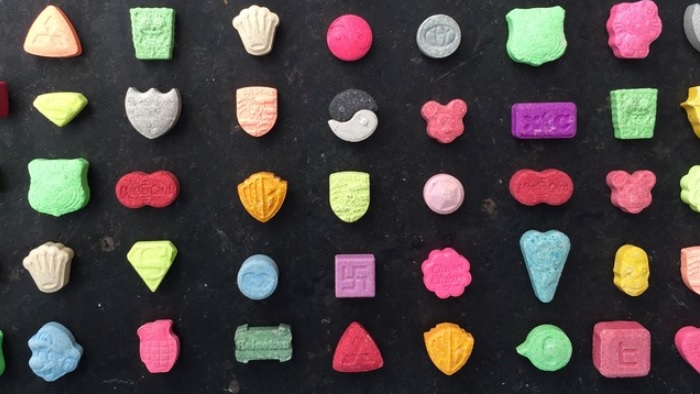
MDMA under Schedule I of the Controlled Substances Act, citing “illicit
trafficking,” high abuse potential and “no legitimate medical use.” By
then, ecstasy had become so popular, Heifets says, that you could buy it
with a credit card over the counter at clubs in Texas.
The allure of MDMA’s feel-good effects has captured the
imagination of adventurers ever since a trailblazing cadre of
psychotherapists started using it in the late 1970s. MDMA was discovered
in 1912 by German chemists looking for drugs to stop bleeding. It was
rediscovered in 1976 by chemist Alexander Shulgin. The legendary
psychedelic chemist famously cataloged the effects of nearly 200 psychedelic compounds he’d made in his home lab. He reported feeling “pure euphoria”
on MDMA, which he called his “low-calorie Martini” with the “special
magic,” and shared the compound with psychotherapists he thought might
find it of use.
Those therapists had seen more than a thousand
MDMA-assisted breakthroughs with patients, with no major side effects,
by the time the government moved to criminalize the drug. Many of them
petitioned federal officials to keep it available for their patients.
Philip Wolfson, a San Francisco-area psychiatrist who’d used MDMA in
hundreds of therapy sessions, testified that the drug had helped
patients in severe emotional distress with a poor prognosis. “I am
extremely concerned that this promising new psychotherapeutic agent will
be lost to the medical profession,” he said.
The government’s campaign to ban a drug with potential
medical benefits caught the attention of the era’s king of daytime talk
TV, Phil Donahue. In 1985, he devoted an entire show to MDMA. “It makes
you love everybody,” Donahue said. “Now, who doesn’t want to take
ecstasy?” Several people on the show explained how MDMA had helped them
come to terms with life-threatening illnesses and heal fractured family
relationships in therapy. Chicago addiction expert Charles Schuster,
however, said he had “great concern” about MDMA because he and his
colleagues had found that MDA, a chemical cousin, produced long-term
brain damage in rats. “If MDA does this,” Schuster warned, “then I have
reason to suspect that MDMA may as well.”
That was all DEA deputy assistant administrator Gene
Haislip, who also condemned MDMA on Donahue’s show, needed to hear. A
month after appearing on Donahue, Haislip announced an emergency ban on MDMA.
The DEA’s ban effectively shut down research on MDMA’s
medical benefits, but it did nothing to stop the explosion of
underground ecstasy-fueled parties where DJs prided themselves on
spinning the most eclectic electronica. Filmmakers mined raves’
trance-inducing beats and light shows as the backdrop for thrillers,
crime capers, documentaries, and love stories. Irvine Welsh of Trainspotting
fame explored his fascination with “rolling” on ecstasy in a collection
of “chemical romance” stories, one of which was eventually adapted for
the big screen.
Meanwhile, Schuster was tapped to head the National
Institute of Drug Abuse (NIDA), which showered scientists investigating
MDMA’s toxicity with millions of federal dollars. It didn’t take long
for the NIDA’s investment to pay off. In 2002, researchers led by George
Ricaurte — a co-author on Schuster’s MDA study — reported in the prestigious journal Science
that recreational doses of ecstasy could cause permanent brain damage
in monkeys and possibly lead to Parkinson’s disease. Psychiatrists
familiar with the drug questioned
the plausibility of the $1.3 million study, which was funded partly by
grants on methamphetamine toxicity. Politicians, meanwhile, cited the
research to push the Illicit Drug Anti-Proliferation Act — originally introduced in 2002 by Sen. Joe Biden (D-DE) as the Reducing Americans’ Vulnerability to Ecstasy (RAVE) Act — to imprison and fine club owners and promoters for allowing MDMA on their property.
Five months after Congress passed its anti-rave
legislation, Ricaurte reported that he’d mistakenly given his animals
meth, not MDMA, and retracted the paper. The fiasco, described as an “almost laughable laboratory blunder,” got its own chapter in the book When Science Goes Wrong: Twelve Tales from the Dark Side of Discovery.
But the damage had been done. Federal officials continued to bankroll
their preoccupation with proving that MDMA causes brain damage while
ignoring known risks along with its healing potential.
It took researchers almost 20 years after the ban to get
federal permission to test MDMA as an experimental therapy. But federal
agencies don’t fund clinical studies on the drug, forcing researchers to
rely on nonprofit sources such as the Multidisciplinary Association for
Psychedelic Studies (MAPS).
MAPS director Rick Doblin, who founded the organization
in 1986, has been instrumental both in getting the Food and Drug
Administration’s permission to test MDMA in people and in shepherding it
through the drug approval process. Although MDMA could gain FDA
approval for PTSD within two years, Doblin is working to make it
available as soon as August under the agency’s expanded access program.
The program gives patients with severe or life-threatening illnesses
access to experimental drugs when no other suitable options exist.
They’ll have to pay for the drug themselves and recognize that there
could be risks since the drug hasn’t been approved yet, Doblin explains.
To qualify for the trial, patients will need to have PTSD
and tried multiple therapies that didn’t work. MAPS is training
therapists to work with MDMA, and it’s setting up expanded access sites
around the country, Doblin says.
While Doblin’s trying to make up for time lost to
restrictive drug laws, Heifets worries about moving too fast. “MDMA
might work for a lot of people, but there’s going to be a large subset
for whom it may create problems,” he says. The clinical trials exclude
people with conditions that MDMA might exacerbate, and they give the
drug under closely supervised conditions. Using pure MDMA in this way
has revealed minimal risks.
That’s not what concerns Heifets. Rather, he’s concerned
about what might happen if MDMA is given in unrestricted, unsupervised
settings. Say therapists use the drug without following the carefully
crafted MAPS protocol.
Who will help people manage the tidal wave of emotions that come up
without feeling overwhelmed? Plus, some psychiatric drugs don’t mix with
MDMA, so patients will have to be weaned off their meds, Heifets says.
“Who’s watching that process? We’re in new territory here.”
Ideally, everyone who provides MDMA-assisted therapy will have received MAPS training.
But expanding use from a few hundred to the millions of people with
PTSD raises the potential for a susceptible person to have a bad
reaction that triggers another government backlash, Heifets says. “How
are we going to avoid that outcome this time?”
That’s why he wants to focus on nailing down the brain
networks associated with MDMA’s heightened feelings of emotional
closeness and empathy. Learning how MDMA works could point to other
treatments, maybe ones with fewer risks.Heifets
knew he wanted to study the brain from an early age. But at medical
school, he grew increasingly frustrated with his profession’s failure to
help people. During a rotation at the Bronx Psychiatric Center, where
most patients had failed to respond to every treatment offered, it hit
him just how little doctors knew about the roots of psychological
distress. “I was so dissatisfied with our ability to do anything,” he
says.
A stint in the operating room gave him hope that he could
find a way to help people. Psychiatrists are stuck with “wimpy,” often
ineffective drugs that take weeks or months to kick in, he says. But
anesthesiologists have access to the most powerful psychoactive drugs in
the hospital and can monitor major changes in consciousness in ways
that aren’t possible outside the OR. That’s when he started thinking:
what if psychiatrists could harness potent consciousness-altering drugs
to heal broken brains the way cardiologists use surgery to repair broken
hearts?
“This is really where psychiatry meets anesthesia,” he
says. Anesthesiologists rely on potent drugs that quickly alter
consciousness so surgical patients don’t feel physical pain. Similarly,
psychiatrists working with drugs like MDMA can harness fast-acting
mind-bending drugs to mold the brain’s perception of psychological
distress. Researchers reported 20 years ago that MDMA, in the proper
therapeutic setting, alleviates the fear that prevents patients from
revisiting traumatic events, a vital part of the healing process.
Exactly how MDMA does that still remains unclear.
A few years ago, the Department of Veterans Affairs
declared psychotherapy to be the definitive treatment for PTSD;
conventional drugs mostly just mask symptoms. But therapy often fails
because people can’t bear to relive their trauma. Studies show an increased risk
of suicide for veterans with PTSD. Effectively, people are dying for
want of better therapies. The success stories from when MDMA was still
legal convinced second-generation researchers like Michael Mithoefer
that the drug might jump-start the psychological healing process. But
whether it could pass muster as a standard treatment had never been
pursued in formal research until Mithoefer, a clinical assistant
professor of psychiatry at the Medical University of South Carolina,
launched the first study with MAPS nearly two decades ago.
Today Mithoefer, a PTSD specialist, is overseeing
clinical trials of MDMA-assisted therapy for hundreds of patients at 15
sites in North America and Israel. If all goes well in these formal
studies, MDMA could get the green light from the FDA as a prescription
drug for PTSD within two years. He’s cautiously optimistic. “We have to
wait to see the results before we can say that we’ve definitively
established safety and efficacy,” Mithoefer says. “It’s looking
promising, but we need to see what happens.”
To get FDA approval, Mithoefer and his team don’t have to show how MDMA
works. (“If we did, Prozac would never have been approved,” he says.)
Still, he says, there may well be other drugs that are even better than
MDMA.
As far as MAPS’s Doblin is concerned, there’s no point in
trying to find another MDMA-like drug when the real thing is showing
such progress. “[Alexander Shulgin] tinkered with the molecule in
hundreds of different ways, but ended up feeling that of all the ones
that he did actually produce MDMA was still the best at what MDMA does,”
he says.
Doblin allows that drug companies could potentially
improve on MDMA. But they’ve shown little interest in a controlled
substance with an expired patent that can’t deliver a fast return on
investment. And nonprofits like MAPS don’t have the resources to invest
in drug discovery or to produce the amount of safety data the FDA
requires.
A lot of that safety data, ironically, came from
government efforts to demonize the drug, to no avail. “Big governments
all over the world have spent hundreds of millions of dollars trying to
identify the risks,” Doblin says. “So we have summarized the world
scientific literature on MDMA and presented that to FDA.”
Aside from elevated heart rate and blood pressure, the
risks include overheating and water intoxication. But it was nothing
like the long-term brain damage NIDA seemed so intent on proving. Doblin
envisions a day when MDMA will be available far beyond the clinic for
everything from couples therapy to personal growth.
It’s a prospect that concerns some psychiatrists,
including Charles Grob who led a recent study using MDMA to ease severe
anxiety in autistic adults. The idea of millions and millions of people
taking MDMA “makes me dizzy,” says Grob, director of the Division of
Child and Adolescent Psychiatry at Harbor-UCLA Medical Center, Los
Angeles. MDMA needs to be administered by trained professionals in
special settings with clear-cut safety parameters, he says. Without
these measures in place, he worries about “the whole enterprise going
off the rails.”
Marcela Ot’alora, who runs the MAPS PTSD study in
Colorado, agrees that MDMA may not be for everybody. About
three-quarters of PTSD patients in her study learned to cope with their
symptoms, but that leaves a quarter who did not. “It’s great if we can
find something else that maybe would help people that are not going to
be helped by MDMA,” she says.
That’s another thing that suggests Heifets’ approach
might be a good one: finding better treatments depends on getting a
better handle on how they work, which is insight that’s missing for most
psychiatric drugs.
Scientists stumbled upon the original antidepressants by accident:
patients who took new drugs for tuberculosis in the 1950s reported
feelings of euphoria. That led to theories about tinkering with
neurotransmitters to improve moods and decades of drug development. That
pipeline, however, is now dry, Heifets says.
Both Prozac — a selective serotonin reuptake inhibitor
(SSRI) — and MDMA affect the same brain chemical: serotonin, which
regulates mood, learning, and memory. But no one gets an insatiable urge
to approach strangers after taking Prozac, Heifets points out. Clearly,
they act in different ways.
Psychiatrists have long treated the brain as a chemical
soup and enlisted drugs to target one chemical after another, he says.
But those drugs can cause terrible side effects because they’re not
specific enough. Increasingly, researchers view psychiatric disorders as
changes in the connections between specific groups of cells, or
circuits, in the brain. Different regions of the brain talk to each
other to support normal responses to everyday events, like meeting
strangers or navigating potential threats. When those lines of
communication between circuits break down, normal responses do, too.
Figuring out how MDMA changes these connections to enhance emotional
closeness may help explain what goes wrong in people who can’t manage
social situations, Heifets says.
In general, psychiatry hasn’t paid much attention to how
social factors affect mental health, says Harriet de Wit, director of
the University of Chicago’s Human Behavioral Pharmacology Laboratory.
Yet depression, schizophrenia, and psychosis, for example, share a
strong sense of withdrawal from social interactions and society, even
though the underlying process likely differs, she says. A better
understanding of how MDMA works might point to other drugs that can
specifically affect the different social processes.
Heifets has been trying to do just that under the
guidance of Malenka, a leader in enlisting cutting-edge tools in rodents
to understand how changes in brain circuits affect behavior. “Rob’s
been my biggest advocate and mentor,” Heifets says. “I’m the only one in
the lab working on MDMA.”
“This is where Boris and I bonded,” Malenka says. “It’s
just a fascinating drug that I’ve been wanting to study for, my god,
probably over 30 years because I think it’s a window into the brain and
how the brain works.”
Malenka believes MDMA could ultimately help people whose
illness makes healthy social interactions difficult or impossible.
“Imagine going through life where you can’t have a positive social
experience,” he says. “MDMA really taps into something that enhances the
ability to have the most positive social experience.” But where Doblin
sees a role for MDMA for everything from PTSD to personal growth,
Malenka sees a powerful compound with the potential to harm as well as
heal. That’s not demonizing the drug, he says, but recognizing the need
to understand the good and the bad. For Malenka, MDMA is like
any other substance that can affect brain function. Drilling into the
details of how it works will help clinicians make rational decisions
about how to use it, he says.
Toward that end, Malenka hopes the experiments they’re
doing in mice will influence the clinical studies by showing, for
example, that a specific brain circuit isn’t functioning properly in a
specific psychiatric disorder. That, in turn, could suggest new
therapies that drug companies would be willing to invest in.
Recent work from Malenka’s lab
shows that the release of serotonin in a region of the brain’s “reward
circuit” — which reacts to pleasurable activities like eating and sex —
can enhance social behavior in mice bred to have autism-like behaviors.
Research from other groups working in mice showed that MDMA increases
“fear extinction,” a decline in fear responses triggered by trauma,
which appears to be critical for successful PTSD therapy.
MDMA may be acting like a sort of psychological
accelerant, hastening changes in the brain that lay the groundwork for
recovery. The idea of starting a process as a bridge to healing is a
concept that’s been missing in psychiatry, Heifets says. The trick is
figuring out novel or existing drugs that can build that bridge. “We
probably have a ton of drugs that are already FDA approved that we just
don’t know what their potential is,” he says.
Beyond
exploring how MDMA works in the brain, psychologists are still figuring
out how it works in the therapist’s office. “We’re still kind of waving
our hands around,” says de Wit. “There’s general agreement that it’s
not just the drug itself, but it’s the combination of how the drug
changes the therapeutic interaction. I don’t think we know enough about
what happens in therapeutic interactions to know whether it’s something
about the connection that the patient feels with the therapist or their
willingness to be open about their emotions or whether they feel less
judged.”
Whatever is going on is a radical departure from standard
psychiatric treatments. Rather than taking SSRIs indefinitely to keep
symptoms from returning — assuming they ever go away — patients take
just a few doses of MDMA in therapy and experience lasting relief.
At the Oakland Psychedelic Science meeting, where Heifets
spoke two years ago, several practitioners emphasized the power of the
relationship between therapist and patient to aid recovery. Psychiatrist
Philip Wolfson, who urged the DEA to keep MDMA legal in the 1980s, said
that MDMA revolutionized psychotherapy in part because therapists had
to stay with people for as long as they needed. “That meant we exposed
ourselves more as therapists,” he said. “And we changed from the
50-minute hour, which was always repugnant to me.”
Wolfson reported preliminary results from sessions using
MDMA in 18 patients facing life-threatening illnesses. His study, like
other MAPS-funded studies, involved intensive psychotherapy lasting at
least eight hours in three sessions. The initial analysis for a subset
of patients showed marked improvement in scores for both depression and
fear of dying for those who took MDMA. But patients who took placebos also
improved, a result Wolfson attributed to the effects of such intensive
psychotherapy. Even so, after he recently finished the full analysis, it
was clear that the MDMA group had the bigger drop in anxiety compared
to the placebo group. Everyone had the option to do a follow-up MDMA
session, he told me. Everyone opted for MDMA, and everyone felt even
better as a result.
Ot’alora, the PTSD researcher who handled the compliment
on her aura without missing a beat, has seen similar therapeutic
breakthroughs without MDMA. But it can take years. With MDMA sessions,
people often show improvement right away, she says, as the drug gives
them the inner resources to work through their trauma. Even people who
still had trouble coping with their PTSD symptoms after the treatment
said it helped them when nothing else had, she says. “Every single
participant I’ve worked with has said, ‘I don’t understand why this is
not available to everybody who’s suffering.’”
Researchers feel buoyed by the promising results. Yet
they’re keenly aware of the stigma around drugs like MDMA. “Now we have
data saying that, yes, this is actually helping. It’s no longer
anecdotal,” says Ot’alora. “And there are still people who are
incredibly skeptical.”
Blame George Ricaurte’s fateful lab blunder. It doesn’t
matter that his paper was retracted. It’s still on the internet,
including the NIDA’s website.
Even today, Ot’alora says, people tell her they read that MDMA causes
holes in your brain. And she’s seen both patients and parents of younger
patients bristle at the idea of using what they see as a club drug for
therapy — until they see the results.
For years, meetings like Psychedelic Science were the
only place scientists researching psychoactive drugs were invited to
speak. “The government and industry have not put one cent into this
research, so it has to be supported by donors,” Mithoefer says.
Still, attitudes among psychiatrists have changed
radically since the first MDMA studies, Mithoefer says. Now, he and his
colleagues are presenting their work mostly at mainstream meetings where
he’s seeing a lot of excitement around the idea that drugs like MDMA
can trigger a therapeutic process with higher rates of success. “And
nobody’s bringing up their auras,” he says with a laugh.
And now, scientists who study MDMA don’t have to worry about throwing away their careers.
For Heifets, one of the most intriguing things to come
from lab work on MDMA is the notion that a drug can strengthen the bond
between patient and therapist. “There’s no real precedent for that in
psychiatry,” he says. And that may be where the path to transforming
psychiatry begins: in abandoning the notion that you can treat complex
human brain disorders with drugs alone. It’s time to recognize that you
can’t treat millions of veterans with PTSD by giving them a pill,
whatever it is, and sending them home, Heifets says. The research on
MDMA is showing that you might be able to kick off recovery with a drug,
but interaction with other people matters, too. In fact, the
relationships with other people — like therapists — may matter even more.
“Fundamentally, there is a need for
some kind of human connection,” he says. “We can’t just farm out all of
our psychiatric issues to the drug industry.”
This film is about the Apricot Lane Farms located 40 miles north of Los Angeles and established in 2011. Directed and narrated by John Chester, a longtime documentary cinematographer, the film mostly gives the impression that the farm is the work of a husband and wife team, John and his wife Molly, the former chef and blogger, who were fed up with life in Los Angeles and decided to become “traditional” farmers. The film shows an young couple who have no clue about farming guided by a guru named Allen who preaches biodiversity in farming (“let nature do the work”) start with an exhausted soil to make it rich with life again year after year. Each progress bring about a new challenge. Until by the end of the film the farm becomes commercially sustainable. John Chester closes the narrative by admitting that their original hope for farming in harmony with nature has failed and he resign himself with a measure of “disharmony” with it.
Of course, the Chesters’ initial idealism and the progress they have made to replace some key practices of industrial farming with “sustainable” practices in more harmonious with nature is commendable. But the Apricot Lane Farms is far from what is needed to replace industrial agriculture which lies at the base of the anthropocentric industrial capitalist civilization’s malignant relationship with nature with future humanity needs in order to survive, that is, a society that ensure harmony one among people and with the rest of nature. Consider one of the many conflicts (John Chester calls it “disharmony”) with the rest of nature. The Chesters are raising chicken for eggs to sell on the market for profit. The chicken invite hungry coyotes to nightly raids which then set up escalating conflict with John and Molly. One day, John Chester picks up his gun and shoots an intruding coyote for the simple crime of trying to survive by eating a meal at the farm. It is very clear that he does this as a “last option” and some in the audience may judge John’s killing of the coyote as a necessary measure to save the lives of peaceful chicken from wild coyotes. But it must be self-evident that as the farmer John is protecting the chicken not because of altruism but because it is a commodity with a market value. Why else would farmers raise farm animals if not for generating a stream of income and in Chesters’s case profit? The conflict with nature is rooted in the very idea of the farm because it is an integrated artificial ("man made") ecosystem with domesticated plants and animals that provides controlled environment for extraction of wealth from nature. These animals as well as many domesticated plants depend on the farmer for their life. and all animals and plants that intrude in the production process in the farm must be eliminated by the farmer. Agriculture, is the basis of all civilization and civilization, which has always been some form of class society has been in perpetual war with the rest of nature and civilization itself is riff with social stratification and various forms of oppression and exploitation, hence ongoing social conflict. Thus, ecosocial crisis is an unavoidable consequence of all civilization. The anthropocentric industrial capitalist civilization has simply globalized this ecosocial crisis leading to existential threats to humanity and much of life on Earth. In the film we see its manifestations in California drought and wildfires which John Chester documents but does not ponder except as a threat to his farm.
The Apricot Lane Farm is no exception. While its use of agroecological methods are certainly a step in the right direction, nothing essential in the relationship of the farmer with the animals and plants that it grows is changed. Although the Chesters call their employee their “team” they are still wage workers working in a capitalist firm. At the beginning of the film, John Chester talks about securing the backing of "investors" for their business plan (the farm) and anyone knowledgeable about farming can easily tell that their project has been a multi-million dollar one from the beginning. According to the website for the farm, it currently has some two dozen full time employees and without a doubt the farm this size could not operate without seasonal agricultural workers.
Of course, the audience is charmed with many adorable animals and the landscape lush with plants and an enriched soil . But humanity is facing an existential ecosocial crisis that calls for radical action on massive scale worldwide. To tackle crisis, billions of working people must realize that humanity must stop acting as the God Species and we must chart a course to step back into a much more modest niche like any other megafauna occupies as we also transcend the capitalist system.