Friday, May 23, 2014

1424. China's Fast Growing Demand for Energy

By Clifford Krause and Keith Bradsher, The New York Times, May 21, 2014 

Whether by diplomacy, investment or in extreme cases, force, China is going to great lengths to satisfy its growing hunger for energy to fuel its expanding car fleet and electrify its swelling cities.
The Chinese government showed that desire on Wednesday when it reached a 30-year natural gas deal with Russia, even as China was locked in a tense standoff with Vietnam over a Chinese oil rig drilling in the contested South China Sea.
The two events involve different political dynamics. The agreement with Russia reflects closer economic ties between the two nations, while the other underscores the growing tension of two on-again, off-again Cold War allies.
But both developments demonstrate China’s expansive approach to energy, a political and economic strategy with significant implications for the rest of the world. As its economy has rapidly expanded over the last decade, China’s energy efforts have come to dominate the global markets. Its mushrooming consumption helped prompt the spike in global oil prices in the mid-2000s.
China’s demand has also provided life support to coal producers suffering from declining use in the United States and other industrialized countries. Among the fastest-growing importers of natural gas, China has had to cement its ties to Russia to diversify its supplies, as well as to invest in exploration in the United States and liquefied natural gas terminals in Australia. China now has operations, investments or projects across the globe in Africa, the Middle East, South America and North America.
“The dynamic growth of China’s economy and energy growth is reshaping global energy markets, and both the economic and strategic implications are still being developed,” said Mark J. Finley, BP’s general manager for global energy markets and United States economics.
The shift has been swift. China used only half as much energy as the United States in 2000. Nine years later, it surpassed the United States as the world’s biggest energy user and last year it leapfrogged the United States as the No. 1 oil importer.
China now burns as much coal as the rest of the world combined. The country’s emissions of greenhouse gases, linked by scientists to global warming, surged past the United States’ emissions a decade ago and have risen ever higher since then.
China has little choice but to look beyond its borders for its energy needs. While it consumed 10.1 million barrels of oil a day last year — one-ninth of the world’s total — the country produced only 4.2 million barrels a day, according to a recent OPEC report. China has had mixed results drilling offshore, and it has been slow to develop what many energy experts believe to be vast shale gas resources on land, though Chinese energy executives express optimism.
“The China market feels that the revolution in shale gas will be coming very soon,” Zhang Mi, chairman and president of Honghua Group, an exporter of drilling rigs, said in an interview while at a Houston energy technology conference this month. He added that 100 shale gas land rigs would be put in operation by the end of the year.
Most energy experts think it will take another five to 10 years, though, before substantial amounts of gas can be produced — and even then the quantities may be small compared to China’s enormous needs. The two main shale gas areas are in the west, far from major energy users in the east, and pipelines are few.
More important, shale gas in China mainly lies significantly deeper underground than in the United States and is in poorly understood, geologically complex formations. The domestic oil industry is already struggling with safety and environmental concerns, and faces a challenge in drilling extremely deep wells in western Chinese terrain with pockets of compressed natural gas and toxic gases.
China’s hunt for natural gas reserves at home has taken it into some of the poorest, most remote mountain valleys of western China, where terraced fields of mustard greens and corn cascade down hillsides from mud-brick farmhouses. While some of the country’s energy giants, like Sinopec, are using modern drilling rigs, smaller Chinese companies are also trying to jump into the industry, although many have minimal experience or technical expertise.
China’s reliance on imports poses the same kind of foreign policy challenges that the United States has faced in recent decades. That is, the country must look to unstable areas of the world to meet its needs.
China imports much of its oil from the Persian Gulf region and through the Strait of Hormuz, where security is dependent on the United States Navy. China relies on roughly a half-million barrels a day from Iran.
But American sanctions on Iran have made that country a less reliable source of oil. At the same time, China has been receiving fewer crude shipments from Libya, Sudan and South Sudan. The Energy Department recently reported that China has nimbly replaced those declining sources with imports from Oman, the United Arab Emirates, Angola, Venezuela, Russia and Iraq.


China’s relations with energy-rich countries differs widely. The situation in Vietnam seems extreme, with ships from both countries ramming each other, and the Chinese naval forces using water cannons against the Vietnamese. China’s moves to exert claims to contested Asian waters have drawn protests from its neighbors as well as from the Obama administration.
But in Iraq, where China is the biggest oil customer and Chinese oil companies are major investors in some of the biggest oil fields, the Chinese have been scrupulous about staying out of Iraq’s strained sectarian affairs. And they do not seem eager to challenge the United States’ influence in the region.
China has also become a major player in an area traditionally dominated by the United States, Latin America. But China is largely forging ties with oil-financed governments that promote a socialist ideology and seek to distance themselves from the United States, namely Ecuador and Venezuela.
In Ecuador, China has become effectively the government’s banker, providing roughly 60 percent of Ecuadorean borrowing needs in return for oil shipments. Chinese companies sell the Ecuadorean oil around the world, including to the United States. Venezuela’s state-owned oil company is repaying China for $40 billion in loans procured over the last six years with a large share of its 600,000 barrels a day in oil shipments.

Africa has proved a more difficult place to invest, showing the limits of Chinese influence. Chad last year indefinitely suspended the activities of the state-owned China National Petroleum because of oil spills south of the capital, N’Djamena. Chadian officials claimed that the Chinese forced local workers to clean up the mess without adequate protection.
A subsidiary of another Chinese oil company, Sinopec, was forced to pay Gabon $400 million in January to settle what the government said was a breach of contract at an onshore oil field. Premier Li Keqiang this month highlighted China’s enduring interest in Africa by visiting four countries, including oil-rich Angola and Nigeria.
The new gas deal with Moscow should strengthen Russia and China, both economically and politically. It will help China ease some of its dependence on insecure transit routes and unstable countries. It will also guarantee an energy market for Russia if Europe seeks to replace Russian energy with imports from other countries.
Russia could supply 38 billion cubic meters of natural gas annually — or more than 15 percent of current demand — to China beginning in 2018. Perhaps most important, the deal should enable China to replace some of its dependence on coal for electricity generation with natural gas.

“The Chinese public will appreciate being able to industrialize without billows of toxic smog,” said Jim Krane, an energy expert at Rice University. “And the world will appreciate the reduced carbon emissions if cleaner gas can thwart some of the coal consumption in China’s power grid.”

Wednesday, May 21, 2014

1423. Global Warming: The Big Melt Accelerates

By Kenneth Chang, The New York Times, may 19, 2014
Muir Glacier at Glacier Bay National Park and Preserve in Alaska is among the many worldwide that are disappearing. Muir, left, as seen in August 1941, and photographed in August 2004. Credit: W. Field; B. Molina/U.S.G.S., via Glacier Photography Collection
Centuries from now, a large swath of the West Antarctic ice sheet is likely to be gone, its hundreds of trillions of tons of ice melted, causing a four-foot rise in already swollen seas.
Scientists reported last week that the scenario may be inevitable, with new research concluding that some giant glaciers had passed the point of no return, possibly setting off a chain reaction that could doom the rest of the ice sheet.
For many, the research signaled that changes in the earth’s climate have already reached a tipping point, even if global warming halted immediately.
“We as people see it as closing doors and limiting our future choices,” said Richard Alley, a professor of geosciences at Pennsylvania State University. “Most of us personally like to keep those choices open.”
But these glaciers are just the latest signs that the thawing of earth’s icy regions is accelerating. While some glaciers are holding steady or even growing slightly, most are shrinking, and scientists believe they will continue to melt until greenhouse gas emissions are reined in.
“It’s possibly the best evidence of real global impact of warming,” said Theodore A. Scambos, lead scientist at the National Snow and Ice Data Center.
Furthest along in melting are the smallest glaciers in the high mountainous regions of the Andes, the Alps and the Himalayas and in Alaska. By itself, their melting does not pose a grave threat; together they make up only 1 percent of the ice on the planet and would cause sea level to rise only by one to two feet.
But the mountain glaciers have been telling scientists what the West Antarctica glacier disintegration is now confirming: In the coming centuries, more land will be covered by water and more of nature will be disrupted. A full melt would cause sea level to rise 215 feet.
During recent ice ages, glaciers expanded from the poles and covered nearly a third of the continents. And in the distant past there were episodes known as Snowball Earth, when the entire planet froze over. At the other extreme, a warm period near the end of the age of dinosaurs may have left the earth ice-free. Today the amount of ice is modest — 10 percent of land areas, nearly all of that in Greenland and Antarctica.
Glaciers are, simply, rivers of ice formed from snow in regions that are frozen year-round. The snow compacts over time into granular, porous ice, which glaciologists call firn. When firn compacts even more, it becomes glacier ice, which flows, usually slowly, down mountainsides. Depending on how fast new snow accumulates at the top, or melts at the bottom, a glacier grows or shrinks in length and thickness.
Not long ago, the only way to measure glaciers was to put stakes in the ice. Using surveying tools, glaciologists would mark the location and return later to see how far the ice had moved. The method gave scientists a sense of only the areas measured during that study period. “We had these point measurements which were very labor-intensive,” said Tad Pfeffer, a glaciologist at the University of Colorado.
Today, satellites provide a global view. Images show where the glaciers are and how areas change over the years. Most useful has been NASA’s Gravity Recovery and Climate Experiment, or Grace. Two identical spacecraft have been measuring the earth’s gravity. When glaciers melt, the water flows elsewhere, and that part of the planet weighs less, slightly weakening its gravitational pull. Grace isn’t precise enough to measure the mass changes in an individual glacier, but it does provide data on regional shifts.
Another NASA satellite, IceSat, bounced lasers off the ice to precisely measure glaciers’ height. (In operation from 2003 through 2009, when the last of its lasers stopped working, it is scheduled to be replaced by IceSat-2 in 2017.)
In an analysis last year of the satellite and ground measurements, a team of scientists led by Alex S. Gardner, an earth scientist at Clark University in Worcester, Mass., who is moving to NASA’s Jet Propulsion Laboratory, concluded that, on average, glaciers in all regions were withering away, dumping 260 billion metric tons of water into the ocean every year.
“I can’t think of any major glacier region that’s growing right now,” Dr. Scambos said. “Almost everywhere we look we’re seeing mass loss.”
The melting from the mountain glaciers alone raises sea level about 0.7 millimeters a year.
The ice sheets of Antarctica and Greenland together possess about 100 times as much ice as all of the mountain glaciers combined, but contribute only slightly more to the sea level rise: 310 billion tons a year, Dr. Scambos said. That is because most of the mountain glaciers lie in areas where temperatures are closer to the melting point than they are in Greenland or Antarctica, and so slight warming tips them to melting.
Greenland, with 10 percent of the world’s ice, has enough to raise sea level by 23 feet. “I still think Greenland is the most important thing to watch for this century,” Dr. Scambos said.
In 2012, when summer Arctic temperatures were particularly warm, surface melting was observed almost everywhere on Greenland’s glaciers, even in the mountains. That had not happened for decades.
Researchers from Dartmouth found that another side effect from global warming, forest fires, made the melting even worse. Soot from fires elsewhere in the world landed on Greenland snow, making it darker, causing it to absorb more heat.
A new study of Greenland, published Sunday in the journal Nature Geoscience, paints an even bleaker picture. The melting is accelerated because many of the glaciers flow in the warming waters around Greenland. However, scientists had believed that the melting would slow once the bottom of the glaciers melted and they were no longer touching the water.
The new research indicates otherwise. Researchers at the University of California, Irvine, including Eric Rignot, the lead author of one of last week’s papers concluding that the melt in West Antarctica is irreversible, discovered long, deep canyons below sea level and under the ice sheet. So even as the glaciers retreat, they will still be in contact with the encroaching warm water, and as a result, more ice will melt. “They will contribute more to sea level rise,” said Mathieu Morlighem, lead author of the Nature Geoscience paper.
Antarctica is the largest frozen mass on the planet, accounting for about 90 percent of the earth’s ice. Most of it is in East Antarctica, which is generally higher and colder and less likely to melt. By some estimates global warming is leading to increased snowfall there, which is limiting the loss. But as in West Antarctica, some of the ice resides in bowl-shape depressions, which are similarly vulnerable to melting.
Over all, data from the European Space Agency’s CryoSat satellite, published on Monday, indicates that the continent shed 160 billion tons a year from 2010 to 2013.
Scientists say that the melting will continue as long as the heat-trapping carbon dioxide in the atmosphere increases. Even if carbon dioxide and temperatures stabilize, the melting and shifting of glaciers will continue for decades or centuries as they adjust to the new equilibrium.

But a vast majority of the ice is not yet destined to melt. “We have not committed to a lot more that could be committed if we keep turning up the thermostat,” said Dr. Alley of Penn State.

1422. Mice Run for Fun, Research Shows

By James Gorman, The New York Times, May 20, 2014

If an exercise wheel sits in a forest, will mice run on it?
Every once in a while, science asks a simple question and gets a straightforward answer.
In this case, yes, they will. And not only mice, but also rats, shrews, frogs and slugs.
True, the frogs did not exactly run, and the slugs probably ended up on the wheel by accident, but the mice clearly enjoyed it. That, scientists said, means that wheel-running is not a neurotic behavior found only in caged mice.
They like the wheel.
Two researchers in the Netherlands did an experiment that it seems nobody had tried before. They placed exercise wheels outdoors in a yard and in an area of dunes, and monitored the wheels with motion detectors and automatic cameras.
They were inspired by questions from animal welfare committees at universities about whether mice were really enjoying wheel-running, an activity used in all sorts of studies, or were instead like bears pacing in a cage, stressed and neurotic. Would they run on a wheel if they were free?
Now there is no doubt. Mice came to the wheels like human beings to a health club holding a spring membership sale. They made the wheels spin. They hopped on, hopped off and hopped back on.
“When I saw the first mice, I was extremely happy,” said Johanna H. Meijer at Leiden University Medical Center in the Netherlands. “I had to laugh about the results, but at the same time, I take it very seriously. It’s funny, and it’s important at the same time.”
Dr. Meijer’s day job is as a “brain electrophysiologist” studying biological rhythms in mice. She relished the chance to get out of the laboratory and study wild animals, and in a way that no one else had.
She said Konrad Lorenz, the great-grandfather of animal behavior studies, once mentioned in a letter that some of his caged rats had escaped and then returned to his garden to use running wheels placed there.
But, Dr. Meijer said, the Lorenz observation “was one sentence.”
For the experiment, the wheels were enclosed so that small animals could come and go but so that larger animals could not knock them over. Dr. Meijer set up motion sensors and automatic video cameras. Several years and 12,000 snippets of video later, she and Yuri Robbers, also a Leiden researcher, reported the results. They were released online Tuesday in the Proceedings of the Royal Society B.
Gene D. Block, chancellor of the University of California, Los Angeles, was not involved with the paper but knows Dr. Meijer and had seen the wheel set up in her garden. He said the study made it clear that wheel-running is “some type of rewarding behavior” and “probably not driven by stress or anxiety.”
Mice accounted for 88 percent of the wheel-running events, and spent one minute to 18 on the wheel. The other animals each accounted for less than 1 percent. Frogs, though there were very few, were seen to get on the wheel, get off and get back on.
Russell Foster, a circadian rhythm researcher at Oxford University, said he read the paper and sent it out to other scientists on behalf of the Proceedings and was delighted when peer reviews from other scientists were positive.
Marc Bekoff, a professor of ecology and evolutionary biology at the University of Colorado who is active in the animal welfare movement, said in an email that he thought the paper did show that wheel-running could be a “voluntary activity,” but that mice in labs may be doing more of it because of the stress of confinement.

“Wild bears will often pace back and forth,” he wrote, “but in captivity, the rate of doing it seems to be greatly heightened.”
As to why the mice, frogs or perhaps even slugs run, or move, on the wheel, Dr. Meijer said she thought that “there is an intrinsic motivation for animals, or should I say organisms, to be active.”
Huda Akil, co-director of the Molecular and Behavioral Neuroscience Institute at the University of Michigan, who has studied reward systems, said: “It’s not a surprise. All you have to do is watch a bunch of little kids in a playground or a park. They run and run and run.”
Dr. Akil said that in humans, running activates reward pathways in the brain, although she pointed out that there are innate differences in temperament in all sorts of animals, including humans. Rats that do not like to run can be bred. And plenty of people do all they can to avoid jogging, cycling and elliptical machines.

Presumably, the same is true of wild mice. While some were setting the wheel on fire with their exertions, others, out of camera range, may have been sprawled out on the mouse equivalent of a lounge chair, shaking their whiskers in dismay and disbelief.

1421. Population Problem

By T. Vijayendra, Frontier, October 14 - November 10 2012


Introduction
This is meant to be an article for activist education and therefore on the one hand it starts with explaining basic concepts; on the other hand it avoids academic references. The population problem is complex and has been debated since Marx's time. In the past leftists maintained that it is not a real problem, but a creation of capitalism. However in the last few decades resource constraints of the planet earth have been recognised and the present population of seven billions appears as a challenge. This article does not give definite ready solutions. It tries to present the problems and looks at possible solutions in a particular region.
Population Growth, Growth Rate and Doubling of Population
Population growth means increase in population which is computed by subtracting total deaths from total births per year. For a specific area or country one has to add total inmigration minus total outmigration.
Population grows at a 'compound rate' (like compound interest rate that we learn at school). The doubling of population is a function of growth rate. A simplified (but fairly accurate) formula is 70/growth rate = No. of years in which the population will double. Thus if we have 1 percent growth rate, in 70 years it will double. If we have 2 percent then in 35 years it will double and in 70 years it will be 4 times! If the growth rate is 10 percent it will double in 7 years - like our fixed deposits used to double in 7 years when the interest rates were 10 percent.
Zero Population Growth (ZPG) or Sustainable Population
Zero population rate (ZPG) means the rate of growth is zero or we have a stable population. We can even have negative population growths which results in the decline of the population. This happens at some time both in nature and in human history.
In nature sustainable population is based on high child mortality and normal/low longevity. High child mortality occurs because almost all animals have predators, which kill the weak and the slow. Also in nature they don't have 'health care' like humans have today, where the aim is to save every child and achieve as low child mortality as possible. High child mortality ensures lower growth rate and more effective genetic selection and therefore a ‘healthier’ population. Low longevity occurs because the predators kill the weak and the old because they cannot escape the predators. Animals that do not have predators (the top of the species) die due to inability to hunt or digest. For example, tigers die when they become too weak to hunt whereas elephants die due to losing their teeth.
In early human history human beings were not very different from other animals as the population growth charts show below. But human history is different because humans can modify the environment to suit themselves to a greater degree than any other species. This ability kept on increasing and it increased by a leap due to industrialisation in the last 200 years. That is the root of the population problem.
 The Problem
The population growth is essentially due to humans’ ability to modify the environment to suit their needs. While the invention of fire and other similar inventions were important, a significant change occurred around 12,000 years ago due to introduction and growth of agriculture. Agriculture provided food security by increasing the shelf life of food (mainly grains), made slavery possible and in turn increased population. The figures are well known. Thus:
World         India
Beginning of agriculture (10000 B. C.) 1 Million
Introduction of Iron (500 B. C.) 100 Million
Beginning of Christian Era 200 Million
 1800 A. D. 1000 Million or 1 Billion 260 Million
1900 A. D. 1.6 Billion 300 Million
1950 2.5 Billion 350 Million
2000 6 Billion 1 Billion
Today 7 Billion +           1.2 Billion
(All figures and dates are approximate).
Agriculture also destroyed forests, grasslands and wetlands endangering the flora and fauna and in the final analysis it can endanger human species too. We said above that agriculture created food security. It is debatable because it also increased population and created slavery thus creating food insecurity for the slaves. This has happened more dramatically in the 20th century.
The 20th Century
As we see from the data above, the 20th century was unique. It had the highest population growth rate in history. It was the only century in which the global population doubled and trebled! Several factors contributed to it. The green revolution (chemical fertilisers, pesticides, seeds, irrigation and mechanisation of agriculture), which was possible due to availability of cheap petroleum products, came only after World War I (in India it came in the 1970s). It contributed significantly to increased production of commodified food, particularly in the US, Canada and Australia and contributed to increase of population all over the world. On the other hand it also increased poverty, hunger and food insecurity for millions of people, especially in the third world.
 Secondly increased longevity and decreased child mortality occurred due to dramatic changes in the health care industry. This is opposite to what happens in nature. In the era of cheap oil longevity increases due to ‘zoo conditions’ of old people - no predators, assured food supply and a high eco foot print of old people due to geriatric health care. In nature, ’zoo conditions’ do not prevail and therefore longevity is low.
 Thirdly, decrease in the number, intensity and deaths due to famines. So we get a picture of a 7 billion population with millions of hungry people all around the world, particularly in the third world. The current UN data of hunger is around a thousand million or one billion.
Several other things happened too. A huge meat and poultry industry came up. These animals did not eat grass or insects as in the past but were fed agricultural produce (mainly corn in the US). So a greater area came under agriculture, further reducing grassland, wetland and forest. Several commercial crops like tobacco, tea, coffee and sugarcane also took up large agriculture areas. To feed this agriculture other industries and mining also increased. A huge resource drain occurred. 
  The 21st Century
There is a limit to growth of agriculture. It is limited by land and by input resources. The limit was artificially raised by cheap oil in the 20th century. This has ended in the 21st century. Oil production peaked (2005-2008), and it is now declining, never to rise again. This not only ushered an unending crisis of capitalism, it has also affected food production by increasing the input prices of agriculture. Today a billion people are starving the world over.  About half of these starving people, that is, 500 Million are likely to die in this decade. And a full half of them, that is, some 250 Million will be Indians. It is difficult to imagine what other things will happen along with this catastrophic event. It is an end of era event - like the Black Death in Medieval Europe.
What else can happen during this period? With the arrival of Peak Oil, the curtain has closed on Act 1 of the drama Petroleum Man. What will happen in Act 2? Chekhov said, 'If there's a gun on the wall at the beginning of the play, by the end it must go off.' In the world's nuclear arsenal there are many guns on the wall. If life copies art, will there be an Act 3 in which the players, having learned their lesson the hard way, live sustainably? So if we do face a nuclear holocaust then we may have a situation when the 'living shall envy the dead'. However as humans, we are optimistic and so let us look at some more optimistic scenarios.
What are the possibilities?
There are two issues:
  1. How the current and growing population can feed itself and
  2. How we can move towards a sustainable population
As we have seen above in a short term scenario there is going to be a lot of pain and starvation deaths. In the past due to cheap oil one could transport large quantities of food quickly. While it did not stop poverty or starvation, it prevented deaths. This no longer will be possible. These deaths will occur among vulnerable population, the poor and tribals. The sad thing is that these very people have many of the skills needed to sustain us in a post oil world. Various scholars have given different figures about reduction of population in the short term. One extreme figure is that the world population will be only two billion by 2050.
In the long term there are some possibilities. With the end of oil, economies will have to grow local because transport costs will be too high. If we do not destroy ourselves social changes are bound to occur. 
A viable future lies in some kind of non capitalist social formation which is based on: 
  1. Equity
  2. Scaling down of energy use
  3. Local self sufficiency
  4. Eco restoration by using Permaculture/Agro Ecology
This may ensure enough food for the existing population. Each eco region will have to become self sufficient. Now different eco regions can support different levels of populations. Deserts and cold countries support smaller populations whereas tropical countries and riverine plains support bigger populations. So over a period the population will have to decline according to carrying capacity of the region. In the final analysis they will have to attain zero population growth and may even have shrinking of population.
Social Formation
We have two existing models which have tackled the present problems somewhat successfully: the Cuban model after the collapse of Soviet Union and the Transition Town Movement in Europe and USA. The latter has an anarchist kind of social formation. 
The erstwhile socialist/communist countries (former Soviet Union, China, Vietnam etc.) may learn from Cuba and have their own version of ‘Special Period’ and come out of the crisis in 5 years. 
The advanced capitalist countries may have some kind of social democracy with strong ‘Eco Socialism’ inputs and coupled with Transition Town models may also solve the problem within a relatively short period. 
The so called ‘Third World ‘countries have limited experience of democracy. While they do have anarchist kind of experiments in pockets, like permaculture communes that are springing up everywhere, they are also facing lot of difficulties because the society at large still has an authoritarian background. So, these countries may have to go through some kind of revolution resulting in a command economy and then follow Cuba kind of ‘special period’.  This is an optimistic scenario, but in reality there will be lot of conflict, pain and misery, particularly before and during the revolution. There is also a possibility that some countries may not have revolution and may have a prolonged period of chaos destroying people and resources.
Zero Population Growth
The new social formations coupled with organic farming or agro ecology can certainly feed the present population better. This is due to several factors. Due to relative equitable distribution people will have a little more food. A lot of waste due to wasteful consumption by today's rich, waste due to storage and transport in the present capitalist economy will also be eliminated. 
However as we have seen organic farming fed only about two billion people in 1921. Can it feed 7 billion people today? It is a very difficult proposition. So there will be attempts to limit population growth and take it to zero population growth (ZPG).
The existing models of ZPG are based on urbanisation, nuclear family and increased prosperity. This model cannot be applied to the whole world because there are not enough resources for the whole world to achieve the prosperity that the western countries and some richer people in developing countries have achieved.
However one reason for the above model to work was the security that this model provided. It is possible to provide security at a lower level of consumption if the society is based on equity. So it is possible that in the new social formations ZPG may be achieved.
But is achieving ZPG enough?
We have seen that the sustainable population before agriculture was only one million. What is the desirable level of population that is actually sustainable over a long term? Obviously one million, the natural sustainable population before agriculture, is the lowest limit and mankind may never go down to that level. Various figures have been suggested, most of them are around two billion or less. This figure is arrived at due to the fact that in 1921 when the population was two billion, all agriculture was organic. For India this figure is 350 million (1950) when practically all agriculture was organic. However since then the soil has been degraded and without oil even this population may have difficulties to survive. Will mankind shrink to such a level? And of course the more pressing question is how the present population will face the situation when fossil fuel agriculture comes to an end. As we said above there is a possibility of large scale famine killing millions of people.
The Future
Will mankind be able to achieve this reduction of population to two billion? The question poses several issues. Mankind has developed an ethics that values life per se and it is unthinkable to allow child mortality to increase and have higher number of births. Similarly it is difficult to think of lowering longevity. At best we can think of an option - making euthanasia legal. But it will be exercised by very few. Only future generations will be able to think about it more clearly in changed circumstances. Even if we achieve negative growth rates, it will take a long time to achieve this kind of reduction. And what is the way to achieve this? If we decrease birth rate, we will be saddled with an increasingly aging population, like Japan and France today. So logically nature's way appears to be best. In organic farming we say that we should follow Nature's way. Why should it not be applicable to human society?  It remains a challenge to future generations as to how to achieve this in a humane way. 
Think Locally, Act Locally
In the past the slogan, 'Think Globally, Act Locally' was very popular. Even in this article we began looking at the problem globally. But as we have said, in the future local self sufficiency will be the order of the day. So we should also be able to think locally and act locally. Below we look at the Deccan in India as an eco region, look at its problems and try to look at the solutions that are being attempted.
Historically India has been endowed with rich natural resources and the country was self sufficient most of the time except in times of great political turmoil. Deccan too has been self sufficient. The last great famines occurred during the closing decades of the 19th century.
Every eco region has specific food practices. In Deccan it has been millets, pulses and ground nut. Agriculture is mainly rain fed with local irrigation from tanks. Some rice was grown in low lying areas with tank irrigation. Cotton was the main cash crop. Rearing of sheep and goats has been an important part of the local economy and meat has been part of the diet.  Some amount of fish and poultry has also been part of the food. Some communities also eat pork.
A lot of this changed due to green revolution in other parts of the country and in Deccan it introduced food insecurity and hunger and in some cases farmer’s suicide. How did it come about? 
Increases of food production of wheat and rice are concentrated in green revolution areas. This was brought to the Deccan by the government’s public distribution system. Popular governments introduced rice at two rupees per kilo for the poor. This made the local millets expensive and people got used to eating rice and wheat. Slowly rice and wheat were introduced as food crops. As these require lot of water, tube well irrigation was introduced and tanks were neglected. Other cash crops like sugar cane, soybean and genetically modified Cotton were also introduced.
This led to a big disaster within 30 years. Water tables fell and there has been a big water scarcity in many regions. Commercial agriculture proved unviable for small and medium farmers and their burden grew to such an extent that several thousands of farmers had to commit suicide. Polished rice and white flour consumption affected the health of local people and possibly caused increased suffering due to diabetes. Hunger and water scarcity stalks the land.
The socialist solution to this situation is a combination of the old traditions and new. The old tradition consists of struggling for security of land ownership or land to the tiller or land reforms. The new is decentralization, local food security and knowledge based restoration of ecology and agriculture that has been degraded due to the processes mentioned above. Local food security implies growing local foods as per local ecology. In the Deccan it would mean reducing rice and wheat and going back to millets, pulses and ground nut. Again the cash crop of sugar cane and soybean which are popular today will have to be abandoned or reduced drastically and organic cotton will have to be restored. Agro ecology would be the key science of the 21st century and rebuilding local communities would be the key social task.
A large number of social movements coordinated by NAPM (National Alliance of People’s Movements), NGOs like Deccan Development Society and several other organisations, small groups, permaculture farms in the region are following this path. While the scale is small and the ruling classes are very powerful, nevertheless they are showing a viable alternative. With larger political changes these policies and experiences will prove useful. It is certainly possible to visualise food self sufficiency for the Deccan region.
Call to Arms

In the face of such imminent crises there are several people’s movement going - the Maoists, the ethnic and regional movements in Kashmir and the North East and scores of movements against large capitalist projects that take away common property resources such as land and water, existing livelihoods of poor people and endanger the environment. However there is a lack of coordination and understanding about the nature of capitalist crisis. The movements mainly oppose the exploitation and oppression and demand either immediate relief or improvement of the system. Many even think that they are fighting a losing battle. They do not realise that the time has come to fight for a win, to change the system. There does not seem to be the necessary urgency in the people’s movement. Partly it is inertia; partly it is the phenomenon of the boy crying ‘wolf’, that is, in the past, so many times, capitalism faced crisis and yet we did not have any revolutionary change in India. So this time around people are tired of responding. Then there is a divergence in various movements – in the issues handled – class, ethnicity or opposition to mega projects. So even though millions of people are actively opposing the present State and capitalism, there is no dialogue or coordination between different groups and movements. It is the need of the hour to have a dialogue, come together for concerted action and avoid the forthcoming disaster as much as possible. This time around the chances are better because the edifice of the enemy is weakened, is crumbling and imploding. Is anyone listening? 

Tuesday, May 20, 2014

1420. The Failing Animal Research Paradigm for Human Disease

By John J. Pippin M.D., F.A.C.C., Independent Science News, May 20, 2014
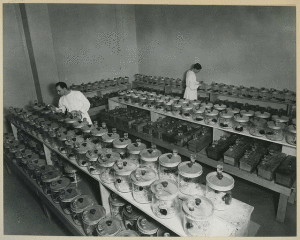
Army Medical School Mouse Research
“The history of cancer research has been a history of curing cancer in the mouse. We have cured mice of cancer for decades—and it simply didn’t work in humans.” This statement was made by Richard Klausner, M.D., former director of the National Cancer Institute, to the Los Angeles Times (Cimons 1998). It is a statement that applies equally to many other common diseases. A decade ago, researchers reported on the existence of 195 published methods that prevented or delayed the development of type 2 diabetes in mice (Roep et al 2004). Yet none of these “breakthroughs” ever translated to human medicine.
What prevents successes in mice from becoming human cures and treatments? The reason is largely a simple one, as we showed when we recently analyzed the reputed contributions of mouse experiments to human type 2 diabetes research (Chandrasekera and Pippin 2013).
Type 2 diabetes (diabetes mellitus) is the fastest-growing disease in the United States, currently affecting approximately 26 million Americans, and estimated to quadruple in prevalence to affect one-third of Americans by 2050 (CDC 2011a). Type 2 diabetes is the seventh leading cause of death in the United States (CDC 2011b). It is a complex and multifactorial disease, characterized by many years (often decades) of sequential disruptions in glucose homeostasis. The pre-diabetes stage includes impairment of fasting glucose and glucose tolerance, often evolving into a specific metabolic syndrome that includes abdominal obesity, dyslipidemia, hypertension, and elevated fasting blood glucose. The eventual development of full-blown type 2 diabetes is signaled by overt hyperglycemia resulting from a combination of insulin resistance and dysfunction of insulin-producing pancreatic ß-cells. In other words, type 2 diabetes is a systemic disease occurring at several sites in the body.
In contrast to this complexity, mouse models of human diabetes are biologically simpler. Disease occurs rapidly, and typically manifests only one or a few of the factors and symptoms associated with human diabetes. For example, one category of mouse model impedes or eliminates the production of insulin by the pancreas. This is achieved either by partial or complete surgical removal of the pancreas (Islam 2009), or by chemical destruction of pancreatic ß-cell function with cytotoxic drugs such as streptozotocin or alloxan (Lenzen 1979).
But these models do not replicate human type 2 diabetes, in part because they do not account for the risk factors, long latency, related pathologies, co-morbidities, symptoms, and genetic influences (Dupuis and colleagues 2010; DIAGRAM Consortium 2014) of diabetes as found in humans. The same criticism can be made of other mouse models that employ nutritional interventions, spontaneous genetic mutations, and transgenic manipulations. None replicates the complex human disease either biologically or phenotypically (Chandrasekera and Pippin 2013).
Compounding the problem of replicating human type 2 diabetes in mice without knowing its fundamental causes is the difficulty that mice differ in many respects from humans, including in functions related to glucose metabolism. In our paper, we describe in detail decades of type 2 diabetes research primarily using mice, and the many discrepancies compared to human-based research findings (Chandrasekera and Pippin 2013). For example, Vassilopoulos and colleagues 2009 reported that mice do not possess the protein that in humans mediates transport of circulating glucose into cells by means of membrane-bound vesicles. And Cabrera and colleagues 2006 described prominent pancreatic islet anatomic and architectural differences between humans and mice. These differences not only have “functional implications for islet cell function,” but also potentially invalidate decades of mouse experiments to investigate human diabetes.
The importance of interspecies differences in studying human type 2 diabetes in mice is exemplified by examining the rate-limiting step in human glucose metabolism, which is insulin-dependent glucose uptake into skeletal muscle. In humans, this step is facilitated by glucose transporter 4 (GLUT 4) protein and requires the action of the CHC22 protein. The CHC22 protein is highly expressed in human skeletal muscle, but the encoding gene exists only as a nonfunctioning pseudogene in mice (Wakeham 2005; Vassilopoulos 2009). Thus, attempts to apply mouse glucose transport studies to humans are impeded due to species differences in the GLUT 4 trafficking pathway.
Similar immutable barriers to the use of mice to study human type 2 diabetes exist at every level from gene structure and gene regulation to disease manifestations and phenotypes. This explains why neither any single mouse model, nor any combination of mouse models, can replicate human type 2 diabetes or reliably inform its prevention or cure. Thus species-specific differences and contradictory findings have been identified for every biological level of investigation—nucleic acid, protein, glucose pathway, cellular, tissue, organ, organism, and population levels.
All this is detailed in our recent review paper (Chandrasekera and Pippin 2013), in which we also note the paucity of effective human treatments and the absence of cures. We conclude that the strikingly consistent failure to translate mouse research to human type 2 diabetes prevention and treatment cannot be remedied; but can best be addressed by “humanizing” type 2 diabetes research—that is, studying the disease using a combination of human cell cultures and tissues, in vitro and stem cell methods, laboratory and clinical population studies, and other approaches directly relevant for diabetes patients.
Mouse research into other diseases is equally unsuccessful
In a head-turning article last year, researchers from more than a dozen medical institutions investigated the accuracy of mouse experiments to replicate the changes that occur in three severe inflammatory human disorders: trauma, sepsis, and burns (Seok and colleagues 2013).
They found that patterns of gene expression in humans and mice experiencing these disorders did not correlate. The authors, referred to the murine responses as “close to random in matching their human counterparts.” In some instances the genetic responses were opposite for humans and mice, implying that treatments that benefit mice could harm humans. In interpreting their results, the authors noted that about 150 treatments for these inflammatory disorders had been tested in humans after succeeding in mouse experiments. Every one of those treatments has failed. Their research offered a simple but fundamental explanation for those failures, localizing to differential gene expression in mice and humans.
Seok and colleagues wrote that “our study supports higher priority for translational medical research to focus on the more complex human conditions rather than relying on mouse models to study human inflammatory diseases.” But they also concluded that the complete genetic dissociation in their study impugns the appropriateness of studying mice in other areas of medical research and for drug development. And in fact, mice have been discredited in the eyes of many for the study of numerous other human diseases.
For example, applying treatments that were successful in mice, all of ten randomized prospective clinical trials involving more than 2,700 patients, testing spinal cord injury treatments, have failed, as have many other spinal cord injury clinical trials (Tator 2006). In 2012, Tator updated his review and again reported that “no agents that produce major benefit have been proven to date.” (Tator 2012). A detailed review of animal models for spinal cord injury (Akhtar and colleagues 2008) describes their shortcomings as models and the absence of translation to human spinal cord injury.
Other researchers have acknowledged the failure of mouse research for traumatic brain injury to translate into human benefits. This failure is highlighted in the report by Maas and colleagues 2010 of 22 phase III clinical trials and six unpublished trials that all failed to benefit traumatic brain injury patients, despite positive results in animal studies.
The standard superoxide dismutase 1 (SOD1) mouse models for the study of amyotrophic lateral sclerosis (ALS or Lou Gehrig’s disease) employ transgenic mice with mutations in the gene coding for SOD1, a protein that destroys superoxide radicals in humans. Mutated SOD1 is strongly associated with ALS, but these mouse mutants have been an abject failure, in that no phase III human trial in four decades has shown convincing benefit for patients (Rothstein 2004; Traynor 2006; Benatar 2007). Nor have mouse studies contributed to any useful treatments for related motor neuron diseases, prompting the National Institute of Neurological Disorders and Stroke to acknowledge: “There is no cure or standard therapy for MNDs [motor neuron diseases].” (NINDS 2014)
Mice are also the standard models for Alzheimer disease, in particular transgenic mouse models designed to express mutated proteins associated with brain pathologies in Alzheimer disease. In a new review, Cavanaugh and colleagues 2014 reported in detail the failure of two dozen transgenic mouse and rat models and more than three dozen drugs when tested in Alzheimer disease clinical trials. Cavanaugh also proposed improving the reliability and applicability of Alzheimer’s disease research by emphasizing the causative role of lifestyle factors and the potential for humanizing research.
For decades, human xenograft mouse models have formed the foundation of basic science research into human cancers. Yet the translational success rate for this research is lower than for any other area of animal research into human diseases (Kola 2004; Roberts 2004; Hutchinson 2011). Only a small percentage of mouse research into human cancers is even reproducible (Prinz 2011; Begley 2012), and both the U.S. National Cancer Institute (Shoemaker 2006; NCI 2014) and the National Cancer Institute of Canada (Voskoglou-Nomikos 2003) have demonstrated the superiority of human cancer cell lines compared to mouse models for the development of beneficial treatments.
The failing research paradigm
More than forty years after the launch of the War on Cancer by President Richard Nixon, that war is still being lost in laboratories pursuing mouse experiments. Choose almost any area of medical research using mice, and you will see a failed paradigm often spanning several decades. The reasons why such discredited research continues are complex and often unrelated to scientific merit, but medical researchers would be wise to remember that the first thing to do when you’re in a deep hole is to stop digging.
[Dr. Pippin is a cardiologist, former animal researcher, and director of academic affairs for the nonprofit Physicians Committee for Responsible Medicine]

References
Akhtar AZ, et al. (2008). Animal models in spinal cord injury: a review. Rev Neurosci 19:47-60.
Begley CG, Ellis LM (2012). Raise standards for preclinical cancer research. Nature 483:531-533.
Benatar M (2007). Lost in translation: treatment trials in the SOD1 mouse and in human ALS. Neurobiol Dis 26:1-13.
Cabrera O, et al. (2006). The unique cytoarchitecture of human pancreatic islets has implications for islet cell function. Proc Natl Acad Sci 103:2334-2339.
Cavanaugh SE, et al. (2014). Animal models of Alzheimer disease: historical pitfalls and a path forward. ALTEX online first (April 10, 2014).
CDC (2011a). National diabetes fact sheet. Accessed May 12, 2014 at http://www.cdc.gov/DIABETES/pubs/factsheet11.htm.
CDC (2011b). Leading causes of death. Accessed May 12, 2014 at http://www.cdc.gov/nchs/data/nvsr/nvsr61/nvsr61_06.pdf.
Chandrasekera PC, Pippin JJ (2013). Of rodents and men: species-specific glucose regulation and type 2 diabetes research. ALTEX 31:157-176.
Cimons M, et al. (1998) “Cancer drugs face long road from mice to men.” Los Angeles Times, May 6, 1998, page A1.
DIAGRAM Consortium, et al. Genome-wide trans-ancestry meta-analysis provides insight into the genetic architecture of type 2 diabetes susceptibility. Nature Genetics 46:234-244.
Dupuis J, et al. (2010). New genetic loci implicated in fasting glucose homeostasis and their impact on type 2 diabetes risk. Nature Genetics 42:105–116.
Hutchinson L, Kirk R (2011). High drug attrition rates – where are we going wrong? Nat Rev Clin Oncol 8:189-190.
Islam MS, Loots DT (2009) Experimental rodent models of type 2 diabetes: a review. Methods Find Exp Clin Pharmacol 31:249-61.
Kola I, Landis J (2004). Can the pharmaceutical industry reduce attrition rates? Nat Rev Drug Discov 3:711-715.
Lenzen S (1979). Insulin secretion by isolated rat and mouse pancreas. Am J Physiol 236:E391-E400.
Maas AIR, et al. (2010). Clinical trials in traumatic brain injury: past experience and current developments. Neurotherapeutics 7:115-126.
NCI-60 DTP Human Tumor Cell Line Screen (2014).
NINDS website (2014). Motor neuron diseases fact sheet.
Prinz F, et al. (2011). Believe it or not: how much can we rely on published data on potential drug targets? Nat Rev Drug Discov 10, doi:10.1038/nrd3439-c1
Roberts TG, et al. (2004). Trends in the risks and benefits to patients with cancer participating in phase 1 clinical trials. JAMA 292:2130-2140.
Roep BO, et al. (2004). Satisfaction (not) guaranteed: re-evaluating the use of animal models of type 1 diabetes. Nat Rev Immunol 4:989-997.
Rothstein JD (2004).Preclinical studies: how much can we rely on? Amyotroph Lateral Scler 5 (suppl 1): 22-25.
Seok J, et al. (2013). Genomic responses in mouse models poorly mimic human inflammatory diseases. Proc Natl Acad Sci 110:3507-3512.
Shoemaker RH (2006). The NCI60 human tumour cell line anticancer drug screen. Nat Rev Cancer 6:813-823.
Tator CH (2006). Review of treatment trials in human spinal cord injury: issues, difficulties, and recommendations. Neurosurgery 59:957-987.
Tator CH, et al. (2012). Translational potential of preclinical trials of neuroprotection through pharmacotherapy for spinal cord injury. J Neurosurg: Spine (suppl) 17:157-229.
Traynor BJ, et al. (2006). Neuroprotective agents for clinical trials in ALS: a systematic assessment. Neurology 67:20-27.
Vassilopoulos S, et al. (2009). A role for the CHC22 clathrin heavy-chain isoform in human glucose metabolism. Science 324;1192-1196.
Voskoglou-Nomikos T, et al. (2003). Clinical predictive value of the in vitro cell line, human xenograft, and mouse allograft preclinical cancer models. Clin Cancer Res 9:4227-4239.
Wakeham DE, et al. (2005). Clathrin heavy and light chain isoforms originated by independent mechanisms of gene duplication during chordate evolution. Proc Natl Acad Sci 102:7209-7214.