Wednesday, July 10, 2024

3647. Climate Change: Increasing Human Mortality from Heatwaves


By David Wallace-Wells, The New York Times, July 10, 2024


In April 2020, when New York City was the “Covid capital of the world,” 815 New Yorkers died from the disease on the city’s deadliest day. A potter’s field burial site on Hart Island was receiving 24 bodies each day, as many as the city typically used to bury there in a week.

Last month in Karachi, Pakistan, temperatures approached 120 degrees Fahrenheit and hospitals reportedly treated thousands for heatstroke. A nonprofit operating four mortuaries registered 128 deaths in a single day, mostly of people on the margins of society. The next day it registered 135. There are no reliable citywide death totals, but over a five-day period the Edhi Foundation, which handles about 40 daily deaths in more normal times, says it took in 568 bodies.

Last weekend, the heat came home for Americans. In June, more than one-third of the country’s population was under extreme heat advisories, but immediately after Independence Day things intensified. In Palm Springs, Calif., temperatures reached a record 124 degrees, Las Vegas broke its own previous record by three degrees and in Death Valley, Calif., temperatures reached 129, within one degree of the all-time, anywhere-in-the-world modern record. Across the West, temperatures routinely registered 15 to 30 degrees above average, and in California, at the beginning of a “historic” heat wave made five times more likely by climate change, scientists predicted a statewide death toll of about 100 each day.

In his vivid book “The Heat Will Kill You First,” Jeff Goodell describes one worst-case scenario as “the Hurricane Katrina of extreme heat,” echoing the words of the researcher Mikhail Chester: a dayslong blackout in metropolitan Phoenix coinciding with a now-routine heat wave and half of the city requiring medical attention. This is, admittedly, an unlikely set of circumstances — the whole city going fully dark for a few days, then taking a few more to get power up and running again. But suspected heat deaths in Phoenix have nearly doubled since last year, when temperatures reached 110 or more for 31 straight days and the city’s burn centers were filling up with people who had fainted or fallen and been scalded by asphalt. Fourteen people died from those contact burns; this year, so far, four have.

It has been a remarkable year globally, with 12 straight months now registering global average temperatures more than 1.5 degrees above the preindustrial average. More than 60 percent of the global population — almost five billion people — faced extreme heat between June 16 and June 24, according to analysis by Climate Central, including about 600 million each in both China and India.

In Delhi, India, June highs averaged 107 degrees and May highs averaged over 106. By the middle of June, the city recorded its hottest night in over five decades, and the Safdarjung hospital there reported nearly 10 times as many deaths as had been observed earlier in the month, when temperatures were already extremely high, as Anumeha Yadav reported for the The Migration Story in a harrowing dispatch from the hospital’s “heat ward.” One of the patients, a young migrant in his 20s who worked the pizza oven for a delivery service, arrived with a temperature over 105 degrees and a heart rate of 170 beats per minute. He was registered with only a first name. “A tall security guard, in a black and red uniform, stepped out of the hospital’s new emergency block and called out,” Yadav wrote. “Who is with Rohit? Who is with Rohit?” There was no response.

In Japan, one city’s all-time heat record was broken by 11 degrees Celsius a month before the country’s hottest time of year. In Greece last month, so many tourists died or went missing, got disoriented and then collapsed, that the country issued a special advisory warning visitors of the dangers — then did it again this month, when another heat wave drove “insane” temperatures. Earlier in the spring, a heat wave made 35 times more likely by climate change killed more than 100 people in Mexico — though the true count is almost certainly higher — and a heat wave that would have been impossible without climate change swept across Mali, in Africa’s Sahel region, where the Gabriel TourĂ© hospital in Bamako registered almost as many deaths over four days as it typically sees in a month.

But the most harrowing event of the summer so far took place during the annual hajj to Mecca, in Saudi Arabia, where temperatures hit 125 degrees Fahrenheit and at least 1,300 performing the pilgrimage died in the heat. That official count may well be far less than the real death toll, says Fahad Saeed, a Pakistani climate scientist who has studied the risks of extreme heat for the pilgrimage. On each of the five days of the hajj, he said, the combination of temperature and humidity in Mecca crossed into what he calls the “fatal zone.”

This has all been predicted; indeed, the harsh future of the hajj could be called its own little climate-science subdiscipline. But as with nearly all climate projections, it is an open question whether those warnings did more to inspire adaptive response or to anesthetize us to the punishing impacts once they came. In a 2021 paper, Saeed and his colleagues projected that at 1.5 degrees of warming, the risk of heat stroke on the hajj would increase five times compared to a world without warming. At two degrees of warming the risk would double — ten times higher.

In a few years the shifting lunar calendar will move the hajj into Saudi Arabia’s winter, but by the late 2040s it will return to September, the calendar’s most punishing month. By then, current rates of warming suggest the world may reach the two-degree-Celsius threshold, increasing the probability of fatal risks 13-fold compared to present levels, according to estimates by Saeed and his colleagues. At current rates of warming, the world may hit that threshold in that same decade. “And adaptation options have limits,” Saeed says. “There were big claims from the Saudi government about all they would do to protect people. But we saw before our eyes that those options failed.”

This year 1.8 million Muslims performed the hajj, almost half of them over the age of 55 — many of them having spent decades saving money for a once-in-a-lifetime trip, and now dramatically more vulnerable to heat stress than they might have been a few decades earlier. By 2030 Saudi Arabia, which makes tens of billions of dollars each year from pilgrimages and roughly $100 billion to $150 billion each year in oil profits, is hoping to increase the number of pilgrims to five million.

Since the 2020 publication of Kim Stanley Robinson’s “The Ministry for the Future,” that novel’s opening has offered perhaps the most talked-about depiction of the risks of extreme heat — 20 million Indians dying suddenly from exposure to extreme temperatures. Many experts have cautioned that this apocalyptic vision is vanishingly unlikely, at least anytime soon, with others emphasizing that conventional algorithms for determining the survivability of heat, on which many future projections for “inhabitability” are built, suffer from several simplifications and shortcomings: that the thresholds were calculated in experiments conducted in cooler countries, with participants unacclimated to extreme heat; that adaptations from cooling centers to widespread air-conditioning and shifting social practices from clothing to diet to daily schedules can significantly mitigate the risks; that simple knowledge of those risks, particularly when clearly communicated, can meaningfully lessen harms; and that though many people are likely to die, over time those in northern latitudes may become more resilient in the face of extreme temperatures.

But sometimes in dismissing apocalyptic scenarios — or even just in establishing context for them — we seem to diminish subapocalyptic ones, as well. Among the most remarkable things about this newsletter is that I could’ve written it, or some close approximation of it, in any of the last few years. In 2021, a lethal one-in-10,000-year heat wave hit the Pacific Northwest. In 2022, approximately 62,000 deaths in Europe were attributed to summertime temperatures there. Last year, at least 240 people died on the hajj. We may be nowhere near a 20-million-scale event, and deaths from cold may remain the larger public health problem, but 500,000 excess global deaths are already attributed annually to extreme heat. It is only 2024, and there are many decades of warming to come.

Further Reading

No one knows exactly how many people are dying from extreme heat: Bloomberg’s Zahra Hirji and Preeti Soni on the epistemological challenge of heat death.

“These results indicate that a significant portion of the world’s population will experience — for the first time in human history — prolonged exposures to uncompensable extreme moist heat”: a comprehensive survey of the risk of future temperatures on human health published last year in Proceedings of the National Academy of Sciences.

“Can we air condition our way out of extreme heat?” asks Andrew Dessler at the Climate Brink. (And previous posts by Dessler about how heat kills and comparing deaths from extreme cold to those from extreme heat.)

Jeff Goodell on the heat wave scenario that keeps climate scientists up at night.”

Thursday, July 4, 2024

3646. Capitalists Have Become An Economic Lifeline in Cuba

By David C. Adams, The New York Times, April 29, 2024 

A home deli in Havana

modern grocery store whose shelves are packed with everything from pasta to wine fills a spot in central Havana once occupied by a drab state-owned flower shop, its ceilings and walls repaired and repainted.

A former state glass company in a Havana suburb now houses a showroom for a private business selling Cuban-made furniture.

And at the Cuban capital’s port, forklifts carefully unload American eggs from a refrigerated container. The eggs are bound for an online private supermarket that, much like Amazon Fresh, provides home delivery.


These ventures are part of an explosion of thousands of private businesses that have opened in recent years across Cuba, a remarkable shift in a country where such enterprises have not been permitted and where Fidel Castro rose to power leading a communist revolution determined to eliminate capitalist notions like private ownership.

But today Cuba is confronting its worst financial crisis in decades, driven by government inefficiency and mismanagement and a decades-long U.S. economic embargo that has led to a collapse in domestic production, rising inflation, constant power outages and shortages of fuel, meat and other necessities.

So the island’s communist leaders are turning back the clock and embracing private entrepreneurs, a class of people they once vilified as “filthy” capitalists.


Taking advantage of loosened government restrictions granting Cubans the legal right to set up their own enterprises, roughly 10,200 new private businesses have opened since 2021, creating a dynamic, if fledgling, alternative economy alongside the country’s hobbled socialist model.


Underscoring the growth of private businesses — and the government’s economic travails — private sector and government imports last year each totaled about $1 billion, according to government data.Much of the private sector imports came from the United States and were financed by cash remittances sent by Cubans there to relatives back home. About 1.5 million people work for private businesses, a 30 percent jump since 2021, and they now represent almost half of the total work force on the Caribbean island.


“Never has the private sector been given so much space to operate in Cuba,” said Pavel Vidal, who studies Cuba’s economy and is a university professor in Cali, Colombia. “The government is bankrupt, so it has no other choice but to invite other actors in.”


Despite the private sector’s growth, its overall contribution to Cuba’s economy, while increasing, remains modest, accounting for about 15 percent of gross domestic production.


Still, the economic transformation is significant enough that it is leading to deep divisions in the island’s communist system as a new business elite acquires wealth, something anathema to Cuba’s revolutionary ideology.


Cubans working for the state, including white-collar professionals, doctors and teachers, make the equivalent of roughly $15 a month in Cuban pesos, while employees in the private sector can make five to 10 times that amount. A government salary does not go very far in the private stores that have popped up, where a bag of Italian potato chips costs $3, a bottle of good Italian wine $20 and even an everyday need, like toilet paper, costs $6 for a pack of 10 rolls. Most customers who can afford those kinds of prices receive money from abroad, work for other private businesses or are diplomats. “You have to be a millionaire to live in Cuba today,” said Yoandris Hierrezuelo, 38, who sells fruit and vegetables from a cart in Havana’s Vedado neighborhood, earning about $5 a day. “The state can no longer meet the basic needs of the population.”


Cuban government officials said the legalization of private businesses was not a grudging acceptance of capitalism for the sake of economic survival, making it clear that state-run industries still dwarf the private sector’s role in the economy.  

“It’s not an improvised strategy,” Susset Rosales, the planning and development director at the Ministry of Economy, said in an interview. “We have a very clear idea of the pathway for gradual recuperation of the economy with the incorporation of new economic actors that are complementary to the socialist state economy.

But U.S. officials say that the growth of private businesses could be a game changer, paving the way for greater democratic and economic freedom.

“The question is — are they enough?” said Benjamin Ziff, the chargĂ© d’affaires who heads the United States Embassy in Cuba. “Cuba is falling apart faster than it is being rebuilt. There is no turning back.’’

A key question, he added, is whether the government will allow the private sector “to expand fast enough and freely enough to meet the challenges.”

Cuba’s rapidly expanding private sector has attracted deep skepticism within Miami’s staunchly anti-Communist Cuban exile community, where many dismiss it as a ruse by Cuba’s communist leaders to ride out the economic crisis and cling to power.

Representative Maria Elvira Salazar, a Republican and one of South Florida’s three Cuban Americans in Congress, led a congressional hearing in January about private business titled “The Myth of the New Cuban Entrepreneurs” and suggested that licenses for such ventures were reserved for relatives of Cuban government officials.

“The Cuban regime is still in the business of power, and there’s nothing that proves to me that they’re willing to give a portion of that market share to anybody else but themselves,” she said in an interview.

Since banning private businesses in the 1960s, Cuba has, in fact, experimented with free market practices during other times of hardship, only to roll them back later when economic pressures eased. 

When the Soviet Union collapsed in the early 1990s and left Cuba without its main economic benefactor, the government issued a limited number of “self-employment” licenses for some low-income tradespeople, including barbers and tire repairers

After President Barack Obama restored diplomatic relations with Cuba in 2015 and relaxed the U.S. embargo, American tourists flooded the island, and U.S. companies began exploring investments. 

Still, the Communist Party never fully embraced the private sector, regarding it as a potential Trojan horse for “Yanqui imperialists.”

Then came a double blow. Donald J. Trump’s election in 2016 led to the restoring of sanctions on Cuba, including a ban on U.S. cruise lines sailing there. Three years later, the Covid-19 pandemic shut down Cuba’s tourism sector entirely, its largest source of foreign currency.

Since then, Cuba has been in financial free fall. Production of pork, rice and beans — food staples — plunged by more than half between 2019 and 2023, according to the government.

This year Cuba requested — for the first time — help from the United Nations World Food Program, to provide enough powdered milk for children, the state-run media reported. A lack of oil and an aging electrical grid have led to rolling blackouts across the country.

The worsening living conditions triggered a rare public display of unhappiness in March as hundreds of people took to the streets of Santiago de Cuba, the country’s second-largest city, chanting, “Power and food,” according to social media and official government reports.

The economic hardships have set off an enormous surge in emigration. Since 2022, roughly 500,000 Cubans have left the island, an extraordinary exodus for a country of 11 million, and most Cubans who have left have gone to the United States.

Amid so much deprivation, privately run small businesses offer a small dose of hope for those with the money to open them, and for their employees.

Many are taking advantage of regulations introduced in 2021 granting Cubans the legal right to set up their own enterprises, which are limited to 100 employees

Across Havana, new delis and cafes are appearing, while entire office floors are leasing space to young entrepreneurs bursting with business plans and products, from construction and software to clothes and furniture

Diana Sainz, who had lived abroad for much of her life and worked for the European Union, took advantage of the economic changes in her homeland and opened two Home Deli markets in Havana, offering a mix of locally made items like pastas and ice cream, as well as imported goods, such as beer and cereals.

Ms. Sainz says Cuba had not had a private supermarket in decades. “Now it’s beautiful to see a store on every street corner,” she said. “When you compare things to five years ago it’s totally different.”

Still, many business owners said the Cuban government could do more to build the private sector.

Cuba’s state-owned banks do not allow account holders to access deposits in dollars to pay importers because of the government’s lack of foreign currency to pay its own bills. U.S. sanctions also prohibit direct banking between the United States and Cuba.

And the Cuban government has kept major industries off limits to private ownership, including mining and tourism.

But that has still left plenty of opportunities.

Obel Martinez, 52, a Cuban American interior decorator from Miami, recently partnered with a local restaurant owner to reopen a landmark Havana restaurant, La Carreta, that was abandoned by the state a decade ago. “The ceiling was falling, and we had to totally demolish the interior and rebuild it,” he saidMr. Martinez grew up in Cuba and after working in Spain and Mexico, he resettled in Miami but never gave up his Cuban residency. “We are showing the state that it’s possible to do things another way,” said Mr. Martinez, as he surveyed a busy lunchtime crowd in the 136-seat restaurant, which serves traditional Cuban fare. “And we’re totally private.”

Sunday, June 2, 2024

3645. New Research on Animal Communication Shows Their Cultures Are Often Complex and Cumulative

 By Björn Ă“lafsson, Sentient Science, May 1, 2024


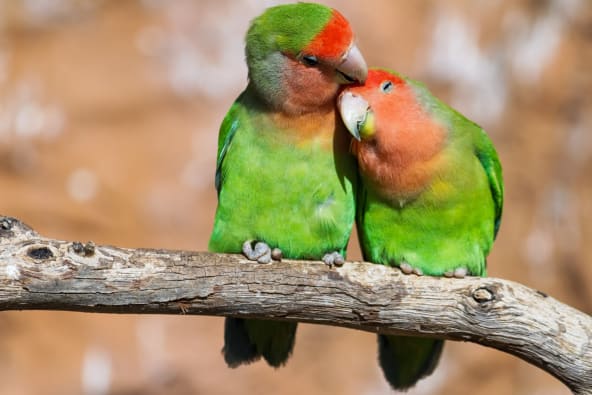
Agapornis

I have two lovebirds. Literal lovebirds, mind you, the bright orange-green parrots whose genus name is Agapornis. When we adopted them, the feathered pair quickly started using human forms of communication — mimicking the sound of a kiss to express affection and giving a heads’ up to greet us. In the wild, lovebirds communicate all the time in various ways — chirping, whistling, preening — but they don’t blow kisses. 

Because my two birds behaved differently than a wild pair, their expression could be considered a form of culturePsychologists define culture as behaviors passed down through generations, but it’s more than just holidays, music and recipes. One subset of culture — called cumulative culture by researchers — describes the phenomenon of a group learning a skill too complicated to master alone, often over multiple generations. Until recently, many scientists believed only humans were capable of cumulative culture, but two new studies are upending this belief.

In March, scientists at Queen Mary University published a study of their experiment with bumblebees, demonstrating these winged insects were capable of training each other to solve a puzzle too complicated for one bee to solve alone. That same month, another group of researchers published the results of a different puzzle experiment, this time with chimpanzees. These two studies challenge the idea that cumulative culture is inherently human.

“People used to think [bees] were automatons,” says Dr. Alice Bridges, lead researcher on the bee culture study in a conversation with Sentient, “But these are clearly animals that can learn new things.” Scientists like Bridges have come to believe that many animals can learn from each other, even to master quite complicated tasks.

Culture: Not Just for Homo Sapiens

For centuries, most Western philosophers — from Aristotle to Descartes — believed animals weren’t capable of conscious thought at all, never mind capable of creating culture. But then in 1952, a Japanese anthropologist named Kinji Imanishi wrote an essay — a dialogue between a monkey, a human and a bee — defending the possibility of animal culture.

One year later, new evidence emerged: a young macaque monkey in Japan named Imo started taking sweet potatoes to a nearby stream and washing them before eating. Imo’s idea spread like wildfire, and soon the entire group was scrubbing their tasty taters before taking a bite.

Today we know that examples of animal culture abound, and all across the animal kingdom. Orcas wear dead salmon as hats. Songbirds teach each other melodies. Groups of female fruit flies prefer mates with specific colors. Female bottlenose dolphins use sponges to hunt. In a particularly cute example, one group of chimps in Uganda were known to rub their backs against vines, which they learned from their disabled chimp friend Tinka, who used this technique to scratch his back after an injury sustained from local hunting traps.

Yet scientists still believed cumulative culturean advanced, often multi-generational form of social learning, to be unique to humans. Social learning in humans looks like what happens when we learn differential math equations in school — the task might be too difficult to solve alone, but possible with teachers or with support from peers. Even though scientists observed learning in animals — apes creating tools to use for instance — the tools were relatively simple, not enough evidence of true social learning, scientists seemed to agree.

As recently as a decade ago, scientists hadn’t yet seen any evidence of cumulative culture in non-humans, with some even saying it was categorically impossible. But in the 2010s, researchers began noticing that the food-washing behaviors of Japanese monkeys were growing incredibly complicated over time. First, the sweet potatoes were simply washed in a stream, then the monkeys began using salt water for added flavor, and digging their own pools for solitary enjoyment of their treat. This added complexity was thought to show evidence for cumulative culture. And now, we have even more evidence of this type of social learning, in bees and chimpanzees.

Training the Bees to Be Puzzle Trainers

In the Queen Mary experiment, bees who were placed in a box needed to solve a puzzle to receive a reward — in this case, sugar. The puzzle is a bit tricky, and none of the bees were able to learn the two-step solution on their own, even when left in the box for nearly a month. In fact, they seemingly became frustrated by the puzzle, “like a toddler throwing a tantrum,” says Bridges.

Next, the researchers trained a new set of bees, which they dubbed the “demonstrators.” These fuzzy influencers were taught by humans to solve the puzzle step-by-step, with syrup given as a reward each time they learned a new part of the answer. After two days of puzzle bootcamp, the demonstrator bees were paired with the untrained bees. A few minutes later, a third of the untrained bees were able to learn the complicated task and earn the sugar. And after the demonstrator bees were removed, the “untrained” bees were still able to solve the puzzle.

In an independently organized study in chimpanzees, the researchers offered peanuts instead of sugar as a reward for completing a slightly more complicated task: pulling a two-step lever with a more complex three-step mechanism.

In both experiments, the finding was the same.  On their own, the animals couldn’t solve it, but a trained animal could successfully teach it to others.

In other words, these experiments showed that chimps, like bees and like humans, have the capacity for cumulative culture.

Animal Culture Should Change How We Interact With Them

Animal culture, much like the animal personality, is rarely discussed in conversations about animal welfare, that is, how we treat animals — whether it’s wild animals affected by human conservation efforts or farm animals raised for food, to say nothing of animals in laboratorieszoos, or those used to entertain humans. But ignoring these sociological factors might end up causing more harm to animals than good.

Understanding animal culture could help humans improve our human-animal interactions. After all, knowledge is shared within herds and flocks — that is, it’s shared culturally. Bighorn sheep and other large mammals don’t travel migration routes instinctively, but learn them from each other. Historically, when animals have been relocated by humans, it has taken several decades and in some cases a century to adapt to the new winter migration route.

The Queen Mary researcher, Bridges, raises a hypothetical: what if conservationists find two groups of chimpanzees in a habitat at risk of destruction, each group with its own unique culture. Do the conservationists need to preserve both groups, not just to save more animals, but to conserve both unique culturesMost people see the value in preserving human cultures at risk of disappearing. Why should animal culture be any different?

Conservationists are already confronting these questions. The regent honeyeater, a beautiful glossy black songbird with speckles of yellow from southern Australia, has become critically endangered. As the population has declined, so too has their culture — males’ songs no longer have the complexity of their ancestors, to the point that many of the regent honeyeaters can no longer even learn their own culture, forced to mimic the sounds of other species. Should we endeavor to save the honeyeaters’ cultural heritage, in addition to just paying attention to raw population numbers?

It’s not just wild animals. Most mammals and birds on the planet are found on industrial-scale factory farms, where it may be more difficult to create unique culture given the unnatural conditions — small and packed living quarters. Yet according to researchers, most farm animals like cowspigs, and chickens have demonstrated awareness and an ability to learn.

Bridges hopes findings like these may help people think more open-mindedly about animals, both the human and non-human kind. “We’re not a pinnacle of evolution above them,” she says, “Not everything we do is complex, not everything they do is simple.”

Whether bees pulling levers, chimps solving puzzles or lovebirds blowing kisses, scientists are still scratching the surface of the culture and learning of which animals are capable.