By John Bellamy Foster and Roberto Andrés, Monthly Review, September 1, 2022
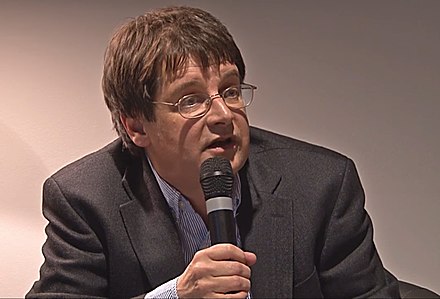 |
| John Bellamy Foster |
Roberto Andrés: I have long wanted to interview you about a book that was decisive in my intellectual formation: Marx’s Ecology. This book was published in 2000 in English and immediately translated into Spanish and inaugurated what has become known as second generation ecosocialism, which recognizes the ecological conception of Karl Marx, unlike the previous generation. However, in the more than twenty years since, Marx’s Ecology not only opened a wide debate but was also the object of multiple criticisms (it could not be otherwise). Later, you and Paul Burkett, author of Marx and Nature, published an anti-critique: Marx and the Earth, where you rigorously answered each of those criticisms. And then Kohei Saito further extended this line of inquiry with Karl Marx’s Ecosocialism. All of this has led me to wonder about the answers you gave in 2000 to ten controversial questions that have puzzled analysts of Marx’s vast theoretical corpus for a long time. Given the debates over the last two decades, would you answer these ten questions the same way you did in 2000 with Marx’s Ecology? I tend to believe that, in general terms, much progress has been made during this time in this line of research. That is why I would like to do a very specific interview with you dealing with these ten controversial questions, some twenty years after Marx’s Ecology.
John Bellamy Foster: I am of course pleased to provide answers to your questions with respect to Marx and my book Marx’s Ecology two decades after its publication. My views have remained generally the same, though they naturally have been refined over the years. Nevertheless, I am glad to offer some clarifications.
RA: Why did Marx write his doctoral thesis on the ancient atomists?
JBF: The question of why Marx chose to write his doctoral thesis on Epicurus has often puzzled scholars and numerous explanations have been offered. One of the most comprehensive treatments referring to these various interpretations is offered in volume 1 of Michael Heinrich’s Karl Marx and the Birth of Modern Society, first published in German in 2018. None of these accounts, however, is particularly convincing. Most tend to look for some single-minded theoretical purpose that pushed Marx in this direction. In contrast, I think that Marx’s interest in Epicurus emerged organically as a result of problems that he faced in his own historical time and the intellectual developments then occurring, related to such issues as the Enlightenment, the critique of religion, materialism, dialectics, and Hegel’s philosophy.
We need to remember that Epicureanism was the first philosophical tradition that Marx mentioned in any of his extant writings. Thus, in his Gymnasium examination paper on religion, he opposed Christianity to Epicureanism, to the detriment of the latter. We do not know to what extent Marx was conveying his actual beliefs in that examination, since he was giving answers which were essentially required in the German Gymnasium at the time. But we do know he was already thinking about Epicureanism at the age of 17. Marx, of course, was a child of and then a critic of the Enlightenment. Both his father, Heinrich Marx, and his future father-in-law Ludwig von Westphalen—who was a mentor to him—were deeply enmeshed in elements of Enlightenment thinking, which had penetrated, along with Napoleon’s army, the Trier in which Karl grew up. Heinrich Marx admired the deist Voltaire. Westphalen was enamored with the ideas of the utopian socialist and materialist Henri de St. Simon. Enlightenment secularism and the critique of religion were important parts of this atmosphere.
Among Enlightenment thinkers, from Francis Bacon to Voltaire and Immanuel Kant, Epicurus was seen as a major figure, inspiring the seventeenth-century scientific revolution and the overturning of Aristotelian scholasticism. Karl Marx himself in his doctoral thesis was to depict Epicurus as representing the first glowing of the Enlightenment outlook in antiquity, comparing him to the demigod Prometheus. But Marx was hardly alone in this. G. W. F. Hegel in his History of Philosophy stated that “Epicurus…introduced more enlightened views in regard to what is physical and banished the fear of the gods.” Epicureanism represented, along with other Hellenistic philosophies, the development of “self-consciousness,” which was of immeasurable importance in the Hegelian dialectical view. Marx’s close friend Karl Friedrich Köppen wrote a book on Frederick the Great (dedicated to Marx) in 1840 in which he declared: “All the figures of the Enlightenment are indeed related to Epicurus in many respects, just as from the opposite point of view the Epicureans have shown themselves chiefly to be the Enlightenment figures of antiquity.” Marx, of course, was aware that for most of the history of Christianity, Epicureanism was persecuted as the main manifestation of atheism (though Epicurus did not deny the existence of the gods, only their relation to the world) and anti-Christian views. All the major breakthroughs of the seventeenth-century scientific revolution, as Marx himself emphasized, were closely associated with Epicurean materialism.
Heinrich is correct, in my view, in saying that Marx in his doctoral thesis did not directly address the conflict between materialism and idealism, and that Epicurus’s materialism was chiefly of importance to Marx initially in terms of the critique of religion—which is, of course, how materialism arose—rather than in a strictly ontological sense. Yet, Marx delved more deeply than any other nineteenth-century thinker into Epicurus’s materialist philosophy and carried this into his later work. If, as Frederick Engels said, Marx’s dissertation was influenced by Hegelian philosophy, it was not, as he also noted, in itself a Hegelian work, displaying elements of philosophical materialism as well as philosophical idealism. Marx quoted Baron d’Holbach, the leading French materialist, in his doctoral thesis. It is significant that while working on his thesis, Marx translated much of Aristotle’s De Anima. As Ernst Bloch has taught us, this was the more materialist part of Aristotle, giving rise to what Bloch called the “Aristotelian Left,” carried forward in the Islamic world, but also recognizable in Marx. There is, I believe, no contradiction between this and Marx’s fascination with Epicureanism.
What is certain is that Marx’s treatment of ancient atomistic philosophy of nature took him deep into the roots of materialist philosophy. What he discovered, much to his surprise as we can see from his Notebooks on Epicurean Philosophy along with his dissertation itself, is the role of the swerve and thus Epicurus’s non-deterministic, non-mechanistic materialism, which deviates in this respect from Democritus. He also discovered what he referred to as the “immanent dialectic” in Epicurus, along with an emphasis on human freedom (though not in the sense of materialist praxis) and a kind of sensual or corporeal materialism, even a notion of alienation. Time in Epicurus is, as Lucretius put it, mors immortalis (deathless death), which becomes fundamental to Marx’s materialism. Marx had nothing but praise for Epicurus’s ethics. Much of this transcended Marx’s doctoral thesis itself and was to have an impact on his later work, particularly with respect to his materialist conception of nature.
RA: What were the roots of Marx’s materialist critique of Hegel, given the superficial nature of Ludwig Feuerbach’s materialism and the philosophical inadequacies of political economy?
JBF: I think it would be a mistake to consider Feuerbach’s materialism as simply superficial. It may seem that way if one were to read The Essence of Christianity today or if one were to start with Marx and Engels’s later critique of Feuerbach in The German Ideology. However, where Feuerbach principally influenced Marx was in the former’s two essays, “Principal Theses on the Reform of Philosophy” in 1842, and “Principles of the Philosophy of the Future” in 1843. What Marx mainly took from Feuerbach’s analysis here was a corporeal and sensuous materialism, already existent at a deeper level in Epicurus and Lucretius. Like materialism in general, Feuerbach’s materialism arose out of the critique of theology. He sought to invert religion by returning to sensuous humanity, but his critique of Hegel did not go deep enough. As Marx said, Feuerbach’s philosophy was “extremely poor” when placed against Hegel, and he lacked Hegel’s historical perspective, or any conception of praxis. As a result, Feuerbach’s contemplative materialism and his conception of humanity ended up as an empty abstraction, divorced from history and praxis. Marx thus mainly took Feuerbach as a point of departure in the development of his own practical materialism.
Nevertheless, the non-deterministic corporeal and sensuous materialism that Marx took from Epicurus and Feuerbach informed his critique of Hegel, which was most fully developed in the last part of the Economic and Philosophical Manuscripts in which Marx provided his critique of Hegel’s Phenomenology. Here Marx insists on the objective, sensuous, corporeal, and material basis of human existence. There is a close link between this last part of the Economic and Philosophical Manuscripts and Marx’s introduction of his corporeal materialism at the beginning of The German Ideology. This is the focus of Joseph Fracchia’s magisterial new work, Bodies and Artefacts: Historical Materialism as Corporeal Semiotics.
RA: What was Marx’s relationship to the Enlightenment?
JBF: As I noted previously, Marx was quite literally a child of the Enlightenment, based on the views that his father and Westphalen passed on to him and what we know of his own early views. Many aspects of Enlightenment thinking are prevalent in his thought, since it was the Enlightenment that gave rise to modern science and rationalism. But insofar as the Enlightenment was the characteristic form of bourgeois thought, Marx was also a critic. We also need to recognize that there were different traditions within the Enlightenment. Marx gravitated towards the more materialist traditions, as well as dialectical views. Moreover, he was quite hostile, as was the German Enlightenment in general, to the dualism and rationalism of a figure like René Descartes. For example, Marx was highly critical of Descartes’s reduction of animals to machines, while seeing this as characteristic of bourgeois society. Marx was influenced, as was the German Enlightenment in general, by the work of the deist Hermann Samuel Reimarus on animal drives, and thus took an approach radically opposed to Descartes’s dualistic outlook in this area. Marx thus stressed the continuity between human and nonhuman animals—even if the human species developed a more universal transformative relation to nature through labor.
Given his view of the Enlightenment as accompanying the rise of the bourgeoisie, Marx was able to see the Enlightenment, including the seventeenth-century scientific revolution, as constituting a revolutionary viewpoint, insofar as it broke with Christian theology and the medieval Aristotelian scholasticism that had preceded it. At the same time, he engaged in a wider critique of it from the standpoint of the Wissenschaft (systematic knowledge, learning, and science usually translated simply as “science”)pointing to the “higher society” of socialism. Although we tend to reify the Enlightenment today, reducing it to simple forms, it was a very complex development with conflicting social and ideational tendencies, out of which materialist, dialectical, and socialist views also arose by virtue of a process of immanent critique and transcendence. Hegel’s dialectical view was in sharp contrast to what he characterized as the metaphysical and dualist views of the popular German Enlightenment philosopher Christian Wolff. Marx’s own dialectical perspective, rooted in Hegel, meant the rejection of such reductionist and dualist outlooks.
RA: How do you explain the fact that in The Holy Family Marx expressed great esteem for the work of Francis Bacon, Thomas Hobbes, and John Locke?
JBF: There should be no occasion for surprise in the fact that Marx, in his treatment of “The Critical Battle Against French Materialism” in The Holy Family, should have praised Bacon, Hobbes, and Locke. All the British and French materialists, Marx argued, had drawn heavily on Democritus and Epicurus. Marx saw eighteenth-century French materialism, in particular, as having two sources: (1) the combination of mechanism and metaphysics that characterized Descartes, which had produced good results in the natural sciences but that Marx in general rejected, and (2) a genuine materialism that entered from France via the work of Locke while also drawing on the work of Pierre Gassendi, referred to by Marx as “the restorer of Epicurus.”
In this context, Marx laid emphasis on the importance of Bacon, Hobbes, and Locke, as setting the grounds for modern materialism. Marx had studied Bacon early on, even before his main encounter with Hegel’s philosophy. He saw Bacon as “the real progenitor of English materialism and all modern experimental science,” who had been heavily influenced by the work of Democritus and Epicurus. What Marx clearly esteemed in Hobbes was not his political philosophy, for which he is best known today, but rather his materialism as enunciated primarily in the first part of his Elements of Law, Natural and Politic, which included his tract “Human Nature,” and in his De Corpore. Hobbes presented an explicitly corporeal materialism, which saw only one, material, reality. As with Bacon, Hobbes was a sharp critic of any philosophy based on final causes, thus laying the groundwork for materialism. Similarly, Marx paid seemingly no attention to Locke’s political philosophy as such and was interested mainly in his epistemological views in An Essay Concerning Human Understanding, which had furthered materialism though in the form of English deism.
Already with Hobbes, Marx suggested, materialism had lost some of the quality of a sensuous materialism, which Bacon had preserved. “Hobbes,” Marx wrote, “systematises Baconian materialism” but “knowledge based on the senses loses its poetic blossom, it passes into the abstract experience of the geometrician.” Moreover, “Hobbes had systematized Bacon without furnishing a proof for Bacon’s fundamental principle, the origin of human knowledge and ideas from the world of sensation. It was Locke who, in his An Essay Concerning Human Understanding,” according to Marx, “supplied this proof.” Nevertheless, the English, after Bacon, removed all life from materialism, it only takes on “flesh and blood, and eloquence” with the French materialists, leading eventually to the socialists.
This treatment of the history of materialism in Marx was well-known by the first few generations of Marxist theorists. However, with the growth of the Western Marxist philosophical tradition, which steered away from ontological materialism (and from the dialectics of nature), this vital aspect of Marx’s analysis increasingly came to be ignored until the recovery of Marx’s ecological materialism forced it back on our consciousness.
RA: Why did Marx devote himself, throughout his life, to the systematic study of natural and physical science?
JBF: Marx was a materialist and dialectical thinker. He saw his own analysis as a contribution to the materialist conception of history. Nevertheless, he always recognized this was dialectically related to natural science’s materialist conception of nature. The human labor and production process was defined by him as “the social metabolism” that mediated the relationship between humanity and what he referred to as the “universal metabolism of nature.” In addressing the material aspects of the forces and relations of production, as well as the underlying conditions of production, both natural laws and evolution entered in at every point. There could in fact be no materialist conception of history divorced from the materialist conception of nature, any more than human society could be completely divorced from material nature of which it was an emergent form. Human beings were corporeal beings. For this reason, natural-science conceptions and what we would today call ecological notions are pervasive in Capital, though this has frequently been ignored. It could not be otherwise in what Marx saw as materialist analysis. This required continuing attention to natural science, particularly those realms that necessarily entered into the critique of political economy: geology, chemistry, biology, physics, mathematics, agronomy, soil fertility, nutrition, machine technology, human physiology—but extending into many other areas as well. Naturally, Marx was not able to make direct contributions to these fields, given his own scientific explorations, but he kept abreast of and carefully examined the main scientific results in his time, along with Engels, who, of course, carried out his own investigations into the history and philosophy of science.
Perhaps the finest essay by the acclaimed British Marxist scientist J. D. Bernal was his Marx and Science, written in the early 1950s, which is well worth reading today to get an understanding of Marx as a scientist, both in relation to his materialist conception of history and also his materialist conception of nature. In looking at Marx’s ecological notebooks, I have marveled at his detailed notes related to how shifts in climatic isotherms generated extinctions in Earth history prior to the existence of humankind.
In his later years, Marx increased, rather than decreased, his natural-science studies, as is evident from the natural scientific notebooks, and particularly in his ecological notebooks, which are now being published as part of the Marx-Engels-Gesamtausgabe (MEGA) project. Many of these later natural-scientific studies were clearly related to Marx’s growing concern over the metabolic rift, or ecological crisis. A good discussion of this is to be found in Saito’s Karl Marx’s Ecosocialism.
RA: What was behind Marx’s complex and continuing critique of Malthusian theory?
JBF: This is a difficult question to answer because the Thomas Robert Malthus of the nineteenth century—Malthus died in 1834—was an entirely different figure than the Malthus of our own time. Crucial here is that Malthus’s population theory had nothing to do with ecological limits as we see them today. As Eric B. Ross conclusively demonstrated in 1998 in The Malthus Factor, there was a conscious effort in the 1940s, following the collapse of eugenics, to reinvent Malthus as an ecological thinker based on his population theory and to use this to justify various controls on populations, particularly in the Global South, at the same time as the introduction of the so-called Green Revolution. This is the non-historical Malthus familiar to us today, but it is not the Malthus that Marx and the nineteenth-century British working class saw as the fierce enemy of the nineteenth-century proletariat.
One of the problems is that those writing about Malthus today almost invariably base their analysis on the 1798 edition of his Essay on Population (also known as the First Essay), while Malthus’s argument was most fully developed and had its greatest impact in his day in his Second Essay on Population of 1803. The Second Essay was really a wholly different work that was much longer, with new arguments, and which was to be extensively revised in subsequent editions. There were six editions of his population essay altogether, counting the First Essay, and the five editions of the Second Essay. It was beginning with the first edition of the Second Essay that Malthus presented his most infamous attacks on the working class and the poor that outraged workers of the day, making him a hated public figure. It is here too that he laid the basis for the notorious New Poor Law of 1834, with its brutal policies.
From an ecological perspective, it is important to recognize that Malthus insisted that an excess of population (he never used the word overpopulation) for any extended period of time was impossible, because population was naturally equilibrated with food supply. The equilibration—where population pressed on food supply and all land was utilized—occurred entirely through increased mortality and lower births, since the fertility of the soil was assumed to be strictly limited. At the same time, Malthus explicitly stated there were no limits to the actual minerals/raw materials of the earth. The main purpose of his work, as Marx underscored, was to argue that there needed to be limits on the population (and income) of the poor to prevent them from dragging down the standard of living of the middle classes.
Marx in the Grundrisse pointed out that Malthus’s analysis was logically flawed, since it assumed that human populations could increase geometrically, but their food supply (that is, plant and animal life generally) could only grow arithmetically—a proposition that, as Marx indicated, made no sense from the standpoint of biology, natural history, or elementary logic. But Marx’s critique of Malthus also extended to the class foundation of his population theory, its lack of any historical basis, its “clerical fanaticism” (most apparent in the First Essay), and what Marx described as Malthus’s persistent plagiarism of the ideas of previous thinkers. For Marx, overpopulation—a word he used, while Malthus did not—was a distinct possibility, but such developments were the products of historically specific laws related to particular modes of production. There were thus historical conditions for population growth and overpopulation in any given instance, something that Malthus left out of account. Marx was most severe on Malthus, though, for his plagiarism of Scottish political economist and agronomist James Anderson’s theory of differential rent, which Malthus presented as his own. Ironically, this theory is now associated with David Ricardo, who developed it further, rather than Malthus who had stolen it from Anderson, its inventor. Anderson’s analysis was particularly important to Marx because it did with respect to soil fertility what Malthus and Ricardo did not: it saw it as subject to historical change. For Marx, Malthus’s contribution to science existed, but was purely negative: “What a stimulus,” he wrote, “was provided by this libel on the human race.”
RA: How do we explain the sudden change of Marx with respect to Pierre-Joseph Proudhon, who went from being a friend to being an enemy?
JBF: Marx had a lot of admiration for Proudhon’s What Is Property?, which he first read and mentioned in 1842, shortly after becoming editor of the Rheinische Zeitung. He thought of Proudhon as a courageous and sharp-witted thinker. After moving to Paris, Marx got to know Proudhon. They would stay up all night talking about ideas. Marx early on recognized the scientific deficiencies in What Is Property? and its answer that “property is theft.” Proudhon saw all property as bourgeois property and in effect negated all other forms of property, thereby lacking any genuine historical analysis of bourgeois property or bourgeois political economy. Hence, What Is Property? exhibited, for Marx, at best a criticism, one full of invective, not a critique, and limited initially to the standpoint of the French small peasant. Nevertheless, in The Holy Family in 1845, Marx defended the Proudhon of What Is Property? against Bruno Bauer and the Young Hegelians. He even saw Proudhon at the time as being on the side of the proletariat. Although he later regretted it, Marx introduced Proudhon to Hegelian dialectics, so as to enable him to overcome Kantian-style antinomies. But Proudhon’s reading of Hegel was hindered by his reliance on poor translations and his own proclivities, and the effect of this, according to Marx, was the worsening of Proudhon’s analysis, creating theoretical monstrosities.
But the real problem was that Marx and Proudhon were moving in very different directions. These were the years in which Marx and Engels developed their fundamental historical-materialist views. In 1846, Marx and Engels completed their work on The German Ideology, in which historical materialism was given a solid foundation, though they did not find a publisher for it and consigned it, famously, to the gnawing of mice. In the same year, Proudhon published his System of Economical Contradictions, or, the Philosophy of Misery, which—though in many ways a confused work—was, as Marx was to argue, an articulation of petty-bourgeois socialism, thus differing from Proudhon’s earlier work. For Marx, Proudhon in his System of Economical Contradictions had moved away from a historical critique of bourgeois relations of production, turning them into eternal ideas. An open theoretical break with Proudhon was therefore crucial for the development of the proletarian movement and historical socialism. Marx thus wrote his famous critique of Proudhon, The Poverty of Philosophy, which at the same time revealed the depth of his own developing critique of bourgeois political economy.
In my analysis of The Poverty of Philosophy in Marx’s Ecology, I concentrated especially on Marx’s very pointed critique of Proudhon’s literal Prometheanism, the deification of industrialism and the machine in the name of Prometheus, since this has been a common criticism leveled by ecological critics at Marx himself and an important question in socialist theory today. More recently, I have been concerned with the argument in What Is Property? and the error of confusing bourgeois appropriation, or property relations, with all property relations, thereby negating the many different forms of appropriation in history. This is dealt with in The Robbery of Nature that I co-authored with Brett Clark in 2020.
Marx indicated in his January 1865 letter to J. B. Schweitzer that he had never joined with those who later accused Proudhon of treachery with regard to the revolutionary cause, saying rather that “It was not his fault that, originally misunderstood by others as well as by myself, he failed to fulfill unjustified hopes.”
RA: Why did Marx declare that Justus von Liebig was more important than all the political economists put together for an understanding of the development of capitalist agriculture?
JBF: With respect to the quote from Marx that you mention here, not long before Marx completed Capital, volume 1, he wrote to Engels on February 13, 1866: “I had to plough through the new agricultural chemistry in Germany, in particular Liebig and [C. F.] Schönbein, which is more important in this matter [the understanding of the historical basis of soil fertility] than all the economists put together.” As Saito points out in his Karl Marx’s Ecosocialism, in the original German edition of Capital, volume 1, Marx repeated this statement that Liebig’s agricultural chemistry was more important in this sphere “than all the works of modern political economists put together,” but he then dropped this phrase in later editions, while still praising Liebig. The deletion of this phrase plays a big role in Saito’s argument, because he uses this as his primary evidence to argue that Marx had developed doubts about the adequacy of Liebig’s ecological analysis, which caused him to turn to other thinkers such as Carl Fraas. However, I think this conclusion, based primarily on Marx’s deletion of that one phrase, is unwarranted.
We have to consider the context of the entire footnote in Capital in which this phrase occurred. Marx in this footnote praises Liebig to the skies, saying that, “To have developed from the point of view of natural science the negative, i.e., destructive side of modern agriculture is one of Liebig’s immortal merits.” The deleted phrase merely consists of that part of his statement where he is comparing Liebig’s understanding of soil fertility to that of the classical political economists. In Marx’s Ecology, I explained that Malthus and Ricardo had argued that soil fertility, though it varied from place to place, was eternal and not subject to change. This is what Ricardo meant by referring to “the original and indestructible powers of the soil.” The theory of differential rent, as expounded by these thinkers, had to do with differential qualities of the soil, but not ones that were the result of historical changes or human actions. Liebig, however, had demonstrated conclusively that not only is the soil subject to change, but that capitalist production tended to destroy the soil, contributing to the whole problem of the metabolic rift.
But Liebig, Marx goes on to tell us in that footnote, was out of his element when he addressed political economy, and not only mistook the meaning of labor, but also thought that the theory of differential rent (as expounded by John Stuart Mill) was related to his own argument on the soil, which was false. At this point, Marx launched into the fact that Mill had taken his analysis of differential rent from Ricardo who had taken it from Malthus, who had plagiarized it from Anderson. Marx greatly admired the agronomist, political economist Anderson, who not only developed the theory of differential rent, but also incorporated into his analysis the fact that human agricultural production alters the soil, often destructively, by not restoring the constituent elements of the soil.
Why, then, did Marx remove the phrase indicating that Liebig’s work in this sphere was more important than that of all the political economists? I think the reason was that Marx concluded in the end that such a comparison was misleading and exaggerated, and somewhat inconsistent with his argument in the rest of the footnote. Indeed, Saito himself considers this possibility. Liebig had no scientific understanding of political economy, as Marx indicates. Moreover, Anderson, who is very much the point in the latter part of the footnote, had, long before Liebig—though on the basis of a less developed soil science—grasped, in a combined political-economic and agronomic analysis, the way in which the destruction of the soil and capitalist relations of production were interconnected. To continue to say that Liebig’s work was worth more than all the political economists in this area was to downplay the scale of Anderson’s achievement, which encompassed not only the political economy of ground rent, but also the destruction of the soil and the critique of Malthus’s population theory.
None of this should be seen as taking away from Saito’s careful investigations in the later chapters of his book into the ecological analyses of Fraas and others. Although there is no evidence that Marx saw Liebig’s basic analysis of the soil as in any way flawed, he nonetheless sought, as was his wont, to explore all the other natural-scientific investigations pointing to the historical development and destruction of the soil. In this way, Marx was able to further develop his theory of the metabolic rift, expanding his understanding of the ecological contradictions of capitalism.
RA: What explanation are we to give to Marx’s claim that Charles Darwin’s theory of natural selection provided “the basis in natural history for our view”?
JBF: Marx was a materialist and evolutionary thinker long before Darwin presented in his theory of natural selection the first fully acceptable scientific theory of evolution. Both Engels and Marx referred to Darwin’s theory as “the death of teleology,” or the notion of final causes, thus definitively establishing the material evolution of species as a natural process independent of theological conceptions. Darwin’s On the Origin of Species therefore represented an enormous advance in the materialist conception of nature (or of natural history), which Marx and Engels viewed as underpinning the materialist conception of history. Marx was so enamored by Darwin that upon the publication of the Origin of Species, as his friend Wilhelm Liebknecht recalled, “we spoke of nothing else for months.” For Marx, of course, what was most interesting was what Darwin’s evolutionary theory suggested with respect to the evolution of human beings. Referring to Darwin’s “epoch-making” work, Marx in Capital quoted Darwin’s reference to the natural organs of plants and animals as built-in tools and specialized instruments, which could be compared to the tools introduced by human beings with which they extended their ability to interact with nature. Marx concluded that it was the social technology of human beings as much as the natural technology of species, human and nonhuman, that constituted the clue to human history/evolution.
The dialectical complexity of Engels’s understanding of Darwin’s theory was extraordinary and is seldom recognized today, though it helped inspire some of the major red scientists in Britain in the 1930s and ‘40s. I provide an extensive exploration of Engels’s complex, dialectical treatment of Darwin in Anti-Dühring and the Dialectics of Nature in my 2020 book, The Return of Nature. Engels’s supreme achievement in this realm, however, was his theory of human evolution presented in “The Part Played by Labour in the Transition from Ape to Man” in the Dialectics of Nature. Here Engels provided for the first time ever a coherent materialist theory of the evolution of the human species, what Stephen Jay Gould called the leading analysis of “gene-culture co-evolution” anywhere in the nineteenth century, focusing on the role that human labor played in the evolution of the human species. It was Engels’s approach to human evolution based on labor that was to anticipate the discovery of the Australopithecines, with their erect posture, relatively developed hands, and still ape-sized brains—an evolutionary sequence long rejected by the dominant evolutionary perspective of bourgeois science due to its bias toward cerebral primacy, associated with idealism. Such was the unity and penetration of Engels’s analysis here that it is hardly surprising that he also provided in this same work one of the most trenchant ecological critiques of the nineteenth century. Much of this was rooted in the convergence between Darwinian evolutionary theory and historical materialism.
Marx and Engels were of course critical of Darwin for letting some notions of bourgeois political economy creep marginally into his analysis, including those of Malthus. They did not confuse Darwin’s own fundamental views, however, with those of Malthus, as was sometimes the case at the time. Ironically, the very first work in what is known as social Darwinism was Oscar Schmidt’s 1878 Darwinism and Social Democracy, which was explicitly written as an attack on Marx and Engels and the then common association of Darwinism and socialism.
RA: Why did Marx devote his last years mainly to ethnological studies, instead of finishing Capital?
JBF: In his 1978 The Law of Value and Historical Materialism, Samir Amin presented the thesis that “(a) historical materialism constitutes the essence of Marxism, and therefore (b) that the epistemological status of the economic laws of capitalism is such that they are subordinate to the laws of historical materialism.” I think this is completely in accord with Marx. However important Marx’s critique of political economy was, it always took a subordinate place to his wider focus on the materialist conception of history, class struggle, and revolution. Crucial to this outlook was a recognition of a diversity of modes of appropriation, modes of production, and social formations in history.
This shift to ethnological studies in Marx’s last years was related to his growing interest in Russian revolutionary movements and Russian rural property formations, such as the Mir, or peasant commune. In the 1870s, Jenny von Westphalen wrote that her husband began to study the Russian language as though it were a matter of life and death. There were around two hundred Russian books on his bookshelf. Here we have to understand, viewed in a wider sense going beyond his studies of Russia, how important the historical evolution of modes of production was to Marx throughout his life. This was coupled with his growing critique of colonialism beginning in the 1860s, which drove him to search for different answers, learning all that he could about non-capitalist and non-Western social formations.
Critical in all of this was “the revolution in ethnological time,” a phrase used by Thomas Trautmann in a study of Lewis Morgan. The year 1859 was a turning point not only due to the publication of Darwin’s Origin of Species (and Marx’s Contribution to a Critique of Political Economy), but also in the authentication for the first time, in Brixham Cave, of prehistoric human remains suggesting that humanity had existed, as Charles Lyell later said, for hundreds, even thousands of centuries. At the same time, colonialism was opening up more and more information on other world cultures, though distorted by the colonial lens. New ethnological methods of analysis provided vast new insights into prehistory. Historical time was suddenly lengthened by tens of thousands of years. The rapid expansion of knowledge made a wider world history possible, superseding European history and the Eurocentric worldview. For Marx, this represented a major challenge for historical materialism, or the materialist-scientific approach to human development and the historical evolution of human society that he and Engels had developed over the years. Rather than relying on some linear, supra-historical, or teleological scheme—a rigid approach that he had always rejected—his analysis required understanding the diversity of human forms of social appropriation or modes of production, which also had a bearing on the present and future of history, since what was new always arose out of what was old. Much of this work was associated with his growing recognition of the struggles against the colonialism imposed on Indigenous societies around the world. Confronted with this wider historical and ethnological challenge, he approached it with all the mental vigor of youth, even though his physical condition was rapidly deteriorating.
Marx’s work in this respect—particularly his critique of colonialism, already evident in Capital—and his growing attempts to incorporate Indigenous cultures and struggles into his analysis were addressed in a February 2020 article that I wrote for Monthly Review with Brett Clark and Hannah Holleman, entitled “Marx and the Indigenous.” The depth and breadth of Marx’s ethnological studies, and his attempts to embrace a wider human history identifying with the struggles of Indigenous societies, is quite breathtaking. In 1881, he began to construct a massive chronology of world history, which grew to 1,700 printed pages. Holleman, Clark, and I found Marx’s treatment of Algerian property relations and colonial expropriation, based on the research of Maxim Kovalevsky, to be profound, particularly Marx’s conclusion: “They will go to rack and ruin WITHOUT A REVOLUTIONARY MOVEMENT.” In our view, this analysis fit with Marx’s critical approach to the expropriation of the land, nature, and human bodies—the corporeal rift—as constituting the original basis of capitalism, tying into Marx’s broader historical and ecological perspective. We argued in our article that here we find in Marx the beginning of “a revolutionary alterity of recognition” akin to that of Franz Fanon. In his ecological critique, anthropology, and approach to world history, as well as in his critique of political economy, Marx thus superseded the Promethean, linear, Eurocentric view, insisting in this way on the necessity of a revolutionary future for all of humanity.


