Tuesday, August 1, 2017

2678. Scientists Warn of "Biological Annihilation" as Warming Reaches Levels Unseen for 115,000 Years

By Dahr Jamail, Truthout, July 31, 2017
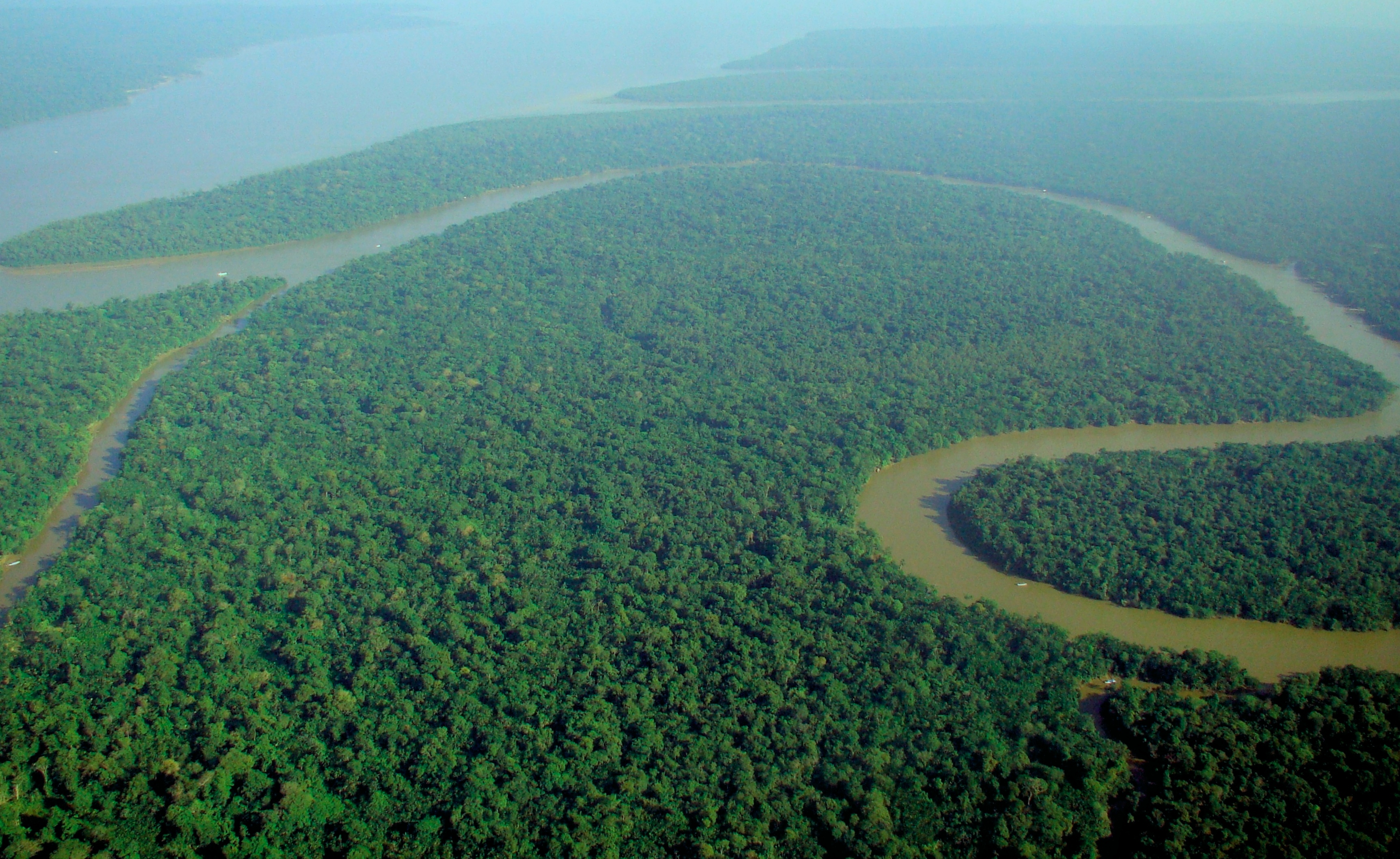

Camp 41, Brazilian Amazon -- Less than 30 years ago, the Earth's tropical rainforests held the carbon equivalent of half of the entire atmosphere. But as atmospheric CO2 has escalated along with the deforestation of so much of the tropics, that is no longer the case. 
Nevertheless, carbon stored in tropical rainforests is still significant. According to NASA, "In the early 2000s, forests in the 75 tropical countries studied contained 247 billion tons of carbon. For perspective, about 10 billion tons of carbon is released annually to the atmosphere from combined fossil fuel burning and land use changes." This is one of the countless reasons why losing them would be catastrophic to life on Earth.

I'm writing this dispatch just having emerged from the heart of the Amazon, the most biodiverse place on the planet. I was fortunate enough to spend some time with Tom Lovejoy, known as the "Godfather of Biodiversity," at the famous Camp 41, which is filled with researchers and scientists. Throughout our conversations, Lovejoy emphasized the staggering amount of biological diversity in the Amazon, which has thousands upon thousands of species of trees, fish, birds, plants and astronomical numbers of insect species.
"We've only scratched the surface, and are discovering new species of birds all the time," said Lovejoy, who was the first person to use the term "biological diversity" in 1980 and made the first projection of global extinction rates in the "Global 2000 Report to the President" that same year.

Lovejoy, who founded the public television series "Nature" and is now a senior fellow at the United Nations Foundation and a professor of environmental science and policy at George Mason University, views anthropogenic climate disruption (ACD) from the perspective of the fact that we are essentially "social primates."

"We are so stuck on ourselves, we don't consider the fact that the life sciences are a giant library that is continually acquiring new volumes," Lovejoy explained. "It's like we are just a bunch of social primates mutually grooming each other while the environmental lion sneaks up."

Lovejoy warns that as ACD progresses and temperature limits continue to be exceeded, we are losing parts of the biosphere that we don't even know exist.

Here in Brazil, I learned of a January 2016 science expedition of 50 scientists who spent 25 days in a remote area of the Amazon and discovered 80 new species.

Lovejoy posed a question for me, that is a warning to us all: "So what does it matter if we go over these limits and lose a few books in the biological library?"

He warned that as we keep removing books from the library -- in other words, causing extinctions -- we do not know which book(s) could cause a biological death spiral that could bring down the entire system.

An overview of some of the more stunning scientific reports and climate developments underscore this.

For anyone who thinks the biological library analogy might sound extreme, consider the fact that Stanford biologists recently issued something of a prelude to extinction. Having long since warned that the Sixth Mass Extinction event is already well underway, in a study recently published in the journal, Proceedings of the National Academy of Sciences, researchers said that billions of populations of animals have already disappeared from Earth, amid what they called a "biological annihilation," and admitted that their findings revealed a situation that was worse than they'd previously thought. The study showed that more than 30 percent of all vertebrates are experiencing declining populations, and the prime drivers of the annihilation are human overpopulation and overconsumption, especially by the rich, as well as habitat destruction, pollution and of course, ACD.
"The resulting biological annihilation obviously will have serious ecological, economic and social consequences," reads the study. "Humanity will eventually pay a very high price for the decimation of the only assemblage of life that we know of in the universe."

Meanwhile, a study recently published in Nature revealed that ice-free areas in the Antarctic will surge by up to a quarter (17,000 square kilometers) by 2100 if CO2 emissions are left unchecked.

As if to underscore that point, in July one of the most massive icebergs ever recorded broke free of the Larsen C Ice Shelf. The iceberg itself measures 5,800 square kilometers and is estimated to weigh one trillion tons.

And there are no indications that things will slow down. Recent research from Harvard University published in the journal, Science Advances, revealed that temperature increases measured over recent decades fail to fully reflect the planetary warming that is already in the pipeline for our planet, and showed that the ultimate heating up of the Earth could be much worse than previously feared.

"The worrisome part is that all the models show there is an amplification of the amount of warming in the future," Cristian Proistosescu of Harvard University, who led the new research, told the Guardian. And the situation might be far worse, as his work shows climate sensitivity could be as high as a stunning 6C.

"Some have suggested that we might be lucky and avoid dangerous climate change without taking determined action if the climate is not very sensitive to CO2 emissions. This work provides new evidence that that chance is remote," Bill Collins of the University of Reading in the UK told the Guardian.

On that note, an in-depth article published in July in New York Magazine, titled "The Uninhabitable Earth," is certainly worth reading. The heavily researched piece, which has generated much controversy, notes: "The Earth has experienced five mass extinctions before the one we are living through now, each so complete a slate-wiping of the evolutionary record it functioned as a resetting of the planetary clock, and many climate scientists will tell you they are the best analog for the ecological future we are diving headlong into."

Similarly, recently published research generated at Cornell University revealed that by 2100, a staggering 2 billion people, or one-fifth of the total global human population, could become ACD refugees due to rising seas alone.

"We're going to have more people on less land and sooner than we think," lead author Charles Geisler, professor emeritus of development sociology at Cornell, said. "The future rise in global mean sea level probably won't be gradual. Yet, few policy makers are taking stock of the significant barriers to entry that coastal climate refugees, like other refugees, will encounter when they migrate to higher ground."

The New York Times published an important article highlighting global efforts by scientists to build and protect repositories for things like ice, seeds and mammals' milk in order to preserve them as evidence of a natural order that is rapidly disappearing. Last October, the Svalbard Global Seed Vault became flooded with rain; thankfully it was saved just in time, because otherwise we could have lost the seed backup plan for thousands upon thousands of species of plants. The San Diego Zoo maintains a frozen zoo of cryogenically preserved living cell cultures, sperm, eggs and embryos for 1,000 species, while the National Ice Core lab in Colorado holds approximately 62,000 feet of rods of ice from rapidly melting glaciers and ice fields in the Arctic, Greenland and Antarctica for future study.

Incredibly, a recently released report showed that only 100 companies are the source of more than 70 percent of the entire planet's greenhouse gas emissions since 1988.
Meanwhile, global warm temperature records continue to be set at a staggering pace. Global temperatures for June this year were surpassed only by June in 2015 and 2016. If temperatures continue as expected, 2015, 2016 and 2017 will be the three hottest years ever recorded. Estimates now show that warming has reached levels not seen for 115,000 years.

Earth
Profound changes are evident on land this summer. Abrupt ACD is a consistent and primary feature of previous mass extinction events. While a slight extinction rate is natural and normal, what we are witnessing today is extremely accelerated. History shows us that sudden and dramatic change in climate was the catalytic event that drove previous extinctions. (Having just come out of the middle of the Amazon rainforest, it is particularly clear to me right now that we've little idea how much we are losing already.)

Things are changing fast enough that a multimillion-dollar ACD study in the Canadian Arctic had to be canceled -- because of ACD. The four-year study, launched by the University of Manitoba and several other universities, had to cancel the first leg of their study due to warming Arctic temperatures that were causing hazardous sea ice to travel much further south than usual, causing safety concerns for the scientists.

Meanwhile, as sea-level rise projections continue to increase, it is currently estimated that at least two billion people will be driven out of their homes by 2100 and be forced into the interior of their countries to look for new places to settle.

Things are getting hot and dry enough in Montana that farmers there have to consider new ways to grow wheat, while in Morocco, a 2014 study revealed that in the previous decade, the number of nomads in one particular region of that country had fallen by 63 percent in one decade, again due to hotter and drier conditions that made their way of life impossible.

Water
As usual, there is ample evidence of ACD's impacts across the watery realms.
In the Eastern Pacific, massive numbers of jelly-like organisms that are native to tropical seas are now invading Pacific coastal waters from Southern California all the way up into the Gulf of Alaska. Pyrosomes, which are colonies of hundreds to thousands of tiny zooids, have become so widespread as a result of warming ocean waters, they are causing big problems for commercial fisherfolk: They clog nets, completely preventing fishing in some areas. In May, one single scoop with a research net brought up 60,000 pyrosomes.

Another major issue plaguing the fishing industry along the West Coast of the US is worsening ocean acidification. The region's billion-dollar fishing industry, along with the fragile coastal ecosystems, is suffering as the oceans continue absorbing more CO2 from the atmosphere and becoming more acidic. In Washington State, another pronounced example of this is that the Puget Sound area's signature oysters are struggling to survive: They and other shellfish appear to be on their way out, due to the increasing acidity of their habitat.
A recently published study has confirmed that Earth's oceanic basins are warming more rapidly than ever before in recorded history.

Thus, not surprisingly, the fourth largest ice shelf in Antarctica is in the process of melting down to its smallest area ever recorded, and another report shows that sea level rise around the world is accelerating due to how quickly the Greenland Ice Sheet is melting: That Ice Sheet alone is now responsible for one-quarter of all global sea level rise.

In other melting ice news, have a look at this fascinating tool to view how major glaciers in the Alps have dramatically melted over the last century.

At the other end of the water spectrum, a drought in Northern China has now become the worst in recorded history for that country, as economic losses to farmers in that region are now approaching $1 billion for this year alone.

Air
Hot temperature records and extreme heat waves continue to be the norm, and they are intensifying. In late June, the southwestern US was wracked by extreme heat, as Phoenix and Las Vegas cooked. The National Weather Service issued an excessive heat warning for parts of Southern California and Arizona, cautioning of "a major increase in the potential for heat-related illness and even death."

Earlier in the summer, Iran saw temperatures reach new heights: The city of Ahvaz experienced one of the hottest temperatures ever recorded on the planet, coming in at 128.66F. Extreme heat also plagued the UK, France, Switzerland, Belgium and the Netherlands, forcing some regions to ration water. Belgium also saw its hottest nighttime temperature ever.

Climate Central, in partnership with the World Meteorological Organization, has created a graphic which you can use to check future temperatures for many major global cities. According to the graphic, up to a dozen cities will heat up so much there is currently no analog on Earth to which we can compare them. "Khartoum, Sudan's average summer temperature is projected to skyrocket to 111.4°F (44.1°C) if carbon pollution continues unchecked," the press release that accompanied the graphic stated. "That shift underscores that unless carbon pollution is curbed, the planet could be headed toward a state humans have never experienced."

A report in the Hindustan Times revealed that Delhi could become as hot as the United Arab Emirates' Sharjah by 2100, as the average summer high temperatures in major Indian cities could rise by 3 to 5 degrees Celsius.

As usual in the summers nowadays, there is more bad news on the methane front. Remember, methane is 22 times more potent of a greenhouse gas than CO2 over a 100-year timescale.

The Siberian Times reported recently that two fresh craters were found on the Yamal Peninsula. The newspaper stated that "the formation of both craters involved an explosion followed by fire, evidently signs of the eruption of methane gas pockets under the Yamal surface." The craters, each of which is approximately 25 feet in diameter and roughly 65 feet deep, can be viewed here. 

Fire
The heat wracking the planet this summer has been accompanied by intense wildfires.
In Siberia, multiple blazes kicked off wildfire season across the tundra and boreal forest. The fires burned at a rate unheard of for at least the last 10,000 years, and released vast stores of carbon stored in the trees and soil, creating yet another positive feedback loop for ACD: More wildfires create more heat in the atmosphere, which creates more wildfires, and on, and on. The NASA satellite photos of the burning area are disturbing.
Closer to home in California, raging wildfires forced roughly 8,000 people to evacuate as out-of-control fires destroyed homes and threatened thousands of other structures.
Along coastal Alaska and Canada's Northwest Territory, large wildfires burned near the shores of the Arctic Ocean -- water that was, until recently, frozen. In British Columbia, 14,000 people have fled as more than 1,000 firefighters battle numerous large blazes.

Drier dry spells and higher temperatures mean longer, more intense wildfire seasons, which is precisely what we are seeing. The US this year is on pace to have a record-breaking wildfire year, with at least 3.5 million acres burned already. By April, early on in wildfire season, more than 2 million acres had burned, which is nearly the average consumed in entire fire seasons during the 1980s.

Denial and Reality
There's never a dull moment in the denial world these days. 

In Florida, that state's extremist ACD-denying Gov. Rick Scott signed legislation making it easier for Florida residents to challenge science that is taught in public schools, so if an ACD-denying parent doesn't like a science textbook that teaches the basic physics of how greenhouse gases work, the book could end up being banned.

Trump-appointed EPA Administrator Scott Pruitt, an ACD denier and pink slipped 38 members of the EPA's Board of Scientific advisors, which is merely a drop in the bucket compared to dozens of other major environmental roll-backs the Trump administration has pulled off thus far, including forcing NOAA [National Oceanic and Atmospheric Administration] to erase human activity references to greenhouse gases in its Annual Greenhouse Gas Index.

Thankfully, reality continues to thrive in other parts of the world: In France, the sale of petrol and diesel cars will be banned beginning in 2040 -- just one of the steps that country is taking to meet its portion of the Paris climate agreement.
Surprisingly, in the US a recent poll by Yale University's Program on Climate Change Communication showed that roughly two-fifths of the population believe ACD is likely to kill off all humans.

In other positive news, slowly but surely more reports addressing overpopulation's critical role in ACD are surfacing. One published in July in the Guardian suggested people who are serious about doing something about ACD should have fewer children. By way of example, a recent study published in Environmental Research Letters calculated that having one less child would bring a reduction of 58 tons of CO2 for each year of a parent's life.

This suggests, in turn, that countries that are serious about addressing ACD should be developing strong protections for reproductive rights, increasing the availability of birth control and abortion, working toward gender justice and ensuring that comprehensive sex education is provided in all schools.

A mega-dose of reality for all of us here on Earth: Earth's sixth mass extinction event is already well underway, the aforementioned event researchers are already referring to as causing the "biological annihilation" of wildlife, and that is already far more severe than previously feared.

"It's as simple as bacteria in a test tube," was Lovejoy's response when I asked his take on the overpopulation crisis. "You can only have so many before you run out of nutrients."

2677. Deprovincializing Marx: On Harry Harootunian’s Reading of Marx


By Massimiliano Tomba, Viewpoint Magazine, June 27, 2017

Returning to Marx today means deprovincializing Marx. For far too long, Western Marxism has remained trapped in a historicist vision centered on the idea of universal history and a unilinear, homogeneous, and empty historical time. According to this conception, capitalist modernity is considered the last phase of a series of historical stages, first traversing Western Europe and then imposed on the rest of the world. In this conception of history, time is spatialized in such a way that the qualitative differences between historical trajectories can be traced to quantitative differences, and therefore to delays with respect to the tip of the historical-time vector represented by Western-European capitalism. Non-European countries may thus be defined as backward, pre-capitalist, and pre-modern; for them there is nothing left to do but to accelerate the race towards capitalism and recover the historical stages lost along the course of universal history in as short a time as possible. According to this philosophy of history, the more Western capitalism beats the rhythm of development, the more entire regions of the world are branded as backward and a multiplicity of modes of production may be regarded as residual.
As Walter Benjamin pointed out in his “Theses on the Philosophy of History,” this is a conception of history shared by both social democracy and Western colonialism. For both, there is a single historical path that leads to the development of the capitalist mode of production or, in the Marxist variant, to socialism – but only after having passed through the capitalist stage.
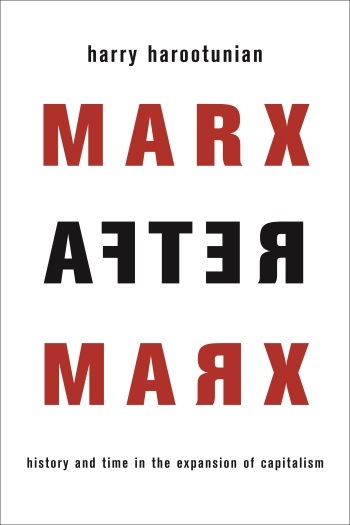
The work of Harry Harootunian, specifically his discussion of Marx, has the aim of thinking about capitalism historically. This is possible only by abandoning the Eurocentric philosophy of universal history and paying attention to how capitalism is configured when it encounters different historical times. Harootunian announces this task in the subtitle of his book: Marx After Marx: History and Time in the Expansion of Capitalism. It may be useful to start from the subtitle because from here we understand that what is at stake are the concepts of history and time in the process of capitalist expansion, meaning in the ongoing process of originary, primitive accumulation.
One of the main merits of Harootunian’s reflection on Marx is that it emphasizes the concept of formal subsumption, a concept only apparently abstract and often defined by Marxist literature in terms of historical stages of capitalist development. Harootunian, instead, looks at formal subsumption as a form, not just by going back through the works of Marx, but from a world perspective which includes Lenin and Rosa Luxemburg, Gramsci and Mariátegui, Uno Kōzō and other pivotal theorists who were not just theorists, but political militants as well. This clarification must be made because Harootunian’s book is not just a refined historical and theoretical fresco, but also a text that has a precise political grip on the present. 
Redefining the concept of formal subsumption as form has very significant implications. Starting with Marx, we know that the capitalist mode of production does not create its own conditions of existence and reproduction ex nihilo, but meets pre-existing relationships of production, property and politics, which are re-configured differently. Indeed, according to Marx, capitalism encounters pre-existing forms of production and it “encounters them as antecedents, but not as antecedents established by itself, not as forms of its own life process.”1 This encounter of different temporal trajectories gives rise to a “heterogeneous mix rather than the destruction of one made by another.”2 This is the lens through which Harootunian looks back on Marx after Marx. Capital subsumes and reconfigures pre-existing forms of production in a new framework, and the result is a “heterogeneous mix” of temporalities and forms of life and production. From this perspective, subsumption as form does not belong to a specific historical stage but, more generally, it characterizes the struggle between the temporality of the capitalist mode of production and different temporalities. In other words, formal subsumption does not constitute a historical stage that precedes real subsumption, but it denotes how the capitalist mode of production finds and subsumes existing forms without creating a homogeneous world. Indeed, the capitalist mode of production requires and utilizes hierarchies and differences, which it configures in terms of temporalities. The expansion of capital and its constant attempt to subsume different forms of production into the global market generates a multiplicity of temporal frictions, asynchronies and anachronisms that, on the one hand, capital uses to its own advantage, and, on the other hand, give rise to a multiplicity of conflicting elements and possibilities for the re-orientation of the trajectories of modernity.
Pivoting on the concept of subsumption as form, Harootunian not only urges us to abandon the stage-theory of modes of production, but also to reconsider the concepts of time and history that lie at its foundation. It is appropriate to draw attention to the implications of this historiographical approach.
In general terms, it abandons the (Eurocentric) idea of a necessary historical trajectory that, through the necessary stage of primitive accumulation of capital, runs from feudalism to capitalism and, finally, to … socialism. Questioning this unilinear vision of historical time means thinking about how various modes of production can be combined, but without any assertions – typical of the philosophy of history – about the supposed residual nature or backwardness of non-capitalist forms of production.
Harootunian investigates the combination of different modes of production starting from concrete historical situations: Italy through the lens of Gramsci, Latin America with Mariàtegui, and Japan with Uno Kōzō. The latter observed that the failure of capitalism to develop from the dissolution of feudalism meant that Japan did not have to go through the catastrophic phase of so-called primitive accumulation the way it had taken place in England 300 years earlier. In other words, the combination of multiple forms and ways of producing allowed – and still allows – for divergent trajectories compared to that taken by England.
Making history in a global age requires a different historiographical paradigm. It is from this standpoint that one can reread Marx. If until the 1860s Marx was inclined to think about the trajectory of each country in terms of universal history, and therefore to see the transition to the capitalist mode of production as a necessary stage in the progress towards socialism, in his dialogue with the Russian Populists he began to reconsider his own positions. His reply to a letter from Vera Zasulich is famous. In 1881 she wrote to Marx:
Nowadays, we often hear it said that the rural commune is an archaic form condemned to perish by history, scientific socialism and, in short, everything above debate. Those who preach such a view call themselves your disciples par excellence: “Marxists”…So you will understand, Citizen, how interested we are in Your opinion. You would be doing us a very great favor if you were to set forth your ideas on the possible fate of our rural commune, and on the theory that it is historically necessary for every country in the world to pass through all the phases of capitalist production.3
Marx hesitated before answering. We have four different drafts of his reply, demonstrating how crucial this issue was to Marx himself. In his final letter to Zasulich, Marx wrote that the analysis of Capital “provides no reasons either for or against the vitality of the Russian commune. But the special study I have made of it […] has convinced me that the commune is the fulcrum for social regeneration in Russia.”4 In the first draft of the letter, Marx wrote that Russia is not constrained to pass through the “the fatal dissolution of the Russian peasants’ commune,”5 which could instead become “an element of collective production on a nationwide scale.”6 With this, Marx showed himself to be much closer to the Russian populists than to the Marxists. Vera Zasulich copied out the letter and sent it to the “father of Russian Marxism” Plekhanov, who decided not only to ignore it but to hide it and deny its existence when David Ryazanov, the curator of the Marx-Engels Archiv, in 1911 found the draft of Marx’s response and asked both Plekhanov and Zasulich for clarifications. Both denied having seen the letter.
A historicist Marxism was taking shape in the name of MAЯX. This is the spelling, evoking the letter “Я” of the Cyrillic alphabet, in the title of Harootunian’s book: Marx After MAЯX. A functional Marx for Russian Marxism in the controversy with the populists. Sometimes even a Marx against Marx. Hence the importance of Harootunian’s work, and the importance of starting from Marx after MAЯX.
For us today, it is not about taking a position in favor of the populists or the Marxists. It is about re-reading that debate and that political confrontation in light of today’s problems, of the expansion of capitalism and the simultaneous encounter/collision with pre-existing economic forms. Harootunian observes that in the controversy with the populists, Lenin “was less concerned with the historically temporal consequences of these combinations of pre- and proto-capitalist procedures and capitalism than in demonstrating how the combination worked to facilitate the transition to capitalism in the countryside.”7 Following Plekhanov, Lenin was convinced of the inevitable progress of capitalism in Russia and his “faith in capitalism’s eventual victory was actually founded on the deeper conviction in the necessary triumph of socialism.”8 This belief was based on the unilinear conception of history, according to which the collision between different temporal layers did not lead to any alternative road other than that of capitalist avenue.
In his critique of the populists, Lenin made fun of the populist idea of “different paths for the fatherland.”9 He maintained that “the path has already been chosen” and it was the capitalist path already trod by England. It was only a matter of developing large-scale capitalism and its antagonisms, whereas “to dream of different paths means to be a naive romanticist.”10 A few years later, in The Development of Capitalism in Russia (1899), making a very selective use of statistics, read and interpreted in the light of an inevitable historical trend, Lenin wrote that capitalism had already created “large-scale agricultural production” in Russia and praised the progressive “destructive work” of agricultural capitalism, which was destroying all the “obsolete institutions” that provoked a “tremendous delay in social development as a whole.”11 The question that arises is how to read the co-presence of different temporalities.
For historicist Marxism, trained at the school of MAЯX, the Russian commune, like any other “archaic” form of production, constitutes a “tremendous delay in social development,” an obstacle to brush away. For this conception, historical time runs along the predetermined tracks of universal history. It is as if we were waiting in a subway station, and upon hearing the announcement of a delay in our train, we imagine how many stations away our train is.
But latter-day Marx, the Marx to reread after MAЯX, had realized that perhaps the train is not late, but in meeting with the “archaic,” it can be rerouted in another direction. For this reason, Marx noted, “we should not, then, be too frightened by the word ‘archaic’.”12 In order to elucidate the simultaneous presence of several layers of time, Marx recurred to a geological metaphor, according to which a series of layers from various ages are superimposed on each other. This progression, wrote Harootunian, appears “more vertical than horizontally linear and resembled more the figure of a palimpsest.”13 The encounter of the capitalist mode of production with pre-existing forms gives rise to a “heterogeneous mix” of forms of production, which are reconfigured and subsumed in a new framework, but they also provoke frictions among different layers. From these frictions, different outcomes can arise. “For archaism,” writes Harootunian, “when self-consciously yoked to capitalism, as in Germany, Italy, and Japan during the 1930s, played a role reversal to become the ‘frightful’ foundation for fascist cultural ideology, as both Ernst Bloch and Tosaka Jun observed.”14 Harootunian’s work leaves open this field of investigation and political intervention: he shows how capital incorporates pre-existing forms of life and practices, and he leaves open the field for inquiring about the forms of conflict that the friction between temporalities can generate.
The collision between differing temporalities is not solved by taking a stand for the tendency of the dominant temporality of capitalist expansion or for the romantic-archaic one. The latter perspective is often emphasized by fascist regimes. The issue lies in the tension between temporalities, where anachronisms can disturb the homogeneous linear time of capitalism and the nation-state, and can orient the trajectory of political modernity in a different direction. To come back to the train metaphor, these anachronisms constitute possibilities for derailing the train in another direction. However, this possibility is always the matter of a political intervention, never a guarantee.

  1. Karl Marx, Theories of Surplus Value (Amherst, NY.: Prometheus, 2000), 468. ↩
  2. Harry Harootunian, Marx After Marx: History and Time in the Expansion of Capitalism (New York: Columbia University Press, 2015), 206. ↩
  3. Vera Zasulich to Karl Marx, February 16, 1881. in Teodor Shanin (ed.), Late Marxism and the Russian Road: Marx and the Peripheries of Capitalism(New York: Monthly Review Press, 1983), 98-99. ↩
  4. Marx, in Shanin, Late Marxism, 124. ↩
  5. Ibid., 121. ↩
  6. Ibid. ↩
  7. Harootunian, Marx After Marx, 88. ↩
  8. Ibid. ↩
  9. V.I. Lenin, “What the ‘Friends of the People’ Are and How They Fight the Social-Democrats” (1894), Collected Works, Vol. 1 (Moscow: Progress Publishers, 1977), 330-1. ↩
  10. Lenin, “The Economic Content of Narodism and the Criticism of it in Mr. Struve’s Book” (1895), Collected Works, Vol. 1, 361-79. ↩
  11. Lenin, The Development of Capitalism in Russia (1899), in Collected Works, Vol. 3, 314-25. ↩
  12. Marx, in Shanin, Late Marxism, 107. ↩
  13. Harootunian, Marx After Marx, 54. ↩
  14. Ibid., 55. ↩

2676. Book Review: Ilan Pappe’s Ten Myths About Israel

By Mike Downham, rs21, July 31, 2017

Contrary to Henry Ford’s claim, history is certainly not bunk. We cannot change the world we live in without understanding how the world came to be as it is. And yet so much of what is presented to us as history, written or otherwise communicated largely by the right, is not history but propaganda. The land enclosures (England) and clearances (Highland Scotland) are hailed as ‘improvements’. The Russian Revolution was Stalinist in its intentions from the start. The oil era, we are told, started in 1859 when pay-dirt was discovered in Pennsylvania, though oil had by then been extracted earlier in Burma over several pre-colonial centuries, and so on. Those who stand up to set the historical record straight, as Jeremy Corbyn bravely attempted following the Manchester attack, are hounded down by the ruling class and its press lackeys.
So Ilan Pappe, radical Israeli historian, has done a brave and highly necessary job in exposing ten myths that are internationally accepted as historical facts for the origins of the Israeli occupation of Palestine. He does this in a clear and coherent way, which broke through my weariness with the complexities and frustrations of the conflict and its daunting duration, stretching back 125 years since the first Jews from Eastern Europe began to settle in Palestine in 1882. By the time you have read this short book you will understand and be able to argue with confidence that:
  1. Palestine was NOT an empty land in 1948
  2. The Jews were NOT a people without land
  3. Zionism is NOT the same as Judaism
  4. Zionism is a settler colonial movement NOT different from other settler colonial movements
  5. The Palestinians did NOT leave their homeland voluntarily in 1948
  6. The June 1967 War was NOT a war of no choice for the Israelis
  7. Israel is NOT a democracy
  8. The Oslo process (1993) was NOT a genuine peace process undermined by Yasser Arafat
  9. The Israeli withdrawal from Gaza in 2005 was NOT a gesture of peace, Hamas is NOT a terrorist organisation, and Israel’s devastation of Gaza has NOT been in self-defence
  10. The Two State Solution is NOT a solution
Pappe also reminds us of the central role Britain played in enabling the Zionist settlement of Palestine – most critically through Balfour’s promise in 1917 of full British support for the creation of a Jewish homeland in Palestine, and in 1948 when Britain knowingly left the Palestinians to the mercy of Israeli ethnic cleansing. He shows how British support for Zionism emerged out of a toxic mix of imperialism and Christian belief. As socialists we are not in the business of picking up nationalist guilt from the actions of previous generations, but we do need to understand the sensitivities of Palestinians in relation to Britain’s half-hearted and patronising interventions.
More important for revolutionary socialists is to draw attention to the capitalist root of Zionism. Pappe stops short of making this connection explicit, most likely because he judged that to do so would render his book still less politically acceptable. But the case he makes for Israel being a settler colonial state is robust, giving us all the ammunition we need to point our finger once again at profit, and to support solidarity between Israeli and Palestinian workers as the only sustainable way forward.
When the Nazis mass murdered the Jews of Eastern and Central Europe, they not only butchered millions, but destroyed a culture and way of life.  It was a culture that did not require power over any territory, let alone any territorial claim to ancestral lands, and its development was driven by a search for safety within societies which refused to integrate Jews as equals. It was a culture with a strong mixing of bourgeois liberal ideals, born out of the French Revolution, when Jews gained many of their legal freedoms, and, by the end of the 19th century, with socialist internationalism. As far as both of these strands are concerned  Zionism was a minority feature.
Though many Israelis continue to assert it, history does not support the claim that the Holocaust was a justification for, as Jenny Diski has put it, the military occupation of Palestine and the devastation of the freedom, livelihood and culture of its people – or, as Ilan Pappe puts it, incremental genocide. It is vital that we grasp the fact that what Israel is doing in the 21st century, however acceptable it might have been to the world of the 19th century, had in the course of the 20th century come to be internationally recognised as completely unacceptable racism, on a par with the genocide of indigenous people, for example in the USA, and with the segregation of apartheid South Africa. It is vital that we understand this, not just in solidarity with the plight of the Palestinians, but also because right wing movements across the world are currently cosying up to Netanyahu to learn from him how to get away with treating some sections of their populations as less than human.