Tuesday, July 11, 2017

2656. Is It Possible to Meld the Best of Capitalism and Socialism?

By José Raúl Concepción, Granma.cu, July 10, 2017
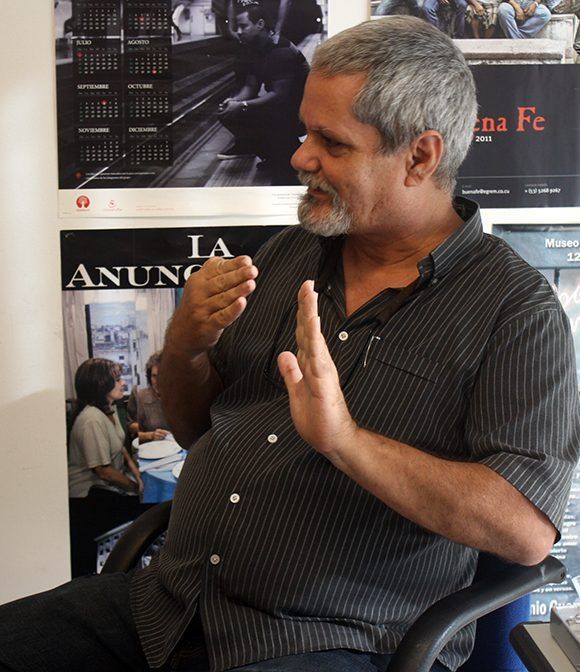
Enrique Ubieta. Photo: Annaly Sánchez/ Cubasí/ Cubadebate.
Enrique Ubieta, editor of the journals Cuba Socialista and La Calle del medio, talked with Cubadebate about political centrism, neo-annexation, and the permanent clash between socialism and capitalism, as conflicting systems - all important issues in the ideological struggle underway around the world today
*      *      *
WHEN the world had two political poles, a statement that sounded obvious was sometimes made: "Let's unite the best of capitalism and socialism in a single system." If both have their defects and virtues, why not just discard what doesn't work? The idea is attractive, it would be an idyllic society. But what prevents this? Why are we still talking about socialism and capitalism? Behind the apparently self-evident concept lies another: you can't extract the best of capitalism as if it were a damaged spot on a piece of fruit. The virtues of this system are based on its defects.
The idea cannot deliver what it promises, and the same options remain in place. We maintain a way of life that damages every corner of the planet or we seek an alternative to solve the problem at its roots.
In politics, as in life, trying to find a middle ground is tricky. But those who prefer to straddle the fence exist.
Cubadebate talked about political centrism with the Cuban intellectual, Enrique Ubieta, who responds to simple questions with dissertations on the history, relevance, and possible implementation of a "third way" in Cuba.
Is it possible for centrism to represent the best of both capitalism and socialism?
Capitalism is not the sum of its negative and positive components, of elements that can be saved or discarded. It is a system, that at one point was revolutionary and today is not. It engulfs and links everything: advanced technology, the most sophisticated wealth, and the most absolute poverty. The elements that contribute to greater productivity are the same ones that alienate human labor. Those that generate wealth for a few, produce poverty for the majority, on the national and international level. Establishing such a goal seems fallacious to me. The "best of capitalism" doesn't exist, as if it could be cleaned up, as if a good capitalism were feasible. There are very bad versions, like fascism and neoliberalism, but I am not aware of any good version. Capitalism is always savage.
On the other hand, socialism, as opposed to capitalism, is not an organic total, a reality already constructed, but rather a path that cannot, all at once, leave behind the system it is trying to replace. We try this and that, we adopt new structures, advance, and retreat, eliminate what doesn't work, correct errors over and over again - a path to another world, in the middle of the jungle, because capitalism is a hegemonic system. What characterizes it is its expressed, conscious intention, to replace capitalism.

But real alternatives are not within a system, they are counterpoised. They are capitalism or socialism. A center does not exist; there is no neutral ground between the two systems. Social democracy places itself within 
capitalism, but pretends to be a center, attempting what I have described as impossible, taking the best from both systems. In reality, it proposes an alternative method, not a fundamental change. Beyond a few isolated cases, like what Olof Palme could have been in Sweden, in a very rich country, which even without colonies, as part of the capitalist system benefited from the colonial and neo-colonial system.Does a center exist? On what principles is it founded? In the capitalist electoral system, a left and a right supposedly exist, but this left - with social democracy as its ideological framework, which was Marxist in its origins, and sought to reform capitalism until it gradually disappeared - functions today within the system and has rejected Marxism. This left differentiates itself from conservative parties with its social policies and its non-prejudiced understanding of diversity. The centrist formula functions within the capitalist system as an electoral option. The voter is managed like a customer since elections function like a market, and are full of right wing parties and left-wing parties that alternate in office, but implement similar policies, and thus the system constructs a false "third way."
Social democracy which appeared to triumph made no sense when the Soviet Union collapsed and the socialist camp disappeared. Not even in Sweden could it be maintained. (Olof Palme was assassinated). Since then, the system has no need for it, and it needs to remake itself. The third way of Tony Blair is a center that has moved to the right, accepting and implementing neoliberal policies, allying itself with imperialism in its wars of conquest. The history of social democracy is essentially European.
What role do centrist politics play in Cuba?
In reality, what is this center? It is a political orientation that appropriates elements of revolutionary discourse, adopts a reformist position, and in the end, brakes, detains, and creates obstacles to the development of a true revolution.
In other cases, as in ours, centrists attempt to use the political culture of the left that exists within Cuban society, because you can't get anywhere here with an ultra right wing discourse, trying to win adherents. You need to use what the people interpret as fair, and with this left-wing discourse begin to introduce capitalism through the back door. This is the role the center would have within a society like the Cuban.
Using different terminology in different contexts, positions similar to centrism have been present in Cuban history since the autonomy tendency attempted to derail the independence revolution of 1895… Why do you think there is a kind of resurgence of centrism in Cuba today?
In Cuban history, there is a very clear dividing line between tendencies, between reformist and revolutionary forces. This is a longstanding discussion in the history of Marxism, but today I will just refer to the Cuban tradition.
Reformism is represented by autonomism and annexationism. There are writers who insist on saying that annexationism aspired to a radical solution to win independence from Spain. In this case, the term "radical" is misused, because the roots of the problem were not addressed. Being annexed by the United States was a radical solution in appearances only, since advocates intended to protect the privileges of a social class here, avoid the economic damage of a longer independence war, and maintain the status quo via domination by another power which would guarantee order.
The two tendencies, annexationism and reformism, had as a basic premise an absolute lack of confidence in the people - the fear of "the mulatto horde," as the autonomists said.
Sell-out reformism has existed throughout the history of Cuba, into our times; it has not disappeared. The Revolution of 1959 swept it away as a real political option, but the class struggle has not vanished. If the bourgeoisie, or those who aspire to be, attempt to retake power in Cuba, that is the class that has been created outside of the country or that which could be gestating within, it is going to need an outside force to back it.
There will not be an autonomous capitalism in Cuba; it doesn't exist anyplace in the world, much less in a small, underdeveloped country. Cuban capitalism, as in the past, can only be semi-colonial or neo-colonial. The only way the bourgeoisie could retake and maintain power in Cuba is by way of an external power. That is the only option to multiply their capital, and we already know that the bourgeoisie's homeland is capital.
Today a situation exists that favors this kind of centrist tactics, promoted in Cuba from the North. The generation that made the Revolution is ending its historic-biological cycle. Some 80% of Cubans never lived under capitalism. Just imagine. Cuba is a country trying to build a society different from one which the people have never experienced. This is a period of change and new, previously rejected elements are being introduced in the conception of the socio-economic model. It is within this context that pro-capitalist forces construct their pseudo-revolutionary discourse, only for show, attempting to link up with changes underway in the country.
Does the updating of Cuba's economic, social model have any relation to centrism?
It does not. I'll appeal to concepts I found in the philosophy of Argentine Arturo Andrés Roig. It is imperative to differentiate two planes: discourse and discourse directionality, meaning and direction. I recall that when I studied the decade of the 1920s, I noticed that Juan Marinello and Jorge Mañach said almost the same things. They addressed very similar concepts, because they were intellectuals and part of the vanguard of Cuban thought and art. But if you follow the course of their lives, you understand that those words with similar meanings had very different intentions. Marinello joined the Communist Party and Mañach founded a party with pseudo-fascist tendencies. One fought for social justice and socialism, while the other longed, too late, to become the ideologue of a national bourgeoisie which no longer existed. I don't believe that this rupture was only the result of a later evolution; it was already implicit in the differing historical directionality of their discourses.
It is absolutely imperative to differentiate directionality, today more than ever, because we live in a very contaminated, promiscuous linguistic environment, in a global society which has assimilated the discourse and traditional gestures of the left, especially since WWII. The class struggle is covered up, and we must unmask our interlocutors.
What do the Guidelines propose? Seeking an alternative route of our own to advance toward socialism, since no universal model exists, and every country, every historical moment, is specific. Cuban socialism means a Cuban path toward a society that is different from capitalism, in a hostile world, facing poverty, an implacable blockade, and with few natural resources, except for the knowledge of its citizens.
This is Cuba's real situation. We propose to maintain and expand the social justice we have achieved, and to do so, we must revitalize our productive forces. We therefore establish limits on the accumulation of wealth and property, and we are concerned about the mechanisms used to enforce these limits. On the contrary, centrists, with language similar to ours, suggest that we have abandoned the idea of social justice, but demand more profound changes that would lead to the dismantling of the minimum achieved in terms of justice. The "deepening" demanded by centrists, from both the economic and political point of view, is a return to capitalism. Divergent, critical opinions can and must be heard, but they must all be directed in the same direction, toward the same horizon.
When someone says that socialism has not been able to eradicate corruption or prostitution, it saddens me, because it's true. But at the same time, one should ask: What would capitalism do about this? Make it worse. When the accusation is not directed toward strengthening the system we have in the country - the only one which can correct its defects, deficiencies, and errors - but rather toward its destruction, the criticism is counterrevolutionary.
Because everything we do will not be fine. We are going to make mistakes, of this we can be sure. One who moves forward makes mistakes. What's important is to have the capacity to rectify and be clear about the direction of what we are doing, why we are doing it. If at some moment we lose our way, we will need to check the compass. May everything we can do now, and what we discuss, be marked by the clarification of what we want and where we are headed.
Is it possible to be both centrist and at the same time revolutionary?
Absolutely not. A reformist is not a revolutionary. Which doesn't mean that a revolutionary can't make reforms. Revolutionaries made the land reform, the urban reform… Being a reformist is something else.
Reformists believe in statistics, in the exhaustive descriptions of their environment that ends up making it incomprehensible. A minimal description of this room's walls does not allow us to understand where we are, because this room is located in a building, in a city, in a country. That is, in order to be useful, the description presupposes a broader perspective. To be a revolutionary one must take the flight of a condor, which is what Martí demanded.
Reformists are descriptive; they believe that reality is limited to what can be seen and touched - that is why they are confused and fail. In politics, a reformist can only sum up the social environment's four visible elements. The revolutionary adds a fifth subjective element, that cannot be detected in plain sight - an element reformists do not take into account, because they have no confidence in the people. We can summarize this fifth element recalling the historic reunion in
Cinco Palmas of the eight survivors of the Granma expedition. In Raúl's words, "He (Fidel) embraced me and the first thing he did was ask how many rifles I had, after that the famous phrase: Now, yes, we have won the war!" This is leaping over the abyss, as Martí said.
This is what differentiates a revolutionary from a reformist. And a centrist is worse than a reformist, because in a certain way, he is a fake.
In the European tradition, all this conceptual, theoretical, political drama that has been concocted since the 19th century gives these debates some weight. In Cuba the underlying foundations of these debates are revealed much more clearly. And all of this talk of melding capitalism with socialism, trying to stay on a revolutionary plane of discourse, but in practice counterrevolutionary, in one way or another, from my point of view, is also evidence of a certain level of cowardice, of inability to fight for something you believe in. These people believe in a project that is opposed to ours, but don't have enough political strength, or the courage, to say so openly. (Cubadebate)

Monday, July 10, 2017

2655. Languages that Have No Words for Numbers

By Caleb Everett, The Conversation, April 27, 2017
Cultures without numbers, or with only one or two precise numbers, include the Piraha (shown here), who live along the sinuous banks of the black Maici River in Amazonia. Photo: Midia Ninja/Flickr.
In contrast, our own lives are governed by numbers. As you read this, you are likely aware of what time it is, how old you are, your checking account balance, your weight and so on. The exact (and exacting) numbers we think with impact everything from our schedules to our self-esteem.Numbers do not exist in all cultures. There are numberless hunter-gatherers embedded deep in Amazonia, living along branches of the world’s largest river tree. Instead of using words for precise quantities, these people rely exclusively on terms analogous to “a few” or “some.”
But, in a historical sense, numerically fixated people like us are the unusual ones. For the bulk of our species’ approximately 200,000-year lifespan, we had no means of precisely representing quantities. What’s more, the 7,000 or so languages that exist today vary dramatically in how they utilize numbers.
Speakers of anumeric, or numberless, languages offer a window into how the invention of numbers reshaped the human experience. In a new book, I explore the ways in which humans invented numbers, and how numbers subsequently played a critical role in other milestones, from the advent of agriculture to the genesis of writing.

Numberless cultures

Cultures without numbers, or with only one or two precise numbers, include the Munduruku and Pirahã in Amazonia. Researchers have also studied some adults in Nicaragua who were never taught number words.
Without numbers, healthy human adults struggle to precisely differentiate and recall quantities as low as four. In an experiment, a researcher will place nuts into a can one at a time, then remove them one by one. The person watching is asked to signal when all the nuts have been removed. Responses suggest that anumeric people have some trouble keeping track of how many nuts remain in the can, even if there are only four or five in total.
This and many other experiments have converged upon a simple conclusion: When people do not have number words, they struggle to make quantitative distinctions that probably seem natural to someone like you or me. While only a small portion of the world’s languages are anumeric or nearly anumeric, they demonstrate that number words are not a human universal.
It is worth stressing that these anumeric people are cognitively normal, well-adapted to the environs they have dominated for centuries. As the child of missionaries, I spent some of my youth living with anumeric indigenous people, the aforementioned Pirahã who live along the sinuous banks of the black Maici River. Like other outsiders, I was continually impressed by their superior understanding of the riverine ecology we shared.
Yet numberless people struggle with tasks that require precise discrimination between quantities. Perhaps this should be unsurprising. After all, without counting, how can someone tell whether there are, say, seven or eight coconuts in a tree? Such seemingly straightforward distinctions become blurry through numberless eyes.

Children and animals

This conclusion is echoed by work with anumeric children in industrialized societies.
Prior to being spoon-fed number words, children can only approximately discriminate quantities beyond three. We must be handed the cognitive tools of numbers before we can consistently and easily recognize higher quantities.
In fact, acquiring the exact meaning of number words is a painstaking process that takes children years. Initially, kids learn numbers much like they learn letters. They recognize that numbers are organized sequentially, but have little awareness of what each individual number means. With time, they start to understand that a given number represents a quantity greater by one than the preceding number. This “successor principle” is part of the foundation of our numerical cognition, but requires extensive practice to understand.
None of us, then, is really a “numbers person.” We are not predisposed to handle quantitative distinctions adroitly. In the absence of the cultural traditions that infuse our lives with numbers from infancy, we would all struggle with even basic quantitative distinctions.
Number words and written numerals transform our quantitative reasoning as they are coaxed into our cognitive experience by our parents, peers and school teachers. The process seems so normal that we sometimes think of it as a natural part of growing up, but it is not. Human brains come equipped with certain quantitative instincts that are refined with age, but these instincts are very limited. For instance, even at birth we are capable of distinguishing between two markedly different quantities – for instance, eight from 16 things.
The birth of numbersBut we are not the only species capable of such abstractions. Compared to chimps and other primates, our numerical instincts are not as remarkable as many presume. We even share some basic instinctual quantitative reasoning with distant nonmammalian relatives like birds. Indeed, work with some other species, including parrots, suggests they too can refine their quantitative thought if they are introduced to the cognitive power tools we call numbers.
So, how did we ever invent “unnatural” numbers in the first place?
The answer is, literally, at your fingertips. The bulk of the world’s languages use base-10, base-20 or base-5 number systems. That is, these smaller numbers are the basis of larger numbers. English is a base-10 or decimal language, as evidenced by words like 14 (“four” + “10”) and 31 (“three” x “10” + “one”).
We speak a decimal language because an ancestral tongue, proto-Indo-European, was decimally based. Proto-Indo-European was decimally oriented because, as in so many cultures, our linguistic ancestors’ hands served as the gateway to realizations like “five fingers on this hand is the same as five fingers on that hand.” Such transient thoughts were manifested into words and passed down across generations. This is why the word “five” in many languages is derived from the word for “hand.”
Most number systems, then, are the by-product of two key factors: the human capacity for language and our propensity for focusing on our hands and fingers. This manual fixation – an indirect by-product of walking upright on two legs – has helped yield numbers in most cultures, but not all.
Cultures without numbers also offer insight into the cognitive influence of particular numeric traditions. Consider what time it is. Your day is ruled by minutes and seconds, but these entities are not real in any physical sense and are nonexistent to numberless people. Minutes and seconds are the verbal and written vestiges of an uncommon base-60 number system used in Mesopotamia millennia ago. They reside in our minds, numerical artifacts that not all humans inherit conceptually.
Research on the language of numbers shows, more and more, that one of our species’ key characteristics is tremendous linguistic and cognitive diversity. While there are undoubtedly cognitive commonalities across all human populations, our radically varied cultures foster profoundly different cognitive experiences. If we are to truly understand how much our cognitive lives differ cross-culturally, we must continually sound the depths of our species’ linguistic diversity.

2654. Cuba: Critical Thought in the Socialist Transition

By Frank Josué Solar Cabrales, In Defense of Marxism, July 6, 2017
 Conference on the occasion of the fiftieth anniversary of Pensamiento Crítico in Havana. Photo: Rosa Encinas. 
Introductory note by In Defense of Marxism: This is the text of an essay presented at the Conference on the occasion of the 50th anniversary of Pensamiento Crítico(Critical Thought) magazine which took place in Havana on February 21, 2017. Pensamiento Crítico was a monthly magazine published in Cuba from 1967 until 1971. Edited by Fernando Martínez Heredia (1939-2017), the magazine was part of an open discussion about Marxism within the Cuban revolution, in which many rejected the stale Stalinist approach taken by the Soviet manuals on “Marxism-Leninism.”
Frank Josué Solar Cabrales is a Cuban communist and lecturer at the Universidad de Oriente in Santiago de Cuba. We publish his essay here as we think that, starting from an appraisal of Pensamiento Crítico, he makes a number of very sharp and relevant points about the situation in Cuba today and the way forward for the Cuban revolution.
*      *      *
The distance that separates us today from the first issue of Pensamiento Crítico (Critical Thought) is exactly the same as the distance between this revolutionary, intellectual adventure and the October Revolution: half a century. The coincidence in this case is not limited to random chance.
The Russian and the Cuban Revolutions unleashed the creative energy of the masses, who, for the first time, had a sense of ownership over everything and brought everything under their control. The revolutions created an atmosphere of free and open debate, sparked and supported by a wave of revolutionary struggles throughout the world, and entrusted their fate to the success of those struggles. Similarly, the unfavourable outcomes of the class struggle internationally caused setbacks in both revolutions, although to very different degrees in each case.
In the final years of the USSR, the revolutionary tendencies that sought to defend socialism were demanding a return to the traditions of Lenin and the Bolsheviks to find support for their positions. Today, the bureaucratic model of socialism of the Soviet Union and Eastern Europe has collapsed, and we are now faced with the real threat of capitalist restoration. We can find the way forward in our own history, in the original contributions of our kind of Cuban “Bolshevism” of the first decade of the Revolution—of which Che and Fidel were the main exponents, and of which Pensamiento Críticowas part in its own right. Fidel turned to this original source at another vital juncture in the Cuban Revolution, in the 1980s, when the process of rectifying errors and negative tendencies began.
Pensamiento Crítico was the intellectual product of the Revolution, at a time when theoretical education was felt to be an urgent necessity. In contrast to the later impoverishment of social thought, the magazine displayed a diverse range of international left ideas in its publications. The only criteria for selection were quality and intellectual rigour. All the main exponents of revolutionary thought were featured in the paper, including schools of thought, theses, and theories that were opposed to the positions of the editorial board. This was part of the freedom of thought, democratisation of knowledge, and wide access to culture brought forward by the Cuban Revolution. It reflected the great themes that were crucial to all social inquiries of the time: Revolution, the struggles for national liberation and popular resistance, the economic structures of domination, the theory of socialism.
Since it was shut down in 1971, Pensamiento Crítico can only be related to the most creative and liberating period of the Cuban Revolution, and not to the mistakes that came later—that is, the part of the Revolution that is not the Revolution. Today, five decades later, Pensamiento Crítico still serves its purpose, and its short and intense five years of existence still provide a useful tool for the  advancement of freedom and socialism in Cuba. Of course, for its recovery to be truly valuable for us today, it must be creative and not a mechanical copy.
Today, almost nobody talks about the socialist transition. To some, it appears to be an outdated concept, but it is essential to our task that we reopen this debate. It must be urgently recovered for its political, theoretical, and methodological usefulness. Establishing communism as our main goal does not only provide the utopian horizon to push us forward, but also the ideal point of reference with which we can contrast our daily reality and practices during the transition.
Socialism is more than a state, a model, a fixed moment, or a specific mode of production. Rather, it is a period of transition, a process in motion. It is a path more than it is a point of arrival. From this point of view, which is the classical view, socialism is the period of construction of communism, and its fundamental objective is to consolidate the communist way of life over the capitalist. This was the conception of radical Cuban revolutionaries in the 1960s, when they talked about the parallel construction of socialism and communism.
The Revolution and its conquests would not have been possible within the limits of sustainability of the technocrats and capitalists. From a narrow, purely economistic view, the conquest of every justice and the guarantee of a decent livelihood for all people would never be sustainable. That could only be a dream of mad men or fanatics. But the social development achieved by Cubans in so many aspects of life during the past 60 years has reached the level of the developed capitalist world, going far above the existing material conditions of reproduction. This goes beyond what would have been achievable on a small island if a Socialist Revolution had not removed the limits of what appeared possible.
The market and the economic categories of capitalism do not work for building socialism. They must be understood as a necessary evil that must be tolerated during a transitional period. But the gradual elimination of these tendencies is precisely one of the indicators of the progress of socialism in the transition. If adverse circumstances make it necessary to extend such measures, we should understand and explain the situation as a setback—as Lenin did when he applied the New Economic Policy (NEP)—, and never as a step forward towards communism. In other words, the capitalist market and mechanisms of production can be used circumstantially for us to survive and recover, but not to generate the wealth and material base necessary for socialism, because they can only lead to capitalism.
All of this starts from a widespread misconception, reinforced by common sense: socialism is very fair and works wonders to secure cultural and social rights, but economically it is a disaster, it is inefficient and does not create wealth, nor does it stimulate production and growth. Therefore, it seems clear that the solution should be to combine the best of both systems. Let us utilize the proven efficiency of capitalist economic mechanisms to produce wealth, and the socialist political model to distribute it as fairly as possible, in particular to assist the ones who are most in need. This is the old reformist dream of social democracy, forever unfulfilled because it is completely disconnected from reality. The pragmatist Chinese proverb sums up their idea in a sentence: “It doesn’t matter if a cat is black or white, so long as it catches mice.”
The color of the cat makes no difference. Of course, whether the cat catches mice is a matter of concern to socialism—the more the better. But it also matters how it is catching them. We should see socialism not as a mere system of more or less fair distribution of wealth, but rather as the creation of a new culture, with new social relations, new human beings—along with the material basis necessary to satisfy people’s needs. This purpose cannot be served by any kind of economic development, much less one that is based on the exploitation of the labor of others, which engenders selfishness, inequality, and poverty. Misery and inequity cannot be normalized.
The economic growth necessary for socialism must be achieved through socialist means, and not through capitalism’s worn-out tools. It is not even a question of a parallel development of the so-called material basis for socialism and the new man as two distinct, simultaneous processes—on the one hand socialist economics, and on the other hand communist morality. Instead, as Che said, they are one and the same process.
We cannot use the old whips of capitalism if we wish to achieve true emancipation. Rather, the only way to increase productivity and generate economic growth by socialist means, is through consciousness, education, the formation of new men and women, and new social relations of production among them. In this sense, genuine workers’ control over politics and the economy is not secondary, but the necessary condition for the transition, and the only way it can develop the productive forces in a socialist sense.
To understand the transitional period as a process of tension between the old refusing to disappear and the new struggling to be born, does not mean to accept these contradictions as normal and tolerable. We must identify and know them well, in order to resolve them in the direction of socialism. That is to say, our role is not that of a doctor watching over the health of the old capitalist order, but rather that of a midwife working with all our strength to aid the painful birth of a new world of justice.
Revolutionary Marxism, apart from being a guide to action in the transformation of society, must be more than a tool for analyzing and understanding how capitalism works. It must also serve for a rigorous and honest examination of society in the socialist transition, to provide an account of its tendencies and contradictions, assess its progress and regressions, and anticipate its development. Otherwise it would cease to be an instrument for liberation, and would become a mere theory to legitimize those in power.
Left criticism—at least one worthy of such a name—is not dangerous to the Revolution, but to the bureaucracy. Left criticism is what Che made when he warned about the dangers threatening the construction of socialism, and about the possibility of capitalist restoration in the USSR. It is what Fidel did constantly throughout the revolution, for instance when on November 17th 2005 he attacked corruption and the new rich. And it is also what Raúl continues to do when he warns us of the need for an anti-capitalist, anti-imperialist ideology; to never lose sight of the problems affecting the people; and to the present and future generations of leaders to always maintain the outlook that this is a revolution of the masses, by the masses, and for the masses.
Today, this left criticism is more necessary than ever to avoid capitalist restoration in Cuba. The unity of all revolutionaries is a precondition for the strengthening and defense of the Revolution from attacks by imperialists and the right wing. But its use by the bureaucracy could serve to defend the illegitimate interests of a small group, which would ultimately endanger the Revolution, and would prepare its defeat without the possibility of a strong reaction. We cannot forget the lessons of history.
The accusation by a corrupt, usurping bureaucracy against left-wing revolutionaries of jeopardizing unity and aiding the enemy led to the murder and exile of thousands of communists in the Soviet Union. This consummated the bureaucratic counterrevolution, which exterminated the generation of Bolsheviks who made the revolution alongside Lenin, opening the way in the long run for capitalist restoration. The same bureaucracy that accused revolutionaries of undermining the unity of the people later became the new capitalist class. The vast communist ranks, accustomed to uncritically obeying the leadership’s line as to preserve unity, were unable to take action to prevent this.
The experience of socialism in the 20th century shows that unity is essential to defend the Revolution, but unity alone is not enough to further its development and prevent its defeat. Revolution must come with popular control over the bureaucracy, that is, as an effective exercise of popular power and a purposeful act of critical left thought.
What kind of socialism? As François Houtart says, neither the one that’s a joke—social democracy—, nor the one that’s fearsome—stalinism. Of course, most of the regimes that called themselves socialist in the 20th century had nothing to do with real socialism. Mistaking the Stalinist model, which spread throughout the world to different degrees, for true socialism is like mistaking the Inquisition with primitive christianity—which was revolutionary, collectivist, and tied to the popular masses. The socialism that we strive for here and around the world is in favor of freedom and equality; the kind of socialism which points to a society of free associated workers, where the free development of the individual is the condition for the development of all, and where power and property belong to all. A new world, with no Cesars and no bourgeois. A revolutionary cannot settle for less.

2653. What New York Times Got Wrong on Assessment of Transition to 100% Renewables

By Mark Jacobson, EcoWatch, July 9, 2017

This is a response to Eduardo Porter's article in the New York Times on June 20, "Fisticuffs Over the Route to a Clean Energy Future."

Porter's article described a paper published in the Proceedings of the National Academy of Sciences (PNAS) by Chris Clack and coauthors on June 19, criticizing a paper colleagues and I authored in the same journal in 2015. Our original paper showed that the U.S. can transition to 100% clean,  renewable energy in all energy sectors without coal, nuclear power or biofuels. Porter makes several mistakes and omissions in his article that I correct here.

First, Porter relies on his claim that "21 prominent scholars…took a fine comb to the Jacobson paper and dismantled its conclusions bit by bit." This one sentence contains two falsehoods. For starters, our conclusions were not dismantled et al. Our response, which PNAS published as the last word by not permitting a response by Clack, concludes instead, "The premise and all error claims by Clack et al. about Jacobson et al. are demonstrably false. We reaffirm Jacobson et al.'s conclusions."

More important, Porter fails to point out that Clack and coauthors' own disclosure published in their paper indicates that only 3 out of 21 coauthors performed any type of research for the article. The remaining 18 did no research whatsoever, merely contributing to writing the paper with admittedly no research contribution. Of the three authors who did perform research, one has admitted publicly, "I am not an energy expert" (see 15 minutes and 32 seconds into this UCLA debate).


Porter quotes another author, David Victor referring to our 2015 PNAS paper, as stating, "I thought 'this paper is dangerous'," despite the fact that Victor has admitted to doing no research for the article and despite the fact that he is neither a scientist nor an engineer but instead works on international policy and law. Similarly, Porter quotes another author, Varun Sivaram, as stating about the Clack paper, "Our paper is pretty devastating." But, Sivaram has also admitted in writing that he did no research for the article. Moreover, he works in foreign relations, not energy science or engineering.
In the meantime, our 100% clean, renewable energy peer-reviewed papers have collectively had more than 85 researcher-coauthors and more than 35 anonymous peer reviewers.

Porter then mimics Clack's false claim that "most of the scientific community represented on the Intergovernmental Panel on Climate Change" argues that nuclear power is necessary to help solve the climate problem.

However, Porter is wrong. As stated in our PNAS-published response to Clack, the IPCC says the exact opposite: "Without support from governments, investments in new nuclear power plants are currently generally not economically attractive within liberalized markets ..." I don't intend to be harsh. But this statement was in our response, so Porter should never have claimed about the scientific community believing nuclear is necessary in the first place.

Next, Porter claims that I "accused (my) critics of being shills for the fossil fuel and nuclear industries." No, I do not believe any of the authors are shills (someone who is paid specifically to act on someone's behalf), but I do believe most of the authors have either a research, advocacy, or financial conflict of interests in what they have written. For example, one coauthor, Sweeney, "periodically serves as a consultant or advisor to Exxon Corporation, ARCO, the American Petroleum Institute,…", all of whom profit from fossil fuels. He has also stated unequivocally, "If we were to give up on the fossil fuels, we give up on both the economy and security very quickly" (see 1 hour 29 minutes into this video).

Similarly, Jane Long, another co-author, is a Senior Fellow of the Breakthrough Institute, a pro-nuclear advocacy group. It is therefore, no surprise that several authors would criticize our work because of their conflict of interest in keeping fossil fuels and nuclear power on the table.
Porter then criticizes increasing the use of underground storage in rocks, but this storage technology is inexpensive (less than 1/300th the cost per unit energy stored than batteries) and a form of district heat. Sixty percent of Denmark's heat is from district heating using water rather than rocks. Underground rocks are a less-expensive substitute for water tanks. He also somehow thinks it is impossible to build pipes to homes when virtually every new home in the United States has gas and water pipes built to it.

Porter further criticizes the use of more hydrogen, whereas hydrogen production from electricity is an advanced technology developed more than 130 years ago. Porter then unduly criticizes the cost of capital we use and the ability of industry to use demand response to shift times of energy use, when these claims are clearly addressed in our PNAS reply letter at.

Porter then falsely implies that we propose to add new hydroelectric installations equivalent to 600 Hoover dams resulting in 100 times the flow of the Mississippi River. This analogy is nonsensical since our annual energy output is not increased at all, whereas a flow rate of 100 times that of the Mississippi would mean that we would increase the annual energy output of hydropower by a factor of ten, which we don't. The mistake by Porter and co-author of the PNAS article, Ken Caldeira, who provided this claim, is that whereas we increase the ability of the hydro to discharge significantly faster for some hours, we discharge much less during other hours in order to ensure there is zero change in the annual output. Caldeira and Porter tried to make it sound as if we increase the flow rate indefinitely.

Regardless, an alternate solution to increasing the hydropower discharge rate is to increase the discharge rate of concentrated solar power (CSP) and/or to add batteries. Both methods result in low-cost solutions as illustrated for the United States and Canada here.

The fact that the system works with either increased hydropower discharge or increased CSP and batteries contradicts Porter's quote of Clack: "The whole system falls apart because this (hydropower) is the last thing that is used. If you remove any of this, the model fails." To the contrary, the result above demonstrates that the model works without increasing hydropower peak discharge, disproving the main premise of the Clack article that our nation's energy can't run 100% on wind, water, and solar power at low cost.

In sum, I believe that a debate about our energy future can be constructive. But inaccurate statements about scientific work and amplifications of those inaccuracies help no one. Had Porter read our PNAS response carefully, he would not have made the errors he did. Nevertheless, my colleagues and I are always seeking to improve our methods and calculations. Our goals are to better the quality of life of everyone by determining the best ways to provide clean, renewable, and reliable energy while creating jobs and improving people's health and reducing costs. Hopefully, others share these goals, regardless of political party affiliation.

Friday, July 7, 2017

2652. Darwin on Moral Intelligence

 By Vincent di Norcia, Philosophy Now, June/July 2017
Charles Darwin

“There is grandeur in this view of life, with its several powers… from so simple a beginning endless forms most beautiful and most wonderful have… evolved.” Charles Darwin, The Origin of Species, p.470.
“Moral concepts are embodied in and partially constitutive of forms of social life.” Alasdair MacIntyre, Short History of Ethics, p.1.
Darwin had an evolutionary view of ethics ‘from the side of natural history’ which connects with MacIntyre’s insight into morality’s connections with social life. This article will show how Darwin argued in The Descent of Man that the moral sense evolved from a combination of social instincts and well-developed mental powers. If this is so, moral philosophers will need to pay more attention to Darwin’s views, and in response, rethink morality along naturalistic lines. The result, I suggest, can be a rich concept of moral intelligence. (All unidentified page references are to The Descent of Man and Selection in Relation To Sex, Princeton edition, 1981.)

The Social Instincts
The social instincts, Darwin wrote, are “the prime principle of man’s moral constitution” (p.106). The moral sense “is aboriginally derived from the social instincts, for both relate at first exclusively to the community.” (p.97). Darwin offered extensive evidence that we are social animals, and that we share our moral sense with our primate evolutionary predecessors.

The social instincts, Darwin held, have evolved through “numerous slight, yet profitable variations.” (Origin, p.223). Associating in groups improves the chances of survival compared with solitary existence. Sometimes, he admitted, one can not determine whence a specific social instinct originated – natural selection; other instincts such as sympathy; reason; imitativeness; or ‘long continued habit’. Moreover, different instincts have different degrees of strength – but the social instincts are stronger and more enduring than many others. Darwin said the social instincts are not like instinctual behaviour, viz, a bird’s drive to migrate and build nests. However, he added, the disposition to associate may be innate in the higher animals. In evidence he observed that many animals are unhappy if long separated from their fellows, also noting “man’s dislike of solitude and his wish for society beyond that of his own family.” (p.84). Indeed an individual who showed no trace of social feeling would be “an unnatural monster.” (p.90).

The Moral Sense
The moral sense, Darwin claimed, “first developed, in order that those animals which would profit by living in society, should be induced to live together” (p.80). It is “fundamentally identical with the social instincts” (p.98). Furthermore, Darwin interpreted “the imperious word ought” not just as a Kantian sense of duty, but also as reflecting an instinct, be it innate or acquired. This moral sense is essentially utilitarian, reflecting the greatest happiness principle, being directed as it is to the general good of the community. Moreover, over time “man [regarded] more and more not only the welfare but the happiness of his fellow-men” (p.103). This social utilitarianism, Darwin added, was reinforced by psychological factors such as the “strong retentiveness of former states of pain or pleasure,” which helped humans to participate in the pleasures of others, care about their sufferings, and to develop social emotions like love and sympathy. In stressing the importance of beneficial outcomes, Darwin’s utilitarian social ethic utilizes but goes beyond subjective factors such as motives and intentions. Darwin did momentarily lapse into proto-idealism, in stating that “the highest stage of… moral culture” lies in controlling our thoughts (p.101), but he never reconciles this aside with his core utilitarianism, naturalism or his support of altruism. How ever, morality does require significant mental powers (see below).

But how did the moral sense evolve from the social instincts? On the one hand, the near-identity of morality with the social instincts would suggest that morality is innate too; but Ruse’s view that “we are moral because our genes… fill us full of thoughts about being moral” seems overstated (Ruse, in Evolutionary Ethics, Nitecki & Nitecki, p.148).

Darwin did see the moral sense as inherited and evolutionarily transmitted. But moral conduct is also greatly influenced by social approval. He cited Herbert Spencer’s view that experiences of utility were consolidated over the generations, adding that morality is first learned “from habit, following on beneficial expression, instruction, and example” (p.102, cf Aristotle: Ethics, II.6). Indeed the repeated performance of moral actions would, Darwin wrote, make them indistinguishable from an instinct. But this Lamarckian-like explanation is not compatible with the core principle of natural selection.
Human cultures and animal species each follow widely different notions of morality, but the ‘most important’ social virtues must be practiced if association is to be possible. Darwin distinguished between higher, social virtues, and lower, ‘self-regarding’ virtues. He held that individuals would gratify their desires unless they “interfere... with the good of others” (p.93).

Morality makes society possible, Darwin explained, by minimizing criminal behaviour and social conflict:
“No tribe could hold together if murder, robbery, treachery, &c., were common; consequently such crimes within the limits of the same tribe ‘are branded with everlasting infamy’; but excite no such sentiment beyond these limits.” (p.93)
In truth, social life does wither in regions of high crime and violence, as people tend to avoid high risk interactions and threatening situations. In prohibiting harm to others, and in condemning and punishing criminal conduct, the moral sense reduces the risks and encourages association. With the help of such ‘moralistic aggression’, the moral sense enables the wider spread of reciprocal altruism. The result is that in normal functioning social life, violence and criminal conduct are relatively rare. Indeed, our sense of justice and fairness may be an evolutionary result of reciprocity supported by a socially-interactive moral sense. Of necessity everyday social life must be low risk. The incidence of aggressive behaviour is much lower in social animals than the shop-worn Hobbesian myth about an allegedly ‘natural’ tendency to warlike violence would lead one to predict. The countless peaceful interactions of everyday social life far outweigh the incidence of violently aggressive behaviour, as even the most rudimentary observation shows.

For Darwin, morality is altruistic. Trivers defines altruism as “behaviour which benefits another organism, not closely related” (Natural Selection and Social Theory, pps.18-19). Individuals, Darwin felt, would risk their lives and endure torture for the welfare of the group. Yet while originally costly, it is important to note that altruism likely benefits the agent over the long run. Indeed, ‘hard-core altruism’, in which the agent does not benefit at all from acting morally, is neither sustainable nor intelligent. Self-sacrificing hard-core altruism, like selfish egoism, cheating and violence, neither encourages nor rewards social interaction. On such harsh, punitive bases as these, social relationships could not emerge, would not be sustained, and would not have survived and evolved as they have. Any hard-core-altruistic social animals that emerged would soon become extinct. It follows that hard-core altruism is not a viable, or intelligent, social option. Altruism needs to be mutual.

Reciprocity

Altruism must be reciprocated if social life is to be sustainable. Or – to be sustainable, social interactions must benefit all social actors. However, reciprocation can be immediate or over time, specific or general, unequal or equivalent – as long as an intelligent altruistic agent’s expectation of reciprocal advantage is credible. Moral intelligence, then, is needed, to assess equivalences in benefits. On this assessment, reciprocal altruism is not only morally intelligent, it represents a recipe for sustainable social symbiosis.

Reciprocity takes both active and passive forms. Both are essential to the continuance of social life. Passivereciprocity is the sense of social interactions in which no one is harmed or threatened. It builds on the low risk, low crime foundation created by an effective moral code, reinforcing moral norms that prohibit harm to others. Thus we see a minimal tacit morality of non-threatening coexistence with anonymous strangers on urban streets, in buses, trains and other social spaces. To the extent that this minimally moral conduct is (passively) reciprocated, social life becomes peaceful and non-threatening.

But for social life to prosper, spread and endure, people must gain from coexisting and interacting with others. Active, mutually-beneficial reciprocity is needed. From now on, when I say ‘reciprocity’, I will mean this positive, mutually-benefitting sense. Reciprocity so defined is in fact evident in much social behaviour: sex, friendship, dining, work, communication, games, negotiations, politics and trade. Since the benefits of benign interaction outweigh the benefits of avoidance, active reciprocity emerges and soon spreads: mutually-beneficial reciprocally altruistic social interactions reinforce associating with others. It is a robust force for social cohesion and continuity, and much more evolutionarily sustainable than mutual threat and strife. With the help of moral aggression in punishing violators, it suggests a solution to the so-called Prisoner’s Dilemma, where altruism is not reciprocated: Act peacefully or altruistically until the other person acts threateningly or selfishly. Then respond in kind, and punish violators. This last, I note, constitutes a negative form of reciprocity. But one should try to restore peaceful interaction as soon as possible, for we are intelligent social actors, not prisoners.

Trade, for example, is inherently an actively reciprocal, mutually-beneficial exchange relationship. For millenia, great trade routes like the Silk Road, and regions like the Mediterranean, have brought diverse peoples together. Trade lays the foundations for a peaceful, prosperous society when combined with the division of labour and personal property rights. For Matt Ridley, trade probably lies at the origin of morality (See his The Origins of Virtue, Ch. 2).

The core moral norm inherent in reciprocity is the Golden Rule: do unto others as you would have them do unto you. The social instincts and the moral sense, Darwin maintained, naturally lead to the Golden Rule (p.106). It calls for reciprocal altruistic responses from everyone, benefiting all partners to an interaction, and so it embodies the essence of morality.

The more that altruistic behaviour is reciprocated by others, the more social interaction spreads and endures, among strangers as well as kin and neighbours. (Indeed full mutually-beneficial reciprocity also occurs between different species, such as the cleaner fish and its host.) Darwin argued that taken together, morality, sociability and intelligence enable individuals to “extend their social instincts and sympathies” beyond their kin “to men of all nations and races.” The widespread diffusion of reciprocity and moral recognition may be a rare instance of moral progress in history:
“As man gradually advanced in intellectual power… his sympathies became more tender and widely diffused, so as to extend to men of all races, to the imbecile, the maimed, and other useless members of society – and finally to the lower animals – so will the standard of morality rise higher and higher” (p.103).
There are several preconditions for the emergence of reciprocal altruism: a long life, spatial proximity, mutual dependence, mutual defence, parental care, and a dominance hierarchy. The spatial proximity and temporal continuity of small communities for example facilitate both social interaction and the detection and punishment of violators and cheaters. Thus primates such as chimpanzees who tend to live in small communities demonstrate reciprocal altruism. But in modern times technology and culture have enabled humans to vastly increase in population and territorial range, helped by faster communications media. As the size of the group one can live with in peace increases, so do the intellectual powers required by the moral sense.

Morality and Intelligence

The moral sense, Darwin held, requires extensive mental powers:
“The following proposition seems to me highly probable – namely, that any animal whatever, endowed with well-marked social instincts, would inevitably acquire a moral sense or conscience, as soon as its intellectual powers become … nearly as well developed, as in man” (pps.71-2).
“Conscience,” he said, “is by far the most important… of all the differences between man and the lower animals” (p.70). Still, he said dogs may have a conscience (p.78). Indeed, Darwin held that there were differences in degree rather than in kind between man and the higher animals in their mental faculties (p.83). He reiterated the point a few pages later. The standard of morality improved “as man gradually advanced in intellectual power and was enabled to trace the more remote consequences of his actions; as he acquired sufficient knowledge to reject baneful customs and superstitions … as from habit... instruction and example” (p.103). Moral actions, then, need not all be deliberate: they can also be habitual, and even impulsive.

Moral intelligence demands a rich suite of mental powers, for a moral being is “capable of comparing his past and future actions or motives and of approving or disapproving of them” (p.88), and of adapting to changing conditions. Darwin also cites other mental powers: memory, foresight, evaluation, reflection, self-command, learning from instruction, example, impulse, and developing habits. Linguistic and mathematical competences, I note, are necessary to pursue “the complex trains of thought” involved in moral decisions. Emotions, such as honour, shame, sympathy, self-interest, beauty and other natural feelings are also operative. The ‘inward monitor’ of conscience functions mostly through an emotional feeling of remorse for doing wrong (p.91). Only an animal endowed with a large brain and a rich, sophisticated intelligence could develop the human’s powers of social interaction, self-awareness, abstraction, and (therefore) an equally-intelligent moral sense.

A Sense of Darwin’s Morality

Darwin’s theory of the moral sense, its close connection with the social instincts, and the extensive mental powers it demands, is well-argued, and based on extensive study and observation. The moral sense, one is led to conclude, is not only a product of evolution, it also implies an objective normative ethic (that is, practical knowledge about right and wrong). If the moral sense, like sociability, is innate, it might be something like a predisposition due to a deep moral code. That deep code would include only a few general ethical norms, such as care for the survival, reproduction and well-being of oneself, others, one’s community and one’s habitat, and a bias for reciprocity. It might be said to constitute a minimal objective normative ethic.

Such an evolutionarily-grounded deep moral code would not imply that evolutionary adaptations or advantages either determine or justify specific moral choices. On the contrary, individual decisions reflect complex, intelligent interactions between individuals, their cultures, and the changing environments and situations in which they operate. (The relationship between the deep code and surface morality might be like that between deep grammars, linguistic competence, different languages, surface grammars and specific utterances that some language theorists have hypothesized.) Those myriad choices contribute to the species’ future evolution more than they are determined by our evolutionary past. Humanity’s social evolution seems after all more cultural than genetic – if indeed the history of human cultures traces an evolutionary path at all.

A weak link in Darwin’s moral theory is that the extensive mental powers he correctly indicates as essential to the moral sense’s operations seem inadequate to the complex social tasks required by the social instincts. Interpreting and assessing the moral significance of others’ behaviour and negotiating mutually-beneficial relations, requires additional, specifically social abilities beyond the essentially reflective moral powers required by Darwin: social skills such as verbal communication, interpreting another’s body language, empathetic projection, and understanding other’s social mores, customs and norms, and negotiating good relations with others. These social competences go beyond any private thinking. Instead, they call for socially-oriented developmental flexibility in the brain and mind. Reciprocal altruism, a central component in human morality according to most naturalistic theorists – this writer, for instance – therefore requires a set of complex cognitive and social powers. Dealing with violations of reciprocity such as violence, theft, and cheating, by, for example, imposing sanctions or negotiating reconciliation, represents further complex challenges. It requires all the above social powers, and moral aggression, to direct our emotions and actions to identifying, and correcting, injustices.

So there can be no doubt that the multiple requirements of Darwin’s moral theory demand well-developed intellectual powers – powerful and sophisticated social and moral intelligences. Howard Gardner’s well-known theory about multiple intelligences is helpful in clarifying how this conclusion goes beyond traditional logical and linguistically-driven notions of moral reasoning. In Frames of Mind (1983), Gardner argued for severalkinds of problem-solving practical intelligences, each with neural underpinnings: social (interpersonal), psychological (intrapersonal), bodily kinaesthetic, spatial, musical, logical-mathematical and linguistic intelligences. I would add temporal and emotional intelligences. The first is demanded by Darwin’s own stress on memory (viz, comparing past and present experiences) and on foreseeing outcomes. The second comes from recent research on the emotions and the brain. A distinctive characteristic of each intelligence is its ability to solve a different kind of problem. Gardner is clear that each intelligence accesses the other intelligences as needed.

On this reading, moral intelligence is a moral-problem-solving intelligence. It likely draws on all the other intelligences, since they’re usually needed to ever understand, let alone solve complex, situationally-varied moral problems. Inasmuch as moral intelligence’s evaluative and prescriptive capabilities do not seem to be part of the other intelligences, it would seem to require its own specific set of powers – one closely related to social and emotional intelligence, I suspect.

Conclusions

Darwin has presented an elegant naturalistic ethic, whose lineage goes back to Aristotle, Hume and Spinoza. His evolutionary understanding of human morality does not entail its reduction to anything simpler, living or inorganic. On the contrary, human morality’s social and mental complexity implies an unpredictable emergence from earlier primate morality and intelligence. As Darwin showed, our moral intelligence is part of humankind’s evolving social nature as an animal species. Darwin also claimed, presciently, that the moral sense should extend beyond humans to care for ‘the lower animals’ and ‘all sentient beings’. It has taken over a century for us to learn how profoundly right he was. Morality, we now understand, should reinforce the ecological interdependency of humans and other species.
The time has come for philosophy to fully recognize the depth and grandeur of Darwin’s naturalistic view of morality, society, intelligence and evolution. For it can help us understand our moral obligations, not only to each other but also to the “endless forms most beautiful and most wonderful” that evolve around and within us.

Vince is an Ethics and Sustainability Consultant and an Emeritus Professor of Philosophy at The University of Sudbury, Canada. He is currently working on neuroethics and a book on 21st century naturalism, provisionally entitled The Owl and the Canary. He thanks Ron De Sousa for his helpful comments.

Further Reading
Bernstein, William, 2008, A Splendid Exchange – How trade shaped the world, Atlantic Monthly Press.
Boulding, Kenneth, 1970, Beyond Economics, Ann Arbor.
Damasio, Antonio, 1994, Descartes’ Error, Avon; 2003, Looking for Spinoza, Harcourt.
Darwin, Charles, 1871, The Descent of Man.
De Sousa, Ronald, 1990, The Rationality of Emotion, MIT.
De Waal, Frans, 1996, Good Nature: The Origins of Right and Wrong in Humans and Other Animals, Harvard.
Gardner, Howard, 1983, Frames of Mind, Basic Books.
Maienschein & Ruse, eds, 1999, Biology & the Foundation of Ethics, CUP.
Midgley, Mary, 1994, The Ethical Primate, Routledge.
Nitecki, M.H. & D.V. Nitecki, eds, 1993, Evolutionary Ethics, SUNY.
Ridley, Matt, 2000, The Genome, HarperCollins; 1996, The Origins of Virtue, Viking.
Ruse, Michael, 1986, Taking Darwin Seriously, Blackwell.
Trivers, R. 2002, ‘Reciprocal Altruism’, in Natural Selection and Social Theory, OUP.
Wilson, E. O. 1978, On Human Nature, Bantam; 2000, Sociobiology – The New Synthesis, Harvard.