Tuesday, June 20, 2017

2635. U.S. Occupation of Guantánamo Naval Base Territory

By Ernesto Londoño, The New York Times, June 16, 2017
A postcard of the naval station at Guantánamo, Cuba, circa 1910.Credit Allan Seiden/Legacy Archive, via Getty Images
Guantánamo Bay, Cuba — The $4,085 check is delivered each year in April, addressed to the Treasurer General of the Republic of Cuba. That position ceased to exist decades ago. The Cuban government last cashed it in 1959.

Yet by submitting that paltry payment year after year, knowing it won’t be accepted, the United States continues to feel entitled to its oldest overseas naval base, a 45-square-mile sliver of prime coastline in southeast Cuba that is unlike any other military installation in the world.

On Friday, the Trump administration announced a partial rollback of the Obama administration’s opening with Cuba — limiting travel and business interactions. President Trump is once again recasting the relationship between the two neighbors as one of subjugation. Few issues exemplify this toxic dynamic as starkly as the convoluted history of how the United States came to open a naval base in this part of Cuba.

Guantánamo is best known today for the legal travesty it enabled in the wake of the Sept. 11 attacks, as the Bush administration deemed it the ideal locale to detain hundreds suspected of being terrorists in a territory that was under American control but ostensibly beyond the reach of constitutional protections. Since the prison was established in 2002, the legal status of the detainees has been at the heart of a contentious debate and a source of international condemnation.

What to do about the remaining Guantánamo prisoners remains a vexing, unresolved question. There are bigger ones, though, that American politicians have opted to ignore: Is it legally defensible to hold on to the territory in perpetuity? Have we become squatters in paradise?During the presidential campaign, Donald Trump vowed to keep Guantánamo open and “load it up with some bad dudes.” Since then, though, there has been no word from the White House or from Congress about the future of the prison, where only 41 detainees remain in a facility built to hold several hundred, or of the base, which is home to more than 5,000 service members and civilians. I visited Guantánamo for a few days this year hoping to get a sense of what the next phase for this bizarre base will entail.

To understand what should happen next, a bit of history is in order.

The United States formally acquired Guantánamo after it supported Cuba’s revolt against Spanish colonial rule. In 1901, the United States forced newly independent Cuba to agree to a set of conditions before withdrawing American troops from the island. The terms gave the United States the right to intervene in Cuba whenever it saw fit and to buy or lease lands “necessary for coaling or naval stations.” The initial lease for Guantánamo was set at $2,000 per year, paid in gold coins. The deal can be rescinded only by mutual consent.

Shortly after Fidel Castro came to power in 1959, the Cuban government demanded the withdrawal of American forces from Guantánamo and over the years has inserted increasingly explicit language in its Constitution to make clear it considers the base unlawfully occupied territory.

Is the continued American presence at Guantánamo sound under international law? The short answer is no.

“It amounts to a belligerent occupation,” said Alfred-Maurice de Zayas, an international law scholar who believes the base runs afoul of principles laid out in the Vienna Convention. Yet, he added, there’s no expectation of resolving the clash over Guantánamo mainly because “Cuba is not in a position to throw the United States in the water.”

Even if the base’s legal standing were sound, do we need it? Senior military officials argue that we do. Beyond the prison, they say, the base serves as a transit point for Cuban refugees who are intercepted at sea and manage to articulate a credible fear that they would be in danger if they were to return home. It has also served as a logistics hub to respond to natural disasters.

Adm. Kurt Tidd, who heads the Southern Command, told me that Guantánamo could once again come in handy in the event of a mass migration crisis, a scenario his troops routinely plan for through weekslong simulated drills that cost taxpayers millions of dollars.

Sticking around to triage a future refugee crisis might sound laudable. But as of early March, there were 28 Cuban migrants on base, waiting to be resettled to a country other than the United States. Between direct employees and contractors, the International Organization for Migration employs about 18 people to oversee the migrants’ care. Given the severity of refugee crises elsewhere, and reasonable alternatives for what has become a trickle of Cuban refugees, is this a fiscally responsible endeavor?

Before Sept. 11, Guantánamo had become a sleepy facility run by a skeleton crew. It now includes more than 1,400 buildings, according to the Navy. That makes Guantánamo larger than the naval base in Bahrain, home to the Fifth Fleet, and the naval base in Rota, Spain, which are among the Pentagon’s most strategically valuable overseas hubs.

While rent is certainly a bargain, running a base on territory deemed by the host to be illegally occupied is costly. The Cubans cut off the base from the power grid and water supply decades ago, so Guantánamo has to desalinate its water supply and generate its own power. Since hiring Cuban laborers is not an option, menial jobs are outsourced to Jamaican and Filipino contractors.

The detention task force in Guantánamo costs roughly $80 million per year, according to a spokesman. Separately, Congress appropriated $181 million for the current fiscal year for base operations. The latter figure is just slightly lower than the $195 million allocated for operations in Turkey, one of the primary hubs for the military campaign against the Islamic State. If one assumes the prison continues to be the primary reason to keep the base open, its current budget works out to $6.3 million per detainee. (The average yearly cost of a federal detainee in 2015 was just under $32,000.)

As the detainee population decreased during the final years of the Obama administration — which sought, and failed, to shut down the prison and transfer the remaining detainees to a facility in the United States — the Pentagon has embarked on a building spree at the base. Last July it issued a callout for construction contracts worth $240 million. The month before, the Pentagon awarded a $66 million contract to a firm owned by a Cuban-American family to build a new school on the base for the children of people posted there for long periods.

Congress has not seriously questioned the merits of this buildup. During a House Foreign Affairs Committee hearing in March 2016, only one lawmaker argued that the United States should rethink its claim to the land. “This is in my mind something that could be well characterized as colonialism,” Representative Alan Grayson, Democrat of Florida, who is no longer in Congress, said during the hearing.

Might the Cubans be willing to allow the United States military to remain on the base under a new agreement similar to those that regulate the presence of American service members on foreign soil across the world? David Kohner, the chairman of the Maritime History Center at the United States Naval War College, thinks this is the right time to be raising that question, considering President Raúl Castro of Cuba is expected to step down next year.
“This is a difficult history, but history is what it is,” he said, emphasizing the need to move on from the terms of a lease signed in 1903.

Since the Obama administration began normalizing relations with Cuba in late 2014, the two governments have begun cooperating more closely on maritime security, migration flows, counternarcotics and law enforcement matters. Mr. Trump’s shift on Cuba, ostensibly on human rights grounds, is an aberration for an administration that coddles brutal autocrats abroad and contradicts the foreign policy philosophy Secretary of State Rex Tillerson outlined during a recent Senate hearing. “We are motivated by the conviction that the more we engage with other nations on issues of security and prosperity, the more we will have opportunities to shape the human rights conditions in those nations,” Mr. Tillerson said.

The American presence in Guantánamo has long been a thorn in the Cuban psyche, a reminder of an era of American domination that is taught early and often in Cuban schools.
Carlos Alzugaray, a scholar who served as a Cuban diplomat from 1961 until the mid-1990s, told me there had been discussions during his time in government about what the Cuban government could do to challenge Washington’s claim on the territory. For instance, Havana could seek an opinion from the International Court of Justice on the legality of the American presence in Guantánamo or submit a detailed diplomatic note demanding the return of the territory.

“It could be presented constructively,” said Mr. Alzugaray, who lives in Havana. “It would be sensible if they asked us for 10 years to leave.”

Mr. Alzugaray said the prospect of negotiating a permanent American presence in Guantánamo is dim but not impossible.

“It would require finding a solution in which Cuban sovereignty is respected,” he said, noting that whatever happens, it shouldn’t continue as it is forever. “Here, it is something everyone feels hurt by.”

Monday, June 19, 2017

2634. The Democrats Put Trump in the White House

By Kim Moody, Solidarity, January-February 20017
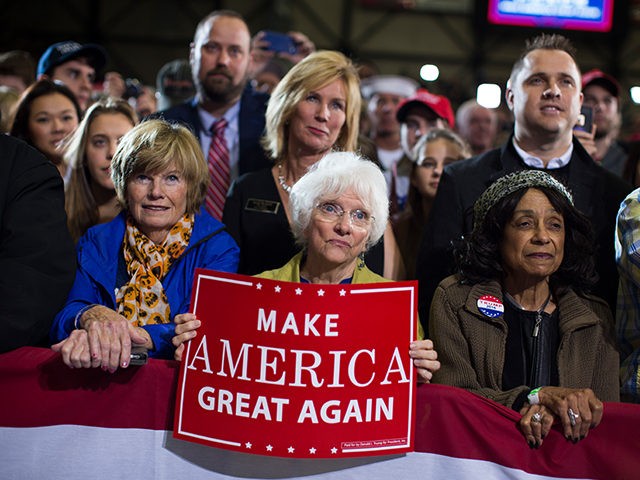
Photo: AP/Even Vucci
THE MEDIA STORY in the days following the 2016 election was that a huge defection of angry, white, blue-collar workers in the Rust Belt from their traditional Democratic voting patterns put Donald J. Trump in the White House in a grand slap at the nation’s “liberal” elite. But is that the real story?

While he didn’t actually win the popular vote, Trump did carry the majority (58%) of white voters. Furthermore, he won the key “battleground” states in the Rust Belt that are the basis of the media story, which raises serious questions. Who were these white voters? Was this the major shift that sent Trump to victory?

Exit polls taken during the primaries, when the Trump revolt began, showed that the whole election process was skewed toward the better-off sections of U.S. society and that Trump did better among them than Clinton. Looking at those voters in the general election from the 26% of U.S. households earning more than $100,000, who are unlikely to be working class these days, we see that Clinton got 34% of her vote, and Trump a slightly larger 35% of his, from these well-to-do voters.(1)

In other words, upper-income groups were overrepresented in the voting electorate as a whole, and both candidates drew a disproportionate part of their vote from the well-to-do, with Trump a bit more reliant on high-income voters. This in itself doesn’t rule out a working-class shift to Trump, but the media’s version of this is based on a problematic definition.

Among other problems, a large majority of those without a college degree don’t vote at all. Furthermore, people who don’t vote are generally to the left of those who do on economic issues and the role of government. Of the 135.5 million white Americans without degrees, about a fifth voted for Trump — a minority that doesn’t represent this degreeless demographic very well.

Another problem is that there are only about 18.5 million white, blue-collar production workers — the prototype of the defecting white industrial worker.(2) If we double this to account for adult spouses to make it just under 40 million and assume that none of them have degrees, it still only accounts for a little more than a third of those white adults lacking the allegedly class-defining degree.

Of course, there are another 14 million or so white service workers who are working class, but even if we include them and their spouses we still account for only about half of the huge 70% of white adults in the United States who lack a college degree.

There are also millions of Americans who don’t have a college degree, who are not working class, and who are actually more likely to vote than the “left behind” industrial workers. There are some 17 million small business owners without that degree. As a 2016 survey by the National Small Business Association tells us, 86% of small business owners are white, they are twice as likely to be Republicans as Democrats, almost two-thirds consider themselves conservative (78% on economic issues), and 92% say they regularly vote in national elections.

They drew an average salary of $112,000 in 2016 compared to $48,320 for the average annual wage.(3) Add in the spouses, and this classically petty-bourgeois group alone could more than account for all the 29 million of those lacking a college degree who voted for Trump.(4)

There are also 1.8 million managers, 8.8 million supervisors, and 1.6 million cops whose jobs don’t require a college degree. To this we could add insurance and real estate brokers and agents, and so on.(5) Some may have a degree, but it is clear that there are tens of millions of non-working class people in the United States who lack such a degree, and who are more likely to be traditional and frequent Republican voters than a majority of white, blue-collar workers.

The relatively high-income levels of much of Trump’s vote point toward a majority petty bourgeois and middle-class base for Trump, something The Economist concluded in its earlier survey of Trump primary voters when they wrote, “but the idea that it is the mostly poor, less-educated voters who are drawn to Mr. Trump is a bit of a myth.”(6) The first point, then, is that Trump’s victory was disproportionately a middle-class, upper-income phenomenon.

Trump’s Union Vote

To test the extent to which white, blue collar or related workers handed Trump victory, we will look at the swings in union household voting in national elections. This is far from perfect, of course, since only a minority of workers belong to unions these days, about half are public employees, and non-white workers make up a quarter of the total.

Nevertheless, we can safely assume that any swings toward the Republicans came mostly from white union members and their families. It is important to bear in mind as well that the union household vote has declined as a percentage of the total vote in presidential elections from about 26-27% in 1980 to 18% in 2016 so that the impact of the union household vote has diminished though not disappeared.(7)

Union Household Vote in Presidential Elections, 1976-2016

YearDem.Rep.
201651%43%*
201258%40%
200859%39%
200459%40%
200059%37%
199660%30%
199255%24%
198857%43%
198048%45%
197662%38%
*Additionally, in 2016, 6% other/no answer; in 2000, 1% Buchanan, 3% Nader; in 1996, 9% Perot; in 1992, 21% Perot; in 1980, 7% Anderson
Source: Roper Center, “How Groups Voted”, 1976-2012, 
http://ropercenter.cornell.edu/polls/us-elections/how-groups-voted/how-groups-voted/; CNN politics, election2016, “Exit Polls, National President”, 

Two things are clear from the table. First, an average of about 40% of union members and their families have been voting Republican in presidential elections for a long time, with the Democrats winning a little under 60% of the union household vote for the last four decades. Only in 1948 and 1964 did over 80% of union household members vote for the Democratic candidate, Harry Truman and Lyndon B. Johnson respectively.(8)

Nevertheless, in 2016 a relatively small number shifted to Trump from 40% for the Republican in 2012 to 43% in 2016. This three percentage points represents a shift of just under 800,000 union household voters across the entire country.

Even more interesting is that the Demo­cratic vote fell by seven points from 2012 to 2016 as union household members defected to a third party, refused to answer the question when surveyed, or didn’t vote and weren’t surveyed. While the unspecified “no answer” group of those surveyed lends some credibility to the theory of the “silent Trump voter,” this drop nonetheless points to the fact that the Democrats have lost votes since 2012.

Putting this in historical context, Trump’s shift of union household voters is actually less dramatic than the swing from 1976 to 1980 for Reagan, and even less so than the 14-point desertion of union household voters from Carter in 1980, half of which went to independent John Anderson rather than Reagan, in an election when union householders composed 26% of all voters.(9)

In other words, Trump attracted both a smaller proportion and number of these voters than Reagan or Anderson. These same voters have swung for some time between Democrats, Republicans, and high-profile third-party candidates such as Anderson, Ross Perot who got 21% of union household voters in 1992, and Ralph Nader, who got three percent in 2000.(10) The meaning of the 2016 shift was more sinister to be sure, but it was also long in the making as the Democrats moved to the right.

This is not to say that the swing of union household or white working-class voters away from the Democrats doesn’t reflect the conservative social views, racism, and in the 2016 election, the sexism of many white working- and middle-class people as well as their anger at their deteriorating situation.

Clearly, Trump won almost 10 million union household votes, compared to almost 12 million for Clinton. These numbers are significant, but we know that many are not as new to voting Republican as is often thought. This, of course, is not something to take comfort in, but it is an indication of the results of the Democratic Party’s choice to emphasize higher-income people that began under Bill Clinton and the Democratic Leadership Council.(11)

It seems clear that a significant number of white working-class people voted for Trump who had voted for Obama in 2008 or 2012 — even if more just didn’t vote.

The Democrats’ Self-Made Debacle

While there was a swing among white, blue-collar and union household voters to Trump, it was significantly smaller than the overall drop in Democratic voters.

While recent voter suppression laws demanding state-issued photo IDs in some 17 states along with the racial cleansing of voter rolls in many states have undoubtedly limited voting for Blacks, Latinos and low-income whites, most non-voters don’t vote because they don’t see anything compelling to vote for.

At the same time, working-class voter participation has remained low in part because the political parties have reduced the direct door-to-door human contact with lower-income voters in favor of purchased forms of campaigning, from TV ads to the new digitalized methods of targeting likely voters.(12)

Vast amounts of personal data are accumulated by firms specializing in this, turned into voter-targeting algorithms, and sold. According to John Aristotle Phillips, the CEO of Aristotle, they can provide customers with “up to 500 different data points on each individual.”(13) The parties or campaigns that purchase this service, in turn, use it to spread targeted messages to specific groups or even individual voters mostly via the internet through various platforms, including Facebook which apparently made a bundle off the 2016 election.

Spending on digital political ads rose from $22 million in 2008 to $158 million in 2012, and is expected to hit $1 billion for the 2016 election and over $3 billion by the 2020 elections. No doubt they will continue to soar as they are increasingly available for elections way down the ballot to the local level according to the Democratic digital outfit DSPolitical.(14)
Aside from the soaring costs this invasive digital targeting adds to U.S. elections and the further erosion of our privacy, it further removes political campaigning from any direct human contact. As reporters for The Guardian put it, “campaigns of the future will depend as much on being able to track people across screens and apps as knocking on doors or sending out flyers.”(15)

It’s not that no doors are knocked on or phone calls made, but the algorithm that decides the limited number of actual voters to be visited or called to turn out the vote in practice has meant identifying the better-off part of the population. The Get-Out-The-Vote campaign has become the Get-Out-The-Well-To-Do-Votes canvass. More importantly, the shaping of the political process, already an auction, is being even further outsourced to the profit-making “expert” firms that provide this service.

In short, despite all the vast amounts of money raised and deployed, all the digital and “expert” sophistication available to this “party of the people” and Clinton’s allegedly massive “ground game” force in the “battleground” states, the Democratic Party as a whole no longer can or tries to mobilize enough of those among its traditional core constituencies — Blacks and Latinos, as well as white workers and union members — to win national and even state offices in these key states.

To be sure, Clinton won the popular vote nationally, perhaps as John Nichols gloated in The Nation by an “unprecedented” margin that might run as high as two million or more. The problem is that 1.5 million of that can be accounted for from Clinton’s margin over Trump in New York City alone.(16) The majorities in the coastal states of California and New York by themselves accounts for more than her net majority; the rest of the country continues to see its Democratic vote stagnate or decline.

The Democrats are and have been for decades the party of the (neoliberal) status quo when millions of all races have seen their living standards shrink and future prospects disappear and, as a result, have come to despise the status quo. And as the many millionaire Democrats in Congress (average wealth of a Democratic Representative is $5.7 million) and their business buddies demonstrate for all to see, they are part of the nation's elite.

The decline in manufacturing jobs, the shrinking of union representation, the creation of more and more lousy jobs, the withdrawal of aid to the cities, etc. have created not just “angry white men” who voted for Trump, but angry white, Black, Latino and Asian men and women who, for good and sound reasons, no longer see the Democrats as their defenders.
Many in this legion have voted with their feet, and it wasn’t to the polls. In 2014, the last off-year Congressional election, non-voters numbered almost 128 million adult citizens — a majority of eligible voters(17) — the vast majority of these were middle-to-lower income working-class people.

Strong evidence that the Democrats can no longer motivate or mobilize the majority in much of the country is the fact that the millions of non-voters are on average and in their majority politically to the left of those who do vote on key economic issues.

As one study put it, “Nonvoters tend to support increasing government services and spending, guaranteeing jobs, and reducing inequality” more than voters, by about 17 percentage points. This includes whites as well as Black and Latino non-voters.(18)
The Democrats cannot mobilize the forces needed to defeat the right, in part because they cannot implement any policies capable of addressing the plight of the majority that might attract these left-leaning non-voters.

Nationally the Democrats have been losing elections at just about every level since 2009. In that year, during the 111th Congress, the Democrats had 257 members in the House of Representatives. By 2015, in the 114th Congress that was down to 188 Democrats, the lowest number since the 80th Congress in 1947-49, over which time voter participation rates fell from 48% to 42% in off-year Congressional elections.

In 2016 the Democrats won back just six seats in the House.(19) Between 2009 and 2015 the Democrats lost 203 seats in State Senates and 716 in State Houses or Assemblies. An indication of what was to come in Ohio and Pennsylvania in 2016 could be seen in the loss of 21 Democratic seats in the state legislatures of each of these states between 2009 and 2015.(20)

Consequences of Failure

This time, however, the falling Demo­cratic vote meant the victory not of a run-of-the-mill conservative or even a Tea Bagger, but of a racist demagogue bent on doing serious damage. And he will.

There will be resistance. Rather, there will be increased resistance. And this will offer new possibilities for organizing, even in a more hostile atmosphere. At the same time many, including not a few on the socialist left, will run for cover in the Democratic Party’s “Big Tent,” arguing that now is not the time to take on the Democrats, that the great task is to elect a Democratic Congress, any Democratic Congress, in 2018 to rein in Trump just as the Republicans blocked Obama after 2010, and so on.

But such a political direction will only reinforce the Democrats’ neoliberalism, digital-dependency, and failed strategies. We had better bear in mind what this approach has not done for the past four decades and will not do in the coming years.

It will not significantly or permanently increase voter turnout for working-class people, especially African-American and Latino voters. The rate of voter turnout has fallen for the past few decades and particularly for off-year Congressional elections.

Both Black and Latino rates of voter participation in off-year elections, long below average, have nose-dived since 2010 and did not recover in 2016 despite the threat of a Trump victory.(21)

Nor will the centrist liberalism, much less neoliberalism, of Democratic incumbents and most likely candidates, win back those white working-class people or those in union households who have been voting Republican for decades, much less the recent angry Trump converts.

Politics as usual have failed! Who put Trump in the White House? The Democrats.

Notes

  1. Nate Silver (2016) “The Mythology of Trump’s ‘Working Class’ Support,” FiveThirtyEight, May 3, 2016, http://fivethirtyeight.com/features/the-mythology-of-trumps-working-class-support/; CNN politics (2016).
    back to text
  2. US Census (2014) Table 1, “Educational Attainment of the Population 18 years and Over, by Age, Sex, Race, and Hispanic Origin: 2014” CPS, 2104, https://www.census.gov/hhes/socdemo/education/data/cps/2014/tables.html.
    back to text
  3. NSBA (2016) NSBA 2016 Politics of Small Bus­iness Survey. Washington DC: National Small Business Association, 4-6; SBA (2016) Demographic Char­acteristics of Business Owners and Employees, 2013. Washington DC: US Small Business Administration Office of Advocacy, 1; BLS (2015) Occupational Employment Statistics, “May 2015 National Occupational Employment and Wage Estimates United States”, www.bls.gov/oes/current/oes_nat.htm#00-000; Indeed (2016) “Small Business Owner Salary,” www.indeed.com/small-business-owner.htm.
    back to text
  4. CNN politics (2016),  “national president,” http://edition.conn.com/results/exit-polls.
    back to text
  5. BLS (2014b) “Occupational employment, job openings and worker characteristics,” Table 1.7, www.bls.gov/emp/ep_table_107.htm.
    back to text
  6. The Economist (2016) “Where Donald Trump’s support really comes from,” April 20, 2016, http://www.economist.com/blogs/graphicdetail/2016/04/daily-chart-14?zid=297&ah=3ae0fe266c7447d8a0c7ade5547d62ca.
    back to text
  7. Harry Enten (2014) “How Much Do Democrats Depend on the Union Vote?” FiveThirtyEight, July 1, 2014, http://fivethirtyeight.com/datalab/supreme-court-ruling-wounds-both-democrats-and-unions-neither-fatally/; CNN politics (2016) “national president”, http://edition.conn.com/results/exit-polls.
    back to text
  8. Kim Moody (2007) US Labor in Trouble and Transition: The Failure of Reform from Above, The Promise of Revival from Below. London: Verso, 145.
    back to text
  9. Roper Center, “How Groups Voted,”1980, 2014, http://ropercenter.cornell.edu/polls/us-elections/how-groups-voted/how-groups-voted/; CNN politics (2016).
    back to text
  10. Roper Center, “How Groups Voted,” 1996, 2000, http://ropercenter.cornell.edu/polls/us-elections/how-groups-voted/how-groups-voted/.
    back to text
  11. McElwee, Sean (2015) “Why Non-Voters Matter,” The Atlantic, September 15, 2015, http://www.theatlantic.com/politics/archive/2015/09/why-non-voters-matter/405.
    back to text
  12. Donald Green and Michael Schwam-Baird (2016) “Mobilization, participation, and American democracy: A retrospective and postscript,” Party Politics, March 2016, 22(2):158-164; NCSL (2016b) “Voter Identification Requirements / VoterID Laws,” National Conference of State Legislatures, http://www.ncsl.org/research/elections-and-campaigns/voter-id.aspex.
    back to text
  13. Politics & Policy (2016) “Campaigns and Voter Infor­mation: Elections in a Digital Age,” http://politicsandpolicy.org/article/campaigns-and-voter-information-elections-digital-era; Max Willens (2016) “Election 2016Ads: Xaxis Will Target Voters Using Their Digital And Real-Life Data”, ibtimes, November 9, 2015, www.ibtimes.com/election-2016-political-ads-xaxis-will-target-voters-using-their-digital-real-life-2176196; DSPolitical (2016) “NGP VAN and DSPolitical Join Forces Bringing Self-Serve Voter Targeted Digital Advertising to Nearly Every Democratic Campaign in America,” http://dspolitical.com/press-releases/voter-targeted-ads-now-fingertips-thousands-democratic-campaigns; Sreenivasan, Hari (2012) “The Digital Campaign” transcript, PBS, http://www.pbs.org/wgbh/frontline/film/digital-campaign/transcript/.
    back to text
  14. Davies, Harry and Danny Yadron, “How Facebook tracks and profits from voters in a $10bn election,” The Guardian, January 28, 2016, www.theguardian.com/us-news/2016//jan28/facebook-voters-us-election-fed-cruz-targeted-ads-trump; Green and Schwam-Baird (2016), 158-164; Willens (20126; DSPolitical (2016).
    back to text
  15. Harry Davies and Danny Yadron, “How Facebook tracks and profits from voters in a $10bn election,” The Guardian, January 28, 2016, www.theguardian.com/us-news/2016/jan28/facebook-voters-us-electionfed-cruz-targeted-ads-trump.
    back to text
  16. John Nichols (2016) “Hillary Clinton’s Popular-Vote Victory Is Unprecedented — and Still Growing,” The Nation, November 17, 2016, https://www.thenation.com/article/hillary-clintons-popular-vote-victory-is-unprecedented-and-still-growing/; New York Times (2016c) Election 2016 “New York Results,” http://www.nytimes.com/elections/results/new-york.
    back to text
  17. United States Elections Project (2016) “2016 November General Election Turnout Rates,” http://www.electproject.org/2016g; Thom File (2015), 3.
    back to text
  18. Sean McElwee (2014) “Why The Voting Gap Matters,” Demos, October 23, 2014, http://www.demos.org/publication/why-voting-gap-matters; Sean McElwee (2015); Pew Research Center (2014) “The Party of the Nonvoters” October 11, 2014, http://www.people-press.org/2014/10/31/the-party-of-nonvoters-2/.
    back to text
  19. US House of Representatives (2016) “Party Divisions of the House of Representatives,” http://history.house.gov/Institution/Party-Divisions/Party-Divisions/; Thom File (2015) Who Votes? Congressional Elections and the American Electorate: 1978-2014. Washington DC: U.S. Department of Commerce, 3; NCSL (2009) “2009 State and Legislative Partisan Composition,” National Conference of State Legislatures, http://www.ncsl.org/documents/statevote/legiscontrol_2009.pdf.
    back to text
  20. NCSL (2009); NCSL (2015) “2015 State and Legislative Partisan Composition,” National Conference of State Legislatures, http://www.ncsl.org/documents/statevote/legiscontrol_2015.pdf.
    back to text
  21. File (2015), 1-4.

Sunday, June 18, 2017

2633. Beyond Blades of Grass

By Paul Bogard, The New York Times, June 16, 2017
Art: Rose Wong, The New York Times.
The other night, mowing my lawn for the first time this spring, I was instantly transported back to my childhood. “I love that smell,” I later said to my fiancée, and didn’t have to explain; we were two suburban-raised Minnesota kids for whom the scent of freshly cut grass has long confirmed winter’s end. Like many an American teenager, I had a monopoly on mowing my neighborhood’s lawns, coming home most summer days with inch-long clippings clinging to socks and grass-stained shoes. I learned to see the perfect lawn as a lush monochrome carpet of Kentucky bluegrass, trimmed and deep green.

I see the perfect lawn differently now. I still see the wide expanses of green, but I also see the high cost of keeping these non-native monocultures growing: the wasted water, the overuse of fossil-fuel fertilizers, the threats to human and environmental health, even to the health of our dogs. Most of all, I see untapped opportunity.

Right outside our door, right beneath our feet lies a chance to make dramatic differences in the health of our human and ecological communities — and save a lot of money. Turf grass (meaning mowed) is now the nation’s largest irrigated crop; we grow three times as much turf grass as we do corn, and far more than any other country. Our turfgrass lawns — including those of corporate campuses and business parks — total 40 million acres, or 60,000 square miles, the size of Georgia. To care for all this lawn, we spend $40 billion annually, more than we spend in direct foreign aid.

What if, instead of seeing lawns primarily as decorative, the more uniform and manicured the better, we saw them as living ground?

Unpaved ground is bursting with life. A teaspoon of healthy soil holds millions of species, and far more microorganisms than there are people on earth. And this isn’t just the soil found in untrammeled nature, but even beneath our busiest lawns. For example, microbial ecologists using DNA sequencing have found — in New York City’s Central Park — a diversity of soil organisms equal to anything they might have found in a tropical rain forest.

But the chemicals we pump into our lawns kill off the upper level of these microorganisms, which then requires us to use synthetic fertilizer to do their job — some 90 million pounds of fertilizer and more than 75 million pounds of pesticides per year. In doing so we create millions of sterile acres.

Insects, especially, pay the price. By now, many Americans have heard about the plight of honey bees and monarch butterflies, but the destruction of the world’s insect life goes much deeper. By some estimates, over the past 35 years, during which the world’s human population doubled, the population of insects declined by 45 percent.

Human well-being relies on the well-being of earth’s biodiversity, and this biodiversity relies in turn on insects and soil. Worldwide, insects pollinate more than 75 percent of our food crops. In the United States alone, insects provide “ecosystem services” such as pest control and nutrient cycling to ensure plant productivity worth an estimated $4.5 billion annually. Ecologically, insects serve as the foundation of countless food chains, essentially the thread that keeps the fabric of ecosystems intact.

But the typical American lawn, a virtual monoculture made of nonnative turf grass, contributes almost nothing to this equation, and in many cases causes it harm. Perhaps what we should ask ourselves is this: Why do we consider neatly trimmed turf grass the pinnacle of what the ground should be? It’s a vision we were taught; for decades, developers actually provided brochures to new suburban homeowners detailing how to make their lawns look like golf course greens. And it’s a vision we can revise.

Instead, we should imagine a perfect lawn as something more than just monoculture turf. No one is suggesting we do away completely with that old ideal. But imagine, in addition, more organic lawns made of pollinator-friendly grasses peppered with clovers, violets, chamomile and other flowering lawn plants; imagine short green turf replaced in places by a diverse wealth of native plants bringing new colors, scents and blooms. In a world of diminishing biodiversity and rapid climate change, the ground beneath our lawns is capable of so much more than just grass.

Already, organizations in several American cities are rethinking “empty” areas of lawn — those expanses of grass surrounding office parks, businesses, government buildings, even individual residences — that could instead be given greater purpose. Imagine if even a quarter of our nation’s turf grass acreage were transformed into native plants and grasses. It would not only add new beauty to our cities, suburbs and small towns, but also protect and nurture the biodiversity on which our ecosystems — and ultimately, our lives — depend.

The turf grass lawn we think of as normal is simply one vision of what the ground around us could be. Numerous sources exist to help property owners looking to transform their lawns, even if that means simply a small patch in an otherwise unused backyard corner. In a world where the question often arises of what one person can do to resist, contribute or make a difference, here is an answer that begins right outside our door.

2632. Can Non-Civilized Animals Predicate Earthquakes?

By Elisabetta Povoledo, The New York Times, June 17, 2017

PIEVE TORINA, Italy — After a series of powerful earthquakes struck Italy last year, Martin Wikelski rushed here to test a hunch that has tantalized scientists and thinkers for millenniums: Can animals anticipate natural disasters?

A German scientist, Mr. Wikelski tagged several animals on a farm in Pieve Torina in the Marches region of central Italy in October to monitor their behavior, hoping that if it changed in some consistent way before an earthquake, it could be used as an early warning system and potentially save thousands of lives. One warm morning this spring, he came back for the findings.

“Wow, it really looks as though something is there,” he said excitedly, watching as his computer crunched the data on the hood of his car in a farmyard jumbled with machinery.

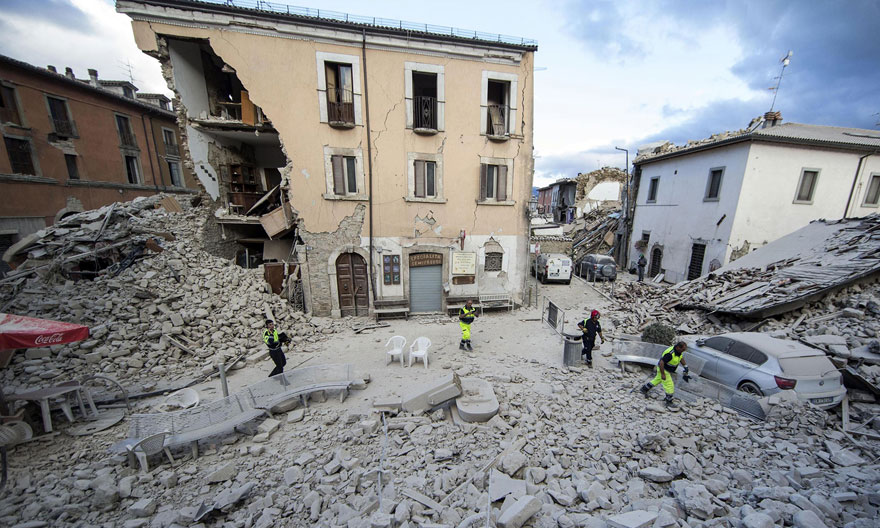
The series of earthquakes in Italy began in August, with other major temblors coming in October and January, accompanied by thousands of aftershocks. The calamity has cost 23 billion euros ($26 billion) in damage, rendered thousands homeless and caused more than 300 deaths. But the consistent shaking of a largely rural and agricultural area has also provided a rare chance to test the ancient theory.

Mr. Wikelski thinks he may be onto something, though he is cautious, and coy, about just how conclusive his data set might be. He is the first to acknowledge that some consider the idea that animals can predict disasters the stuff of old wives’ tales.

“We are the crazy dudes,” Mr. Wikelski said with a laugh, explaining that getting funding to pursue his project without having hard data to support it was difficult. “So we have to make absolutely sure that we don’t make any minor glitch in statistical analysis because people will try to drill holes in the whole thing, and rightly so.”

While Mr. Wikelski could not reveal the details of his findings ahead of publication in a scientific journal, he hinted that the data showed animals moving in a consistent way in the hours before the quake.

Mr. Wikelski, the director of the Max Planck Institute for Ornithology in Radolfzell, Germany, said some previous research had augured well for the predictive abilities of animals. It included a study that he conducted from 2012 to 2014 by monitoring goats and sheep on the side of Mount Etna, in Sicily.

“The animals predicted the major volcanic eruptions during these two years between four to six hours before,” he said, adding that eight major eruptions occurred during his study. “At night, the animals woke up and nervously walked around, and in daytime, they moved to a safe area” where high vegetation suggested that it had been spared by previous lava flows.
On the basis of this research, he applied in 2013 for a patent: “Disaster Alert Mediation Using Nature.” The patent is pending.

The recurring earthquakes in Marches and other parts of central Italy presented the chance to record a wealth of data about animal responses to further test the theory.

“We are really excited because this is the first time we could tag animals before, during and after a major earthquake series,” Mr. Wikelski said.

After a devastating earthquake hit the region in October, Mr. Wikelski and his project manager, Uschi Müller hurried to Italy. They happened upon the Angeli farm, which sells cheese produced by the family’s sheep and cows and other local delicacies.

The researchers walked into what had been the farm’s shop. “Everything was broken,” Mr. Wikelski said.

“All the cheese shelves were on the ground. You could see their livelihood was gone,” he said, but the family was “still very nice.”

Mr. Wikelski tagged a number of animals on the farm — a rabbit, sheep, cows, turkeys, chickens, and dogs — with small but sophisticated sensors.

The devices measured the animals’ every movement, down to the second: their magnetic direction, speed, altitude, temperature, humidity, acceleration, and location. He described the tag, powered with a small solar panel, as a “black box full of information.”

A few days after the first animals were tagged, another major earthquake, measuring a magnitude of 6.5, hit the area, which provided data for a significant seismic event.
Mr. Wikelski and Ms. Müller retrieved the monitoring devices a few weeks later and then returned in January to tag several of the same animals again, including half a dozen cows, twice as many sheep and two dogs, Zeus and Aro.

“I think the turkeys were eaten,” Mr. Wikelski said.

In April, the researchers came again to remove the remaining tags and to study the acquired data.

Tagging different species might be essential, according to Mr. Wikelski, as each one senses the environment in a distinct way. And together, he said, they might “form a collective sensing system,” providing completely novel information.

On a global level, such a collective could be described as “the internet of animals,” he said.
“If it’s just one animal alone from one farm, we wouldn’t be able to see a signal, but if you take it all together, the synergies, the synthesis of these sensing systems, that’s really what seems to give the signal,” Mr. Wikelski said.

The hope is that once the animal data is compared with the earthquake data from the area — using earthquakes of a magnitude of 4 as a cutoff — it will show distinctive behavior before, during and after an earthquake. From late October to April, there were 11 days with earthquakes measuring more than magnitude 4.

In the best case, the animals’ behavior in the hours leading up to an earthquake might act as an early warning system so that people could evacuate.

The Angelis would welcome some positive developments arising from what they have endured. The large family spent the winter living in primitive campers and cramped containers with makeshift bathrooms and kitchenettes.

“We have animals. Where would we go?” asked Augusta Raboni, the matriarch of the family, explaining why they stayed put rather than move to hotels on the Adriatic coast where other homeless earthquake victims were housed over the winter.

In late May, the state finally delivered small prefabricated homes, which they were still mounting. It was about time, they said.

During a snowy, cold winter that killed many of their livestock, “we were abandoned by the government,” said her husband, Florindo Angeli.

But the data gathered from their farm and the animals that survived may prove critical and will be combined with other data being gathered by the ornithology Institute, which tracks many hundreds of animals.

It is part of an international project under a German-Russian lead called Icarus, short for International Cooperation for Animal Research Using Space, a satellite-based monitoring system that will track dozens of species outfitted with solar-powered transmitters.

“We will be able to learn from animals from any place anywhere in the world as a collective, and this is such a simple and such a powerful idea,” Mr. Wikelski said.

The United States Geological Survey notes on its website that “anecdotal evidence abounds of animals, fish, birds, reptiles, and insects exhibiting strange behavior anywhere from weeks to seconds before an earthquake.” But the federal agency, responsible for recording earthquake activity in the United States, goes on to say that “consistent and reliable behavior prior to seismic events, and a mechanism explaining how it could work, still eludes us.”
Recognizing that many scientists remain skeptical about his line of research and that many variables remain, Mr. Wikelski said he was eager to carry out experiments on a broader scale.

“Even if we can show that this is something that is being sensed by these animals,” Mr. Wikelski said, he noted that it was only “on one farm in one area of the world, so it’s very limited in what we can say.

“It’s a huge claim, so we’d better have good proof for it,” he said.