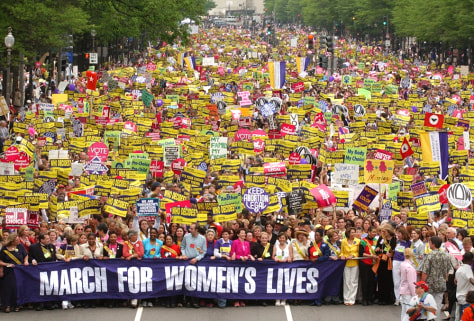
The incoming Trump administration is likely to see the greatest revival of environmentalism as a confrontational, grassroots, sometimes radical movement since at least 1970, when more than a million people took part in the first Earth Day.
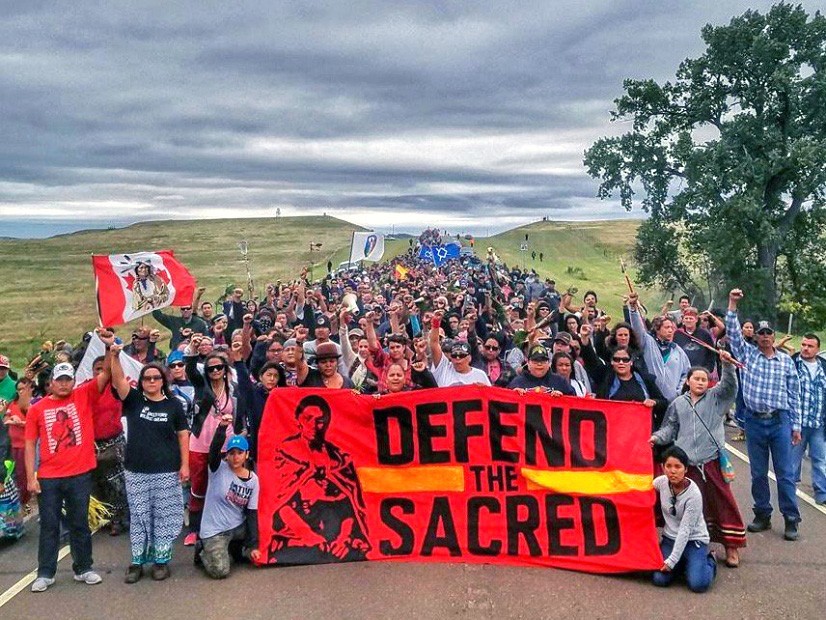
The vigil at Standing Rock, which surprised nearly everyone by blocking the proposed route of the Dakota Access Pipeline through traditional Sioux lands, was a far cry from the litigation and high-level lobbying that are so much of the environmental movement’s work these days. As courts and lawmakers continue to falter in addressing climate change, with professional climate-change denier Myron Ebell heading the Environmental Protection Agency’s transition team, and Scott Pruitt tapped to lead it (Pruitt is an ally of the fossil fuel industry and key architect of the legal strategy against President Obama's climate policy) and the prospect of public lands opening to expanded mining and drilling, ever more people who believe that environmental responsibility has become a life-or-death issue are going to start acting like it.
A more confrontational environmentalism will find new allies, like the Native American activists of Standing Rock and the military veterans who showed up there just before the Army Corps of Engineers announced it would not approve the controversial pipeline route. It may also strain some of the relationships with wealthy funders and corporate partners that have become central to mainstream environmentalism. Activists will have to decide whether to cultivate alliances with other movements that have sprung up in recent years: the Movement for Black Lives, which has called for divestment from fossil fuels and pointed out that incinerators, waste facilities, and other pollution sources are often concentrated in poor and heavily non-white neighborhoods, or whatever comes after Bernie Sanders’s campaign, which blamed the fossil-fuel industry for blocking climate progress and promised to “keep it in the ground” in a rapid transition to renewable energy.
Joining environmentalism to movements for economic and racial justice wouldn’t be new. It would shift the movement toward what you might think of as its left wing, often called the environmental-justice movement, which emerged in the 1980s as an internal criticism of “mainstream environmentalism” for being too elite, too white, and too focused on beautiful scenery and charismatic species. But it would also point toward a longer history, now mostly forgotten. For decades, environmentalism and what we now call environmental justice were deeply intertwined. Care for the earth and for vulnerable human communities belonged together. Empowering workers, protecting public health, and preserving landscapes were part of a single effort. Maybe it’s time to reclaim that older environmental movement, and see that it was an environmental-justice movement all along.
Modern environmental law is defined by a set of statutes that were adopted in a burst of legislation in the 1970s: the NEPA on New Year’s Day, 1970; the Clean Air Act later in 1970; the Clean Water Act in 1972; the Endangered Species Act in 1973; laws governing waste disposal and reworking the management of federal public lands in 1976.
Environmentalism is also defined by a set of advocacy organizations that grew up in the same years: the Natural Resources Defense Council, the Environmental Defense Fund, the Sierra Club Legal Defense Club (which later became Earthjustice, the major environmental litigation group), and the Environmental Law Institute either appeared or took their current form in these years. The advocacy groups are an important part of the story because they help to define the field.
Environmental law has always been susceptible to identity crisis. It doesn’t have the unifying textual basis of constitutional law, the doctrinal coherence of tort or contract, or the straightforward topical boundaries of antitrust or tax. Instead, it has an organizing principle that might be thought of as “everything is connected.” What counts as environmentalism has always been partly a matter of the priorities of movements and advocates.
Environmentalism has faced existential challenges before Trump. In the early 1980s, the Reagan administration appointed anti-environmentalists to run the EPA and the Department of the Interior, and only litigation and political pressure kept them from gutting the environmental agenda of the 1970s. There have always been pockets of resistance to the legitimacy of environmental law, sometimes quite radical: There are plenty of Westerners who deny that the federal government has constitutional power to manage federal lands or to regulate private activity through laws like the Endangered Species Act and the Clean Water Act. Some of those radicals were involved in the occupation of the Malheur Wildlife Refuge in eastern Oregon at the beginning of this year.
Donald Trump will challenge environmental law in new ways, but there is another challenge to modern environmentalism that has come from within the movement, or from nearby it. This is the challenge that comes from the modern environmental-justice movement, a network of activists and scholars that has arisen since the 1980s to make fundamental objections to what its advocates call “mainstream environmentalism,” the version of environmentalism that came to be in the 1970s.
Environmental justice scholars and advocates and have made three big criticisms of what they call mainstream environmental law:
First, that it doesn’t speak to how environmental harms and benefits are distributed, which is especially important when distribution follows the lines of poverty and race. This criticism comes from the grassroots fights that produced the environmental-justice movement: fights about decisions to place garbage dumps, toxic waste sites, incinerators, and power plants in neighborhoods where disproportionately poor and non-white people lived. The environmental statutes of the 1970s accomplish many things, but they did not prohibit these disproportionate impacts.
Second, environmental justice critics challenge the mainstream environmental idea of what environmental problems are in the first place. They say it’s focused on the beautiful outdoors, it has an anti-urban bias, it isn’t engaged enough with artificial human environments like neighborhoods and workplaces. As one important pair of environmental justice scholar-activists wrote, the environments we most care about should be “the places where we live, work, learn, and play,” whether they are natural or built. And while more prosperous people tend to take clean and safe living spaces for granted and be able to escape to wild places that feel “ecological” or “natural,” poor people often have very little choice but to spend their lives in compromised artificial environments.
Third, critics say mainstream environmentalism over-values elite forms of advocacy, like litigation and high-level lobbying, and doesn’t make enough room for popular engagement. It creates a movement of professionals and experts: lawyers, economists, and ecologists who have limited interaction with, and do relatively little to empower, the people who live with the most severe environmental problems.
These criticisms have a historical and institutional context. When environmental justice scholars and activists take aim at what they call mainstream environmental law, they are addressing the statutes, agencies, and professional and advocacy organizations that were built into their more or less current form in the 1970s and early 1980s. The environmental-justice criticisms are very important, but they often forget that the mainstream environmentalism whose narrowness they criticize was a recent development, and maybe one that could have turned out very differently. If we draw back the historical lens, a “long environmental-justice movement” comes into view. In this movement, for more than a century, activists and scholars have been engaging the themes of fairness, inequality, and political and economic power in the human environment.
What was this movement? Here are some key examples. Two iconic environmental developments of the 1960s were the passage of the Wilderness Act in 1964 and the publication of Rachel Carson’s book Silent Spring between 1960 and 1962. The Wilderness Act has protected more than 100 million acres of public land for hiking, camping, and solitude. It was a great victory for a long political drive to preserve public land that went back to the first national park, Yellowstone, which was created in 1872. But its central value—wilderness, untouched land, set aside from all human contamination—seemed to prove that the movement that loved wild nature didn’t care much about the places where people lived, worked, played, and learned.
Carson’s book described a poisoned world, where pesticides passed through the air, water, and soil, to enter the flesh of animals and people, and spread sickness and death everywhere. She helped to create a widespread ecological consciousness, and also to connect that consciousness with a sense of fear and crisis that helped to spur the 1970s anti-pollution statutes. But her great book, which followed pesticides through almost their whole cycle of destruction, ignored the mainly Latino farm workers of California and Florida, who were directly exposed to pesticides in their work the fields. The human victims of pesticides, in Carson’s telling, lived in iconic small-town and suburban America. They were implicitly white and Anglo. They were not workers. So Carson, like the Wilderness Movement, can seem to prove that the narrowness as well as the power of mainstream environmentalism are there at the beginning.
But Silent Spring and the Wilderness Act were late chapters in earlier movements that made them possible. Those precursors were at the heart of the long environmental-justice movement at work. The movement for wilderness was centered on the Wilderness Society, which was founded in 1935. A typical founder was Benton MacKaye, a planner and interdisciplinary intellectual who is also credited with the idea behind the Appalachian Trail. MacKaye defined “environment” as the built and industrial environment, just as much as the wild and natural one. His great example of ecological thinking was an image of New York City as composed of what he called “flows”: the Hudson River and the Atlantic Ocean, the prevailing winds out of the west, but also barges of steel from the Great Lakes, ships full of grain steaming off to Europe, and the highways and railroads that brought workers pulsing into the city every day and exhaled them again at night. He saw the struggles of factory workers and wilderness advocates as two parts of a movement with very large goals: to make the whole human environment, from the workplace to the untouched woods, welcoming and stimulating, a good place to be alive. He thought this required extensive and intensive public planning of cities, transport networks, and regions. For him, wilderness was one essential note in a larger composition of landscapes and living-places.
You could draw similar portraits of the broad concerns of other wilderness activists. MacKaye’s co-founder and the president of the Wilderness Society was Robert Marshall, a forester who was also head of the Washington, D.C., branch of the American Civil Liberties Union, an avowed socialist, and a major player in reforms that increased that sovereignty and cultural autonomy of Native Americans. Marshall’s devotion to preserving wilderness was part of a broader vision of a just society. He believed that mental and spiritual freedom required the chance to escape to a place radically separate from everyday life, but there was nothing escapist in his politics. The Wilderness movement that Marshall and MacKaye built was intensely concerned with the whole human environment, the condition of factory workers and people living in cities, and the role of the state in the economy and social life.
And what about Carson? Well, the scholar whose previous research runs all through Silent Spring is Wilhelm Heuper, an industrial toxicologist who devoted his career to understanding the effects of workplace exposure to what he called “the new artificial environment” of synthetic chemicals. His goal in understanding what the new poisons were doing to people was to secure “a healthful living, not merely for a small, select, and socially privileged class,” but for everyone. He was working in a tradition of industrial toxicology that was pioneered a generation earlier by Alice Hamilton, the first woman faculty member at Harvard, a public-health scholar who went into factories and worked with workers to understand what lead, phosphorous, and other chemicals were doing to their bodies. Also in the background were movements like the Workers’ Health Bureau, which was a joint creation of women public-health activists and independent unions, which researched workplace hazards, as they put it, “from the point of view of the worker.” Carson’s work was rooted in industrial toxicology, and that, in turn, was rooted in movements for social reform and effort to build both workers’ power and systems of industrial governance in the early 20th century.
Why did these broader concerns not come into the environmentalism that took shape in the burst of statutes and institution-building in the 1970s? It is not that the architects of the modern environmental laws and institutions didn’t care about these questions of equity and the total human environment. It is that they thought they were addressing them. As Senator Ed Muskie of Maine, who was a primary drafter of those laws, explained at Earth Day 1970, “Man’s environment includes more than natural resources. It includes the shape of the communities in which he lives: his home, his schools, his places of work.” Muskie went on to argue that, “the only kind of society that has a chance” is “a society that will not tolerate slums for some and decent houses for others, rats for some and playgrounds for others, clean air for some and filth for others.” And he insisted that, “Those who believe that we are talking about the Grand Canyon and the Catskills, but not Harlem and Watts are wrong.”
The environmental statutes were passed in a world where, from the point of view of their architects, they were environmental justice statutes. But that world was disappearing as soon as the new environmental laws were written. They were written in a time that was more economically equal than the US had ever been, and they believed that trend was going to continue, and that therefore economic inequality was a problem that had been solved. We now know, thanks to the work of economist Thomas Piketty and others, that they were living at the end of an anomalous period of widely shared growth that lasted across the North Atlantic between the end of World War Two and the beginning of the 1970s. Inequality was about to reassert itself, and it has been growing more or less ever since.
Just as today’s environmental-justice critics say, the laws that govern pollution and dumps for hazardous materials don’t address how those get distributed. Leaving out distribution was a mistake that was much easier to make if you believed that the country was steadily getting more equal. The more recent environmental-justice movement arose in response to the fact that environmental harms are distributed along very familiar lines of race and poverty. Those lines were expected to become less important in the years ahead. Legislators like Muskie also said that they expected the environmental laws to be supported by other reform legislation to overcome poverty and isolation, foster public health, and make workplaces safer and communities more livable. Instead, the 1970s brought the return of inequality and the end of political support for bold social reforms.
Then it got worse. The Supreme Court removed an essential protection against disparate environmental impacts in the form of constitutional Equal Protection challenges. Between 1976 and 1979, after the major environmental statutes were largely written, the Court adopted the current constitutional standard, which requires plaintiffs claiming they have been treated unequally to show that the government action they object to was affirmatively motivated by discriminatory purpose. It isn’t enough to show that, in fact, burdens are distributed in a grossly unequal way. So unequal harms that would once have been open to constitutional challenge are now legally clear unless they violate environmental statutes—which were not written with this kind of inequality in mind.
The other charge that today’s environmental-justice movement makes is that mainstream environmentalism overemphasizes elite advocacy. This, too, is not a perennial feature of environmental law, but developed in the 1970s because of specific institutional decisions. A key part of the story is that the Ford Foundation made critical investments to shape the new groups that helped to make the field of environmental law: the Environmental Law Institute, the Natural Resources Defense Council, the Environmental Defense Fund, and others. Ford picked and cultivated its grantees to advance a vision of lawyers’ role in advocacy and social reform that historians call “legal liberalism.” Legal liberalism saw lawyers as channels for marginal voices that otherwise wouldn’t be heard in pluralist democracy. The ideal was that, if you could just get these marginalized voices their day in court, in front of an impartial decision-maker, you could ensure that their interests were respected in the decision process. In this respect, the institutions of environmental law were shaped by a conception of the legal profession that Ford was also helping to spread at the same time through law-school clinics, ABA pro-bono guidelines, and poverty-law services.
The reformist goals of legal liberalism could be quite robust, but as a model of social change, it had some defining limitations. It was elite-driven and relied on expertise. Its advocates were inclined to imagine they spoke for a consensual “public interest” that responsible decision-makers, like judges and agencies, could pursue. And, in the end, it tied its reformist goals to the courts—at the same time that judges were retreating from their role in the 1960s as drivers of structural change. These institutions helped to make environmentalism intensely a movement of lawyers and experts, funded by middle-class mass-membership groups and wealthy donors, and not driven by large-scale mobilization or engagement. It took much of the fire out of a movement that had begun, in Earth Day 1970, with the largest mass mobilization in American history.
In the 1970s, as in the 1930s, there were versions of environmentalism that were less expert-driven and more confrontational than the versions that won out. In the early 1970s, an insurgent labor organization called the Miners for Democracy briefly took over the United Mine Workers of America. They were fighting a corrupt union leadership that had literally murdered one of their leaders and his family in their home. They were pressing for safety regulations in mines that killed hundreds of people every year in disasters and thousands more slowly through black-lung disease and other industrial illnesses.
And—although this is usually forgotten even by the few people who remember them at all—they argued that if mining could not be done in an environmentally responsible way, without destroying mountains or killing streams, then miners should refuse to do it. They proposed that both safety regulations and environmental principles should be directly enforced in the workplace by strikes. They showed how this could work when 90 percent of the miners in West Virginia walked out of the mines in an unauthorized strike that shut down the coal industry for months, until they won serious medical benefits for retirees and disabled miners who were dying from black-lung disease. For them, just like for the 1930s activists who stood in back of Rachel Carson, the workplace and the woods and waters were all part of the environment, and working people should defend both to defend themselves.
They were not as unusual as you might think. One of the major funders of the first Earth Day was the United Auto Workers, whose president, Walter Reuther, was a strong environmentalist who believed in using the union to advance a progressive social agenda that built on but went well beyond his members’ interests. (Reuther also helped to fund the NAACP Legal Defense Fund, among other causes.) When he died in a plane crash in the early 1970s, he was preparing a proposal to the union leadership to include environmental issues in the union’s collective-bargaining agenda with management, so that organized labor would have been an anti-pollution force within the industry.
All of this is so far gone now that it is hard to recover the sense of possibility of that time. There were later tactical alliances between the new environmental groups and organized labor, especially over workplace chemical exposure, but labor never went green, and environmentalism never became a working people’s movement. By 1977, the UAW opposed amendments that strengthened the Clean Air Act. On November 8, the coalfields came out strongly for Donald Trump’s climate-denialist campaign, as they did in 2000 to help defeat Al Gore’s environmentalist presidential candidacy.
By the early 1980s, the major environmental groups were coordinating their efforts around an agenda that put little emphasis on social and economic inequality, the disparate environmental vulnerability of marginal populations, or the special environmental threats to working people. This was the “mainstream environmentalism” that the environmental-justice movement arose by attacking. In many ways, the environmental-justice advocates were right to attack it. But no one seemed to realize what a recent development it was. Mainstream environmentalism, with the limitations that environmental justice advocates pointed to, was not much older than the environmental-justice movement that criticized it. Ironically, the critics tended to imagine mainstream environmentalism as a perennial thing, a movement that had always been narrow in its concerns, its constituency, and its tactics. In the later 1980s and 1990s, this view was replicated in advocacy and politics, from seminal and attention-getting reports on the unequal distribution of environmental hazards to touchstone scholarship like environmental historian Bill Cronon’s watershed essay, The Trouble with Wilderness, which diagnosed environmentalism as the product of a narrow woods-and-waters agenda and narrowly elite constituency going all the way back to the country’s origins. And so the long environmental-justice movement was lost from view.
What difference does remembering it make today?
Well, first, could things have gone differently? Maybe if supporters like Reuther, or even the Ford Foundation, had built stronger connections, say, between early environmentalism and the civil-rights movement, then a greater emphasis on structural inequality, and some healthy doubts about liberal optimism, might have gone into the design of both the statutes and the institutions that came to define environmental law. If some parts of organized labor had taken militant and socially-minded environmentalism into its agenda in the early 1970s, and funded and supported new environmental groups alongside the liberal organizations like Ford and the wealthy donors that became the groups’ lifeblood, mainstream environmentalism might have been something more like an environmental-justice movement all along.
Then again, maybe not. The narrowing of the environmental agenda during the 1960s, and the Ford Foundation’s legal-liberal vision for advocacy, were connected with the whole political economy and political culture of the US during the Cold War. Labor’s retreat into economic self-defense and zero-sum contests with environmentalists was part of a general return of inequality and scarcity in the 1970s, which affected the whole North Atlantic. The loss of the broad reform agenda that senators like Muskie expected to buttress the new environmental laws was part of general political revolt against the 20th-century welfare state. The structural inequality that guides environmental harms along familiar racial and class lines runs very deep.
But there are ways to retrieve the spirit of the long environmental-justice movement in this time of fresh mobilization and new alliance. Environmental activists and progressive state and local governments can press for enforcement of environmental laws like the Clean Air Act and Clean Water Act in ways that are consistent with the broadly egalitarian vision that informed their creation. To give just one example, lax regulation of industrial agriculture, especially animal-feeding operations where thousands or tens of thousands of livestock are jammed together in factory-like conditions, exposes people living nearby to a bunch of hazardous pollutants. These are concentrated in pervasively poor and significantly non-white areas of the country. Aggressive enforcement of anti-pollution laws against facilities like these would simply make these statutes do the environmental justice work they were originally intended to do.
Activists and administrators should also look for problems of inequality that are not conventionally treated as environmental. Consider the way that that the Farm Bill, which is currently pumping more than $65 billion dollars in subsidies into the farm economy over five years, makes calories from corn syrup and soybean oil relatively cheap and healthy calories more expensive. This price skew has controversial but plausible effects on obesity and related diseases like diabetes, which are all tied to poverty and race. Environmentalists should see the food system as a medium of risk exposure, like air and water. The fact that food intake always involves a personal choice doesn’t wash out the question of justice. Like deciding where to work, deciding what to eat is a choice made under constraint, and the background of law and economic inequality does a lot to define the constraints. The members of the long environmental-justice movement, who believed the fact that your job could make sick or kill you was no less an environmental issue because you had chosen your job, would say the same thing today about your meal.
Activists and scholars should also look at cases where environmental policy is making explicitly distributional decisions and ask what standards of justice and political accountability should guide those. California’s recent climate-change legislation produces a large pool of revenue that is meant to be spent in ways that address communities’ environmental challenges. Who will decide what that means, and what will the criteria be? Will one goal be to go beyond preventing new pollution and climate-change hazards, to address different places’ and communities’ different baseline levels of contamination and vulnerability, to remediate their inherited inequality? The same questions attach to spending the remediation fund from the Gulf of Mexico Deepwater Horizon oil spill, and would attach to the revenue from many kinds of national or trans-national carbon tax or cap-and-trade schemes.
These are just some starting points. Other priorities may come from new allies. Maybe even the labor movement, now both battling for its life and being reborn in grass-roots efforts like Fight for Fifteen, will find new points of commonality. There’s no need for environmentalists to stop being experts, or to abandon the institutions and establishment alliances they have painstakingly built up over decades. But they should be clear that their mission is more than technical. They are working to defend a living world that is under assault at every point, from the global climate to the most vulnerable communities. Economic power, racial inequality, and the struggles of indigenous peoples are not optional or supplemental. They are at the heart of the work.