Monday, September 7, 2015

2008. Despite Better U.S.-Cuba Relations, Guantanamo Set To Stay In U.S. Hands

By David Welna, NPR, September 7, 2015
Hoisting the flag at Guantanamo, June 12, 1898. The U.S. has had  control of Guantanamo since the end of the Spanish-American war at the end of the 19th century.
Hoisting the flag at Guantanamo, June 12, 1898. The U.S. has had control of Guantanamo since the end of the Spanish-American war at the end of the 19th century. Edward H. Hart/Library of Congress
The only American military installation abroad that's unwelcome to its host government is the U.S. Naval Base at Guantanamo Bay, Cuba. A treaty signed in 1934 leases Guantanamo to the United States in perpetuity, for about $4,000 a year. And the U.S. has no plans to leave, despite the two countries having just restored diplomatic ties.
Guantanamo Bay — at least officially — is still part of the "Pearl of the Antilles," as the Caribbean's largest island is known. But Cuban officials are nowhere to be seen when flights from the U.S. land at the naval base.
Americans who arrive at the airstrip alongside the bay have to show their passports, and the officials checking those passports are with the U.S. Navy.
The United States has controlled Guantanamo Bay since the end of the Spanish-American war in 1898. The American forces that joined Cubans during the final months of the struggle for independence from Spain installed a U.S. military governor after the defeat of the Spanish.
Under the terms of the so-called 1901 Platt Amendment the U.S. obtained the right to lease Guantanamo Bay for a coaling and naval station, with an annual payment at the time set at $2,000 worth of gold coins.
That payment was doubled in the 1934 treaty, and to this day remains at $4,087 a year — although Cuba has refused to cash the American rent check since shortly after Fidel Castro seized power in 1959.
The naval station's original rationale, as a strategic port for U.S. warships to refuel and resupply, has waned. When the Navy destroyer USS Jason Dunham docked there on its way to the Baltic Sea earlier this year, it was only the third ship to do so in six months.
"She's an amazing warship," says Cmdr. Darren Dugan, commanding officer of this guided-missile destroyer equipped with an advanced Aegis radar system and Tomahawk missiles.
Dugan says he's happy to be making the port call, even though he finds it easier to refuel at sea.
"Guantanamo Bay is great," he says. "It gives us the ability to refuel, get maintenance done, [and] the crew enjoys some time ashore."
Among the base's attractions: an outdoor movie theater with free admission.
As he settles in for a screening there of American Sniper, Carl Davis says the base is a great place for civilians as well. For him, it's a hometown.
"My father was in the Navy here, and me and my twin brother were born here," says Davis. The 50-year-old assistant fire chief considers the base a kind of Mayberry, USA — with iguanas. And he does not think the U.S. should or will relinquish the installation.
"I think it would be a good loss for a lot of the military folks," says Davis, "because getting stationed in Guantanamo is really a hidden gem of a duty assignment for the active duty folks."
1es Regiment, U.S. Marines Camp, Deer Point, Guantanamo Bay, Cuba, April 26, 1911.
American Photo Company/Library of Congress
Indeed, many in the military are determined to keep it open indefinitely.
"Guantanamo Naval Base is a hugely useful facility to the United States," Marine Corps Gen. John Kelly told reporters at the Pentagon earlier this year.
Kelly, who heads the U.S. Southern Command in Florida and oversees Guantanamo, acknowledged that President Obama wants to close Guantanamo's prison camp, which currently holds 116 war captives.
But Kelly said the base would still be needed for dealing with refugees from nearby Haiti and elsewhere who are picked up at sea.
"We construct camps, temporary camps, treat them right, feed them, you know, take care of them in the way that, you know, the U.N. particularly has got guidelines for refugees," said Kelly. "And then we assist the [Department of Homeland Services] in repatriating them. So it's a very useful base."
Some say it's too useful, and not always in a good way.
Miami-based immigration lawyer Ira Kurzban accuses U.S. officials of using Guantanamo to skirt the law.
"What is the purpose of taking people to Guantanamo?" Kurzban asks. "It's to keep people who are seeking asylum and who may have genuine claims for asylum out of the United States, so they can't assert those claims."
Others who know Guantanamo well question whether the benefits for the U.S. of remaining at the outpost outweigh the costs.
"It has significant strategic value," says retired Navy Adm. James Stavridis, who was in charge of the U.S. Southern Command from 2006 to 2009 and is now dean of the Fletcher School at Tufts University. "But I wouldn't describe it as vital to the national security needs of the United States."
The U.S. occupation of Guantanamo is still a sore subject for Cuba, despite the recent restoration of diplomatic ties between the two countries.
Last month, on the day the American Embassy in Havana reopened, Cuba's foreign minister, Bruno Rodriguez, demanded "the return of the territory occupied illegally by the Guantanamo Naval Base."
Bobble head souvenir sold at Radio GTMO depicts Cuban leader Fidel Castro above the station's slogan: "Rockin' in Fidel's Backyard"
David Welna/NPR
Standing alongside Rodriguez, Secretary of State John Kerry was not making any promises.
"At the moment," Kerry told reporters in Havana, "there is no current discussion or plan to change the arrangement with respect to Guantanamo."
For the time being, the only sign of Cuba at the naval base is radio broadcasts from Havana boasting of the Cuban revolution enduring into its 57th year. Cubans no longer work at Guantanamo — they've been replaced by Jamaicans and Filipinos who are paid half the wages Americans are offered for the same jobs.
At The Jerk House, a Jamaican-style base restaurant, an American civilian named Bill Condon says he moved to Guantanamo two years ago with his wife, a Navy official who works at the base hospital.
Condon senses that Cubans resent the U.S. presence on their island, and he says they may have a point.
"I don't think they're going to let us forget about the fact that they want this base back," Condon says. "I don't think this is going to continue on forever."
If the 1934 perpetual lease treaty were to be terminated, one of two things would have to happen. Either the U.S. would have to abandon the base, or both countries would have to mutually agree to a pullout — similar to what happened in the 1977 Panama Canal Treaty under which the U.S. relinquished control of the Canal Zone in 2000 to Panama.
Former Southcom commander Stavridis sees a similar future for Guantanamo, but not until relations with Cuba get warmer and the war captives prison is shut down.
"To have the negotiation before we have a clear path to closing the detention facility," says Stavridis, "will be an exercise in futility for both sides."
In the meantime, with a GOP-led Congress resisting efforts to close that facility, the U.S. will likely keep sending Havana its annual Guantanamo $4,087 rent check.
And Cuba, no doubt, will keep refusing to cash it.

2007. Israeli Terrorists, Born in the U.S.A.

By Sara Yael Hirschhorn, The New York Times, September 5, 2015
A man holding a photo of the Palestinian toddler Ali Dawabsheh was burned alive in an Israeli arson. 

Jerusalem — ON July 31, in the West Bank village of Duma, 18-month-old Ali Dawabsheh was burned alive in a fire. All available evidence suggests that the blaze was a deliberate act of settler terrorism. More disturbingly, several of the alleged instigators, currently being detained indefinitely, are not native-born Israelis — they have American roots.

But there has been little outcry in their communities. Settler rabbis and the leaders of American immigrant communities in the West Bank have either played down their crime or offered muted criticism.

It’s worth recalling the response of the former prime minister Yitzhak Rabin to another heinous attack two decades ago, when an American-born doctor, Baruch Goldstein, gunned down dozens of Palestinians while they prayed in Hebron.

“He grew in a swamp whose murderous sources are found here, and across the sea; they are foreign to Judaism, they are not ours,” thundered Mr. Rabin before the Knesset in February 1994. “You are a foreign implant. You are an errant weed. Sensible Judaism spits you out.”

The shocking 1994 massacre was, at the time, the bloodiest outbreak of settler terrorism Israelis and Palestinians had ever seen. Less than two years later, Mr. Rabin himself would be dead, felled by an ultranationalist assassin’s bullet.

Suddenly, a group of American Jewish immigrants that had existed on the fringes of society became a national pariah. A former president of Israel, Chaim Herzog, labeled the United States “a breeding ground” for Jewish terror; the daily newspaper Maariv castigated American Jews who “send their lunatic children to Israel.” One Israeli journalist even demanded “operative steps against the Goldsteins of tomorrow” by banning the immigration of militant American Jews.

But tomorrow has arrived.

After years of impunity for settlers who commit violent crimes, Israel’s internal security agency, the Shin Bet, has now supposedly cracked down by rounding up a grand total of four youths believed to be connected to recent acts of settler terrorism — three of whom trace their origins to the United States.

The agency’s “most wanted” Jewish extremist is 24-year-old Meir Ettinger, who has an august pedigree in racist and violent circles. He is a grandson of Meir Kahane, a radical American rabbi who in 1971 immigrated to Israel, established the Kach party and served as its lone Knesset member until it was banned in 1988. (Kahane was assassinated in New York in 1990, but his career laid the groundwork for ultranationalist and antidemocratic parties in Israel.)

Another is Mordechai Meyer, 18, from the settlement of Maale Adumim outside Jerusalem. He is the son of American immigrants who claimed he simply wanted to study the Torah and have an adventure in the West Bank. Another American settler, Ephraim Khantsis, was detained for threatening Shin Bet agents in court. The fourth, Eviatar Slonim, is the child of Australian Jews.

Mr. Ettinger, Mr. Meyer and Mr. Khantsis join a long list of settler extremists with American roots. A Brooklyn-born settler, Era Rapaport, played a prominent role in the car-bombing of the mayor of Nablus in 1980. In 1982, a Baltimore transplant, Alan Goodman, opened fire at the Dome of the Rock, killing two Palestinians and wounding 11. That same year, a former Brooklynite, Yoel Lerner, was jailed for leading a movement to overthrow the Israeli government and blow up the Temple Mount.

These days, rabbis like the St. Louis-born Yitzhak Ginsburg, who heads a yeshiva in the radical settlement of Yizhar, are inculcating the next generation.

Today, according to American government sources and several other studies, an estimated 12 to 15 percent of settlers (approximately 60,000 people) hail from the United States. This disproportionately large American contingent — relative to the total number of American-Israelis — has joined secular, religious and ultra-Orthodox Israelis, and other more recent immigrants. Few of them live in extremist hilltop outposts; a majority live in suburbanized settlements near Jerusalem, but they are considered among the most highly ideological.

RATHER than quoting the Bible or rhapsodizing about a messianic vision, they tend to describe their activities in the language of American values and idealism — as an opportunity to defend human rights and live in the “whole land of Israel” — often over a cup of Starbucks coffee in their boxy aluminum prefab houses or in the mansions of settlement suburbia. To them, living in the West Bank is pioneering on the new frontier; it’s merely an inconvenience that they’re often staking their claims on private Palestinian land. And for a fanatical fringe among them, this Wild West analogy has extended to indiscriminate violence.

Despite living in self-selecting communities that sometimes include violent activists, many law-abiding American settlers continue to see themselves as good liberals (a large percentage were Democratic voters involved in the civil rights movement and anti-Vietnam War struggle before moving to Israel).

As far back as the 1990s, Rabbi Shlomo Riskin, the founder and spiritual leader of the settlement of Efrat, seized upon this outlook, declaring, “I marched with Martin Luther King and feel very strongly about equal rights.” But, to him, settlers were now the victims. “We’re not fighting against an enemy who plays by the same rules as we do,” he argued. “Given the cruelty and barbarism of the Arabs to their own people, our ethical imperative is not to commit suicide.” He went so far as to compare the settlers to African-Americans during the civil rights movement. Another American settler activist, Yechiel Leiter, drew on Lincoln’s Gettysburg Address to illustrate that “independence and freedom have their price.”

Not only is this belief still intrinsic to the self-image of many mainstream American settlers, they have also learned the value of speaking fluent liberalese on the international stage. By translating Scripture into sound bites, Jewish-American settlers have played a pivotal role in the public relations rebranding of the Israeli settler movement — and these professed liberals are now helping to deflect attention from crimes committed by Jews.

When Mordechai Meyer’s parents held a news conference denouncing their son’s detention, they declared that “we are United States citizens and our children grew up there, in a democracy. And we made aliyah from the United States to a democratic state.” Now, they complained, we “find ourselves with our son in jail and do not know anything.” The Meyers are right that indefinite administrative detention is antidemocratic, but it’s highly ironic that they would focus on the illiberal tendencies of Israel’s criminal justice system to distract attention from their son’s alleged crimes. (After all, we don’t hear settlers complaining when hundreds of Palestinians are indefinitely detained under the same law.)

The Meyers — and many more like them — see no contradiction in using liberal language to support the deeply illiberal settlement project.

For all their protestations that they are good liberals, many American settler leaders have been deafeningly silent on recent acts of Jewish terrorism. If these American immigrants believe that violence is a betrayal of cherished values, then why have their rabbis not held news conferences loudly denouncing the terrorists in their own communities and families? Where are their op-eds in American and Israeli newspapers condemning violent Jewish extremism?

For four decades, their condemnation has often been either muted or tempered by attempts to play down Jewish terrorism by framing it as an issue of “understanding the context” — a euphemism for reacting to Palestinian violence. And while there is absolutely no justification for Palestinian terrorism, it is not enough for Jews to preach to Palestinians that moderates must speak out, murderers must be cast out, and incitement must be stopped without taking the same aggressive steps within their own communities.

American Jews at home and abroad can no longer condone these blind spots and damning silences when it comes to Jewish extremism in Israel. It is the obligation of all who seek peace and justice to take up Mr. Rabin’s clarion call to spit out the terrorists and their sympathizers in our midst.

A research lecturer and fellow at the University of Oxford and the author of the forthcoming book “City on a Hilltop: American Jews and the Israeli Settler Movement Since 1967.”

Sunday, September 6, 2015

2006. Food Industry Enlisted Academics in G.M.O. Lobbying War, Emails Show

By Eric Lipton, The NewYork Times, September 5, 2015


WASHINGTON — At Monsanto, sales of genetically modified seeds were steadily rising. But executives at the company’s St. Louis headquarters were privately worried about attacks on the safety of their products.

So Monsanto, the world’s largest seed company, and its industry partners retooled their lobbying and public relations strategy to spotlight a rarefied group of advocates: academics, brought in for the gloss of impartiality and weight of authority that come with a professor’s pedigree.

“Professors/researchers/scientists have a big white hat in this debate and support in their states, from politicians to producers,” Bill Mashek, a vice president at Ketchum, a public relations firm hired by the biotechnology industry, said in an email to a University of Florida professor. “Keep it up!”

And the industry has.

Corporations have poured money into universities to fund research for decades, but now, the debate over bioengineered foods has escalated into a billion-dollar food industry war. Companies like Monsanto are squaring off against major organic firms like Stonyfield Farm, the yogurt company, and both sides have aggressively recruited academic researchers, emails obtained through open records laws show.

The emails provide a rare view into the strategy and tactics of a lobbying campaign that has transformed ivory tower elites into powerful players. The use by both sides of third-party scientists, and their supposedly unbiased research, helps explain why the American public is often confused as it processes the conflicting information.

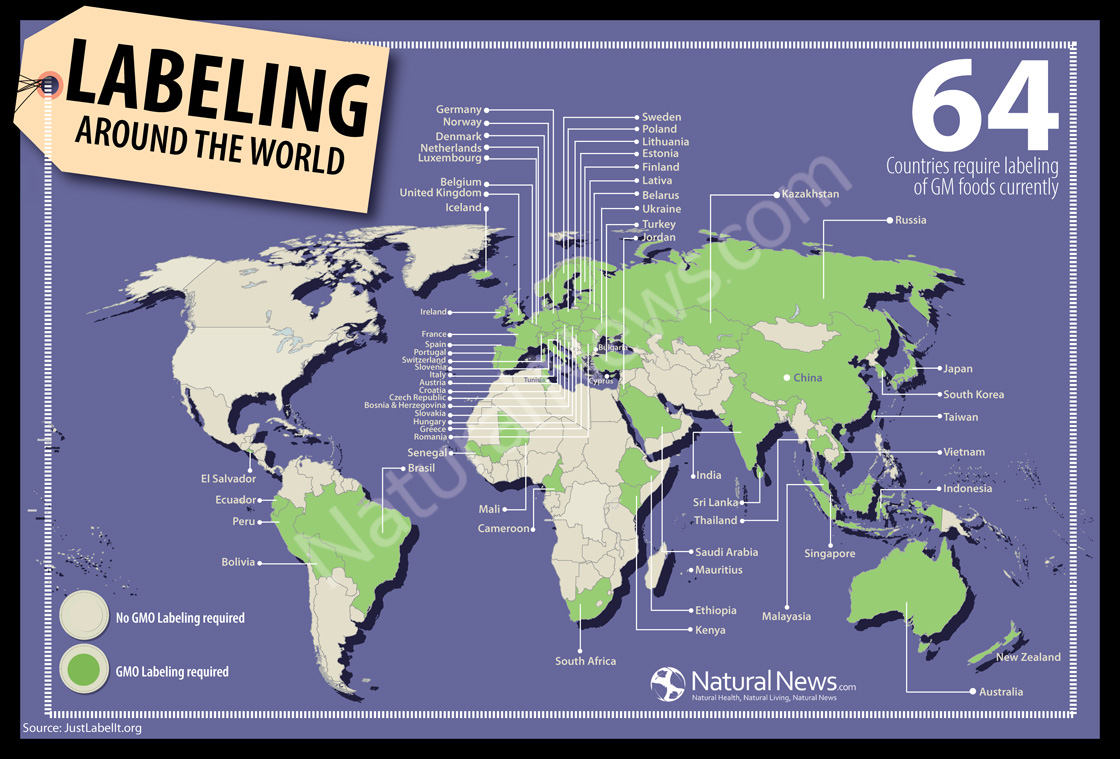
The push has intensified as the Senate prepares to take up industry-backed legislation this fall, already passed by the House, that would ban states from adopting laws that require the disclosure of food produced with genetically modified ingredients.
The efforts have helped produce important payoffs, including the approval by federal regulators of new genetically modified seeds after academic experts intervened with the United States Department of Agriculture on the industry’s behalf, the emails show.

Charla Lord, a Monsanto spokeswoman, said the company’s longstanding partnership with academics helped demystify the science. “It is in the public interest for academics to weigh in credibly, not only to consumers but to stakeholders like lawmakers and regulators as well,” she said.

But even some of the academics who have accepted special “unrestricted grants” or taken industry-funded trips to help push corporate agendas on Capitol Hill say they regret being caught up in this nasty food fight.

“If you spend enough time with skunks, you start to smell like one,” said Charles M. Benbrook, who until recently held a post at Washington State University. The organic foods industry funded his research there and paid for his trips to Washington, where he helped lobby for labels on foods with genetically modified ingredients.

On the other side, the biotech industry has published dozens of articles, under the names of prominent academics, that in some cases were drafted by industry consultants.

Monsanto and its industry partners have also passed out an undisclosed amount in special grants to scientists like Kevin Folta, the chairman of the horticultural sciences department at the University of Florida, to help with “biotechnology outreach” and to travel around the country to defend genetically modified foods.

“This is a great 3rd-party approach to developing the advocacy that we’re looking to develop,” Michael Lohuis, the director of crop biometrics at Monsanto, wrote last year in an email as the company considered giving Dr. Folta an unrestricted grant.

Dr. Folta said that he had joined the campaign to publicly defend genetically modified technologies because he believes they are safe, and that it is his job to share his expertise. “Nobody tells me what to say, and nobody tells me what to think,” he said, adding, “Every point I make is based on evidence.”

But he also conceded in an interview that he could unfairly be seen as a tool of industry, and his university now intends to donate the Monsanto grant money to a food pantry. “I can understand that perception 100 percent,” he said, “and it bothers me a lot.”

Players in a Safety Debate
The moves by Monsanto, in an alliance with the Biotechnology Industry Organization and the Grocery Manufacturers Association, are detailed in thousands of pages of emails that were at first requested by the nonprofit group U.S. Right to Know, which receives funding from the organic foods industry.

The New York Times separately requested some of these documents, then made additional requests in several states for email records of academics with ties to the organics industry.

There is no evidence that academic work was compromised, but the emails show how academics have shifted from researchers to actors in lobbying and corporate public relations campaigns.

The fight between the competing academics is not focused on questions about the safety of genetically engineered seeds themselves. The sides are fighting mainly over the safety of herbicides used in so-called genetically modified organism, or G.M.O., crops. The organic food proponents argue that herbicide use has surged, and that some of these herbicides may be unsafe. The biotech companies say that data relating to herbicide use on genetically engineered crops is being misinterpreted — and that these new crops, more resistant to pests and disease, are helping to feed the world.

So far, the anti-G.M.O. community has been winning the public relations war. Major brands like Chipotle and original Cheerios have moved to reduce or eliminate their use of genetically engineered ingredients, based in part on a marketing judgment that this is what the American public wants. That poses a threat to companies like Monsanto, which had $15.9 billion in global sales last year.

“Misinformation campaign in ag biotech area is more than overwhelming,” Yong Gao, then Monsanto’s global regulatory policy director, explained in an April 2013 email to Dr. Folta as the company started to work closely with him. “It is really hurting the progress in translating science and knowledge into ag productivity.”

Dr. Folta is among the most aggressive and prolific biotech proponents, although until his emails were released last month, he had not publicly acknowledged the extent of his ties to Monsanto.

He has a doctorate in molecular biology and has been doing research on the genomics of small fruit crops for more than a decade. Monsanto executives approached Dr. Folta in the spring of 2013 after they read a blog post he had written defending industry technology.

“We really appreciate independent scientists working to educate the public,” Keith Reding, a microbiologist who helps Monsanto manage its relations with regulatory agencies, wrote in an April 2013 email to Dr. Folta.

A few weeks later, the Council for Biotechnology Information — controlled by BASF, Bayer, Dow Chemical, DuPont and Monsanto — asked Dr. Folta and other prominent academics if they would participate in a new website, GMO Answers, which was established to combat perceived misinformation about their products. The plan was to provide the academics with questions from the public, such as, “Do GMOs cause cancer?”

“This is a new way to build trust, dialogue and support for biotech in agriculture that will help explain in an independent voice what GMOs are,” an executive at Ketchum wrote to Dr. Folta.

But Ketchum did more than provide questions. On several occasions, it also gave Dr. Folta draft answers, which he then used nearly verbatim, a step that he now says was a mistake.

“It was absolutely not the right thing,” he said, adding that he now insists that he write his own responses.

Kate Hall, a spokeswoman for the biotechnology council, said that the scholars were free to revise the scripted responses, and that the group offered these draft answers in only a few dozen cases, compared with the nearly 1,000 responses on GMO Answers to date.

Dr. Folta, the emails show, soon became part of an inner circle of industry consultants, lobbyists and executives who devised strategy on how to block state efforts to mandate G.M.O. labeling and, most recently, on how to get Congress to pass legislation that would pre-empt any state from taking such a step.

While Dr. Folta was not personally compensated, biotech companies paid for his trips to testify in Pennsylvania and Hawaii. “I should state upfront that I have not been compensated for any testimony,” he said at a public hearing in Hawaii, before adding, “The technology is safe and is used because it helps farmers compete.”

Dr. Folta routinely gave updates on his travels — and his face-to-face encounters with opponents of genetically modified crops — to the industry executives who were funding his efforts.

“Your email made my day!” wrote Cathleen Enright, an executive vice president of the Biotechnology Industry Organization, after Dr. Folta gave her a written update on the October 2014 legislative hearing in Pennsylvania. “Please send all receipts to us whenever you get around to it. No rush.”

In August 2014, Monsanto decided to approve Dr. Folta’s grant for $25,000 to allow him to travel more extensively to give talks on the genetically modified food industry’s products.

Dr. Folta is one of many academics the biotech industry has approached to help it defend or promote its products, the emails show.

The company, in late 2011, gave a grant for an undisclosed amount to Bruce M. Chassy, a professor emeritus at the University of Illinois, to support “biotechnology outreach and education activities,” his emails show.

In the same email in which Dr. Chassy negotiated the release of the grant funds, he discussed with a Monsanto executive a monthslong effort to persuade the Environmental Protection Agency to abandon its proposal to tighten the regulation of pesticides used on insect-resistant seeds.

“Is there a coordinated plan to maintain pressure and emphasis on EPA’s evolving regulations?” Eric Sachs, the chief of Monsanto’s global scientific affairs group, wrote in a related email to Dr. Chassy. “Have you considered having a small group of scientists request a meeting with Lisa Jackson,” referring to the E.P.A. administrator at the time.
In an interview, Dr. Chassy said he had initiated the fight against the E.P.A. plan before Monsanto pressed him. But he conceded that the money he had received from the company had helped to elevate his voice through travel, a website he created and other means.

“What industry does is when they find people saying things they like, they make it possible for your voice to be heard in more places and more loudly,” he said.
Dr. Chassy eventually set up a meeting at the E.P.A., with the help of an industry lobbyist, and the agency ultimately dropped the proposal.

In 2013, Monsanto also asked David R. Shaw, the vice president for research and economic development at Mississippi State University, to intervene with the Department of Agriculture to help persuade the agency to approve a new type of genetically modified soybean and cottonseed designed by Monsanto.

Organic farmers argued against this move, convinced that approval of the new seeds would lead to an increase in potentially harmful herbicide use. Monsanto wanted Dr. Shaw, whom the company has supported over the last decade with at least $880,000 in research grants for projects he helped oversee, to refute these arguments, the emails show.

“Our Regulatory Affairs and Government Affairs groups feel it is important that USDA hear from folks like you on the key issues since there is a high probability that many negative voices will be heard during these calls,” said a June 2013 email from John K. Soteres, then Monsanto’s head of weed resistance programs. “Your voice not only counts from the standpoint of presenting scientifically based viewpoints but also to a degree from a numbers standpoint.”

Dow Chemical made a similar pitch this year, with one company executive first reminding Dr. Shaw in an email about the industry’s financial support for the university. Then the executive asked Dr. Shaw to intervene with the Agriculture Department to urge it to approve Dow’s new genetically modified cottonseed, which was designed to be treated with a Dow-produced herbicide.

Dow’s and Monsanto’s requests to the Agriculture Department have since been approved. Dr. Shaw declined to comment. But a university spokesman, Sid Salter, described Dr. Shaw as “a highly ethical researcher.”

Why Not ‘Mommy Farmers’?
At times, the scientists themselves questioned whether they were the best advocates for the companies.

“What the situation requires is a suite of TV spots featuring attractive young women, preferably mommy farmers, explaining why biotech derived foods are the safest & greenest in the history of ag and worthy of support,” wrote L. Val Giddings, a senior fellow at Information Technology & Innovation Foundation, a nonprofit food policy research group in Washington, in an October 2014 email to a Monsanto lobbyist. The company was debating how to defeat labeling campaigns last year in Colorado and Oregon.

Dr. Folta, included in the email chain, agreed.

“We can’t fight emotion with lists of scientists,” Dr. Folta wrote to Lisa Drake, the Monsanto lobbyist. “It needs a connection to farming mothers.”

But Ms. Drake flatly rejected their arguments. Monsanto had already run television ads with mothers who were farmers. They fell flat.

“Doesn’t poll as well as credible third party scientist,” she said. “I know hard to believe, but I have seen the poll results myself, and that is why the campaigns work the way they do.”

Emails and other documents obtained by The Times from Washington State, where Dr. Benbrook served until earlier this year, show how the opponents of genetically modified foods have used their own creative tactics, although their spending on lobbying and public relations amounts to a tiny fraction of that of biosciences companies.

The organic foods industry has a direct financial interest to raise consumer concerns, because federal law requires that any product labeled organic in the United States be free of ingredients produced from genetically modified seeds. So if consumers move away from G.M.O.-based sources, they sometimes switch to organic alternatives.
Like the biotech companies, organic industry executives believed they could have more influence if they pushed their message through academics.

“I am a business guy, not a scientist,” said Gary Hirshberg, the chairman and former president of Stonyfield Farm, which produces organic yogurt, who leads an industry lobbying effort called Just Label It. “So of course it helps to have an academic scientist explain it.”

That is why Dr. Benbrook, who had served as chief scientist at the Organic Center, a group funded by the organic foods industry, resigned his job and sought a university appointment, he said.

“I was working for an organization affiliated and funded by the industry, and people were just not listening,” he said.

At Washington State, Dr. Benbrook was supported by many of the same financial backers, including Organic Valley, Whole Foods, Stonyfield and United Natural Foods Inc. The companies stayed closely involved in his research and advocacy, helping him push reporters to write about his studies, including one concluding that organic milk, produced without any G.M.O.-produced feed for the cows, had greater nutritional value.

At least twice, Mr. Hirshberg’s group also paid for Dr. Benbrook to go to Washington so he could help lobby against a federal ban on G.M.O. labels. And his research suggesting that herbicide use in G.M.O. crops has surged has been a central part of the organic industry’s argument for mandatory labels.

Dr. Benbrook, whose research post at Washington State was not renewed this year, said the organic companies had turned to him for the same reasons Monsanto and others support the University of Florida or Dr. Folta directly.

“They want to influence the public,” he said. “They could conduct those studies on their own and put this information on their website. But nobody would believe them. There is a friggin’ war going on around this stuff. And everyone is looking to gain as much leverage as they can.”

Saturday, September 5, 2015

2005. Cuba to Allow Doctors Who Abandoned Their Missions to Return to Country’s Health System

By Cafè Fuerte, Havana Times, September 5, 2015
Cuban doctors in Brazil
The Cuban government took a radical turn in its policy towards medical doctors who abandoned international healthcare missions and moved abroad, announcing on Friday it would allow them to return to their positions within the country’s national health system and grant them employment guarantees.
“The health professionals who, under the terms of the migratory reform, have left the country, be it because of financial, family related or professional reasons, including the victims of deceitful brain-drain practices, will be offered the opportunity to rejoin our national health system if they wish to do so, and shall be guaranteed a position with conditions similar to the ones they previously enjoyed,” an extensive communiqué from Cuba’s Ministry of Public Health (MINSAP) published in Granma announced.
Change in Policy
The announcement stems from a significant change in the policy Cuba has applied to medical doctors and dentists considered “deserters,” who were barred from returning to the country for a period of at least seven years and from returning to the island’s medical institutions following the invalidation of their degrees.
MINSAP’s declaration reminded readers that Cuba has been forced to adopt migratory controls and regulations to counter talent theft by the US government since the first years of the revolutionary process, and that this government “has continued to follow its interest to destabilize Cuba through lotteries, selective immigration policies and the Cuban Adjustment Act.”
The note criticized the continued application of the Cuban Medical Professionals Parole Program (CMPPP), established in 2006 to offer health professionals who abandon their missions in third countries refuge in the United States. The program has been the object of complaints by Cuba during the talks that have been held since January of this year to re-establish diplomatic relations and normalize ties between the two countries.
“To achieve this, it relies on agents or activists in places where our medical doctors are working under government agreements, who pressure and offer benefits of every kind to those willing to desert and emigrate to the United States, lured by the promise of a better professional future which, in truth, only a small minority will enjoy,” the communiqué explained.
Stuck in Colombia
The new policy is being announced at a time when hundreds of Cuban health professionals find themselves stranded in Colombia after fleeing their missions in Venezuela and Brazil. Following a period in which the CMPPP ceased to be offered to Cuban doctors, protests from medical professionals and pressure from Cuban-American congress people have again set in motion the granting of regular visas for Cubans over past weeks.
Since the close of August and until this past Friday, the US State Department has granted over 170 visas to medical doctors who requested refugee status through the US embassy in Bogota.
The MINSAP note stresses that the country is willing to consider all possible channels to improve the living and work conditions of Cuban doctors.
“We’re working to provide greater access to information technologies, to allow doctors, among other things, to access the latest articles in different specialties, grant scholarships for study abroad and the learning of new techniques (through itinerant groups), encourage participation at national and international congresses and events so that professionals can divulge their scientific research and share experiences with their counterparts,” the communiqué announced.
Big Business
In addition, Cuba’s sanitary authorities underscored that they will adopt the “measures needed” to ensure medical professionals can improve their skills and can give their best within the profession they chose.
The declaration reported that there are currently 85,000 medical doctors in the country and that the island has the best health professional per capita indicator in the world (7.7 doctors for every thousand inhabitants, or one doctor for every 130 people). The number has gone down to 5.4 with the 25,000 doctors currently working abroad (chiefly in Venezuela).
In total, more than 50,000 Cuban health professionals are working in 68 countries around the world.
The Cuban press, however, has recently alerted authorities about the shortage of specialists and family doctors in the country.
In 2014, the Empresa Comercializadora de Servicios Medicos de Cuba (“Cuban Medical Services Company”) expected to take in more than US $ 8.2 billion through the export of medical services to some 40 countries, making the sector the country’s main revenue source.