Showing posts with label industrial agriculture. Show all posts

Tuesday, February 27, 2018

2840. California Court Ruling Ends Decades of State Pesticide Spraying

By Center for Biological Diversity, February 26, 2018
171 million ponds of pesticides was used in crop agriculture in California in 2013. This is a breakdown by type.

A judge has ordered the California Department of Food and Agriculture to stop using chemical pesticides in its statewide program until the agency complies with state environmental laws.

The injunction, issued late last week, is a sweeping victory for 11 public-health, conservation, citizen and food-safety groups and the city of Berkeley. The coalition sued the state after unsuccessfully attempting for years to persuade the agency to shift to a sustainable approach to pest control that protects human health and the environment.

Despite thousands of comment letters urging the department to take a safer approach, officials in 2014 approved a program that gave them broad license to spray 79 pesticides, some known to cause cancer and birth defects, anywhere in the state, including schools, organic farms, public parks and residential yards.

Spraying was allowed indefinitely and required no analysis of the health and environmental impacts of the chemicals at the specific application sites and no public notice or scrutiny of treatment decisions. Many of the pesticides are also highly toxic to bees, butterflies, fish and birds.

This injunction follows a Jan. 8 ruling by Judge Timothy M. Frawley voiding approval of the agency's statewide program for numerous violations of state environmental laws, including relying on "unsupported assumptions and speculation" to conclude that pesticides would not contaminate water bodies. The ruling also cited the state's "woefully deficient" analysis of the cumulative danger of increasing the more than 150 million pounds of pesticides already being used in California each year.

The court process culminating revealed not only far-reaching flaws in the state's analysis of the environmental harm caused by the department's pesticide use but also the agency's decades-long history of evading disclosure of the human health and environmental impacts of its activities by granting itself repeated "emergency" exemptions from environmental laws.

"After more than 30 years of disregard for state environmental laws, the agency's chemical weapons have finally been taken off the table," said Nan Wishner of the California Environmental Health Initiative. "We hope the department will take this opportunity to shift course and apply sound science, partner with the public, and develop a more sustainable, transparent approach."

The court also held that the agency had to give public notice of its activities, which officials had insisted was not required.

"The court rejected the agency's blank check to spray people's yards, exposing children and pets to a range of pesticides that can cause serious long-term problems, including cancer, asthma and IQ loss," said Debbie Friedman, founder of MOMS Advocating Sustainability. "If only the $4.5 million in taxpayer dollars used to develop this outdated program had been spent to develop a modern, sustainable approach that does not rely on toxic chemicals, just imagine what progress we could have made toward a healthier environment for everyone."

"Now California must ensure these pesticides aren't harming our water supplies and imperiled species like salmon," said Jonathan Evans, environmental health legal director at the Center for Biological Diversity. "This ruling affirms that people should have a voice in pesticide use in their neighborhoods."

The state's attorney told the court that the Department of Food and Agriculture had already carried out more than 1,000 pesticide treatments since the program was approved in 2014. Program pesticides include these dangerous chemicals:

• Chlorpyrifos, known to cause brain damage in children and to threaten 97 percent of endangered wildlife;
• Neonicotinoid pesticides that are highly toxic to pollinators like bees and aquatic invertebrates like crustaceans and mollusks;
• The toxic fumigant methyl bromide, which depletes the protective ozone layer;
• The chemical warfare agent chloropicrin, which causes genetic damage.

"The judge has told the state that harmful pesticides simply can't be sprayed indiscriminately, without robust consideration of impacts on people, animals and water," said Bill Allayaud, California director of government affairs for the Environmental Working Group. "The ruling also affirms that Californians have the right to know about pesticides being sprayed around them and the ability to challenge spraying that endangers public health and natural resources."

The suit was brought by the city of Berkeley, the Center for Biological Diversity, Environmental Working Group, California Environmental Health Initiative, MOMS Advocating Sustainability, Center for Food Safety, Pesticide Action Network North America, Center for Environmental Health, Environmental Action Committee of West Marin, Beyond Pesticides, Californians for Pesticide Reform, and Safe Alternatives for Our Forest Environment.

The plaintiffs are represented by Arthur Friedman of Sheppard, Mullin, Richter & Hampton, along with Jason Flanders of ATA Law Group.

Saturday, July 29, 2017

2671. Fertilizer from Industrial Agriculture Pollutes the Ocean

By Tatiana Schlossberg, The New York Times, July 27, 2017
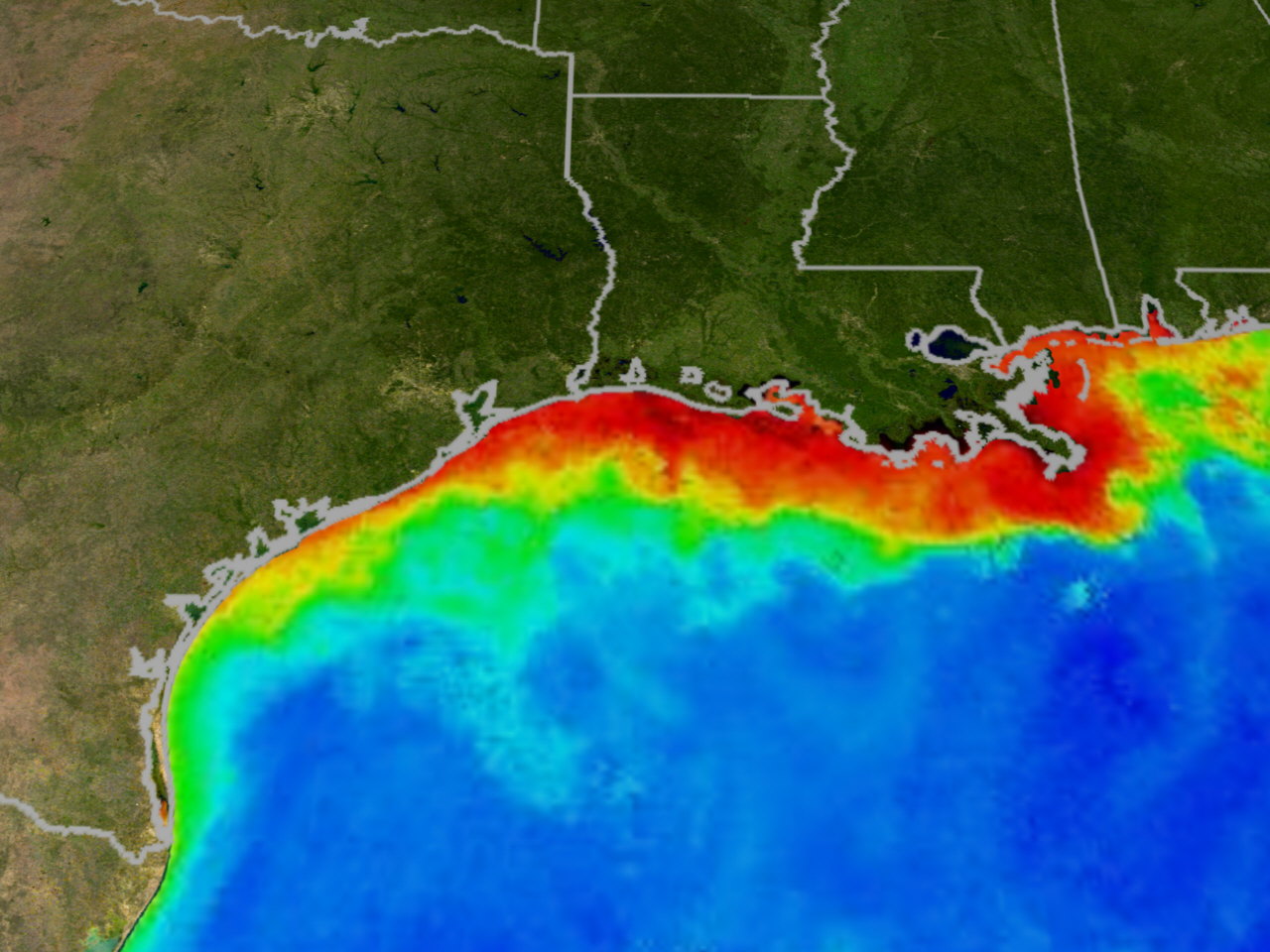
Caused by chemical fertilizer use by American industrial agriculture, the Gulf of Mexico dead zone is one of the largest in the world. 
Nitrogen-based fertilizers, which came into wide use after World War II, helped prompt the agricultural revolution that has allowed the Earth to feed its seven billion people.

But that revolution came at a cost: Artificial fertilizers, often applied in amounts beyond what crops need to grow, are carried in runoff from farmland into streams, lakes and the ocean. New research suggests that climate change will substantially increase this form of pollution, leading to more damaging algae blooms and dead zones in American coastal waters.

study published Thursday in Science concludes that eutrophication, excessive nutrient enrichment, is likely to increase in the continental United States as a result of the changes in precipitation patterns brought by climate change. Heavier rains caused by warmer temperatures will cause more agricultural runoff, sluicing more nutrients into rivers, lakes and oceans.

The authors found that future climate change-driven increases in rainfall in the United States could boost nitrogen runoff by as much as 20 percent by the end of the century.
“When we think about climate change, we are used to thinking about water quantity — drought, flooding, extreme rainfall and things along those lines,” said Anna Michalak, a professor of global ecology at the Carnegie Institution for Science in Stanford, Calif., and one of the authors of the study. “Climate change is just as tightly linked to issues related to water quality, and it’s not enough for the water to just be there, it has to be sustainable.”

Excess nitrogen from the fertilizers can cause eutrophication in the ocean, which can lead to harmful algae blooms or hypoxia — reduced levels of oxygen that create conditions in which organisms can’t survive.

The study’s authors looked at three emissions scenarios — high, stable and falling — in both the near and far future in more than 2,100 “subbasins” or watersheds in the continental United States.

Their results show that in the high emissions scenario, which assumes that future greenhouse gas emissions trends follow those of the past, increased precipitation alone would cause “large and robust increases” in nitrogen amounts on the watershed scale, particularly in the Upper Mississippi Atchafalaya River Basin, the Northeast, and the Great Lakes basin.

In the stable emissions model, in which a rise in global surface temperatures by two degrees Celsius from preindustrial times is more than likely, the Northeast would still see a robust increase in nitrogen loading.

This is in part because the nitrogen accumulation will occur in areas that already are experiencing it, and because watersheds in the Northeast and elsewhere drain into coastal regions where nitrogen pollution is already affecting water quality, the study said.
For instance, the Chesapeake Bay has experienced a “dead zone,” a result of hypoxia, regularly since 1950. Earlier this summer, the National Oceanic and Atmospheric Administration predicted a larger than average dead zone there, despite previous efforts at reducing nutrient levels.

The most notorious dead zone in the country surrounds the mouth of the Mississippi River in the Gulf of Mexico, which this year is expected to cover an area approximately the size of Vermont, nearly 10,000 square miles, according to research from Louisiana State University.

While the researchers did not specifically model the global effects of climate change on nitrogen loading in other parts of the world, they applied their models to analogous areas outside the United States. They found that large areas of East, South and Southeast Asia may experience increases in nitrogen levels similar to those seen in the United States.
Because these regions are home to more than half of the world’s population and are heavily dependent on surface water, the authors write, the effects of increased eutrophication are likely to be stark, turning the green revolution rather brown.

Farmers and agricultural authorities must take account of climate change and the prospect of increased rainfall in designing strategies to mitigate the effects of nutrient pollution. Otherwise, Ms. Michalak said, “They’re going to fail.”

Sunday, March 6, 2016

2236. The Centrality of Seed: Building Agricultural Resilience Through Plant Breeding

By Salvatore Ceccarelli, Independent Science News, February 29, 2016


Five of the global issues most frequently debated today are the decline of biodiversity in general and of agrobiodiversity in particular, climate change, hunger and malnutrition, poverty and water. Seed is central to all five issues. The way in which seed is produced has been arguably their major cause. But it can also be the solution to all these issues.

During the millennia before modern plant breeding began, farmers were moving around with seeds and livestock, and because neither were uniform, they could gradually adapt to different climates, soils and uses. Whenever farmers settled, they continued to improve crops and livestock. In the case of crops, the way they did it can still be seen today in a number of countries and consists of selecting the best plants, which give the seed to be used for the following season. This process was highly location-specific in the sense that each farmer did it independently from other farmers and for his/her conditions of soil, climate and uses. The enormous diversity of what we call ancient, old, heirloom varieties originated through this process.

Problems created by Industrial Agriculture
The transition to modern plant breeding was accompanied by a change from selection for specific adaptation to selection for wide adaptation: this became the dominant breeding philosophy and was the basic breeding principle adopted by the Green Revolution.

The term Green Revolution is used to indicate an agriculture development strategy based on the use of new varieties, in conjunction with the use of fertilizers, pesticides, irrigation water and mechanization. It is now increasingly recognized that the short-term achievements of the Green Revolution had long-term penalties.

One was the reduction in food diversity with negative consequence on human health (von Hertzen et al. 2011). Another was the leaching into the ground water of fertilizers due to overuse (Good and Beatty 2011), but they also included water shortages, the emergence of pesticide resistance (Gassman et al. 2011), the increase in populations of harmful insects (Lu et al. 2013) and the bypassing of farmers in marginal areas (Baranski 2015).

GMOs, the latest addition to the industrial “toolbox,” are a short-term and unstable solution to these problems because they change the environment surrounding the organisms they intend to control (Binimelis et al. 2009). Thus, as predicted by a fundamental biological principle, namely the Fundamental Theorem of Natural Selection, their use induces resistance (Ceccarelli 2014). It is the same process by which bacteria evolve resistance to antibiotics, a phenomenon that is the cause of diseases affecting yearly two million Americans and causing 23,000 deaths in the USA (Frieden 2014; Reardon, 2014). At best, GMOs can only be a short-term solution to any particular problem, but in every case they have created an often more serious problem (resistant weeds, insects or disease) that requires a new GMO and/or more chemical use. They also make a farmer completely dependent on the company producing the GMOs and chemicals (Pechlaner 2010).

Agroecology and Alternative Methods of Plant Breeding
Agroecological models of agriculture, such as organic agriculture, could be solutions to the most important problems affecting the planet, but they are often criticized for not being able to produce enough food for a growing population. We believe, however, that most of the meta-analysis showing lower yields under organic conditions are biased by the use of varieties which were not selected specifically for organic conditions.

Participatory and evolutionary plant breeding methods, while benefiting from advances in molecular genetics, reconcile increased production of more readily available and accessible food with increased agrobiodiversity. They also maintain the evolutionary potential of our crops, which is needed to cope with climate change (Seneviratne et al. 2016). Being based on selection for specific adaptation, participatory plant breeding is not only more efficient than conventional plant breeding (Ceccarelli, 2015), but is able to produce varieties specifically adapted to both an agroecological agricultural model and diverse local climates (Ceccarelli et al. 2010). Thereby food safety is reconciled with food security.

Participatory Breeding of Tomatoes for Organic Farming
An example that this is indeed possible at low cost and in a short period of time is the following three year project of participatory tomato breeding for organic conditions.

In Italy, four single crosses representing four different tomato types, namely “cuore di bue”, “long fruit”, “cherry tomato” and “green salad fruit”, were self fertilized to produce four F2 populations (Campanelli et al. 2015) (1). These F2 seeds were distributed to four organic farmers located along a 450 km transect of the Italian Adriatic coast. Each farmer grew a random sample of 72 individual F2 plants for each of the four crosses, together with 18 individual plants of a commercial F1 hybrid of the corresponding fruit type for a total of 360 plants (4 crosses x 90 plants). The four populations were also planted at the research station. In farmers’ fields, a group of farmers and a group of scientists conducted independently a visual selection on individual plants expressing their opinion with a 1 (= worse) to 4 (= best) score. At the research station, only scientists conducted the selection. 

After statistical analysis, seed was extracted from the fruits of the best plants and the corresponding F3 families (8 plants per family) were grown together with the same commercial hybrid as in the first year. During the process the F3 seed of the selected F2 of the green salad population was lost because of poor seed germination. Selection was repeated with the same methodology and the best plants were used to obtain the seed of the F4 families of the three remaining crosses. These were compared with commercial hybrids in a replicated (3 replications) trial on the four farms and at the research station. The trials on farms had some lines in common (selected in more than one farm) but also the unique selections on that farm.

To assess yield, we measured the production of the first three fruit clusters. These are both very vulnerable to late frosts and very valuable to the farmers for the high prices of an early season tomato. It is thus a key commercial trait for farmers.

The result of the three years participatory selection were identification of three families which out-yielded significantly the respective commercial hybrid and another 12 families which yielded as much as the commercial hybrids. All the three families which significantly out yielded the respective commercial hybrid were selected from the same population (the “long fruit” type). Two of these families had a yield advantage over the commercial hybrid of between 43 and 44%. The third family out-yielded the commercial hybrid in two of the four farms by 62 and 76%, but it was significantly lower yielding (-22%) than the same hybrid on the research station. Had we conducted the breeding program only at the research station, we would have missed such a line (Campanelli et al 2015).

Part of the evaluation was a score for uniformity and none of these lines was phenotypically less uniform than the hybrid. This means that they can be immediately commercialized, thus capitalizing on the work done. The lines still conserve some genetic diversity, which allows farmers to continue to improve them by extracting seeds from the best fruits of the best plants. The three advantages farmers derived from this work are 1) higher yielding varieties; 2) saving on purchased seed as they can produce their own, and 3) using varieties specifically adapted to organic conditions.

Beyond participatory plant breeding
There are several other examples of successful participatory breeding programs, but despite these successes participatory plant breeding has a weakness in requiring the collaboration of a research institute to provide breeding material and technical support such as experimental design and statistical analysis (Sthapit et al. 1996, Witcombe et al. 2003). Therefore, the sustainability of a participatory program depends on the long-term commitment of a research institution.

An interesting alternative is offered by evolutionary (participatory) plant breeding – participatory is in parenthesis because, though desirable, the participation of an Institution is not indispensable. The idea is not new as it was proposed back in 1956 (Suneson 1956). The method consists in planting in farmers’ fields with mixtures (evolutionary populations) of very many different genotypes of the same crop, preferably, but not necessarily, using early segregating generations. These populations will be planted and harvested year after year, and due to natural crossing (higher in cross-pollinated and less in self-pollinated crops), the genetic composition of the seed that is harvested is never the same as the genetic composition of the seed that was planted. In other words, the population evolves to become progressively better adapted to the environment (soil type, soil fertility, agronomic practices including organic systems, rainfall, temperature, etc.) in which it is grown. As the climatic conditions vary from one year to the next, the genetic makeup of the population will fluctuate, but if the tendency is towards hotter and drier climatic conditions, as expected in view of climate change, the genotypes better adapted to those conditions will gradually become more frequent in this farming/breeding system (Ceccarelli 2014).

The evolutionary population, which can be made by the farmers themselves by buying seed of as many different varieties (including hybrids) of a given crop, can be used by the farmers (and by researchers if they are willing to participate) as a source of genetic diversity from which to select plants with useful traits.

This has been done in Italy (data not published) using a zucchini (summer squash) evolutionary population obtained by letting 11 commercial hybrids to freely intercross. After only two cycles of visual selection, as in the case of tomato, the farmer in question selected two varieties, differing in color, yielding as much as the commercial hybrids. He has already started selling the two new varieties in local markets.

Thus evolutionary (participatory) plant breeding, being a relatively inexpensive and highly dynamic strategy to adapt crops to a number of combinations of both abiotic and biotic stresses and to organic agriculture, seems to be a suitable method to generate, directly in farmers’ hands, the varieties that will feed the current and future populations. Combining seed saving with evolution and returning control of seed production to the hands of farmers, it can produce better and more diversified varieties. These can help millions of farmers to reduce their dependence on external inputs and their vulnerability to disease, insects and climate change and ultimately contribute to food security and food safety for all.

Footnote
(1) These were produced at the Headquarters of the Consiglio per la Ricerca in Agricoltura e l’analisi dell’economia agraria- Unità di Ricerca per l’Orticoltura di Monsampolo del Tronto (CREA-ORA).
Salvatore Ceccarelli lives in Hyderabad (India) and cooperates in organizing participatory and evolutionary programs with different organizations, with various crops and in a number of countries. He is associated with the organisation: Rete Semi Rurali, Via di Casignano, 25, Scandicci (FI) 50018, Italy (http://www.semirurali.net/). His website is: http://www.miscugli.it/. His papers can be accessed by joining: https://www.researchgate.net/.

References
Baranski MR (2015). Wide adaptation of Green Revolution wheat: International roots and the Indian context of a new plant breeding ideal, 1960 – 1970. Studies in History and Philosophy of Biological and Biomedical Sciences 50: 41-50.
Binimelis, R., Pengue, W., & Monterroso, I. (2009). “Transgenic treadmill”: Responses to the emergence and spread of glyphosate-resistant johnsongrass in Argentina. Geoforum, 40(4), 623-633.
Campanelli G, Acciarri N, Campion B, Delvecchio S, Leteo F, Fusari F, Angelini P, Ceccarelli S (2015). Participatory Tomato Breeding for Organic Conditions in Italy. Euphytica 204 (1): 179-197.
Ceccarelli, S., Grando, S., Maatougui, M., Michael, M., Slash, M., Haghparast, R., … & Labdi, M. (2010). Plant breeding and climate changes. The Journal of Agricultural Science, 148(06), 627-637.
Ceccarelli S (2014) GMO, Organic Agriculture and Breeding for Sustainability. Sustainability 6: 4273 – 4286.
Ceccarelli S (2015). Efficiency of plant breeding. Crop Science 55: 87-97.
Frieden T (2013). Antibiotic Resistance Threats in the United States. Centers for Disease Control and Prevention pp. 114
Gassmann AJ, Petzold-Maxwell JL, Keweshan RS, Dunbar MW (2014). Field-Evolved Resistance to Bt Maize by Western Corn Rootworm. PLoS ONE 6(7): e22629. doi:10.1371/journal.pone.0022629.
Good AG, Beatty PH (2011). Fertilizing Nature: A Tragedy of Excess in the Commons. PLoS Biol 9, e1001124. doi:10.1371/journal.pbio.1001124.
Lu Y. Wu K, Jiang Y, Xia B, Li P, Feng H, Wyckhuys KAG, Guo Y (2013). Mirid Bug Outbreaks in Multiple Crops Correlated with Wide-Scale Adoption of Bt Cotton in China. Science 328: 1151–1154.
Reardon S (2014) Antibiotic resistance sweeping developing world. Nature, 509: 141-142.
Seneviratne, S. I., Donat, M. G., Pitman, A. J., Knutti, R., & Wilby, R. L. (2016). Allowable CO2 emissions based on regional and impact-related climate targets. Nature.
Sthapit, B. R., Joshi, K. D., & Witcombe, J. R. (1996). Farmer participatory crop improvement. III. Participatory plant breeding, a case study for rice in Nepal. Experimental agriculture, 32(04), 479-496.
Suneson CA (1956). An Evolutionary Plant Breeding Method. Agronomy Journal, 1956 48: 188–191.
von Hertzen S, Hanski I, and Haahtela T (2011). Natural immunity: Biodiversity loss and inflammatory diseases are two global megatrends that might be related. EMBO reports 12: 1089–1093.
Witcombe, J. R., Joshi, A., & Goyal, S. N. (2003). Participatory plant breeding in maize: A case study from Gujarat, India. Euphytica, 130(3), 413-422.

Thursday, August 14, 2014

1511. Decades of Herbicide Use Yield "Weeds" that Do Not Respond to Herbicides: The Case of Amaranthus Palmeri

By Michael Wines, The New York Times, August 11, 2014
Glyphosate resistant Palmer Amaranth, photo by FireFlyForest.com
WHEATFIELD, Ind. — The Terminator — that relentless, seemingly indestructible villain of the 1980s action movie — is back. And he is living amid the soybeans at Harper Brothers Farms.
About 100 miles northwest of Indianapolis, amid 8,000 lush acres farmed by Dave Harper, his brother Mike and their sons, the Arnold Schwarzenegger of weeds refuses to die. Three growing seasons after surfacing in a single field, it is a daily presence in a quarter of the Harper spread and has a foothold in a third more. Its oval leaves and spindly seed heads blanket roadsides and jut above orderly soybean rows like skyscrapers poking through cloud banks. It shrugs off extreme drought and heat. At up to six inches in diameter, its stalk is thick enough to damage farm equipment.
“You swear that you killed it,” said Scott Harper, Dave Harper’s son and the farm’s 28-year-old resident weed expert. “And then it gets a little green on it, and it comes right back.”
Botanists call the weed palmer amaranth. But perhaps the most fitting, if less known, name is carelessweed. In barely a decade, it has devastated Southern cotton farms and is poised to wreak havoc in the Midwest — all because farmers got careless.
After Monsanto began selling crops genetically engineered to resist glyphosate in the 1990s, the herbicide’s use soared. Farmers who once juggled an array of herbicides — what killed weeds in a cotton field might kill cornstalks in a cornfield — suddenly had a single herbicide that could be applied to almost all major crops without harming them.
There were even environmental benefits: Farmers relied less on other, more dangerous weed killers. And they abandoned techniques like tilling that discouraged weed growth, but hastened erosion and moisture loss.
But constantly dousing crops in glyphosate exacted a price. Weeds with glyphosate-resisting genetic mutations appeared faster and more often — 16 types of weed so far in the United States. A 2012 survey concluded that glyphosate-resistant weeds had infested enough acreage of American farmland to cover a plot nearly as big as Oregon, and that the total infestation had grown 51 percent in one year. Glyphosate-resistant palmers first surfaced in 2005, in a field in Macon County, Ga. Nine years later, they are in at least 24 states.
“There’s no substantive argument about whether the problem’s gotten far worse in this era of genetically resistant crops,” said Charles Benbrook, a professor and pesticide expert at Washington State University. “The advent of herbicide-tolerant crops made it possible for farmers to load up so much herbicide on one crop that it was inevitable that it would develop resistance.”
Now farmers are going back to older techniques to control weeds, using more varieties of herbicides, resuming tilling — and worse.
Palmer amaranth is the prime example. Consider the cotton fields that blanket many Southern farms: Without glyphosate, almost no herbicides can kill the weed without also damaging cotton plants. Some farmers have mowed their crops to keep palmer seeds from maturing. In 2009, Georgia spent $11 million to send laborers into a million acres of cotton fields to pull palmers out by hand.
For many farmers, including the Harpers, manual labor has become a last resort in the battle against carelessweed.
“I consider myself a Roundup baby, and it was great,” Scott Harper said. “You didn’t have to think about anything. And now we get this weed that flips everything on its head.”
The Harpers’ 2,500-acre soybean crop is an object lesson in palmer’s adaptability and how far farmers must go just to keep it in check.
Palmer amaranths seem as if they were designed by nature to outwit herbicides and farmers. Unlike many weeds, it has male and female versions, increasing genetic diversity — and the chances of a herbicide-resistant mutation — in each new seed. And each plant is astonishingly prolific, producing up to 200,000 seeds in an average field, said Dave Mortensen, a professor of weed and plant ecology at Pennsylvania State University.
“If one out of millions or billions of seeds contains a unique trait that confers resistance to herbicide,” he said, “it doesn’t take long when a plant is that fecund for it to become the dominant gene.”
William G. Johnson, a Purdue University professor of botany and plant pathology, said the weed probably arrived at the Harpers’ farm in typical fashion: in manure, purchased as fertilizer, from cows that ate cottonseed — and, inadvertently, palmer seeds.
The Harpers initially mistook the weed for waterhemp, a close relative. Before they learned otherwise, combines had already harvested fields containing mature palmer seed pods and had spread the seed far and wide.
A glyphosate-resistant palmer is a mighty beast indeed. Its seeds can germinate any time during the growing season, so herbicide sprayed in April is useless against a palmer that appears in July. Once sprouted, palmer amaranth can grow more than two inches a day. Once it exceeds four inches, even herbicides for which it lacks resistance begin to lose their effectiveness.
The Harpers have kept palmers at bay in their 5,500 acres of corn by spraying dicamba, a weed killer that is benign to corn. Soybeans are a different matter.
Last year, the Harpers sprayed palmer-infested fields several times with glyphosate and two other herbicides, pushing herbicide costs to $80 an acre from $15. About eight in 10 palmers died. The rest wilted for a couple of weeks, then resumed growing.
This year, they are trying a different chemical cocktail that raises herbicide costs only to $45 an acre. Their big gun, a herbicide that blocks palmers from synthesizing amino acids, was sprayed on July 3, the first of two applications allowed each summer.
“I came back from the Fourth of July weekend, and they looked dead,” Mr. Harper said. “I said, ‘I think we smoked ’em.’ My dad says, ‘Awesome.’ ” He paused. “Ten days later, there’s green coming all over them again.”
Should the second herbicide application fail, Mr. Harper said, he is unsure what to do next.
More broadly, experts in glyphosate’s travails — farmers, scientists, regulators, the herbicide industry, environmentalists — feel much the same way.
The industry has readied a new barrage of genetically engineered crops that tolerate other weed killers. The Environmental Protection Agency is set to approve plans by Dow AgroSciences to sell soybean seeds that tolerate not only glyphosate, but a much older herbicide, 2,4-D, and a third widely used herbicide, glufosinate. Monsanto hopes to market soybeans and cotton next year that resist dicamba.
Dr. Mortensen and others say the companies are simply repeating the history that made palmers resistant to glyphosate. He says natural solutions, like planting what are known as cover crops that keep light from reaching germinating palmers, may cost more but are also effective.
Mr. Harper said he believes Dr. Mortensen is right. He also said he cannot wait for Monsanto and Dow to begin hawking their new soybeans anyway.

“I’m not stupid. I know you can only ride a pony so far,” he said. “It’ll probably take another 10 years before palmer becomes a real big problem again. But that just brought me 10 years I didn’t have.”

Thursday, April 3, 2014

1371. Corn Rootworm Now Thrives on GMO Corn Designed to Kill It, Study Finds

By Brian Owens, Nature, March 17, 2014
Corn Rootworm
Even with biotech crops, farmers still need to make use of age-old practices such as crop rotation to fight insect pests. That’s the lesson to be drawn from the latest discovery of resistance to the pest-fighting toxins added to maize — also known as corn.
According to a team led by Aaron Gassmann, an entomologist at Iowa State University in Ames, in some Iowa fields a type of beetle called the western corn rootworm (Diabrotica virgifera virgifera LeConte) has developed resistance to two of the three types of Bacillus thurinigiensis (Bt) toxin produced by genetically modified maize. Resistance to one type of Bt toxin has cropped up in the worms in recent years, but now there is a twist — the researchers have found that resistance to that type of Bt toxin also confers protection against another, more recently introduced type. Their work appears in this week's Proceedings of the National Academy of Sciences1.
“That’s two of the three toxins on the market now,” says Gassmann. “It’s a substantial part of the available technology.”
Genetically modified (GM) maize producing the Bt toxin Cry3Bb1, which provided protection against pests such as rootworm, was first approved for use in the United States in 2003. By 2009, farmers had started to see rootworm damage in their GM crops. In 2011, that damage had spread to GM maize containing a second toxin, mCry3A. In lab tests, Gassmann showed that this was a case of cross-resistance — worms that had become resistant to Cry3Bb1 were also resistant to mCry3A, possibly because the toxins share structural similarities and some binding sites in the insect’s gut.
Part of the problem is that rootworms are tough, and the Bt maize does not produce enough toxin to fully control them. The Bt toxins used against pests such as the European corn borer (Ostrinia nubilalis) kill more than 99.99% of their targets, whereas more than 2% of rootworms can survive Bt maize. Resistance in the worms can evolve rapidly in fields where the same kind of maize is grown every year — in Iowa it showed up after an average of 3.6 years.
Nicholas Storer, a global science-policy leader for biotechnology at Dow AgroSciences in Washington DC, says that the study illustrates that if GM crops are not used as part of an integrated pest-management policy, resistance can develop quickly in an individual field. Agricultural biotechnology companies such Dow are now ‘pyramiding’ their seeds so that they produce two different Bt toxins to attack the rootworm. For example, Dow has teamed up with Monsanto of St Louis, Missouri, to sell seeds that combine Cry3Bb1 with Cry34/35Ab1, a toxin that has so far not seen any resistance develop.
Gassmann says that the pyramiding of toxins is an important way to delay the development of resistance, but that the combination is less effective once resistance arises to one of the toxins. So farmers should not rely exclusively on technology to fight pests, and should instead periodically change the crop grown on a field to help disrupt the pest’s life cycle. “The rootworm can’t survive if the corn’s not there,” Gassmann says.

Storer agrees that even the best technologies will always need to be combined with the old methods. “Crop rotation was the primary tool to combat rootworm before Bt came along,” he says. “We need to keep it up.”