Showing posts with label anthropology. Show all posts

Thursday, November 5, 2020

3440. Claude Lévi-Strauss (1908–2009)

By Adam Kuper, Nature, December 16, 2009
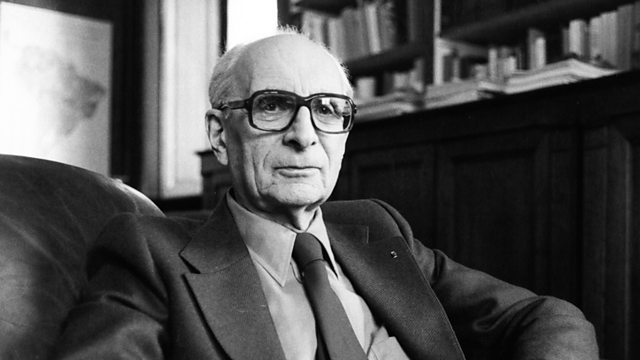
Claude Lévi-Strauss, (born Nov. 28, 1908, Brussels, Belgium.—died Oct. 30, 2009, Paris, France)

 Claude Lévi-Strauss had only the slightest experience of ethnographic fieldwork, and had no formal training in anthropology. Nevertheless, his ideas transformed the discipline, and profoundly influenced the other human sciences. He died on 31 October.

The son of an artist father, and the grandson of a rabbi in Strasbourg, France, Lévi-Strauss was educated in law and philosophy at the Sorbonne in Paris. In 1935, he joined a French contingent at the new University of Sāo Paulo in Brazil. He embraced the opportunity, because he had a very particular ambition. Jean-Jacques Rousseau once suggested that an expedition should be sent to the Americas to study human nature in its essential state, uncorrupted by civilization. A devotee of Rousseau's philosophy, Lévi-Strauss was determined to execute the master's plan.

During his university holidays, Lévi-Strauss made expeditions to study remote Amerindian settlements, but almost all of this work was done at telegraph posts where Indians were in contact with government agencies and traders. Only towards the end of his travels did he make brief contact with an isolated band living in the old style, but naturally enough they spoke no Portuguese. “Alas! They were only too savage,” Lévi-Strauss reported. “They were as close to me as a reflection in a mirror; I could touch them, but I could not understand them.”

This adventure might have been no more than an interlude. But shortly after Lévi-Strauss returned to France, the German army invaded the country and he became an exile in New York. At a loose end, he wrote up his Brazilian field notes, became an informal member of the anthropology circle at Columbia University and spent long days combing the anthropology shelves in the New York Public Library. “What I know of anthropology I learned during those years,” he later remarked.

Although his American colleagues were steeped in regional ethnography, they were notoriously suspicious of theoretical abstractions. Lévi-Strauss, however, was determined to use observations of hunter-gatherers as the basis for a theory of human nature, like a more empirical Rousseau. Such a soaring ambition required a new theoretical framework. Inspiration came from a fellow exile in New York, the Russian linguist Roman Jakobson. Following the path-breaking contributions of Ferdinand de Saussure, linguistics was in the throes of a theoretical revolution. Lévi-Strauss concluded that it would show the way to a new, generalizing, structural anthropology.

Jakobson was particularly interested in phonemics, the branch of linguistics that deals with the communication of meaning through sounds. He claimed to have split the atom of linguistics, the phoneme. The phoneme had been viewed as the smallest significant unit of sound in speech, but according to Jakobson it was itself a bundle of features made up of pairs of contrasting elements. So, for instance, English speakers invest the contrasting b and p sounds with meaning (the words 'bill' and 'pill' are obviously different to our ears), whereas in other languages the distinction may be unmarked and unheard. Lévi-Strauss argued that systems of classification are constructed on a similar pattern of binary oppositions.

Returning to Paris in 1949, Lévi-Strauss found employment at the Museum of Man and then the École Pratique des Hautes Études at the Sorbonne. His massive doctoral thesis, published that year, argued that the imposition of a taboo on incest marked the break between a natural and a cultural order, obliging men to exchange sisters with other men, and so creating family and kinship networks. In the simplest (and implicitly oldest) systems, these networks are structured by a binary classification of relatives into two classes: unmarriageable kin and marriageable affines.

In 1959, Lévi-Strauss was appointed to a chair at the College of France in Paris. He now began to publish his most influential studies, which dealt with systems of thought. The Savage Mind (1962) argued that Native Americans, and other hunter-gatherers from Australia to Africa, operate a “logic of the concrete” — they order images taken from the world around them in a series of binary oppositions. This home-made natural science provides metaphors for social relationships. In many languages, for example, the Sun and the Moon are associated with male and female characteristics. Paired species of birds and animals are contrasted in terms of colouring, feeding habits, or some other defining features, and are then associated with other paired objects (Australian Aboriginals, for instance, associate the Sun with the crow, and the eaglehawk with the Moon). Such categorizations symbolize the social contrasts between men and women, or between pairs of human clans or occupations.

In his masterpiece — a collection of four volumes on American mythology, beginning with the The Raw and the Cooked in 1964 and culminating with The Naked Man in 1971 — Lévi-Strauss demonstrated how systems of classification are put to work in myths that are at once epics, moral treatises and accounts of the world. He proposed that the initial premises of myths (say, that women are lunar, men solar) are played with in subsequent versions to yield new premises. These transformations follow implicit rules that allow only a sort of logical progression, in the form of the inversion of the initial terms, or a series of substitutions by which one binary pair replaces another. As he put it: “The kind of logic in mythical thought is as rigorous as that of modern science, and ... the difference lies, not in the quality of the intellectual process, but in the nature of things to which it is applied.”

Lévi-Strauss notoriously claimed that he had a neolithic intelligence, that his thought was intuitively sympathetic to that of hunter-gatherers. His grand theory rested on a binary opposition between nature and culture (taken, of course, from Rousseau), and so between the small-scale, technically simple societies that existed during the first 150,000 years of human history and modern civilization, which rendered the simpler societies obsolete. He believed that humanity in its natural condition was adapted to the environment, whereas civilized societies endanger the environment and obliterate cultural variation. This deeply pessimistic view was conditioned by the Amazonian idyll of his youth, and the European catastrophe of the Second World War that followed. But he also believed that people everywhere ultimately thought in the same way, although about different things, and that the clash of cultures is necessary for human adaptation.

Saturday, June 16, 2018

2944. Book Review: The Power of the Machine: Global Inequalities of Economy, Technology, and Environment

By Eric C. Jones, Journal of Ecological Anthropology, 2005


Hornborg’s book—a seamlessly organized collection of his previously published articles—asks this question: What is the source of the world’s current ecological crises? His answer is the familiar bogeyman of capitalism and its henchman money. But his explanation of that answer is quite innovative and has the potential to help build a framework that would be a theoretical breakthrough for understanding human-environment relations. In addition to standard positivist arguments, he also incorporates many concepts and analytical techniques from poststructural theory. He applies these perspectives to the broad scope of global economics and the ubiquity of environmental degradation—and specifically individuals involved in everyday relationships of production, distribution and consumption. Because of its subject matter and innovative approaches, this book should be read by all economic and ecological anthropologists and would provide good material for teachers of upper division classes in those fields, although the book addresses questions that are pressing in virtually all of the social sciences. 

In response to a growing literature that wants to push the origins of the process of wealth accumulation back at least 5000 years (see Gills and Frank 1990), the book argues for discontinuities in the modes of wealth accumulation, which are plunder, merchant capitalism, financial capitalism, undercompensation of labor, and underpayment for natural resources (unsustainable extraction). Industrial capitalism is a particular arrangement of these modes that threatens sustainability in a way that others have not. By Hornborg’s definition, all modes of accumulation structure the appropriative processes (via tools), transformative processes (of raw materials) and convertible processes (creation of valuables and consumables). The implication of this theory is that all modes of accumulation have, at base, one thing in common: some minimum net transfer of wealth from one sector of society to another is assured by people’s evaluations that support a certain rate of exchange. The latter part sounds almost circular and seems to resemble the rationale of neoclassical economics, i.e., people believe that the trading they are doing is fair (otherwise they wouldn’t do it). Combined along with the net transfer of wealth, the ramification is that accumulation, i.e., the existence of haves and have-lesses, is fundamental to complex society, that both the haves and the havelesses develop beliefs that help maintain the system, and that these beliefs often include hopefulness about the Power of the Machine to solve problems. Drawing from the Second Law of Thermodynamics, Hornborg also tries to join political economy and bioecology first by labeling Marx’s and H.T. Odum’s analyses of alternative currencies (labor and emergy, respectively) as normative theories, second by finding that the energy that remains in a finished product is inversely proportional to the increase in its value. Thus, urban centers of accumulation contain less potential energy, but higher value, and are the result of accumulative processes that exploit human labor and unsustainably mine the biophysical environment. This argument parallels Harvey’s (1985) idea of the ‘spatial fix’, in which capital will always seek places where the global terms of trade can find a cheaper cost of production. Hornborg would emphasize that it does not take less energy to mine the ground in one place than another, and it does not take less muscle or finesse to build a tool in one place than another. If labor and capital costs were equalized across the planet, economic growth would be limited even more than it is now. Thus, it might follow that industrial capitalism always depends upon, and co-exists with, the other modes of accumulation to maintain unequal global terms of trade. Industry is only the latest material arrangement of the modes of accumulation, while wage labor is the most recent cultural arrangement of the modes of accumulation. 

The book asserts that the core of the problem of environmental and economic unsustainability under industrial capitalism is that the dominant use of general purpose money (Marx’s D form of exchange value) excludes the use of other ways of compensation that would not accelerate production at such a high rate. Industrial capitalism both promotes and requires growth, and at some point, growth is unsustainable economically due to the inherent limits of human consumption, as well as the limited ability of the environment to support continuous economic growth. The techno fix is not a solution; it is an illusion. Significantly, the book’s discussion of these familiar tenets blames not only capitalists, but all human participants in complex society. And the blame does not lie just with human behavior, but also with human cognition. Here, the book is not worried about a false consciousness, but about two special qualities of human cognition. The first of these is the innate human sense of reciprocity that creates expectations and obligations that are at the foundation of human society (Mauss 1990 [1925]). Hornborg here also draws from much of Godelier’s work on exchange, although The Power of the Machine does not engage the groundbreaking The Enigma of the Gift (Godelier 1999). Industrial capitalism tends toward a global economic system that lacks insulated protection for communities, thus destroying the bases for reciprocity and forcing greater reliance on general purpose money. Secondly, Hornborg is interested in the human obsession with tools and new technology—‘the fetishization of the machine.’ Although not addressed in the book, this tendency of humans as toolmakers might be better subsumed under externalized cognition—a broader human pattern that includes tools, language and most forms of labor (see Gumperz and Levinson 1991; Hutchins 1995). This would show how our fascination with machines is inherent to human culture, and how it allows certain economic systems to increase the net transfer of wealth from one part of society to another. 

While these processes have obvious implications for the sustainability of human societies, Hornborg does not think that the problem of sustainability will be solved by reducing reliance on technology; technological change is fundamental to human society. Rather, he argues, the key to sustainability lies with reducing the dominance of general purpose money. Otherwise, our worship of machines, when combined with certain arrangements of the modes of accumulation such as industrialism and wage labor, necessarily result in unsustainability. The way to reduce the predominance of general purpose money is by supporting other forms of exchange, which do not allow for such rapid accumulation of wealth—perhaps by the very forms of exchange that people in anti-systemic movements advocate. 

Hornborg supports this theory with data from his own ethnographic study of native resistance to mining in Nova Scotia, as well as with archeological data on the use of shell money by complex societies in pre-Columbian Peru. Hornborg’s use of these disparate data sets supports his contention that anthropologists should quit “dissecting local worlds,” and instead turn their objectifying gaze on processes of modernity to show how local lives have changed as a result of modernity. Specifically, anthropologists should ask how to “conceptualize the relations between money, language, identity, and power in a way that suggests strategies for reempowering local sustainable communities.” The book argues that the answer is framed by development—a process by which forces larger than the community come to have a much greater say about the flow of resources in that community than does the community itself. 

Hornborg steers clear of romanticizing local and indigenous people, and says that context is what creates behaviors that are sustainable. Feminism, socialism, environmentalism, and indigenous movements all use rhetoric of good and evil, wherein these movements are on the good side, and their enemies are on the bad side. Many would see this as a Levi-Straussian dictum that humans seek to understand through polar opposites. However, the book argues that it is modernity that is responsible for this kind of thinking, rather than deep structure. Perhaps the special impact of modernity (or is it industrial capitalism?) is caused by another process noted in the book, that modernity pits groups against one another for the limited resource of charity/donation/human development money (and publicity). In order to shore up the relatively sparse argument that modernity is the cause of extremism in identity building, a discussion of revitalization movements would be an interesting addition to the book. Nonetheless, the Nova Scotia case study chapter does provide an interesting perspective on how globalization and world systems help create local meanings and local behaviors, even if those meanings and behaviors themselves can be considered anti-systemic or anti-globalization. 

The book does rely on frustrating jargon at times, such as ‘objectifying modernity’ or ‘encompassing encompassment.’ And citations are not provided for heady, or perhaps even circular, statements like “Modernist realities tend to objectify, encompass, and transcend the concrete realties of place” (226). Also, the book’s editors could have helped the readability of the book by insisting that quotes be removed from frequent use for several words (e.g., ‘order’, ‘value’, ‘usable form’). These minor qualms aside, the ideas in the book are quite accessible and will prove a fruitful resource with which people interested in theory or application concerning a host of contemporary problems can dialogue for many years to come. 

Eric C. Jones, University of North Carolina at Greensboro, Department of Anthropology 

References 
Cook, S. 1970 Price and output variability in a peasant-artisan stoneworking industry in Oaxaca, Mexico: An analytical essay in economic anthropology. American Anthropologist 72(4):776-801. Gills, B.K., and A.G. Frank. 1990 The cumulation of accumulation: Theses and research agenda for 5000 years of world system history. Dialectical Anthropology 15(1):19-42.Godelier, M. 1999 The enigma of the gift. Translated by Nora Scott. Chicago: University of Chicago Press. Gumperz, J.J., and S.K. Levinson. 1991 Rethinking linguistic relativity. Current Anthropology 32(5):613-622. 
Harvey, D. 1985 “The geopolitics of capitalism,” in Social relations and spatial structures. Edited by D. Gregory and J. Urry, pp. 128-163. New York: St. Martin’s Press. 
Hutchins, E. 1995 Cognition in the wild. Cambridge, MA: MIT Press. Mauss, M. 1990 The gift: The form and reason of exchange in archaic societies. Translated by W.D. Halls. New York: W.W. Norton.
Sahlins, M. 1976 Culture and practical reason Chicago: University of Chicago Press.

Thursday, February 8, 2018

2822. ‘Cheddar Man,’ Britain’s Oldest Skeleton, Had Dark Skin, DNA Shows

By Ceylan Yeginsu and Carl Zimmer, The New York Times, February y, 2018
A likeness of “Cheddar Man,” Britain’s oldest complete human skeleton, at the Natural History Museum. Genetic evidence showed that he was dark-skinned and blue-eyed, scientists said. Photo: London Natural History Museum.
LONDON — He had dark skin, brown curly hair and blue eyes, DNA tests suggest, upending a common assumption that Britain’s indigenous populations were all pale skinned with fair features.

He is “Cheddar Man,” Britain’s oldest complete skeleton, which was discovered in 1903 in Gough’s Cave near the village of Cheddar in Somerset, in southwest England. He lived about 10,000 years ago in the Mesolithic period, the middle part of the Stone Age.

Scientists have now reconstructed his features, demonstrating that he was part of a population of ancient Western Europeans that, scientists have shown in recent years, had dark skin. Research has shown that fair skin pigmentation — long considered a defining feature of Europe — only goes back less than 6,000 years.

The research was led by the Natural History Museum and University College London. A news release about the research was released Wednesday, but the study has not yet been published in a peer-reviewed journal.

“I first studied Cheddar Man more than 40 years ago, but could never have believed that we would one day have his whole genome — the oldest British one to date,” said Prof. Chris Stringer, research leader in human origins at the Natural History Museum.

“To go beyond what the bones tell us and get a scientifically based picture of what he actually looked like is a remarkable and from the results quite a surprising achievement,” said Professor Stringer, who first excavated fossils at Gough’s Cave 30 years ago.
The new research shows that Cheddar Man belonged to a population known as Western hunter-gatherers, who first migrated to Europe about 14,000 years ago, he said. Today, about 10 percent of British ancestry can be linked to that population.
For decades Britons have debated over where they came from and what defines the nature of their genetic heritage.

As scientists are retrieving more DNA from ancient Britons, they are discovering how the isles received wave after wave of immigrants over tens of thousands of years.

This growing knowledge of ancient British genetics is allowing researchers to reconstruct the biology of early Britons — including their skin color.

“What may seem a truth — that people who feel British should have white skin — through time it’s not all something that is an immutable truth,” said Yoan Diekmann, a biologist at University College London who took part in the research.

Researchers studying the skin of living people have been able to determine how some variants influence pigmentation. When humans arose in Africa 300,000 years ago, recent research shows, they had a mixture of light and dark variants.

Humans first arrived in Europe from Africa about 45,000 years ago. Western hunter-gatherers migrated from the Near East much later, mostly replacing the Europeans already there.

Researchers studying a Spanish 7,000-year-old fossil first discovered that at least some Western hunter-gatherers were most likely dark-skinned and blue eyed. Later research confirmed this finding.

Until now, no one knew the affinity of Cheddar Man. The new research shows that he was part of the Western hunter-gatherer population.

“Before, we didn’t know what population lived in Britain, because we didn’t have a genome from there,” Dr. Diekmann said.

Studying a more recent skeleton, the researchers found evidence for the arrival of farmers in England, who descended from people in the Near East. These people carried some variants for lighter skin.Researchers have found genetic variants for light skin in Sweden and elsewhere farther east dating to 7,700 years ago. Later waves of people from the Near East and Central Asia also brought light-skin variants with them. Less than 6,000 years ago, Europeans generally shifted to this new color.

Why Europeans became white, and why it happened about 40,000 years after modern humans arrived in Europe, “are all pretty much open questions,” Dr. Diekmann said.
The DNA analysis on Cheddar Man was carried out by drilling a small hole into the ancient skull and pulling out bone powder, which supplies genetic information for the facial reconstruction.

His name came from the village where he was found. Archaeologists also found bones belonging to early human cannibals in Gough’s Cave that are thought to have existed nearly 5,000 years before Cheddar Man, but their DNA profile has no direct ancestry to him even though they were found in the same place.

Still, Cheddar Man has many living relatives.

One of them still lives in Somerset, according to a 1997 DNA experiment carried out by scientists at Oxford. He was identified as Adrian Targett, a high-school history teacher, who is related to Cheddar Man on his mother’s side, the study found.

Mr. Targett could not immediately be reached for comment on Wednesday, but in 1997 when a group of tourists from Los Angeles saw a sign with pictures that explained the relationship between the two men, one of them said, “They don’t look anything alike.”

Thursday, January 25, 2018

2806. New Research Dispels the Myth That Ancient Cultures Had Universally Short Lifespans

By Mika McKinnon, smithsonian.com, January 15, 2018 
The truth is in the teeth. Photo: iStock/Drbouz. 
After examining the graves of over 300 people buried in Anglo Saxon English cemeteries between 475 and 625 AD, archaeologist Christine Cave of the Australian National University made a discovery that might surprise you. She found that several of the bodies in the burial grounds were over 75 years old when they died.
Cave has developed a new technique for estimating the age that people died based on how worn their teeth are​. The work is dispelling myths that ancient cultures had universally short lifespans, Stephanie Dalzell reports for the Australian Broadcasting Corporation.
 “Teeth are wonderful things. They can tell us so much about a person, they are simply marvelous,” Cave tells Dalzell.
While archeologists have long been able to estimate the age at time of death for younger people based on their skeletal development, techniques for dating older people have been inconsistent. “When you are determining the age of children you use developmental points like tooth eruption or the fusion of bones that all happen at a certain age,” Cave explains in a statement released by the university. But because the degradation from aging impacts skeletons in such a diverse range of ways, it’s harder to come up with a single universal comparison point.
“We normally just lump our age of death estimates into young, middle-aged, and old adult categories,” biological anthropologist Justyna Miskiewicz tells Dalzell of ABC.  This can result in lumping anyone over 40 into a single group. 
Over at “Bones Don’t Lie,” the blog of anthropologist Kathryn Meyers Emery, she highlights why that’s such a problem and calls attention to a 2011 paper authored by C. G. Falys and M. E. Lewis, published in the International Journal of Osteoarchaeology, which points to the lack of international standards for the analysis of remains in bioarchaeology.
Caves hopes to use her technique to further investigate elderly populations in historical cultures, particularly debunking the persistent myth that most people died before their 40th birthday during the Middle Ages. “I want to examine the invisible elderly — that’s what I call them — people who don’t get noticed in most cemetery reports,” she says, instead of just those with unusual pathology indicating they required special care.

Thursday, June 8, 2017

2624. The New Findings Push Back Origins of Homo Sapiens to at Least 300,00 Years Ago

By Carl Zimmer, The New York Times, June 6, 2017
Some of the stone tools found at Jebel Irhoud site .  Photo: Mohammed Kamal/Maz Planck Institute for Evolutionary Anthropology
Fossils discovered in Morocco are the oldest known remains of Homo sapiens, scientists reported on Wednesday, a finding that rewrites the story of mankind’s origins and suggests that our species evolved in multiple locations across the African continent.

“We did not evolve from a single ‘cradle of mankind’ somewhere in East Africa,” said Philipp Gunz, a paleoanthropologist at the Max Planck Institute for Evolutionary Anthropology in Leipzig, Germany, and a co-author of two new studies on the fossils, published in the journal Nature. “We evolved on the African continent.”

Until now, the oldest known fossils of our species dated back just 195,000 years. The Moroccan fossils, by contrast, are roughly 300,000 years old. Remarkably, they indicate that early Homo sapiens had faces much like our own, although their brains differed in fundamental ways.

Today, the closest living relatives to Homo sapiens are chimpanzees and bonobos, with whom we share a common ancestor that lived over six million years ago. After the split from this ancestor, our ancient forebears evolved into many different species, known as hominins.

For millions of years, hominins remained very apelike. They were short, had small brains and could fashion only crude stone tools.Until now, the oldest fossils that clearly belonged to Homo sapiens were discovered in Ethiopia. In 2003, researchers working at a site called Herto discovered a skull estimated to be between 160,000 and 154,000 years old.

A pair of partial skulls from another site, Omo-Kibish, dated to around 195,000 years of age, at the time making these the oldest fossils of our species.

Findings such as these suggested that our species evolved in a small region — perhaps in Ethiopia, or nearby in East Africa. After Homo sapiens arose, researchers believed, the species spread out across the continent.

Only much later — roughly 70,000 years ago — did a small group of Africans make their way to other continents.

Yet paleoanthropologists were aware of mysterious hominin fossils discovered in other parts of Africa that did not seem to fit the narrative.

In 1961, miners in Morocco dug up a few pieces of a skull at a site called Jebel Irhoud. Later digs revealed a few more bones, along with flint blades.Using crude techniques, researchers estimated the remains to be 40,000 years old. In the 1980s, however, a paleoanthropologist named Jean-Jacques Hublin took a closer look at one jawbone.

The teeth bore some resemblance to those of living humans, but the shape seemed strangely primitive. “It did not make sense,” Dr. Hublin, now at the Max Planck Institute, recalled in an interview.

Since 2004, Dr. Hublin and his colleagues have been working through layers of rocks on a desert hillside at Jebel Irhoud. They have found a wealth of fossils, including skull bones from five individuals who all died around the same time.

Just as important, the scientists discovered flint blades in the same sedimentary layer as the skulls. The people of Jebel Irhoud most likely made them for many purposes, putting some on wooden handles to fashion spears.

Many of the flint blades showed signs of having been burned. The people at Jebel Irhoud probably lit fires to cook food, heating discarded blades buried in the ground below. This accident of history made it possible to use the flints as historical clocks.

Dr. Hublin and his colleagues used a method called thermoluminescence to calculate how much time had passed since the blades were burned. They estimated that the blades were roughly 300,000 years old. The skulls, discovered in the same rock layer, must have been the same age.

Despite the age of the teeth and jaws, anatomical details showed they nevertheless belonged to Homo sapiens, not to another hominin group, such as the Neanderthals.

Resetting the clock on mankind’s debut would be achievement enough. But the new research is also notable for the discovery of several early humans rather than just one, as so often happens, said Marta Mirazon Lahr, a paleoanthropologist at the University of Cambridge who was not involved in the new study.

“We have no other place like it, so it’s a fabulous finding,” she said.

The people at Jebel Irhoud shared a general resemblance to one another — and to living humans. Their brows were heavy, their chins small, their faces flat and wide. But all in all, they were not so different from people today.

“The face is that of somebody you could come across in the Metro,” Dr. Hublin said.
The flattened faces of early Homo sapiens may have something to do with the advent of speech, speculated Christopher Stringer, a paleoanthropologist at the Natural History Museum in London.

“We really are at very early stages of trying to explain these things,” Dr. Stringer said.
The brains of the inhabitants of Jebel Irhoud, on the other hand, were less like our own.
Although they were as big as modern human brains, they did not yet have its distinctively round shape. They were long and low, like those of earlier hominins.

Dr. Gunz, of the Max Planck Institute, said that the human brain may have become rounder at a later phase of evolution. Two regions in the back of the brain appear to have become enlarged over thousands of years.

“I think what we see reflect adaptive changes in the way the brain functions,” he said. Still, he added, no one knows how a rounder brain changed how we think.
The people of Jebel Irhoud were certainly sophisticated. They could make fires and craft complex weapons, such as wooden handled spears, needed to kill gazelles and other animals that grazed the savanna that covered the Sahara 300,000 years ago.

The flint is interesting for another reason: Researchers traced its origin to another site about 20 miles south of Jebel Irhoud. Early Homo sapiens, then, knew how to search out and to use resources spread over long distances.

Similar flint blades of about the same age have been found at other sites across Africa, and scientists have long wondered who made them. The fossils at Jebel Irhoud raise the possibility that they were made by early Homo sapiens.

And if that is true, Dr. Gunz and his colleagues argue, then our species may have been evolving as a network of groups spread across the continent.

John Hawks, a paleoanthropologist at the University of Wisconsin who was not involved in the new study, said that it was a plausible idea, but that recent discoveries of fossils from the same era raise the possibility that they were used by other hominins.

Thursday, January 21, 2016

2166. Fossil Find of a Massacre 10,000 Years Ago Rekindles Debate on the Origin of War

By James Gorman, The New York Times, January 20, 2016
The skeleton of a man found on the ancient shore of Lake Turkana in Kenya. Scientists say the skull is 10,000 years old and has wounds apparently made by a blunt tool. Photo: Marta Mirazon Lahr.

The scene was a lagoon on the shore of Lake Turkana in Kenya. The time about 10,000 years ago. One group of hunter-gatherers attacked and slaughtered another, leaving the dead with crushed skulls, embedded arrow or spear points, and other devastating wound.

The dead, said the scientists who reported the discovery Wednesday in the journal Nature, seem to have been scattered in no apparent order, and eventually covered and preserved by sediment from the lake. Of 12 relatively complete skeletons, 10 showed unmistakable signs of violent death, the scientists said. Partial remains of at least 15 other people were found at the site and are thought to have died in the same attack.

The bones at the lake, in northern Kenya, tell a tale of ferocity. One man was hit twice in the head by arrows or small spears and in the knee by a club. A woman, pregnant with a 6- to 9-month-old fetus, was killed by a blow to the head, the fetal skeleton preserved in her abdomen. The position of her hands and feet suggest that she may have been tied up before she was killed.
Violence has always been part of human behavior, but the origins of war are hotly debated. Some experts see it as deeply rooted in evolution, pointing to violent confrontations among groups of chimpanzees as clues to an ancestral predilection. Others emphasize the influence of complex and hierarchical human societies, and agricultural surpluses to be raided.

No one is suggesting that one discovery, at a place called Nataruk, will settle this argument, but it may be the first instance of a massacre in a foraging society. A discovery in Sudan from an earlier date found burials of victims of intergroup violence, but that society may have been more settled.

Marta Mirazon Lahr and Robert A. Foley, of Cambridge University and the Turkana Basin Institute in Nairobi, Kenya, and a team of other scientists, concluded in Nature that the find represented warfare among prehistoric hunter-gatherers.
Luke A. Glowacki, a postdoctoral researcher in human evolutionary biology at Harvard University not involved with the discovery, agreed. “There’s no other find like it,” he said.

With Richard Wrangham, a professor of biological anthropology at Harvard, Dr. Glowacki has traced the evolutionary roots of human warfare in chimpanzee behavior. And, he said, this find “shows warfare occurred before the invention of agriculture.”

Douglas P. Fry, a professor of anthropology at the University of Alabama at Birmingham, who was not involved in the research, agreed that the evidence looked like a massacre of one group by another but said that “based on skeletal evidence from one site in an area, it may be jumping the gun to call this ‘war.’”

Dr. Fry said in an email that nomadic foragers were unlikely to practice war, which tends to arise in more complex societies, and that these foragers may have already been in transition to a more settled life.

He said he would like to see “fortifications, villages built in defensible locations, specialized weapons of war, artistic or symbol depictions of war,” and more than one site before calling it warfare.

The first person to spot the bones, some of which were lying on the surface, Dr. Lahr said, was Pedro Ebeya, one of the fossil hunters who work with the Turkana Basin 

Researchers have been exploring a large area there since 2009 that is rich in fossils, remnants of tools like harpoons, and some evidence of pottery. Mr. Ebeya was walking an area about 19 miles from the current shore of Lake Turkana that would have been the shore 10,000 years ago when the lake was bigger. When he returned from his walk, Dr. Lahr said, he told her, “I’ve got bones for you.”

At the site, she saw broken human bones on the surface mixed with gravel. “Then I saw the back of a skull,” which turned out to have major injuries. Further digging uncovered one violent death after another. The injuries showed no signs of having healed, which means that they had occurred at the time of death. And the position of the bodies showed no effort at burial.

The injuries, she said, showed that two different size clubs were used, as well as arrows. Deep cuts to foreheads, jaws and hands, she said, meant that a third type of weapon, with embedded stone blades, must have been used.

The stone remnants were obsidian, which is rare in that area, and, she said, they “suggest the attackers were coming from somewhere else.”

The authors of the Nature report say the attack could have been a raid for resources, or it could be an example of organized violence that was common among ancient hunter-gatherers, but rarely preserved.

This was a highly fertile time in the Lake Turkana area. Pottery found in the region suggests that some groups of foragers at that time may have been storing food — resources worth stealing. Or the attackers may have been after captives. Bones from one young teenager were found at the site, and remains of adults and children under 6, but no remains of older children, who might have been taken by the attackers.

Dr. Lahr said the population of the area may have been expanding at the time, causing conflict as new bands formed and sought territory. There are conditions that lead to warfare, she said, “and those conditions I think applied in moments of the past to hunter-gatherers.”

Saturday, January 2, 2016

2140. Sidney Mintz, Father of Food Anthropology, Dies at 93

By Sam Roberts, The New York Times, December 30, 2015
Sidney Mintz
Sidney W. Mintz, a renowned cultural anthropologist who provocatively linked Britain’s insatiable sweet tooth with slavery, capitalism and imperialism, died on Sunday in Plainsboro, N.J. He was 93.

The cause was a severe head injury from a fall, his wife, Jacqueline Mintz, said.

Professor Mintz was often described as the father of food anthropology, a mantle bestowed on him after the critical and popular success of his 1985 book, “Sweetness and Power: The Place of Sugar in Modern History.”

Even before that, though, he had stretched the academic boundaries of anthropology beyond the study of aboriginal peoples. (He joked about those who believed that “if they don’t have blowguns and you can’t catch malaria, it’s not anthropology.”)

His groundbreaking fieldwork in the Caribbean was the basis of his book “Worker in the Cane: A Puerto Rican Life History” in 1960, in which he profiled the rural proletariat — the “millions of people in the world, nearly all of them people of color, working at ghastly jobs producing basic commodities, mostly for consumers in the West,” as he described them to the journal American Anthropologist last year.

Professor Mintz also explored the legacy of language and religion that slaves took with them from Africa. He was instrumental in creating a black studies curriculum at Yale University in the early 1970s before joining Johns Hopkins University, where he helped found its anthropology department in 1975 and became professor emeritus in 1997.

The son of a restaurateur and an amateur chef himself, Professor Mintz was best known beyond the academy and his own kitchen for his Marxian perspective on the growing demand for sugar in Britain, beginning in the 17th century.

In his view, that hunger shaped empires, spawned industrial-like plantations in the Caribbean and South America that presaged capitalism and globalization, enslaved and decimated indigenous populations, and engendered navies to protect trade while providing a sweetener to the wealthy and a cheap source of energy to industrial workers.

“There was no conspiracy at work to wreck the nutrition of the British working class, to turn them into addicts or to ruin their teeth,” Professor Mintz wrote in “Sweetness and Power.” “But the ever-rising consumption of sugar was an artifact of intraclass struggles for profit — struggles that eventuated in a world market solution for drug food, as industrial capitalism cut its protectionist losses and expanded a mass market to satisfy proletarian consumers once regarded as sinful or indolent.”

He added, “No wonder the rich and powerful liked it so much, and no wonder the poor learned to love it.”

Professor Mintz was as much at home in the 21st century as he was in the 17th. In “Sweetness and Power” he observed that Americans were consuming more by multitasking, writing, “Watching the Cowboys play the Steelers while eating Fritos and drinking Coca-Cola, while smoking a joint, while one’s girl sits on one’s lap, can be packing a great deal of experience into a short time and thereby maximizing enjoyment.”

Sidney Wilfred Mintz was born on Nov. 16, 1922, in Dover, N.J., the son of Jewish immigrants from Eastern Europe. His father, Solomon, was a dye maker who became a clothing salesman. His mother, the former Fanny Tulchin, was a seamstress and an organizer for the Industrial Workers of the World. (By the time the group was banned by the government as radical, he said, “she was married and organizing only her kids.”)

His father was a dishwasher in a diner before buying it and converting it into “the only restaurant in the world where the customer was always wrong,” Professor Mintz said. (Its previous owner had been enticed to purchase a Ferris wheel and left town with a carnival.) The diner went bust during the Depression.

“Very early I became interested in how people acquired, prepared, cooked and served food, and that all came from my father,” Professor Mintz told American Anthropologist. “I came by my interest in food honestly; feeding people had become what my father did for a living. As I grew, I was able to help.”

But when he was home from college during summers, Professor Mintz gorged on breakfast after his overnight shift at the local military arsenal — so much so, he said, that his father complained that “our financial security as a family would remain at risk until I moved out or lost my appetite.”

He received a bachelor’s degree in psychology from Brooklyn College in 1943, taught celestial navigation in the Army Air Forces during World War II and received a doctorate in anthropology from Columbia University.

Like his father, he did most of the cooking at home. In addition to his wife, the former Jacqueline Wei, with whom he lived in Cockeysville, Md., he is survived by two children from an earlier marriage, Eric Mintz and Elizabeth Nickens, and two grandchildren.

In 1996, Professor Mintz wrote “Tasting Food, Tasting Freedom: Excursions Into Eating, Culture and the Past,” in which he maintained that Americans did not have a national cuisine. What they share, he said, is a “lively appreciation of sin,” which manifests itself in an obsession with dieting.

He also complained about the eating habits of too many people today.

“We appear to be capable of eating (and liking) just about anything that is not immediately toxic,” he wrote in “Sweetness and Power.” “What constitutes ‘good food,’ like what constitutes good weather, a good spouse or a fulfilling life, is a social, not a biological matter.”

Wednesday, June 17, 2015

1885. Two DNA Studies Map the Early Make Up of Humans in Europe

By Carl Zimmer, The New York Times, June 10, 2015
A male skeleton associated with the Yamnaya culture near Samara, Russia. Photo: Kuznetov

For centuries, archaeologists have reconstructed the early history of Europe by digging up ancient settlements and examining the items that their inhabitants left behind. More recently, researchers have been scrutinizing something even more revealing than pots, chariots and swords: DNA.

On Wednesday in the journal Nature, two teams of scientists — one based at the University of Copenhagen and one based at Harvard University — presented the largest studies to date of ancient European DNA, extracted from 170 skeletons found in countries from Spain to Russia. Both studies indicate that today’s Europeans descend from three groups who moved into Europe at different stages of history.

The first were hunter-gatherers who arrived some 45,000 years ago in Europe. Then came farmers who arrived from the Near East about 8,000 years ago.

Finally, a group of nomadic sheepherders from western Russia called the Yamnaya arrived about 4,500 years ago. The authors of the new studies also suggest that the Yamnaya language may have given rise to many of the languages spoken in Europe today.

Ron Pinhasi, an archaeologist at University College Dublin who was not involved in either study, said that the new studies were “a major game-changer. To me, it marks a new phase in ancient DNA research.”

The two teams worked independently, studying different skeletons and using different methods to analyze their DNA.

The Harvard team collected DNA from 69 human remains dating back 8,000 years and cataloged the genetic variations at almost 400,000 points. The Copenhagen team collected DNA from 101 skeletons dating back about 3,400 years and sequenced the entire genomes.

Both teams also compared the newly sequenced DNA to genes retrieved from other ancient Europeans and Asians, and to living humans.

Until about 9,000 years ago, Europe was home to a genetically distinct population of hunter-gatherers, the researchers found. Then, 9,000 to 7,000 years ago, the genetic profiles of the inhabitants in some parts of Europe abruptly changed, acquiring DNA from Near Eastern populations.

Archaeologists have long known that farming practices spread into Europe at the time from Turkey. But the new evidence shows that it wasn’t just the ideas that spread — the farmers did, too.

The hunter-gatherers didn’t disappear, however. They managed to survive in pockets across Europe between the farming communities.

“It’s an amazing cultural process,” said David Reich, a geneticist at Harvard Medical School who led the university’s team. “You have groups which are as genetically distinct as Europeans and East Asians. And they’re living side by side for thousands of years.”

From 7,000 to 5,000 years ago, however, hunter-gatherer DNA began turning up in the genes of European farmers. “There’s a breakdown of these cultural barriers, and they mix,” Dr. Reich said.

About 4,500 years ago, the final piece of Europe’s genetic puzzle fell into place. A new infusion of DNA arrived — one that is still very common in living Europeans, especially in central and northern Europe.


The closest match to this new DNA, both teams of scientists found, comes from skeletons found in Yamnaya graves in western Russia and Ukraine.

Archaeologists have long been fascinated by the Yamnaya, who left behind artifacts on the steppes of western Russia and Ukraine dating from 5,300 to 4,600 years ago. The Yamnaya used horses to manage huge herds of sheep, and followed their livestock across the steppes with wagons full of food and water.

It was an immensely successful way of life, allowing the Yamnaya to build huge funeral mounds for their dead, which they filled with jewelry, weapons and even entire chariots.

David W. Anthony, an archaeologist at Hartwick College and an author of the Harvard study, said it was likely that the expansion of Yamnaya into Europe was relatively peaceful. “It wasn’t Attila the Hun coming in and killing everybody,” he said.
Instead, Dr. Anthony said he thought the most likely scenario was that the Yamnaya “entered into some kind of stable opposition” with the resident Europeans that lasted for a few centuries. But then, gradually, the barriers between the cultures eroded.
The Copenhagen team’s study suggests that the Yamnaya didn’t just expand west into Europe, however. The scientists examined DNA from 4,700-year-old skeletons from a Siberian culture called the Afanasievo. It turns out that they inherited Yamnaya DNA, too.

Dr. Anthony said he was surprised by the possibility that Yamnaya pushed out over a range of about 4,000 miles. “I myself have a hard time wrapping my head around explanations for that,” he said.

The two studies also add new fuel to a debate about how languages spread across Europe and Asia. Most European tongues belong to the Indo-European family, which also includes languages in southern and Central Asia.

For decades, linguists have debated how Indo-European got to Europe. Some favor the idea that the original farmers brought Indo-European into Europe from Turkey. Others think the language came from the Russian steppes thousands of years later.

The new genetic results won’t settle the debate, said Eske Willerslev, an evolutionary biologist at Copenhagen University who led the Danish team. But he did say the results were consistent with the idea that the Yamnaya brought Indo-European from the steppes to Europe.

The eastward expansion of Yamnaya, evident in the genetic findings, also supports the theory, Dr. Willerslev said. Linguists have long puzzled over an Indo-European language once spoken in western China called Tocharian. It is known only from 1,200-year-old manuscripts discovered in ancient desert towns. It is possible that Tocharian was a vestige of the eastern spread of the Yamnaya.

“We can just say that the expansion fits very well with the geographical spread of the Indo-European language,” said Dr. Willerslev.

Paul Heggarty, a linguist at the Max Planck Institute of Evolutionary Anthropology, said that the new studies were important but still too limited to settle the debate over the origins of Indo-European. “I don’t think we’re there yet,” he said.

Dr. Heggarty noted that the studies showed the arrival of Yamnaya in Central Europe about 4,500 years ago. But Greek is an Indo-European language, and the oldest evidence of writing in Europe shows that Greek had developed about 3,500 years ago. By then, it was distinct from other Indo-European languages in Southern Europe, like Latin.

If the Yamnaya were the source of Indo-European languages, they would have had to have reached southern Europe soon after they had made it to Central Europe.

Dr. Heggarty speculated instead that early European farmers, the second wave of immigrants, may have brought Indo-European to Europe from the Near East. Then, thousands of years later, the Yamnaya brought the language again to Central Europe.

More ancient DNA could swing the balance of evidence in favor of one theory over the other, Dr. Heggarty said. A stronger case for a steppe origin of Indo-European might emerge, for example, if scientists discovered that Greeks around 4,500 years ago abruptly acquired Yamnaya DNA.

“Let’s see whether they look like the steppe people or not,” he said.