Showing posts with label Water. Show all posts

Thursday, July 13, 2017

2662. Audubon Society Report: Water and Birds in the Arid West: Habitats in Decline

By National Audobon Society, July 5, 2017

Executive Summary

Water is the most precious resource in the West—for people, birds, and other wildlife. Riparian habitats like the forests and wetlands that line the Colorado River support some of the most abundant and diverse bird communities in the arid West, serving as home to some 400 species. The Colorado River also provides drinking water for more than 36 million people, irrigates 5.5 million acres of farms and ranches, and supports 16 million jobs throughout seven states—with an annual economic impact of $1.4 trillion. But dams, diversions, drought, and water demand are triggering declines in cottonwood-willow forests and other native river habitat. Saline lakes—landlocked saltwater lakes fringed with wetlands found throughout the Intermountain West—are beacons for millions of birds crossing an otherwise arid landscape. However, these lakes are shrinking and in some cases nearly disappearing. In short, precipitous declines in western water quantity and quality are exacting a toll on health, prosperity, and quality of life for rural and urban communities—and putting birds and wildlife at jeopardy.
Water and Birds in the Arid West: Habitats in Decline represents the first comprehensive assessment of the complex and vital relationships that exist among birds, water, and climate change in the region. Our research focused on two of the most imperiled and irreplaceable western ecosystems: 1) the Colorado River Basin; and 2) the West’s network of saline lakes—including the Great Salt Lake and Salton Sea as well as other smaller but vitally important lakes. Audubon science staff collaborated with outside experts in hydrology, water chemistry, and ecotoxicology, as well as ornithology, in an extensive review of the scientific literature on birds, water, and climate change in the region, with a particular focus on eight western states: Arizona, California, Colorado, New Mexico, Nevada, Oregon, Utah, and Wyoming. In addition, we synthesized regional bird data from a number of sources to assess impacts on birds in the region, and convened avian experts to deepen our shared understanding of the migratory movement of shorebirds and waterbirds among western saline lakes.   


Research Objectives:
  • Increase our understanding of how the decline of riparian habitat in the Colorado River Basin and at saline lakes is impacting birds
  • Assess the status of key western bird species representative of multiple species that depend on riparian and saline lake habitat
  • Analyze impacts and threats to these species’ habitat posed by lack of available water and the anticipated effects of climate change
  • Provide recommendations for water management policy priorities and practices and future science research
Click here to view a PDF version of this summary, including a foreward by David O’Neill, Audubon's Chief Conservation Officer and Senior Advisor to the CEO. Click here to view a PDF of the full report. Have questions? Click here to read the FAQ.


Map of Water Assets and IBAs in Western US
Western Water Priority Landscapes: A map of the rivers, saline lakes, Important Bird Areas (red stars) and Western Hemisphere Shorebird Reserve Network sites (yellow stars) of the western United States.

Riparian Systems of the Colorado River Basin
Although riparian zones account for less than 5 percent of the southwestern landscape, they support over 40 percent of all bird species found in the region and over 50 percent of breeding bird species. These include at least 400 species along the lower Colorado River. If current western water trends continue and are compounded by climate change, many bird species face diminished and degraded habitat and an uncertain future.


Key Findings:
  • Native riparian trees and shrubs such as cottonwood-willow ecosystems that provide productive habitat for birds and other wildlife are disappearing as a result of water development—including damming, flow regulation, surface water diversion, and groundwater pumping.
  • Hydrology changes have also spurred the spread of non-native plants, particularly saltcedar, throughout the Colorado River Basin—reducing biodiversity and the number and variety of birds in many riparian habitats.
  • Populations of the following breeding birds, once common along the Colorado River, have experienced significant regional declines: Bell’s Vireo, Yellow Warbler, Yellow-breasted Chat, and Summer Tanager.
  • Three species—Yuma Ridgway’s Rail, Western Yellow-billed Cuckoo, and Southwestern Willow Flycatcher—are now listed as federally threatened or endangered, and at risk of extinction if current trends continue.
  • Climate change is projected to exacerbate habitat declines across the basin, reducing water supply, raising temperatures and aridity, and disrupting phenology—the timing of seasonal natural phenomena such as spring floods, plant flowering, and insect hatching.

The Colorado River Basin: How Reduced Flows Impact Birds and Habitat


Water levels in Colorado River over time
Time series of average annual peak flows in the Lower Colorado River and Colorado Headwaters sub-basins over the past century. Both sub-basins show a sharp decline in the magnitude and variability of peak flows over the past century, concurrent with increasing hydrologic modi cations within the Colorado River Basin. Text boxes depict construction of major dams (blue), notable changes in vegetation (green), and federal listing of threatened and endangered species (red) that relate to the lower Colorado River as a case study of change. Peak flow data are from the National Water Information System (USGS 2016b).

Success Story: Bringing a Desiccated Delta Back To Life


Photo: EcoFlight

The 2014 Colorado River pulse flow taught us just how resilient habitat can be. For nearly two decades, the river had failed to reach the sea. But in 2014, billions of gallons of water flowed for three weeks to its long-dry delta as part of the agreement between the U.S. and Mexico. The Colorado River “pulse flow” proved that a limited return of water can have immediate impacts on even on the most desiccated of landscapes, providing a scientific argument for continued work in this area. A 2016 International Boundary and Water Commission (IBWC) report on the pulse flow describes the results: newly germinated plants and increases in bird diversity and abundance. Further studies will help demonstrate if these encouraging developments will hold.

Saline Lakes and Wetlands of the West
We focused our analysis on the nine western saline lakes with the greatest importance for birds. More than half of these have shrunk by 50 to 95 percent over the past 150 years. However, despite widespread awareness of the importance of water—and concern about adequate western water supply—much of the available research on saline lakes and birds was focused on individual lakes. By bringing these isolated studies together, we were able to better understand how birds “use” the widely dispersed lakes and wetlands as an interconnected network of habitats. No other linked ecosystems in the Intermountain West can meet these species’ requirements—and because shorebirds and waterbirds congregate in large numbers at major lakes, they are particularly vulnerable to habitat loss.


Key Findings:
  • Collectively, saline lakes in the West support global populations of birds, including over 99 percent of the North American population of Eared Grebes, up to 90 percent of Wilson’s Phalaropes, and over 50 percent of American Avocets.
  • Saline lakes are critically important to migratory shorebird species, whose populations have declined nearly 70 percent since 1973.
  • Water levels in saline lakes have declined dramatically in the last 100+ years due to draining, diversions of inflows, and lake and groundwater extraction.
  • Lower water levels have increased lake salinity, altering food webs and reducing invertebrate food sources for migrating and resident shorebirds and waterbirds.
  • Drier conditions under climate change will exacerbate the impacts of water diversion on saline lakes by decreasing freshwater inflows.

Saline Lakes: a Critical Web for Waterbirds, Waterfowl, and Shorebirds


Data visualization: Katie Peek

Success Story: Owens Lake


Photo: Kim Davies/Flickr CC (BY-NC-ND 2.0)

Work initiated by Audubon and partners two decades ago demonstrates how science-based planning can restore vital bird habitat, even with limited water. By directing relatively small amounts of water to southern California’s saline Owens Lake, we were able to create an array of distinct bird habitats. This experiment in habitat restoration was a resounding success: in a recent spring count, 115,000 birds—including 20 different shorebird species—were tallied.

Recommendations
Approaches to western water that protect the needs of birds and wildlife as well as people are possible, but only if stakeholders align good outcomes for water-dependent habitats with solutions that decrease shortage risks for people. Ultimately, the challenge is to find sustainable ways for people and birds to use water and co-exist in the West. That is where Audubon—and this report—comes in. By providing a clear, credible assessment of the importance of sound western water management for birds and habitat, we can mobilize the Audubon network of members, chapters, and others who love birds around balanced water solutions. The following recommendations provide a springboard for conservation action; they also lay the foundation for further research and the development of innovative water management solutions. 


  • Identify and support balanced solutions and water policies at the local, state, and federal levels that avoid depleting water supplies for rivers, lakes, and wetlands and associated habitats
  • Engage with water users, policy-makers and community leaders to collectively improve understanding of the importance of finding solutions that work for people and birds 
  • Train and mobilize the Audubon network on behalf of creative, sensible water solutions and policies
  • Increase public and private investment in water conservation, habitat restoration, and research
  • Secure voluntary water-sharing agreements, including market-based solutions, and encourage flexible water management practices to improve water flows for habitats
  • Leverage our science to develop and implement management plans that factor in habitat needs and restoration of native vegetation
  • Advance scientific understanding of bird populations and habitat linkages across western landscapes through additional research, field study, and monitoring
  • Use climate change and connectivity modeling to prioritize conservation and restoration
  • Foster greater dialogue and action to reduce global climate change and its impacts on water availability

Conclusion

Water management practices that fail to take into account ecosystem health and the impacts of climate change are the greatest threats to birds that rely on the Colorado River Basin and western saline lakes. It is our hope that the findings and recommendations in this report will play a vital and much-needed role in shaping the future of water in the West. Decisions about water allocation and management are being made now: cities, states, and even countries are coming to the table to develop water solutions. The challenges we face on the Colorado River and across saline lakes are significant. However, this does not mean there is not enough water to go around. There is. We need a new phase of collaboration, innovation, and flexibility when it comes to how we use, share, and manage water, coupled with investments in water conservation, improved infrastructure, and habitat restoration. Solving these water management challenges will enable the people, birds, and wildlife of the arid West to thrive together—now and into the future.


Click here to view a PDF version of this summary, including a foreward by David O’Neill, Audubon's Chief Conservation Officer and Senior Advisor to the CEO. Click here to view a PDF of the full report. Have questions? Click here to read the FAQ.

Friday, July 22, 2016

2380. What You Need to Know About the World's Water Wars

By Laura Parker, National Geographic, July 14, 2016


Beijing is sinking.

In some neighborhoods, the ground is giving way at a rate of four inches a year as water in the giant aquifer below it is pumped.

The groundwater has been so depleted that China’s capital city, home to more than 20 million people, could face serious disruptions in its rail system, roadways, and building foundations, an international team of scientists concluded earlier this year. Beijing, despite tapping into the gigantic North China Plain aquifer, is the world’s fifth most water-stressed city and its water problems are likely to get even worse.

Beijing isn’t the only place experiencing subsidence, or sinking, as soil collapses into space created as groundwater is depleted. Parts of Shanghai, Mexico City, and other cities are sinking, too. Sections of California’s Central Valley have dropped by a foot, and in some localized areas, by as much as 28 feet.

Around the world, alarms are being sounded about the depletion of underground water supplies. The United Nations predicts a global shortfall in water by 2030. About 30 percent of the planet’s available freshwater is in the aquifers that underlie every continent.

More than two-thirds of the groundwater consumed around the world irrigates agriculture, while the rest supplies drinking water to cities. These aquifers long have served as a backup to carry regions and countries through droughts and warm winters lacking enough snowmelt to replenish rivers and streams. Now, the world’s largest underground water reserves in Africa, Eurasia, and the Americas are under stress. Many of them are being drawn down at unsustainable rates. Nearly two billion people rely on groundwater that is considered under threat.

Richard Damania, a lead economist at the World Bank, predicts that without adequate water supplies, economic growth in the most stressed parts of the world could decline by six percent of GDP. His findings conclude that the most severe impacts of climate change will deplete water supplies.

“If you are in a dry area, you are going to get a lot less rainfall. Run-off is declining,” he says. “People are turning to groundwater in a very, very big way.”

But few things are more difficult to control than groundwater pumping, Damania says. In the United States, farmers are withdrawing water at unsustainable rates from the High Plains, or Ogallala Aquifer, even though they have been aware of the threat for six decades.

“What you have in developing countries is a large number of small farmers pumping. Given that these guys are earning so little, there is very little you can do to control it,” Damania says. “And you are, literally, in a race to the bottom.”

Over the past three decades, Saudi Arabia has been drilling for a resource more precious than oil. Engineers and farmers have tapped hidden reserves of water to grow grains, fruits, and vegetables in the one of the driest places in the world. They are tapping into the aquifer at unsustainable rates. On these NASA satellite images of the Wadi As-Sirhan Basin, green indicates crops, contrasting with the pink and yellow of dry, barren land. 

As regions and nations run short of water, Damania says, economic growth will decline and food prices will spike, raising the risk of violent conflict and waves of large migrations. Unrest in Yemen, which heavily taps into groundwater and which experienced water riots in 2009, is rooted in a water crisis. Experts say water scarcity also helped destabilize Syria and launch its civil war. Jordan, which relies on aquifers as its only source of water, is even more water-stressed now that more than a half-million Syrian refugees arrived.

Jay Famiglietti, lead scientist on a 2015 study using NASA satellites to record changes in the world’s 37 largest aquifers, says that the ones under the greatest threat are in the most heavily populated areas.

"Without sustainable groundwater reserves, global security is at far greater risk,” he says. “As the dry parts are getting drier, we will rely on groundwater even more heavily. The implications are just staggering and really need to be discussed at the international level.”

Below are answers to your key questions.

Where is groundwater the most threatened?
The most over-stressed is the Arabian Aquifer System, which supplies water to 60 million people in Saudi Arabia and Yemen. The Indus Basin aquifer in northwest India and Pakistan is the second-most threatened, and the Murzuk-Djado Basin in northern Africa the third.
How did these giant basins become so depleted?
Drought, bad management of pumping, leaky pipes in big-city municipal water systems, aging infrastructure, inadequate technology, population growth, and the demand for more food production all put increasing demand on pumping more groundwater. Flood irrigation, which is inefficient, remains the dominant irrigation method worldwide. In India, the world’s largest consumer of groundwater, the government subsidizes electricity – an incentive to farmers to keep pumping.

ENLARGE

The 20 million people of Beijing get about two-thirds of their water from the North China Plain aquifer, which is one of the world's largest groundwater basins. 

How has irrigation changed farming?
Irrigation has enabled water-intensive crops to be grown in dry places, which in turn created local economies that are now difficult to undo. These include sugar cane and rice in India, winter wheat in China, and corn in the southern High Plains of North America. Aquaculture has boomed in the land-locked Ararat Basin, which lies along the border between Armenia and Turkey. Groundwater is cold enough to raise cold-water fish, such as trout and sturgeon. In less than two decades, the aquifer there has been drawn down so severely for fish ponds that municipal water supplies in more than two dozen communities are now threatened.

How much water remains?
More is known about oil reserves than water. Calculating what remains in aquifers is extraordinarily difficult. In 2015, scientists at the University of Victoria in British Columbia, Canada concluded that less than six percent of groundwater above one-and-a-half miles (two kilometers) in the Earth’s landmass is renewable within a human lifetime. But other hydrologists caution that measurements of stores can mislead. More important is how the water is distributed throughout the aquifer. When water levels drop below to 50 feet or less, it is often not economically practical to pump water to the surface, and much of that water is brackish or contains so many minerals that it is unusable.

Is there any good news?
Depleted groundwater is a slow-speed crisis, scientists say, so there's time to develop new technologies and water efficiencies. In Western Australia, desalinated water has been injected to recharge the large aquifer that Perth, Australia's driest city, taps for drinking water. China is working to regulate pumping. In west Texas, the city of Abernathy is drilling into a deeper aquifer that lies beneath the High Plains aquifer and mixing the two to supplement the municipal water supply.

Friday, May 1, 2015

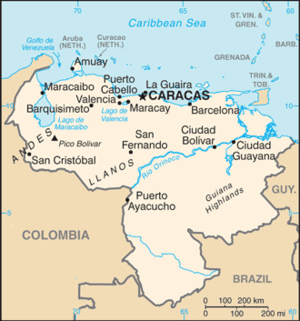
1830. Interview With Venezuela's Minister of Eco-Socialism and Water Guillermo Barreto

By Ciudad CCS, venezuelanalysis.com, April 29, 2015 


In this interview with Caracas based newspaper Ciudad CCS, Venezuela’s new Minister of Eco-Socialism, Guillermo Barreto, gives readers an insight into the government’s vision for its environment policy. 

The construction of three new household waste management plants in the Metropolitan District of Caracas and the creation of an institution to work alongside state oil company PDVSA and orientate its projects in the Orinoco Belt, are just some of the announcements that the new Minister of Eco-Socialism and Water made in this interview with Ciudad CCS.

The biologist, Guillermo Barreto - named minister by President Nicolas Maduro following the splitting of the Environment Ministry and the Ministry for Habitat and Housing - stated that the only way of sustaining socialism is by converting the environment into one of its focal points.

***

[These ministries had been joined recently...] Is their separation a step backwards?

The idea of amalgamating the two ministries is interesting and it has several origins. On the one hand, it was necessary to shakeup the political management of the environment. The other origin comes from the idea that we are moving towards a different or eco-socialist society in which there is a more harmonic relationship with nature and in which human settlements become yet another ecosystem. However, given the fact that the government’s Housing Mission is the most important mission that we are carrying out at this moment, we had to give (housing) Minister Molina the space to meet our goals, which are extremely ambitious. 

What is the result of the institutional shake-up?

An internal restructure, a redefinition of the proposals concerning where we need to take our management of the environment. 

And where to we need to take it? 

Towards the construction of a new society in which the environment is a central component and where it is is understood as the only way of sustaining socialism. This means solidarity between human beings, and not just between us right now, but also amongst our children, grandchildren and great grand children. If we guarantee access to water to the entire population, then we are socialists, but if we can’t guarantee it for future generations, well, then we are not so socialist…

What are the results in terms of our administrative capacity? 

The result is that it has initiated a restructure process that was in progress. Now we are going to build a different ministry. 

Why an eco-socialism ministry and not an environment ministry?

Because the hegemonic discourse has resulted in the labelling of the “environment” as something romantic and hippy, isolating the concept from social and economic systems. This concept places those who defend the environment in one trench against those who defend development. There is no possible dialogue and everyone ends up losing. When we talk about eco-socialism, we are referring to the organic public governance which is going to build a new society in which the environment must play an integral part. 

Today we have a Ministry of Eco-socialism, but we have to get to the point where all of our public governance is eco-socialist, regardless of whether we are talking about extracting oil or the construction of bridges and homes. 

Does this imply a compromise between development and the need to protect the environment in the long run? 

Of course, but paradoxically we have to deepen our political management of the environment. We cannot isolate ourselves from nature. We have to understand that protected areas are necessary, but that also includes people. When we don’t take people into account it leads to conflict and then in the end we don’t reach our objectives. 

This discourse around harmonising development whilst protecting the environment, doesn’t that imply a compromise with the logic of capitalism?

No. We have to go about changing from an extraction-based, basically capitalist model, to a model in which the extraction of resources is not orientated towards capitalist accumulation, but rather towards satisfying the needs of the people. This means that you eat what you have to eat and you use what you have to use, but no more than that. This change is gradual, we can’t do it overnight, but what is important is to maintain a vision of the future, that new society in which we cannot repeat the patterns of capitalism. 

That was the error of socialism in the 20th century, which tried to meet a its social obligations but maintained an extraction based-model which produced huge environmental damage and that translated to a society which was not sustainable. They changed the owners of production, but the logic remained the same. 

Why a Ministry of Water?

President Maduro is extremely invested in ensuring access to water for the entire population. Many goals have been reached throughout these 15 years of the Bolivarian Government, but we still have constraints that we must keep overcoming. That’s the reason for the use of the term; the importance that we are giving to it and the organic vision that we have of the issue. 

Will it continue to be a Ministry that authorises permits?

Permits are an important part of government. The problem of permits in general is not the permit itself, but the fact that the process of granting the permit ends up being extremely bureaucratic and it loses its point, which is to protect nature and reduce negative impact on the environment. It’s important to restructure in order to correct this. The permit shouldn’t be an obstacle to production, unless that production is an attack on the environment. This is why we must take the bureaucracy out of authorising permits, and make the process more efficient. 

Three waste management plants in Caracas 

What is the current situation in the management of household waste?

We are in a process of substituting garbage dumps for landfill sites. This is something which has been started and which we are going to keep pursuing.

How is this being managed in Caracas?

We are working flat-out on developing three more transfer areas in Caracas. This is the intermediary point between garbage collection and the final disposal site. This would allow us to gradually eliminate the transfer site in Las Mayas. By incorporating these new areas we will be making collection more efficient, since the collection runs would be shorter and we could increase their frequency. 

Where would these transfer sites be in Caracas?

We are working on several options for the projects. One of them is a transfer plant in the East of the city to free up the areas of Baruta, El Hatillo, Chacao and Sucre. And we would have one in Libertador, towards the west. 

Will we continue to use landfill technology or are we moving towards a different model?

We have to move towards a different model. For now, we will maintain landfill technology because we still don’t have the conditions to change it radically. We can’t close ourselves off to re-using and recycling, but they aren’t the answer. The solution must come from further back and it’s about trying to change consumer habits. 

Will the production of non-reusable bottles be penalised or punished?

This is something that we have to study. We are talking about decisions which can have an economic impact, but we bear the responsibility of studying how to generate less waste and promote a responsible use of things amongst the population; how things are consumed and how they are later disposed of. 

Will we continue to assume that the responsibility for rubbish is the consumer and not the producer?

No, no, on the contrary. We have to see who is producing rubbish, how it is produced, how the consumption of unnecessary items is publicised and how we deal with that. It’s a very complex issue. The internal changes to the ministry aren’t about changing the desks or the names of those in charge, but rather about changing the vision of those in charge. We have to resolve the problem urgently, but also from a structural perspective. 

Water and the communal state

Will we still proceed with the national water plan?  

The president has spoken about both the temporary situation and the structural situation. We have to respond to what is most urgent - for instance, if a pipeline ends up broken and a community is left without water. However, at the same time, we have to address how we resolve that in the long term. In the last few weeks the president has approved an extraordinary amount of funds for two particular cases, which are the states of Falcon and Vargas. 

What are the public works for Falcon? 

Firstly, there is a diversion that is being constructed between three dams in the northern part of the state towards Paraguana. There is the renovation of water collection at the Maticora reservoir, the biggest in the state, that had sedimentation problems due to the drought that we experienced. This is in order to create a system that allows us to collect water more efficiently from the reservoir. 

Are there small works being carried out on local systems? 

Yes we are working to recover deep local wells and common water supply lines. In the case of Falcon, we are talking about an investment of more than 1 billion 500 million Bolivars in the first stage. In the case of Vargas, the first stage equates to more than 1 billion 300 million Bolivars. 

What is the extensive public work begin carried out in Vargas?

The Puerto Maya reservoir…

Is this project included within the aforementioned approved government funds?

Yes, the first stage is included in those resources, the beginning. This work won’t be ready for this year, but it will be what offers a more secure water supply to this region. 

Is this project aiming to repair the waterline between Puerto Maya and Picure, which is often out of action?  

This is part of what we are doing, substituting obsolete parts in the pipelines. 
And in the rest of the country?

There is a plan to carry out public works in all states in the country which is being worked on by both local government and hydrological companies. We are trying to find resources to finish several projects and begin others. 

Are you going to maintain state water councils?

That is something we have to study…

And the participation of the Technical Water Councils?

Those will always be maintained because our objective is to create the Communal State. 

Coal in Zulia and Gold in the South 

What is going to be done with the coal in Zulia? Chavez said that that it should be left under the ground, given that its extraction would damage the environment…

We have to begin a series of work tables alongside the communities and Zulia’s local government. This is on our agenda, we must begin to discuss and debate it seriously and responsibly. 

What does a responsible discussion translate to? 

It means analysing the need for this, the possible alternatives, the final objective, which is achieving the preservation of the ecosystem and above all, the wellbeing of the surrounding communities which live there. 

It’s necessary to look for an alternative way of governing in that region (Zulia) and that’s why we have to sit down with all actors and evaluate all the variables, and not just be led by the economic element. We must take into account the social sphere; there are indigenous communities that live there and they have a traditional way of relating to nature which we have to respect. 

What is being done in relation to the illegal extraction of gold in the south of the country? 
We have had meetings with the Ministers of Mining, Communes and Indigenous Peoples, aimed at trying to put gold mining in order. There is a section of this mining which is illegal and which produces terrible social and environmental damage. It is a very delicate issue which we must manage with caution. 

Eco-socialism in the (Orinoco) Oil Belt 

What is being done with respect to the impact that activities in the Orinoco Oil Belt can cause? 

In the new structure of the ministry we have created an institution specifically for this issue. Not just from the point of view of granting authorisation, because we don’t just want to limit ourselves to approving or rejecting permits; rather we have to be a part of what is being done in that area. We have to work with PDVSA to make sure that development in the belt is the most harmonious that it can be with nature. We are an oil producing country, and we need those resources, but we need to do it in a better way and that’s where the Ministry, as a decision-making body, comes into play in terms of what is done in the zone. 

You wouldn’t play the role of judge and jury, rather you would be orientating and re-orientating projects? 

Exactly, orientating so that they are done in such a way as to preserve the territory, and when we talk about territory, we are referring to both nature and the people. 

La Tortuga Island and Tourism

On the Island of La Tortuga there is a project to build a hotel complex with around 2000 rooms. What is the status of that?

We have got our eye on that to work in conjunction with Mintur (Ministry of Tourism) in such a way as that touristic development, which we consider to be really important for the nation, is done as harmoniously as possible. In fact, something that took place over the last few months was the installation of the High Institute of Parks, which is a level of political management for protected areas. This includes, amongst others, the Ministry of Tourism, and is aimed at creating better government ability in these areas, and especially in our national parks. 

This has allowed us to integrate the efforts of the diverse bodies that were often working separately. The national park is an important area of public use, in fact 80% of Venezuelan tourists spend their holidays in national parks. Furthermore, in these areas there is a population which usually lives inside or in the surrounding area, which is why maintaining these areas requires the organisation of the people. 

This has allowed us to channel the efforts of everybody and ensure that the Ministry, in the remit of the environment, doesn’t appear to be something which impedes the action of others. We have to work together in this so that everything comes out for the best. 
In this model, channeling efforts and responsibilities, what is the role of environmental organizations? 

It’s about trying to establish joint responsibility in governance. If this is going to be a Ministry of Popular Power, it has to work with people’s power. Not us saying what they should do and them acting like we are the enemy. It’s about them adopting, on the one hand, a role in the social auditing process, and on the other, integrating into [the ministry’s] projects. 

How is the issue of wildlife trafficking being managed?

This is being managed with the National Bolivarian Guard, which is responsible for protecting the environment, and of course, with the Public Prosecutor’s Office. We are detecting the areas where there is a higher level of trafficking. 

What species are being fundamentally affected?

In Venezuela the trafficking of birds is very significant. Above all of parrots and macaws, destined for North America and Europe. It’s a a very cruel business and the people must know it. Whomever buys a parrot is probably buying a chick that was kidnapped from its nest, and its mother almost certainly killed to capture it. They are confining an animal in solitude when it is a social animal which usually lives in partnership. The way in which they are transported causes the death of at least half of them, but that doesn’t matter to the trafficker because they sell the ones that manage to stay alive at such a high price that they get back much more than what they invested.