Showing posts with label Ukraine war. Show all posts

Wednesday, April 2, 2025

3666. Michael Roberts: The Ukraine War-A Human Disaster

 By Michael Roberts, Michael Roberts Blog, February 24, 2025

Michael Roberts

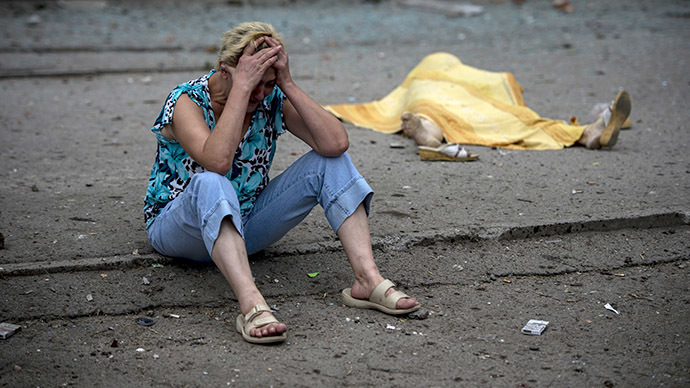
Today marks the end of the third year of the Ukraine-Russia war. After three years of war, Russia’s invasion of Ukraine has caused staggering losses to Ukraine’s people and economy. There are various estimates of the number of Ukrainian civilians and military casualties (deaths plus injuries): 46,000 civilians and maybe 500,000 soldiers. Russian military casualties are about the same. Millions have fled abroad and many more millions have been displaced from their homes within Ukraine. A confidential Ukrainian assessment earlier in 2024, reported by the Wall Street Journal, placed Ukrainian troop losses at 80,000 killed and 400,000 wounded. According to government figures, in the first half of 2024, three times as many people died in Ukraine as were born, the WSJ reported. In the last year, Ukrainian losses have been five times higher than Russia’s, with Kyiv losing at least 50,000 service personnel a month.

Ukraine’s GDP is down 25% and an additional 7.1 million Ukrainians now live in poverty.

The damage to those staying in Ukraine is immense. Learning losses by Ukrainian children are a particular worry: Ukraine will end up with lower quality additions to its workforce due to war-caused (and prior to that, Covid-caused) disruptions in the learning process. These losses are estimated to be in the order of $90 billion, or almost as much as the losses in physical capital to-date. Studies also show that a war during a person’s first five years of life is associated with about a 10% decline in mental health scores when they are in their 60s and 70s. It’s not just war casualties and the economy that’s the problem, but also the long-term damage to those Ukrainians staying.

Despite the war, there has been some modest economic recovery in the last year. Energy exports have jumped. Ukraine’s ports on the Black Sea are still functioning and trade is flowing west along the Danube, and to a lesser extent by train. Meanwhile, agriculture has staged a recovery. Even so, manufacturing of iron and steel still remains at a fraction of its prewar level; down from 1.5m tonnes a month before the war to just 0.6m a month.

But Ukraine badly lacks able-bodied people to produce or to go to war. Ukraine’s unemployment rate was 16.8% in January, but that still leaves a shortage of workers because skilled people have left the country and most others have been mobilised into the armed forces. So bad is the situation that there has been talk of mobilising 18-25 years olds who are currently exempt, but this is highly unpopular and would reduce civilian employment even more.

Ukraine is still totally dependent on support from the West. It needs at least $40bn a year in order to sustain government services, support its population and maintain production. It is relying on the EU for such civil funding, while relying on the US for all its military funding – a straight ‘division of labour’. In addition, the IMF and World Bank have offered monetary assistance but, in this case, Ukraine has to show it has ‘sustainability’, ie it is able at some point to pay back any loans. So if bilateral loans from the US and EU countries (and it is mainly loans, not outright aid) do not materialise, then the IMF cannot extend its lending programme.

That brings us back to what will happen to Ukraine’s economy, if and when the war with Russia comes to an end. According to the latest estimate of the World Bank, Ukraine will need $486bn over the next ten years to recover and rebuild – assuming the war ends this year. That’s nearly three times its current GDP. Direct damages from the war have now reached almost $152 billion, with about 2 million housing units – about 10% of the total housing stock of Ukraine – either damaged or destroyed, as well as 8,400 km (5,220 miles) of motorways, highways, and other national roads, and nearly 300 bridges. About 5.9 million Ukrainians remained displaced outside of the country and internally displaced persons were around 3.7 million.

What is left of Ukraine’s resources (those not annexed by Russia) have been sold off to Western companies. Overall, 28% of Ukraine’s arable land is now owned by a mixture of Ukrainian oligarchs, European and North American corporations, as well as the sovereign wealth fund of Saudi Arabia. Nestle has invested $46 million in a new facility in western Volyn region while German drugs-to-pesticides giant Bayer plans to invest 60 million euros in corn seed production in central Zhytomyr region. MHP, Ukraine’s biggest poultry company, is owned by a former adviser to Ukrainian president Poroshenko. MHP has received more than one-fifth of all the lending from the European Bank for Reconstruction and Development (EBRD) in the past two years. MHP employs 28,000 people and controls about 360,000 hectares of land in Ukraine — an area bigger than EU member Luxembourg.

The Ukrainian government is committed to a ‘free market’ solution for the post-war economy that would include further rounds of labour-market deregulation below even EU minimum labour standards i.e sweat shop conditions; and cuts in corporate and income taxes to the bone; along with full privatisation of remaining state assets. However, the pressures of a war economy have forced the government to put these policies on the back burner for now, with military demands dominating.

The aim of the Ukraine government, the EU, the US government, the multilateral agencies and the American financial institutions now in charge of raising funds and allocating them for reconstruction is to restore the Ukrainian economy as a form of special economic zone, with public money to cover any potential losses for private capital. Ukraine will also be made free of trade unions, severe business tax regimes and regulations and any other major obstacles to profitable investments by Western capital in alliance with former Ukrainian oligarchs.

Ukrainian sources estimate the cost of restoring infrastructure: financing the war effort (ammunition, weapons, etc.); losses of housing stock, commercial real estate, compensation for death and injury, resettlement costs, income support, etc.) and lost current and future income will reach $1trn, or six years of Ukraine’s previous annual GDP. That’s about 2.0% of EU GDP per year or 1.5% of G7 GDP for six years. By the end of this decade, even if reconstruction goes well and assuming that all the resources of pre-war Ukraine are restored (ie eastern Ukraine’s industry and minerals are in the hands of Russia), then the economy would still be 15% below its pre-war level. If not, recovery will be even longer.

Russia: the war economy
Russia’s invasion of Ukraine in early 2022 to take over the four Russian-speaking provinces in the Donbass in eastern Ukraine has ironically given a boost to the economy. In 2023, real GDP growth was 3.6% and over 3% in 2024. Russia’s war economy is holding up.

Over the past three years of war, Russia has managed to steer through sanctions, while investing nearly a third of its budget in defence spending. It’s also been able to increase trade with China and sell its oil to new markets, in part by using a shadow fleet of tankers to skirt the price cap that Western countries had hoped would reduce the country’s war chest. Half of its oil and petroleum was exported to China in 2023. It became China’s top oil supplier. Chinese imports into Russia have jumped more than 60% since the start of war, as the country has been able to supply Russia with a steady stream of goods including cars and electronic devices, filling the gap of lost Western goods imports. Trade between Russia and China hit $240 billion in 2023, an increase of over 64% since 2021, before the war.

However, the war has intensified an acute labour shortage. Like Ukraine, Russia is now desperately short of people – if for different reasons. Even before the war, Russia’s workforce was shrinking due to natural demographic causes. Then at the start of the war in 2022, about three-quarters of a million Russian and foreign workers, the middle class in IT, finance, and management, left the country. Meanwhile, the Russian army is recruiting tens of thousands of working-age men. Somewhere between 10,000 and 30,000 workers join the army every month, about 0.5 percent of the total supply. That has benefited those Russian workers not in the armed forces with security of employment as managers are reluctant to let anyone go.

Wages have soared by double digits, poverty and unemployment are at record lows. For the country’s lowest earners, salaries over the last three quarters have risen faster than for any other segment of society, clocking an annual growth rate of about 20%. The government is spending massively on social support for families, pension increases, mortgage subsidies and compensation for the relatives of those serving in the military.

But inflation has spiralled and the ruble has depreciated significantly against the dollar, forcing the Russian central bank to hike its interest rate to over 20%.

A war economy means that the state intervenes and even overrides the decision-making of the capitalist sector for the national war effort. State investment replaces private investment. Ironically, in Russia’s case this has been accelerated by Western companies’ withdrawal from Russian markets and by the sanctions. The Russian state has taken over foreign entities and/or resold them to Russian capitalists committed to the war effort.

Spending on new construction, higher-tech equipment, new kit has hit a 12-year high of 14.4 trillion rubles ($136.4 bn), up 10 percent from the previous year. Investment growth rate topped the GDP growth rate by a wider margin than at any point over the previous 15 years, according to the Moscow-based Center for Macroeconomic Analysis and Short-term Forecasting.

The main destinations for the country’s hitherto-unseen investment are import substitution, eastward infrastructure, and military production. Mechanical engineering, which includes manufacturing finished metal products (weapons), computers, optics and electronics, and electrical equipment, is one of the fastest-growing areas for investment.

Many Western economists are forecasting a collapse in the Russian economy – as they have been saying for the last three years. The acute labour shortage, persistent and rising inflation caused by soaring military expenditure and ever-tightening sanctions will – it is claimed – finally bring about an economic crisis that will force Moscow to abandon its aims in Ukraine and bring about an end to the war on terms more acceptable to Kyiv and its allies.

Many analysts have attributed these signs of overheating to elevated spending on the war in Ukraine, pointing to record-high military expenditure which is expected to have reached over 7% of GDP in 2024. With defence spending expected to rise by nearly 25% this year, accounting for around 40% of federal government expenditure, some have raised the prospect of Russia slipping into ‘stagflation’, combining high inflation with low to no growth.

But despite fighting the most intense war in Europe since 1945, Moscow has managed to fund the war with modest budget deficits of between 1.5–2.9% of GDP since 2022. As a result, the Kremlin has barely had to borrow to fund the war. Tax revenues generated by domestic activity have soared since the war began. At around 15% of GDP, Russia has the smallest state debt-to-GDP ratio of the G20 economies. So, despite being cut off from most external sources of capital, Russia remains more than capable of financing domestic investment and government expenditure with its own resources.

Over the past two years, Russia has recorded a surplus on its current account of around 2.5% of GDP. For as long as Russia can continue to export large volumes of oil, this is unlikely to change. Russia’s oil and gas revenues jumped by 26% last year to $108 billion even as daily oil and gas condensate production declined in 2024 by 2.8%, according to Russian government officials cited by Reuters. Despite remaining the world’s most-sanctioned country in 2024, Russia exported a record 33.6 million tons of liquefied natural gas (LNG) that year, which is a 4% increase from the previous year.

The Institute of International Finance (IIF) has forecast a decrease in Russia’s fiscal breakeven oil price (the amount to balance budget spending) to $77 per barrel by 2025, supported by a recovery in oil and gas revenues. At the same time, the external breakeven oil price (the price needed to balance the external current account), at $41 per barrel, is the second lowest among major hydrocarbon exporters. That means the current Urals oil price more than meets these breakeven points.

But none of this ‘war economy’ investment will support Russia’s long-term productivity growth. Russia’s war economy will revert to capitalist accumulation when the war ends. And the Russian economy remains fundamentally natural resource linked. It relies on extraction rather than manufacturing. War production is basically unproductive for capital accumulation over the long run. Russia remains technologically backward and dependent on high-tech imports. Even with massive fiscal stimuli, it has yet to produce technologies fit for a competitive export market beyond arms and nuclear energy, with the former already sanctioned and the latter on the brink of being so. Russia is not a substantial player in any of the cutting-edge technologies, from artificial intelligence to biotechnology.

The demographic trough, the declining quality of university education and severed ties with international schools and a brain drain exacerbate these problems. The technological gap will likely widen, with Russia increasingly relying on Chinese imports and reverse engineering (copying). Russia’s potential real GDP growth is probably no more than 1.5% a year as growth is restricted by an ageing and shrinking population and low investment and productivity rates.

The Russian war economy is well placed to continue the war for several years ahead if necessary. But when the war is over, Putin may face a significant slump in production and employment. The underlying message is that the weakness of investment, productivity and profitability of Russian capital, even excluding sanctions, means that Russia will remain feeble economically for the rest of this decade.

The peace
President Trump has declared that he is seeking a peace settlement through direct negotiations with Russia. That would mean the end of US financial and military support for Ukraine. The current Ukraine leadership is opposing any deal that means the loss of territory and any veto on future membership of NATO. European leaders have declared that they will back Ukraine and continue to finance the war and provide military support.

Trump wants back what the US government has spent on Ukraine up to now, as well collateral for future spending to reconstruct the economy. He has complained about the huge transfers of funds to Ukraine unaccounted for. This is misinformation. The majority of the funds the US allocated for Ukraine stayed at home to fund the domestic defence industrial base and replenish US stockpiles. US arms manufacturers are making huge profits from this war.

Now Trump is demanding that Ukraine sign over 50% of its ‘rare earth’ mineral rights to the US in return for delivering the $500bn needed for post-war reconstruction. Trump: “I want them to give us something for all of the money that we put up and I’m gonna try and get the war settled and I’m try and get all that death ended. We’re asking for rare earth and oil, anything we can get.” As US senator Lindsey Graham said: “This war’s about money…The richest country in all of Europe for rare earth minerals is Ukraine, two to seven trillion dollars worth…So Donald Trump’s going to do a deal to get our money back, to enrich ourselves with rare minerals…” The problem is that around half these deposits (worth some $10-12 trillion) are in Russian-controlled areas.

All this is just another indication that Ukraine’s assets are going to be carved up by the Western powers. Last month, Ukraine President Zelenskyy signed a new law expanding the privatisation of state-owned banks in the country. It follows the Ukrainian government’s announcement in July of its ‘Large-Scale Privatisation 2024’ programme that is intended to drive foreign investment into the country and raise money for Ukraine’s struggling national budget. Large assets slated for privatisation currently include the country’s biggest producer of titanium ore, a leading producer of concrete products and a mining and processing plant. Ukraine envisaged privatising the country’s roughly 3,500 state-owned enterprises in a law of 2018, which said foreign citizens and companies could become owners. Hundreds of smaller-scale enterprises are now being privatised, bringing in revenues of UAH 9.6bn (£181m) in the past two years. This involves a seven-year sub-programme called SOERA (state-owned enterprises reform activity in Ukraine), which is funded by USAID with the UK Foreign Office as a junior partner. SOERA works to “advance privatization of selected SOEs [state-owned enterprises], and develop a strategic management model for SOEs remaining in state ownership.”

British capital is also licking its lips. Recently-published UK Foreign Office documents noted that the war provides “opportunities” for Ukraine delivering on “some hugely important reforms”. “The UK is hoping to reap benefits for UK firms from Ukraine’s reconstruction”, observes a report on British aid to Ukraine earlier this year by the aid watchdog, ICAI.

Putin’s invasion has driven the Ukrainian people into the hands of a pro free market, anti-labour government that will allow Western capital to take over Ukraine’s assets and exploit its diminished workforce. Maybe that was inevitable – from pro-Russian and pro-West oligarchs before the war, now to Western capital afterwards.

The war has not only destroyed Ukraine; it has seriously weakened the European economy as the costs of production have rocketed with the loss of cheap energy imports from Russia. But it seems that the European leaders want to continue the war even if Trump pulls out. They are desperately scrambling for funds to do that and to provide more military aid to the beleaguered Ukrainian government. Some leaders are proposing to send troops to Ukraine. So ‘war not peace’.

Just as bad is the decision of NATO and Europe’s mainstream leaders to double defence spending from about an average 1.9% of GDP by the end of the decade, supposedly to resist imminent Russian attacks if Putin gets a winning peace this year. This is ludicrously justified on the grounds that spending on ‘defence’ “is the greatest public benefit of all” (Bronwen Maddox, director of Chatham House, the international relations ‘think-tank’, which mainly presents the views of the British military state). Maddox concluded that: “the UK may have to borrow more to pay for the defence spending it so urgently needs. In the next year and beyond, politicians will have to brace themselves to reclaim money through cuts to sickness benefits, pensions and healthcare…In the end, politicians will have to persuade voters to surrender some of their benefits to pay for defence.” We get the same message from the leader of the winning party in the German election.

This will mean a huge diversion of investment from badly needed public services and benefits and from technological investment into unproductive and destructive arms production. That puts a huge uncertainty about Europe’s future as a leading economic entity through the rest of this decade and beyond.

Tuesday, March 4, 2025

3662. A Blow up in the White House: Factional Differences in the U.S. Governing Class and Cracks in NATO

 By Kamran Nayeri, March 3, 2025


Note: This essay was originally published today in the socialist Critique of Political Economy (نقد اقتصاد سیاسی) edited by Parviz Sedaghat in Iran. The free translation is by the author. 

*.    *.    *

The blow-up of the prearranged signing meeting of a treaty between President Donald Trump and President Volodymyr Zelensky on Friday afternoon, February 28, dramatically demonstrated that the war in Ukraine has never been about the right to self-determination of the Ukrainian people; rather it has been a proxy war between Western imperialism and Russian imperialism to maintain and expand their sphere of influence. Zelensky had been invited to the White House to sign an economic agreement that Trump views as a precondition for continued U.S. aid to Ukraine. Under the agreement, Ukraine would have committed to give the United States access to rare earth minerals. Trump is seeking to secure a stable source of them for U.S. industries including electronics, space, nuclear, and defense industries. The United States itself lacks a significant amount of rare earth and China is the world’s main supplier. However, China is also the main rival of United States.  For his part, Zelensky wanted to include in the treaty language that would commit the United States support from military threats from Russia. The signing of the treaty was generally thought of to pave the way for a ceasefire and to an end to the war in Ukraine. However, differences of opinion about the causes of the war between Zelensky and Trump, as well as Zelensky's demand for the U.S. military support for Ukraine, led to a dispute between them, which I will in a moment. 

But first, let’s consider that Zelensky’s general acceptance of Trump’s demand regarding U.S. access to Ukraine’s minerals negates his claim that the Ukrainian government is an independent actor representing self-determination of Ukrainian, specifically in its war with Russia. The language and intent of the treaty and the blow up between the two parties at the White House showed that Zelensky had been and remains dependent on U.S. imperialism in the war and even before it. Essentially, the start of this war, as I have documented it (Nayeri 2022) was due to Zelensky’s insistence backed up by Washington that Ukraine should be admitted into NATO, the military arm of Western imperialism. The Democratic Party and the mainstream of the Republican Party follow the Wolfowitz Doctrine first formulated on February 18, 1992, in response to the collapse of the Soviet Union which argued for continued Cold War policies against Russia after the collapse of the Soviet Union, including by NATO expansion. However, Trump represents a dominant trend in today's Republican Party that does not adhere to this doctrine and in fact want to do away with tensions with Russia. The dispute in the White House revolved around this disagreement between Trump and Zelensky, who had enjoyed the support of the Biden administration under this doctrine. 

The main reason for the start of the war

Putin cited the expansion of NATO during a speech at the start of the invasion of Ukraine on February 24, 2022. 

On February 24, Vladimir Vladimirovich Putin ordered an invasion of Ukraine in a speech in which he outlined the key reason as follows:

“…the expansion of the NATO to the east, moving its military infrastructure closer to Russian borders. It is well known that for 30 years we have persistently and patiently tried to reach an agreement with the leading NATO countries on the principles of equal and inviolable security in Europe. In response to our proposals, we constantly faced either cynical deception and lies or attempts to pressure and blackmail, while NATO, despite all our protests and concerns, continued to steadily expand. The war machine is moving and, I repeat, it is coming close to our borders.”

Encouraged by the U.S. and European allies, Zelensky has been pushing for membership of Ukraine in European Union and NATO. At the of Munich Security Conference on February 19, 2022, five days before the Russian invasion, he asked  once again for NATO membership. 

Founded in 1949 with 12 member states, it was a critical part of Western imperialism’s Cold War against the Soviet Union.  In response, the Soviet Union and seven other Eastern Bloc self-proclaimed socialist republics of Central and Eastern Europe formed Warsaw Pact military alliance in May 1955. 

After the collapse of the Soviet Union, the Warsaw Pact was also dissolved. Still, the United States not only did not dissolve NATO, but also expanded it to the borders of Russia and even used it in its occupation and war in Afghanistan. NATO today is the armed arm of Western imperialism. This anti-Russian policy is as Wolfowitz Doctrine that was formulated after the collapse of the Soviet Union (Goldgeier 2016). A number of American foreign policy experts, including John Mearsheimer (2019), an American political scientist and international relations scholar had warned that this doctrine was particularly dangerous in Ukraine, where the U.S. in 2014 manufactured the overthrow of Viktor Fedorovych Yanukovych, pro-Russia president.

Biden's foreign policy was in continuation of Wolfowitz Doctrine in n the Ukraine war as the U.S. gave full political, diplomatic, and military support to Zelensky. The US goal was to isolate Russia politically and inflict economic and military damage on it under the guise of defending democracy and confronting Putin painted as a threat to all of Europe. The Russians themselves have a favorable view of Putin and he has enjoyed greater popularity in Russia than his contemporary U.S. presidents have had in their country (Statistica, February 24, 2024).

The United States and NATO have been involved in all strategic aspects of the Ukraine war, and the United States has mainly provided advanced weapons to the Ukrainian army ( see the list of US military assistance provided by the State Department (State Department , January 20, 2025). To ensure public support, Zelensky was provided with numerous opportunities to attend policy forums in the United States, Europe, and elsewhere. Zelensky, in turn, claimed that his country was being attacked and occupied by “unprovoked” Russia and requested numerous assistance, especially military assistance with increasingly advanced and aggressive weapons. Then Biden and his European allies in NATO provided what Zelensky had asked for. In this way, the war in Ukraine continued with the U.S. and NATO providing Ukraine with strategic guidance and intelligence and arms while the Ukrainians did the fighting and dying. All doors to diplomatic solution to the war , Ukraine in this war were shut donw as Putin was demonized as another Hitler and a menace to world peace. 

In  the U.S. policy circles there has never been a unanimous agreement on Wolfowitz Doctrine. A small group of Republicans in the US Congress preferred what has been termed by their opponent as isolationism. Instead, imperialist “internationalism” that required U.S. military intervention around the world had the upper hand with influential Democrats being its main proponents (Stephenson 2023). 

Trump is seeking to reshape U.S. foreign policy that combined deliberate and blatant threat of use of economic and military power on the one hand  and on the other attempts to reduce tensions with adversaries as he did with North Korea.  resolve regional crises. He also wants to de-escalate tensions with Russia.

On February 13, Trump called for talks with Russia and China on nuclear disarmament, citing the "enormous costs and dangers of nuclear weapons" (Ruiz, Lucas and Geoff Wilson). It is clear that such negotiations, whether on nuclear disarmament or on the Ukrainian war with Russia and China were not even conceivable with Democrats during the Biden presidency .

The differences between these two wings of American imperialism are also visible in the economic arena. Democrats want economic modernization based on new industries and technologies that rely on greater capitalist state intervention in the economy. Republicans oppose state intervention in the economy, and Trump, in his second term, has pursued efforts to shrink the government bureaucracy by imposing tariffs to protect old domestic industries (Nayeri 2019, section 3). The New York Times, in some of its articles, has with some justice called these policies mercantilist.

At the White House meeting Zelensky as usual called for the U.S. and Trump to guarantee Ukraine's security. However, Trump refused had already indicated his intention to de-escalate tensions in US-Russia relations and his opposition to Ukraine's membership in NATO (which is also one of Putin's demands in any peace negotiations). In his dispute with Zelensky at the White House meeting, Trump reminded Zelensky that he was not in a position to impose demands on him or on Putin. He recounted that Zelensky has problems recruiting to his army to fight Russian and that Ukraine would not have been able to fight Russians without U.S. backing “even for two weeks.” "You put yourself in a bad position. You don't have all the cards in your hands. You are gambling with the lives of millions of people. You are gambling with World War III."

The divide in Western imperialism and NATO

After the dispute between Trump and Zelensky, many European leaders announced their support for Ukraine in the war. But the European Union is economically smaller than the United States and has a lower per capita income, thus much less ability to help finance the war, and more importantly, militarily, the militaries of the European countries combined are not comparable to that of the the United States. Zelensky even faces problems at home. Half of the Ukrainian people want the war to end (Vigers 2024). It is not without reason that NATO Commander General Mark Rutte immediately urged Zelensky to establish good relations with Trump. The British Prime Minister announced during a meeting with Zelensky that they would jointly with France will prepare a proposal for a ceasefire in Ukraine for Trump. 

The dispute in the White House is a sign of the intensification of the governmental crisis in the United States, which itself is due to the relative decline of U.S. imperialism. In the recent period, every four-years when power has been transferred from one party to another, the new president has changed key policies of the previous president in the opposite direction. This creates instability for building an economic infrastructure for the future of U.S. capitalism. For example, Biden created subsidies for buyers of electric cars to increase demand to smooth the transition to an economy based on new industries and goods. Automakers have spent billions of dollars building capacity to produce electric vehicles. But Trump eliminated these subsidies and withdrew the United States from the toothless Paris Agreement to combat the climate crisis. 

The crisis of global leadership and the future of humanity

At the beginning of the Ukrainian war, I argued that it is a crossroad for humanity. The working people have no interest in this inter-imperialist war.  The Russian army must withdraw from Ukraine and the Ukrainian government must adopt a neutrality policy focusing on its internal sources of development. Scientists in relevant fields have warned that if humanity does not solve the existential crises of climate chaos, the Sixth Extinction, recurrent pandemics, and nuclear holocaust, it will face the risk of the collapse of civilization and possibly the end of humanity. However, solving these crises requires the cooperation of the entire world, especially the most powerful countries that contribute to these crises the most. The crisis of the decline of U.S. imperialism and the emergence of a multipolar world has made the possibility of world capitalist governments to cooperate in solving these existential crises. To the contrary, along with the rise of China on the global level and other regional powers, it has increased rivarly between capitalist/imperialist powers. The only hope for humanity is to create independent power for the working people throughout the world, especially in key countries in North America, Europe, and Asia. To create such a power, it is necessary to politically break with capitalist governments, institutions, parties, and create independent self-organized and self-mobilized organizations to address these crises and aim toward a post-capitalist world. I have argued that Ecocentric Socialism provides a vision for such action and transition. 

References:

Gallup. " Half of Ukrainians Want Quick, Negotiated End to War ." November 19, 2024.

Mearsheimer, John J. “ Why the Ukraine Crisis Is the West's Fault : The Liberal Delusions That Provoked Putin .” June 2019.

Nayeri, Kamran. " A Future for American Capitalism or The Future of Life on Earth?: An Ecosocialist Critique of the 'Green New Deal .'" Our Place in the World: A Journal of Ecosocialism. March 25, 2019.

Goldgeier, James M. The U.S. Decision to Enlarge NATO.” 2016.

Ruiz, Lucas and Geoff Wilson. "What Trump Got Right about Nuclear Weapons—and How to Step Back from the Brink." Bulletin of Atomic Scientists. February 24, 2025

State Department. US Security Cooperation with Ukraine. Fact sheetJanuary 20, 2025.

Statistics. Vladimir Putin's approval rating in Russia monthly 1999-2025February 24, 2025.

Stephenson, Heather. "US Foreign Policy Increasingly Relies on Military Interventions."

Vigers, Benedict. “Half of Ukrainians Want Quick, Negotiated End to War.” Gallup, November 19, 2024. 

Thursday, June 9, 2022

3593. Biden’s War Strategy in Ukraine — Russia’s Defeat, Rejection of a Negotiated Settlement

By Barry Sheppard, June 2022 


Editor's Note: The following article was shared with me by a socialist friend.  I am posting it because Sheppard outlines aspects of the war in Ukraine that has not been covered in OPITW before including in my own March 7 essay "Humanity at Crossroad." Needless to say, I am not in full agreement with Sheppard as he does not take a critical attitude towards Russian imperialism and its actions. In his account, the focus is on U.S. imperialism, in particular, the Biden administration, which he correctly criticizes. But he clearly does not see the war in Ukraine as an inter-imperialist conflict; it is essentially presented as a poly by the U.S. administration to trap Russia into another quagmire as USSR was trapped in the Afghan war. He even seems to support the idea that USSR's war in Afghanistan was the prime reason for its downfall. I have slightly edited the text including fixing typing errors, formatting, and punctuations. KN 


*      *      * 


The June 4 New York Times prominently printed a long opinion piece by Christopher Caldwell titled “U.S. Helps Prolong Ukraine War”. While not an editorial, it was printed in the space editorials appear when they are written.


Caldwell is a neoconservative who opposes the Russian invasion of Ukraine. He is identified by the Times as “a contributing Opinion writer”.


In the article, Caldwell says, “But the United States has helped turn this tragic, local and ambiguous conflict into a potential world conflagration.”

He refers to an article written in the French daily Le Figaro by Henri Guarino, an advisor for past French president Nicolas Sarkozy:


“Mr. Guaino argues by misunderstanding the war’s logic the West, led by the Biden administration, is giving the conflict a momentum that may be impossible to stop. He is right.


“In 2014 the United States backed an uprising — in its final stages a violent uprising — against the legitimately elected government of Viktor Yanukovych …”


Caldwell doesn’t explain that this was a rightist uprising by Ukrainian nationalists, with armed far-right groups in the lead, who formed, with U.S. direct intervention, a rightist Ukrainian nationalist government. That government moved to ban the Russian language as one of the official languages of government, which it had been. It mandated the teaching of Ukrainian in schools in the Russian-speaking east.


These armed far-right groups look to the Ukrainian forces that collaborated with the Nazis in the Second World War for inspiration.


This new government rapidly launched a civil war against the largely Russian-speaking east. The armed far-right groups formed the Azov Brigade, which became the spearhead of the Ukrainian army up to today.


The West supported the Ukrainian nationalist side in this civil war, while Russia supported the resistance in the east.


The civil war came to a stalemate in the Donbas region that borders with Russia, but has continued to the present. Early this year the Ukrainian side launched a new offensive in the Donbas, resulting in troops from the two Peoples Republics in the Donbas and Russian troops stepping up their resistance.   


The West, led by the U.S., supported the new government’s pledge to join NATO, completing the eastward move of NATO to confront and threaten Russia all along its western border.


Crimea at the time was part of Ukraine. Crimea had been part of Russia since Czarist Russia had conquered it from the Ottoman Empire in the late 1700s. In the mid-1950s, the government of the Soviet Union moved Crimea from the Russian SSR to the Ukrainian SSR for administrative reasons, still part of the USSR.


Since Russia conquered Crimea, the port city of Sevastopol was the naval base of Russia’s (and then the Soviet Union’s) Black Sea Fleet. With the breakup of the USSR and the independence of Ukraine, it was agreed that the naval base would remain under Russia’s control.


If Ukraine had joined NATO in 2014, the naval base would fall under the U.S.’s control. Russia responded by retaking Crimea, supported by the Russian-speaking populace.


Caldwell writes “In recent years, Russia’s control of Crimea has seemed to provide a stable regional arrangement. Russia’s European neighbors, at least, have let sleeping dogs lie.


“But the United States never accepted the arrangement. On Nov. 10, 2021, the United States and Ukraine signed a ‘charter on strategic partnership’ that called for Ukraine to join NATO … and affirmed an ‘unwavering commitment to the reintegration of Crimea into Ukraine’.


“That charter ‘convinced Russia that it must attack or be attacked,’ Mr. Guaino wrote. ‘It is the ineluctable process of 1914 in all its terrifying purity’.”


The reference to 1914 is to the escalation by competing military blocs of rival imperialist countries that resulted in the First World War.


Caldwell also writes, “The United States started arming and training Ukraine’s military, hesitantly at first under President Barak Obama. Modern hardware began flowing during the Trump administration, though, and today the country is armed to the teeth.


“Since 2018, Ukraine has received U.S.-built Javelin antitank missiles, Czech artillery and Turkish Bayraktar drones, and other NATO-interoperable weaponry. The United States and Canada have lately sent up-to-date M777 howitzers that fire GPS-guided Excalibur shells. President Biden has just signed into law a $40 billion military [additional] aid package.


“In this light, mockery of Russia’s battlefield performance is misplaced. Russia is not being stymied by a plucky agricultural country a third its size; it is holding its own, at least for now, against NATO’s advanced economic, cyber, and battlefield weapons.


“This is where Mr. Guaino is correct to accuse the West of sleepwalking [into direct war against Russia].”


Caldwell concludes his long article: “The situation on the battlefield in Ukraine has evolved to an awkward stage. Both Russia and Ukraine have suffered heavy losses. But each has made gains, too.


“Russia has a land bridge to Crimea and control of some of Ukraine’s most fertile lands and energy deposits, and in recent days has held the battlefield momentum. Ukraine, after a robust defense, if its cities, can expect further NATO support, know-how and weaponry — a powerful incentive not to end the war anytime soon.


“But if the war doesn’t end soon, its dangers will increase. ‘Negotiations need to begin in the next two months,’ Henry Kissinger, the former U.S. Secretary of State,  warned last week, ‘before it creates upheavals and tensions that will not be easily overcome.’ ”


Caldwell says that to make no concessions to Russia would be “insanity”.


That the New York Times would feature this article so prominently indicates that an important section of the capitalist class’s political thinkers believes that Biden’s present course can “sleepwalk” into direct U.S. war with Russia with all its dangers and that a negotiated settlement with Russia must happen.


Germany, France, and Italy are calling for a negotiated settlement, and have met with Putin and Zelensky. Under this pressure, Biden said that the war would end with a negotiated settlement.


He also said that the U.S. would not tell Ukraine what to do about negotiations, meaning there will be none. Ukraine is not calling the shots in NATO’s war against Russia, the U.S. is, and the U.S. has blocked any negotiations with Russia.


For now, it is full steam ahead for Biden and his war machine, including threats to other countries that don’t go along. He is keeping all his sanctions against Russia, and stepping them up.


This includes his sanctions against Russian wheat and fertilizer. Russia is a major supplier to the world of those commodities, and the result has been a shortage of wheat worldwide, and hunger in much of the Third World dependent on Russia for them.


The White House and the major media in the U.S. have promoted the lie that Russia itself is to blame, turning the victim into the criminal and the criminal into the victim, as Malcolm X said about U.S. policy.


The U.S. administration visited Africa in an attempt to get those countries to stop importing Russian wheat which it sells at cheap prices, but they rejected that out of hand as their people face hunger.


What is the U.S. strategy in Ukraine? An article in CounterPunch by Dan Glazebrook in March explains that it has been to “bait and bleed” Russia.


Glazebrook writes, “The term bait and bleedwas defined by International Relations theorist John Mearsheimer in 2001 as a military strategy that involves causing two rivals to engage in a protracted war, so that they bleed each other white, while the baiter remains on the sideline, its military strength intact.”


“The current National Defence Strategy (NDS) of the USA explicitly endorses such a strategy, and it makes no bones about who it is aimed at. The NDS, authored by then-Secretary of Defence James Mattis in 2018, describes itself as ‘a clear road map for the Department of Defense to meet the challenges posed by a re-emergence of long-term strategic competition with China and Russia,’ adding that ‘interstate strategic competition, not terrorism, is now the primary concern in US national security.’ 


“On p.5 of the summary document, under the heading ‘strategic approach,’ the NDS vows that ‘with our allies and partners, we will challenge competitors by maneuvering them into unfavorable positions, frustrating their efforts, precluding their options while expanding our own, and forcing them to confront conflict under adverse conditions.’ There it is, in black and white: it is official US policy to bait Russia into conflict.


“The US certainly has form in this regard. Until 1998, the mainstream view of US support for the anti-communist insurgency in Afghanistan throughout the 1980s was that it had been a response to the Russian invasion of December 1979.


“But in an interview in 1998, Zbigniew Brzezinski, National Security Advisor to US President Jimmy Carter, admitted that the truth was the exact opposite. In fact ‘it was July 3, 1979 that President Carter signed the first directive for secret aid to the opponents of the pro-Soviet regime in Kabul.


And that very day, I wrote a note to the president in which I explained to him that in my opinion this aid was going to induce a Soviet military intervention…The day that the Soviets officially crossed the border, I wrote to President Carter, essentially: We now have the opportunity of giving to the USSR its Vietnam war. Indeed, for almost 10 years, Moscow had to carry on a war that was unsustainable for the regime, a conflict that brought about the demoralization and finally the breakup of the Soviet empire.’


“Asked whether he regretted the move, which plunged Afghanistan into a conflict which is now into its fifth decade, he replied ‘Regret what? That secret operation was an excellent idea. It had the effect of drawing the Russians into the Afghan trap and you want me to regret it?’ 


“Plunging the Afghan people into a half-century of devastating war was of no consequence for the likes of Brzezinski. His successors clearly have the same attitude towards Ukraine.


“In a widely viewed 2015 lecture on Ukraine, Mearsheimer noted that ‘If you really want to wreck Russia, what you really want to do is encourage Russia to conquer Ukraine.’ The US and the UK – the latter in particular – appear to have been taking this advice very seriously.”


Putin fell into the trap with his invasion of western Ukraine and drive on Kyiv, with the purpose of imposing a government favorable to Russia, which was correctly denounced.


It also was a major blunder. Apparently, Putin was unaware that Ukraine had been “armed to the teeth”, and Ukraine repulsed the drive on Kyiv. Russia was forced to withdraw its forces, and regroup in the Donbas and the south.


The Russian war then became a defense against Ukraine joining NATO and a future NATO attack, and defense of Crimea.


Any realistic negotiated settlement would have to accept these justifiable Russian interests against NATO aggression. Germany and France appear to accept that. Biden doesn’t.


The New York Times reported that Ukraine’s regular army has been defeated in the Donbas. The Times doesn’t report the truth that the army there was the Azov Brigade. It was the Azov Brigade that was in the southern city of Mariupol and it was its last thousand fighters who surrendered to Russia.


Ukraine’s army in the Donbas is now composed of volunteers, the Times said. Biden has responded to Ukraine’s defeats with ever more sophisticated weapons, that the Ukrainian army doesn’t know how to use, the Times has just reported.


Among those weapons are ever more long-range ones. Putin has said that if those long-range weapons are used, Russia will respond.


To man those weapons, it is likely that NATO troops will have to be used. In this regard, Caldwell also reported, “The United States may be playing an even more direct role. There are thousands of foreign fighters in Ukraine. One volunteer spoke to the Canadian Broadcasting Corporation in May of fighting alongside ‘friends’ who ‘come from the Marines, from the States’.


“Just as it is easy to cross the line between being a weapons supplier and being a combatant, it is easy to cross the line from waging a proxy war to a secret one.”


The only way Russia will now be defeated in the Donbas and the land bridge to Crimea and Crimea itself — Biden’s goals — is by NATO troops entering the conflict, with the dangers Christopher Caldwell outlines.


Biden is attempting to re-create a unipolar world dominated by the U.S. First the defeat of Russia and then by the defeat of China.


Antiwar forces should be demanding a negotiated settlement with Russia now, thwarting Biden’s imperial goals.