Showing posts with label U.S. 2016 Presidential elections. Show all posts

Saturday, April 1, 2017

2591. The Problem of Working Class Consciousness: The "Coal Country" Mythology

By Paul Krugman, The New York Times, March 31, 2017
West Virginia voted solidly for Trump as the champion for the coal industry
So coal-mining jobs have been disappearing for a long time. Even in West Virginia, the most coal-oriented state, it has been a quarter century since they accounted for as much as 5 percent of total employment.

What, then, do West Virginians actually do for a living these days? Well, many of them work in health care: Almost one in six workers is employed in the category “health care and social assistance.”

Oh, and where does the money for those health care jobs come from? Actually, a lot of it comes from Washington.

West Virginia has a relatively old population, so 22 percent of its residents are on Medicare, versus 16.7 percent for the nation as a whole. It’s also a state that has benefited hugely from Obamacare, with the percentage of the population lacking health insurance falling from 14 percent in 2013 to 6 percent in 2015; these gains came mainly from a big expansion of Medicaid.

It’s true that the nation as a whole pays for these health care programs with taxes. But an older, poorer state like West Virginia receives much more than it pays in — and it would have received virtually none of the tax cuts Trumpcare would have lavished on the wealthy.

Now think about what Trumpism means for a state like this. Killing environmental rules might bring back a few mining jobs, but not many, and mining isn’t really central to the economy in any case. Meanwhile, the Trump administration and its allies just tried to replace the Affordable Care Act. If they had succeeded, the effect would have been catastrophic for West Virginia, slashing Medicaid and sending insurance premiums for lower-income, older residents soaring.

Also, don’t forget that Paul Ryan has long pushed for the conversion of Medicare into an underfunded voucher scheme, which would be another body blow to retiree-heavy states.

And aside from the devastating effect on coverage, think about how the Republican assault on Obamacare would have affected the health sector that now employs so many West Virginians. It’s almost certain that the job losses from Trumpcare cuts would have greatly exceeded any possible gains in coal.

So West Virginia voted overwhelmingly against its own interests. And it wasn’t just because its citizens failed to understand the numbers, the reality of the trade-off between coal and health care jobs.

For the striking thing, as I said, is that coal isn’t even the state’s dominant industry these days. “Coal country” residents weren’t voting to preserve what they have, or had until recently; they were voting on behalf of a story their region tells about itself, a story that hasn’t been true for a generation or more.

Their Trump votes weren’t even about the region’s interests; they were about cultural symbolism.

Now, regional cultures that invoke a long-gone past are hardly unique to Appalachia; think of Texans wearing 10-gallon hats and cowboy boots as they stroll through air-conditioned malls. And there’s nothing wrong with that!

But when it comes to energy and environmental policy, we’re not talking about mere cultural affectations. Going backward on the environment will sicken and kill thousands in the near future; over the longer term, failing to act on climate change could, all too plausibly, lead to civilizational collapse.

So it’s incredible, and terrifying, to think that we may really be about to do all of that because Donald Trump successfully pandered to cultural nostalgia, to a longing for a vanished past when men were men and miners dug deep.

Friday, February 10, 2017

2553. Why the White Working Class Ditched Clinton

By Stephenie Coontz, CCN, November 11, 2016
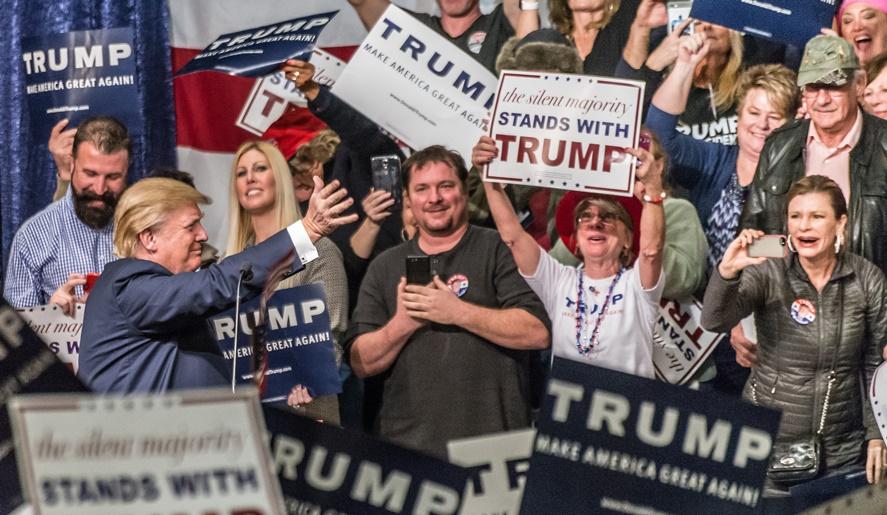
An election rally for Donald Trump

Since the presidential election, pundits have struggled to explain Donald Trump's upset win. Liberal columnists are united in shock that so many people voted for a man who inflamed racial, ethnic and religious tensions, insulted and mistreated women, and was deemed temperamentally unfit to be president, even by many of his supporters.

Conservatives are divided. Conservative columnist Ross Douthat bemoans the "crude genius" that has brought America to the brink of "catastrophe." House Speaker Paul Ryan, who repeatedly denounced Trump during the campaign, now hails Trump's election as a sign that Americans have repudiated "failed liberal progressive policies."

But the biggest debates swirl around Trump's appeal to working-class whites. And this appeal represents something far more complicated than either side admits.

Contrary to Ryan, Trump's working-class and rural supporters don't endorse most traditional Republican alternatives to progressive policies. In fact, polls consistently show that they oppose free trade, mistrust corporations, and banks, and oppose cutting Medicare or Social Security.

They largely account for the substantial portion of Republican voters -- almost 30% -- who say they would support "heavy" taxes on the wealthy.

Listen to how the first policy statement in Trump's victory speech Wednesday morning echoed the progressive agenda that Bernie Sanders and Elizabeth Warren have championed, embellished with a typical Trumpian flourish: "We are going to fix our inner cities and rebuild our highways, bridges, tunnels, airports, schools, hospitals. We're going to rebuild our infrastructure, which will become, by the way, second to none. And we will put millions of our people to work as we rebuild it.”

Liberals explanations for the Clinton loss are also incomplete. Yes, racism, sexism, and nativism are widespread, and the right wing has demonized Hillary Clinton for years. But ultimately, this was Clinton's election to lose, and Democratic Party officials should reflect on their eagerness to nominate her in the first place, despite the clear longing of so many young liberals and older conservatives for an anti-establishment figure motivated by more palpable indignation against "the system.”

What's more, Trump's dog-whistle appeals to racism were not the only reason Clinton failed among white voters without a college education. The last time around, these voters comprised more than one-third of the Americans who voted for Obama.

But Clinton failed to duplicate that success in any state that was up for grabs in this election. In one Ohio county where President Obama won by a 22-point margin just four years ago, Trump defeated Clinton by six points.

So what's going on with these voters?

As a recent CNN poll shows, white working-class and rural voters without a college degree are not the poorest of Americans, but they are the most pessimistic about their future prospects. A full half expect their children's lives will be worse than their own, and less than a quarter expect their children to do better.

In stark contrast to blacks and Hispanics without a college education, most don't believe they would be better off if they had earned a four-year college degree. Clinton's promise of free college didn't resonate with them.

What they want is what they used to have: predictable jobs and long-standing social networks in stable communities. As liberals note, the social networks in which they were embedded reflected strict racial and gender hierarchies and enforced a conformity to community norms that was very painful for gays and lesbians, political dissidents and women who dreamed of doing something in the world outside the home. But they provided a stability that has since disappeared.

In the 1950s and 1960s, young people didn't have to leave for college, move to another state, or join the military, putting their lives at risk (in sharp contrast to most of their more educated or affluent fellow Americans), in order to find a job that paid enough to raise a family. Businesses didn't demand tax breaks from their towns and then move away as soon as the tax break expired. Your kids could follow in your footsteps and do better than you, just as you had done better than your own parents.

Since that time, however, working families have experienced downsizing, outsourcing, and the relentless destruction of middle-wage jobs, with their reinvention as lower-wage jobs. They lost homes or home values in the deepest recession since the Great Depression and have since watched a "recovery" that has mainly benefited wealthy urbanites.

A 2014 study prepared for the US Conference of Mayors and the Council on Metro Economics and the New American City found that over the last 40 years, the distribution of income has steadily shifted toward upper-income households, while jobs recovered after the 2008 recession paid an average of 23% less than the positions they replaced.

Another study by the National Employment Law Project found that by 2014 there were 958,000 fewer jobs in mid-wage industries and 1.85 million more workers in low-wage industries than at the start of the recession.

Here's one concrete reason why so many working-class voters, unlike most of Clinton's educated supporters, don't think America's best days lie ahead. Between 1947 and 1979, real wages for an average meatpacking worker, adjusted for inflation, increased by around 80%, reaching almost $40,000 per year, a salary that could support a comfortable middle-class lifestyle. But between 1979 and 2012, the average meat packer's wage declined by nearly 30 percent, to about $27,000.

Clinton seemed oblivious to facts like these. As a historian who has studied the rise and decline of working-class families since World War II, I listened to Hillary Clinton's speeches over the last few months, looking in vain for any sign that she grasped the mounting frustration that so many working people have felt over the past few decades.
While Trump talked about "the working class," she carefully focused on "the middle class." She mentioned tuition breaks and family friendly workplaces far more often than she talked about investment in infrastructure and jobs.

Furthermore, despite my contempt for Trump's constant lies and self-aggrandizement, I understand why people who have felt trampled on by "the system" for many years had trouble making meaningful distinctions between the respective vices of these two candidates.

Trump made things up. But Clinton kept things quiet, including the cozy and well-paid meetings that financial interests arranged for her. He lied; she stonewalled.
The reporter who knew Trump would win

Clinton was quick to point out that Trump's father gave him a big pile of money to start his supposedly "self-made" business. But she and her husband financed daughter Chelsea's $3 million dollar wedding, and it's doubtful Chelsea would have landed a $600,000 a year job her first year after leaving school without those parental connections.

Trump made his fortune manipulating tax laws and stiffing small businessmen, creating a few well-paying jobs along the way. Vulnerable people looking to master "the art of the deal" learned the hard way that Trump held all the cards.

The Clintons were nowhere near so crude. They made their considerable fortune from profitable book deals and wildly lucrative speaking engagements. They didn't need to stiff anyone. But neither did their activities generate many jobs.

Clinton spent more campaign time calling out Trump as a bully than presenting her own program for working-class renewal. But for many working-class Americans, that is one of his attractions. Throughout history, people with few educational or economic resources and little bargaining power have often looked to authoritarian, ruthless people to stand up for them. As one of Trump's female supporters explained to a reporter, Trump is the kind of bully you get to beat up the people who have bullied you.

Clinton was clearly the more competent candidate, but when her campaign ridiculed Trump, it merely proved to many Americans who also felt disrespected by the establishment that he was an outsider who understood their feelings of exclusion.

She was simply unable to present herself as a forceful defender of everyone who has been left behind by the march of globalization, professionalization and the emergence of a new just-in-time, winner-take-all economy.

For the past seven months, I have been commuting back and forth to New Orleans for family reasons, and Wednesday morning as I walked into the hotel lobby I wondered if I would be greeted by boisterous celebrations of Trump's victory. Instead, the first words I heard were from a white waitress, who later confirmed that she had never gone to college, with whom I had idly chatted over the past few days.

"Bernie would have beaten Trump in all those swing states, just like he beat Hillary in many of them," she announced. Later, a desk clerk mentioned that her uncle had voted for Bernie Sanders in the primaries but for Trump in the final election.

Perhaps Sanders would have driven more middle-class voters into Trump's arms than any working-class ones he pulled away from Trump. But as these comments suggest, Democratic legislators need to devise ways to address the legitimate grievances of white working-class Americans without abandoning their defense of the minorities, women, and gay and lesbian Americans who are likely to face intensified discrimination under this administration.

As for Republican legislators, it is time for any of them sane enough to believe the scientific evidence of climate change to become brave enough to help protect their working-class constituencies from its effects.
Tuesday, October 11, 2016

2470. Clinton and Trump Promote Fossil Fuels During Second Presidential Debate

By Kim Brown, Real News, October 10, 2016


KIM BROWN, TRNN: Welcome to the Real News Network. I’m Kim Brown in Baltimore.

Climate change was only mentioned once during the second presidential debate of the 2016 race held Sunday night at Washington University in St. Louis, Missouri. This comes only days after the United Nations announced that the Paris Climate Agreement has been ratified and will go into effect in November.

Joining us to talk about the lack of climate discussion debates, from New York City, Chris Williams is joining us. He is a long time environmental activist. He’s also professor of physics and chemistry at Pace University. He’s also the chair of the science department at the Packer Collegiate Institute. He’s the author of the book titled Ecology and Socialism: Solutions to Capitalist Ecological Crisis.

We’re also joined this morning from Washington, D.C. with Janet Redman. Janet is the former director of Climate Policy Program at the Institute for Policy Studies, and currently works with Oil Change USA, a group dedicated to exposing the cost of fossil fuels and creating a clean energy future.

Thank you both for speaking to us today.

JANET REDMAN: Thank you very much for having us.

CHRIS WILLIAMS: Thank you.

BROWN: To get started let’s hear actually directly from the candidates themselves regarding the very tiny mentioning of anything relating to the environment or climate change. Let’s hear first from the GOP republican nominee Donald Trump.

DONALD TRUMP: There is a thing called clean coal. Coal will last for a thousand years in this country. Now we have natural gas and so many other things because of technology. We have unbelievable--we a have found that over the last 7 years, we have found tremendous wealth right under our feet. So good. Especially when you have 20 trillion in debt.

CLINTON: We are now for the first time ever energy independent. We are not dependent upon the Middle East. But the Middle East still controls a lot of the prices. So the price of oil has been way down and that has had a damaging effect on a lot of the oil companies, right. We are however producing a lot of natural gas which serves as a bridge to more renewable fuels and I think that’s an important transition.

BROWN: Janet let’s get started with you. Let’s start with first Donald Trump’s comments. What exactly is clean coal? Is that a thing? I’m not sure that’s a thing.

REDMAN: No it’s not a real thing. The idea of clean coal is that we can somehow make burning coal less climate polluting. Some ideas that have been put forward for example are carbon capturing sequestration. That’s the idea that we can capture some of the CO2, carbon dioxide coming out of the power plant and pump it back underground. Unfortunately, it hasn’t been, in terms of technology it has not been proven at scale. And it’s been shown to be incredibly expensive and energy intensive. So it kind of shoots itself in the foot.

I think the most important thing that we’re hearing from Donald Trump is that he doesn’t take climate change seriously. He’s denied climate change in the past. It’s clear that he doesn’t have a grasp of the science. Clearly doesn’t have a grasp of how the energy markets work here in the United States. So I think what we learned from last night is that he is not a reasonable candidate if you care about climate change.

BROWN: Donald Trump has tweeted in the past that he believes that climate change is a hoax from China and his VP nominee Mike Pence during the vice presidential debate, repeatedly mentioned the war on coal. But Chris let’s move on to what former Secretary of State Hillary Clinton had to say about the natural gas revolution as we are experiencing here in the United States and she says that we’re are no longer dependent on foreign countries for our oil and for our energy resources. She talks about natural gas being a bridge. Of course she’s talking about fracking here.

WILLIAMS: Very much so. She as Secretary of State was responsible for expanding fracking internationally. Lobbied hard in Eastern Europe, also in Mexico on behalf of the oil and gas companies to make sure that fracking became a major economic player in the world. Not just in the United States to backup really what President Obama has done. He has doubled oil and gas production in the United States so that the United States is now almost producing as much as Saudi Arabia.

So if that’s a bridge to the future it’s going to be a bridge to hell because the world is already--it’s astonishing that they didn’t even really talk about climate change at all in any kind of meaningful sense until right at the end of the debate it got briefly mention at the same time period where we just had hurricane Matthew devastate Haiti and cause enormous damage, floods, etc. This is the most critical issue. Hundreds of thousands of people ask the moderators. The real problem is the moderators didn’t even bother asking about it.

So I think that’s really indicative of the fact that you can’t believe anything that Donald Trump says but Hillary Clinton it’s just going to continue Obama’s all of the above which is just more production of fossil fuels. If you really want something to be done about climate change, neither candidate is going to take it seriously and you’d have to be looking at the Green Party and Jill Stein’s campaign.

BROWN: Isn’t it interesting, both Janet and Chris, that when discussing the idea of moving away from a fossil fuel based dependence on energy, that the democrats including as you said Chris, President Obama and now the democratic nominee Hillary Clinton. They don’t seem to be tying fracking and hydraulic fracturing and fossil fuels together. It’s almost like the present them as separate entities.

REDMAN: What we’re seeing is the result of the way that campaign finance rules operate in the United States. We know that democrats and republicans both receive incredible amounts of contributions from fossil fuel industries and they’re lobbying associations and groups. So it’s not surprising to me that we’re hearing both the democrat and the republican candidates talk about fracking as a solution to climate change. We’ve actually just shown oil changed international houses, crunched the numbers and researched a report two weeks ago that actually if we want to stay below 2 degrees, that’s the goal, the temperature goal that countries agreed to in the Paris Climate Agreement that you noted was ratified and what reached ratification because of last week’s critical mass of countries agreeing yes we need to ratify this agreement.

That means we actually can’t burn, not only out of the fossil fuel reserves we know about, it means we can’t even burn all the fossil fuels that are currently in development. We need a managed decline around fossil fuels and so putting new natural gas infrastructure both wealth but also pipelines in place does not get us where we need to go who want avert climate disaster. I really appreciate what Chris brought up. That climate change question was the fourth most popular question on the website which the opening debate was collecting questions. But it shows that neither candidate right now is in step with the American public.

So whatever candidate wins, that person will have to take on the [inaud.] republican and the American public, particularly millennials, are saying that climate change is one of the most critical issues they’re facing today. That means we have to get out of fossil fuels. We have to stop subsidizing with tax payer dollars. We have to shift that money and that energy to adjust transition to a clean energy economy. It’s just what we have to do.

BROWN: How are voters able to convey the importance of this issue to these candidates when as you both mentioned, they’re not really being asked about it by the media and they don’t seem to have a tenable plan moving forward from either candidate. I mean Chris as Janet just said, a lot of people feel this issues very deeply and are very concerned about the future of the environment here in the US. But it doesn’t seem our elected officials or even our nominees are prioritizing this issue at all.

WILLIAMS: Well that’s exactly right. I mean both candidates are the most unpopular presidential candidates in US history so really most people not want to vote for neither of these candidates. The problem is that the election has been stitched up so we don’t get to hear ordinary people. I mean Hillary Clinton has admitted in her private sessions on Wall Street where she gets paid $250,000 to give a speech to Goldman Sachs that she’s completely out of touch with ordinary Americans and as is obviously the loathsome Donald Trump. So if we’re talking about these two candidates, we’re not getting any election where we’re choosing--we’re not getting democracy. We’re not choosing what we actually would like to see happen, what most Americans would like to see happen which is a far stronger focus on how we’re going to build the wind turbines and solar panels and stop constructing pipelines across Native American land and across the whole country.

At the same time when people are being devastated by the aftereffects of coal burning, I mean the national academy of sciences has done a study saying that we could pay off every coal miner and give them full pension of $50,000 a year for a tenth of the cost of the health impacts of burning coal because it’s not just carbon dioxide, it’s mercury, it’s all kinds of other toxins that are released. So if we’re really serious about urgently addressing this scale and scope of this problem of climate change then neither the candidates offer any solutions that anyone should be voting for who’s concerned about saving the climate and really generating the hundreds of thousands of jobs that could be generated through improving the infrastructure in the United States which is I think a D from the core civil engineers. Those things are collapsing and people are suffering all across the country where we will not get any of these things addressed by these candidates.

BROWN: Indeed. Unfortunately, we’re going to have to leave the conversation there. We’ve been speaking with Chris Williams who is a long time environmental activists, also professor of physics and chemistry at Pace University. We’ve also been joined with Janet Redman. Janet, former director of Climate Policy Program at the Institute for Policy Studies. She currently works with Oil Change USA. We appreciate both of your time and analysis today. Thank you

REDMAN: Thanks very much.

WILLIAMS: Thank you.

BROWN: Thanks for watching the Real News Network.

Janet Redman currently works with Oil Change USA, and is the policy director at Oil Change International. Previously, Janet was the director of the Climate Policy Program at the Institute for Policy Studies, and co-director of the Sustainable Energy and Economy Network, where she provided analysis of the international financial institutions' energy investment and carbon finance activities. Her studies on the World Bank's climate activities include World Bank: Climate Profiteer, and Dirty is the New Clean: A critique of the World Bank's strategic framework for development and climate change. She is a founding participant in the global Climate Justice Now! network.

Chris Williams is an educator, author and activist, and has been published in numerous U.S. and international media outlets and his work translated into several languages. He is the author of Ecology and Socialism: Solutions to Capitalist Ecological Crisis (Haymarket Books) and the forthcoming Creating an Ecological Society: Toward a Revolutionary Transformation (Monthly Review Press).