Showing posts with label Sustainable human development. Show all posts

Thursday, May 7, 2020

3360. Biodiversity and Agriculture: Nature’s Matrix and the Future of Conservation

By Pefecto, Ivette , John Vandermeer, and Angus Wright, Food First Backgrounder, Winter 2019
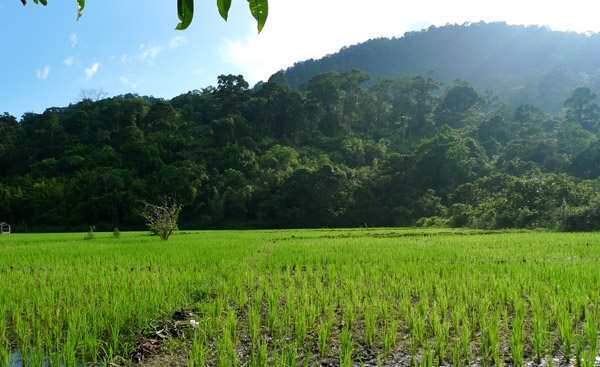
Agricultural fields and forest in rural countryside area. Photo: : mrtwister / Alamy Stock Photo


When we were children, a long auto trip would require a stop every hour or so to clean the windshield of the insects that had been intercepted. Today’s windshields are spared this indignity—a convenience for motorists but a terrifying signpost of danger for the well-being of the planet and humanity. It would be difficult to exaggerate the current peril we face as we push forward into what is now understood as the beginning of a new mass extinction. Yet efforts to curb this potential catastrophe are hindered by limited understanding of the relevant sciences, both natural and social. And a keystone issue is agriculture, both as partial cause of the crisis, and potential contributor to its solution. This is understood technically, but restricted limits of debate continue to force a restricted set of proposed solutions. To take an extreme example, E. O. Wilson, one of the world’s best-known biologists, recently proposed that half of the Earth’s surface should be put into protected status for the sole purpose of preserving biodiversity. While his proposal is unusually bold, the general idea of a vast expansion of protected areas is common among some conservationists in the United States and elsewhere. At present, something less than fifteen percent of planetary surface is in some kind of protected status, with various international agencies committed to expanding protected areas to seventeen percent. Implementation of what Wilson calls a “Half-Earth” strategy would require that more than three times as much land than at present be designated as “protected” areas for the primary purpose of biodiversity protection.

Wilson acknowledges that a Half-Earth approach would require an extreme intensification of agricultural production on land outside protected areas in order to provide enough food for human needs. He does little to contemplate what kind of intensification would be required. Neither does he acknowledge the impact conventional intensification would have on biodiversity. Since he relies on previous production gains under industrial agriculture as evidence of the possibility of greater gains using similar techniques, he apparently does not see any serious drawbacks to such techniques. Some conservationists who favor strategies similar to Wilson’s, speak of agricultural land as “sacrifice zones,” in which intensification, making liberal use of pesticides and synthetic fertilizers and other industrial style techniques, would necessarily reduce non-food organisms to a bare minimum, a “sacrifice” necessary for the pesky species Homo sapiens. Ironically, these conservationists’ support for land-sparing converges with agribusiness’ interests to increase industrial agricultural intensification. In the growing scientific literature, this perspective has come to be called “landsparing,” with the idea that agricultural intensification must be used to spare as much land as possible from human activity in order to leave the rest for the flourishing of non-human species. In contrast to the land-sparing approach, others who are equally as interested in biodiversity conservation have proposed a “land-sharing” approach, in which it is argued that high food production and biodiversity conservation may be achieved most efficiently if pursued simultaneously in a planned fashion. This point of view is suspicious of what they call the “fortress” protection ideology, in which areas are designated to be free of any human activity, assuming that in such areas all species initially there will survive in perpetuity. The land-sharing point of view is frequently characterized, perhaps incorrectly, as one in which the agricultural activity itself needs to be sufficiently benign for all the biodiversity in the area, such that purely protected areas are unnecessary. 

Either-or Versus Both-and 
The land-sparers emphasize increasing agricultural production to minimize land-use devoted to agriculture. The land-sharers emphasize the need to have an agriculture that is favorable for the survival of species. The first sees the protected area as the only place where biodiversity is conserved; the second sees a benign form of agriculture that itself contains the whole of the biodiversity. In the second edition of our book, Nature’s Matrix, we argue that both sides of this debate are wrong. Most of Earth’s terrestrial surface contains patches of natural, unmanaged, vegetation. The “landscape” is, by definition, those patches plus the “matrix” in which they are located. A simplified summary suggests that for one side, the only thing that matters are the patches of natural vegetation (and thus they need to be protected), while for the other side the only thing that matters is a matrix that is conducive to the survival of species. Both sides are wrong. Very basic ecology acknowledges that local extinctions of species occur regularly, even in the most protected of areas. Local extinctions are, in fact, a normal part of nature. What determines ultimate survival is whether the matrix of the landscape allows for migration and/or reproduction. Protected areas are very seldom large enough to provide conditions for thesurvival of most species. If species do not move freely through that matrix, then local extinctions can balloon into regional, and even global, extinctions. Thus, the ability for organisms to migrate and reproduce in agricultural areas is critical. The survival of a species in even the most protected areas will be otherwise undermined by surrounding industrial agricultural “sacrifice zones.” What we propose in our second edition of Nature’s Matrix is not a strictly “land sharing’ approach, since we recognize the need for maintaining protected areas. However, we also recognize that the goal of producing enough food to satisfy human nutritional demand does not require the conversion of those protected areas to agriculture, no matter how biodiversity friendly. We agree with Kremen’s recent analysis of the debate, noting that instead of an either-or approach, we need a “both–and” approach that “favors both large, protected regions and favorable surrounding matrices.”2 We further argue that a matrix favorable to biodiversity can only be achieved by an alliance of diverse social movements and organizations. 

Promoting the Nature’s Matrix Approach 
In the United States and other industrialized nations, there are a variety of organizations that implicitly or explicitly favor this “nature’s matrix” perspective, including most environmental organizations. Among the most important are land trust organizations that sign contracts with land owners to create or maintain agriculture that is supportive of relatively high species diversity. Organizations bringing together practitioners and researchers of low input or organic agriculture, agroecology, rotational grazing, and production of perennial crops all usually favor species friendly production techniques. In Europe, and to a lesser degree in the United States, governments offer cash payments or other reimbursements to farmers who adopt production plans that directly and indirectly favor wildlife.3 These initiatives are complemented in many urban areas by planning for parks, parkways, and greenbelts that offer wildlife-friendly areas within urban boundaries, and in the best of circumstances, connect urban landscapes directly to biodiversity friendly agriculture. In the biodiverse tropics, support for high quality matrices include organizations of those who are already practicing biodiversity-friendly agriculture, such as those cultivating shade grown coffee and cacao. These organizations are supported by trade certification schemes for “shade grown” and “bird friendly” products. In Asia, there are smallholder rice systems which support high biodiversity, and organizations which support them. Frequently these organizations include land reform movements, organizations of producers within designated extractive reserves, indigenous peoples, and family farm confederations, most of which have officially adopted policies promoting agroecological farming techniques that tend to create high-quality, biodiversity-friendly matrices. The organization La Via Campesina, an international alliance of peasant and small-scale agricultural producers, promotes such approaches. There is a general recognition among such organizations that, for a variety of reasons, their members have often practiced agriculture that tends to destroy or degrade species-rich environments, but that understanding strengthens their resolve to support positive change that, they believe, will tend to support more successful, small-scale agricultural production as well as biodiverse landscapes. As in industrialized countries, a substantial portion of the environmental movement in the global south supports policies promoting agroecological approaches to agriculture that promote complex landscapes friendly to high levels of biodiversity.4 

The Search for Empirical Validation 
Empirical study of the two strategies has been less than convincing, due to limitations in both time and space. How long a time period is appropriate? Useful studies must begin with actually occurring landscapes, landscapes in which an intricate dance involving agriculture and species survival has a long history. Counting insect splats on our windshield over the average period of five years will not likely lead us to the same conclusions as 50 year personal observations. Indeed, there is virtually uniform acknowledgment from the community of scientific ecologists that local extinctions are extensive, leading some to refer to the “extinction debt” of particular landscape patterns. This reality means that we have little idea of when the dance might be declared over, making it exceedingly difficult to set empirically appropriate beginnings and ends to studies. We may be able to measure population density at a given point in time, but knowing whether any given population is decreasing its numbers to near extinction is a difficult empirical problem.5 Similarly, if two such landscape level approaches are to be compared, where does one draw the boundary between one approach and the other? Most actually occurring landscapes seem to be a blend of the two strategies in ways that make it very difficult to compare because only an arbitrary spatial boundary can be determined, and yet, if none is determined, what should be measured? In addition, very few advocates of either position insist on a simple either/or dichotomy and are compelled to recognize that all regional landscapes are some kind of a mix. In contrast to Wilson’s sharply arbitrary “half-earth” suggestion, most involved in the debate on both sides understand that it is a matter of emphasis rather than a question of choosing between polar opposites. Not surprisingly, a proliferation of carefully designed studies meant to compare sparing and sharing approaches have led to conclusions that add detail to understanding the problem but that fall far short of demonstrating the superiority of one approach over the other. In spite of a very measured and reasonable effort by Kremen in 2015 to put an end to an increasingly polarized debate, Wilson and others continue efforts to sharpen the idea of an “eitheror” approach by vastly increasing the territorial ambitions of the landsparing advocates while avoiding critical discussion of the damaging effects of industrial agriculture. And the growing attempt to study the problem empirically may confuse rather than enlighten. Despite a significant amount of research, convincing empirical evidence establishing one approach over the other is not to be found. There are a number of reasons for this lack of resolution, reasons that are fundamental to the nature of the problem and unlikely to be resolved. For those of us who argue for a landscape approach, where both natural vegetation patches and a high quality matrix comprise thelandscape, the essential problem with the land-sparing perspective can be summarized in two related points: first, land-sparing strategies assume that protected areas are far more protective of biodiversity than is the case; and, second, the strategies assume that the negative effect of industrial agriculture on biodiversity is minimal and can remain so even under measures to intensify production. Both of these assumptions rest on an idea of control over nature that is illusory. The insects flying out of a reserve understand little of the poison that awaits them in the neighboring soybean landscape. This false sense of control over both human life and ecological processes derives at least partially from a particular way of thinking shaped by a particular moment in political time and space, and is not likely to serve either humanity or biodiversity well.

Endnotes 
1 Wilson, Edward O. Half Earth: Our Planet’s Fight for Life. (Liveright: 2016) 
2 Kremen, Claire. “Reframing the Land-Sparing/Land-Sharing Debate for Biodiversity Conservation.” Annals of the New York Academy of Sciences, vol. 1355, no. 1, 27 July 2015, pp. 52–76, 10.1111/nyas.12845. Accessed 13 Dec. 2018. 
3 Perfecto, Ivette, John Vandermeer, Angus Wright. Nature’s Matrix: Linking Agriculture, Conservation, and Food Sovereignty,2nd ed. (Earthscan: 2019) originally published 2009. 4 Ibid 5 For a quick summary featuring major players, see, Fred Pearce, “Sparing vs Sharing: The Great Debate Over How to Protect Nature.” YaleEnvironment360, Dec. 3, 2018.

Monday, February 5, 2018

2816. A Good Life for All Within the Planet's Means

By University of Leeds, Phy.org, February 5, 2018
Anthropocentrism is common place among scientists just as among the general population.  In the evolutionary "tree of life" humans are often placed at the apex even though the theory itself does not provide for an "progressive" evolutionary trend. 
A study led by the University of Leeds has found that no country currently meets its citizens' basic needs at a globally sustainable level of resource use.
The research, published in Nature Sustainability, is the first to quantify the sustainability of national resource use associated with meeting basic human needs for 151 countries.
Each country's resource use and well-being achievements have been made available as a website built by the academics involved in the study.
Lead author, Dr Daniel O'Neill, from the Sustainability Research Institute at Leeds, said: "Almost everything we do, from having dinner to surfing the Internet, uses resources in some way, but the connections between resource use and human well-being are not always visible to us.
"We examined international relationships between the sustainability of resource use and the achievement of social goals, and found that basic needs, such as nutrition, sanitation, and the elimination of extreme poverty, could most likely be achieved in all countries without exceeding global environmental limits.
"Unfortunately, the same is not true for other social goals that go beyond basic subsistence such as secondary education and high life satisfaction. Meeting these goals could require a level of resource use that is two to six times the sustainable level."
Co-author, Dr Andrew Fanning, also from the Sustainability Research Institute, said: "Our results suggest that some of the United Nations Sustainable Development Goals, such as combatting climate change and its impacts, could be undermined by the pursuit of other goals, particularly those focused on growth or high levels of human well-being."
This study builds on research by the Stockholm Resilience Centre that identified nine environmental processes that regulate the planet and proposed safe "planetary boundaries" for each that—if persistently exceeded—could lead to catastrophic change. The planetary boundaries include issues such as , land-use change, and freshwater use.
The researchers distributed seven planetary boundaries among nations according to their share of global population, and then compared these boundaries to national resource consumption, after correcting for international trade.
At the same time, the study scored countries on 11 social objectives established in previous research on what it would mean for countries to develop in "safe and just" way. The objectives included healthy life expectancy, access to energy, and democratic quality among others.
The study benchmarked each country's resource use against the planetary boundaries, and mapped these alongside the social indicators. The mapping showed no country performed well on both the planetary and social thresholds.
Co-author Dr William Lamb, from the Mercator Research Institute on Global Commons and Climate Change (MCC), said: "In general, the more social thresholds a country achieves, the more  it exceeds, and vice versa.
"Although wealthy nations like the US and UK satisfy the basic needs of their citizens, they do so at a level of resource use that is far beyond what is globally sustainable. In contrast, countries that are using resources at a sustainable level, such as Sri Lanka, fail to meet the basic needs of their people."
Co-author Dr Julia Steinberger, from the School of Earth and Environment at Leeds, said "Radical changes are needed if all people are to live well within the limits of the planet. These include moving beyond the pursuit of economic growth in wealthy nations, shifting rapidly from fossil fuels to renewable energy, and significantly reducing inequality.
"Our physical infrastructure and the way we distribute resources are both part of what we call provisioning systems. If all people are to lead a good life within the planet's limits then these provisioning systems need to be fundamentally restructured to allow for basic needs to be met at a much lower level of  use."

For a PDF version of the full article see here. 

Tuesday, March 28, 2017

2586. Marxism, Ecology and the Anthropocene: A Discussion

By ecologise.in,  March 26, 2017
ecologise.in editor’s note: Last week, Ecologise carried the well-known Marxist scholar John Bellamy Foster’s foreword to a new book, Facing the Anthropocene. In response, noted eco-socialist writer Saral Sarkar posted a comment questioning the usefulness of Marxist analysis in understanding the global ecological crisis. This short piece, first published on Ecologise, is Foster’s reply to Sarkar.
Questions for John Bellamy Foster
By Saral Sarkar
Prof. Bellamy Foster is a renowned scholar. If his scholarship is also meant to serve the cause he espouses, he may be requested to please reply to the following questions/comments of a reader of this article:
Of what use is it to replace the commonly used and well understood term “great ecological crisis” through the hardly known and not well understood long Marxian term “metabolic rift in the human relation to the earth”?
There are some more statements/phrases in the article that throw up critical comments: e.g.”Creating a world of sustainable human development …”. This caused me to raise my eyebrows. “Sustainable development” has since the 1980s been the buzzword of capitalist development economics. But the term meant nothing new. It was like dehydrated pure drinking water. Of course, Bellamy Foster is using the additional attribute “human”. But “human development” has also been around for long. Doesn’t it mean in plain English sustainable economic growth?
A straightforward question: Doesn’t Bellamy Foster think that Eco-Socialism’s immediate goal should be to initiate a policy of de-growth, a contracting economy, and a contracting population? And the long-term goal a socialist steady-state economy at a low level?
We know how much ecological havoc the socialist Soviet Union and other “socialist” countries of Eastern Europe wreaked. It is therefore not right to say, I think, “It is capitalism … that constitutes our “burning house”. Isn’t it better, because truer, that it is industrialism that constitutes for the last two hundred years our burning house, capitalism and “socialism” being merely two political variants of the same industrial way of living?
This comment was posted in response to John Bellamy Foster’s foreword to the book Facing the Anthropocenepublished earlier on Ecologise.

Against the expropriation of the earth: A response to Saral Sarkar

By John Bellamy Foster
I appreciate Saral Sarkar’s questions regarding my foreword to Ian Angus’s Facing the Anthropocene. I will attempt to answer his queries as briefly as I can and in the order in which they were asked. I have numbered my responses for the convenience of the reader.
1. There is no sense in which Marx’s concept of an “irreparable rift in the interdependent process of social metabolism” (or metabolic rift), as this concept is employed by ecosocialists today, can be seen as a substitute for the notion of global ecological crisis. Marx’s development of a socioecological systems approach (rooted in the notion of metabolism) grew out of the natural-scientific discussions of his time and prefigured the rise of the ecosystem concept and later Earth System analysis. It is closely connected to our current scientific understanding.
Thus, an article in the March 2017 issue of Scientific Reports refers to the “metabolic rift,” citing Marx’s Capital, in an attempt to address some of our contemporary human-ecological problems. Similarly, scientists in the Anthropocene Working Group define the Anthropocene as an “anthropogenic rift” in the Earth System (or Earth metabolism). Indeed, rather than displacing the notion of global ecological crisis, Marx’s metabolic rift can be seen as adding clarity to our understanding of that very real crisis, and particularly the dialectical interconnections between its social and ecological aspects.
2. The concept of “sustainable human development” was highlighted in Paul Burkett’s now classic essay, “Marx’s Vision of Sustainable Human Development,” published in the October 2005 issue of Monthly Review. Marx in volume 3 of Capital presented what is undoubtedly the most radical conception of sustainability ever introduced, arguing that individuals don’t own the earth; that even all the people in all the countries of the world don’t own the earth, but that they simply hold it in trust for future generations and must maintain it and even improve it as good heads of the household. He defined socialism as a social formation in which the associated producers rationally regulate their metabolism with the earth in such a way as to promote genuine human needs, while at the same time economizing on the expenditure of energy.
It is certainly possible, therefore, on the basis of classical historical materialism, to develop a revolutionary conception of“sustainable human development”—one which is radically opposed to “sustainable development” as defined by neoclassical economics. Sustainable human development, cannot be taken as meaning sustainable economic growth—a term which from an Earth system perspective is a contradictio in adjecto. Surely it would be a fatal error for the left to disarm itself intellectually by abandoning contested concepts like sustainability and ecology—or, for that matter, equality, democracy, and freedom—simply because they have been appropriated and distorted in various ways by the dominant ideology. We need to fight for our own perspectives.
3. Degrowth, in the form in which it is usually presented today, cannot be the principal organizing objective of the ecosocialist movement, since it neither addresses the immediate ecological threat nor engages with the need for structural change in the capital system. Given the planetary emergency, the ecological movement’s primary goal at present has to be one of mitigating climate change, which however cannot be separated from a host of other social and ecological problems.
In the Anthropocene, we are faced with the eventual prospect, if society continues to follow the path of business as usual, of the end of civilization (in the sense of organized human society) and even potentially of the human species itself. But well before that hundreds of millions of people will be affected by increasing droughts, rising sea levels, and extreme weather events of all kinds. This requires a radical change in the “political and economic hegemony,” as Kevin Anderson of the Tyndall Centre for Climate Change Research puts it. Anderson also insists on an immediate moratorium on economic growth and on all attempts to spur growth at the expense of the environment. Conservation is needed as well as shifts in resource use, technology, and use values. Fossil fuels have to be kept in the ground.
All of this is in line with what is argued by degrowth theorists. But the whole concept of degrowth has been distorted by the fact that it is generally used to put the dominant concept of economic growth on its head, arguing simply for downsizing the system, or putting it in reverse, without engaging in a full critique of capitalism or the promotion of the revolutionary structural changes that would be needed in confronting the capital system. There is certainly no question that we need to move toward a steady-state economy in Herman Daly’s sense of no net capital formation.
The weight of the economy in the rich countries of the advanced capitalist world needs to be reduced. But we should not make the error of seeing this as just an issue of scale as degrowth theorists commonly do. The entire structure of the capital system itself needs to be overcome and replaced by a society of substantive equality and ecological sustainability. Failure to address revolutionary structural change is the main weakness of the degrowth perspective, which has not yet escaped the ideology of capital. Thus, leading degrowth thinkers like Serge Latouche insist that degrowth in their terms is somehow compatible with capitalism.
4. It is true that all other things being equal increased population places more burdens on the carrying capacity of the earth. But crude Malthusian perspectives are not at all useful in addressing the ecological problem. It is capital accumulation, not population increase, that is the major factor in climate change. Although carbon emissions have to cease everywhere on earth within the next few decades—i.e., the world has to reach zero net emissions by 2050—the biggest reductions in emissions will necessarily have to occur in the rich countries, where per capita carbon emissions are highest.
It hardly needs to be pointed out that the wealthy countries, which have the highest per capita carbon emissions, are not those countries with the highest rates of population growth. Indeed, the poorest countries with the highest population growth rates tend to be those countries with the least per capita impact on the climate. Population growth in capitalism is a dependent variable. It is dependent on conditions of capitalism and imperialism in a given state or region, and on such factors as employment, health, education, women’s rights, etc. An excellent book on this topic is Ian Angus and Simon Butler, Too Many People?
5. The question of whether it is industrialism rather than capitalism that is the source of our “burning house” is an odd one for someone with a connection to ecosocialism to ask. The argument that Sarkar presents here is that because the Soviet Union too did damage to its environment, and it was industrialized but non-capitalist, that we should therefore move away from analysis of historically specific social formations, like capitalism (or formerly “actually existing socialism”), and instead we should just attribute the whole problem to the more general, abstract notion of industrialization.
The same logic if carried farther would lead one to argue that, since pre-industrial societies also destroyed their environments, industrialization is not a sufficient explanation. We should therefore attribute the environmental problem to human society in general. And, then, since humans are social animals, society itself can be considered an insufficient explanation, so we should attribute the ecological problem to the very existence of human beings. Ergo there are simply too many people.
Such an approach is not very helpful in that it removes all the crucial historical elements of the problem, and also our ability to act in rational ways. What is beyond question is that capitalism is a system dedicated to capital accumulation above all. As Marx put it, the capitalist only knows “Go on, Go on” (Grow, Grow), i.e., M-C-M´…M-C-M´´…M-C-M´´´, ad infinitum. In its increasingly irrational attempts to expand, capital (the capitalist, corporations) commodifies everything in existence, endangering humanity and the entire planet. In less than a generation under business as usual this process will take us over the climate cliff. There is only one possible conclusion: System Change, Not Climate Change!