Showing posts with label Supreme Court. Show all posts

Thursday, February 11, 2016

2196. Supreme Court’s Blow to Emissions Efforts May Imperil Paris Climate Accord

By Coral Davenport, The New York Times, February 10, 2016
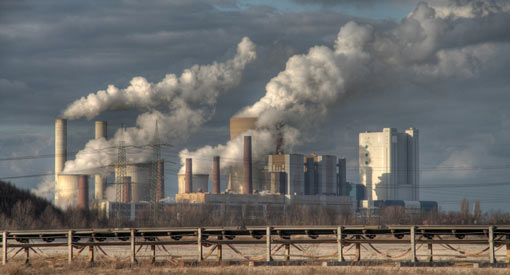
Coal-fired power plant behind homes, Poca, West Virginia, 2014. Photo: Robert Galbraith, Reuters. 

WASHINGTON — The Supreme Court’s surprise decision Tuesday to halt the carrying out of President Obama’s climate change regulation could weaken or even imperil the international global warming accord reached with great ceremony in Paris less than two months ago, climate diplomats say.

The Paris Agreement, the first accord to commit every country to combat climate change, had as a cornerstone Mr. Obama’s assurance that the United States would enact strong, legally sound policies to significantly cut carbon emissions. The United States is the largest historical greenhouse gas polluter, although its annual emissions have been overtaken by China’s.

But in the capitals of India and China, the other two largest polluters, climate change policy experts said the court’s decision threw the United States’ commitment into question, and possibly New Delhi’s and Beijing’s.

“If the U.S. Supreme Court actually declares the coal power plant rules stillborn, the chances of nurturing trust between countries would all but vanish,” said Navroz K. Dubash, a senior fellow at the Center for Policy Research in New Delhi. “This could be the proverbial string which causes Paris to unravel.”

The court did not block the rule permanently, but halted it from being carried out in the states until legal challenges against it have been decided, a process that could take a year or more. Legal experts said the justices’ decision to stop work on the rule before any court had decided against it was unprecedented and signaled that the regulation might ultimately be overturned. That could set back the United States’ climate efforts for years, although there would still be a chance for Washington to meet its commitments by 2025.

“If the American clean energy plan is overturned, we’ll need to reassess whether the United States can meet its commitments,” said Zou Ji, the deputy director general of China’s National Center for Climate Change Strategy and International Cooperation, a government think tank in Beijing.

Mr. Zou, who was an adviser to the Chinese delegation at the Paris negotiations, said by telephone: “It had seemed that with the American commitments, it was possible to get on the right emissions path globally. But without those commitments, that could be a blow to confidence in low-carbon development. In China domestically, there is also resistance to low-carbon policies, and they would be able to say: ‘Look, the United States doesn’t keep its word. Why make so many demands on us?’ ”

Inaction by the United States has long been the chief obstacle to meaningful global climate change agreements.

Mr. Obama sought to change that with aggressive but politically controversial Environmental Protection Agency rules to cut planet-warming greenhouse gas emissions from coal-fired power plants. With those rules, Mr. Obama won agreements from China and India to enact pollution reduction plans and helped push other countries to sign on to the Paris measure.

The top priority for Prime Minister Narendra Modi of India remains to provide cheap electricity to the 300 million Indians without power. If the United States reneges on its commitments, “it really would strengthen the hand of those who say Paris was ineffective and a bad deal for India,” Mr. Dubash said.

Under Mr. Obama’s commitment to the Paris Agreement, the United States will cut its emissions 26 percent to 28 percent by 2025, largely through the E.P.A. regulations on power plants and a mix of rules reining in pollution from cars, buildings and other sources. All of those policies were set to be carried out briskly so they would be well underway by the time Mr. Obama left office.

White House officials insisted on Wednesday that the rule would eventually be upheld, and that given the timetable for litigation and for meeting the target, the United States could still achieve its Paris commitment.

A White House spokesman, Eric Schultz, pointed to other greenhouse gas reduction policies Mr. Obama had established to help meet the 2025 target, including a federal budget agreement late last year that included long-term extensions of tax credits for wind and solar power.

Still, the Supreme Court’s decision ensures that climate policy will not be set on Mr. Obama’s watch. The United States Court of Appeals for the District of Columbia Circuit will hear oral arguments on the climate rule June 2 and is expected to issue its decision later this year, but an appeal to the Supreme Court is all but certain. If the justices agree to hear the case, a ruling is unlikely before June 2017.

If the rule is eventually overturned, the E.P.A. is still required by law to put forth a regulation controlling carbon dioxide emissions. That rule would be shaped by the next president and face its own legal gantlet, pushing action years into the future.

The White House and its supporters took hope from announcements that the governors of some states, including California, New York and Washington, would continue to work voluntarily to carry out the rule.

But most states are expected to halt their compliance efforts. Senator Mitch McConnell of Kentucky, the majority leader, had already been urging governors to refuse to comply with the plan. “These regulations are, in my view, likely illegal,” Mr. McConnell said Wednesday. “Yesterday’s Supreme Court order is just the latest sign of that. If nothing else, it shows we were right to let governors know their options.”

American policy experts said that the Supreme Court decision might be the first of many fractures in the deal.

“This pushback is not something that’s unique to the United States,” said John Sterman, a professor of management at the Massachusetts Institute of Technology who attended the negotiations in Paris. “It’s happening all over the developed world.”

Poland and some other coal-reliant countries have resisted the European Union’s commitment under the agreement to more stringently reduce emissions across member states.

Already, some people close to the climate talks worry that the events in the United States could lead to a repeat of what happened after the signing of the 1997 Kyoto Protocol, the first major climate change treaty. Vice President Al Gore, a staunch environmentalist, negotiated the treaty with other world leaders, but the Senate voted against it. Then President George W. Bush pulled the United States out entirely.

The Democratic presidential candidates, Hillary Clinton and Bernie Sanders, have pledged to continue and strengthen Mr. Obama’s climate change agenda, so a rule developed by their administrations would probably let the country meet its Paris goals.

But Republican contenders, including Donald J. Trump, Senator Ted Cruz of Texas and Senator Marco Rubio of Florida, have questioned or denied the science of human-caused climate change and sharply criticized the climate change regulations and the Paris Agreement.

“The Supreme Court just clarified the stakes for the American people in the election when it comes to climate change,” said Nigel Purvis, the president of the Climate Advisers consulting group and a climate diplomat under Bill Clinton and Mr. Bush.

Wednesday, February 10, 2016

2192. Supreme Court Deals Blow to Obama’s Efforts to Regulate Coal Emissions

By Adam Liptak and Coral Davenport, The New York Times, February 9, 2016


WASHINGTON — In a major setback for President Obama’s climate change agenda, the Supreme Court on Tuesday temporarily blocked the administration’s effort to combat global warming by regulating emissions from coal-fired power plants.

The brief order was not the last word on the case, which is most likely to return to the Supreme Court after an appeals court considers an expedited challenge from 29 states and dozens of corporations and industry groups.

But the Supreme Court’s willingness to issue a stay while the case proceeds was an early hint that the program could face a skeptical reception from the justices.

The 5-to-4 vote, with the court’s four liberal members dissenting, was unprecedented — the Supreme Court had never before granted a request to halt a regulation before review by a federal appeals court.

“It’s a stunning development,” Jody Freeman, a Harvard law professor and former environmental legal counsel to the Obama administration, said in an email. She added that “the order certainly indicates a high degree of initial judicial skepticism from five justices on the court,” and that the ruling would raise serious questions from nations that signed on to the landmark Paris climate change pact in December.

In negotiating that deal, which requires every country to enact policies to lower emissions, Mr. Obama pointed to the power plant rule as evidence that the United States would take ambitious action, and that other countries should follow.

The White House said in a statement that it disagreed with the court’s decision and remained confident that it would ultimately prevail. “The administration will continue to take aggressive steps to make forward progress to reduce carbon emissions,” it said.

Opponents of Mr. Obama’s climate policy called the court’s action historic.

“We are thrilled that the Supreme Court realized the rule’s immediate impact and froze its implementation, protecting workers and saving countless dollars as our fight against its legality continues,” said Patrick Morrisey, the attorney general of West Virginia, which has led the 29-state legal challenge.

“There’s a lot of people who are celebrating,” said Jeff Holmstead, a lawyer with Bracewell & Giuliani, a firm representing energy companies, which are party to the lawsuit. “It sends a pretty strong signal that ultimately it’s pretty likely to be invalidated.”

The challenged regulation, which was issued last summer by the Environmental Protection Agency, requires states to make major cuts to greenhouse gas pollution created by electric power plants, the nation’s largest source of such emissions. The plan could transform the nation’s electricity system, cutting emissions from existing power plants by a third by 2030, from a 2005 baseline, by closing hundreds of heavily polluting coal-fired plants and increasing production of wind and solar power.

“Climate change is the most significant environmental challenge of our day, and it is already affecting national public health, welfare and the environment,” Solicitor General Donald B. Verrilli Jr. wrote in a brief urging the Supreme Court to reject a request for a stay while the case moves forward.

The regulation calls for states to submit compliance plans by September, though they may seek a two-year extension. The first deadline for power plants to reduce their emissions is in 2022, with full compliance not required until 2030.

The states challenging the regulation, led mostly by Republicans and many with economies that rely on coal mining or coal-fired power, sued to stop what they called “the most far-reaching and burdensome rule the E.P.A. has ever forced onto the states.”

A three-judge panel of the United States Court of Appeals for the District of Columbia Circuit in January unanimously refused to grant a stay.

The court did expedite the case and will hear arguments on June 2, which is fast by the standards of complex litigation.

The states urged the Supreme Court to take immediate action to block what they called a “power grab” under which “the federal environmental regulator seeks to reorganize the energy grids in nearly every state in the nation.” Though the first emission reduction obligations do not take effect until 2022, the states said they had already started to spend money and shift resources.

Eighteen states, mostly led by Democrats, opposed the request for a stay, saying they were “continuing to experience climate-change harms firsthand — including increased flooding, more severe storms, wildfires and droughts.” Those harms are “lasting and irreversible,” they said, and “any stay that results in further delay in emissions reductions would compound the harms.”

In a second filing seeking a stay, coal companies and trade associations represented by Laurence H. Tribe, a law professor at Harvard, said the court should act to stop a “targeted attack on the coal industry” that will “artificially eliminate buyers of coal, forcing the coal industry to curtail production, idle operations, lay off workers and close mines.”

The E.P.A., represented by Mr. Verrilli, called the requests for a stay “extraordinary and unprecedented.” The states challenging the administration’s plan, he said, could point to no case in which the Supreme Court had “granted a stay of a generally applicable regulation pending initial judicial review in the court of appeals.” In a later brief, the states conceded that point.

Mr. Verrilli said judicial review of the plan, including by the Supreme Court, will be complete before the first deadline for emissions reductions in 2022.

“There is no reason to suppose that states’ duties under the rule will be especially onerous,” Mr. Verrilli wrote. “A state can elect not to prepare a plan at all, but instead may allow E.P.A. to develop and implement a federal plan for sources in that state.”

The two sides differed about whether current declines in coal mining and coal-fired power generation are attributable to the administration’s plan. “Some of the nation’s largest coal companies have declared bankruptcy, due in no small part to the rule,” a group of utilities told the justices.

A coalition of environmental groups and companies that produce and rely on wind and solar power said other factors were to blame for coal’s decline.

“These changes include the abundant supply of relatively inexpensive natural gas, the increasing cost-competitiveness of electricity from renewable generation sources such as solar and wind power, the deployment of low-cost energy efficiency and other demand-side measures, and increasing consumer demand for advanced energy,” they wrote.