By Niraj Chokshi, The New York Times, April 25, 2019
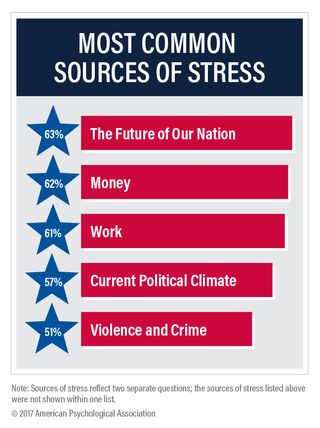
Americans are among the most stressed people in the world, according to a new survey. And that’s just the start of it.
Last year, Americans reported feeling stress, anger and worry at the highest levels in a decade, according to the survey, part of an annual Gallup poll of more than 150,000 people around the world, released on Thursday.
“What really stood out for the U.S. is the increase in the negative experiences,” said Julie Ray, Gallup’s managing editor for world news. “This was kind of a surprise to us when we saw the numbers head in this direction.”
For the annual poll, started in 2005, Gallup asks individuals about whether they have experienced a handful of positive or negative feelings the day before being interviewed. The data on Americans is based on responses from more than 1,000 adults.
In the United States, about 55 percent of adults said they had experienced stress during “a lot of the day” prior, compared with just 35 percent globally. Statistically, that put the country on par with Greece, which had led the rankings on stress since 2012.
About 45 percent of the Americans surveyed said they had felt “a lot” of worry the day before, compared with a global average of 39 percent. Meanwhile, the share of Americans who reported feeling “a lot” of anger the day before being interviewed was the same as the global average: 22 percent.
When Gallup investigated the responses more closely, it found that being under 50, earning a low income and having a dim view of President Trump’s job performance were correlated with negative experiences among adults in the United States.
But there still isn’t enough data to say for sure whether any of those factors were behind the feelings of stress, worry and anger.
The findings were not all bleak for the United States. Despite having widespread negative experiences, Americans also generally reported more positive experiences, on average, than the rest of the world did.
Globally, just 49 percent of those interviewed said they had learned or had done something interesting the day before. In the United States, however, 64 percent of adults said the same.
The two sets of questions, about negative and positive experiences, are unconnected, according to Ms. Ray. An individual can, for example, feel both stressed and well-rested for much of a given day.
“If you think about how you felt yesterday, you didn’t just feel one way the entire day,” she said.
Negative experiences were assessed by asking about physical pain, worry, sadness, stress and anger. Positive experiences were measured by asking whether individuals felt well-rested, felt treated with respect, smiled or laughed, learned or did something interesting and felt enjoyment.
The margin of error in the poll ranged from 2.1 to 5.3 percentage points, depending on the country. The results for the United States, where interviews were conducted from Aug. 13 to Sept. 30, had a margin of error of four percentage points.
Negative experiences remained at record highs
Worldwide, negative experiences were just as widespread last year as in 2017, which was the darkest year for humanity in more than a decade, according to Gallup. While stress declined globally, anger increased. Worry and sadness reached new heights, and feelings of physical pain were unchanged.
For the first time, Chad topped the list as the country with the highest response of negative experiences in the world.
“The country’s overall score at least partly reflects the violence, displacement and the collapse of basic services in parts of Chad that have affected thousands of families,” Gallup said in the report.
Additional countries that led the world in negative experiences included other African nations, like Niger and Sierra Leone, and some in the Middle East, such as Iraq and Iran.
Nations in Latin America once again led the list of countries where positive experiences were highest, despite the fact that some of the countries that topped the list, like El Salvador and Honduras, are home to some of the world’s highest murder rates.
Americans are among the most stressed people in the world, according to a new survey. And that’s just the start of it.
Last year, Americans reported feeling stress, anger and worry at the highest levels in a decade, according to the survey, part of an annual Gallup poll of more than 150,000 people around the world, released on Thursday.
“What really stood out for the U.S. is the increase in the negative experiences,” said Julie Ray, Gallup’s managing editor for world news. “This was kind of a surprise to us when we saw the numbers head in this direction.”
For the annual poll, started in 2005, Gallup asks individuals about whether they have experienced a handful of positive or negative feelings the day before being interviewed. The data on Americans is based on responses from more than 1,000 adults.
In the United States, about 55 percent of adults said they had experienced stress during “a lot of the day” prior, compared with just 35 percent globally. Statistically, that put the country on par with Greece, which had led the rankings on stress since 2012.
About 45 percent of the Americans surveyed said they had felt “a lot” of worry the day before, compared with a global average of 39 percent. Meanwhile, the share of Americans who reported feeling “a lot” of anger the day before being interviewed was the same as the global average: 22 percent.
When Gallup investigated the responses more closely, it found that being under 50, earning a low income and having a dim view of President Trump’s job performance were correlated with negative experiences among adults in the United States.
But there still isn’t enough data to say for sure whether any of those factors were behind the feelings of stress, worry and anger.
The findings were not all bleak for the United States. Despite having widespread negative experiences, Americans also generally reported more positive experiences, on average, than the rest of the world did.
Globally, just 49 percent of those interviewed said they had learned or had done something interesting the day before. In the United States, however, 64 percent of adults said the same.
The two sets of questions, about negative and positive experiences, are unconnected, according to Ms. Ray. An individual can, for example, feel both stressed and well-rested for much of a given day.
“If you think about how you felt yesterday, you didn’t just feel one way the entire day,” she said.
Negative experiences were assessed by asking about physical pain, worry, sadness, stress and anger. Positive experiences were measured by asking whether individuals felt well-rested, felt treated with respect, smiled or laughed, learned or did something interesting and felt enjoyment.
The margin of error in the poll ranged from 2.1 to 5.3 percentage points, depending on the country. The results for the United States, where interviews were conducted from Aug. 13 to Sept. 30, had a margin of error of four percentage points.
Negative experiences remained at record highs
Worldwide, negative experiences were just as widespread last year as in 2017, which was the darkest year for humanity in more than a decade, according to Gallup. While stress declined globally, anger increased. Worry and sadness reached new heights, and feelings of physical pain were unchanged.
For the first time, Chad topped the list as the country with the highest response of negative experiences in the world.
“The country’s overall score at least partly reflects the violence, displacement and the collapse of basic services in parts of Chad that have affected thousands of families,” Gallup said in the report.
Additional countries that led the world in negative experiences included other African nations, like Niger and Sierra Leone, and some in the Middle East, such as Iraq and Iran.
Nations in Latin America once again led the list of countries where positive experiences were highest, despite the fact that some of the countries that topped the list, like El Salvador and Honduras, are home to some of the world’s highest murder rates.