Showing posts with label Plants. Show all posts

Sunday, March 13, 2022

3574. Plants Humans Don’t Need Are Heading for Extinction, Study Finds

By Sofia Quaglia, The Guardian, March 10, 2022
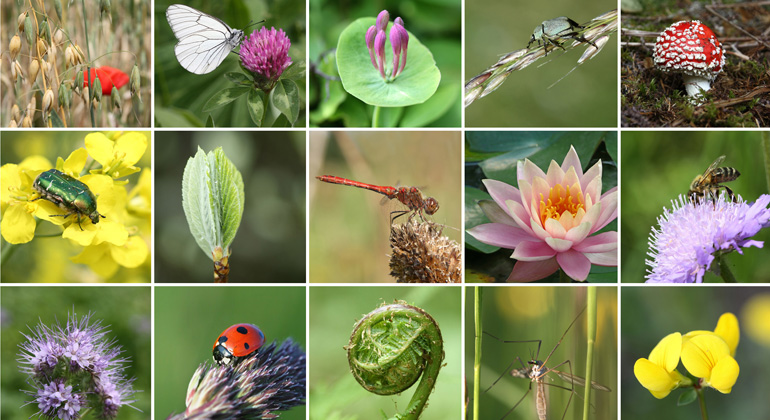
Some of the plants already have already gone extinct.


Researchers have categorised more than 80,000 plant species worldwide and found that most of them will “lose” in the face of humanity – going extinct because people don’t need them.

This means that plant communities of the future will be hugely more homogenised than those of today, according to the paper published in the journal Plants, People, Planet.

The findings, which paint a stark picture of the threat to biodiversity, cover less than 30% of all known plant species, and as such are a “wake-up call”, say the researchers, highlighting the need for more work in this field.

“We’re actually beginning to quantify what’s going to make it through the bottleneck of the Anthropocene, in terms of numbers,” said John Kress, botany curator emeritus at the Smithsonian’s National Museum of Natural History and lead author of the paper. “It’s not the future, it’s happening. The bottleneck is starting to happen right now. And I think that’s part of the wake-up call that we are trying to give here. It’s something we might be able to slow down a little bit, but it’s happening.”

Researchers at the Smithsonian Institution set out to categorise exactly which plant species have been most affected by humans since the start of the Anthropocene – the geological epoch marked by profound human impact on Earth, in which humans have been responsible for global heating, deforestation, and other negative results of industrialisation.

Magnolia ekmanii, a critically endangered tree in Haiti was harvested for its wood to produce charcoal and building materials.
Magnolia ekmanii, a critically endangered tree in Haiti was harvested for its wood to produce charcoal and building materials. Photograph: Martin Reith (CC BY-NC)

They analysed data on 86,592 vascular plant species, gathering information from international databases about the different uses for these plants: whether they’re crops, which are economically important to humans, invasive weed plant species, endangered species that need to be protected or rare species which are involved in illegal trade, for example.

From this information, they created a categorisation of how the plants are faring and will fare in the future, describing eight distinct categories, and concluding that many more species of plants will be pushed to extinction by human activity on Earth, rather than aided.

There are 6,749 plants which are winners and are helpful to humans such as corn, rice, wheat and other crops, which cover 40% of the surface of the planet, and plants which have gone extinct in the wild but are surviving in cities, such as the ginkgo tree, planted on every block of New York City, according to Kress. Then there are 164 plants which are winners and aren’t useful to humans, mainly invasive, weedy species such as the kudzu, also known as “the vine that ate the south”.

About 20,290 species of plants are categorised as losers, mostly because they are not useful to humans, and they’re already recognised as endangered species – such as the magnolia tree from Haiti, which was cut down for firewood and does not grow anywhere else. Smaller lineages of plant species – such as cycads, the cypress family such as redwoods and junipers, and an ancient family of conifers called the araucariales – are most likely to disappear completely.

Ginkgo biloba, a winning species, has been grown by humans for hundreds of years and is a popular ornamental tree that has also been used for food, medicine and as a dietary supplement.
Ginkgo biloba, a winning species, has been grown by humans for hundreds of years and is a popular ornamental tree that has also been used for food, medicine and as a dietary supplement. Photograph: Smithsonian Institute by permission from G.A. Coope

The scientists branded 26,002 species as potential losers, and 18,664 species as potential winners. The last two categories are those of plants currently considered neutral, and 571 plant species which have already gone extinct.

The results suggest that, in the future, there will be a lot less biodiversity, which in turn will drive a loss of animal diversity, and make ecosystems even more vulnerable in the face of extreme weather, changes in climate, or more degradation due to human impact.

“The authors used a dataset of 86,592 which represents about 25% of the world’s vascular plants,” said Barnabas Daru, assistant professor of biology at Texas A&M University, who was not involved in this study. “This means that we are missing a huge chunk of the puzzle, especially the vast knowledge gaps in some of the world’s most floristically diverse but poorly sampled regions such as South America, Africa and south-east Asia.”

Daru points out that there are other datasets that could help complete the picture and, possibly, show a different pattern for winners and losers.

With enough effort, any plant can be saved from extinction, said Richard Corlett, professor at the Xishuangbanna Tropical Botanical Garden, who was not involved in the study – for example, in living collections, in seed banks or in cryogenic tissue storage. That’s why there should be a stronger call for zero plant extinction, Corlett argues, and findings like these should sound the alarm and spur action.

“How many people can name a threatened plant?” said Corlett. “Plant conservation is not like animal conservation, where we continue to lose species despite efforts to save them. In plant conservation, there are no hopeless cases, at least in regards to extinction.”

Monday, January 20, 2020

3308. Food at Risk as Third of Plants Face Extinction

By Tim Radford, Climate News Network, December 17, 2019

More than a third of the world’s plants are so rare they face extinction. In a warmer world, that would leave supplies of food at risk.
Botanists have made a new census of terrestrial plants – only to find that with nearly 40% of them rare, or extremely rare, this may put food at risk.
And a second team of researchers, in a separate study, has established that some of these rare or vanishing species could include the wild relatives of some of the planet’s most popular vegetables.
The two studies matter. The first underlines yet another reason for new and determined conservation strategies to preserve the extraordinary natural variety and richness of life – the shorthand word that scientists use is biodiversity – already under pressure from the explosion in human numbers, the destruction of natural habitats and the looming catastrophe of climate change driven by rapidly rising global temperatures.
And the second study is simply a matter of the next lunch or dinner: many rare plants are survivors with the resources to adapt to change. In a fast-changing world, crop breeders may need to go back to the wild relatives to look for the genes that will keep the commercial carrots, courgettes, pumpkins and chilli peppers on the grocery shelves.
US scientists and international colleagues report in the journal Science Advances that they worked for 10 years and compiled 20 million observational records to establish a simple plant census: the forests, grasslands, scrublands, tundra and swamps of the wild world are home to about 435,000 unique plant species.
“According to ecological and evolutionary theory, we’d expect many species to be rare, but the actual observed number we found was pretty startling,” said Brian Enquist of the University of Arizona, who led the consortium. “There are many more rare species than we expected.”
The rare species were most likely to be clustered in what ecologists call hotspots: the northern Andes in South America, Costa Rica, South Africa, Madagascar and south-east Asia.
What these places have in common is that, over millions of years, they have maintained stable climates, and as the glaciers retreated at the end of the last Ice Age, these tropical mountains and valleys provided refuge for life’s variety.
But these survivors may not enjoy a stable future, as ever higher levels of greenhouse gases are spilled into the atmosphere from human use of fossil fuels, and global temperatures continue to rise, and as human communities expand into what was once wilderness.
Significant loss ahead
“In many of these regions, there’s increasing human activity such as agriculture, cities and towns, land use and clearing,” said Professor Enquist.
“So that’s not exactly the best of news. If nothing is done, this all indicates that there will be a significant reduction in biodiversity – mainly in rare species – because their low numbers makes them more prone to extinction.”
Humans depend on the natural world for survival: biodiversity – plants, fungi, mammals, birds, fish, amphibians, reptiles and so on – provides all human nourishment, most of the medicines, fuels, fabrics and textiles that warm and shelter 7.7bn people, and at the same time maintains supplies of water, air, crop pollinators and so on.
But new research in the journal Plants, People, Planet confirms once again that many of the wild ancestors and cousins of the crops that nourish billions could be at risk.
And these wild relatives – which have survived climate shifts over millions of years – represent a vital resource for plant breeders anxious to cope with rapid global heating.
Unpreserved
The latest study confirms that 65% of wild pumpkins and more than 95% of wild chilli peppers are not formally preserved in any gene banks protected by conservation scientists.
“The wild relatives of crops are one of the key tools used to breed crops adapted to hotter, colder, drier, wetter, saltier and other difficult conditions,” said Colin Khoury of the International Centre for Tropical Agriculture.
“But they are impacted by habitat destruction, over-harvesting, climate change, pollution, invasive species and more. Some of them are sure to disappear from their natural habitats without urgent action.”
Dr Khoury and his colleagues have prepared a series of detailed maps of the range and distribution of the wild relatives of a range of important food species: the aim is to focus on the most effective kinds of protection for what, literally, could become tomorrow’s lunch in a world of rapid change.
“If they disappear, they are gone,” said Dr Khoury. “Extinction is forever, which is a loss not only in terms of their evolution and persistence on the planet, but also a loss to the future of our food.” – Climate News Network

Tuesday, September 18, 2018

3025. Nervous System-Like Signaling in Plant Defense

By JoAnn Klein, The New York Times, September 13, 2018

Caterpillar bites triggers defense signals.

Plants have no eyes, no ears, no mouth and no hands. They do not have a brain or a nervous system. Muscles? Forget them. They’re stuck where they started, soaking up the sun and sucking up nutrients from the soil. And yet, when something comes around to eat them, they sense it.

And they fight back.

How is this possible?

“You’ve got to think like a vegetable now,” says Simon Gilroy, a botanist who studies how plants sense and respond to their environments at the University of Wisconsin-Madison.
“Plants are not green animals,” Dr. Gilroy says. “Plants are different, but sometimes they’re remarkably similar to how animals operate.”

To reveal the secret workings of a plant’s threat communication system for a study published Thursday in ScienceMasatsugu Toyota (now a professor at Saitama University in Japan) and other researchers in Dr. Gilroy’s lab sent in munching caterpillars like in the video above. They also slashed leaves with scissors.

Calcium spreads to distant leaves when another leaf on the plant is cut.

They applied glutamate, an important neurotransmitter that helps neurons communicate in animals.

How a plant responded when glutamate was applied to one of its leaves.

In these and about a dozen other videos, they used a glowing, green protein to trace calcium and accompanying chemical and electrical messages in the plant. And they watched beneath a microscope as warnings transited through the leafy green appendages, revealing that plants aren’t as passive as they seem.

The messages start at the point of attack, where glutamate initiates a wave of calcium that propagates through the plant’s veins, or plumbing system. The deluge turns on stress hormones and genetic switches that open plant arsenals and prepare the plant to ward off attackers — with no thought or movement.

Like animals, plants are eukaryotes — multicellular organisms — that split from a common ancestor called Luca billions of years ago. To survive, we all sense threats, relay messages about them within our bodies or tissues and respond to these challenges. Our actions vary, adapted for the lifestyles we maintain in different environments, but much of our basic cellular machinery is the same. Biology kept it that way: If it ain’t broke, don’t fix it.

One mechanism our cells share is fluctuating levels of calcium ions, which carry an electrical charge. In humans, this charge assists in controlling when your neurons fire messages. Changes in calcium ions make your heart beat or your muscles contract so you can get up and leave when something threatens you.

Plants, obviously, can’t run away. But researchers knew that genes that make receptors kind of like those for glutamate initiate electrical signals that travel through plants after being wounded. They turn on genes elsewhere in the plant, allowing them to respond.

With the help of glutamate, calcium ions can flow, carrying their signal through channels that open like floodgates when glutamate fits into these special receptor spaces, like keys in locks. These channels aren’t quite the same as those in the mammalian nervous system, but they look very similar and probably worked similarly. They led Dr. Gilroy and his team to look into calcium ion flow.

To make the action visible, the researchers engineered Arabidopsis plants, botany’s lab rat, to make a protein originally from jellyfish that glows green under a microscope. This sensor, in this case, shines brighter when calcium levels increase.

They also made plants that lack the glutamate-like receptor. In these, the fluorescent signal was weak:

When plants were engineered to lack glutamate receptors, they barely registered any calcium waves.

The real surprise was the speed. The plant reacted within a few seconds and transferred information from leaf to leaf in a couple of minutes — as long as they were connected through the vascular system. This is slower than your nervous system, but “for a plant biologist, that is booking it,” Dr. Gilroy said.

The plant also seemed to be able to sense the amount of damage, because when they crushed a leaf, the plant responded all over.:

Wherever the calcium touched, the plant produced jasmonic acid, a defense and stress hormone, which they believe turns on genes that somehow activate a plant’s chemical and physical defenses.

Methyl-jasmonate, a product of jasmonic acid, for instance, floats through the air like a jasmine-scented perfume. But for insects, it can be unappealing or disrupt digestion and deter diners from return visits. Physical defenses may harden a plant’s cell walls, too, making them tough to eat.

“The authors add many pieces to the puzzle of how a localized wound triggers widespread defenses in distal leaves,” said Ted Farmer, a botanist at University of Lausanne in Switzerland who described the electrical wound signal in plants.

But much is still a mystery.

“We’re trying to understand what the machinery is that makes the whole system work,” Dr. Gilroy said.

What isn’t so mysterious is that plants and animals have a lot of the same problems. And while humans can deal with threats, plants can too.

“They may even have to be better than us at sensing the environment because they don’t have the luxury of getting up and leaving,” Dr. Gilroy said.

Sunday, August 2, 2015

1957. Stressed Out Plants Send Animal-Like Signals

By The University of Adelaide, July 29, 2015
Stressed sunflowers
University of Adelaide research has shown for the first time that, despite not having a nervous system, plants use signals normally associated with animals when they encounter stress.

Published today in the journal Nature Communications, the researchers at the Australian Research Council (ARC) Centre of Excellence in Plant Energy Biology reported how plants respond to their environment with a similar combination of chemical and electrical responses to animals, but through machinery that is specific to plants.

“We’ve known for a long-time that the animal neurotransmitter GABA (gamma-aminobutyric acid) is produced by plants under stress, for example when they encounter drought, salinity, viruses, acidic soils or extreme temperatures,” says senior author Associate Professor Matthew Gilliham, ARC Future Fellow in the University’s School of Agriculture, Food and Wine.

“But it was not known whether GABA was a signal in plants. We’ve discovered that plants bind GABA in a similar way to animals, resulting in electrical signals that ultimately regulate plant growth when a plant is exposed to a stressful environment.”

By identifying how plants respond to GABA the researchers are optimistic that they have opened up many new possibilities for modifying how plants respond to stress.

“The major stresses agricultural crops face like pathogens and poor environmental conditions account for most yield losses around the planet – and consequently food shortages,” says co-lead author Professor Stephen Tyerman

“By identifying how plants use GABA as a stress signal we have a new tool to help in the global effort to breed more stress resilient crops to fight food insecurity.” 

Despite a similar function, the proteins that bind GABA and their mammalian counterparts only resemble each other in the region where they interact with the neurotransmitter – the rest of the protein looks quite different.

“This raises very interesting questions about how GABA has been recruited as a messenger in both plant and animal kingdoms,” says co-lead author Dr Sunita Ramesh. “It seems likely that this has evolved in both kingdoms separately.”

The researchers say these findings could also explain why particular plant-derived drugs used as sedatives and anti-epileptics work in humans. These drugs are able to interact with proteins in the GABA-signalling system in both plants and animals ─ suggesting that future work on other plant GABA signalling agents will also benefit the medical field.

The work also involved researchers at CSIRO Canberra, the University of Tasmania, the Gulbenkian Institute in Portugal and the University of Maryland, USA.

Sunday, March 1, 2015

1752. Vandana Shiva: ‘All Life Depends on Soil’

By Vandana Shiva, EcoWatch, February 16, 2015


Indian civilization has sustained itself over thousands of years because it revered the soil as sacred and inviolable. It treated it as Mother Earth.

The Atharva Veda invokes the prayer to prithvi, the Earth:

“Let what I dig from thee, O Earth, rapidly spring and grow again.
O Purifier, let me not pierce through thy vitals or thy heart”

Today’s dominant policies and laws seem to be saying the opposite to the Earth—“We will dig so deep and so violently, we will bulldoze so brutally, on such a large scale and at such a high speed, that we will tear through your vitals and your heart, ensuring that nothing can grow from you again.”

Both ecological science and our ancient wisdom teaches us that all life depends on soil. But we are now unthinkingly adopting the illusion that human progress is based on how fast we can destroy, bury and consume the soil.

Uncontrolled urbanization, mega mines, superhighways and gigantic infrastructure projects are the burial grounds of fertile soil. We are forgetting that life grows from soil, not concrete and tarmac.

It is only our farmers who are practicing ecological agriculture, returning organic matter to the soil and growing soil fertility, and, through it, the foundation of our food and our future. In practicing organic farming, they also conserve water and absorb carbon dioxide from the atmosphere, thus addressing climate change. Money might grow from speculative real estate development, but not life. Multiple “clashes of civilization” are taking place in India today around soil and land.

There is a clash between what Aristotle called “chrematistics,” the art of money-making, and “oikonomia,” the art of living. The clash is between the soil and Earth centred agrarian economies of peasant societies and the money-centered speculative economies which are obsessed with the art of money making, with no respect for the democratic rights of people whose land is being grabbed, or for the soil that has sustained our civilization over millennia.

This intense clash is because the government wants to forcefully and undemocratically appropriate land from the farmers and hand it over to builders and speculators.
A war against land and people has been declared through the land acquisition ordinance which, by reversing the Right to Fair Compensation and Transparency in Land Acquisition, Rehabilitation and Resettlement Act, 2013, takes us back to the colonial law of 1894.

There is a clash between two views of history on the land question. There is a false, linear view of history that projects human progress as moving from agriculture to industry to service economies. A more realistic view recognises that history moves in cycles.

At the national level, history of land is not a linear history of dispossession, but a cyclical history of land grab and land reform.

The British created the zamindari system, which led to violence, injustice and famines. Peasants started movements like Tebhaga after the great Bengal famine, and movements for land reform and land rights based on “land to the tiller” philosophy. West Bengal had its Operation Barga, India introduced “land ceiling,” a limit on the ownership of land, and land reform along with land distribution made Independent India a land of hard working, sovereign and proud small farmers.

The land grab ordinance is, in fact, a new zamindari, aimed at reversing all that Independent India put in place to protect—land, food security, the sovereignty of small farmers and the country. But it is more than a reversal because the context is different. In today’s context, unjust laws passed undemocratically for land acquisition have far more impact because the activities are more destructive ecologically and socially. 

Removal of the clauses for consent in the land ordinance is an assault on democracy. Removal of the food security clauses is a reckless and irresponsible action forfeiting the future. Has the government been so blinded by corporate “chrematistics” that it cannot see the damage this will do to life of the soil, the “oikonomia,” the vital food economy of the peasants? Has it been so deafened by the voice of those whose only objective is profits and money-making, that it cannot hear the screams of a dying soil and the people of the soil—the tribals and peasants?

A new Singapore-style capital is proposed for Andhra Pradesh at the cost of Rs 100,000 crore. About 100,000 acre of prime farmland on the banks of the Krishna river is being grabbed from small farmers who, with one acre land, earn more than Rs 30,000 per month. Former Indian Administrative Service officer Devasahayam reports how the government is describing the concrete jungle it is planning as being “full of life and economic activity,” implying that farming that feeds people is a “lifeless activity!”

Globally, young people are moving back to the land, driven both by crisis of unemployment and by frustration with the urban corporate life which might bring money, but no satisfaction. Young people from banks and software companies are coming to Navdanya to learn how to be organic farmers and make a living from the land. After the banks and information technology (IT), it is soil and land that holds the future.

We already have a scarcity of land and fertile soil. To bury this scarce and precious resource on the basis of an outmoded view of history, progress and development is not enlightened policy-making. There is not enough land in the country for the limitless appetite for mining, urbanisation and industrialisation. While profiteering from land in a globalised economic system based on the false idea of limitless growth might inspire current policies, land and fertile soils set their own ecological limits. There are also social and political limits to how much dispossession, injustice, violence and destruction of democracy a society can bear. Protests against land grab and the land law are growing across the country. If they are violently crushed, as in the tribal areas, violent conflicts will intensify. In the worst case scenario, if the fabric of the soil and society are ruptured beyond repair, we will disintegrate as a civilization, as is happening to so many societies around us.

We can avert the collapse of our civilization if, in this year of soil, we collectively and democratically commit ourselves to protecting and rejuvenating the soil and, thus, our future.