Showing posts with label Microbes. Show all posts

Friday, May 1, 2020

3356. Wired Bacteria Form Nature’s Power Grid: ‘We Have an Electric Planet’

By Carl Zimmer, The New York Times, July 1, 2019
Microbial power grid

At three o’clock in the afternoon on September 4, 1882, the electrical age began. The Edison Illuminating Company switched on its Pearl Street power plant, and a network of copper wires came alive, delivering current to a few dozen buildings in the surrounding neighborhood.

One of those buildings housed this newspaper. As night fell, reporters at The New York Times gloried in the steady illumination thrown off by Thomas Edison’s electric lamps. “The light was soft, mellow, and grateful to the eye, and it seemed almost like writing by daylight,” they reported in an article the following day.

But nature invented the electrical grid first, it turns out. Even in 1882, thousands of miles of wires were already installed in the ground in the New York region — in meadows, in salt marshes, in muddy river bottoms. They were built by microbes, which used them to shuttle electricity.

Electroactive bacteria were unknown to science until a couple of decades ago. But now that scientists know what to look for, they’re finding this natural electricity across much of the world, even on the ocean floor. It alters entire ecosystems, and may help control the chemistry of the Earth.

“Not to sound too crazy, but we have an electric planet,” said John Stolz, a microbiologist at Duquesne University in Pittsburgh.

In the mid-1980s, Dr. Stolz was helping to study a baffling microbe fished out of the Potomac River by his colleague Derek Lovley. The microbe, Geobacter metallireducens, had a bizarre metabolism. “It took me six months to figure out how to grow it in the lab,” said Dr. Lovley, now a microbiologist at the University of Massachusetts at Amherst.

Instead, Geobacter transfers its electrons to iron oxide, or rust, Dr. Lovley and his colleagues discovered. The process helps turn rust into another iron compound, called magnetite.

The finding left the scientists with a puzzle. We humans draw oxygen into our cells to utilize it, but Geobacter does not import rust. So the microbe must somehow get the electrons out of its cell body and attach them to rust particles. How?

A real live wire
The researchers struggled for years to find the answer. Dr. Stolz eventually turned to other microbes to study. But Dr. Lovley soldiered on. Over the years, he and his colleagues have come across Geobacter in many places far beyond the Potomac. They’ve even encountered the bacteria in oil drilled from deep underground. “It’s basically found everywhere,” Dr. Lovley said.

In the early 2000s, Dr. Lovley’s team discovered that Geobacter could sense rust in its neighborhood. The microbe responded by sprouting hairlike growths.

Maybe each of those growths, known as a pilus, was actually a wire that latched onto the rust, Dr. Lovley thought. Electrons could flow from the bacterium down the wire to the receptive rust. “It seemed like a wild idea at the time,” Dr. Lovley said.

But he and his team found several clues suggesting that the pilus is indeed a living wire. In one experiment, when Geobacter was prevented from making pili, the bacteria couldn’t turn rust to magnetite. In another, Dr. Lovley and his colleagues plucked pili from the bacteria and touched them with an electrified probe. The current swiftly shot down the length of the hairs.

Subsequent research revealed that Geobacter can deploy its wires in different ways to make a living. Not only can it plug directly into rust, it can also plug into other species of microbes.

The partners of Geobacter welcome the incoming flow of electrons. They use the current to power their own chemical reactions, which convert carbon dioxide into methane.

Discoveries like these raised the possibility that other bacteria might be dabbling in electricity. And in recent years, microbiologists have discovered a number of species that do.

“When people are able to dig down at the molecular level, we’re finding major differences in strategy,” said Jeff Gralnick of the University of Minnesota. “Microbes have solved this issue in several different ways.”

In the early 2000s, a Danish microbiologist named Lars Peter Nielsen discovered a very different way to build a microbial wire. He dug up some mud from the Bay of Aarhus and brought it to his lab. Putting probes in the mud, he observed the chemical reactions carried out by its microbes.

“It developed in a very weird direction,” Dr. Nielsen recalled.

At the base of the mud, Dr. Nielsen observed a buildup of a foul-smelling gas called hydrogen sulfide. That alone was not surprising — microbes in oxygen-free depths can produce huge amounts of hydrogen sulfide. Normally, the gas rises the surface, where oxygen-breathing bacteria can break most of it down.

But the hydrogen sulfide in the Aarhus mud never made it to the surface. About an inch below the top of the mud, it disappeared; something was destroying it along the way.

After weeks of perplexity, Dr. Nielsen woke up one night with an idea. If the bacteria at the bottom of the mud broke hydrogen sulfide without oxygen, they would build up extra electrons. This reaction could only take place if they could get rid of the electrons. Maybe they were delivering them to bacteria at the surface.

“I imagined it could be electric wires, and I could explain all of this,” he said.

So Dr. Nielsen and his colleagues looked for wires, and they found them. But the wires in the Aarhus mud were unlike anything previously discovered.

Each wire runs vertically up through the mud, measuring up to two inches in length. And each one is made up of thousands of cells stacked on top of each other like a tower of coins. The cells build a protein sleeve around themselves that conducts electricity.

As the bacteria at the bottom break down hydrogen sulfide, they release electrons, which flow upward along the “cable bacteria” to the surface. There, other bacteria — the same kind as on the bottom, but employing a different metabolic reaction — use the electrons to combine oxygen and hydrogen and make water.

Cable bacteria are not unique to Aarhus, it turns out. Dr. Nielsen and other researchers have found them — at least six species so far — in many places around the world, including tidal pools, mud flats, fjords, salt marshes, mangroves and sea grass beds.

And cable bacteria grow to astonishing densities. One square inch of sediment may contain as much as eight miles of cables. Dr. Nielsen eventually learned to spot cable bacteria with the naked eye. Their wires look like spider silk reflecting the sun.

Electroactive microbes are so abundant, in fact, that researchers now suspect that they have a profound impact on the planet. The bioelectric currents may convert minerals from one form to another, for instance, fostering the growth of a diversity of other species. Some researchers have speculated that electroactive microbes may help regulate the chemistry of both the oceans and the atmosphere.

“To me, it’s a strong reminder of how ready we are to ignore things we cannot imagine,” Dr. Nielsen said.

Electroactive bacteria for hire
Much about these microbes remains murky, and subject to debate. In April, Nikhil S. Malvankar, a physicist at Yale University, and his colleagues challenged Dr. Lovley’s finding that Geobacter use pili as wires.

Their research indicates that bacteria use a different structure to pump electrons. It’s a wire built from building blocks called cytochromes. Individual cytochromes are important for moving electrons around inside cells. But until now no one knew they could be stacked into a conductive wire.

“There never had been a material like this before,” Dr. Malvankar said.

Sarah Glaven, a research biologist at the United States Naval Research Laboratory who was not involved in the new study, said she found it compelling. “Totally believe it,” she said. “The question is, is it just part of the puzzle?”

It’s possible that Geobacter uses both structures to move electrons, Dr. Glaven said. Or maybe one serves a different function, and just happens to conduct electricity in the hands of a scientist.
The answers to such questions matter deeply to scientists, who are tinkering with electroactive bacteria to develop new kinds of technology.

At Cornell University, Buz Barstow and his colleagues are investigating the possibility of wiring bacteria to solar panels. The panels would capture sunlight and generate a stream of electrons. The electrons would stream down microbial wires to a species of bacteria called Shewanella, which would use the energy to convert sugar into fuel.
It’s still a distant dream. For now, Dr. Barstow is trying to work out the basic biology by which Shewanella moves electrons from its wires to the molecules it uses for its metabolism. But he is so taken with the elegance of electroactive bacteria that he figures it’s worth a shot. “You’re talking to someone who has drunk the Kool-Aid,” he said.

Other researchers are looking into using these filaments as sensors. For instance, a wristband with embedded wires might monitor people’s health by delivering electric current when it detects chemical changes in sweat. Dr. Lovley and his colleagues are genetically engineering Geobacter to add molecular hooks to their pili, so that they snag certain molecules.

Among the many advantages that living wires may have is that they’d be easier on the environment than the man-made kind. “It takes a lot of energy and nasty chemicals to make a lot of those electronic materials, and then none of them are biodegradable,” Dr. Lovley said.

Bacteria, by contrast, can build wires from little more than sugar. And when it comes time to throw wires away, they become food for other microbes.

Dr. Nielsen, who now directs the Center for Electromicrobiology at the University of Aarhus in Denmark, said that he is avoiding the technology rush for now. There is still too much to learn about the microbes themselves. “Once we find out what these wires are made from and how they work, a lot of potential applications may show up,” he said.

Tuesday, April 17, 2018

2885. Trillions Upon Trillions of Viruses Fall From the Sky Each Day

By Jim Robbins, The New York Times, April 13, 2018


High in the Sierra Nevada mountains of Spain, an international team of researchers set out four buckets to gather a shower of viruses falling from the sky.

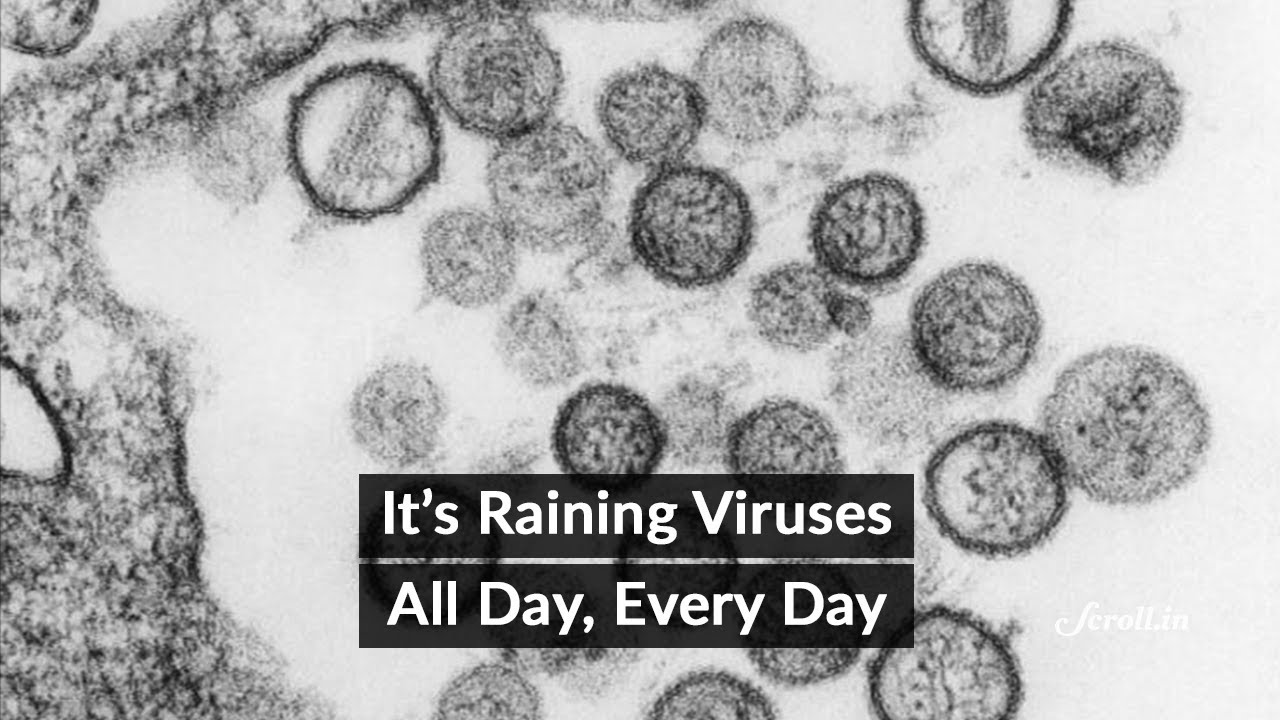
Scientists have surmised there is a stream of viruses circling the planet, above the planet’s weather systems but below the level of airline travel. Very little is known about this realm, and that’s why the number of deposited viruses stunned the team in Spain. Each day, they calculated, some 800 million viruses cascade onto every square meter of the planet.
Most of the globe-trotting viruses are swept into the air by sea spray, and lesser numbers arrive in dust storms.

“Unimpeded by friction with the surface of the Earth, you can travel great distances, and so intercontinental travel is quite easy” for viruses, said Curtis Suttle, a marine virologist at the University of British Columbia. “It wouldn’t be unusual to find things swept up in Africa being deposited in North America.”

The study by Dr. Suttle and his colleagues, published earlier this year in the International Society of Microbial Ecology Journal, was the first to count the number of viruses falling onto the planet. The research, though, is not designed to study influenza or other illnesses, but to get a better sense of the “virosphere,” the world of viruses on the planet.

Generally, it’s assumed these viruses originate on the planet and are swept upward, but some researchers theorize that viruses actually may originate in the atmosphere. (There is a small group of researchers who believe viruses may even have come here from outer space, an idea known as panspermia.)

Whatever the case, viruses are the most abundant entities on the planet by far. While Dr. Suttle’s team found hundreds of millions of viruses in a square meter, they counted tens of millions of bacteria in the same space.

Mostly thought of as infectious agents, viruses are much more than that. It’s hard to overstate the central role that viruses play in the world: They’re essential to everything from our immune system to our gut microbiome, to the ecosystems on land and sea, to climate regulation and the evolution of all species. Viruses contain a vastly diverse array of unknown genes — and spread them to other species.

Last year, three experts called for a new initiative to better understand viral ecology, especially as the planet changes. “Viruses modulate the function and evolution of all living things,” wrote Matthew B. Sullivan of Ohio State, Joshua Weitz of Georgia Tech, and Steven W. Wilhelm of the University of Tennessee. “But to what extent remains a mystery.”

Do viruses even fit the definition of something alive? While they are top predators of the microbial world, they lack the ability to reproduce and so must take over the cell of a host — called an infection — and use its machinery to replicate. The virus injects its own DNA into the host; sometimes those new genes are useful to the host and become part of its genome.

Researchers recently identified an ancient virus that inserted its DNA into the genomes of four-limbed animals that were human ancestors. That snippet of genetic code, called ARC, is part of the nervous system of modern humans and plays a role in human consciousness — nerve communication, memory formation and higher-order thinking. Between 40 percent and 80 percent of the human genome may be linked to ancient viral invasions.

Viruses and their prey are also big players in the world’s ecosystems. Much research now is aimed at factoring their processes into our understanding of how the planet works.
“If you could weigh all the living material in the oceans, 95 percent of it is stuff is you can’t see, and they are responsible for supplying half the oxygen on the planet,” Dr. Suttle said.
In laboratory experiments, he has filtered viruses out of seawater but left their prey, bacteria. When that happens, plankton in the water stop growing. That’s because when preying viruses infect and take out one species of microbe — they are very specific predators — they liberate nutrients in them, such as nitrogen, that feed other species of bacteria. In the same way, an elk killed by a wolf becomes food for ravens, coyotes and other species. As plankton grow, they take in carbon dioxide and create oxygen.

One study estimated that viruses in the ocean cause a trillion trillion infections every second, destroying some 20 percent of all bacterial cells in the sea daily.

Viruses help keep ecosystems in balance by changing the composition of microbial communities. As toxic algae bloom spread in the ocean, for example, they are brought to heel by a virus that attacks the algae and causes it to explode and die, ending the outbreak in as little as a day.

While some viruses and other organisms have evolved together and have achieved a kind of balance, an invasive virus can cause rapid, widespread changes and even lead to extinction.

West Nile virus has changed the composition of bird communities in much of the United States, killing crows and favoring ravens, some researchers say. Multiple extinctions of birds in Hawaii are predicted as the mosquito-borne avipoxvirus spreads into mountain forests where it was once too cold for mosquitoes to live.

When species disappear, the changes can ripple through an ecosystem. A textbook example is a viral disease called rinderpest.

The Italian army brought a few cattle into North Africa, and in 1887 the virus took off across the continent, killing a broad range of cloven-hoofed animals from Eritrea to South Africa — in some cases wiping out 95 percent of the herds.
“It infected antelope, it infected wildebeest and other large grazers across the whole ecosystem,” said Peter Daszak, the president of Ecohealth Alliance, which is working on a global project to catalog viruses likely to pass from animals to humans.

“The impact was not just on the animals. But because they are primary grazers and they died off in huge numbers, vegetation was impacted, and it allowed trees to grow where they would have been grazed away,” he said.

“The large acacia trees on the plains of Africa are all the same age and were seedlings when rinderpest first came in and the wildlife died,” Dr. Daszak said. In other places, far less grazing created a hospitable habitat for the tsetse fly, which carries the parasites that cause sleeping sickness.

“These kinds of ecological changes can last for centuries or even millennia,” Dr. Daszak said.

Combined with drought, large numbers of people died from starvation as rinderpest spread. An explorer in 1891 estimated two-thirds of the Masai people, who depended on cattle, were killed.

“Almost instantaneously, rinderpest swept away the wealth of tropical Africa,” wrote John Reader in his book “Africa: A Biography of a Continent.”

With intensive vaccinations, rinderpest was completely wiped out, not only in Africa but globally in 2011.

The beneficial effects of viruses are much less known, especially among plants. “There are huge questions in wild systems about what viruses are doing there,” said Marilyn Roossinck, who studies viral ecology in plants at Pennsylvania State University. “We have never found deleterious effects from a virus in the wild.”

A grass found in the high-temperature soils of Yellowstone’s geothermal areas, for example, needs a fungus to grow in the extreme environment. In turn, the fungus needs a virus.
Tiny spots of virus on the plant that yields quinoa is also important for the plant’s survival. “Little spots of virus confer drought tolerance but don’t cause disease,” she said. “It changes the whole plant physiology.”

“Viruses aren’t our enemies,” Dr. Suttle said. “Certain nasty viruses can make you sick, but it’s important to recognize that viruses and other microbes out there are absolutely integral for the ecosystem.”

Friday, February 10, 2017

2555. Microbes, a Love Story

By Moises Velasquez-Manoff, The New York times, February 10, 2017

This Valentine’s Day, as you bask in the beauty of your beloved, don’t just thank his or her genes and your good fortune; thank microbes.

Research on the microbes that inhabit our bodies has progressed rapidly in recent years. Scientists think that these communities, most of which live in the gut, shape our health in myriad ways, affecting our vulnerability to allergic diseases like hay fever, how much weight we put on, our susceptibility to infection and maybe even our moods.

They can also, it seems, make us sexy.

Susan Erdman, a microbiologist at M.I.T., calls it the “glow of health.” The microbes you harbor, she argues, can make your skin smooth and your hair shiny; they may even put a spring in your step. She stumbled on the possibility some years ago when, after feeding mice a probiotic microbe originally isolated from human breast milk, a technician in her lab noticed that the animals grew unusually lustrous fur. Further observation of males revealed thick skin bristling with active follicles, elevated testosterone levels and oversize testicles, which the animals liked showing off.

Microbes had transformed these animals into rodent heartthrobs.

When given to females, the probiotic also prompted deeper changes. Levels of a protein called interleukin 10, which helps to prevent inflammatory disease and ensure successful pregnancy, went up, as did an important hormone called oxytocin.

Oxytocin, often called the love hormone, helps mammals bond with one another. Our bodies may release it when we kiss (and mean it), when women breast-feed, even when people hang out with good friends. And the elevated oxytocin Dr. Erdman saw had important effects during motherhood. Some of the mice in her studies were eating a high-fat, high-sugar diet — junk-foody fare that’s known to shift the microbiome into an unhealthy state. Not surprisingly perhaps, mothers that didn’t imbibe the probiotics were less caring and tended to neglect their pups. But mothers that had high oxytocin thanks to the probiotic were nurturing and reared their pups more successfully.

What Dr. Erdman’s research suggests is that the microbes we carry, the same ones that make us attractive to potential mates, also directly influence our reproductive success. So when mammals choose mates based on the glow of health, they’re choosing not just an attractive set of genes, but also perhaps a microbial community that might facilitate reproduction.

Another way to look at it: By making their hosts sexy, and by increasing hormones that bring mammals together, microbes help to ensure their own continued existence — the creation of another host. “Everyone wins,” Dr. Erdman told me.

Evolutionary biologists have long included microbes and parasites in how they think about sexual reproduction. But the focus has historically been on the deadly kinds. Take sexual reproduction itself. The reason we may even have two sexes, as opposed to just one gender that self-duplicates, is that constantly shuffling our genomes helps us stay ahead of the many parasites and pathogens eager to suck us dry. Sex guarantees the genetic diversity necessary to persevere in a never-ending war, meaning that you can thank disease-causing microbes and parasites for the opportunity to fall in love at all.

And when you kiss your beloved, well, you may have unfriendly microbes to thank there as well. Kissing is nearly ubiquitous in human cultures (although in some it’s more like sniffing). The practice puzzles infectious disease types, because swapping saliva clearly increases the risk of contagion. But maybe that’s the point. Humans carry various chronic viral infections. Acquiring these viruses during pregnancy can harm the fetus. So romantic kissing, some scientists speculate, may allow women to acquire potentially dangerous infections from their babies’ fathers before pregnancy, increasing the odds of healthy gestation. Making out may be a crude form of self-vaccination.

Then there’s the mystery of body odor. Back in the days before deodorant, one’s stench probably conveyed important information. And it still apparently does. In one classic Swiss study, women were asked to sniff T-shirts previously worn by men and rate their pleasantness. The women tended to prefer shirts from men whose immune-system genes were most different from their own, and with whom they’d most likely produce the fittest offspring. Their noses led them, unawares, to the best genetic matches.

Here’s the mystery, though. Human sweat doesn’t actually smell. The odor results from microbes feeding on sweat. Armpits are really fermentation crocks emitting what scientists call “volatile organic compounds” and lay people call B.O. So those women may not have been sensing the men directly, but rather the aroma of whatever microbial mix they carried. Whether they’re really smelling and choosing the human genes directly or the microbes, or both, is anyone’s guess.

What about the more brotherly or sisterly type of love — the yearning to be near others of our kind, to not be alone? That, too, may have a microbial component. Animals that congregate in groups, like us, invariably share parasites and other infections. But they may also spread health-promoting microbes. In fact, some surmise that the need to share probiotic microbes could have partly driven the emergence of sociality in animals. Certain salamanders nest in groups to share microbes that protect their eggs against pathogenic fungi, for instance. Some bumble bee colonies share symbiotic microbes that ward off parasites. “People tend to think of diseases, like the flu virus, spreading through social networks,” Elizabeth Archie, a biologist at Notre Dame, told me. “But a lot of the microbes you have are potentially useful. So maybe good things as well as bad things are spreading through the same modes.”

The idea remains unproven in mammals, although people who live together do end up with similar microbiomes, as do baboons that groom one another.

What is clear, however, is that moms often deliberately transmit healthful microbes to their infants. Young elephants eat their mothers’ feces to acquire the microbes needed to digest food. Naked mole rat pups plead for anal excretions from their parents — imparting microbes that also help them thrive. And humans inherit our first large dollop of microbes from our mothers as we pass through the birth canal. Then comes breast milk, which contains special sugars we can’t digest, but which selectively feed certain microbes in our gut. So motherly love and care involves lots of deliberate slathering with a particular microbial culture.

Dr. Erdman doesn’t think any of this is accidental. She suspects, in fact, that the mammalian innovations of birthing live young and feeding them milk secreted from what was, millions of years ago, a sweat gland (the proto breast) helped us gain tighter control over the microbes we pass from one generation to the next — to our benefit. And because oxytocin, the “love” hormone unique to mammals, underlies so much of this behavior, and because microbes affect oxytocin levels, Dr. Erdman likes to say that “microbes invented mammals.”

So love, desire, the cheesy rom-coms, the sappy ballads, the Shakespearean sonnets — all of them may depend on that teeming ecosystem of microbes within.

Tuesday, June 28, 2016

2358. New Life Found That Lives Off Electricity

By Emily Singer, Quanta Magazine, June 21, 2016

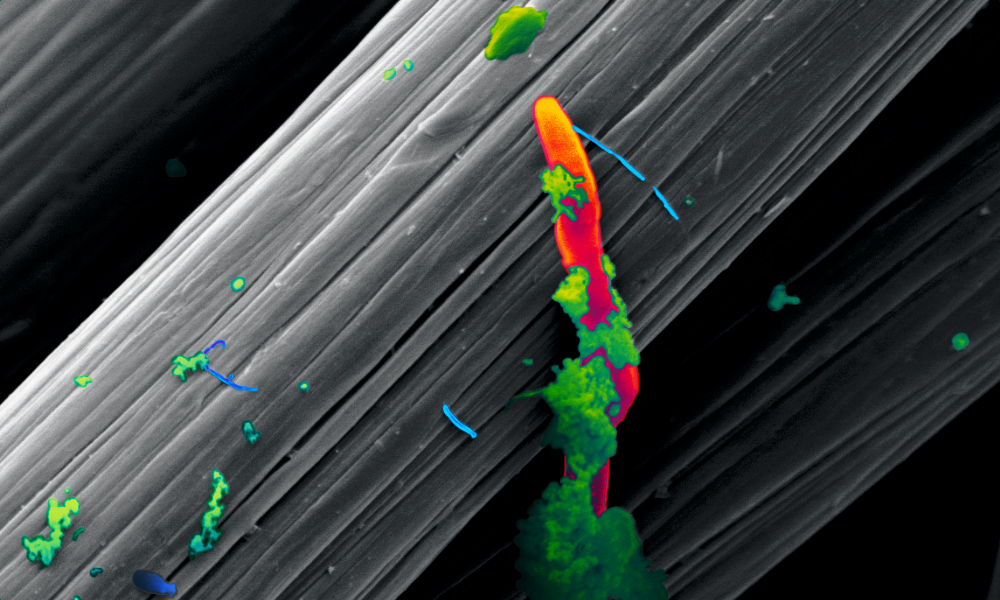
Scientists use carbon-fiber electrodes (gray) to lure electricity-eating microbes (orange). These microbes grow incredibly slowly, so attracting them can take time. Researchers left this electrode underground for five months.


Last year, biophysicist Moh El-Naggar and his graduate student Yamini Jangir plunged beneath South Dakota’s Black Hills into an old gold mine that is now more famous as a home to a dark matter detector. Unlike most scientists who make pilgrimages to the Black Hills these days, El-Naggar and Jangir weren’t there to hunt for subatomic particles. They came in search of life.

In the darkness found a mile underground, the pair traversed the mine’s network of passages in search of a rusty metal pipe. They siphoned some of the pipe’s ancient water, directed it into a vessel, and inserted a variety of electrodes. They hoped the current would lure their prey, a little-studied microbe that can live off pure electricity.

The electricity-eating microbes that the researchers were hunting for belong to a larger class of organisms that scientists are only beginning to understand. They inhabit largely uncharted worlds: the bubbling cauldrons of deep sea vents; mineral-rich veins deep beneath the planet’s surface; ocean sediments just a few inches below the deep seafloor. The microbes represent a segment of life that has been largely ignored, in part because their strange habitats make them incredibly difficult to grow in the lab.

Yet early surveys suggest a potential microbial bounty. A recent sampling of microbes collected from the seafloor near Catalina Island, off the coast of Southern California, uncovered a surprising variety of microbes that consume or shed electrons by eating or breathing minerals or metals. El-Naggar’s team is still analyzing their gold mine data, but he says that their initial results echo the Catalina findings. Thus far, whenever scientists search for these electron eaters in the right locations — places that have lots of minerals but not a lot of oxygen — they find them.

As the tally of electron eaters grows, scientists are beginning to figure out just how they work. How does a microbe consume electrons out of a piece of metal, or deposit them back into the environment when it is finished with them? A study published last year revealed the way that one of these microbes catches and consumes its electrical prey. And not-yet-published work suggests that some metal eaters transport electrons directly across their membranes — a feat once thought impossible.

The Rock Eaters
Though eating electricity seems bizarre, the flow of current is central to life. All organisms require a source of electrons to make and store energy. They must also be able to shed electrons once their job is done. In describing this bare-bones view of life, Nobel Prize-winning physiologist Albert Szent-Györgyi once said, “Life is nothing but an electron looking for a place to rest.”

Humans and many other organisms get electrons from food and expel them with our breath. The microbes that El-Naggar and others are trying to grow belong to a group called lithoautotrophs, or rock eaters, which harvest energy from inorganic substances such as iron, sulfur or manganese. Under the right conditions, they can survive solely on electricity.

The microbes’ apparent ability to ingest electrons — known as direct electron transfer — is particularly intriguing because it seems to defy the basic rules of biophysics. The fatty membranes that enclose cells act as an insulator, creating an electrically neutral zone once thought impossible for an electron to cross. “No one wanted to believe that a bacterium would take an electron from inside of the cell and move it to the outside,” said Kenneth Nealson, a geobiologist at the University of Southern California, in a lecture to the Society for Applied Microbiology in London last year.

In the 1980s, Nealson and others discovered a surprising group of bacteria that can expel electrons directly onto solid minerals. It took until 2006 to discover the molecular mechanism behind this feat: A   sits in the cell membrane, forming a conductive bridge that transfers electrons to the outside of cell. (Scientists still debate whether the electrons traverse the entire distance of the membrane unescorted.)
Inspired by the electron-donators, scientists began to wonder whether microbes could also do the reverse and directly ingest electrons as a source of energy. Researchers focused their search on a group of microbes called methanogens, which are known for making methane. Most methanogens aren’t strict metal eaters. But in 2009, Bruce Logan, an environmental engineer at Pennsylvania State University, and collaborators showed for the first time that a methanogen could survive using only energy from an electrode. The researchers proposed that the microbes were directly sucking up electrons, perhaps via a molecular bridge similar to the ones the electron-producers use to shuttle electrons across the cell wall. But they lacked direct proof.

Then last year, Alfred Spormann, a microbiologist at Stanford University, and collaborators poked a hole in Logan’s theory. They uncovered a way that these organisms can survive on electrodes without eating naked electrons.

The microbe Spormann studied, Methanococcus maripaludis, excretes an enzyme that sits on the electrode’s surface. The enzyme pairs an electron from the electrode with a proton from water to create a hydrogen atom, which is a well-established food source among methanogens. “Rather than having a conductive pathway, they use an enzyme,” said Daniel Bond, a microbiologist at the University of Minnesota Twin Cities. “They don’t need to build a bridge out of conductive materials.”

Though the microbes aren’t eating naked electrons, the results are surprising in their own right. Most enzymes work best inside the cell and rapidly degrade outside. “What’s unique is how stable the enzymes are when they [gather on] the surface of the electrode,” Spormann said. Past experiments suggest these enzymes are active outside the cell for only a few hours, “but we showed they are active for six weeks.”

Spormann and others still believe that methanogens and other microbes can directly suck up electricity, however. “This is an alternative mechanism to direct electron transfer, it doesn’t mean direct electron transfer can’t exist,” said Largus Angenent, an environmental engineer at Cornell University, and president of the International Society for Microbial Electrochemistry and Technology. Spormann said his team has already found a microbe capable of taking in naked electrons. But they haven’t yet published the details.

Microbes on Mars
Only a tiny fraction — perhaps 2 percent — of all the planet’s microorganisms can be grown in the lab. Scientists hope that these new approaches — growing microbes on electrodes rather than in traditional culture systems — will provide a way to study many of the microbes that have been so far impossible to cultivate.

“Using electrodes as proxies for minerals has helped us open and expand this field,” said Annette Rowe, a postdoctoral researcher at USC working with El-Naggar. “Now we have a way to grow the bacteria and monitor their respiration and really have a look at their physiology.”

Rowe has already had some success.

In 2013, she went on a microbe prospecting trip to the iron-rich sediments that surround California’s Catalina Island. She identified at least 30 new varieties of electric microbes in a study published last year. “They are from very diverse groups of microbes that are quite common in marine systems,” Rowe said. Before her experiment, no one knew these microbes could take up electrons from an inorganic substrate, she said. “That’s something we weren’t expecting.”

Just as fishermen use different lures to attract different fish, Rowe set the electrodes to different voltages to draw out a rich diversity of microbes. She knew when she had a catch because the current changed — metal eaters generate a negative current, as the microbes suck electrons from the negative electrode.

Yamini Jangir, then a graduate student in Moh El-Naggar’s lab at the University of Southern California, collects water from a pipe at the Sanford Underground Research Facility nearly a mile underground.

The different varieties of bacteria that Rowe collected thrive under different electrical conditions, suggesting they employ different strategies for eating electrons. “Each bacteria had a different energy level where electron uptake would happen,” Rowe said. “We think that is indicative of different pathways.”

Rowe is now searching new environments for additional microbes, focusing on fluids from a deep spring with low acidity. She’s also helping with El-Naggar’s gold mine expedition. “We are trying to understand how life works under these conditions,” said El-Naggar. “We now know that life goes far deeper than we thought, and there’s a lot more than we thought, but we don’t have a good idea for how they are surviving.”

El-Naggar emphasizes that the field is still in its infancy, likening the current state to the early days of neuroscience, when researchers poked at frogs with electrodes to make their muscles twitch. “It took a long time for the basic mechanistic stuff to come out,” he said. “It’s only been 30 years since we discovered that microbes can interact with solid surfaces.”

Given the bounty from these early experiments, it seems that scientists have only scratched the surface of the microbial diversity that thrives beneath the planet’s shallow exterior. The results could give clues to the origins of life on Earth and beyond. One theory for the emergence of life suggests it originated on mineral surfaces, which could have concentrated biological molecules and catalyzed reactions. New research could fill in one of the theory’s gaps — a mechanism for transporting electrons from mineral surfaces into cells.

Moreover, subsurface metal eaters may provide a blueprint for life on other worlds, where alien microbes might be hidden beneath the planet’s shallow exterior. “For me, one of the most exciting possibilities is finding life-forms that might survive in extreme environments like Mars,” said El-Naggar, whose gold mine experiment is funded by NASA’s Astrobiology Institute. Mars, for example, is iron-rich and has water flowing beneath its surface. “If you have a system that can pick up electrons from iron and have some water, then you have all the ingredients for a conceivable metabolism,” said El-Naggar. Perhaps a former mine a mile underneath South Dakota won’t be the most surprising place that researchers find electron-eating life.