Showing posts with label Green New Deal. Show all posts

Friday, September 17, 2021

3547. Do We Need to Shrink the Economy to Stop Climate Change?

By Spencer Bokat-Lindell, The New York Times, September 16, 2021

If there is a dominant paradigm for how politicians and economists today think about solving climate change, it is called green growth. According to green growth orthodoxy — whose adherents populate European governments, the Organization for Economic Co-operation and Development, the World Bank and the White House — the global economy can both continue growing and defuse the threat of a warming planet through rapid, market-led environmental action and technological innovation.

But in recent years, a rival paradigm has been gaining ground: degrowth. In the view of degrowthers, humanity simply does not have the capacity to phase out fossil fuels and meet the ever-growing demand of rich economies. At this late hour, consumption itself has to be curtailed.

Degrowth is still a relatively marginal tendency in climate politics, but it’s been attracting converts. In 2019, more than 11,000 scientists signed an open letter calling for a “shift from G.D.P. growth” toward “sustaining ecosystems and improving human well-being.” And in May, a paper published in the journal Nature argued that degrowth “should be as widely and thoroughly considered and debated as are comparably risky technology-driven pathways.”

Here’s a closer look at the debate.

The case for degrowth

Perhaps the most prominent proponent of the degrowth movement is Jason Hickel, an economic anthropologist and the author of “Less Is More: How Degrowth Will Save the World.” Degrowth, as he defines it, “is a planned reduction of energy and resource use designed to bring the economy back into balance with the living world in a way that reduces inequality and improves human well-being.”

His argument against the green growth framework rests on two key premises:

There is no historical evidence that G.D.P. can be completely decoupled from material resource use. In other words, human economies cannot grow infinitely on a planet with finite resources.

  • G.D.P. can be decoupled from greenhouse gas emissions by replacing fossil fuels with renewable energy, but that decoupling isn’t happening fast enough.
  • The requisite solution, in Hickel’s view, is to reduce resource and energy consumption, which will make it easier to rapidly transition to renewable energy in the short time humanity has left to avert 1.5 degrees of global warming. But this imperative would not apply equally across the globe:
  • Climate change is being driven primarily by the cumulative historical consumption of the Global North, so he argues it is incumbent on rich countries to shrink their economies. (The disproportionate responsibility advanced economies bear for climate change is also why Hickel rejects calls for population control in poorer countries as “completely backward”: “We do have a population problem, it’s true,” he said in 2018. “But it has nothing to do with poor countries. The real problem is that there are too many rich people.”)
  • That retrenchment, in turn, would create space in the global carbon budget for poorer countries to continue growing, which they still need to do to lift their populations out of poverty.

Critics of degrowth have analogized the project to economic austerity or forced recessions, which tend to cause broad-based suffering and worsen inequality. But those negative effects, Hickel says, are merely the predictable disaster that ensues “when growth-dependent economies stop growing.”

Degrowth, by contrast, calls for a different kind of economy altogether, one that could improve people’s livelihoods despite a reduction in aggregate activity: It seeks to scale down “ecologically destructive and socially less necessary production” (such as S.U.V.s, weapons, beef, private transportation, advertising and consumer technologies that are designed to obsolesce) while expanding “socially important sectors” like health care and education.

Among the policies Hickel proposes to create such an economy are shortening the workweek, introducing a job guarantee with a living wage, shifting workers out of declining industries and the decommodification of goods like housing that people need to live dignified lives.


In a recent newsletter, the economist Noah Smith took degrowth’s main arguments to task in a defense of green growth:

  • First, he says economic growth can, in fact, be decoupled from resource use: “We can keep raising everyone’s standard of living without exhausting the planet’s resources. Because growth doesn’t just mean using more and more stuff; instead, it can mean finding more efficient ways to use the stuff we have.” (Hickel dismisses the claim as a hypothetical.)

  • Second, and more directly pertinent to climate change, Smith says that decoupling G.D.P. from greenhouse gas emissions is not just possible, as many degrowthers acknowledge, but already happening: Since 2005, 32 countries, including the United States, have managed to do it, according to the Breakthrough Institute.

Smith agrees with Hickel, though, that emissions decoupling isn’t happening fast enough. The question, then, is whether degrowthers offer the correct prescription for reaching carbon neutrality on a shorter timetable.

My colleague Ezra Klein doesn’t think so. The unacceptably slow pace of the transition to renewable energy, he argued on a recent podcast, is a political problem, not a technological one. And on the politics, degrowth is a much tougher sell than green growth.

The degrowth movement is “attacking the flaws of the current strategy as not moving fast enough when the impediments are political, but then not accepting the impediments to its own political path forward,” he said. “I think that if the political demand of the movement becomes you don’t get to eat beef, you will set climate politics back so far, so fast, it would be disastrous. Same thing with S.U.V.s. I don’t like S.U.V.s. I don’t drive one. But if you are telling people in rich countries that the climate movement is for them not having the cars they want to have, you are just going to lose.”

This is an argument Hickel takes seriously:

New York magazine’s Eric Levitz agrees that “Americans might well find themselves happier and more secure in an ultra-low-carbon communal economy in which individual car ownership is heavily restricted, and housing, health care, and myriad low-carbon leisure activities are social rights.” But, he adds, “nothing short of an absolute dictatorship could affect such a transformation at the necessary speed. And the specter of eco-Bolshevism does not haunt the Global North. Humanity is going to find a way to get rich sustainably, or die trying.”

At the moment, degrowth has no mass constituency. But some of its animating ideas are nonetheless exerting an influence on political economic thought — particularly the critique of G.D.P. growth as the lodestar of human progress.


“Even within mainstream economics, the growth orthodoxy is being challenged, and not merely because of a heightened awareness of environmental perils,” John Cassidy wrote in The New Yorker last year. “After a century in which G.D.P. per person has gone up more than sixfold in the United States, a vigorous debate has arisen about the feasibility and wisdom of creating and consuming ever more stuff, year after year.


What’s the alternative? 


Kate Raworth, an English economist, has identified one option: “doughnut economics.” In Raworth’s view, 21st-century economies should abandon growth for growth’s sake and make it their goal to reach the sweet spot — or the doughnut — between the “social foundation,” where everyone has what they need to live a good life, and the “environmental ceiling.”


“The doughnut model doesn’t proscribe all economic growth or development,” Ciara Nugent explains in Time. “But that economic growth needs to be viewed as a means to reach social goals within ecological limits, she says, and not as an indicator of success in itself, or a goal for rich countries.”


Raworth’s ideas have had real-world impact: Last year, during the first wave of the pandemic, Amsterdam’s city government announced it would aim to recover from the crisis by adopting the precepts of “doughnut economics.” A year before that, Prime Minister Jacinda Ardern of New Zealand announced her country would prioritize its residents’ welfare and happiness over G.D.P. growth.


Even in the United States, which has embraced no such policy, G.D.P. growth has slowed in the past two decades, largely because of falling birthrates and a switch in spending patterns from goods to services.

That hasn’t solved the problem of America’s addiction to fossil fuels, of course. “Yet the sorts of policies on offer from degrowth advocates — like universal basic services and shorter working hours — could help address some of the long-standing ills now afflicting a wide range of economies,” Kate Aronoff writes in The New Republic. “Rather than chasing an increasingly far-off goal by trying to coax forth elusive corporate investment with giveaways, governments could start planning for what a fairer lower growth, lower carbon future might look like.”

Sunday, November 8, 2020

3445. Europe’s Green Deal Offshores Environmental Damage to Other Nations

By Richard Fuchs, Nature, October 26, 2020

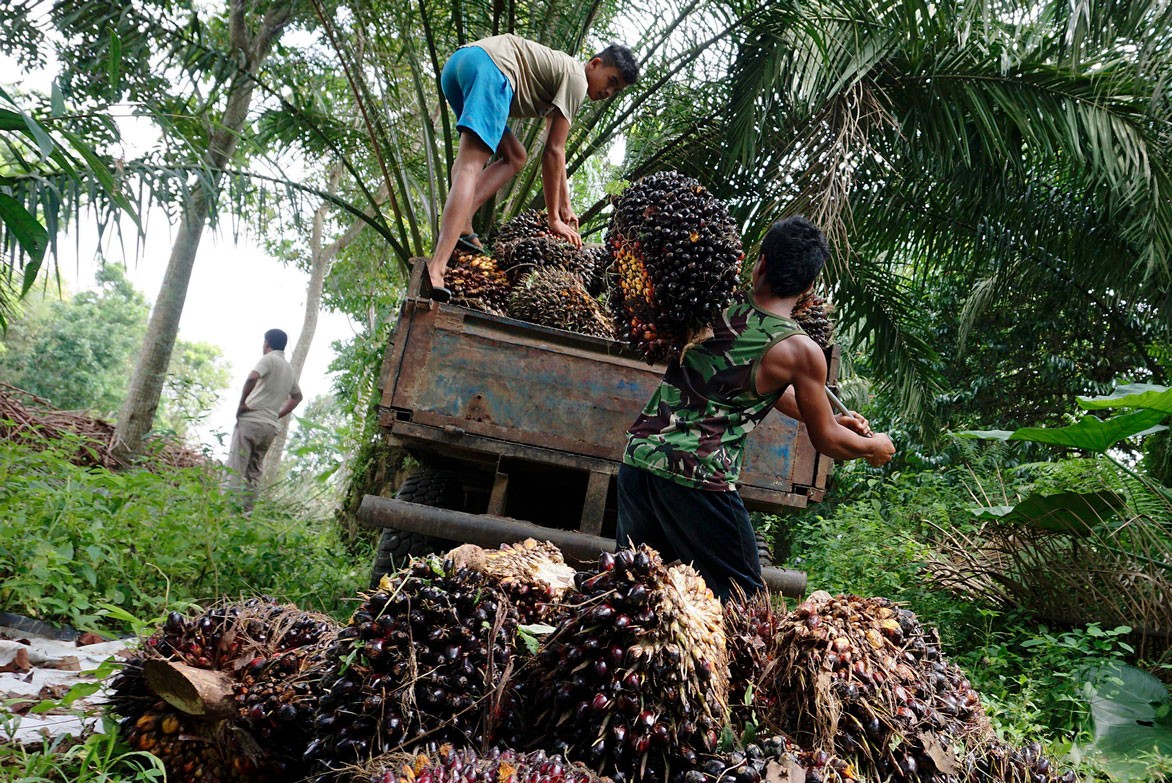
Workers pile palm fruits onto a truck at an Indonesian oil-palm plantation in North Sumatra. Credit: Jefta Images/Barcroft Media/Getty

The European Union’s Green Deal risks becoming a bad deal for the planet. This ambitious package of policies, announced in December 2019, aims to make Europe the first climate-neutral continent by 20501. It sets targets to reduce carbon emissions and enhance forests, farming, green transport, recycling and renewable energy. The EU wants to show “the rest of the world how to be sustainable and competitive”, as Ursula von der Leyen, president of the European Commission, said (see go.nature.com/2fnp1dz).

Problems lurk behind the rhetoric. First, the EU depends heavily on agricultural imports; only China imports more. Last year, the region bought in one-fifth of the crops and three-fifths of meat and dairy products consumed within its borders (118 megatonnes (Mt) and 45 Mt, respectively). This enables Europeans to farm less intensively. Yet the imports come from countries with environmental laws that are less strict than those in Europe. And EU trade agreements do not require imports to be produced sustainably.

In the past 18 months, the EU has signed deals (some pending ratification) covering nearly half of its crop imports — with the United States, Indonesia, Malaysia and Mercosur, the South American trade bloc comprising Brazil, Argentina, Paraguay and Uruguay. Pacts with Australia and New Zealand are on the table. Each nation defines and enforces sustainability differently. Many use pesticides, herbicides and genetically modified (GM) organisms that are strictly limited or forbidden in the EU (see Supplementary information, table S2a).

The net result? EU member states are outsourcing environmental damage to other countries, while taking the credit for green policies at home. Although the EU acknowledges that some new legislation will be required around trade, in the short term, nothing will change under the Green Deal.

For example, between 1990 and 2014, European forests expanded by 9%, an area roughly equivalent to the size of Greece (13 million hectares; Mha) (see ‘Trade-offs’; www.fao.org/faostat/en). Elsewhere, around 11 Mha was deforested to grow crops that were consumed within the EU (see Supplementary information). Three-quarters of this deforestation was linked to oilseed production in Brazil and Indonesia — regions of unparalleled biodiversity and home to some of the world’s largest carbon sinks, crucial for mitigating climate change.

Such impacts must be avoided if the Green Deal is to enhance global sustainability. Here, we outline how.

Loose guidance

The Green Deal will transform European agriculture over the next decade. A ‘farm to fork’ initiative aims to reduce fertilizer use in Europe by 20% and pesticides by 50%, with one-quarter of land to be farmed organically by 2030. The EU plans to plant 3 billion trees, restore 25,000 kilometres of rivers and reverse the decline of pollinators.

No parallel targets have been set for external trade (see go.nature.com/3703bip). A patchwork of rules, some mandatory and some voluntary, will continue to govern the sustainability of agricultural imports to the EU. All must abide by an overarching policy, the 2018 Revised Renewable Energy Directive. It stipulates, for example, that oilseeds such as soya beans should not be sourced from recently deforested land (see go.nature.com/33vqz86). Such requirements are patchy and poorly enforced.

Customs departments don’t have the mechanisms, money or staff to check that goods meet sustainability criteria when they arrive at European ports2. EU trade agreements are silent about which specific standards imports must meet, or whether exporting countries should have adequate environmental laws or monitoring. Signatories to the EU–Mercosur pact, for example, agree only to ‘strive’ to improve their environmental and labour-protection laws.

Voluntary certification schemes fill the gap. These are developed by farming and industry representatives and accredited by the EU. One widely used scheme run by the European Compound Feed Manufacturers’ Federation (FEFAC) in Belgium, advises members on which sustainability rules to follow when producing or buying feed. These guidelines cover legal compliance, working conditions, environmental responsibility (avoiding deforestation and protecting nature reserves), agricultural practices and respect for land and community rights.

Some companies define their own benchmarks along similar lines. For example, the US conglomerate Cargill — which trades, purchases and distributes agricultural commodities — promotes its ‘Triple S’ (sustainably sourced and supplied) standard. Amaggi, the world’s largest soya-bean producer, follows sustainability programmes such as ProTerra for its operations in Brazil. Corporate reporting on sustainability remains voluntary, however. Many companies, including Cargill, do not report comprehensively, claiming confidentiality (see go.nature.com/35qmwdd).

Certification rates are therefore low. For example, in 2017, just 22% of soya used in Europe was compliant with FEFAC’s guidelines. Only 13% was certified as deforestation-free2. The EU imports US$500 million worth of beef annually from Brazil (see https://trase.earth/explore), most of which is supplied by companies that source meat from newly deforested areas. EU agricultural imports are linked to more than one-third of all deforestation embodied in the global crop trade since 19903.

This regulatory framework will remain unchanged under the Green Deal, perpetuating its failures. For example, the Renewable Energy Directive ignores past deforestation, specifically land cleared before 2008, the year when the directive was renewed for a second period (see go.nature.com/33vqz86). Farms created on the sites of former forests can thus now be deemed ‘sustainable’.

That includes 9 Mha of land, largely in the Brazilian Amazon and Cerrado, that was deforested between 1990 and 20083. This was done to meet rising EU demand for oilseeds for animal feed and biodiesel — which doubled between 1986 and 2016 (see ‘EU import drivers’). The EU grows few oilseeds itself: rape, sunflower and olives comprise just 7% of all crops on the continent. The bulk of its imports (90%) come from 8 countries, mainly Brazil. The majority are soya beans and palm oil, which account for half of the EU’s crop imports.

EU import drivers. Charts showing rising demand for biodiesel and animal feed.

Sources: FAOSTAT/Eurostat/F.O. Licht/IFA. Analysis by R. Fuchs et al.

Geopolitical tensions are making matters worse. For example, thanks to the current US–China trade war, China is buying more soya beans from Mercosur countries than from the United States4. That puts more pressure on land use, and increases the likelihood of deforestation. The EU–Mercosur trade deal (still to be ratified) was agreed in principle in 2019, just as Brazilian President, Jair Bolsonaro, rolled back environmental regulations and Indigenous peoples’ land rights. This led to a swathe of deliberate forest fires across the Amazon — more are burning today.

Double standards

Farming practices that are restricted in Europe are explicitly permitted in imports, not just overlooked. For instance, GM organisms have been severely restricted in EU agriculture since 1999. Yet Europe imports GM soya beans and maize (corn) from Brazil, Argentina, the United States and Canada.

Many GM crops are resistant to herbicides. For example, 80% of soya in the United States and Brazil is unaffected by glyphosate, a herbicide that’s restricted in the EU. Rates of herbicide application, including glyphosate, have doubled for some crops in the United States in the past 10 years5. Europe’s trading partners use more than twice as much fertilizer on soya beans on average (34 kilograms per tonne of soya bean compared with 13 kg in the EU). Brazil’s use has doubled since 1990, to 60 kg per tonne in 2014.

Pesticide use has also risen in eight of the EU’s top ten trading partners (see ‘Trade-offs’; Supplementary information)6 to the detriment of pollinators. Brazil’s increasing use of pesticides (with 193 EU-banned pesticides approved since 2016) has been linked to plummeting bee populations. The EU has restricted many of the same pesticides (such as neonicotinoids) for that reason.

Trade-offs. Charts comparing pesticide and herbicide use and deforestation in different countries.

Sources: FAOSTAT/Eurostat/F.O. Licht/IFA. Analysis by R. Fuchs et al.

From myth to reality

The EU needs to take the following steps to ensure the Green Deal lives up to its name.

Harmonize sustainability standards. The bloc should streamline and align environmental standards for imports and domestic produce. It should enforce them, with customs checks, and develop and promote a clear certification and labelling scheme. Although the EU cannot enforce standards elsewhere, it can require that goods entering the European market meet its regulations. This can encourage external producers to raise their standards to EU levels; some farmers in Brazil already do so7.

Assess global impacts. The EU evaluates some of its agricultural trade impacts on sustainability, including embedded deforestation. But there’s no specific benchmark for this trade. The Green Deal should define a standard based on current effects and set targets that go beyond it — assuring big reductions in fertilizer and pesticide use, for instance, and avoiding deforestation and associated emissions.

Roll back bioenergy production. The EU’s renewable energy targets, such as the inclusion of 10% biofuel in diesel by the end of this year (on track to be met), have been the main drivers of an upsurge in soya-bean imports from Brazil, by 2% in 2019 alone (see go.nature.com/34k6gbt). A study8 highlights the negative impacts of large areas of bioenergy production, including displacing land that could be used for producing food or conserving biodiversity. Reducing or even banning imports of bioenergy feedstocks would support sustainability goals.

Cattle stand behind a barbed wire fence as they are fed soybean pellets from a bucket on a farm in Saint Santin, France

Cows are fed soya bean pellets on a farm in Saint Santin, France.Credit: Balint Porneczi/Bloomberg/Getty

Assess Europe’s carbon footprint globally. Carbon accounting under the Paris agreement covers only emissions produced within a nation, not those embedded in goods consumed there but produced elsewhere. Each EU citizen currently ‘imports’ around 1 tonne of carbon dioxide per year in goods entering the EU. The Green Deal risks perpetuating this misstep. Instead, the EU should assess, publish and try to decrease its global carbon footprint.

Decrease consumption. Encouraging Europeans to eat less meat and dairy would reduce the need for agricultural imports. Such reductions are politically difficult, as demonstrated by lobbying for and against ‘meat taxes’. They raise moral and ethical questions around international development, food security, access and nutrition. Educational programmes would increase awareness and demonstrate the link between consumption choices and environmental degradation (see www.glopan.org/foresight2). Some costs of environmental damage might be embedded in food prices, provided these do not contribute to food insecurity and inequitable access to nutrition.

Increase domestic production. The EU’s reliance on agricultural imports is a result of decades of policies and events that have reduced the area of farmed land. For example, in the 1990s, uncompetitive agro-businesses in Eastern Europe were abandoned following the collapse of the Soviet Union. In the decade that followed, reforms to the EU Common Agricultural Policy (CAP) set subsidies based on area, not production, with the express aim of reducing food production overall. Some of the abandoned land — areas with less biodiversity or non-agricultural uses, for example — should now be returned to farming to reduce pressure in the tropics.

Increasing domestic production will be politically fraught. It might reduce carbon stocks in forests, reduce biodiversity and increase agricultural pollution in Europe. Indeed, updates to the CAP due to come in next year have been criticized for increasing these very impacts and not going far enough in aligning with the Green Deal’s environmental objectives. Nonetheless, the EU’s food-production systems are high-tech and efficient. We suggest that, even without genetic modification, soya beans could be grown more productively in Europe using less fertilizer and on less land than elsewhere. However, the EU is falling short in explaining the current trade-offs between imports, domestic production and consumption to its citizens, with no clear strategy to minimize impacts in the future.

In our view, the EU should embrace ‘sustainable intensification’ practices that use new technologies to boost crop yields. For example, gene-editing techniques (such as CRISPR–Cas) can enhance the edible mass, height and pest resistance of plants without using genes from another species9. Unlike the United States and China, the EU is currently treating CRISPR as conventional GM technology and lags behind them in CRISPR patents for agricultural use (18 in Europe, 61 in the United States and 259 in China) as well as in investments in such research10.

Indoor farming technologies, such as growing food vertically, are also ripe for development. Although these methods are not yet able to produce staple crops such as soya beans in an energy-efficient way, they are becoming increasingly profitable for vegetables, fruits and tubers, which make up around 18% of the EU’s crop production. Gains in solar energy and lighting would allow more types of crop to be farmed indoors. The EU should pursue research initiatives similar to those under way in the United States, Canada, the United Arab Emirates, Japan, China and Singapore, and consider vertical farming within the CAP.

Reshoring agricultural production will help to insulate Europe’s food crops from global market fluctuations, supply-chain disruption and some of the effects of climate change. Because habitat clearance can increase the chance of new infectious diseases jumping from animals to humans, such a policy might also help to avoid future pandemics.


Tuesday, February 12, 2019

3187. John Bellamy Foster's View on the Green New Deal

By Vaios Triantafyllou, Truthout, February 9, 2019
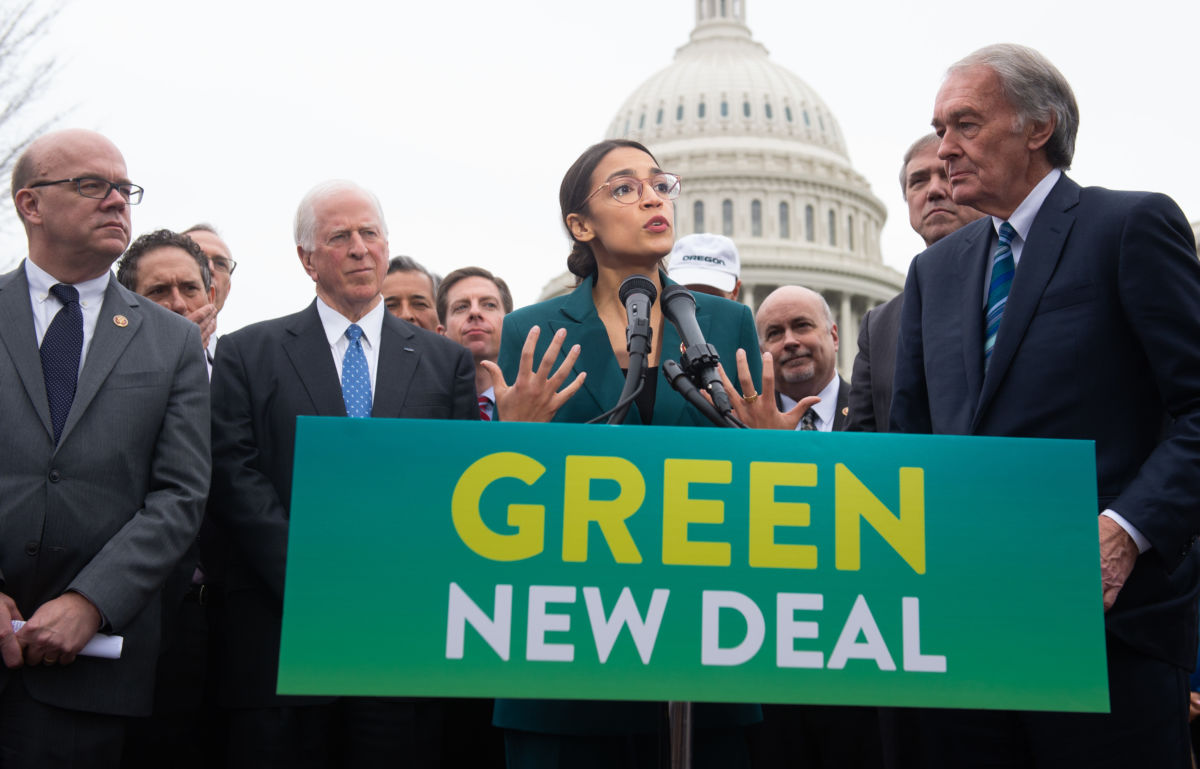
US Representative Alexandria Ocasio-Cortez, Democrat of New York, and US Senator Ed Markey (R), Democrat of Massachusetts, speak during a press conference to announce the non-bidding Green New Deal Resolution outside the US Capitol in Washington, DC, February 7, 2019.


Vaios Triantafyllou: Do you believe that combating the climate crisis is feasible within a globalized capitalist economy? The common liberal narrative is that financial incentives and economic regulations, along with booming clean technologies, can provide a cure to the problem (despite scientific evidence and the recent UN report claiming otherwise). What is your position on the Green New Deal, as proposed by Rep. Alexandria Ocasio-Cortez, and what is the interplay between here-and-now and long-term, socialist solutions?
John Bellamy Foster: We cannot deal with the climate crisis, much less the overall planetary ecological emergency, in an effective way while conforming to the logic of a globalized capitalist economy. But we currently live in such an economy, and we have a very short time in which to respond to climate change. So, it becomes a question of immediately choosing to steer society toward putting people and nature before profits, as opposed to what capitalism does, i.e. putting profits before people and nature. We have to go against the logic of the system even while living within it. This is what is meant by a “movement toward socialism,” as first articulated by William Morris.
Capitalism is not just a system, it is a system of social relations and socio-metabolic processes, and we have to change many of those relations and processes radically from within and very quickly in order to deal with the current ecological emergency. In the long run, of course, we have to have a full ecological and social revolution, transcending existing capitalist relations of production. But right now, we are in an emergency situation, and the first priority is eliminating fossil fuels, which entails the destruction of what is called fossil capital. The object is to avoid what Earth system scientists are calling “hothouse Earth” where catastrophic climate change is locked in and irreversible, and which could set in a couple of decades or less.
With respect to Representative Ocasio-Cortez’s proposal on the Green New Deal, I am impressed by some aspects of it. She calls for mass mobilization, which is indeed necessary. She also calls for innovative forms of financing, such as setting up a network of public banks to finance it directly, modeled after the New Deal, and through much higher marginal tax brackets on the rich and corporations, going back to what we once had in the United States. The revenues could be used to finance a massive shift toward solar and wind power. She connects this to a wide array of social issues. But none of this will really work, even if it were possible to legislate it, given the system, unless it takes on the character of an ecological revolution with a broad social base. Hence, a radical Green New Deal is, at best, just the entry point to such wider, eco-revolutionary change, involving the self-mobilization of the population. If it does not spark an ecological revolution, its effect will be nil.
As far as your question on the role of financial incentives and regulation, none of this will work as a strategy. It would be mere spitting into the wind. What kind of financial incentives could be given to energy companies when they own trillions of dollars in fossil fuel assets, and they have a vested interest in this system? Exxon-Mobil has declared hey will extract and burn all the fossil fuel assets that they own, which are buried in the ground, because they own them and because they can profit from them—knowing full well that this would be a death sentence for humanity. There is no way that mere incentives are going to change that. So far, even the subsidies for fossil fuel exploration have not been removed. Regulation won’t work in the present system since corporations always capture the regulatory process. To alter the present political-economic-energy matrix would require changes in ownership of means of production—in this case, fossil fuels. It would not mean just the transfer of ownership but the destruction of trillions of dollars of financial assets globally, since fossil fuels would need to remain in the ground.
One other argument by proponents of liberalism and the capitalist economy is that global competition will eventually bring about such technological innovation, with a subsequent reduction in costs, that will resolve climate problems (through such absurdities as colonizing other planets, etc.) Do you believe that this line of reasoning has any merit?
I don’t believe it has any merit. There are no merely technological solutions to the climate problem, though technological innovations are necessary. There is a lot of talk about absolute decarbonization, as if this were simply a technical problem, and we could decarbonize completely while continuing to expand the capitalist economic system as before. Yet, mere innovations in efficiency are not going to do it. Cost reductions aren’t going to do it. We have to reach zero net carbon emissions globally by 2050, and as long as we are committed to pursuing the logic of profit before people and the planet, getting there is impossible. We have been increasing our efficiency in engineering terms steadily for hundreds of years, while our anthropogenic impacts on the planet keep on expanding. The reality behind this is what is known as the “Jevons paradox.” As economist William Stanley Jevons noted in the 19th century, every time an improved steam engine was developed, which burned coal more efficiently than before, the result was to burn more coal in the aggregate. This is because capitalism as a system is geared to economic growth and accumulation, not conservation. All efficiency gains are used for expansion and not to reduce aggregate throughput of energy and natural resources.
We have been aware of the Earth-warming problem for half a century, and the system has failed to act while the problem has rapidly worsened. There has been no absolute decarbonization, detaching carbon emission and economic growth. In 2018, global carbon emissions increased by 2.7 percent globally3.4 percent in the United States, roughly in line with economic growth, while to avoid breaking the carbon budget in the next decade or two, we need to be reducing carbon emissions by 3 percent a year globally. In a word, the situation right now is dire. There are no technologies on the drawing board or that are feasible in cost terms that can solve these problems while continuing the burning of fossil fuels. The notion that technology will allow us to continue exponential accumulation without fundamentally altering our energy and our social order goes against the realities of both economics and physics. Our only way out of this epochal crisis is the immediate reduction in carbon emissions, which means keeping fossil fuels in the ground. That requires a direct confrontation with fossil capital. There is no other way.
Obviously, we need to switch massively to solar and wind technology. But that in itself would not be enough. We have to change what we produce, what we consume and the amount of waste we generate. Our ace in the hole is that we can cut back on the enormous waste born of inequality in our society. But this has to do with the choices we make as a society, and it has to do with power and social relations. Nothing about our present society is efficient or sustainable on a macro scale. We can fix that if we so choose, but not by following the logic of private profit.
In your opinion, what does a socialist environmental policy entail, and what are its main pillars? How does it incorporate clean technologies? Is it self-evident that the abolition of capital greed and the capitalist mode of production will resolve the climate crisis?
If we first remove the shackles that capitalism places on society—which would require a long ecological revolution and the creation of a sustainable socialist society—there is a possibility that we will be able to deal with the problem. But that is, of course, no guarantee. It has to do with the kinds of social structures, institutions and agencies we create. It has to do with the changes in society. Still, one thing that a sustainable socialist society could offer is an entirely different set of parameters in terms of production: governing how we produce, what we produce. It could emphasize meeting essential needs of the population, decreasing waste, organizing technology around use values, not exchange values. Very different kinds of technological choices could be made. It would require democratic planning to make it work, and it would have to be at the local, regional and national, even global, levels. Although all this would take time, the moment we begin to move outside the logic of capital, all sorts of new possibilities will open up with respect to meeting needs and protecting the environment.
Right now, however, our production is devoted toward capital accumulation above all else, and in the process, we are destroying the climate. We need to be able to organize a society in rational ways. Currently, there are social and class obstacles preventing us from doing so. Everyone is sitting and watching the climate being destroyed as evident in the extreme weather that is already emerging everywhere, and nearly everyone feels helpless. Why do people feel so helpless? It’s because all decisions are being determined by profit, and we all feel locked into the system, reproducing its logic in our everyday actions even when we are opposed to it. None of the decisions currently being made are being determined based on the principles of sustainable human development—simply by virtue of the fact that we live in a capitalist system where accumulation of capital is king. Yet, we have to remember that while natural laws need to be obeyed, social laws are the product of historically specific systems and can be disobeyed when they no longer conform to social needs. Disobedience toward many of the social laws artificially imposed by capitalism is now necessary.
Among its countless disadvantages, one perk of capitalism is that it maximizes the efficiency of production. Nevertheless, this efficiency is always achieved at the expense of natural resources and causes environmental degradation. Do you believe that there is a tradeoff between maximizing efficiency in industrial and agricultural production, and combating climate crisis?
Well, first of all, I don’t believe that capitalism maximizes macro-efficiency, though it is relatively good at micro-efficiency (if we ignore the waste built into nearly [every] commodity associated with the sales effort). So, it all depends then on how you define efficiency. Capitalism’s much vaunted efficiency is exaggerated in contemporary ideology. Capitalism defines efficiency mainly in terms of profitability. It has been good at combining inputs and outputs in relatively efficient ways so as to generate profit, keeping labor costs down, while externalizing social and environmental costs. But overall, at the macro level (and even realistically at the micro level—since by far the largest part of the cost of a tube of toothpaste, for example, is associated with marketing) it’s a very inefficient, wasteful and destructive system. How could you call a system efficient, for example, when we are in a process of destroying the entire climate, and with it, all human civilization? If you look at agriculture, all the scientific evidence says agribusiness is a very inefficient way to produce food, although the most efficient way to produce monopolistic profits is by reducing labor costs and maximizing price markups. In contrast, the most efficient way to produce food for people and land use is small-farm agriculture, which is completely opposed to the system that we have now. Improved, small farm agriculture emphasizing permaculture and biodiversity is also superior in terms of providing carbon sinks. Such agriculture, antithetical to concentrated capitalism, is more labor intensive, but more efficient in all other respects.
Ours is a waste-based economy, built into the very structure of monopoly capitalism. We are very “efficient” in the United States at producing (or outsourcing) products like plastic straws, which are so cheap that we use them in a drink for a few minutes and then throw them away (where they don’t decompose and end up in the oceans and ingested by fish), after which others have to be produced, which can be used for a few minutes and discarded. In the United States, we consume hundreds of millions of plastic straws a day. We spend [hundreds of billions of dollars] a year in the United States on marketing (targeting, motivation research, product management, advertising, sales promotion, direct marketing). Much of this marketing is considered a cost of production, but it is all about selling things: getting people to buy things that they don’t need or even really want. So, the capitalist system isn’t efficient at all, taking all this into consideration. It is incredibly wasteful, by far the most wasteful system in history, accompanied by abysmal poverty. It isn’t efficient when air and water is increasingly polluted, forcing people to buy bottled water, thus enhancing profits.
We have to be very clear about what we produce, how it serves people’s needs in this system. Right now, 10 percent of the world’s population [is] suffering from malnutrition. We have to find ways for them to get food. In the U.S. today, half a million people…are homeless on any given night. We have to find a way to provide people with housing, and so on. A really efficient society by a needs-based criterion would provide people with food, shelter, health care, education, meaningful work and all the other things that people desperately need but don’t have in large numbers.
In developing an adequate proposal, it is important to integrate all spheres of life in it. Therefore, I would like to turn to the interplay between allocation of resources and direct democracy, or more specifically, between central planning and local decision-making. Is there a contradiction between central planning in quantifying the needs of all people and the available resources, and local, democratic decision-making? If so, how can we find the balance between the two?
I don’t think there is an ultimate contradiction. In order to deal with the kinds of planetary problems facing us, stretching from ecosystems to the climate, from local economies to global ones, we need some kind of centralized planning. But it has to be integrated with local, regional planning and democratic systems of control. This doesn’t mean a command economy where all decisions are made at the top. As John Kenneth Galbraith used to say, corporations constitute their own form of planning system. But their planning is done within a system of institutionalized greed and competition between giant monopolistic firms, and based on the manipulation of the public. None of this has anything to do with democracy and is undermining what little is left of the liberal-democratic state.
The fact is that we have very centralized private institutions in the United States and capitalism as a whole, which largely govern the system, and in relation to which, the public is left on the outside. Political theorist Sheldon Wolin used to call this “inverted totalitarianism.” Today, it is a system of surveillance capitalism. Here, corporations and the billionaire class are the primary decision makers, operating primarily in their own interest and in the interest of their stockholders and commanding the state. It is necessary, therefore, to institute democratic planning, providing us with rational choices and real participatory decision-making about the future in areas like ecology.
We are faced in our time with a choice unlike that faced by any previous generations. In The Communist Manifesto, Karl Marx and Friedrich Engels wrote of the need for a “revolutionary reconstitution of society at large or the common ruin of the contending classes.” But today, this threatened “common ruin” pertains not simply to this or that society or civilization, but to humanity as whole, encompassing all future generations, and represents the near certainty—if business-as-usual continues—of irrevocable, catastrophic change on a planetary level. In these dire circumstances, there is only one answer possible: a long ecological revolution.