Showing posts with label Factory farming. Show all posts

Saturday, April 18, 2020

3346. Is Factory Farming to Blame for Coronavirus?

By Laura Spinney, The Guardian, March 28, 2020
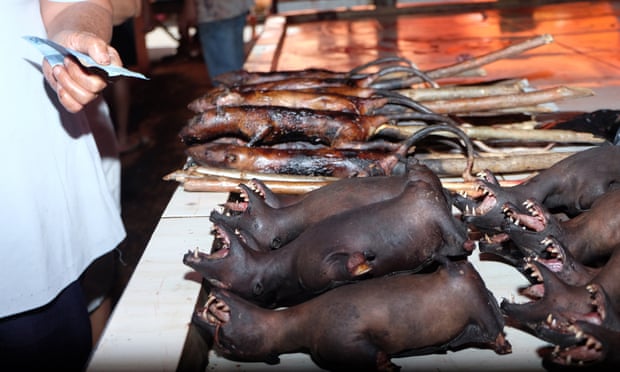
Traders selling bat meat at a market in Tomohon City, Indonesia. Photograph: Ronny Adolof Buol/Sijori Images via Zuma Wire/Rex/Shutterstock
Where did the virus causing the current pandemic come from? How did it get to a food market in Wuhan, China, from where it is thought to have spilled over into humans? The answers to these questions are gradually being pieced together, and the story they tell makes for uncomfortable reading.
Let’s start at the beginning. As of 17 March, we know that the Sars-CoV-2 virus (a member of the coronavirus family that causes the respiratory illness Covid-19) is the product of natural evolution. A study of its genetic sequence, conducted by infectious disease expert Kristian G Andersen of the Scripps Research Institute in La Jolla, California, and colleagues, rules out the possibility that it could have been manufactured in a lab or otherwise engineered. Puff go the conspiracy theories.
The next step is a little less certain, but it seems likely that the original animal reservoir for the virus was bats. Andersen’s team showed – like the Chinese before them –that the sequence of Sars-CoV-2 is similar to other coronaviruses that infect bats.
Since other bat coronaviruses have transited to humans via an intermediate animal host, it seems likely that this one did too. That animal was probably one that some Chinese people like to eat, and that is therefore sold in “wet” markets (those that sell fresh meat, fish, seafood and other produce). This animal may have been the scaly mammal called a pangolin. That can’t be conclusively proved, but several groups have found sequence similarities between Sars-CoV-2 and other coronaviruses that infect pangolins.
If this is indeed the route the virus took to humans, it has two critical interfaces: one between us and the intermediate host, possibly a pangolin, and one between that host and bats. Most of the attention so far has been focused on the interface between humans and the intermediate host, with fingers of blame being pointed at Chinese wet markets and eating habits, but both interfaces were required for the pandemic to ignite. So where and how did the spillover from the bat to the pangolin – or other wild or semi-wild intermediate host – occur?
“Our study does not directly shed light on the geographical origin of the virus,” says Andersen. “However, all the available evidence shows that it was inside China.”
Case closed then, and President Trump is right to call Sars-CoV-2 the “Chinese virus”. Well, no, because if you want to understand why this pandemic happened now and not, say, 20 years ago – since Chinese people’s taste for what we in the west consider exotic fare is not new – you have to include a number of other factors. “We can blame the object – the virus, the cultural practice – but causality extends out into the relationships between people and ecology,” says evolutionary biologist Rob Wallace of the Agroecology and Rural Economics Research Corps in St Paul, Minnesota.

Starting in the 1990s, as part of its economic transformation, China ramped up its food production systems to industrial scale. One side effect of this, as anthropologists Lyle Fearnley and Christos Lynteris have documented, was that smallholding farmers were undercut and pushed out of the livestock industry. Searching for a new way to earn a living, some of them turned to farming “wild” species that had previously been eaten for subsistence only. Wild food was formalised as a sector, and was increasingly branded as a luxury product. But the smallholders weren’t only pushed out economically. As industrial farming concerns took up more and more land, these small-scale farmers were pushed out geographically too – closer to uncultivable zones. Closer to the edge of the forest, that is, where bats and the viruses that infect them lurk. The density and frequency of contacts at that first interface increased, and hence, so did the risk of a spillover.

It’s true, in other words, that an expanding human population pushing into previously undisturbed ecosystems has contributed to the increasing number of zoonoses – human infections of animal origin – in recent decades. That has been documented for Ebola and HIV, for example. But behind that shift has been another, in the way food is produced. Modern models of agribusiness are contributing to the emergence of zoonos

Take flu, a disease that is considered to have high pandemic potential, having caused an estimated 15 pandemics in the past 500 years. “There is clearly a link between the emergence of highly pathogenic avian influenza viruses and intensified poultry production systems,” says spatial epidemiologist Marius Gilbert of the Université Libre de Bruxelles in Belgium.
The reasons, many of which were documented in Wallace’s 2016 book Big Farms Make Big Flu, include the density with which chickens, turkeys or other poultry are packed into factory farms, and the fact that the birds in a given farm tend to be near genetic clones of one another – having been selected over decades for desirable traits such as lean meat. If a virus gets introduced into such a flock, it can race through it without meeting any resistance in the form of genetic variants that prevent its spread. Both experimental manipulations and observations in the real world have demonstrated that this process can result in a ratcheting up of the virus’s virulence. If it then spills over into humans, we are potentially in trouble.
In a paper published in 2018, Gilbert’s group reviewed historical “conversion events”, as they call them – when a not-very-pathogenic avian flu strain became much more dangerous, and found that most of them had occurred in commercial poultry systems, and more frequently in wealthy countries. Europe, Australia and the US had generated more of them than China.
That doesn’t let China off the hook. Two highly pathogenic forms of avian flu – H5N1 and H7N9 – have emerged in that country in recent decades. Both infect humans, though not easily (yet). The first human cases of H7N9 were reported in 2013, and there were small annual outbreaks thereafter. But, says Gilbert, “nothing was done until the virus turned out to be pathogenic for chickens as well. Then it became an important economic issue and China started to mass-vaccinate its poultry against H7N9, and that ended the transmission to humans.”
China is one of the world’s major exporters of poultry, but its poultry industry is not wholly Chinese-owned. After the recession of 2008, for example, New York-based investment bank Goldman Sachs diversified its holdings and moved into Chinese poultry farms. So if China has its share of responsibility for spillover events, it isn’t alone. That is why Wallace insists on talking about relational geographies rather than absolute geographies, when it comes to identifying the causes of disease. Or as he puts it: “Follow the money.”

Not everybody sees a straightforward link between factory farming and new and dangerous forms of flu. Michael Worobey, an evolutionary biologist at the University of Arizona, points out that before they were brought into factory farms, poultry were kept outside. The factory model may ramp up virulence, he says, but it probably protects a flock from being infected by a virus in the first place.
Still, Worobey doesn’t doubt that farming and other human-animal interactions have shaped our disease ecology. His group collects the sequences of flu viruses from a range of animal hosts, including humans, and plots them on a family treeto try to understand how flu has evolved over time. Flu is constantly mutating – that’s the reason the seasonal flu vaccine has to be updated each year – but it mutates at different rates in different hosts, which means that his flu family tree is informative both about the parentage and intermediate host of each strain and about the approximate timing of past spillover events.
It’s possible – though by no means certain – that flu first became a disease of humans after the Chinese domesticated ducks about 4,000 years ago – drawing that animal reservoir into human communities for the first time. But humans can also catch flu from, and give flu to, pigs – another animal we have lived alongside for millennia. A few years ago, Worobey suggested – controversially – that birds might not always have been the main intermediate host for human flu viruses. Until about a century ago, he reported, people may have caught flu from horses. Around the time that motor vehicles supplanted horses as transport, poultry farming was expanding in the western hemisphere, and it’s possible, Worobey argued, that birds then took over as the main intermediate host of flu for humans.

Not everyone buys that scenario. Wendy Barclay, a virologist at Imperial College London, says that if horses were once the main intermediate host for flu, “most avian viruses would contain the mammalian adaptation”, and they don’t. David Morens of the US National Institute of Allergy and Infectious Diseases in Bethesda, Maryland, thinks that it is more likely that the horse was a temporary detour, and that the main intermediate host of flu for humans has always been birds – especially wild ones. But all agree that humans have shaped these host-pathogen relationships, through our use of land and other animal species. And as Worobey points out, the sheer size of the human population today means that in the 21st century, we are doing so on an unprecedented scale. He estimates, for example, that domesticated ducks probably outnumber wild ones by now.
And we’re not just talking about birds. Gilbert believes a ratcheting up of viral virulence is happening in pig herds, too. Porcine reproductive and respiratory syndrome (PRRS), a disease of pigs that was first described in the US in the late 1980s, has since spread to herds across the worldand strains detected recently in China are more virulent than the early American ones. A 2015 study carried out by Martha Nelson of the US National Institutes of Health and colleagues mapped the genetic sequences of swine flu viruses and found that Europe and the US – the largest global exporters of pigs – are also the largest exporters of swine flu.

There have been claims on social media, sometimes posted by vegans, that if we ate less meat there would have been no Covid-19. Interestingly, some of these have been blocked by mainstream news organisations as “partly false”. But the claims are also partly true. Though the links they draw are too simplistic, the evidence is now strong that the way meat is produced – and not just in China – contributed to Covid-19.
It is clear that to prevent or at least slow the emergence of new zoonoses, as Fearnley and Lynteris have argued, China’s wet markets will need to be better regulated. But we also need to look behind those markets, at how our food is produced globally.
Though it may not feel like it now, Wallace says, we have been lucky with Sars-CoV-2. It appears to be far less lethal that either H7N9 – which kills around a third of those it infects – or H5N1, which kills even more. This gives us an opportunity, he says, to question our lifestyle choices – because chicken isn’t cheap if it costs a million lives – and vote for politicians who hold agribusiness to higher standards of ecological, social and epidemiological sustainability. “Hopefully,” he says, “this will change our notions about agricultural production, land use and conservation." 

Saturday, April 13, 2019

3223. Candida Auris: A Factory Farm Fungus Among US

By Alex Liebman and Rob Wallace, The Agroecology and Rural Economics Research Corps, April 10, 2019
Candida globe

St Paul, April 9—Eighty percent of U.S. antibiotics are used to promote livestock and poultry growth and protect the animals from the bacterial consequences of the manure-laden environments in which they are grown. That’s 34 million pounds of antibiotics a year as of 2015

The agricultural applications help generate drug resistance across multiple human bacterial infections, killing 23,000-100,000 Americans a year and, with an increasing amount of antibiotics applied abroad, 700,000 people worldwide.

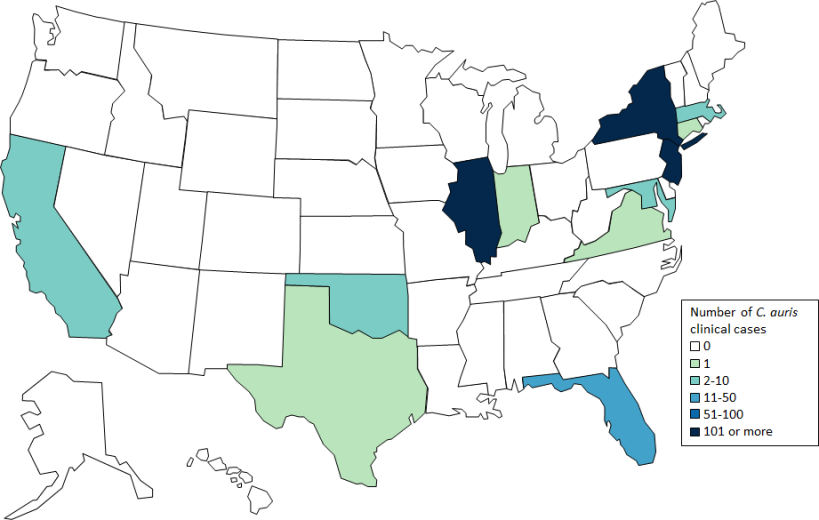
Now a fungal species, Candida auris, has developed multidrug resistance and is rapidly spreading across human populations across the globe (see nearby figure). The CDC reports 90% of C. auris infections are clocking in resistant to one antifungal drug and 30% to two or more.

Candida U.S.
Clinical cases of Candida auris reported by CDC as of February 28, 2019: by country (top) and U.S. state (bottom). From CDC (2019).


C. auris, a yeast, is killing immunocompromised patients in hospitals, clinics, and nursing homes at a prodigious clip, up to 40-60% of those who suffer bloodstream infections in a month’s time.

In the rooms of the infected and the dead, the fungus appears intransigent to nearly all attempts at eradication. The fungus can survive even a floor-to-ceiling spray of aerosolized hydrogen peroxide.

How have drug-resistant fungi come to haunt the modern hospital and jeopardize the sterile spaces asepsis addressed 150 years ago?

It is becoming increasingly apparent that C. auris’s resistance, and that of many other fungi species, is traceable to industrial agriculture’s mass application of fungicides. These chemicals approximate the molecular structures of antifungal drugs.

Across crops—wheat, banana, barley, apple, among many others—the fungicides select for resistant strains that find their way into hospitals where they are also resistant to the drugs administered to patients.

The path of yeast resistance

Matthew Fisher and colleagues recently classified six main classes of fungicides, all rarely used in the U.S. Midwest before 2007.

The azoles and morpholines target the ergosterol biosynthetic pathway, which generates the plasma membrane of fungi cells. The benzimidazoles interfere with fungi cytoskeleton, preventing the assembly of cell microtubules. The strobilurins and succinate dehydrogenase inhibitors take more physiological routes, inhibiting the electron transfer chain of mitochondrial respiration. The anilinopyrimidines appear to target mitochondrial signalling pathways.

Candida auris has evolved resistance to a suite of azole antifungals, including fluconazole, with variable susceptibilities to other azoles, amphotericin B, and echinocandins. Azoles, used in both crop protection and medical settings,  are broad-spectrum fungicides, annihilating a wide range of fungi rather than targeting a specific type.

How did fungus and fungicide find each other in the field?
C. auris, likely long circulating on its own for thousands of years as CDC’s Tom Chiller hypothesizes, was first isolated in humans from the ear canal of a 70-year-old Japanese woman at a Tokyo hospital in 2009 (although a 1996 isolate was subsequently identified). Later isolation found the yeast capable of bloodstream infection.

In an effort to identify the source of the infection, an international team sequenced resistant isolates collected from hospitals across Pakistan, India, South Africa, and Venezuela, 2012–2015.

Against expectations, the team found divergent amino acid replacements associated with azole resistance among the ERG11 single nucleotide polymorphisms—one among several such SNPs—across four geographic regions. They weren’t the same strain, indicating that each resistant phenotype had emerged independently.

In other words, strains isolated by distance from each other evolved unique solutions to the fungicides to which they were exposed.

That might indicate molecular adaptations to different exposures. But it also might indicate that in response to such wide exposure to fungicides in the field, each strain evolved its own unique solution to the problem.

Even as fungi do not horizontally transfer their genes at rates that virus and bacteria do,  migration of patients and fungi alike, the latter by way of agricultural trade, can help increase diversity in the fungicidal resistance circulating in any one locale.

A second team identified multiple genotypes of different international origins in the relatively bounded confines of the United Kingdom. A third team, as the nearby map shows, identified a similar mix in U.S. cases.

But it isn’t clear other than travel-related cases whether all the cases originated from strains from abroad. Without a baseline of fungal load among, say, domestic agricultural workers, an endogenous source remains a possibility.

multidrug-resistant C. auris Multiple introductions U.S.
Distribution of Candida auris clades in the United States. (A) Maximum parsimony phylogenetic tree of marker isolates from Colombia, India, Japan, Pakistan, South Korea, South Africa, Venezuela, and U.S. clinical cases in the USA. (B) The frequency of U.S. clinical cases  by clade. (C) The phylogeography of introduced clades. Solid lines indicate introductions that are associated with patients known to have received health care abroad. Adapted from Chow et al. (2018).


To add to the complexity, there also appear multiple mechanisms by which resistance emerges.

Dominique Sanglard summarizes three: decreases in drug concentration in fungal cells, alterations of the drug target, and compensatory mechanisms that depress drug toxicity. Atop these, the three can be arrived at by a variety of genetic events. Alongside SNPs are insertions into the fungus genome, deletions, and structural changes, including gene or chromosome copy events.

One study found 51 genes related to how sensitive circulating strains of a Fusarium blight were to propiconazole, only a single class of triazole fungicide.
The road to such resistance can be complex, winding beyond merely evolving out from underneath a antifungal directly.

In 2015, researchers found that the C. auris genome hosts several genes for the ATP-binding cassette transporter family, a major facilitator superfamily (MFS). MFS transports a large variety of substrates across cell membranes and been shown to effectively dispose of broad classes of drugs. It permits C. auris to survive an onslaught of antifungal drugs.

The team found that that the C. auris genome also encodes a slew of gene families that facilitate the fungi’s virulence. C. auris adaptively forms biofilms that support antifungal resistance by way of a high density of cells, the presence of sterols on biofilm cells, and efficient nutrient use and growth.

Other fungi, other dangers

Candida auris is hardly the only deadly fungus converging upon multidrug resistance. The nearby map shows multiple species overlapping in plant and human resistance.

One fungus, Aspergillus fumigatus, may offer a conditional preview of C. auris’s trajectories present and future.

Azole antifungals itraconazole, voriconazole, and posaconazole have long been used to treat pulmonary asperillogosis, the infection caused by A. fumigatus. The fungi causes approximately 200,000 deaths per year, in the past decade rapidly developing resistance to antifungal drugs.

Fungal species resistance plant and human
Number of peer-reviewed reports of resistance to azole fungicides for plants (in blue) and in humans (in red) for pathogens Aspergillus fumigatus, Candida albicans, C. auris, C. glabrata, Cryptococcus gattii, and Cryptococcus neoformans. From Fisher (2018).


Studies comparing long-term azole users and patients just beginning to take the drug have shown that drug-resistant A. fumigatus was prevalent in both groups, suggesting that resistance evolved in agricultural rather than medical settings.
Researchers have found biogeographical evidence that suggests multi-triazole-resistant A. fumigatus strains in clinical and environmental settings share significant overlap. In the figure nearby, drug resistant A. fumigatus found in the field (green) and in clinical trials (red) map together, demonstrating their coupling in Europe and Asia.

A-global-map-depicting-geographic-distribution-of-multi-triazole-resistant-clinical-red.ppm
The global map depicts the geographic distribution of multi-triazole-resistant Aspergillus fumigatus strains. Two different mutations are depicted: TR34/L98H (circle) and TR46/Y121F/T289A (square). The percentages denote the environmental prevalence rates of resistance. From Chowdhary et al. (2013). 


Other work recently found azole-resistant A. fumigatus related to the use of triazole fungicides in agricultural fields outside of Bogotá, Colombia. Soils were sampled from an array of crop fields and A. fumigatus was grown on agar treated with itraconazole or voriconazole fungicides. In more than 25% of cases, A. fumigatus persisted despite the fungicide treatment.

That is, due to agricultural practices, Aspergillus is entering hospitals already adapted to the slew of antifungal cocktails designed to check its spread. Dumping azoles to control for fungi on grapes, corn, stone fruit, and a myriad of other crops generated the conditions to accelerate drug resistance in human patients.
While extensive phylogenetic and biogeographical research remains to be conducted, a quick perusal of existing distribution maps suggests similarities between Aspergillus fumigatus and its younger (and suddenly more infamous) cohort Candida auris. The strains share similar geographical distributions, occupying many of the same zones described above for C. auris.

Industrial agriculture’s role

With zones of overlapping human and crop resistant cases of Aspergillus fumigatus and the rising specter of a new azole resistant fungus ravaging clinical settings and evolving at lightning speed, one would hope that azole fungicide use would be closely monitored if not just phased out.

The dangers of continuing upon this path of agricultural development are acute.
Medical and agricultural azole fungicides share similar modes of action, so when resistance pops up in one arena it is easily transferable to another. In both agricultural and medical fungicides, the phenyl group of the chemical forms van der Waals contact with the active site of gene cyp51A.

Organic chemistry specifics aside, the close similarities that the Chowdhary group depict in the nearby figure suggest that a mutation in Aspergillus fumigatus to prevent binding to the cyp51A gene in an agricultural setting—specifically a modification of the 14-α sterol demethylase enzyme—would likely confer resistance to medical applications of stereochemically similar drugs.

A fumigatus strucutral binding
Diagram showing similar mode of action in triazoles between medical (A) and agricultural (B) applications. From Chowdhary et al. (2013).


Agricultural azole fungicides comprise a third of the total fungicide market. Twenty-five different forms of agricultural azole demethylation inhibitors are in use, compared to just three forms of licensed medical azoles.

So we shouldn’t be surprised that in applying these fungicides at landscape scales in the millions of pounds annually, the medical use of triazole antifungals, using the same mode of action, would rapidly turn ineffective.

Instead of intervening in the interests of global public health to limit these long-problematic applications, government policy in recent years has promoted the lucrative global expansion of fungicide use, fostering the conditions for virulent drug-resistant fungi.

In 2009, fungicides were applied on 30% of corn, soybean, and wheat acreage in the U.S., totaling 80 million acres. Preventative use of fungicides to control soybean rust quadrupled between 2002 and 2006, despite a dubious economic rationale. Global sales continue to skyrocket, nearly tripling since 2005, from $8 billion to $21 billion in 2017.

Fungicides expanded not only in sales but also in geographic distribution.
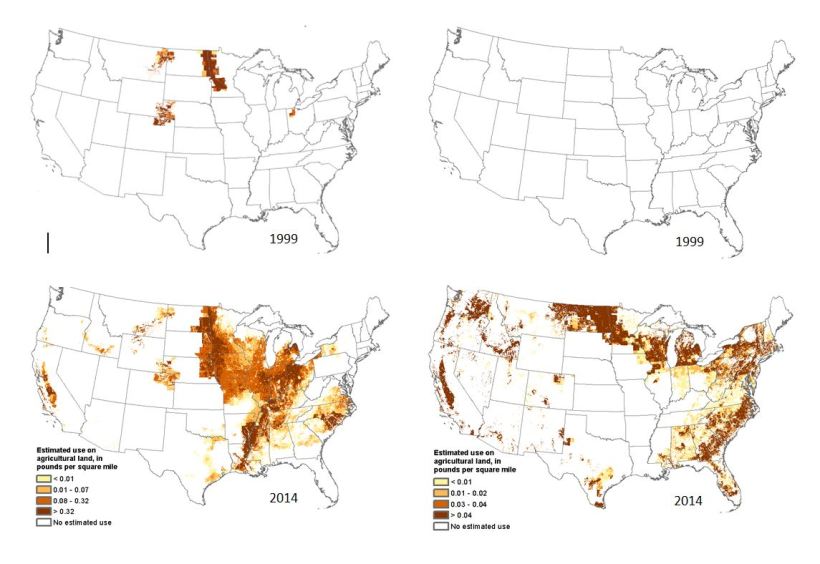
From the maps nearby, we see tetraconazole, an agricultural triazole, moved from isolated usage in the western Plains in the late 1990s to massive application throughout California’s Central Valley, the upper Midwest, and the Southeast. Boscalid, a fungicide used in fruit and vegetable crops, has increased from ~ 0.15 to 0.6 million pounds from 2004 to 2016, a 400% increase, and is now widely applied across the country.

U.S. fungicide distributions
Estimated agricultural use (EPest-high) of fungicides tetraconazole (left) and boscalid (right) in pounds per U.S. square mile, 1999 and 2014. State-based and other restrictions on pesticide use were not incorporated into EPest-high or EPest-low estimates. EPest-low estimates usually reflect these restrictions because they are based primarily on surveyed data. EPest-high estimates include more extensive estimates of pesticide use not reported in surveys, which sometimes include States or areas when use restrictions have been imposed. Users should consult with State and local agencies for specific use restrictions. National Water-Quality Assessment (NAWQA) Project/USGS/ARERC.


From within each new locale, the fungicides percolate into the local environment.
In 2012, USGS scientists studied 33 different fungicides used in potato production and found at least one fungicide in 75% of tested surface waters and 58% of ground water samples. With half-lives stretching to several months, azole fungicides are able to easily reach and persist in aquatic environments by runoff and spray drift, becoming highly mobile.

As climate change fundamentally reshapes the U.S., bringing higher overall temperatures and extreme oscillations between drought and heavy rainfall, fungi are predicted to expand outside of their current ranges while also responding specifically to new climate regimes. Aspergillus flavus, the producer of a cancer-causing aflatoxin that reduces corn yields and poisons humans, thrives in drought conditions and large crop-water deficits.

With the market treated as a force of nature stronger than climate or public health, under current agricultural production, broad-spectrum fungicide use is likely only to increase.


Farming as its own fungus control

In response to drug-resistant bacteria and fungi, research institutions are calling for the collection of better data on agricultural antibiotic use and on the potential economic costs of transitioning away from from high rates of application.
A 2016 UK report, citing the overapplication of agricultural fungicides, recommended increased surveillance of antibiotic usage overall and a regulatory apparatus organized by the WHO, FAO, and OIE that among its duties would list critical antibiotics that should be barred from agriculture use.

But aside from collecting more information and calling for what appears minimal regulation, what is to be done?

Given recent travails in antibiotic and herbicide resistance, it seems likely that chemical companies and their farming clients will pursue developing new fungicides based on targeted molecular research, multiple drug cocktails, and gene-edited resistance.

Governmental agencies are likely to impose increased if dubious biosecurity measures, which also frequently foment xenophobic anxieties and are used to blame workers for contamination, rather than addressing the systemic failures of industrial agriculture.

The conjoined motives of powerful medical and agricultural companies are almost certain to promote ‘solutions’ that exacerbate an arms race between toxic drug applications and fungal resistance, spew growing permutations of lethal chemicals into the environment, and further consolidate and privatize the agro-pharmaceutical sector.


There is, however, a different, evidence-based paradigm for responding to fungicidal collapse.

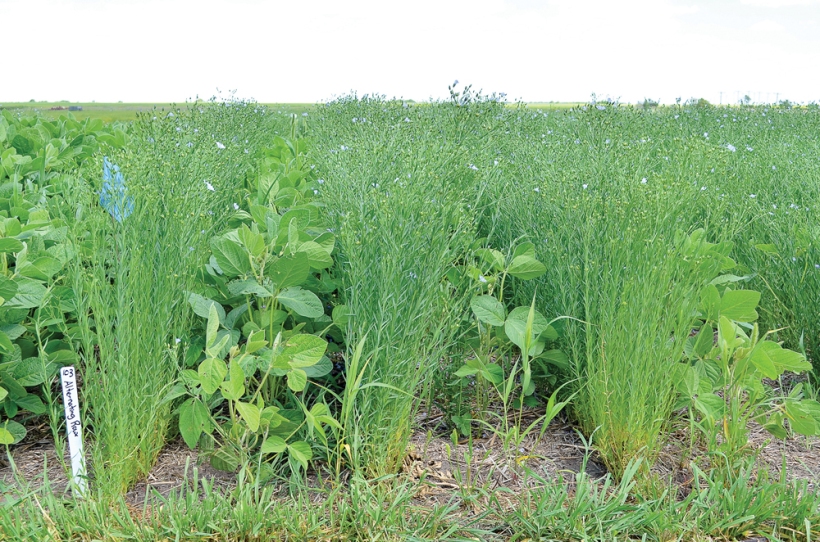
A quick review of agroecological examples suggests that a combination of disease modeling and cultural practices such as crop rotation and cover cropping can greatly reduce the presence of fungal diseases and thus dependence on fungicides.
WADO_soybeans__flax_intercrop_Alexis_Stockford_cmyk
Intercropping, here soybean and flax, can increase and diversify the soil microbiota to exclude pathogenic fungi. Photo: Alexis Stockford.


In the California’s Central Valley, strawberry producers accustomed to fumigating soils with fungicides to control incidence of Verticillium wilt, a pathogenic soil fungi, have found that planting broccoli crops in between rotations of strawberry crops greatly reduced levels of Verticillium. 

Dating back several decades, similar results have been found in the diversification of potato crop rotations

Researchers in India—a country where drug-resistant A. fumigatus and C. auris have both been found—have studied novel approaches to controlling late blight in potato.

Potato crops often receive large doses of azole fungicides to control for fungal pathogens such as late blight. Rather than fungicide treatments, scientists applied silica to foliar tissue, finding that silica was absorbed and strengthened the potato’s cell walls against fungal invasion. Disease infestation rates ranged from 2.8 – 7.9% in the silica-based integrated management systems and 49.4 – 66.7% in the conventional fungicide dependent systems.

In general, organic farming supports mutualistic fungi to a much greater degree than conventional farming, crowding out pathogenic strains. Crop rotations, the incorporation of legumes, and the cultivation of soil aggregates support ecological niches for soil microbiota.


Reducing chemical fertilizers and limiting tillage, two agroecological practices with major benefits for reduced pollution and enhanced carbon storage, also select for beneficial strains of arbuscular mycorrhizal fungi that form mutualistic relationships with plant roots and can confer resistance to soil pathogens.

Integrating agricultural production into a broader matrix of non-crop vegetation is also important for controlling fungal pathogens. Wild landscapes reduce the potential for pathogen populations to adapt to crops and modeling suggests that contiguous swaths of wild patches reduce the aggressiveness of pathogens upon agricultural crops.

Ivette Perfecto and John Vandermeer’s labs have done yeoman work, written up in depth here and summarized here, tracing the means by which thatches of ecological relationships—predation, mutualism, competition, etc.—up and down the food web in which a crop finds itself can box out pest damage, including, their teams find, from rust fungi.
 

The nitty-gritty as it applies to fungi can be found in Vandermeer student Douglas Jackson’s dissertation on agroecological fungal control in coffee.

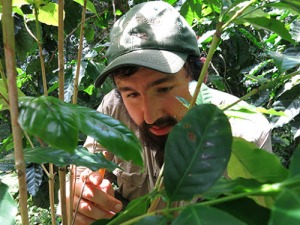
Zachary Hajian-Forooshani (pictured), another University of Michigan student, followed up research from the 1970s and found Mycodiplosis fly larvae feed on the coffee rust the Perfecto-Vandermeer team study in Mexico and Puerto Rico.

More than mining soil

All this work squares well with agroecological theory that under current political policies and demographic trends, farm fields integrated into a matrix of nature conservation are more likely than ‘land-sparing’ approaches to conserve natural resources while simultan

What emerges is a picture of ecological complexity in which fungicidal warfare is exactly the wrong tool.

Instead, throwing bad money after bad, fungicides today are applied in a system in which diseases thrive out of simplified landscapes, vast and uninterrupted genetically identical monocultures, rapidly accelerating global warming, and an ever quickening pace of global trade.

In a cruel irony, fungicide application places evolutionary pressure on pathogens to develop resistance at the same time that industrial management provides the near-perfect conditions for fostering and spreading these virulent mutations.
It all makes sense only when we recognize that the agribusiness sector views nature as its stiffest competition

Wiping out local ecologies and the near-free work these offer in helping farmers enrich their soils, clean their water, pollinate their plants, feed their livestock, and control pests—pathogenic fungi among them—means the largest companies can now sell commodified equivalents to a captured market.

The damage done is more than agricultural or economic. It’s a business plan pursued even at the risk of eroding our capacity to socially reproduce ourselves as a civilization.

Farmers and food activists have complained industrial agriculture represents little more than nutrient and carbon mining. Companies are compelling farmers to grow so much so fast that production squeezes carbon out of the soil in the form of food commodities. As a result, land and water are polluted into such oblivion that food safety cannot be accounted for.

By that pollution, occupational exposures, outbreaks of increasing virulence and extent, metabolic diseases such as diabetes, antibiotic resistance, and now the growing threat of fungicide resistance, carbon mining now extends to gouging out global public health.

Once made the order of the day, alternate agricultures long pursued and updated by smallholders worldwide, and backed by a growing scientific literature, offer a way out of that trap.

 
Alex Liebman is a plant-soil and political ecology researcher with Lurralde, a Chilean group supporting the Atacameña and Ayamara peoples in their struggle for territorial sovereignty and water rights in the face of multinational copper and lithium mining interests in the Atacama Desert.


Rob Wallace is an evolutionary biologist and public health phylogeographer. He’s the author of Big Farms Make Big Flu and, most recently, co-author of Clear-Cutting Disease Control.


The ideas and opinions posted here are the authors’ and not necessarily that of ARERC as an organization.