Showing posts with label Cuban health are system. Show all posts

Saturday, March 27, 2021

3490. Nearly All Havana to Receive Experimental Cuban COVID-19 Vaccines

 By Sarah Marsh, Reuters, March 23, 2021 
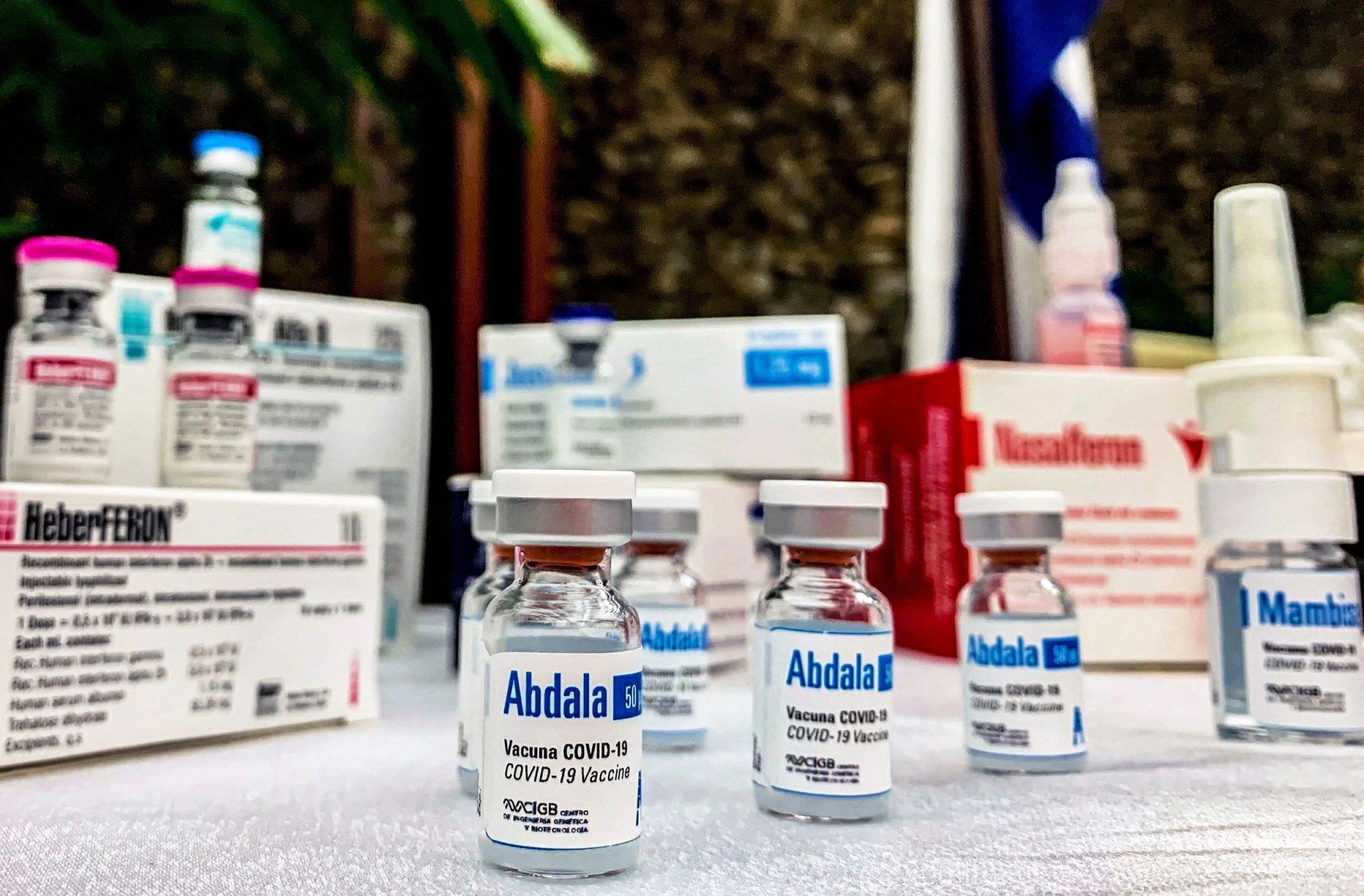

Cuba will administer experimental COVID-19 shots to nearly the entire population of the capital Havana by May as health authorities carry out massive interventional studies and late stage trials, officials said on Tuesday.

Cuba, which has a long history of developing and exporting vaccines, this month began late phase trials of two of its five experimental shots, Soberana 2 and Abdala, which will be Latin America’s first homegrown COVID-19 vaccines if they prove successful.

Ileana Morales, the health ministry’s director of science and technological innovation, said on a roundtable broadcast on state television that authorities would conduct an intervention study in 1.7 million people in Havana by May.

That comes on top of one it has already started for 150,000 frontline workers in the city, which is estimated to have 2.1 million inhabitants.

Cuba’s capital is at the centre of its worst coronavirus outbreak since the start of the pandemic, registering 292 cases per 100,000 inhabitants compared with a nationwide average of 103.5, Deputy Health Minister Carilda Peña said.

Authorities could seek approval for emergency use of Abdala and Soberana 2, which both target the spike protein of the novel coronavirus, in June, Morales said.

“With the approval of emergency use... we would be on track to a more massive vaccination of the population,” said Morales.

That mass vaccination would start with the most at-risk groups including the over-60 and health care workers. By August, six million people should have received a vaccine, with all Cuba’s 11 million inhabitants vaccinated by year-end, Morales said.

Cuba is registering 600 to 1,000 new cases a day, well above the scores or a handful per day for most of last year. Since the pandemic started, the country has reported 68,250 cases and 401 deaths, one of the lowest rates in the world per capita. (Graphic: tmsnrt.rs/34pvUyi)

Government critics have said Cuba should have purchased approved vaccines from abroad to kick off its immunization campaign while it completed trials on its homegrown vaccines.

The country developed a large biotech sector partly in order to become self sufficient in the face of a crippling U.S. trade embargo. Venezuela and Iran, which also face U.S. sanctions, say they will also trial the Cuban COVID-19 vaccines, which have attracted the interest of other countries like Mexico and Jamaica. (Reporting by Sarah Marsh; editing by Richard Pullin)

3489. The Lancet: Behind Cuba's successful pandemic response

By Talha Burki, The Lancet, April 2021


Cuba's long-standing commitment to health has led to a successful COVID-19 pandemic response, but it is threatened by financial and supplier issues. Talha Burki reports.

As The Lancet Infectious Diseases went to press, Cuba was due to launch a phase 3 trial of its subunit conjugate vaccine against COVID-19. Soberana-2 is one of four candidate COVID-19 vaccines in development in Cuba. It is produced by the Finlay Institute in Havana. On the basis of as-yet-unpublished results from early-stage clinical trials, Vicente Verez-Bencomo, director-general of the Finlay Institute, expects the vaccine to show an efficacy in the region of 80–95%. “We are very optimistic”, he said. If everything goes according to plan, Cuba could start a mass vaccination programme for its 11·2 million citizens sometime in the summer.
After keeping SARS-CoV-2 at bay for most of 2020, Cuba has experienced a surge of infections in 2021. As of March 8, the country had reported 55 693 cases of COVID-19 and 348 deaths. 23 093 new cases occurred in February alone, almost twice as many as occurred in the whole of 2020. Cuba is still doing far better than the majority of other countries in the region, but a vaccine is urgently needed.
A second phase 3 trial of Soberana-2 is planned for Iran, as part of a partnership between the Finlay Institute and the Pasteur Institute of Iran. A phase 2/3 trial has been scheduled for Soberana-1, which was also developed by the Finlay Institute. The Center for Genetic Engineering and Biotechnology (Havana, Cuba) is behind the other vaccine candidates. Abdala and Mambisa, a nasal spray, both entered phase 1/2 trials late last year.
Soberana means sovereign in Spanish. Abdala is the title of a poem by a Cuban revolutionary, and Mambisa is named after the guerrillas who fought against the Spanish colonialists in the 19th century. All of which indicates that the vaccine drive is a matter of national pride. President Miguel Díaz-Canel has visited the Finlay Institute three times over the course of the COVID-19 pandemic. At home and abroad, post-revolutionary Cuban identity has always been bound up with health. In 1960, Cuba joined the relief effort after the Chilean earthquake. In 1963, it sent health-care workers to assist the newly independent state of Algeria.
Cuba's Henry Reeve Brigade was established in 2005. It has despatched cadres of health-care professionals all over the world to combat disasters and epidemics. Cuban doctors were on the scene in Haiti during the cholera outbreak that followed the 2010 earthquake; they arrived in west Africa during the 2013–16 Ebola crisis. And when COVID-19 spread to Europe, two Henry Reeve teams landed in Italy. By the end of April, 2020, more than 1000 Cuban health-care workers were helping foreign countries respond to COVID-19.
“The international health programme is about solidarity; Cuba believes that healthy populations are the bedrock of global society and they want to support that any way they can”, said Clare Wenham, assistant professor of global health policy at the London School of Economics and Political Science (London, UK). Malaria, polio, tetanus, and measles have been eradicated in Cuba. The island's successful response to COVID-19 was largely a result of years of investment in primary care and assiduous attention to population health. The country has comprehensive universal health care and one of the highest doctor to patient ratios in the world.
Doctor and nurse teams are embedded in the local community. “Everyone has a yearly routine check-up, and if you do not go, the doctor will come and find you”, Wenham told The Lancet Infectious Diseases. “It means physicians proactively identify problems; there is a real emphasis on prevention.” Disease outbreaks can be detected more or less immediately. Under a model known as CARE, patients are stratified into four categories: apparently healthy, at risk of disease, unwell, and in rehabilitation or recovery. Those at risk of disease include individuals who are overweight, have diabetes, or hypertension. When Cuba registered its first case of COVID-19 on March 11, 2020, it already knew the whereabouts of its most vulnerable citizens.
In an interview with MEDICC Review, family physician Marta Gálvez outlined the advantages of the Cuban system: “The first thing any self-respecting doctor must know is the health situation of the population she serves”, she explained. “The main goal of a primary care physician is health promotion and prevention of diseases, so you have to know your community to design a strategy that suits their needs. CARE is a vital tool: it's why I know that I have 658 older adults in a total population of 1093 people, and 42 of the elderly live alone.” Roughly one in five Cubans are over the age of 60 years.
“The public health network is very strong in Cuba, but it comes at the cost of civil liberties”, said Wenham. “Cuba is a very specific context; not many countries are going to accept that kind of close medical surveillance, and most governments do not have such tight control over their citizens.” After SARS-CoV-2 entered the island, more than 28 000 medical students led an active screening programme that within a few weeks had reached 9 million Cubans. Cuba had started preparing well in advance of its first case of COVID-19. It quickly shut its borders and set up isolation centres and an efficient system of test-and-trace. But soon after Cuba opened up late last year, cases began to rise.
The pandemic has been extremely expensive. Gross domestic product shrunk by 11% in 2020. Instead of the usual 4 million tourists, Cuba played host to just 80 000. The long-standing economic blockade imposed by the USA has taken a heavy toll. “Health centres and clinics face regular stock outs of basic drugs, such as paracetamol, and other equipment such as bandages”, notes Fiona Samuels, senior research fellow and honorary associate professor at the London School of Hygiene & Tropical Medicine (London, UK). “The staff are very well trained, but the health infrastructure is decayed and they often lack the basics to allow them to do their work effectively.”
Cuba's biotechnology industry sprang up in response to the US blockade. It consists of more than 30 research institutions and manufacturers, under the aegis of the state-run conglomerate BioCubaFarma. In the late 1980s, Cuba developed the world's first meningococcal B vaccine. It produces eight of the ten routinely used vaccines in the country, and sends hundreds of millions of doses abroad. But obtaining raw materials is a constant struggle, especially in the aftermath of the hardening of the American sanctions during Donald Trump's presidency. “You have situations where suppliers of important components for our industry for several decades have been obliged to suddenly stop; it makes everything more expensive and complicated, and it is real concern”, said Verez-Bencomo. Tourism brings in a flow of much-needed currency, especially since Cuban-Americans have been barred from sending remittances, but with the tourists comes the virus. The Cuban Government reckons that more than 70% of current cases of COVID-19 are linked to new arrivals in the country.
If Soberana-2 proves successful, Cuba plans to export it at low cost after the national vaccination efforts have finished. The centralised health-care system means the domestic rollout is unlikely to be problematic, although pockets of the island are tricky to access. Verez-Bencomo reckons that by the end of the summer the country will have the capacity to produce 10 million doses of vaccine per month. Cubans are excited about the endeavour. “When we call for volunteers for clinical trials, we always have two or three times as many people as we need coming forward”, said Verez-Bencomo. “On the street, everywhere I go, everyone is asking about the vaccine.”

Wednesday, May 13, 2020

3364. Cuba Doubles Down on Testing as Coronavirus Cases Decline

By Marc Frank, Reuters, May 12, 2020
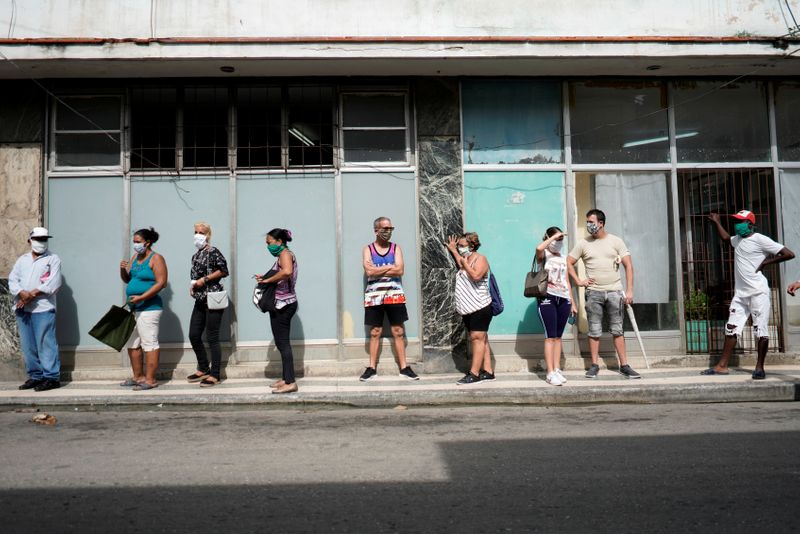
Social distancing in Havana, Cuba
HAVANA (Reuters) – Cuba began mass testing for the new coronavirus this week even as it appeared to have contained infections, and residents struggled to move around amid a partial shutdown in search of scarce basic goods.
New cases have fallen to less than 20 per day from a peak of around 50 in April.
Since the first COVID-19 illness was reported two months ago there have been 1,804 confirmed cases, of which 70.7% have recovered and 78 people have died.
Cuba has closed its borders and the tourism industry, schools and public transportation. Masks are mandatory and eating at restaurants, bars and social gatherings prohibited. Cubans have been urged to stay at home and practice social distancing.
But the public has not been confined to quarters and has taken to trudging about in search of basic supplies, waiting in long lines and even dusting off bicycles from the dark days following the fall of the Soviet Union.
    “I had to fix this bicycle up because I hadn’t used it in 25 years,” 49-year-old Alfredo Fonseca said, as he prepared to peddle to work in Havana. “I had to start using it again because of the pandemic and closing of public transportation.”
Tania Castro had fewer options. “I am walking and walking a lot because I don’t have a bicycle, a motorcycle, or a car and the buses are not working,” she said.
While Communist-run Cuba’s universal and free healthcare system has proved key in containing COVID-19, the pandemic has exacerbated shortages of basic goods and a chaotic retail system caused largely by U.S. sanctions and the centralized, state-dominated economy.
Cuba’s top epidemiologist, Francisco Durán said on Monday that mass testing would help better define the prevalence of the coronavirus as many people found to be infected showed no symptoms.
“The objective is to find new cases and then intervene, isolate, seek contacts, and take all possible measures to ensure that Cuba continues as it is now,” he said during his daily virus update broadcast to the nation.
Many experts believe Cuba has managed to control the outbreak better than many countries in the region due to its well-staffed preventive healthcare system, mobilization of activists through mass organizations to track cases, a centralized system that allows a better focus, and willingness to quarantine large numbers of people.
Cuban scientists announced last week they had adapted SUMA, a computerized system developed locally, to quickly detect antibodies of the new virus, allowing for mass testing in hospitals and clinics at little cost.
“That is a big advance,” Havana doctor Marta Martinez said.
To date, the Caribbean island nation has used expensive and often donated tests that take days to process, old-fashioned door knocking by health personnel and medical students to trace contacts, and isolation.
Thousands of patients, suspected cases, close contacts and persons considered at risk have been hospitalized or quarantined in makeshift institutions while in other countries they may have been told to simply stay home.
“The neighborhood family doctor office is notified about anyone at home with symptoms and must take immediate action,” said Yosian Diago, a nurse in central Havana supervising medical students going door to door.
“The same students help the population understand what they can do to help, and well, this is how many cases have been detected.”
(Reporting by Marc Frank; Additional reporting by Mario Fuentes and Nelson Acosta; Editing by Richard Chang)

Tuesday, March 31, 2015

1791. Cuba’s Public Health Policy: Past Present and Future

By Graham Sowa, Havana Times, March 30, 2015
Patients waiting to see the doctor in a polyclinic  in Cuba
“Public health in Cuba is not a priority…,” my public health class teacher had finally said something that brought me back from daydreaming “…it is an obsession”.

After two years of clinical work in a Cuban hospital being back in a classroom learning public health theory is somewhere between mind numbing and infuriating.

I often wonder how I put up with this nonsense beforehand. Maybe because my Spanish was worse and I didn’t understand how empty theory sounds while outside the classroom door a very different reality is taking place.

Aside from the looming self-inflicted disconnect between theory and reality in Cuba my professor is absolutely correct, in Cuba public health is an obsession.

Getting to the status quo of a singular, state funded public health system is a journey marked four key periods and a contemporary fifth that is still being defined.

At the onset of the Revolutionary government control in 1959 the Cuban public health landscape looked much like the current United States: various levels of public, private, religious and mutual aid services.

The Revolutionary public health system began with a significant human resources shortage as tens of thousands of professionals left the island.

The government reacted by training new doctors in new medical schools. The first class held their graduation ceremony on the Pico Turquino, the highest point on the island. The invited guests were the peasants from the surrounding area, soon to be benefiting from these new graduates via the Rural Medical Corps. This symbolic act set the tone for the future of public health on the island.

Along with training thousands of new doctors nationalization of health centers began in earnest. Health insurance or “mutual aid” hospitals numbered 226 in 1961. By 1968 all but 27 had been placed under government control. The Salvador Allende Hospital where I work, once part of the Asturian Society, is legacy of this period. The last center nationalized (in 1970) was the “Centro Benéfico Jurídico de Trabajadores de Cuba”, now a pulmonary hospital that does our bronchoscopies and inpatient treatment of tuberculosis.

The second step was the Health Plan of 1970-1980. Focus was shifted from disease treatment to disease prevention in the cities and rural areas. Malaria, polio and diphtheria were eradicated. Dengue was said to be eradicated as well but now it can be argued to be an endemic disease once again, perhaps the same with cholera.
Medical service did not become universally free of charge until during the second decade of the revolution.

The internationalist mission of Cuban public health also began to expand to 3 continents during this time; a continuation of those national brigades of doctors that made up the Rural Health Corps mountainous eastern Cuba.

Part three of public health development came in the 70´s and 80´s with new health technology arriving from the Soviet Union. Investigative institutes were created, and Cuba remains one of the few countries in South America and the Caribbean with such an extensive offering of medical specialties and research fields.

The famous Polyclinic and Family Doctor were introduced as an experimental concept in 1984 to create a highly structured three tier prevention and treatment system that would cover every citizen of the island. This model was expanded to the whole nation within 10 years and largely governs public health policy today. This is also what bores the hell out of me in my public health class.

The fourth part of public health development in Revolutionary Cuba was surviving a hard right hook and uppercut combo. The first came in the form of the collapse of the Eastern European socialist projects and the second came as the form of the Torricelli and Helms-Burton act. The Soviet collapse erased foreign public health subsidies and technological support while the strengthened United States blockade made getting that money and support from other sources unlikely to impossible.

These crises in Cuban public health have constructed the reality of the system we live in today.

Doctors and patients are used to working and being cared for with a scarcity of materials, everyone knows hospital food will be terrible, and having good relationships with people in the health field is the most important part of navigating the bureaucracy of care.

The previous massive government expenditure toward public health grew even more when the Latin American School of Medicine opened in 1999 benefiting students from other countries (such as myself). This probably marks the last great public health change instigated by Fidel Castro.

Since Raul Castro became president the public health system has faced the same problem many tech startups in Silicon Valley face: how do we monetize a free service without sacrificing quality or creating barriers?

The answer to this question is what I propose to be the fifth step of the Cuban Public health system: creating an internationally profitable public health system based off of the previous egalitarian internationalist model.

Cuban doctors working in Venezuela and Brazil making money for the Cuban government have resulted in good health outcomes for millions of people and plenty of criticism about state coercion of public employees. Yet tens of thousands of Cuban doctors continue to go on mission. While some do leave these projects and immigrate to other countries many more are more or less satisfied with the experience. At least that is my impression from talking to those that return.

Medical school, residency, research and the biotechnology sector has been internationally commodified as a source of income for the Cuban state.

Now what was converted to a free public health system in the 1970´s is one of the biggest sources of income for the Cuban state. This incredible paradox should, at the very least, leave United States assumptions about static Communism ruling Cuba by the wayside. What is emerging in the public health system is a capital generating mechanism with the ends of paying for continued free health care for the Cuban people.
Next week one of our internal medicine wards at the Salvador Allende hospital will be closed to the Cuban population for use by medical tourism. Once again paying patients will walk through its doors after 50-odd years of free health care.

Obsession over public health in Cuba has pushed it to the point to accept that entering the globalized health market might be the best way to save socialism.