Social and labour movements need a coherent critique of science and technology, it was argued at a meeting in London on Saturday.
On a practical level, battles against damaging technologies have often been waged separately from each other, and could do more to reinforce each other, it was pointed out.
This includes technologies deployed by corporate power in an anti-natural, anti-human way (e.g . “extreme energy” or genetic engineering of people or crops), technologies of social control (e.g. anti-crowd hardware or electronic surveillance), and technologies that harmed workers’ health and/or reinforced their exploitation (e.g. hazardous chemicals or building practices).
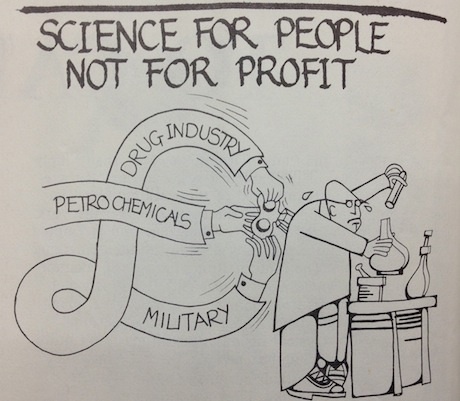
The use, misuse and abuse of science in developing these technologies is crucial. And the meeting highlighted the history of the British Society for Social Responsibility in Science (BSSRS), that in the 1970s and 80s successfully mobilised scientists to work with labour and protest movements. It considered the lessons of this experience for activists today.
The gathering (title: Radical Science and Alternative Technology) was organised by the Breaking the Frame group, and featured talks by veteran BSSRS activists and by present-day campaigners. Here are my impressions of an inspiring day’s discussion. (Stuff will be posted on the Breaking the Frame site and the BSSRS archive site, and I’ll update this post when I hear about that.)
That was then: scientists for social responsibility
The USA’s war on Vietnam (early 1960s to 1975), and its unprecedented use of chemical and biological warfare, helped push radical scientists into action, biologist Hilary Rose said. A direct precursor to the BSSRS was a Chemical and Biological Warfare conference.
UK scientists had learned from the movement on US university campuses and the wave of anti-war sit-ins and teach-ins, Steven Rose added.
It was fascinating to listen to the BSSRS veterans’ contrasting views of the theoretical and practical dilemmas the organisation had faced.
A key issue had been confronting the “old socialist view that ‘science is progress’”, brought to the BSSRS generation by scientists who had sided with labour and socialist movements in the 1930s, Steven Rose said. “We were insisting  [in opposition to that view] that science is not neutral, that the very science itself was integrated into globalised capitalist society.”
But BSSRS “could not have come into existence” without the support of that older generation.
Hilary Rose said there had been a “cheery anarchism” in the organisation, with local initiatives endorsed by the national executive. Jonathan Rosenhead, a mathematician, said he did not remember it that way. BSSRS had been united by a belief that “we could do something about [the misuse of science]”, but that there had been a tension about what to do. Some believed BSSRS should be “an elite pressure group”; others wanted it to be “something like the scientific wing of the revolutionary movement”. “We came down on the side of the latter”, he said.
Rosenhead recalled the meeting of the British Association for the Advancement of Science, the elite (and elitist?) professional body, at Durham in 1970. The BSSRS organised direct action-style interventions, disrupting the president’s dinner and asking provocative questions in sessions. “We broke the [elite pressure group] model completely. We went round making trouble. It was extremely vital stuff.” And that was a turning point.
Tony, who had been in a BSSRS group researching and taking action on workplace health hazards, recalled tensions between those wanting to consolidate in the scientific elite, and those developing a critique of science. “But there also came a point when some people wanted to carry on doing science, and be critical within it, and others felt they could not do science but needed to focus on political action.”
Part of the BSSRS’s function had been to strip away the mystique surrounding science, to encourage the wider public to ask who the “experts” were working for, where they were coming from so to speak. Tony argued that times have changed and that this battle has in large part been won. “There is no longer the deference to science [someone else recalled the BSE crisis as proof of that] – although the trouble is that that can turn into a cultural relativism [such as that over public hostility to vaccinations that are in fact safe.]” The problems have changed.
Hilary Rose said that a negative aspect of the BSSRS was that it had in some ways “resembled a boys’ club”. The dearth of women activists was partly (but not only) due to the very small number of women working in science then. She seemed confident that the current generation of women scientists, amongst whom are some “highly political feminists”, would put this right.
In the concluding session, Jonathan Rosenhead said that BSSRS had started with the central idea that “science is not neutral”, and “expanded into political spaces that were open”. Now, those spaces are largely populated by a “growing number of single-issue campaigns”. (I took this to mean that this is not necessarily better or worse, but that the political problems are now posed in a different way.)
Rosenhead and others pointed to the “proletarianisation” of the scientific workforce, that had also changed scientists’ relationship with society. In the 1970s, scientists who spoke out against power often did so from a relatively elite position and with the protection of secure full time jobs. Now, most people in university science departments are on temporary contracts, beholden to a small elite of senior academics.
BSSRS was wound up in the early 1990s. Is it time to try to establish a successor organisation? Scientists for Global Responsibility addresses many of the issues, someone pointed out. Maybe a coordinating and information-sharing network is the crucial thing now, someone else said. The consensus was that the BSSRS’s work should be built on, but could not simply be repeated, in a changed world.
This is now: a range of campaigns
There were three sessions at Saturday’s meeting on separate areas of science and technology:
■ The politics of food and energy. On energy, technologies researcher Les Levidow said that social and labour movements must not accept the issues being framed in terms of an “energy gap” to be filled by one or another technology. This approach leaves out energy workers’ efforts to take control of their own labour, and communities’ control over the way that their energy is provided. Levidow circulated “The Rigged Debate”, an excerpt from a 1981 BSSRS pamphlet on nuclear power. The specific issues about energy have changed, but the points the pamphlet made about how they are approached remain relevant. Read this text, on this site, here.
Helena Paul of Econexus recalled the debate on GM crops in 1986-87, which had showed that “people distrusted government and big corporations profoundly”. The current debate on synthetic biology poses many similar issues:  we confront a view of “science as intervention [in nature] all the time, instead of as observation and understanding.” Paul Mobbs, speaking on “extreme energy” argued that “extreme technologies” such as fracking were related to “extreme economics and “extreme politics”.
■ Technologies of control and surveillance. Marie Farrell of the Open Rights Group, which campaigns for freedom of expression and the right to privacy on the internet, recalled the “crypto wars” of the 1990s. State authorities the world over tried to prevent non-state actors using encryption, which secures on-line communication. Eventually they were forced to retreat, opening the way for the growth of on-line commerce. (I assume it was the profit motive, rather than concerns for individuals’ privacy, that trumped it!)
Jonathan Rosenhead described the BSSRS’s long record of monitoring and opposing repressive technologies from rubber and plastic bullets to sensory-deprivation torture techniques, initially in the north of Ireland. Internationally, he pointed out, Vietnam had in the 1970s been the laboratory for many horrific new uses of technology; today the same is true of Palestine.
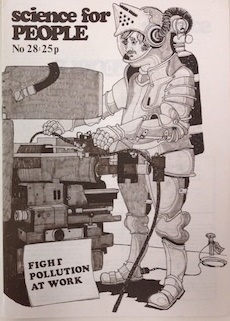
■ Work hazards. This session provided an example of a campaign pioneered by the BSSRS that took root in the labour movement from the 1980s, and persists today in organisations including the Hazards group and the Construction Safety Campaign. Pete Farrell of the CSC and London Hazards Centre explained the centrality of workplace safety issues to building workers. He appealed to scientists present to volunteer their expertise to help deal with hazardous substances used in workplaces.
Where it goes from here
Dave King of Breaking the Frame said that now, with bio-engineering coming close to the fabrication of human beings, the issues of who controls technology and for what purpose were more vital than ever. “The trouble is that we 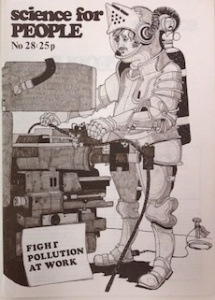 have a series of single-issue campaigns, reacting to issues that come up from the corporate-industrial-technological complex, and these need to be united.”
We need to get to grips with the theoretical problems posed by a social system, and a world view, based on technological control of nature that in turn enables technological control of people, King said. That technocratic world view, which had been prevalent not only in the elite but in the labour movement, had been summed up in a banner over the entrance of the 1933 World Fair that said: “Science discovers. Technology executes. Man conforms.”
Technology is “not a side issue”, King said. He called for a discussion on (i) the democratic control of technology; (ii) the need to combat the ideology of “technology as progress”; and (iii) the idea first championed by the Luddites of resisting technology that is “hurtful to commonality”.
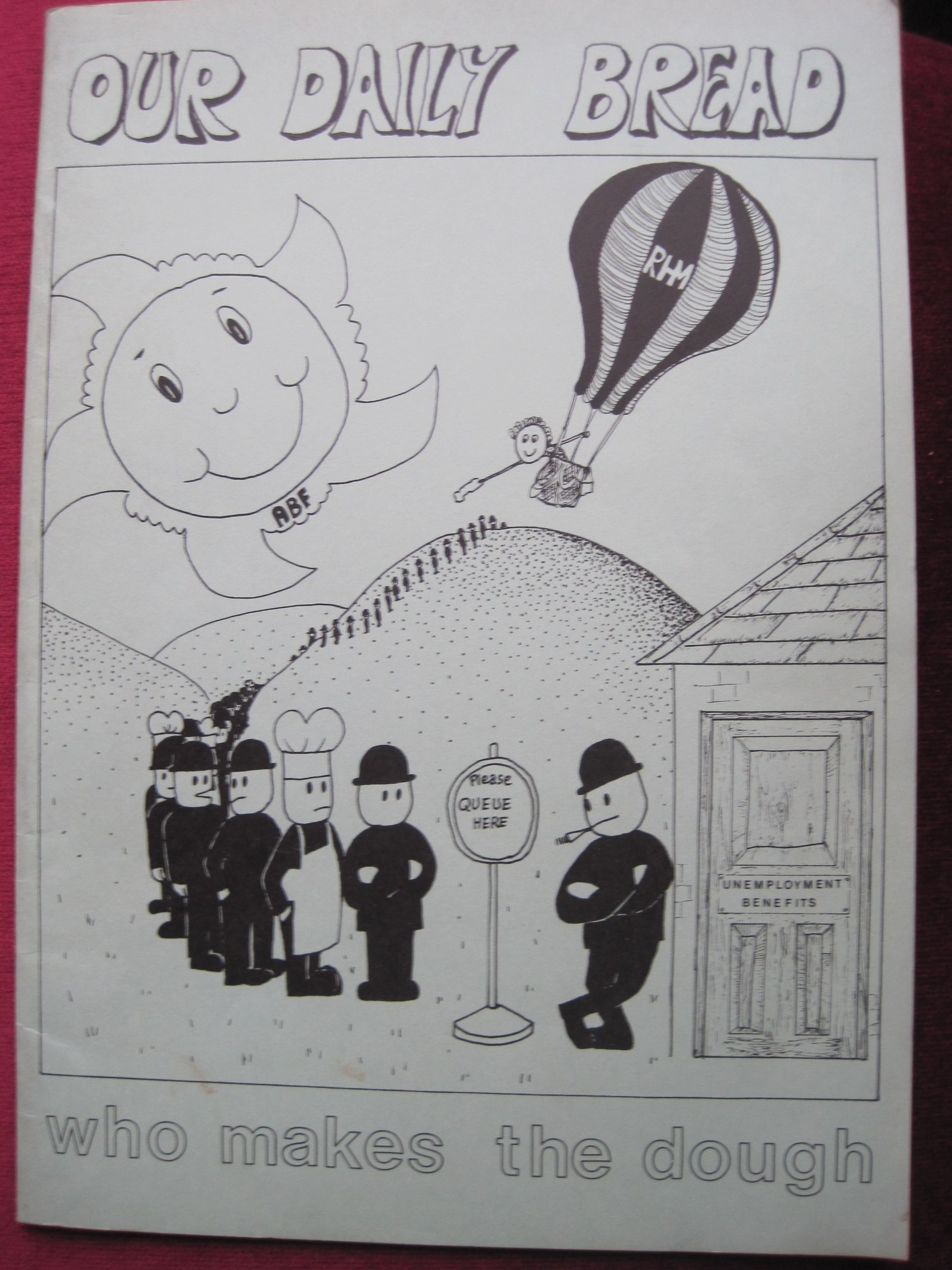
The pictures are from science campaign publications of the 1970s and 80s, available via the links below.
Links