LOCAL PARSNIPS are nice, but artisanal killing is the food movement’s perfection. At least, Michael Pollan sometimes thinks so. In The Omnivore’s Dilemma, Pollan writes that killing a 190-pound wild pig with a .270 rifle in Sonoma County put him in touch with “What is.” Following Pollan’s trail of blood, a certain kind of food enthusiast now favors hunting trips, slaughtering weekends at alternative farms, and cleaving and boning lessons from the neighborhood artisanal butcher. Every month brings more ways to get bloody to your elbows — and why not? How better to touch the source of your own subsistence than to carve another body at the spookily familiar joints and make its metabolism your own?
But even if we are skeptical of Pollan’s existential awe at killing — though, to be fair, his hunting passages are threaded with his characteristic and appealing self-irony — he might just be right. After all, the food movement is about touching the source — with your mind, your eye, and, ideally, your hand. The eggs you gather in the morning, the mushrooms you spot because you know the season and the right kind of forest slope, the Portlandia-spoofable details of the farm that makes your meat: intimacy with these is the key to a way of eating that is, depending on your perspective or your mood, irresistible or unpardonably precious. Thoreau wrote about his bare table at Walden that the imagination and stomach should be able to sit down to the same meal, with neither revolted. The food movement is a long series of essays on this thought.
Fully imagining what we eat alerts us to the everyday alchemy that is the world. All food depends upon miraculous conversions. Food systems turn sunshine — ancient or this year’s — into sugar, the waste and corpses of beasts into soil, and soil into oils, grains, and meat again. To eat meat, we kill animals and convert them into ourselves. We’re no less responsible for slaughter if we pass its work on to others. Taking the killing into our own hands seems to promise an ethics of self-awareness and responsibility, a reunion of stomach and imagination. For those tuned that way, religious resonances cannot be far to find: sacrifice as sacrament, resurrection as redemption. This is my blood, this is my body. What is, indeed.
As usual, the practice is messier. The last thing I killed was a chicken, picked up on craigslist and headed for a Thai soup. The surgery student who grabbed the bird from its cardboard crate had quick, strong hands, and all I needed to do was draw a kitchen knife fast across its throat. I had killed game birds and deer, always at the abstracting distance of a gunshot, but the chicken’s shudder, explosion of shit, and truncated scream sent a shot of panic and shame up the nerves of my arms and into my gut. For a minute, my co-killer switched into doctor mode, thinking he might have a shock case on his hands. I felt brutal, crass, and a touch disgusting, quite separate from the merriment of the foodie medical students exercising their skills on their next meal. I walked it off going out for soup ingredients. Self-disgust faded to toting up bragging rights. The next week, back in the classroom and on the Frisbee field, I didn’t miss a chance to mention how I had spent Saturday afternoon. I wore the jeans with the bleached-white splotchy pattern the chicken shit had left until they finally tore apart. Oh, that? It’s just where an animal spewed its insides all over me while I killed it for dinner. No bigs.
So it’s easy, and maybe right, to dismiss culinary bloodthirst — and the rest of the food movement — as just another item on the ever-growing menu of status-conscious recreation. My stained jeans were a little preposterous, a little obnoxious — a token of rural, Appalachian-born authenticity that only the privileged can don and doff at will. But even with all this absurdity, there are still real problems in the hazardous ecology of industrial food and in the alienation that comes with abstracted, dislocated eating. These problems have motivated serious thinking about eating, from Thoreau’s ethical meditations to Pollan’s studies of the food economy as an ecological system. The food movement in all of its forms responds to them. Even when artisanal killing seems boutiquey or merely self-indulgent, its little sojourns outside the ordinary tap deep feelings about how we live, and express telling impulses to live differently. What is the half-hidden wish expressed in drawing blood on your way to a meal? What is the draw of killing to eat? And what is there to learn from it?
Hunters in the Morning
It helps to look beyond Pollan’s consumer-friendly retelling of agricultural systems theory, and even past Wendell Berry’s agrarian pastorals, to an unacknowledged fellow traveler of the food movement: the young humanist Karl Marx, who emphasized how capitalism distorted experience, feeling, relationships, and identity, and proposed a Romantic wholeness as the prize waiting at the end of history. Writing 20 years before the first volume of Das Kapital appeared, Marx imagined desultory killing as one of the joys of human liberation. In a passage that became a touchstone for parts of the 1960’s New Left, he urged that a free person should be able to “hunt in the morning, fish in the afternoon, rear cattle in the evening, criticise after dinner […] without ever becoming hunter, fisherman, herdsman or critic.” This was the ideal of unalienated labor, spontaneous and expressive, exercising all human powers without ever turning the worker into the tool of her task.
In the young Marx’s vision, a free person would work out of inclination — for the satisfaction of the deed and to behold what she had done — not from the need to survive. She would be many-sided because human powers are many. Capitalism, however (like every socialism that has ever existed, and every economy more complex than the simplest hunting and gathering), enforced the division of labor, making everyone a specialist, fit only to survive as part of a vast social machine. Specialized labor, done for money and survival, left the worker unable to express herself in her activity or see her creative intent and energy embodied in what she made.
Diurnal herding and hunting fit into Marx’s larger picture of humanity’s place in the natural world. Nature, Marx wrote in 1844, was the record of our material and spiritual lives. All of human history was a great remaking of the natural world through appetite, labor, and technology. The goal of all this activity should be to humanize the natural world. This meant taming it as a home for free women and men (a goal John Stuart Mill and other 19th-century acolytes of progress shared with Marx). It also meant making the world a work of habitable art. Nature was both what humans found around them and what they turned it into; as their powers increased, nature became, in a sense, humanity’s body extended.
Marx’s vision of collective human artistry feels idle, utopian, when faced with a hog confinement or slaughterhouse. But his basic theme persists in those places, only turned to dystopia. They are the world we have made by the ways we get our food. Economy and ecology are much more thoroughly merged than when Marx wrote; his claim that people had remade the planet in their image seems both prophetic and quaint today. Our food system is a vast, opaque, and violent order of capital movement and socially invisible labor.
Under capitalism, Marx wrote, both nature and the economy presented themselves not as human creations but as alien forces, making hostile demands in exchange for survival. Human powers yielded to the fantastical power of money: “What I am and am capable of is by no means determined by my individuality. I […] am lame, but money furnishes me with twenty-four feet. […] I am bad, dishonest, unscrupulous, stupid; but money is honoured, and therefore so is its possessor.” By contrast, under communism, “you can exchange love only for love, trust for trust. […] Every one of your relations to man and to nature must be a specific expression […] of your real individual life.”
One wish behind growing, and especially killing, food is to reclaim this “specific expression of your real individual life” — to tie your survival to your bodily powers and to the other living things that you touch. It is also a wish to become many-sided, Marx’s hunter in the morning and herder in the evening, despite also being an essayist, member of the precariat, professor, Best Buy tech, etc. In fact, it is a wish to find a way out of the alienating barbarism of the industrial food system, whose efficiency and profit come at so much ecological and human cost that the stomach and the imagination refuse to share a meal together. Pollan’s own act of killing comes at the end of a long journey through the guts of that system, in which he is one part Virgil showing the horrors inflicted on the damned, one part Marx of Das Kapital descending into the underworld where profit is produced, and one part hapless, easy-to-identity-with Charlie Chaplin of Modern Times.
After such knowledge, what new innocence is possible? The answers seem irreducibly complex.Reclaiming a direct relationship to meat takes a person into a more intimate barbarism, a felt encounter with one’s capacity for violence, for joy in it, and for terror at both the violence and the joy. Such killing is also a reminder that the system that puts clean, red and pink meat behind glass counters and conceals guts and excrement in waste lagoons and landfills is a great triumph of bodily abstraction. The meat and the shit, in fact, live very close together.
Marx was, of course, a revolutionary, and — thanks in part to him — the nature of work used to be a political issue. Maybe someday it will be again. Do his echoes in the food movement sound out anything about its political potential? What do they tell us about the work embodied in what we eat, and do they hint at any cure for our violent and destructive food system? Was Marx’s glimpse of unalienated labor prophetic, so that artisanal killing could stand for a more general program of human freedom? If not, is it a political failing that Thursday night butchery doesn’t affect the larger food system? Or should we not expect the food that keeps us alive, that sometimes entertains us, to liberate us too?
The Killer Consumer
The eat-what-you-kill trend, like much in the food movement, aims to create an exemption from otherwise specialized lives, where most work is not spontaneous or expressive. One of the symptoms of alienated labor, Marx noted, was that people felt un-alive in their “working” lives and alive only in the elemental bodily functions — eating, sleeping — which they at least did on their own account. Free workers would find self-expression in productive, creative activity, but as long as they worked for someone else, only animal activity, the most necessary and unchanging, felt free. Surely one reason getting and preparing food attracts such creative energy today is because there is space there for spontaneity, play, and generosity.
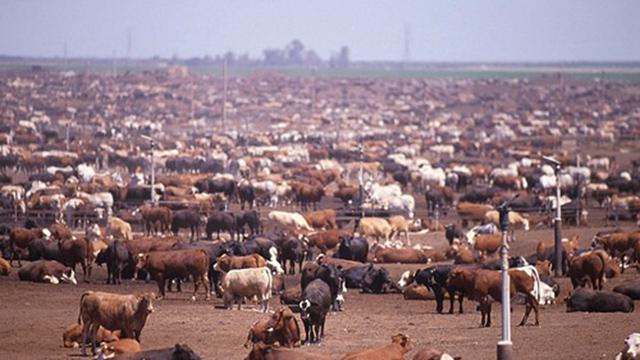
And killing to eat is a particular exception to the everyday economy; the nature that it reaches out to touch is an exception to the rule of confinement houses and industrial killing floors. Gardening achieves the same little escape, of course, but killing is more ambiguous: does it restore harmony between the stomach and the imagination, or does it only concentrate the violence of the slaughterhouse into one’s own body, a little autarky of violence? Either way, the exception is brief and partial, feeding the imagination more fully than the stomach. The real second body of humanity, these days, is neither the garden nor the well-grooved chopping block but the industrial food system that shapes the soil, the ocean’s ecologies — and even the global atmosphere, as many of the greenhouse gases that drive climate change are byproducts of agriculture. Industrial farming is in everybody’s body, is everybody’s body. The MFA hunter or Thursday night butcher departs from the world of industrial food more symbolically than materially.
Such symbolic departures had a name in Marx’s portrait of alienated and free activity: religion. Religion was where real human needs and powers were expressed, but in alienated form, outsourced to imaginary deities and other worlds. In communion and the ideal of universal brotherhood, the highest human potential took a form that assumed it would remain unrealized in this world. The animal that you have killed is the communion wafer of late capitalism.
It is an expensive wafer. The chance to hunt, slaughter, butcher, etc., is resource-intensive and class-marked enough that we might say, with Marx, “I am synthetic, but money makes me organic; I am a Whole Foods shopper, but on Saturdays money makes me a bloody-toothed savage.” Some clever marketer will have packaged the potentially revolutionary impulse as a consumer experience before it can become a politics. Perhaps the marketing began with Pollan himself, when he announced that eaters “vote three times a day” — in the buying decisions for their meals.
This confusion between a consumer purchase and a political movement is typical these days. The difference is everything, although our political culture tends to make it nothing. Politics and the market are sharply distinct ways to combine everyone’s personal choices into a system-level decision. Consumer choices can support new, high-end production, like organic fruits and artisanal meats, but in parallel to, and not replacing, the industrial system. But grocery shopping will not change the subsidies in the farm bill, strip away protection for manure lagoons and the deadly pollution of fertilizer runoff, or forbid the dangerous use of antibiotics to suppress epidemics in poultry factories and feedlots, because only politics changes the rules of the market system. Consumer choices only change the inputs to that system. A movement that votes by buying, and by growing, can only ever produce its little exempt spaces, its own gardens to cultivate.
Some of the attraction to consumption-as-politics is because literal voting so often feels meaningless that a person naturally casts about for replacements. Consuming is also a seductive substitute because it reduces politics to pleasure, aesthetics, and status, the main things we consume once our basic needs are met. And recreational killing has always expressed social rank and consumer power. Hunting was long the preserve of English and European aristocrats. It was a residual sign of their supposed origins as a warrior caste and an access to sport both more rigorous and more exalted than anything open to peasants or clerks. As soon as they are freed from the pressure to survive, some people turn back and find in the activities of survival a way to touch the material world, to live what feels like a whole life — and a way to distinguish themselves from others who have not been so freed.
Like much of the politics of status and taste, killing also lays claim to higher consciousness. When trying to kill something, you notice everything else. Pollan compares hunting to being high in the woods, and Teddy Roosevelt wrote that he had never felt so alert as when stalking elk. Pollan follows José Ortega y Gasset in suggesting that killing an animal can be a way of showing it respect — an idea we might best read as a nice way to bring animals into our politics of symbolic equality, where it is fine to exploit people as long as you make a show of respecting their diversity. Roosevelt, imperialism’s orator, treated hunting as a way of claiming the power and authority of nature’s royalty — becoming lord of it all by eating “the lordly buffalo” and other animal aristocrats. Our version, today, is to be able to afford a private version of unalienated eating, while lesser consumers eat fast food made from entirely un-lordly feedlot cattle and factory-farmed chickens.
Of course, it’s always more complicated than that. I notice, in my circles, that the return to bloody hands sometimes revives the rural or working-class skills of men’s fathers or, more often, grandfathers and older uncles. For some of us who come from rural people, this recovery is our own piece of what Kwame Anthony Appiah called the multiculturalism of the kitchen, the American practice of honoring pluralism by the symbolic savor of how a family cooks and eats. It isn’t all slumming. But ethnic pride is on offer as a consumer good like any other feeling or experience in this all-commodifying economy. So the question remains: when everything is for sale, does killing offer anything beyond what you can buy?
An Ethics of Opacity?
Killing is special, but maybe it isn’t a way to overcome alienation and touch life itself. Maybe it better serves as a way of appreciating the limits of what we can understand about “what is,” and where humans fit into it.
The impulse to give killing animals a metaphysical importance isn’t hard to feel. In fact, it’s almost too easy. My experience of hunting wild animals and slaughtering farmed ones (hogs and cattle as well as that poor chicken) is that the closer you are to an animal that is dying, and the more direct your responsibility for its death, the stronger the rush of feeling, part panic, part shame, part exhilaration. That emotional cocktail resolves itself into either the exultation of power or a penitent’s sense of having done more, and worse, than you can account for. Doing violence seems to force the doer either to celebrate it or to recoil in a futile effort to get the feeling out of one’s own nerves. Without much warrant, I suspect all of this informs the idea behind many ritual sacrifices: that the priests, or the community, either take the power of the animal into themselves or expel its pollution. Either way, the transaction is intimate, metabolic: the killer comes right up against the “specific expression” of life and powers that Marx was after.
A simpler appeal to killing your own food is this: the industrial slaughterhouses that artisanal killing answers are repellent. When I talked my way into a Colorado slaughterhouse years ago, with help from a union steward, I quickly learned to watch in all directions for the half-carved corpses that lurched through the air at shoulder level, swinging from an enormous chain belt that snaked around a single room as workers with electric saws chased them to finish cuts they had missed. The daily struggle between the union steward and the company foreman was over the speed of the chain, with direct results for the chance of a worker’s saw missing the carcass and slicing into a human limb. For hours afterward, I smelled iron, or thought I did. This is what doing one’s own killing tries to get away from, and it is also what haunts the recreational killer: have you escaped the savagery, or just made it your own? If the second, is that a real difference? If the imagination and the stomach sit down together to watch dinner bleed to death, is the imagination enriched or cauterized?
And, again, does killing have a politics, or is it recreational consumption through and through? Maybe the fact that industrial meat production and artisanal killing are both ways of getting food is politically meaningless, like the fact that both hiking and air travel are ways of getting around: very few people think walkers should offer a systemic critique of flying. Artisanal killing is, in its most high-minded version, an aesthetic act, aimed at consciousness-raising and available mainly to the relatively rich. Otherwise it is a form of play for the earthy maker crowd.
And surely the most urgent human alienations in the industrial food system are in collapsed unions, wages of $25,000 a year for grueling slaughterhouse work, injury rates well above the average for factory work, and levels of turnover that have the typical worker staying in a job for less than a year — often leaving because of injury or sickness. Slaughterhouses, like feedlots and industrial facilities for raising poultry and hogs, are the centerpieces of rural sacrifice zones, places of precarious labor and befouled water and air. It’s an irony that the “status good” aspect of killing one’s own meat takes a person away from all of this danger and desperation, while the act itself draws her closer. When I slice a chicken’s throat, is it class solidarity or Marie Antoinette playing shepherdess? For the moment, at least, more Versailles.
And yet artisanal killing contains at least the seed of the idea that how people get their living from nature is an urgent matter not just for the natural world but also for the people doing the getting. It insists on the importance of work, which the industrial food system conceals, and that is one step closer to an actual politics about conditions in slaughterhouses and vegetable fields and the environment at large.
Thinking abut killing also draws our attention to the violence of how we get our food: not just the obvious violence against animals, which is where it starts, but the slow violence in the human lives shaped and constrained by getting food for everyone else. In both respects, there’s something in killing that tries to take life’s bare facts seriously, look at them without flinching, own them in one’s self. That can be a spur to owning other inconvenient truths.
But maybe this equation of killing with “what is” is itself a piece of dangerous glibness, like the intermittent, usually destructive romances that nations have with war and martial glory. Blood is real, elemental, but does spilling it connect us with anything whose meaning we can know?
Killing is an encounter, and in this respect altogether different from foraging or gardening, on quite unequal terms. And its meaning, if meaning is even the word, is awfully opaque. Animals look back at us from a consciousness that is not ours, that surely exists but is unreachably remote. Their gaze, and the question it contains — What is there, who is there? — defies absorption into any humanist program for remaking the natural world in the image of our freedom. I know people who thank their animals, as we hear Native Americans did, but I am cripplingly aware of being in no way Chippewa, and there is no language that I can take seriously for talking to an animal before killing it, no words that enter the body half as forcefully as the blend of thrill, horror, and shame that defies more precise expression.
Entering an experience fully includes, crucially, meeting the limits of its intelligibility. The eyes of animals mark some of those limits. Because animals are conscious, and their consciousness unknowably different from ours, they are outposts of opacity, accessible only by intuition and myth. They are points of darkness in even a utopia of pellucidity. That fact suggests that even a utopia, a humanized social world freed from the demands of capital and the mystification of commodities, would need an ethics of opacity. Opacity comes with the presence of other minds, other kinds of experience and suffering, which remain unavoidably mysterious to us. We probably shouldn’t aim to overcome it, only to recognize it and get more familiar with its contours, its area of darkness. Marx’s fully humanized economy would do its own kind of violence to these opaque, nonhuman lives. So does every food-movement celebration of primal killing. The violence is not just physical but also symbolic — in erasing the strangeness of their experience to work it into ours. The question is what kind of humans that violence makes us when we look toward it rather than away, and what we gain and lose when we halfway consecrate the blood on our hands.